Li
Bolivia unrest puts world-class lithium assets at risk
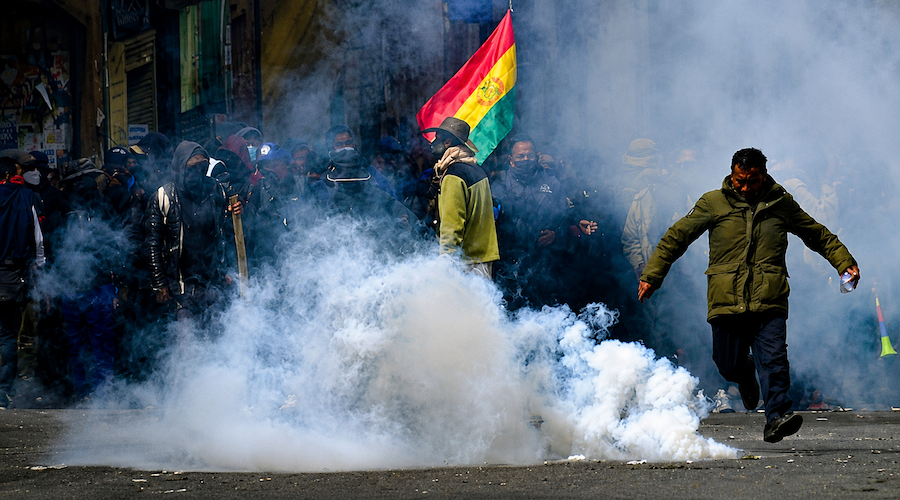
Bolivian President Rodrigo Paz has introduced legislation to expand military powers as nationwide protests entered their 36th day on Friday, adding uncertainty to the country’s vast lithium resources development.

The state of exception bill, presented to Congress on June 3, would establish a legal framework for military intervention alongside police forces during public unrest. The proposal follows the government’s passage of Law 1732 last week, which removed restrictions on military deployments during civic demonstrations that were imposed after the Sacaba and Senkata killings of 2019, where 21 people died and 180 were injured.
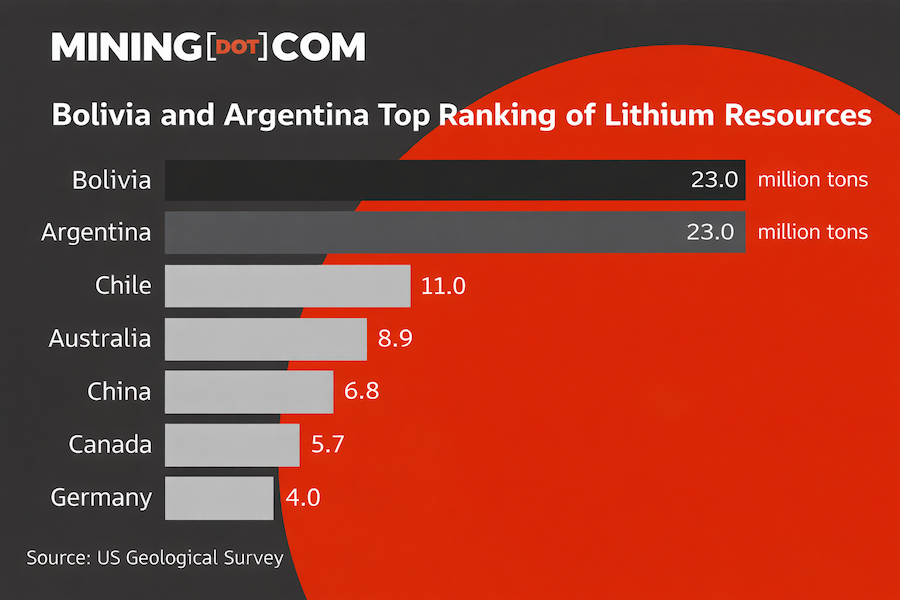
Bolivia hosts some of the world’s largest lithium resources, including the massive Salar de Uyuni deposit. Political instability, regulatory uncertainty and recurring social unrest have repeatedly slowed efforts to develop projects viewed as strategically important to global electric vehicle, energy storage and critical minerals supply chains.
“The measure seeks to guarantee the transportation of food, fuel and medical supplies,” Paz said during the swearing-in ceremony of new Defence Minister Ernesto Justiniano in La Paz.
The legislation comes as peasant organizations, labour unions and social movements demand Paz’s resignation and an end to what they describe as neoliberal economic policies. Protesters have established more than 90 road blockades across eight regions, disrupting transportation networks and deepening the country’s political crisis.
Growing tensions
Government officials say the bill is intended to restore access to essential goods in the cities of La Paz and El Alto. Social organizations, however, warn the measure would provide legal cover for security forces to forcibly dismantle roadblocks and suppress demonstrations.
US Secretary of Defence Pete Hegseth on Thursday characterized the anti-government protests as an attempted coup against President Paz and said Washington would oppose efforts to remove the government.
“The United States is watching. Bolivia must not allow itself to fall prey to the old status quo of narco-terrorist dominance in the region,” Hegseth wrote on social media.
The comments were the latest sign of the Trump administration’s active approach to Latin American security and politics. Since returning to office in 2025, President Donald Trump has described the Western Hemisphere as a strategic priority, while his administration has designated several criminal networks in the region as terrorist organizations.
Protest leaders have rejected the government’s position and pledged to maintain blockades until their demands are met. The Bolivian Workers’ Union and allied social organizations continue to coordinate demonstrations across the country, arguing that privatization policies and economic reforms have failed working-class communities.
Former president Evo Morales condemned the government’s actions, claiming the military appointments and legislative changes reflect US influence over Bolivia’s domestic affairs. Morales alleged Justiniano travelled to Washington shortly before his appointment and argued foreign interests are focused on Bolivia’s mineral wealth rather than the country’s development.
“Today, we confirm that this is a struggle of the people against the empire, of the homeland against domination,” Morales said.
Mineral stakes
Demand for lithium, rare earth elements and other strategic resources has become a central component of industrial, energy and national security policies in the US, China and Europe. Bolivia’s resource base has placed the country at the centre of an intensifying global competition for critical minerals, even as development has lagged behind neighbouring producers Argentina and Chile.
Analysts have long viewed Bolivia as a strategic prize in the race to secure critical mineral supplies. Despite its vast resource potential, investors have remained cautious amid political disputes, shifting regulations and tensions between governments, communities and foreign companies seeking access to lithium projects.
The developing situation highlights the growing overlap between resource nationalism, social unrest and the global scramble for critical minerals.
As lawmakers prepare to debate the state of exception bill, the government argues prolonged road blockades threaten economic stability and the delivery of essential supplies. Protest leaders maintain they will remain in the streets until their demands are addressed, raising the prospect of further confrontation if the legislation is approved.
For mining companies, battery manufacturers and governments seeking secure supplies of critical minerals, the outcome could influence not only Bolivia’s political future but also the pace of development in one of the world’s most important untapped lithium regions.
Column: Lithium bust is over but will battery metal boom again?
(The opinions expressed here are those of Andy Home, a columnist for Reuters.)
The lithium market has sprung back to life after a three-year slump that left the battery metal languishing at rock-bottom prices for much of 2024 and 2025.
The CME lithium hydroxide contract has jumped by 86% since the start of the year and is trading back above $20,000 per metric ton for the first time since late 2023.
Lithium has a history of boom-and-bust pricing ever since it transitioned from being used in industrial lubricants to powering electric vehicles.
This time around, however, the boom may be less spectacular.
Underlying demand growth remains strong but disappointing global EV sales in the first quarter have tempered expectations for this year.
Supply, on the other hand, should rise as higher prices lead to the reactivation of projects that were halted during the bust years.
Much, though, depends on one particular Chinese mine.

Lithium fever
The catalyst for lithium’s price recovery came in August, when Chinese battery giant Contemporary Amperex Technology (CATL) announced that it had suspended operations at its Jianxiawo mine in Jiangxi province after its mining licence expired.
The news triggered a wave of speculative buying on the Guangzhou Futures Exchange.
At the height of the lithium fever in November, Guangzhou traded 27.0 million futures contracts and another 12.5 million option contracts, each representing one ton of lithium carbonate.
The global lithium market is growing fast but is still less than 2 million tons in size.

It took several hikes in trading fees and margins and the imposition of position limits before the exchange tamed animal spirits.
What’s noticeable, though, is that while trading volumes have dropped sharply so far this year, the price has remained elevated.
That says much about how important a part Jianxiawo plays in China’s lithium supply dynamics.
Swing factor
Jianxiawo has an annual nameplate capacity of 150,000 tons of lithium carbonate equivalent, making it one of the largest single lithium assets globally, according to consultancy Benchmark Mineral Intelligence (BMI).
CATL originally expected its licence to be renewed within three months. It is still waiting.
The loss of output has served to accelerate a long-running drawdown in inventory along the Chinese processing chain.
Lower stock cover has left lithium pricing more sensitive to any sign of further supply disruption such as Zimbabwe’s unexpected raw materials export ban in February, subsequently replaced with a new quota regime.
The mine’s closure has also raised questions about other operators clustered around the lithium hub of Yichun amid signs local regulators are taking a hard look at the mining sector.
Jianxiawo is widely expected to return to action in the coming months. China isn’t blessed with huge in-the-ground lithium resources and the mine is too important to domestic supply resilience to close permanently.
But, to quote BMI, “The timing of resumption is the single largest swing factor in the price outlook over the next 24 months.”
Foggy new dawn
BMI thinks lithium is already over-priced and forecasts a “material decline” in the second half of the year as the shift to higher pricing incentivizes the restart of capacity that was idled during the price slump.
BNP Paribas agrees, arguing that prices “have derailed from fundamentals” thanks to over-exuberance in both futures pricing and supply-chain order flow.
The bank is forecasting continued supply surplus both this and next year, noting that surging battery demand for stationary storage is only partly mitigating slower growth in the larger EV market.
Even bulls such as Citi are cautious on timing. The bank’s upside CME hydroxide target of $32,000 per ton comes with a three-month sell-by date and it expects lower prices next year, again due to the anticipated strong supply response.
The broad consensus seems to be that any lithium boom will be short-lived and a shadow of previous price spikes.
But everything still depends on how long it takes the Bureau of Natural Resources of Yichun in Jiangxi province to grant CATL its new mining licence.
(Editing by Mark Potter)
Zimbabwe says China’s Huayou plans lithium carbonate plant
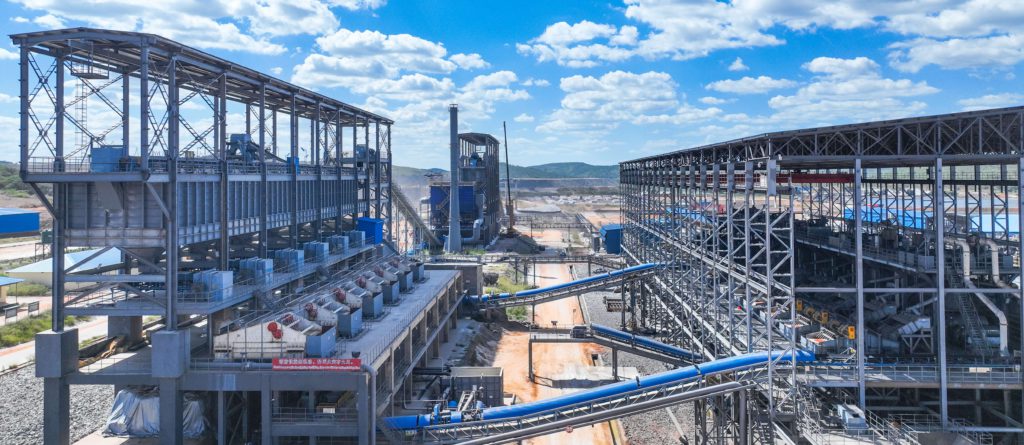
China’s Zhejiang Huayou Cobalt Ltd. plans to set up a lithium carbonate plant in Zimbabwe, according to the southern African country’s mines minister.
Zimbabwe has become a major supplier of lithium feedstock, following a surge in investment by Chinese companies. However, the government is pushing those investors to build up local processing capacity for the battery metal, so that the nation can derive greater benefits from its mineral wealth.
“They will be producing lithium carbonate, which is more valued,” Mines Minister Polite Kambamura, told reporters in the capital, Harare on Thursday. “So we look forward to firming up of metal prices globally, and also to increase our export revenues.”
Zimbabwe accounted for about 10% of global mined lithium production last year, according to the US Geological Survey. The minister said the country’s mining sector is expected to generate as much as $7 billion in revenues this year, after producing $2 billion in the first half.
“We are looking forward to this being anchored by the export receipts from minerals such as gold,” said Kambamura.
(By Godfrey Marawanyika)

No comments:
Post a Comment