Friday, July 18, 2025


USTR Port Fee Proposal Puts a Dent in China's Shipbuilding Dominance
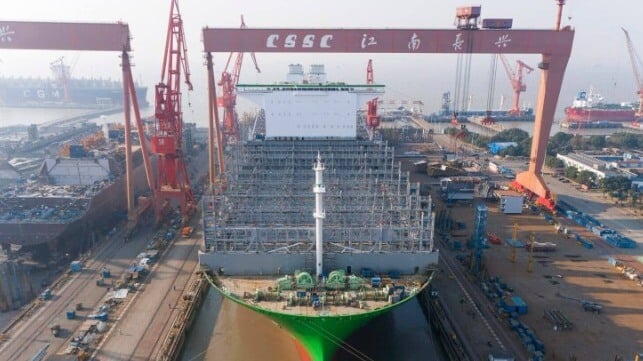
CSSC Hudong Zhonghua
Courtesy CSSC

Published Jul 16, 2025 5:56 PM by The Maritime Executive


Chinese shipbuilders are already feeling the pinch from the Trump administration's unprecedented port fee proposal, even though the details have not yet been released in final form. The Office of the U.S. Trade Representative's fee schedule would increase the cost of doing business at U.S. seaports for all Chinese-built ships, in hopes of jumpstarting demand for American shipbuilding and undercutting the dominance of Chinese state industrialists. 

Whether or not it prompts a resurgence at U.S. shipyards, the USTR plan is already driving international shipowners to reconsider the idea of ordering at market-leading Chinese shipyards. If a Chinese-made ship costs more to operate to and from the United States, then a Korean or Japanese ship may be a better overall value proposition on a lifecycle basis, even if it is more expensive up-front. Owners appear to be taking that bet, based on the latest numbers from Bimco and Clarksons. 

By Bimco's tally, China led the world market in sales in the first six months of the year - but by a much smaller margin, just 52 percent of all tonnage, down from 72 percent in the same period last year. The overall market was also smaller: total global sales numbers plummeted by half compared to the first six months of 2024, led by a sharp drop in bulker orders. This sounds drastic, but Clarksons notes that the drop brings the sales volume back down to earth after a period of hyperactive ordering; when considered against the 10-year average, the first half of 2025 was reasonably typical. Boxship ordering still remains remarkably elevated at nearly double the10-year average pace. 

None of these changes will threaten China's market-leading position in the immediate term. CSSC and its compatriot yards still hold a commanding share of the world's existing orderbook - nearly 60 percent by CGT - but the drop in new-order share represents a hefty chunk out of China's future shipbuilding revenue. South Korea is the leading beneficiary, gaining 25 percent global marketshare in the first half, up from 15 percent year-on-year. Korean yards even picked up the majority of the world's new orders in the month of March (quickly reversed again in April). 


Report: China Demands Role for Cosco in Deal to Sell Hutchison’s Port Ops
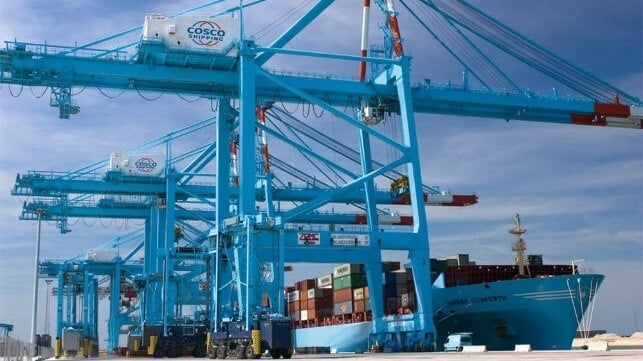
Zeebrugge Belgium
China is reportedly demanding a role for COSCO, which already has substantial port operations, in the sale agreement (COSCO Zeebrugge)

Published Jul 17, 2025 1:14 PM by The Maritime Executive


Chinese officials have reportedly set an ultimatum for the approval of the sale agreement between CK Hutchison, BlackRock, and MSC’s Terminal Investments (TiL) for the Hong Kong company’s global port operations. According to a story in The Wall Street Journal, China has privately told the companies that Cosco must have a role in the deal, or it will move to block the transaction.

Rumors that China was seeking a role for Cosco in the deal have been circulating for months, and it is seen as a face-saving step, especially for the terminal operations at Panama’s two ports. WSJ reports that, “China is pushing for state-owned Cosco to be an equity partner and shareholder of the ports with BlackRock and Mediterranean Shipping Company.”

“Chinese officials have told BlackRock, MSC, and Hutchison that if Cosco is left out of the deal, Beijing would take steps to block Hutchison’s proposed sale, according to people familiar with the deal talks,” writes The Wall Street Journal.

It is unclear how China could block the deal, but days after the agreement was announced, Hong Kong’s Chief Executive John Lee spoke out against the proposed sale. He said at the time there were “concerns” that deserved “serious attention.” Hutchison is Hong Kong-based, and in addition, China in the past has used its Commerce Ministry, asserting its right to review deals and demand alterations in the terms.

This comes just 10 days before the end of the exclusive lock-up period Hutchison granted to BlackRock and MSC. The company had announced the “in principle” agreements on March 4, saying they expected to complete definitive documentation for the part of the deal for the two terminal operations in Panama by April 2, while due diligence and exclusive negotiation were proceeding.

WSJ speculates that the parties cannot strike a deal on revised terms that include Cosco until the exclusivity period ends on July 27. It is unclear what portion of the deal, valued at nearly $23 billion, Cosco would participate in or at what level.

The wildcard is the Trump administration, which used Hutchison’s terminal operations at each end of the Panama Canal to assert “China runs the Panama Canal,” and to threaten that the U.S. would take back the canal. Panama has repeatedly asserted its sovereignty over the canal and denied Chinese domination.

Hutchison has remained mostly silent in the face of China’s attacks, which ranged from the loyalty of its founder tycoon Li Ka-shing to the legality of the deal, and assertions that it was all driven by the U.S. In early April, Hutchison’s Panama company issued a long list of responses refuting many of the claims that it was in violation of the concession to operate the terminals. Panama, however, has threatened under pressure from the U.S. to review and possibly terminate the concession for the terminals.

Under the terms of the “in principle” agreement, Hutchison would sell its 90 percent interest in the Panama operation (Panama holds 10 percent of the company) to the consortium between BlackRock and TiL. They would also acquire 80 percent of the global operations, which include 43 ports comprising 199 berths in 23 countries. Hutchison would retain its interests in China. Later reports revealed that the investment group would largely be owned by MSC.


China Accuses Philippine Coast Guard of Dangerous "Crossing Astern"
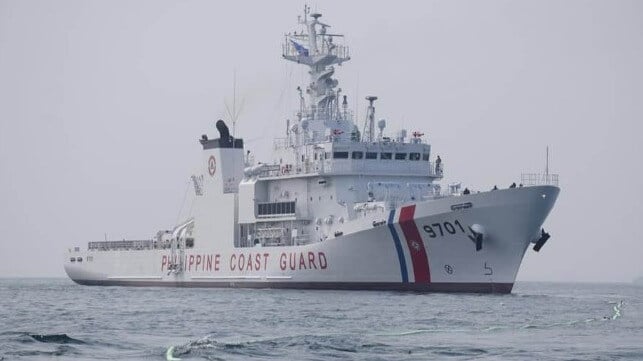
PCG cutter BRP Teresa Magbanua
File image courtesy PCG

Published Jul 16, 2025 11:19 PM by The Maritime Executive


The China Coast Guard (CCG) has long harassed the Philippine Coast Guard (PCG) with close-quarters maneuvering, water-cannons and blockades, sometimes resulting in serious injuries. But China has now accused the Philippines of a similar tactic: "making high-speed crossings astern" behind two China Coast Guard ships. While this is not a defined COLREGS violation, China claims that it "seriously threatened the navigation safety" of two vessels. 

The alleged incident occurred on July 15 when two Chinese cutters, CCG 21550 and 5009, were intercepted by BRP Teresa Magbanua at a position near Chinese-controlled Scarborough Shoal. The location is within the Philippines' exclusive economic zone, as affirmed by the Permanent Court of Arbitration in 2016; however, China claims this region as its own sovereign territory, and it maintains a large military and paramilitary presence within the Philippine EEZ for the purpose of "rights enforcement." 

In a video released on social media, Chinese state-owned media outlet Global Times showed CCG 21550 crossing the bow of Magbanua from the latter's starboard side. For the duration of the video, both vessels appear to hold course and speed, then pass without harm. 

In a social media statement, Global Times claimed that the crew of Magbanua were "repeatedly making high-speed crossings astern with the closest distance only about 100 meters." 

PCG spokesman Jay Tarriela said in a statement that the Philippine Coast Guard "categorically rejects" China's claims, and that BRP Teresa Magbanua was conducting a maritime patrol within the Philippine exclusive economic zone. He reiterated Manila's claim that the China Coast Guard operates illegally within the Philippine EEZ, and said that the two Chinese cutters were obstructing Magbanua's navigation by speeding up and then crossing her bow. He described the maneuvers as dangerous "bullying tactics" designed to harass the PCG cutter's crew. 

"The PCG remains dedicated to defending our nation’s sovereignty and sovereign rights in the West Philippine Sea without resorting to aggression," he said. 

Just last weekend, BRP Teresa Magbanua intercepted a Chinese spy ship - the Tianwangxing - at a position about 70 nm west of Mindoro. The surveillance ship did not reportedly respond to radio hails; its presence coincided with a series of aerial combat exercises with the U.S. Air Force over the Philippines. 

BRP Teresa Magbanua has had multiple encounters with Chinese forces before, including a protracted standoff at Sabina Shoal. The crew held position at the reef to fend off a Chinese incursion for five months, leaving only when supplies ran out and hunger and dehydration set in. During that mission, Magbanua was rammed by a Chinese cutter on her starboard quarter.


Iran Seizes Foreign Oil Tanker in Gulf of Oman

  • Iran's Islamic Revolutionary Guard Corps (IRGC) has seized a foreign oil tanker in the Gulf of Oman, reportedly on charges of smuggling 2 million liters of fuel.

  • This incident follows recent geopolitical tensions, including US strikes on Iranian nuclear facilities and previous reports of Iran considering mine deployment in the Strait of Hormuz.

  • The seizure highlights the ongoing risks to maritime traffic in critical chokepoints and Iran's diverse methods for disrupting oil flows, often involving "dark fleet" tankers for sanctions circumvention.

It remains important for energy traders to closely monitor the Strait of Hormuz and other key critical maritime chokepoints in the region (recall Red Sea events last week, given persistent geopolitical tensions involving Iran and Israel. 

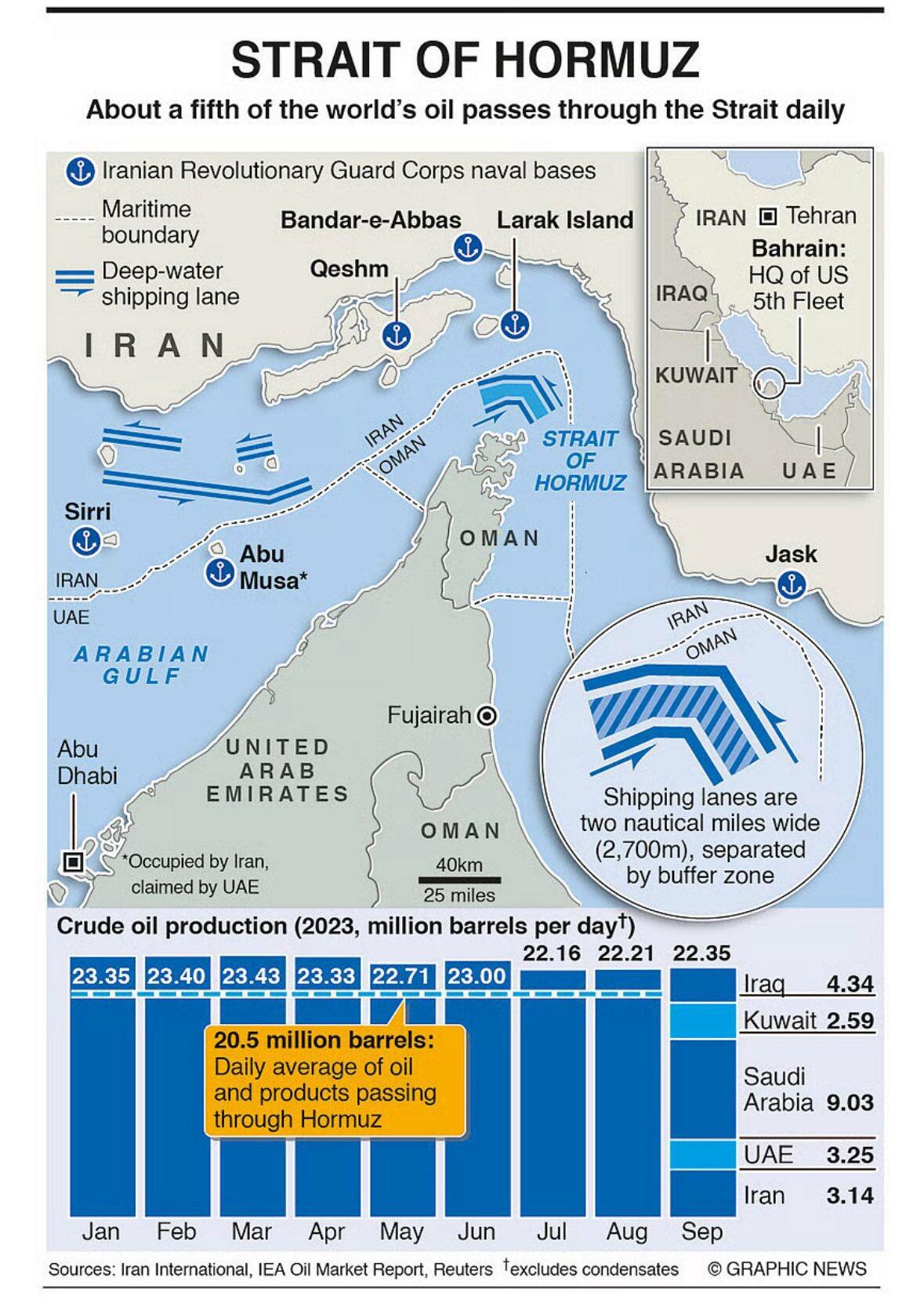
Tehran retains a diverse toolkit—both asymmetric and conventional—for disrupting tanker traffic through the Strait of Hormuz. These methods include naval mine deployment, anti-ship missile and drone launches, fast-attack craft swarms, and the seizure of vessels transiting the critical waterway responsible for 20% of the world's oil flows. 

Shortly after the U.S. launched "Operation Midnight Hammer" in late June, deploying stealth bombers to strike Iran's nuclear facilities at Fordow, Natanz, and Isfahan using Massive Ordnance Penetrator bombs, Iran's parliament voted to authorize the closure of the strait. However, Tehran never closed the strait, but there was at least one report we covered that said the Islamic Revolutionary Guard Corps mulled over littering the waterway with mines. 

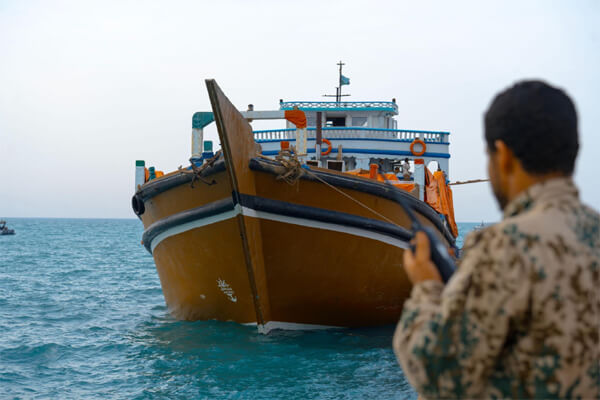
Given that the mines were not deployed, a troubling new report from local media indicates that the IRGC has intercepted and seized a foreign tanker in the Gulf of Oman. The seizure was reportedly carried out under the pretext of "fuel smuggling," according to Iranian state media outlet Mehr News Agency (MNA) on X. 

"The Chief Justice of Hormozgan Province has announced the seizure of a foreign oil tanker on charges of smuggling 2 million liters of fuel in the Sea of Oman," MNA reported. 

Here are more details from pro-Iranian news channel Al Mayadeen:

"Following persistent surveillance of suspected fuel smuggling operations off Iran's Sea of Oman coast, security forces boarded and searched a foreign oil tanker," Ghahremani said.

Iranian authorities confirmed the seizure of the foreign tanker after detecting irregularities in its cargo documentation, with security forces arresting 17 crew members, including the ship's captain, during the operation. The vessel was suspected of transporting two million liters of smuggled fuel through the Sea of Oman.

Fuel smuggling via "dark fleet" tankers has been a consistent tactic used by Iran to circumvent Western sanctions, with much of the crude oil ultimately making its way to China. Details about the seized vessel's ownership and final destination remain limited.

Iran's Internal Turmoil Could Have Regional Ripple Effects

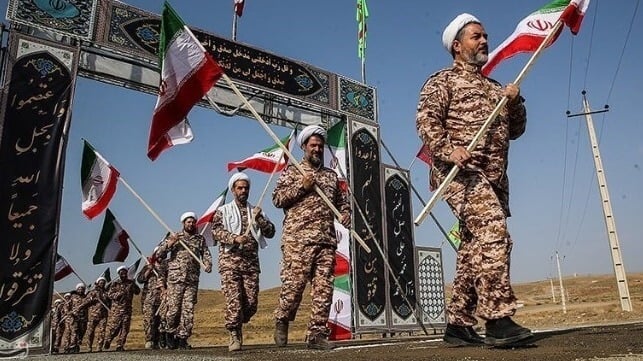
IRGC fighters on parade (Tasnim)

Published Jul 17, 2025 2:47 PM by The Maritime Executive


In the Western world, the news cycle has moved on. But in Iran, the country is still in trauma following devastating Israeli and American air raids, which Iranians knew might come but which they relaxed into believing never would. The risks remain of a resumption of fighting, which would cause widespread disruption to trade and shipping across the region (and within some very nervous Gulf states).

Since the ceasefire on June 24, the Iranian government has permitted Western media visits to the country, and while the carefully-controlled reporting from inside the country has painted a picture of defiance, once the reporters were safely home, a different picture has emerged - complementing what can be deduced from Iran’s own active media scene. There is little doubt that the 12-Day War has had a profound effect on Iran’s future trajectory.

A subtle but powerful indicator of the change was the first post-war appearance on July 5 of the Supreme Leader Ali Khamenei. A man with no clear successor, he emerged from hiding in his bunker to make a surprise appearance at a prayer meeting. He immediately asked a prominent religious singer to adapt a well-known poem, giving a new Iranian nationalist spin to Ashura and the battle of Karbala, key Shi’ite calendar events. Such small gestures mean a lot in Iran. By stoking patriotic sentiment in this way at the expense of religious focus, the war has provided the clerical leadership with further cause to tighten the IRGC’s grip on Iranian society, focused inwards under the pretext of the threat from external enemies.

At the invitation of Supreme Leader Khamenei, Haj Mahmoud Karimi chants a dirge at the July 5 Husseiniyya meeting (https://farsi.khamenei.ir/video-content?id=60621)
Reflecting this symbolic gesture, and using mass arrests and threats of public executions, the spark of a popular revolt against the regime has for the time being been stamped out. Most Iranians for now put flag before faith. However, that does not remove widespread contempt for the leadership, which has failed to defend Iran effectively and jeopardized normal life for most Iranians through their foreign adventurism. So the powder keg is loaded but not yet fused, and while the Israeli attempt to destabilize the regime has failed for the moment, a revised approach could work in the future.

Notwithstanding the new lead from the top, the split between hard-liners and reformists within the political ruling elite has widened. Hardliners have issued death-threat fatwas, urged a rush to complete nuclear weapons manufacture, threatened bigger ballistic missile attacks on Israel and American bases, and called for the closure of the Straits of Hormuz. Reformists, including President Pezeshkian - who was wounded in an Israeli attack on June 16 - have pressed on with attempts to revive negotiations with the United States. Previously, hard-liners and reformists papered over their differences; now some 30 hardliners in Parliament are even suggesting President Pezeshkian is fomenting a coup. The danger is that the two factions will pursue uncoordinated and opposing courses of action, some of which could be highly destabilizing. Examples are already emerging, like the seizure of a huge arsenal of new weaponry newly-shipped by the IRGC Qods Force to the Houthis and intercepted in the Red Sea by the UAE-backed National Resistance Forces. The resumption of Houthi attacks on shipping is no doubt encouraged by the IRGC.

The political chasm between hardliners and reformists has been widened further by continuing bomb attacks mounted from within Iran on key IRGC figures, and the feeling that more Israeli attacks could occur at any time. This is compounded by the difficulties the leadership are having communicating with each other, now that it seems dangerous to live at home, use WhatsApp or even carry a mobile phone.

Save for the hotheads, most Iranians sense the delicacy and dangers of the moment and remain cautious - much like the Iranian Navy still hiding out at sea, keeping a low profile and out of harm’s way. In this environment, small unpredictable events could well ripple across the region into another security crisis - perhaps next time not so well contained as the 12-Day War.

The opinions expressed herein are the author's and not necessarily those of The Maritime Executive.

Massive Cache of Iranian Weapons Intercepted on Way to Houthis

Houthi weapons' seized
Weapons on dsplay after they were intercepted (CENTCOM)

Published Jul 16, 2025 4:10 PM by The Maritime Executive


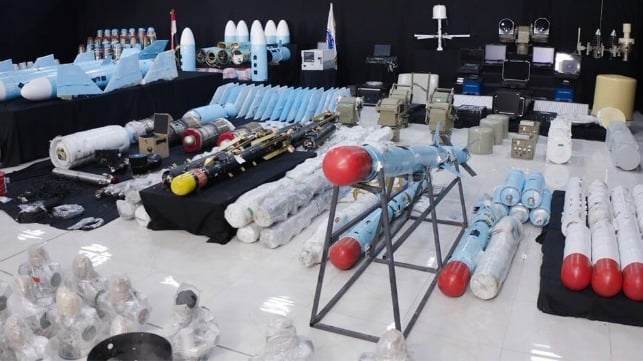
U.S. Central Command is reporting that the Yemeni forces in opposition to the Houthis made their largest ever seizure of Iranian weapons bound for the Houthis. In total, the U.S. is reporting that over 750 tons of munitions and hardware were intercepted. 

Few details were released on the operation other than it was conducted by the Yemeni National Resistance Force, which is the opposition to the Houthis and represents the exiled government of the war-torn country. Pictures and a video released by CENTCOM show a dhow that was apparently transporting the materials. The report was issued on July 16, but did not specify when the seizure took place.


According to the details released by the U.S. forces, the shipment included hundreds of advanced cruise, anti-ship, and anti-aircraft missiles, warheads and seekers, components, as well as hundreds of drone engines, air defense equipment, radar systems, and communications equipment. 

The pictures show manuals in Farsi and CENTCOM reports that many of the systems were manufactured by a company affiliated with the Iranian Ministry of Defense that is sanctioned by the United States.


AP analyzed the video and photos, highlighting the Iranian-made Type 358 anti-aircraft missiles. It notes that the Houthis have claimed to have downed 26 U.S. MQ-9 drones, likely using these types of missiles. The U.S. has confirmed the loss of some of the spy drones, while the Houthis released videos showing some of the shootdowns.

Also visible are anti-ship missiles. These would be similar to the ones used by the Houthis to attack merchant ships, including the Magic Seas and Eternity C, both of which were sunk just over a week ago.

Reports coming from the region had indicated that the Houthis were rearming after the bombing by the U.S. between March and May of this year. Despite the prolonged attacks by the U.S. and several strikes by the Israelis, the Houthis have been able to maintain their launches of missiles and drones toward Israel, and this month resumed attacks on merchant ships. Reports last week said that Israel had appealed to the United States to resume its air assault on Houthi positions.

Late on Wednesday, July 16, the Houthis reported that they had launched a new attack of missiles and drones toward Israel. They claimed to have targeted Ben Gurion Airport and the port at Eilat. They also said that two drones were directed toward a military site in the Negev.


More Than a Month After Fire, Wan Hai 503 Remains Under Tow Off India

Wan Hai 503
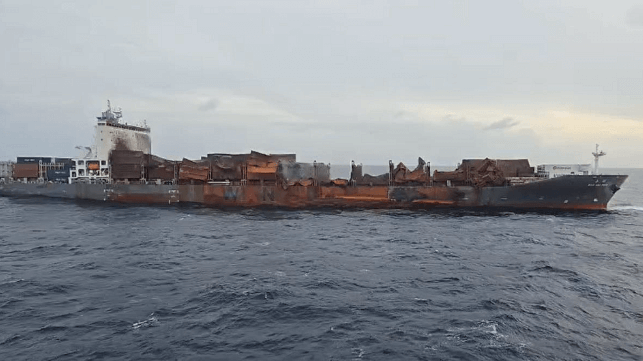
Wan Hai 503, July 16 (Kerala Directorate of Shipping)

Published Jul 17, 2025 5:03 PM by The Maritime Executive


The burned-out boxship Wan Hai 503 remains under tow and awaiting a confirmed port of refuge, according to Indian shipping authorities.

When Wan Hai 503 suffered a cargo explosion and fire off Kerala on June 9, few expected that the salvage effort for the small container ship would be so protracted. The fire burned through almost all cargo bays forward of the deckhouse, leaving only smoldering wreckage - and the last hot spots have still not been fully extinguished. 39 days later, small amounts of gray smoke and elevated temperatures in Bays 33-37 suggest that pockets of smoldering material remain, though the situation is contained and under control. Temperature readings in the holds suggest a cooling trend. 

The T&T Salvage team has made significant strides in stabilizing Wan Hai 503's condition over the past few weeks. Extensive dewatering efforts have dried out Hold 2 and Hold 3, and the flooding in the engine room has been reduced to less than a meter of water in the bilge. Working through a long spell of rough weather and high swells, the salvage crew has returned the vessel's trim, list and draft closer to a normal state - though containers sodden with firefighting water appear to be adding more weight than would be expected of a normal cargo load. Six salvors are living aboard the burned ship temporarily because rough surface conditions have made transfers too hazardous. 

No arrangements have yet been finalized for a port of refuge, and the team is still working on satisfying the last few safety checklists in their plan prior to entry into port. This includes addressing an excess amount of hydrogen sulfide gas emanating from Hold 7, which prevents personnel from entering without ventilation. 

Luckily, there are no signs of oil leakage outside or inside the vessel, always a key concern for port authorities when considering a refuge request. The soundings of the bunker tanks are not yet completed, but the responders believe that there is about 2,400 tonnes of fuel oil on board. Once a full evaluation of structural integrity and stability is done - including verification of the ship's post-fire longitudinal strength - the team will finalize its preparations for entering a port. 


NTSB: Fatigued Pilot Distracted by Cell Phone Caused Towboat Collision

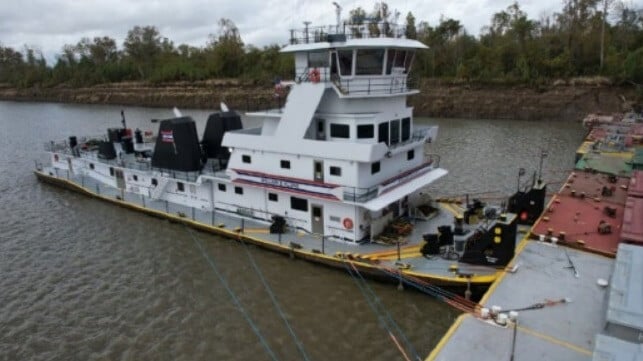
towboat
Towboat William B Klunk which was pushing the barges along the Mississippi River (NTSB)

Published Jul 17, 2025 5:34 PM by The Maritime Executive


The National Transportation Safety Board is yet again highlighting an example of distracted navigation through the use of a personal cellphone and other non-operational tasks, which it says contributed to the collision of a towboat on the Lower Mississippi, causing more than $800,000 in damages. Also contributing to the incident, the NTSB reports fatigue and a lack of familiarity with the vessel that was being navigated.

A pilot joined the crew of the towboat William B Klunk on April 17, 2024, at a position near Baton Rouge, Louisiana, along the Lower Mississippi River as the vessel was pushing 22 laden barges from Illinois to Louisiana. There was a crew of 10 aboard, and as is typical, the captain and pilot were splitting the watches and navigation duties.

During the pre-departure planning session, the pilot admitted he had driven overnight 150 miles to join the vessel. He denied fatigue and said he had napped in his car, although the NTSB report on the incident notes that individuals are often a poor judge of their own fatigue. The captain also told investigators he was not concerned about the pilot being fatigued. He warned the pilot that the vessel’s steering was slower to respond than he was familiar with before they got underway. They departed with the pilot navigating and the captain off the bridge.

The vessel was underway for about 1.5 hours, traveling at around 9 knots, and had just completed passing a vessel traveling in the opposite direction when it left the channel and collided with moored barges. Thirteen of the barges in the tow broke away, and three of the moored barges also broke away. There was one minor injury and a total of $810,000 in damages.

During the investigation, the pilot told the NTSB that there had been a steering failure on the towboat. The investigation, however, found no issues that would indicate a steering failure. They concluded that the steering system may not have responded as quickly as the pilot expected, leading him to believe that the vessel lost steering.

Interviews with other vessels showed the pilot had not been responding to radio calls, and the vessel was navigating inconsistently. The NTSB’s investigation found the pilot “engaged in nonoperational, secondary tasks, including taking an administrative call from the company’s safety officer, making a personal phone call on his cell phone, and sending text messages.”

In the six minutes leading up to the collision, the NTSB reports the pilot did not make any rudder or throttle adjustments as the tow moved toward the fleeting area where it hit the moored barges. The onboard image recorded system footage showed the pilot using his personal cell phone and not monitoring the tow’s position 40 seconds before the collision.

“Use of cell phones, including company cell phones (particularly for nonoperational conversations), should never interfere with a watchstander’s primary task to safely navigate a vessel and maintain a proper lookout,” the report said. “To reduce the risk of cell phone distraction, operating companies should establish protocols regarding both personal and work-related cell phone use, and vessel personnel should understand the importance in following them.”

Investigators also determined that the pilot’s fatigue due to limited sleep the night before contributed to the collision. The pilot received about four hours of continuous sleep in the 36 hours before the collision. The pilot’s fatigue was due to his being up nearly 18 hours at the time of the collision.

It also notes that due to his unfamiliarity with the systems on the bridge, the pilot manipulated the wheelhouse steering control panel. They found he inadvertently turned the steering pumps off before the captain reached the bridge and took the helm after the collision. 

The company’s safety officer is also cited as he made a call to the towboat to discuss a non-navigation issue while the pilot was steering the vessel. The call lasted about 15 minutes, the NTSB reports, during which the pilot was told he was being written up for a policy violation (he was wearing shorts, which was against company policy). The NTSB says the safety officer should not have conducted the call when he determined the pilot was navigating, and the lead deckhand later told the NTSB he was on the bridge and the pilot seemed “flustered” from the phone call.


ITF Reports “Disturbing Surge” in Seafarer Abandonment in 2025

crew abandonment
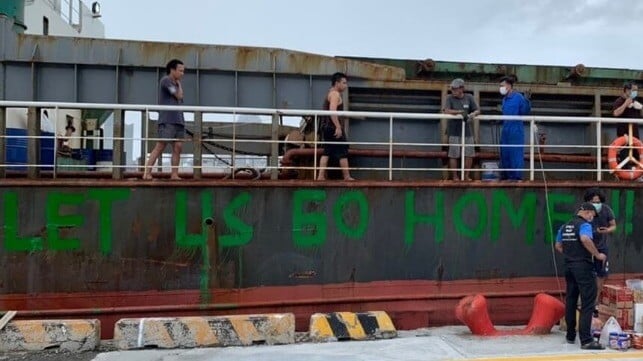
Abandoned crew receiving charity support in Taiwan in 2022 (Stella Maris photo)

Published Jul 16, 2025 2:43 PM by The Maritime Executive


The International Transport Workers’ Federation (ITF) released its latest tally on cases of seafarer abandonment, reporting what it called a “disturbing surge” in cases so far in 2025. The figures show an increase of a third over the record numbers reported in 2024, with the ITF demanding accountability.

The ITF is calling on international regulators, port states, and the International Maritime Organization to take urgent action. Under the law, it highlights that abandonment is clearly defined, with cases often involving seafarers being denied pay for two months or more, being left stranded, or left without food or medical support, or often a combination of these circumstances.

According to the report, over 2,280 seafarers have been abandoned aboard 222 vessels so far this year. It includes $13.1 million in unpaid wages. By comparison, the ITF says that at this point in 2024, there had been 172 cases involving 1,838 seafarers and $11.5 million in unpaid wages.

“Every single case of abandonment is a disgrace. It’s an intentional abuse of human rights, and the failure to end abandonment exposes a systemic problem in the maritime industry,” said Steve Trowsdale, the ITF’s Inspectorate Coordinator.

The labor organization highlights that 37 percent of the abandonment cases in 2025 have occurred in the Arab World closed followed by 34 percent that have taken place in Europe (the majority in Turkey). It says those rates are more than double the share of Asia Pacific, the next highest region. 

“We are seeing a pattern of abuse that cannot be ignored and that must be confronted. In recent years, the Gulf region, and the UAE in particular, has seen a huge increase in seafarer abandonment cases. Both there and in Europe, much more must be done to crack down on the rogue shipowners who need to know there’ll be consequences,” said Trowsdale.

Lax enforcement of the rules, monitoring of the registry, and a lack of support from the sponsor countries are among the issues highlighted by the ITF. It asserts that the so-called “Flags of Convenience” system is central to the rise in abandonment cases. It specifically says it received 26 reports for vessels registered in St. Kitts & Nevis, another 26 for vessels registered in Tanzania, and 18 for Comoros, with the three jurisdictions dominating the abandonment lists. The ITF calculates that three-quarters of the reports came from the countries it labels as flags of convenience.

A lack of enforcement and responsiveness from flag and port states, the absence of adequate insurance for vessels, and shipowners refusing to accept responsibility for crew welfare are common factors that contribute to abandonment, says the ITF.

Member States at the International Maritime Organization have also raised concerns about the lax enforcement in some registries. In addition to the IMO’s efforts, the U.S. Federal Maritime Commission announced earlier this year it was launching an investigation into the practices of registry authorities. It also raised concerns about the unfavorable business conditions that the flags of convenience create and the potential impact on U.S. trade.

These flags have also become an increasing concern for their support of the shadow fleet of aging tankers. The EU launched a program of insurance checks for vessels sailing in Northern Europe and into the Baltic in response to the incidents and the fears of a major environmental disaster from the poorly supervised vessels.


Don’t feed the animals: Researchers warn of risks tied to wildlife interactions


Food provisioning for wild animals can lead to dangerous outcomes, a new study on tourist-elephant encounters shows


University of California - San Diego

Don’t feed the elephants! 

image: 

A new study led by UC San Diego Assistant Professor Shermin de Silva cautions that human-provided food interactions can led to dangerous outcomes.

view more 

Credit: Udawalawe Elephant Research Project


A study led by a scientist at the University of California San Diego offers new warnings on the dangers of human interactions with wildlife.

Assistant Professor Shermin de Silva of the School of Biological Sciences studies endangered Asian elephants and has reported on their shrinking habitats, a downturn that has resulted in territorial conflicts between people and elephants.

Along with her study coauthors, de Silva now provides fresh evidence in the journal Ecological Solutions and Evidence on the serious consequences of humans supplying food to wild animals. The report indicates that such provisioning can lead wildlife to become habituated to people, causing the animals to become bolder and more prone to causing problems. Even for those who live in areas without native elephant populations, the new study provides cautionary information about interactions with any wildlife species living among us.

Wild elephants are a prime attraction in Asia, with Sri Lanka and India featuring some of the world’s last abundant populations of Asian elephants.

In Sri Lanka, de Silva studied 18 years of elephant-tourist interactions at Udawalawe National Park. She found that the elephants congregating near tourists at the park’s southern boundary have developed “begging” behavior and have become habituated to sugary foods, sometimes breaking through fences to continue being fed. As a result of elephants being drawn to the fence, several people have been killed or injured, and at least three elephants have been killed, while others have ingested plastic food bags and other contaminants. Such close human-wildlife encounters, including tourists feeding animals from sightseeing vehicles, also increases the risk of disease transmission to animals.

In India’s Sigur region, study coauthors Priya Davidar and Jean-Philippe Puyravaud of the Sigur Nature Trust observed feeding interactions with 11 male Asian elephants, four of which died from suspected human causes. One elephant was successfully rehabilitated and returned to natural foraging behavior. 

“Many people, especially foreign tourists, think Asian elephants are tame and docile, like domestic pets,” said de Silva, a faculty member in the Department of Ecology, Behavior and Evolution and founder of the non-profit conservation organization Trunks & Leaves. “They don’t realize these are formidable wild animals and try to get too close in order to take photographs or selfies, which can end badly for both parties.”

Of the 800 to 1,200 elephants estimated living in Udawalawe National Park, the study found that 66 male elephants, or nine to 15% of the local male population of Asian elephants, were observed begging for food. Some elephants, including a popular male named Rambo, became local celebrities as they solicited food from tourists over several years.

“Food-conditioned animals can become dangerous, resulting in the injury and death of wildlife, people or both,” the researchers note in their paper. “These negative impacts counteract potential benefits.”

Since wild elephant feeding cannot be adequately regulated as an ongoing activity, the authors of the study recommend that feeding bans should be strictly enforced.

The researchers recognize that tourists are for the most part acting with good intentions, like people in many areas around the world who feed or leave food for wild animals in their regions. They can act from a motivation that they are helping friends in nature and take gratification from such interactions. “But this encourages wild animals to seek food from people, attracting them to areas that can put themselves or people at risk,” said de Silva. “It can be a conduit for disease transfer between species. Such feeding can also cause animals to lose their ability to forage for themselves if the behavior becomes prevalent, especially with young animals.”

Such interactions, de Silva says, can change animals’ movement patterns and possibly force them to lose knowledge of natural food sources if they become too dependent on handouts.

With rare exceptions, people should avoid feeding wild animals, de Silva urges, and encourages people to engage in responsible tourism.


Elephants such as “Rambo,” seen here, have become regional celebrities, begging for food from visitors.

Human feeding of wild animals can cause animals to lose their foraging ability and become a conduit for disease transmission.

Credit

Udawalawe Elephant Research Project