Friday, July 18, 2025


Restart of Kurdistan’s Oil Export Isn’t Imminent

Despite Baghdad’s assurances that oil exports from Kurdistan will resume immediately after more than two years, the semi-autonomous Iraqi region isn’t prepared to restart exports, sources familiar with the matter told Reuters on Friday.

Amid drone attacks on oilfields in Kurdistan this week, which have shut in about 200,000 barrels per day (bpd) in production, the federal Iraqi government said on Thursday that the Kurdistan Regional Government (KRG) would immediately begin delivering at least 230,000 bpd to Iraq’s state oil marketing firm SOMO for export. The exports would be carried out under a new agreement approved by the federal cabinet, Baghdad said on Thursday.

However, a source close to APIKUR, the association of companies active in Kurdistan, told Reuters that the restart of exports depends on the receipt of written agreements.

Another source at the company operating the pipeline via Turkey to the Mediterranean coast of Ceyhan, KAR Group, told Reuters that there haven’t been any preparations for an imminent resumption of exports.

The federal government in Baghdad and the regional Kurdish government in Erbil have been squabbling for more than two years over who should be responsible for the oil exports and the subsequent revenue distribution.

The federal authorities say Baghdad should have sole discretion in handling oil exports and oil revenues.

Oil exports from Kurdistan have now been halted nearly two and a half years after they were shut in in March 2023 due to a dispute over who should authorize the Kurdish exports. Despite some breakthroughs in negotiations in recent months, the disagreements apparently continue, and Kurdistan’s oil exports continue to be shut in.

Before the halt to exports, oil supply from Kurdistan averaged more than 400,000 bpd.

The issue with the resumption of exports was raised again this week after foreign companies operating some oilfields in the semi-autonomous region were forced to halt output following attacks with explosive-laden drones on infrastructure at the fields.

By Tsvetana Paraskova for Oilprice.com


Drone Attacks Disrupt Kurdish Output but Tariff Fears Cap Market Reaction

Oil prices were ticking up slightly but largely flat in Asian trading Friday as supply losses from Iraqi pipeline disruptions were offset by renewed demand concerns tied to U.S. tariff threats against key Asian economies. Brent crude edged up to $69.78 and WTI was trading at $67.75 at 2.25 a.m. ET, with both benchmarks holding narrow gains despite broader market uncertainty.

Multiple drone strikes near oil infrastructure in Iraqi Kurdistan this week forced the suspension of production at several fields. The attacks disrupted operations and prompted a temporary halt in output. No group has claimed responsibility, but the incidents mark the most serious disruption in the region since April.

The latest strikes have shut in at least 150,000 barrels per day of oil production across multiple sites, with some estimates nearing 200,000 bpd of shut-ins. The fields are operated by international consortia under contract with the Kurdistan Regional Government (KRG).

Energy officials in Kurdistan told Reuters that the region's output stood at approximately 285,000?bpd before production was slashed by up to 150,000?bpd due to the attacks, cutting output nearly in half

Tariff warfare, however, appears to be in the driver's seat with respect to oil markets this week, overtaking fears of supply shut-ins in Iraqi Kurdistan. Growing fears of a tariff escalation between the U.S. and multiple Asian exporters have added pressure to fuel demand forecasts. 

With global growth already showing signs of slowing, the possibility of another round of tit-for-tat trade measures has weighed more heavily on oil sentiment than localized supply shocks. Reuters cited analysts on Friday as saying that the muted price response to the Kurdistan outages suggests markets are increasingly discounting temporary disruptions unless they escalate or coincide with broader geopolitical risk.

By Charles Kennedy for Oilprice.com

Fortescue Halts New U.S. Green Energy Projects

Following the latest U.S. legislation to phase out renewable energy incentives

Australia’s energy and metals group Fortescue is reassessing timelines and pausing green energy project developments in the United States following the latest U.S. legislation to phase out renewable energy incentives, Fortescue’s founder and executive chairman, Andrew Forrest, told the Wall Street Journal in an interview.

President Trump’s tax and spending act, the One Big Beautiful Bill Act, passed earlier this month, contains punitive provisions on renewables in the U.S. The legislation includes a faster phase-out of the tax credits for low-carbon energy, or reduces or simply abolishes these incentives.

“You’ve had a president come in and say that climate change is bunk,” Fortescue’s Forrest, a self-made billionaire who is a proponent of clean energy solutions, told the Journal.

“We are big investors who always go where we’re loved,” Forrest added, and “if we stop feeling the love, timetables immediately get suspended.”

Fortescue planned Arizona Hydrogen—a venture to produce liquid green hydrogen in the United States. Initially, the project was expected to begin production by the middle of 2026.

However, after the U.S. presidential election and the early signs that the Trump Administration intends to go after the renewable energy incentives, Fortescue said in an earnings release in February that uncertain market conditions in the U.S. had prompted it to reconsider the development timeframes of its Arizona Project.

Under the Big Beautiful Bill, the curtailed availability of the 45V tax credit for hydrogen means that “more than 75% of the total U.S. green hydrogen project pipeline is unlikely to qualify without rapid progress,” Ed Crooks, Vice Chair Americas at Wood Mackenzie, said last week.

Fortescue Energy noted it “is continuing to progress and refine its green energy project pipeline in a disciplined manner, with timelines adjusted to reflect global market conditions and policy settings.”

While reconsidering development projects, Fortescue is on the lookout to buy already operational green energy assets or companies in the United States, Fortescue’s Forrest told the Journal.

“I have asked the team to look hard across North America for renewable-energy companies or assets which are struggling,” the entrepreneur said.

By Tsvetana Paraskova for Oilprice.com


Argentina mining exports to top $5B in 2025 despite lithium struggles, industry body says


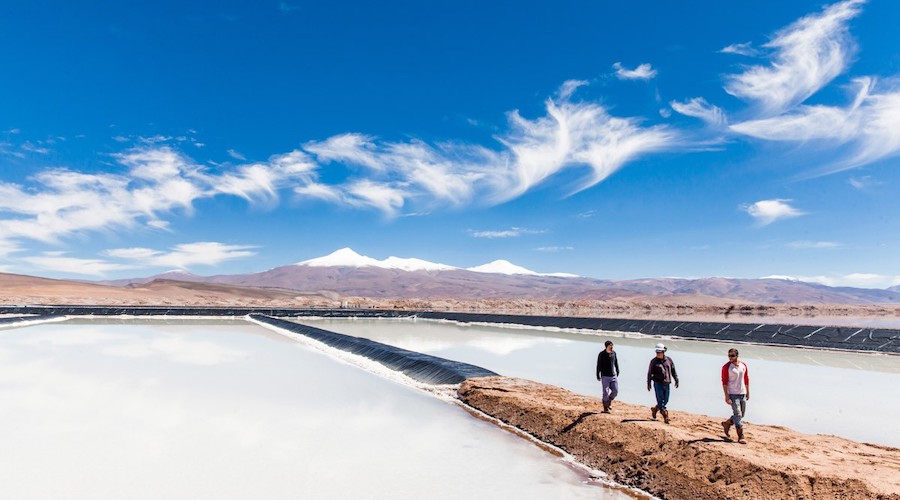
The Pastos Grandes lithium project in the Salta Province of Argentina. (Image courtesy of Lithium Americas.)

Argentina’s mining exports will exceed $5 billion in 2025 as rising gold prices more than offset the decline in lithium prices, said the president of the Argentine Chamber of Mining Companies (CAEM), up from $4.6 billion in 2024.

In an interview with Reuters, Roberto Cacciola said gold and silver production, Argentina’s main mining exports, will remain stable or decline slightly in 2025 due to the maturation of mining projects, but rising prices will make up for the lower volumes.

“This year (mining exports) could be above $5 billion or $5.2 billion,” Cacciola said.

He described the opposite situation for lithium, as he expects an increase in production during times of falling prices.

“In terms of volume, we don’t see significant changes in gold and silver, perhaps a small reduction, and in lithium, we see volume growth, but a price drop that will more or less keep lithium exports at very similar levels to those in 2024,” he added.

In 2024, gold contributed $3.14 billion, or 68% of the total exported, silver $641 million, or 14% and lithium $631 million, or 13.6%, according to the National Mining Secretariat.

Argentine President Javier Milei’s libertarian government is seeking to boost the promising mining sector to increase the income it so desperately needs to maintain macroeconomic stability.

To this end, it created the Large Investment Incentive Regime (RIGI), which offers tax, customs, and exchange rate benefits for investments of more than $200 million.

So far, of the seven mining projects that have applied for membership, the government has only approved Anglo-Australian firm Rio Tinto’s Rincon project, a $2.7 billion investment in the northern province of Salta for the construction of a lithium carbonate plant.

Cacciola said the drop in lithium prices, driven by excess supply and lower demand for electric vehicles, has led to the delay in investments. Over the past two years, oversupply from China has made prices fall by more than 90%.

“Lithium companies are currently working to break even, or some may be running at a deficit. This is expected to be temporary, but it’s a fact of life,” he said.

“Everyone was thinking about expanding, about growing, and now they’re thinking about surviving,” he said. “Some expansions have been delayed. The reality is that we’re not coming back with the euphoria of 2022-2023, because the drop (in prices) was very sharp.”

Argentina is the world’s fourth-largest exporter of the mineral necessary for the energy transition and is part of the “lithium triangle” along with Chile and Bolivia, which hosts the world’s largest reserves. It also has world-class copper projects, although none are yet in production.

Cacciola estimated that the government will extend the RIGI deadline for submitting investment projects, which expires July 8, 2026, by another year, because many projects – especially copper — have expressed interest in entering the incentive scheme.

So far, the only copper project that has applied to join the RIGI is Los Azules, owned by Canada’s McEwen Copper.

“The RIGI is running. I think it’s going to be extended, it’s planned. In other words, I don’t see any impediment to it being extended,” Cacciola said.

The copper projects are “all ready to be submitted; they’re just waiting for some definitions,” he added.

(By Lucila Sigal; Edited by Nicolás Misculin and Jamie Freed)


Spain’s Zelestra aims to power Peru mines with $1 billion renewables investment


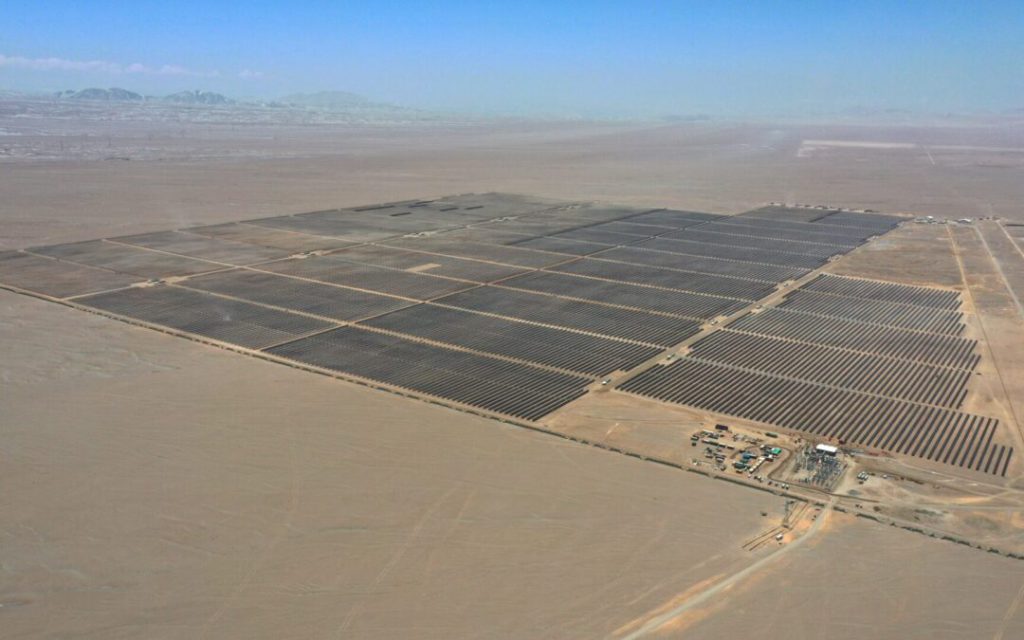
San Martín solar project. Credit: Zelestra

Spain’s Zelestra plans to invest at least $1 billion in renewable energy plants over the next five years powering mines in copper-rich southern Peru, the company’s CEO for Latin America told Reuters.

Zelestra, owned by Swedish firm EQT, is aiming to produce 1 gigawatt (GW) of renewable energy in Peru as part of its expansion in Latin America, Jose Luis Garcia said in an interview on Tuesday.

“I’m convinced that most, if not all, of the energy projects we build in Peru will be used to supply mining companies,” Garcia said, adding that the estimated investment would be between $1 billion and $1.5 billion over the next five years.

“The mining companies have very long-term contracts, and they’re going to have to renew them in the next three years,” he said, adding that lenders have shown strong interest in financing the projects.

Peru is the world’s third-largest copper producer and most of its mines are in the country’s south, including Freeport-McMoRan’s Cerro Verde mine, the country’s largest, as well as others operated by MMG Ltd, Glencore, Anglo American and Mexico Group.

Renewable energy is still a nascent technology in Peru, with hydroelectric plants accounting for 45% of the sector’s output, according to government data.

In recent years, Chinese firms have made major acquisitions in the power industry raising concerns of business concentration.

China Southern Power Grid International controls just over half of Lima’s power distribution while China Three Gorges Corporation covers the other half and controls Peru’s third-largest power generator.

Zelestra on Thursday inaugurated its $177 million San Martin solar park in the Arequipa region, the largest solar plant in Peru, with approximately 300 megawatts.

The next project is the 238-megawatt Babilonia solar plant, also in Arequipa, with an estimated investment of $140 million.

Data from the Ministry of Energy and Mines shows Zelestra has at least three other renewable energy generation projects in the south, totaling approximately 450 megawatts.

Garcia said there are already agreements with transmission companies such as Kallpa Energy to deliver energy to mining clients.

Regionally, Garcia said Zelestra’s goal is to have renewable energy plants – including solar, hybrid and battery-powered – generating about 3 gigawatts within five years. Half of that generation is planned in Chile, 30% in Peru and the rest in Colombia.

(By Marco Aquino and Alexander Villegas; Editing by Brad Haynes and Kirsten Donovan)

 BHP says costs at Jansen potash project up, first production pushed back to mid-2027


By The Canadian Press
 July 18, 2025 

BHP has announced it will pour billions of dollars into a potash mine southeast of Saskatoon.


SASKATOON — BHP Group Ltd. says the cost of the first phase of its Jansen potash project in Saskatchewan is going to be more expensive than earlier expectations.

The miner now estimates the project cost will be in a range of US$7 billion to US$7.4 billion, up from an earlier estimate of US$5.7 billion.

The company is also pushing back its estimate for first production from the mine to mid-2027 from earlier expectations for the end of 2026.

BHP blamed the increased costs on inflationary pressures, design development and scope changes and lower-than-expected productivity.

It estimates the first phase of the Jansen project is 68 per cent complete.


The company also says given the potential for additional potash supply coming to market in the medium term, it’s considering delaying first production from Jansen’s second phase by two years to its 2031 financial year.

This report by The Canadian Press was first published July 18, 2025.

BHP delays Jansen potash project as costs surge; logs record copper output

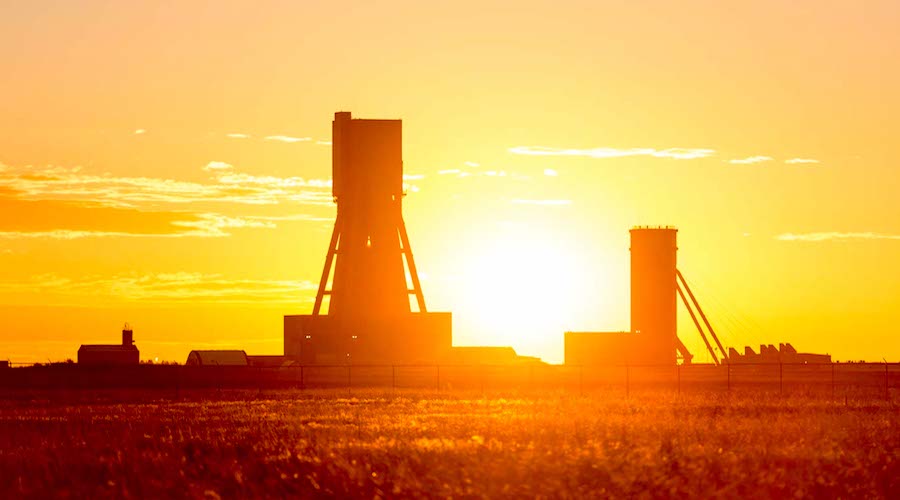
The Jansen potash project. (Image courtesy of BHP.)

BHP Group flagged delays and cost overruns of about 30% for its key Jansen Stage 1 potash project on Friday, even as the miner reported record annual copper production above 2 million metric tons and warned of a decline next year.

The cost blowouts that could be up to $1.7 billion represents a significant setback for BHP, which had accelerated potash production following Russia’s invasion of Ukraine, anticipating higher fertilizer prices due to supply disruptions from sanctioned Russian and Belarusian producers.

The world’s largest listed miner has spent more than a decade trying to break into the potash market as part of its diversification strategy.

BHP attributed the cost blowouts to design and scope changes, inflationary pressures, and lower-than-expected productivity during construction.

BHP said first production from its Jansen Stage 1 potash project in Canada has been pushed back to mid-2027 from the previously targeted end-2026, while capital expenditure estimates have surged to $7.0-$7.4 billion from $5.7 billion.

Adding to the project’s challenges, BHP is considering delaying the second stage of Jansen by two years due to concerns about potential oversupply in the global potash market.

“Given potential for additional potash supply coming to the market in the medium term, and as part of our regular review of the sequencing of capital projects under the capital allocation framework, we are considering a two-year extension for the execution of Jansen Stage 2,” the company said in a statement.

BHP committed $4.9 billion towards Jansen’s second stage development in October 2023, with first production scheduled before June 2029. The company said it had spent only $400 million of the committed funds for the second phase.

The miner reported copper production of 2.02 Mt for fiscal 2025, at the upper end of its forecast range. However, it said it expects output to drop to between 1.8 Mt and 2.0 Mt in fiscal 2026, reflecting planned lower grades at its flagship Escondida mine in Chile.

Shares of the company rose 2.9% to A$40.26 by 0144 GMT, outperforming a 1.6% jump in the mining sub-index.

BHP logged record annual iron ore production of 290 Mt, at the upper end of its guidance, while its fourth-quarter output of 77.5 Mt beat consensus estimates.

BHP is also assessing a potential divestment of its Western Australia Nickel assets as part of a review, citing balance sheet impacts from the nickel business.

(By Roushni Nair, Roshan Thomas and Melanie Burton; Editing by Devika Syamnath and Subhranshu Sahu)


Saskatchewan Research Council adds full-scale laser sorter to mining industry services  

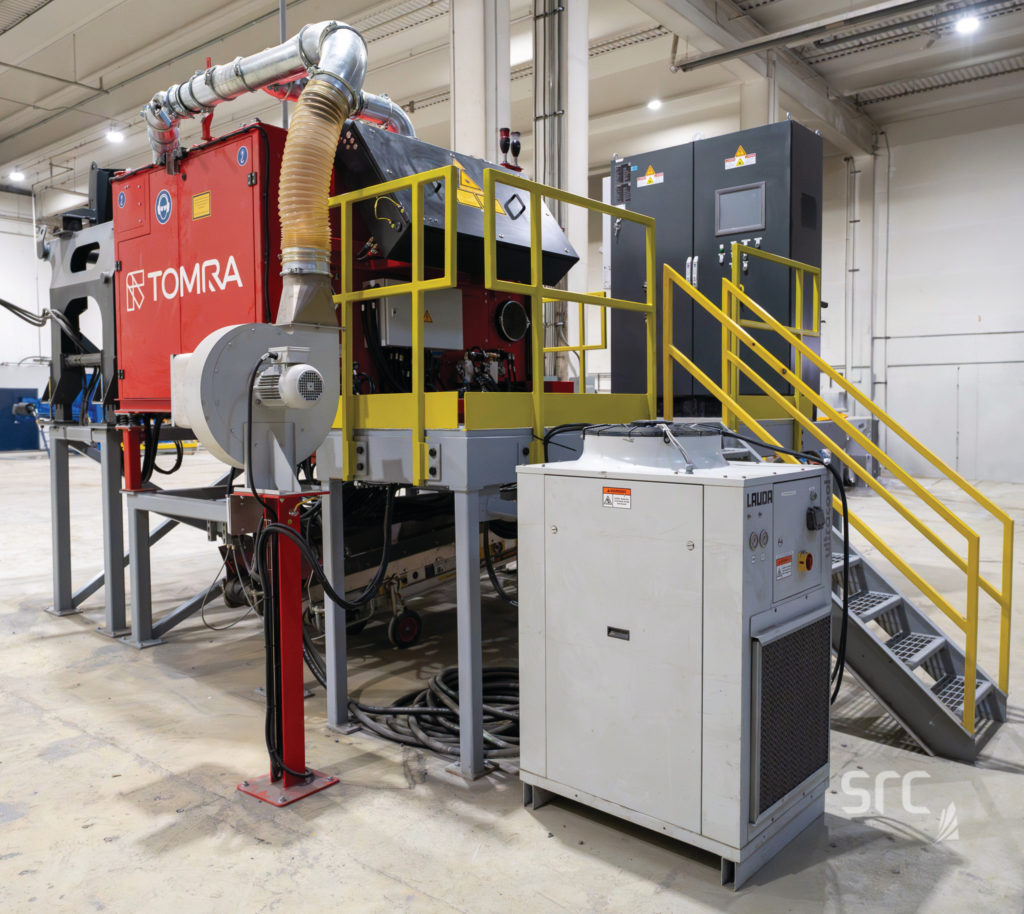
The Saskatchewan Research Council’s full production-scale laser sorter. Image from SRC.

The Saskatchewan Research Council (SRC) announced Thursday the addition of a full-scale laser sorter to the services it offers to the mining industry at its Saskatoon-based facility. 

SRC is Canada’s second largest research and technology organization with 1,400 clients in 16 countries.

SRC’s Minerals Liberation Sorting Centre is the only third-party, independent testing centre to offer bench-to-pilot scale testing and offers front-to-back solutions for mining industry clients in early exploration, later stage exploration, established mining, and post-mining stages, it said.  

The sorting centre now offers full production-scale sensor-based sorting services via X-ray transmission and laser testing services that the SRC said no other independent testing centre in the world can. 

“With the recent addition of a full-scale laser sorting unit, SRC will further strengthen its capability to run real-world scenario testing and deliver efficient, cost-effective, and sustainable sorting solutions to the mining industry in Saskatchewan and beyond,” Minister of Trade and Export Development Warren Kaeding said in a news release. 

Sensor-based sorting technologies are widely used in sectors such as recycling and food production, but in the mining industry specifically, it is changing how companies evaluate mine design and economics, SRC said.  

Using sensor-based sorting, a mining company can generate waste streams earlier in the process based on mineralogical differences detected by sensors, SRC said, adding that by removing waste early, particle ore sorting can increase feed grade to the mill, minimize operational footprints, reduce water and energy usage, and lower operating costs. 

SRC’s three-stage testing regime assists in selecting the most appropriate sensor-based sorting technology, progressing from mineral characterization to targeting and modelling and then to pilot-scale testing. Using this method, SRC said it has implemented sensor-based sorting solutions for various commodities, leading to significant improvements in efficiency and cost savings. 

“We can test all major sorting technologies on the market and have developed custom-made, sensor-based solutions for various applications,” SRC CEO Mike Crabtree said. 

 “Our interdisciplinary team, comprising geologists, mineralogists, and engineers, ensures a complete approach to sensor-based sorting technology integration, making it a reliable partner for mining companies looking to adopt these advanced sorting solutions.” 

More information is here.  


Ultra-rare metal rides AI boom as commodities star performer

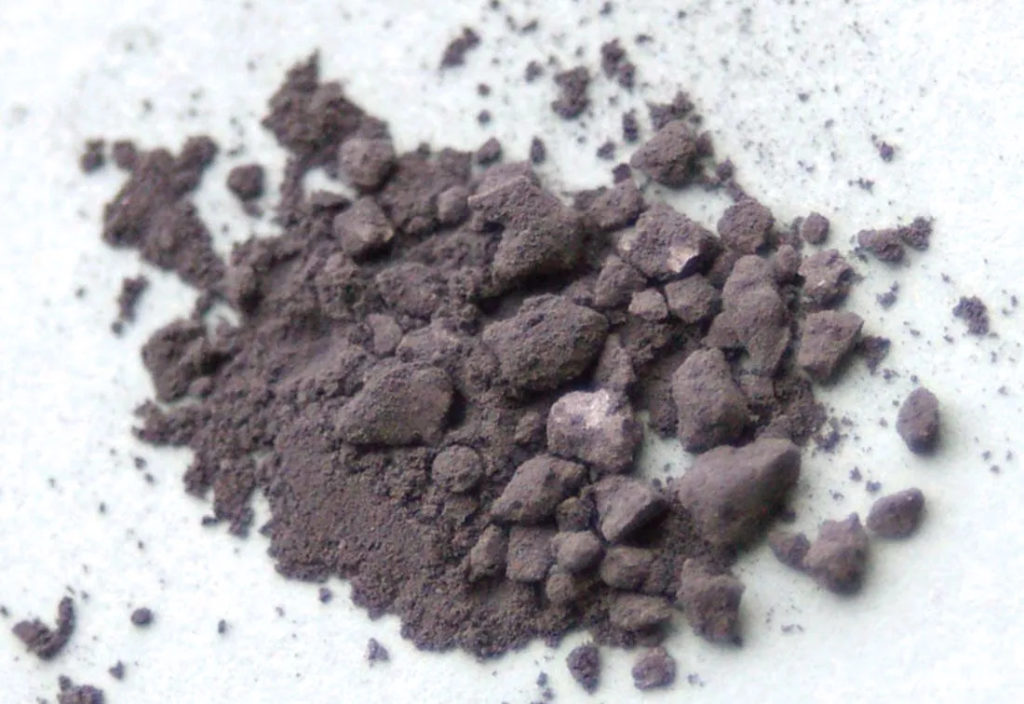
Ruthenium powder. Credit: Materialscientist, under Creative Commons licence Attribution ShareAlike 3.0 (Generic)

Thanks to the boom in artificial intelligence, an ultra-rare element you’ve probably never heard of is one of this year’s best-performing raw materials.

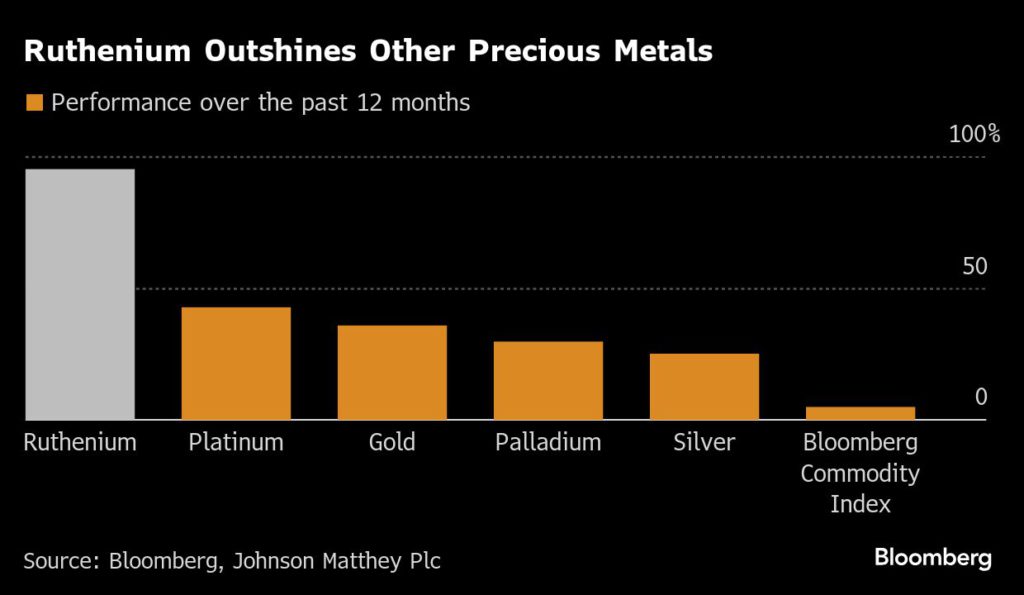
Ruthenium, a silvery gray mineral, has eclipsed the headline-grabbing rallies in other commodities like gold and silver by nearly doubling in price over the past year to $800 an ounce, according to metals refiner Johnson Matthey Plc. That matches its peak in 2021 and isn’t far off the all-time high of $870 hit 18 years ago.

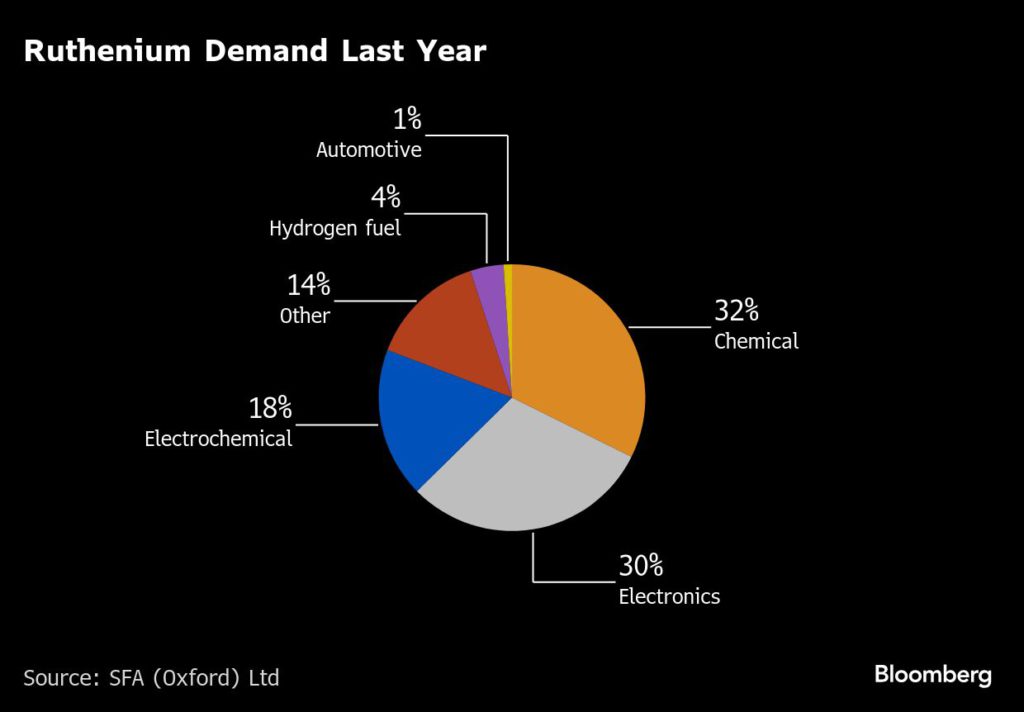
The platinum group metal is prized for its exceptional hardness, and versatility across electronics, energy storage, and chemicals manufacturing. But it’s the AI revolution — particularly in hard disks — that’s driven recent gains, according to SFA (Oxford) Ltd., a critical minerals consultancy.

“As AI rolls out, as data storage requirements increase, you need a technology which is still cheap, cost-effective and can store large quantities of data,” said analyst Sandeep Kaler. Technology that leans on other elements is still very expensive, which means demand for ruthenium will keep rising unless cheaper alternatives can be found, she said.

The metal is very hard to come by, and it’s not traded on any exchanges. Traders are scrambling for any supplies they can get, and even major buyers are having trouble sourcing ruthenium, according to two traders who asked not to be named as the information isn’t public.

Dwindling production is likely to provide further support to prices. Annual supply of the mineral, which is mostly derived as a byproduct of platinum, was just 30 tons last year, and is expected to fall due to a lack of investment after many lean years for prices, said Kaler. The market is likely to tip into a deficit next year, where demand outstrips supply, she said.

But the amounts used are minuscule. In hard disk drives, ruthenium allows for greater density of data and appears as a film less than a nanometer thick.

Growth in cloud computing is set to raise hard disk sales by 16% this year, according to figures from International Data Corp. cited by Bloomberg Intelligence, which will in turn fuel ruthenium consumption.

(By Yihui Xie)


Northern Dynasty shares plunge 55% on insider selling


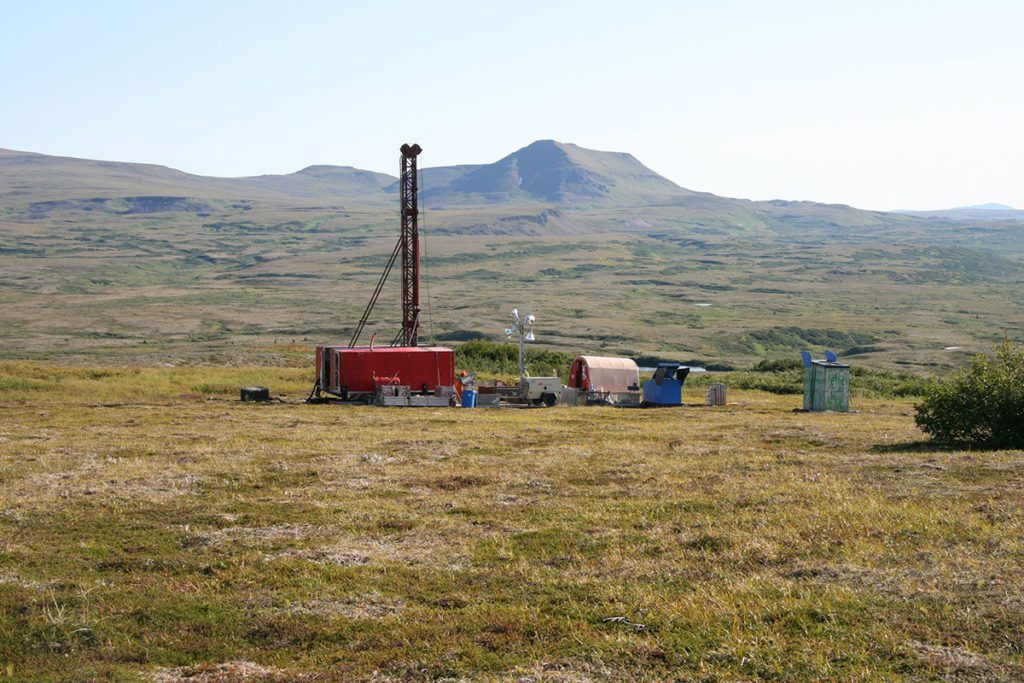
The proposed area where Pebble mine would be built, 320 km southwest of Anchorage, within the Bristol Bay watershed. (Image courtesy of Northern Dynasty Minerals)

Northern Dynasty Minerals (TSX: NDM) (NYSE-A: NAK) saw its biggest single-day share drop since 2020 on Thursday due to insider selling activity.

The company’s Toronto-listed shares plunged as much as 55% to C$1.41 before recovering to around C$2.27 in late afternoon. Earlier in the day, trading of the stock was briefly halted as it nosedived. At press time, the company’s market capitalization stood at C$1.2 billion ($870 million).

Its New York-listed shares followed a similar pattern, falling by more than 55% before paring losses.

The company has yet to respond to MINING.com’s request for comment. 

The drop comes after various insiders, including VP engineering Stephen Hodgson and chairman Robert Dickinson, sold shares during recent trading sessions.

With Thursday’s move, Northern Dynasty has now erased all gains from July 4, when the company announced it is in talks to settle litigation with the US Environmental Protection Agency, which it said could help the regulatory approval of its flagship Pebble project in Alaska.

The Pebble project is touted as the world’s largest undeveloped copper and gold resource, with significant endowments of molybdenum, silver and rhenium. However, the proposed mine has been a source of contention for years due to its location near Bristol Bay, home to some of the world’s largest sockeye salmon fisheries.

Northern Dynasty’s stock has gradually rallied this year on optimism that the Trump administration might roll back the project’s regulatory hurdles.