Monday, September 01, 2025

 NEW ZEALAND

Port of Tauranga Slams Latest Delay in Approving Expansion

Ulrich Lange
Port of Tauranga (Ulrich Lange / CC BY SA 3.0)

Published Aug 31, 2025 11:42 PM by The Maritime Executive


New Zealand’s biggest port, Tauranga, has slammed further delays in the long-delayed review of large-scale improvements to its harbor, which it says would pump millions of dollars into the country’s economy.

The project has been in the consenting system for more than six years. Tauranga’s application for its greenlighting under the Fast-track Approvals Act was halted by a judicial review due to a "legislative drafting error" that left the words “Mount Maunganui wharves” out of the project description.

A fast-track panel, which was intended to commence sittings on September 1 to review the project and potentially approve it, has indefinitely been put on hold by the High Court.

Port of Tauranga has described the decision as both “ludicrous” and “frustrating”, and it says the delays in approving the project are reaching crisis point. The port is being forced to turn away shipping services due to a lack of berth capacity, and New Zealand is facing the risk of being bypassed by international services, the port warns. 

Last month, for instance, the port was forced to decline a proposed new service to the Americas that would have saved New Zealand importers and exporters millions per year in freight costs. A report by the NZ Institute of Economic Research has also estimated that, without the container berth extension, the country will miss out on NZ$485 million to NZ$749 million of annual gross domestic product by 2032.

“It is very frustrating that in the midst of significant interest from international container lines, we are unable to support new trade opportunities because we don’t have the berth space,” said Julia Hoare, Port of Tauranga Chair. “We have also lost the flexibility to readily manage congestion when ships turn up off-schedule. When arrivals bunch up, we’re forced to further delay ships at anchor and productivity decreases."

Currently, the port has a dedicated container terminal at Sulphur Point, with bulk cargo wharves at Mount Maunganui, both of which are connected by the Tauranga Harbor Bridge. The Sulphur Point container berths are operating at almost full capacity due to demand and the growing global trend that is seeing the building of larger ships.

The new project aims to convert existing cargo storage land into usable berths on both sides of the harbor, growing the port's capacity. The first stage of Sulphur Point extension will add 285 meters of berth to the south of the existing wharves and will allow the port to expand capacity from the current 1.2 million TEU to 2 million TEU annually. This will enable the terminal to accommodate three or four ships at once, instead of the current two.

The Mount Maunganui expansion involves a berth extension of 315 meters (plus mooring dolphins), a development that is aimed at relieving capacity pressure and allowing for the future replacement of the oldest, original part of the port, midway along the Mount wharves.

Despite the controversies facing the Stella Passage project, Tauranga has had stellar performance over the past financial year. New Zealand’s busiest port posted a seven percent increase in total trade to 25.3 million tonnes with container volumes increasing by 5.3 percent to 1.2 million TEUs. During the year, the port saw its profits hit NZ$126 million, a 23% increase year over year. 


German Seaports Eye Defense Funding to Build Infrastructure
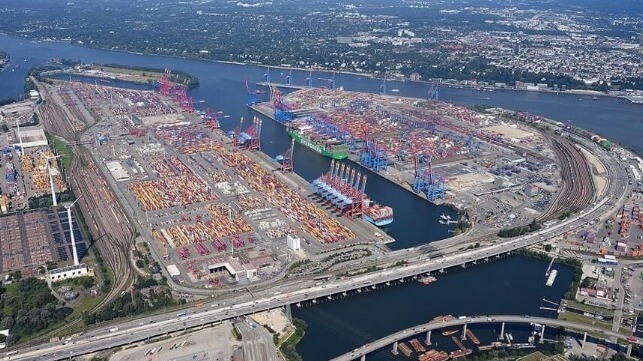
Hamburg
Carsten Steger / CC BY SA 4.0

Published Aug 31, 2025 8:12 PM by The Maritime Executive


As Europe ramps up funding for its defense, German ports want to see some of the new resources used to strengthen transport infrastructure against potential military attacks. In a recent letter to the German Defense Minister Boris Pistorius, the Central Association of German Seaport Operators (ZDS) emphasized that ports form the first line of attack in a war scenario. In addition, ports are critical in military deployment. In an emergency, materials and soldiers of the German military and NATO partners would have to be moved through seaports.

ZDS estimates that an initial $3.5 billion is needed to ready German ports for wartime emergencies. “We must prepare for this, even if we hope that it never comes to a real emergency. History has taught us this,” said ZDS. The funding should be part of the defense budget and utilized to secure vulnerable port areas and associated infrastructure. These include quay walls, cyber systems and railway facilities. ZDS recommended a dual-use approach for the funding, catering for both civilian and military needs.

Germany’s defense budget is poised to more than double until 2029, from about $72 billion in 2025 to more than $177 billion in the next four years. Part of the funds are earmarked for expanding transport infrastructure, especially roads and railways that are already considered as militarily relevant. With the ZDS proposal, the funding would also be extended to ports. Some of Germany’s most important seaports by cargo throughput include Hamburg, Bremerhaven, Wilhelmshaven and Rostock.

Since Russia invaded Ukraine in 2022, Germany has responded by strengthening the capabilities of its military. This has meant defense preparations for potential Russian aggression. This week, German media carried reports that the federal government is finalizing a military railway system to support NATO’s eastern flank. The exercise includes mapping critical infrastructure sites that would be prioritized in case of an attack.

Separately, ZDS has also been highlighting the aging port infrastructure in Germany. New climate regulations and shifts in global trade are putting pressure on the shipping industry to transform. Unfortunately, the financing availed to ports in Germany has been criticized as insufficient for any meaningful development, and ZDS says that the needs come to about $17 billion. Currently, the federal government pays the states around $45 million annually for seaports. However, there have been some milestones, with the federal government last month announcing $467 million in funding to ports. The investment will go into modernization and building infrastructure for green shipping.

Top image: Carsten Steger / CC BY SA 4.0


Freighter Hits Explosive Device off Odesa

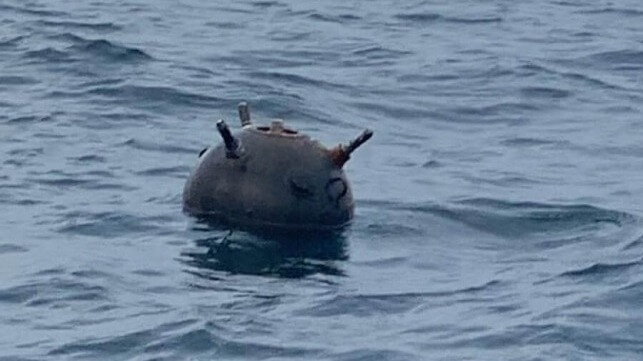
YARM type sea mine
File image courtesy Romanian Navy

Published Aug 31, 2025 11:03 PM by The Maritime Executive


A small freighter encountered an explosive device and suffered a blast in waters off the coast of Odesa, according to Ukrainian media. 

Ukraine's Black Sea shipping corridor is known for the risk of drifting explosive devices and occasional Russian attacks. Sea mines linked to the Ukraine conflict have been found as far away as Georgia, on the other side of the Black Sea. The navies of Romania, Bulgaria and Turkey have removed countless mines from the water, but despite countermeasures, chance encounters still happen. 

In this case, the Belize-flagged freighter NS Pride was operating off Chornomorsk - just south of Odesa's harbor - when it struck an unidentified floating explosive device. The vessel was in ballast at the time of the casualty, and there were no injuries reported. 

"The ship sustained minor damage and is currently being inspected. It is likely to continue its journey under its own power," Ukrainian Navy spokesman Dmitry Pletenchuck told local outlet Dumskaya. "Unfortunately, due to the actions of the Russian invaders, a large number of explosive objects remain at sea. And in a constantly moving maritime environment, it is, of course, impossible to predict such incidents with 100% certainty."

Ukrainian outlet Militarnyi reports that it is possible that the object was the remains of a Russian-Iranian Shahed drone that had been shot down by Ukrainian forces. The other strong possibility is a drifting sea mine. 

NS Pride is an Albanian-owned, Belize-flagged coastal freighter of about 3,400 dwt. Built in 1988 and approaching her 40th year in service, the vessel has changed names eight times since 2001 and has a questionable inspection record. Her typical trading pattern alternates between Greece, Sicily and Tunisia; on this voyage, she departed from that pattern and made multiple stops in Turkey before heading further north to Odesa, hugging the coast to stay closer to Bulgaria and Romania, AIS data provided by Pole Star shows. 


Ukrainian Drones Hit Harbor Tug and Two Helicopters in Crimea

FPV drone approaches a harbor tug in Sevastopol (GUR)

Published Sep 1, 2025 3:29 PM by The Maritime Executive


The Defense Intelligence of Ukraine (GUR) has attacked a Russian tug and two helicopters in Crimea, which has been occupied by Russia since 2014 and is a frequent target of Ukrainian strikes. 

On August 30, GUR first-person view drones hit the Russian airbase in Gvardiyske, not far from Simferopol, damaging two Mi-8 transport helicopters. Each is valued at about $20-30 million, GUR said. 

An FPV drone attack also hit a Russian tug in Sevastopol's bay, illustrating why the Black Sea Fleet has evacuated its more valuable warships to the relative safety of Novorossiysk, far to the east. The tug was likely the assist tug BUK-2190, a RAL RAscal-2000 design licensed and built at Pella Shipyard in Leningrad in 2018.

GUR said that the drone strike on the tug was carried out by military divers, "for whose training significant financial and time resources are spent." 

Diver-enabled attacks are widely suspected in a series of attacks on tankers linked to Russia since the start of the year; Ukrainian divers (whether employed by Kyiv or acting on their own) are also suspected of conducting the 2022 attack on the Nord Stream pipeline complex. 


Vessel Reports Explosion in the Water off Saudi Red Sea Coast

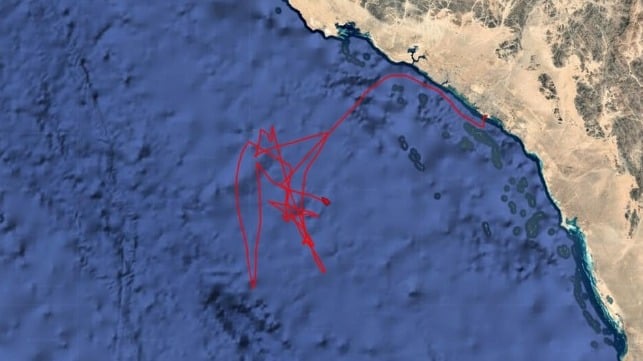
Scarlet Ray's AIS movements off Yanbu, August 24-31 (Pole Star)

Published Aug 31, 2025 11:10 PM by The Maritime Executive


A merchant vessel may have narrowly avoided an attack off the Red Sea coast of Saudi Arabia, an area that has previously had comparatively few security issues for passing traffic. The reported incident follows just days after an Israeli strike eliminated top Houthi leaders.

At about 1730 hours UTC on Sunday, the master of an unnamed vessel informed UKMTO that they had seen a splash in the water near the ship, followed by a loud bang. The crew is safe, and no damage was reported. The vessel remains under way. Investigations are in process and UKMTO has asked for passing traffic to report any suspicious activity. 

A Houthi spokesman later identified the vessel in question as the tanker Scarlet Ray, and said that it had been "hit" by a ballistic missile - contrary to the ship's own reports. AIS data suggests that Scarlet Ray had been loitering off Yanbu, and that her GPS signal was disrupted by spoofing in the weeks prior to the incident; the signal has not been received since midday Sunday. 

The area of the incident is more than 600 nautical miles north of the highest-risk Red Sea region, the waters just off Houthi-controlled parts of western Yemen. Waters off Yanbu are within the Saudi exclusive economic zone, and rarely see disturbances of the kind that plagued the Strait of Bab el-Mandeb and Gulf of Aden last year.

Observers have been quick to note that the claimed attack followed three days after a major Israeli airstrike on Houthi leaders. The Israeli attack killed the group's prime minister, Ahmed al-Rahawi, and several associates, Houthi official Mohammed al-Bukhaiti told the New York Times. Others believed dead include foreign minister Jamal Amer and information minister Hashem Sharaf el-Din. The Houthis have vowed to take revenge: the group's militia council chief Mahdi al-Mashat said Sunday that "our vengeance does not sleep, and dark days await you." 

Multiple analysts have assessed that the strikes on the Houthis' political leadership - including moderates - are likely to drive the group to take more kinetic action, potentially including more actions against shipping. For more than a month, the group has focused its aim on striking Israeli territory rather than disrupting merchant traffic; after Houthi forces hit and then sank the Greek bulker Eternity C, no further reported attacks followed off the coast of Yemen for about six weeks.  


Video: Tugs Race to Secure Containership After Mooring Lines Break

drifting containership
Containership Vincente Pinzon broke free and was drifting in the shipping channel (Port security camers)

Published Sep 1, 2025 12:10 PM by The Maritime Executive


Images are appearing online showing the moments after a containership broke loose in Brazil’s second-largest port and was moving in the shipping channel. The emergency response team and tugs quickly responded to secure the ship with no damage in the Port of Itajal, south of São Paulo, Brazil.

The containership Vincente Pinzon (57,881 dwt) was moored in the port on August 27 when it snapped its mooring lines first at the bow. The vessel began to swing into the busy Itajaí-Açu river before breaking its stern lines and starting to move down the channel. Port officials blamed the strong current in the river, which took control of the vessel.

Built in 2014, the ship, which previously operated for Hamburg Sud, has a capacity of 4,848 TEU. It operates a coastal service for the shipping company Alianca Navegacao connecting Brazil’s ports.


Port officials said the breakaway happened around 0650, and their emergency team quickly responded to the incident. Tugs can be seen scrambling to secure the 254-meter (833-foot) ship and then turning it 180 degrees and heading it back up the river, all without injuries or serious damage. The pilots were able to gain control of the vessel with the assistance of the tugs.

Media reports highlight it was the second time in a matter of months that a similar situation occurred. In December 2024, another containership also broke free. Concern was raised because the ship came very close to the ferry terminal before it was able to be brought under control.

The Port of Itajal is Brazil’s main southern facility serving the key industrial region in the south of the country. The port is slated for modernization and investments to increase efficiency as part of the country’s program to auction concessions in the first quarter of 2026. The initiative includes infrastructure work to allow the berthing of vessels up to 400 meters (1,312 feet) in length at Itajal, dredging the channel to increase the draft to 16 meters (52.5 feet).


Bunker Tanker Operating for Chevron Collides with Bulker Off Singapore

bunker barge Singapore
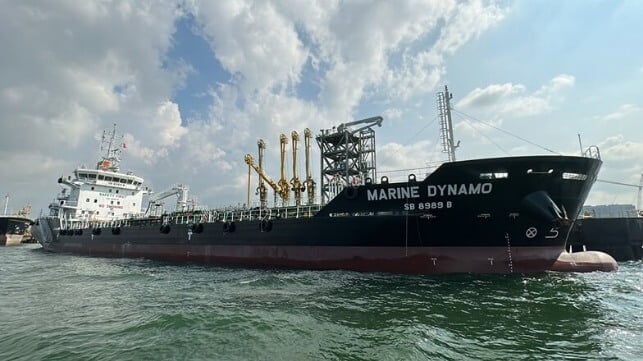
Marine Dynamo is a hybrid bunker barge equipped with batteries (Chevron)

Published Sep 1, 2025 1:50 PM by The Maritime Executive


The authorities were responding to a collision off Singapore on Monday, September 1, in which a bunker barge and a bulker made contact. The Maritime & Port Authority of Singapore is reporting that there was a small fuel spill that was expected to evaporate and break down in the environment, and that both vessels were stable.

Few details were released after the Marine Dynamo (8,270 dwt) collided with the bulker Flag Gangos (56,526 dwt). The vessels were reported to be approximately 5 miles offshore in the western area near Tanah Merah. The collision was reported at 0925 local time, with the MPA saying that a patrol boat, spill response craft, and a drone were deployed.

The master of Marine Dynamo reported that the vessel had spilled Marine Gas Oil (MGO) used for the barge’s propulsion. One crewmember aboard the vessel was also reported to have suffered bruises and sprains and was being treated onboard.

The bulker involved in the collision, Flag Gagnos, Greek-owned and registered in Malta. The ship was heading for Hambantota Port in Sri Lanka.

Marine Dynamo was built in 2023 as one of the two hybrid electric bunker barges for V-Bunkers (Vitol) and chartered in 2024 to Chevron for operations around Singapore. The ship has an electric power system that made it possible to reduce from three to two the number of auxiliary engines installed. It has a 480 kWh energy storage system, which was expected to reduce fuel consumption by approximately 20 percent. Chevron said lessons from the operation would be instrumental in expanding the operation of hybrid vessels.

The MPA is reporting that there is no impact on navigational safety, but it has issued a warning to passing vessels.


ITF Warns Abandoned Tanker Crew is Caught in Sanctions on Illicit Oil Trade

tanker at sea
ITF warns that crews are getting caught up in the sanctions and that abandonment cases are rising (file photo)

Published Sep 1, 2025 4:07 PM by The Maritime Executive


The International Transport Workers’ Federation (ITF) is calling attention to the fate of 19 seafarers abandoned on a sanctioned product tanker that has been lying off the UAE for months. The organization has been warning that seafarer abandonment is on track for its worst year, but the situation of the Global Peace (6,191 dwt) is compounded by the fact that the tanker was sanctioned by the U.S. Treasury in April.

The ship has been in the anchorage off Al Hamriyah since approximately February. The ITF points out that there are 17 Indian nationals aboard, along with one crewmember from Bangladesh and one from Ukraine. They have been aboard for as much as 15 months, well above the 11-month maximum in the Maritime Labour Convention.

Complicating this case are the U.S. sanctions imposed against the UAE-based companies Prime Tankers and Glory International in April 2025 as part of the U.S.’s latest moves against the Iranian oil trade. The U.S. designated Indian national Jugwinder Singh Brar, who it said owns multiple shipping companies with a fleet of nearly 30 vessels, many of which operate as part of Iran’s “shadow fleet.” Brar, a ship captain, the U.S. said, had assembled a fleet mostly of Handysize tankers that were operating in coastal waters. It said he was conducting ship-to-ship transfers and blending oil and products from “shadow fleet” vessels, smugglers, and fishing vessels, and selling the products illegally to fund Iran. 

“This is a shocking case of abandonment that shines a light on how seafarers can be unseen victims of the illicit oil trade – it’s imperative that the UAE’s maritime authorities act now to save these seafarers and put an end to their ordeal,” said ITF Inspectorate Coordinator, Steve Trowsdale.  

The Global Peace, a product tanker built in 2010, appeared to have been acquired in 2021 for this trade. Its last known flag was the Cook Islands, but it currently has no known flag or insurance. ITF reports it has filed reports and listed the vessel in the joint abandonment database of the International Maritime Organization and International Labour Organization.

ITF has warned that as of August, there were 2,648 cases of seafarer abandonment recorded across 259 vessels compared to 3,133 seafarers abandoned in all of 2024. That was up 87 percent from 2023. It says the Middle East is the current hotspot for abandonment, with 32 vessels abandoned in the UAE in the first eight months of 2025.

They note that the Global Peace crew’s right to repatriation has been ignored. They also report that the seafarers’ contracts refer to “fictitious ITF collective bargaining agreements.” They are calling on the UAE authorities and others to intervene.

US 'Denying and Revoking' Visas of Palestinian Officials Ahead of UN General Assembly

The Palestinian presidency said the decision—which comes as more and more nations formally recognize Palestine's statehood—"stands in clear contradiction to international law and the UN Headquarters Agreement."


Palestinian President Mahmoud Abbas listens at the United Nations Security Council in New York on February 11, 2020.

(Photo by Spencer Platt/Getty Images)


Brett Wilkins
Aug 29, 2025
COMMON DREAMS

The Trump administration said Friday that Secretary of State Marco Rubio "is denying and revoking visas from members of the Palestine Liberation Organization and the Palestinian Authority" ahead of next month's United Nations General Assembly in New York.

The US State Department said Friday that "the Trump administration has been clear: It is in our national security interests to hold the PLO and PA accountable for not complying with their commitments, and for undermining the prospects for peace."
RECOMMENDED...


As Israeli Genocide Intensifies, Majority of Americans Support Palestinian Statehood


'Evidence of Genocidal Intent': Israeli General Calls for Killing 50 Palestinians for Every Oct. 7 Victim

"Before the PLO and PA can be considered partners for peace, they must consistently repudiate terrorism—including the October 7 massacre—and end incitement to terrorism in education, as required by US law and as promised by the PLO," the statement continues.

No US administration in modern times has ever demanded that Israel repudiate its generations-long illegal occupation and settler colonization of Palestine, its ongoing genocide in Gaza, or any other violation of international law or human rights.

"The PA must also end its attempts to bypass negotiations through international lawfare campaigns, including appeals to the [International Criminal Court] and [International Court of Justice], and efforts to secure the unilateral recognition of a conjectural Palestinian state," the State Department added. "Both steps materially contributed to Hamas' refusal to release its hostages, and to the breakdown of the Gaza ceasefire talks."

The ICC last year issued arrest warrants for Israeli Prime Minister Benjamin Netanyahu and former Defense Minister Yoav Gallant for alleged war crimes and crimes against humanity in Gaza, including murder and the forced starvation of Palestinians that is driving a famine that has killed at least hundreds of Palestinians and is starving hundreds of thousands more. The ICJ is currently weighing a genocide case against Israel filed by South Africa—not the PA.

As for ceasefire talks, Matthew Miller, who served as a State Department spokesperson during the Biden administration, recently admitted that Israel habitually torpedoed ceasefire agreements each time they were nearing a conclusion in what he called a sustained effort to "try and sabotage" a deal. Miller repeatedly stood at his podium and told reporters that Hamas was to blame for thwarting a truce.


Miller added that Netanyahu openly admitted to US officials that he wanted to continue the Gaza war for "decades."

It is not clear which Palestinian officials will have their visas denied or revoked. The office of Palestinian Authority President Mahmoud Abbas said in a statement responding to the US announcement that "this decision stands in clear contradiction to international law and the UN Headquarters Agreement—which effectively shields UN member-state officials from US immigration policies—particularly since the state of Palestine is an observer member of the United Nations."

This isn't the first time the US has blocked Palestinian officials from attending a General Assembly. In 1998, the Regan administration denied then-PLO Chair Yasser Arafat a visa and the General Assembly was convened in Geneva instead of New York. There have already been numerous calls to relocate this year's General Assembly to the Swiss city following the US move.

The US announcement comes as more and more countries formally recognize Palestinian statehood or move to do so amid Israel's genocidal assault, siege, and famine in Gaza, which, combined, have left more than 230,000 Palestinians dead, maimed, or missing and the strip in ruins.

Approximately 150 of the UN's 193 member states have officially recognized Palestine. Since October 2023, countries including Australia, Belgium, Canada, France, Malta, Portugal, Slovenia, the United KingdomIreland, Norway, and Spain have either recognized Palestine or announced their intent to do so.

Trump admin moves to punish Palestinians by 'denying and revoking' visas for UN General Assembly

In 1998, the Regan administration denied then-PLO Chair Yasser Arafat a visa and the General Assembly was convened in Geneva instead of New York

Brett Wilkins, 
Common Dreams
August 29, 2025 

The Trump administration said Friday that Secretary of State Marco Rubio "is denying and revoking visas from members of the Palestine Liberation Organization and the Palestinian Authority" ahead of next month's United Nations General Assembly in New York.

The US State Department said Friday that "the Trump administration has been clear: It is in our national security interests to hold the PLO and PA accountable for not complying with their commitments, and for undermining the prospects for peace."

"Before the PLO and PA can be considered partners for peace, they must consistently repudiate terrorism—including the October 7 massacre—and end incitement to terrorism in education, as required by US law and as promised by the PLO," the statement continues.

No US administration in modern times has ever demanded that Israel repudiate its generations-long illegal occupation and settler colonization of Palestine, its ongoing genocide in Gaza, or any other violation of international law or human rights.

"The PA must also end its attempts to bypass negotiations through international lawfare campaigns, including appeals to the [International Criminal Court] and [International Court of Justice], and efforts to secure the unilateral recognition of a conjectural Palestinian state," the State Department added. "Both steps materially contributed to Hamas' refusal to release its hostages, and to the breakdown of the Gaza ceasefire talks."

The ICC last year issued arrest warrants for Israeli Prime Minister Benjamin Netanyahu and former Defense Minister Yoav Gallant for alleged war crimes and crimes against humanity in Gaza, including murder and the forced starvation of Palestinians, which is driving a famine that has killed at least hundreds of Palestinians and is starving hundreds of thousands more. The ICJ is currently weighing a genocide case against Israel filed by South Africa, not the PA.

As for ceasefire talks, Matthew Miller, who served as a State Department spokesperson during the Biden administration, recently admitted that Israel habitually torpedoed ceasefire agreements each time they were nearing a conclusion in what he called a sustained effort to "try and sabotage" a deal. Miller repeatedly stood at his podium and told reporters that Hamas was to blame for thwarting a truce.

Miller added that Netanyahu openly admitted to US officials that he wanted to continue the Gaza war for "decades."

It is not clear which Palestinian officials will have their visas denied or revoked. The office of Palestinian Authority President Mahmoud Abbas said in a statement responding to the US announcement that "this decision stands in clear contradiction to international law and the UN Headquarters Agreement—which effectively shields UN member-state officials from US immigration policies—particularly since the state of Palestine is an observer member of the United Nations."


This isn't the first time the US has blocked Palestinian officials from attending a General Assembly. In 1998, the Regan administration denied then-PLO Chair Yasser Arafat a visa and the General Assembly was convened in Geneva instead of New York. There have already been numerous calls to relocate this year's General Assembly to the Swiss city following the US move.

The US announcement comes as more and more countries formally recognize Palestinian statehood or move to do so amid Israel's genocidal assault, siege, and famine in Gaza, which, combined, have left more than 230,000 Palestinians dead, maimed, or missing and the strip in ruins.

Approximately 150 of the UN's 193 member states have officially recognized Palestine. Since October 2023, countries including Australia, Belgium, Canada, France, Malta, Portugal, Slovenia, the United Kingdom, Ireland, Norway, and Spain have either recognized Palestine or announced their intent to do so.
'Never a good sign': Trump's new partner for 'evil' Gaza rebuilding plan shocks analyst

Robert Davis
August 31, 2025 
RAW STORY


Donald Trump makes an announcement in the Oval Office. REUTERS/Jonathan Ernst

President Donald Trump has teamed up with a surprising character in his bid to help rebuild the Gaza Strip, according to reports

Axios reported on Thursday that former British Prime Minister Tony Blair has been working with Trump's son-in-law, Jared Kushner, on a plan to rebuild Gaza after Israel's war with Hamas ends. Trump has previously described the Gaza Strip as a prime real estate location, and Kushner has been linked to several real estate deals since leaving the White House during Trump's first administration.

News that Blair is being considered as a partner on the rebuilding plan shocked Emma Vigeland, co-host of "The Majority Report," and Brendan James, host of "The Blowback Show." They discussed the plans on a new episode of The Majority Report on Sunday.


"Blair being attached is never a good sign," James said.

The Washington Post reported on Sunday that at least part of the Gaza rebuilding plan involves the U.S. administering the state for a decade. The plan also envisions forming public-private partnerships to build electric vehicle plants, data centers, luxury resorts, and high-rise apartments.


James argued that the plan seems disconnected from the reality of the war in Gaza.


"The idea that anything in the near term could produce the conditions, again putting aside the just evil of the proposition, that could produce what Kushner or Trump or Blair would be aiming to do is ridiculous," James said. "People would get blown up every single day trying to build the Cracker Barrel or whatever. So I don't see that happening."


"genocide packaged as real estate."

Trump Admin Circulating Plan to Transform Depopulated Gaza Into High-Tech Cash Cow

Under the proposal, the US would take control after "voluntary" relocation of Palestinians from the strip, where proposed projects include an Elon Musk Smart Manufacturing Zone and Gaza Trump Riviera & Islands.


This illustration shows the Gaza Reconstitution, Economic Acceleration, and Transformation (GREAT) Trust's vision for a Gaza emptied of Palestinians and under US control.
(Image by GREAT Trust)


Brett Wilkins
Sep 01, 2025
COMMON DREAMS


The White House is "circulating" a plan to transform a substantially depopulated Gaza into US President Donald Trump's vision of a high-tech "Riviera of the Middle East" brimming with private investment and replete with artificial intelligence-powered "smart cities."

That's according a 38-page prospectus for a proposed Gaza Reconstitution, Economic Acceleration, and Transformation (GREAT) Trust obtained by The Washington Post and published in a report on Sunday. Parts of the proposal were previously reported by the Financial Times.

"Gaza can transform into a Mediterranean hub for manufacturing, trade, data, and tourism, benefiting from its strategic location, access to markets... resources, and a young workforce all supported by Israeli tech and [Gulf Cooperation Council] investments," the prospectus states.

However, to journalist Hala Jaber, the plan amounts to "genocide packaged as real estate."


The GREAT Trust was drafted by some of the same Israelis behind the controversial Gaza Humanitarian Foundation (GHF), whose aid distribution points in Gaza have been the sites of deliberate massacres and other incidents in which thousands of aid-seeking Palestinians have been killed or wounded.

According to the Post, financial modeling for the GREAT Trust proposal "was done by a team working at the time for the Boston Consulting Group"—which played a key role in creating GHF. BCG told the Post that the firm did not approve work on the trust plan, and that two senior partners who led the financial modeling were subsequently terminated.

The GREAT Trust envisions "a US-led multirlateral custodianship" lasting a decade or longer and leading to "a reformed Palestinian self-governance after Gaza is "demilitarized and de-radicalized."

Josh Paul—a former US State Department official who resigned in October 2023 over the Biden administration's decision to sell more arms to Israel as it waged a war on Gaza increasingly viewed by experts as genocidal—told Democracy Now! last week that Trump's plan for Gaza is "essentially a new form of colonialism, a transition from Israeli colonialism to corporate" colonialism.

The GREAT Trust contains two proposals for Gaza's more than 2 million Palestinians. Under one plan, approximately 75% of Gaza's population would remain in the strip during its transformation. The second proposal involves up to 500,000 Gazans relocating to third countries, 75% of them permanently.

The prospectus does not say how many Palestinians would leave Gaza under the relocation option. Those who choose to permanently relocate to other unspecified countries would each receive $5,000 plus four years of subsidized rent and subsidized food for a year.

The GREAT Trust allocates $6 billion for temporary housing for Palestinians who remain in Gaza and $5 billion for those who relocate.

The proposal projects huge profits for investors—nearly four times the return on investment and annual revenue of $4.5 billion within a decade. The project would be a boon for companies ranging from builders including Saudi bin Laden Group, infrastructure specialists like IKEA, the mercenary firm Academi (formerly Blackwater), US military contractor CACI—which last year was found liable for torturing Iraqis at the notorious Abu Ghraib prison—electric vehicle manufacturer Tesla, tech firms such as Amazon, and hoteliers Mandarin Oriental and IHG Hotels and Resorts.

Central to the plan are 10 "megaprojects," including half a dozen "smart cities," a regional logistics hub to be build over the ruins of the southern city of Rafah, a central highway named after Saudi Crown Prime Mohammed bin Salman—Saudi Arabia and other wealthy Gulf states feature prominently in the proposal as investors—large-scale solar and desalinization plants, a US data safe haven, an "Elon Musk Smart Manufacturing Zone," and "Gaza Trump Riviera & Islands" similar to the Palm Islands in Dubai.

In addition to "massive" financial gains for private US investors, the GREAT Trust lists strategic benefits for the United States that would enable it to "strengthen" its "hold in the east Mediterranean and secure US industry access to $1.3 trillion of rare-earth minerals from the Gulf."

Earlier this year, Trump said the US would "take over" Gaza, American real estate developers would "level it out" and build the "Riviera of the Middle East" atop its ruins after Palestinians—"all of them"—leave Palestine's coastal exclave. The president called for the "voluntary" transfer of Gazans to Egypt and Jordan, both of whose leaders vehemently rejected the plan.

"Voluntary emigration" is widely considered a euphemism for ethnic cleansing, given Palestinians' general unwillingness to leave their homeland.

According to a May survey by the Palestinian Center for Policy and Survey Research, nearly half of Gazans expressed a willingness to apply for Israeli assistance to relocate to other countries. However, many Gazans say they would never leave the strip, where most inhabitants are descendants of survivors of the Nakba, the ethnic cleansing of more than 750,000 Palestinians during the creation of Israel in 1948. Some are actual Nakba survivors.

"I'm staying in a partially destroyed house in Khan Younis now," one Gazan man told the Post. "But we could renovate. I refuse to be made to go to another country, Muslim or not. This is my homeland."

The Post report follows a meeting last Wednesday at the White House, where Trump, senior administration officials, and invited guests including former UK Prime Minister Tony Blair, investor and real estate developer Jared Kushner—who is also the president's son-in-law—and Israeli Minister of Strategic Affairs Ron Dermer discussed Gaza's future.

While Dermer reportedly claimed that Israel does not seek to permanently occupy Gaza, Israeli leaders including Prime Minister Benjamin Netanyahu—who is wanted by the International Criminal Court for alleged crimes against humanity and war crimes including murder and forced starvation in Gaza—have said they will conquer the entire strip and keep at least large parts of it.

"We conquer, cleanse, and stay until Hamas is destroyed," Israeli Finance Minister Bezalel Smotrich recently said. "On the way, we annihilate everything that still remains."

The Israel Knesset also recently hosted a conference called "The Gaza Riviera–from vision to reality" where participants openly discussed the occupation and ethnic cleansing of the strip.

The publication of the GREAT Trust comes as Israeli forces push deeper into Gaza City amid a growing engineered famine that has killed at least hundreds of Palestinians and is starving hundreds of thousands of more. Israel's 696-day assault and siege on Gaza has left at least 233,200 Palestinians dead, wounded, or missing, according to the Gaza Health Ministry—whose casualty figures are seen as a likely undercount by experts.


Israel's Actions in Gaza 'Meet the Legal Definition of Genocide,' Say Leading Scholars

The resolution is "a definitive statement from experts in the field of genocide studies that what is going on on the ground in Gaza is genocide," said the president of the International Association of Genocide Scholars.


Starving Palestinians including women and children holding pots wait to receive food in the Gaza Strip on August 10, 2025.
(Photo by Khames Alrefi/Anadolu via Getty Images)


Brad Reed
Sep 01, 2025
COMMON DREAMS

Israel's actions in Gaza "meet the legal definition of genocide," an overwhelming majority of the world's leading scholars on the subject said on Monday.

The International Association of Genocide Scholars (IAGS) has passed a three-page resolution that outlines a wide range of Israeli actions that it says constitute genocide, including deliberate attacks against civilians, starvation, deprivation of humanitarian aid, sexual violence, and forced displacement of the population.

In addition to the actions of the Israeli military, the resolution also references statements by high-level Israeli government officials as proof of genocidal intent.

Specifically, the resolution cites "Israeli governmental leaders, war cabinet ministers, and senior army officers" who "have made explicit statements of 'intent to destroy,' characterizing Palestinians in Gaza as a whole as enemies and 'human animals' and stating the intention of inflicting 'maximum damage' on Gaza, 'flattening Gaza,' and turning Gaza into 'hell.'"

The scholars also note Israeli officials' support for a plan floated by US President Donald Trump to expel all Palestinians from Gaza, which they contend "amounts to ethnic cleansing."

The resolution, which passed with the support of 86% of IAGS members who voted on it, concludes by calling on the Israeli government to stop all genocidal actions in Gaza; comply with the provisional measures orders issued earlier this year by the International Court of Justice; and "support a process of repair and transitional justice that will afford democracy, freedom, dignity, and security for all people of Gaza."

Melanie O'Brien, president of IAGS and professor of international law at the University of Western Australia, told The Guardian that the scholars' resolution is "a definitive statement from experts in the field of genocide studies that what is going on on the ground in Gaza is genocide."

The IAGS resolution comes just a little more than a week after the United Nations-backed Integrated Food Security Phase Classification Initiative (IPC) declared a famine in Gaza that it warned was projected to get even worse in the coming weeks.

"Between mid-August and the end of September 2025, conditions are expected to further worsen with famine projected to expand to Deir al-Balah and Khan Younis," the IPC stated. "Nearly a third of the population (641,000 people) are expected to face catastrophic conditions (IPC Phase 5), while those in emergency (IPC Phase 4) will likely rise to 1.14 million (58%). Acute malnutrition is projected to continue worsening rapidly."

The Gaza Health Ministry currently estimates that more than 330 people in Gaza, including over 120 children, have so far died from severe hunger as a result of the Israeli blockade that has for months prevented the delivery of humanitarian aid.

Red Cross says Israeli plan to evacuate residents of Gaza City is 'incomprehensible'

As the Israeli army intensified operations to seize Gaza City and relocate its inhabitants, the Red Cross warned that the dire lack of shelter, healthcare and nutrition meant that evacuating the population was "not only unfeasible but incomprehensible under the present circumstances".


Issued on: 30/08/2025 -
By: FRANCE 24


Displaced Gazans head south along a coastal road as the Israeli military gears up for a major new operation in the territory's north. © Eyad Baba, AFP

The Red Cross warned on Saturday that any Israeli efforts to evacuate Gaza City would put residents at risk as Israel's military tightened its siege ahead of a major planned offensive.

After nearly 23 months of devastating war, Israel is under increasing pressure to end its offensive in Gaza, where the United Nations has declared a famine and the majority of the population has been displaced, often several times over.

But despite the calls at home and abroad for an end to the war, the Israeli army is readying itself for an intensified operation to seize the Palestinian territory's largest urban centre and relocate its inhabitants.

"It is impossible that a mass evacuation of Gaza City could ever be done in a way that is safe and dignified under the current conditions," International Committee of the Red Cross president Mirjana Spoljaric said in a statement

The dire lack of shelter, healthcare and nutrition in Gaza meant evacuation was "not only unfeasible but incomprehensible under the present circumstances".

The UN estimates that nearly a million people currently live in Gaza governorate, which includes Gaza City and its surroundings.

An Israeli military statement on Friday declared Gaza City a "dangerous combat zone", adding that it would halt the daily pauses in fighting intended to allow limited food deliveries.

The military did not call for the population to leave immediately. But a day earlier, the Israeli defence ministry's Coordination of Government Activities in the Territories (COGAT), which oversees civil affairs, said it was undertaking preparations "for moving the population southward for their protection".

'Escalation'

A journalist working for AFP on the northern edge of Gaza City reported he had been ordered to evacuate by the army, adding that conditions had become increasingly difficult, with bombardments coming closer to his position and gunfire and explosions heard nearby.

The territory's civil defence agency reported intense Israeli strikes in Gaza City's Sabra and Zeitoun districts, and an "escalation" in the Sheikh Radwan area north of the city centre.

Abu Mohammed Kishko, a resident of the northern Zeitoun area, told AFP the bombardments the previous night had been "insane".

"It didn't stop for a second, and we didn't sleep all night," said Kishko, 42.

"We also couldn't breathe properly because of the smoke bombs – we were suffocating," he added.

Kishko explained that he, like many other residents, had not followed the Israeli evacuation orders because there was nowhere safe to go.

'Daily misery'

Sheikh Radwan resident Mariam Yassine said the non-stop shelling had kept her children up all night.

"My husband went a few days ago to find us a place [to relocate] but he couldn't find anything, and we don't know what to do. We have no place to go," the 38-year-old said.

"We are living in daily misery here in Gaza, as if the world doesn't hear us or see us."

Philippe Lazzarini, head of the UN's Palestinian refugee agency UNRWA, warned on Friday that there were "nearly one million people between the city and the northern governorate who basically have nowhere to go, have no resources even to move".

Critics of the war inside Israel have urged against pursuing the planned Gaza offensive, warning it could claim the lives of more soldiers and endanger the safety of hostages taken by Hamas during its attack on October 7, 2023.

The Israeli army, whose troops have been conducting ground operations in Zeitoun for several days, said Saturday that two of its soldiers had been injured by an explosive device "during combat in the northern Gaza Strip".

Hamas's October 2023 attack, which sparked the war in Gaza, resulted in the deaths of 1,219 people, mostly civilians, according to an AFP tally based on Israeli figures.

Of the 251 hostages seized during the attack, 47 are still being held in Gaza, around 20 of whom are believed to be alive.

Israel's retaliatory offensive has killed at least 63,025 Palestinians, most of them civilians, according to figures from the health ministry in Hamas-run Gaza, figures that the UN considers reliable.

(FRANCE 24 with AFP)


Italian Dockers to Halt Israel-Bound Cargo if Gaza Aid is Blocked

Dockers rally in Genoa in support of the aid flotilla (USB)

Published Sep 1, 2025 5:52 PM by The Maritime Executive


One of Italy's longshore union has threatened to shut down all outbound cargo shipments to Israel if the latest planned protest flotilla to Gaza gets stopped by the Israeli Navy's decades-long blockade. All seven previous seaborne aid attempts have been interdicted, most by Israeli commandos in international waters.

The new flotilla is the fourth so far this year alone, and has just departed Barcelona with a fleet of 50 vessels (of varying sizes) and about 300 personnel in total. The operation has significant support in parts of Europe: in Genoa, local citizens put together an aid package of hundreds of tonnes of food and goods, supported with a $1.2 million donation from the populist Five Star Movement. The city's mayor also joined a march on Saturday to show solidarity with the flotilla's activists, and Genova Today estimated the size of the crowd at the nighttime march at about 40,000 people. 

"I wanted to participate in the torchlight procession wearing the tricolor sash because I truly want to represent all of Genoa and its extraordinary solidarity and humanity," said mayor Silvia Salis, expressing her pride in her city. 

The sentiment extends to Italy's longshore unions, including Unione Sindacale di Base Confederazione Nazionale (USB), a nationwide union with branches in every industry. "These boats will arrive near the coast of Gaza [in two weeks]. If we lose contact with our boats, with our comrades, even for just 20 minutes, we will shut down all of Europe [for Israeli cargo]," said a docker spokesmand for the union USB. "Not a single nail will leave anymore."

The aid flotilla will rally at a port in Tunisia on September 4, then head onwards to Gaza en masse. Weather delays have reportedly set it back, but it should arrive in mid-September. Israel's government has denounced the flotilla: sources close to Israeli national security minister Itamar Ben-Gvir told local media that the plan is to detain the activist crewmembers in "terrorist-level" jail cells for weeks, then seize their boats for use by Israeli police. 

The flotilla's departure coincides with the release of a new assessment from the International Association of Genocide Scholars (IAGS), the world's largest professional association of its kind. The IAGS has concluded that Israel's ongoing operation in Gaza meets the UN treaty definition of genocide, based on Israeli officials' statements and the widely-reported events on the ground. Israel's government has dismissed IAGS' conclusion.