Sunday, September 07, 2025


Open Letter to TDU Members


Teamsters for a Democratic Union

Brothers and Sisters,

 September 5, 2025


At the 2025 TDU Convention (Teamsters for a Democratic Union) you will be asked by leadership to endorse Sean O’Brien to continue as Teamster President. The Teamsters for a Democratic Union endorsement is significant not only in selecting an individual but also in selecting policy and the direction of the union. Any endorsement of any International Officers should be conducted in a one member one vote process.

The undersigned all have long history with TDU and the reform movement. We believe a TDU endorsement of Sean O’Brien violates the basic principles which established and guided TDU for decades. Together we urge TDU members to consider the following few points and ask yourself, is this direction truly aligned with your values? A yes for Sean O’Brien is a yes for:

*Non-Disclosure Agreements (NDA’s) used for the first time in UPS negotiations, threatening immediate removal from any bargaining committee for any reports to members. NDA’s cynically make the bargaining committee constitutional amendment passed at the last convention virtually useless. We’ve gone from a “Brownout” to a full-fledged “Blackout.”

*The heavily publicized UPS Agreement, which was claimed to be historic, has not stopped AI or Robotics, or any form of automation. It’s not produced new jobs or the much bragged about Air-Conditioned trucks. Part-timers were again left behind in what turned out to be a mediocre economic package with a big cut in benefit contributions for most Teamsters. More importantly, its done nothing to improve life on the job or stop harassment.

*Spending millions of dollars on public relations firms to “sell” contracts to Teamster members working from breweries to warehouses. Spending additional millions on a well-known union-busting law firm to go after dissidents and retirees.

*Reporting “new member” numbers and PR releases that do not reflect accurate growth or loss information.

We must ask, how can any organization with the word “democratic” in their title endorse a union leader that has allied himself to a want-to-be dictator proving to be the most anti-worker president in history? In the first seven months of his second term, Trump has gone after unions with a vengeance, following the “Project 2025” playbook without comment and often with support from SOB. Here are just a few of the low lights for labor:

*Termination of collective bargaining agreements for more than 700,000 federal workers and eliminating their right to collective bargaining entirely.

*Repeatedly attempting to remove NLRB officials without cause, leaving the agency without a quorum to resolve unfair labor practices.

*Revoking dozens of regulations protecting worker’s safety while cutting the agency that investigates discrimination and wage theft.

*Appointed a Secretary of Labor recommended by SOB that supports “right to work.”

*Backed Musk’s and Amazons lawsuit against the NLRB resulting in a court decision finding the National Labor Relations Act, passed in 1935, unconstitutional. Workers in much of the South have no federal labor law protection.

A Teamsters for a Democratic Union endorsement of Sean O’Brien in this moment would signify approval of the above and much more. It would also mark the betrayal of TDU’s founding principles. We urge the TDU membership to reject any Sean O’Brien endorsement.

Dan La Botz, TDU co-founder, author R&F Rebellion, Trouble Makers Handbook

Mel Packer, TDU co-founder

Tom Leedham, 3x TDU endorsed candidate for Gen. Pres, former IBT VP, Warehouse Director, Local Officer

Tim Sylvester, former TDU endorsed candidate for GST, former Local 804 President and IBT organizer

Dave Robbins, TDU member, former Steward, Organizer, Business Agent

Bob Randall, former TDU endorsed candidate for VP, TDU member, Local Union BA

Bill Zimmerman, former TDU member, Steward, activist, Labor Radio Host, Local President

Joe Allen, former TDU member, author of Teamsterland: Reports on America’s Most Iconic Union

and The Package King A R&F History of UPS

John Palmer, former TDU Steering Committee, current Teamster’s IBT Vice President at Large

Ken Reiman, author Ron Carey and the Teamsters, former Local 804 BA activist and TDU member

Kenneth C. Crowe, author Collision, How the Teamster R&F Took Back the Teamsters, and The Exoneration of Ron Carey

Jim Reynolds, former TDU Steering Com. member and Local 804 Secretary Treasurer

Michael Savwoir, TDU member, former Steering Committee co-chair for 32 years, 42 years road driver UPS

John Zuraw, longtime TDU member, Local 705 activist

CounterPunch News Service

McCarthyism 2.0: America’s New Witch Hunt Against Muslims and Pro-Palestinian Advocates


 September 5, 2025

Image by Gama Films.

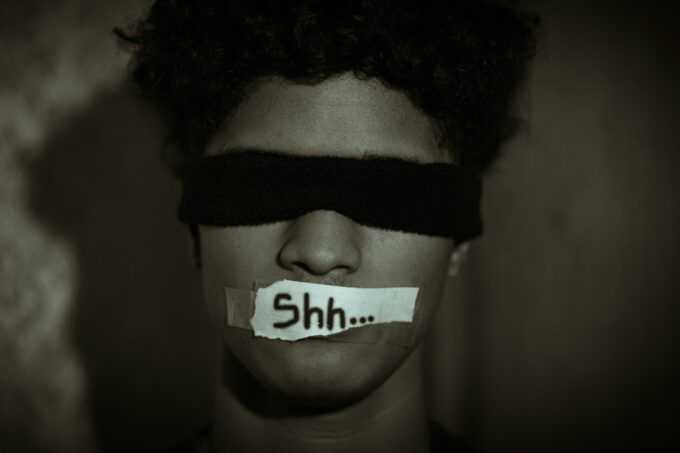
McCarthyism never really ended in America; it metastasized. The ideological purges that once targeted “communists” now target Muslims/Arab-Americans, and anyone sympathetic to the Palestinian cause. The stage may have changed, but the playbook is the same: weaponize fear, silence dissent, and punish expertise.

In the 1970s, the label “Arabist” was turned into a slur. To be an Arabist in the State Department once meant a career diplomat with deep knowledge of Middle Eastern culture and politics. But as U.S. policy increasingly aligned with Israel, journalists like Joseph Kraft recast Arabists as anti-Semitic and even anti-American, accusing the State Department of harboring a “basic bias” against Israel. In a New York Times article titled “Those Arabists in the State Department,” Kraft emphasized the Arabists’ behind-the-scenes influence, citing incidents like Donald Bergus’ “phantom memorandum,” in which Bergus, without official authorization, sent a policy proposal to the Egyptian government regarding Israeli withdrawal from the Sinai. Egypt mistakenly assumed it reflected U.S. policy, creating tension with Israel. Kraft seized on the episode to paint Arabists as shadowy actors capable of subverting presidential priorities. In doing so, he shifted public and political perception: Arabists were no longer experts, but potential saboteurs. This was McCarthyism transposed onto Middle East policy—turning expertise itself into a mark of suspicion. Talcott Seelye, a respected ambassador fluent in Arabic, recalled that “[t]he Arabist taint… became a pejorative… implying we were too pro-Arab and not sufficiently attuned to Israel’s interests.” With that smear, expertise was silenced, and policy became captive to ideology and special interests.

Today, the role of Joseph Kraft is played by once-fringe influencers like Laura Loomer, who boast direct access to the president. Loomer has proudly claimed credit for the dismissal of Muslim employees at the State Department, branding them “Islamists” simply for being Muslims. In August 2025, she bragged that Secretary of State Marco Rubio terminated a visa program for Gaza children needing medical care—victims of U.S.-supplied bombs—after she campaigned against it. Like McCarthy’s witch hunts, this is done under the guise of “national security.” In truth, it replaces experts with operatives and policymaking with paranoia.

The consequences are catastrophic. Without credible experts who understood the Middle East’s political and religious landscape and how it intersects with U.S. priorities, America blundered into two Gulf Wars (costing over $2 trillion and more than 7,000 American lives, along with estimates of over 1 million Iraqis killed, including children), the invasion of Afghanistan (another $2.3 trillion that led to the Taliban retaining power), and a policy that midwifed the rise of ISIS out of Al-Qaeda in Iraq. We were told Iraqis would greet U.S. soldiers with flowers; instead, they hurled shoes at President Bush. Today, Washington again insists that U.S. and Israeli policies are “reshaping the Middle East for the better.” After decades of war, trillions spent, hundreds of thousands of lives lost, and anti-American sentiment at record highs across the Arab and Muslim world, how much longer will we indulge this delusion?

I was also a victim of this type of McCarthyism. In 1999, House Minority Leader Richard Gephart appointed me to the National Commission on Terrorism, a 10-member panel charged with reviewing national policy on preventing and punishing terrorism. After pressure from extreme pro-Israel groups, Gephardt was forced to rescind my nomination, adding to the political exclusion of American Muslims in US policymaking. That exclusion not only damaged the commission’s credibility but also silenced a perspective that could have shed light on the root causes of terrorism and its impact on our nation. Two years later, 9/11 took place, and our policymakers again were in the dark as to how this horror reached our shores.

In 1954, it took one voice – Joseph Welch’s immortal rebuke to Senator McCarthy, “Have you no sense of decency, sir?”– to turn the tide. We need such voices again. We need leaders willing to call out McCarthyism 2.0 for what it is: an un-American witch hunt that weakens our democracy, undermines U.S. national security, and punishes patriotic Americans whose only “crime” is their faith or their empathy for the Palestinian people.

Founded in 1988, the Muslim Public Affairs Council (MPAC) is a national public affairs nonprofit organization working to promote and strengthen American pluralism by increasing understanding and improving policies that impact American Muslims. Over the past 30+ years, MPAC has built a reputation of being a dynamic and trusted American Muslim voice for policymakers, opinion shapers, and community organizers across the country.

Learning from Opera (and Old Master Painting)


 September 5, 2025

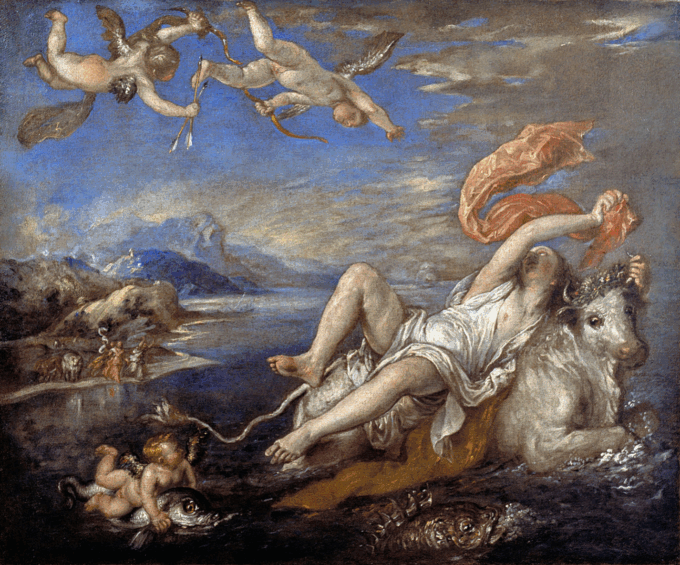
Titian: The Rape of Europa, 1559–62; in the Isabella Stewart Gardner Museum, Boston.

A philosopher interested in public life can learn from how the popular media handle issues of art and morality. I read with interest now and then Slipped Disc, a web site devoted to gossip about the music world. Recently they posted a discussion about a Mozart performance under the heading, “This is what you’ll receive if you want to see Marriage of Figaro at Glyndebourne Festival Opera”. The advisory statement warned potential spectators that the opera presented unwanted sexual advances and aggressive behavior. (Read it for yourself, it’s on-line.) True enough, but you don’t need to have studied musicology to know that. A glance at Wikipedia will suffice. What interested me, however, was that the responses on-line ridiculed this statement. Marriage of Figaro is a great opera set in the old regime, several people said, and so why would anyone need to be warned about the morality of the story? You might as well complain, I suppose, that Rossini’s operas about Islam reveals him to be an Orientalist.

Here, I believe, we actually face a very interesting issue, which deserves reflection. To what extent are we justified in looking critically at the moral issues presented by an artistic masterpiece from an earlier era? I am asking: should we judge that work by our standards, or — rather— might we not admit that it is of an earlier time, when different ways of thinking were prevalent? It happens that in my own present research, devoted to the history of painting in Venice, that a very challenging, conceptually comparable case has recently been discussed. And this example deserves attention because I can here present a good reproduction to accompany my discussion.

Titian painted in late middle-career, in the 1550s and 60s, a series of Ovidian pictures for a grand patron, the Spanish king. These works were exported directly, and never shown in Venice. Recently, however, there was a display of all seven first in London. And that show was much commented on. The picture that I will focus on is Rape of Europa (1560-62), normally on display at the Gardner Museum. Purchased by the founder, Isabella Stewart Gardner, it is generally acknowledge to be the greatest Italian painting in America. I will focus on this one work, while noting that some of the other works in this show revealed quite different erotic concerns. In Death of Actaeon (1556-9), for example, Actaeon is torn to bits by his hunting dogs because he inadvertently saw the goddess Diana bathing nude.

In Titian’s Rape of Europa we see Europe on the body of the bull, who is carrying her away. And she, hanging on for dear life is positioned to be frontally visible by the viewer. What do we make of the fact that Gardner installed this painting, which she adored, with one of her petticoats on the wall? Perhaps I can explain what looks problematic by contrasting a small, very little known work by a female artist. Rosalba Carriera (1673–1757), one of the most famous painters of her time, was greatly admired by prestigious collectors, both in the Venetian Republic and abroad, including French and Habsburg royalty. And by Antoine Watteau, whose portrait she painted. A long lived, very successful independent artist, she did not have the advantage of being the daughter of a painter, as did Giulia Lama, another 18th-century Venetian woman whose work now attracts attention. Her Rape of Europa (54-5) a small work painted on ivory, cannot legitimately be compared to Titian’s famous masterpiece which has been much discussed. And yet, it’s worth comparing her later version of this scene, which reveals her perspective as a woman. Where Titian erotically plays to the spectator, gives us a frontal view of the turned body of the lightly clothed Europa, Carriera shows her embracing a woman, with the bull looking a little cowed. Her Europa looks slightly melancholy. Carriera worked on a small scale, doing no frescoes or altarpieces, but she was emphatically not a modest artist.

The question raised by Titian’s picture are similar in form to those posed by The Marriage of Figaro. Once upon a time, formalist art historians claimed that we could appreciate a visual artwork regardless of its obvious content. That’s emphatically not possible before Rape of Europa, in which the subject is obvious and ambiguous. (Nor is it possible at The Marriage of Figaro, when the count’s desires are central to the plot.) That Carriera offers an alternative view only emphasizes that point. The question I pose then is: how do we deal with this Titian painting or, to go back to my earlier discussion, with Mozart’s opera?

Often in morality, so everyone knows, compromise is called for. A legitimate defensive war may cause, alas, innocent deaths. Still, on balance, we may decide to go to war. But it’s not clear how to understand compromise in this case. Titian’s painting is beautiful; and Mozart’s music is beautiful: but the subjects they present are morally dreadful. (Does it help knowing that Figaro outsmarts the count?) In these cases, it’s hard to imagine how compromise is possible. One might as well say, crime is wrong but you have done a magnificent mugging. This is why, in my considered judgment, the people who ridiculed the Glyndebourne handout missed the point. But I say that without myself being decisive. I greatly admire Marriage of Figuro and Titian’s Rape of Europe. And I see the problems here without any view of a convincing solution. What is to be done when our sensibility is divided in this way? Judging culture can be difficult!

NOTE

See the exhibition catalogues: Mathias Wivel (and other authors), Titian. Love-Desire-Death (London: National Gallery, 2020) and Alberto Craievich, Rosalba Carrera (Venice, 2023).

David Carrier is a philosopher who writes art criticism. His Aesthetic Theory, Abstract Art and Lawrence Carroll (Bloomsbury) and with Joachim Pissarro, Aesthetics of the Margins/ The Margins of Aesthetics: Wild Art Explained (Penn State University Press) were published in 2018. He is writing a book about the historic center of Naples, and with Pissarro he conducted a sequence of interviews with museum directors for Brooklyn Rail. He is a regular contributor to Hyperallergic.