Monday, September 08, 2025

Marines' shocking ties to pro-Russian neo-Nazis exposed after Raw Story sues Trump agency

Jordan Green, 
Investigative Reporter
September 8, 2025 
RAW STORY


Liam Collins (left) and Jordan Duncan, two neo-Nazis in the Marine Corps, were the targets of investigations by the Naval Criminal Investigative Service.. (Courtesy Facebook, LinkedIn)

The U.S. Naval Criminal Investigative Service (NCIS) probed a Marine assigned to Camp Lejeune in North Carolina for ties to a pro-Russia neo-Nazi group in Poland, according to internal military files exclusively obtained by Raw Story.

The Marine was arrested when the FBI disrupted a plot to attack an energy facility on U.S. soil. Authorities found that a co-defendant in the case, also a Marine and a Russian linguist, was in possession of classified material. The links to the pro-Russian group and details of the classified materials investigation are reported here for the first time.

NCIS initially refused to provide records in response to a Raw Story Freedom of Information Act request, citing an exemption to protect privacy. Raw Story sued the federal agency, and the courts found in its favor.

“‘Disclosure of the requested records would likely reveal a great deal about law enforcement policy,’ including how defendants handled investigations related to the mishandling of classified information and how the ‘military is addressing extremism in the ranks,’” Judge Lori AliKhan, a federal judge on the D.C. bench, wrote in 2024.

“‘Thus, disclosure would offer the public visibility into defendants’ ‘performance of [their] statutory duties’ and would further ‘let citizens know ‘what their government is up to.’”

‘Insider threat’

NCIS began investigating the case in April 2020, following a Newsweek story exposing Lance Cpl. Liam Collins as a member of Iron March, a global neo-Nazi online forum.

The investigation uncovered messages exchanged between Collins and two self-identified members of the Polish group, Falanga, discussing potentially coordinating paramilitary activity.

By the time the NCIS began investigating Collins’ links to Falanga, he had organized a neo-Nazi paramilitary group that was illegally manufacturing guns and stealing military gear from Camp Lejeune, while plotting an attack on critical infrastructure designed to spark a race war, according to federal prosecutors.

In October 2020, while Collins was under investigation for his links to the Polish neo-Nazi group, he was arrested on firearms charges, along with Cpl. Jordan Duncan, a Marine and Russian linguist assigned to the 2nd Radio Battalion of the II Marine Expeditionary Force. The two Marines had met at Camp Lejeune in late 2018.

When the FBI raided Duncan’s home in Boise, ID, they seized his laptop and an external hard drive. Authorities discovered classified material on the devices, and the NCIS and FBI opened a new investigation for potential violation of a federal law regulating the handling of national defense information.

As the NCIS and FBI reviewed the classified material as part of an “insider threat” investigation, the case widened to include a new charge of conspiracy to damage an energy facility, and three co-defendants, including another Marine and a New Jersey Army National Guard member.

In August 2021, while Duncan was in jail awaiting trial, investigators determined that the files discovered on his devices included a secret “capabilities brief” for the 2nd Radio Battalion, according to another set of investigative files exclusively obtained by Raw Story.

The files included other documents labeled “FOUO,” or “For Official Use Only,” a designation that denotes sensitive material exempt from public release, though not classified. The documents included “Standard Operating Procedures and tactics” specific to the battalion that a special security officer determined “would be detrimental to the Signals Intelligence and Electronic Warfare community as a whole if obtained by an adversary,” according to the investigation.

The investigation revealed that the FOUO materials were commingled with “a large library of improvised explosive device schematics, chemical weapons schematics” and other manuals on Duncan’s hard drive.

“It appears that Mr. Duncan’s hard drive was kind of a source for the entire group,” NCIS Agent Christopher Little testified during a detention hearing for one of Duncan’s codefendants in August 2021. “There was multiple documents from that hard drive on multiple other group members’ devices.”
‘Fresh and ready’

Before Collins met Duncan or started assembling his paramilitary group, he communicated with two self-identified members of Falanga, the neo-Nazi group with roots in the Polish skinhead scene, according to a data set of leaked Iron March chats reviewed by Raw Story.

When Collins began communicating with Falanga members in June 2016, he was a rising senior in New Jersey still more than a year out from entering Marine Corps bootcamp at Parris Island, SC.

Collins told other users on the forum his mother was Polish, that he was proud his “great-grandparents were Nazi collaborators,” and that he didn’t dispute Jews who claimed “Poland helped with the Holocaust.” In fact, it was a point of pride.

“I have a deep interest in creating a sort of ‘alliance’ with you and any members of Falanga that might be able to talk to me,” Collins wrote to a self-identified Falanga member with the username “Phalanx22” in August 2016.

“Like being able to relay information and propaganda between Poland and the United States. I will be serving in the military soon, so I want to come out fresh and ready to train my Polish brothers how to defend their blood and soil.”

Falanga made no secret of its anti-American stance.

The group was founded because of its leader’s perception of “liberalism, capitalism and USA/NATO as the greatest enemies,” a member with the username “Bombenhagel” told Collins.

Collins’ comments in the Iron March chats do not reveal his position on Russia, but he disparaged NATO — a bulwark of the US military alliance with Poland — for its role in the Balkans war of the 1990s.

“Opportunists like NATO wanted a reason to build more bases in Eastern Europe after the Cold War,” Collins wrote, “so they stopped Serb and Croats from genociding every last Muslim in the Balkans.”

Addressing an Iron March user in Canada, Collins said he was forming a “paramilitary.” In April 2017, Collins told “Bombenhagel” his group would be “purchasing a lot of land soon for training, so if Falanga ever organizes a trip to the U.S., you are welcome to come train with us.”

“Bombenhagel” thanked Collins for the invitation. It’s unclear if Falanga members ever traveled to the U.S. to train.

The last documented exchange between Collins and Falanga on Iron March took place in May 2017, but an NCIS investigative report noted that Collins expressed concern about the security of the forum, while suggesting they continue to communicate through a different platform. It is unclear how long the relationship between Collins and Falanga lasted.

In early 2018, three Falanga members were detained by the Polish Internal Security Agency on suspicion of carrying out an arson attack against a Hungarian cultural center in Ukraine.

The three were convicted, according to Przemyslaw Witkowski, a Polish scholar who researches the far right and pro-Russia influences at Civitas University in Warsaw, and who described the attack in the book Russia and the Far-Right: Insights from Ten European Countries as “the most infamous act of terror committed by Polish citizens in the last 20 years.”

Polish prosecutors argued that the purpose of the crime was to “publicly incite national hatred between Ukrainians and Hungarians” and to cause “disruption of the political system in Ukraine.”

The clear beneficiary was Russia, which in 2014 had annexed Crimea from Ukraine, and was backing separatists in the Donbas.

Three years later, Russia launched a full-scale invasion that continues to exact a bloody toll.

Witness testimony in the trial for the 2018 terror attack implicated Manuel Ochsenreiter, a German journalist active with the far-right Alternative for Germany party, according to Witkowski. Ochsenreiter reportedly denied involvement but relocated to Moscow, where in 2021 he died suddenly of a heart attack, aged 45.

‘Exchange of information’

Falanga members have addressed the Duma in Moscow, visited Russian-backed separatists in the Donbas, and interviewed Aleksander Dugin, a Russian intellectual close to Russian President Vladimir Putin, Witkowski noted.

Witkowski told Raw Story he finds it unlikely that Falanga would be able to maintain such high-level contacts without some kind of approval from Russian intelligence services.

“For sure there is an exchange of information in this environment,” Witkowski said.

The secret “capabilities brief” and other sensitive U.S. military information Duncan obtained through his assignment to the 2nd Radio Battalion in the II Marine Expeditionary Force would likely be of interest to Collins’ counterparts in Falanga, Witkowski said.

He noted that Falanga members have demonstrated an interest in infiltrating the Polish police, national guard and army.

Duncan is now serving a seven-year sentence in Pennsylvania, for illegally manufacturing a short-barrel rifle. His lawyer declined to comment.

Collins, who is serving a 10-year sentence in South Carolina for aiding and abetting the interstate transportation of unregistered firearms, could not be reached for comment.

Emails to Bartosz Bekier, the leader of Falanga, went unreturned.

NCIS told Raw Story the investigation yielded no evidence that any military information on Duncan’s devices was transferred to Falanga or wound up in Russian hands.

“NCIS has determined, in coordination with the FBI and [the U.S. Department of Justice], that there were no indications that classified information was provided to other groups or to foreign entities,” said Meredith March, an NCIS spokesperson.

March added that NCIS was “unable to provide information that may be contained in the FBI’s investigative files.”

The FBI National Press Office and FBI joint terrorism task forces in Wilmington, NC and Boise, ID, declined to comment.

The NCIS “insider threat” investigation on Duncan for potential violations of the federal law on communicating, transmitting or retaining national defense information was closed in November 2021. Federal prosecutors agreed to refrain from mention of the classified materials on Duncan’s devices, to avoid prejudicing a jury if he were to go to trial on firearms charges. Duncan pled guilty to the gun charge shortly before his trial was scheduled to begin.

While the National Security Division Counterterrorism Section prosecuted Duncan, alongside federal prosecutors in the Eastern District of North Carolina, the Department of Justice opted to not charge him for mishandling classified materials.

A spokesperson for the U.S. Attorney’s Office for the Eastern District of North Carolina, where Camp Lejeune is located, declined to comment. The Department of Justice did not respond to a request for comment.


Jordan Green is a North Carolina-based investigative reporter at Raw Story, covering domestic extremism, efforts to undermine U.S. elections and democracy, hate crimes and terrorism. Prior to joining the staff of Raw Story in March 2021, Green spent 16 years covering housing, policing, nonprofits and music as a reporter and editor at Triad City Beat in North Carolina and Yes Weekly. He can be reached at jordan@rawstory.com. More about Jordan Green.
Washington's warning about America's doom is finally coming true

The Conversation
September 8, 2025 

George Washington, by Gilbert Stuart, c. 1803-05, American painting, oil on canvas / Shutterstock

By Robert A. Strong, Washington and Lee University and University of Virginia.

The United States will celebrate the 250th anniversary of the Declaration of Independence, the country’s founding document, in 2026. Twenty years later, America will celebrate the 250th anniversary of President George Washington’s Farewell Address, which was published on Sept. 19, 1796.

The two documents are the bookends of the American Revolution. That revolution began with the inspirational language of Thomas Jefferson, who wrote much of the Declaration of Independence; it ended with somber warnings from Washington, the nation’s first president.

After chairing the Constitutional Convention in Philadelphia and serving eight years as president, Washington announced in a newspaper essay that he would not seek another term and would return to his home in Mount Vernon. The essay was later known as the “Farewell Address.”

Washington began his essay by observing that “choice and prudence invite me to quit the political scene” while “patriotism does not forbid it.” The new nation would be fine without his continued service.

But Washington’s confidence in the general health of the union was tempered by his worries about dangers that lay ahead — worries that seem startlingly contemporary and relevant 229 years later.

Focus on the domestic

Washington’s Farewell Address is famous for the admonitions “to steer clear of permanent alliances” and to resist the temptation to “entangle our peace and prosperity in the toils of European ambition.”

Important as those warnings are, they are not the main topic of Washington’s message.

During the four decades that I have taught the Farewell Address in classes on American government, I have urged my students to set aside the familiar issues of foreign policy and isolationism and to read the address for what it says about the domestic challenges confronting America.

Those challenges included partisanship, parochialism, excessive public debt, ambitious leaders who could come to power playing off our differences, and a poorly informed public who might sacrifice their own liberties to find relief from divisive politics.

Washington’s address lacks Jefferson’s idealism about equality and inalienable rights. Instead, it offers the realistic assessment that Americans are sometimes foolish and make costly political mistakes.

Rule by ‘ambitious, and unprincipled men’

Partisanship is the primary problem for the American republic, according to Washington.

“It serves always to distract the public councils and enfeeble the public administration,” he wrote. Partisanship “agitates the community with ill founded jealousies and false alarms, kindles the animosity of one part against another, foments occasionally riot and insurrection” and can open “the door to foreign influence and corruption.”

Though political parties, Washington observes, “may now and then answer popular ends,” they can also become “potent engines by which cunning, ambitious, and unprincipled men will be enabled to subvert the power of the people and to usurp for themselves the reins of government, destroying afterwards the very engines which have lifted them to unjust dominion.”

Washington’s fear that partisanship could lead to destruction of the Constitution and to the rule of “ambitious, and unprincipled men” was so important to him that he felt compelled to repeat the warning more than once in the Farewell Address.

Politicians’ ‘elevation on the ruins of public liberty’

The second time Washington takes it up, he says that “the disorders and miseries” of partisanship may “gradually incline the minds of men to seek security and repose in the absolute power of an individual.”

Sooner or later, he writes, “the chief of some prevailing faction, more able or more fortunate than his competitors, turns this disposition to the purposes of his own elevation on the ruins of public liberty.”

So why not outlaw parties and rein in the dangers of partisanship?

Washington observes that this is not possible. The spirit of party “is inseparable from our nature, having its root in the strongest passions of the human mind.”

Americans naturally collect themselves into groups, factions, interests and parties because that’s what human beings do. It’s easier to be connected to local communities, states or regions of the country than to a large and diverse nation; even though that large and diverse nation is, by Washington’s assessment, essential to the security and success of all.

The central problem in American politics is not a matter of devious leaders, foreign intrigue or sectional rivalries — things that will always exist.

The problem, Washington warned, lies with the people.

Excesses of partisanship

By their nature, people divide themselves into groups and then, if not careful, find those divisions used and abused by individual leaders, foreign interests and “artful and enterprising” minorities.

Political parties are dangerous, but can’t be eliminated. According to some people, Washington observes, the competition between parties might serve as a check on the powers of government.


“Within certain limits,” Washington acknowledges, “this is probably true.” But even if the battles between political parties sometimes have a useful purpose, Washington worried about the excesses of partisanship.

Partisanship is like “a fire not to be quenched, it demands a uniform vigilance to prevent its bursting into a flame, lest instead of warming it should consume.”

Where is America today? Warmed by the fires of partisanship or consumed by the bursting of flames? George Washington suggested that provocative question more than two centuries ago on Sept. 19, 1796. It’s still worth asking.


Robert A. Strong is an Emeritus Professor of Politics at Washington and Lee University and is a Senior Fellow at the Miller Institute. He has published work in American foreign policy, national security issues and the presidency, including books on Henry Kissinger, Jimmy Carter and modern American foreign policy decisions. He has published articles and op-eds on a variety of contemporary political and international topics.
RFK Jr. stuns by accidentally revealing secret CDC program: 'There’s peril involved'


Alexander Willis
September 8, 2025
RAW STORY


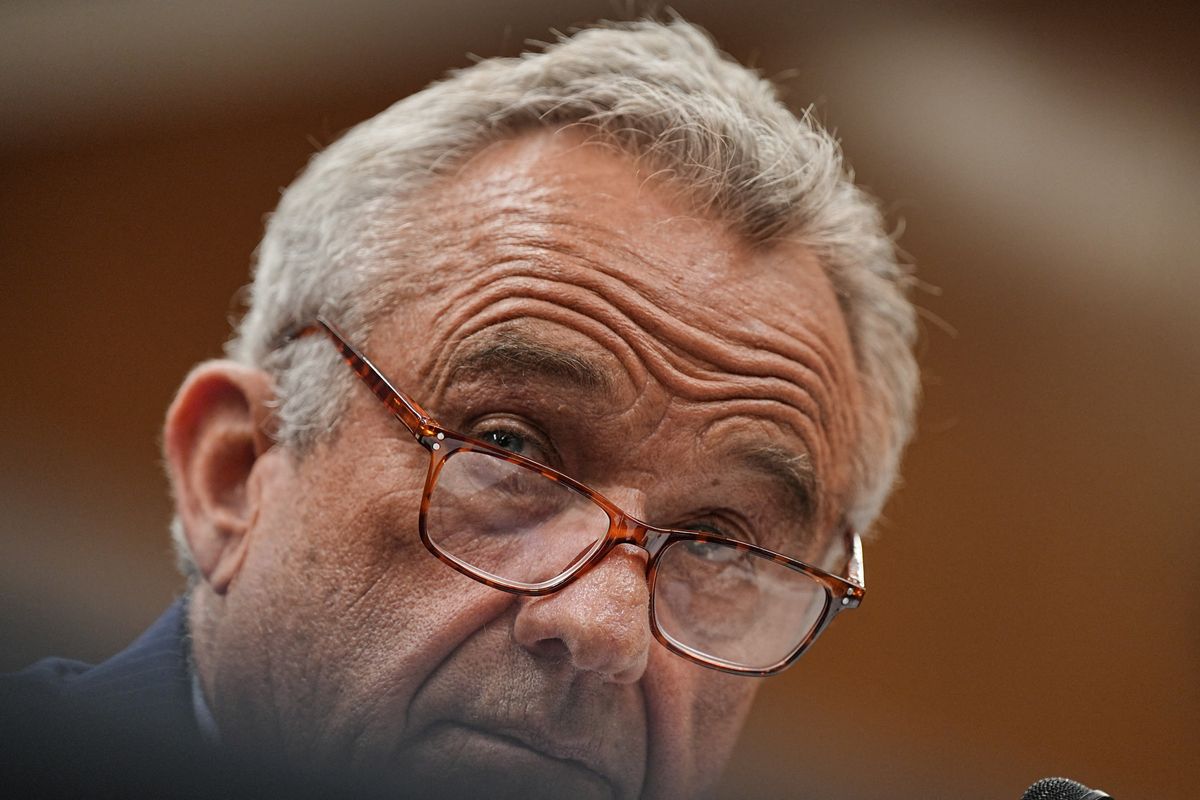
U.S. Health and Human Services (HHS) Secretary Robert F. Kennedy Jr. testifies before the Senate Committee on Appropriations hearing on the Department of Health and Human Services budget, on Capitol Hill in Washington, D.C., U.S., May 20, 2025. REUTERS/Ken Cedeno

Health and Human Services Secretary Robert F. Kennedy Jr. stunned health experts after accidentally revealing the existence of a “biosurveillance” program within his agency.

“I literally wondered what he was talking about,” said Giga Gronvall, who’s written extensively about synthetic biology as a professor at Johns Hopkins Bloomberg School of Public Health. She was speaking with NOTUS in a report published Monday.

Last week, RFK Jr. penned an op-ed that was published in the Wall Street Journal about his efforts to ‘restore public trust’ in the Centers for Disease Control and Prevention, which operates within the HHS. In the op-ed, he made mention of the “Biothreat Radar Detection System,” which he described as an “advanced early-detection tool” that can spot pathogens circulating in communities early.

The only issue? The program, at least on paper, does not exist.

In an email dated Aug. 28 and obtained by NOTUS, RFK Jr. wrote that his agency would “soon launch the Biothreat Radar Detection System.” Emily Hilliard, an HHS spokesperson, told NOTUS that the program would “combine new technological capability with automated result interpretation by artificial intelligence systems,” a descriptor that has raised cause for concern among some health experts.

“There’s peril involved in that,” said Jennifer Nuzzo, who leads the Brown University School of Public Health’s Pandemic Center as its director, speaking with NOTUS. “It used to be that you couldn’t immigrate to the United States if you had HIV. Those rules were changed about 10 years ago, but you could imagine the same kind of tendencies that created that rule in the first place being misapplied.”

Beyond fears that the program could lead to a resurgence of policies discriminatory toward immigrants with certain health conditions, some of the health experts worried that such a program wouldn’t even spit out accurate data given the Trump administration’s significant cuts to public health and foreign aid spending.

“AI can only give you an accurate analysis if you put real data into it to analyze,” Gronvall said. “The drastic cuts in actual surveillance that will affect all levels – international, states, local – will leave AI with nothing but hallucinations.”
'Insane cult': Observers aghast as Cabinet member says Trump 'anointed' by God

 Alternet
September 8, 2025


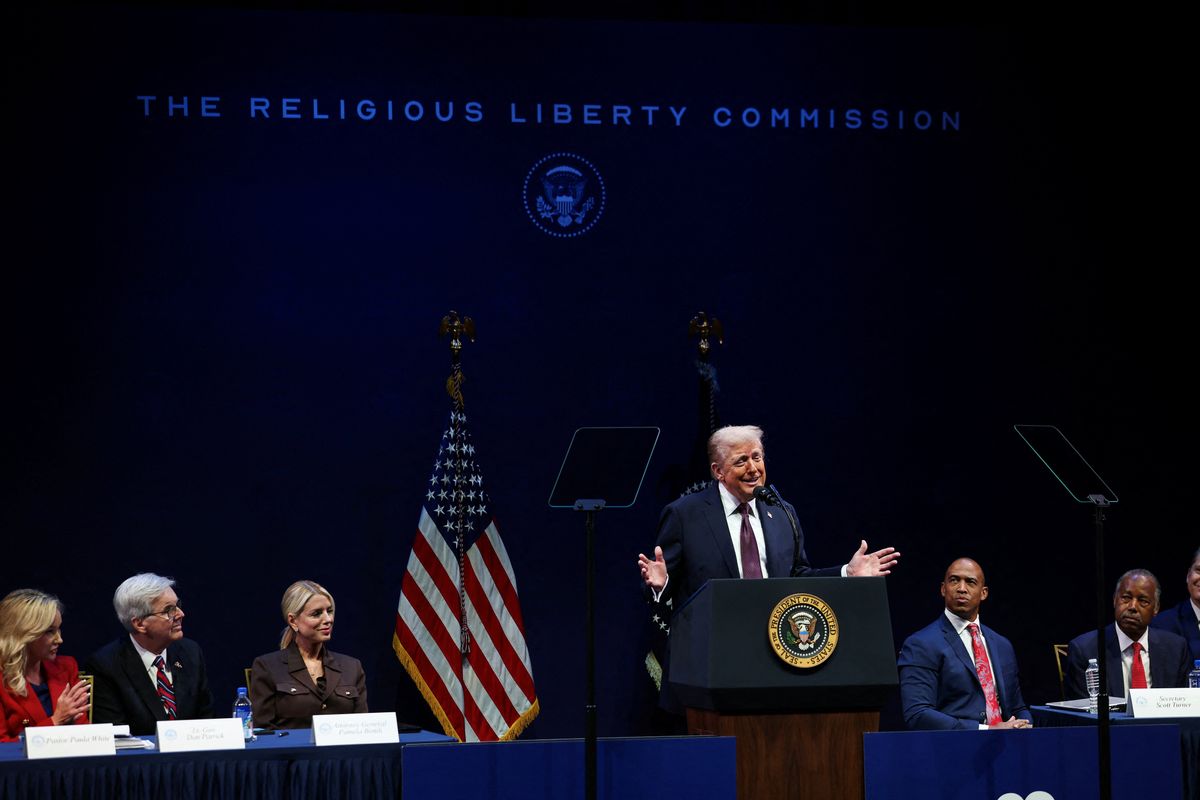
U.S. President Donald Trump delivers remarks to the White House Religious Liberty Commission, as Pastor Paula White, Texas Lieutenant Governor Dan Patrick, U.S. Attorney General Pam Bondi and U.S. Secretary of Housing and Urban Development Scott Turner sit, at the Museum of the Bible in Washington, D.C., U.S., September 8, 2025
REUTERS/Evelyn Hockstein


President Donald Trump announced Monday that the Department of Education will soon release updated guidelines to safeguard “the right to prayer” in public schools.

Speaking before the White House Religious Liberty Commission, Trump reaffirmed his strong religious convictions and criticized how he sees the separation of church and state as being used to marginalize devout students.

He declared, “To have a great nation, you have to have religion,” adding, “I believe that so strongly.”

During the ceremony, Housing and Urban Development Secretary Scott Turner delivered a prayer.

"Father, we thank you for our president, Donald J. Trump, whom you have anointed and appointed for this time, for such a time as this. Lord, thank you that the president prioritizes prayer," he said.


Turner's prayer led to strong reactions on social media from the president's critics.


Author Jennifer Valent wrote on the social platform X: "This brash taking of the Lord's name in vain by claiming His favorable anointing over a man with an unrepentantly blackened soul will never cease to make me feel physically ill. Nor should it."

The X account @AntiToxicPeople wrote: "What an insane cult. It would be hilarious if it wasn’t so sick. The last line is the best."

Journalist Michael McGough said: "What was that line about God not being mocked?"


Writer Paul Hughes-Cromwick said: "Interesting that the Father would anoint someone who abuses woman, lies with nearly every word, and is fond of bullying people of color. Must have been a slow day for anointing. Oh, and the Antichrist prioritizes prayer? Well, that's news!"

The account @RepublicansAgainstTrump reacted to the video and wrote: "It's a cult."

Watch the video below or at this link


Suite of models shows some positive effects of climate-smart Ag practices


North Carolina State University
Wheat Study in Michigan 

image: 

The study examined two different long-term agricultural studies, including this one at the LTER Main Cropping Systems Experiment in Michigan.

view more 

Credit: Photo courtesy of Kurt Stepnitz.


A study using multiple agronomic models to examine two long-term agricultural research stations in North America shows that so-called climate-smart agricultural practices – like no-till treatments, cover-crop utilization and residue retention – can help promote carbon sequestration in soil and reduce greenhouse gas emissions. 

The findings show that using a combination of models – rather than just one – can provide a more realistic range of outcomes and can highlight the shortcomings of individual models.

“We targeted open-source data from long-term agricultural experiments in Michigan and Texas that are very different – with different climates, soils and crops grown,” said Debjani Sihi, the senior author of a paper describing the research. “By utilizing these long-term studies, we wanted to see what the future might look like in terms of carbon sequestration and greenhouse gas emissions.

“We examined three different models developed by different research groups and looked at them collectively,” said Sihi, an assistant professor with joint appointments in NC State’s Department of Plant and Microbial Biology and Department of Crop and Soil Sciences. “The architecture is a little different in these models. What can we learn from each of the models, and what is the collective information?” 

The study examined data from more than three decades at the two agricultural experimental sites and calibrated it into a “model ensemble” to make future predictions. The ensemble examined both individual climate-smart agricultural practices and practices that were “stacked,” or added to each other.

The researchers then examined whether these proposed practices would, in the next 25 years or so, generate carbon sequestration in soil and a reduction of greenhouse gas emissions in two different scenarios: a baseline scenario that replicated climate-change historical data of the past three decades, and a “worst-case” scenario that envisions dramatic growth in greenhouse gas emissions.

“We tried to capture a variety of biological processes related to soil carbon sequestration and greenhouse gas (methane and nitrous oxide) emission while also accounting for climate-change effects,” Sihi said. “These processes are driven by different climate variables like temperature and precipitation.”

The model ensemble showed some positive effects in both studied locations under the baseline scenario.

“At the Michigan site, we found that no-till farming and keeping crop residues on the field increased soil carbon sequestration, while using no-till farming, some cover crops, and reducing fertilizer decreased greenhouse gas emissions,” Sihi said. “At the Texas site, most of the farming practices we tried increased soil carbon sequestration, and greenhouse gas emissions stayed about the same. However, the models indicated that not plowing alone could reverse greenhouse gas emissions.”

The worst-case scenario, however, lived up to its name in the study.

“We also found that all the climate-smart farming practices performed worse under worst-case scenario climate change, which was expected,” Sihi said.

She added that the study could provide the impetus for other researchers to try out the model ensemble approach and improve it. Future studies could be improved by using real-world data from on-farm studies and selecting other models with different strengths to broaden the insights.

“We hope others will evaluate these climate-smart practices to learn which may be more important, and what kind of experiments that we can leverage,” Sihi said. “These are two long-term examples in Michigan and Texas that we have utilized, so that others could adopt and improve and build on it.

“In this context, utilizing no-till or cover crops as a base practice and then stacking residue retention reduced future net emissions. Future work would need more study in other parts of the country – or world – to better generalize effects.” 
    
The paper appears in Agronomy Journal. Ellen Maas, a former postdoctoral researcher who worked with Sihi on this project, is the paper’s first author. 

Support for the work was primarily provided by Valent BioSciences, a subsidiary of Sumitomo Chemical Co., Ltd; with partial support from the U.S. Department of Agriculture’s National Institute of Food and Agriculture Project numbers 7009808 and 7010251. The study also drew on data supported by the National Science Foundation’s Long-term Ecological Research Program, Grant/Award Number DEB 2224712.

- kulikowski -

Note to editors: The abstract of the paper follows.

“Management alternatives for climate-smart agriculture at two long-term agricultural research sites in the U.S.: A model ensemble case study”

Authors: Ellen D. v. L. Maas, Emory University and Debjani Sihi, North Carolina State University

Published: Sept. 5, 2025 in Agronomy Journal

DOI: 10.1002/agj2.70146

Abstract: Greenhouse gas (GHG) emissions reduction efforts are underway to mitigate climate change worldwide. Climate-smart agriculture (CSA) practices have been shown to both increase soil organic carbon (SOC) inputs and reduce net greenhouse gas emissions (GHGnet). We evaluated the GHGnet of several management practices with three biogeochemical models (APSIM, Daycent, and RothC) at two sites with contrasting soils, climates, and cropping systems. Additionally, two future climate scenarios (baseline and high-emissions) provided alternative outcomes of SOC, N2O, and CH4 by 2050. In Michigan, most biochar and residue retention with no-till treatments increased SOC stocks; leguminous cover crops, no-till, and reducing fertilizer input lowered N2O emissions. The lowest biochar treatment lowered GHGnet in the baseline climate scenario, but all other management treatments increased GHGnet under both baseline and high emissions, and all management scenarios increased a mean of 8.0 Mg CO2-equivalent GHG (CO2e) ha?1 from baseline to high emissions. Conversely, in Texas, most treatments increased SOC, and N2O was relatively constant. Every no-till treatment reversed GHGnet in both the baseline and high-emissions climate scenarios but all management scenarios increased a mean of 0.6 Mg CO2e ha?1 under high emissions. At both sites under high-emissions climate change, cover crops and no-till resulted in the lowest GHGnet overall. Overall, the study showed that no-till, especially with residue retention, and cover crops are important CSA practices to lower the GHGnet of agriculture, but there remains much room to find even more effective solutions to adapt to climate change.


New study charts path for low-emission corn farming across the globe


Institute of Atmospheric Physics, Chinese Academy of Sciences
Field measurement in maize cultivation systems of Sichuan, China 

image: 

Field measurement in maize cultivation systems of Sichuan, China

view more 

Credit: Yuanyuan Su


A new international study led by the Institute of Atmospheric Physics at the Chinese Academy of Sciences offers farmers and policymakers a clear roadmap for growing one of the world's most vital crops in a way that is both productive and better for the planet.

The research pinpoints specific farming practices that can reduce the greenhouse gas emissions of maize (corn) cultivation while maintaining high yields, a critical step toward sustainable global agriculture.

Published in Advances in Atmospheric Sciences, the study used a powerful computer model, called CNMM-DNDC, to analyze the complete “carbon footprint” of growing maize in three distinct climates: temperate (China), subtropical (China), and tropical (Kenya). The carbon footprint measures all greenhouse gases emitted from the production of fertilizers right up to the harvest of the crop.

“The challenge has been to find solutions that both feed the world and protect it,” the lead author Dr. Siqi Li explained her motivation of the study. “By integrating a ‘cradle-to-gate’ tracking method into our model, we can now precisely quantify the greenhouse gas emissions from farm and supply chain activities per bushel of corn. This gives us a powerful tool to identify the most effective mitigation strategies.”

The research revealed that a farm’s carbon footprint is highly dependent on its local climate and soil conditions. The study found that subtropical regions, like Yanting, China, had the lowest carbon footprint. This was attributed to efficient soil carbon storage and lower emissions from fertilizer manufacturing.

In contrast, temperate regions like Yongji, China, had a moderate footprint, where significant soil carbon storage helped balance out high emissions from the fertilizer supply chain.

Tropical regions, such as Madeya, Kenya, faced the greatest challenge with the highest footprint, primarily due to soil carbon loss and lower yields, which made each harvested kilogram of corn more carbon-intensive.

“Our study, examining the shifts in greenhouse gas emissions under integrated soil fertility management in long-term maize trials, provides robust evidence for climate-smart intensification in Africa.” Said Peter Bolo from International Center for Tropical Agriculture in Nairobi, a co-author of the study.

The study moves beyond diagnosis to offer practical, “win-win” solutions that can slash emissions without sacrificing crop yield. Researchers highlighted that using a mix of synthetic and organic fertilizers reduces dependence on energy-intensive synthetic options, cutting down on off-farm emissions.

Another highly effective practice is recycling crop waste by returning leftover stalks and leaves to the field. This enhances soil health and turns the field into a natural carbon sink, pulling carbon from the atmosphere. The study noted that the benefits of this practice are most dramatic in tropical regions, where soils need help retaining carbon the most.

This research provides a data-driven foundation for the global agricultural community to adopt climate-smart farming. By implementing these tailored strategies, farmers can improve their sustainability, policymakers can craft informed incentives, and the industry can move toward a more secure and climate-resilient food system.

Rethinking the future of farming: Start with resilience


By Dr. Tim Sandle
EDITOR AT LARGE SCIENCE
DIGITAL JOURNAL
September 8, 2025


Despite the challenges, the organic farming sector has surged in Tunisia since the turn of the millennium
- Copyright AFP/File STR

Farmers should redesign agricultural systems by prioritising resilience over efficiency and supporting farmers through gradual, practical transitions rather than forcing them to choose between conventional and organic farming extremes. This is according to Saskia Visser (Land use, agri-food and sustainable bio-economy orchestrator at Climate KIC).

According to Visser there are different philosophical positions taken for food production: “There’s no shortage of opinions when it comes to the future of agriculture. Across Europe and beyond, the debate is often framed as a clash of philosophies: on one side, the chemical-intensive, efficiency-maximising model of conventional farming; on the other, the organic, regenerative, agroecological movements fighting to restore balance and sustainability.”

For Visser this binary framing oversimplifies the challenge and threatens to slow progress at the very moment we need to accelerate it. In her opinion, the process requires change, starting not with ideology, but with design.

Resilience first, not efficiency first

Visser’s concept of change begins with identifying the problem: “Today’s dominant agricultural systems have been designed to optimise efficiency above all else. And that narrow focus has come at enormous cost: to ecosystems, to communities, and to the farmers themselves.”

She proposes a new hierarchy for redesigning food systems:Resilience
Sufficiency
Efficiency

In terms of interpreting these:

Resilience comes first. Not just climate resilience, but social, inspirational and economic resilience too. Can this farm survive the next flood, heatwave, or price shock? Can the farmer earn a dignified income? Can the next generation imagine themselves thriving in this profession?

Next, sufficiency. Are we producing enough, without over-extracting from people or planet? Are we staying within planetary boundaries while meeting social expectations, such as fair wages and clean water? Do we respect local cultures and values?

Only once these two are secured should we talk about efficiency: how we deliver what’s needed with precision, innovation, and as little waste as possible.

Visser says: “This may sound intuitive. But when we look at how most policies, technologies, and debates are structured, we find the reverse: a race for efficiency that often undermines resilience and skips the critical question of what ‘enough’ really means.”

The danger of extremes and the power of first steps

Visser notes that change needs to be controlled: “Too often, the pressure to pick a side: organic or conventional creates paralysis. Farmers feel accused, communities feel divided, and the result is resistance, not transformation. Real change doesn’t start with moral judgment. It starts with small, credible steps that invite farmers on a journey, not away from who they are, but toward what’s possible.”

As an example, she discusses Farm Gebroeders Ham in the Netherlands. This is a 100-hectare farm began its transition by converting just two hectares to a self-harvest garden.

Visser states: “That modest shift not only matched the income from the remaining 98 hectares of monoculture onions in rotation with sugar beets; it also inspired the farmers to imagine more, explore alternative uses of fertilizer at the remaining 98 hectares, open a farm shop and educate young children about the food that grows on the farm. Small steps, well supported, can be catalytic.”

This builds on the design principles of resilience, sufficiency, and efficiency. Visser says these “sit within this broader frame, and they must include space for creativity, curiosity, and entrepreneurship; eventually providing the 4 returns: inspiration, environment, social wellbeing, and economy.”

Shared responsibility, systemic impact

In terms of achieving this, Visser finds: “The resilience–sufficiency–efficiency model works best when it’s supported throughout the food system, not just by farmers, but by every actor in the value chain.”Farmers play a core role by designing for resilience first — but they can’t do it alone.
Municipalities shape land-use and permit decisions that can support or hinder resilient practices.
Banks and investors can offer preferential terms for farmers who commit to resilient system design.
Consumers and communities shape the cultural and economic signals that drive adoption.

A call for systemic humility and ambition

To drive this forward, Visser says: “We need systemic humility and serious ambition. That means letting go of false binaries, and leaning into complex, context-sensitive solutions that meet the moment. It means acknowledging that climate-resilient farming is not a destination, but a design process. One that starts not with what we think is right, but with what will actually work, wherever farmers are starting from.”
Trump warns foreign companies after S.Korean workers detained


By AFP
September 7, 2025


President Donald Trump on Sunday warned foreign companies to obey US law after immigration officials arrested some 475 individuals including South Korean workers at a Hyundai-LG battery plant being built in the southern state of Georgia.

The arrests were made in a raid by US authorities on Thursday during the largest single-site operation implemented so far under Trump’s nationwide anti-migrant drive.

“Please respect our Nation’s Immigration Laws,” the president posted on social media Sunday.

“Your Investments are welcome, and we encourage you to LEGALLY bring your very smart people… What we ask in return is that you hire and train American Workers.”

Footage of the raid showed detained workers, in handcuffs and with chains around their ankles, being loaded onto a bus.

Steven Schrank, special agent in charge of Homeland Security Investigations in Georgia, told reporters that the raid targeted “unlawful employment practices going on at this massive, 100-acre construction site.”

LG Energy Solution has said 47 of its employees were arrested — 46 South Koreans and one Indonesian.

The company has also said about 250 of those arrested were believed to be employed by its contractor, and most of them were South Koreans.

In addition to being a key security ally on the Pacific Rim, South Korea is Asia’s fourth-biggest economy and a key automaker and electronics producer with multiple plants in the United States.

Seoul has heeded Trump’s repeated call for global investment in US businesses during his tariff negotiations with countries around the world.

Last month, hours after South Korean President Lee Jae-myung met with Trump in Washington, Korean Air announced it would purchase 100 Boeing aircraft, inking the largest deal in South Korea’s aviation history. Seoul also pledged $350 billion in US investment in July.

And South Korea secured an agreement for a 15 percent tariff for exports to the United States — significantly below the 25 percent that Trump had earlier threatened to introduce.

– Migrant crackdown –


Domestically, Trump has promised to revive the US manufacturing sector while also vowing to deport millions of undocumented migrants.

While admonishing investors on Sunday to abide by the law, Trump appeared to acknowledge a skill deficiency in the domestic workforce.

“ICE was doing right because they were here illegally,” he said of the raid by Immigration and Customs Enforcement that has strained relations with South Korea.

“But we do have to work something out where we bring in extras so that our people can be trained so that they can do it themselves.”

LIKE CONSTRUCTION AND AUTO FACTORY WORK


Seoul said Sunday that negotiations to secure the release of the detained workers had been concluded and they would soon be freed and flown home.

“The immediate priority now is the swift release of both our LG Energy Solution employees and those of our partner firms,” company executive Kim Ki-soo told reporters before boarding a plane to Georgia earlier in the day.

Hyundai has said none of those arrested are its employees.

With hundreds detained, the size of the Georgia raid is a departure from operations elsewhere.

In Los Angeles, immigration agents have repeatedly raided small businesses, targeting hardware stores, restaurants, car washes and street vendors.


THE OTHER HEGEMON
China ‘elephant in the room’ at fraught Pacific Islands summit

By AFP
September 8, 2025


Meetings will kick off on Wednesday in the Solomons capital of Honiara and will primarily take place behind closed doors - Copyright AFP Saeed KHAN

Ben STRANG

Pacific Islands leaders are meeting in the Solomons this week for an influential summit clouded by differences over China’s mounting influence in the region that risks scuppering regional cooperation.

Alongside its 18 member states including key players Australia and New Zealand, gatherings of the Pacific Islands Forum (PIF) are typically attended by dozens more countries as observers or dialogue partners.

But this year’s host, close China ally the Solomon Islands, has barred most of those partners from attending — sparking accusations that Honiara was working on Beijing’s behest to exclude long-time participant Taiwan.

The move prompted condemnation from fellow Pacific Island nations, of which three — Marshall Islands, Palau, Tuvalu — still recognise Taipei.

And observers warn the issue could even split the summit — undermining essential regional cooperation on everything from climate change, health, security and transnational crime.

New Zealand’s top diplomat Winston Peters told AFP last month it was “obvious” that outside forces were meddling in the summit.

“Outsiders are now telling us who we can have as guests. That’s not the Pacific way,” he said.

Communist China has never ruled Taiwan, but Beijing insists the island is part of its territory, has threatened to use force to bring it under its control and bristles at any official diplomatic recognition of the democratic island.

The two have long vied for influence in the South Pacific, with Beijing spending hundreds of millions of dollars building sports stadiums, presidential palaces, hospitals and roads across the vast region.

Mihai Sora, who heads the Pacific Islands Program at the Lowy Institute, told AFP that China had become the “elephant in the room”.

“China is effectively shaping the Pacific Islands Forum leaders meeting, and it’s not actually a member of the Pacific Islands Forum,” said the former Australian diplomat.


– Touchy talks –


Meetings will kick off on Wednesday in the Solomons capital of Honiara and will primarily take place behind closed doors.

On Thursday they will head to the picturesque seaside settlement of Munda, over 300 kilometres (186 miles) from the capital for a “leaders retreat”.

But there may be little they can agree on — beyond China, key issues causing friction include a review of the Forum’s regional architecture, which will decide who can participate.

So too is cooperation in transnational security, with member states reluctant to relinquish what they see as hard-fought sovereignty to help combat regional problems.

Climate change is also a major talking point on the back of Vanuatu’s win in the International Court of Justice which declared states are obliged to tackle climate change and reparations could be awarded if they didn’t.

The Forum partners work together on disaster risk management and climate finance, but there is disquiet in some quarters over individual nations opening up for deep sea mining or oil and gas exploration.


– Summit could ‘fall apart’ –


China counts the Solomon Islands among its closest partners in the South Pacific.

The two signed a secretive security pact in 2022 and China donated police vehicles and equipment to the Solomons ahead of PIF.

Beijing’s top diplomat in the Solomons, Cai Weiming, has even said the China Police Liaison Team — deployed as part of that pact — could assist in security for the summit.

Beijing has also signalled that it will be present at the summit in some form or another.

But New Zealand officials have told AFP they feared the Forum will “fall apart” if that happens.

Peters, Australian Foreign Minister Penny Wong and other officials have warned the banning of dialogue partners could have an impact on aid being provided to the Pacific.

One expert said Beijing was treading a very fine line in its dealings with the Pacific.

“On the one hand, Beijing has claimed to have not interfered in any way, to respect Pacific forum centrality and processes and so forth,” Anna Powles, an associate professor at Massey University, said.

“But then on the other hand, there have been a number of statements made” that could worsen the split, she said.
Germany’s US exports hit four-year low as tariffs bite


By AFP
September 8, 2025


German exports to the US have been falling for months - Copyright POOL/AFP 

TORU HANAI

German exports to the United States dropped in July to their lowest level since 2021, data showed Monday, as President Donald Trump’s tariffs exact a heavy toll on Europe’s biggest economy.

Exports of German goods to the world’s largest economy were down 7.9 percent from a month earlier, according to provisional data from federal statistics agency Destatis.

It was their fourth straight monthly decline, with the total value dropping to 11.1 billion euros ($13 billion), the agency said. Nevertheless, the US remained the top destination for “Made in Germany” products.

Trump’s tariffs have dealt a major blow to Germany’s export-driven economy, where major manufacturers had already been struggling with high energy costs, fierce competition from Asia and weak demand.

The drop in shipments to the US helped push Germany’s overall exports in July to a 0.6 percent contraction from the previous month — worse than expectations of zero growth from analysts surveyed by financial data firm FactSet.

In total, Germany exported goods worth 130.2 billion euros in July. Imports slipped 0.1 percent on the previous month to a value of 115.4 billion euros.

The trade surplus narrowed to 14.7 billion euros.

Exports to China — another of Germany’s top trading partners — plunged 7.3 percent in July, the data showed.

German businesses have suffered in the world’s number two economy as they face increased local competition, particularly in the auto sector.

On a more positive note, industrial production grew a better-than-expected 1.3 percent in July, according to provisional figures from Destatis.

That was up from a contraction of 0.1 percent the previous month.

There was growth in the factory equipment, auto and pharmaceutical sectors, the data showed.

ING bank economist Carsten Brzeski said the factory data suggested German industry data could be set to finally rebound.

“Trying to look through this volatility, the hopes for at least a cyclical rebound in German industry remain alive — even though the disappointments of the last few years warn against any premature optimism,” he said.


At consumer tech show, German firms fret about US tariffs


By AFP
September 8, 2025


Worries about US tariffs were on display at this year's IFA consumer tech show in Berlin - Copyright POOL/AFP Vyacheslav PROKOFYEV

Clement KASSER

Displaying one of her company’s hot plates proudly labelled “Made in Germany”, Sigrid Klenk concedes that maintaining production at home could become harder due in part to US tariffs.

Continuing to make goods in Germany “is becoming less and less simple,” Klenk, boss of the small firm Rommelsbacher, said at the IFA consumer tech show in Berlin.

Particularly problematic for Rommelsbacher, whose products range from kettles to coffee makers, is a 50-percent US levy on steel and aluminium.

“Now we have to specify the amount of steel contained in our products, especially our hot plates,” she told AFP. “This has kept us very busy in recent days.”

Europe’s already struggling top economy is under huge pressure from President Donald Trump’s tariff blitz — official data released Monday showed German exports to the US plunged to their lowest level for nearly four years in July.

The concern was palpable at this year’s IFA show in Berlin, where the ZVEI industry federation warned that German electronics exports to the US, the sector’s second-largest market, could fall by as much as 20 percent.

While the European Union and Trump struck a deal in July agreeing on import levies of 15 percent on most goods from the bloc, there remains much uncertainty.

Businesses complain that, in reality, the list of products facing extra tariffs continues to grow.

As well as small- and medium-sized businesses, home appliance giants like Miele are worried.

“When consumers don’t know what will happen tomorrow, it’s the worst situation,” and “it’s the same for businesses”, Markus Miele, the executive director of the group, told AFP.

The group has already had to raise prices as a result of the tariffs, he said.

– ‘Costs too high’ –


Adding to the company’s problems is continued weak demand in many countries, he added — pointing in particular to its home market, where consumers are reluctant to spend even after recent falls in inflation.

In contrast the economic situation is better in the US, he said, noting that Miele opened its first production site there even before the return of Trump, who is aiming with his tariffs to bring manufacturing jobs back to America.

The long-running woes of Germany’s small businesses were plain to see at the IFA show — even before the US tariffs, they had been battling problems from rising labour costs to high energy prices and a lack of skilled workers.

Vacuum cleaner maker Fakir, for instance, had to abandon production in Germany a year and a half ago.

“It was impossible to continue — the costs were too high,” said an employee, who spoke anonymously, at the show.

In contrast to ailing German manufacturers, Chinese companies at the event were attracting crowds with their innovations: such as robot vacuum cleaners that climb stairs and robotic arms that play chess.

Once considered of lower quality, their offerings are now giving German-made products a run for their money.

German companies are racing to keep up but it is an uphill battle. For now, many simply hope that consumers at home begin to spend again.

“I hope the Christmas season will bring a bit more enthusiasm to German consumers,” said Klenk.