Thursday, September 11, 2025

Albania names world’s first AI-generated minister as Rama unveils fourth-term cabinet

Albania names world’s first AI-generated minister as Rama unveils fourth-term cabinet
Albania's long-serving Prime Minister Edi Rama names his new cabinet. / Edi Rama via Facebook
By bne IntelliNews September 11, 2025

Albania on September 11 became the first country to appoint a government minister created entirely by artificial intelligence, as Prime Minister Edi Rama introduced a sweeping cabinet reshuffle and set out ambitious plans to steer the Balkan country toward European Union membership by 2030.

The virtual minister, named Diella — meaning “sunbeam” in Albanian — will oversee all public procurement, a sector seen as vulnerable to corruption. 

Rama, who secured a historic fourth term in May, described Diella as a “servant of public procurement” designed to make the tendering process fully transparent and “100% incorruptible”, reported Albanian broadcaster Top-channel. 

“Decisions on tenders will be taken outside the ministries and passed into the hands of Diella,” Rama told delegates at a Socialist Party assembly in Tirana. “This is not science fiction, but the duty of Diella.”

Diella is not a minister for artificial intelligence, but a digital entity built on AI systems and presented to citizens as an avatar. She already powers the government’s e-Albania online services platform and will be able to “employ talent from all over the world,” Rama said.

Public procurement has been a persistent weak spot for Albania, with the European Union repeatedly flagging graft concerns in annual rule-of-law assessments. Rama said the gradual transfer of procurement decisions to Diella would eliminate opportunities for bribery and ensure that “every public fund that goes through the tender procedure is 100% legible”. 

The announcement follows months of speculation after Rama mused in the summer about appointing a digital minister, and even a future AI prime minister. However, few expected the proposal to materialise so quickly.

Cabinet overhaul

After its fourth consecutive general election win earlier this year, Rama’s Socialist Party assembly also endorsed a wide-ranging reshuffle aimed at refreshing the government’s ranks for the country’s next phase of EU accession talks, as outlined in a speech delivered by Rama on September 11.

Deputy Prime Minister Belinda Balluku retained her role and will continue as minister of infrastructure and energy, the prime minister announced according to a Socialist Party statement.

Among the significant changes, Albana Koçiu became the first woman to lead the Ministry of Interior, replacing Ervin Hoxha.

Former parliament speaker Elisa Spiropali was named minister for Europe and foreign affairs, tasked with driving an intensive “diplomatic offensive” to win EU support.

Rama outlined his goal of concluding EU accession negotiations within 27 months and securing ratification by all 27 member states before the end of his mandate. “Our national mission of full integration with Europe has never been clearer,” he said.

Radiologist Evis Sala, who built an international career at leading hospitals from New York to Rome, will return to Albania to serve as minister of health and social welfare.

Other appointments include Besfort Lamallari as Justice Minister, Andis Salla as Agriculture Minister, and Sofjan Jaupaj as Environment Minister. Long-serving education chief Mirela Kumbaro will now head the Education Ministry after leading the environment portfolio.

The prime minister also addressed the ongoing leadership vacuum in Tirana, where the elected mayor, Erion Veliaj, has been detained for seven months pending trial. Rama urged the municipal council to trigger new elections, warning that Albania’s capital “cannot rise and fall endlessly like a headless body”.


UK PM Starmer sacks ambassador to the US over links to Epstein


Issued on: 11/09/2025 - FRANCE24

UK Prime Minister Keir Starmer on Thursday fired the country's ambassador to the United States, Peter Mandelson, over his links to the convicted sex offender Jeffrey Epstein. The moves comes in the wake of the publication this week of emails Mandelson sent to Epstein in the 2000s, in which he gave his support to the disgraced financier even when he was facing jail for sex offenses. FRANCE 24's Bénédicte Paviot reports from London.


UK fires ambassador to US Peter ‘Prince of Darkness’ Mandelson over Epstein links


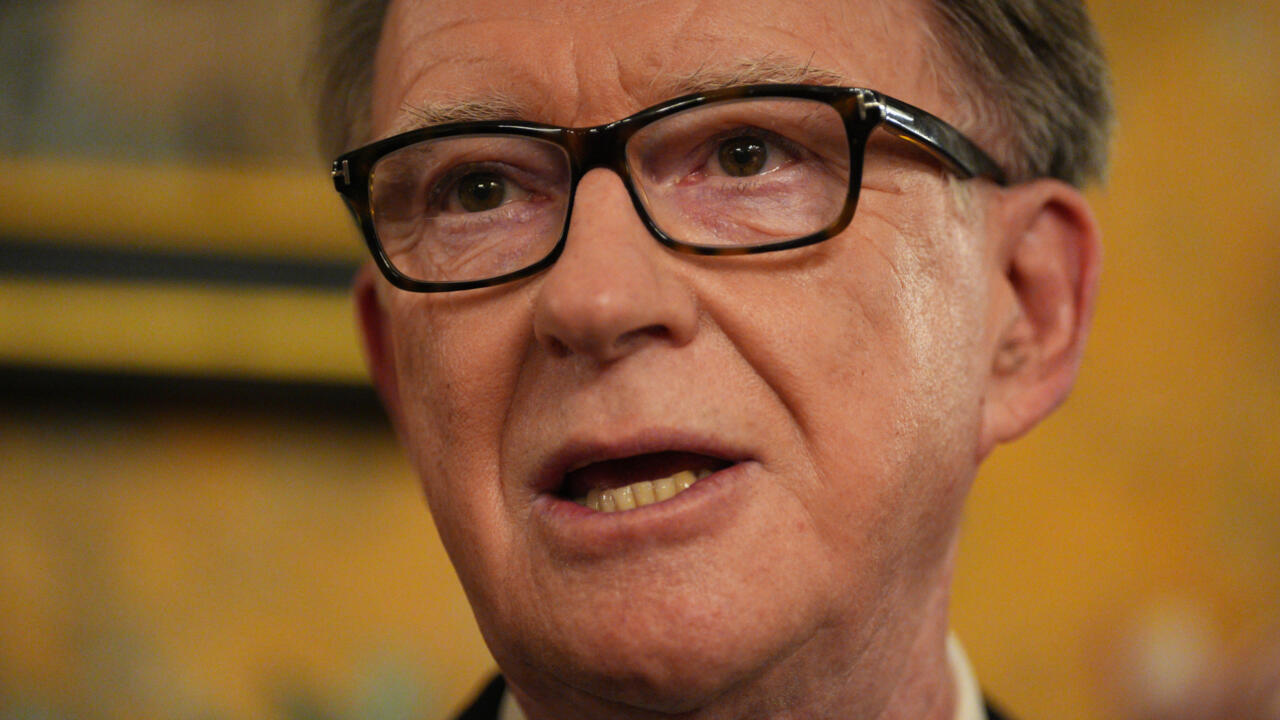
Dubbed the "Prince of Darkness" during his years as a media spin doctor, Peter Mandelson was appointed UK ambassador to the US in February. British Prime Minister Keir Starmer on Thursday fired Mandelson as UK ambassador to the US due to "new information" over his links to the convicted sex offender Jeffrey Epstein.


Issued on: 11/09/2025 
By: FRANCE 24

Peter Mandelson was among a number of high-profile figures on the defensive over his association with with the late sex offender Jeffrey Epstein. © Carl Court, AFP (Pool)


UK leader Keir Starmer sacked his ambassador in Washington Peter Mandelson on Thursday following "reprehensible" fresh revelations about the diplomat's friendship with sex offender Jeffrey Epstein.

Dubbed the "Prince of Darkness" during his years as a media spin doctor, Mandelson was twice forced to resign from Tony Blair's Labour government in the late 1990s and early 2000s over allegations of misconduct.

His dismissal as US envoy causes a political and diplomatic headache for the British prime minister as he prepares for next week's visit of US President Donald Trump, who is himself facing questions over his ties to Epstein.

It is the second high-profile departure from the UK government in the past week, after Starmer's former deputy Angela Rayner resigned last Friday for underpaying a property tax.

Starmer, meanwhile, is attempting to reboot his increasingly unpopular government.

Read moreUK's Starmer overhauls his cabinet after deputy PM resigns amid tax scandal

The prime minister asked top diplomat Yvette Cooper to withdraw Mandelson after emails he wrote to Epstein after he was convicted came to light, her office said.

"The emails show that the depth and extent of Peter Mandelson's relationship with Jeffrey Epstein is materially different from that known at the time of his appointment," it said.

"In particular Peter Mandelson's suggestion that Jeffrey Epstein's first conviction was wrongful and should be challenged is new information.

"In light of that, and mindful of the victims of Epstein's crimes he has been withdrawn as ambassador with immediate effect."

'Fight for release'

The sacking followed The Sun newspaper and Bloomberg reporting that Mandelson sent supportive messages to Epstein while the financier was being investigated in the United States for sexual offences in 2008.

The Labour party grandee sent emails telling Epstein he was following closely and "here whenever you need".

Mandelson also reportedly told Epstein to "fight for early release" shortly before he received an 18-month sentence for admitting procuring a child for prostitution.

"I think the world of you," Mandelson, a former Labour minister and ex-European trade commissioner, wrote the day before Epstein began his sentence.

A spokesman for Starmer said it was "self-evident" the prime minister "found the content of these emails reprehensible".

He denied claims that Starmer had shown poor judgement by appointing Mandelson less than a year ago when it had been publicly known that he had stayed friends with Epstein after his conviction.

"The Prime Minister has taken prompt and decisive action," the spokesman insisted.

Following the newspaper reports, the 71-year-old Mandelson told the BBC that he "relied on assurances of (Epstein's) innocence that turned out later to be horrendously false".
'Best pal'

"His lawyers claimed that it was a shake down of him, a criminal conspiracy. I foolishly relied on their word which I regret to this day," he added.

His position appeared increasingly precarious after one government minister said he was "completely disgusted" by the messages while another said the emails were "really disturbing and sickening".

At least three Labour MPs had publicly urged Starmer to fire Mandelson.

The smooth-talking political veteran had only started in the key diplomatic post earlier this year, tasked with building a close relationship with Trump.

The prime minister said as recently as Wednesday he had confidence in Mandelson, insisting that "due process was followed" ahead of the appointment.

Starmer's initial backing came after it was revealed that Mandelson called Epstein his "best pal" and an "intelligent, sharp-witted man" in a 2003 letter.

The letter was one of many included in a book compiled to mark the now notorious financier's 50th birthday. The contents were published by a US congressional panel investigating Epstein's sex crimes case.

Mandelson told The Sun he regretted "very deeply" associating with Epstein "for far longer than I should have done".

(FRANCE 24 with AFP)

Brazil's Supreme Court convicts Bolsonaro of coup plot

Brazil's Supreme Court convicts Bolsonaro of coup plot
The final vote rests with Justice Cristiano Zanin, who will announce the trial's outcome. Sentencing is expected on September 12, with Bolsonaro potentially facing more than 40 years in prison. / bne IntelliNews
By bne IntelliNews September 11, 2025

Brazil's Supreme Court has convicted former president Jair Bolsonaro of orchestrating a coup plot following his electoral defeat in 2022, in an unprecedented case against a former Brazilian head of state.

A panel of five Supreme Court justices reached the required majority on September 11 when Justice Cármen Lúcia cast the decisive third vote to convict the 70-year-old right-wing populist. The court found Bolsonaro guilty on all five charges: taking part in an armed criminal organisation, attempting to violently abolish Brazil's democratic order, plotting a coup d'état, and damaging government property and protected cultural assets.

Justice Lúcia described the proceedings as a "meeting between Brazil and its past, its present, and its future," referencing the country's history of democratic upheaval. She stated there was "conclusive evidence" that Bolsonaro led efforts "with the purpose of eroding democracy and institutions."

The conviction stems from events surrounding the 2022 presidential election, when Bolsonaro lost to left-wing candidate Luiz Inácio Lula da Silva. Prosecutors alleged that the coup plot began in 2021 with systematic attempts to undermine public confidence in Brazil's electoral system.

The scheme culminated on January 8, 2023, when thousands of Bolsonaro supporters stormed government buildings in the capital Brasília, just days after Lula's inauguration. The scenes echoed the storming of the US Capitol by supporters of President Donald Trump, a close ideological ally, in January 2021. Demonstrators invaded and vandalised the headquarters of all three branches of government in what prosecutors described as an attempt to incite military intervention against the newly installed president.

According to Estadao, Justice Alexandre de Moraes, the case's rapporteur and a long-time foe of the embattled leader, presented video evidence during the proceedings, including footage of Bolsonaro's inflammatory speech on September 7, 2022, when the former president made threats against Supreme Court justices. Moraes challenged claims by dissenting Justice Luiz Fux that the January 8 events were merely the result of a "disorderly mob."

"I ask: would any of us here allow and affirm that this is freedom of expression, and not a crime, if a mayor, in a small town, inflamed the people against the district judge?" Moraes questioned after showing Bolsonaro's speech.

Only Justice Fux dissented from the majority verdict, acquitting Bolsonaro of all charges after a lengthy 13-hour presentation that criticised both the prosecution's case and the court's jurisdiction.

The final vote rests with Justice Cristiano Zanin, who will announce the trial's outcome. Sentencing is expected on September 12, with Bolsonaro potentially facing more than 40 years in prison.

Bolsonaro, currently under house arrest after being deemed a flight risk, remains a polarising but significant political figure in Brazil. Tens of thousands of his supporters rallied across the country on September 7 in shows of solidarity.

The case has sparked international tensions, particularly with the United States. President Trump has denounced the proceedings as a "witch hunt" and imposed 50% tariffs on various Brazilian goods in response. The Trump administration has also slapped sanctions on Justice Moraes for alleged "serious human rights violations" and announced visa restrictions against court officials.

Lula has condemned Trump's interference as "unacceptable" and an assault on Brazil's sovereignty, accusing the US of having "helped stage a coup."

The conviction represents a watershed moment in Brazilian politics and jurisprudence, as the country grapples with the aftermath of its most serious institutional crisis since the return of democracy in the 1980s.


Brazil's Bolsonaro given 27-year term for coup plotting


Brasília (AFP) – Brazil's Supreme Court on Thursday sentenced firebrand ex-president Jair Bolsonaro to 27 years in prison for coup plotting at the end of a landmark trial that divided the nation and drew US fury.


Issued on: 11/09/2025 - RFI

The criminal conviction of former Brazilian president Jair Bolsonaro came after a nail-biting trial that divided the country © Sergio Lima / AFP


The sentence could see the 70-year-old far-right leader spend the rest of his days in jail.

Judges voted 4-1 to convict Bolsonaro of plotting to overthrow Luiz Inacio Lula da Silva following his October 2022 election defeat by the left-winger.

He can appeal the verdict.

Washington was quick to respond to the conviction of the man dubbed "the Trump of the tropics."

Secretary of State Marco Rubio said the United States "will respond accordingly" to what he called a politically motivated "witch hunt."

Trump, who had levied steep tariffs on Brazil as punishment over Bolsonaro's prosecution, labeled the verdict "very surprising."

"That's very much like they tried to do with me, but they didn't get away with it at all," he told reporters, calling Bolsonaro "a good man."

While the Supreme Court had already garnered the simple majority of three votes needed for his conviction at the fourth vote, it only become final after the last of the five judges issued his decision.

"An armed criminal organization was formed by the defendants, who must be convicted based on the factual circumstances I consider proven," said the fifth judge, Cristiano Zanin, Lula's former lawyer.
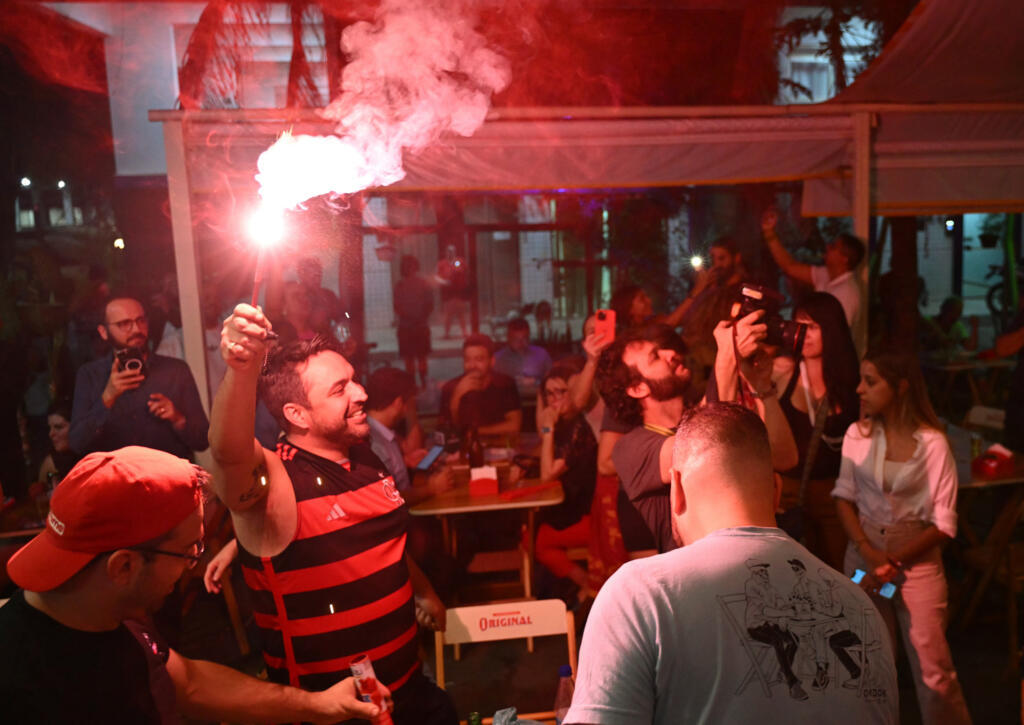
Brazilians celebrate the Supreme Court decision against former president Jair Bolsonaro © EVARISTO SA / AFP


Bolsonaro's seven co-accused, including former ministers and military chiefs, were also convicted.

Bolsonaro, a former army captain, who served a single term from 2019 to 2022, claims he is the victim of political persecution.


'Political'


Bolsonaro's conviction came after one of the biggest, most divisive trials in Brazil's recent history, which ended with a nail-biting vote that stretched over four days.

Bolsonaro himself did not attend the verdict hearings in the capital Brasilia, instead following the proceedings from his residence, where he is under house arrest.

Across the nation, Brazilians were glued to the proceedings on TV and social media.

In one Brasilia bar, patrons watching the trial on a giant screen burst into applause after he was convicted.

"After so much waiting, this despicable individual is being sent to jail," translator Virgilio Soares, 46, said.

But Germano Cavalcante, a 60-year-old civil engineer, called the trial "unfair."

Apart from heading a "criminal organization," Bolsonaro was charged with knowing of a plan to assassinate Lula, his vice president Geraldo Alckmin and Supreme Court Justice Alexandre Moraes.

He was also convicted of inciting the violent 2023 storming of the Supreme Court, presidential palace and Congress in Brasilia by hundreds of his supporters, a week after Lula was inaugurated as his successor.


A country divided
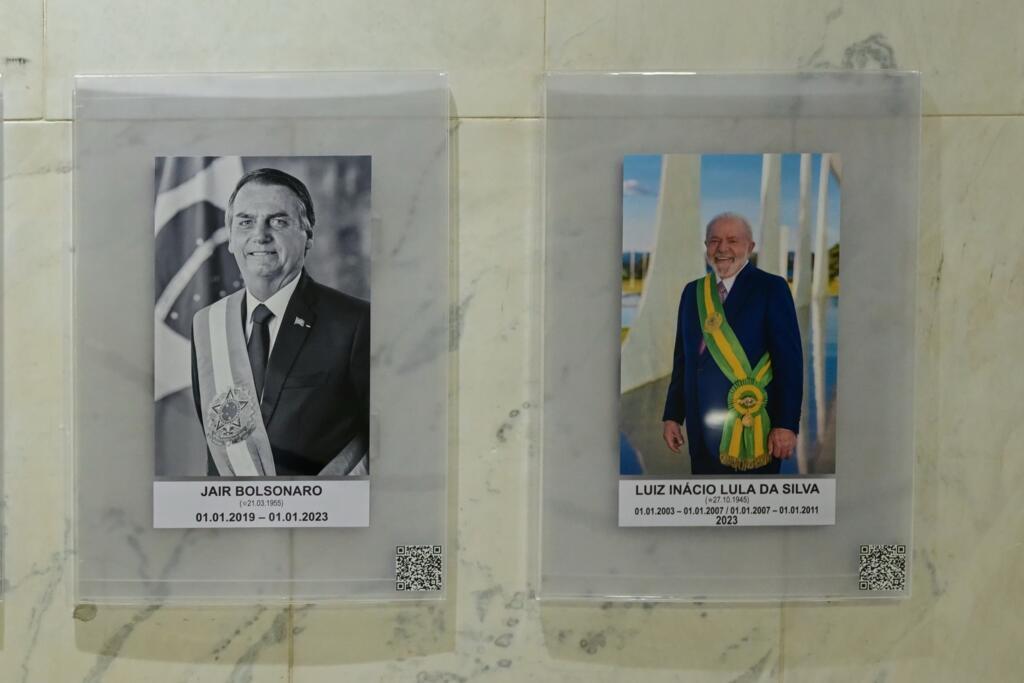

Portraits of former Brazilian president Jair Bolsonaro and current President Luis Ignacio Lula da Silva in the presidential palace in Brasilia © Pablo PORCIUNCULA / AFP

The trial drove a deep wedge through Brazilian society, between those primarily on the left who saw it as a vital test of the country's democracy, from those mainly on the right who viewed it as a political show trial.

Fearing his conviction, the ex-president's allies have been pushing Congress to pass an amnesty law to save him from prison.

The case has led to an unprecedented crisis in relations between the United States and longtime ally Brazil.

Besides the tariffs punishment, Washington has also sanctioned Moraes and other Supreme Court judges.

© 2025 AFP

In divided Brasilia, some celebrate Bolsonaro conviction, others fume

Brasília (AFP) – Patrons of a bar in Brasilia cheered and applauded Thursday as ex-president Jair Bolsonaro's guilty verdict appeared on a giant screen in scenes reminiscent of a football match.


Issued on: 12/09/2025 -  RFI

People celebrate the Brazil's Supreme Court decision on former President Jair Bolsonaro's trial in Brasilia © EVARISTO SA / AFP

"Bolsonaro to jail!" shouted customers of Pardim, well-known as a gathering spot for leftists in a residential neighborhood of the capital of deeply politically divided Brazil.

"I burst into tears. This is a very important moment for which we've been waiting a long time," Sofia Araujo, a 20-year-old student, told AFP on the bar's terrace.

"I am very happy. Today we can celebrate because justice has been served," she said.

Araujo told AFP she had also gone to Pardim in October 2022 to celebrate the election victory of leftist President Luiz Inacio Lula da Silva, from whom Bolsonaro was found guilty Thursday of trying to claw back power through force.

Bolsonaro was put on trial for steering a "criminal organization" that sought to keep him in office, including plotting to assassinate Lula and others.

He is now awaiting sentencing.

Bar owner Jarbas Campos Pardim said he bought 80 cases of beer and fired up the barbecue for Thursday's hearing, during which the final two of five judges voted to convict the far-right former army captain.

The final verdict was 4-1.

"Today is conviction day, so it's a day of celebration," said Pardim, 47.


'Rot in jail'
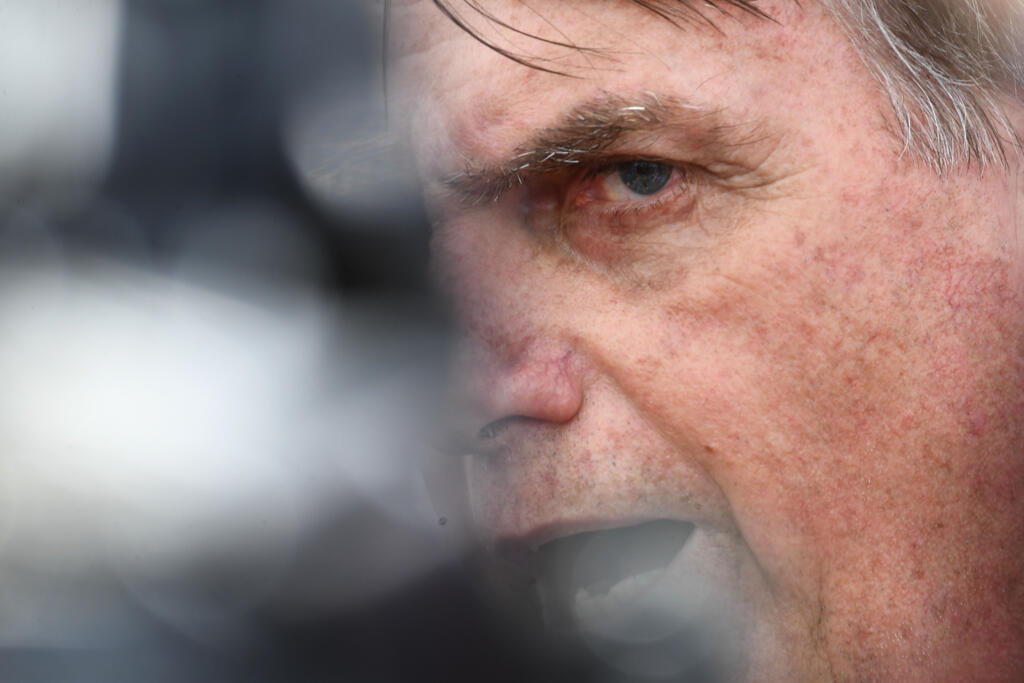

Right-wing figures, meanwhile, expressed their outrage on social media platforms like X, where slogans such as "They want to kill Bolsonaro" and "Supreme persecution," multiplied © EVARISTO SA / AFP


Nearby, the street outside the former president's Brasilia home where he is under house arrest, was deserted except for a handful of supporters erecting a banner ahead of a planned vigil later Thursday.

The banner read: "Bolsonaro come back. Honk your horns," in a message to passers-by.

Right-wing figures, meanwhile, expressed their outrage on social media platforms like X, where slogans such as "They want to kill Bolsonaro" and "Supreme persecution," multiplied.

At Pardim, the mood was drastically different. Joao Marcelo Lopes Soares arrived early so he wouldn't miss a moment of Thursday's live broadcast.

"This September 11, 2025, is a historic day, a turning point in the fight against fascism," said the 25-year-old, sporting the red-and-black jersey of Flamengo, Brazil's most popular football club.

"Despite strong international pressure, especially from (US President Donald) Trump, I believe there's justice in Brazil; we are a serious country," Soares opined.

Trump has imposed a tariff of 50 percent on some Brazilian exports as punishment for what he has called the "witch hunt" against his far-right ally, and his administration has sanctioned one of the five Supreme Court judges in the case, Alexandre de Moraes.

Pardim patron Renato Alexandre Xavier, 53, prepared a parody version of Brazil's national anthem for the occasion.

"Pariah turned criminal, jail is your destiny," echoed one of the verses, which Xavier sang loudly, and proudly, in the bar.

"Hopefully he'll rot in jail, though he's already a rotten person," Virgilio Soares, a 46-year-old sign language translator said of Bolsonaro's fate.

© 2025 AFP

Brazil's Bolsonaro: US-backed firebrand facing future behind bars

Brasília (AFP) – As a military man Brazil's ex-president Jair Bolsonaro had a reputation for disobeying orders. As head of state from 2019 to 2022, he thumbed his nose at institutions.

12/09/2025 - RFI

Brazil's ex-president Jair Bolsonaro is on trial over attempted coup charges
 © Mateus Bonomi / AFP

Now he faces nearly three decades in prison for what prosecutors described as his most egregious act of defiance yet: plotting to cling on to power after losing elections to leftist Luiz Inacio Lula da Silva.

The former army captain, who has the political backing of US President Donald Trump, was convicted Thursday of having led a criminal organization that aimed to prevent Lula taking office in early 2023.

The plot envisaged the assassination of Lula, his vice president Geraldo Alckmin, and Alexandre de Moraes -- one of the five Supreme Court judges in his trial.

Moraes and three other judges voted over several days to convict him for a final verdict of 4-1, then pronounced a sentence of 27 years and three months.

Bolsonaro, 70, who has repeatedly voiced nostalgia for Brazil's 1964-1985 dictatorship, protests his innocence and claims to be the victim of political persecution.


Bibles, bullets and beef


Brazilian former president Jair Bolsonaro enjoys the support of the powerful 'Bibles, bullets and beef 'coalition -- Evangelical Christians, security hardliners and the agribusiness industry © Douglas Magno / AFP/File


Bolsonaro enjoys the support of Brazil's powerful "Bibles, bullets and beef" coalition -- Evangelical Christians, security hardliners and the agribusiness industry.

He shot to prominence after the 2016 impeachment of former president Dilma Rousseff, with diatribes about corruption, violence, economic mismanagement and Brazil's "rotten" left.

On the campaign trail in 2018, he survived a knife attack that left him with severe abdominal wounds that continue to plague him to this day.

Bolsonaro's survival fueled followers' belief in their "Messiah" -- his middle name in Portuguese. Some have likened the attack to the 2024 attempt on Trump's life.

Nicknamed the "Trump of the Tropics," Bolsonaro's presidency was marked by Covid-19 denialism and rampant Amazon deforestation but also some early economic successes.

The pandemic, which Bolsonaro dismissed as a "little flu," claimed more than 700,000 lives in Brazil, second only to the United States.

Smarting from his failure to win a second presidential term, he left Brazil for Florida two days before the end of his mandate, snubbing Lula's inauguration.

A week later, on January 8, 2023, rampaging Bolsonaro supporters calling for the army to oust Lula stormed the presidential palace, Congress and Supreme Court.

Prosecutors accuse Bolsonaro, under house arrest since last month, of having incited the violence.

- History of controversy -

Former Brazilian President Jair Bolsonaro risks 40 years in prison if convicted of plotting to prevent his elected successor Luiz Inacio Lula da Silva taking power © Evaristo SA / AFP

Born in 1955 to a Catholic family with Italian roots, Bolsonaro served in the army before launching his political career in the late 1980s as a Rio de Janeiro city councilor.

In 1991, he was elected to Congress.

He has a long history of homophobic, misogynistic and racist comments delivered in a belligerent, everyman style which endeared him to many.

In 2011, he told Playboy magazine he would rather his sons be killed in an accident than come out as gay.

Three years later, he said a left-wing lawmaker was "not worth raping" because she was "too ugly."

The fact that one of his children is a daughter, Bolsonaro has said, was the result of a moment of "weakness" on his part.

His third wife, Michelle, is 27 years his junior.

Bolsonaro's son Eduardo moved to the United States in February, where he successfully lobbied the Trump administration to impose sanctions on Moraes.

Trump also imposed a 50 percent tariff on a range of Brazilian imports.

Before the trial, Bolsonaro had hoped to overturn a ruling that barred him from holding public office until 2030 for spreading misinformation about Brazil's electoral system.

But his guilty verdict on five coup-related charges will likely scupper his hopes for a Trump-style return to the highest office after an election loss and criminal conviction.

He can still appeal.

© 2025 AFP

Brazil’s Moraes demands Bolsonaro conviction in first Supreme Court vote
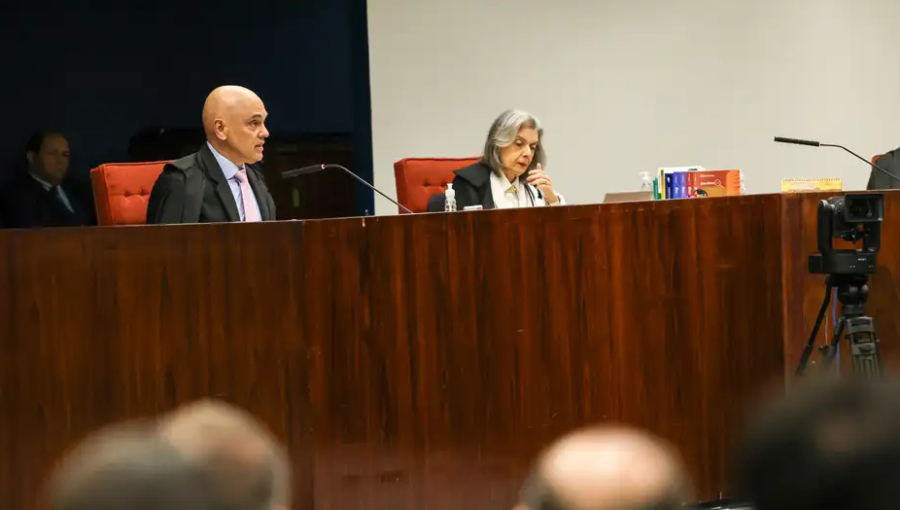

“This is no bar talk. This is the president, on September 7, Brazil’s Independence Day, inciting thousands of people against the Supreme Court, against the Judiciary, and against a court authority,” Justice de Moraes stated. / agencia brasil
By bnl Sao Paulo bureau September 9, 2025

Brazil’s Supreme Court Justice Alexandre de Moraes has called for former president Jair Bolsonaro's conviction on five criminal charges, including attempted coup d'état, during the first day of deliberations in Brazil's historic coup trial, requesting sentences ranging from 12 to 43 years.

In a five-hour presentation on September 9, Moraes detailed evidence supporting charges of attempted violent abolition of the state, coup d'état, criminal organisation membership, and property damage, warning that "Brazil almost reverted to a dictatorship due to a criminal organisation led by Jair Messias Bolsonaro, who doesn't know how to lose elections."

Moraes argued Bolsonaro led a hierarchical group with divided tasks aimed at restricting judicial actions and circumventing checks and balances to perpetuate his power illegally, overturning the results of the 2022 general election.

“The leader of the criminal group makes it clear here – aloud, publicly, to the whole of society – that he would never accept a democratic defeat in the elections, that he would never accept or comply with the will of the people,” Moraes said, as quoted by Agencia Brasil.

The judge stated the coup plot began forming in July 2021 through speeches delegitimising the electoral system, violent acts, and threats against authorities.

The justice said that assassination plans targeting then-president-elect Lula, vice president-elect Geraldo Alckmin, and Moraes himself were "fully proven in the case files; there is an excess of evidence," noting printed reports appeared twice in presidential palaces where Bolsonaro was present.

Moraes described the January 8, 2023 storming of government buildings in Brasília as "the criminal organisation's final attempt to carry out what Bolsonaro proclaimed in 2021" when he warned the Armed Forces "never failed to respond to the call of the Brazilian people."

Bolsonaro, under house arrest, followed proceedings from home alongside seven co-defendants, six of whom are military personnel.

The far-right leader, an ideological ally of US President Donald Trump, denies having attempted a coup but acknowledged convening the Armed Forces leadership to "discuss exceptional measures" after the electoral defeat.

The United States last month imposed sweeping 50% tariffs, some of the steepest levies imposed by Washington, on Brazilian exports over what Trump characterised as a "witch hunt" against Bolsonaro. It has also hit Moraes with targeted sanctions under the controversial Magnitsky Act.

Unlike most supreme courts globally, Brazil's justices deliberate publicly, allowing live observation of verdict construction.

Moraes voted first as presiding judge, with four colleagues from the First Chamber expected to announce votes in the coming days. Three votes suffice for conviction or acquittal.

More than 1,000 citizens will attend the remaining sessions through to September 12’s expected verdict.

The outspoken judge has become Bolsonarism's primary foe since 2019, handling most cases involving the former president's family and political movement whilst accumulating power with Supreme Court majority support, including last year's controversial shutdown order targeting Elon Musk's X social network.

African leaders urge fair funding with $50bn climate call

African leaders ended their second continental climate summit on Wednesday in Addis Ababa with a call for more money, fairer financing and a stronger voice in global talks.

Issued on: 11/09/2025 - RFI

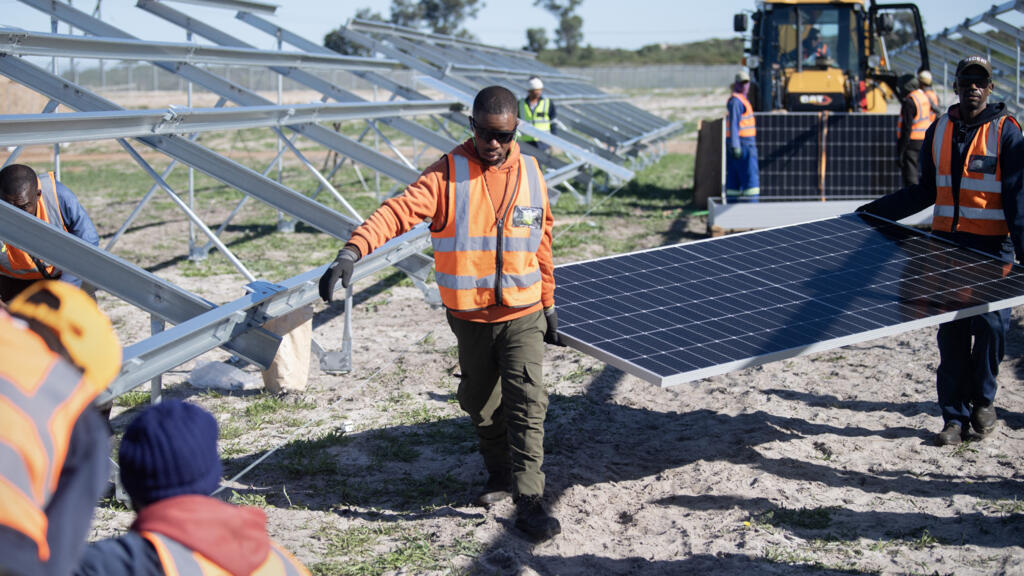
Workers carry solar panels at South Africa's first municipally owned solar plant in Atlantis, 40km from Cape Town, 5 June. AFP - RODGER BOSCH

By:Melissa Chemam with RFI

The African Union (AU) gathered all 54 member states at its headquarters in Ethiopia’s capital. The aim was to agree a common position ahead of Cop30 in Brazil this November.

The summit closed with the Addis Ababa Declaration – a plan that AU leaders say should reframe Africa not as a victim of climate change, but as a source of solutions.


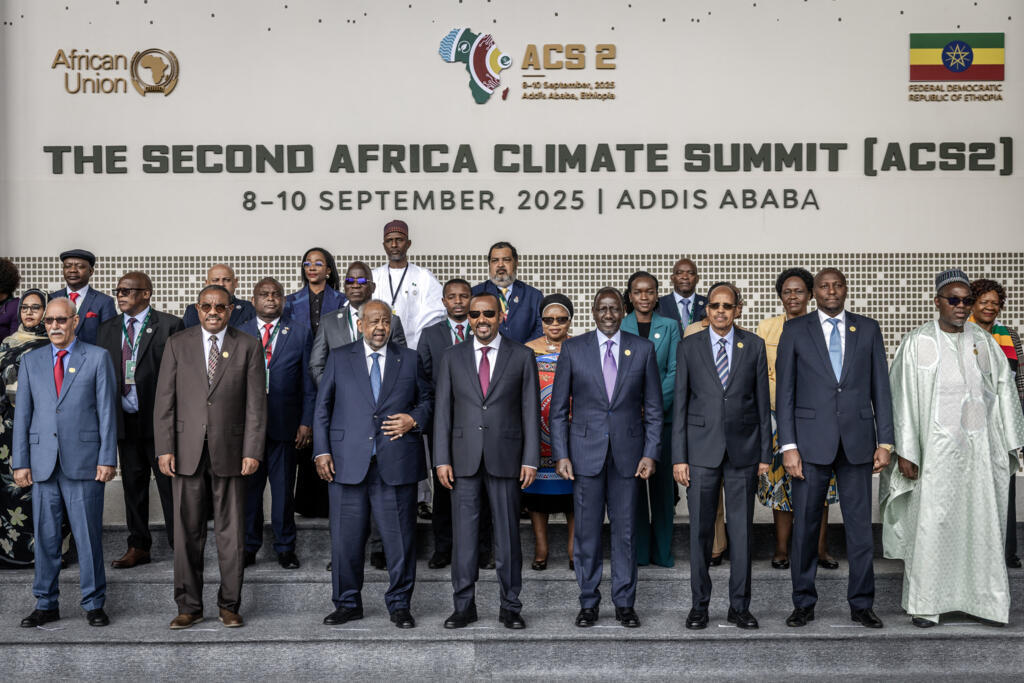
African Union Commission chairman Mahmoud Ali Youssouf and African leaders at the Africa Climate Summit in Addis Ababa, 8 September. © LUIS TATO / AFP

Three pillars

Ethiopia's President Taye Atske Selassie outlined the three main pillars of the Addis Ababa Declaration – with the first being to accelerate the development of renewable energy to make Africa "a green industrial power".

"First, we will put our future into motion. We are committed to accelerating the development of renewable energy and infrastructure. This will not only make energy accessible, but it will also position Africa as a green industrial power," he said.

The second pillar is the forming of a coalition of countries possessing key minerals, in order to ensure greater transparency and a fair share of the benefits, while the third is the protection of natural heritage.

Debates at the summit focused on reforming global climate finance to better serve African needs. Panelists spoke about the urgency of moving from a system driven by the priorities of donors, to one that addresses the needs of those impacted by climate change.

The AU's Bankoye Adeoye told RFI he felt proud of the outcomes of the summit, saying: "We did not shy away from difficult conversations." According to him, the goal is to open a new chapter in climate negotiations at COP30 in Brazil.


$50 billion a year

Africa emits just 4 percent of greenhouse gases but suffers disproportionately from the impact of global warming, so is calling for more funding towards climate change adaptation – in the name of what Mahmoud Ali Youssouf, chair of the AU Commission, called "climate justice".

According to the Addis Ababa Declaration, Africa is aiming to secure $50 billion a year "to champion climate solutions", with the establishment of the Africa Climate Innovation Compact and the African Climate Facility, sponsored by Ethiopia's Prime Minister Abiy Ahmed.

Abiy said the initiative should aim to deliver 1,000 solutions to tackle climate challenges by 2030.

But according to Professor Carlos Lopes, the African continent's representative at COP30, these plans lack focus.

"In my opinion, it's too broad. It covers too many topics that don't have the same importance, and therefore it loses some of the will to influence and create the opportunity for a unified African voice," he told RFI.


'Rich nations set the planet on fire'


According to a 2024 report by the World Meteorological Organisation, 48 of Africa's 54 countries are at risk of flooding and 40 are at risk of drought, worsened by climate change. These hazards caused a loss of 2 to 5 percent of GDP each year.

Given that industrialised nations have polluted the planet for more than 150 years, the promised funds to help Africa adapt to the effects of this fall far short of the required amount, said AU Commission chair Youssouf in his opening remarks.


"Today, the link between climate and underdevelopment is no longer in doubt," he added. "Climate, rural exodus, migration and instability in all its forms are intertwined. The vulnerability of our member countries caused by climate change... must be redressed through climate justice... by providing financial resources, technology and expertise."

"Rich polluting nations set the planet on fire, then sit back and send water droppers" to the developing world, Oxfam's Africa director Fati N'Zi-Hassane echoed in a statement.

"They must take responsibility for the damage they are causing and adequately fund climate action in countries where climate change is wreaking havoc on communities that are least responsible for the crisis."

(with newswires)

Oil majors face $4.4bn in liabilities under Nigeria's tightened decommissioning rules, says NUPRC chief

Oil majors face $4.4bn in liabilities under Nigeria's tightened decommissioning rules, says NUPRC chief
“Without a robust and enforceable framework for abandonment and decommissioning, divestment transitions can create lasting financial and environmental burdens,” Gbenga Komolafe said. / NUPRC
By bne IntelliNews September 11, 2025

Nigeria’s upstream regulator NUPRC has cleared 94 oilfield decommissioning and abandonment plans worth $4.42bn since April 2023, arising from all Field Development Plans (FDPs) submitted within this period, its chief executive told an industry forum in Lagos – underscoring the tightening of rules to safeguard state finances.

According to CEO Gbenga Komolafe, the obligations will be paid gradually over the life of the fields into escrow accounts, in line with the 2021 Petroleum Industry Act (PIA).

About $400mn has already been secured through letters of credit and escrow, he said. A new framework on domiciling escrow accounts has been agreed with international oil companies (IOCs) and is awaiting approval by the Ministry of Justice.

Komolafe – in prepared remarks to the Nigerian Extractive Industries Transparency Initiative (NEITI) Companies Forum, delivered by a deputy and summarised in an NUPRC release – said that the stricter rules for asset transfers also aim to prevent environmental liabilities from falling on the state.

NUPRC is applying lessons from costly global divestment cases, he said, citing overseas examples where costs escalated (including £27bn projected in the North Sea by 2032, more than $9bn in the Gulf of Mexico, CAD30bn–70bn for 97,000 inactive wells in Alberta, and AUD200mn in liabilities left after Northern Oil & Gas Australia’s collapse in 2019).

“Without a robust and enforceable framework for abandonment and decommissioning, divestment transitions can create lasting financial and environmental burdens,” Komolafe said.

“Nigeria is not immune to this challenge, and if we are to avert costly mistakes. It is precisely to avoid this outcome that Nigeria, through the Petroleum Industry Act and subsequent regulatory actions, has taken bold and decisive steps.”

Komolafe cited the biggest recent Nigerian divestments approved under stricter frameworks that require upfront financial guarantees. The specific companies he named include:

TotalEnergies — still operating with partial divestments. In May 2025, TotalEnergies agreed to sell its 12.5% non-operated interest in the Bonga field (OML 118) to Shell for $510mn; the deal is subject to regulatory approvals and expected to close by the end of 2025, according to Reuters and company statements.

Shell Petroleum Development Company of Nigeria Ltd. (SPDC, Shell plc) — exit completed. Shell said in March 2025 that it had closed the $2.8bn sale of its onshore business to Renaissance Africa Energy

Equinor ASA — exit completed. Equinor confirmed in December 2024 that it had sold its entire Nigerian business, including its Agbami field interest (OML 128), to Chappal Energies

ExxonMobil (Mobil Producing Nigeria Unlimited) — exit completed. Seplat Energy announced in December 2024 it had closed its $1.28bn acquisition of ExxonMobil’s shallow-water assets, renaming the unit Seplat Energy Producing Nigeria Unlimited.

Eni (Nigerian Agip Oil Company Ltd.) — exit completed. Eni said in August 2024 that it had closed the sale of NAOC to Oando Plc, though it retained a 5% stake in the Shell-operated SPDC joint venture.

WWIII
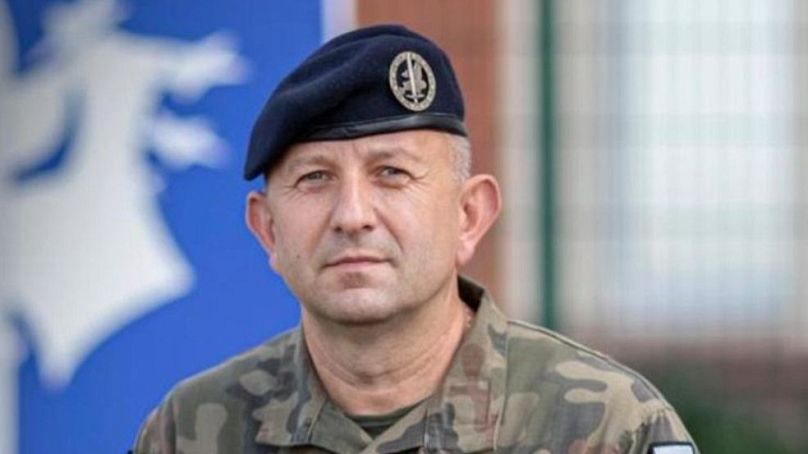
Exclusive: Poland was shooting a cannon at a fly, General Gromadziński tells Euronews


Copyright Rafal Niedzielski/Copyright 2025 The AP. All rights reserved

By Aleksandra Galka Reczko
Published on 11/09/2025 

The use of F-35 aircraft to shoot down drones shows that Poland is not yet ready for mass drone warfare, according to Lieutenant General Jarosław Gromadziński in an interview with Euronews.

Poland came closer to open conflict than at any time since World War II as Russian drones repeatedly violated its airspace overnight, forcing the deployment of advanced NATO fighter jets in what a top Polish general called "shooting a cannon at a fly."

The coordinated assault exposed critical gaps in NATO's lower-altitude air defence systems, forcing the alliance to use expensive advanced aircraft against relatively cheap unmanned targets.

Prime Minister Donald Tusk confirmed at least 19 Shahed-type drone incursions near the Polish border, the first massive test of Polish air defences since Russia's full-scale invasion of Ukraine began in early 2022.

The incident combined physical attacks with sophisticated disinformation campaigns, which Lieutenant General Jarosław Gromadziński said involved high-intensity spreading of false claims about drone locations near Warsaw.

'Combined hybrid action'


"I was up all night. From 2 am there was a high intensity of disinformation from various trolls spreading information that the drones had allegedly already reached Ciechanów (97 km from Warsaw)," Gromadziński told Euronews.

"It was clearly a combined hybrid action: the Shahed strike and the media activity," the former Eurocorps commander said.

In his view, this proves that the action was clearly provocative: the Russians were testing Polish reaction capabilities and response times.

"This was extinguished in the morning, which means that our services started to counteract it. It was a big test of our capabilities," he added.

On the whole, the general was positive about the Polish response, especially the courageous decision to close the airspace to civilian traffic and use NATO forces.

"I support wholeheartedly the decision to allow military aircraft in, which eliminated the threat," Gromadziński emphasised.

"The most important thing is that these were not just our planes, but allied planes based in Poland as part of their duty station. This showed the strength of NATO."

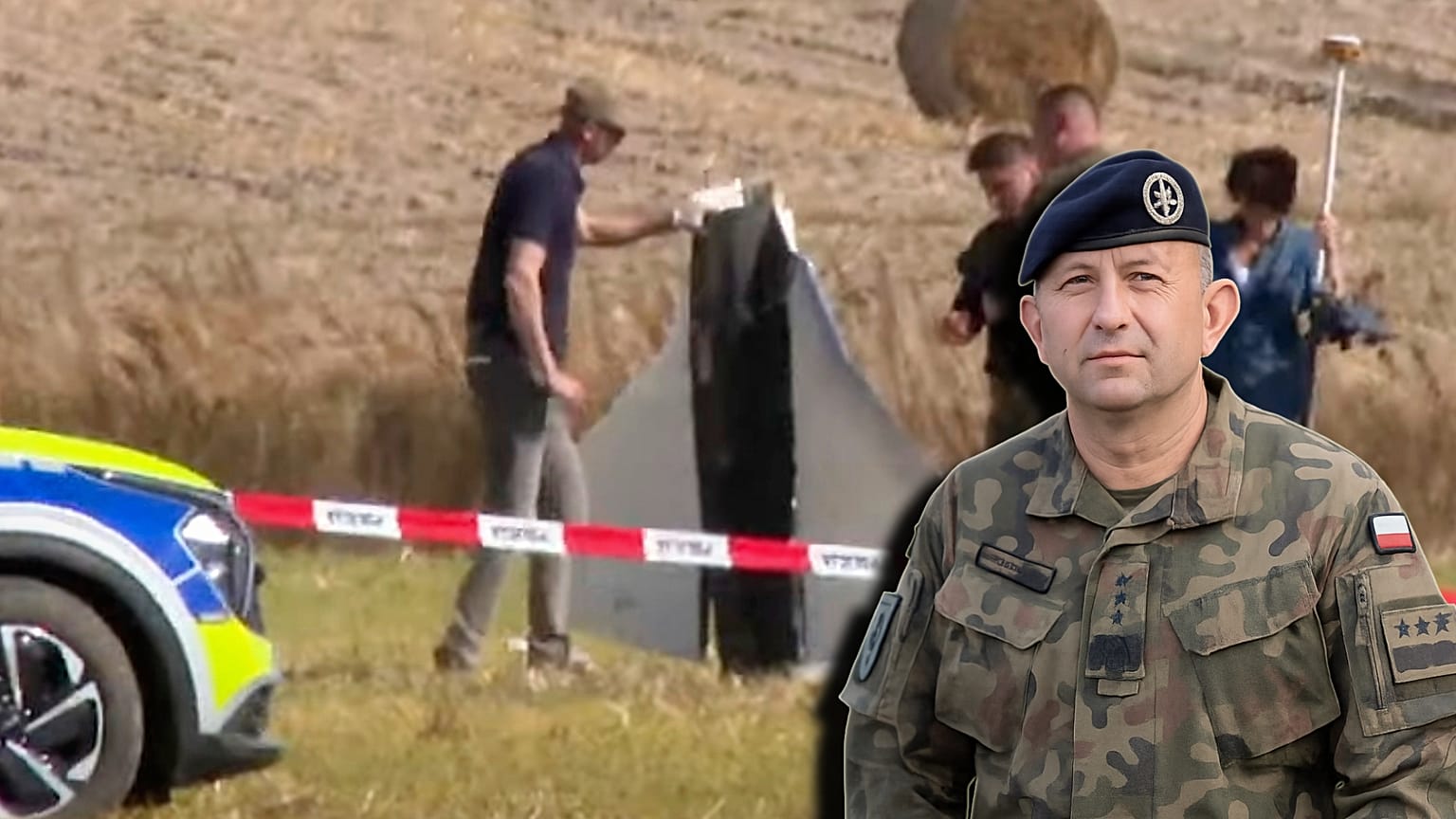
Polish Army Lieutenant General Jaroslaw Gromadzinski
 Archiwum prywatne

This, according to the general, is not what matters most at the moment.

"For me, it's not important that we destroyed those drones, that's what we should do unquestionably. Surely. But the most important thing now is what Polish diplomacy and the allies will do," Gromadziński said.

Without a firm response from the whole NATO alliance, he added, "this will embolden the Russian side and we will have drones more often and deeper in our country."


'Make a statement with one voice'


While US Ambassador to NATO Matthew Whitaker has asserted a readiness to defend "every inch of NATO territory", the White House, US State Department and Pentagon are silent on the violations.

Former Polish Ambassador to the US Marek Magierowski, in an opinion piece for Wirtualna Polska outlet, called it "ear-irritating silence".


General Gromadziński expects a coordinated response. "The allies must agree on everything behind the scenes and then make a statement with one voice," he said.

"This is where the strength of our diplomacy lies - will we convince everyone, especially the US, to give a radical response," he asked.

The issue is not so much just about military action, but "increasing sanctions, blockades, maybe closing the airspace over Kaliningrad or consequences for countries cooperating with Russia. This is where the whole package of actions is made," said Gromadziński.


'Shooting a cannon at a fly'


A critical assessment of the use of state-of-the-art fighter jets for drone warfare was expressed by the former commander of US ground forces in Europe, General Ben Hodges.

"NATO/USEUCOM needs to conduct long-needed air defence exercises across the theatre of operations. Using F-35s and F-22s against drones shows that we are not yet prepared," he wrote in a post on X.


General Gromadzinski entirely agreed. "This is shooting a cannon at a fly. We should build a multi-layered air defence system that at the lowest altitude takes into account both kinetic and jamming systems," he explained.

Knowing the characteristics of drones is essential, and therefore, analysing speed, flight trajectory, range and manoeuvrability is crucial for effective defence. "Drones cannot only be drowned out, kinetic elimination is also essential," Gromadziński explained.
A gap in defence

The problem with defending against drones became apparent two years ago, when they began being used en masse in Ukraine.

"All countries discovered that they had a gap in this lower layer of defence. That's why today aircraft were used, although we had no choice," admits Gen Gromadzinski.

"Ideally, we should have reconnaissance elements at all levels deployed along the border. The high missile ceiling is what we plan, the medium one we have, but we have lost the lowest one," the expert said.

In his opinion, systems integration will be key.


"This higher missile ceiling is more complicated and we planned it right away in the construction of our multilayer system, but we lost this lowest level," Gromadziński explained.

"Today, an anti-drone warfare reconnaissance system has to be built on this lowest level on short notice. It must, however, be integrated with the main system, so that we can identify the target and the so-called targeting and indicate which target we are destroying with which means."

Related

Should NATO’s eastern bloc expect more drone attacks as Russia and Belarus start Zapad-2025?

General Gromadziński urged that in this tension and fear, experts, not internet influencers, should be trusted. He also exposed another issue in the country's defence structure: information chaos during a crisis.

"We don't have something like STRATCOM, which is strategic communication at the government level. Today, a local police station was giving information about a drone being found. There should not be such things," he said.

"There should be centralised information to avoid fake news. The citizen should be aware that they are only receiving information from this source. This is an information war that Russia is really good at," Gromadziński concluded.


Poland calls emergency UN meeting over drone raid blamed on Russia

Warsaw (AFP) – Poland said Thursday it had called an emergency meeting of the UN Security Council to discuss violations of its airspace, a day after it accused Russia of carrying out a drone raid on its territory.


Issued on: 11/09/2025 - RFI

Officials said drones violated Polish airspace 19 times, but there were no casualties and the damage was limited. © Wojtek RADWANSKI / AFP

By:RFIFollow
Advertising


Poland said the incident was not accidental and branded it an "unprecedented" attack on Poland, NATO and the European Union, but Moscow denied targeting the country and said there was no evidence the drones were Russian.

Stray Russian drones and missiles have entered the airspace of NATO members including Poland several times since Moscow launched its invasion of Ukraine in 2022, but no NATO country has ever attempted to shoot them down.
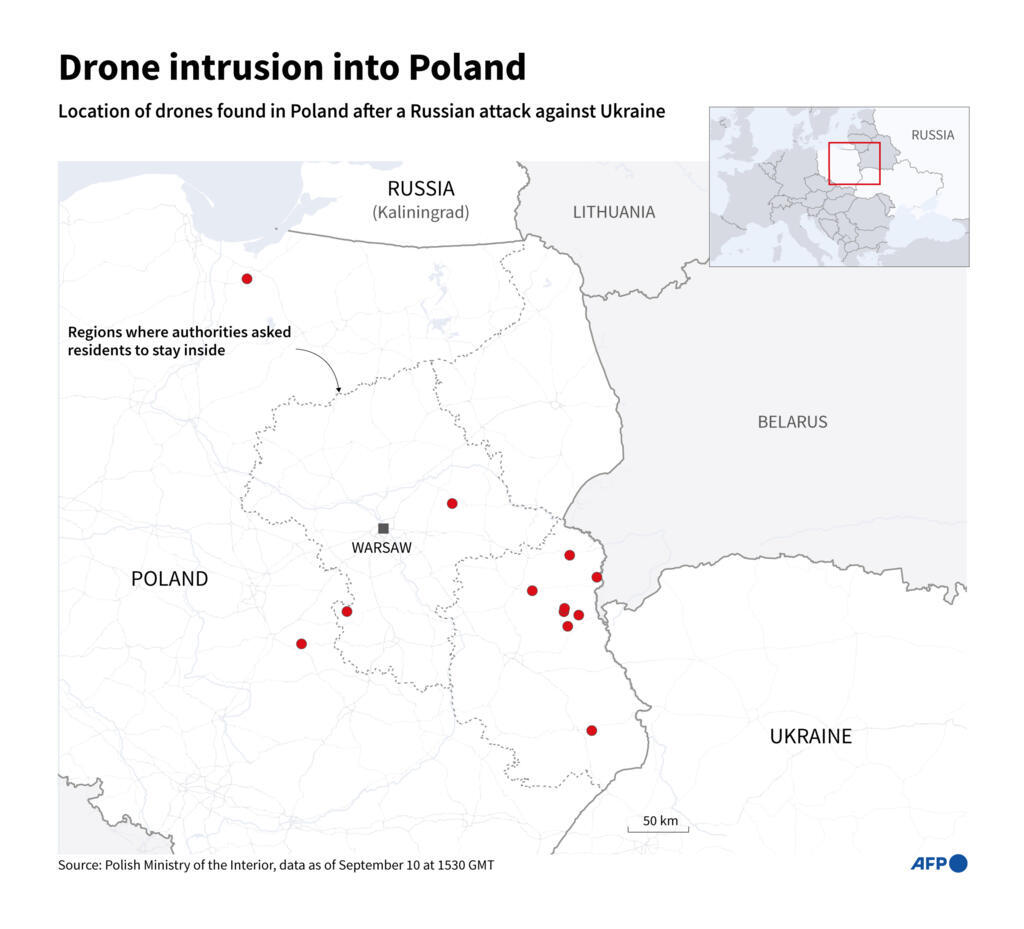
Drone intrusion into Poland © Sylvie HUSSON, Jean-Michel CORNU / AFP


The incident was "an attempt to test the mechanism of action within NATO and our readiness to respond", Polish President Karol Nawrocki said Thursday during a visit to an airbase in western Poland.

The UN Security Council will hold an emergency meeting to discuss "the violation of Polish airspace by Russia", the Polish foreign ministry said without specifying a date.

Poland's National Security Council will also meet later on Thursday and the defence minister is set to brief parliament on the latest findings.

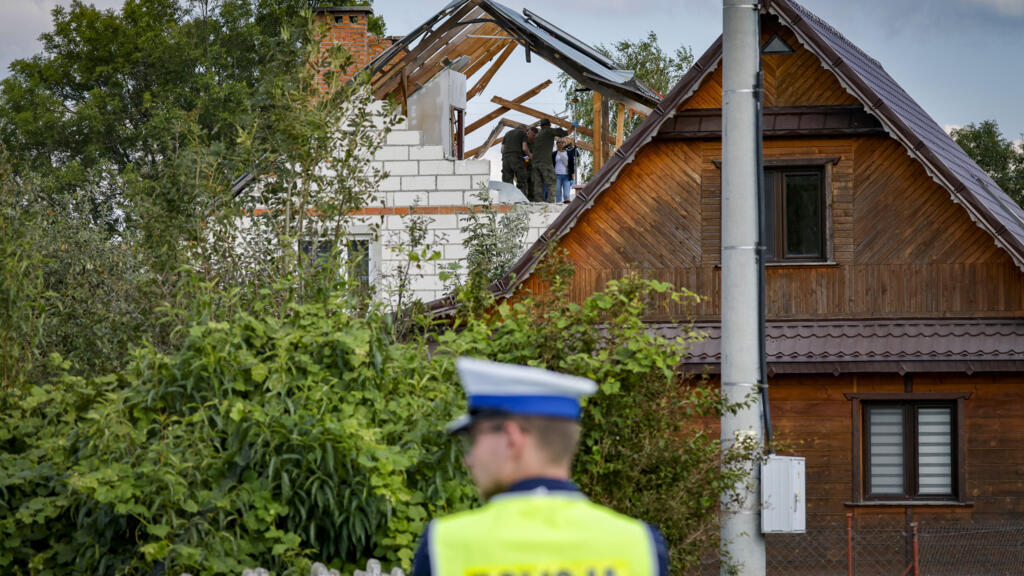
Officials said drones violated Polish airspace 19 times, but there were no casualties and the damage was limited – a house and a car were destroyed.

Poland boosted security on Thursday, closing air traffic along its eastern borders with Belarus and Ukraine to civilian flights up to an altitude of three kilometres (1.9 miles) until December 9.

The PAZP air traffic control agency said in a statement drones would also be banned.


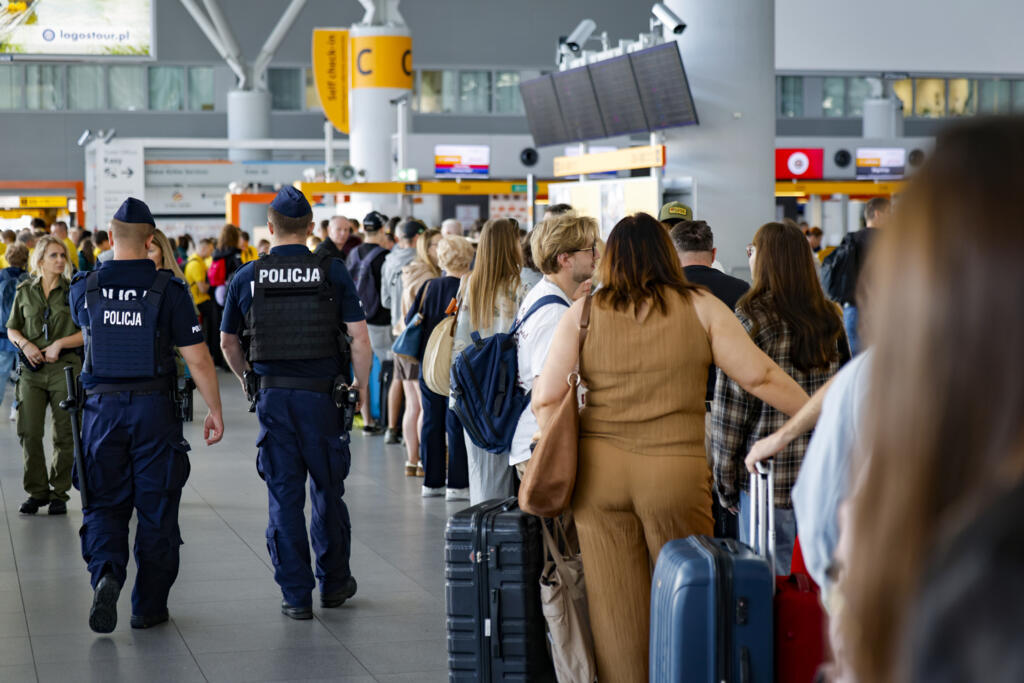
Air passengers endured severe delays on Wednesday as the airport was closed after the drone raid © Wojtek RADWANSKI / AFP


The country had already announced ramped-up measures on the Belarus border to cope with military drills the country is carrying out with its ally Russia between September 12 and 16.

The few open border crossings with Belarus would be closed starting on Friday over the Zapad ("West") drills.

Polish Prime Minister Donald Tusk warned on Wednesday that the drone raid marked an unprecedented escalation of tension with Russia.

"This situation... brings us closer than ever to open conflict since World War II," he said as he briefed the lawmakers.

Tusk called a NATO meeting on Wednesday, invoking Article 4 under which a member can call urgent talks when it feels its "territorial integrity, political independence or security" are at risk – only the eighth time the measure has been used.

A cornerstone of NATO is the principle that an attack on any member is deemed an attack on all.

NATO chief Mark Rutte denounced Moscow's "reckless behaviour" and hailed his organisation's "very successful reaction", telling journalists the alliance's air defences had done their job

Unity 'reaffirmed'

The raid was condemned by Poland's allies around the world, with the European Union and Ukraine calling it a test of the alliance's resolve.

Nawrocki said late on Wednesday he had spoken by phone to US counterpart Donald Trump as "part of a series of consultations" with allies.

"Today's talks reaffirmed our unity," he said.

"The Chinese side hopes that all parties concerned will properly resolve their disputes through dialogue and consultation," foreign ministry spokesman Lin Jian told a regular news briefing.

Poland is a major supporter of Ukraine and hosts more than one million Ukrainian refugees. It is also a key transit point for Western humanitarian and military aid to the country.


Polish military to take part in a drone combat training in Ukraine after airspace violations


Copyright AP Photo

By Katarzyna-Maria Skiba
Published on 11/09/2025 -


Following the violation of Polish airspace by 19 Russian drones, Poland and Ukraine are stepping up military cooperation.

Following the violation of Polish airspace by at least 19 Russian drones earlier this week, representatives of the Polish Army will travel to Ukraine to take part in anti-drone training.

Of the at least 19 drones that flew into Polish territory, four were shot down by Polish and NATO aircraft.

Following the incident, Ukrainian President Volodymyr Zelenskyy proposed training to strengthen Poland's defences against drones.

On Wednesday, Zelenskyy spoke by phone with Polish President Karol Nawrocki about the airspace violations with both leaders acknowleding the incident had been on a bigger scale than previous incidents.


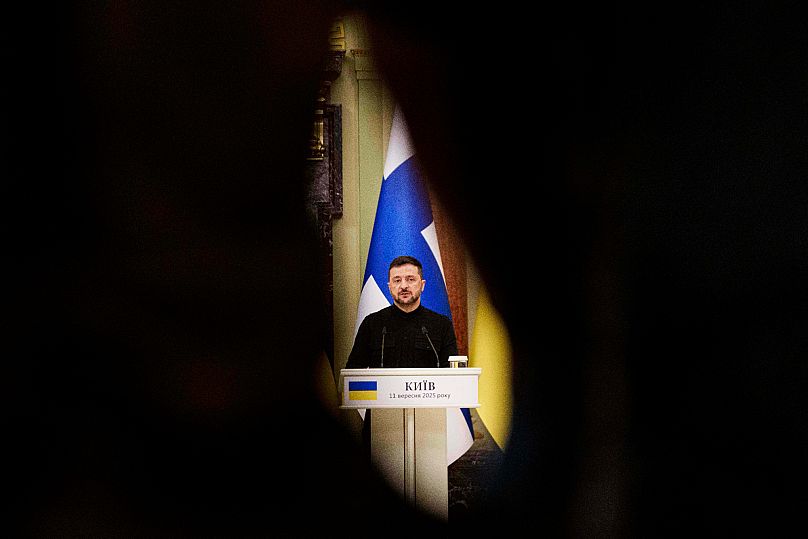
Ukraine's President Volodymyr Zelenskyy speaks during a press conference in Kyiv, 11 September, 2025 AP Photo

"This is a different level of escalation on Russia's part and must be met with an appropriate response," Zelenskyy said.

He announced that Ukraine would offer Poland training on how to combat Russian drones, especially Iran-made Shaheds, which the Ukrainian army already has extensive experience of dealing with.

"We have agreed with Donald (Tusk) on appropriate cooperation at the military level. We will also coordinate with all NATO member states," Zelenskyy said in a post on X.