Thursday, September 18, 2025

How Chinese rare-earth mining threatens the Mekong River

David Hutt
DW
18/09/2025 


Rare-earth mining in Myanmar is polluting the Mekong River with toxic metals, threatening ecosystems, food security, and water supplies across mainland Southeast Asia.


China controls about 60% of global rare-earth production and nearly 90% of refining
Image: Supplied by a Global Witness partner

Ecologists are warning that mainland Southeast Asia faces a looming ecological disaster unless urgent steps are taken to address the rare-earth mining boom in war-torn Myanmar.

According to Global Witness, a London-based watchdog, Myanmar has become the world's largest source of heavy rare-earth elements. These minerals are essential for manufacturing high-tech products like wind turbines, electric vehicles and medical devices.

Most of these mines are located in Shan state, where civil war has raged since the 2021 military coup.

Earlier this year, Thailand's Department of Pollution Control found arsenic levels nearly four times higher than World Health Organization (WHO) limits in parts of the Kok River, a Mekong tributary flowing into Thailand from Myanmar. Other toxic metals were also detected at dangerous levels.
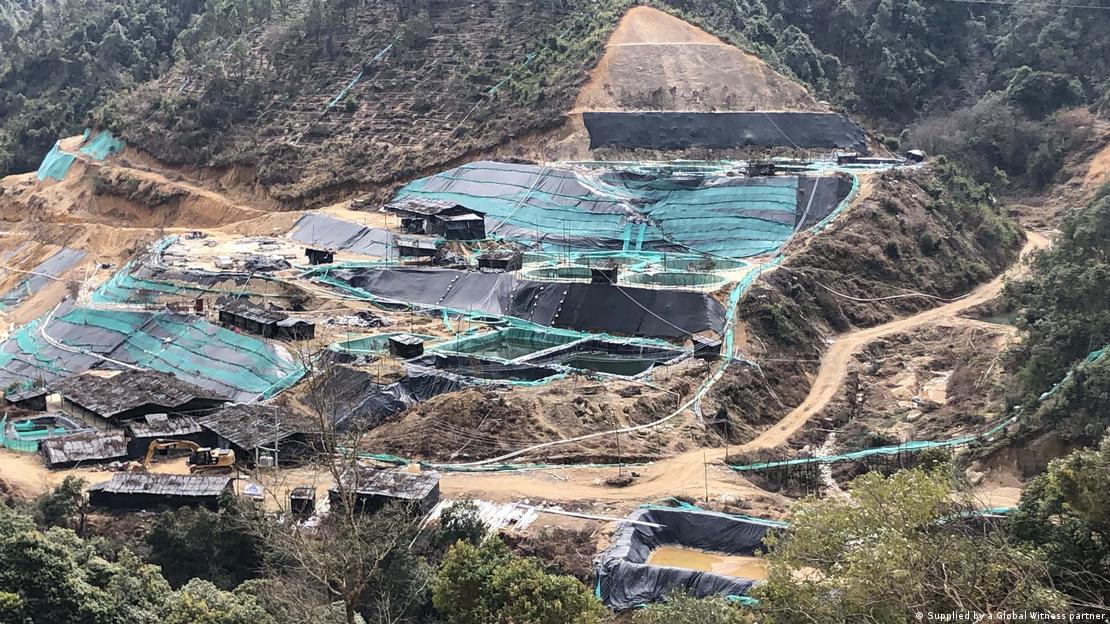
Rare-earth mining has exploded in Myanmar's Kachin region, making it the world's largest source of supplyImage: Supplied by a Global Witness partner

The Kok runs through northern Thailand's Chiang Rai province before merging with the Mekong, where arsenic concentrations have also reportedly been detected.

The Mekong is Southeast Asia's longest river, which provides a lifeline for millions. Experts fear the contamination could seep into irrigation systems that feed vast stretches of the region's farmland and drinking water supplies. The WHO has reportedthat prolonged exposure to arsenic and other metals can cause cancer, neurological disorders and organ failure.

"What we see now is just the beginning," Pianporn Deetes, campaigns director at International Rivers, a conservation NGO, told DW.

"If left unchecked, the situation could deteriorate rapidly — potentially hundreds of unregulated mines upstream, heavy contamination spreading through the Mekong and its tributaries, and ultimately acidification of waters reaching as far as the seas," she said.

Limited options


After petitions from local communities in June, Thai authorities proposed building underwater sediment barriers or mini-dams on the Kok to trap toxic deposits before they reach villages.

Environmental groups say such infrastructure will take years to complete, while the crisis is already unfolding.

Bangkok has few options. The problem lies largely within Myanmar's borders, particularly in Shan state, where new mines are located in territory controlled by the United Wa State Army (UWSA), a powerful China-backed militia that oversees two semi-autonomous enclaves.

Reuters has reported that the UWSA provides armed protection for Chinese-run mining operations there. Neither Myanmar's military rulers nor international organizations exert meaningful control over the region.

Currently, it is unknown whether the pollution has remained concentrated in northern Thailand or whether it has already leached into the Mekong, potentially affecting downstream nations.
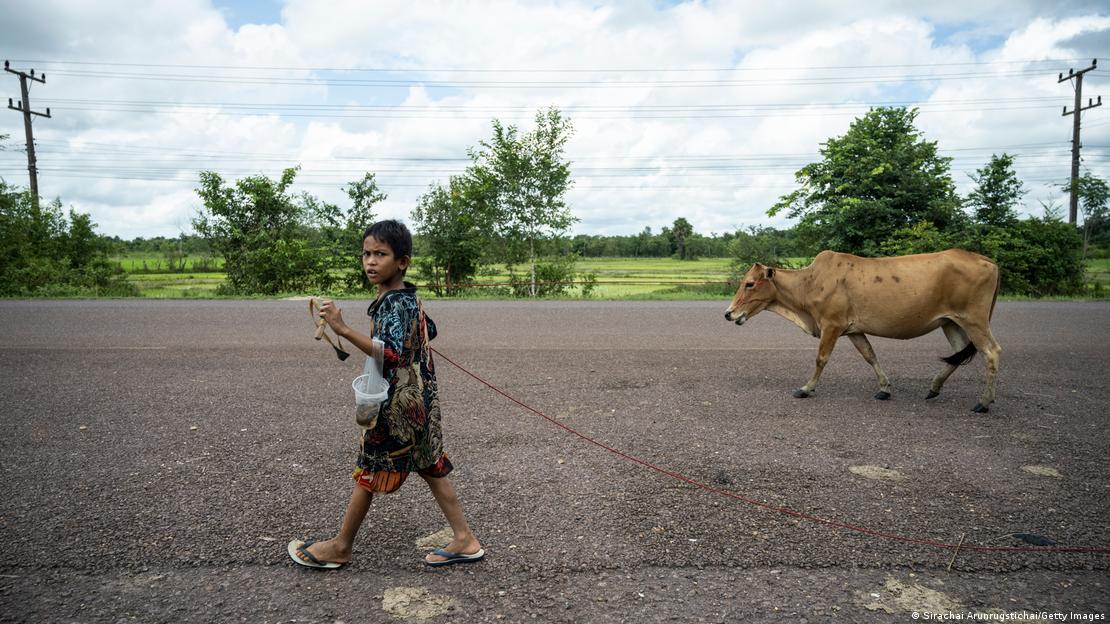

The Mekong river sustains agriculture, fishing, transport and commerce — and supports life in small villages and towns along its banks
Image: Sirachai Arunrugstichai/Getty Images

It is "extremely likely" that toxic metals and chemicals are already detectable in Cambodia, where 60% of the country's protein intake comes from wild-caught fish from the Mekong River, Brian Eyler, director of the Stimson Center's Southeast Asia Program, told DW.

In recent weeks, civil society groups have called for stronger action from the Mekong River Commission (MRC), an intergovernmental body set up by Cambodia, Laos, Thailand and Vietnam in the 1990s to manage the shared waterway.

"The MRC should urgently establish monitoring stations for heavy metals and ensure that communities across the basin have timely access to accurate and transparent information," Pianporn urged.

But the MRC has so far downplayed the threat. In July, it reported arsenic levels above safety limits at four of five sampling sites in Thailand and Laos, yet described the situation only as a "moderately serious transboundary environmental issue."

Many analysts agree that ultimate responsibility lies with Beijing, which controls about 60% of global rare-earth production and nearly 90% of refining.

China, the world's largest user of rare-earth minerals, outlawed many forms of rare-earth mining at home in the 2010s because of concerns about the environmental damage it brings.

However, these environmental safeguards triggered many Chinese companies to move south and set up their operations across the border in Myanmar's Kachin and Shan states.


In 2018, Myanmar's civilian-led government had banned exports and ordered Chinese miners to wind down operations, but since 2021, extraction has continued amid a widening civil conflict.

Beijing has "effectively exported demand for rare-earth mineral extraction to other countries. And now the practice has proliferated in Myanmar's ethnic autonomous regions next door, where it is booming in an unregulated fashion," said Eyler.


Could the situation worsen?

Beijing should guarantee that all rare-earth imports come only from mines that comply with its laws and environmental standards, Pianporn told DW.

"If China is serious about leading on 'ecological civilization,' it must act in an accountable and transparent way," she added.

However, a tougher response from Beijing would work against China's own self-interest, as the global race for rare earths is intensifying geopolitical struggle for control of these critical materials.

It would also go against the way China typically conducts foreign policy in regions like Southeast Asia, noted Assistant Professor Dulyapak Preecharatch, lecturer in Southeast Asian Studies at Thammasat University.

In bilateral dealings, China always emphasizes the principle of state sovereignty, in which Beijing stresses that it does not interfere in the affairs of another country, including its environmental legislation.

As such, Beijing can say that it has no influence over rare-earth mining in Myanmar because oversight of environmental damage falls within Myanmar's sovereignty, nor is there a need for China "to consider problems for other downstream states," Preecharatch told DW.


The rare-earth rush is not limited to Myanmar. At least 15 mines have been identified along tributaries of the Mekong in Laos. Cambodia currently lacks active large-scale rare-earth mines, but exploration is ongoing.

Environmentalists fear a regional chain reaction of pollution on the Mekong.

"This situation is likely going to get much worse before it gets any better," Eyler of the Stimson Center told DW.

"It's possible that the entire river's fish population becomes contaminated, and the floodplains, which are an agricultural production zone for the world, are unusable for a long period of time," he added.

For now, the Mekong is still seen as one of the world's great clean rivers. But experts fear that reputation may soon be lost.

Edited by: Keith Walker

David Hutt Journalist covering Europe-Southeast Asia relations
Microsoft seizes websites linked to Nigeria-based phishing

UPDATED NIGERIAN PRINCE EMAIL SCAM

DW with Reuters
18/09/2025 


More than 330 websites have been linked to a phishing operation that stole over 5,000 Microsoft user credentials.

Microsoft said on Tuesday that it seized 338 websites linked to a Nigerian-based service that allowed users to carry out phishing campaigns

The service, called "Raccoon0365," allowed users to engage in phishing campaigns that involved thousands of emails at a time, according to Steven Masada, assistant general counsel for Microsoft's Digital Crimes Unit.

The phishing operation ended up stealing at least 5,000 Microsoft user credentials.

Phishing is a cybercrime in which criminals impersonate trustworthy domains to deceive users into revealing sensitive information like passwords or banking details.
How did the phishing scheme work?

Raccoon0365 operates through a private Telegram channel with over 850 subscribers.

The service enables users to impersonate trusted brand names and get targets to enter Microsoft login details on fake Microsoft platforms. According to Microsoft's Masada, the service has generated at least $100,000 (€84,425) in cryptocurrency payments for its operators since launching in July 2024.


Raccoon0365 users targeted a wide range of industries, a significant number of which are organizations based in New York City, Masada said.
How did Microsoft seize Raccoon0365?

According to Masada, Microsoft identified what it said was a Raccoon0365-related effort using tax-themed phishing emails to target more than 2,300 organizations, mostly in the US, in February this year, according to a company blog posted in April.

Earlier this month, Microsoft obtained an order from the US District Court in Manhattan to seize domains associated with Raccoon0365. The seizure of the websites occurred over a period of days earlier this month.

"Cybercriminals don't need to be sophisticated to cause widespread harm," Masada said. "Simple tools like Raccoon0365 make cybercrime accessible to virtually anyone, putting millions of users at risk," he added.

Raccoon0365 operators used Cloudflare services to help conceal the service's backend infrastructure. Cloudflare worked with Microsoft and the US Secret Service to take down Raccoon0365 operations and prevent the operators from establishing new accounts.

Blake Darche, the head of threat intelligence at Cloudflare, said that while Raccoon0365 operators made some operational security mistakes, they were highly effective.

"They're in people's accounts, they compromise lots of people, and it needs to obviously be stopped," he said.


Hauwau Samaila Mohammed Nigerian writer and journalist

LGBTQ RIGHTS ARE HUMAN RIGHTS

'Raped, jailed, tortured, left to die': the hell of being gay in Turkmenistan


Warsaw (AFP) – Two men who escaped one of the world's most secretive and repressive states have told AFP how they were tortured, beaten and raped in Turkmenistan for the "crime" of being gay.


Issued on: 18/09/2025 - RFI

LGBTQ people live in constant fear of arrest in Turkmenistan, with regular crackdowns in the capital Ashgabat © Natalia KOLESNIKOVA / AFP/File

When the oil- and gas-rich Central Asian republic makes the headlines, it is usually for the eccentricities of its "National Leader" and "Hero Protector" Gurbanguly Berdymukhamedov.

The dentist-turned-autocrat who writes poems about his horse -- and whose football team has never lost a game in the local league -- is a health freak. So much so that his son Serdar, the president, plans to "eradicate smoking" there by the end of the year.

But behind the monumental statues and the marble city of Arkadag built in Berdymukhamedov's honour, opponents and minorities are mercilessly persecuted, say Amnesty and Human Rights Watch, none more so than LGBTQ people, who are often jailed or sent to psychiatric hospitals.

Arslan, who is now in hiding abroad, told AFP how he was raped five times in jail -- where HIV-positive prisoners are condemned to a slow death from lack of treatment -- while David was beaten and raped by his torturers, who wore gloves "to avoid touching my blood".

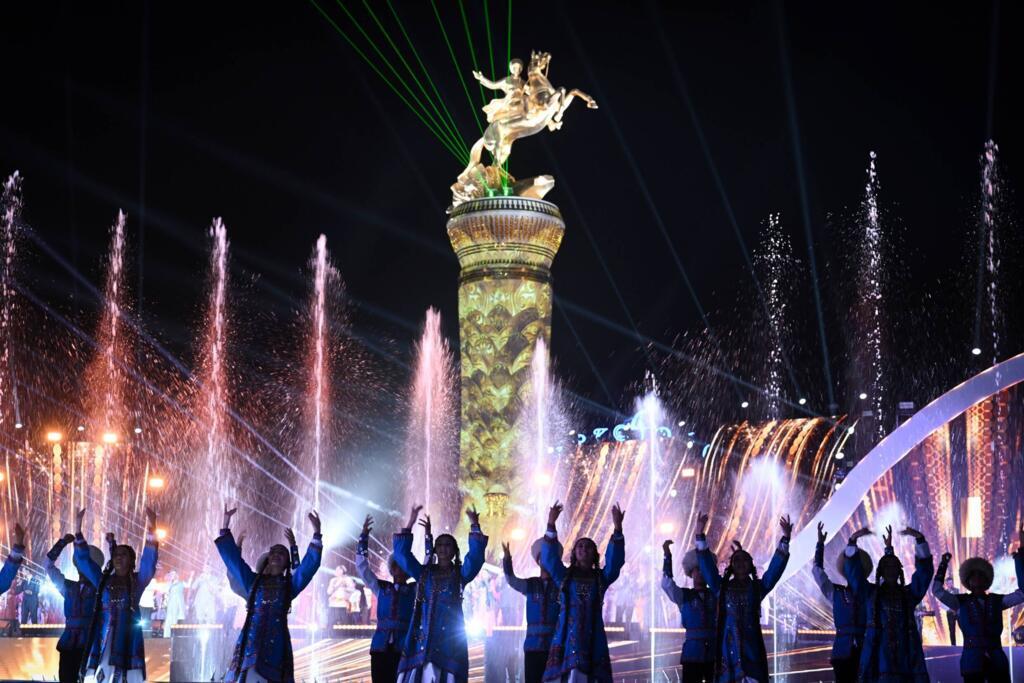
A giant golden equestrian statue of Turkmenistan's 'Hero Protector' Gurbanguly Berdymukhamedov in Arkadag, the new city named in his honour © Natalia KOLESNIKOVA / AFP


Their rare testimonies, supported by official documents and confirmed by NGOs, reveal a hidden side of the reclusive regime, which tolerates no independent media or rights groups.

The authorities refuse to comment on all such allegations. But last year at the UN they insisted that "all discrimination" was illegal in Turkmenistan.

Homosexual relations are a crime, they said, because they run counter to the "traditional values" of the Turkmen people.

- Arslan's story -


Arslan -- whose name AFP has been changed to protect him -- grew up in poverty in the second largest city of Turkmenabat, near the Uzbek border. "We had neither bread nor basic clothes," said the 29-year-old, who comes from the Uzbek minority.

When he moved to the capital Ashgabat at 18, he was taken aback by the pomp of the white marble edifices built by the country's first post-Soviet president Saparmurat Niyazov and Berdymukhamedov, who took power in 2006.

He also discovered a small gay community and formed a secret relationship with a man. But three years later he was arrested with about 10 other "suspected homosexuals".

He believes his boyfriend was forced to denounce him.

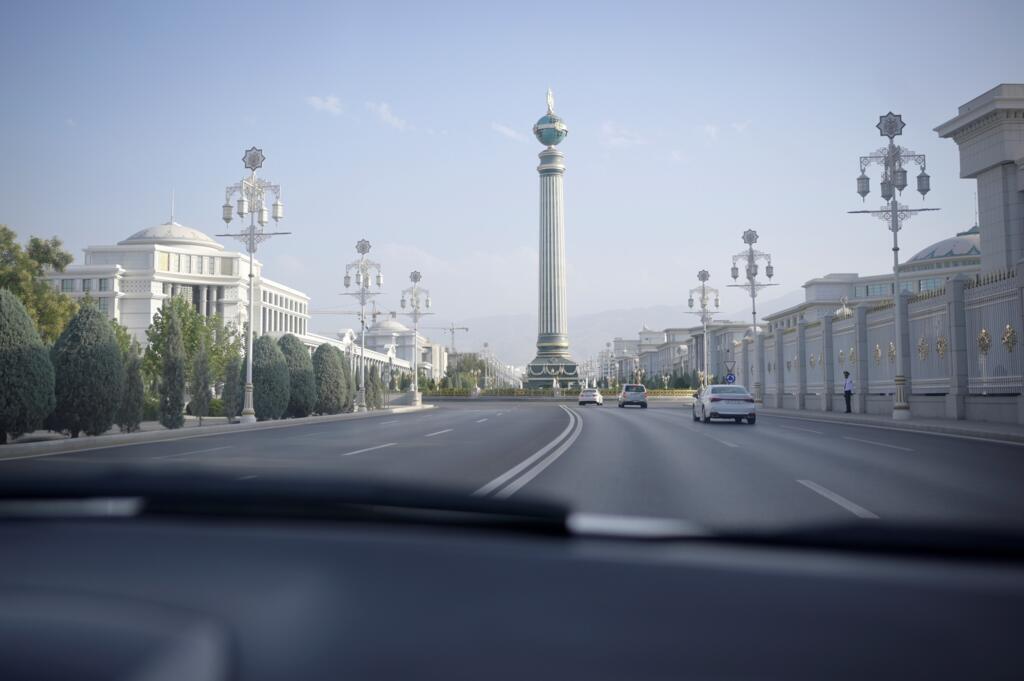
An avenue in the tightly-controlled capital Ashgabat © Natalia KOLESNIKOVA / AFP/File

Arslan was beaten by the police and jailed for two years for sodomy at a closed-door hearing in January 2018. He spent nine months in a penal colony before being pardoned.

Of the 72 men in his barracks, around 40 were there for their sexual orientation. One day, the leader of the barracks, a murderer -- "who was sleeping with lots of the prisoners" -- turned his attention to him, raping him repeatedly after plying him with sedatives.

"It was abominable," said Arslan, who tried to kill himself by taking "a bunch of pills". When he told the prison director about the rapes from hospital, "he laughed, saying I was there for that".

After his release, Arslan got work and tried to rebuild his life, but the stigma was overwhelming. People recognised him and threatened him, "yelling at me in the street".

He was twice sent to a psychiatric unit after being arrested again in 2021 and 2022. "They wanted to cure me because to them I have a disease."

He decided to leave the country, but with authorities trying to curb a mass exodus of Turkmens fleeing hardship and repression, he was refused a passport.

Eventually after circumventing tight internet controls, he got help from the NGO EQUAL PostOst, which assists LGBTQ people in the former communist bloc, and was able to buy a passport.

"Everything is settled through corruption" in Turkmenistan, he said. Transparency International has declared the country one of the 15 most corrupt on the planet.

Finally he was finally able to flee to one of the few countries that allow Turkmens to enter without a visa.

- Screams go unheard -


David Omarov, 29, has been HIV-positive since he was a teenager, with education about the virus and preventive measures almost nonexistent in Turkmenistan.

'No one hears your screams': Turkmen activist David Omarov, who says he was arrested and tortured for being gay © Wojtek RADWANSKI / AFP

From a middle-class background in the capital, his life was turned upside down in 2019 when he was summoned by the security services during one of the frequent crackdowns on LGBTQ people. He was held for several days and tortured to give the names of other men.

"They knew I was HIV-positive," he told AFP.

"So they hit me with gloves and kicked me to avoid touching my blood. But I started bleeding profusely. Maybe that saved me.

"The worst is that no one hears your screams," he said, adding that he was raped by his torturers but cannot yet bear to tell what they did to him. "Those are wounds that haven't healed," he said.

Omarov said Turkmenistan justifies the persecution as a defence of its "traditional values".

"They're folk fascists," he said.

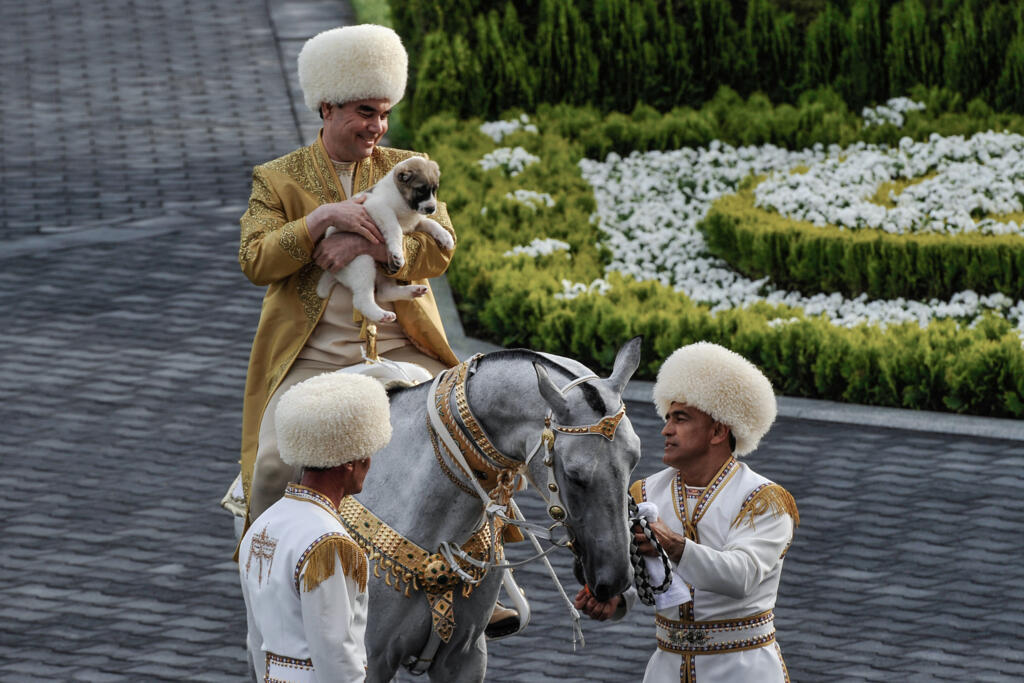
Turkmenistan's 'Hero Protector' Gurbanguly Berdymukhamedov holds an Alabai puppy as he rides one of his Turkmen Akhal-Teke horses © Igor SASIN / AFP

While Turkmenistan is predominantly Muslim, the government is secular, with huge emphasis on the veneration of Turkic folklore and traditions.

Gurbanguly Berdymukhamedov, 68, and his son, Serdar, 43, are portrayed as guardians of this steppe culture with personality cults akin to those of Stalin or the Kims in North Korea.

They have also put the Turkmen Akhal-Teke horse and the Alabai dog on a pedestal as national symbols, dotting the country with statues of the animals.

- Father disappeared -


The sheer "cruelty" of the Turkmen regime marks it out from other authoritarian Central Asian states, argues Omarov, who has been granted asylum in Poland.

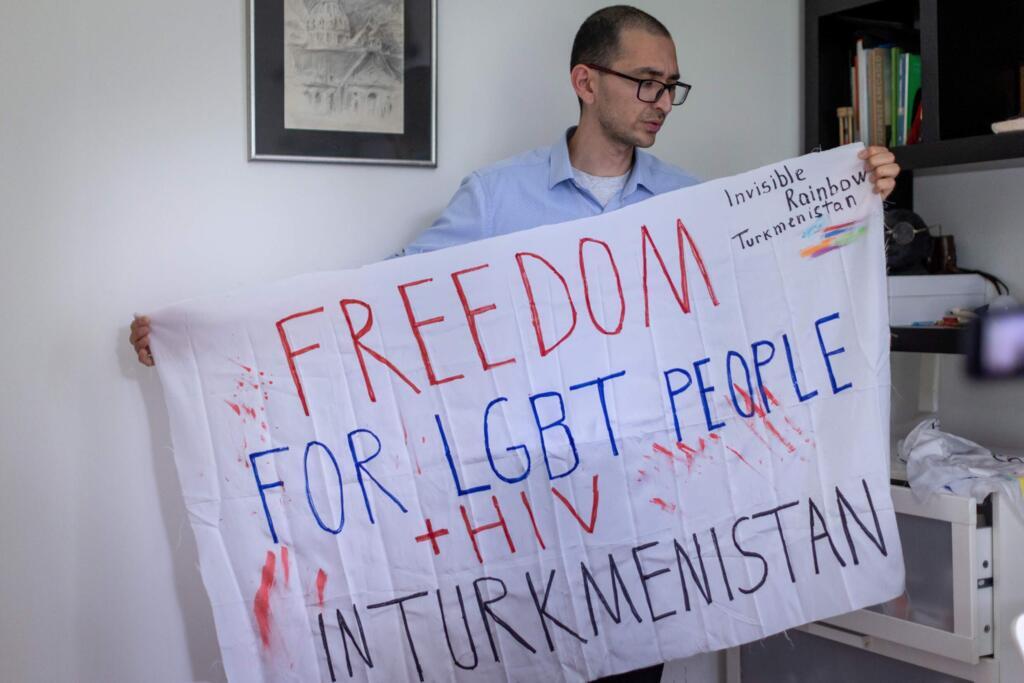
Omarov holds a flag with the name of his support group, Invisible Rainbow Turkmenistan
 © Wojtek RADWANSKI / AFP

The only Turkmen LGBTQ activist to speak openly, Omarov has received death threats online.

Back home he said his family are being punished in his stead, with his father disappeared and his brother stabbed.

The persecution has been such that he avoids contacting them for fear of further reprisals.

Having secretly set up the support group The Invisible Rainbow of Turkmenistan while still in the country, he continues the struggle in exile on a shoestring, funding his activism by working in a Polish supermarket.

"You are not the shame of a nation," he tries to tell LGBTQ people back home. "You deserve to be loved and you are not a mistake."

ONE OF THE STANS


- The trap -

Emir first fell for another boy when he was about 12. He thought he was the "only one like that" until he later learnt of the existence of gay people from watching Russian television before satellite dishes were banned in Turkmenistan.

Growing up in a poor family in Turkmenabat, he liked wearing pink clothes and he soon became the target of homophobic slurs.

His fear and paranoia grew. "I thought the police could read my thoughts," he said. But in 2018 he left after getting a study visa for Russia.

Despite hostile laws, Russia was a first point of refuge for LGBTQ people escaping former Soviet republics for a long time -- until the full invasion of Ukraine in 2022.

In 2019 Emir moved to a small disputed territory in Europe that AFP cannot disclose for his safety.

But he discovered he was HIV-positive in April last year and his new life collapsed. He lost his job and was threatened with deportation back to Turkmenistan, where he is certain "they will abuse me and let me die because of my illness".

To escape that fate, he needs to renew his old passport but that would mean returning to Turkmenistan and risking being locked up.

- Jailed for being HIV-positive -


The law allows Turkmen authorities to imprison anyone who is HIV-positive for "sodomy" or for "exposing others" to the virus.

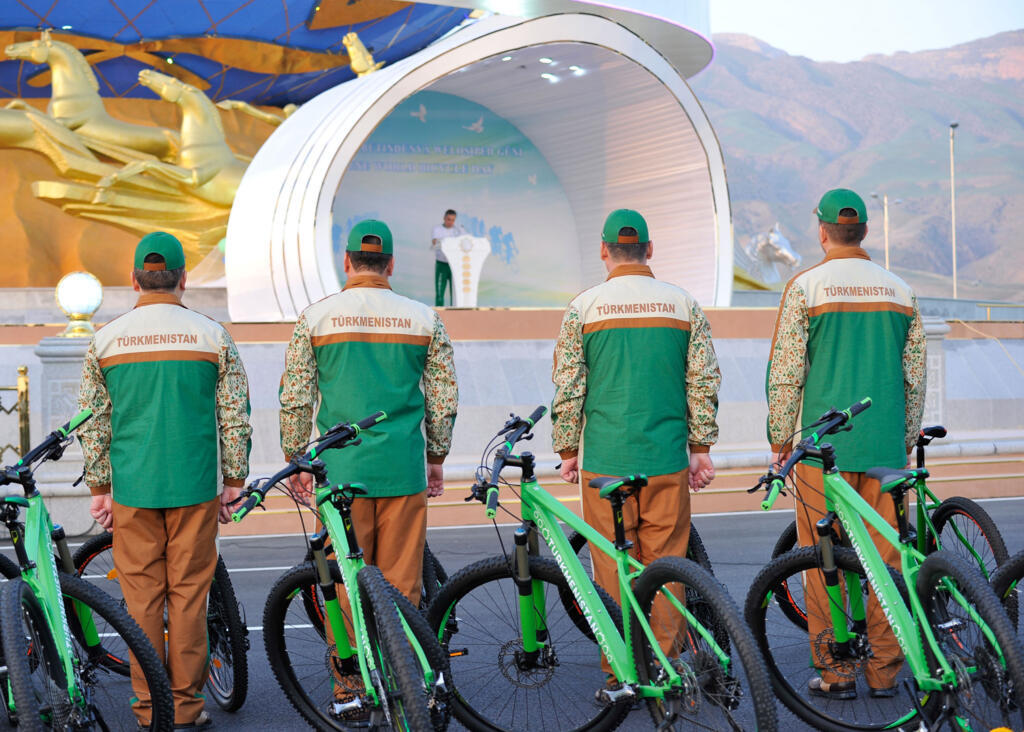
Turkmenistan's fitness fanatic former president Gurbanguly Berdymukhamedov leads a World Bicycle Day event in Ashgabat © Igor SASIN / AFP

"When gay men seek treatment for HIV, they risk being turned into the police," said Anne Sunder-Plassmann of the International Partnership for Human Rights.

While the government relentlessly promotes a healthy lifestyle, it does not provide statistics on HIV infections and "refuses to acknowledge a crisis, with doctors often concealing infections", said Sunder-Plassmann.

Emir has only had intermittent access to antiviral treatment and worries he will end up with AIDS. Like Arslan, he lives in constant terror of being recaptured by Turkmen authorities.

His fears are not unfounded. Turkmen dissidents Alisher Sakhatov and Abdulla Orusov disappeared from a Turkish deportation centre in July despite a court order for their release, with rights groups fearing they were taken to Turkmenistan.

© 2025 AFP


NGOs sue France for failing to recall millions of rigged diesel cars

Three NGOs are taking the French state to court over its failure to remove millions of diesel cars fitted with cheating software from the roads, nearly a decade after the so-called “dieselgate” scandal first broke.


Issued on: 17/09/2025 - RFI

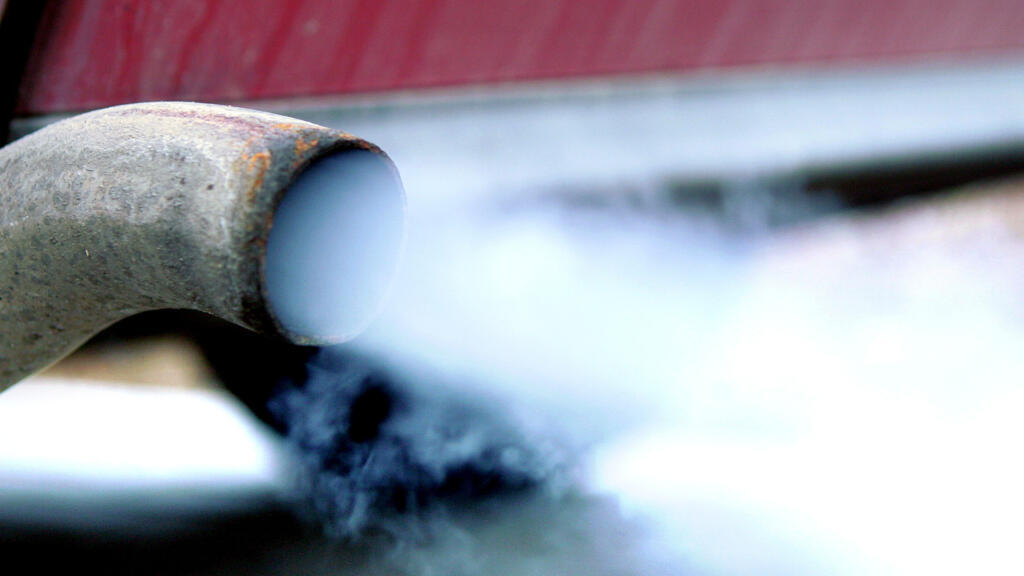
Millions of diesel cars fitted with cheating software are still on French roads, emitting toxic gases far above legal limits. ASSOCIATED PRESS - Michael Probst

France Nature Environnement (FNE), the consumer group CLCV (Consumer Affairs, Housing and Living Environment) and international environmental law group ClientEarth on Wednesday filed a case before the Paris administrative court.

The action, revealed by Radio France and the centrist daily Le Monde, accuses the government of “serious failings” for not recalling cars with fraudulent devices, despite a constitutional duty to guarantee citizens the right to a healthy environment.

The software was designed to detect official emissions tests and switch on pollution controls only during those checks. On the road, cars emitted nitrogen oxides far above legal limits – sometimes between two and 10 times more than allowed.

These gases are linked to thousands of premature deaths.

The three NGOs want the court to recognise the state’s failure and order it to act, with a financial penalty of €50 million every six months if it does not.


Millions of cars still on roads

The lawsuit follows a formal warning sent in July to then-transport minister Philippe Tabarot and Ecological Transition Minister Agnès Pannier-Runacher.

In the letter, seen by Radio France, FNE, CLCV and ClientEarth wrote: “Everything suggests that the French car fleet still contains a large number of vehicles fitted with illegal devices and continues to produce dangerous levels of pollution.”

In 2023, the International Council on Clean Transportation estimated that more than 3.2 million of these vehicles were still in use in France. By this year, that figure had fallen to 2.7 million, covering more than 200 different models sold between 2009 and 2019.

Volkswagen was the first carmaker exposed when the scandal broke in 2015, but inquiries later showed most major manufacturers – including Renault, PSA, Fiat Chrysler and Opel – had sold models with cheating devices.

Deadly consequences

A study published in May by the Centre for Research on Energy and Clean Air linked excess diesel emissions in France to 16,000 premature deaths since 2009.

The group warned that without corrective measures, a further 8,000 deaths and thousands of new childhood asthma cases could occur by 2040. The economic cost is estimated at €45 billion.

“These vehicles can emit between two and 10 times more nitrogen oxides than they are supposed to,” Anne Lassman-Trappier, air quality spokesperson at FNE, said.

“We have been formally urging the French authorities to act since 2023, and now we have no option left but to go to court. It is staggering that the state is prioritising the economic interests of carmakers over the health of the French people.”


Limited recalls

Since 2018, European Union rules have required countries to create a body to check suspect vehicles and enforce recalls. France set up the Vehicle and Engine Market Surveillance Service (SSMVM) in 2020.

But Radio France found that the authority completed only 16 tests for cheating software in 2023 and 20 in 2024. Just four car models were subject to corrective decisions, and only two recalls were actually carried out – covering a total of 16,459 vehicles.

One recall – for 12,800 Peugeot 308 cars – was announced in September, after tests showed the exhaust system allowed excess emissions over time.

“We ask owners to contact their approved dealer so our services can recalibrate the software concerned,” Peugeot said.

Other cases demonstrate how slowly action has been taken. The recall of the Opel Meriva, covering 3,659 vehicles, was not published until a year after excess emissions were detected.

In another case involving the Volvo V40, authorities decided not to extend corrective measures to other models despite identifying high nitrogen oxide levels.

These two cases were among the four models that the SSMVM says have triggered corrective decisions.

Criminal investigations

In the United States, Volkswagen was forced to buy back affected cars and pay billions in compensation soon after the scandal emerged.

In France, several criminal investigations are still underway, with prosecutors seeking fraud charges against Volkswagen, Peugeot-Citroën, Renault and Fiat Chrysler, but no trials have yet begun. All the manufacturers contest the charges.

“We cannot just wait for the courts to act,” said Lassman-Trappier. “The state must remove these vehicles from the market and make the carmakers fix them at their own expense. France has a legal duty. But by protecting the car industry, it is putting lives at risk.”

(with newswires)
Kenya: Fraud scandal robs millions of health care, pensions

Hussna Mohamed
DW

Kenya's pension and health insurance systems were meant to bring people dignity in old age. But fraud, delays and broken promises have left retirees and patients paying with their savings — and even their lives.


Kenyans have been up in arms about government fraud and corruption
Image: James Wakibia/SOPA Images/Sipa USA/picture alliance


For decades, Kenya's public pension and health insurance systems have promised workers security in retirement and protection during illness.

But for many citizens, these promises have now turned into frustration and betrayal as the money they faithfully contributed has ended up in the pockets of fraudsters within the system.

In 2024, a report by Auditor General Nancy Gathungu revealed more than 260,000 cases of fraudulent activities targeting pension schemes in Kenya.

Between 2013 and 2020, over 67 billion Kenyan shillings ($515 million, €442 million) were lost through fake pension scheme payments.

Meanwhile, legitimate retirees have been left empty-handed, and older people are passing away while still waiting to receive the pensions they worked so hard for.

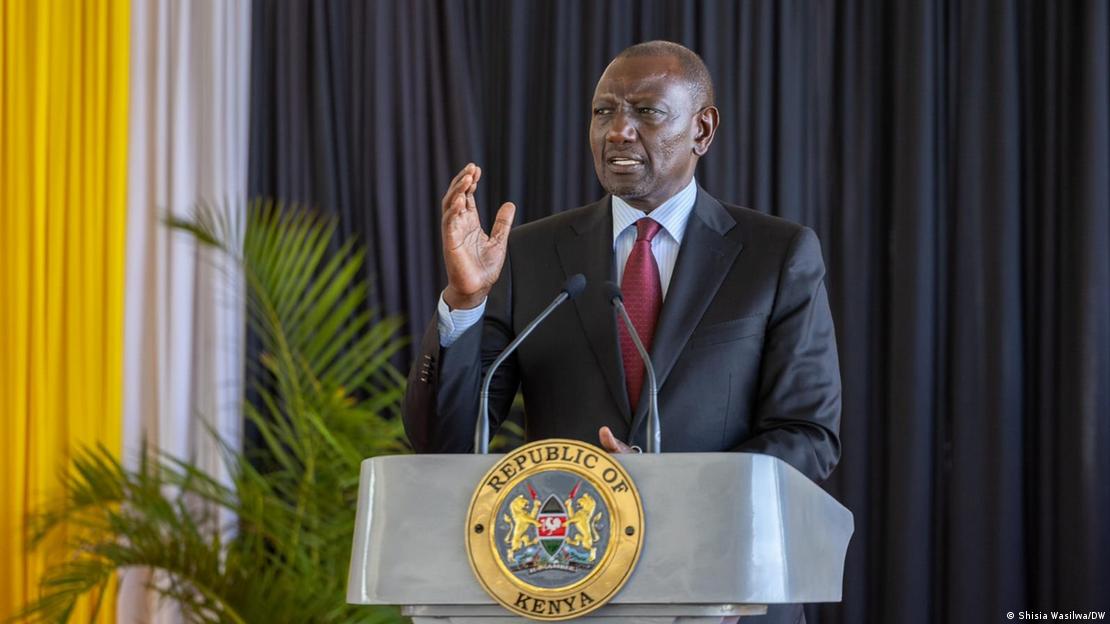
Kenyan President Ruto is facing public outrage on various issues
Image: Shisia Wasilwa/DW

One person DW spoke with declined to be quoted for this story, fearing that speaking out would doom any remaining chance of ever receiving what their family is still owed.

John Wachira, the secretary general of the Kenya Association of Retired Officers, however, does speak out.

"When you join the pension scheme, you're promised that when you retire, you will get your pension. And it will be regularly reviewed, so that if salaries are increased, your pension will also be reviewed. But that does not happen," he told DW.

Instead of enjoying the fruits of their labor, retired Kenyans are still facing chronic delays, requests for bribes and opaque processes that leave them feeling powerless.

Public deductions, private burdens


Payments to the country's pension and health insurance schemes are mandatory for Kenyans; you cannot opt out. Pension contributions are made through the National Social Security Fund (NSSF), and health insurance is provided via the Social Health Insurance Fund (SHIF).

However, many Kenyans feel forced to pay for private insurance on top of the public insurance to ensure they receive the care they need when required. But this option is mostly limited to the middle and upper classes, as many Kenyans can't afford to pay twice.

Wachira argues people expect a pension to ensure that "when you leave the service, you maintain a certain standard" — the same standard, he said, when you are in service, and which shouldn't "drop down because of inflation."

If contributions are mandatory and consistent, but payouts aren't, where does the money go?

How pension frauds drained funds


The 2024 Auditor General's report painted senior officials managing the pension scheme as fraudsters who colluded within the National Treasury to steal from the fund through nonexistent persons and double payments to duplicate accounts.

Around 15,000 people benefited from fraudulent pension payments totaling over $15 million, according to the report.

Some of these payments went to individuals who started receiving pension payments even before they had officially retired. Some received payouts despite not following the right procedures. Others were given a payout without being registered at all, as they were only added to the system later to cover their tracks in case they were audited.

The report also highlighted issues with delays, bureaucracy and systemic data weaknesses, like a lack of proper identification and missing records.

Auditors found serious systemic loopholes in the pension scheme, with irregularities found in nearly all major ministries, including those for foreign affairs, social protection and the judiciary.

For those who do end up receiving their pensions, they claim that the pay does not reflect the inflation situation in the country.

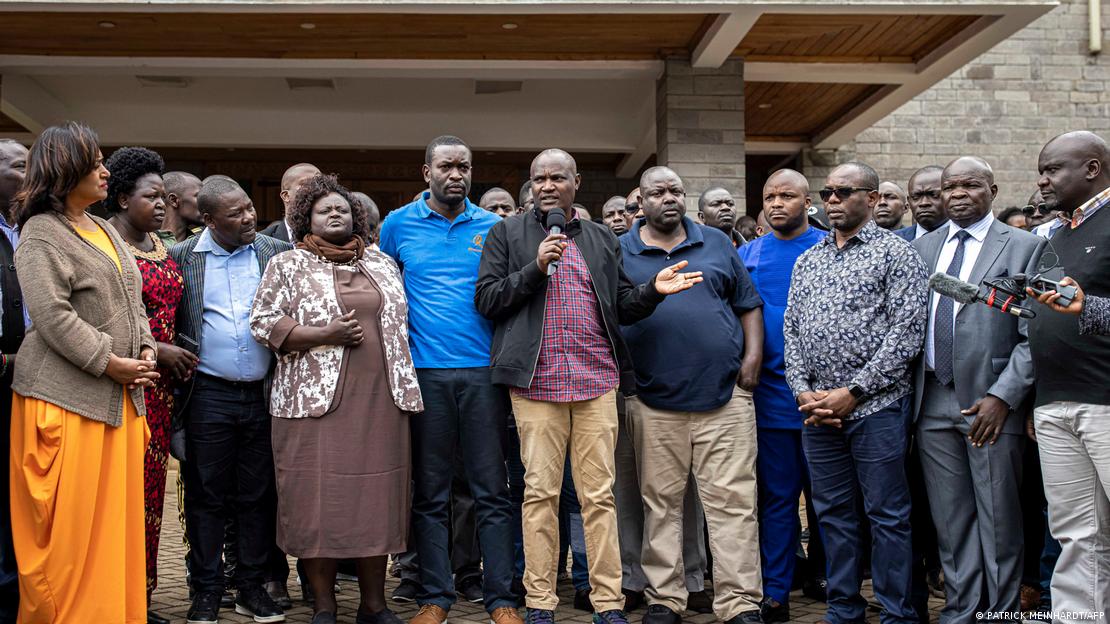
Treasury Cabinet Secretary John Mbadi (center) wants to make the pension system less vulnerableImage: PATRICK MEINHARDT/AFP

The scale of the problem is difficult to measure, as there are no concrete formal records of those affected, and most cases go unreported. But based on multiple accounts, the issue affects people across different segments of society from the lower to the middle class.

In a recent case that sparked nationwide anger, a retired teacher, Violet Akoth Nyatol, lost over 2,400,000 Kenyan shillings in pension payouts after corrupt pension officials colluded with bank staff to divert her benefits.

In Kenya, this would have been enough to buy a small plot of land in her hometown.
Health insurance funds also blundered

In what's been another devastating blow to government credibility, Health Cabinet Secretary Aden Duale has recently admitted that the health insurance scheme was also the target of fraud.

On July 1, Duale announced that 35 hospitals across the country are accused of stealing over $804 million from the health tax fund to which Kenyans contribute.

Fraud and corruption within Kenya's public health insurance system have been ongoing issues since the establishment of the National Hospital Insurance Fund (NHIF) in 1966, with various scandals over the decades highlighting systemic weaknesses and mismanagement.

In 2024, NHIF was replaced by the Social Health Authority (SHA), which aimed to introduce a more comprehensive health insurance system with multiple schemes to improve access and affordability.

But the new authority is already grappling with cases of corruption, fraud and mismanagement.


In a post on X in late August, Duale noted that the fraudulent claims to the SHA included "falsifying records, inflating and phantom billing, upcoding (when a provider bills for a more expensive procedure) and converting outpatient visits into costly inpatient claims."


Geoffrey Mwaniki feels cheated after an experience at an Kenyan hospital.

He was admitted to Moi Referral Hospital in Eldoret on July 1 and was forced to cover his own bills out of pocket despite making monthly contributions to the SHA fund.

Speaking with DW, Mwaniki said that SHA denied him the code he needed to release the necessary funds, telling him that "the system was down," which was why "the password to release the funds could not be generated."

When the system came back on, he said, SHA acknowledged his request but argued they would "not be handling cases that had been submitted while the system was down."

The problem was not "by coincidence, but it was by design," said Mwaniki, suspecting the frequent breakdowns of the system were meant to "keep patients from accessing their money."


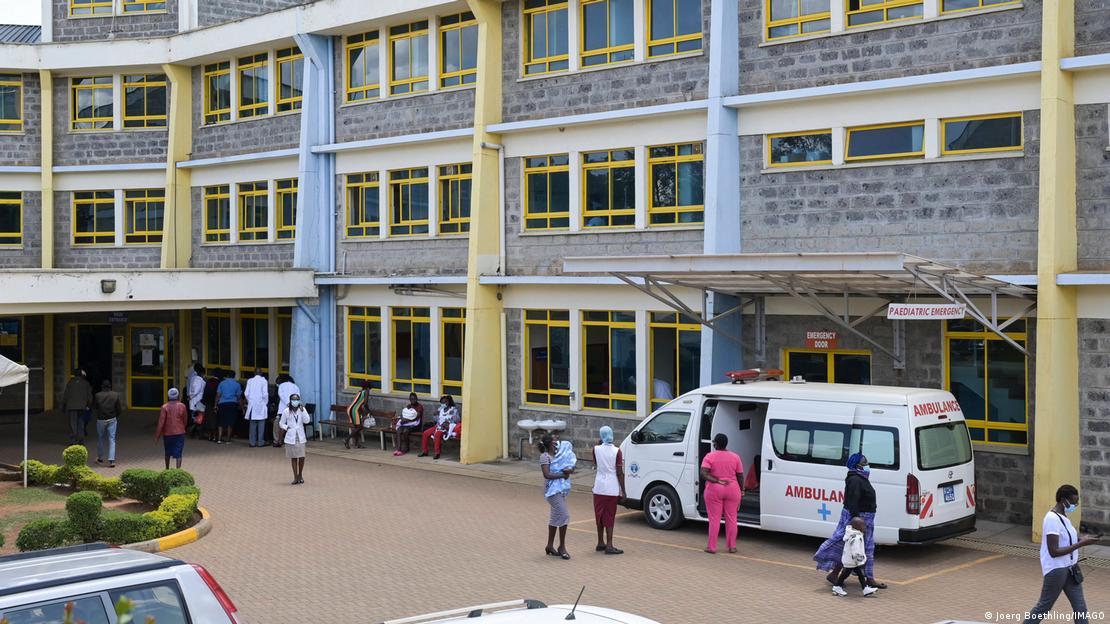
Some pensioners die while waiting for their payments, and workers are denied health careImage: Joerg Boethling/IMAGO

"It really killed me, because I had to borrow some money to offset my bill so that I may be discharged from the hospital," he said.

If he had a choice, he wouldn't have SHA insurance, he added but unfortunately, "it is mandatory."


Is digitalization a possible fix or another empty promise?

To end widespread delays and fraud targeting retirees, the Kenyan government promised to fully digitize the pension payment system from July 1, 2025.

Treasury Cabinet Secretary John Mbadi told Kenyan Senate lawmakers that the current manual system not only delays pension disbursements but also exposes retirees to sophisticated fraud schemes.

However, the public unrest that began earlier this year shows that many Kenyans have already lost confidence in the government's policies, including in the social security systems that are mandatory to pay into to but don't always pay out.

Edited by: Uwe Hessler
Disruptions to transport and tourist sites: What to expect from France’s September 18 strike


Explainer


French unions will hold a nationwide strike on Thursday against the government’s 2026 budget plan. Authorities expect up to 800,000 protesters, with schools and tourist sites affected and disruptions expected on Paris and regional transport networks.


Issued on: 17/09/2025 - 
FRANCE24
By: 
Anaelle JONAH


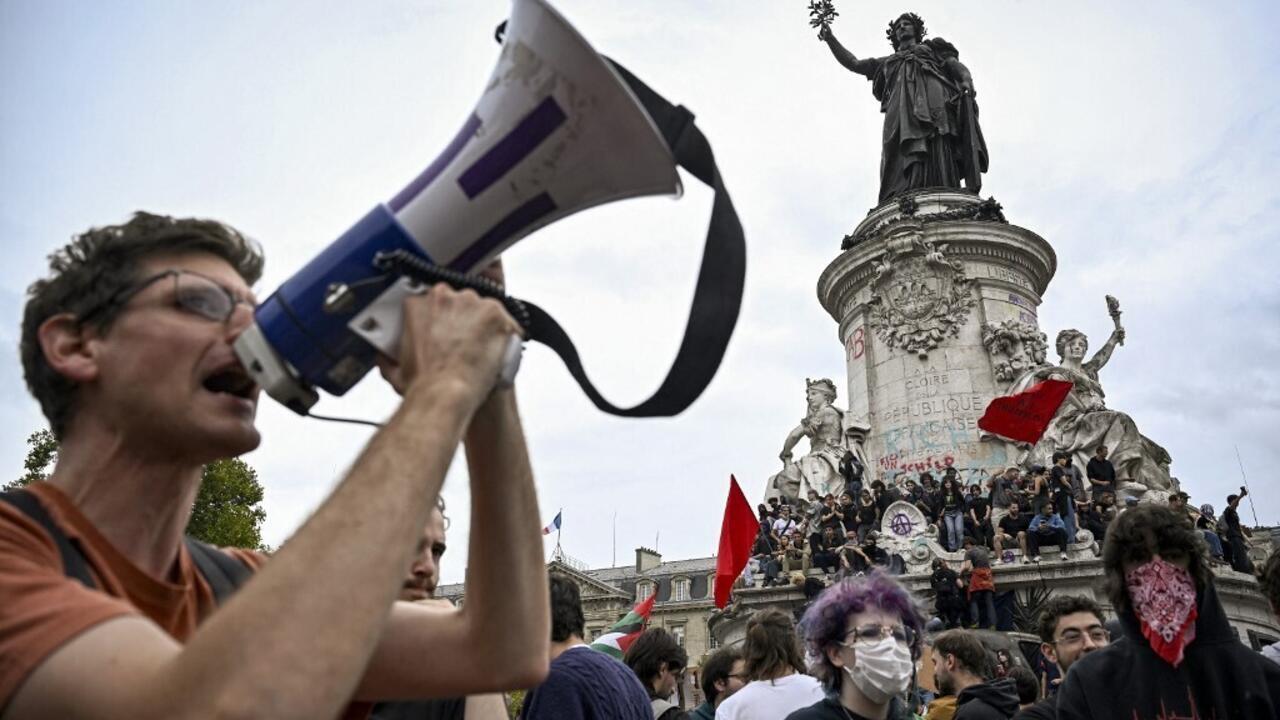
A person uses a megaphone during a demonstration at the Place de la Republique square, in Paris, on September 10, 2025. © Julien de Rosa, AFP

French trade unions have called for a nationwide strike and protests on Thursday to oppose "brutal" budget measures unveiled over the summer – measures that new Prime Minister Sébastien Lecornu has so far refused to rule out.

After meeting with Lecornu on Monday, the hardline CGT union said they were more determined than ever, despite the government’s announcement that it would drop a controversial plan to cut two public holidays. "He didn’t commit to anything. None of the disastrous policies from [former Prime Minister] François Bayrou’s tenure have been scrapped," said union leader Sophie Binet.

Lecornu, who promised "substantive changes" on taking office, held talks with most unions over the last week. But union chiefs are standing firm on their call to mobilise on September 18, hoping to shape the future budget.


Up to 800,000 demonstrators


Nine unions will march together for the first time since June 2023, when they fought against pension reform. The CGT said Monday that more than 220 rallies were already planned across France, with the tally still rising.

Union leaders aim to surpass the “Block Everything” movement, a grassroots protest that started on social media and drew nearly 200,000 participants on September 10, according to the interior ministry, but fell short of closing down the country as hoped. Whether those protesters – many of them wary of unions – will join Thursday’s strike remains uncertain.


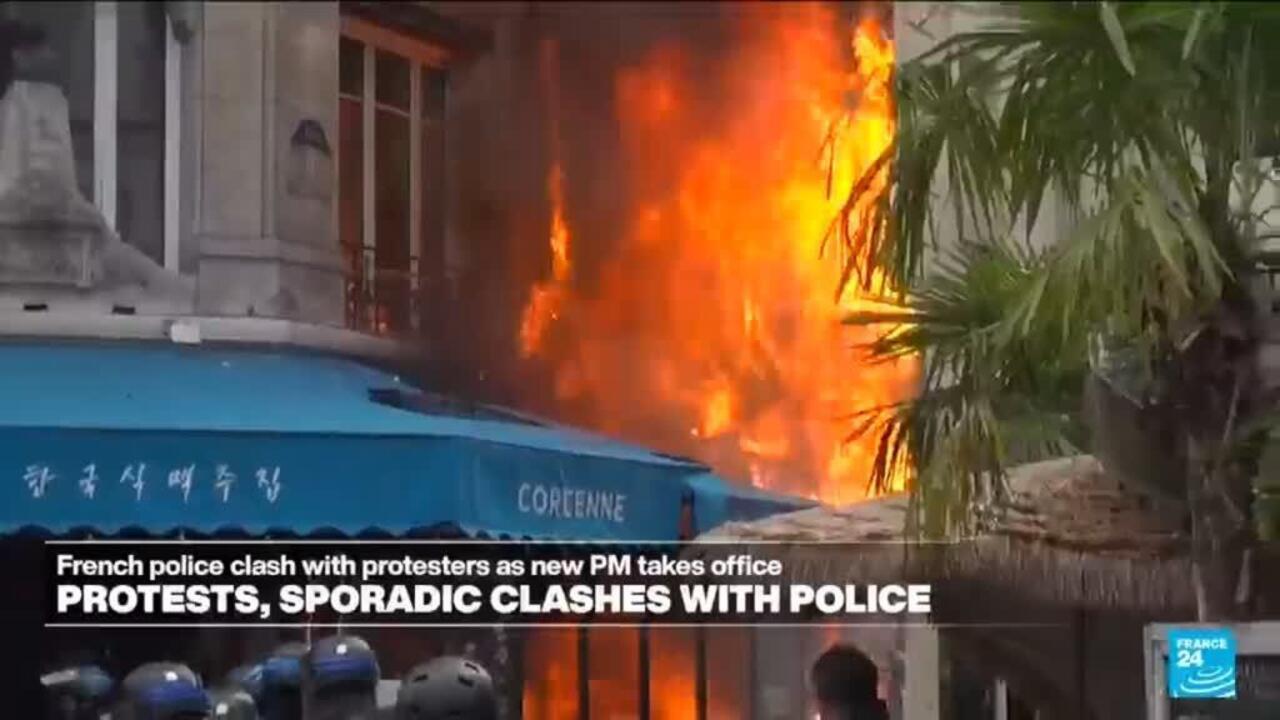
Protesters clash with police in France as new PM starts job
© France 24
04:59


“We want a million people with us,” CFTC union leader Cyril Chabanier told RTL television. Authorities estimate turnout could surpass 800,000, four times as many as on September 10, and fear several hundred radical protesters may join the marches.

In a joint statement released in late August, unions denounced the government’s budget measures as "unprecedented brutality", accusing it of once again making "workers, the unemployed, retirees and the sick" pay the price.

They point to sweeping cuts in public services, another overhaul of unemployment insurance, a freeze on benefits and public sector pay, lower pensions, doubled medical fees and even threats to France’s fifth week of paid leave.

The scrapping of plans to cut two public holidays – widely condemned by unions – was hailed by CGT’s Binet as "a first victory" and proof that "we are in a position of strength".

Even the CFDT union, usually cautious about joining street protests, confirmed it would march. "The budget as it stands is not compatible with social, fiscal and environmental justice," CFDT leader Marylise Léon told France Inter.

Major disruption in Paris transport

Paris transport operator RATP faces major disruption, with its four biggest unions all calling for a strike. On its website Tuesday night, the RATP advised passengers to work from home or postpone travel if possible.

The company’s second-largest union said it expects "a black day" with some metro lines completely closed and others only partially running. It estimated strike participation at "90% among metro drivers and 80% among RER drivers".

Only fully automated metro lines (Lines 1, 4 and 14) will run normally; others will operate only at peak hours.

Some bus lines will be cancelled and tram service on the T5, T7 and T8 lines will be disrupted.

The RER will also be affected, with heavy disruption expected on lines D and E.

RATP recommends using its online planner or the Bonjour RATP app to check real-time updates, track alternative routes and monitor onboard crowding.To plan a metro or RER journey with updated information, use the Paris transport system's online planner, available in English here.

To ease travel, RATP is partnering with Lime to offer access to 3,000 free bikes worth €1 each for rentals made directly through the app. “It’s first come, first served,” the website says.

Regional trains also affected


Regional train services will also be disrupted, varying by area. The SNCF is bracing for walkouts after unions called on all railway workers to strike.

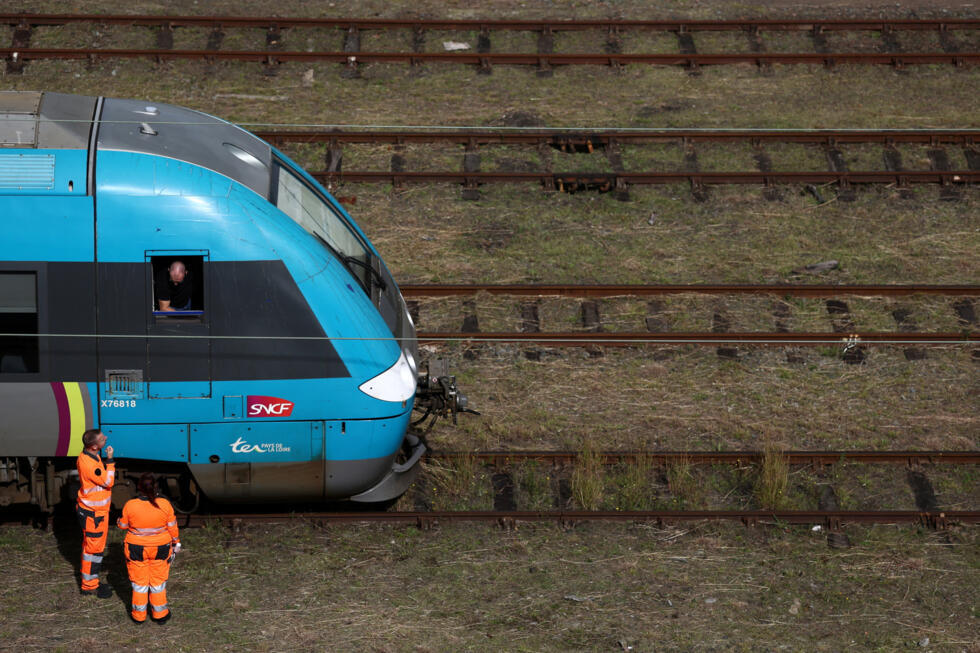
Workers stand next to a SNCF regional train at the railway station in Nantes two days before a strike by French state-owned railway SNCF workers, in France, on September 16, 2025. © Stephane Mahe, Reuters

Outgoing Transport Minister Philippe Tabarot said nine out of 10 high-speed TGV trains will be running while SNCF's regular network, Intercités, would see "significant disruption", with just one train in two operating. Around three out of five regional trains (TER) are expected to run.

Air France faces strike notices from at least three unions, although air-traffic controllers have delayed their walkout.To check flights in real time, visit the Aéroports de Paris website in English

Museums and monuments impacted

Museums and landmarks across the country could see limited access or closures. The Arc de Triomphe is already closed a day ahead of the strike. “Due to a social movement (strike), the monument is exceptionally closed today,” the website states.

The Louvre warned that opening could be delayed and some galleries may remain closed. Versailles also said it could not guarantee access to the château and grounds due to the strike.

Visitors are advised to check official websites and plan ahead. Regular opening hours remain in force unless otherwise announced, and any updates will likely be provided if the strike continues.

One-third of primary teachers expected to strike

The largest primary school union expects one-third of nursery and primary teachers to strike. “Public schools urgently need adequate resources and a real budget,” it said in a statement on Tuesday.

According to its back-to-school survey, almost 3,000 classes across more than 6,000 schools had no assigned teacher this year. Over 80% of schools reported having at least one class with more than 22 pupils, and 57% had at least one pupil without a support assistant for children with disabilities.

Last week, the education ministry estimated that 6% of teachers joined the September 10 “Block Everything” protests, mostly in secondary schools. This time the strike is expected to be more widely followed.

Disruption is also expected in school canteens and after-school services in some cities.
90% of pharmacies to stay closed

French pharmacies are also joining Thursday’s nationwide strike, with around nine out of 10 expected to close. Participation is forecast at 85-90%, though some will stay open to provide essential services.

Unlike most sectors, the pharmacists’ protest is not over the 2026 budget but related to government cuts to the rebate for generics, which account for roughly a third of pharmacy margins. The government cap has already fallen from 40% to 30% and is set to drop further, to 20% by 2027. Unions warn the measure could force thousands of closures and job losses, and affect access to essential medicines such as antibiotics, antidiabetic drugs and anti-epileptics.


French strikes delay Bayeux Tapestry transfer ahead of British Museum loan


Nationwide strikes planned for Thursday in France have forced a delay in the transfer to another location of the Bayeux Tapestry ahead of its historic planned loan to the British Museum in London next year, an official said.


Issued on: 17/09/2025 - 
By: FRANCE 24

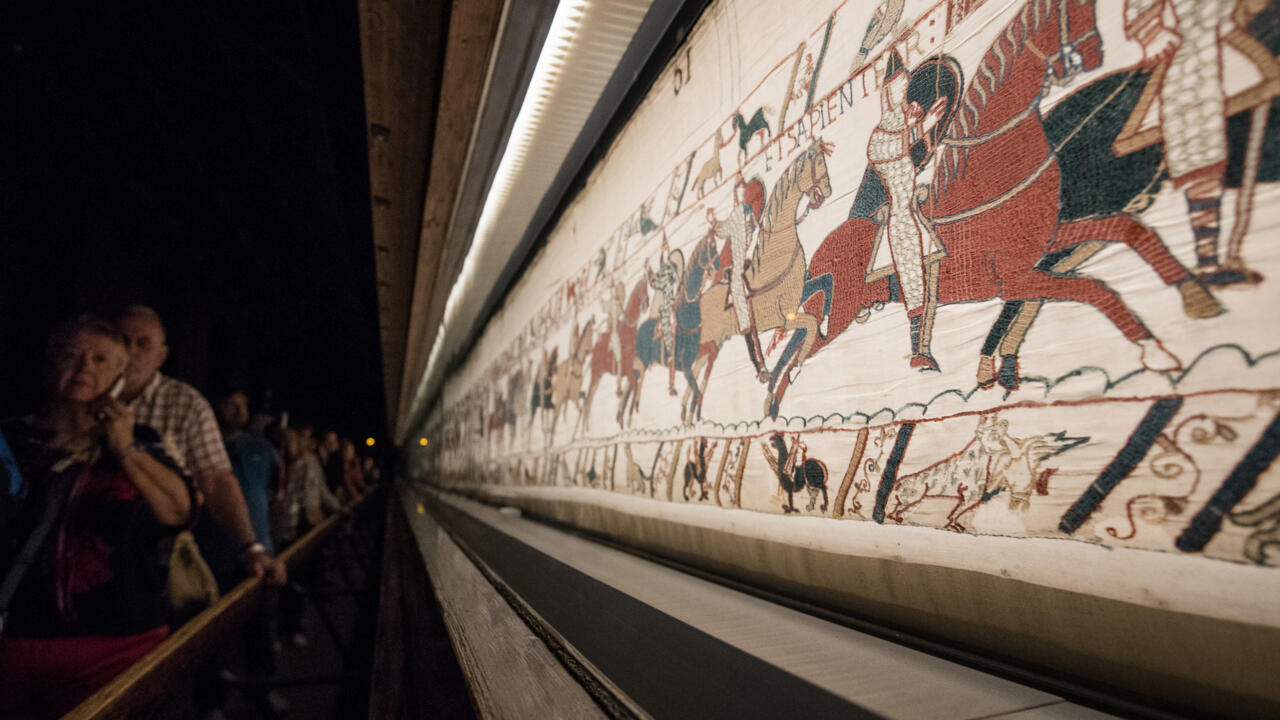
The Bayeux Tapestry dates from around 1077. © Loic Venance, AFP


Protests and strikes planned for Thursday in France have forced a delay in the transfer to a secret location of the Bayeux Tapestry ahead of its historic planned loan to the UK next year, an official said.

French President Emmanuel Macron agreed to loan the medieval tapestry – which records the 1066 Norman conquest of Anglo-Saxon England – to the British Museum in 2026 to celebrate Franco-British relations.

After the museum where the tapestry is held in the town of Bayeux in Normandy closed for renovations, the tapestry was due to be removed Thursday to a secret location in France ahead of the loan.

"Due to the expected mobilisation tomorrow (Thursday)", the local authorities do not consider they are "able to ensure the security of such a high-profile transfer and ... of such an expensive work", said Philippe Bélaval, the French presidency's envoy for the British Museum loan.


Iconic Bayeux Tapestry goes to UK for first time in 900 years
France to loan iconic Bayeux Tapestry to UK for first time in 900 years © France 24
01:54


The location of the place where the tapestry is due to be kept safely ahead of the loan has not been revealed.

This transfer operation will take place "in the coming days", the envoy told AFP.

Critics have said the transfer to the UK risks causing damage to the priceless artefact. A petition posted online on change.org has called on Macron to stop a "true heritage crime".

Bélaval has previously defended the transfer, insisting that there is is no suggestion that the loan to the UK will damage the tapestry.

The tapestry's loan will mark the first time in its almost 1,000-year lifetime that the 68-metre-long piece, which dates from around 1077, will be on British soil.

Read moreFast facts on the Bayeux Tapestry

It will be loaned to the British Museum for 10 months from September 2026. French museums will in exchange be loaned ancient treasures mainly from the Anglo-Saxon Sutton Hoo site, one of England's most important archaeological hoards.

France was on Thursday bracing for a day of nationwide disruption in a show of anger over Macron's budget policies.

Unions have vowed mass protests, public transport is set to be paralysed in places due to strikes while officials have warned of the possibility of extremists causing disturbances.

(FRANCE 24 with AFP)
Mass protests erupt in Buenos Aires over Milei's austerity cuts


Tens of thousands of Argentines flooded the streets of Buenos Aires on Wednesday, demanding increased funding for public universities and pediatric hospitals, sectors hit hard by President Javier Milei’s sweeping austerity measures. The mass mobilisation marks the latest flashpoint in a growing backlash against the libertarian leader.


Issued on: 18/09/2025 -
By: FRANCE 24

People celebrate the annulment of the budget veto voted on in Congress in Buenos Aires, Argentina, on September 17, 2025. © Luis Robayo, AFP

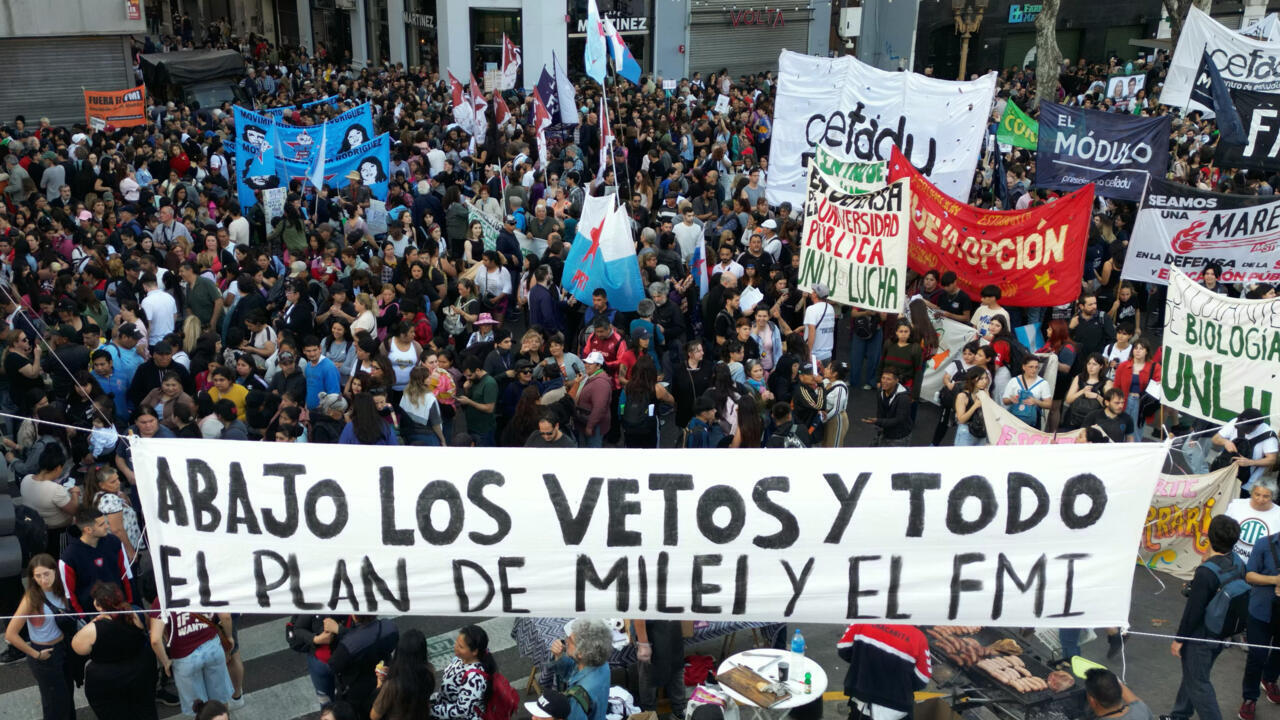
Tens of thousands of Argentines filled the streets of downtown Buenos Aires on Wednesday to demand increased funding for universities and pediatric care, which have suffered cuts under libertarian President Javier Milei's austerity measures.

Milei's popularity has declined following his deep budget cuts, and he is dealing with the fallout from a corruption scandal and a legislative defeat in Buenos Aires provincial elections earlier this month.

Milei faces high-stakes midterm elections in October, in which his party aims to secure enough seats to keep the opposition-controlled Congress from overriding his vetoes.


Wednesday's protest aims to pressure legislators to reject Milei's vetoes earlier this month of laws that would have increased funding of public universities and pediatric hospitals. In presidential decrees, Milei said the laws would harm the country's fiscal balance.

On Wednesday evening, Congress' lower house voted to overturn both vetoes. The Senate must also do so in order for the vetoes to be overturned.

Since Milei took office in December 2023, he has dramatically slashed public spending and succeeded in bringing down monthly inflation from double to single digits. On Monday he announced the government's proposal for next year's budget, which he said would guarantee a fiscal balance while also including increases of 17% in allocations for healthcare, 8% for education and 5% for pensions, on top of inflation.

But in a statement, the National University of Buenos Aires said the proposed budget "doesn't do more than deepen the unprecedented crisis" that the public university system is experiencing. It held that the proposal does not take into account resuming halted infrastructure projects and maintenance and increasing teacher salaries.

(FRANCE 24 with Reuters)
ABOLISHING THE FIRST AMENDMENT

ABC pulls late-night host Jimmy Kimmel off air after Charlie Kirk comments


ABC says late night show Jimmy Kimmel Live! will be suspended immediately after Kimmel accused Republicans of doing "everything they can to score political points" from Kirk’s killing. ABC’s announcement came just minutes after one of the biggest owners of TV stations in the US, Nexstar Media, said it would replace Kimmel's show with other programming.


Issued on: 18/09/2025 - 
By: FRANCE 24

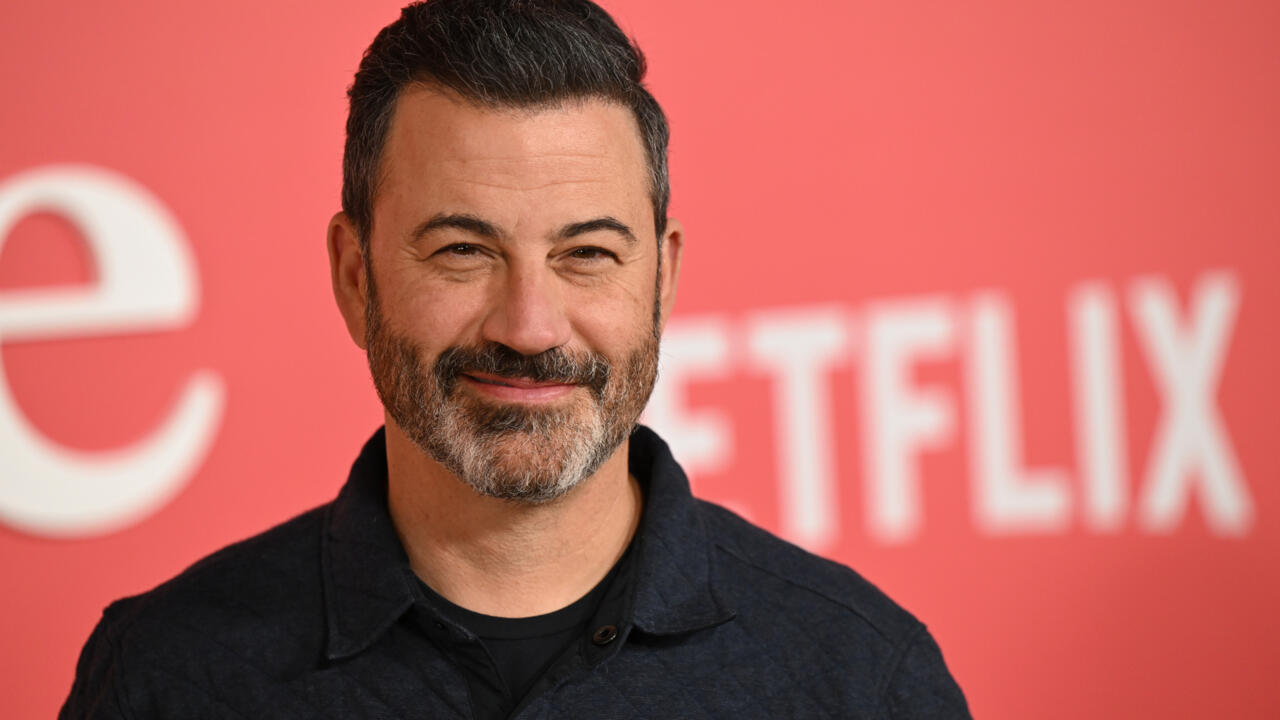
US talk show host/comedian Jimmy Kimmel at the Regency Village Theater in Los Angeles, California, in February 2023. © Patrick T. Fallon, AFP

Jimmy Kimmel's late-night television show has been taken off air "indefinitely" after the host was criticised for comments about the motives behind the killing of conservative influencer Charlie Kirk, ABC said.

"Jimmy Kimmel Live will be preempted indefinitely," an ABC spokesperson told AFP, using a television industry term for when a show is replaced or removed from the schedule.

Kirk, a close ally of President Donald Trump, was shot dead last week during a speaking event on a Utah university campus.

Authorities said 22-year-old Tyler Robinson used a rifle to shoot Kirk with a single bullet to the neck from a rooftop. He was arrested and has been formally charged with his murder.

On Monday, Kimmel spoke about the shooting in his popular late-night show's monologue.

"We had some new lows over the weekend with the MAGA gang desperately trying to characterise this kid who murdered Charlie Kirk as anything other than one of them and with everything they can to score political points from it," said Kimmel.

"MAGA" refers to the president's "Make America Great Again" movement.

The White House this week said it would be pursuing an alleged left-wing "domestic terror movement" in the wake of Kirk's killing, prompting alarm that such a campaign could be used to silence political dissent.

(FRANCE 24 with AFP)


'Jimmy Kimmel Live' pulled off air over Charlie Kirk comment
DW with AP, Reuters
18/09/2025 

ABC network is taking "Jimmy Kimmel Live" off the air indefinitely in response to comments the late-night host made about the killing of conservative activist Charlie Kirk.

ABC network announced Thursday it was pulling Jimmy Kimmel's long-running late-night series off the air in response to comments he made about Charlie Kirk's killing.

"Mr. Kimmel's comments about the death of Mr. Kirk are offensive and insensitive at a critical time in our national political discourse, and we do not believe they reflect the spectrum of opinions, views, or values of the local communities in which we are located," said Nexstar Media Group, an owner of ABC TV affiliates.

The announcement comes after CBS network announced in July that it was canceling its most watched show in late night, "The Late Show With Stephen Colbert."

What has happened since Kirk's killing?

Kirk, a political activist with close ties to US President Donald Trump, was shot and killed at an outdoor event at Utah Valley University last week.

The man accused of killing Kirk has since been arrested and prosecutors have announced seven state charges, including aggravated murder, against him. They have also said they're going to seek the death penalty against the suspected killer.

Kirk is the founder of Turning Point USA and is widely credited with helping Trump take back the White House in 2024 by galvanizing conservative youth to vote for him.


What did Jimmy Kimmel say about Charlie Kirk?

On Monday, Jimmy Kimmel spoke about the shooting in his popular late-night show, saying:

"We had some new lows over the weekend with the MAGA [Make America Great Again] gang desperately trying to characterize this kid who murdered Charlie Kirk as anything other than one of them and with everything they can to score political points from it."

He went on to criticize Trump's mourning of Kirk, pointing to a video of Trump's comments on the White House lawn, saying: "This is how a 4-year-old mourns a goldfish."

Before Thursday's announcement, Federal Communications Commission Chair Brendan Carr called for local broadcasters to stop airing "Jimmy Kimmel Live" and suggested the commission could open an investigation.

He said broadcasters could potentially be fined or lose their licenses if there was a pattern of distorted comment.

Trump says canceling Kimmel's show is 'great news'

US President Donald Trump, who has sparred with Kimmel in the past, called the decision "great news for America."

"Great News for America: The ratings challenged Jimmy Kimmel Show is CANCELLED," Trump wrote on his social media site, Truth Social. "Congratulations to ABC for finally having the courage to do what had to be done. Kimmel has ZERO talent, and worse ratings than even Colbert, if that's possible."

Edited by: Roshni Majumdar

Kalika Mehta Sports reporter


FASCIST CALLS ANTIFA TERRORISTS

Trump says designating anti-fascist Antifa movement a 'terrorist organization'


US President Donald Trump said early Thursday that he plans to designate Antifa as a “major terrorist organization.” Antifa, short for “anti-fascists,” is an umbrella term for left-wing groups. It is unclear how the Trump administration would label what is effectively a decentralised movement as a terror group.


Issued on: 18/09/2025 - 
By: FRANCE 24


US President Donald Trump on Wednesday said he would designate "Antifa" – a shorthand term for "anti-fascist" used to describe diffuse left-wing groups – as "a major terrorist organization," a move he has threatened since his first term.

Trump, who is on a state visit to the United Kingdom, made the announcement in a social media post shortly before 1:30 am Thursday local time. He called Antifa a “SICK, DANGEROUS, RADICAL LEFT DISASTER.” He also said he will be “strongly recommending” that funders of antifa be investigated.

Trump on Monday threatened to go through with such a designation after senior White House official Stephen Miller vowed the administration would dismantle an alleged "vast domestic terror movement" that he linked to the killing of right-wing activist Charlie Kirk.

Trump since his first term has ascribed blame to Antifa for various actions he dislikes, from violence against police to conducting the US Capitol riot on January 6, 2021.


While federal law enforcement includes combating domestic terrorism under its purview, the United States does not have a list of designated "domestic terrorist organizations."

Read moreCharlie Kirk critics are losing their jobs for online comments made after his death

It’s unclear how the administration would label what is effectively a decentralised movement as a terrorist organisation, and the White House on Wednesday did not immediately offer more details.

Trump’s previous FBI director, Christopher Wray, said in testimony in 2020 that Antifa is an ideology, not an organisation, lacking the hierarchical structure that would usually allow it to be designated as a terror group by the federal government.

After Trump's post, Sen. Bill Cassidy, R-La., praised the announcement, saying: "Antifa seized upon a movement of legitimate grievances to promote violence and anarchy, working against justice for all. The President is right to recognise the destructive role of Antifa by designating them domestic terrorists.”

In July 2019, Cassidy and Sen. Ted Cruz, R-Texas, introduced a resolution in the Senate to condemn the violent acts of Antifa and to designate the group a domestic terror organisation.

(FRANCE 24 with AFP and Reuters)


US adversaries stoke Kirk conspiracy theories, researchers warn

Washington (AFP) – Russian, Chinese, and Iranian state media are exploiting conservative activist Charlie Kirk's assassination to advance thousands of false claims aimed at undermining the United States and other adversaries, a research group warned Wednesday.


Issued on: 18/09/2025 - FRANCEW24

Foreign influence campaigns have frequently used US political crises or natural diasters to stoke tensions, researchers say. © JOSH EDELSON / AFP

Official media in the three countries mentioned Kirk -- a close ally of President Donald Trump -- 6,200 times since the activist was shot dead last week during a speaking event on a Utah university campus, the disinformation watchdog NewsGuard reported citing data gathered using a social media analytics tool.

The assessment comes after the United States eliminated a key government agency that tracked foreign disinformation in April, framing the move as an effort to preserve "free speech," even as leading experts monitoring propaganda raised the alarm about the risk of disinformation campaigns from US adversaries.

NewsGuard's report echoed recent warnings from Utah Governor Spencer Cox, who cautioned last week that US adversaries were spreading disinformation surrounding Kirk's killing to inflame political tensions.

"What we are seeing is our adversaries want violence," Cox said.

"We have bots from Russia, China, all over the world, that are trying to instill disinformation and encourage violence."

Capitalizing on crisis


Much of the disinformation originated from Russian state media, which falsely claimed Ukrainian involvement and attempted to link the killing to Kirk’s opposition to American military aid to Kyiv, NewsGuard said.

There was no evidence linking Ukraine to the assassination.

US authorities have said that a 22-year-old US citizen from Utah named Tyler Robinson allegedly used a rifle to shoot Kirk from a rooftop. He was arrested and has been formally charged with murder.

Iranian state media baselessly accused Israel -- Tehran's arch enemy -- of orchestrating the killing in retaliation for Kirk's opposition to a US military strike on Iran, NewsGuard's report said.

They framed the killing as an operation by Israel's Mossad intelligence agency, an unfounded claim that researchers say reflects Tehran's longstanding pattern of blaming its adversary for major crises.

Meanwhile, Chinese outlets spread disinformation about Robinson, baselessly claiming that he donated money to the Trump's campaign in 2020.

"Pro-China commentators used Kirk's assassination to mock the US and spread false information about the suspect, portraying America as deeply divided," NewsGuard said.

Foreign influence campaigns have frequently used US political crises, elections, or natural disasters to stoke tensions, disinformation experts say.

Some researchers warn that the United States may be ill-prepared to confront the rising threat of foreign disinformation.

In April, Secretary of State Marco Rubio shut down the State Department's Counter Foreign Information Manipulation and Interference (R/FIMI) hub -- an agency formerly known as the Global Engagement Center (GEC) -- which was responsible for tracking and countering disinformation from foreign actors.

Last week, the Financial Times reported that European countries had received a notice from the State Department that it was terminating memoranda of understanding signed last year under Joe Biden's administration, which had aimed to establish a unified approach to countering disinformation by foreign governments.

"The United States has ceased all frameworks to counter foreign state information manipulation and any associated instruments implemented by the former administration," the State Department said Wednesday, without elaborating.

© 2025 AFP