DW
05/05/2026
According to Nazi ideology, an ideal "Aryan" was blond, blue-eyed with athletic features. The term is still tied to Nazi Germany, but its origin lies elsewhere.

Image: Scherl/SZ Photo/picture alliance
Like many Germans, Adolf Hitler had neither blond hair nor was he particularly tall. That didn't stop him and his Nazi party from perpetuating the ideal of so-called "Aryans," with roots in Northern Europe, as being a superior race. Desirable Aryan traits included blonde hair, blue eyes and a tall, athletic stature.
Following Hitler's appointment as Chancellor of Germany in 1933, the notion of ancestry became more important. From 1935, all German citizens had to provide what was known as an "Ariernachweis" or "Aryan certificate" to prove that their ancestors did not include Jewish or Romani people for at least three generations. Civil servants, doctors and lawyers already had to start providing the "Ariernachweis" in 1933. Time-consuming research was often necessary before citizens could submit their documents to the Reich Office for Genealogical Research (in German, Reichsstelle für Sippenforschung) for verification.
Like many Germans, Adolf Hitler had neither blond hair nor was he particularly tall. That didn't stop him and his Nazi party from perpetuating the ideal of so-called "Aryans," with roots in Northern Europe, as being a superior race. Desirable Aryan traits included blonde hair, blue eyes and a tall, athletic stature.
Following Hitler's appointment as Chancellor of Germany in 1933, the notion of ancestry became more important. From 1935, all German citizens had to provide what was known as an "Ariernachweis" or "Aryan certificate" to prove that their ancestors did not include Jewish or Romani people for at least three generations. Civil servants, doctors and lawyers already had to start providing the "Ariernachweis" in 1933. Time-consuming research was often necessary before citizens could submit their documents to the Reich Office for Genealogical Research (in German, Reichsstelle für Sippenforschung) for verification.
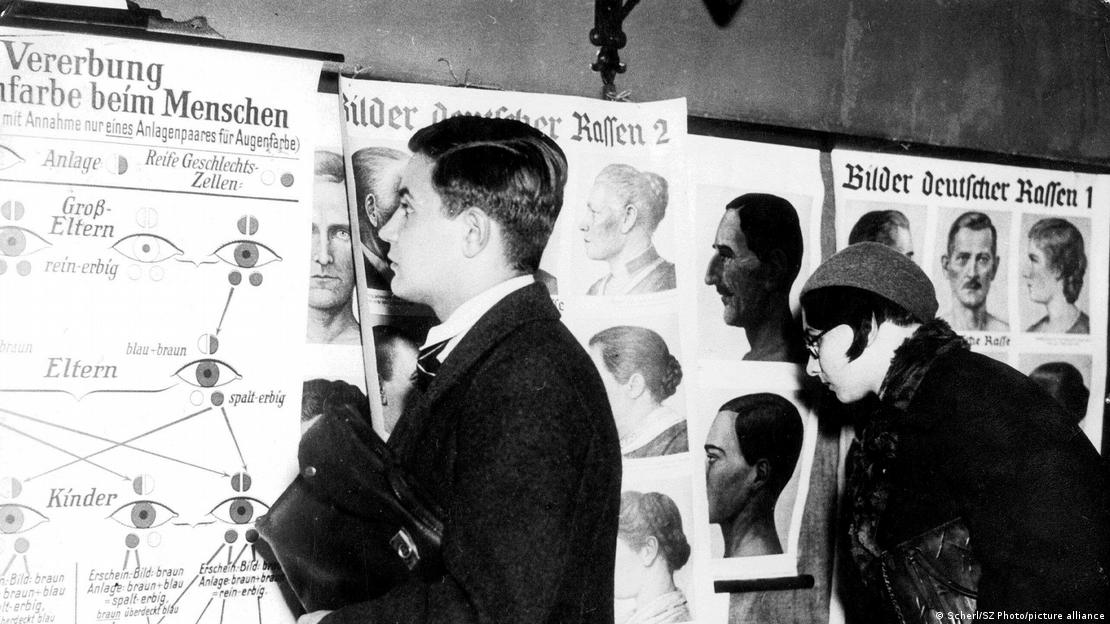
Exhibitions and classroom instruction on Nazi racial doctrine were commonplace during the Third Reich
Image: Scherl/SZ Photo/picture alliance
The Nazis considered Germans to be the "superior master race." Conversely they falsely saw Jews as an inferior race whose members had no place in Nazi Germany.
In propaganda films, the Nazis claimed that Jews wanted to destroy the world order and wrest control from the "master race." In caricatures, especially those printed in the Nazi newspaper Der Stürmer, Jews were portrayed using grotesque and antisemitic tropes, for example with hooked noses and greedy facial expressions. The Nazis used this racist ideology to first systematically exclude Jews and then to murder them.
There were other population groups that the Nazis associated with Aryan features though, especially Nordic and Scandinavian peoples. When the Nazis encountered blond and blue-eyed children in countries such as Latvia or Poland, they had no scruples about kidnapping them and sending them to homes run as part of the "Lebensborn" eugenics program. Some 200,000 of these "racially pure" children ended up in German children's homes. These homes served the purpose of "Germanization" — it was a project developed by Heinrich Himmler, the head of the Nazi regime's eletie SS guard, who sought to promote the growth of a "racially valuable" population.
The Nazis considered Germans to be the "superior master race." Conversely they falsely saw Jews as an inferior race whose members had no place in Nazi Germany.
In propaganda films, the Nazis claimed that Jews wanted to destroy the world order and wrest control from the "master race." In caricatures, especially those printed in the Nazi newspaper Der Stürmer, Jews were portrayed using grotesque and antisemitic tropes, for example with hooked noses and greedy facial expressions. The Nazis used this racist ideology to first systematically exclude Jews and then to murder them.
There were other population groups that the Nazis associated with Aryan features though, especially Nordic and Scandinavian peoples. When the Nazis encountered blond and blue-eyed children in countries such as Latvia or Poland, they had no scruples about kidnapping them and sending them to homes run as part of the "Lebensborn" eugenics program. Some 200,000 of these "racially pure" children ended up in German children's homes. These homes served the purpose of "Germanization" — it was a project developed by Heinrich Himmler, the head of the Nazi regime's eletie SS guard, who sought to promote the growth of a "racially valuable" population.
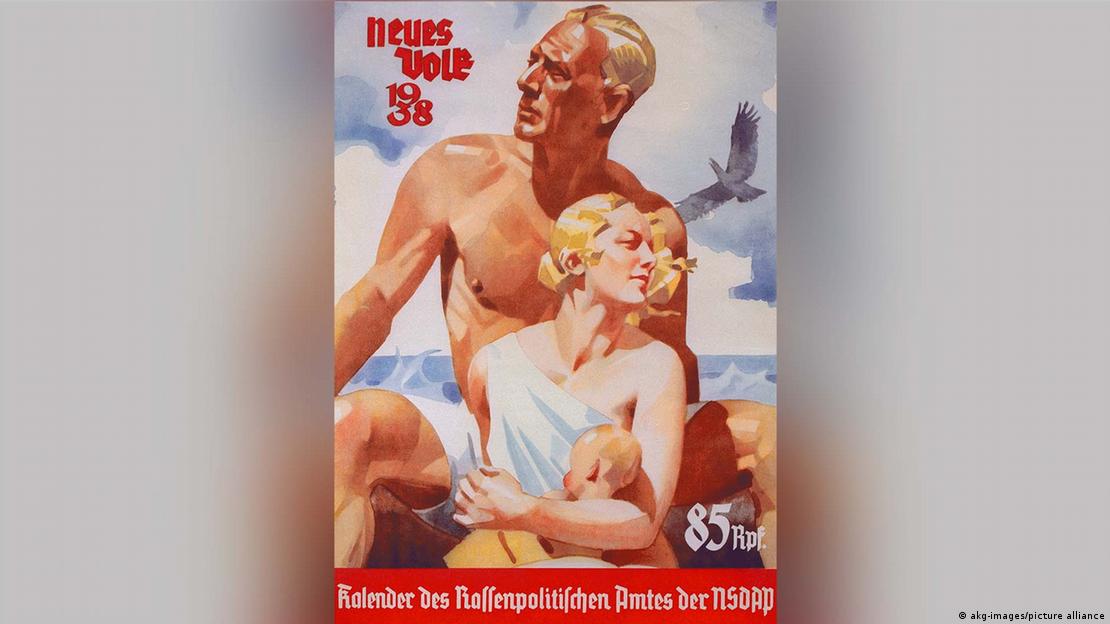
The 1938 "New People" calendar was a tool of propaganda intended to educate Germans on racial categories
Image: akg-images/picture alliance
The term Aryan also became the basis for "Aryanization" — the confiscation and transfer of ownership from Jewish businesses and Jewish property to non-Jews.
The true origin of the 'Aryans'
Even though the term Aryan was common in colloquial language, Nazi "race scientists" didn't use it much. Instead, they would refer to "German or kindred blood." They knew the term had originally been used to refer to linguistic similarities and not to inherited physical traits.
Archaeological discoveries show that the term Aryan has existed for more than two millennia. The Persian king Darius I had a rock-cut tomb carved in Naqsh-e Rostam in modern Iran. The inscription reads: "I am Darius, the great king … a Persian, son of a Persian, an Aryan, of Aryan descent." The word also appears in Sanskrit in sacred texts from India.


The term Aryan also became the basis for "Aryanization" — the confiscation and transfer of ownership from Jewish businesses and Jewish property to non-Jews.
The true origin of the 'Aryans'
Even though the term Aryan was common in colloquial language, Nazi "race scientists" didn't use it much. Instead, they would refer to "German or kindred blood." They knew the term had originally been used to refer to linguistic similarities and not to inherited physical traits.
Archaeological discoveries show that the term Aryan has existed for more than two millennia. The Persian king Darius I had a rock-cut tomb carved in Naqsh-e Rostam in modern Iran. The inscription reads: "I am Darius, the great king … a Persian, son of a Persian, an Aryan, of Aryan descent." The word also appears in Sanskrit in sacred texts from India.
Darius, King of the Persians and, by his own account, an Aryan, is buried at Naqsh-e Rostam
Image: Evaldas Mikoliunas/imageBROKER/picture alliance
Originally, the term "Arya" was used to mean "noble" or "honorable" — as a self-designation by peoples in India and Iran. They are thought to have descended from nomadic peoples who migrated from the region now made up of Ukraine, Kazakhstan and southern Russia. After discovering similarities between most European languages and languages such as Persian or Sanskrit, scientists later classified Aryans as members of a shared Indo-European linguistic family.
Racist reinterpretation of the term
The racist reinterpretation of the term Aryan began in the middle of the 19th century. In his four-volume work "An Essay on the Inequality of the Human Races," French writer and diplomat Joseph Arthur de Gobineau divided humanity into three groups, the white, yellow and black races. His conclusion was that the white, Aryan original race was superior to the others, characterized by its "immeasurably superior intelligence," and was destined to rule over the others. He also warned against "racial mixing," as this would endanger both the quality of the Aryan original "race" and humanity as a whole.
Gobineau's theory was largely ignored by his contemporaries but later found traction after being appropriated and altered to serve nationalist, far-right ideology. A large number of scientists and academics subsequently used Gobineau's racial theory as a basis for their own writings on the subject.
One of them was British writer Houston Stewart Chamberlain — who would later also become the son-in-law of Richard Wagner. In his 1899 book "The Foundations of the Nineteenth Century," Chamberlain raised Gobineau's racist theories to a new level.
Originally, the term "Arya" was used to mean "noble" or "honorable" — as a self-designation by peoples in India and Iran. They are thought to have descended from nomadic peoples who migrated from the region now made up of Ukraine, Kazakhstan and southern Russia. After discovering similarities between most European languages and languages such as Persian or Sanskrit, scientists later classified Aryans as members of a shared Indo-European linguistic family.
Racist reinterpretation of the term
The racist reinterpretation of the term Aryan began in the middle of the 19th century. In his four-volume work "An Essay on the Inequality of the Human Races," French writer and diplomat Joseph Arthur de Gobineau divided humanity into three groups, the white, yellow and black races. His conclusion was that the white, Aryan original race was superior to the others, characterized by its "immeasurably superior intelligence," and was destined to rule over the others. He also warned against "racial mixing," as this would endanger both the quality of the Aryan original "race" and humanity as a whole.
Gobineau's theory was largely ignored by his contemporaries but later found traction after being appropriated and altered to serve nationalist, far-right ideology. A large number of scientists and academics subsequently used Gobineau's racial theory as a basis for their own writings on the subject.
One of them was British writer Houston Stewart Chamberlain — who would later also become the son-in-law of Richard Wagner. In his 1899 book "The Foundations of the Nineteenth Century," Chamberlain raised Gobineau's racist theories to a new level.
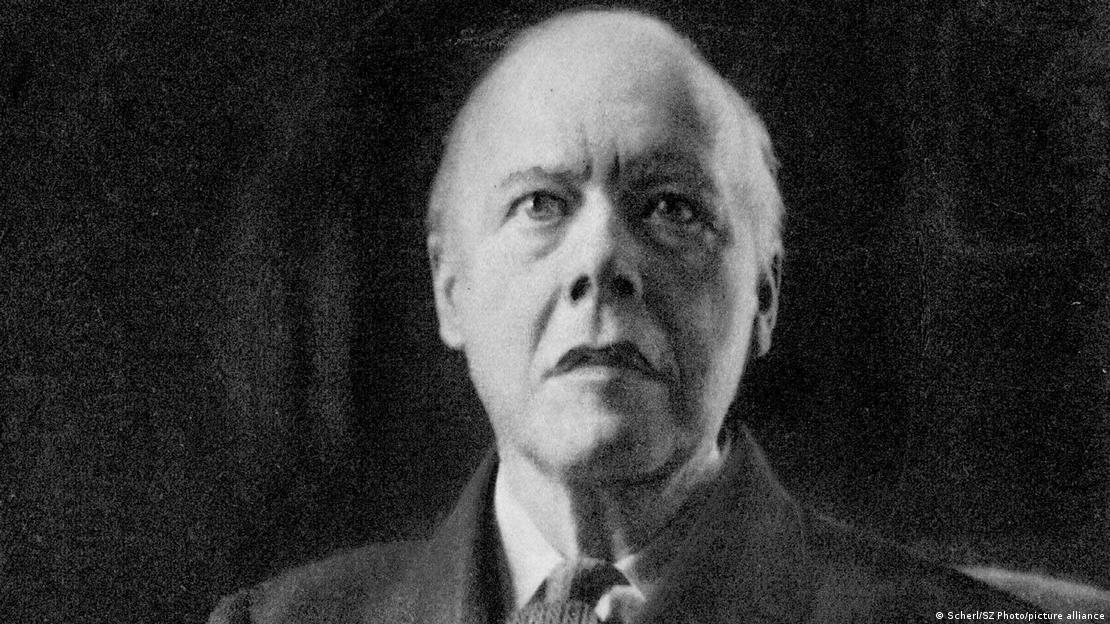
Houston Stewart Chamberlain's antisemitic theories made a strong impression on Hitler
Image: Scherl/SZ Photo/picture alliance
Chamberlain glorified the "Germanic race". However, he was aware that not all Germans matched the physical ideal Aryan type described by Gobineau, so he based his claims on so-called German virtues that he believed were inherited through blood: honesty, loyalty and diligence. He characterized the "Jewish race" as lacking creativity and idealism and as being driven solely by material interests, thereby posing a threat to the "Germanic Aryans." While Chamberlain did ascribe a certain "noble disposition" to individual Jews, he simultaneously emphasized their alleged "incapacity and inferiority" in comparison to the "Aryan race."
Chamberlain's work was well received in Germany. Among his admirers was Kaiser Wilhelm II, who repeatedly invited him to his royal court.
Brothers in spirit: Chamberlain and Hitler
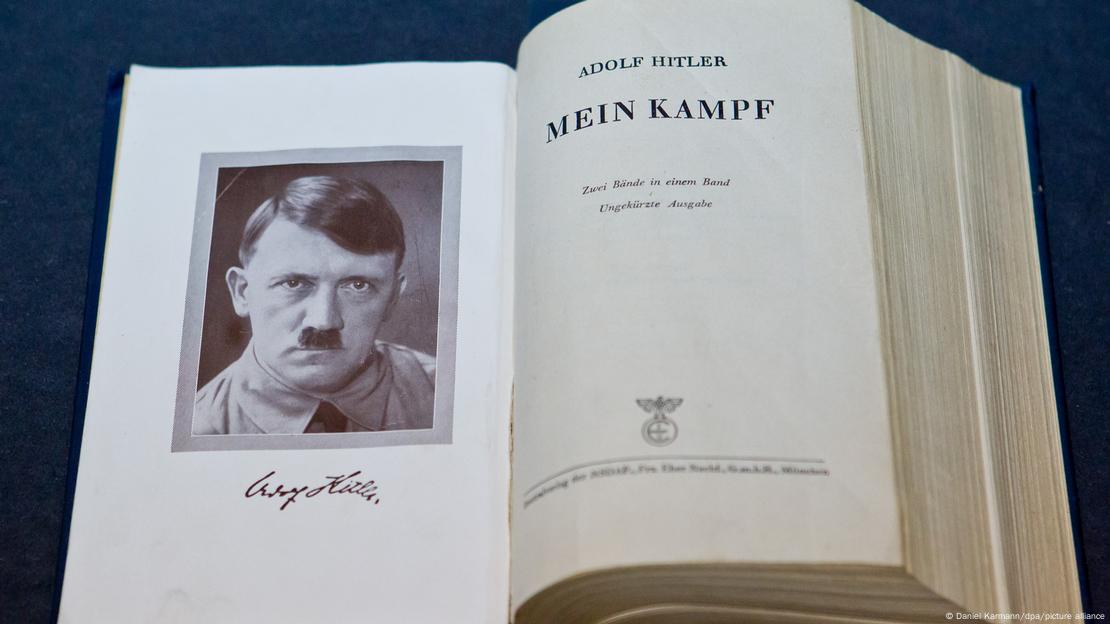
Hitler's 'Mein Kampf' — a racist work filled with hate speech and violent fantasies
Image: Daniel Karmann/dpa/picture alliance
In 1917, Chamberlain joined the far-right, nationalist and antisemitic German Fatherland Party. Adolf Hitler visited him on 30 September 1923 and apparently left a strong impression. A few days after the meeting, Chamberlain wrote to the future Führer: "That Germany in its hour of greatest need has given birth to a Hitler is proof of vitality."
Hitler, in turn, regarded Chamberlain as one of the philosophical "evangelists" of his worldview. In his book "Mein Kampf," he repeatedly refers to Chamberlain and also praises the supposed superiority of the "Aryan race."
It has long been scientifically established that there is no biological basis to "race." The Nazis misused the term Aryan to further spread and legitimize their inhumane ideology. To this day, racists around the world still use this false interpretation of the term.
This article was originally published in German.
Suzanne Cords Globetrotter with a passion for culture
In 1917, Chamberlain joined the far-right, nationalist and antisemitic German Fatherland Party. Adolf Hitler visited him on 30 September 1923 and apparently left a strong impression. A few days after the meeting, Chamberlain wrote to the future Führer: "That Germany in its hour of greatest need has given birth to a Hitler is proof of vitality."
Hitler, in turn, regarded Chamberlain as one of the philosophical "evangelists" of his worldview. In his book "Mein Kampf," he repeatedly refers to Chamberlain and also praises the supposed superiority of the "Aryan race."
It has long been scientifically established that there is no biological basis to "race." The Nazis misused the term Aryan to further spread and legitimize their inhumane ideology. To this day, racists around the world still use this false interpretation of the term.
This article was originally published in German.
Suzanne Cords Globetrotter with a passion for culture


No comments:
Post a Comment