Monday, September 22, 2025

China evacuates 400,000 as Super Typhoon Ragasa approaches after slamming Philippines


Super Typhoon Ragasa hit the northern Philippines on Monday with winds of up to 215 kilometres per hour, tearing off roofs and toppling trees as tens of thousands sought shelter. The storm is now moving toward southern China, where authorities in Shenzhen are preparing to evacuate 400,000 people ahead of its arrival.

Issued on: 22/09/2025 - 
By: FRANCE 24
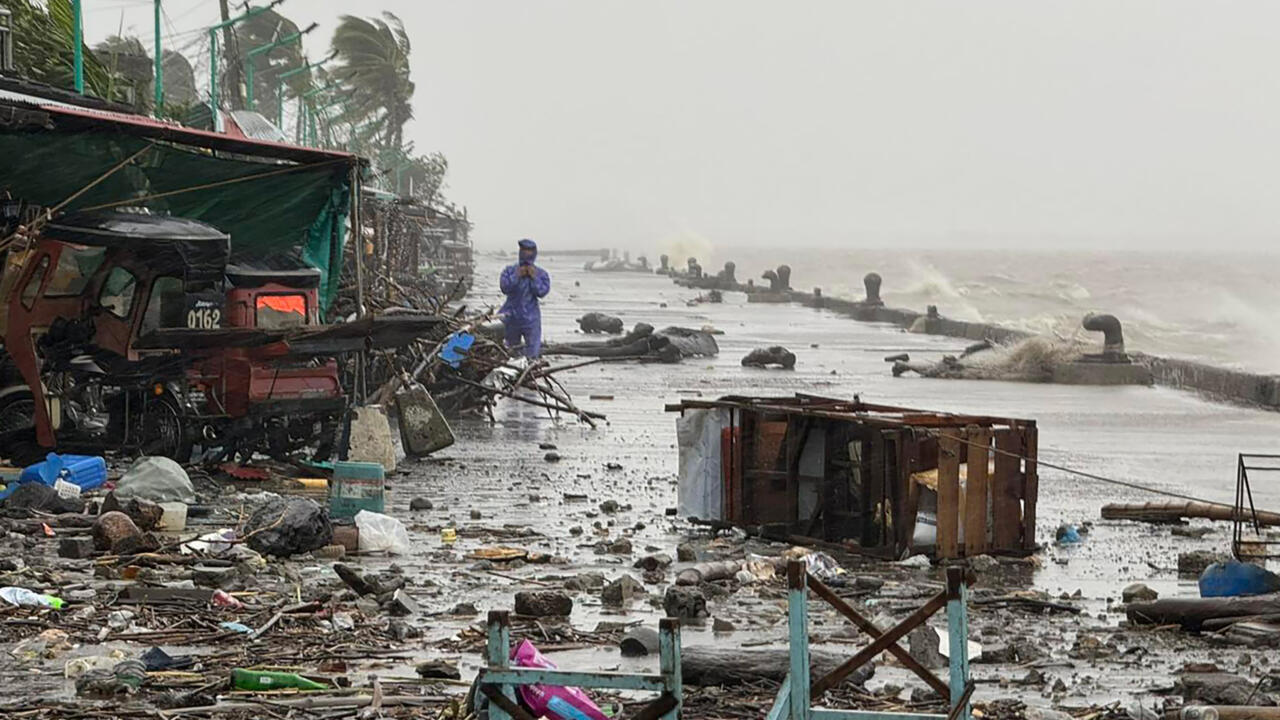

A man stands near debris on a waterfront road amid heavy rain driven by Super Typhoon Ragasa in the Philippines' Cagayan province on Monday, September 22, 2025. © John Dimain, AFP

The Chinese city of Shenzhen began preparing to evacuate 400,000 people as Super Typhoon Ragasa continued on its collision course with southern China.

The typhoon made landfall on the Philippines' Calayan Island, part of the sparsely populated Babuyan chain, at 3pm local time (0700 GMT), according to the Philippine weather service.

As of 5pm (0900 GMT), maximum sustained winds of 215 kilometres per hour (134mph) were reported at the storm's centre, with gusts reaching as high as 295kph, the national weather service said.

"I woke up because of the strong wind. It was hitting the windows, and it sounded like a machine that was switched on," said Tirso Tugagao, a resident of Aparri, a coastal town in northern Cagayan province.

On Calayan Island, at the storm's centre, information officer Herbert Singun told AFP that parts of a school's roof had been ripped off and landed on an evacuation centre about 30 metres away, leading to one minor injury.

"Can you see those coconut trees swaying in the distance?" he asked over video chat.

"There were eight of them before. Now only four are still standing. That goes to show how strong this typhoon is."

Just over 10,000 Filipinos were evacuated across the country, with schools and government offices closed Monday in the Manila region and across 29 other provinces.

A much larger operation will take place in China's Shenzhen, where authorities said late Sunday they planned to move hundreds of thousands of people from coastal and low-lying regions.

Multiple other cities in Guangdong province announced classes and work would be cancelled, and public transportation suspended because of the typhoon.

Hong Kong-based Cathay Pacific airlines said it expected to cancel more than 500 flights as Ragasa threatened the financial hub.

A spokeswoman for the airline said passenger flights in and out of Hong Kong International Airport would be halted from 6pm Tuesday, "resuming during daytime hours on Thursday".
'Extremely torrential'

In Taiwan, the state weather service predicted a chance of "extremely torrential rain" in the country's east.
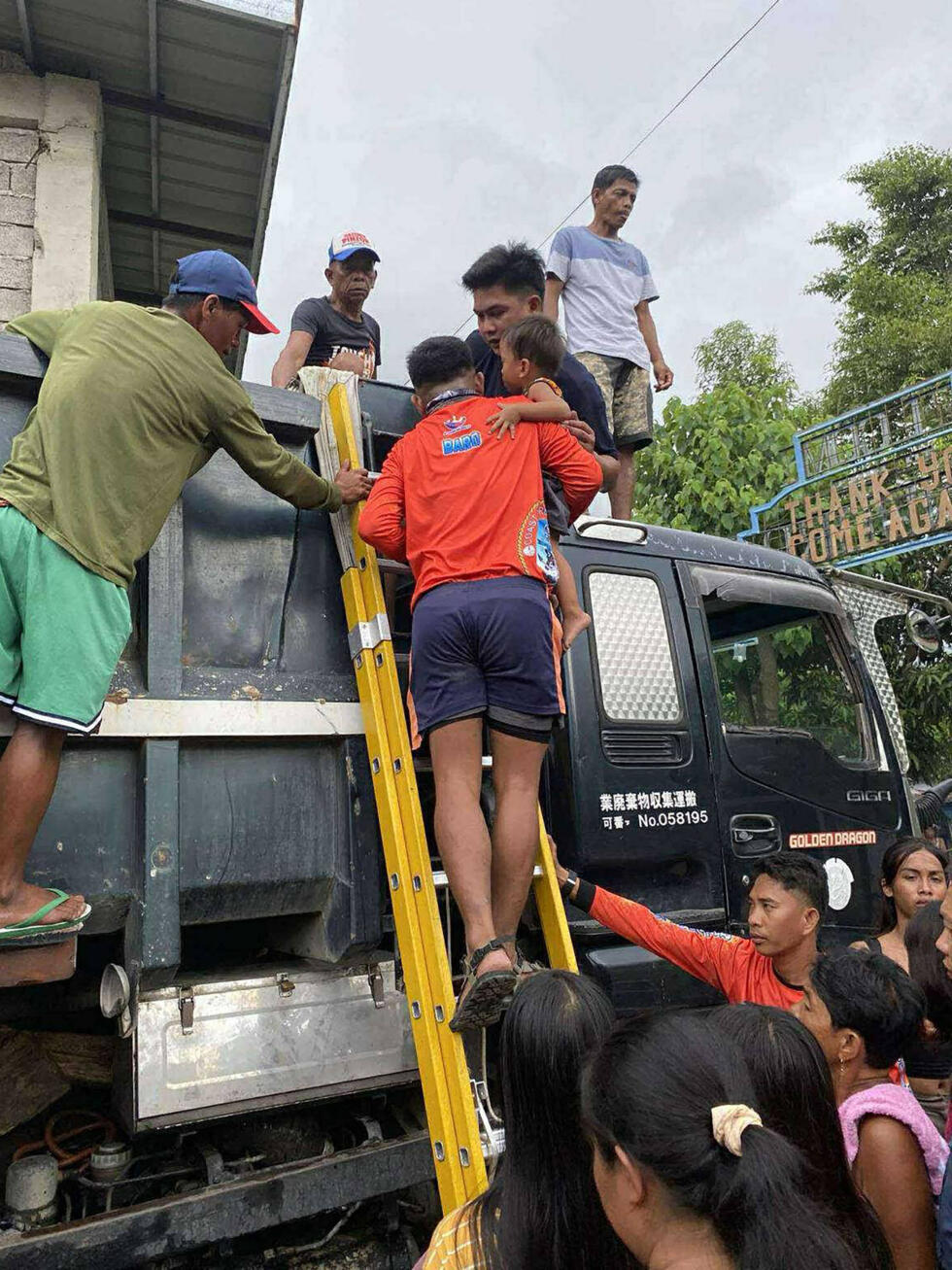
Philippine Coast Guard personnel assist in the evacuation of residents from a village in La Union province. © Philippine Coast Guard (PCG), AFP Handout

"Its storm radius is quite large, about 320 [kilometres]. Although the typhoon's centre is still some distance away, its wide, strong wind field and outer circulation are already affecting parts of Taiwan."

James Wu, a local fire department officer, told AFP that evacuations were ongoing in mountainous areas near Pingtung.

"What worries us more is that the damage could be similar to what happened during Typhoon Koinu two years ago," he said, describing a storm that saw utility poles collapse and sheet-metal roofs sent flying into the air.

Philippine government weather specialist John Grender Almario said Sunday that "severe flooding and landslides" could be expected in the northern areas of the main island of Luzon.

The threat of flooding from Ragasa comes just a day after thousands of Filipinos took to the streets to protest a growing corruption scandal involving flood-control projects that were shabbily constructed or never completed.

Scientists warn that storms are becoming more powerful as the world warms due to the effects of human-driven climate change.

(FRANCE 24 with AFP)

Philippines evacuates thousands ahead of approaching super typhoon
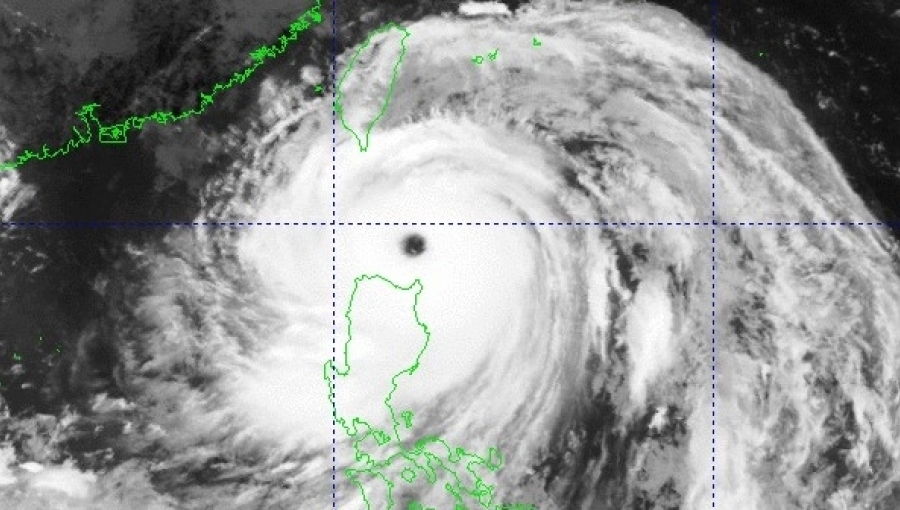
Philippines evacuates thousands ahead of approaching super typhoon
/ Philippines Weather Administration
By bno - Jakarta Office September 22, 2025

Authorities in the Philippines have moved thousands of residents from vulnerable areas as the country prepares for super typhoon Ragasa, which officials warn could have devastating effects, according to the BBC.

The storm, packing gusts of up to 230km/h (143mph), is predicted to strike the sparsely populated northern islands on September 22 before tracking westward towards southern China. The Philippine weather service has issued alerts about life-threatening storm surges, with waves potentially exceeding three metres.

In response, schools and government offices across much of the nation, including the capital Manila, have been closed. Officials have also warned of extensive flooding, landslides, and possible damage to homes and infrastructure. The northern Batanes and Babuyan islands, where Ragasa is expected to make landfall, are home to around 20,000 people, many living in poverty.

Though Taiwan is not in the storm’s direct path, heavy rainfall is anticipated and in some reports from across the island is already falling along its eastern and northern coast. Local authorities have evacuated nearly 300 residents in Hualien County, closed forested areas and trails, and suspended some ferry services.

In China, officials in Guangdong province are urging residents to prepare for severe disruption from strong winds and heavy rain, expected from September 23. Hong Kong authorities also anticipate rapidly worsening weather, with schools under review for potential closures.

Locally known as Nando, Ragasa strikes the Philippines while the country is still grappling with widespread flooding from an unusually severe monsoon season. The repeated impact of storms like Ragasa underscores how mismanagement and the diversion of flood control funds leave communities vulnerable to disasters that could be prevented, raising pressing questions about accountability and the prioritisation of public safety.

The terms "hurricane" and "typhoon" are regional names for tropical cyclones. All tropical cyclones are alike in that they draw heat from warm water at the ...

TERRORISMUkrainian drones strike a resort in annexed Crimea near Russian state dachas, Kremlin proxies say
Copyright AP Photo
By Euronews
Published on 22/09/2025 - 

Ukraine’s military intelligence (HUR) claimed that for the first time, Kyiv forces hit two Russian amphibious aircraft in occupied Crimea. Russia-installed occupation authorities say the resort area has been hit.

The Crimean resort area of Foros was hit by Ukrainian drones, causing damage and casualties, the head of the Russia-installed occupation government of Crimea said.

The alleged target of the strike was Foros Sanatorium, a luxury resort located near four Russian state dachas — country homes of Russia's political elite, according to the Kremlin proxies.

Russia-installed head of annexed Crimea said three people were killed and 16 were injured in a reported attack.

According to some Telegram channels, "very important" guests were allegedly staying at the resort at the time of the strike.

Russia’s defence ministry confirmed the attack, but did not comment on who could have been a target or could have been at the resort during the alleged attack.

According to Crimea.Realities, a Crimean project of Radio Liberty's Ukrainian Service, four Russian state summer residencies or dachas are located between Foros — situated in the occupied peninsula's south — and Yalta. 

An investigation by the Russian media outlet Project found that Russian President Vladimir Putin had taken over two of the dachas.

The resort website states that on Sunday, the Foros Hall restaurant was closed due to a private event.

Ukraine hits two Russian amphibious aircraft

Ukraine’s military intelligence (HUR) claimed that for the first time, Kyiv forces hit two Russian amphibious aircraft in occupied Crimea.

According to HUR, the targeted aircraft are the Soviet-designed Be-12 Chayka (also known as “Mail” as per NATO reporting name). This is an anti-submarine amphibious aircraft equipped with high-value systems used for detecting and engaging submarines.

Before hitting Russian amphibious aircraft, HUR also reported that it had allegedly destroyed three Russian Mi-8 helicopters and a radar station in Crimea.

In Zaporizhzhia in Ukraine's southeast, Russian forces hit civilian and industrial infrastructure, sparking several fires that destroyed apartment buildings, private residences, and vehicles.

Head of Zaporizhzhia Oblast Military Administration Ivan Fedorov said that “the Russians targeted the city with at least five aerial bombs. They attacked civilian and industrial infrastructure."

Rescue crews from the State Emergency Service remain on site. At least three people were killed in the attack.

In total, 15 apartment buildings, 10 houses and several non-residential facilities were damaged in the city.

Russian forces also attacked the northeastern city of Sumy and the Kyiv region.

Overall, at least eight people were killed and 21 were injured in Russian attacks against Ukraine over the past 24 hours.

Ukrainian forces downed 132 out of the 141 drones launched by Russia overnight, Ukraine’s air defence reported.

How Ukraine keeps society going despite the war


Adaptive governance amidst the war: Overcoming challenges and strengthening collaborative digital service provision in Ukraine


Linköping University

Mariana Gustafsson 

image: 

Mariana Gustafsson, docent in political science at the Department of Management and Engineering at Linköping University.

view more 

Credit: Jonas Roslund


Despite being at war since February 2022, Ukraine has managed to maintain public services. A new study from Linköping University points to the collaboration between citizens and public authorities as a key factor in this. According to the researchers behind it, there are lessons to be learned for other countries should war or crisis come.

“Everyone, right down to the family and the individual, makes crucial decisions in times of deep crisis. It’s important that all actors are mobilised, pull together and cooperate,” says Mariana Gustafsson, docent in political science at the Department of Management and Engineering at Linköping University.

The study, conducted in the Dnipropetrovsk region in 2023 and 2024, is based on survey responses from 239 public officials and 882 Ukrainian citizens. It has been supplemented with ten in-depth interviews with public officials and active members of civil society. All in all, it gives a picture of how society’s functions were transformed during the war. The results have been published in the journal Government information Quarterly.

The study shows that extensive collaboration has emerged between all levels of society – collaboration that was previously sporadic. Citizens in civil society have been able to identify new needs early on through their local networks and develop relief efforts together with authorities and international organisations. This has made it possible to, for example, quickly create digital services to help war veterans or those who have had to flee their homes.  Citizens and organisations have become active co-creators rather than passive recipients, making the efforts robust and credible. 

The digital platform Diia, a central location for government services in Ukraine for the past few years, has played a key role in this, as a number of functions, originally developed in civil society, could quickly be connected to it. More than half of all Ukrainians now have the app on their phone.

But the researchers emphasise that the collaboration rests on trust within society – a belief that individuals, organisations and public authorities are actually doing what they are supposed to be doing. This belief was not always evident in Ukraine but has slowly grown since the Orange Revolution in the mid-00s. The war has since brought everything to a head, although serious problems with corruption remain. There are lessons to be learned by other countries about the importance of strengthening citizens' confidence in democracy and its institutions. 

Trust is created through authorities being flexible and actively working to include civil society, but also through citizens themselves becoming more active, according to Mariana Gustafsson. This is a challenge in all developed democracies, where engagement and participation in civil society have decreased over time. The conditions for a functioning society, even in times of crisis and war, must be created in advance.

“Don’t forget that trust is a commodity. This is something that public authorities, civil society and all of us have to work on continuously. We have seen many warning signs that civil society must become more dynamic and active,” says Mariana Gustafsson.
The researchers point out that the study does have some limitations. Because of the war, it has been difficult to achieve fully representative survey data. Moreover, the survey was only conducted in one of Ukraine’s regions.

The LiU researchers carried out the study together with colleagues from Dnipro University of Technology in Ukraine. The research was funded by the Swedish Research Council and the Swedish Institute. 


WWIII

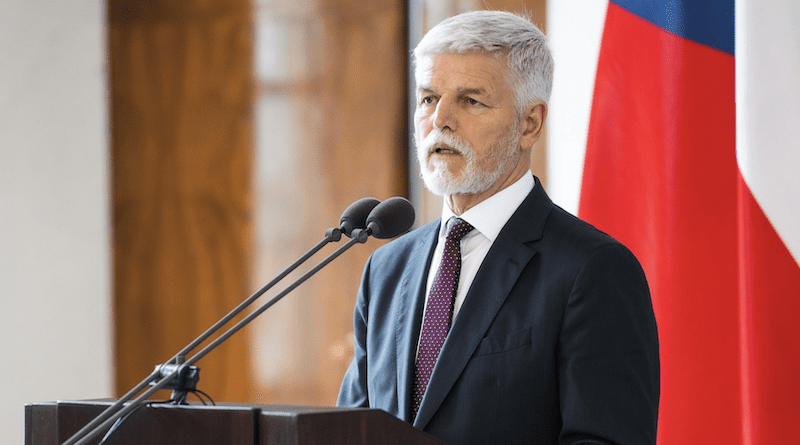
Czech President Urges NATO To Respond Firmly To Russian Airspace Violations

Czech Republic President Petr Pavel. Photo Credit: Czech Republic government


By 

By Tony Wesolowsky


(EurActiv) — Czech President Petr Pavel has said NATO must respond decisively to Russian incursions into allied airspace, including, if necessary, by shooting down Russian military jets. 

His remarks to Czech media on Saturday came a day after three Russian jets were reported to have violated Estonian airspace.

Moscow has denied the incident, but tensions have mounted in recent weeks after Poland and Romania, both NATO members, said Russian drones had entered their territory.

“Russia will realise very quickly that they have made a mistake and crossed acceptable boundaries. Unfortunately, this is teetering on the edge of conflict, but giving in to evil is simply not an option,” said Pavel, a former chair of NATO’s Military Committee, in an interview with Czech public television.

Amid rising tensions, German Eurofighters were dispatched to track a Russian Il-20M in neutral airspace over the Baltic Sea on Sunday morning before passing the escort to NATO partners in Sweden.


A Turkish precedent?

Calls for tougher action have also come from other NATO members. Posting on Saturday on X, Lithuanian Defence Minister Dovilė Šakalienė suggested NATO member “Turkey set an example” of how to respond to such incidents in 2015 when it shot down a Russian fighter jet that violated its airspace.

US President Donald Trump told reporters on Friday he would be briefed on the incursion, commenting: “I don’t love it. I don’t like when that happens. It could be big trouble, but I’ll let you know later.”

Estonian Foreign Minister Margus Tsahkna told AP the incident was “a very serious violation of NATO airspace”, noting that the last comparable breach occurred in 2003, shortly before Estonia joined the alliance.

Tallinn has said it will request consultations under Article 4 of NATO’s founding treaty, which allows members to convene when they feel their security is under threat. Poland invoked the same article earlier this month, after around 20 Russian drones crossed into its territory on 10 September. Three days later, Romania also reported a violation during a large-scale Russian air assault on Ukraine.

In response to escalating incidents, NATO recently announced the launch of its “Eastern Sentry” mission to strengthen air and missile defence along the alliance’s eastern flank.


Iran delivers high efficiency gas turbines to Russia to replace sanctioned Siemens equipment

Iran delivers high efficiency gas turbines to Russia to replace sanctioned Siemens equipment
Iranian firm MAPNA has just delivered its first advanced MGT-70 gas turbine to Russia to replace Siemens turbines that have been sanctioned. / bne IntelliNews
By Ben Aris in Berlin September 21, 2025

The extreme sanctions imposed on Russia have hit industrial sectors the hardest, which have been almost entirely dependent on imports of high quality foreign made machinery for almost all of the last three decades since the fall of the Soviet Union.

The problem is that because of the timing of the collapse of the USSR, Russia missed out on two revolutions in precision tool making and is now hopelessly behind. One of the biggest lacunas has been highly efficient gas turbines that were almost all supplied by Siemens as Russia can’t make them for itself.

After decades of its own sanctions, Iran’s technology is surprisingly advanced, and it has already solved many of the problems Russia is now grappling with.

The Iranian firm MAPNA has just delivered its first advanced MGT-70 gas turbine to Russia, part of a deal to export 40 gas turbines to Russia in 2022.

The delivery includes the turbine, generators, electrical equipment and aircraft engine repair services. Iran’s gas turbines will replace Russia’s German Siemens gas turbines. Several weeks ago, Iran mastered the domestic production of an even more advanced MGT-75 class-F gas turbine. Iran has also shared world class drone technology with Russia, from which Russia has established several factories and used the designs to innovate even more advanced Gerand models that have become increasingly effective on the battlefield.

The import of the Iranian turbines comes on top of Russia’s own efforts to improve its own technology, where it has also made good progress.

As bne IntelliNews reported, sanctions have spurred innovation from Russian cheese to turbines. Earlier this year, specialists from the United Engine Corporation (UEC), part of the Rostec State Corporation, completed testing of the second prototype of the new AL-41ST-25 industrial gas turbine engine. The engine was manufactured at UEC-UMPO in Ufa, Republic of Bashkortostan, which is almost as good as anything Siemens makes, the experts say.

The AL-41ST-25 is a fully domestically produced industrial turbine designed to replace foreign equivalents in Russia's fuel and energy sector. It has a capacity of 25 MW and features enhanced efficiency, reliability and environmental sustainability.

The prototype consistently met its specified performance parameters in all operating modes, according to Rostec, matching the performance of the German-made equivalents. However, clearly the roll out of large scale production of these Russian-made turbines is going too slowly. 

By 

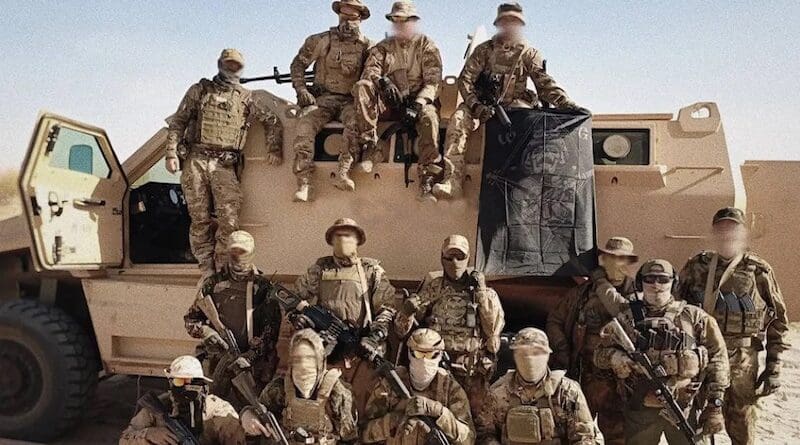
When the infamous Russian mercenary Wagner Group announced its departure from Mali earlier this year, it claimed on social media that its “mission was accomplished.”


The reality is that in the 3 1/2 years of the counterterrorism and counterinsurgency operations it carried out, the group has had a disastrous impact on the Sahel country that continues to be regarded as the worldwide epicenter of terrorism.

“Despite the Wagner Group possessing a reputation for being battle-ready and claiming occasional public triumphs in Mali, its strategy has been plagued by a series of failures,” investigative organization The Sentry wrote in an August 27report.

The Kremlin replaced Wagner with its own paramilitary force called the Africa Corps, which is controlled by the Ministry of Defense. As much as 80% of the Africa Corps is made up of former Wagner mercenaries, according to a July 29 Timbuktu Institute report.

“Africa Corps inherits Wagner’s legacy of human rights violations, including extrajudicial killings and acts of torture,” the report said. “These abuses, often committed with impunity, fuel discontent among certain communities and jihadist recruitment that exploits various grievances.”

Through interviews with Malian military personnel, intelligence agents, and ministries of finance and mines officials, The Sentry reported that Malian Army personnel deeply resent the Russians. They claimed that Wagner fighters disrespected their command and control, and Malians blamed the Russians for security lapses and operational mistakes that resulted in personnel and equipment losses.


The mercenaries’ brutal tactics and haphazard approach to counterterrorism also made it impossible to earn the trust of the Malian people.

“Since Wagner’s arrival in Mali, there has been a significant increase in attacks against civilians and in civilian casualties linked to Malian security forces and allied militias,” the report stated. “In fact, the Wagner Group has been employing tactics that indiscriminately target civilians.”

Wagner fighters also reportedly engaged in sexual violence and mass executions, as evidenced by the 2022 Moura massacre, where more than 500 civilians were killed, including at least 300 men who were executed.

United Nations experts in early 2023 called for an independent investigation into flagrant human rights violations and “possible war crimes and crimes against humanity committed in Mali by government forces and the private military contractor known as the Wagner Group.”

The experts said that since 2021 they received “persistent and alarming accounts of horrific executions, mass graves, acts of torture, rape and sexual violence.” Repeated calls for an investigation in Mali have produced no results.

Some FAMa soldiers blamed the Moura massacre on the influence that Russian mercenaries had on their superiors.

“Without Wagner, there would have been no Moura,” one told The Sentry. “Not this scale, not this duration, not all the dead.”

Malians blame the Russians’ heavy-handed tactics for giving a recruiting boost to Tuareg separatist fighters and terrorists linked to al-Qaida and the Islamic State group.

Amadou Koufa, leader of al-Qaida’s Katiba Macina, a militant Islamist group, said in a 2024 interview with France24 that Russian brutality was the impetus for locals to join the fight to “defend their religion, their land and their goods.”

The Russians conducted drone strikes on weddings and funerals, while videos of Wagner fighters abusing Tuareg civilians circulated online, driving further discontent and fueling recruitment propaganda.

“Local community leaders in central Mali often complain that Wagner has failed to permanently improve the situation in their areas,” Royal United Services Institute researchers wrote in a January 2025 report.

Wagner suffered a crushing defeat in July 2024 when multiple terrorist groups attacked a large convoy of vehicles near the northeastern Malian village of Tinzaouatène. The militants claimed to have killed 84 Russian mercenaries and 47 FAMa soldiers.

Wagner’s relationship with FAMa deteriorated into mutual suspicion, according to The Sentry. Russian survivors accused Malian intelligence of underestimating rebel numbers and abandoning them mid-battle. In response, Malian officers accused Russians of ignoring chains of command, commandeering their vehicles and treating them with open racism.

“We have gone from the frying pan to the fire,” one senior officer told The Sentry.

Anger grew when militants attacked Bamako’s airport in September 2024, killing more than 100 people. Wagner units were stationed nearby but reportedly waited five hours to intervene.

“If you don’t pay them, they don’t move,” an airport guard told The Sentry.

Charles Cater, The Sentry’s director of investigations, said the Wagner Group’s intervention in Mali has been a failure.

“Heavy-handed and poorly informed counterterrorism operations have strengthened alliances among armed groups challenging the state, caused substantial battlefield losses for Wagner, and resulted in higher civilian casualties,” he said. “Ultimately, Wagner’s deployment has not served the interests of the people of Mali, the military government, or even the mercenary group itself.”

Justyna Gudzowska, The Sentry’s executive director, said that Mali’s experience should serve as a cautionary tale.

“As Moscow spreads its tentacles across the Sahel and rebrands under Africa Corps, it is critical to understand that Wagner was not the infallible fighting force and successful economic actor it pretended to be,” she said.

“If anything, the Malian example illustrates that the group failed on both fronts, and this should be a warning to other African clients who are considering bringing in the Ministry of Defense-backed Africa Corps.”


Africa Defense Forum

The Africa Defense Forum (ADF) magazine is a security affairs journal that focuses on all issues affecting peace, stability, and good governance in Africa. ADF is published by the U.S. Africa Command.