Sunday, November 16, 2025

"Apparently, God himself commanded the Russian Orthodox bishop to build a chapel right under NATO radars"

Russian security forces are strengthening their influence in northern Norway — and sowing division within the country.
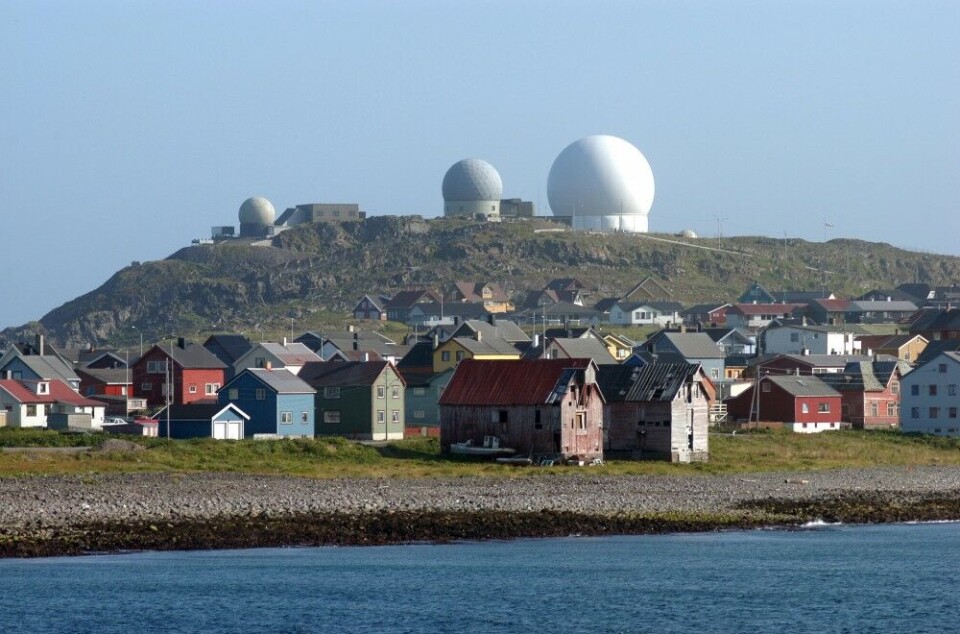

The radar station of the Norwegian Intelligence Service in Vardø. 
Photo: Thomas Nilsen

LONG READ


Irina Kravtsova
Special correspondent for Novaya Gazeta Europe
5 November 2025 - 
This is a partner material of Novaya Gazeta Europe and the Barents Observer.

Vardø is an island in northern Norway located on the coast of the Barents Sea. It is home to a picturesque fishing town where about two thousand people live (including around 40 Russians). The first thing you see when approaching the island are huge white cupolas. These are NATO radars. They stand on a hill like giant mushrooms. The Norwegian Intelligence Service uses them for space monitoring and observing the airspace of the Russian Arctic. Russia is Vardø's closest neighbour. On a clear day, if you go down to the shore, you can see the Kola Peninsula, separated from Norway by the Varanger Fjord. 150 kilometres east of Vardø is Gadzhiyevo, where the Russian fleet of nuclear submarines is based.

As the Novaya Gazeta Europe discovered, since 2011, under the harmless pretext of conducting 'historical memory tours' by bus following the traces of World War II, Russian security forces have regularly infiltrated Norway and promoted foreign policy narratives favourable to Russia there.

These neighbours, Russia and Norway, have a rich shared history. It holds memories of how in the 18th century Russian Pomors sailed to Vardø to trade flour and birch tar for fish and salt, how both countries fought in World War II, how they later went through the Cold War, and how they then tried to restore relations. Certain moments of this history (often distorted) are now actively used by the Kremlin to gain the trust and support of the residents of northern Norway.

Moreover, by manipulating the real discontent of northerners with Oslo's policies, they instilled the idea that it is Russia that cares for, understands, and protects their interests better than their own government, leading to the conclusion that Russia is a much closer ally for Norwegian northerners than the central part of their own country.
Chapter one, in which

'god himself' commands the Russian bishop to build an Orthodox chapel — right under Nato's radars in a neighbouring country

Starting in 2017, during the tenure of the previous mayor of Vardø, Robert Jensen, the rector of the St. Onezhsky Cathedral, Archpriest Alexander Koptev, and Bishop of Plesetsk and Kargopol, Alexander Zaitsev, began negotiations regarding the construction of an Orthodox chapel on the Norwegian island — as part of 'establishing ties with Vardø', which they pursued by regularly visiting there.

Archpriest Koptev is a former military man. The diocese's website states that in the early 1980s, he served two years of mandatory military service, followed by another six years in the Russian armed forces in the settlement of Katunino, Arkhangelsk region, where a Northern Fleet airfield was located at the time. Among other things, several types of military aircraft used for maritime reconnaissance and electronic warfare were based in Katunino. In 1997, Koptev was ordained as a priest.
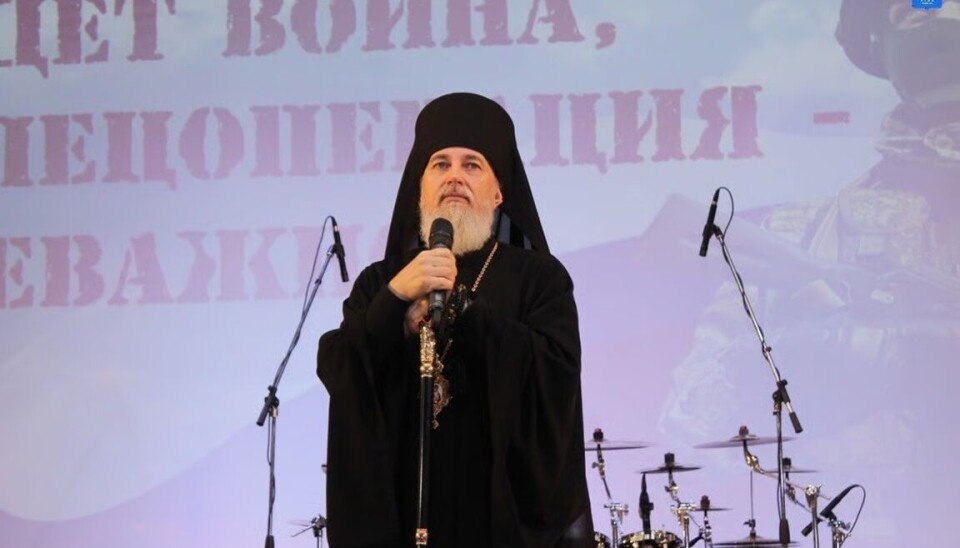

Bishop of Kargopol and Plesetsk Alexander Zaitsev. Фото: Плесецкая епархия / VK

The bishop of Kargopol and Plesetsk, Alexander Zaitsev, supported the Russian invasion of Ukraine: in the winter of 2023, he visited wounded soldiers in a hospital, and in the summer, he participated in a charity concert 'to help the fighters of the special military operation' (it took place in Plesetsk). For 'propaganda of aggressive war against Ukraine and interference in the internal church affairs of Ukraine', Zaitsev even ended up on the list of the Ukrainian government-associated project 'War and Sanctions'. This project operates with the support of the Ministry of Foreign Affairs of Ukraine and the National Agency for the Prevention of Corruption. Anyone can send data on Russian figures who supported the war in Ukraine and demand their inclusion in the sanctions lists.

At home, in the satellite town of Plesetsk, Mirny, the bishop has his own cathedral. You can only enter Mirny with a pass — it is a closed city under the jurisdiction of the Ministry of Defence.

Until the start of the full-scale war in Ukraine, Koptev and Zaitsev regularly visited Vardø for the unveiling of monuments to Norwegian partisans and consecrated Orthodox crosses, which were actively installed there at the initiative of Russian officials and security forces.

The initiative to build an Orthodox chapel in Vardø was initially supported by both officials and local residents of Vardø.

"Patriarch Kirill blessed the idea of construction, and Bishop Zaitsev even indicated exactly where it should be built — in close proximity to the radar station. To the Norwegian officials who participated in these negotiations, the Russian clergyman explained that the choice of location was supposedly 'dictated to him by God himself,' — the current mayor of Vardø, Tor-Erik Labahå, tells me. He took office in 2023.

The pandemic slowed down the implementation of the project, but did not affect the plans themselves. The Russian Orthodox Church continued to develop the project on paper.
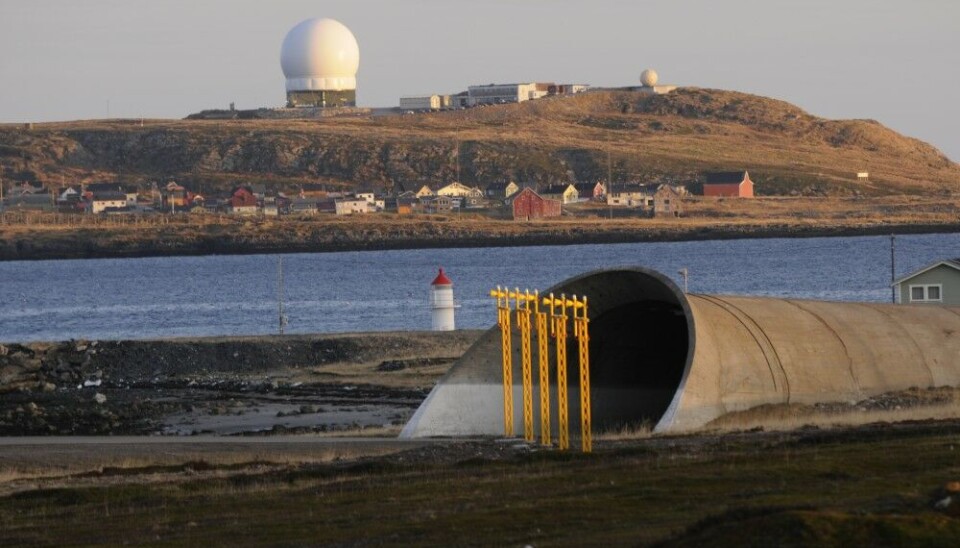


Radar station of the Norwegian Intelligence Service in Vardø. Фото: Thomas Nilsen

At the very beginning, recalls Mayor Labahå, the project was declared as just a small chapel — "something very modest that could be useful for Orthodox sailors visiting Vardø and remind of the cultural ties between Russia and Norway." But at the final stage of planning, it became clear that the Russian priests had changed their minds about being modest.

When they presented the finished blueprint to the Norwegian officials, a discussion began in the Vardø municipality. After consulting, the Norwegians refused to build the chapel.

"Primarily because the Russian pressure [on officials from Vardø] continued to intensify. Their plans grew into the construction of a church as high as 17 metres. What initially seemed like a small cultural initiative quickly turned into something much more ambitious. At the same time, Russia did not even properly consult with the Norwegian side," says Tor-Erik Labahå. "After the Russian invasion of Ukraine, all these actions of the Russian clergy in Vardø no longer seem like a harmless sincere impulse," continues the mayor.

— It is now clear: Russian representatives certainly did not accidentally decide to build a chapel in Vardø. They wanted to establish a symbolic presence of Russia right next to NATO radars.

Mayor of Vardø Tor-Erik Labahå

And, of course, to create a flow of Russian clergy and delegations into a sensitive area, ensuring their influence and presence there, and possibly — gathering intelligence.

Chapter two, in which

the king apologises 'too late'

Professor and head of the Barents region department at UiT the Arctic University of Norway, Kari Aga Myklebost, has been researching relations between Russia and Norway's northern territories for many years. In the early 1990s, Myklebost studied at the history faculty of Saint Petersburg State University, and later in Moscow and Vladivostok.

"In the 2000s, when I was already working at the university in Tromsø, we often collaborated with Russian historians," she says. "Since 2014, the Kremlin's and Russian colleagues' view of the Great Patriotic War has become more politicised. They increasingly used that war to legitimise Russia's invasion of Ukraine, claiming that Russia is fighting 'neo-Nazism' there and that it is a heroic continuation of the feats of the Soviet Red Army."

Furthermore, Myklebost began to notice that after the annexation of Crimea, the Kremlin started actively interfering with propaganda and 'distorted historical narratives' in the minds of Norwegians — predominantly residents of the northern part of the country.

In order to gain the opportunity to carry out this activity, Russian security forces used a 'vulnerable moment' in Norway's post-war history.

In 1940, during the German occupation, 45 residents of Vardø and nearby towns in northern Norway fled across the Soviet border to the Kola Peninsula. They joined the Red Army, trained as intelligence officers near Murmansk, and then returned to German-occupied northern Norway to spy on the enemy. Later, during the Cold War, when hostility towards the Soviet Union was growing in Norway, the story of the Norwegian partisans' exploits 'due to their sympathy for the communists' began to be hushed up at the state level. They were considered Soviet spies, monitored, and regarded with suspicion by society. Norwegian authorities assumed that the partisans maintained contacts with their former Soviet handlers.
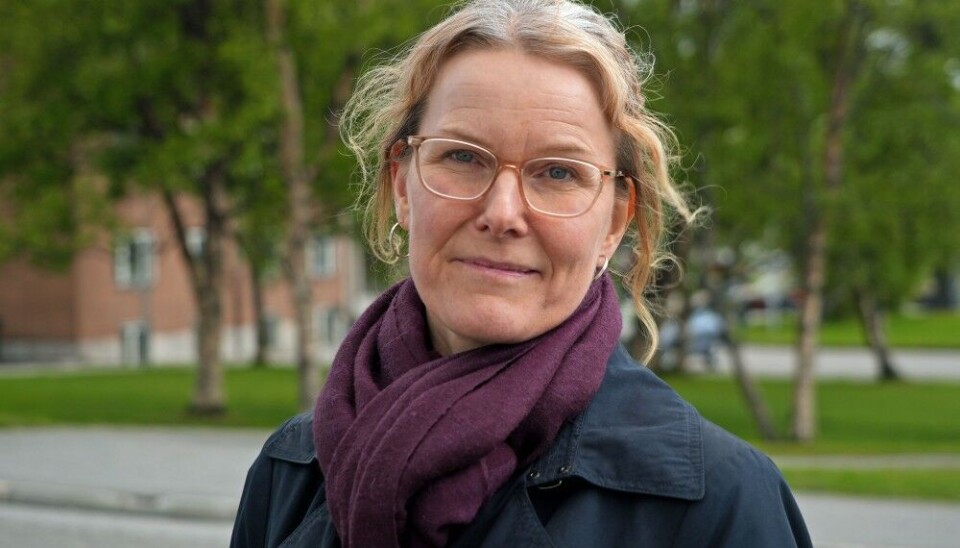

History professor Kari Aga Myklebost. Photo: Elizaveta Vereykina

"Marginalisation and suspicion towards the partisans remain a painful memory in some municipalities in the north [of Norway]," says Professor Myklebost. "Some there even believe that justice for the Norwegian partisans has not yet fully prevailed, as their feat has not been properly appreciated."

The head of the department at the Vardø historical museum, Inger Lene Nyttingnes, acknowledges:

"The activities of the Russian security forces in restoring 'historical memory' have elicited a strong response in the local community. And although now no one in Norway has any doubts that our partisans should be respected and honoured, the fact remains: the Norwegian authorities honoured them too late," says Nyttingnes. "[Norwegian] King Harald V only in 1992 expressed support and apologies to the partisans and their families for the contempt from the state and society they had to endure after the end of World War II. It was this vulnerable moment in the relations between the residents of northern Norwegian towns and the government that Russia took advantage of."
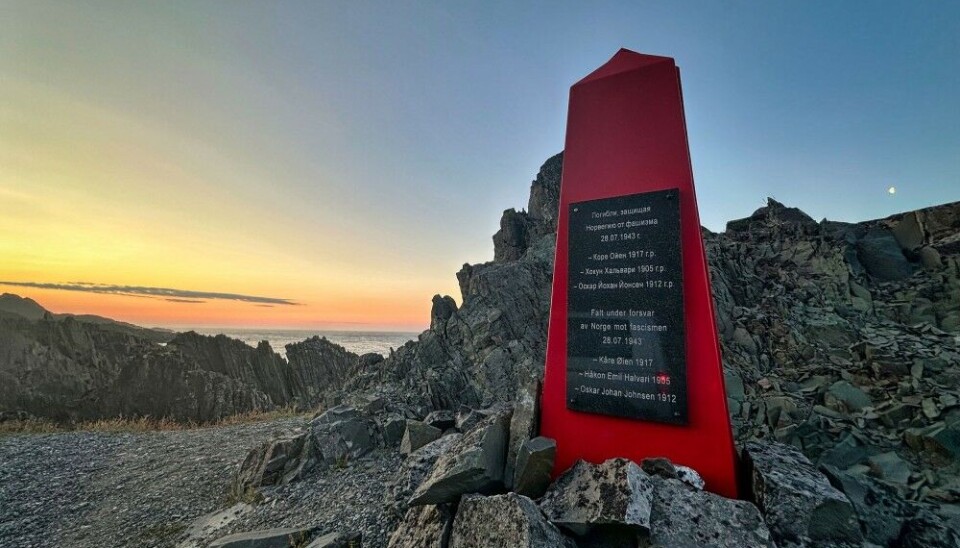

Obelisk in memory of the feat of Norwegian partisans, installed by Russian FSB veterans near Vardø. Photo: Denis Zagore
Chapter three, in which

Russian FSB veterans restore 'historical justice' in Norway

Since 2011, Russian FSB veterans and officials have conducted twice-yearly memory tours by bus from Russia to Norway: in May, in honour of Victory Day, and in October, in honour of the liberation of the eastern part of Finnmark by the Red Army in the autumn of 1944.

Regularly visiting Finnmark, Murmansk security officials and politicians imposed on local residents the idea that the Oslo authorities were downplaying the history of Norwegian partisans and did not understand the harsh realities that occurred during the Second World War in northern Norway, while the Russian side, on the contrary, recognises and honours their memory.

"After the annexation of Crimea, during their 'memory tours', Russian figures also criticised Oslo's sanctions policy towards Russia and the support that Norway provides to Ukraine," says Myklebost.

They stirred up dissatisfaction among northerners with Oslo's decisions, claiming that sanctions do not serve the interests of the population of northern Norway, which supposedly has special friendly relations with Russia.

Kari Aga Myklebost

After Russia's full-scale invasion of Ukraine, the professor studied documents related to these trips of Russian figures to Finnmark, as well as how information about these 'memory tours' was presented in Russian state media.

In addition to the head of the FSB Veterans Association in Murmansk, Gennady Gurylyov, these 'memory tours' were attended by the deputy chairman of the Murmansk Regional Duma, Igor Chernyshenko (since 2013 — a member of the Russian Federation Council), priests of the Russian Orthodox Church, representatives of the Pechenga municipal district (Murmansk region), and journalists from the Russian TV company TV21.
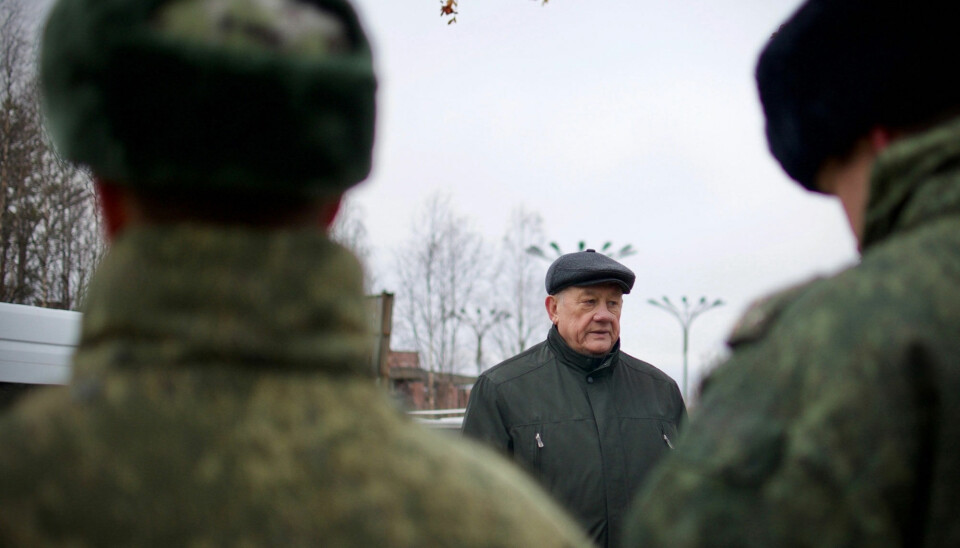

FSB veteran Gennady Gurylyov Photo: Pechenga municipal district administration

According to the official version, this tour was organised to honour the memory of Soviet soldiers and Norwegian partisans who fought against Nazi Germany. After the wreath-laying ceremony, speeches, and prayers on the Russian side of the border, the memory tour continued in Norwegian Kirkenes. There, the group was welcomed by the Russian Consul General and Russians living in Eastern Finnmark. Then the tour continued in the towns of Vardø and Kiberg, where the group was met by Russians, as well as invited Norwegian local historians and cultural figures involved in the history of partisans and historical ties between Norway and Russia.

During their subsequent visits to northern Norway, Russian representatives erected monuments there in honour of Soviet and Norwegian partisans.

"The organisation 'Shield' later reported on its website that elderly Norwegian residents attended the opening ceremony and expressed deep gratitude to Russia for the liberation in 1944," says Myklebost.

In 2013, the Consul General of Norway in Murmansk received a letter from the head of 'Shield', Gennady Gurylyov, and Senator Igor Chernyshenko, from which he learned that they had ordered and planned to install as many as 90 obelisks in northern Norway in the coming years in memory of the partisans of World War II. He also learned from the letter about their intention to organise regular 'memory tours' in the museums of Vardø and search patrols in Finnmark to map the coordinates of the burial sites of Soviet soldiers. As Professor Myklebost discovered, the consul sent this letter to the museums and municipalities of Eastern Finnmark.

In the autumn of 2014, Russian and Norwegian politicians met to discuss Norwegian-Russian cooperation in northern Norway. How surprised they were when, at a press conference following the talks, Russian Foreign Minister Sergey Lavrov said that joint military-historical events in northern Norway meant Norway's support for Russia's position on Ukraine.

“We could not ignore the problem of neo-Nazi tendencies in Europe and Ukraine. Our Norwegian friends are committed to preventing radical, including neo-Nazi, tendencies in Europe. Russia is convinced of the need to stop the emergence of new Bandera, Shukhevich, and Quisling,” said Lavrov.

According to Myklebost, this case was not the only one where Russia used Norway's willingness to participate in events dedicated to the memory of World War II for its propaganda purposes.

"The cooperation that Russia managed to achieve in northern Norway was portrayed on Russian TV as if Norway supposedly supports the Kremlin in the fight against alleged Nazism in Ukraine," says the professor.

Nevertheless, the activities of Russian security forces in northern Norway can be considered successful. In 2015, the Prime Minister of Norway, like many other European leaders, rejected the Kremlin's invitation to participate in the Victory Day celebrations on Red Square in Moscow. Meanwhile, joint events between Norway and Russia in the north continued.

“Patriotic memory tours” conducted by Russia became popular in Vardø. The number of monuments erected by Russians in Norway increased. According to Myklebost, the Russians even managed to attract Norwegian funding for this activity, “although the dominant viewpoints and symbols associated with military history in the tours remained Russian.” In the spring of 2015, “Shield” organised a banquet and reception, where the mayor of Vardø was present as an honoured guest. A report in the newspaper Murmansk Vestnik stated that northern Norwegian politicians did not share Oslo's position towards Russia after the annexation of Crimea and that it would be good if the Norwegian government adopted the spirit of cooperation prevalent in the north.

Since 2015, Norwegians increasingly participated in the tours, and in 2016, a “Russian-Norwegian expert group” on the history of the partisan movement was created. This group did not include historians, but it did include FSB veterans Gennady Gurylyov and Sergei Goncharov, as well as Russian officials from Murmansk; Senator Chernyshenko became its chairman. There was only one Norwegian in this Russian-Norwegian group — a lawyer and politician from Vardø named Remi Strand.
Chapter four, in which

a mysterious 'Marquis de Carabas' appears

When Russian priests decided to build a chapel near NATO radars, it was Remi Strand who was in contact with them and conveyed their wishes to Norwegian officials. He also participated in historical 'memory tours' conducted by Russian security forces. During the celebrations of the 75th anniversary of the liberation of East Finnmark by the Red Army, Remi Strand organised a 'memory tour' to Norway for children from the Russian military-patriotic youth movement Yunarmiya (the teenagers arrived in military uniform).
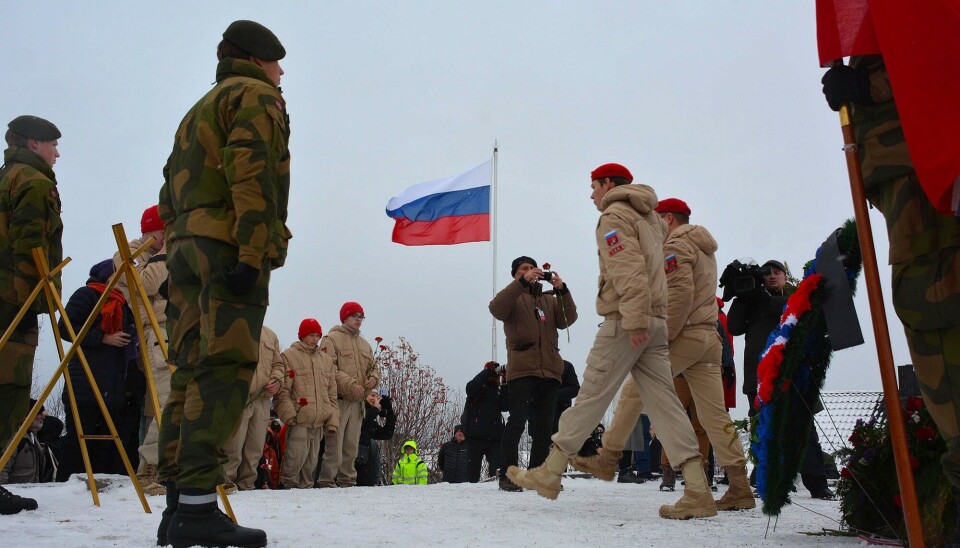


Yunarmiya members visited Norway in October 2019 at the invitation of Remi Strand. Photo: Atle Staalesen

Some of my interlocutors believe that Remi is a naive person who is genuinely fascinated by the history of the Russian North, the Pomors, and Norwegian partisans, and that Russian security forces are using him. Others believe that Remi helps Russian officials, fully aware of their true objectives.

In Vardø, Remi Strand is a kind of 'Marquis de Carabas.' When you walk around the island, no matter which building you look at, you are immediately told that Remi either works there, manages something in it, or leads something - in one way or another, he is directly related to what is being done there.

Remi Strand presents himself as a lawyer. In addition to practising law, he is on the board of the Finnmark Labour Party and holds various positions in numerous commercial and non-commercial associations and companies.

Furthermore, Remi Strand is a central figure in the Vardøhus Museum Association, which studies the Pomor heritage. He positions himself as a promoter of Pomor history and actively participates in projects organised by Russians in this role.

We meet Remi Strand at the Pomor History Museum in Vardø. I had planned to ask Remi for a meeting a few days later. But when I came to the Pomor History Museum, the employee who sold the ticket handed me a notebook with Strand's mobile number and said that if a tour of the museum was needed, I could just call him, and he would come and conduct it immediately.
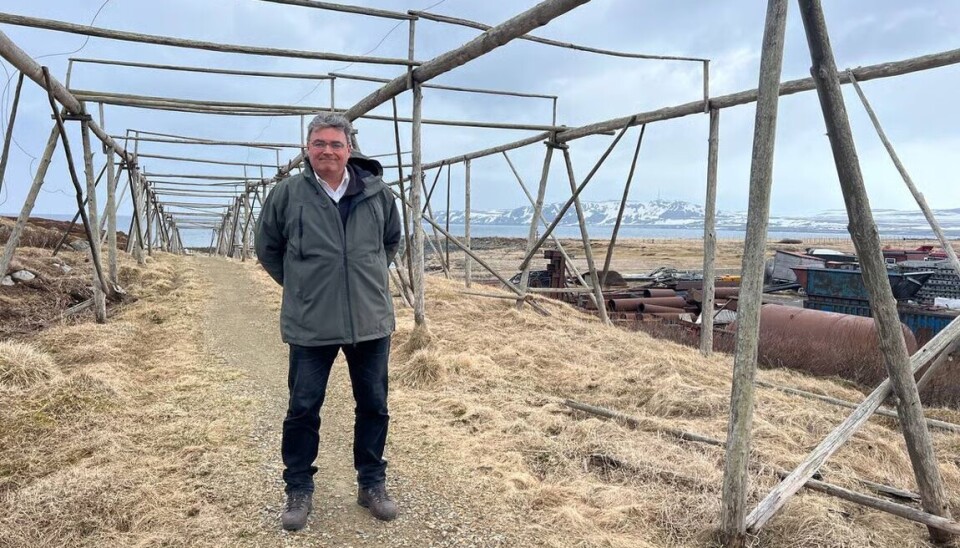


Remi Strand. Photo: Ирина Кравцова

And so it happened. Remi came in 15 minutes:

"I always come when I'm called to talk about Russian-Norwegian relations. I love this story."

I introduced myself as a journalist, and Strand began to passionately tell me (there were no more visitors in the museum) about the history of the 'Russian and Norwegian Pomors'. Unlike many Norwegian historians who claim that it is incorrect to call Norwegians 'Pomors', Remi believes it is quite correct. He also calls himself a Pomor. In general, he believes that 'everyone who lives in Vardø is a Pomor' because they live by the sea.

Strand explains that the Russian Pomors in the 18th century even invented their own language: a mixture of Russian and Norwegian. Portraying for me a Norwegian Pomor negotiating with a Russian, he says in Russian with a Norwegian accent: 'Hello, old friend. No, it's expensive, it needs to be cheaper'.

After the tour, Remi suggests a walk to the Orthodox cross that the Russians installed in Vardø in 2011 'in memory of Russian people (presumably Pomors or seasonal workers) who died on this land from 1700 to 1920'. 'Due to their Orthodox faith, they found their final resting place here, not in a cemetery, as they could not be buried in consecrated Lutheran ground,' reads the inscription on the memorial next to the cross. As soon as I finish reading it, Remi Strand hands me a medal prepared by the FSB veterans' organisation 'Shield' and puts it around my neck. The medal depicts a cross, with inscriptions on the side: 'Pomor pilgrimage', 'Arkhangelsk, Vardø'.
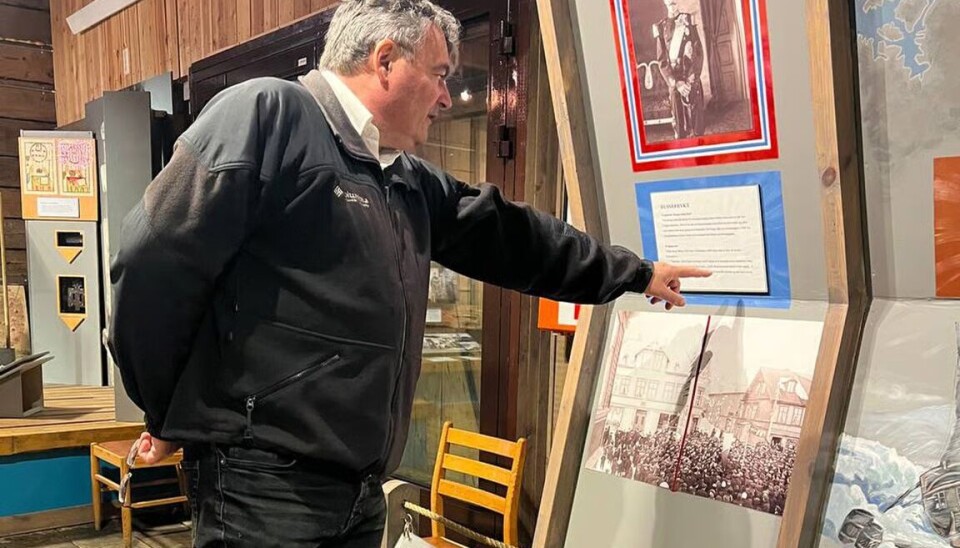

Remi conducting a tour at the Pomor Museum. Photo: Irina Kravtsova

At the beginning of 2017, the organisation 'Shield' held a three-day festival of patriotic cinema in Vardø and the neighbouring village of Kiberg. The audience was shown two Russian-produced films (prepared using materials from the 'Shield' foundation by LLC 'North-West Broadcasting') about the 'joint struggle of Soviet and Norwegian patriots' against the German Nazis. Following this event, a report was broadcast on TV21, stating that during the festival, viewers discussed the 'shame' associated with the fact that the partisans, 'who helped the Red Army defeat the Nazis in Finnmark', were not awarded medals by the Norwegian authorities for their military actions, but were instead declared spies.

Soon after, an 840-page book edited by Gennady Gurylyov was published, titled 'What the fjords are silent about'. It states: 'Forty-five years of silence about the defeat of the German troops in Finnmark by the Red Army and the liberation of the northern regions [of Norway] have had their effect: the population of the central and southern parts of Norway [during the Cold War] knew absolutely nothing about these important events. Therefore, the restoration of historical justice and truth is an extremely important part of the development of relations between Norway and Russia'.

In 2020, Remi Strand negotiated with the Finnmark police to bring a 25-tonne T-34 tank from Russia for the partisan history museum in the neighbouring town of Kiberg, near Vardø, in memory of the liberation of East Finnmark in 1944. Experts from the University of Tromsø argued at the time that "the T-34 has no connection to partisan operations in Finnmark," but for Russia, "the display of the T-34 in a Norwegian museum would be a colossal propaganda victory." Strand's plan was not realised: the Finnmark county police stated that the project would violate the Norwegian law on the import of firearms.

I ask Remi Strand if his trust in his Russian allies has weakened after Russia's full-scale invasion of Ukraine in 2022.

"There is currently a serious debate on this issue in Vardø," Strand replies. "Our mayor believes that Russian monuments legitimise Russian aggression in Ukraine. However, I think our task is to continue preserving history and memory, and politics should remain separate. In communication with Russian colleagues, I avoid the topic of the war in Ukraine. We do not talk about politics, we talk about history."
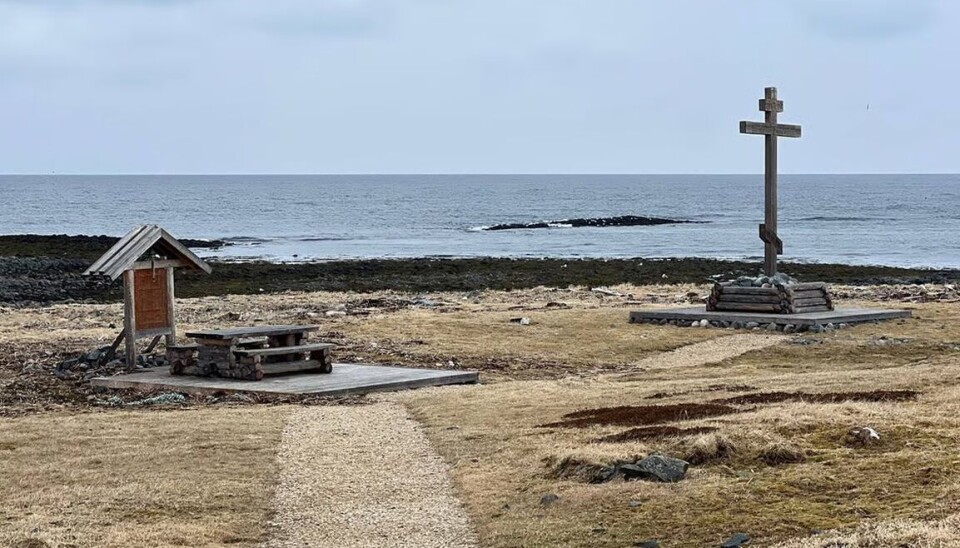


Orthodox cross installed with Russian partners in Vardø. Photo: Irina Kravtsova

Despite the strained relations between the countries, Strand continues to travel to Russia. This year, he celebrated Victory Day on May 9 in Murmansk, 'because in Russia this holiday is celebrated more widely than in Norway.' While in Norway, the liberation from five years of Nazi occupation is celebrated on May 8. Strand was also invited 'to an informal meeting with friends' at the city art library, under the cameras of the Vesti TV programme reporters. There, during a discussion on 'the exceptional importance of preserving historical memory on both sides of the border', Remi Strand shared his joy with his Russian comrades: 'Speaking of our town Vardø, the authorities wanted to demolish the partisan monument. But we, the residents of Vardø, defended this monument. It stands where it stood, in Kiberg, a small village not far from Vardø.


Almost every family had someone who fought against the fascists, who died. Unfortunately, families do not know where their relatives' graves are. Therefore, this memorial is the only place where these families can come and pay their respect.

Remi Strand

"There are no legal restrictions in Norway that would prevent private individuals from communicating or even cooperating with Russia," says Mayor Labahå. "However, Remi is an elected representative of the Vardø municipality, and in my opinion, from an ethical point of view, he should not maintain such ties. This, of course, could be used by the Russian authorities for their propaganda purposes, as his trips to Russia as an elected official could be presented as a form of legitimacy or political support."

Chapter five, in which

freedom must be fought for

"Russia is trying to increase the sense of distance and distrust between Oslo and northern Norway," says Mayor Labahå. "They do this by emphasising that the north is in a state of neglect, Oslo does not care about the local population, and that Russia is a 'natural partner' for the region. Their propaganda is dangerous because it exploits real discontent in the north but distorts it to suit Moscow's political interests. In reality, the Norwegian government and parliament have their own strategy for action in the far north, which is aimed at supporting the growth and development of municipalities in northern Norway."

Of course, there can be discussions about priorities, but the idea of a deep divide between the North and the South is incorrect — this is what Russia is trying to impose for its own purposes.

Mayor of Vardø Tor-Erik Labahå

According to Labahå, although cross-border 'memory tours' officially ceased after Russia's full-scale invasion of Ukraine in February 2022, in practice, Russian representatives did not stop spreading propaganda in Norway after that — they just changed the form.

"The Russian consulate in Kirkenes continues to sow division in our society, using ceremonies at monuments to Soviet soldiers and various meetings with local residents to influence their opinion," says the mayor.

The chief of police of Finnmark, Ellen Katrine Hætta, confirms to me that since the start of the full-scale war, "delegations of even more impressive sizes than before have started coming to Russian military monuments in Norway with flowers." However, Hætta does not know exactly who these delegations consist of:

"They come to Norway legally, so it is not easy for us to request information about them."

The Finnmark police does not make any attempts to hinder the Russians. "That's how democracy works," Hetta explains.
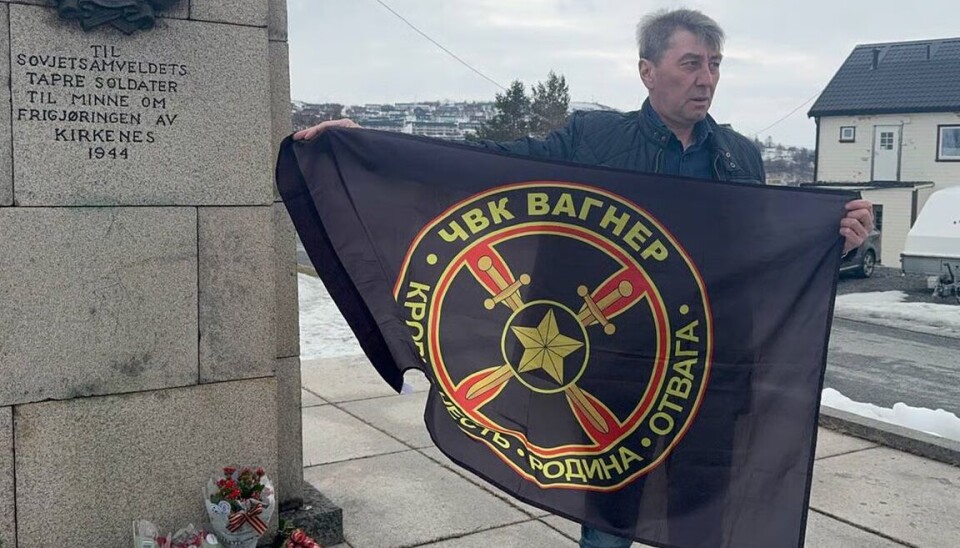
Sergei Korataev in Kirkenes, May 9, 2025. Photo: Olesia Krivtsova

I witnessed this principle myself at the May 9 celebration in Kirkenes this year. The first to come to the monument to Soviet soldiers that morning was a tipsy man named Sergei Korataev. First, he unfurled a Russian flag covered with signatures of Russian soldiers currently fighting in Ukraine. Then he handed me his mobile phone and asked me to record a video of him on it.

On camera, he congratulated the Russian military on Victory Day and thanked them 'for everything they do'. Then the man took out another flag — with the Wagner PMC symbol — and asked to record his congratulations and wishes for a speedy return for them as well.

None of this attracted any attention from the local residents, and the police was not present at the event at all. Employees of the Russian Consulate General laid flowers and wreaths near the monument. Soon, the Russian Consul General in Kirkenes, Nikolai Konygin, arrived, gave a speech about the decisive role of Soviet soldiers in the liberation of Eastern Finnmark, after which everyone stood under Soviet songs in honour of Victory Day and dispersed.

In the 2017 issue of the FSB magazine 'For and Against', it states that Norway is 'almost the only' NATO country bordering Russia 'where, alongside the Russian Federation, they truly honour the memory of our Great Patriotic War, of those who defeated fascism'. 'There are many examples of this: the large number of monuments in Norway, museums, and regular bilateral meetings of various delegations timed to commemorate war dates, usually in May and October,' writes the article's author.

As of 2024, Norway ranks first among all UN countries in the democracy index, while Russia is at the very bottom of this list.

"Norwegians, with such a high degree of freedom, may find it difficult to understand that the Kremlin subordinates all aspects of what happens in the country to its goals, especially the activities of the Russian Orthodox Church as a government tool," says Inger Lene Nyttingnes. "This is why the ideas of building an Orthodox chapel and conducting historical 'memory tours' initially gained trust and support in the local municipality — we were not prepared for the fact that propaganda could also be conducted through such things. But Russian officials know how to do this. The danger for Norway is this: when small local communities are fed disinformation, it can affect political sentiments within them. This, in turn, can directly influence the decisions made in the town council. When facts are mixed with interpretation, and conclusions are drawn based on feelings, our local society can become vulnerable. It is important that decisions are made based on critical reflection of historical truths."
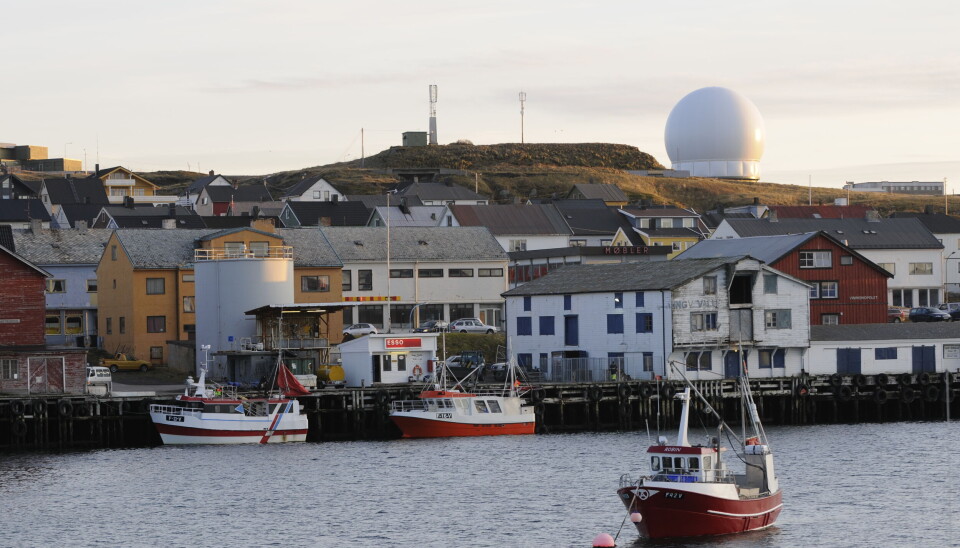


The town of Vardø. Photo: Thomas Nilsen

In 2023, the Vardø town council annulled its friendship agreement with Arkhangelsk due to the 'ongoing aggressive war and violations of international law committed by Russia in Ukraine'. In August 2024, Labahå stated that he was in favour of demolishing the monuments to Norwegian partisans erected by Russia, as, looking back, he saw insincerity in its actions. Russian foreign ministry spokesperson Maria Zakharova accused the Norwegian mayor of adhering to Nazi ideology for this. However, Labahå's desire to remove the two Russian monuments to partisans was ultimately not realised. In Norway, a mayor cannot decide this alone, and his intention did not receive the necessary support in Finnmark.

Despite concerns about the infiltration of Russian propaganda into the field of history, museum staff cannot prohibit Russians from spreading it. But they do everything they can to hinder them. Moreover, museums in Norway are not considered neutral institutions.

"Our duties include spreading democratic values and a high level of reflection," says Nyttingnes. "We want to ensure that research-based knowledge and reliable facts are the foundation for discussions and decision-making in the local community. We now have knowledge that we did not have ten years ago. In particular, we now see: the motives of the Russian side turned out not to be as good as we believed in 2011.
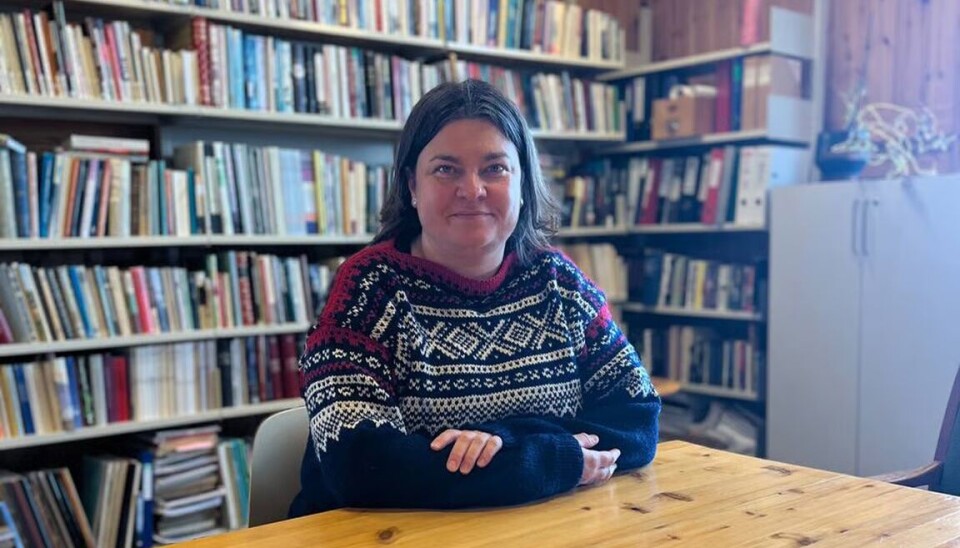

Head of department at the Vardø Historical Museum Inger Lene Nyttingnes. Photo: Irina Kravtsova

In January 2024, at the historical museum in Vardø, where Nyttingnes works, a discussion was broadcast about the narratives 'imposed on Norway by Russia'. In September of the same year, the museum invited history professors Kari Aga Myklebost and Stian Bones to give presentations on their research on this topic. After the scholars' presentations, a discussion took place in the museum. Not many people watched the broadcast, but about 70 townspeople attended the event with the professors.

"It was a good discussion between locals with different views, the mayor, and scholars," continues Inger Lene. "Democracy is something we must work for, it does not come by itself. Freedom of speech and the press, the right to choose our leaders, civil rights, the right to love whom you love, the right to education and to create your own identity — these are things that someone once fought for."

Activist Remi Strand ignored both of these events.
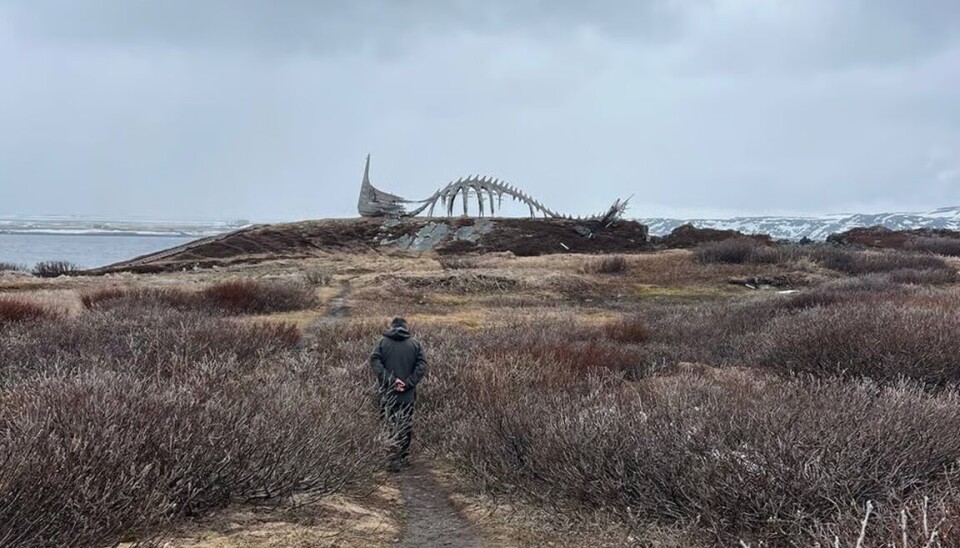

Remi Strand on the way to the Drakkar-Leviathan art object, built by Russians near Vardø. Photo: Irina Kravtsova
Remembering the repression of the Stalin era in Russia, returning the human dimension to the deaths

The Barents Observer spoke with five people who took part in the “Returning the Names” event abroad. All of them turned out to be descendants of the repressed, and four of them are themselves victims of repression — of the modern era. We are publishing their stories and the names they read


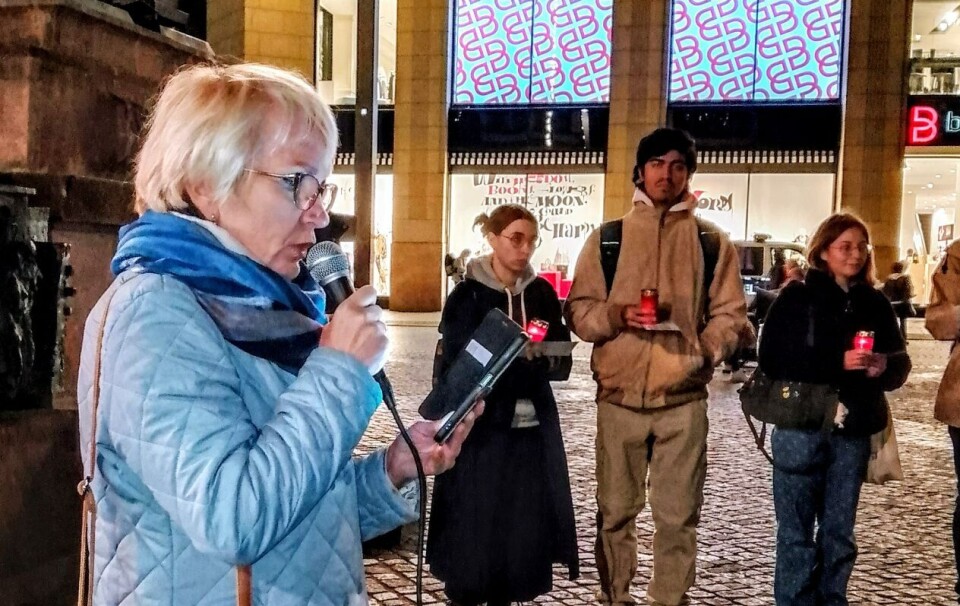
"Returning the names" Action in Turku, Finland. Photo provided by a participant at the event

THE BARENTS OBSERVER


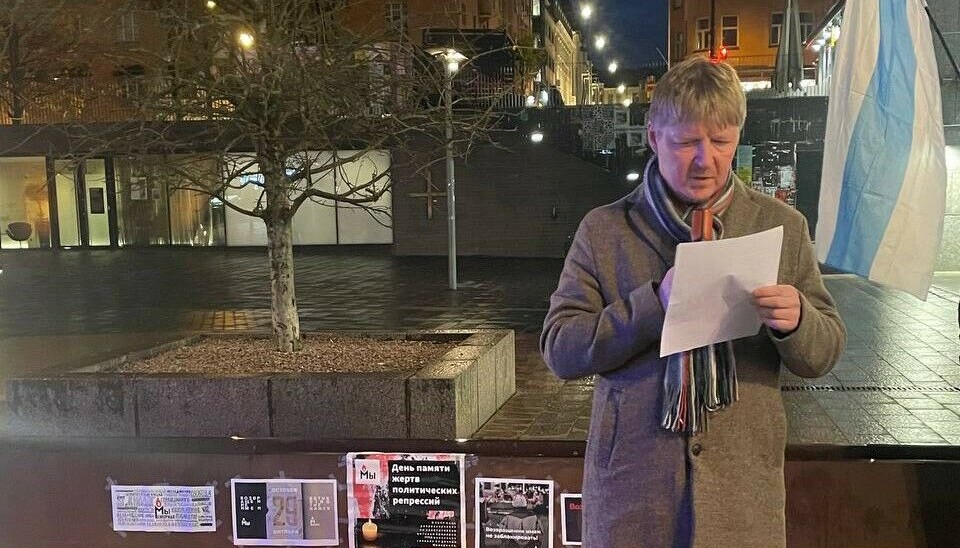
On October 29, all over the world, a memorial event for the victims of political terror, “Returning the Names,” took place. The names of the repressed — including those being repressed today — were read aloud in European cities, on both American continents, in Asian countries, and in Australia. And, of course, in Russia, where people remembered the victims of terror despite the opposition of officials and security forces.

The Barents Observer spoke with five participants of the “Returning the Names” event who are now living outside of Russia. The Russian state "awarded" one of our heroes with the title of a foreign agent when he left the country. Another heroine is facing threats from former countrymen. Only one of our interlocutors left the country of his own free will.
“Our times are always ‘like that’”

Elena, Tbilisi (name changed at the request of the heroine). Left Russia for ideological reasons in the autumn of 2022.

You asked about what I feel. Somehow I couldn’t admit it to myself, but probably it’s… it’s a feeling of guilt. Guilt because I still haven’t properly studied this history.

In our family no one talked about the fact that there was a repressed person in our family. And even now they don’t talk about it. But my grandmother mentioned in passing that her father was taken away in 1937 because of a denunciation, and after that his fate was unknown. Grandmother couldn’t remember his patronymic, age, place of birth — all this is unknown. But the fact that he was taken away in 1937 — that’s for sure; grandmother was five years old then.

The family did not search for him, they couldn’t. They themselves had fled from the civil war in Latvia and, as grandmother says, they kept their heads down, lower than the grass, quieter than the water. In general, many things were not spoken about in the family.

Many participants of the “Returning the Names” event include the names of their relatives in the lists they read. But I can’t even do that, because I know almost nothing. When I became interested, it was already the beginning of the full-scale war, and “Memorial” was closed, and when I decided that I had to dig something up, I no longer understood where to turn and how to search at all.

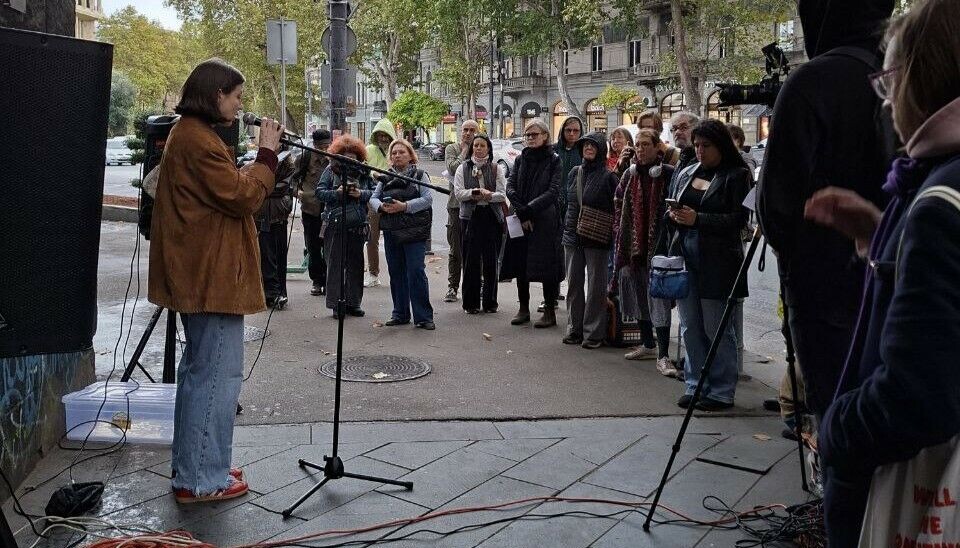
"Return of Names" in Tbilisi. Photo sent by a Barents Observer reader

So I read the names of people unknown to me. And it’s good that at least some names are known. And I really believe that it’s important — to name them.

My great-grandmother fled from the war, but never found a homeland for herself. They lived modestly, hiding, in fear. And now I myself feel like an exile. In Russia now there are people who are being killed in prisons. All this has come back because we, as a society, lacked openness and honesty. Because the people in power remained the same. My mother says about Stalin’s repressions: “That’s just what those times were like.” I disagree. Our times are always “like that.”

Names returned by Elena:

Andrey Ivanovich Ionin. 33 years old. Born in the village of Shatrovo, Kurgan Region. Exiled. Senior motor operator of the power station of the municipal utilities. Shot on September 19, 1937, in Khanty-Mansiysk.

Mikhail Leonovich Vishnevsky. 44 years old. Born in the village of Lutchino, Lepel District of the Byelorussian Soviet Socialist Republic. Peasant individual farmer. Shot on February 20, 1938, in Minsk.

“Stalin ate him”

Alexey Duplyakov, Turku. Born in the Moscow region, received political asylum in Finland. While living in Russia, he took part in the protest movement, was a member of the “Yabloko” party. He left Russia after of the mobilization. In 2024 he organized the “Returning the Names” event in Rovaniemi, the capital of Lapland. This year he became the organizer of the event in the city of Turku in the southwest part of Finland.

My own great-grandfather was a barely literate peasant in a Ukrainian village. They had a community of Old Believers in the Zhytomyr region. And no one knows why he was shot.

I found out about this rather by chance. At some point, I realized that my grandmother never said anything at all about her family, about her childhood, never mentioned her parents. And all I managed to get out of her was that she remembered her father poorly, because Stalin ate him. That was her exact phrase.

I learned about my great-grandfather’s fate a few years ago: I went to study the “Memorial” database and stumbled upon his surname. I know about him that he was a laborer. He was accused of anti-revolutionary propaganda and shot by a troika verdict in the fall of 1937. We can only guess: perhaps they could have been repressed for their faith, for some offhand remark — but no one knows for sure.

All that is left of my great-grandfather is a brief summary in the archives. He was taken away at the end of 1937, when my grandmother was 5–6 years old at that time, and she apparently really remembered very little about her father. But the fear that settled in the family was so deep that even decades later they did not speak about it.

It was not even part of our family’s memory; there simply was no such person. But inside them something clearly was going on, and one can only guess what exactly. And when I think about how hard it is for me, I try to think about how hard it was for them, for my family.

On February 24, 2022, I woke up with the understanding that the country had changed. That is, everything we were doing already made no sense under conditions of a real war.

In the first days, I took part in protests against the so-called special military operation. I practically didn’t sleep for several days; everything merged into one big protest… In the end, I was detained; a protocol was drawn up for participation in a rally. For me, this was not the first such fine, but this time something changed. The district policeman came and said that now it was wartime, and if you get caught somewhere again, we’ll be talking to you in a different way.

Alexey Duplyakov. Photo private

We are already at the stage when people are being imprisoned for songs, when for a like on the internet one can easily get a real prison term. And if history is being allowed to repeat itself, if repression has returned, then the memory of these events and their victims must also return. And it must be some kind of institutionalized memory that would be a guarantee that this time we will not let those who conduct and organize these repressions escape responsibility.

And I think it is very important to talk about history right now: what we can influence is precisely the work we do with our memory, with our legacy.

You read these names and realize — this person worked at a factory, and when he died he was 28 years old, he was younger than you are now… This can be felt, lived through again — and set to oppose to the dehumanization that the state is imposing on us.

There is a famous phrase: “The death of one person is a tragedy, the death of millions is a statistic.” We live in a time of war, every day we read in the news how another Russian missile hit another house in Ukraine, and people died there, and this just becomes a number. “Returning the Names” is an attempt to return the human dimension to the deaths — and to repressions in general. There was someone who suffered this fate, and then they were gone — simply because someone wanted it to happen.

Names returned by Alexey Duplyakov:


Alexey’s great-grandfather – Surnov Artem Zotovich. Born in 1894, in the village of Zhabche, Iskorostskaya Volost, Ovruchsky Uyezd, Volyn Governorate. Russian, semi-literate, worker at a military construction site. Lived in the village of Zhabche of the Korosten City Council, Zhytomyr Region. Arrested on October 23, 1937. Accused of anti-revolutionary agitation. By the decision of the troika of the NKVD Directorate for Zhytomyr Region of November 14, 1937, he was shot on November 22, 1937, in Zhytomyr. Rehabilitated in 1961.

Alexey Ivanovich Andrianov. 60 years old. Born in the village of Kuritsko, Novgorod District, Leningrad Region. Peasant. Shot on March 12, 1938, in Leningrad.

Satyk Aptrakmanovich Chumakov. 59 years old. Born in the village of Kugaily, Omsk Governorate. Peasant individual farmer. Shot on September 23, 1937, in Omsk.

Yakov Stepanovich Mikhaylenko. 50 years old. Born in Poltava Governorate. Manager of the "Skotoimport" office in Biysk. Shot on March 27, 1938, in Biysk.

Vladimir Stepanovich Korenevsky. 36 years old. Born in the village of Gatovo, Minsk District. Head of the economic department in the collective farm "Zaozerye". Shot on March 15, 1938, in Minsk.

Ivan Dmitrievich Simonov. 63 years old. Born in the city of Tobolsk. Master of the Tyumen brewery. Shot on March 21, 1938, in Tyumen.

Akim Kalistratovich Gorlov. 37 years old. Born in the village of Ingulka, Mykolaiv Region. Chief of the first remote track section at the Sevastopol station of the Stalin Railway. Shot on October 25, 1938, in Dnipropetrovsk.

Ivan Grigoryevich Blagovidov. 45 years old. Born in the village of Shingau, Maloserdobinsky District, Lower Volga Territory. Priest. Shot on March 2, 1930, in Atkarsk.

Ignaty Vikentyevich Zhilinsky. 48 years old. Born in the village of Berezovka, Berezinsky District, Minsk Region. Collective farmer of the collective farm named after Schmidt. Shot on January 21, 1938, in Cherven.

Andrey Nikitovich Kozhukhovsky. 34 years old. Born in the village of Bateni, Chebakovskaya Volost, Minusinsk Uyezd, Yenisei Governorate. Wagon inspector at the station Son. Shot on August 15, 1938, in Achinsk.

“With their own deaths they paid for my right to speak freely”

Valery Potashov, Leipzig. Journalist in exile. He left Russia after his home was searched a second time, during which handcuffs were put on him. As he was crossing the Lithuanian border, he received the status of a foreign agent from the Russian Ministry of Justice. He now lives in Germany on a humanitarian visa.

Most people know the names of famous people that were repressed — directors, actors, priests. But behind them there are hundreds of thousands who almost no one remembers today. After all, the goal of repression is to grind a person into powder, into camp dust; and the meaning of this event today is precisely to pronounce these names, to return them.

For me, for the past ten years, this event has been an act of solidarity with those who today resist the revival of the NKVD. We went out to the streets with posters in support of Yury Dmitriev [who investigated Stalinist represssions], stating “No to the revival of the NKVD.” And some passers-by asked — what kind of revival are you talking about? Well, today we have it in its pure form. When street musicians are repeatedly arrested for performing songs by “foreign agents” — that’s exactly what it is.

I have been participating in the “Returning the Names” event for a long time. Before that, I used to go to Sandarmokh, to Krasny Bor. And, as a rule, at such memorial events I remember, first of all, my grandmother’s brothers — one was shot, and the other died in the Gulag. And second — my fellow villagers from the village of Shizhnya and the village of Luzhmavarakka, which no longer exists.

Just to understand the scale of repression, it’s enough to enter the surname “Kanshiev” into the “Memorial” database. And one can see that, for example, from the village of Shizhnya four people were convicted who have this surname and the same patronymic. Most likely, they were brothers. Two of them died in the Gulag almost immediately; perhaps they died of disease, or they were shot during the transportation of prisoners.


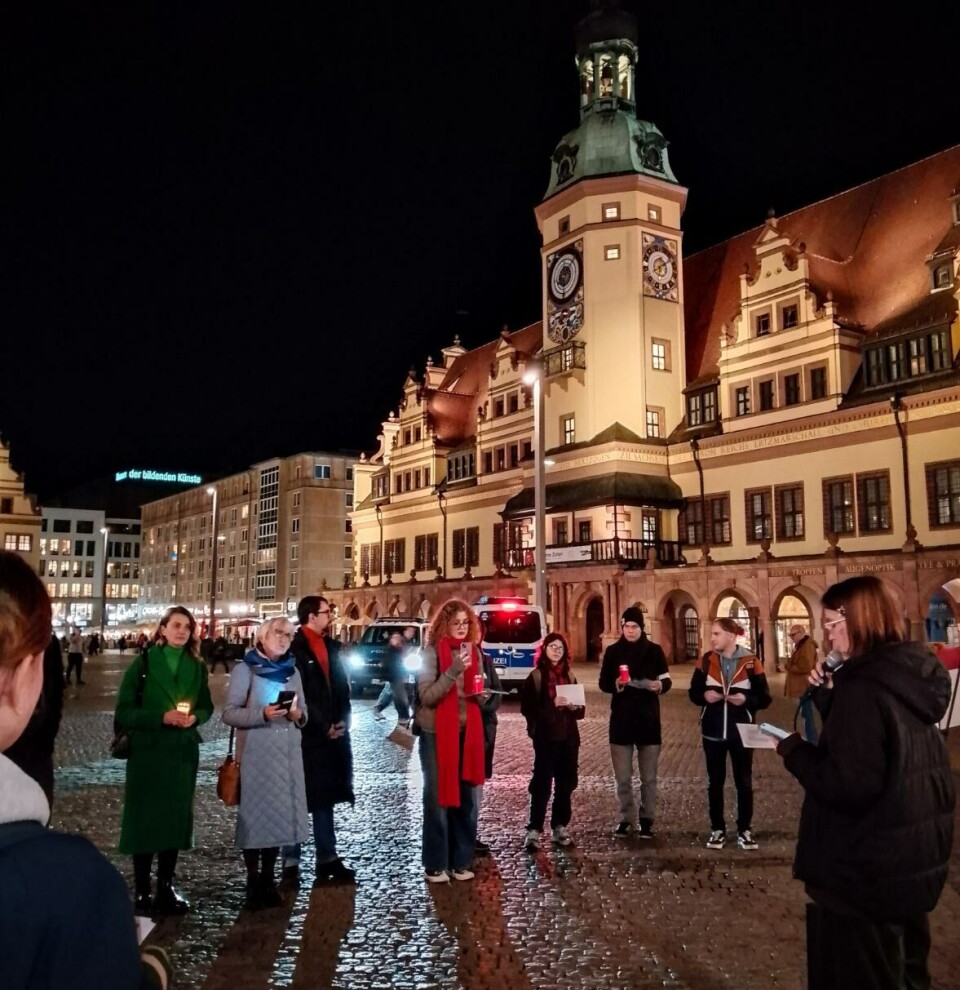
The "Returning the Names" in Leipzig. Photo: Valery Potashov

I believed that my grandmother’s brother Ivan, who was shot in Sandarmokh, and my grandmother’s brother Fyodor, who died in the camp, paid with their death for my right to speak freely. And literally until the summer of this year I was using this right; but the present state couldn’t care less about our rights and freedoms.

I believed that my grandmother’s brother Ivan, who was shot in Sandarmokh, and my grandmother’s brother Fyodor, who died in the camp, paid with their deaths for my right to speak freely. And literally until the summer of this year I was using this right; but our current state couldn’t care less about our rights and freedoms.

Our society has not yet digested the lesson that it was given in the previous century. And it is precisely for that reason that this lesson is now being repeated. How was Germany able to build a democratic society? Only because they lost the war and went through repentance. We have had no repentance, and that is why we will repeat this lesson again and again.

Names returned by Valery Potashov:


Suvorov Ivan Vasilievich, resident of the Pomor village of Shizhnya, sailor, shot by the NKVD on April 3, 1938, in Sandarmokh. Rehabilitated by the Prosecutor of Karelia on May 17, 1989.

Suvorov Fyodor Vasilievich, resident of the Pomor village of Shizhnya, sailor, died in Vorkutlag on July 1, 1944. Rehabilitated by the Supreme Court of Karelia on December 31, 1958.

Sobolev Alexander Alekseevich, resident of the Pomor village of Shizhnya, captain, shot by the NKVD on April 3, 1938, in Sandarmokh. Rehabilitated by the Supreme Court of Karelia on October 4, 1958.

Kanshiev Ivan Fyodorovich, resident of the Pomor village of Shizhnya, collective farmer, shot by the NKVD on March 17, 1938, in Sandarmokh. Rehabilitated on April 24, 1958, by the Military Tribunal of the Northern Military District.

Navagin Fyodor Alexandrovich, resident of the Pomor village of Shizhnya, fisherman, shot by the NKVD on April 3, 1938, in Sandarmokh. Rehabilitated on April 24, 1958, by the Military Tribunal of the Northern Military District.

Navagin Andrey Ivanovich, resident of the Pomor village of Shizhnya, fisherman, shot by the NKVD on March 6, 1938, in Sandarmokh. Rehabilitated on April 24, 1958, by the Military Tribunal of the Northern Military District.

Yelagin Ignaty Timofeevich, resident of the Karelian village of Luzhmavarakka, collective farmer, shot by the NKVD on March 17, 1938, in Sandarmokh. Rehabilitated on February 13, 1960, by the Military Tribunal of the Northern Military District.

Yelagin Ivan Ignatyevich, resident of the Karelian village of Luzhmavarakka, collective farmer, shot by the NKVD on February 20, 1938, in Sandarmokh. Rehabilitated by the Military Tribunal of the Northern Military District on February 13, 1960.

Yelagin Ivan Vakhromeevich, resident of the Karelian village of Luzhmavarakka, collective farmer, shot by the NKVD on May 8, 1938, in the vicinity of Petrozavodsk. Rehabilitated by the Prosecutor of Karelia on May 17, 1989.

“Now it turns out that my descendants will have something to study in my biography too”

Irina Nippolainen, Leipzig. Originally from Karelia, is living in Germany on a humanitarian visa. She left the country after a search that took place at her home and at her friend’s place.

I am being threatened in my homeland. One businessman wrote that he would not let me live in peace if I return. Some woman was very indignant that I am receiving a Russian pension and very strongly wished that it would be taken away from me. But once I wrote on social networks that as soon as the regime changes, I will return on the first flight. And one of my students (I worked at school for 20 years) replied with malice: “That means you will never return.” That is, this is the classic story about “enemies of the people.”

It’s such a collapse, there is such disappointment in people. And now I am in despair, because I see no sense in anything at all; but repression is something the whole world must remember, it has to be hammered into every person’s head.

Of course, I consider myself repressed. If we had stayed, there would have been both a trial and a sentence. When I was studying genealogy, I looked into the history of my ancestors, and I thought: “Well, just look at what kind of life they had…” That was in the early 2000s. And now it turns out that my descendants will have something to study in my biography, too,.

I found a lot of information about repressed ancestors; those are the names I read aloud at the recent event. While living in Karelia, I went to Sandarmokh; there I met Yury Dmitriev — and there, in Sandarmokh, the brother of my great-grandmother was killed. This is the story of my family.

My mother’s grandfather refused to join the collective farm when collectivization happened. So he was labelleda kulak, given ten years in the camps; I still don’t know where he died. His wife was taken to a camp for wives of enemies of the people; after the war she was released.

And I found another great-grandfather on the website “Returned Names.” And I literally got goosebumps, because my father didn’t know that he had been shot. I made an inquiry, and the FSB sent many documents about my relatives. And when you see this word — “shot” — it really sends chills down your spine.

Irina Nippolainen. Photo: Valery Potashov

One of the documents was signed personally by my great-grandfather; and his handwriting is just like my father’s! My great-grandfather was 60 years old; he had three children, including one still a minor. And when I went to Sandarmokh and saw the execution pits, I imagined how he, an innocent man, was simply taken and killed.

One cannot fail to remember this — it’s simply impossible. People who don’t know about this are now restoring monuments to Stalin, you understand? The whole country needs learn about it. And history must not be distorted, as they are trying to do now with Sandarmokh.

Now I feel a lot of pain and fear fear due to the fact that this is repeating, that people have not learned the lessons. Well, the archives are open, this has been spoken about, written about, right? One would like to think that we, as a civilization, are moving forward. But it seems to me that this country will just keep going around in circles. No conclusions have been reached, and the crowd again rushes with accusations of “foreign agents” and the “fifth column.”

Names returned by Irina Nippolainen:


Irina’s paternal great-grandfather – Kalinin Konstantin Timofeevich, born in 1878, born in the village of Rugozero, Rugozersky District, where he also resided; Karelian; non-party; collective farmer. Arrested on April 5, 1938. By the Special Troika of the NKVD of the Karelian ASSR on September 22, 1938, sentenced under Article 58-2-6. Shot on October 8, 1938, in the vicinity of Petrozavodsk.

Brother of Irina’s great-grandmother – Guzhiev Mikhail Gerasimovich, born in 1888, born in the village of Kompakovo, Tungudsky District; Karelian; non-party; forester. Arrested on December 15, 1937. Accused under Article 58-2-6-11. Sentenced on January 12, 1938, by the NKVD of the USSR. Sentence: 10 years. Died in the camp on August 22, 1944.

Brother of Irina’s great-grandmother – Guzhiev Stepan Gerasimovich, born in 1893; born in the village of Kelyavaraka, Tungudsky District; Karelian; non-party; chairman of a collective farm. Arrested on February 17, 1938. Accused under Article 58-1a-2-6-10-11. Sentenced on March 5, 1938, by the Troika of the NKVD of the Karelian ASSR. Shot on March 17, 1938. Place of execution: Medvezhya Gora station (Sandarmokh).

Irina’s maternal great-grandfather – Komarov Andrey Yefimovich, born in 1891; born in the village of Skreppleva Gorushka, Novgorod Region; Russian; literate; non-party. Worked in a logging enterprise, lived in the village of Skreppleva Gorushka. Arrested on August 16, 1937. Sentenced to 10 years in camps. Did not return from the camp.

Brother of Irina’s great-grandfather – Komarov Vladimir Yefimovich, born in 1904; born in the village of Skreppleva Gorushka, Novgorod Region; Russian; literate; non-party. Worker at the "Krasny Keramik" factory, lived in the village of Skreppleva Gorushka. Arrested on November 20, 1937. Sentenced to 8 years in camps.

Irina’s maternal great-grandmother – Komarova Maria Nilovna, lived in the village of Skreppleva Gorushka, Novgorod Region. Sentenced in 1937 as the wife of an enemy of the people, returned from the camp after the war.

Brother of Irina’s great-grandmother on her father’s side – Yepifanov Yeremey Semyonovich, born in 1883. Born in the village of Malaya Tiksha, Rugozersky District, Karelia, where he also resided; Karelian; non-party; collective farmer. Arrested on November 24, 1937. Sentenced by the NKVD and Prosecutor’s Office Commission of the USSR on December 20, 1937, under Article 58-2-6-10. Shot on January 1, 1938, near the village of Rugozero.

Nephew of Irina’s great-grandmother – Yepifanov Fyodor Yeremeyevich, born in 1907. Born in the village of Malaya Tiksha, Rugozersky District, Karelia; Karelian; non-party; worker at a logging enterprise. Lived in the village of Rugozero, Rugozersky District. Arrested on November 24, 1937. Sentenced by the NKVD and Prosecutor’s Office Commission of the USSR on December 20, 1937, under Article 58-1a-2-10. Shot on January 1, 1938, near the village of Rugozero.

“Intimidate people and keep them under control”

Mikhail Kopotev, Helsinki. Linguist, works at the University of Helsinki. Originally from Karelia, he lives in Finland.

In 1943 the Finnish part of my family was exiled from Karelia to Siberia. My grandmother was pregnant with my mother, her labour began, and they were unloaded at a random station in the Urals — they didn’t make it to Siberia. But the rest of the relatives were taken further. Some kind people sheltered the small family, and that saved them.

By the way, I found out why, in fact, they were unloaded. My colleagues from the project “Echo of the Gulag” explained that this was a way for the convoy guards to control the level of mortality: it was more desirable to unload people who might not make it, so as not to spoil the statistics.

I left Russia in 1999. I clearly remember that I went back for the first election that Putin was in to vote against him. Many people were inspired by the young leader; for me, for example, it was enough that he spoke German. I don’t want to say that I predicted war — but for me his KGB past unambiguously outweighed all else. I had afeeling — “We don’t believe in this system.”

For those who are in power in Russia today, repression is an instrument they use whenever they need it. They needed to eliminate Politkovskaya to silence the tragedy in Chechnya — they eliminated Politkovskaya. And if in some situation they need to intimidate entire groups of people, they will do it.

The scale of Putin’s repressions is, after all, smaller than Stalin’s: back then there was a plan — a massive reshaping of society through the destruction of entire classes and the resettlement of peoples. But Putin, it seems to me, his idea is to intimidate people and keep them under control.

Mikhail Kopotev. Photo: Valery Klepkin

The format of the event — the reading of names — is a very clear prescription. We show the scale of the tragedy. You receive a sheet of paper, and it says there — “peasant, engineer, teacher”; and on it goes, flowing, flowing, flowing… And this shows very well how monstrously massive the repressions were!

My wife and I recently watched a film about the Holocaust. There is a dark spot in Finnish history — eight Jews were handed over to the Nazis — and recently a film was made on that subject. And we were reasoning: should Finns be endlessly reminded of this? And should Russians be reminded of the tragedy of repressions? After all, we don’t endlessly talk about events that happened, say, in the 5th century AD. Where is the boundary of our memory and responsibility?

And we came to the conclusion that if this danger remains in the structure of society, then one has to keep remembering it. Soviet history is our history. And if we feel that we are connected to a certain period of history, we must keep reminding ourselves of what was done in that period — of the successes, and of the terrible things.

There is a Harvard professor, Steven Pinker, who believes that over time the bloodthirstiness of societies is decreasing, and with each turn of history fewer people perish. If we speak about some foreseeable horizon, I am very pessimistic: I think Russia has been bogged down for decades in this semi-repressive, semi-dictatorial swamp. But in some long-term perspective, the wheel of history will pull all countries out of this swamp. Only, I’m afraid, this will not happen in our lifetime.

Names returned by Mikhail Kopotev:


Stepan Egorovich Egorov. 39 years old. Born in Borovichi. Former worker, inmate of the Borovichi prison. Shot on December 17, 1937, in Borovichi.
Weather above normal for 18 consecutive months

New temperature records in Norway and northern Russia suggest that this could be the warmest autumn in a century.


Green grass in front of the Barents Observer office in November 
Photo: Elizaveta Vereykina


Elizaveta Vereykina
Text and photo
5 November 2025 
- THE BARENTS OBSERVER


The Norwegian Meteorological Institute (MET) reported on Tuesday that never before has such a long period of above-normal temperatures been recorded. The temperature in October in Norway was almost two degrees higher than usual, making it the 18th consecutive month above normal.

As the researchers emphasise, the previous record was 15 consecutive months, from February 2014 to April 2015.

“We cannot explain the temperature rise without including the fact that there is also a human-made contribution”, climate researcher Jostein Mamen is quoted by MET.

"It's not normal for the global temperature to rise so quickly," meteorologist Patrick Stoll from the MET told the Barents Observer earlier, when his office reported about an exceptionally warm September in Tromsø, the Arctic capital of Norway.

October in Norway this year was the eighth warmest on record since measurements began in 1901.

Russian North

Meanwhile, temperature records were also set in Murmansk, the Russian Arctic capital and a port city. According to the Murmansk Department for Hydrometeorology and Environmental Monitoring, the climatic autumn, which ended in October, was the warmest in the last 90 years of observations.

"According to preliminary data, the average temperature exceeded the climatic norm by 3.3°C. The previous record for autumn temperature belonged to 2024. This year, both autumn months were very warm: in September, the air temperature exceeded the climatic norm by 3.6°C, and in October it exceeded it by 3.1°C," the Department reported.

“It should be noted that warm autumns are becoming commonplace for residents of the Murmansk region. Six of the ten highest autumn temperature readings were recorded in the 21st century,” the Russian scientists emphasised.

“With weather, you always get the coldest or the warmest days, - meteorologist Patrick Stoll told the Barents Observer earlier, - But, of course, there is also the general situation of the global temperature rising as more and more greenhouse gases accumulate in the atmosphere.”

Belousov: "Appropriate to begin immediate preparations for full-scale nuclear tests at Novaya Zemlya"

The Russian Defence Minister Andrei Belousov made it clear that the test site on the Arctic archipelago can be ready at short notice.


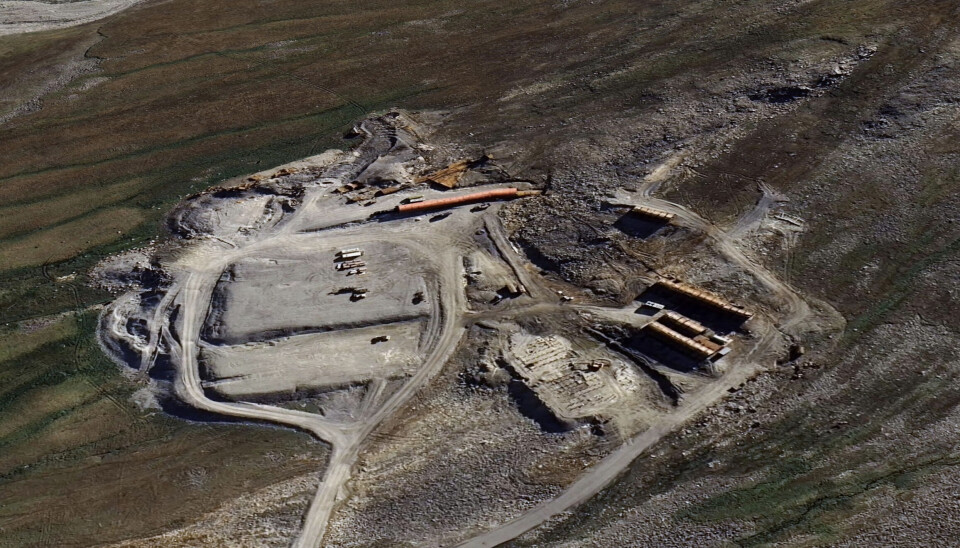
The 12th Chief Directorate (12 GU MO) in Russia's Ministry of Defense has been working on this tunnel complex at the nuclear test site at Novaya Zemlya for the last few years. The tunnels are some 5,5 kilometres south of Severny, a settlement on the shores of the Matockhin Strait. Satellite image by Google Earth


Thomas Nilsen
5 November 2025 - THE BARENTS OBSERVER


Satellite images from August 14 this year show activities at a tunnel complex five and a half kilometres south of Severny, the settlement at Russia's nuclear test site on Novaya Zemlya.

What is going on deep inside the tunnels is unclear.

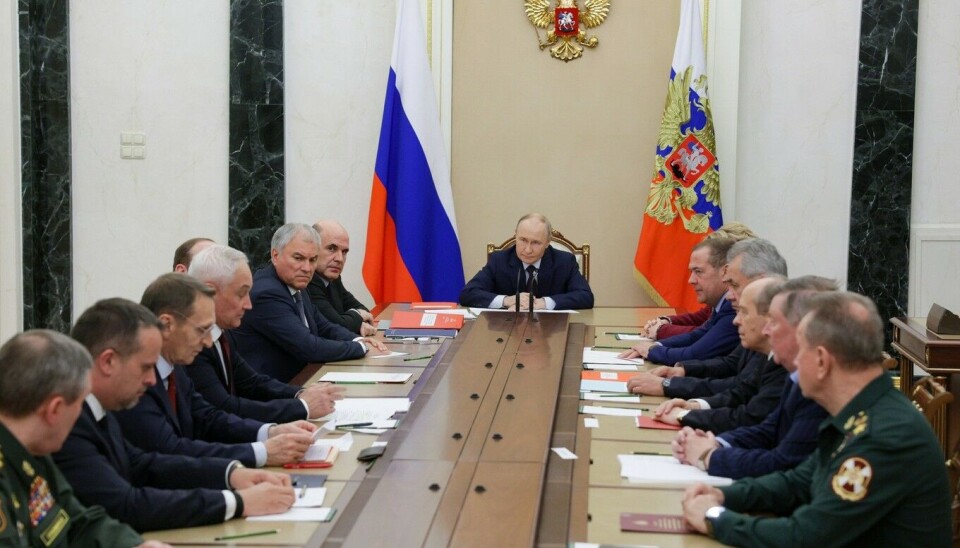
On Wednesday afternoon, November 5, Vladimir Putin held a meeting in the Kremlin with the permanent members of the Security Council.

"I am instructing the Ministry of Foreign Affairs, the Ministry of Defence of the Russian Federation, special services, and relevant civilian agencies to do everything possible to gather additional information on this issue, analyze it at the Security Council level, and submit approved proposals for the possible commencement of work on preparing for nuclear weapons tests," the dictator said after listening to input from members of the Security Council.


The Arctic has again become Moscow’s nuclear bluster playground

History is repeating itself.


Among them was Defence Minister Andrei Belousov, Secretary of the Council Sergei Shoigu, Director of the Foreign Intelligence Service Sergei Naryshkin and Chief of the General Staff of the Armed Forces Valery Gerasimov.

A transcript from Wednesday's meeting has been posted by the Kremlin.

"The fact that the American side has not provided an official explanation for President Trump's statement regarding the resumption of nuclear testing does not provide grounds to believe that the United States will not begin preparations for, and then conduct, nuclear tests in the near future," Gerasimov said pointing to what U.S. President Donald Trump said last week about U.S. needs to resume nuclear tests.

The U.S. President, however, did not mean full-scale nuclear tests, his Energy Secretary Chris Wright clarified later.

At the meeting in the Kremlin, Defence Minister Andrei Belousov said:

"I believe it is advisable to begin preparations for full-scale nuclear testing immediately. The readiness of the forces and assets at the Central Test Site on the Novaya Zemlya archipelago makes it possible for this to be carried out within a short timeframe."


Meeting in the Security Council on November 5. Photo: Kremlin

The last real nuclear bomb test at Novaya Zemlya took place on October 24, 1990.

More than 220 nuclear tests have been carried out at the Arctic archipelago since 1955, including the 50-megaton Tsar Bomba that was detonated on October 30, 1961.

Since the ban on atmospheric detonations was agreed, all nuclear tests after 1963 have taken place underground.

After the breakup of the Soviet Union, Russia has conducted numerous subcritical nuclear tests at Novaya Zemlya. The archipelago is also home to the test site for the infamous Burevestnik nuclear-powered missile currently under development.


Many tourism firms in Finnish Lapland violate labour laws, say union and hospitality association

Some companies illegally order foreign workers to attend weeks of training without pay – or even charge them for such orientation sessions, say industry insiders.


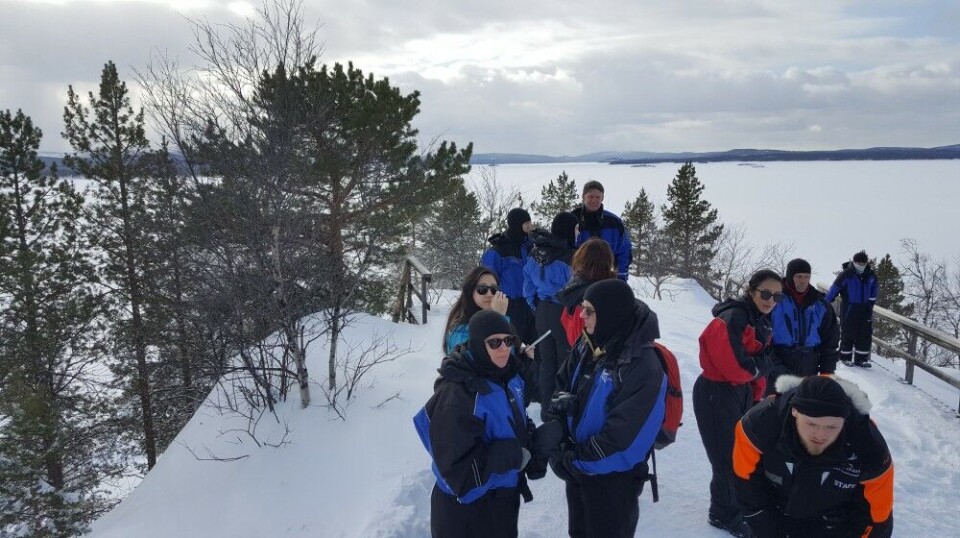
Tourists on the top of Ukonsaari in Lake Inari. Photo: Thomas Nilsen

YLE NewsPartner 
Content from Eye on the Arctic
11 November 2025 - 
THE BARENTS OBSERVER


The winter tourism season in Lapland is just beginning, but labour groups in the industry have already received dozens of reports of seasonal workers being misled in ways that violate collective agreements.

There are a growing number of firms operating in northern Finland’s tourism sector that disregard labour laws and general ethical standard in the industry, according to the Service Union United PAM and the Finnish Hospitality Association (MaRa).

For example, PAM says many employees have been illegally required by employers to take part in unpaid training sessions lasting up to several weeks – and in some cases even charged for them, according to Henna-Kaisa Turpeinen, the union’s regional manager for northern Finland.

“We know of about 100 employees who have participated in unpaid orientations this autumn. Most of them are of foreign origin,” Turpeinen says. She added that many have travelled here at their own expense from Europe or Asia and are unfamiliar with Finnish labour laws.

One Asian employee, for instance, had an employment contract starting in mid-October. However, she was told she had to arrive in Rovaniemi, the regional capital, two weeks earlier to participate in mandatory job training.

No salary was paid for these orientation days – on the contrary, she and other seasonal workers for the same company were billed by the company for attending them.

“At the time, I thought all employers here acted like this. I only heard later that wages should have been paid for the orientation period,” she tells Yle. Her employment contract also listed an hourly wage that was significantly lower than that set by the sector’s collective agreement.

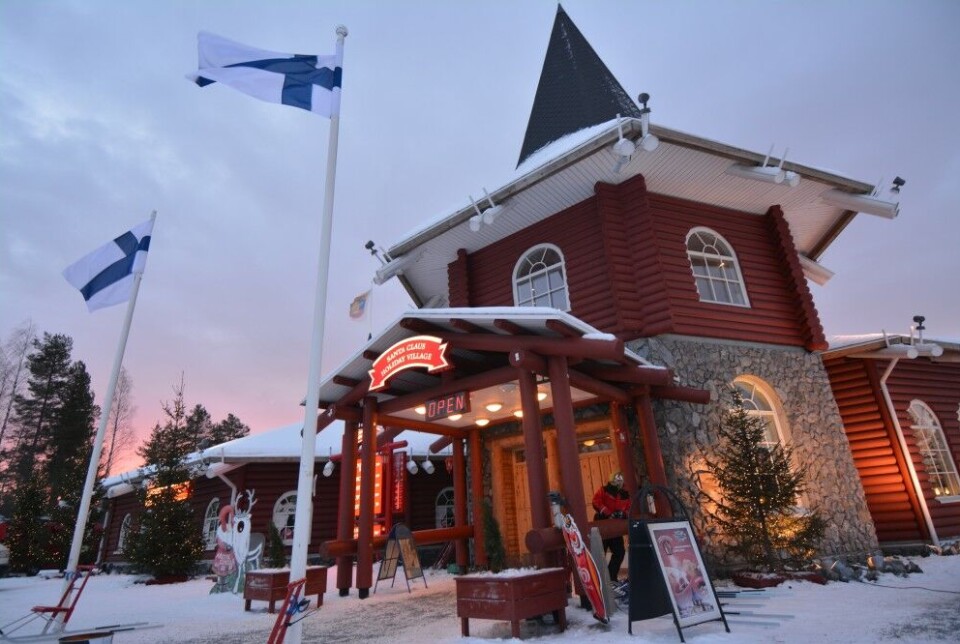
Santa Claus’ village north of Rovaniemi has more than half a million visitors per year. 
Photo: Thomas Nilsen


The wild, wild North

Turpeinen finds it worrying that the phenomenon of unpaid training, for example, reappears year after year, even though it is clearly illegal.

“This is not a new phenomenon, but this autumn has emerged exceptionally early. Usually, such cases only come to our attention at the end of the season,” she says.

Turpeinen notes that many workers plan their trips to work in Finland months ahead of time.

“Many employees have travelled a long way and expect everything to be okay,” she says. “But when you have to go without pay for two weeks straight, it’s a big shock for many.”

The Asian employee found another job, but the union is investigating her case. Her previous employer has received several warnings in recent years for violating collective agreements.

“No intention of following the law”

“The entire tourism industry in Lapland should not be stigmatised because of companies like this,” says Timo Lappi, CEO of the hospitality employers’ group, MaRa.

According to Lappi, there are hundreds of companies offering tourism services in the region but most of them do not belong to the employers’ organisation and don’t comply with collective agreements or labour legislation.

“It’s clear why such companies that deliberately break the law don’t want to belong to employers’ groups. They have no intention of following collective agreements, the law or our ethical code,” he asserts.

He further added that the bigger companies operating in the Lapland tourism sector do follow the law and they are members of MaRa, with the firms suspected of bending the rules making up a small minority.

--------------------------------------------

This story is posted on the Barents Observer as part of Eye on the Arctic, a collaborative partnership between public and private circumpolar media organizations.
news labour laws tourism lapland

Families of Kocani fire victims in North Macedonia march ahead of landmark trial

Families of Kocani fire victims in North Macedonia march ahead of landmark trial
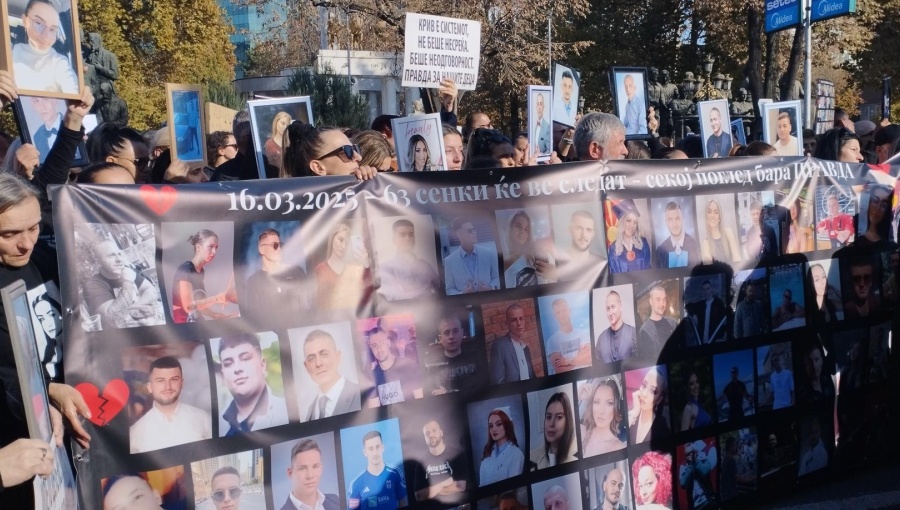
Hundreds of participants, dressed in black, held a massive banner displaying the faces of the victims. / Valentina Dimitrievska
By Valentina Dimitrievska in Skopje November 16, 2025

Four days before the defendants are due to go on trial over the catastrophic nightclub fire in North Macedonia’s town of Kocani, the families of the victims, attending a concert by the popular hip-hop duo DNK, marched once again through the streets of Skopje on November 15.

Their steps were slow, but their voices firm, carrying a message that has echoed for eight months: establish the truth, expose the failures and deliver justice.

At the protest in Skopje, hundreds of participants, dressed in black, held a massive banner displaying the faces of the victims.

The march began at Makedonija Square, moved toward parliament, and ended in front of the Criminal Court, where the trial is scheduled to begin on November 19. Citizens from Skopje also joined the procession, mingling silently among the grieving families.

In front of the parliament, Natalija Gjorgieska, the widow of singer Andrej Gjorgieski from DNK, addressed lawmakers. Andrej, 43 years old, died in the fire while trying to save the lives of his young fans.

Gjorgieska's voice trembled, but her message was clear: “A tragedy can happen to anyone and no one is safe if the institutions do not do their job.”

She demanded that MPs initiate an oversight hearing and create a special inquiry commission to launch an independent investigation into the disaster at the Pulse nightclub.

“Why were the institutions late? We demand that the truth be determined by a special inquiry commission,” she said in front of journalists.

“The investigation so far has been incomplete, without answers and unclear circumstances, and the truth is hidden. All facts should come to the surface and political and official responsibility should be found.”

To her, the Kocani fire represents a profound violation of the most fundamental human rights: the right to life, the right to safety and the right to timely and effective action by state institutions.

How a firetrap became a nightclub

As the families marched, their anger was rooted not only in grief but in the belief that the tragedy was preventable.

The fire, which broke out on March 16 inside the Pulse discotheque, claimed 63 lives — most of them young adults aged 16 to 24. Over 190 people were injured, many severely. It remains one of the deadliest tragedies in the country’s modern history, and for many, a symbol of deep systemic decline.

Most victims died on the spot, suffocated by toxic smoke or trapped amid the stampede triggered by the fast-spreading flames. A few fought for their lives for days or months afterward.

One of the final victims to succumb was Vladimir Blažev-Panco, a member of DNK. His death in mid-October, at the Sistina private hospital, came after seven months of agonising struggle.

His wife, Maja Blaževa, shared a heartbreaking message on Facebook after his passing.

“You were the ones who gave me seven months of the opportunity to hug and say everything we haven’t said to each other all our lives,” she wrote at the time, thanking the hospital staff who had become her “second home” during the ordeal.

The main reason for the public anger is the question: How did Pulse, a place that was unsafe and unsuitable, ever receive permission to operate as a nightclub?

The building that housed Pulse had previously been used as a carpet warehouse — a structure wholly unsuitable for mass gatherings, let alone loud concerts and pyrotechnic displays.

The facility had been approved only for light industry, not for catering or entertainment.

At 2:35 a.m., during the height of the performance, sparks from indoor pyrotechnics hit the club’s flammable ceiling, starting a fire that quickly spread as smoke filled the room. Chaos erupted in the overcrowded club, which was officially allowed to host about 500 people but may have held over 1,000.

With only one exit, panic turned into a stampede. People near the door tried to escape, while others were trapped or crushed, and many inhaled thick smoke before they could get out.

Interior Minister Pance Toškovski later confirmed a series of serious violations, including that Pulse was operating in an unsuitable building without emergency exits, using illegal pyrotechnics, lacking enough fire extinguishers and functioning without a valid safety permit.

Yet despite acknowledging these failures, Toškovski did not resign.

Prime Minister Hristijan Mickoski of rightwing VMRO-DPMNE, which returned to power in June 2024, went even further. He publicly characterised the event not merely as a tragedy, but as a “mass murder” driven by corruption, bribery and institutional indifference.

Current senior officials, however, placed responsibility on previous governments.

A crucial test for the judiciary

This court process is expected to be a defining moment for North Macedonia’s justice system, which suffers from chronically low public trust and accusations of political influence.

The indictment is extensive: 34 individuals and three legal entities, ranging from former ministers and mayors to inspectors, company officials and nightclub administrators. The scope underscores the depth of systemic dysfunction that may have contributed to the tragedy.

A group of six human rights organisations announced that it will monitor the proceedings closely, adding another layer of public scrutiny.

The indictment itself was filed on July 2, yet the court took until October 3 to fully approve it — longer than the actual investigation, an unprecedented delay by the judiciary.

State public prosecutor Ljupčo Kocevski confirmed that the case will be handled by around 15 prosecutors. Beyond the main criminal case, several parallel investigations are ongoing.

An inquiry involving 13 police officers has been moving more slowly than anticipated. Although originally expected to conclude by the end of September, a decision is now expected early next month due to delayed witness hearings, DW reported recently.

Meanwhile, a pre-investigation procedure is under way at the Basic Public Prosecutor’s Office in Kocani, examining officials in the Public Revenue Office.

These additional investigations highlight the tangled web of responsibilities — and failures — that may have enabled the Pulse nightclub to operate in such blatant violation of safety standards.

A country under EU scrutiny

The tragedy in Kocani was even highlighted in the EU’s latest progress report, which warned that corruption remains widespread and a matter of serious concern in North Macedonia, a candidate country since 2005.

The report stated that the March 2025 fire, which killed 63 people and injured more than 190, exposed deep and persistent problems in enforcing anti-corruption measures. It stressed that both prevention and effective punishment of corruption must be strengthened.

For many observers, the upcoming trial is not only about accountability for a single disaster. It is a test of whether North Macedonia can confront corruption, negligence and administrative collapse — issues that have long slowed its path toward EU accession.

Project 2029 poses a real threat to our democracy: We must act


13 November, 2025 
Left Foot Forward


The UK is waking up to the reality that the UK is also vulnerable to the equivalent of the US’s Project 2025


Trump’s first presidency was a half-hearted dry run at Orbánisation. His second is the real McCoy. The US’s experience of the last 10 months demonstrates that a government that chooses to ignore the normal rules of the game, circumvent its constitution and crash through democratic guardrails wields virtually limitless power and can overturn, astonishingly quickly, deeply entrenched democratic and human rights.

As the Financial Times’s US correspondent wrote: It took years for Viktor Orbán to consolidate strongman rule in Hungary. Trump is trying to pull off an equivalent system-change within months.

The scale of the democratic rout in the US is being documented in detail in the Trump Action Tracker created by Professor Christina Pagel. Strangely the tracker is not always accessible because it keeps getting reported as a dangerous webpage. It isn’t.

The UK is waking up to the reality that the UK is also vulnerable to the equivalent of the US’s Project 2025: the Heritage Foundation’s blueprint for the Trump administration. My organisation, Unlock Democracy, has christened the threat Project 2029.

Key elements of Project 2029 are starting to fall into place. And people are noticing. This is certainly true of Unlock Democracy supporters who are contributing generously to our annual Crowdfunder which focuses heavily on Project 2029.

It was reported on Sky that a new think tank, originally named Resolute 1850, has been set up with £1million in funding pledged. This Maga-style think tank will drive Project 2029. Its stated mission inter alia is to ‘foster stronger transatlantic relationships’. Unless it is going to be more open about its sources of funding than its likely stablemates, the ASI, the IEA, the Taxpayers’ Alliance and Policy Exchange, there will be little or no transparency over how much of its funding comes from abroad and the agenda of its donors.

An eco-system of supportive new media, social media and old media is already in place to support and amplify a Project 2029 agenda.

Echoes of the US Project 2025 already feature in the rhetoric of some of the UK’s political parties, for example:Reshaping government by expanding executive power
Rolling back civil liberties and minority rights
Dismantling the administrative state
Replacing non-partisan civil servants with political loyalists
Challenging academic independence

An incoming government, elected with fewer than 3 out of 10 votes but securing a comfortable working majority, would have no difficulty implementing Project 2029. It could overturn swathes of UK legislation without any serious resistance, including laws considered of a constitutional nature such as the Human Rights Act. Lord Hailsham’s ‘elective dictatorship’, 50 years after he first floated the danger, would become a reality.

Many of the UK institutions would also be at risk and their vulnerability to government interference should not be under-estimated. Professor Christina Pagel, Professor Martin McKee CBE and Luke Flynn have analysed the vulnerability of the UK’s scientific institutions to political interference in their paper, Strengthening the institutions: ensuring their effectiveness and independence. The report does not make reassuring reading.

The peril Project 2029 poses to UK democracy has prompted the 99% Organisation and Unlock Democracy to come together, with other experts, to work on a Defensive Constitutional Reform Report.

We will be publishing it soon. It lists the tactical steps that the UK government could take in the short to medium term to reduce the risk that the next election could be stolen by a group of powerful, uber rich overseas backers and minimise the damage Project 2029 could inflict on the British people after the next General Election. We will argue that Project 2029 could affect democracy and people’s well-being and security, on the scale of another pandemic or multiple natural disasters and requires a national preparedness strategy to alleviate its impact.

John F. Kennedy said that “Democracy is never a final achievement. It is a call to an untiring effort.”

We can only hope that the government realises this, acknowledges that Project 2029 represents a real threat to our democracy, and takes urgent steps to neutralise it.


Tom Brake is CEO of Unlock Democracy