Friday, November 21, 2025

Chinese Mining Stirs Up Anger In Zimbabwe


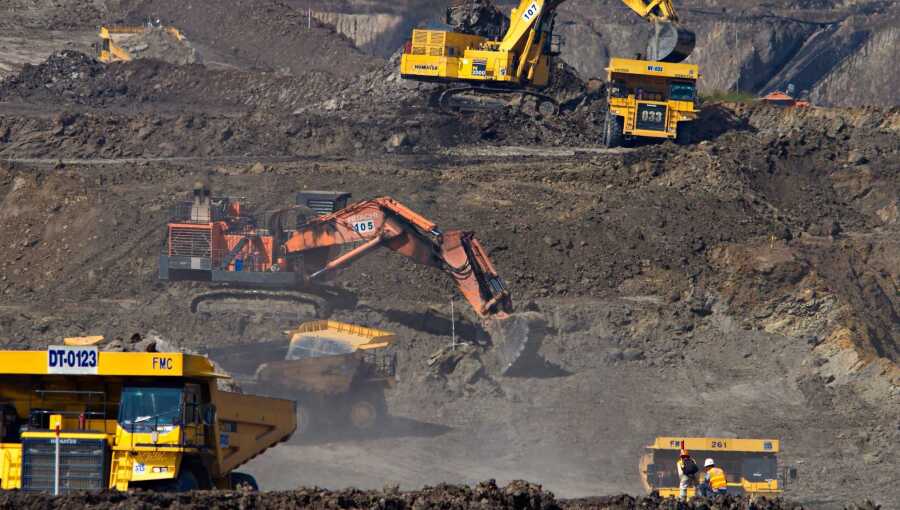
The Centre for Natural Resource Governance has documented the impact of large, industrial Chinese mining operations on Zimbabwe’s landscape. 

Photo Credit: CENTRE FOR NATURAL RESOURCE GOVERNANCE

November 18, 2025 
By Africa Defense Forum


Armies of excavators and dump trucks carving deep, terraced ruts into and around hills, mountainsides and waterways are a common sight in Zimbabwe. For locals, the scars of large, industrial mining operations offer frequent reminders of the environmental toll

Public anger among Zimbabweans has risen steadily in recent years amid accusations of Chinese mining companies committing serious crimes — ranging from murder, rape and forced evictions to pollution and loss of habitats — sometimes with few or no legal consequences.

Journalist and human rights advocate Tendai Mbofana recently raised alarm when he shared a video on October 21 of a Chinese mining operation near his home in Redcliff. The video, which was widely shared across Zimbabwean media outlets, showed heavy equipment digging next to the Cactus Port Dam, leading Mbofana to warn of a serious threat to the ecosystem along the Kwekwe River.

“The only word that I can think of right now to describe these Chinese mining activities in Redcliff is that it’s appalling. It’s reprehensible,” he told The Public Eye newspaper. “We cannot surely call ourselves an independent, sovereign, self-governing state when we allow foreigners to come into our country and do pretty much what they want.”

Chinese-owned companies control an estimated 90% of Zimbabwe’s mining industry, according to the Harare-based Centre for Natural Resource Governance (CNRG), an organization that seeks to support communities affected by mining. It has reported on mineral extractions worth billions of dollars annually to Chinese mining companies, including $2.79 billion in 2023.

“Over the past decade, CNRG has led efforts to investigate and document the environmental, social, and economic effects of mining in Zimbabwe,” the organization said in an October 14 statement. “Our research … consistently reveals that many foreign mining operations, including those involving Chinese capital, occur in [sensitive] environments, circumvent regulation, lack transparency and bribe officials to weaken their oversight role.”

Mbofana said mining in Redcliff is destroying landscapes and poisoning a water source that supplies commercial and subsistence farmers downstream.

“Cactus Port Dam is a very important dam for Redcliff,” he said. “The Kwekwe is vital for agriculture, for flora and fauna in aquatic life, but that is all under threat by these Chinese activities. We are going to be left behind with unusable land and mountains that have been mutilated.”

Mbofana’s video set off stern criticism from citizens and environmental and civil society activists who say Chinese companies are plundering the country’s natural resources with little oversight or accountability.

“This is not investment, it’s daylight environmental terrorism,” Rodreck Kudakwashe, a prolific Harare-based social commentator, posted on X on October 21. “The Chinese systematically strip Zimbabwe of its resources and mortgage our future under the guise of economic development.”

Mbofana reported “a massive blast during the night that shook homes across Redcliff and filled the air with suffocating dust” in an October 22 article on the Harare-based NewsHawks website. “This was not an isolated incident. Residents say these blasts have become a regular nightmare.

“If the mining continues unchecked, contamination and siltation will inevitably destroy the livelihoods of countless farmers and threaten food security for families dependent on small-scale agriculture. Once the dam and river are polluted by mining waste, it will take generations to recover, if ever.”

Citing Chinese lithium extraction in Zimbabwe’s Bikita region, journalist Marcus Mushonga said China’s resource-for-infrastructure model has raised alarms about exploitation, sovereignty and sustainability.

“Across Africa, Chinese mining operations have been linked to environmental destruction, labor violations and disregard for local communities,” he wrote in an October 22 article for the South Africa-based Centre for African Journalists news agency.

“In Zimbabwe, the partnership between the state and Chinese entities — often described as opaque and unaccountable — has left many communities disenfranchised and ecosystems degraded.”


The Africa Defense Forum (ADF) magazine is a security affairs journal that focuses on all issues affecting peace, stability, and good governance in Africa. ADF is published by the U.S. Africa Command.

 

Feasibility study for diversion of Siberian river to Central Asia reportedly in works

Feasibility study for diversion of Siberian river to Central Asia reportedly in works
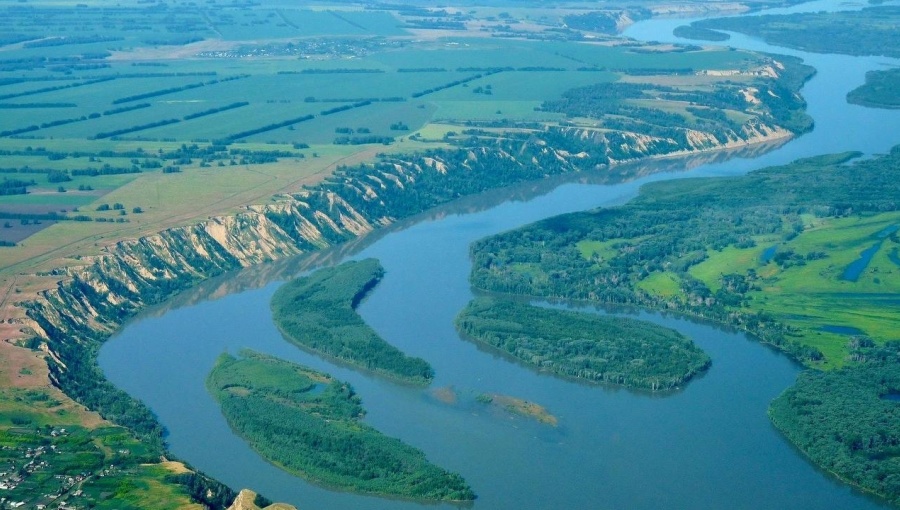
The Ob. / gov.ru
By Eurasianet November 19, 2025

The Russian Academy of Sciences is reportedly seeking funding from the Kremlin for a feasibility study for a project to divert water from the Ob River to Central Asia. The request raises an immediate question to which there isn’t a clear answer: what’s in it for Moscow?

Diverting Siberian river water to Central Asia is not a new idea; a Soviet plan to do so was developed back in the 1970s, but it ended up being abandoned during the Perestroika era in the mid-80s. That old plan envisioned the construction of an open canal, while the new iteration would supposedly involve the laying of plastic water pipes across more than 2,000 kilometres (1,243 miles) of rugged terrain, the Russian news outlet RBK reported

The estimated price tag is $100bn and construction would take at least 10 years to complete. If built to its currently envisioned specifications, up to 22 cubic kilometres (5.3 cubic miles) of water per year could be diverted to Central Asia.

A feasibility study, provided it receives the requested funding, would gauge the technical challenges and potential risks of undertaking such an ambitious infrastructure project, including “climatic effects, the impact on water and terrestrial ecosystems, and  the impact on the long-term socio-economic development of the participating countries,” according to a Forbes.ru report.

The Russian Academy of Sciences is also reportedly ready to undertake a feasibility study on the diversion of waters from the Pechora and Northern Dvina rivers to southern Russian regions via the Volga River Basin. The report notes that many Russian regions are grappling with water shortages, including Kalmykia and Krasnodar Krai, along with the Astrakhan, Orenburg and Rostov regions.

Forbes.ru cites a Russian scientist, Robert Nigmatulin, as saying the pipeline project could alleviate Central Asia’s growing water deficit. The reports, while mentioning cost, do not mention anything about potential financing, or whether Central Asian beneficiary states have had a chance to review and endorse the plan. 

It’s also unclear whether the project would be a for-profit venture, turning water into an export commodity like oil and natural gas, or whether Russia intends to try to use water as an instrument of geopolitical leverage. Perhaps both.

This article first appeared on Eurasianet here.


Asian utilities locked into coal as long-term contracts slow transition

Asian utilities locked into coal as long-term contracts slow transition
/ Dominik Vanyi - Unsplash
By bno - Taipei Office November 20, 2025

Asia’s shift towards cleaner energy is being hampered by decades-long coal power agreements that continue to bind utilities to fossil-fuel generation, even at times when cheaper renewable supplies are readily available, a piece on Devdiscourse claims. Climate analysts warn that these entrenched commitments are delaying emissions reductions in some of the world’s fastest-growing energy markets, undermining global climate targets and exposing governments to rising financial risks.

Across Southeast Asia, long-term users of coal, between 50 and 100% of existing coal-fired capacity is covered by power purchase agreements (PPAs) with roughly nine to 18 years yet to run, according to the Powering Past Coal Alliance (PPCA), a coalition of governments, businesses and civil society groups calling for a managed exit from coal. Long-term commitments are also widespread in China and India – two of the world’s biggest miners of coal, where buyers have accumulated extensive coal procurement obligations, leaving wind and solar assets underused.

The consequences are becoming increasingly visible. Southeast Asia still sourced about 45% of its electricity from coal in 2024, up from 35% a decade earlier, even as coal’s share of global power generation declined from 39% to around 34%, and while renewables investments increase, according to data from energy think-tank Ember. Renewables, by contrast, accounted for just 26% of the region’s electricity output, well below the global average of 41%.

Industry representatives acknowledge that the economics of entrenched coal assets present formidable barriers. Guaranteed revenue for plant operators and the security of jobs make early closures politically and financially challenging and the act of breaking contract terms can also expose grid operators to penalties.

Even China — where carbon emissions are on course to fall this year after an extended period of flat or declining output — has seen coal-fired generation rise. Analysts warn that the country risks repeating patterns seen in late 2024. As a result China’s curtailment challenges are expected to intensify. According to the report, consultancy Wood Mackenzie forecasts that solar curtailment rates will average more than 5% across 21 provinces over the next decade, compared with just 10 provinces facing similar issues in the first eight months of this year.

Other major Asia-Pacific economies are reporting similar strains. Japan, Australia and India have all indicated increased renewable curtailment in 2025 as coal commitments limit flexibility. India, despite setting ambitious clean energy targets, is preparing new long-term power purchase agreements with coal generators. Analysts at Ember and Climate Trends warn that as renewable generation grows, retailers risk accumulating stranded assets and paying mounting fixed charges on underused coal plants.


Peru’s broken regulatory system is enabling illegal mining networks

Peru’s broken regulatory system is enabling illegal mining networks
Peru on November 18 passed a bill to extend temporary permits for informal miners until the end of 2027 through a controversial programme known as Reinfo. / unsplash
By Alek Buttermann November 19, 2025

Peru’s latest decision to prolong the Integrated Registry for Mining Formalisation (Reinfo), a controversial scheme granting temporary permits to informal miners, is the clearest indication that the state has lost control over its primary tool for regulating small-scale mining. Despite nearly a decade of repeated extensions and minimal results, Congress has now approved another prolongation of the regime until December 31, 2027, a move defended by some lawmakers but widely denounced by business associations, technical experts and environmental specialists.

The Energy and Mines Commission endorsed the extension with 17 votes in favour, three against and one abstention, approving a text “con cargo a redacción”, meaning the final wording still remains unclear. This ambiguity has triggered further concern, as it allows sensitive provisions to be altered before the proposal reaches the plenary.

What distinguishes this latest expansion from previous ones is not just the additional two years, but the political struggle around the possible reinstatement of more than 50,000 Reinfo registrants removed in June for inactivity. Though congresswoman Patricia Juárez (Fuerza Popular) insisted that the decision “will not automatically” reintegrate them, other actors interpreted the draft differently. Gestión reported that representatives of the artisanal mining federation Confemin celebrated the vote precisely because they believe it opens the door for those exclusions to be overturned.

This lack of clarity is the result of a decade of systemic failures. Only 2% of the 87,000 operators ever registered have reached full formalisation, while 78% were suspended for administrative breaches or omissions. Even those who remained active advanced slowly: technical expert Iván Arenas told El Comercio that of the 31,000 miners that the state was supposed to formalise this year, only 64 actually completed the process.

The Reinfo’s dysfunction is no longer merely a matter of bureaucratic inefficiency. It has become a structural weakness feeding criminal economies. Peru’s illegal mining sector is now recognised as the country’s largest illicit industry, a point repeatedly emphasised by the country’s main business guilds. In a joint statement, 56 business associations—including Confiep, SNI and the SNMPE—warned that this extension “promotes illegality and puts the Peruvian industry and exports at risk.”

This warning reflects a broader pattern. Organised crime has expanded aggressively in regions where informal mining dominates, such as Madre de Dios, Pataz, Nasca and parts of the Amazon. In these areas, the boundary between informal and illegal operators has largely eroded. CONFIEP president Jorge Zapata told Canal N that the distinction between the two is now “difficult to determine”, as the same networks often operate under both labels while using the Reinfo as a façade.

The security implications are equally stark. In recent years, regions under intense informal mining activity have seen escalating violence, territorial disputes and the infiltration of criminal gangs. This trend was brutally illustrated in Pataz, where miners linked to the informal sector have been targeted, extorted or murdered by armed groups—an environment shaped by weak state enforcement and permissive regulation. The state’s persistent reliance on transitory regimes like the Reinfo has allowed these conditions to harden.

The new extension also places Peru in direct conflict with its international commitments. The Comunidad Andina (CAN) has repeatedly warned that the country risks trade consequences if it continues to provide regulatory shelter to operators involved in illegal activity. The Constitutional Court itself ruled in April that maintaining a transitory regime enabling “activities without control” violates the constitutional obligation to protect the environment.

Environmental specialists argue that the latest draft intensifies these contradictions. Lawyer César Ipenza told El Comercio that allowing the return of previously excluded miners amounts to “impunity”, as it reopens cases that were already deemed non-compliant. He stressed that the text even proposes halting suspension procedures against Reinfo-registered miners, effectively neutralising sanctions for environmental, tax or administrative violations.

Yet perhaps the most alarming development is the progressive political penetration of groups linked to informal and illegal mining. Technical expert Iván Arenas warned that numerous “Reinfo candidates” are now embedded in multiple parties ahead of the 2026 elections. Their influence is visible in Congress, where congressmen such as Víctor Cutipa—president of the Energy and Mines Commission—publicly supported the extension without modifications, as reported by El Comercio.

The political dynamics surrounding the vote further highlight institutional fragility. Gestión described the session as “chaotic”, with contradictory interpretations of the reincorporation clause and last-minute adjustments driven by Juárez to avoid the appearance of automatic reinstatement. Even legislators within the commission expressed confusion about what had actually been approved.

The prolonged survival of the Reinfo has entrenched a cycle in which thousands of operators delay compliance until the final months of each extension, then demand new prolongations. As CONFIEP noted, this pattern is likely to repeat in 2026 and 2027, leaving Peru trapped in a perpetual transitional regime with almost no incentive for miners to regularise their position.

By prolonging a mechanism that the state demonstrably cannot oversee, Congress has reinforced the very conditions that enable illegal economies to expand. Whether the plenary introduces stronger safeguards remains uncertain, but the structural reality remains: Peru’s regulatory apparatus is being outpaced, outmanoeuvred and increasingly overshadowed by mining networks that thrive in the grey zones of weak governance.

Google stakes its AI future on Taiwan

Google stakes its AI future on Taiwan
/ Unsplash - BoliviaInteligente
By bno - Taipei Office November 20, 2025

Google (GOOGL) has inaugurated its largest artificial intelligence (AI) infrastructure hardware engineering centre outside the United States, in Taipei, underscoring Taiwan’s growing importance in the global tech ecosystem, The Times of India reports.

Aamer Mahmood, vice-president of Platforms Infrastructure Engineering at Google Cloud, framed the opening not merely as a building but as “an investment in an ecosystem, a testament to Taiwan’s place as an important centre for global AI innovation” according to Reuters.

The new facility has been built to a backdrop of some local opposition though as political parties in Taiwan squabble over whether or not it should be moved.

The newly opened centre in the Shilin district of north Taipei will host several hundred employees, according to local media reports. The technologies developed and tested on site — including advanced AI-chip integration on motherboards and servers — are intended for deployment across Google’s global data-centre network. “The technology developed and tested in Taipei is deployed in Google data centres around the world, which in turn power Google devices that billions of people rely on everyday,” Mahmood is reported as saying by Reuters.

Taiwanese president, Lai Ching-te, speaking from the capital described the opening as a clear signal of long-term commitment from Google. “This also allows the world to see that Taiwan is not only a vital part of the global technological supply chain, but also a key hub for building secure and trustworthy AI,” he said at the ceremony.

 Monitoring Hidden Processes Beneath Kīlauea Could Aid Eruption Forecast


The glow of Kīlauea Volcano erupting is visible at night. 

CREDIT: Sin-Mei Wu/ UH


November 18, 2025 
By Eurasia Review


The massive 2018 eruption of Kīlauea Volcano on Hawai‘i Island lasted for months, destroyed neighborhoods, and was associated with 60,000 earthquakes. A new study led by researchers at the University of Hawai‘i (UH) at Mānoa revealed Kīlauea’s magma system started behaving anomalously about a year before the eruption began. This discovery, made using a unique seismic monitoring method, suggests that tracking these hidden processes could aid eruption prediction and volcanic hazard mitigation.

Scientists have long understood that magma moves within Kīlauea’s complex plumbing system, but this study revealed a subtle, long-lasting change that may signal future events. Sin-Mei Wu, assistant professor in the Department of Earth Sciences in the UH Mānoa School of Ocean and Earth Science and Technology (SOEST), collaborated with a team of scientists that included colleagues from the University of Miami and the University of California, San Diego to investigate Kīlauea’s internal dynamics leading up to the 2018 eruptions. The team found that about a year before the 2018 eruption, the normal upward flow of magma from the mantle to the summit’s shallow reservoirs was disrupted.

“Our hypothesis is that a blockage formed between the volcano’s two summit magma reservoirs, impeding the flow, and pressure began to build beneath Kīlauea’s East Rift Zone,” said Wu.

The team also observed that the lava lake inside Halema‘uma‘u crater dropped by about 30 meters–nearly the height of a 10-story building–while pressure in the deeper magma system remained stable.

“It remains unclear whether the unusual behavior we identified was a singular event or part of a recurring pattern that could influence future eruptions,” Wu added. “However, as continuous monitoring data accumulate, we expect to gain increasingly detailed insights into Kīlauea’s inner workings and its long-term behavior.”

After analyzing the data, Wu and colleagues hypothesize that magma was being diverted sideways from the summit and into the horizontal dike system leading toward the rift zone. This atypical pattern lasted for months until a magnitude 5 earthquake on the volcano’s flank likely released the blockage, sending more pressure into the shallow summit system for the subsequent months. From that point, the Kīlauea summit remained disturbed until the start of the massive 2018 eruption.


Using ocean waves to listen to Kīlauea

The team’s discovery was made possible by continuously monitoring Kīlauea with seismic instruments. Seismic waves are vibrations that travel through Earth, carrying information about the material they pass through. Instead of relying on energy from earthquakes, the team utilized seismic energy from a constant, natural source: ocean waves.

“The ocean provides a constant supply of seismic energy, allowing us to track the status of Kīlauea’s magma plumbing system over time, even when there are no noticeable earthquakes or ground deformation,” Wu explained. “When magma moves underground, it changes the pressure within the system and alters the surrounding rock, which we can detect with our monitoring tools.”

The study highlights the importance of the silent processes occurring beneath the surface, which can be revealed by combining seismic analysis with other geological and geophysical observations.

“As a UH Mānoa faculty member dedicated to understanding Kīlauea, my goal is to contribute to volcanic hazard mitigation and support the safety of Hawaiʻi’s residents,” Wu added. “We hope this study, and our future work, will help unravel these fascinating processes.”


Eurasia Review is an independent Journal that provides a venue for analysts and experts to publish content on a wide-range of subjects that are often overlooked or under-represented by Western dominated media.

Why some volcanoes don’t explode


ETH Zurich


The explosiveness of a volcanic eruption depends on how many gas bubbles form in the magma – and when. Until now, it was thought that gas bubbles were formed primarily when the ambient pressure dropped while the magma was rising. Gases that were dissolved in the magma in lower strata – due to the higher pressure – escape when the pressure drops and form bubbles. The more bubbles there are in the magma, the lighter it becomes and the faster it rises. This can cause the magma to tear apart, leading to an explosive eruption. 

This process can be likened to a bottle of champagne: while the bottle is closed and therefore pressurised, the carbon dioxide remains in solution. When the cork is removed from the bottle, the pressure drops and the carbon dioxide forms bubbles. These bubbles draw the liquid upwards with them and cause it to spray out of the bottle explosively.  

However, this explanation is incomplete – because the lava from some volcanoes, such as Mount St. Helens in the state of Washington, USA, or the Chilean volcano Quizapu, has sometimes flowed out gently despite the presence of highly explosive magma with a high gas content. Now, an international research team including a scientist from ETH Zurich has provided a new explanation for this riddle, which has puzzled volcanologists for a long time.  

Shear as a new factor 

In a recent article in the journal Science, the researchers show that gas bubbles can form in the rising magma not only due to a drop in pressure but also due to shear forces. If these gas bubbles grow deep in the volcanic conduit, they can combine with one another and therefore form degassing channels. Gas can then escape at an early stage, and the magma flows out calmly.  

We can imagine the shear forces in the magma as being like stirring a jar of honey: the honey moves faster where it is being stirred with the spoon. At the edge of the jar, where the friction is higher, it moves slower. A similar process is taking place in volcanic conduits: the magma moves more slowly at the edge of the conduit, where the friction is greatest, than it does in the interior. This essentially “kneads” the molten rock, producing bubbles of gas. 

“Our experiments showed that the movement in the magma due to shear forces is sufficient to form gas bubbles – even without a drop in pressure,” explains Olivier Bachmann, Professor of Volcanology and Magmatic Petrology at ETH Zurich and one of the co-authors. The researchers’ experiments show that bubbles are formed primarily near the edges of teh conduit, where the shear forces are strongest. Existing bubbles further strengthen this effect. “The more gas the magma contains, the less shear is needed for bubble formation and bubble growth,” says Bachmann. 

Why explosive volcanoes sometimes don’t explode 

According to the new findings, magma with a low gas content that seems not to be explosive could nevertheless lead to a powerful explosion if a large number of bubbles form due to pronounced shear and the magma therefore shoots upwards quickly.  

Conversely, shear forces can also cause bubbles to develop and combine at an early stage in gas-rich and potentially explosive magma, leading to the formation of degassing channels in the magma that bring the gas pressure down. “We can therefore explain why some viscous magmas flow out gently instead of exploding, despite their high gas content – a riddle that’s been puzzling us for a long time,” says Bachmann.  

One example is the eruption of Mount St. Helens in 1980. Although the magma was gas-rich and therefore potentially explosive, the eruption began with the emplacement of a very slow lava flow inside the volcanic cone. The strong shear forces acting on the magma produced additional gas bubbles that initially allowed a release of gas. It was only when a landslide opened the volcanic vent further and there was a rapid drop in pressure that the volcano exploded. The study’s results suggest that many volcanoes with viscous magma allow gases to escape more efficiently than previously thought.  

Special laboratory experiment 

In order to visualise the processes inside a volcano, the researchers developed a special experiment: they took a viscous liquid resembling molten rock and saturated it with carbon dioxide gas.  

Then they observed what happened if the lava-like liquid was set in motion by shear forces. As soon as the shear forces exceeded a certain threshold, gas bubbles suddenly formed in the liquid. The higher the initial gas supersaturation, the less shear was needed to form further gas bubbles. The researchers also found that the presence of existing bubbles favoured the formation of further bubbles in their immediate environment. 

The researchers combined these observations with computer simulations of volcanic eruptions. By doing so, they showed that the effect is particularly likely to occur in areas where viscous magma flows along the walls of a conduit and therefore experiences strong shear forces. 

With their work, the researchers provide a vital new piece of the puzzle when it comes to better understanding processes taking place inside active volcanoes and more precisely assessing how volcanoes will erupt. “In order to better predict the hazard potential of volcanoes, we need to update our volcano models and take shear forces in conduits into account,” says study co-author Bachmann.