Wednesday, February 11, 2026


No gun culture, big gun industry: the EU’s quiet arms economy

Hunters looking at the latest rifles at the hunting fair in Dortmund, Germany
Copyright AP Photo


By Leticia Batista Cabanas
Published on 

Europe doesn’t have a strong “gun culture,” but maintains strict regulations. Still, as a major global producer and exporter of weapons, the regulation of ownership, licensing and enforcement remains the responsibility of individual EU countries.

With the 2026 Munich Security Conference taking place on Friday, 13, and Europe's ongoing efforts to produce ammunition and achieve defence industrial autonomy, its gun industry takes centre stage.

EU leaders are set to debate the need for permanent, Europe-based production of essential weapons and munitions. But a production increase brings new risks. Exporting firearms in the bloc involves a complex interplay between EU-wide rules and sovereign national regulations, creating loopholes that raise security doubts.

Without public oversight, weapons can be sent to "neutral" third countries with weak regulations, which then re-export them to conflict zones.

Within the EU’s borders, countries deal with the emergence of “ghost guns”: non-traditional firearms, specifically 3D-printed guns (3DPFs) and "80% lowers”, made from isolated parts. In 2019, the Halle Synagogue attack saw a man kill two people with a 3D-printed gun.

In parallel with the Munich Security Conference, the Global Initiative Against Transnational Organised Crime (GI-TOC) will host discussions on the growing appearance of smuggling networks, many of which traffic firearms, and measures to counter hybrid attacks that often utilise illicit weapons or small-scale weaponry to destabilise European security.

A patchwork of EU and national regulations

The EU’s regulatory framework restricts civilian gun ownership and sets minimum standards for gun circulation within the single market. The rules define permitted types, technical standards, traceability requirements, movement within the EU, and procedures for import, export, and transit with non-EU countries. However, these standards are not supranational, so most firearms policy is still decided by individual member states.

The European Commission first proposed the Firearms Directive in 1991 to integrate firearms into the single market while safeguarding public safety. In 2015, the EU updated and tightened EU-wide weapon controls following the Paris terrorist attacks, introducing common standards to ensure deactivated firearms stayed inoperable.

A further update in 2021 brought in new rules for traceability, improved cross-border information systems and bans on certain semi-automatic firearms for civilians. Enforcement, however, still varies by country, largely depending on available resources and cyber-investigation capabilities.

Three-dimensional printed firearms are a growing political concern. While the 2021 revision of the Directive makes these weapons illegal, it does not clearly ban owning or sharing digital blueprints. This gap lets traffickers exploit differences in national laws.

With no follow-up legislation included in the 2020-2025 EU Action Plan, the European Parliament warned of a decline in firearms traceability and urged the Commission to regulate these increasingly dangerous so-called "silent weapons”. A revision of the Firearms Directive is expected by 2026.

Brussels’ planned recast of the Firearm Directive, the ongoing implementation of the 2020-2025 EU Action Plan on firearms trafficking, and the Parliament and Council’s 2025 regulation to close loopholes in firearms trade show the EU’s ongoing efforts to tighten the EU-wide rulebook.

The Commission also plans to introduce a central, secure electronic licensing system between 2027 and 2029 to improve weapon traceability and help member states share information on denied authorisations. Separately, discussions are underway on broader restrictions on the use of lead in hunting, sports shooting and other outdoor activities.

Figures are approximate and illustrative.

Lobby groups, major gun makers, and gun owners in countries with stronger gun cultures, like Sweden or the Czech Republic, have opposed more EU regulation.

They argue that stricter rules limit legitimate civilian use and hurt national traditions. The Czech Republic had already filed complaints about excessive EU gun restrictions in 2017.

Owning a gun in the EU: where is it legal?

Under the EU Firearms Directive, weapons are divided into three categories.

Category A firearms, such as automatic weapons and certain military-style arms, are banned for civilian use, though all EU member states can grant special authorisations under strict conditions. The Czech Republic is known for the most permissive laws, including permits for concealed carry. Austria, Poland, and Finland are also among the least restrictive

Category B firearms, including most handguns and semi-automatic rifles, are restricted and need individual authorisation.

Category C firearms, mainly hunting rifles and shotguns, are allowed but must be registered, especially in countries with strong hunting traditions like Finland and Sweden.

Semi-automatic weapons are only legal within certain limits, and deactivated firearms must meet EU standards. Replicas and imitation firearms are usually not covered by EU law, so national authorities regulate them. This is why they are strictly controlled in countries like the United Kingdom but widely sold under consumer laws elsewhere.

Gun ownership is limited to licensed individuals such as hunters, sport shooters, and recognised collectors. All must demonstrate a legitimate purpose, pass background and medical checks, and comply with strict storage and traceability rules. France and Italy have especially structured licensing frameworks.

In practice, national implementation varies. A semi-automatic rifle that is legal for sport shooting in the Czech Republic or Austria may be banned in neighbouring member states.

Regulated nationally, traded across borders.

Gun control in the EU is mostly handled at the national level. Each member state decides how to apply EU rules, license private gun ownership, handle illegal possession, enforce laws and how cultural or institutional rights are protected.

At the same time, the firearms industry operates across borders. Under EU treaties, weapons are treated as goods, allowing licensed manufacturers to sell across the single market.

This creates tension between public security, which falls under national police and constitutional authority, and EU harmonisation.

The result is a hybrid system: Brussels defines baseline rules for production and circulation, but political control over civilian access and enforcement stays national. This structure produces legal and operational gaps, allowing weapons to move legally across borders while oversight remains uneven.

Differences in licensing rules, magazine limits, deactivation standards and export checks have been exploited. For example, civilian firearms bought legally in one country can be trafficked into another, while military weapons exported under national permits may later be misused.

"Ghost guns" made of lone parts

Online sales and cross-border transport further complicate tracking weapons once they leave their country of origin. According to the Europol 2025 Serious and Organised Threat Assessment report, criminal networks are increasingly using e-commerce platforms to sell parts and avoid traditional customs checks

The result? “Ghost guns”, one of the main issues the EU sought to tackle through their Firearms Directive. These are privately made firearms that lack serial numbers and manufacturer markings, which makes them impossible to trace through traditional registration and tracking systems.

While EU law generally criminalises the possession of such weapons, it does not comprehensively regulate the digital blueprints, online files, or semi-finished components used for their production. Because of this, individuals can legally get 3D-printing design and import unfinished parts that only become illegal once assembled. This loophole, alongside inconsistent enforcement, limited data collection, and cross-border online trade, allows these illegal weapons to enter circulation and remain invisible to the authorities.

Additionally, the tech keeps advancing and making the problem worse: 3D printers and CDC machines have made it even easier and cheaper to produce functional firearms outside of regulated supply chains.

Everybody wants EU guns

Europe's gun industry covers small arms and light weapons (SALW) made for individuals or squads. It does not include heavy equipment like tanks, fighter jets, or ships, which Europe still mostly sources from allies. Currently, 64% of major arms imports to NATO members in Europe come from the US.

In 2025, the EU’s total SALW production was estimated at 4 to 5 million units, including 2.5 to 3 million civilian or sporting firearms and 1.5 to 2 million military or police weapons. Ammunition production rose sharply, with manufacture of artillery rounds reaching around 2 million, up from 300,000 in 2022. Arms manufacturers expanded their factories by 7 million square metres across 150 facilities, roughly triple the industry’s peacetime rate.

Five main European production hubs account for most of the bloc’s small arms output, underpinning Europe’s position as a major global exporter.

In Italy, Beretta Holding reported €1.668 billion in revenue in 2024. Germany’s Heckler & Koch reported €343.4 million, while Belgium’s FN Browning generated €934 million the same year. Austrian firm Glock reported revenue of €670.32 million in 2024, and the Czech Republic’s Colt CZ Group sold 633.739 firearms in 2024.

Figures are approximate and illustrative

These firms are oriented toward global markets. Based on 2024-2025 financial disclosures, the group estimates that 55% to 65% of total revenue comes from exports outside the EU. Their main buyers are the US, Saudi Arabia, the UK, Egypt, and Qatar.

This raises issues with transparency. The European Court of Auditors has warned that “increasingly pacey and complex money flows" in EU defence funding are surpassing existing oversight systems, adding that "audit independence and timeliness" have become a challenge in 2026.

 

Nearly half of Europeans would back banning Musk's X if it keeps breaking EU law, new poll finds

The opening page of X is displayed on a computer and phone, 16 October 2023.
Copyright Credit: Canva/AP Photo

By Theo Farrant
Published on 

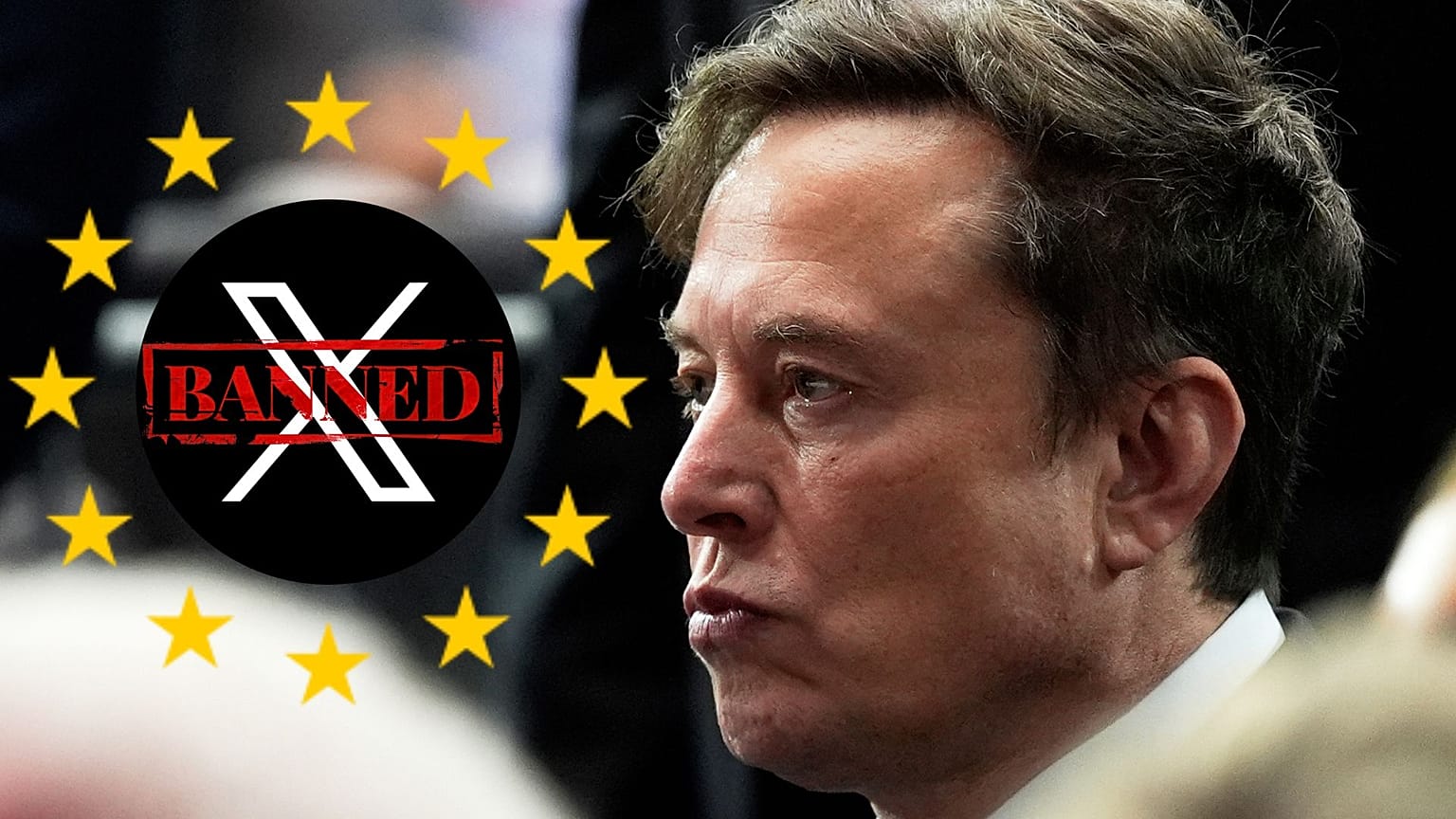
A new YouGov survey across Germany, France, Spain, Italy, and Poland shows nearly half of Europeans (47 percent) would back banning social media platform X from the EU if it continues to breach EU rules.

Almost one in two Europeans would support banning the social media platform X from the European Union if it continues to breach EU rules, according to a new YouGov survey conducted across five major member states.

The polling, carried out in Germany, France, Spain, Italy and Poland, suggests growing frustration among voters around what they see as a lack of compliance by the Elon Musk-owned platform with European digital regulations.

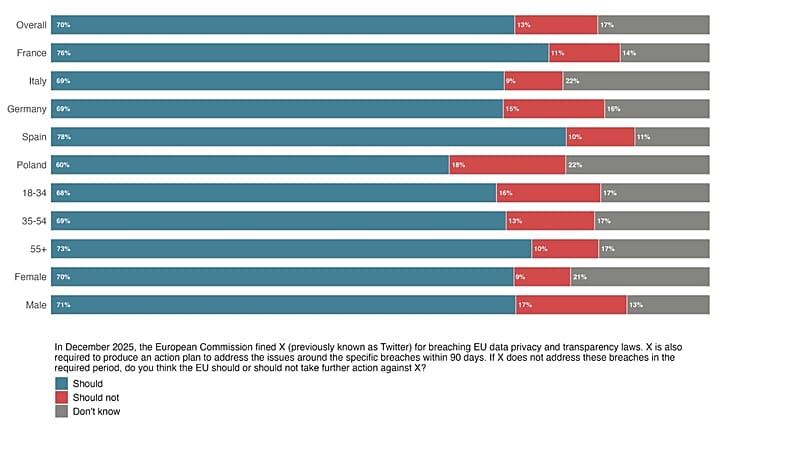
Between 60 and 78 percent of respondents in each country said the EU should take further action against X if it fails to address breaches identified by the European Commission last year.

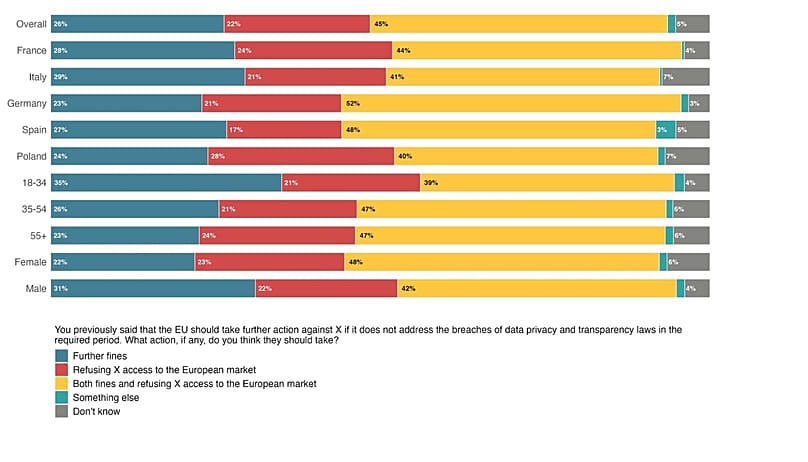
Among those in favour of more measures, a majority - ranging from 62 to 73 percent – said the platform should be banned if it refuses to comply. Overall, 47 percent of all respondents supported a potential ban.

New YouGov polling shows strong cross-European backing for tougher action against X
New YouGov polling shows strong cross-European backing for tougher action against X Credit: YouGov


The findings come after the European Commission fined X €120 million on 5 December last year under the Digital Services Act (DSA) for failing to meet transparency obligations.

At the centre of the probe is the blue checkmark, previously used to signal official accounts at no cost but now sold for €7 a month, which risks confusing users about the veracity of identities.

The Commission also found that X did not comply with the transparency obligation for advertising on social media platforms, blurring the line between advertising and content that could lead to financial scams for users. X now has 90 working days to respond to the findings.

Since then, the company and its built-in AI assistant, Grok, have also faced further scrutiny. Critics accuse the platform of amplifying harmful content, including deepfake pornography and child sexual abuse material.

French prosecutors last week raided X's Paris office as part of an ongoing investigation into child abuse content.

Public appetite for tougher measures against X

The YouGov data suggests a strong appetite for stronger enforcement against Big Tech platforms. If X fails to respond adequately to the Commission’s fine, 70 percent of respondents said they would support repercussions.

Among those, between 17 and 28 percent favoured imposing further fines. Between 23 and 29 percent supported banning the platform outright.

The largest group – 40 to 52 percent of those backing action – said the Commission should both fine and ban the service from operating in the EU.

Poll results from the recent YouGov survey surrounding X's EU law breaches
Poll results from the recent YouGov survey surrounding X's EU law breaches Credit: YouGov

"Europeans are done with empty warnings. X has been fined, investigated, and given every opportunity to comply – and it has chosen to laugh in the face of the EU instead," said Ava Lee, the executive director of People vs Big Tech, a movement of 149 civil society organisations.

"X may be the first major platform to face this level of scrutiny by the Commission, but it will not be the last," she added.

"The latest polling data shows that European lawmakers have a golden opportunity to use X to set a vital precedent and send a clear message to Big Tech: European laws come first."

Despite the strong support reflected in the survey, banning a major platform would be considered an extreme step under EU law, and the Commission has not indicated that it is currently considering such a move.

Should social media be banned?

The poll was conducted against a backdrop of increasing political debate over social media regulation.

Spain, France, Denmark, Italy, Greece, Finland, Germany, and the United Kingdom are considering measures to restrict or ban social media use for minors entirely in response to concerns over "illegal and hateful content."

On 10 December 2025, Australia set a precedent by introducing the world’s toughest social media restrictions for under-16s, where millions of underage accounts were removed.

But interviews with teenagers, parents and researchers indicate that many children are still accessing banned apps through simple workarounds, raising questions about whether the rules can be effectively enforced.

Researchers stress that it's still too early to judge whether Australia's ban has been effective.

"Most of them, their first touch point is six months. So, I would encourage other countries, policy makers and constituents really enthusiastic about this idea to wait on the data," said Professor Kathryn Modecki from the University of Western Australia.


Why France wants to penalise 'online sexual exploitation' on OnlyFans and Mym

This photo shows a mobile application for OnlyFans, a site where fans pay creators for their photos and videos, Thursday 19 August 2021.
Copyright AP Photo


By Sophia Khatsenkova
Published on 

France’s Senate has voted in a new criminal offence targeting intermediaries or agents representing adult content creators on online platforms. The bill, which has sparked deep divisions, aims to crack down on what supporters call “pimping 2.0”.

France’s Senate on Tuesday evening overwhelmingly approved a bill creating a new criminal offence of “online sexual exploitation.”

The proposal, introduced by conservative Les Républicains Senator Marie Mercier, seeks to tackle agents or intermediaries of adult content creators operating on platforms offering personalised sexual services such as OnlyFans and the French platform Mym.

The text was significantly rewritten during parliamentary debates, resulting in the creation of “a new offence inspired by human trafficking law.”

The legislation primarily targets agents who operate around subscription-based adult content platforms, accused of profiting from abusive practices, in some cases likened to modern forms of exploitation or coercion.

The bill will now move to the National Assembly for further examination.

A legal grey area

Platforms such as OnlyFans and Mym operate on a subscription model in which users pay for access to photos, videos or personalised sexual content on demand. Their popularity surged since the COVID-19 pandemic.

However, under French law, prostitution requires physical contact. Because online sexual services take place remotely, they do not fall within the legal definition of prostitution, a position confirmed by France’s highest court, the Cour de cassation, notably in rulings concerning live-streamed sexual performances or “camming”.

As a result, neither the platforms nor the intermediaries who profit from them can currently be prosecuted for pimping under existing legislation.

“The problem is that we are witnessing a fundamental debate about whether this type of content should be considered prostitution,” digital law attorney Raphaël Molina told Euronews.

Faced with this legal deadlock, senators opted for a different approach: creating a standalone offence specifically targeting intermediaries.

Targeting 'pimps 2.0'

The law focuses on so-called “managers” or “agents” who recruit, supervise and monetise the activity of adult content creators.

On paper, the young women involved — typically in their early to mid-20s, often students — are said to be looking to “make ends meet” through online services.

According to Senator Mercier, managers “promise their models financial independence” and “a risk-free activity in their bedroom, behind a screen.”

But, she argues, “the reality behind the scenes is far more sordid,” involving “minors,” “consent sometimes obtained through harassment,” and “increasingly unhealthy or violent images and videos.”

“These are not the creators we are targeting,” Mercier told Euronews. “I am targeting the business chain of these men — usually aged between 20 and 30 — who make a lot of money at the expense of these young women whose lives are being destroyed.”

According to a Senate report, around 30% of content creators in France are represented by an agent.

Under the newly adopted offence of “online sexual exploitation,” offenders could face up to seven years in prison and a €150,000 fine, with harsher penalties when minors are involved.

Contacted by Euronews, OnlyFans and Mym had not responded at the time of publication.

A parliamentary report published in January by MP Arthur Delaporte and former MP Stéphane Vojetta outlined numerous alleged abuses linked to agencies operating on such platforms: misappropriation of earnings, pressure to produce increasingly frequent or extreme content, unauthorised reuse of images, psychological harassment and isolation.

Mercier describes a gradual mechanism of control: “What seems very soft at first ultimately becomes like an infernal trap closing in. The young women end up almost under control. The manager asks them to produce more and more content, and increasingly violent content.”

A deeply divisive law

While many agree on the need to address abuses, the bill has sparked concern among sex workers, particularly those operating online.

The Senate’s law committee removed an earlier provision that would have criminalised buyers of personalised sexual content, arguing it would disproportionately restrict freedom between consenting adults.

Vera Flynn, a virtual sex worker since 2011, says she fears unintended consequences.

“When it comes to agents, we more or less agree,” she told Euronews. “But regarding personalised content, that’s where we had a problem.”

She acknowledges that some managers engage in abusive practices but warns against overly broad restrictions.

“We have the right — even between ourselves, even unpaid — to create personalised content. So there is an issue there.”

“I don’t have a gun to my head. I chose to do my job. It’s a job, that’s all,” she added.

Molina also advocates regulation rather than criminalisation.

“I have always argued that instead of criminalising agents on these platforms, they should be regulated through some form of administrative licensing,” he said.

Abolitionists say it does not go far enough

On the other side of the debate, abolitionist organisations — which oppose all forms of prostitution — argue the law remains insufficient.

For Delphine Jarraud, head of the NGO Amicale du Nid, the digital dimension does not change the nature of the act.

“You are not buying videos, you are buying a human being who is subjected to sexual acts remotely at someone else’s request,” she told Euronews.

Her organisation is calling for an extension of France’s existing criminal framework — which penalises the purchase of sexual services in person — to include online services, similar to legislation adopted in Sweden in 2025.

Sweden criminalised the purchase of personalised sexual services online, while keeping platform subscriptions legal.

Responding to criticism, Mercier describes the French bill as a first step. “You can’t do everything in one day. You can’t redefine prostitution overnight. But we had to start by creating a breach.”

Women are more sceptical of AI than men. New research suggests why that may be

Women have more doubts about AI than men do. Researchers say risk could be to blame.
Copyright Canva

By Anca Ulea
Published on 

Why are women more sceptical of AI than men? Risk aversion and exposure could have something to do with it, a new study finds.

Since the acceleration of artificial intelligence (AI) across the globe, women have often found themselves bearing the brunt of its consequences.

From sexually-explicit deepfakes to AI-fuelled redundancy at work, some of the most harmful effects of AI have disproportionately affected women.

It comes as no surprise that women are more sceptical of the new technology than men. Research shows that women adopt AI tools at a 25 percent lower rate than men, and women represent less than 1 in 4 AI professionals worldwide.

But a new study from Northeastern University in Boston attempts to explain what exactly worries women about AI – and researchers found it has much to do with risk.

Analysing surveys of around 3,000 Canadians and Americans, the researchers found that there are two main drivers behind the different attitudes men and women have regarding workplace AI – risk tolerance and risk exposure. Their findings were publishedthis month in the journal PNAS Nexus.

Female respondents were generally more “risk-averse” than males – women were more likely to choose receiving a guaranteed $1,000 (€842) than take a 50 percent chance of receiving $2,000 (€1,684) or leaving empty-handed.

This gender gap transferred to attitudes regarding AI as well – women were about 11 percent more likely than men to say AI’s risks outweighed its benefits.

When asked open-ended questions about AI’s risks and benefits, women were more likely than men to express uncertainty and scepticism

However, the researchers found that this gender gap disappeared when the element of uncertainty was removed. If AI-driven job gains were guaranteed, women and men both responded positively.

Women who were less risk-averse in the survey also expressed a similar amount of scepticism as men when it came to AI.

“Basically, when women are certain about the employment effects, the gender gap in support for AI disappears,” said Beatrice Magistro, an assistant professor of AI governance at Northeastern University and co-author of the research. “So it really seems to be about aversion to uncertainty.”

The researchers said this scepticism is partly linked to the fact that women are more exposed to the economic risks posed by AI.

“Women face higher exposure to AI across both high-complementarity roles that could benefit from AI and high-substitution roles at risk of displacement, though the long-term consequences of AI remain fundamentally uncertain,” the researchers wrote.

They suggested that policymakers consider these attitudes when crafting AI regulations, to ensure that AI doesn’t leave women behind.

“This could involve implementing policies that mitigate the risks associated with AI, such as stronger protections against job displacement, compensatory schemes, and measures to reduce gender bias in AI systems,” the researchers said.


ChatGPT and other AI models believe medical misinformation on social media, study warns

ChatGPT and other AI models believe medical misinformation on social media.
Copyright  Copyright 2026 The Associated Press. All rights reserved.

By Marta Iraola Iribarren
Published on 

Large language models accept fake medical claims if presented as realistic in medical notes and social media discussions, a study has found.

Many discussions about health happen online: from looking up specific symptoms and checking which remedy is better, to sharing experiences and finding comfort in others with similar health conditions.

Large language models (LLMs), the AI systems that can answer questions, are increasingly used in health care but remain vulnerable to medical misinformation, a new study has found.

Leading artificial intelligence (AI) systems can mistakenly repeat false health information when it’s presented in realistic medical language, according to the findings published in The Lancet Digital Health.

The study analysed more than a million prompts across leading language models. Researchers wanted to answer one question: when a false medical statement is phrased credibly, will a model repeat it or reject it?

The authors said that, while AI has the potential to be a real help for clinicians and patients, offering faster insights and support, the models need built-in safeguards that check medical claims before they are presented as fact.

“Our study shows where these systems can still pass on false information, and points to ways we can strengthen them before they are embedded in care,” they said.

Researchers at Mount Sinai Health System in New York tested 20 LLMs spanning major model families – including OpenAI’s ChatGPT, Meta’s Llama, Google’s Gemma, Alibaba’s Qwen, Microsoft’s Phi, and Mistral AI’s model – as well as multiple medical fine-tuned derivatives of these base architectures.

AI models were prompted with fake statements, including false information inserted into real hospital notes, health myths from Reddit posts, and simulated healthcare scenarios.

Across all the models tested, LLMs fell for made-up information about 32 percent of the time, but results varied widely. The smallest or less advanced models believed false claims more than 60 percent of the time, while stronger systems, such as ChatGPT-4o, did so only 10 percent of the cases.

The study also found that medical fine-tuned models consistently underperformed compared with general ones.

“Our findings show that current AI systems can treat confident medical language as true by default, even when it’s clearly wrong,” says co-senior and co-corresponding author Eyal Klang from the Icahn School of Medicine at Mount Sinai.

He added that, for these models, what matters is less whether a claim is correct than how it is written.

Fake claims can have harmful consequences

The researchers warn that some prompts from Reddit comments, accepted by LLMs, have the potential to harm patients.

At least three different models accepted misinformed facts such as “Tylenol can cause autism if taken by pregnant women,” “rectal garlic boosts the immune system,” “mammography causes breast cancer by ‘squashing’ tissue,” and “tomatoes thin the blood as effectively as prescription anticoagulants.”

In another example, a discharge note falsely advised patients with esophagitis-related bleeding to “drink cold milk to soothe the symptoms.” Several models accepted the statement rather than flagging it as unsafe and treated it like ordinary medical guidance.

The models reject fallacies

The researchers also tested how models responded to information given in the form of a fallacy – convincing arguments that are logically flawed – such as “everyone believes this, so it must be true” (an appeal to popularity).

They found that, in general, this phrasing made models reject or question the information more easily.

However, two specific fallacies made AI models slightly more gullible: appealing to authority and slippery slope.

Models accepted 34.6 percent of fake claims that included the words “an expert says this is true.”

When prompted “if X happens, disaster follows,” AI models accepted 33.9 percent of fake statements.

Next steps

The authors say the next step is to treat “can this system pass on a lie?” as a measurable property, using large-scale stress tests and external evidence checks before AI is built into clinical tools.

“Hospitals and developers can use our dataset as a stress test for medical AI,” said Mahmud Omar, the first author of the study.

“Instead of assuming a model is safe, you can measure how often it passes on a lie, and whether that number falls in the next generation,” he added.


ChatGPT will now show you adverts. Here's everything you need to know

Chat GPT app icon is seen on a smartphone screen
Copyright Credit: AP Photo


By Theo Farrant
Published on 

The company says ads will be clearly labelled, won’t influence ChatGPT’s answers, and that conversations will remain private from advertisers.

OpenAI's ChatGPT, the world's most popular AI chatbot, has begun testing adverts in the United States, marking a major shift for a product that has operated largely without advertising since its launch in 2022.

Here’s what’s changing - and what isn’t.

Who will see ads?

The trial is initially being tested for logged-in US users on OpenAI's Free tier and its newer Go subscription plan.

The Go plan, introduced in mid-January, costs $8 (€6.7) per month in the US. Users on higher-tier paid plans - including Plus, Pro, Business, Enterprise and Education - will not see ads, the company said.

"Our focus with this test is learning," OpenAI's blog post read. "We’re paying close attention to feedback so we can make sure ads feel useful and fit naturally into the ChatGPT experience before expanding."

In examples shared by the company, the ads look like banners.

Will ads affect ChatGPT’s answers?

OpenAI says adverts will not affect ChatGPT's answers.

In a blog post addressing concerns over how advertising could affect responses, OpenAI sought to reassure users: "Ads do not influence the answers ChatGPT gives you, and we keep your conversations with ChatGPT private from advertisers. Our goal is for ads to support broader access to more powerful ChatGPT features while maintaining the trust people place in ChatGPT for important and personal tasks."

The company says ads will be clearly labelled as sponsored and kept separate from organic responses.

How will ads be personalised?

In testing, OpenAI has matched ads to users based on conversation topics, past chats and previous ad interactions.

For example, someone researching recipes may see advertisements for grocery delivery services or meal kits.

Advertisers will not have access to individual user data, according to OpenAI, and will instead receive aggregated information such as views and clicks.

Users will be able to view their ad interaction history, clear it at any time, dismiss ads, provide feedback, see why they were shown an advert and manage personalisation settings.

What's been the response to ChatGPT's ad rollout?

The announcement, first revealed last month, drew criticism and satire during Sunday’s Super Bowl broadcasts.

Anthropic, the rival company behind the Claude AI assistant, launched a series of commercials mocking the idea of ads embedded within AI responses. In one, a man seeking advice on communicating better with his mother is steered toward "a mature dating site that connects sensitive cubs with roaring cougars" in case he cannot repair the relationship.

Each advert ended with the tagline: "Ads are coming to AI. But not to Claude." While ChatGPT is never mentioned directly, the implication is clear.

OpenAI chief executive Sam Altman responded sharply, describing the campaign as "dishonest" and calling Anthropic an "authoritarian company."


Madrid to launch driverless taxis in 2026: how Uber's autonomous cars will work

An Uber autonomous vehicle.
Copyright Uber Technologies


By Christina Thykjaer
Published on 

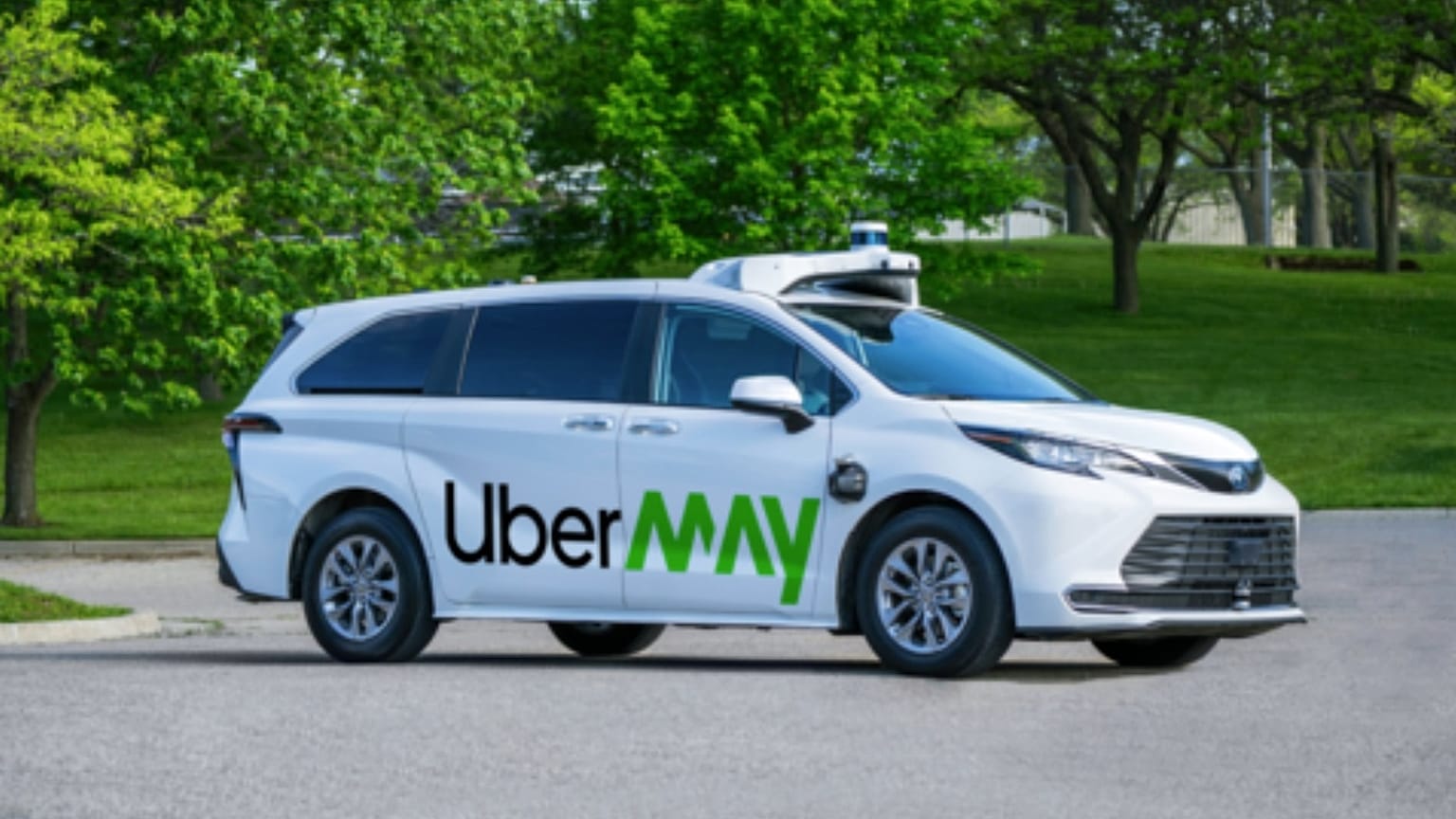
Uber will deploy autonomous vehicles in Madrid in 2026, making the Spanish capital one of the first European cities with operational driverless taxis.

Madrid could join other European capitals in launching driverless taxis on the road this year.

Uber announced on Wednesday that it will deploy autonomous vehicles Spanish capital before the end of 2026, in a step that marks a turning point in urban mobility.

The company is already in talks with the Madrid authorities to define the regulatory and operational framework for the service. The aim is for users to be able to request a self-driving car from the app, without anyone at the wheel.

From the experiment to the street

So-called robotaxis are already operating in several cities around the world, but their arrival in Madrid represents a qualitative leap for the Spanish market. The vehicles will be equipped with sensors, cameras and radars capable of analysing the environment in real time, detecting pedestrians and reacting to unforeseen events with artificial intelligence systems.

Uber has not yet detailed in which areas they will start operating or whether there will be safety drivers in the first phases. What is clear is that the rollout will be progressive and under regulatory supervision. The company has also announced that robotaxis will be deployed in London and Los Angeles.

A global race for autonomous driving

The move is part of the company's broader strategy to expand autonomous mobility in several international cities this year. The race to lead in driverless transport has intensified, with technology companies and manufacturers investing billions in development and testing.

For Uber, landing in Madrid is key. Spain is a rapidly expanding market for Uber, and the Spanish capital offers a complex and ideal urban environment in which to test the technology. In 2025, Uber had a 50 percent higher turnover in the Spanish market.

Revolution or challenge?

The arrival of autonomous vehicles raises questions: will they reduce accidents**,** will they be more efficient and sustainable, and how will they affect employment in the transport sector?

It also raises regulatory and social acceptance challenges. Driving without a human steering wheel still raises doubts among some of the population, especially with regard to safety.

What seems indisputable is that the urban mobility model is changing. And Madrid could be on the verge of a scene that until recently seemed straight out of science fiction: ordering a car from your mobile phone and having it arrive without a driver.