Sunday, February 15, 2026

Objective Fallacy: Eulogies on the Passing of the Law Based International Order


The eulogies are starting to wear thin. The lamented passing of the rules and law-based order only makes sense to those who believed that such rules and laws existed in the first place.  How easy it is to forget that the spanning hegemon of each age always presumes that its laws and norms are objective universal features, putative and significant enough to be revered and inked for eternity. That most irritating term “rules-based order” is more a stress on the order backed by might rather than the rules themselves, a figment of legal draughtsmanship. Without a degree of might, there are no rules. If there are those who refuse to abide by those rules, might will be brought to bear upon the recalcitrant and the disobedient.

This discomforting reality has either been shielded from the United States’ allies or deliberately avoided. Whether it is security guarantees, defence pacts, trade deals, or mutual undertakings, the notion of an international order objectively existing and binding on all has been most attractive to the beneficiaries, who have preferred to see less a brutish hegemon than a benign, nuclear-armed caretaker.

Canada’s sense of sorrow at the demise of the international system as understood was conveyed through Prime Minister Mark Carney in his January 22 speech at the World Economic Forum in Davos, Switzerland. He reacted like one newly born to bald realities, making a few mild concessions that the previous state of things had been something of a convenient sham. He acknowledged, for instance, that the rules-based order “was partially false, that the strongest would exempt themselves when convenient, that trade rules were enforced asymmetrically, and we knew that international law applied with varied rigour, depending on the identity of the accused or the victim.” Carney’s grievance was that the order, as understood, had turned back to bite with feral ferocity. “You cannot live within the lie of mutual benefit through integration when integration becomes the source of your subordination.”

On February 13, German Chancellor Friedrich Merz did much the same thing at the annual Munich Security Conference, explaining why the grumpy motto of the gathering was “under destruction”. The order in question, one of rights and rules, was “currently being destroyed.” Imperfect as it was, “even in its heyday [it] no longer exists.” Making sure not to attack the United States for being a smash and grab culprit in this process, he referred with predictable consistency to “Russia’s violent revisionism” and war in Ukraine, and China’s “strategic patience” that might, in due course, well put it “on an equal footing with the United States in military terms.”

With a heavy note of resignation, the Chancellor seemed to mourn the challenge to, and possible dethronement of, US leadership, a time that had been good for Europe’s lotus-eaters. The world had since altered, and the Americans had adapted. As should Europe and Germany. The latter, in particular, had haughtily “criticised violations of the international order all over the world” without having “the means to solve the problem.” What was needed was a “mental transformation”, one focused not on “hegemonial fantasies” but on “leadership and partnership”. To do so, Merz proposed a foggy four-pillar “freedom agenda”: strengthening Germany and Europe “militarily, politically, economically and technologically”; creating a sovereign Europe; reiterating, despite the bruising challenges, the continuing importance of the transatlantic relationship; and pursuing a global network of collaborative states. “Europe and the transatlantic relationship remain central, but they are no longer enough on their own.”

US Secretary of State Marco Rubio, for his part, told the same conference that the term rules-based global order was “overused”.  In any case, it had, with ghastly effect, replaced the national interest, prized “a dogmatic vision of free and unfettered trade”, seen the outsourcing of “our sovereignty to international institutions” while selfish states feathered their welfare systems “at the cost of maintaining the ability to defend themselves” and diminished the significance of national borders (those naughty migrants again).

The remarks by Carney and Merz about an upended world that was never up to begin with exaggerate the collapse of an order that was only relevant because it had been promulgated by US power and the promise of a Pax Americana. Give Washington access to your military real estate, and its armies and nuclear weapons would defend you, much like a protection racket, against invisible threats.  The term “joint operation” would alleviate local concerns about the loss of sovereignty.

Given the recent shocks inflicted by the Trump administration in terms of rhetoric and conduct on the very basis of international rules, politicians in allied and satellite states must reassure their voters about their feigned anger and synthetic outrage. The truculent orange monster in the White House must be abominated but remain un-ostracised: he retains the keys to the castle. Whatever is said in Washington about the reliability of its allies, a number of European countries, Canada, and Australia have systems of interoperable dependence with the US imperium when it comes to military deployments.  Ambitious chatter about an independent European deterrent against fictional hordes of Russians readying to march across the continent remains a gurgling fantasy.

Since an enforceable legal system of rules assumes the presence of violence exercisable by some authority (that’s one for the legal positivists), its application has always been artificially constrained through the UN Security Council. This gave the comforting illusion that force could be regulated even as bullying powers could wage surrogate wars in distant theatres, crushing aspiring revolutions and social experiments while overthrowing elected governments.

Seeing as countries – and the US in particular – have openly torn off the mask of hypocrisy in observing international restraints, there is much to commend the crude fact that the rule of the gangster will be applied when self-interest demands it. Throw in sufficient arms and personnel, and one is sitting pretty. Ending the pantomime of the rules-based order does not spell an end to the system of power that continues to exist.  It simply never went away.

Blind and Deaf to AUKUS: Australian Planners and Elusive Submarines


There were never the sharpest negotiators in the room, resembling a facsimile of Bertie Wooster in desperate need of the good advice of his manservant Jeeves. The Australian defence establishment has yet to find a wise head who will finally tell them that the A$368 billion AUKUS pact between the three Anglophone powers of Australia, the United Kingdom, and the United States has only one oversized beneficiary in mind.

While the Australian treasury gets drained in throwing cash at US naval yards in acts of stealthy proliferation for Washington’s military industrial complex (A$1.6 billion has so far been forked out), it is becoming increasingly clear that a good gaggle of officials and lawmakers have no appetite to either relinquish Virginia-class nuclear-powered submarines (SSN-774) to the Royal Australian Navy or to give its sailors sovereign control of them if that were ever to make the Pacific journey. The sale of the SSN-774 to Canberra is part of Pillar 1 of the AUKUS enterprise, envisaging, in addition to providing such boats to the Royal Australian Navy (RAN), the rotational deployment of four US SSNs and one UK SSN to Australia out of Western Australia, the subsequent construction of three to five replacement SSNs for the US Navy, and aid Australia in the construction of three to five SSNs based on what will be a new UK-Australian design.

A good temperature reading of reluctance regarding the Virginia-class boats can be gathered from those invaluable reports from the Congressional Research Service, Australian officials, and journalists often ignore and seem reluctant to consult. Given that the US Congress will be the final arbiter of whether a single Virginia SSN is ever transferred into Australian hands under the National Defense Authorization Act (NDAA), these comprehensive overviews plot the concerns for US lawmakers and what direction is likely regarding the expectations of AUKUS. Australia’s doddery and woolly-minded political class ignore them at their peril.

The latest report, authored by Ronald O’Rourke and published on January 26, 2026, lacks a glamorous title. But there is enough punch in Navy Virginia-Class Submarine Program and AUKUS Submarine (Pillar 1) Project: Background and Issues for Congress to sting officials in Canberra into a state of nightmare-inducing worry.

The issues for Congress identified in the report are not new. These include whether the procurement rate for the financial year (FY2026) of the SSN-774 and subsequent years should remain at 2 boats per year, or be adjusted; how the Navy and Department of Defense are using funds from the submarine industrial base (SIB) since FY2018, and how this has affected the production of Virginia-class boats; the maintenance backlog of SSNs in service and its impacts “on SSN – and overall Navy – capabilities, and steps the Navy plans to take to reduce the backlog”; and potential benefits, costs, and risks arising from the procurement rate and the way SIB funds are used.

The crucial test here, and one that would do away with any suggestions of Australian sovereignty on the matter, is how such “benefits, costs, and risks compare with those of an alternative of procuring up to eight additional Virginia-class SSNs that would be retained in US Navy service and operated out of Australia along with the US and UK SSNs that are already planned to be operated under Pillar 1.” Concern is expressed, as with previous reports, about the lack of clarity as to whether Canberra would support the US in a future conflict with China. “Selling three to five Virginia-class SSNs to Australia would thus convert those SSNs from boats that would be available for use in a US-China crisis or conflict into boats that might not be available for use in a US-China crisis or conflict.” Rather crushingly, the report goes on to question Australian prowess regarding the use of the boats, in that deterrence against China would become less persuasive if “Beijing were to find reason to believe, correctly or not, that Australia might use its Virginia-class boats less effectively than the US Navy would use them.”

Australia’s role as an appendage of US strategic deterrence against China in the Pacific is crudely confirmed: its bases are mere platforms for Washington’s warmaking plans, with the RAN left undistinguished and diminished. This applies both to the naval component and RAAF Base Tindal in the Katherine region, which will host six nuclear-capable B-52 bombers. Australia’s signatory status as a member of the Treaty of Rarotonga, also known as the South Pacific Nuclear Free Zone Treaty, would, if it has not already, cease to be relevant.

The review of AUKUS conducted by Trump’s Undersecretary of Defense Policy, Eldridge Colby, while not available to the public, can hardly have deviated from the central premise that parting with the Virginia boats will be only possible if the production rate of submarines rises to 2 a year, and given that, what strategic implications would arise regarding US control over them.  Colby had previously warned that the AUKUS pact would only “lead to more submarines collectively in 10, 15, 20 years, which is way beyond the window of maximum danger, which is really this decade.”

When Colby’s completed review was sent to the Australians last December, Pentagon spokesman Sean Parnell released a statement insisting that the recommendations for the review were for the benefit of improving the security pact. “Consistent with President Trump’s guidance that AUKUS should move ‘full steam ahead,’ the review identified opportunities to put AUKUS on the strongest possible footing.” It is hard to see how Australia ends up well here.

Australian pundits on the strategic cocktail circuit have suggestions as to how to sell Canberra’s broader capitulation to the US imperium and its military. These are drearily unoriginal. On the stationing of B-52s in the Northern Territory, for instance, Miranda Booth, writing for the Lowy Institute Interpreter, suggests the rather crusty propaganda line of collaboration. “The key is to put an emphasis on joint plans for training and exercises that build solidarity and trust, and enhance regional interoperability.” Such duplicity would magically dispel the appearance that Australia was merely a servile and willing client to US power.

The Australian Defence Minister, Richard Marles, a fool of Chaucerian proportions, deserves a star of commendation in his denials of what AUKUS really entails. On his regular sojourns to Washington, he always comes back with the same glassy ignorance, failing to digest any contradicting briefings or literature that might have appeared. He has a story to tell a public he wishes to gull, and he always insists on sticking to it. Pity for Australian electors, it’s never the right one, let alone accurate.

Binoy Kampmark was a Commonwealth Scholar at Selwyn College, Cambridge. He lectures at RMIT University, Melbourne. Email: bkampmark@gmail.comRead other articles by Binoy.

The Antidote to Despair


We are living at a time of historical significance. We feel it in our bones, and it relentlessly gnaws at our consciousness. The familiar is rapidly unraveling. The transition to whatever is to come is disquieting and disorienting, and we don’t know how to respond. We cannot grasp these events because the ethical codes of conduct and morality in which they occur are outside of the psychological norms of healthy human beings.

Information is bombarding our senses so fast that we cannot assimilate it. We cannot keep up. The geopolitical landscape is constantly shifting.  We are overwhelmed, distracted by an avalanche of news that weighs us down. This is by design. The deluge of information gives us no time to process; it keeps us on the defensive, on edge, reacting. Such a posture prohibits us from being proactive.

At such times, it is easy to feel disempowered and at the mercy of circumstances. That is exactly how the power elite and the corporate propaganda mills want us to feel. They want us to feel divided and alone, defeated and humbled. We feel a sense of hopelessness and despair rising in us like lava in a magma chamber. Conflicted emotions and righteous indignation make us want to erupt, but somehow we remain passive and compliant. We take the path of least resistance because it is easier than alternatives that require more of us, even though they could potentially yield better results.

We hesitate at the brink of possibility, believing that the wealthy possess all the power and that we have none. If we believe what they tell us, we are doomed, and we will have only ourselves to blame.

The sense of powerlessness promotes acceptance of governmental misconduct as the norm. Feeling powerless leads to passivity, to surrender, and to defeatism. It permits the forces of evil to carry out their grim work in the public eye without serious resistance. Our passivity facilitates their efforts.

The most powerful and prominent men and women in America and Europe, as the Jeffrey Epstein files reveal, are not as high and mighty as they would have us believe. They are not, as they pretend to be, Gods among mortal men endowed with rights and privileges of divine origins that are denied to the rest of us. They would have us believe that they are our supreme masters and we are their servants.

The power elite masquerade as noble men and women, but if truth be told, sadists and pedophiles are not fit to rule anyone. They belong in prison.

So much for the perceived elevated status of the rich and powerful. We, not they, are the producers. We do the work and pay the price in their hegemonic wars, but they own the means of production, and we have no voice in the government. The fault is partly our own.

We want citizenship to be easy and clean. We believe that if we cast our vote for some candidate or other, we have discharged our civic duty. In reality, as history demonstrates, it makes little difference whether you vote Democrat or Republican. They are two sides of the same coin. Both are funded by the same sources.

The political duopoly in America consists entirely of capitalists. We oscillate between Republicans and Democrats, thereby unwittingly maintaining the status quo in perpetuity.  Workers are essentially selecting their oppressors each election cycle by replacing one capitalist with another, and so the malignancy metastasizes.

Democrats and Republicans need each other. They need someone to blame, and that is how the working class is divided. We vote in the absence of choice. Choosing between competing evils is a false dichotomy that leads to the same dead end. It does not provide an alternative to evil. So we vote in the absence of choice for a democracy we don’t have and probably never will, and now here we are, up shit creek without a paddle.

We have two broad choices in addressing systemic corruption, injustice, and grotesque inequality: resistance or acquiescence.

In 1849, Henry David Thoreau published an essay of historical significance: On the Duty of Civil Disobedience. Thoreau was jailed for refusing to pay his poll taxes because he saw that they supported the institution of slavery in the war with Mexico. Rather than acquiesce to what he considered evil, Thoreau chose a path of principled resistance. He did so at considerable risk to himself, but he knew that freedom wasn’t free. Thoreau considered principled action, in his case, civil disobedience, to be the moral duty of every American citizen.

Later, Thoreau noted that he felt as if he had been the only man in Concord to pay his taxes. Thoreau could have taken the easy way out, but he chose not to.

Thoreau clandestinely conducted runaway slaves onto the underground railroad to Canada, where freedom awaited them. Had he been arrested, Thoreau would have faced serious punishment, and the course of American history might have been altered.

Thoreau’s acts of performative consciousness profoundly affected Dr. Martin Luther King during this nation’s civil rights marches of the late fifties and sixties. Dr. King read Thoreau’s treatise while serving time in jail in Birmingham, Alabama.

Similarly, Mahatma Gandhi, who led the fight for India’s independence from the British Empire, used Thoreau’s Civil Disobedience as his moral guide in the non-violent fight against British Colonialism. Both Dr. King and Gandhi ultimately won their struggles for justice against long odds. Then, as now, performative conscience wins the day, but it requires more from each of us than merely casting a ballot.

If the citizens of a nation find the actions of the government to be offensive, immoral, or unjust, they are under no obligation to obey said government, especially when that government breaks the law and shreds the Constitution and acts against the will of the people and the public good.

Principled action is the antidote to despair. Collective action of the working class is self-empowerment. It does not ask anything of government or power; it independently asserts its own power, its own individual and collective sovereignty, and it procures its own emancipation from the ruling class and its corrupt institutions. It takes what rightfully belongs to it.

In times like these, when the very foundations of civil society are under siege, the people must not put their faith in political institutions that have been corrupted by money and power. The struggle for democracy requires class consciousness. Justice will not be achieved in the voting booth. It must be won in the streets through class struggle, through national strikes and other acts of civil disobedience. It must come through iron-clad worker solidarity and coordinated class struggle.

Resistance to fascist dictatorship must emerge from a class-based grassroots movement built from the ground up. Rather than choose sides along party lines, either liberal or conservative, workers must organize along class lines. As things stand now, workers, who constitute the great majority of the population, have virtually no representation in government. Money talks, and it buys influence with the legislature and the President. It is Robin Hood operating in reverse. It takes from the poor and gives to the rich.

The oligarch’s government is not acting with the consent of the working people and the poor. It has become predatory and cannibalistic. It responds to the demands of the power elite, and it does so by oppressing the working class that built this nation. It has become ugly and increasingly violent.

We are in the midst of a class war. That is what this struggle has always been, and always will be, until the workers take power.

Charles Sullivan is a writer/philosopher who resides on planet earth in the Ridge and Valley Province of Turtle Island (North America). Email: charlessullivan7@comcast.net. Read other articles by Charles.

Poor Financial And Operational Performance Are Not Unique To Chicago Charter Schools


Charter schools are outsourced schools, also known as contract schools. They are privately operated, deregulated, and laser-focused on siphoning substantial sums of public money, services, and facilities from public schools. Charter schools are essentially pay-the-rich schemes masquerading as great inventions designed to close the century-old “achievement gap.” There is nothing grass-roots about them.

Recognizing that privatization intensifies corruption, inefficiency, nepotism, opportunism, and criminal conduct wherever it appears, it comes as no surprise that scandal, controversy, and failure have long-plagued the charter school sector nationwide.

A February 11, 2026, article in Chalkbeat, “Underfunding or mismanagement? Financial troubles at multiple Chicago charters spur a push for answers and solutions,” highlights long-standing problems in the city’s many charter school networks: “ASPIRA is one of a string of charters in the city that have floundered financially and in some cases moved to merge or close schools over the past year and a half.” This is a story told repeatedly across the country. The article’s title is misleading because charter schools are quintessential private entities with no legitimate claim to public funding. To suggest that there is charter school “underfunding” is thus disinformation. The question is: why are businesses such as charter schools receiving any public funds at all?

Chicago Public Schools (CPS) oversees most city charter schools, which together enroll about 50,000 students. For his part, Alfonso Carmona, the district’s interim chief education officer, says “charters face a widespread and systemic crisis.” As in other states and cities, this has long been the case. Problems are so bad that CPS predicts that half a dozen charter operators will “end this fiscal year in the red.” Fiscal problems in charter schools are often accompanied by low enrollment, poor operational decisions, and weak academic performance.

Several considerations arise here.

First, chaos, mismanagement, and fiscal problems are long-standing problems in the entire charter school sector. They have been present in thousands of charter schools nationwide for more than three decades. Privatization lends itself to such problems. What is new about these problems is that they worsen steadily each year. The extent of collapse and failure continues to increase annually. Accountability has been so low in the charter school for 30+ years that many refer to it as “accountabaloney.” No one should expect this to change with more neoliberal state restructuring that privileges private interests over public authority and democracy.

Second, traditional public schools, state governments, and the federal government should not permit the transfer of any public funds or assets to charter schools, as they are private entities rather than public organizations. Public resources do not belong to private interests; they belong to the public. Public authorities should also not permit charter school owners and operators to create the impression that the endless problems plaguing charter schools are caused by traditional school districts, state governments, and the federal government. That is straightforward disinformation. Many problems would actually be solved if no charter schools were created by neoliberals and privatizers in the first place.

Third, it is important to avoid false debates, such as whether charter schools are underfunded or funded equitably. It cannot be overstated that charter schools are not public schools, no matter how many times charter advocates assert otherwise. An entity does not become public property just because the label “public” is slapped on it. Nor does it become public just because it receives public money. Public means something broader and deeper. Public funds must be kept in traditional public schools.

It behooves CPS to stop enabling charter schools and their persistent problems, as these all come at the expense of CPS teachers, students, principals, and parents. By the same token, students, teachers, and principals in Chicago’s charter schools have been subjected to various forms of humiliation and problems by charter school operators such as Acero Schools, Noble Schools, and Aspira Schools.

The struggle between unconscious acceptance of outsourced schools and conscious rejection of such privatized education arrangements is likely to intensify in the months and years ahead. Humans will always strive to become aware of reality, even in the face of disinformation and intense cultural oppression and aggression.

Shawgi Tell (PhD) is author of the book Charter School Report Card. He can be reached at stell5@naz.eduRead other articles by Shawgi.


Everyone Is Allowed To Protest


Tied up with the apparently very longstanding tradition of claiming that all opponents of atrocities are purely engaged in what has recently been called “virtue signaling” is the idea that only certain types of people are qualified to protest certain things — or to ever say or do anything decent at all.


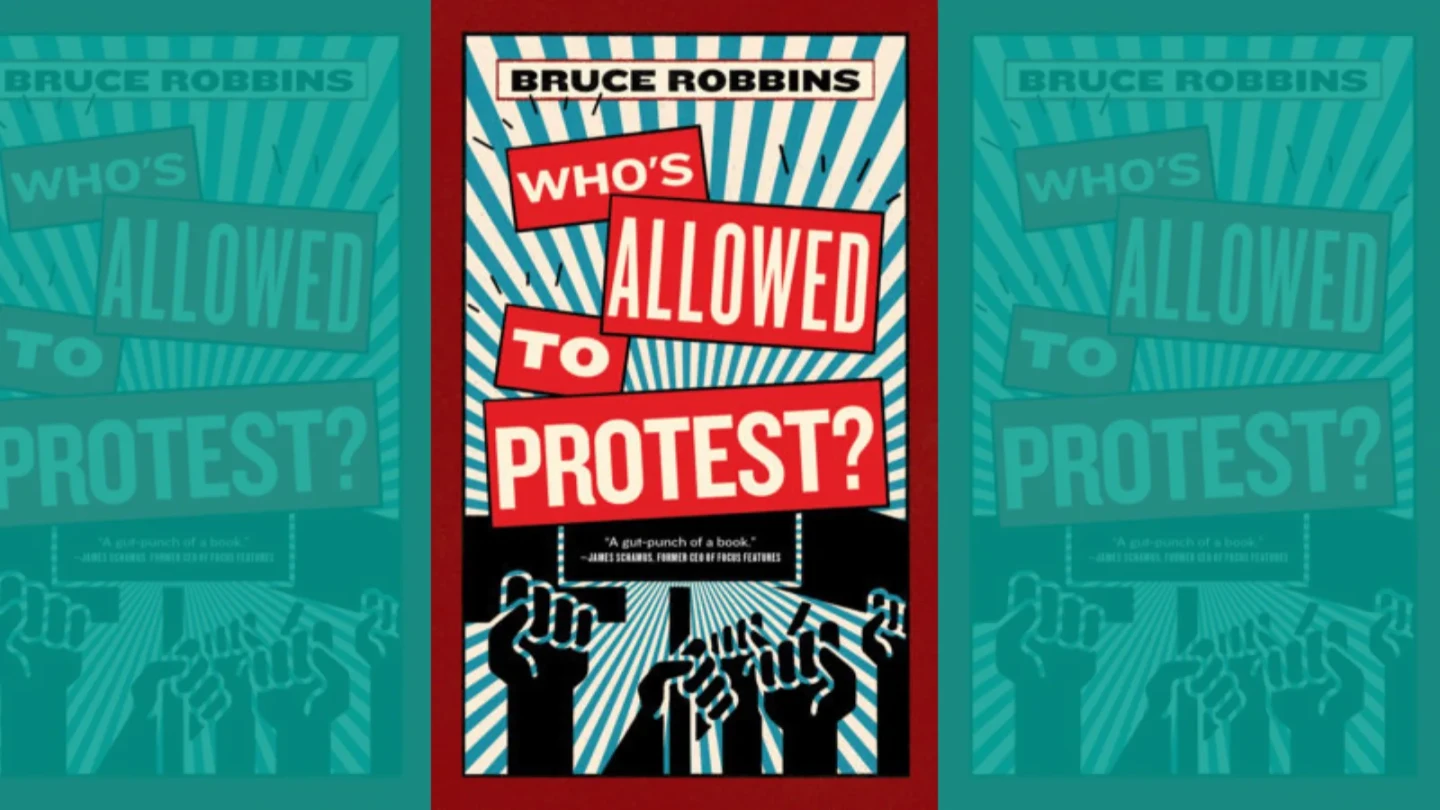
Columbia University professor Bruce Robbins exposed his students to possible criticism of the Israeli military, and was, for that reason, declared by his employer guilty of discrimination and harassment. Robbins could have written a book on the absurdities involved in defining criticism of genocide as discrimination, and defining criticism of any military on Earth other than the Israeli military as not discrimination. Instead, in Who’s Allowed to Protest?, he has written a debunking of some other absurd rejections of protesting.

If you don’t read grotesque rightwing columnists or watch television “news,” you may question the need for what Robbins has done. But his book traces the centuries-long history of some of the ludicrous arguments involved, managing to suggest that they have played a greater role in our society than might be clear from the New York Times editorial page alone.

The book opens by looking at the claim that those who protest genocide in Gaza do so purely in order to make themselves look good, and not at all because they care about other human beings. If one were to accept that idea, then, presumably, it would follow that every peace demonstration against a distant war, every protest of a distant sweatshop, every effort to preserve livable ecosystems for future generations, and a huge percentage of all activist campaigns ever, back to opposition in Britain to slavery in the Caribbean and beyond, has been entirely sociopathic posturing.

It strikes me as absurd to suggest that a human action of this sort (protesting mass killing) could have only one simple motivation for every person engaged in it. The wars being protested by peace demonstrations often have dozens of motivations, even in the same individual. Our political system generally consists of switching back-and-forth between a government that tells you it’s going to bomb people for their own good and a government that tells you it’s going to bomb people because they aren’t people. But regardless of the emphasis, both of those arguments and many others, stated and unstated, accompany every war. How could everyone’s opposition to such wars be uniform? How could no one oppose what wars do to the budgets for useful things? How could no one oppose what wars do to the rule of law? How could no one oppose what wars do to the natural environment? Etc., etc. Actual peace rallies in the real world often struggle with deep divisions, including between those who oppose all sides of all wars and those who cheer for the other side of some war. If these deeply divided people were all just posturing, then presumably they would have all landed together on whichever was the grandest posture.

And it strikes me as incoherent to suppose that one can make oneself look good by protesting war in a society where no one else actually cares about protesting war and consequently where no one else is going to actually think you look good.

But what, after all, is wrong with trying to make oneself look good by conspicuously opposing mass murder? Don’t we want a society in which everyone competes with everyone else at most effectively and determinately opposing mass murder? And, in a so-called representative democracy, isn’t the ideal elected official, in the ideal public arena, one who can be moved by public sentiment and agitation to oppose mass murder, even though in their heart of hearts they really don’t want to? Isn’t that the absolute ideal?

I’m reminded of something that David Hume wrote many years ago, which I think stands on its own merits to this day, quite apart from Hume’s belief in numerous absurdities, including racism and just empires. Hume wrote:

“There are two things which have led astray those philosophers that have insisted so much on the selfishness of man. In the first place, they found that every act of virtue or friendship was attended with a secret pleasure; whence they concluded, that friendship and virtue could not be disinterested. But the fallacy of this is obvious. The virtuous sentiment or passion produces the pleasure, and does not arise from it. I feel a pleasure in doing good to my friend, because I love him; but do not love him for the sake of that pleasure.

“In the second place, it has always been found, that the virtuous are far from being indifferent to praise; and therefore they have been represented as a set of vainglorious men, who had nothing in view but the applauses of others. But this also is a fallacy. It is very unjust in the world, when they find any tincture of vanity in a laudable action, to depreciate it upon that account, or ascribe it entirely to that motive. The case is not the same with vanity, as with other passions. Where avarice or revenge enters into any seemingly virtuous action, it is difficult for us to determine how far it enters, and it is natural to suppose it the sole actuating principle. But vanity is so closely allied to virtue, and to love the fame of laudable actions approaches so near the love of laudable actions for their own sake, that these passions are more capable of mixture, than any other kinds of affection; and it is almost impossible to have the latter without some degree of the former. Accordingly we find, that this passion for glory is always warped and varied according to the particular taste or disposition of the mind on which it falls. Nero had the same vanity in driving a chariot, that Trajan had in governing the empire with justice and ability. To love the glory of virtuous deeds is a sure proof of the love of virtue.”

In other words, assuming that those who viciously oppose protests of genocide and cheer for violent assaults against protesters actually have in mind a superior sort of genocide protester, can we really be supposed to imagine that such an ideal protester should be indifferent to praise? Have many people ever been found who were indifferent to praise? One can be not indifferent to praise without being dependent on others to act, without being incapable of making one’s own judgments, without seeking to name every public building after oneself or compel Nobel prize winners to hand over their medals. To be completely indifferent to praise seems outrageously extreme as a requirement for any protester to be to any degree actually interested in what they are protesting.

But perhaps some protesters are fairly indifferent to praise. We cannot ask every anonymous donor to a cause, or any unnamed source in a report, whether they’d like to be thanked. But those whom I do know and who ask not to be thanked for their efforts for peace, or who show up at rallies in masks, do not all seek anonymity out of fear. Those willing to be seen and named, however, must set aside the fear of repercussions — it’s not all rewards and glory.

Tied up with the apparently very longstanding tradition of claiming that all opponents of atrocities are purely engaged in what has recently been called “virtue signaling” is the idea that only certain types of people are qualified to protest certain things — or to ever say or do anything decent at all. Perhaps because the critic is himself greedy and unimaginative, the criticism is produced that says only poor people can oppose poverty, and only someone in a racial minority can oppose racism. Etc. Robbins questions the current concept of “checking one’s privilege” when it is used to suggest a problem, not with being racist or sexist, but with being “white” or male. Of course, “check your privilege” can be used in countless ways, including as a way of asking verbose, articulate people to shut up for a minute and let someone else have a chance to talk, etc.

But the notion that many millions of people are “privileged,” and therefore cannot protest injustice without hypocrisy, not only profiles people unfairly and distracts from the small number of plutocrats leading the destruction of all that is good, but also dooms us to a catastrophic shortage of protesters. Or it would, if we were to listen to it. And wouldn’t we want protests of wars with hypocrisy over no protests of wars?!

Robbins examines the notion of an “elite” that is not of wealth or power, but a cultural elite. By now, we’re probably all familiar with the ploy of telling poor people to vote for billionaires in order to vote against some vaguely conceived, cultural and intellectual elite — even if it leaves them and the rest of us all worse off. Robbins points out that columnists like David Brooks, much to the bewilderment of long-time peace agitators, actually claim that students protesting a genocide are simply trying to gain entrance to or maintain their status in a supposed elite.

Robbins interrogates claims of privileged and unprivileged statuses, exposing the wealth of the critics of privilege, noting that the working class in a wealthy country can globally be an elite. In the end, he wants money, wherever it came from, put to good causes. I agree. All money should be redirected to good work if it’s done without strings attached. And the good work of protesting injustice should be rewarded. More protesters should be “paid protesters,” and we should recognize with Robbins that the notion of an unpaid intellectual was a notion based on hoarded wealth, as the Olympic notion of the unpaid athlete was a notion based on excluding those who needed to be paid if they were going to play at sports all day.

Robbins celebrates student protesters of war. I agree. But I’m less sure of his references to the “responsibility of intellectuals” — the responsibility of those capable of recognizing a genocide to protest it. Millions of people who’ve never set foot on a college campus but have access to social media have recognized a genocide. We should be deeply grateful to those who apply their scholarship to their work for peace, but I wouldn’t sell anyone short or let anyone off the hook.

RootsAction Education Fund will be holding an online book club on April 1 at 5 p.m. PT / 8 p.m. ET with Bruce Robbins, author of Who’s Allowed to Protest? The event is free, but it’s up to you to buy the book or borrow it from a friend or library, then show up and ask questions!

Originally appeared on https://progressivehub.net/everyone-is-allowed-to-protest/

David Swanson is an author, activist, journalist, and radio host. He is director of WorldBeyondWar.org and campaign coordinator for RootsAction.org. Swanson's books include War Is A Lie. He blogs at DavidSwanson.org and War Is a Crime.org. He hosts Talk Nation Radio. Follow him on Twitter: @davidcnswanson and FaceBookRead other articles by David.
Americans are asking too much of their dogs

Photo by Bharathi Kannan on Unsplash

February 10, 2026

Americans love dogs.

Nearly half of U.S. households have one, and practically all owners see pets as part of the family – 51% say pets belong “as much as a human member.” The pet industry keeps generating more and more jobs, from vets to trainers, to influencers. Schools cannot keep up with the demand for veterinarians.

It all seems part of what Mark Cushing, a lawyer and lobbyist for veterinary issues, calls “the pet revolution”: the more and more privileged place that pets occupy in American society. In his 2020 book “Pet Nation,” he argues that the internet has caused people to become more lonely, and this has made them focus more intensely on their pets – filling in for human relationships.

I would argue that something different is happening, however, particularly since the COVID-19 lockdown: Loving dogs has become an expression not of loneliness but of how unhappy many Americans are with society and other people.

In my own book, “Rescue Me,” I explore how today’s dog culture is more a symptom of our suffering as a society than a cure for it. Dogs aren’t just being used as a substitute for people. As a philosopher who studies the relationships between animals, humans and the environment, I believe Americans are turning to dogs to alleviate the erosion of social life itself. For some owners, dogs simply offer more satisfying relationships than other people do.

And I am no different. I live with three dogs, and my love for them has driven me to research the culture of dog ownership in an effort to understand myself and other humans better. By nature, dogs are masters of social life who can communicate beyond the boundaries of their species. But I believe many Americans are expecting their pets to address problems that they cannot fix.

Dogs over people

During the pandemic, people often struggled with the monotony of spending too much time cooped up with other humans – children, romantic partners, roommates. Meanwhile, relationships with their dogs seemed to flourish.

Rescuing shelter animals grew in popularity, and on social media people celebrated being at home with their pets. Dog content on Instagram and Pinterest now commonly includes hashtags like #DogsAreBetterThanPeople and #IPreferDogsToPeople.

“The more I learn about people, the more I like my dog” appears on merchandise all over e-commerce sites such as Etsy, Amazon and Redbubble.

One 2025 study found that dog owners tend to rate their pets more highly than their human loved ones in several areas, such as companionship and support. They also experienced fewer negative interactions with their dogs than with the closest people in their lives, including children, romantic partners and relatives.

The late primatologist Jane Goodall celebrated her 90th birthday with 90 dogs. She stated in an interview with Stephen Colbert that she preferred dogs to chimps, because chimps were too much like people.

Fraying fabric

This passion for dogs seems to be growing as America’s social fabric unravels – which began long before the pandemic.

In 1972, 46% of Americans said “most people can be trusted.” By 2018, that percentage dropped to 34%. Americans report seeing their friends less than they used to, a phenomenon called the “friendship recession,” and avoid having conversations with strangers because they expect the conversation to go badly. People are spending more time at home.

Today, millennials make up the largest percentage of pet owners. Some cultural commentators argue dogs are especially important for this generation because other traditional markers of stability and adulthood – a mortgage, a child – feel out of reach or simply undesirable. According to the Harris Poll, a marketing research firm, 43% of Americans would prefer a pet to a child.

Amid those pressures, many people turn to the comfort of a pet – but the expectations for what dogs can bring to our lives are becoming increasingly unreasonable.

For some people, dogs are a way to feel loved, to relieve pressures to have kids, to fight the drudgery of their job, to reduce the stress of the rat race and to connect with the outdoors. Some expect pet ownership to improve their physical and mental health.

And it works, to a degree. Studies have found dog people to be “warmer” and happier than cat people. Interacting with pets can improve your health and may even offer some protection against cognitive decline. Dog-training programs in prisons appear to reduce recidivism rates.

Unreasonable expectations

But expecting that dogs will fill the social and emotional gaps in our lives is actually an obstacle to dogs’ flourishing, and human flourishing as well.

In philosophical terms, we could call this an extractive relationship: Humans are using dogs for their emotional labor, extracting things from them that they cannot get elsewhere or simply no longer wish to. Just like natural resource extraction, extractive relationships eventually become unsustainable.

The late cultural theorist Lauren Berlant argued that the present stage of capitalism creates a dynamic called “slow death,” a cycle in which “life building and the attrition of life are indistinguishable.” Keeping up is so exhausting that, in order to maintain that life, we need to do things that result in our slow degradation: Work becomes drudgery under unsustainable workloads, and the experience of dating suffers under the unhealthy pressure to have a partner.

Similarly, today’s dog culture is leading to unhealthy and unsustainable dynamics. Veterinarians are concerned that the rise of the “fur baby” lifestyle, in which people treat pets like human children, can harm animals, as owners seek unnecessary veterinary care, tests and medications. Pets staying at home alone while owners work suffer from boredom, which can cause chronic psychological distress and health problems. And as the number of pets goes up, many people wind up giving up their animal, overcrowding shelters.

So what should be done? Some philosophers and activists advocate for pet abolition, arguing that treating any animals as property is ethically indefensible.

This is a hard case to make – especially with dog lovers. Dogs were the first animal that humans domesticated. They have evolved beside us for as long as 40,000 years, and are a central piece of the human story. Some scientists argue that dogs made us human, not the other way around.

Perhaps we can reconfigure aspects of home, family and society to be better for dogs and humans alike – more accessible health care and higher-quality food, for example. A world more focused on human thriving would be more focused on pets’ thriving, too. But that would make for a very different America than this one.

Margret Grebowicz, Distinguished Professor of the Humanities, Missouri University of Science and Technology

This article is republished from The Conversation under a Creative Commons license. Read the original article.
Crash course: Vietnam’s crypto boom goes bust


By AFP
February 15, 2026


Vietnam had allowed blockchain technology to develop in a legal grey area
 - Copyright AFP Nhac NGUYEN


Lam Nguyen

As a first-year computer science student in Hanoi, Hoang Le started trading crypto from his university dorm room, egged on by his gamer friends who were making a killing.

At one point his digital holdings swelled to $200,000 — around 50 times the average annual income in Vietnam.

But they crashed to zero when the bottom fell out of bitcoin and other cryptocurrencies in recent months.

Getting wiped out “hurt a lot”, he told AFP, but he also learned a valuable lesson: he has come to think of the losses as “tuition fees”.

“When profits were high, everyone became greedy,” said Le, now 23, adding that “it was too good to be true”.

Unlike neighbouring China which has banned cryptocurrencies outright, communist Vietnam has allowed blockchain technology to develop in a legal grey area — barring its use for payments but letting people speculate unimpeded.

As a result the young-and-upwardly mobile country of 100 million has been at the forefront of crypto adoption, with an estimated 17 million people owning digital assets.

Only India, the United States and Pakistan have seen more widespread usage, according to a 2025 ranking by the consultancy Chainalysis.

But what once looked like first-mover advantage increasingly looks like a liability as investors stare down a crypto winter.

The price of bitcoin has almost halved since hitting a record high above $126,000 in October, and other digital tokens have slid even further.

Vietnamese crypto startups hawking everything from NFTs to blockchain-based lending and trading services have been hammered, with bankruptcies and layoffs roiling the industry.

– $100 billion market –

“Many companies have shut down because of this crisis,” said Tran Xuan Tien, head of Ho Chi Minh City’s blockchain association.

He added that others are “downsizing and conserving capital to extend their runway”.

Nguyen The Vinh, co-founder of blockchain firm Ninety Eight, told AFP his company has laid off nearly one-third of its staff since last year.

There was more “restructuring” to come, he added, given the gloomy outlook.

“The market will likely remain difficult for years, not just months, so we need backup plans.”

Until recently, Vietnam’s crypto scene was a wild west, with highly speculative ventures and outright Ponzi schemes flourishing alongside startups offering legitimate products.

The government warned about the dangers of crypto and broke up several huge scam operations, including one that allegedly swindled nearly $400 million from thousands of investors.

But it did not move to crush the industry as Beijing did, instead opening “a window for domestic businesses to experiment”, according to Tien.

Under top leader To Lam, who has pursued sweeping growth-oriented reforms, Vietnam has formally embraced the blockchain industry and is gradually asserting control over the estimated $100 billion market.

Last year it passed a law recognising digital currencies, bringing them under a regulatory framework for the first time.

It came into effect last month but investors have questions about how it will be implemented.

Hanoi has also announced a five-year crypto trading pilot programme, which will allow Vietnamese firms to issue digital assets.

But lingering regulatory ambiguity has kept many firms based in the country from formally registering there, opting instead to file paperwork in places such as Singapore and Dubai.

– ‘Downhill badly’ –

Vinh says some firms are folding and others downsizing or pivoting because of both the “prolonged downturn and an unclear legal framework”.

And new entities are struggling to gain traction as investor sentiment sours.

Huu, 24, said fundraising for his crypto-product startup has suddenly become much harder, and asked that only his first name be used for fear of hurting his business.

Foreign investors were once enticed by promises of 400 and 500 percent returns, he said, but were now discovering they “might lose everything”.

“Over the past few months, things have gone downhill badly.”

Founders including Huu and Vinh said the current downturn is part of a natural business cycle, and stronger firms would eventually emerge offering better products.

But that is cold comfort for the nearly 55 percent of individual Vietnamese crypto investors who according to one market analysis reported losses last year.

“In Vietnam, a lot of people trade crypto,” Huu said.

“When prices fall, people complain about losses and the overall mood becomes very gloomy.”
China top court says drivers responsible despite autonomous technology


By AFP
February 14, 2026


China's top court has ruled that the driver is still responsible for road safety in vehicles with assisted driving technology - Copyright AFP/File NOEL CELIS

China’s top court has issued a ruling confirming humans in cars with assisted driving technology are responsible for their vehicle, setting a nationwide benchmark as Beijing positions itself as a standards-setter in the auto market.

In its ruling the court referred to a case in which a man relied on the technology while drunk and asleep at the wheel.

Chinese tech companies and carmakers have poured billions of dollars into autonomous driving technology in the race to outperform each other, as well as rivals in the United States and Europe.

However, Beijing has moved to tighten safety rules after a high-profile crash last March.

Drivers are still responsible for ensuring road safety after activating assisted driving functions, China’s top court said in a “guiding case” issued on Friday.

The reference case is a September ruling in southern Zhejiang province, in which a driver surnamed Wang was jailed and fined for fully relying on the assisted driving system while drunk.

Wang installed a device to mimic hand grip on the steering wheel, set the car to drive then fell asleep in the passenger seat, the court said.

Police found Wang after the car stopped in the middle of a road.

“The on-board assisted driving system cannot replace the driver as the primary driving subject,” the Supreme People’s Court said in the Friday ruling.

The driver “is still the one who actually performs the driving tasks and bears the responsibility to ensure driving safety”, it added.

While most such systems currently used on the road specify that the driver is ultimately in control of the car, the court’s ruling now makes that a legal standard nationwide.

Lower courts are to reference the judgement when deciding on similar cases.

Beijing had already warned leading automakers that safety rules would be more tightly enforced after a crash that killed three college students last March raised concerns over the advertising of cars as being capable of autonomous driving.

Friday’s guidance comes after China announced it will ban hidden door handles on cars, a minimalist design popularised by Tesla, from next year — also over safety concerns.

Folding into the body of the car, such door handles help reduce drag while in motion but are prone to losing operability in the event of a crash.

One high-profile incident occurred in October, when rescuers were shown failing to open the doors of a burning electric vehicle in the southwestern city of Chengdu.
European debate over nuclear weapons gains pace


By AFP
February 14, 2026
Fabien Zamorra and Bryn Stole in Berlin

European leaders, worried about threats from a nuclear-armed Russia and doubts about the future of US security commitments, are increasingly debating whether to bolster nuclear arsenals on the continent.

While the United States and Russia have thousands of nuclear warheads each, in Europe only France and Britain have atomic weapons, with the combined total in the hundreds.

US President Donald Trump’s disdainful comments about NATO and his transactional approach to foreign relations have European allies questioning whether they can risk relying on US protection.

“Europeans can no longer outsource their thinking about nuclear deterrence to the United States,” an expert group warned in a report published for the Munich Security Conference.

It called on Europe to “urgently confront a new nuclear reality” in the face of “Russia’s nuclear-backed revisionism”.

Speaking at the MSC, German Chancellor Friedrich Merz said he was already holding “confidential talks with the French president about European nuclear deterrence”.

Britain’s Prime Minister Keir Starmer said the UK’s nuclear deterrent already protected fellow NATO members but stressed he was “enhancing our nuclear cooperation with France”.

Starmer said “any adversary must know that in a crisis they could be confronted by our combined strength” alongside France.


– US ‘ultimate guarantor’ –


NATO Secretary General Mark Rutte insisted that “nobody” was considering fully replacing the American nuclear umbrella, which has shielded Europe’s NATO countries for decades.

“I think every discussion in Europe making sure that collectively the nuclear deterrence is even stronger, fine,” Rutte, a former Dutch prime minister, told journalists.

“But nobody is arguing in Europe to do this as a sort of replacement of the nuclear umbrella of the United States.

“Everybody realises that is the ultimate guarantor — and all these other discussions are in addition.”

US Under Secretary of Defense Elbridge Colby said that Trump “has made clear the US extended nuclear deterrent continues to apply here” in Europe.

He said there is US “receptivity to a greater European contribution to … the NATO deterrent” — but that conversations need to be “very sober” and “deliberate” because of concerns about nuclear proliferation and instability.


– No good options –


Discussion of nuclear armament has long been viewed as taboo in many other European countries — but Russian aggression and worries about US commitment have forced the issue into mainstream European politics.

Many European officials are convinced that Moscow’s territorial ambitions will not be confined to Ukraine, and that other European countries — including even NATO members — could face some sort of attack.

The MSC report laid out five nuclear options for Europe, while cautioning that none were good. There was “no low-cost or risk-free way out of Europe’s nuclear predicament”, they warned.

“The era in which Europe could afford strategic complacency has ended,” wrote the authors, calling on European policymakers “to confront the role of nuclear weapons in the defence of the continent directly and without delay — and to invest the resources needed to do so competently”.

It listed five options: Continue to rely on American deterrence; strengthen the role of British and French nuclear weapons in a European deterrent; jointly develop European nuclear weapons as a deterrent; increase the number of European countries with their own nuclear arsenals; or expand European conventional military power to present a more intimidating non-nuclear deterrent.

Sticking with the status quo, and relying on America’s unmatched military might, remained “the most credible and feasible option” in the short term, they argued.


– ‘We need action’ –


Very few currently believe Europeans can assume full responsibility for deterrence in the short term.

“If there’s going to be some kind of bigger European investments in France or the UK’s nuclear deterrence, that’s only a good thing,” Finnish Defence Minister Antti Hakkanen recently told AFP.

But he quickly added: “If you’re talking about to compensate US nuclear deterrence, that’s not realistic at this point.”

Experts nevertheless welcomed the increasingly serious political debate on an issue that has long worried military planners.

“That’s very positive, but now we need action,” Heloise Fayet of the French Institute of International Relations (Ifri), a contributor to the MSC report, told AFP.

The report noted that both France and Britain would face a range of challenges in growing their arsenals and extending nuclear protection across Europe — from hefty costs to tricky questions about who holds final authority to launch the warheads.

French President Emmanuel Macron, who has previously raised the possibility of extending France’s nuclear umbrella across Europe, is scheduled to deliver a major speech on French nuclear doctrine at the end of February.

Macron said in Munich he was considering a doctrine that could include “special cooperation, joint exercises, and shared security interests with certain key countries”.
World copper rush promises new riches for Zambia


By AFP
February 14, 2026


Copper demand has exploded in recent years - Copyright AFP/File DENIS CHARLET


Hillary ORINDE

Five years after becoming Africa’s first Covid-era debt defaulter, Zambia is seeing a dramatic turnaround in fortunes as major powers vie for access to its vast reserves of copper.

Surging demand from the artificial intelligence, green energy and defence sectors has exponentially boosted demand for the workhorse metal that underpins power grids, data centres and electric vehicles.

The scramble for copper exposes geopolitical rivalries as industrial heavyweights — including China, the United States, Canada, Europe, India and Gulf states — compete to secure supplies.

“We have the investors back,” President Hakainde Hichilema told delegates at the African Mining Indaba conference on Monday, saying that more than $12  billion had flowed into the sector since 2022.

The politically stable country is Africa’s second-largest copper producer, after the conflict-ridden Democratic Republic of Congo, and the world’s eighth, according to the US Geological Survey.

The metal, needed for solar panels and wind turbines, generates about 15 percent of Zambia’s GDP and more than 70 percent of export earnings.

Output rose eight percent last year to more than 890,000 metric tons and the government aims to triple production within a decade.

Mining is driving growth that is forecast by the International Monetary Fund to reach 5.2 percent in 2025 and 5.8 percent this year, which places Zambia among the continent’s faster-growing economies.

“The seeds are sprouting and the harvest is coming,” Hichilema said, touting a planned nationwide geological survey to map untapped deposits.

But the rapid expansion of the heavily polluting industry has also led to warnings about risks to local communities and concerns of “pit-to-port” extraction, in which raw copper is shipped directly abroad with little domestic refining.


– ‘Dramatic new chapter’ –


“We need to be aware of the potential for history to repeat itself,” said Daniel Litvin, founder of the Resource Resolutions group that promotes sustainable development, referring to the colonial-era scramble for Africa’s resources.

There is a risk that elites will be enriched at the expense of the broader population, while “narratives of partnership” offered by major powers can mask underlying self-interest, he said.

Chinese firms have long dominated the sector in Zambia and control major stakes in key mines and smelters, cementing Beijing’s early-mover advantage.

Another major player is Canada’s First Quantum Minerals, Zambia’s largest corporate taxpayer.

Investors from India and the Gulf are expanding their footprint, and the United States is returning to the market after largely pulling out decades ago.

Washington, which has been stockpiling copper, this month launched a $12 billion “Project Vault” public-private initiative to secure critical minerals, part of an effort to reduce reliance on China.

In September, the US Trade and Development Agency announced a $1.4 million grant to a Metalex Commodities subsidiary, Metalex Africa, to expand operations in Zambia.

“We are at the beginning of what is going to unfold to be a dramatic new chapter in the way that the free world sources and trades in critical minerals,” US energy secretary adviser Mike Kopp said at Mining Indaba.

Sweeping US tariffs introduced last year helped send copper prices soaring to record highs, as companies rushed to buy both semi-finished and refined stocks.


– Cost of rush –


“The risk is that this great power competition becomes a race to secure supply on terms that serve markets and not the people in producer countries,” said Deprose Muchena, a programme director at the Open Society Foundation.

Despite its mineral wealth, more than 70 percent of Zambia’s 21 million people live in poverty, according to the World Bank.

“The world is waking up to Zambia’s copper. But Zambia has been living with copper and its consequences for a century,” Muchena told AFP.

Environmental damage caused by mining has long plagued Zambia’s copper belt.

In February 2025, a burst tailings dam at a Chinese-owned mine near Kitwe, about 285 kilometres (180 miles) north of Lusaka, spilled millions of litres of acidic waste.

Toxins entered a tributary feeding the Kafue, Zambia’s longest river and a major source of drinking water. Zambian farmers have filed an $80 billion lawsuit.

“Whether this boom is different depends on whether governance, rights, and community agency are at the centre, not just supply chain security,” Muchena said.
Rio to kick off Carnival parade with ode to Lula in election year


By AFP
February 15, 2026


Revelers from the Academicos de Niteroi samba school wave flags depicting Brazil's President Luiz Inacio Lula da Silva during a technical rehearsal - Copyright AFP John MACDOUGALL

Fran BLANDY

Rio de Janeiro on Sunday kicks off three days of dazzling carnival parades with a tribute to President Luiz Inacio Lula da Silva that the opposition has criticized as early election campaigning ahead of October polls.

The parades of the city’s top 12 samba schools — a ferocious competition featuring towering, animated floats, thundering drum sections and scantily-clad samba queens dripping in sequins — are the showpiece of Rio’s carnival.

Behind the pomp and glitter, each school chooses an annual theme, often linked to Afro-Brazilian heritage, social or political commentary, mythology and environmental issues.

Samba school Academicos de Niteroi from a city neighboring Rio, which will be the first to parade on Sunday, has chosen to honor Lula, the first time a serving president is the subject of a tribute on the famed Sambodrome avenue.

Lula’s wife, Rosangela ‘Janja’ Da Silva, is expected to take part in the parade, and local media reports the president will watch from one of the VIP boxes along the 700-meter-long avenue.

Public rehearsals of the show, without the full costumes and floats, created an uproar after mocking images of former president Jair Bolsonaro were shown on a screen.

The opposition denounced the parade as equivalent to a campaign event months before official campaigning begins in August, and demanded public funding be cut to the samba school.

Brazil’s electoral court, the TSE, on Thursday unanimously rejected requests filed by two opposition parties to stop Academicos from parading on Sunday on account of the show being “early electoral campaigning.”

The court said it could not block a parade which has not happened yet, as there was no evidence of an election law violation — but warned it could probe wrongdoing after the show.

Members of the court warned they were not giving anyone a “free pass,” and that the case was still ongoing and the public prosecutor had been notified.

Lula, 80, is seeking a fourth term in the October elections.

Jailed far-right former president Jair Bolsonaro has anointed his eldest son, Senator Flavio Bolsonaro, as his political heir and presidential candidate.


– Warnings against election propaganda –


On Friday, the presidency warned officials attending carnival events to “refrain from making statements that could be characterized as early electoral propaganda.”

Lula’s Worker’s Party (PT) on Saturday said the Academicos tribute to Lula was “a cultural manifestation, and any activity of an electoral nature is prohibited at this time.”

The party issued guidelines to avoid clothing, banners, campaign slogans or “expressions that constitute offense to opponents.”

The Academicos parade will involve 3,000 people and feature different scenes from Lula’s life, from his poor beginnings in Brazil’s northeast, to his time as a factory worker and union leader.

The accompanying samba song chants out “Ole, ole, ole, ola; Lula, Lula!”, and declares “no amnesty” — a reference to efforts by Bolsonaro’s supporters to get him freed from a 27-year jail term he is serving for plotting a failed coup.

“This is not propaganda, it’s a tribute,” Hamilton Junior, one of the school’s directors, told AFP.

He said it was a story of a man who “faced many hardships and became one of Brazil’s greatest presidents.”