Sunday, February 15, 2026

 USA


A Victory for the Resistance to ICE and Trump


Sunday 15 February 2026, by Dan La Botz
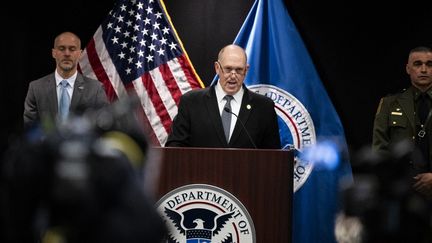

The resistance to Immigration and Customs Enforcement (ICE) and to President Donald Trump’s mass deportation program won a victory last week when Trump and Border Czar Tom Homan announced that they were ending the ICE surge in Minneapolis. [1]

At its peak there were 3,000 ICE and Border agents conducting violent raids in the city, beating, gassing, and murdering two of the city’s residents. ICE’s violent tactics had led to a militant resistance as thousands rallied to challenge ICE, blowing whistles to alert people to the raids, shouting “ICE out!” at the officers, blocking streets and following their cars. The movement in the streets and the national reaction to the violence and violation of civil rights led to a national outcry and Trump was forced to retreat.

At the same time in Congress the Democrats, who have become notorious for their timidity in the face of Trump, have for once taken a firm stand against Trump and ICE. Democrats have demanded that ICE agents remove their masks, that they get warrants to arrest people, wear body cameras to record their actions, and avoid locations such as schools, churches, and hospitals. The Democrats and Republicans passed the majority of the budget, but the Democrats refused to pass the budget for the Department of Homeland Security (DHS) that includes ICE, and Congress adjourned. Last year, however, Congress voted about $80 billion for ICE, so it will not be affected whatever the vote. And Trump and the Republicans are unlikely to accede to any of the Democrats’ demands.

While Congress may be paralyzed, the people are not. Throughout the country protest demonstrations against ICE continue. I went to Southern California last week to visit family and friends in Imperial Beach where I grew up. At Mar Vista High School, my alma mater, students walked out of class, one boy holding up his skate board on which he had written, “Fuck ICE.” Thousands of high school students have walked out at scores of high schools across the country. Friends told me there was not a city or town in San Diego County that hadn’t had protests. While in Los Angeles, I accompanied a friend to the weekly protest being held in Culver City where a couple of hundred protesters gathered in front of city hall holding signs with slogans like “Abolish ICE, Protect Immigrants.” Hundreds of passing cars honked their horns in support.

The government is also on the offensive. DHS has subpoenaed tech companies such as Meta, Google, and Reddit demanding that they provide information about people posting criticism of ICE, including their names, addresses, and their IP internet number. The government has gone after organizations and individuals posting alerts about the presence of ICE in neighborhoods. The government has the capacity to identify cell phones carried in demonstrations and to recognize faces from photographs. Clearly these actions threaten our rights to assemble, to protest, and to speak in opposition to the government.

In the last month, we forced Trump to back down. The withdrawal of ICE troops from Minneapolis is a victory for our movement, but those agents and others will be sent to other Democratic Party led states and cities and into other immigrant communities to continue to remove members of our communities. ICE agents will continue to kidnap people from our neighborhoods, schools, and workplaces. Its agents, recruited for their rightwing politics and their brutality, are hardly likely to give up their vicious and brutal behavior. Our movement, already large and militant, has to become even bigger and braver, combining our street protests with political pressure.

15 February 2026

Footnotes

[1Donald Trump’s emissary, Tom Homan, at press conference in Minneapolis on 12 February 2026. (STEPHEN MATUREN / GETTY IMAGES NORTH AMERICA

Frame-Checking “Insurgency” in Minnesota


Trump administration officials, joined by a chorus of Republican politicians and right-wing media pundits, have been referring to public demonstrations against ICE in Minneapolis as an “insurgency,” a term typically used to refer to violent, armed rebellion, especially when it involves irregular forces opposing a larger, well-equipped military or state power.

On the surface, the use of the term to characterize these demonstrations appears aimed at justifying Donald Trump’s invocation of the Insurrection Act, which grants presidents authority to deploy military forces domestically to suppress civil disorder. But a closer analysis of how the use of “insurgency” frames the demonstrations reveals even higher stakes.

As an interpretive frame for making sense of events in Minneapolis, “insurgency” characterizes demonstrators as military adversaries of the United States and thus legitimizes federal agents’ use of physical force against them. Frames are central organizing ideas for making sense of events and suggesting what is at stake.

Seeing recent headlines, we began reflecting on lessons from Project Censored’s guide to frame-checking, a term we coined to promote critical inquiry into news stories that might be fundamentally misleading even when they are factually accurate. In Beyond Fact-Checking, we likened frame-checking to a pair of X-ray glasses that help reveal “the hidden structures of a news story that might otherwise influence our understanding of an issue without our awareness.”

Frame-checking claims of “insurgency” exposes how Trumpist interests sought to establish the insurgency frame, how it distorts understanding of events in Minneapolis, and what people can do to establish community protection, civil resistance, and human rights counterframes.

Establishing “Insurgency” as an Interpretive Frame

On January 15, a week after an ICE agent murdered RenĂ©e Good, Trump accused “professional agitators and insurrectionists” of “attacking the Patriots of I.C.E.” and threatened to invoke the Insurrection Act. A wide range of establishment news outlets quoted Trump’s Truth Social post, including the Washington PostUSA Today, and The Hill, though none referenced “insurgents” or “insurgency” in Minnesota.

Those characterizations were the work of White House officials, congressional Republicans, and right-wing pundits.

Trump’s deputy chief of staff, Stephen Miller, for example, told The Charlie Kirk Show that Minnesota lawmakers were leading “an insurgency against the federal government,” while Rep. Derrick Van Orden of Wisconsin, a Navy SEAL veteran, posted on X, “This needs to be addressed for what it is: an insurrection, domestic insurgency.”

Right-wing media amplified the theme of “insurgency” in Minneapolis. Asserting that the “death of Renee Good … has been used to propagandize against ICE,” Rich Lowry, the National Review’s editor-in-chief, wrote, “Insurgencies feed off their martyrs.”

Earlier, the January 12 episode of Fox News’s “Ingraham Angle” featured “An Insurgency, Not a Protest” as its headline, accompanied by the image of a red Democratic donkey emblazoned with a communist hammer and sickle. As Media Matters for America reported, show host Laura Ingraham “described pro-immigrant activists in Minnesota as ‘insurgents’ and as an ‘insurgency’ multiple times” throughout the episode, “practically begging Trump to invoke the Insurrection Act.” Trump may not have acted on Ingraham’s pleas, but it seems likely that her monologue informed and perhaps inspired his January 15 Truth Social post.

A January 30 Fox News segment, “How Minneapolis Agitator Networks Use Insurgency Tactics to Hinder ICE,” sought to cement the frame’s validity. Fox extensively quoted a “retired CIA senior operations officer,” Rick de la Torre, who “tracked insurgency groups globally for 20 years”—and provided links to CIA and US Army manuals on insurgency. de la Torre described “anti-ICE tactics in Minneapolis” as “textbook violent revolution.”

The Fox report concluded with a timeline of a dozen incidents leading up to and following the killing of Alex Pretti by US Customs and Border Protection agents, detailing the tactics allegedly used by ICE Watch and each incident’s corresponding “insurgency doctrine.” Fox’s interpretation of the latter exemplifies many of the pitfalls of selective interpretation of orthodox texts, not least of which are confirmation bias and the illusory truth effect, which the Propwatch Project identifies as “core drivers” of propaganda.

Impact of the “Insurgency” Frame

Some of the more extreme claims in right-wing reporting and commentary on the Minneapolis “insurgency” are demonstrably false. They do not withstand fact-checking, which focuses on whether reporting accurately reflects the world, and is an elementary component of media literacy. But other claims require critical analysis that goes beyond fact-checking.

Consider, for example, the evidence provided by Fox News on January 26 to support pundit Jesse Watters’s claims that the Minnesota insurgency is “more sophisticated than you think.” The segment then cut to live coverage from one of Fox’s field reporters, who asserted, “This is an organized movement here. There’s communication. There’s food. There’s notices. There’s notifications.”

He forgot to mention the whistles! Or that, on the other side, ICE and CPB agents were armed with military-grade weaponry, including advanced weapons lasers and firearm suppressors, which the New York Times described as “instruments of war, fine-tuned and perfected for killing at short range.”

Frame-checking alerts us to what’s left out of frame, as in the case of Fox’s allegation of “insurgency” on the basis of demonstrators’ use of Signal groups, while ignoring ICE spending to arm its agents. But frame-checking also helps news readers and viewers see more clearly how, at its most basic, the insurgency frame situates community members engaging in constitutionally-protected activities—including the First Amendment rights to assemble and to petition the government—as military adversaries.

“When you start using the language of warfare and treating someone who has an opposing view as a terrorist or an insurgent,” Seth G. Jones of the Center for Strategic and International Studies told the New York Times, “that legitimizes use of violence against them.”

Lessons from Standing Rock

Jones’s point is underscored by 2017 research on media coverage of the Dakota Access Pipeline. Natalie Gyenes and her colleagues examined important distinctions between characterizations of participants as “protesters” and “protectors.” Media coverage tended to characterize participants as “protesters,” even though Gyenes and her team found that this label provided “a narrow view of events,” focusing on environmental concerns rather than broader resistance or Native sovereignty rights.

Instead, Native American demonstrators, such as Iyuskin American Horse of the Sicangu/Oglala Lakota, characterized themselves as “protectors,” who were “peacefully defending our land and our ways of life.” As Gyenes and her colleagues concluded, the language of “protectors” underscored “what these individuals and communities were fighting for, not fighting against.”

These insights shed light on a second critical aspect of framing in the Minneapolis case. The insurgency frame not only situates demonstrators as military adversaries, but it also characterizes their aims as antiAmerican, while erasing what they are demonstrating for.

“What these groups are trying to do is destroy everything that makes America great. … That means the end of free enterprise and America as we know it,” de la Torre, the retired CIA officer, told Fox.

Similarly, in her January 12 commentary, Ingraham warned viewers of “foreign agitators” and a “hard left” that believes “America and our system is irredeemable,” effectively portraying demonstrators as ignorant dupes.

By contrast, Media Matters for America covered many of the same points in a report whose title contrasted dramatically with the right-wing “insurgency” news frame. In “Right-Wing Media Are Describing Pro-Immigrant Minnesota Activists Using the Language of War,” John Knefel and Sophie Lawton characterize the demonstrators as “activists” who are “pro-immigrant” and engaged in “civil resistance.” These three terms provide a fundamental counterpoint to right-wing claims of insurgents using guerrilla tactics to provoke “civil war” against the United States.

Counterframing

News frames pervasively shape our understanding of events and interpretation of facts, but they are neither deterministic nor permanent. Right-wing framing of civil resistance in Minneapolis as “insurgency” doesn’t make it so, even if the aim is to persuade people that it is. Frames gain cultural traction not because they are absolutely true, but because they are repeated across outlets and platforms—often in a sensationalistic or fear-mongering way, as seen in Ingraham’s Minnesota coverage—and resonant with people’s pre-existing beliefs.

Counterframes, therefore, must offer coherent narratives that resonate with audiences’ lived experiences and existing values. Further, they should disrupt corporate media’s facade of “objectivity” by identifying deliberate slant embedded in storytelling, including charged metaphors, analogies, and word choices.

Frame-checking highlights how news coverage is frequently the site of subtle but consequential conflicts between competing factions to establish the prominence of their preferred interpretive frames. And ultimately, whether civil resistance is understood as a democratic right or an existential threat has material consequences for how the public responds, and how authorities justify their actions and potentially evade accountability. In other words, when the establishment press frames human rights protests as “disruptions,” your alarms should sound.

Counterframes challenge how corporate media and right-wing politicians treat dissent.

Consider how community protection, civil resistance, or human rights frames might complicate and contest right-wing reporting. Who might a journalist consult to tell these stories? For example, speaking with community members and organizers, rather than politicians, who are distantly connected to the issue or have differing interests, allows for interconnected, solutions-based, people-centered coverage. Frames focused on community protection or human rights should ideally prioritize the voices of those directly affected, including families, legal observers, medics, and grassroots advocates.

How, too, might journalists situate contemporary action in the context of history, of US traditions of civil rights and antiwar protests? If we put on our X-ray glasses when we read the dominant narratives about Minneapolis ICE protests, we can see how much of what is presented as “common sense” reporting is, in fact, the product of layered framing decisions. But this type of reporting recklessly strips protests of historical context, severing them from long US traditions of civil disobedience, abolitionism, labor organizing, and civil rights protests, in which leaders and status quo media alike condemned protesters as dangerous, unruly, or distinctly un-American.

Who gets to define “violence,” “order,” or “safety”? These decisions are never neutral.

When property damage or traffic delays are reported more prominently, or exclusively, over deportations, family separations, the expansion of surveillance, or deaths in detention centers, the audience is nudged toward identifying with the state rather than with those being harmed by it.

Counterframes contest status quo narratives; provide platforms for those engaged in dissent to voice their experiences and aims; and remind the public that when right-wing media invoke the language of war to report on community protest, it is often a distraction from another disturbing reality.

This first appeared on https://www.projectcensored.org/frame-checking-insurgency-minnesota/

Objective Fallacy: Eulogies on the Passing of the Law Based International Order


The eulogies are starting to wear thin. The lamented passing of the rules and law-based order only makes sense to those who believed that such rules and laws existed in the first place.  How easy it is to forget that the spanning hegemon of each age always presumes that its laws and norms are objective universal features, putative and significant enough to be revered and inked for eternity. That most irritating term “rules-based order” is more a stress on the order backed by might rather than the rules themselves, a figment of legal draughtsmanship. Without a degree of might, there are no rules. If there are those who refuse to abide by those rules, might will be brought to bear upon the recalcitrant and the disobedient.

This discomforting reality has either been shielded from the United States’ allies or deliberately avoided. Whether it is security guarantees, defence pacts, trade deals, or mutual undertakings, the notion of an international order objectively existing and binding on all has been most attractive to the beneficiaries, who have preferred to see less a brutish hegemon than a benign, nuclear-armed caretaker.

Canada’s sense of sorrow at the demise of the international system as understood was conveyed through Prime Minister Mark Carney in his January 22 speech at the World Economic Forum in Davos, Switzerland. He reacted like one newly born to bald realities, making a few mild concessions that the previous state of things had been something of a convenient sham. He acknowledged, for instance, that the rules-based order “was partially false, that the strongest would exempt themselves when convenient, that trade rules were enforced asymmetrically, and we knew that international law applied with varied rigour, depending on the identity of the accused or the victim.” Carney’s grievance was that the order, as understood, had turned back to bite with feral ferocity. “You cannot live within the lie of mutual benefit through integration when integration becomes the source of your subordination.”

On February 13, German Chancellor Friedrich Merz did much the same thing at the annual Munich Security Conference, explaining why the grumpy motto of the gathering was “under destruction”. The order in question, one of rights and rules, was “currently being destroyed.” Imperfect as it was, “even in its heyday [it] no longer exists.” Making sure not to attack the United States for being a smash and grab culprit in this process, he referred with predictable consistency to “Russia’s violent revisionism” and war in Ukraine, and China’s “strategic patience” that might, in due course, well put it “on an equal footing with the United States in military terms.”

With a heavy note of resignation, the Chancellor seemed to mourn the challenge to, and possible dethronement of, US leadership, a time that had been good for Europe’s lotus-eaters. The world had since altered, and the Americans had adapted. As should Europe and Germany. The latter, in particular, had haughtily “criticised violations of the international order all over the world” without having “the means to solve the problem.” What was needed was a “mental transformation”, one focused not on “hegemonial fantasies” but on “leadership and partnership”. To do so, Merz proposed a foggy four-pillar “freedom agenda”: strengthening Germany and Europe “militarily, politically, economically and technologically”; creating a sovereign Europe; reiterating, despite the bruising challenges, the continuing importance of the transatlantic relationship; and pursuing a global network of collaborative states. “Europe and the transatlantic relationship remain central, but they are no longer enough on their own.”

US Secretary of State Marco Rubio, for his part, told the same conference that the term rules-based global order was “overused”.  In any case, it had, with ghastly effect, replaced the national interest, prized “a dogmatic vision of free and unfettered trade”, seen the outsourcing of “our sovereignty to international institutions” while selfish states feathered their welfare systems “at the cost of maintaining the ability to defend themselves” and diminished the significance of national borders (those naughty migrants again).

The remarks by Carney and Merz about an upended world that was never up to begin with exaggerate the collapse of an order that was only relevant because it had been promulgated by US power and the promise of a Pax Americana. Give Washington access to your military real estate, and its armies and nuclear weapons would defend you, much like a protection racket, against invisible threats.  The term “joint operation” would alleviate local concerns about the loss of sovereignty.

Given the recent shocks inflicted by the Trump administration in terms of rhetoric and conduct on the very basis of international rules, politicians in allied and satellite states must reassure their voters about their feigned anger and synthetic outrage. The truculent orange monster in the White House must be abominated but remain un-ostracised: he retains the keys to the castle. Whatever is said in Washington about the reliability of its allies, a number of European countries, Canada, and Australia have systems of interoperable dependence with the US imperium when it comes to military deployments.  Ambitious chatter about an independent European deterrent against fictional hordes of Russians readying to march across the continent remains a gurgling fantasy.

Since an enforceable legal system of rules assumes the presence of violence exercisable by some authority (that’s one for the legal positivists), its application has always been artificially constrained through the UN Security Council. This gave the comforting illusion that force could be regulated even as bullying powers could wage surrogate wars in distant theatres, crushing aspiring revolutions and social experiments while overthrowing elected governments.

Seeing as countries – and the US in particular – have openly torn off the mask of hypocrisy in observing international restraints, there is much to commend the crude fact that the rule of the gangster will be applied when self-interest demands it. Throw in sufficient arms and personnel, and one is sitting pretty. Ending the pantomime of the rules-based order does not spell an end to the system of power that continues to exist.  It simply never went away.

Blind and Deaf to AUKUS: Australian Planners and Elusive Submarines


There were never the sharpest negotiators in the room, resembling a facsimile of Bertie Wooster in desperate need of the good advice of his manservant Jeeves. The Australian defence establishment has yet to find a wise head who will finally tell them that the A$368 billion AUKUS pact between the three Anglophone powers of Australia, the United Kingdom, and the United States has only one oversized beneficiary in mind.

While the Australian treasury gets drained in throwing cash at US naval yards in acts of stealthy proliferation for Washington’s military industrial complex (A$1.6 billion has so far been forked out), it is becoming increasingly clear that a good gaggle of officials and lawmakers have no appetite to either relinquish Virginia-class nuclear-powered submarines (SSN-774) to the Royal Australian Navy or to give its sailors sovereign control of them if that were ever to make the Pacific journey. The sale of the SSN-774 to Canberra is part of Pillar 1 of the AUKUS enterprise, envisaging, in addition to providing such boats to the Royal Australian Navy (RAN), the rotational deployment of four US SSNs and one UK SSN to Australia out of Western Australia, the subsequent construction of three to five replacement SSNs for the US Navy, and aid Australia in the construction of three to five SSNs based on what will be a new UK-Australian design.

A good temperature reading of reluctance regarding the Virginia-class boats can be gathered from those invaluable reports from the Congressional Research Service, Australian officials, and journalists often ignore and seem reluctant to consult. Given that the US Congress will be the final arbiter of whether a single Virginia SSN is ever transferred into Australian hands under the National Defense Authorization Act (NDAA), these comprehensive overviews plot the concerns for US lawmakers and what direction is likely regarding the expectations of AUKUS. Australia’s doddery and woolly-minded political class ignore them at their peril.

The latest report, authored by Ronald O’Rourke and published on January 26, 2026, lacks a glamorous title. But there is enough punch in Navy Virginia-Class Submarine Program and AUKUS Submarine (Pillar 1) Project: Background and Issues for Congress to sting officials in Canberra into a state of nightmare-inducing worry.

The issues for Congress identified in the report are not new. These include whether the procurement rate for the financial year (FY2026) of the SSN-774 and subsequent years should remain at 2 boats per year, or be adjusted; how the Navy and Department of Defense are using funds from the submarine industrial base (SIB) since FY2018, and how this has affected the production of Virginia-class boats; the maintenance backlog of SSNs in service and its impacts “on SSN – and overall Navy – capabilities, and steps the Navy plans to take to reduce the backlog”; and potential benefits, costs, and risks arising from the procurement rate and the way SIB funds are used.

The crucial test here, and one that would do away with any suggestions of Australian sovereignty on the matter, is how such “benefits, costs, and risks compare with those of an alternative of procuring up to eight additional Virginia-class SSNs that would be retained in US Navy service and operated out of Australia along with the US and UK SSNs that are already planned to be operated under Pillar 1.” Concern is expressed, as with previous reports, about the lack of clarity as to whether Canberra would support the US in a future conflict with China. “Selling three to five Virginia-class SSNs to Australia would thus convert those SSNs from boats that would be available for use in a US-China crisis or conflict into boats that might not be available for use in a US-China crisis or conflict.” Rather crushingly, the report goes on to question Australian prowess regarding the use of the boats, in that deterrence against China would become less persuasive if “Beijing were to find reason to believe, correctly or not, that Australia might use its Virginia-class boats less effectively than the US Navy would use them.”

Australia’s role as an appendage of US strategic deterrence against China in the Pacific is crudely confirmed: its bases are mere platforms for Washington’s warmaking plans, with the RAN left undistinguished and diminished. This applies both to the naval component and RAAF Base Tindal in the Katherine region, which will host six nuclear-capable B-52 bombers. Australia’s signatory status as a member of the Treaty of Rarotonga, also known as the South Pacific Nuclear Free Zone Treaty, would, if it has not already, cease to be relevant.

The review of AUKUS conducted by Trump’s Undersecretary of Defense Policy, Eldridge Colby, while not available to the public, can hardly have deviated from the central premise that parting with the Virginia boats will be only possible if the production rate of submarines rises to 2 a year, and given that, what strategic implications would arise regarding US control over them.  Colby had previously warned that the AUKUS pact would only “lead to more submarines collectively in 10, 15, 20 years, which is way beyond the window of maximum danger, which is really this decade.”

When Colby’s completed review was sent to the Australians last December, Pentagon spokesman Sean Parnell released a statement insisting that the recommendations for the review were for the benefit of improving the security pact. “Consistent with President Trump’s guidance that AUKUS should move ‘full steam ahead,’ the review identified opportunities to put AUKUS on the strongest possible footing.” It is hard to see how Australia ends up well here.

Australian pundits on the strategic cocktail circuit have suggestions as to how to sell Canberra’s broader capitulation to the US imperium and its military. These are drearily unoriginal. On the stationing of B-52s in the Northern Territory, for instance, Miranda Booth, writing for the Lowy Institute Interpreter, suggests the rather crusty propaganda line of collaboration. “The key is to put an emphasis on joint plans for training and exercises that build solidarity and trust, and enhance regional interoperability.” Such duplicity would magically dispel the appearance that Australia was merely a servile and willing client to US power.

The Australian Defence Minister, Richard Marles, a fool of Chaucerian proportions, deserves a star of commendation in his denials of what AUKUS really entails. On his regular sojourns to Washington, he always comes back with the same glassy ignorance, failing to digest any contradicting briefings or literature that might have appeared. He has a story to tell a public he wishes to gull, and he always insists on sticking to it. Pity for Australian electors, it’s never the right one, let alone accurate.

Binoy Kampmark was a Commonwealth Scholar at Selwyn College, Cambridge. He lectures at RMIT University, Melbourne. Email: bkampmark@gmail.comRead other articles by Binoy.

The Antidote to Despair


We are living at a time of historical significance. We feel it in our bones, and it relentlessly gnaws at our consciousness. The familiar is rapidly unraveling. The transition to whatever is to come is disquieting and disorienting, and we don’t know how to respond. We cannot grasp these events because the ethical codes of conduct and morality in which they occur are outside of the psychological norms of healthy human beings.

Information is bombarding our senses so fast that we cannot assimilate it. We cannot keep up. The geopolitical landscape is constantly shifting.  We are overwhelmed, distracted by an avalanche of news that weighs us down. This is by design. The deluge of information gives us no time to process; it keeps us on the defensive, on edge, reacting. Such a posture prohibits us from being proactive.

At such times, it is easy to feel disempowered and at the mercy of circumstances. That is exactly how the power elite and the corporate propaganda mills want us to feel. They want us to feel divided and alone, defeated and humbled. We feel a sense of hopelessness and despair rising in us like lava in a magma chamber. Conflicted emotions and righteous indignation make us want to erupt, but somehow we remain passive and compliant. We take the path of least resistance because it is easier than alternatives that require more of us, even though they could potentially yield better results.

We hesitate at the brink of possibility, believing that the wealthy possess all the power and that we have none. If we believe what they tell us, we are doomed, and we will have only ourselves to blame.

The sense of powerlessness promotes acceptance of governmental misconduct as the norm. Feeling powerless leads to passivity, to surrender, and to defeatism. It permits the forces of evil to carry out their grim work in the public eye without serious resistance. Our passivity facilitates their efforts.

The most powerful and prominent men and women in America and Europe, as the Jeffrey Epstein files reveal, are not as high and mighty as they would have us believe. They are not, as they pretend to be, Gods among mortal men endowed with rights and privileges of divine origins that are denied to the rest of us. They would have us believe that they are our supreme masters and we are their servants.

The power elite masquerade as noble men and women, but if truth be told, sadists and pedophiles are not fit to rule anyone. They belong in prison.

So much for the perceived elevated status of the rich and powerful. We, not they, are the producers. We do the work and pay the price in their hegemonic wars, but they own the means of production, and we have no voice in the government. The fault is partly our own.

We want citizenship to be easy and clean. We believe that if we cast our vote for some candidate or other, we have discharged our civic duty. In reality, as history demonstrates, it makes little difference whether you vote Democrat or Republican. They are two sides of the same coin. Both are funded by the same sources.

The political duopoly in America consists entirely of capitalists. We oscillate between Republicans and Democrats, thereby unwittingly maintaining the status quo in perpetuity.  Workers are essentially selecting their oppressors each election cycle by replacing one capitalist with another, and so the malignancy metastasizes.

Democrats and Republicans need each other. They need someone to blame, and that is how the working class is divided. We vote in the absence of choice. Choosing between competing evils is a false dichotomy that leads to the same dead end. It does not provide an alternative to evil. So we vote in the absence of choice for a democracy we don’t have and probably never will, and now here we are, up shit creek without a paddle.

We have two broad choices in addressing systemic corruption, injustice, and grotesque inequality: resistance or acquiescence.

In 1849, Henry David Thoreau published an essay of historical significance: On the Duty of Civil Disobedience. Thoreau was jailed for refusing to pay his poll taxes because he saw that they supported the institution of slavery in the war with Mexico. Rather than acquiesce to what he considered evil, Thoreau chose a path of principled resistance. He did so at considerable risk to himself, but he knew that freedom wasn’t free. Thoreau considered principled action, in his case, civil disobedience, to be the moral duty of every American citizen.

Later, Thoreau noted that he felt as if he had been the only man in Concord to pay his taxes. Thoreau could have taken the easy way out, but he chose not to.

Thoreau clandestinely conducted runaway slaves onto the underground railroad to Canada, where freedom awaited them. Had he been arrested, Thoreau would have faced serious punishment, and the course of American history might have been altered.

Thoreau’s acts of performative consciousness profoundly affected Dr. Martin Luther King during this nation’s civil rights marches of the late fifties and sixties. Dr. King read Thoreau’s treatise while serving time in jail in Birmingham, Alabama.

Similarly, Mahatma Gandhi, who led the fight for India’s independence from the British Empire, used Thoreau’s Civil Disobedience as his moral guide in the non-violent fight against British Colonialism. Both Dr. King and Gandhi ultimately won their struggles for justice against long odds. Then, as now, performative conscience wins the day, but it requires more from each of us than merely casting a ballot.

If the citizens of a nation find the actions of the government to be offensive, immoral, or unjust, they are under no obligation to obey said government, especially when that government breaks the law and shreds the Constitution and acts against the will of the people and the public good.

Principled action is the antidote to despair. Collective action of the working class is self-empowerment. It does not ask anything of government or power; it independently asserts its own power, its own individual and collective sovereignty, and it procures its own emancipation from the ruling class and its corrupt institutions. It takes what rightfully belongs to it.

In times like these, when the very foundations of civil society are under siege, the people must not put their faith in political institutions that have been corrupted by money and power. The struggle for democracy requires class consciousness. Justice will not be achieved in the voting booth. It must be won in the streets through class struggle, through national strikes and other acts of civil disobedience. It must come through iron-clad worker solidarity and coordinated class struggle.

Resistance to fascist dictatorship must emerge from a class-based grassroots movement built from the ground up. Rather than choose sides along party lines, either liberal or conservative, workers must organize along class lines. As things stand now, workers, who constitute the great majority of the population, have virtually no representation in government. Money talks, and it buys influence with the legislature and the President. It is Robin Hood operating in reverse. It takes from the poor and gives to the rich.

The oligarch’s government is not acting with the consent of the working people and the poor. It has become predatory and cannibalistic. It responds to the demands of the power elite, and it does so by oppressing the working class that built this nation. It has become ugly and increasingly violent.

We are in the midst of a class war. That is what this struggle has always been, and always will be, until the workers take power.

Charles Sullivan is a writer/philosopher who resides on planet earth in the Ridge and Valley Province of Turtle Island (North America). Email: charlessullivan7@comcast.net. Read other articles by Charles.

Poor Financial And Operational Performance Are Not Unique To Chicago Charter Schools


Charter schools are outsourced schools, also known as contract schools. They are privately operated, deregulated, and laser-focused on siphoning substantial sums of public money, services, and facilities from public schools. Charter schools are essentially pay-the-rich schemes masquerading as great inventions designed to close the century-old “achievement gap.” There is nothing grass-roots about them.

Recognizing that privatization intensifies corruption, inefficiency, nepotism, opportunism, and criminal conduct wherever it appears, it comes as no surprise that scandal, controversy, and failure have long-plagued the charter school sector nationwide.

A February 11, 2026, article in Chalkbeat, “Underfunding or mismanagement? Financial troubles at multiple Chicago charters spur a push for answers and solutions,” highlights long-standing problems in the city’s many charter school networks: “ASPIRA is one of a string of charters in the city that have floundered financially and in some cases moved to merge or close schools over the past year and a half.” This is a story told repeatedly across the country. The article’s title is misleading because charter schools are quintessential private entities with no legitimate claim to public funding. To suggest that there is charter school “underfunding” is thus disinformation. The question is: why are businesses such as charter schools receiving any public funds at all?

Chicago Public Schools (CPS) oversees most city charter schools, which together enroll about 50,000 students. For his part, Alfonso Carmona, the district’s interim chief education officer, says “charters face a widespread and systemic crisis.” As in other states and cities, this has long been the case. Problems are so bad that CPS predicts that half a dozen charter operators will “end this fiscal year in the red.” Fiscal problems in charter schools are often accompanied by low enrollment, poor operational decisions, and weak academic performance.

Several considerations arise here.

First, chaos, mismanagement, and fiscal problems are long-standing problems in the entire charter school sector. They have been present in thousands of charter schools nationwide for more than three decades. Privatization lends itself to such problems. What is new about these problems is that they worsen steadily each year. The extent of collapse and failure continues to increase annually. Accountability has been so low in the charter school for 30+ years that many refer to it as “accountabaloney.” No one should expect this to change with more neoliberal state restructuring that privileges private interests over public authority and democracy.

Second, traditional public schools, state governments, and the federal government should not permit the transfer of any public funds or assets to charter schools, as they are private entities rather than public organizations. Public resources do not belong to private interests; they belong to the public. Public authorities should also not permit charter school owners and operators to create the impression that the endless problems plaguing charter schools are caused by traditional school districts, state governments, and the federal government. That is straightforward disinformation. Many problems would actually be solved if no charter schools were created by neoliberals and privatizers in the first place.

Third, it is important to avoid false debates, such as whether charter schools are underfunded or funded equitably. It cannot be overstated that charter schools are not public schools, no matter how many times charter advocates assert otherwise. An entity does not become public property just because the label “public” is slapped on it. Nor does it become public just because it receives public money. Public means something broader and deeper. Public funds must be kept in traditional public schools.

It behooves CPS to stop enabling charter schools and their persistent problems, as these all come at the expense of CPS teachers, students, principals, and parents. By the same token, students, teachers, and principals in Chicago’s charter schools have been subjected to various forms of humiliation and problems by charter school operators such as Acero Schools, Noble Schools, and Aspira Schools.

The struggle between unconscious acceptance of outsourced schools and conscious rejection of such privatized education arrangements is likely to intensify in the months and years ahead. Humans will always strive to become aware of reality, even in the face of disinformation and intense cultural oppression and aggression.

Shawgi Tell (PhD) is author of the book Charter School Report Card. He can be reached at stell5@naz.eduRead other articles by Shawgi.


Everyone Is Allowed To Protest


Tied up with the apparently very longstanding tradition of claiming that all opponents of atrocities are purely engaged in what has recently been called “virtue signaling” is the idea that only certain types of people are qualified to protest certain things — or to ever say or do anything decent at all.


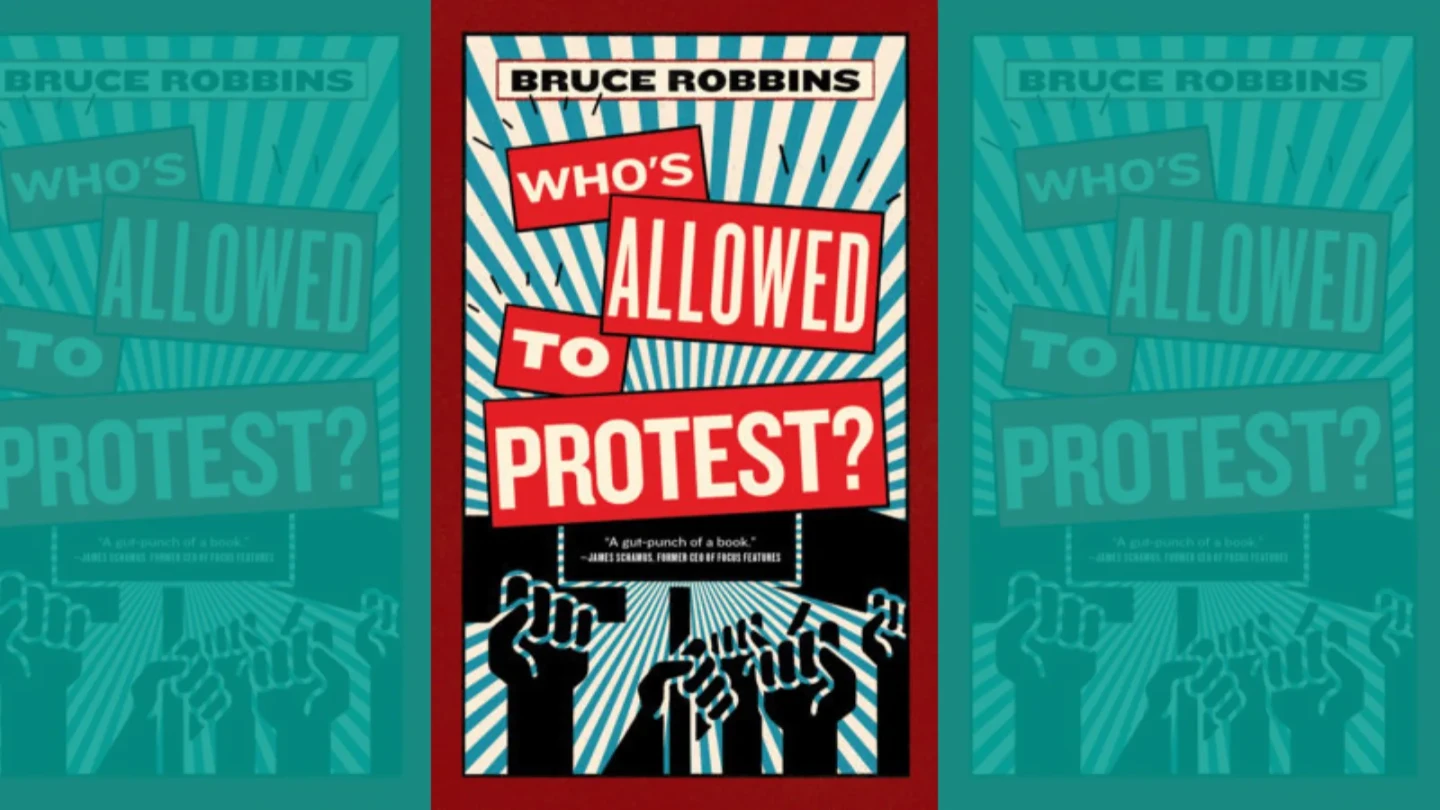
Columbia University professor Bruce Robbins exposed his students to possible criticism of the Israeli military, and was, for that reason, declared by his employer guilty of discrimination and harassment. Robbins could have written a book on the absurdities involved in defining criticism of genocide as discrimination, and defining criticism of any military on Earth other than the Israeli military as not discrimination. Instead, in Who’s Allowed to Protest?, he has written a debunking of some other absurd rejections of protesting.

If you don’t read grotesque rightwing columnists or watch television “news,” you may question the need for what Robbins has done. But his book traces the centuries-long history of some of the ludicrous arguments involved, managing to suggest that they have played a greater role in our society than might be clear from the New York Times editorial page alone.

The book opens by looking at the claim that those who protest genocide in Gaza do so purely in order to make themselves look good, and not at all because they care about other human beings. If one were to accept that idea, then, presumably, it would follow that every peace demonstration against a distant war, every protest of a distant sweatshop, every effort to preserve livable ecosystems for future generations, and a huge percentage of all activist campaigns ever, back to opposition in Britain to slavery in the Caribbean and beyond, has been entirely sociopathic posturing.

It strikes me as absurd to suggest that a human action of this sort (protesting mass killing) could have only one simple motivation for every person engaged in it. The wars being protested by peace demonstrations often have dozens of motivations, even in the same individual. Our political system generally consists of switching back-and-forth between a government that tells you it’s going to bomb people for their own good and a government that tells you it’s going to bomb people because they aren’t people. But regardless of the emphasis, both of those arguments and many others, stated and unstated, accompany every war. How could everyone’s opposition to such wars be uniform? How could no one oppose what wars do to the budgets for useful things? How could no one oppose what wars do to the rule of law? How could no one oppose what wars do to the natural environment? Etc., etc. Actual peace rallies in the real world often struggle with deep divisions, including between those who oppose all sides of all wars and those who cheer for the other side of some war. If these deeply divided people were all just posturing, then presumably they would have all landed together on whichever was the grandest posture.

And it strikes me as incoherent to suppose that one can make oneself look good by protesting war in a society where no one else actually cares about protesting war and consequently where no one else is going to actually think you look good.

But what, after all, is wrong with trying to make oneself look good by conspicuously opposing mass murder? Don’t we want a society in which everyone competes with everyone else at most effectively and determinately opposing mass murder? And, in a so-called representative democracy, isn’t the ideal elected official, in the ideal public arena, one who can be moved by public sentiment and agitation to oppose mass murder, even though in their heart of hearts they really don’t want to? Isn’t that the absolute ideal?

I’m reminded of something that David Hume wrote many years ago, which I think stands on its own merits to this day, quite apart from Hume’s belief in numerous absurdities, including racism and just empires. Hume wrote:

“There are two things which have led astray those philosophers that have insisted so much on the selfishness of man. In the first place, they found that every act of virtue or friendship was attended with a secret pleasure; whence they concluded, that friendship and virtue could not be disinterested. But the fallacy of this is obvious. The virtuous sentiment or passion produces the pleasure, and does not arise from it. I feel a pleasure in doing good to my friend, because I love him; but do not love him for the sake of that pleasure.

“In the second place, it has always been found, that the virtuous are far from being indifferent to praise; and therefore they have been represented as a set of vainglorious men, who had nothing in view but the applauses of others. But this also is a fallacy. It is very unjust in the world, when they find any tincture of vanity in a laudable action, to depreciate it upon that account, or ascribe it entirely to that motive. The case is not the same with vanity, as with other passions. Where avarice or revenge enters into any seemingly virtuous action, it is difficult for us to determine how far it enters, and it is natural to suppose it the sole actuating principle. But vanity is so closely allied to virtue, and to love the fame of laudable actions approaches so near the love of laudable actions for their own sake, that these passions are more capable of mixture, than any other kinds of affection; and it is almost impossible to have the latter without some degree of the former. Accordingly we find, that this passion for glory is always warped and varied according to the particular taste or disposition of the mind on which it falls. Nero had the same vanity in driving a chariot, that Trajan had in governing the empire with justice and ability. To love the glory of virtuous deeds is a sure proof of the love of virtue.”

In other words, assuming that those who viciously oppose protests of genocide and cheer for violent assaults against protesters actually have in mind a superior sort of genocide protester, can we really be supposed to imagine that such an ideal protester should be indifferent to praise? Have many people ever been found who were indifferent to praise? One can be not indifferent to praise without being dependent on others to act, without being incapable of making one’s own judgments, without seeking to name every public building after oneself or compel Nobel prize winners to hand over their medals. To be completely indifferent to praise seems outrageously extreme as a requirement for any protester to be to any degree actually interested in what they are protesting.

But perhaps some protesters are fairly indifferent to praise. We cannot ask every anonymous donor to a cause, or any unnamed source in a report, whether they’d like to be thanked. But those whom I do know and who ask not to be thanked for their efforts for peace, or who show up at rallies in masks, do not all seek anonymity out of fear. Those willing to be seen and named, however, must set aside the fear of repercussions — it’s not all rewards and glory.

Tied up with the apparently very longstanding tradition of claiming that all opponents of atrocities are purely engaged in what has recently been called “virtue signaling” is the idea that only certain types of people are qualified to protest certain things — or to ever say or do anything decent at all. Perhaps because the critic is himself greedy and unimaginative, the criticism is produced that says only poor people can oppose poverty, and only someone in a racial minority can oppose racism. Etc. Robbins questions the current concept of “checking one’s privilege” when it is used to suggest a problem, not with being racist or sexist, but with being “white” or male. Of course, “check your privilege” can be used in countless ways, including as a way of asking verbose, articulate people to shut up for a minute and let someone else have a chance to talk, etc.

But the notion that many millions of people are “privileged,” and therefore cannot protest injustice without hypocrisy, not only profiles people unfairly and distracts from the small number of plutocrats leading the destruction of all that is good, but also dooms us to a catastrophic shortage of protesters. Or it would, if we were to listen to it. And wouldn’t we want protests of wars with hypocrisy over no protests of wars?!

Robbins examines the notion of an “elite” that is not of wealth or power, but a cultural elite. By now, we’re probably all familiar with the ploy of telling poor people to vote for billionaires in order to vote against some vaguely conceived, cultural and intellectual elite — even if it leaves them and the rest of us all worse off. Robbins points out that columnists like David Brooks, much to the bewilderment of long-time peace agitators, actually claim that students protesting a genocide are simply trying to gain entrance to or maintain their status in a supposed elite.

Robbins interrogates claims of privileged and unprivileged statuses, exposing the wealth of the critics of privilege, noting that the working class in a wealthy country can globally be an elite. In the end, he wants money, wherever it came from, put to good causes. I agree. All money should be redirected to good work if it’s done without strings attached. And the good work of protesting injustice should be rewarded. More protesters should be “paid protesters,” and we should recognize with Robbins that the notion of an unpaid intellectual was a notion based on hoarded wealth, as the Olympic notion of the unpaid athlete was a notion based on excluding those who needed to be paid if they were going to play at sports all day.

Robbins celebrates student protesters of war. I agree. But I’m less sure of his references to the “responsibility of intellectuals” — the responsibility of those capable of recognizing a genocide to protest it. Millions of people who’ve never set foot on a college campus but have access to social media have recognized a genocide. We should be deeply grateful to those who apply their scholarship to their work for peace, but I wouldn’t sell anyone short or let anyone off the hook.

RootsAction Education Fund will be holding an online book club on April 1 at 5 p.m. PT / 8 p.m. ET with Bruce Robbins, author of Who’s Allowed to Protest? The event is free, but it’s up to you to buy the book or borrow it from a friend or library, then show up and ask questions!

Originally appeared on https://progressivehub.net/everyone-is-allowed-to-protest/

David Swanson is an author, activist, journalist, and radio host. He is director of WorldBeyondWar.org and campaign coordinator for RootsAction.org. Swanson's books include War Is A Lie. He blogs at DavidSwanson.org and War Is a Crime.org. He hosts Talk Nation Radio. Follow him on Twitter: @davidcnswanson and FaceBookRead other articles by David.