Monday, March 09, 2026

Animal welfare in Wales


MARCH 3, 2026

Senedd member Mike Hedges outlines what still needs to be done.

How we treat animals is a sign of the type of society we are and want to be. If we allow animals to be mistreated either via ignorance or cruelty, then it reflects badly on us. There is substantial evidence that a wide range of animals are sentient beings. This means they have the capacity to experience positive and negative feelings such as pleasure, joy, pain and distress.

Progress has been made in recent years in Wales. We have passed a law on wild animals in circuses, one on banning snares and one making it compulsory for CCTV to be installed in all areas where live animals are unloaded, kept, handled and stunned. A law banning greyhound racing is currently before the Senedd.

It is now illegal for a commercial seller to sell a puppy or kitten they have not bred themselves at their own premises and they must ensure the mother is present. Puppies and kittens can only be purchased from where they were bred or from a rescue or rehoming centre.

Substantial progress has been made but there is a lot still to be done. I suggest microchipping cats, no tethering of horses, training people on how to look after a rabbit before they can own one, regulations on where animals are kept and bred, and banning the private ownership of primates.

Cats are roaming animals; that is why it is important to ensure that cats are microchipped in case they get lost or killed. We need compulsory microchipping of cats as a matter of urgency.

I do not believe that horse owners set out to mistreat their horse but unfortunately ignorance can lead to suffering. It is important that horses are not left tethered for long periods of time.

The Welsh Government’s Code of Practice for the Welfare of Horses explicitly states that “tethering should never be used as a long-term measure to control horses as this can lead to a failure to meet a horse’s basic welfare needs.” The prevalence of poor tethering practices in Wales suggests that the Code of Practice’s reference to this issue is not effective, and I want more stringent guidance, change in enforcement practices and a change in legislation to better discourage and deter the long-term tethering of horses.

Owning and caring for a rabbit is a big responsibility and a long-term caring and financial commitment. It is the owner’s responsibility to make sure that the rabbit’s needs are met. I believe before anyone is sold a rabbit, they should undertake a short online course on how to look after the rabbit culminating in an online test. The law requires that you must take reasonable steps to ensure that it has a suitable environment to live in, has a healthy diet, is able to behave normally, has appropriate company, and is protected from pain, suffering, injury and disease.

I am opposed to individuals keeping primates such as monkeys as pets. Estimates suggest 120 primates are currently kept as pets in Wales. This should be banned. For those already owned, we need a legally enforceable statutory code with tough penalties to protect monkeys that are kept as pets.

We cannot continue to lose species and certainly not at the current rate. In Wales, one in three species are threatened with extinction and 51% of mammal species need urgent support.

The image of hedgehogs in our countryside is one we are all familiar with, but they are under significant threat as a result of a reduction to their natural habitat. I believe we all have to do what we can to ensure that they breed safely and see their population grow. I hope that all landowners in Wales will take the needs of hedgehogs into consideration when planning use of land within their ownership.

We know that to promote good life and lengthy life in our hedgehogs, we need to promote the offering of good quality, meaty hedgehog food, meaty cat or dog food, or dried cat biscuits, and the provision of water. We need urgent action to protect what is an iconic Welsh species.

I am pleased that we pride ourselves on being a nation of dog lovers and we should all have an interest in dog and animal welfare. I have a lot of correspondence on issues and concerns about the treatment of dogs including those left unattended in hot cars.

We owe animals a good life free from pain and discomfort. Regulation of animal welfare centres by whatever name they go by will be a significant addition to the welfare of animals.

I welcome the legislation already passed, as well as legislation to ban greyhound racing but there is more to be done. There is a need for proposals to strengthen dog breeding licensing conditions, in order to ensure comprehensive protection for male and female dogs and their offspring by introducing robust standards, and also proposals to regulate sanctuaries, rescue and rehoming centres, to protect animals from substandard levels of care and rogue operators.

Mike Hedges is the Senedd Member for Swansea East and a former Leader of Swansea Council.

Guardians Of Hydropower

Storvassdammen in Bykle, Agder, is Norway’s largest rockfill dam and a key component of Statkraft’s hydropower system. It is one of many Norwegian facilities where NGI experts have contributed to dam safety, design, and risk assessments over several decades. 

Photo: Martin NH / Wikimedia Commons.

March 9, 2026\
By Eurasia Review


Norway’s rockfill dams hold billions of cubic metres of valuable water in place high in the mountains. Behind every dam stands an extensive safety system and decades of engineering expertise that have been critical to Norwegian energy production.

When Norwegians think about their electricity supply, many picture power lines and wall sockets. Few think about the dams themselves: massive structures of rock and earth that hold back enormous volumes of water. They form the foundation of the country’s energy security – but many of them are now ageing.

“Most of Norway’s large rockfill dams were built from the 1950s onwards, especially during the 1960s, 70s, and 80s. That creates a significant need for renewed safety assessments, maintenance, and rehabilitation,” says Arnkjell Løkke, Head of Section Dam Safety at NGI.
A collaboration that shaped Norway

Statkraft is by far Norway’s largest dam owner, operating around 500 dams in the country alone, in addition to a substantial international portfolio. The company manages roughly half of Norway’s total reservoir capacity.

NGI’s role in this story reaches back to the institute’s early years. During the 1960s and 70s, dam-related work accounted for the majority of the institute’s revenue. Many of NGI’s most prominent researchers built their reputations through this work.

“NGI has designed and supervised construction for roughly two-thirds of all large rockfill dams in Norway. That is a legacy we manage with both pride and a strong sense of responsibility,” says Løkke.
Norwegian nature enables unique solutions

While many countries traditionally built concrete dams or earthfill dams, Norway developed its own approach. Many dams sit high in the mountains, where roads and logistics pose major challenges. Engineers, therefore, relied on materials already available in the landscape: glacial moraine deposits.

“When the glaciers retreated after the last Ice Age, they left behind well‑graded deposits – mixtures of rock, gravel, sand, and silt. When you compact this material, it becomes highly watertight. That makes it ideal as the sealing core in rockfill dams,” Løkke explains.

Norway also has strong bedrock and high‑quality stone, and tunnel excavation for hydropower plants often produces large volumes of surplus rock. The result is rockfill dams with a central moraine core – a dam type that has become a Norwegian hallmark and delivered robust, cost‑effective solutions.

Norwegian rockfill dams are often built with an impermeable moraine core surrounded by rockfill made from locally sourced materials. For several decades, NGI has contributed to the design, analysis and safety assessment of such dam structures in Norway’s demanding mountain terrain.
From safety factors to risk analysis

Norway’s dam safety regulations are largely deterministic, based on detailed requirements for safety factors, material sizes, and structural design. But reality is more complex than what regulations alone can capture.

“The regulations do not sufficiently account for variations between dams and site‑specific conditions. How a dam has behaved over time, local hydrology, the geology at the dam site – all of this influences its actual safety,” says Løkke.

Internationally, a more risk‑based approach has therefore emerged, known as risk‑informed decision‑making. Instead of only asking whether a dam meets a specific safety factor, engineers ask: what is the actual probability of failure, and what would the consequences be?

NGI uses analytical tools such as event‑tree analysis and probabilistic Monte Carlo simulations to map the risks associated with a range of possible failure mechanisms. What happens during extreme floods? During earthquakes? Or during slow internal erosion over decades?

“When we complete these analyses, we are much better equipped to identify concrete risk‑reducing measures. You gain a comprehensive picture that allows you to prioritise actions where each invested krone delivers the greatest risk reduction,” says Løkke.

Statkraft has adopted NGI’s risk‑based methodology more extensively than any other Norwegian dam owner. In recent years, NGI has carried out risk analyses for more than a dozen dams for the company.

“We always learn something new about the dams. These analyses go beyond standardised assessments and systematically examine the entire picture of what can go wrong, how it might happen, and which factors influence the probability,” says Løkke.
Climate change raises the stakes

Future challenges do not only involve ageing infrastructure. Climate change is bringing more intense rainfall and new flood patterns. Storms such as “Dagmar” in 2011 and “Hans” in 2023 have revealed vulnerabilities in Norway’s river systems.

Statkraft plans to invest NOK 27 billion in more than 200 hydropower projects before 2030. A significant share of this investment will go toward rehabilitating dams such as Kjela, Nesjødammen, and Bjølsegrø to meet both present and future requirements.

The overarching goal is simple: it should be just as safe to live downstream from an old dam as from a new one.

“For NGI, this means continuing the work that began more than 60 years ago: ensuring that the foundation of Norwegian hydropower remains secure for generations to come,” Løkke concludes.

Eurasia Review is an independent Journal that provides a venue for analysts and experts to publish content on a wide-range of subjects that are often overlooked or under-represented by Western dominated media.
Is It Possible To Cut CO2 Emissions From European Agriculture By 40 Percent?


Researchers at NTNU have studied how to reduce greenhouse gas emissions and compensate for the loss of biodiversity, without compromising food production. The picture is from Nardò in Italy. 
Photo: Ingebjørg Hestvik


March 9, 2026
By Eurasia Review


It is entirely possible to reduce greenhouse gas emissions and show greater consideration for nature – without reducing food production. This is one of the findings of a recent study from the Norwegian University of Science and Technology (NTNU).

“Agricultural activities pose a significant threat to the natural environment,” said Francesco Cherubini, professor and Director of the Industrial Ecology Programme at NTNU.

We all need food, but food production currently accounts for a third of the world’s greenhouse gas emissions. Agriculture leads to a reduction in biodiversity. In addition, it uses large amounts of water and pollutes rivers, lakes and oceans due to nutrient runoff.

“That is why we need to take action. Agriculture in Europe must become more sustainable. The problem is that the measures being implemented today, such as protecting certain areas or allowing forests to regrow, are competing with food production for areas of land.”
Little potential for intensification

Researchers at NTNU have therefore looked for solutions to reduce greenhouse gas emissions and mitigate the loss of biodiversity, without compromising food production.


By allowing natural vegetation to regrow in these ‘sub-optimal’ areas, while also optimizing production on better agricultural land, the study shows that emissions from agriculture can be reduced by up to 40 per cent.

“In Europe, we already have a rather intensive type of agriculture. There is little to be gained from further intensification. That leaves us with only one option – to stop cultivating the areas that are least suitable for agriculture and move production to better-suited areas. By allowing trees and natural vegetation to repopulate the cultivated areas that are least suitable for food production, it is actually possible to achieve higher agricultural yields,” explained Cherubini.

The researchers have used European satellite data to map cultivated areas used for food production (cereals and vegetables) across Europe. This includes areas with steep terrain, areas that produce low yields, or where cultivated plots of land are small and scattered. Grassland used for the production of animal feed has not been included.

The study, published in the journal Nature Communications, shows that Europe has 24 million hectares of this type of agricultural land.

These are areas that are low in productivity and expensive to farm. In addition, they are often in direct conflict with efforts to protect biodiversity. Approximately 14 per cent of agricultural operations in Europe, including Norway, takes place in areas considered to be less favourable.
Improving the carbon balance

Of these areas, about two-thirds are at risk of becoming less fertile due to soil degradation, and half of them are located in areas with important or threatened habitats and species.

By allowing natural vegetation to regrow in these ‘sub-optimal’ areas, while also optimizing production on better agricultural land, the study shows that emissions from agriculture can be reduced by up to 40 per cent. Pressure on biodiversity can be reduced by 20 per cent, while food production is maintained.

“Allowing natural vegetation to return to areas with poor crop yields benefits the carbon balance and increases biodiversity,” added Cherubini.

The production lost by allowing this to happen can be made up for by focusing on more intensive cultivation in the best agricultural areas. At the same time, so-called extensification of agriculture can be introduced in areas where plots of land are small and scattered. Extensification involves using less fertilizer, pesticides and labour, while at the same time introducing more natural growth, such as trees.

“When we add up all the numbers, we see that it is possible to reduce climate emissions, increase biodiversity and at the same time maintain food production levels.

By allowing trees and natural vegetation to repopulate the cultivated areas that are least suitable for food production, it is actually possible to achieve higher agricultural yields. The trees’ roots help retain nutrients in the soil. Erosion is reduced, and the carbon content of the soil is increased,” explained Cherubini.
Requires collaboration

Research shows that crop yields can be increased by between 10 and 20 per cent through this kind of extensive farming. However, this requires changing the methods used and producing varieties of crops that yield the most calories per square metre.

In Europe, this means growing more maize, wheat and barley. However, the researchers also recommend focusing on the most suitable crops locally, meaning those already grown in the area, based on local knowledge and intended for a local market.


“When we add up all the numbers, we see that it is possible to reduce climate emissions, increase biodiversity and at the same time maintain food production. But it requires collaboration among the countries of Europe,” added the researcher.

In the bigger picture, this means reducing production in steep mountain areas in Southern and Eastern Europe while improving and changing the production methods in more suitable areas.

Norway ranks high on the list when it comes to the proportion of land with poor productivity. One-third of Norway’s arable land accounts for only 20 per cent of the country’s crop yields.

However, Professor Gunnar Austrheim at NTNU University Museum refers to Norway as an ‘exceptional case’ in this context.

“In Norway, one-fifth of the agricultural land is not very productive. But we have very little arable land overall, since two-thirds of the agricultural area is used to produce grass. As a result, we are not very significant in the European context.”
Benefits of natural regrowth

He says the study should be seen as a feasibility study and points out that measures have already been initiated in Norway to restore natural environments, such as wetlands, moorlands and forests.

“Restructuring agriculture in this way might be seen as controversial. But it is important to remember that some areas of land have already been taken out of agricultural production. So, it is good to know that this also has value. More trees and wetlands increase carbon storage and also help preserve biodiversity.”

Austrheim emphasizes that for many countries, including Norway, there may be social and cultural reasons to continue farming in low-productivity areas, even though these areas are expensive to manage and often subsidized.

“So, we are not saying that the whole of Norway should be left to grow wild, but the study shows that there is untapped potential,” said Austrheim.

He reminds us of Norway’s commitments under the UN Biodiversity Agreement from 2022, which also involve making agriculture more environmentally friendly. Among other things, the surplus of nutrients in agriculture must be halved.

“We must also halve the use of pesticides and restore 30 per cent of our natural areas. So we also need to do these things, albeit on a smaller scale. This study shows how the reallocation of land makes it possible to achieve important goals for agriculture,” concluded Austrheim.
Avian Flu Strikes California’s Northern Elephant Seals; Area Quarantined – Analysis


 Mongabay
By Christine Heinrichs


Ever since a deadly strain of avian influenza, H5N1, killed some 17,000 southern elephant seal pups on South American coastlines in 2023 and 2024, researchers and public officials have kept an extra-close eye on California’s northern elephant seals. Fears of infection have now become reality: Lab tests just proved the virus has breached this colony.

In mid-February, six young, newly weaned seals on Año Nuevo State Park beaches fell ill. They had obvious respiratory problems and also suffered from neurological symptoms, including weakness, tremors and seizures — all of which pointed to H5N1.

The research team collected samples from sick and dead elephant seals, which were analyzed at the California Animal Health and Food Safety Laboratory System. Initial screening revealed that the samples were positive for avian influenza; it was then confirmed to be the highly pathogenic H5N1 strain.

As of Feb. 24, seven pups had tested positive for the virus, according to the USDA’s National Veterinary Services Laboratory. At time of publication, 30 seals had died, 29 of them weaned pups, but the cause has not yet been confirmed for all the victims.

The outbreak marks the first cases of H5N1 in marine mammals in California and the first time it’s been found in northern elephant seals (Mirounga angustirostris). This highly contagious virus has been circulating the planet as a panzootic — an animal pandemic — since 2020, infecting and killing some 700 species of birds and mammals.

Because of the constant monitoring of these seals, the virus was detected “very early in the outbreak,” Roxanne Beltran, an assistant professor in ecology and evolutionary biology at UC Santa Cruz, said during a press conference. Beltran’s lab leads the university’s northern elephant seal research program at Año Nuevo.

Her colleague, Christine Johnson, elaborated. “This is exceptionally rapid detection of an outbreak in free-ranging marine mammals,” she said. Johnson directs the Institute for Pandemic Insights at the University of California, Davis. “We have most likely identified the very first cases here because of coordinated teams that have been on high alert with active surveillance for this disease for some time.”

On Monday, Feb. 23, California State Parks barred the public from the elephant seal viewing area of the Año Nuevo Coast Natural Preserve. Then, with confirmation that H5N1 was responsible, tours have been canceled for the rest of the season.

A deadly virus

Avian flu — which, in another, milder strain is much like the common cold in wild birds — morphed and became pathogenic when chickens and other poultry at industrial-scale producers were exposed to the virus through contact with migrating flocks of wild birds. Since it first appeared in Europe in 2020, this “Highly Pathogenic Avian Influenza” strain has devastated wildlife worldwide, the largest avian flu outbreak ever. And this panzootic is obviously not over.

H5N1 has raged on, leaping the species barrier to infect animals on six continents, pole to pole. Animals that gather in large groups, like pinnipeds and birds, are particularly vulnerable. Proximity is a big factor in a virus’s ability to spread, as the world learned too well during the COVID-19 pandemic.

Animals can be infected by contact with an infected bird or animal or their droppings. Both scavengers and carnivores may catch H5N1 by eating an infected carcass. But in 2024, researchers made a startling discovery about how this quickly mutating virus had changed: They discovered that elephant seals were passing the virus between themselves. This method of transmission makes a virus infinitely more dangerous. Since then, animal-to-animal transmission has been confirmed in the wild, in zoos and on farms.

Some of the wildlife victims are endangered species, and this virus’s ability to spread to new hosts is astounding. As of December 2025, H5N1 had infected some 598 types of bird and 102 mammal species, according to the United Nations. The numbers have jumped substantially over the past 18 months: As of August 2024, the U.N. tally was 485 bird and 48 mammal species.


H5N1 has stricken or killed animals as diverse as sea otters, house cats, terns, dolphins, foxes, California condors, rats, albatrosses, cougars, polar bears, zoo tigers — and many, many others, including humans. An outbreak in imperiled species could push them to extinction: Wildlife is already fighting to survive against a changing climate, disappearing habitat and other stressors.

On the lookout

Scientists from UC Davis have been testing samples from marine birds and mammals along the coast since 2024. With colleagues from UC Santa Cruz, they’d increased surveillance at elephant seal beaches over the past two months in anticipation of a possible disease outbreak: From mid-December through March, the area becomes a nursery, as mothers arrive and give birth to their pups. The beaches are literally littered with seals, often in very close proximity.

“Given the catastrophic impacts observed in related species, we were concerned about the possibility of the virus infecting northern elephant seals for the first time, so we ramped up monitoring to detect any early signs of abnormalities,” Beltran said.

That wasn’t only because of the massive seal die-off in South America. “We had two prior outbreaks in U.S. marine mammals; not elephant seals, but other types of seals, one in Maine in 2022 and [another] in Washington state in 2023,” Johnson said. “Because of these trends and global trends in H5N1 outbreaks around the world, our teams, both at UC Davis and UC Santa Cruz, increased disease surveillance at Año Nuevo and other locations in anticipation of a possible spillover into seals.”

The team is now working closely with NOAA Fisheries, the California Department of Fish and Wildlife and the West Coast Marine Mammal Stranding Network to closely monitor marine mammals along the coast.

The rich eastern Pacific coast is a marine mammal hotspot, with about 350,000 northern elephant seals that haul out on at least 14 rookery beaches along the U.S. West Coast, offshore islands and Mexico.

Elephant seals congregate at various locations along the West Coast. The size of the circle shows the relative number of seals at that site. The seals’ flippers are tagged with different colors according to their birthplace. Image courtesy of Richard Condit, Population Biology of Northern Elephant Seals.

They share that coast with five other pinnipeds: 250,000-300,000 California sea lions (Zalophus californianus), about 66,000 northern or Steller sea lions (Eumetopias jubatus), some 14,000 northern fur seals, (Callorhinus ursinus), 35,000-44,000 Guadalupe fur seals (Arctocephalus townsendi) and perhaps 31,000 harbor seals (Phoca vitulina richardsi).

With some six decades of study, researchers have amassed astounding data on this elephant seal population. It includes some 380,000 observations of 55,000 individuals.

They’ve tracked individuals, built family trees, and they knew the history of one of the victims, a dead “weaner.” It was the offspring of a mother in the study who was herself born on that beach. The pup entered the researcher’s database when she was 15 days old. She was weaned when her mother left the beach; two mornings later, she was convulsing on the beach. By afternoon, she was dead.

“It’s tough to watch animals we have followed and watched for years get sick,” Beltran said. “We know their family lineages.”

This large body of research will greatly inform assessments of the long-term effects on the population: how many pups survive, whether females are affected and future births.
Rapid transmission

The virus’s ability to mutate rapidly and its record of infecting other species make it a cause of intense concern, and seal populations have suffered catastrophic losses. In 2022-23, H5N1 swept along South America’s Atlantic and Pacific coastlines, slaying more than 30,000 sea lions in addition to the devastation of the southern elephant seal (M. leonina) population on Argentina’s Península Valdés, which was the species’ largest die-off ever.

It’s also infected people. Since 2024, 71 human cases have been diagnosed in the U.S., with two deaths. Most cases involved hands-on contact with infected cows or poultry. Current public health risk is considered low, experts say, with no person-to-person transmission reported.

“The more a virus like this is able to mutate and find its way into a wide range of species, especially farmed species that live in close contact with people like poultry and now cattle, the more the odds go up that a viral strain will more easily make that leap to people,” wildlife veterinarian Steve Osofsky, a professor and wildlife health expert at Cornell University’s College of Veterinary Medicine, wrote in Statin June 2025.

Cautionary measures

To protect the public and limit virus transmission, the public has been barred from the area for the rest of the season. A California State Parks spokesperson said 4,363 tickets for Año Nuevo tours were canceled. Visitors pay $11 each to hike out 1.5-3 kilometers (1-2 miles) with a guide to view the elephant seals during the mid-December through March mating and pupping season.

Since this pathogen is zoonotic and can spread between wildlife, livestock and humans, surveillance extends beyond animals. With each leap to a new mammal host, it raises concern that the virus could more easily infect people. Since 2021, there have been 131 human infections globally, according to the Centers for Disease Control and Prevention. But thus far, it hasn’t spread between humans.

Over the past 50 years or so, zoonotic diseases have emerged and spread at ever-faster rates, facilitated by human conversion of wild habitats and global travel and trade. This allows humans and animals to swap germs that are quickly transported across the globe and shared with species that have no immunity to them. These emerging diseases rarely have a cure and are often fatal. Examples include HIV and Ebola.

Christian Walzer, executive director of health at the nonprofit Wildlife Conservation Society, called H5N1 “an existential threat to the world’s biodiversity.”

For now, the hope is that this is a small outbreak. “If it’s a cluster, we will figure it out,” said Dominic Travis, the chief programs officer at The Marine Mammal Center. “If it’s perpetuated, it will be really tricky. We will assess it day by day with NOAA.”

The timing of the outbreak may lean in the seals’ favor. “We are cautiously optimistic, as most of the adult females had already departed the beach for their routine migrations before the outbreak began, and most seals on the colony seem healthy,” Beltran said.

This article includes reporting by Sharon Guynup.

Source: This article was published by Mongabay

Citation: Uhart, M., Vanstreels, R. E., Nelson, M. I., Olivera, V., Campagna, J., Zavattieri, V., … Rimondi, A. (2024). Massive outbreak of influenza A H5N1 in elephant seals at peninsula Valdes, Argentina: Increased evidence for mammal-to-mammal transmission. doi:10.1101/2024.05.31.596774


Mongabay

Mongabay is a U.S.-based non-profit conservation and environmental science news platform. Rhett A. Butler founded Mongabay.com in 1999 out of his passion for tropical forests. He called the site Mongabay after an island in Madagascar.
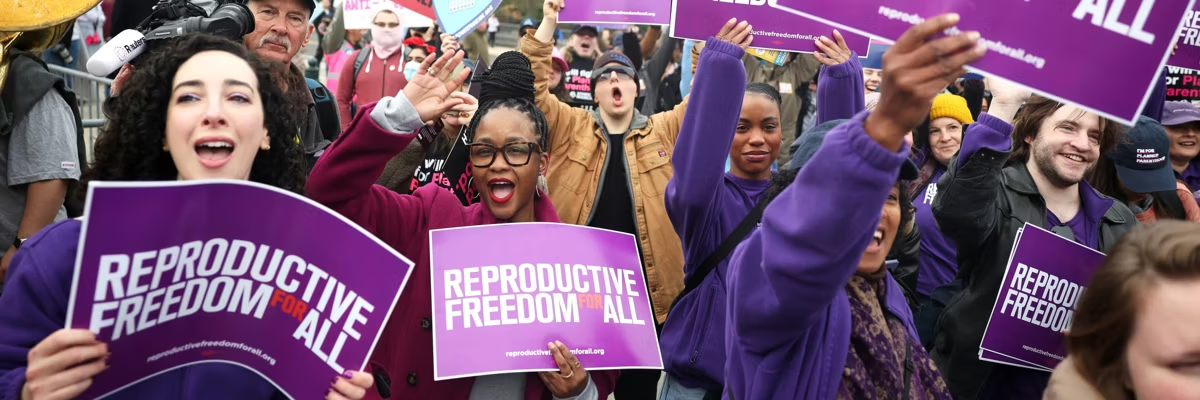
New Research Details ‘Human and Economic Toll’ of US Abortion Bans

“Abortion bans don’t stay in exam rooms,” said the Center for Reproductive Rights president. “They reshape communities, workplaces, and state economies.”


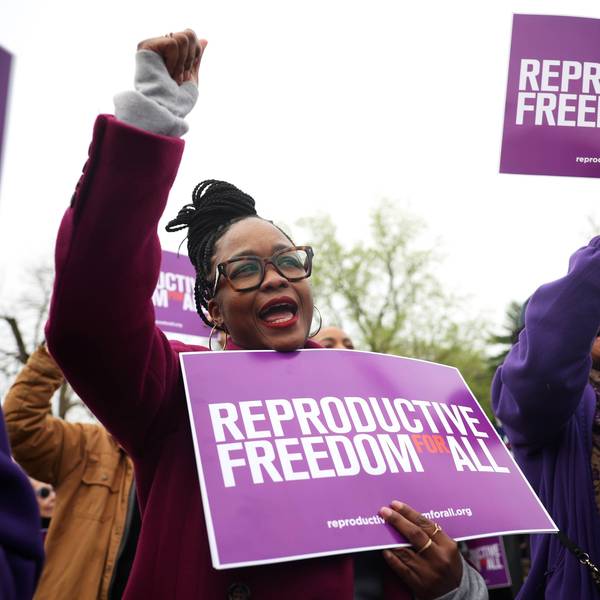
Abortion rights protestors demonstrate outside the US Supreme Court as oral arguments are delivered in Medina v. Planned Parenthood South Atlantic on April 2, 2025 in Washington DC.
(Photo by Kayla Bartkowski/Getty Images)


Jessica Corbett
Mar 09, 2026
COMMON DREAMS

With attention directed at President Donald Trump’s war on immigrants across the United States and various international conflicts, including the assault on Iran, there hasn’t been much prominent news coverage in recent weeks about a key issue of the 2024 campaign—GOP abortion bans—but people nationwide continue to endure the impacts of such policies, as revealed in a Monday report from the Center for Reproductive Rights.

The Price of Safety: Stories of Abortions Denied, Careers Disrupted, and States Left Behind features various profiles demonstrating “the human and economic toll” of abortion bans, which right-wing policymakers have enacted or intensified since the US Supreme Court reversed Roe v. Wade with its Dobbs v. Jackson Women’s Health Organization decision in 2022.


The anthology uses stories from patients, doctors, business leaders, and others to “show the real-world consequences of laws that criminalize standard medical care,” said Nancy Northup, the center’s president, in a statement. “Abortion bans don’t stay in exam rooms. They reshape communities, workplaces, and state economies. As long as politicians keep restricting care, families will keep moving, clinicians will keep leaving, and states will keep watching their competitive edge slip away.”

“Our daughter’s spine was severely abnormal, her brain hadn’t formed correctly, and she only had one kidney... I did everything by the book medically, but the experience still made me feel like a criminal for seeking evidence-based care for a lethal fetal diagnosis.”

Dani Mathisen, “a Fort Worth native from a family of physicians,” discovered during a routine anatomy scan with her OB-GYN, who is also her aunt, that she needed an abortion, 18 weeks into a planned pregnancy. As she explained, “Our daughter’s spine was severely abnormal, her brain hadn’t formed correctly, and she only had one kidney.”

Texas had banned abortions after six weeks and allowed private citizens to sue anyone who helped a pregnant person access care. According to Mathisen: “My mom, also a doctor, stepped in anyway. She found a clinic in New Mexico, booked the flights and hotel, called the staff, and handed us an envelope of cash. We paid for the abortion with cash out of fear of leaving a paper trail tying Texas credit cards to out-of-state abortion care. I did everything by the book medically, but the experience still made me feel like a criminal for seeking evidence-based care for a lethal fetal diagnosis.”

“I had always imagined building my career in Texas,” she added. “After this, I chose an OB-GYN residency in Hawaii because I needed full-spectrum training—including abortion care—and I couldn’t get that in Texas.”

Mathisen wasn’t alone in fleeing that state. Amanda Ducach, CEO and co-founder of an artificial intelligence startup focused on women’s health, shared how she “built Ema in Houston, and Texas shaped our earliest users and our mission,” but when Roe fell, she “was seven and a half months into a high-risk pregnancy.”

“Suddenly, even if I were to face a life-threatening emergency, I wasn’t sure I’d receive timely care. My doctors weren’t sure either,” Ducach detailed. “It also changed how I thought about my company, and our responsibility to the people who rely on us through our partner platforms.”

“After months of legal review and deep conversations with my team, I decided to relocate both my family and Ema’s headquarters to Massachusetts where abortion access is protected under state law,” she continued. “I also gave employees the option to work from any location, which brought immediate relief.”

“Suddenly, even if I were to face a life-threatening emergency, I wasn’t sure I’d receive timely care. My doctors weren’t sure either.”

Elizabeth Weller also left Texas. She said that “the decision cost us $25,000+ in income, distanced us from our community, and upended the future we had envisioned. But after the pregnancy complications I faced, it was painfully clear: Texas no longer provided the basic medical care necessary to have a child.”

So did Dr. Judy Levison, who spent over two decades practicing and teaching obstetrics and gynecology in the state. After “watching abortion bans turn routine medical care into a legal minefield,” she retired, moved to Colorado, and “began volunteering with an abortion support group.”

It’s not just Texas. Kayla Smith said that she left Idaho—“where I’d lived for 13 years, gone to college, met my husband, built our careers, and wanted to grow our family”—for Washington state. She explained that just 48 hours after Idaho’s ban took effect and “19 weeks into my pregnancy with my second child, we discovered that our baby had a severe, inoperable heart defect.”

Tracy Young, “a first-generation American, a mother of four, and the co-founder of two technology companies,” highlighted how abortion bans also outlaw proper treatment for people experiencing miscarriages. While she is based in San Francisco, California, Young began “losing a pregnancy I had deeply wanted” while traveling for work in Louisiana.

“Back home in California, my doctors told me that my body had not completed the miscarriage naturally. They prescribed misoprostol, and when that wasn’t enough, performed a surgical procedure to prevent infection and complications,” she said. “Today, abortion bans have made that same care illegal or heavily restricted in many states, including Louisiana where I miscarried.”

Another business leader, Chris Webb, CEO and co-founder of ChowNow—an online ordering platform with offices in California and Missouri—publicly supported abortion access in 2019 by signing on to a coalition’s “Don’t Ban Equality” letter. After Roe‘s reversal, he sent out a company-wide email disclosing a girlfriend’s abortion and offering to personally cover the travel costs of any employee who needed such care.

“Leaders owe employees honesty about where they stand—and action when basic rights are on the line,” he said. “Abortion policies aren’t just about healthcare. They’re good for employers and good for people. When more companies speak up, there is safety in numbers. And in the long run, protecting your team protects your business—and is just the right thing to do.”

“Reproductive rights are so crucial that Americans are uprooting their lives to ensure they have access to care.”

The report’s release coincided with the publication of a paper adapted from one prepared for the center by researchers who estimated “the market value of reproductive rights as capitalized into US housing markets.”

The paper, published by the National Bureau of Economic Research, shows that “total abortion bans reduced rents by an average of 2.2% from July 2022 through June 2025, with the effect reaching 4.0% in the most recent year. Over the same horizon, bans increased rental vacancy rates by an average of 1.1 percentage points, with the effect reaching 1.8 percentage points in the most recent year. Estimates for home values and homeowner vacancy rates are similar in magnitude but less precise.”

The center’s senior director, Julia Taylor Kennedy, said that “the economic data and the firsthand accounts are telling the same story... Reproductive rights are so crucial that Americans are uprooting their lives to ensure they have access to care. That means that, for employers and policymakers, abortion bans carry measurable workforce and competitiveness implications.”

Despite such findings, Republican state and federal policymakers continue to restrict reproductive freedom. In recent months, the Trump administration quietly imposed an abortion ban at the US Department of Veterans Affairs and expanded the global gag rule.

Meanwhile, at the state level last month, Tennessee Republicans introduced legislation to make abortion a capital offense, and a sheriff’s office in South Carolina launched an investigation into a fetus, estimated to be just 13-15 weeks, found at a water treatment plant, highlighting the rising criminalization of pregnancy loss.

Last week, the Marion County Superior Court granted a permanent injunction preventing enforcement of Indiana’s near-total abortion ban, and Republican Attorney General Todd Rokita swiftly appealed.


DEI

World Bank says women’s economic rights often exist only on paper while enforcement lags

World Bank says women’s economic rights often exist only on paper while enforcement lags
/ StockSnap via Pixabay
By Clare Nuttall in Glasgow March 8, 2026

Laws designed to give women equal economic opportunities are only partly enforced worldwide, leaving billions unable to fully participate in the global economy and costing countries as much as a fifth of their potential output, the World Bank said in a report.

The lender’s latest ‘Women, Business and the Law’ report found that although many governments have adopted legislation supporting gender equality, the reality on the ground is markedly different. On average, countries score 67 out of 100 for the strength of laws promoting women’s economic equality, but enforcement drops that score to 53, while the systems needed to implement those rights score just 47.

“On paper, most countries are doing reasonably well,” said Indermit Gill, the World Bank Group’s chief economist and senior vice president for development economics, quoted in a press release from the development bank. “But when it comes to enforcing the laws, the average score drops to 53. And when the systems needed to implement those rights are assessed, the adequacy score is just 47.”

Only about 4% of women worldwide live in economies where legal frameworks offer nearly full equality with men, the report found.

Lost opportunities 

Gill said the gap between legal commitments and implementation represented a huge lost opportunity for growth, particularly in developing economies.

“A paper that the Yale-World Bank team produced last year finds that treating women worse than men — through lousy laws, incompetent implementation and poor support services — can cost a country between 15% and 20% of its economic output,” he told a webinar to launch the report.

“Imagine if you take 15% to 20% of a country’s GDP and just dump the money in the ocean. That is pretty much what these countries are doing today.”

The findings highlight the economic consequences of barriers that limit women’s participation in the labour market or prevent them from entering higher-skilled, better-paid jobs.

“It is not just because you keep women out of the labour force,” Gill said. “It is also because you keep talented and skilled women out of demanding, and hence well-paid jobs… you’re really leaving a lot of skills and talent on the sidelines.”

“Equality begins with safety”

The report measures women’s economic participation across 10 areas including safety, employment, entrepreneurship, asset ownership and retirement security.

One of the most significant gaps identified is protection from violence. Norman Loayza, director of the World Bank’s Policy Indicators Group, said weak legal frameworks and enforcement undermine women’s ability to work consistently.

“True equality begins with safety,” Loayza said. “Whether at home, at work, or in public, women deserve protection to thrive.”

“Globally, we’re falling short. We have only a third of the safety laws we need, and even then, enforcement is failing 80% of the time.”

Childcare policies were also identified as a major barrier to women’s participation in the workforce. Less than half of the 190 economies analysed offer financial or tax support to help families afford childcare, while in low-income countries just 1% of the support mechanisms needed are in place.

Reliable childcare is often one of the strongest factors determining whether mothers can remain in employment or move into higher-productivity jobs.

Demographic shift

The report comes as developing economies prepare for a major demographic shift.

Tea Trumbic, manager of the Women, Business and the Law project and lead author of the report, said the coming decade would bring an unprecedented influx of young workers.

“Over the next decade, 1.2bn young people — half of them girls — will enter the workforce,” she told the webinar.

“Many will come of age in regions where women face the biggest barriers, and where the GDP boost that would result from their participation is most needed.”

Ensuring equal opportunities for women entering the labour market is therefore both a social and economic priority, Trumbic added.

“Ensuring equal opportunity for women here - and everywhere - benefits societies as a whole, not just women. It’s an economic must-have, in short, not just a nice-to-have.”

The report’s broader analysis suggests that removing barriers to women’s economic participation could increase national GDP by 15% to 20% in many countries.

“No economy can unlock its full potential while billions of women remain legally barred from equal economic opportunity,” Trumbic said.

Progress but uneven reforms

Despite persistent gaps, the report notes some progress. Over the past two years, 68 economies introduced 113 reforms aimed at expanding women’s economic opportunities, particularly in areas such as entrepreneurship and safety.

Sub-Saharan Africa recorded the largest number of reforms, with 33 changes enacted.

Several countries in the Middle East and North Africa also made advances. Egypt was identified as the world’s top reformer over the period, increasing its legal equality score by nearly 10 points through measures including extending paid parental leave and mandating equal pay.

Egypt, Jordan, Kyrgyzstan, Madagascar, Oman and Somalia were among the countries implementing reforms to improve women’s economic participation. 

"In Jordan, we believe that advancing women’s economic rights is a direct driver for economic growth and job creation," said Jordan's Minister of Social Development, Wafa Bani Mustafa. "The political will has enabled us to draw a clear reform plan to enhance women’s status in Jordan and facilitate their entry into the labor force. 

Still, progress remains uneven across regions. “The gaps are the biggest in the parts of the world where the needs are the most urgent,” Gill said, pointing to North Africa, the Middle East, South Asia and Sub-Saharan Africa, where populations are expanding and millions of young people are expected to enter the labour market.

Untapped talent

World Bank officials said the global economy is missing out on a vast reservoir of talent because women remain underrepresented in many sectors and leadership roles.

“We face now in the world this sort of a dual problem,” Loayza said. “For advanced economies, we have a shrinking workforce. For young economies, developing economies, we have an expanding labour force.”

In that context, increasing women’s participation is essential for growth. “Women don’t just fill roles,” he said. “They actually create jobs… through their entrepreneurial spirit and their leadership ability.”

With roughly 3.9bn women worldwide, Loayza said their economic potential remained largely untapped. “We have this massive pool of talent that we are not tapping sufficiently,” he said. “These are 3.9bn women whose power could be leveraged to increase the economy massively.”

INTERNATIONAL WOMEN'S DAY

Thousands march for women's rights and against Mideast war

Thousands of demonstrators took to the streets in cities across the world Sunday to mark International Women's Day and, in some cases, denounce the war in the Middle East.


Issued on: 08/03/2026 - RFI


'Hysterical: woman with an opinion,' read one sign as thousands marched for women's rights Sunday © Alex MARTIN / AFP
\\

From Rio in Brazil to cities across France, Spain and other European countries, demonstrators marched to demand women's rights across a range of issues.

In France, rape survivor Gisele Pelicot led a women's rights march in Paris, one of several demonstrations in French cities.
In Spain thousands of people came out in cities across the country to denounce violence against women © Thomas COEX / AFP


Thousands also marched in cities across Spain to protest gender-based violence and call for an end to the war in the Middle East.

The Paris march was one of some 150 demonstrations held to mark International Women's Day in France, with events taking place in other cities including Bordeaux, Lille, and Marseille.

"We won't give up," Pelicot, 73, told the crowd as she joined thousands in the French capital marching for women's rights, economic equality, and an end to sexual violence.

'
It's not an isolated case, it's the patriarchy': protesters marched in Madrid © Thomas COEX / AFP


Pelicot became a global symbol in the fight against sexual violence after she waived her right to anonymity during the 2024 trial of her ex-husband and dozens of strangers who raped her while she was unconscious.

Last week, she received the Order of Civil Merit from Spanish Prime Minister Pedro Sanchez in Madrid.

'No to war'


Spanish protesters were denouncing both violence against women and the war in the Middle East sparked by last weekend's US-Israeli strikes.

Demonstrations took place in Madrid, Barcelona, Valencia, Seville, Granada, Bilbao, and San Sebastian, among other cities.

Women marched in the Chilean capital © RODRIGO ARANGUA / AFP


Madrid hosted two demonstrations in the centre of the Spanish capital, one for transgender rights and the other for the legalisation and regulation of prostitution.

Slogans written on placards at the protests included "No to war" and "Anti-fascist feminists against imperialist war".

Alexa Rubio, a 30-year-old Mexican living in Spain, cited pay and harassment as some of the most urgent issues.
Thousands marched in Rio, Brazil © Pablo PORCIUNCULA / AFP


"And in my country, gender-based violence, because women are being killed for being women," she told AFP.

Yolanda Diaz, Spain's second deputy prime minister, spoke out against the war in the Middle East at a Madrid rally.

"It is within our power to stop the war, to stop the barbarity, and to win rights," she said.

"We proclaim ourselves in defence of peace, in defence of the Iranian people, in defence of Iranian women," she added, referring to the US-Israeli war against Iran.

Sanchez, Spain's socialist prime minister, has drawn the ire of the US administration for refusing the use of Spain's military bases for strikes against Iran.

In Latin America, women marched in cities in Brazil, Chile and Mexico and other countries.

"When one woman advances, we all advance," said Mexican President Claudia Sheinbaum in a speech.

(AFP)

Pelicot joins Paris march as rallies across world mark International Women's Day

IN PICTURES


Gisèle Pelicot joined tens of thousands of protesters in the French capital on Sunday as women across the world marked International Women's Day with rallies for equal rights, female empowerment and an end to gender-based discrimination. Many events also denounced the war in the Middle East sparked by US-Israeli strikes.


Issued on: 08/03/2026
By: FRANCE 24

Women dance during a demonstration marking International Women's Day in Madrid on March 8, 2026. © Thomas Coex, AFP

Officially recognised by the United Nations in 1977, International Women’s Day is commemorated in different ways and to varying degrees in places around the world. Protests are usually political, rooted in women’s efforts to improve their rights as workers
.
South Korean activists gathered a day ahead of International Women's Day in Seoul, on March 7, with banners reading "Complete the revolution of light". © Ahn Young-joon, AP

2026 marks the 115th year of International Women's Day. This years' theme is “Give to Gain”, with a focus on fundraising for organisations focused on women's issues and less tangible forms of giving such as teaching peers, celebrating women and “challenging discrimination”.

Women's rights activists on Sunday rallied in Karachi, Pakistan and shouted slogans during a protest in Istanbul, Turkey. In China and Russia, vendors sold flowers wrapped in pink and local workers in Phnom Penh, Cambodia, lifted fists and umbrellas as they celebrated.

Local workers take part in International Women's Day celebrations in Phnom Penh, Cambodia. © Heng Sinith, AP

International Women’s Day is a global celebration – and a call to action – marked by demonstrations, mostly of women, around the world, ranging from combative protests to charity runs. Some celebrate the economic, social and political achievements of women, while others urge governments to guarantee equal pay, access to health care, justice for victims of gender-based violence and education for girls.


It is an official holiday in more than 20 countries, including Burkina Faso, Ukraine, Russia and Cuba, the only one in the Americas. In the United States, March is celebrated as Women’s History Month.

Women's right activists rally in Karachi, Pakistan. © Ali Raza, AP


As in other aspects of life, social media plays an important role during International Women’s Day, particularly by amplifying attention to demonstrations held in countries with repressive governments toward women and dissent in general.

Roughly 20,000 people attended a march for International Women’s Day in Berlin. German news agency dpa reported Sunday that the crowd was double the amount police had expected. Speakers at the event decried violence against women in Germany, as well as gender discrimination.
Protesters march in Berlin under the motto "feminist, in solidarity, unionised". © Christian Mang, Reuters


In Brazil, Sunday’s marches for International Women’s Day served as a rallying cry against gender-based violence, fuelled by the latest case to outrage the country involving the alleged gang rape of a 17-year-old girl in Copacabana.

The case in Rio de Janeiro’s famed, beachside neighbourhood took place in January, but gained national traction this week when four suspects handed themselves over to authorities.

READ MORETackling domestic violence: ‘If you ask the right questions at the right time, you will save lives’

At least 15 protests were planned across the country, with organisers calling for the defense of women’s lives and an end to femicide.
Women on stilts, from the collective Gigantes na Luta, hold plastic sunflowers in the air during a march in Rio de Janeiro. © Pilar Olivares, Reuters


Globally, a woman or girl is killed every 10 minutes by a family member or partner, according to UN figures, and the number of women being exposed to conflict has significantly jumped over the past decade.

A woman holds a banner reading "Feminists against imperialist war" at a protest in Chile's Santiago, echoing condemnation of the Middle East conflict at rallies around the world. © Rodrigo Arangua, AFP


Some say commemorating International Women’s Day is now more important than ever, as women have lost gains made in the last century, among them the 2022 decision by the US Supreme Court to overturn a nationwide right to abortion, which ended constitutional protections that had been in place nearly 50 years.

The US decision on abortion has reverberated across Europe’s political landscape, forcing the issue back into public debate in some countries at a time when far-right nationalist parties are gaining influence.

Members of the feminist group "Les Rosies" hold their fist in the air at a rally in Paris
. © Kenzo Tribouillard, AFP


In Paris, more than a hundred thousands people joined a rally attended by Gisèle Pelicot, whose ex-husband was jailed last year for drugging and raping her and allowing other men to rape her while she was unconscious over nearly a decade.

Pelicot became an international symbol of resilience after waiving her anonymity and declaring that shame belonged with her abusers, not with her.
Gisèle Pelicot (centre) pictured at the Paris march marking International Women's Day. © Thibault Camus, AP


(FRANCE 24 with AP)


SOCIALIST ORIGINS OF IWD

UK Women for Palestine!

MARCH 4, 2026

Kathryn Johnson previews an important meeting next week.

As war spreads, the Starmer leadership weakens and the assaults on our own democracy grow, we must reach out to a wider audience in the UK and do more to stand firm with the Palestinians. 

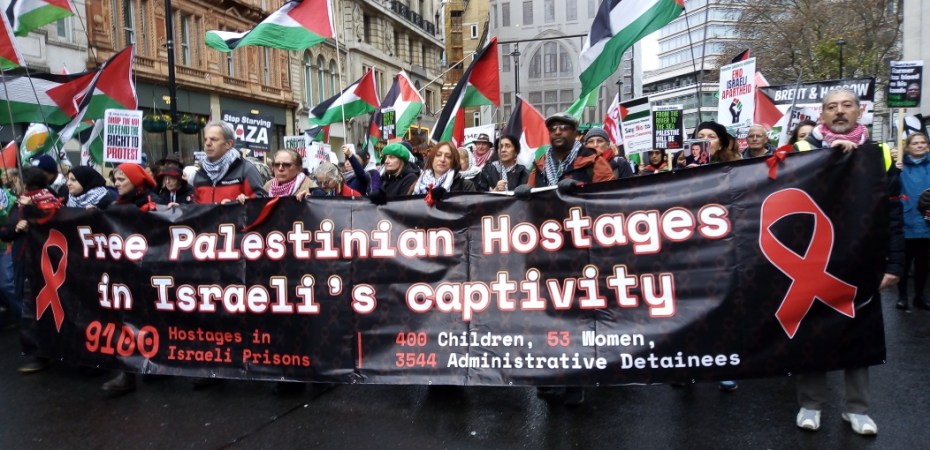
While most Britons express horror at the impact of the conflict on civilians, far fewer know about the century-old responsibility and ongoing complicity of British Governments in the occupation and destruction of Palestine.  Most were concerned that the Israeli hostages were returned but few know of the almost 11,000 Palestinians in Israeli jails – more than double pre-October 2023 – of the 4,000 held with no charge, and no trial, and that at least 400 are children.  Many are concerned about rising tensions resulting in this country but few know of the strength of the Israeli lobby in our political system. 

Awareness of the history and current role of Britain in Palestine has spread through our magnificent national marches and persistent local action, but too many still feel confident to say that Palestine has nothing to do with us.  The mass movement standing with Palestinians is the biggest and longest lasting this country has seen, but too many are ready to complain that the marches are disrupting town centres.  Despite our festivals celebrating democratic rights in this country and the remembering of those who gave their lives to achieve them, far too few understand the tightening of restrictions on those rights.

So, we need to do more.  We need to find new and more creative ways of reaching out to new audiences, of linking our own struggles over the cost of living and underfunded, crumbling public services with the unimaginable suffering of the Palestinians fighting for their lives, their homes and their land.

Labour and Palestine have an amazing group of women speaking on Monday 9th March about the ongoing struggle for a Free Palestine as part of International Women’s Week activities.  Please join them at 6.30 pm here.

Kathryn Johnson is an activist with Labour and Palestine.