Friday, March 13, 2026

World Should Redouble Efforts To End Sudan War – Analysis


People who have fled El Fasher arrive in Tawila in North Darfur, Sudan. Photo Credit: UNOCHA

March 13, 2026 
By Dr. Majid Rafizadeh


As the devastating conflict in Sudan approaches the start of its fourth year, the international community is facing an urgent problem. The war, which erupted in April 2023 between the Sudanese Armed Forces and the paramilitary Rapid Support Forces, has evolved into one of the gravest humanitarian catastrophes of this century.

However, despite the immense scale of destruction and the suffering that the Sudanese population is enduring, the war has long been overshadowed by other global crises.

Millions of civilians in Sudan are enduring displacement, hunger, violence and the collapse of essential services. As a result, it is imperative that the international community gives adequate attention to Sudan and intensifies efforts to end the conflict. This requires sustained diplomatic engagement and expanded humanitarian aid.

What began as a power struggle within Sudan’s military establishment rapidly transformed into a nationwide conflict that has engulfed major cities, destroyed critical infrastructure and fractured the already fragile political order.

The capital, Khartoum, has become one of the principal battlegrounds, but violence has also spread across multiple regions of the country, including the already volatile area of Darfur. As the conflict intensified, Sudan’s state institutions began to collapse, leaving large portions of the population without effective governance, security or access to basic services.

The humanitarian consequences of the war have been catastrophic and continue to worsen. Millions of civilians have been forced to flee their homes, producing one of the largest displacement crises in the world. Vast numbers of families have sought refuge within Sudan’s borders, while others have crossed into neighboring countries such as Chad, South Sudan and Egypt.

This mass movement of people has placed enormous strain on fragile regional systems and humanitarian infrastructures. Camps for the displaced are overcrowded and under-resourced, while host communities struggle to accommodate the influx of refugees fleeing violence and insecurity.

The collapse of Sudan’s healthcare system is one of the most critical issues to address. Hospitals have reportedly been destroyed or abandoned, medical personnel have fled conflict zones and the supply of lifesaving medicines has been severely disrupted. In many regions, healthcare facilities are no longer operational, leaving civilians without access to treatment for injuries, infectious diseases or chronic conditions.

At the same time, there are widespread food shortages because agricultural production has declined, markets have collapsed and supply routes have become increasingly dangerous. As a result, large segments of the population are facing severe food insecurity, with humanitarian organizations warning of the risk of widespread famine in several regions.

Another facet of the conflict is the human cost, which is particularly devastating for vulnerable people, including children and women. Millions of children have been deprived of education as schools have been destroyed, closed or repurposed as shelters for displaced families. In addition, malnutrition among children has risen sharply.

Women and girls face heightened risks of violence, exploitation and displacement, especially in areas where law enforcement institutions have effectively ceased to function. This is likely to create a lost generation shaped by war, deprivation and the absence of stable institutions.

It is alarming that despite the magnitude of this humanitarian catastrophe, the war in Sudan has often received limited attention from the international media and global leadership. This means Sudan’s tragedy risks becoming a forgotten war.

The consequences of neglecting the Sudan war could be severe. Prolonged instability in Sudan carries serious implications for the broader region, including the Horn of Africa and the Sahel, where fragile political systems and economic vulnerabilities already pose significant challenges. Continued conflict could also exacerbate refugee flows, fuel cross-border insecurity and deepen regional instability.

Some diplomatic initiatives have emerged in an effort to halt the fighting and create a pathway toward a political settlement. Among the most viable and notable efforts is the diplomatic framework advanced by a group of countries commonly referred to as the “Quad” — Saudi Arabia, the US, Egypt and the UAE.


This is a practical and viable initiative because it represents an important attempt to coordinate regional and international diplomatic efforts to achieve a ceasefire and a broader political transition. By bringing together key regional stakeholders and global powers, the Quad framework aims to encourage negotiations between the warring factions and establish conditions conducive to peace.

One of its most important pillars is recognizing that the Sudan conflict cannot be resolved through military means alone. As a result, it is focusing on a phased process that would begin with a humanitarian ceasefire, allowing aid organizations to deliver urgently needed assistance to civilians trapped in conflict zones.

Such a pause is important because it could create space for broader negotiations aimed at establishing a permanent ceasefire and initiating a transitional political process. The final objective of these efforts is to facilitate the emergence of a civilian-led political order capable of restoring stability and governance in Sudan.

In a nutshell, as the third year of this devastating conflict draws to a close, there is an urgent need for the international community to act. The suffering of millions of civilians demands a sustained global response that combines humanitarian assistance with diplomatic engagement. Renewed diplomatic initiatives such as the Quad framework, combined with the leadership of regional institutions like the African Union, can offer viable pathways toward peace.

This article was published at Arab News

Dr. Majid Rafizadeh
Dr. Majid Rafizadeh is a Harvard-educated Iranian-American political scientist. X: @Dr_Rafizadeh




Russia’s oligarch wealth overtakes the entire population’s bank savings, doubles over four years

Russia’s oligarch wealth overtakes the entire population’s bank savings, doubles over four years
Russia’s billionaires have seen their combined wealth surge to $696.5bn since the Ukraine war began, surpassing the total savings of the country’s population despite Western sanctions aimed at curbing their fortunes. / bne IntelliNews
By Ben Aris in Berlin March 12, 2026

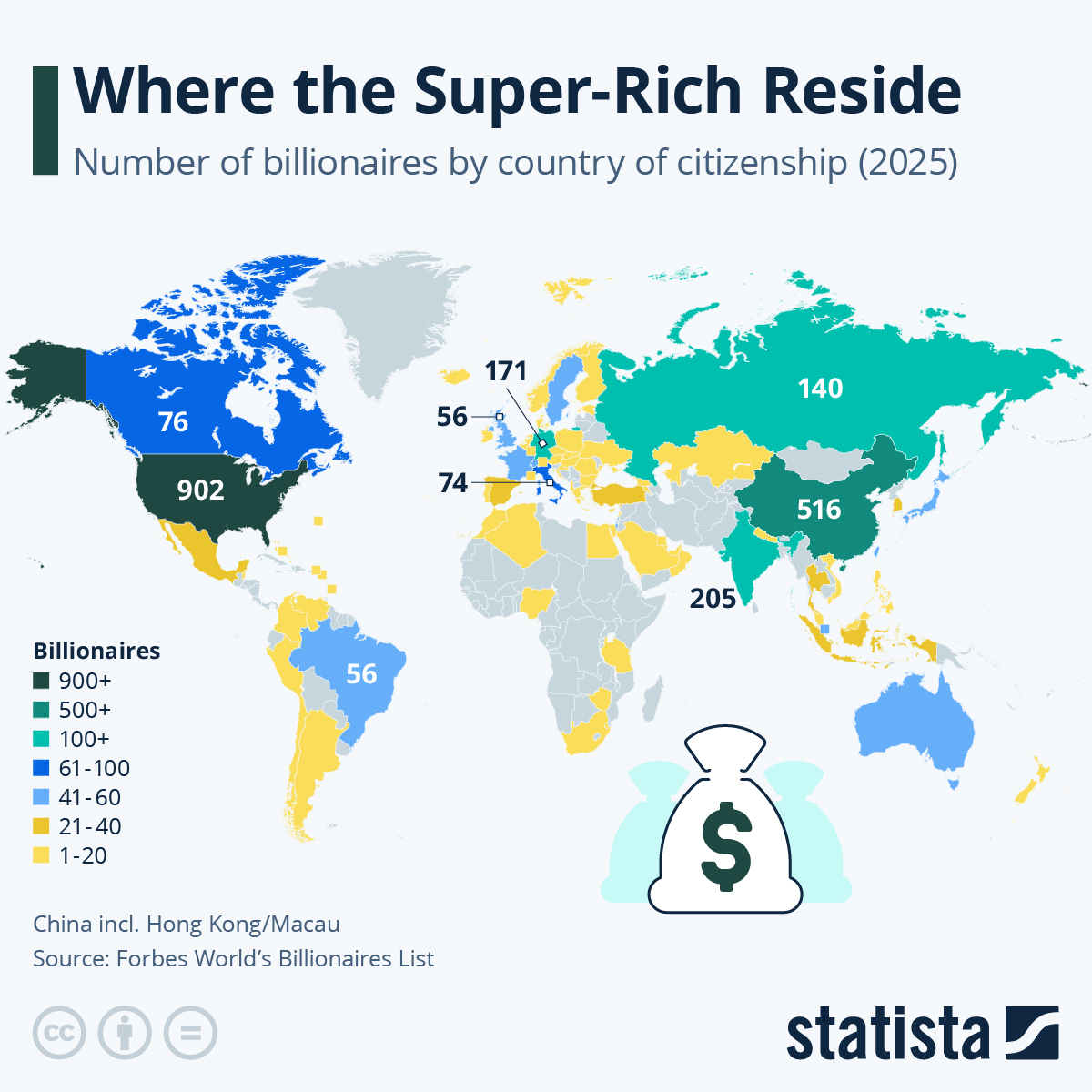
The combined wealth of Russia’s billionaires is now $696.5bn, more than the combined savings of the entire Russian population and almost double what it was at the start of the Ukraine war, Forbes reported on March 11.

Sanctions and the economic slowed down were supposed to strip the oligarchs of their money, but in a set of unintended consequences the war in Ukraine has made them richer. Their combined wealth exceeds the household savings held in term bank deposits of RUB46.23 trillion ($587bn) as of February 1, according to the Central Bank of Russia (CBR) data. However, the calculation excludes money held in current accounts. Forbes now counts a record 155 Russian nationals listed in its annual rich list of billionaires.

The figures represent a sharp turnaround from 2022, when Russia’s full-scale invasion of Ukraine triggered sweeping western sanctions and a collapse in the Russian stock market. Much of the rich list wealth is calculated from evaluating the shares they own in their companies listed on stock markets. At that time, the combined wealth of Russian billionaires fell to $352.8bn and the number of individuals on the list dropped to 88, according to The Moscow Times.

In addition, Western sanctions specifically targeted oligarchs, especially those that were designated “close to Putin.” Luxury yachts and European villas were a particularly popular target for asset freezes.

But the campaign was not a success. In four years, a total of some $60bn-$80bn of assets have been frozen on paper, or about 9-12% of their total wealth. However, as many of the assets were moved into Russia or restructured before sanctions could take effect. According to bne IntelliNews estimates the total oligarch money frozen since 2022 is closer to $22bn, or circa 3% of their wealth.

One of the ironies of the oligarch sanctions that were supposed to impoverish the Russian economy and generate resentment amongst Russia’s elite towards Russian President Vladimir Putin has had the opposite effect. Most oligarchs have chosen to safehaven their money by bringing it back to Russia from offshore havens around the world, and cut off from the global economy, they have doubled down on their investments in the Russian market, making them more dependent on Putin than ever. Moreover, these are amongst the best managers and most successful business members of Russian society – a boon in times of economic stress.

In a conversations with bne IntelliNews, Mikhail Khodorkovsky, a former oligarch turned Kremlin critic, argued that the West should have thrown its doors open to oligarchs that wanted to leave and make it easy for them to take their money with them, as an effective way of hollowing out the Russian talent pool.

Russia is still ranked in the top five in the global oligarch count according to the Forbes Global billionaires list this year. The US continues to lead with a total headcount of 989 billionaires which is well ahead of 2nd place China with 610 and 3rd place India with 229. In Europe Germany leads with 212 billionaires followed by Russia with a total of 147.

In 2026 the richest man in Russia is Alexey Mordashov, owner of steelmaker Severstal, whose fortune is estimated at $37bn, placing him 57th globally. Vladimir Potanin, owner of Norilsk Nickel and T-Bank, ranks second among Russian billionaires and 79th worldwide after his wealth increased by $5.5bn over the past year to $29.7bn. Lukoil founder Vagit Alekperov is third with an estimated net worth of $29.5bn, placing him 81st globally.

Fourteen Russians joined the billionaire list for the first time this year. Among them are brothers Ruslan and Timur Rakhimkulov, owners of the investment holdings Kafijat and MGTR Alliance, with fortunes estimated at $1.9bn and $1.8bn respectively, The Moscow Times reported on March 11. Former Krasnodar region governor and agriculture minister Alexander Tkachev also entered the ranking with $1.8bn, while Vladimir Ivanov, a former Yandex programmer and co-owner of Nebius Group, debuted with $1bn.

Nevertheless Russia's super rich trail well behind the world leaders. Elon Musk tops the list with a personal net fortune of $839bn and has added almost 500bn to his wealth in just the last year alone. Next in the lineup is Larry Page and Sergey Brin, the Co founders of Google, who were worth $257bn and $237bn respectively. Amazon founder Jeff Bezos is in 3rd place it will stop Bernard arms, chairman and CEO of the fashion company LVMH is the only non American to make it into the top ten with an estimated fortune of $171bn he's also the only one in the top ten who didn't make his money from technology.

Geographically America remains the most important region however the emerging markets are starting to produce their own members of the ultra-rich club. China has long ago established its credentials as an ex-emerging market with over 600 and among the notable female newcomers was China’s Zhou Xiaoping, who is the cofounder of Changzhou Xingyu Automotive Lighting Systems and entered the list with the highest female self-made fortune of $3.8 billion.

But some truly emerging markets are starting to produce their first billionaires. This year saw the first from Afghanistan and Pakistan: Afghan national Mirwais Azizi is a 63-year-old real estate developer based in Dubai, and Pakistan's Sualeh Asif is only 26 and co-founded AI coding tool Cursor in the US with three friends from MIT.


 You will find more infographics at Statista  

You will find more infographics at Statista

IEA calls Middle East oil shock "the largest supply disruption in the history of the global oil market.”

IEA calls Middle East oil shock
The International Energy Agency warns that war in the Middle East and the disruption of flows through the Strait of Hormuz are triggering the largest oil supply shock in modern market history. / bne IntelliNews
By Ben Aris in Berlin March 13, 2026


The war in the Middle East is triggering what the International Energy Agency called "the largest supply disruption in the history of the global oil market” in its latest monthly oil report.

“The war in the Middle East is creating the largest supply disruption in the history of the global oil market,” the Paris-based agency said in the last update. It added that “Gulf countries have cut total oil production by at least 10 mb/d. In the absence of a rapid resumption of shipping flows, supply losses are set to increase.”

Michelle Wiese Bockmann, shipping and commodities analyst, said the figures pointed to an unprecedented shock to the global oil system. “We estimate that crude production is currently being curtailed by at least 8 mb/d, with a further 2 mb/d of condensates and NGLs shut in,” she said. “Major supply reductions are seen in Iraq, Qatar, Kuwait, the UAE and Saudi Arabia.”

The disruption is reverberating most strongly through Asia, the largest buyer of Middle Eastern crude shipped via the Strait of Hormuz. According to the IEA, China accounts for 37% of exports from the region, or more than 5.2 mb/d, followed by India at 14% or 2.1 mb/d, while Japan and South Korea each account for roughly 12%, or about 1.7 mb/d.

“At barely a week’s navigation from Hormuz, India’s exposure to lost supply will be the hardest to compensate for in the near term,” the IEA said, highlighting the Middle East Gulf supplied 40% of India’s 4.9 mb/d of crude imports in 2025. The disruptions are already spreading beyond crude. “LPG shortfalls have led to a cooking gas crunch in India, with two-thirds of the country’s LPG demand effectively blocked.”

Refined fuel markets are also tightening rapidly. Gulf producers exported 3.3 mb/d of refined products and 1.5 mb/d of liquefied petroleum gas in 2025, but more than 3 mb/d of refining capacity in the region has already shut because of attacks and a lack of viable export routes.

“That’s why transport fuel costs are rising faster than crude,” Wiese Bockmann said. “Not only will filling up your car cost more for a while yet, but airline tickets are going to skyrocket.”

The Strait’s closure is also forcing export-oriented refineries to cut runs as storage tanks are filled. “More than 4 mb/d of refining capacity is at risk,” according to the IEA.

Despite the supply shock, global inventories remain elevated. The IEA estimates “global observed inventories of crude and products are currently assessed at more than 8.2bn barrels, the highest level since February 2021”.

Even if the waterway reopens soon, the logistics of restarting flows could take time. The agency cited obstacles including maritime insurance, seafarers’ refusal to work in a war zone and the challenge of co-ordinating dozens of vessels through the narrow channel without a governing authority.

“The consequences will ripple through for months,” Wiese Bockmann said. “Shut-in upstream production will take weeks and, in some cases, months, to return to pre-crisis levels depending on the degree of field complexity and the timing for workers, equipment and resources to return to the region.”

Iran’s oil sales soar past pre-war levels

Iran’s oil sales soar past pre-war levels
  / bne IntelliNews
By bne IntelliNews March 13, 2026

Iran’s oil exports have bounced back to surpass pre-war levels, data from analytics firm Kpler show, as regional producers have scaled back production due to difficulties exporting the commodity through the Strait of Hormuz in the Persian Gulf.

According to Kpler, since the outbreak of the US-Israeli war against Iran on February 28, nine tankers have loaded Iranian oil and departed the Persian Gulf, mostly heading towards China, which has been identified by tracking firms as the main buyer of Iranian barrels over the past few years.

Data indicate that tankers have been loading an average of 2.1mn barrels of Iranian crude oil per day, exceeding Iran’s daily exports of 2mn barrels in early February and before the conflict began.

At least 13.7mn barrels of Iranian oil have made their way from the narrow waterway to China since the start of the war, according to figures obtained from ship-tracking companies, Tasnim News Agency wrote on March 12.

While major shipping companies have halted operations in the region, tankers linked to Iran continue to sail through the strait.

The increase in Iranian oil loadings comes despite vessels being hesitant to brazenly navigate the Strait of Hormuz, an artery through which 20% of the world’s oil passes.

Iran’s Islamic Revolutionary Guard Corps (IRGC) has targeted at least 15 vessels since the start of the conflict for ignoring warnings about the waterway’s closure.

The IRGC says passage through the strait is unsafe due to crossfire between parties involved in the conflict. Iran is exporting more oil than it did before the war, demonstrating that Tehran maintains control over this strategic waterway.

Meanwhile, Persian Gulf oil producers, ranging from Saudi Arabia to Iraq, have reduced their output and are trying to find alternative routes other than the Strait of Hormuz.

Disruptions to oil flow in the strait have led to a sudden surge in prices, with oil fluctuating between $80 and $120 per barrel during wartime, now hovering around $100 per barrel.

Market intelligence firm IIR Energy announced that nearly 1.9mn barrels per day (bpd) of crude oil refining capacity in the Persian Gulf had been shut down due to the conflict and disruptions to oil shipments passing through the Strait of Hormuz.

According to the industry monitor, the idle refining capacity includes production fluctuations in Bahrain, Iraq, Kuwait, Qatar, Saudi Arabia, and the United Arab Emirates.

Furthermore, according to a report by JP Morgan, if the Strait of Hormuz were to be blocked for two weeks, the Persian Gulf’s oil supply could fall to around 3.8mn bpd.

India negotiates with Iran for safe passage of fuel carriers

India negotiates with Iran for safe passage of fuel carriers
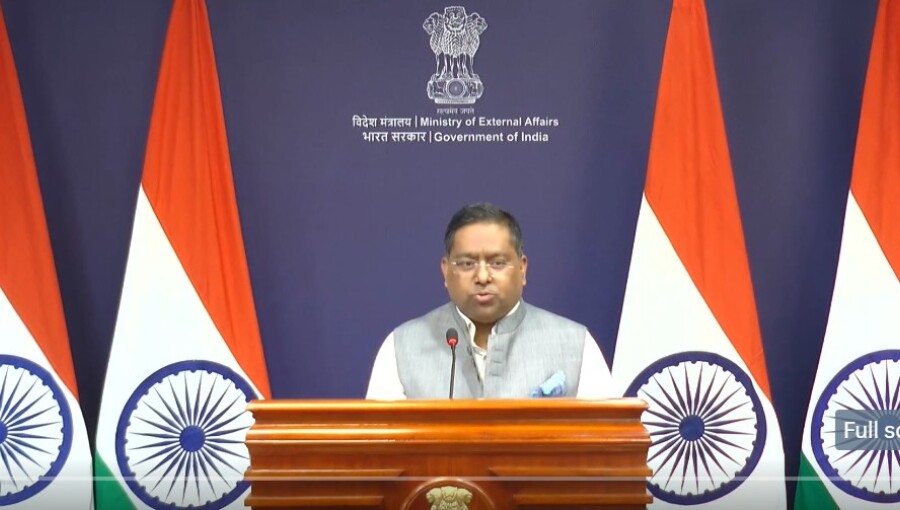
Randhir Jaiswal - spokesperson if India's Ministry of External Affairs / Randhir Jaiswal - spokesperson MoEA - India - X
By Bno - Aditya Pareek March 13, 2026

India is feeling the bite of the global energy crunch after the ongoing war in the Strait of Hormuz and the wider West Asia region has made it risky for cargo ships to transit through the region without getting hit by Iranian weapons.

According to a March 12 2026 press briefing by India's Ministry of External Affairs(MEA), their minister incharge Dr. S. Jaishankar has held three separate conversations with Iran’s Foreign Minister Seyed Abbas Araghchi.

During these conversations, Jaishankar has purportedly discussed India’s national interests and energy security needs being affected by the attacks on shipping originating or transiting through the West Asia region.

While official government sources don’t talk about an agreement being reached with Iran, it is likely that India has secured some sort of arrangement, with Tehran agreeing to not target vessels bound for India that pre-notify their presence to Iranian authorities.

Iran has reportedly made similar arrangements with Bangladesh, which has also requested higher supplies of diesel from India which is a major exporter of refined petroleum products. India's MEA has acknowledged the request but has said that it remains under review.

However, the enforceability of these arrangements is uncertain, as misidentifications during combat operations are a phenomena no country or forces are unacquainted with and since the beginning of military operations against Iran, the US Air Force has lost three F-15 fighter jets to friendly fire.

Iran which has suffered decapitation strikes against its leadership including its former Supreme Leader Ayattolah Ali Khamenei is even less likely to be able to effectively coordinate the various branches and commanders of its forces operating weapons platforms across the country and in the Strait of Hormuz which can sink vessels.

As a result, this gap in leadership and communication could easily lead to accidental targeting of vessels heading to countries Iran has made transit agreements with.

According to a press release by India’s Ministry of Petroleum & Natural Gas, 70% of India’s crude imports are routed outside Strait of Hormuz, however over 60% of its liquified petroleum gas (LPG) which is the main cooking fuel for Indian households and the restaurant industry have been impacted.

New Delhi has increased domestic LPG production by 25% and has taken steps to increase inventory and availability to consumers by invoking the Essential Commodities Act.

India consumes around 189mn metric standard cubic metres per day(MMSCMD) and produces around 97.5MMSCMD, leaving 91MMSCMD which is slightly less than half of its requirement dependent on foreign supplies.

While Indian social media is already abuzz with people comparing the cost of cooking with electric induction stoves over the ubiquitous LPG stoves it remains to be seen if the transition is temporary or will remain a trend even after the conflict ends and energy supplies become normalised.

New Delhi has also clarified that “28 Indian-flagged vessels are operating in the Persian Gulf region. Of these, 24 vessels are located west of the Strait of Hormuz carrying 677 Indian seafarers, while 4 vessels are east of the Strait with 101 Indian seafarers onboard”.

Furthermore, while there has been no official acknowledgement of the fact, it is understood that China has a deep maritime transit relationship and energy dependency on Iran. Beijing is also believed to have supported Tehran through decades of US, Western and UN sanctions with both cash and military supplies including advanced hightech components for its military industrial complex.

As such, it is highly likely that Iran is paying back those favours or more accurately continuing the favourable deals it cuts with Beijing even under the ongoing kinetic-threat rich environment in the Persian Gulf region.

Iran agrees to provide safe passage to Bangladeshi oil and LNG vessels

Iran agrees to provide safe passage to Bangladeshi oil and LNG vessels
/ Giorgos Barazoglou - Unsplash
By bno - Mumbai Office March 13, 2026

Iran has officially agreed to grant safe passage to Bangladeshi oil and LNG ships passing through the Strait of Hormuz, Middle East Monitor has reported.

As per the new deal, Bangladeshi ships need to inform Iranian authorities before entering the Strait of Hormuz to ensure secure passage. The move comes as the Bangladesh authorities boost efforts to stabilise the supply of fuel in the local market, Middle East Monitor said in a post on social media platform X.

A consignment of 27,000 tonnes of diesel recently docked at Chattogram port in Bangladesh, with four more vessels like to arrive soon. Bangladesh is also planning to source 300,000 tonnes of diesel from other sources to meet energy demand in April.

Local Bangladeshi media has not confirmed this news. New Age reported on March 13 that Dhaka has sought safe passage for its vessels. Energy, power and mineral resources minister Iqbal Hasan Mahmud on March 12 said that they were expecting a positive reply from Tehran soon in this regard. This has been not been greenlit by Tehran yet, the newspaper reported.

Bangladesh, which imports about 6.2mn tonnes of crude and refined petroleum products, relies heavily on the Strait directly and indirectly, New Age added.

It imports about 1mn tonnes of crude oils from Saudi Arabia and the United Arab Emirates while 5.2mn tonnes of refined petroleum oils from China, India, Malaysia, Indonesia and Thailand.

Meanwhile, Bangladesh has formally requested the United States grant a temporary waiver that would allow it to buy crude oil from Russia, saying this was needed to maintain stable energy supplies in the domestic market, The Daily Star reported.

Dhaka wants an arrangement similar to the one extended to India, which has been allowed to continue importing Russian crude under a temporary waiver despite Western sanctions linked to the war in Ukraine.

Bangladesh’s finance and planning minister Amir Khosru Mahmud Chowdhury confirmed that the matter was raised during discussions with US officials.

Dhaka says that access to discounted Russian crude could help ease pressure on its foreign exchange reserves and stabilise domestic fuel supplies. The government has said the request reflects the need to protect economic stability at a time of volatile global energy markets.

During the meeting with the US ambassador to Bangladesh, Brent Christensen, Bangladeshi officials noted that India had already been granted a temporary exemption to continue purchasing Russian oil, and said Bangladesh should be considered for a similar arrangement.

According to the report, US officials indicated that the request would be conveyed to authorities in Washington for consideration. Dhaka is now awaiting a response from the US administration on whether such a waiver could be granted.


Around 70% of India’s crude oil imports now bypass Hormuz

Around 70% of India’s crude oil imports now bypass Hormuz
/ bne IntelliNews
By bno - Mumbai bureau March 13, 2026

India now sources approximately 70% of its crude oil imports via supply lines that bypass the Strait of Hormuz, significantly cutting the country’s exposure to disruptions resulting from the prevailing tensions in the Middle East, the government of India said in a recent press release.

Senior officials from India’s oil and gas ministry, foreign ministry, ministry of ports, ministry of shipping and waterways and ministry of information and broadcasting provided details about the steps taken by the India government during a press meet held in New Delhi on March 11.

India’s daily crude oil consumption stands at 5.5mn barrels. Officials said diversified sourcing from around 40 countries has helped secure volumes in excess of what would normally have arrived through the Strait of Hormuz during this period. Two additional crude cargoes are already on their way to the country and will help in further boosting supplies in the days ahead. Indian refineries are operating at very high-capacity utilisation levels, in some cases exceeding 100%, they said.

The government is also focusing on the natural gas sector. India’s cumulative natural gas demand is about 189 mmscmd, out of which about 97.5 mmscmd is produced locally. Approximately 47.4 mmscmd of supply has been impacted by the force majeure conditions. This has resulted in sourcing from alternative suppliers and routes. Indian gas supplies have secured LNG cargoes from new sources and two shipments are currently on the way to India, the officials stated.

To take care of the distribution part, the government issued a Natural Gas Control Order on March 9, 2026 under the Essential Commodities Act to prioritise supplies for vital industries. Piped natural gas for domestic cooking usage and compressed natural gas for transport will continue to get full supply, while the industrial sector connected to the gas grid will get about 80% of their previous six-month average allocation. Fertiliser plants will get about 70%, and refineries and petrochemical plants will cut usage by approximately 35% so that priority sectors remain protected.

The government has also announced emergency measures to address the liquefied petroleum gas supplies. Approximately 60% of India’s LPG consumption is met through imports, and about 90% of the imports are routed through the Strait of Hormuz. To effectively handle the disruptions, refineries and petrochemical complexes have been asked to reroute streams such as propane, butane, propylene and butane to the LPG pool, boosting local LPG output by almost 25%. Almost the whole of the domestic LPG production is now being directed toward household demand.

In case of non-domestic LPG priority is being given to vital entities like hospitals and educational institutions. A committee has been set up to review allocations for commercial consumers such as hotels and restaurants.

Authorities said few instances of panic booking and hoarding were reported, but the average LPG delivery time remains 2.5 days. Steps such as expanding the Delivery Authentication Code system to about 90% of consumers and hiking the minimum gap between bookings from 21 days to 25 days have been announced to handle demand and stop diversion.

The officials also stated that 28 Indian-flagged ships are at present operating in the Persian Gulf. Out of these 28 vessels, 24 vessels are carrying 677 Indian seafarers and are located west of the Strait of Hormuz, while four ships with 101 Indian seafarers are located to the east of the strait.

Advisories have also been issued by the government requesting Indian-flagged ships to take into account enhanced security protocols. Ship managers, recruitment companies and Indian missions in the area have been asked to ensure help wherever needed. Port operations across India continue to be normal, while the government is monitoring vessel movements and cargo flows to maintain export-import trade.

In its update, the Ministry of External Affairs said that there are around 10mn Indians residing in the Gulf Cooperation Council countries. Advisories have also been issued by Indian missions from time to time. These missions have also helped stranded travellers, mostly tourists and transit passengers, to fly back to India via flights from cities such as Muscat, Riyadh and Jeddah.

Approximately 9,000 Indian nationals are residing in Iran at present. The Indian mission there is in close touch with the community, while students and pilgrims have been relocated from Tehran to safer areas in the country. Help is also being provided for land border crossings into Armenia and Azerbaijan for onward travel to India.

Officials confirmed that two Indians died and one remains missing following attacks on merchant vessels in the region.

Meanwhile, the Ministry of Information and Broadcasting said the Indian home secretary has held talks with various state governments and advised strict action against hoarding and black marketing of essential items while making sure that availability of supplies remain uninterrupted. States and union territories have also been directed to appoint official spokespersons and provide verified updates through government channels.

Officials said the government remains vigilant about the developments in the Middle East while coordinating across ministries to safeguard India’s energy security, maritime trade and the welfare of its citizens residing overseas.