Monday, March 30, 2026


Trump allows Russian oil tanker to dock in Cuba but warns island is "next" after Iran

Trump allows Russian oil tanker to dock in Cuba but warns island is
The Trump administration's de facto blockade has reshaped Cuba's energy landscape since January, when the US-led operation to remove Venezuelan president Nicolás Maduro severed the island's dominant source of subsidised oil. / xinhua
By bnl editorial staff March 30, 2026

The United States has allowed a Russian government-owned oil tanker to break its own blockade of Cuba, delivering the fuel-starved island its first significant energy shipment in three months, as President Donald Trump said the cargo would do little to alter Havana's fate.

The Anatoly Kolodkin, a sanctioned Russian state vessel carrying an estimated 730,000 barrels of crude oil, arrived at the port of Matanzas on March 30 after Washington chose not to deploy the Coast Guard vessels stationed in the region to block its passage. A US official told the New York Times ahead of the vessel's arrival, speaking on condition of anonymity, that the administration did not intend to intervene.

Speaking to reporters aboard Air Force One on March 29, Trump confirmed the decision. "We don't mind having somebody get a boatload, because they have to survive," he said. "I told them, if a country wants to send some oil into Cuba right now, I have no problem with that. Whether it's Russia or not."

But he was dismissive of the shipment's significance. "Cuba is finished," Trump said. "They have a bad regime. They have very bad and corrupt leadership. And whether or not they get a boat of oil, it's not going to matter." He also brushed aside suggestions that allowing the delivery amounted to a concession to Moscow. "It doesn't help him. He loses one boatload of oil, that's all it is," Trump said of Russian President Vladimir Putin. "If he wants to do that, and if other countries want to do it, it doesn't bother me much."

He also issued a fresh warning, telling reporters: "Cuba's going to be next. Cuba is a mess, it's a failing country and they're going to be next . . . Within a short period of time, it's going to fail and we will be there to help it out." The remarks followed Trump's statement at an investment conference on March 27 that "Cuba is next, by the way" after the Iran campaign.

The Kremlin welcomed the tanker's arrival and offered a notable diplomatic disclosure: spokesman Dmitry Peskov said energy supplies to Cuba had been discussed with the US ahead of the delivery, suggesting the shipment had been tacitly negotiated between Washington and Moscow. Russia "considers it its duty not to stand aside, but to provide the necessary assistance to our Cuban friends," Peskov told reporters on March 30.

The Anatoly Kolodkin's arrival stands in contrast to the fate of a second Russian-origin cargo that never reached the island. The Hong Kong-flagged tanker Sea Horse, carrying around 200,000 barrels of Russian diesel loaded via a ship-to-ship transfer, spent weeks stranded in the Atlantic before diverting to Venezuelan waters, according to LSEG ship-monitoring data cited by Reuters. The reasons for the diversion were not disclosed, though the vessel's Hong Kong registry may help explain its caution: China, unlike Russia, retains substantial trade exposure to Washington and has been considerably more careful about running afoul of US tariff threats. As of March 27, the Sea Horse had yet to discharge its cargo off the Venezuelan coast.

The delivery represents a significant, if temporary, reprieve for an island that has been brought to its knees by months of fuel shortages. Cuba's national power grid, heavily dependent on ageing oil-fired generators, has collapsed three times in March alone, leaving millions without electricity for prolonged periods. Cuban officials have said the healthcare system is buckling under the strain, with surgical waiting lists swollen to more than 100,000 patients, among them over 11,000 children. The United Nations has warned that hospitals have been struggling to maintain emergency and intensive care services.

Analysts cautioned against reading too much into the shipment. "It buys them time," said Jorge Piñón, a former oil executive who studies Cuba's energy system at the University of Texas at Austin, as quoted by the NYT. "But this is not a magic wand that all of a sudden, by the arrival of this tanker, all of their problems are solved." Piñón estimated the oil would take roughly three weeks to refine into usable products such as diesel, gasoline and fuel oil, and a further week to distribute across the country. According to analysts cited by the Associated Press, the cargo could be refined into roughly 180,000 barrels of diesel, sufficient to cover around nine to ten days of the island's needs, meaning Cuba could exhaust the supply in under a month.

Diesel is the most acute shortage, Piñón noted, as it powers trucks, tractors and a significant portion of the island's smaller power plants. Humanitarian supplies have piled up undistributed, with delivery trucks unable to operate for lack of fuel. He expected Havana to ring-fence a share of the cargo for its military and security apparatus rather than releasing it all for civilian use. "This is going to give diesel to the police, to the military units, to basically the whole apparatus of the Cuban government," he said.

The decision not to intercept the Anatoly Kolodkin avoids what would have been a potentially explosive confrontation with Moscow just off the Florida coast, at a moment when Ukraine peace talks are tentatively under way and US forces remain engaged in a military campaign against Iran that has sent oil prices surging to their highest in years. Russia, already heavily sanctioned over its invasion of Ukraine, has little additional trade exposure to US reprisals – a point the Kremlin has made repeatedly.

The Trump administration's de facto blockade has reshaped Cuba's energy landscape since January, when the US-led operation to remove Venezuelan president Nicolás Maduro severed the island's dominant source of subsidised oil. A subsequent executive order threatening tariffs on any country supplying fuel to Cuba successfully deterred Mexico and other potential suppliers, though Russia, with almost no bilateral trade with Washington to protect, proved a harder target to deter.

Secretary of State Marco Rubio, who has openly called for regime change in Havana, reiterated that position last week. "Cuba's economy needs to change, and their economy can't change unless their system of government changes," he told reporters.

Cuba has responded with characteristic defiance. Its deputy foreign minister, Carlos Fernández de Cossío, said last week that the island's military was actively preparing for the possibility of US military aggression. Yet behind the combative public posture, the communist regime has been engaged in backchannel talks with Washington, navigating, as it has before, between ostentatious defiance and private pragmatism. It is a balancing act that grows harder to sustain with each passing blackout.

Russian Oil Tanker Arrives Off Cuba Despite U.S. Ordered Embargo
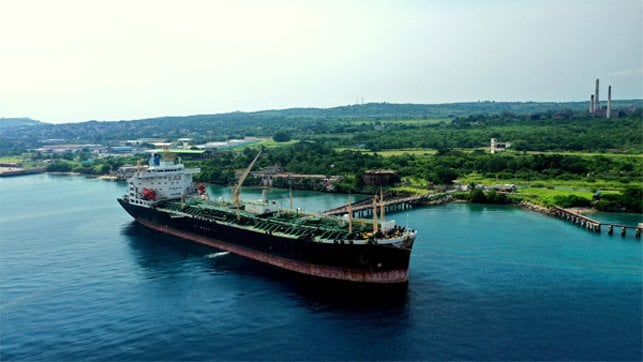
tanker in Cuba
A tanker at the Cuban port of Matanzas in 2024 (posted by Eduardo Rodríguez Dávila)

Published Mar 29, 2026 6:47 PM by The Maritime Executive


After three weeks of transit and a “cat-and-mouse” game crossing the Atlantic, the Russian-flagged tanker Anatoly Kolodkin is ready to reach Cuban waters late on Sunday and dock by Monday or Tuesday. Sunday afternoon, The New York Times reported, citing “a U.S. official brief on the matter,” that the Trump administration has decided to let the vessel proceed to Cuba.

Russian officials have spoken for weeks in support of the Cuban regime and people. They had said they would be sending humanitarian aid and denounced the U.S. pressure campaign. Cuba has not received an oil shipment since early January, after Nicolás Maduro was deposed in Venezuela, which had been the island’s main supplier.

Trump has said he could do anything he wanted with Cuba, and he would have the honor “of taking it.” However, U.S. officials have been quietly saying they would consider a humanitarian move for the island, which in recent weeks suffered two island-wide power failures. Residents are living with fuel rationing, but the key concern, in addition to power, is the supply of water.

The Anatoly Kolodkin, loaded with 730,000 barrels of crude at Primorsk, Russia, departed on March 8. Someone aboard the vessel had set its AIS transmission for most of the crossing indicating the destination as “Atlantis.” By Sunday, however, the vessel had changed its AIS to read Matanzas, Cuba, arriving on March 31. Its AIS signals have shown the tanker moving at 12 to 13 knots, and by Sunday afternoon, it had passed the eastern tip of Cuba and was sailing along the north shore.

Open source analysis showed the Trump administration had available at least two Coast Guard cutters, USCG Tahoma near Florida and USCG Richard Etheridge south of the Florida Keys. The landing craft USAV Wilson Wharf is also off the coast of Cuba, and an unnamed warship is also north of the Bahamas. 

Unconfirmed reports said last month the USCG had been used to intimidate at least one smaller product tanker from approaching Cuba. It was chased off to the coast of the Dominican Republic. Another Hong Kong-flagged product tanker is a bit of a mystery. It loaded diesel in Russia, but in the middle of the Atlantic, started sending messages saying “not under command” and varying course. It vanished, with maritime AI data firm Windward suggesting it might have snuck into Cuba using the AIS signals as a diversion.

Others suspect the product tanker, Sea Horse, ended up diverting to Trinidad, where it likely resold its cargo. The ship is now anchored off Venezuela.

Analysts highlight that even if the U.S. is letting this cargo land in Cuba, it only gives the government a few days. It could take 15 to 20 days, sources told Agence France-Presse, for Cuba to refine the crude and another five to 10 days to deliver it. It will also have to choose to use the diesel produced for power generation, transportation with buses or trains, or possibly to fuel tractors and other farm equipment. They expect it will yield about 250,000 barrels of diesel, which would meet demand for about 12.5 days.

The High Cost of Canceling Offshore Wind in the United States


  • The U.S. will reimburse TotalEnergies nearly $1 billion to abandon offshore wind projects that could have generated over 4 GW of clean power.

  • In exchange, the company will reinvest in U.S. oil, gas, and LNG infrastructure, marking a sharp policy pivot.

  • The move comes as global energy markets tighten due to geopolitical conflict and rising demand from AI and data centers.

Donald Trump’s hatred for wind farms reached a new peak this week. The President announced that the United States will pay $1 billion in taxpayer dollars to a French company to not build planned wind farms in leased federal waters off the coast of New York and North Carolina. Together, those wind projects would have supplied more than 4 gigawatts of clean electricity for households and businesses in the United States.

Under the unusual deal, the French energy giant TotalEnergies would abandon its planned wind farms and annul the lease deal it made during the Biden administration. After the U.S. Treasury reimburses the company the $928 million it paid for those leases, the deal stipulates that TotalEnergies will reinvest that money in oil and gas projects in the United States. This would include a facility to export liquefied natural gas from Texas, ramping up oil production in the Gulf of Mexico, and building additional gas-powered plants.

“The deal is an extraordinary transfer of taxpayer dollars to a foreign company for the purposes of boosting the production of fossil fuels, a main driver of climate change, while throttling offshore wind power,” reads a New York Times article published earlier this week.

While the Trump administration’s decision to axe a planned domestic energy project seems fuelled by personal vendetta and long-standing hatred for wind energy rather than energy security strategy, for France’s TotalEnergies, the deal is reportedly a pragmatic one. “When the Trump administration came to power and began setting U.S. energy policy, we said that we’ll have to reconsider, clearly, these offshore wind project developments,” says Patrick Pouyanné, the CEO of TotalEnergies. He said that without the Biden-era clean energy subsidies that have been cut by the Trump administration, the margins for such a project become much tougher in the United States. A $1 billion payout is therefore a pretty good alternative.

“To be clear, we don’t renounce onshore wind,” Pouyanné went on to say. “We continue to invest in onshore solar, onshore wind, batteries [in other countries].”

This is just the latest in a long series of attacks on ongoing offshore wind projects in the United States on the part of the Trump administration. Last year, Trump tried to order an immediate halt to the construction of five wind projects along the East Coast of the U.S., but judges overturned this ruling across the board. This failure has led to the administration’s current tactic, paying off companies to cancel their wind power projects before they’ve even begun.

This most recent deal comes at a pivotal time in global energy markets. While it’s somewhat puzzling that the Trump administration would choose to derail plans that would boost the United States’ energy independence and resilience to oil market shocks, it stands to reason that the U.S. would be doing everything it can to boost liquefied natural gas output as oil and gas prices soar across the globe. Europe will also benefit from an increased flow of LNG out of the United States, which would not require navigating the chaos in the Strait of Hormuz.

The Strait of Hormuz, through which one-fifth of global oil trade passes on a normal day, has been closed to nearly all traffic for nearly a month now as the United States and Israel continue to wage war in Iran, and that closure is not likely to reverse any time soon. This energy crisis comes on top of another concurrent threat to global energy security – the rapid rise of AI and data centers, which have sent energy growth trends skyrocketing and global leaders scrambling to shore up energy security strategies.

By Haley Zaremba for Oilprice.com


Washington Plans $1 Billion Deal to Kill Wind Power as Energy Prices Rise

  • The U.S. plans to reimburse TotalEnergies $928 million to cancel offshore wind leases and halt future development.

  • The move reflects a broader policy shift away from renewables toward oil and gas amid geopolitical energy disruptions.

  • Critics argue the decision will increase energy costs and deepen reliance on volatile fossil fuel markets.

United States President Donald Trump will not stop in his efforts to quash offshore wind energy development, as he offers France’s TotalEnergies almost $1 billion to permanently halt its wind projects. The move follows more than a year of Trump badmouthing wind energy, cutting federal financial support for wind projects, and refocusing energy policy on fossil fuels.

Wind contributes around 10 percent of U.S. energy at present, with wind capacity having grown rapidly following the introduction of the Inflation Reduction Act (IRA) and other favourable policies under the Biden administration. In fact, Wind energy has become the cheapest source of new electricity in the U.S. However, since coming into office last January, President Trump has repeatedly taken aim at the wind industry.

Last January, Trump issued an executive order pausing the approval for wind development. He stated that wind projects were “the most expensive form of energy that you can have, by far.” He has often referred to wind farms as an eyesore, calling turbines ugly, as well as falsely claiming that offshore wind projects kill whales and overstating the impact of turbines on the bird population. Trump also suggested that the lifespan of the average wind turbine is just eight years, when it is actual

Trump paused several offshore wind projects in the United States last year, as he put increasing pressure on the industry to halt development. However, in February, a federal judge threw out the Interior Department’s halt work order on a multibillion-dollar wind farm off the coast of New York State, making it the fifth time that U.S. courts have ruled against the Trump administration’s efforts to stop offshore wind development. Judge Royce Lamberth of the U.S. District Court for the District of Columbia issued a preliminary injunction with the intention of allowing the developer of the New York project, Sunrise Win,d to restart construction while the broader legal battle continues.

Now, in the face of rising energy prices linked to the ongoing Iran War (which the U.S. started), the Trump administration is looking to use any means possible to halt offshore wind development. The federal government has announced plans to pay French energy major TotalEnergies almost $1 billion to scrap plans to build wind farms off the U.S. East Coast.

U.S. Interior Secretary Doug Burgum announced the deal on Monday at the annual CERAWeek conference in Houston, where he appeared alongside TotalEnergies CEO Patrick Pouyanne. The agreement states that TotalEnergies must give up two offshore leases it had purchased off New York and North Carolina, and, in response, the Interior Department is expected to reimburse the company the $928 million it paid for the leases under Joe Biden.

“We’re partnering with TotalEnergies to unleash nearly $1 billion that was tied up in a lease deposit that was directed towards the prior administration’s subsidies that were pushing expensive weather-dependent offshore wind,” said Burgum.

As part of the agreement, TotalEnergies has pledged not to develop any new offshore wind projects in the United States and will invest almost $1 billion in the development of four trains at the Rio Grande LNG plant in Texas, and the development of upstream conventional oil in the U.S. Gulf and shale gas production this year, according to a U.S. Interior Department statement.

Sam Salustro, a senior vice-president of pro-offshore wind group Oceantic Network, said in a statement, “This is political theatre meant to obscure the fact that offshore wind capacity is being pulled out of the pipeline when energy prices are skyrocketing, even as other offshore wind projects continue delivering reliable and affordable power to the grid.” Salustro added, “Paying to remove affordable, homegrown energy out of the equation leaves American consumers struggling to pay their electricity bills.

The move to kill offshore wind comes during the biggest oil supply disruption in history, which is driving up energy prices higher and higher every week that the conflict continues. Lena Moffitt, the executive director of the climate advocacy group Evergreen Action, believes that “Trump is deliberately deepening our dependence on the same volatile fossil fuel markets his reckless war is destabilising – while destroying the homegrown clean energy that could protect Americans from that volatility.”

Despite the Trump administration’s best efforts to restrict offshore wind development, several projects have gone ahead in recent months, with support from federal courts. The Vineyard Wind project, off the coast of Massachusetts, was completed in March, while Revolution Wind off Rhode Island’s coast launched operations just a few days before.

At a time when U.S. consumers fear rising energy bills (after a year of repeated cost increases), the Trump administration is continuing to attack offshore wind energy, as it favours the development of the country’s fossil fuel resources. The Trump administration will now pay almost $1 billion to halt TotalEnergies offshore wind plans, despite a federal court previously ruling in favour of the French firm’s wind projects.

By Felicity Bradstock for Oilprice.com


'Every housewife could be CEO of Rheinmetall': Zelenskyy hits back at German weapons boss

The logo of German arms manufacturer Rheinmetall is pictured in Unterluess, Germany, Wednesday, Aug. 27, 2025
Copyright AP Photo

By Sasha Vakulina
Published on 

German defence company Rheinmetall issued a public statement expressing respect for Ukraine’s defence manufacturers after its CEO mocked Ukrainian weapons and drone producers over the weekend in sexist remarks.

Ukrainian President Volodymyr Zelenskyy has responded sharply to remarks by Germany’s Rheinmetall CEO Armin Papperger, who dismissed Ukraine’s drone industry as “housewives with 3-D printers in the kitchen.”

“If every housewife in Ukraine really can produce drones, then every housewife could be the CEO of Rheinmetall,” Zelenskyy said, praising Ukraine’s defence industry for reaching “this high standard.”

Papperger, in an interview with The Atlantic, described Ukraine’s weapons production as unremarkable, likening it to “playing with Legos.”

His comments triggered widespread backlash in Kyiv.

Rheinmetall later issued a statement expressing “utmost respect” for Ukraine’s defence sector, highlighting the “innovative strength and fighting spirit of the Ukrainian people,” though it did not apologise for the CEO’s remarks.

Zelenskyy told journalists via WhatsApp that Ukraine competes “not with rhetoric, but with technology and results,” pointing to successes on land, in the air and at sea.

He added that Ukraine’s defence industry “will take, and is already taking, its place in the world.”

Alexander Kamyshin said Ukrainian drones have destroyed more than 11,000 Russian tanks. Officials and social media users responded with hashtags like #LegoDrones and #MadeByHousewives.

Ukrainian Prime Minister Yulia Svyrydenko called Papperger’s remarks sexist, saying: “Europe’s defence is powered by Ukrainian ‘housewives’. Ukrainian women are an essential part of Ukraine’s war effort and Europe’s security. They have stepped into roles once seen as male-dominated, bringing energy, discipline and determination.”

The statement was echoed by the head of Ukraine's Mission to NATO Alyona Getmanchuk.

Over 70,000 women serve in the Armed Forces of Ukraine, with nearly 20,000 in combat roles. Many of them work as drone operators and developers.

Kyiv officials say women-drones operators took part in last year’s “Spiderweb” operation, in which more than 100 Ukrainian drones struck air bases deep inside Russia, targeting nuclear-capable long-range bombers.

Germany’s Rheinmetall, one of Europe’s largest arms manufacturers, has become a major supplier to Ukraine, providing tanks, 155mm artillery, mortar shells and surveillance drones.

The company’s chief executive officer, Armin Papperger, sparked controversy with comments dismissing Ukraine’s drone industry as “housewives with 3-D printers in the kitchen,” coming as Volodymyr Zelenskyy was touring the Gulf and signing defence agreements.

These deals include cooperation on missile and drone threats, with Ukrainian specialists deployed to several countries to assist with air defence and drone interception systems.

Papperger’s remarks have also sparked wider debate on defence innovation. Four years into Russia’s full-scale invasion, drones are estimated to cause around 80% of combat casualties on both sides.

Germany and Ukraine have launched a joint venture between Germany’s Quantum Systems and Ukraine’s Frontline Robotics.

The facility, expected to produce up to 10,000 drones within a year, is the first Ukrainian drone production line in Germany and forms part of Kyiv’s effort to expand arms manufacturing in Europe amid rising demand for unmanned systems.

Ukrainian companies now produce around four million drones of various types each year.


Ukraine Sustains Unrelenting Nightly Attacks on Russia’s Baltic Oil Ports

fire at Russia's Ust-Luga oil terminal
Smoke rising from Ust-Luga after the overnight attacks (screen grab from Exilenova+)

Published Mar 29, 2026 4:17 PM by The Maritime Executive


Ukrainian officials are reporting that they have maintained a series of unrelenting attacks designed to dramatically impact the oil export operations on the Baltic. Overnight into Sunday, they staged what they said was the fifth consecutive nightly attack on the Russian terminal at Ust-Luga.

The governor of the Leningrad region, Alexander Drozdenko, confirmed the attacks in a series of social media postings. He warned residents, initially saying they had destroyed 29, then 31, and then 36 drones. He also warned that additional attacks were possible throughout the day, with air defense forces on alert.

He sought to downplay the level of damage but confirmed there was damage and fires at Ust-Luga from the most recent attack. He reported that additional firefighting resources had been called in from the Leningrad region and St. Petersburg, including two fire trains. He later reported the fires had been contained while also saying drone debris had damaged a nearby residential building.

Satellite pictures, however, seem to show more extensive damage. Residents have been warned not to post photos, but some are leaking onto social media showing large plumes of smoke and workers evacuated. Ukraine asserted that as much as 40 percent of the export capacity has been impacted.

The attacks have alternated between Ust-Luga, which Reuters says ships 700,000 barels were day, and Primorsky, which it says handles one million barrels per day. Storage tanks and loading facilities are believed to have been damaged, as well as railroad tracks. Bloomberg notes the two terminals handle nearly half of Russia’s crude oil exports.

It is not the first time Ukraine has struck the terminals. They hit Ust-Luga in 2025. Volodymyr Zelensky told reporters, however, that long-range drones are becoming more effective. He said they are being technically refined.

Zelensky asserted that the systematic targeting of the oil operations, including also hitting refineries, was in response to Russia’s attacks over the past few months on Ukraine’s energy infrastructure. “We responded with a strong blow, reducing the possibility of Ust-Luga,” he said.

Ukraine’s Security Service confirmed that they had hit the two terminals on successive days. Yevhenii Khmara said they were aiming at reducing Russia’s ability to finance the war through oil revenues. The strikes come as oil prices skyrocketed above $100 pr barrle due to the war with Iran.

Russian officials said they had shot down a total of 155 Ukrainian drones over 16 regions last night. It responded by launching 442 drones and one missile into Ukraine.

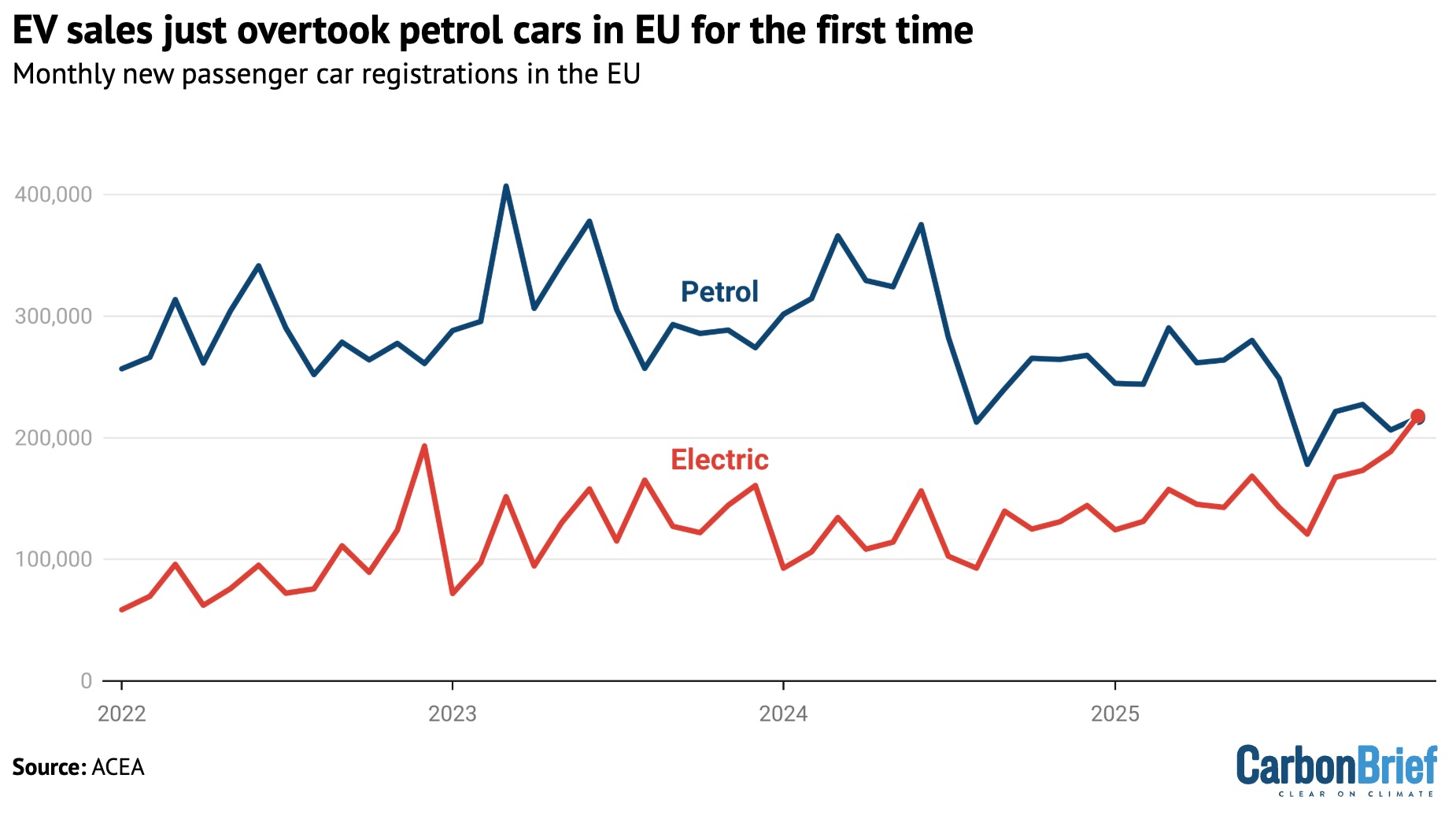
EV sales overtake petrol vehicles in EU for first time

EV sales overtake petrol vehicles in EU for first time
The sale of EVs overtook petrol fuelled cars in the EU for the first time in 2025. / bne IntelliNews
By bne IntelliNews March 30, 2026

Sales of EVs overtook standard petrol cars in the EU for the first time in December 2025, marking a milestone in the bloc’s transition to cleaner transport and reducing its reliance on oil imports, according to data published by the European Automobile Manufacturers’ Association.

Registrations of battery electric vehicles (BEVs) reached 217,898 in December, up 51% year-on-year, while petrol car sales fell 19% to 216,492, Carbon Brief reported on March 30, citing ACEA figures. The shifit to EVs is accelerating and will now only accelerate after the Gulf war is expected drive up petrol prices dramatically this year. Already sales of EV in Europe have increased significantly in just the last few weeks.

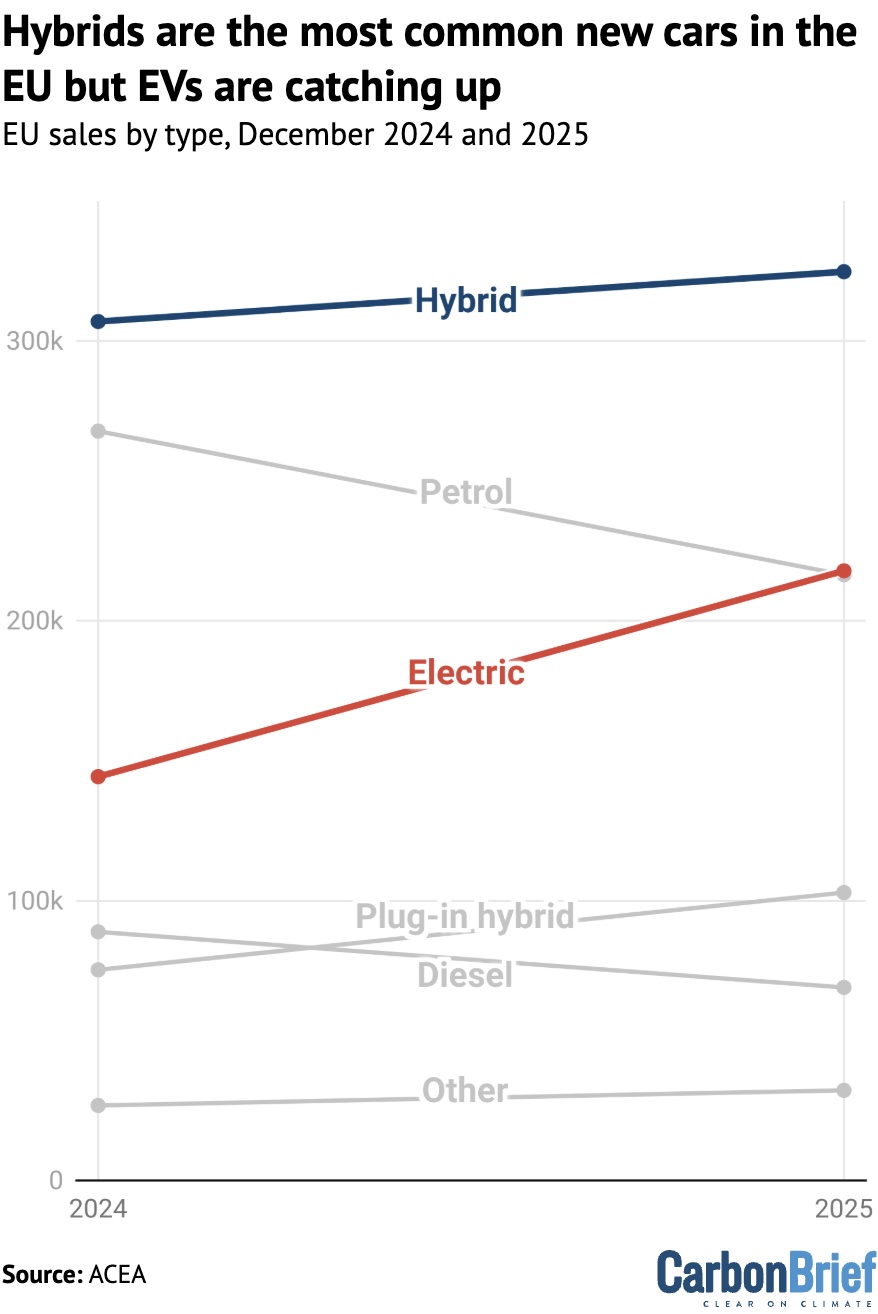
Across the full year, EVs accounted for 17.4% of EU car sales in 2025, up from 13.6% in 2024. A total of 1,880,370 BEVs cars were registered, with Germany, the Netherlands, Belgium and France together making up 62% of demand. ACEA described this as “still a level that leaves room for growth to stay on track with the transition”.

By contrast, registrations of petrol cars declined 18.7% over the year to 2,880,298 units, with France recording a 32% drop, followed by Germany, Italy and Spain. Petrol’s market share fell from 33.3% in December 2024 to 26.6% a year later.

Hybrid vehicles remained the largest segment of the EU market, with sales rising 5.8% year-on-year in December to 324,799 units. However, vehicles capable of drawing power from the grid — including BEVs and plug-in hybrids — expanded more rapidly, with plug-in hybrid sales increasing 36.7% during the month.

The figures come as the EU adjusts its regulatory framework for the automotive sector. A package released in December proposes shifting from a full ban on combustion-engine car sales by 2035 to a target of reducing tailpipe emissions by 90% from 2021 levels. The remaining 10% could be offset through low-carbon fuels and materials, allowing some combustion and hybrid technologies to remain in use.

Automakers have repeatedly pushed back against stricter emissions targets, citing competitive pressure from Chinese manufacturers and tariffs in the US. The head of Stellantis (STLAM.MI) in Europe recently claimed there was no “natural” demand for EVs.

Volkswagen (VOW.DE) retained the largest EU market share at 26.7% in December. Tesla (TSLA) saw its share fall to 2.2% from 3.5% a year earlier, while China’s BYD (1211.HK) increased its share to 1.9%.


China Pushes Electric Vehicles Toward the Five-Minute Charge Era

  • Chinese firms like BYD and CATL are developing chargers capable of delivering hundreds of miles of range in minutes.

  • New battery chemistries and vertically integrated manufacturing are enabling breakthroughs in charging speed and efficiency.

  • While promising, ultrafast charging still faces real-world testing challenges and infrastructure constraints.

Electric vehicle (EV) makers are racing to develop the fastest battery chargers to give them the competitive edge, with Chinese producers once again coming out on top. One of the biggest criticisms consumers have is the length of time it takes to charge EVs, compared to refuelling internal combustion engine (ICE) alternatives. This has led several EV-makers to invest heavily in research and development into charging technology over the last decade. Some EV producers now think they may have the solution - ultrafast chargers.

The race to develop the most effective ultrafast charger commenced in 2022, after the Chinese automaker XPeng launched its S4 ultrafast supercharging technology, which offered a five-minute charge that it said would provide 210 kms of range for its G9 SUV.

In March, China’s fastest-growing EV-maker, BYD, announced that its most recent Flash Chargers are capable of delivering up to 1.5 MW, or around four times the power being provided by the “hyper-fast” 350-kW systems available in the United States. Tests revealed that BYD batteries could charge from 10 percent to 70 percent in just five minutes, and from 10 percent to 97 percent in around nine minutes


This means that drivers may be able to gain up to 600 miles in not much longer than the time it takes to fill a petrol tank. BYD’s CEO, Wang Chuanfu, stated that limiting the charge to 97 percent is recommended, as the remaining 3 percent can be generated from regenerative braking.

BYD was able to achieve this feat by having a strong hold on the whole manufacturing process of its EVs, including vehicles, battery cells, and charging hardware. The firm switched from using lithium iron phosphate to lithium manganese iron phosphate technology, which increases energy density by around 5 percent while maintaining stability under heavy electrical loads. The firm needed to change every component of the batteries to achieve super-fast charging, including the electrodes, electrolytes, and separators, which are now capable of handling the intense current of a 1.5 MW charge without overheating or degrading.

The technology is expected to be launched in BYD’s Denza Z9GT in Paris in April. BYD plans to install over 16,000 of its new chargers across China by the end of the year and around 2,000 units in Europe. Each charging station will be fitted with stationary storage batteries to buffer grid demand and offset spikes that could otherwise overwhelm the infrastructure. While the technology had impressive results in the lab, it still needs to be used in a real-world environment to see whether the charger can hold up to BYD’s claims.

Other Chinese EV-makers are hot on the tail of BYD, having been developing their own super-fast charging technologies. Chinese automaker Zeekr showcased a fully liquid-cooled ultrafast charger, which it says is capable of providing up to 1.2MW per charging gun, in April last year. However, it is unclear whether the company has developed EVs that are compatible with the new charger.

China’s CATL has launched various battery technologies, including its second-generation Shenxing battery. The firm delivered the world’s first sodium-ion battery in 2021, which was promising, as sodium is both cheap and abundant. The new version is thought to deliver 1.3 MW of peak charging power, delivering around 2.5 km of range per second of charging.

Meanwhile, Huawei launched a 1.5 MW fast-charging system last April, which the company believes can charge a 300kWh battery in about 15 minutes, using two charging guns simultaneously. Huawei is expected to make its heavy-duty electric trucks compatible with the superfast chargers.

The United States is also racing to develop super-fast charging technology. While no U.S. company has yet achieved five-minute charging, several companies have driven down the price of batteries while making improvements to EV range. For example, GM launched a lithium manganese-rich (LMR) battery in 2025, which it produced in collaboration with LG Energy Solutions, to deploy in its vehicles starting in 2028. The low cost of some parts of the battery means that GM can reduce the price of its batteries without compromising performance or lifespan.

Meanwhile, other companies are exploring alternative charging methods to make them more competitive, such as wireless charging. The aim is to create a technology to charge a car when parked over a special pad. Studies have suggested that the technology is extremely attractive among consumers. Despite being in the nascent stage of development, wireless charging could become a reality in just a few years, given the necessary government backing and favourable regulatory frameworks.

As China races ahead in global EV manufacturing, several Chinese firms are rising to the challenge by continually breaking records for batteries and other EV technologies. All the while, companies like BYD are looking to drive down the cost of EVs, which is making them increasingly popular with consumers.

By Felicity Bradstock for Oilprice.com


Spain closes its airspace to all US aircraft involved in Iran war

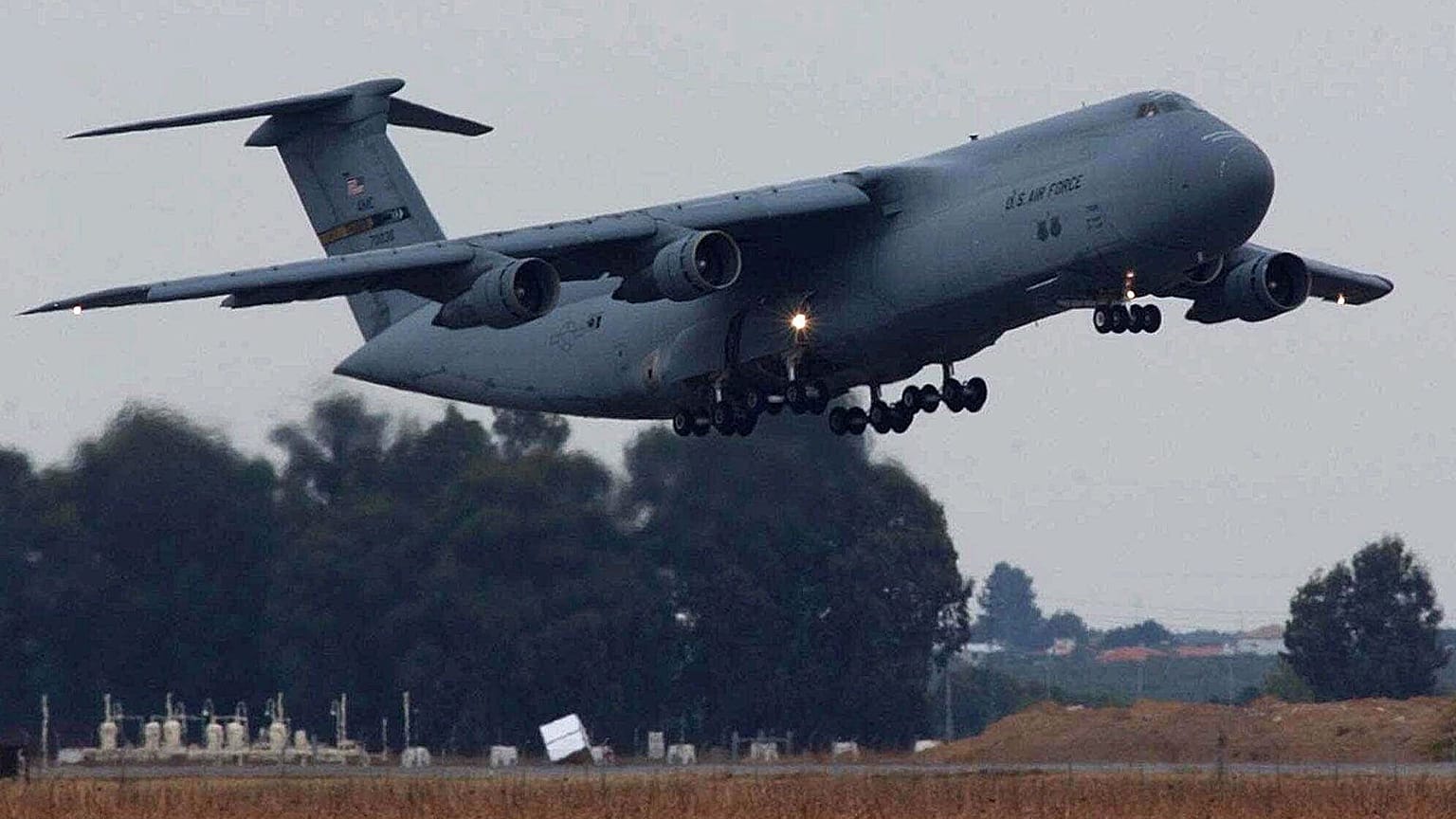
FILE: A US Air Force C-5 Galaxy takes off from the joint-use Spanish and U.S. air base in Moron, southern Spain, 28 September 2001
Copyright AP Photo

By Javier Iniguez De Onzono
Published on 

The ban comes amid strained relations between Madrid and Washington following US President Donald Trump's threat earlier this month to cut off all trade with Spain over its refusal to allow the bases to be used for Iran operations.

Spain has banned US military aircraft involved in the Iran war from using its airspace and military bases, extending an earlier restriction that applied only to two American installations on Spanish soil.

Foreign Minister José Manuel Albares confirmed the expanded ban on Monday, telling Catalan radio station Rac 1 that Madrid would block any US flights linked to the conflict from entering Spanish airspace.

"Spain should not do anything that could escalate" the conflict, Albares said. He added that the decision reflects the "majority sentiment" of Spaniards who oppose the war and aligns with UN principles.

The measure builds on Spain's previous decision to restrict US access to the naval base at Rota in Cádiz and the air base at Morón de la Frontera in Seville.

The airspace ban now covers the entire country. It does not apply to emergency situations, according to Spanish military sources cited by El País.

Economy Minister Carlos Cuerpo, speaking to radio Cadena Ser on Monday, described the US-led military action as "a unilateral war that violates international law" and said Spain would not participate in or contribute to it.

The ban comes amid strained relations between Madrid and Washington following US President Donald Trump's threat earlier this month to cut off all trade with Spain over its refusal to allow the bases to be used for Iran operations.

Trump called Spain "terrible" and said Madrid wanted to "travel for free" on defence spending.

"We could use their base if we want, we could just fly in and use it, nobody's going to tell us not to use it," Trump said, speaking alongside German Chancellor Friedrich Merz during his White House visit on 4 March.

Defence Minister Margarita Robles said the restrictions had been communicated to US forces from the outset and were not a sudden policy shift.

"This was made perfectly clear to the US armed forces from the beginning," Robles told reporters. "Neither the bases are authorised, nor, of course, is the use of Spanish airspace authorised for any action related to the war in Iran."

She described the war as "profoundly illegal and unjust" and said Spain's position had been consistently clear.

Spain maintains close defence ties with the US through a bilateral agreement that grants Washington access to military facilities on Spanish territory.

The Rota naval base hosts a permanent US Navy presence and serves as a key logistics hub for American operations in Europe and the Mediterranean.

The airspace restriction could complicate US military logistics, as Spain sits along key flight routes between the United States and the Middle East.