Monday, March 30, 2026


Surge in West Texas Oil Theft Raises National Security Alarms

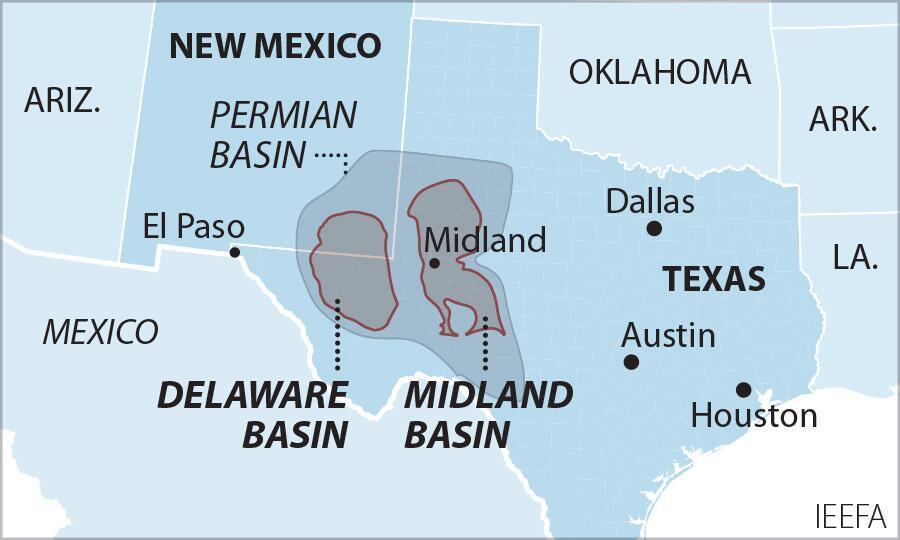
Criminals are exploiting weak points across the West Texas oil production region, which accounts for 15% of the world's energy resources. This emerging wave of oil theft is burning a multi-billion-dollar hole in the budgets of oil and gas operators across the Permian Basin and is becoming a national security threat.


The outlet spoke with Sheriff Randy Cozart, who estimates that about 500 barrels of crude are stolen each week. Industry groups say statewide losses are accumulating and range from $1 billion to $2 billion annually.

"Where there's money, there's crime," Cozart explained. "And there's lots of money in oil right now," he said, especially with WTI prices near triple-digit territory due in part to the energy shock in the Middle East.

One of the major problems in the Permian Basin is the recent increase in criminal activity, which some say is due to the Biden-Harris administration's nation-killing open-border policies.

Ed Longanecker, president of the Texas Independent Producers and Royalty Owners Association, told the outlet that oil companies in the region could incur losses of up to $2 billion. He said that figure does not cover thefts across the New Mexico portion of the Permian.

"The old joke in the oil field used to be that if it wasn't bolted down, it would get stolen," Michael Lozano, who runs government affairs and communications for the Permian Basin Petroleum Association, said, adding, "Now they're unscrewing the bolts, and they're stealing those too."

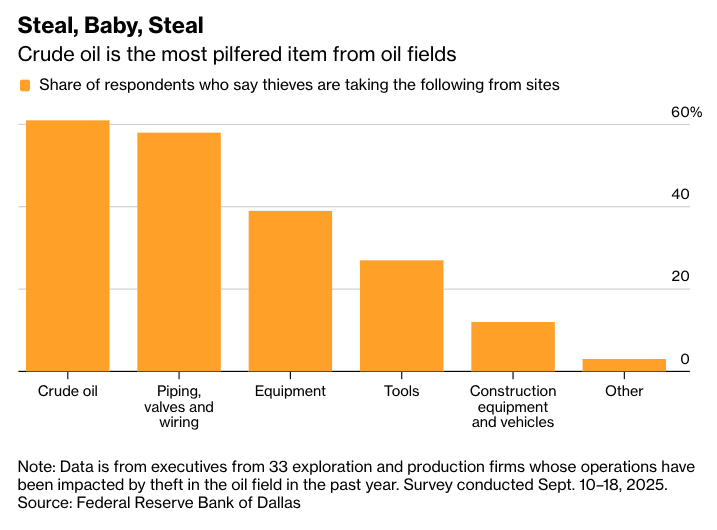
A recent Federal Reserve Bank of Dallas survey of oil executives showed that at least 60% said their operations were affected by oil thefts. 

Bloomberg described one method thieves use to steal oil:

Today's Permian Basin thieves might instead connect vacuum trucks to storage tanks in broad daylight and siphon it out, sometimes covering their license plates or swapping vehicles to evade law enforcement, authorities say.

Now, regulators and the FBI have taken notice because these oil thefts are becoming a growing economic security and critical infrastructure threat.

Local officials in Texas and New Mexico are closely watching the oil theft crisis. Texas has responded by creating a task force under the Railroad Commission, lawmakers are studying total economic losses, and the FBI has become more involved.

The question now is whether the energy shock emerging from the Middle East and the resulting national security threats will pressure states and the federal government to fortify critical energy infrastructure from the Gulf of America to the Permian Basin and elsewhere, as the risk of drone threats and sabotage continues to rise.

By Zerohedge.com


GM-backed EnergyX to launch Texas lithium facility


Smackover lithium plant rendering from EnergyX.

EnergyX, a startup backed by General Motors, said on Thursday it has commissioned a lithium production facility at its project Lonestar, located in the Smackover formation in Texas.

Lithium demand has been surging globally, driven by the role of lithium-ion batteries in electric vehicles, portable electronics and increased adoption of renewable energy storage solutions.

The Lonestar demonstration plant is operational and will produce roughly 250 metric tons per year of battery-grade lithium carbonate equivalent, the company said.

EnergyX expects production to scale to more than 100,000 metric tons per year.

Lithium refining remains a bottleneck in the US, with China controlling about 70%-75% of global lithium chemical conversion capacity.

The reliance on China for battery-grade lithium chemicals has kept margins low for domestic producers, undermining the economics of most non-Chinese projects, EnergyX said.

The company said the facility enables it to further optimize system design, validate process economics, and provide 5-25 ton samples of battery grade lithium to customers for qualification.

The Smackover formation is an underground geological formation stretching from Florida to Texas and could contain more than 4 million metric tons of lithium.

Companies aiming to extract lithium from the Smackover will need to use direct lithium extraction, a process that has yet to be widely proven at a commercial scale, with most projects still in pilot or early deployment.

(By Dharna Bafna)


Site visit: EnergyX launches first US direct lithium extraction plant in Texas


Left: Kellee Kahlil, director of marketing, center: Teague Egan, CEO, EnergyX cutting the ribbon at the project Lonestar launch in Texas Mar.26. Supplied image.

At a packed event in Hooks, Texas, EnergyX this week unveiled a first-of-its-kind lithium production facility — project Lonestar — marking a significant step toward establishing a scalable domestic supply of battery-grade lithium in the United States.

The company’s now operational demonstration plant is capable of producing approximately 250 metric tons per year of lithium carbonate equivalent (LCE).

While modest in output on a global scale, the facility represents a critical validation of EnergyX’s proprietary direct lithium extraction (DLE) technology and refining technologies under real-world, industrial conditions.

EnergyX can now internally produce a core component of its ‘GET-Lit’ lithium separation technology portfolio at an industrial scale.

“Bringing the biggest integrated DLE lithium demonstration plant online in the United States is a foundational milestone for EnergyX and for US domestic lithium production,” EnergyX CEO Teague Egan said.

“This facility not only validates the performance of our technology on an industrial scale under real-world conditions but also establishes EnergyX as the lowest cost producer in the US.”

EnergyX CEO Teague Egan speaking at the project Lonestar launch event Mar. 26. Image: Amanda Stutt

The project arrives amid rapidly accelerating global demand for lithium, driven by the growth of electric vehicles, grid-scale energy storage and emerging technologies. EV adoption alone has surged from roughly 85,000 vehicles in 2010 to around 20 million in 2025, with demand set to keep increasing. At the same time, energy storage systems are expanding at an estimated 50% year-over-year pace.

Industry observers view the demonstration facility as a crucial intermediary step between pilot-scale testing and full commercial deployment. By validating process economics and system design, EnergyX is positioning itself to expand across its broader US lithium footprint.

Located in the Smackover formation — a lithium-rich brine resource that stretches from Florida to Texas— the plant is the first DLE facility in the state to process locally sourced brine.

EnergyX has amassed a substantial position in the region, controlling 47,500 acres. Project Lonestar Lithium enables EnergyX to further optimize system design, validate process economics, and provide 5-25 ton samples of battery grade lithium to customers for qualification. The facility is the last step before commercial expansion across the company’s growing US lithium footprint.

EnergyX invested $30 million into the demonstration plant, and plans next to build the commercial plant, which will be over a $1 billion investment, Egan told MINING.COM, adding that the company has secured offtakes, but they are not public yet.

Egan maintains the company’s cost profile is the most competitive in the industry. See graph:

Source: EnergyX

Texas senator speaks

US policymakers have increasingly emphasized the importance of securing domestic supply chains for critical minerals. Senator Ted Cruz highlighted the project’s potential role in supporting energy security and defense readiness by supplying materials essential for advanced battery technologies.

Cruz spoke virtually to the company at the event, which was attended by 200 and live streamed to thousands.

Senator Ted Cruz speaking virtually at the project Lonestar launch in Texas Mar 26. Image: Amanda Stutt

“Congratulations to EnergyX and its CEO Teague Egan on opening the first-of-its-kind lithium processing facility right here in Texas,” Cruz said.

“The lithium produced at Project Lonestar will help bolster US energy security and defense readiness by supplying the critical materials needed for batteries used in critical military technology.”

Reducing US reliance on China

The facility is designed to demonstrate improvements in extraction efficiency, recovery rates and cost competitiveness — key factors that have historically limited the viability of lithium refining outside China.

Currently, China dominates an estimated 70–75% of global lithium chemical conversion capacity, creating a major bottleneck in the global battery supply chain. This concentration has left the US reliant on foreign processing, even when domestic lithium resources are available.

Project Lonestar aims to address that imbalance by providing a scalable, cost-effective pathway for domestic refining. The plant will also produce sample quantities of battery-grade lithium — ranging from 5 to 25 tons — for qualification by downstream customers, including battery and cathode manufacturers.

Inside project Lonestar Lithium. Image: Amanda Stutt

Additional demand is emerging from sectors such as defense technology and robotics, reinforcing projections that lithium requirements will rise dramatically over the next several decades.

For EnergyX, the Lonestar plant represents more than a technical milestone. It is a strategic attempt to reshape the economics of lithium refining in the United States — unlocking stranded resources, reducing reliance on foreign processing and laying the groundwork for a more resilient domestic battery materials ecosystem.

If successful at scale, the approach could help rebalance the global lithium supply chain at a time when demand is poised to outstrip historical norms.


Houthis Attack on Israel Threatens Red Sea Ceasefire

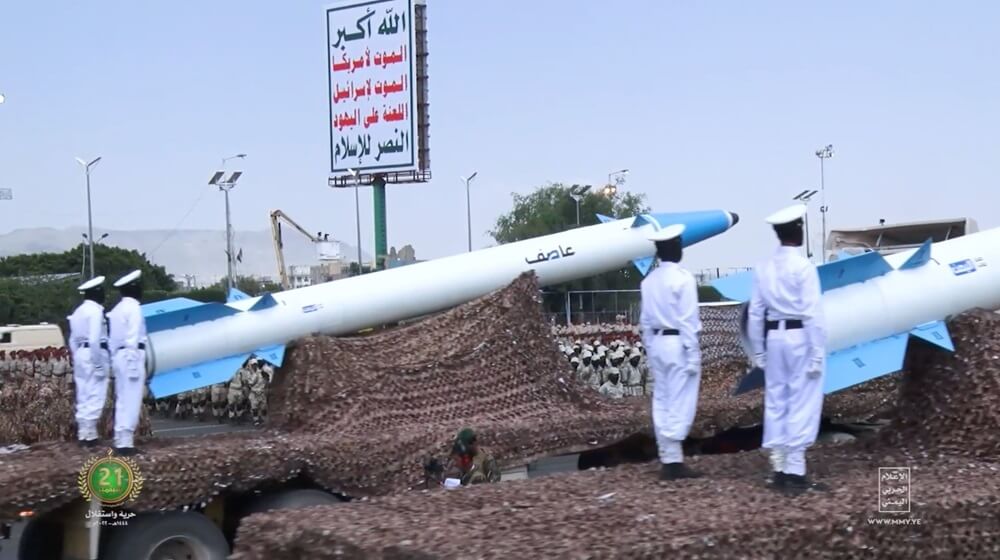
Houthi missile
Houthis launched their first missile and drone attacks toward Israel since the start of hostilities with Iran

Published Mar 29, 2026 11:06 AM by The Maritime Executive


The Houthi leader Abdul-Malik Al Houthi spoke on television at the commemoration this week of the anniversary of the start of the 2015 Saudi-led military campaign against the Houthis in Yemen. During the speech, Abdul-Malik Al Houthi emphasized that his movement was on the side of Iran and the Palestinians, but that he was reserving the right to intervene.

The reservation did not last long. On Saturday, March 28, the Houthis launched a ballistic missile towards southern Israel. Later the same morning, a Houthi drone was intercepted over the Red Sea, possibly by a Barak-8 surface-to-air missile fired from an Israeli Navy Sa'ar Class corvette, before it got anywhere close to Israel. But later a second drone made it as far as Eilat before being intercepted by the Israeli Iron Dome system.


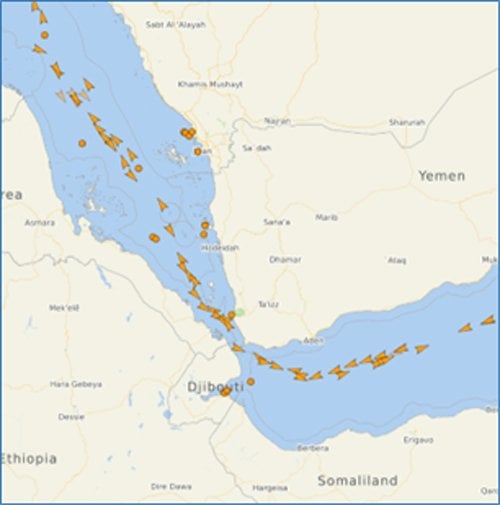
Tanker traffic in the southern Red Sea and Gulf of Aden, March 29 (VesselFinder)


So far, a lack of any incidents reported by the UKMTO in the southern Red Sea and Gulf of Aden tends to confirm that the Houthis have not yet changed their posture regarding the transit of commercial shipping. Tanker traffic through the Bab el Mandeb looks healthy. The Houthi military spokesman, Brigadier Yahya Saree, followed up the incidents by focusing on his movement's support for Hezbollah, the Palestinians, and Iran, without mentioning either Saudi Arabia or interdiction of shipping. But the Houthis have a paused but long-standing declared hostility to “Israeli-connected” shipping transiting the Bab el Mandeb, and have indicated that they will escalate their actions if the anti-Iranian coalition is broadened or expands the scope of its operations, and if operations against Iran are launched from the Red Sea.

The Houthis may be calculating that a limited strike on Israel will serve as a signal of its solidarity with the Resistance of Axis, without affecting what appears to be their principal objective at the moment - which is to draw in Saudi Arabia to negotiations to bring about a final agreement to end the war, following the largely successful ceasefire the two sides agreed upon in March 2022. Abdul-Malik Al Houthi's speech last week, in which he suggested he was going to resist pressure to resume attacks in the Red Sea, also set out the financial quantum of what he hoped he might extract from the Saudis during such negotiations.

Israel, however, is not likely to rest content with Abdul-Malik Al Houthi sending signals by launching drones and missiles at Israel. Israel will almost certainly retaliate, probably by once again targeting senior Houthi political leaders, but will do so in its own time.

In the meantime, tankers loading at Yanbu are successfully sailing south to Asia through the southern Red Sea without issues, thereby enabling Saudi Arabia to maintain exports at about 50 percent of the volumes that it would otherwise be shipping through the Strait of Hormuz. This residual balance of exports is critical both for Saudi Arabia's domestic fiscal needs - the Kingdom relies on current revenues to finance its in-year expenditure - but also to supply Asian consumers, principally in Japan and Korea, with at least a basic minimum of supply.

Based on the Houthi declared intent, a resumption of attacks on shipping in the Red Sea and Gulf of Aden now looks more probable than merely possible. But when this will occur is uncertain. Two triggers could be the movement of the USS Gerald R. Ford carrier strike group back into the Red Sea after its port visit to Split in Croatia, and particularly so if the Ford then moves into the Arabian Sea. Or if Saudi Arabia moves from its current defensive posture to take a more active role in Alliance offensive operations.

When the Houthis do resume their attacks on shipping, however, the impact on critical global supply chains will make the disruption caused by the current closure of the Strait of Hormuz far worse.


Oman Suspends Operations at Key Arabian Sea Port After Drone Strike

Salalah, Oman
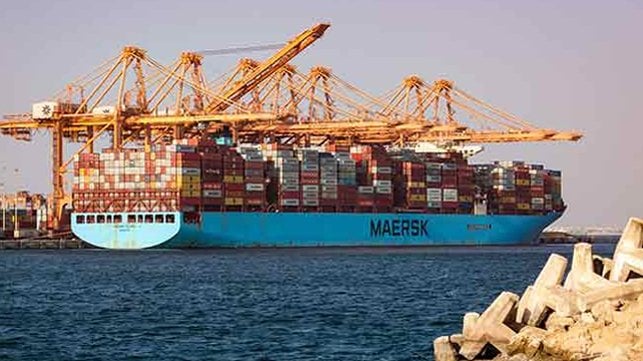
Berth was empty in Salalah when the drone struck the crane and Maersk confirmed its crew was safe and no ships or cargo affected (Port of Salalah file photo)

Published Mar 28, 2026 1:31 PM by The Maritime Executive


The Omani Port of Salalah, located on the Arabian Sea, came under attack on Saturday morning, March 29. The government’s official news agency condemned an Iranian attack, saying it was impinging on its sovereignty while noting that the port was providing a vital lifeline to the region.

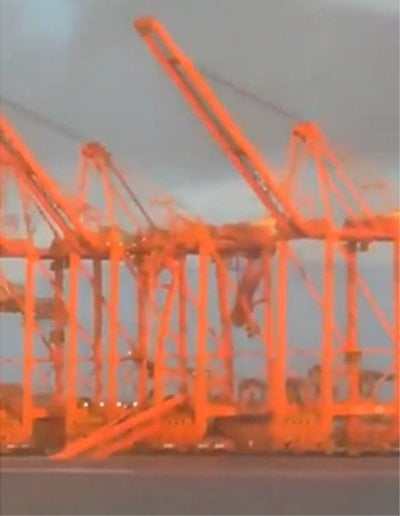
Two Iranian drones targeted the port, with videos showing one drone striking and damaging one of the large container cranes. There were no vessels at the berth, but the image shows the arms of the crane broken and hanging down, with a section apparently in the water after the attack.

The official statement said that one foreign expatriate worker had suffered moderate injuries. It confirmed the damage to one crane and said operations at the port were suspended while a damage assessment was underway.


Maersk issued a statement reporting that none of its vessels or cargo had been affected. It said Maersk crews are safe. Its current estimate is that port operations will be on hold for approximately 48 hours.

The Armed Forces of Iran claimed responsibility for the attack while asserting they were attacking a U.S. support ship. They highlighted that the attack had taken place at a distance of more than a thousand kilometers (more than 620 miles) from the Iranian coast. 

Salalah, because of its location outside the Persian Gulf and away from the Strait of Hormuz, has emerged as a key regional port. In 2024, it handled over 3.3 million TEU as well as large volumes of dry bulk. In the first nine months of 2025, volumes had almost equaled all the prior year's volume, and since the outbreak of hostilities, it has provided a vital overland link to the Persian Gulf states. Salalah had been targeted by the Iranians on March 3 and also briefly stopped operations but resumed the following day.

The strikes on Oman appeared to be part of the larger, ongoing campaign against the Arab neighbors of Iran, which it asserts are aiding the United States. The UAE Ministry of Defense reported it intercepted on Saturday 20 ballistic missiles and 37 drones, while saying the total has risen to 398 ballistic missiles, 15 cruise missiles, and 1,872 drones launched by the Iranians toward the UAE since the start of the conflict. It said two members of the military, one civilian contractor for the military, and eight civilians have been killed, while 178 people were injured. Among the drone attacks were strikes at the Kuwait International Airport, with unconfirmed reports of new fire.

Saudi Arabia was also targeted, including possibly the most serious attack of the war against a U.S. base. The media is widely reporting that a dozen American servicemen were injured and that one or more refueling planes were damaged. U.S. Central Command has not commented on the attack, but did issue a statement denying Iranian claims that they had also caused mass casualties in a strike in Dubai.


UK and France Forming Multinational Effort for Strait of Hormuz

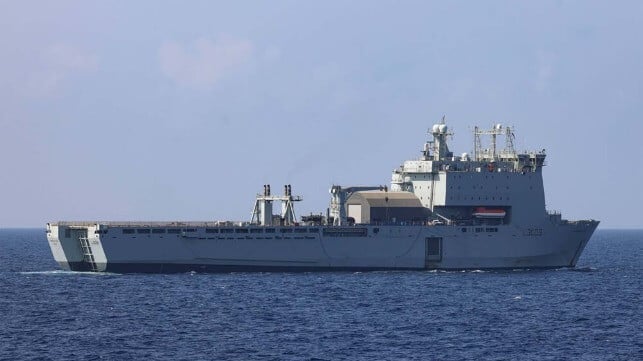
RFA Cardigan Bay
UK is reported considering deploying RFA Cardigan Bay as the mothership for mine clearance in the Strait of Hormuz (Royal Navy)

Published Mar 25, 2026 2:25 PM by The Maritime Executive


Additional details are coming out on the reported plan being led by the UK’s Royal Navy and France to develop a multinational effort to provide stability and reassurance to shipping in the Strait of Hormuz. The UK’s plan is, according to a report in The Times (London), well developed and has been shared with the Americans, while Reuters reports France will be conducting a multinational video conference this week with a broad group of 30 allies.

The efforts are proceeding despite the public criticisms of Donald Trump, who last week called the allies “cowards” and said NATO was a “paper tiger.” The Times (London) reports the UK’s chief of the defense staff, Air Chief Marshal Sir Richard Knighton, briefed France, Germany, Italy, the Netherlands, Japan, and Canada on Sunday, while the UK also sent a team of military planners to meet with U.S. Central Command in Florida. 

The countries have repeatedly said they would not be involved in combat operations and, according to The Times, would only launch their effort once the hostilities subside. However, with Donald Trump asserting that talks are underway with Iran, the Europeans are reported to be moving forward with their plan.

The Iranians on Wednesday informed the UN Security Council that the Strait of Hormuz is open for “non-hostile vessels,” asserting that nations other than the U.S., Israel, and their allies are free to send their ships through the Strait. However, they must consult the Iranians and receive permission. Yesterday, reports said a UAE-managed container feeder ship was denied clearance and turned around. A Chinese-owned containership reportedly paid a large fee for safe passage.

The trickle of ships continues through the Strait. Thai officials confirmed that one of their tankers made the passage and assert they did not pay a fee. The Bangkok Post is quoting sources at the Ministry of Foreign Affairs who said the embassy in Muscat worked through the Omanis and that they expect a second vessel to also be granted safe passage. India also reported it was able to arrange safe passage for several of its tankers and gas carriers.

AI maritime intelligence firm Windward, however, reports just four vessels went through the Strait on Tuesday with their AIS signal on, one outbound and three inbound. They were using the channel near Iran, while it says two bulkers also made the transit hugging the Omani coast without broadcasting an AIS signal. Windward reports that AIS-transmitting foreign vessel activity in the Arabian Gulf totaled 592 vessels, including 325 cargo vessels and 267 tankers.

The UK effort would initially focus on clearing mines from the Strait. While analysts have questioned whether the Strait is mined, British intelligence, The Times writes, believes Iran mined portions of the Strait. It says the UK has “world-leading capabilities” to deal with the mines and is considering adapting RFA Cardigan Bay or another ship of the class as a mothership to host the mine clearance operations. It points out that the UK already has Remus reconnaissance drones in the region, as well as other deployable autonomous minehunting systems.


It says the Royal Navy has not ruled out deploying its Type 45 destroyer to the Strait. They speculate it would be joined by French frigates and U.S. Arleigh Burke guided-missile destroyers.

The British believe some form of physical presence will be required to rebuild confidence for global shipping. Trump, in his social media posting, had said it would be a “simple military maneuver” to reopen the Strait with “very little danger.” British officials, according to The Times, however, pointed out that they shot down 14 attack drones on Monday night in Iraq, the highest total in a single night. They said that since the conclusion of the Eid holiday, the pace of attacks had resumed


Indian Navy is Quietly Guiding the Country’s Ships Through Strait of Hormuz

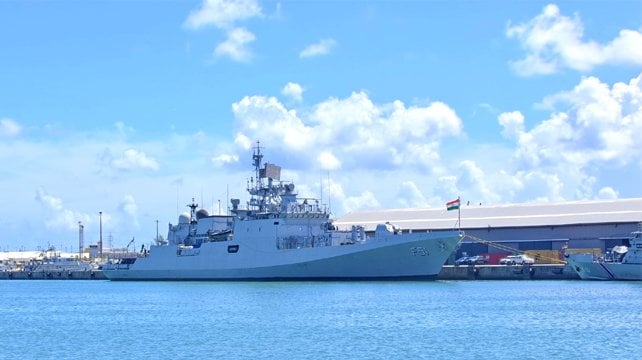
Indian Navy
Indian has sent destroyers and frigate to instruction ships through the Strait of Hormuz and to provide protection (Indian Navy file photo)

Published Mar 26, 2026 8:18 PM by The Maritime Executive


Indian government officials confirmed in media reports that the country continues to quietly guide its ships out of the Persian Gulf. The reports indicate that after contact with the Iranians to ensure safe passage, the government launched “Operation Urja Suraksha” to guide and protect critical shipping out of the region.

The IANS News Service detailed the operation with confidential information from government sources. According to the report, the operation is underway with the “highest degree of caution and minimal publicity” to ensure the safe evacuation of the Indian-flagged ships.

India’s Shipping Ministry had said there were 22 Indian-flagged vessels with over 600 seafarers in the western Persian Gulf. There were also three ships with an additional 76 Indian seafarers east of the Strait of Hormuz. According to the latest report, India identified 20 of the vessels as high-priority as they were carrying LNG, LPG, and crude oil.

More than five Indian warships have been dispatched, and they are leading the first element of the support operation. While none of the warships have entered the Strait of Hormuz, they remain above the Gulf of Oman near the terminus and are in constant communication with the merchant ships. 

After securing permission from Iran for the ships to transit the Strait, the warships are providing guidance on the route. They are reported to be providing instruction as well as the procedures the ships should follow. This is considered to be critical as Iran is forcing the ships to take a different route from the Traffic Separation Scheme and closer to its coastline. Ships are being individually guided with precise instructions.

Once a ship clears the Strait of Hormuz, it is met by a series of destroyers and frigates. The support extends through the Gulf of Oman with additional warships and logistics in place.

IANS reported that two additional vessels loaded with approximately 92,000 tons of LPG were due to reach Indian ports on March 25 and 26. This comes about 10 days after the first vessels, LPG carriers Shivalik and Nanda Devi, as well as crude oil tanker Jag Laadki, cleared the Gulf and reached Indian ports with badly needed cargoes.

The Ministry of Ports, Shipping and Waterways, along with the Directorate of Naval Operations, are reported to be closely coordinating in the effort.


Bahrain Imposes Maritime Curfew in Response to Iranian Attacks

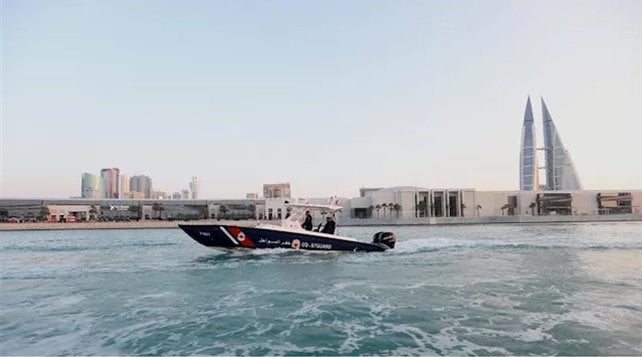
Bahrain Coast Guard
Bahrain will enforce a nightly maritime curfew (Bahrain Coast Guard)

Published Mar 29, 2026 1:17 PM by The Maritime Executive


The Kingdom of Bahrain announced on Sunday, March 29, that it is imposing a nightly curfew on all maritime activities. The Ministry of the Interior said it was in the interest of seafarers amid the blatant Iranian aggression.

An island nation in the western Persian Gulf, Bahrain is strategically located between Qatar and Saudi Arabia. Before the start of hostilities, the U.S. maintained a naval base in the Kingdom, including the homeport for the U.S. Coast Guard vessels assigned to the region. It is also home to the command for the joint military forces in the region.

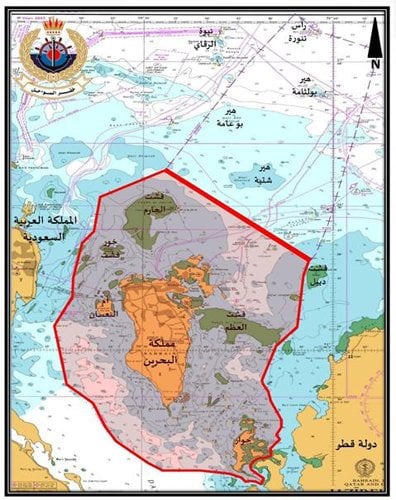
The Ministry said the ban was starting immediately and would run until further notice. It is nightly from 1800 to 0400 and includes all vessels. They said it extends to the maritime movement of seafarers using fishing and leisure vessels. It is an extension of the previous rules regulating maritime movement.


Bahrain's exclusion zone for the nightly curfew (Ministry of the Interior)


It is urging all seafarers to comply with the maritime ban. They are being instructed to avoid approaching the coast of Bahrain. It said the measure was to ensure the safety of seafarers and avoid legal liability. It said it would enhance maritime safety and raise preparedness.

Iran has reportedly increased its attacks against neighboring countries that it says support the United States and Israel. The Bahrain Defence Force updated statistics on March 29, reporting that air defenses have intercepted and destroyed 175 ballistic missiles and 391 drones targeting their country. This is up from a report of 124 missiles and 203 drones on March 15 and a report of 153 missiles and 301 drones on March 24.

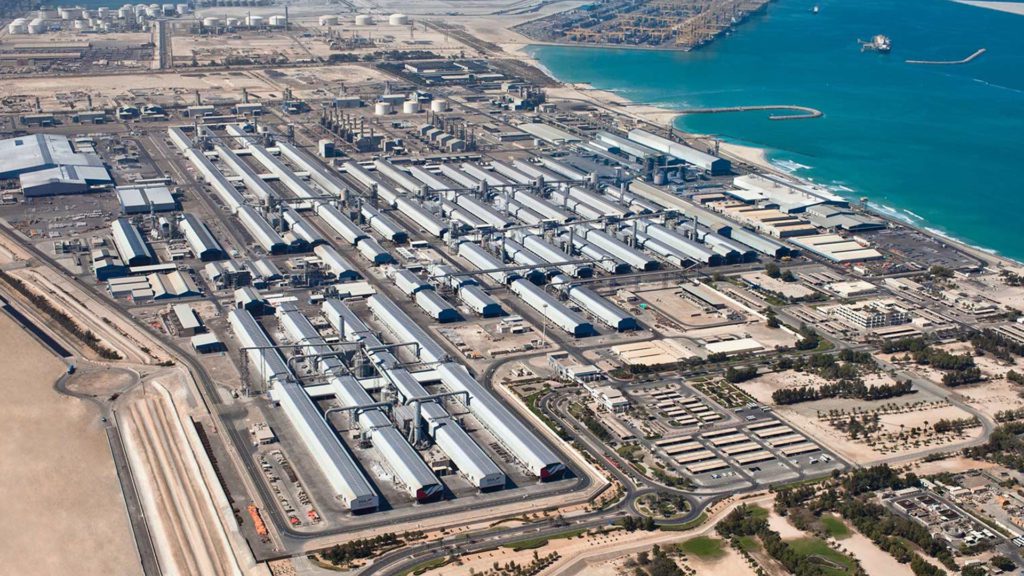
On Sunday, Iran’s attacks included the operations of Aluminium Bahrain and Emirates Global Aluminium. According to Al Jazeera, Aluminium Bahrain reported that two employees were injured in the attack on its facility, while the UAE’s Emirates Global Aluminium said one of its sites in Abu Dhabi suffered significant damage, and six people were injured.

Elsewhere, Saudi Arabia’s Ministry of Defense said on Sunday morning that it had intercepted 10 drones. The Kuwaiti National Guard said it shot down four additional drones. This comes after Oman and Saturday reported that one of the large cranes used to service containerships at the Port of Salalah had been damaged. Operations at the port were suspended while damage assessments were underway.


Mideast aluminum makers suffer damage from Iranian attacks


EGA’s Jebel Ali smelter. Credit: Emirates Global Aluminium

Two Middle Eastern aluminum producers were hit by Iranian attacks on Saturday, highlighting the challenge to the global economy as the war disrupts vital industries.

The region’s top producer, Emirates Global Aluminium, said it sustained “significant damage” at its site in Abu Dhabi, while Aluminium Bahrain said it was assessing the extent of damage to its facility.

The attacks are another blow to the region’s commodity industry, with producers mostly prevented from exporting by the effective closure of the Strait of Hormuz. In addition to the disruption to shipping, Iranian attacks have damaged key facilities, likely extending the time it will take for operations to return to normal when the war is over.

Aluminum prices, already rising before the conflict, have gained further as traders and buyers focus on the potential for tighter markets and shrinking global inventories. The Middle East accounts for around 9% of global supply and much of that is now blocked inside Hormuz. Higher commodity prices will weigh on global economies, according to Goldman Sachs Group.

EGA is still assessing damage from the attack on its Al Taweelah site located at the Khalifa Port industrial zone in the emirate of Abu Dhabi, the company said in a statement. It confirmed that several employees were injured, but declined to say whether operations at the facility had been suspended.

The Abu Dhabi media office earlier on Saturday said six people were injured in three fires caused by ballistic missile interception debris in the vicinity of the Kezad industrial zone. The strikes were part of a series of attacks by Iran on Gulf countries, even as the Trump administration pursued discussions around a potential ceasefire.

As the biggest non-energy industrial company in the UAE, EGA operates two smelters, one each in the emirates of Dubai and Abu Dhabi. The Al Taweelah site is halfway between the cities of Dubai and Abu Dhabi in the Khalifa Economic Zone along the Persian Gulf. The Dubai plant is in the Jebel Ali port and freezone area.

The Al Taweelah smelter produced 1.6 million tonnes of cast metal in 2025. The company had substantial metal stock offshore when Israel and the US began their war on Iran last month as well as in some overseas locations, according to the statement. It’s used that external product to help meet customer demand.

EGA has been a major international investor and is part of the UAE’s pledge to spend $1.4 trillion in the US over the next decade. The UAE has been the second-largest aluminum supplier to the US, well behind Canada, and is building the first new American smelter in decades in Oklahoma.

In the US, EGA also owns a recycling plant in Minnesota that’s allowed it to benefit from domestically produced metals selling at higher prices due to President Donald Trump’s tariffs.

(By Anthony Di Paola and Sara Gharaibeh)


INTERVIEW: Democratic Party of Iranian Kurdistan

INTERVIEW: Democratic Party of Iranian Kurdistan
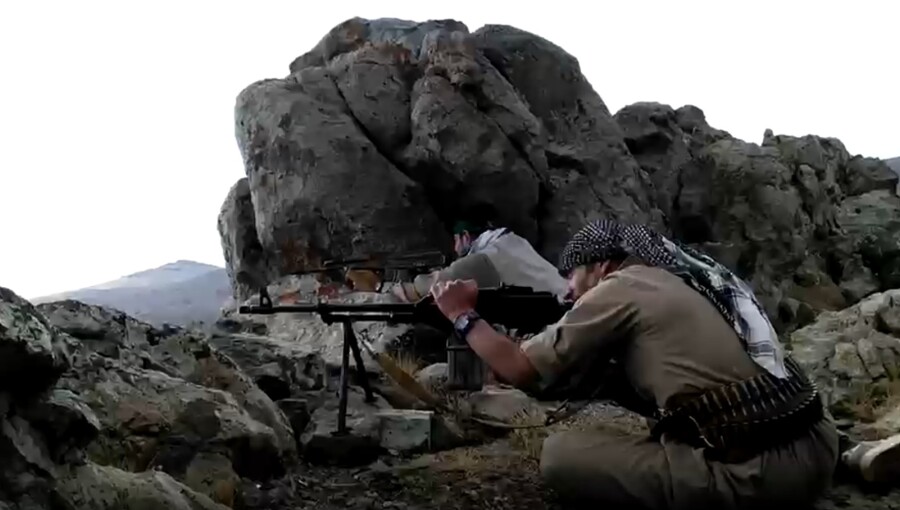
/ PDKI video - screenshot
By Mark Buckton in Taipei March 30, 2026

In the eyes of the government of Iran, the Democratic Party of Iranian Kurdistan (PDKI) is a terrorist organisation operating its own armed group as part of its push for self-determination for the Kurdish people of Iran – a population of between seven and 15mn depending on the source.

Banned by Tehran, the PDKI is the oldest active Kurdish political party in existence, and unable to operate openly in Iran, is currently based in the Erbil Governorate region, part of the Kurdistan Region of northern Iraq.

The PDKI is not, however, listed as a terrorist organisation by any major international body including the United Nations, the European Union or the United States Department of State.

Speaking through Bakhtyar Osmany, head of the Asylum Department of the PDKI, the group gave Bne IntelliNews an assessment of the PDKI view of the current conflict involving Iran, the United States and Israel.

“The ongoing conflict between the Iranian regime and the United States and Israel is largely rooted in the regime’s issues within the country, especially in the repression of the people, and Iran’s role in creating instability in the region and beyond” Osmany said. “As a result of the regime’s internal policy of severe domestic repression, there has been widespread public resentment toward the government, and therefore, not many people are opposed to the idea of the regime being overthrown by foreign forces.

Bakhtyar Osmany

“As Kurds in Iran, the Islamic Republic has been our number one enemy for the last 47 years. We have fought against it at great cost, making it impossible for the regime to impose its policies in Iranian Kurdistan. We see more and more coming to agree with what we have long been pushing for, as the regime is unable to make reforms, and that negotiations with the regime would not lead to any meaningful results.”

As a result, the current conflict “creates favourable conditions for Kurdish and Iranian opposition movements, and opens the door for broader alliances aimed at regime change” in Iran.

Questioned on whether or not the PDKI is currently engaged in, or preparing for, armed operations in light of the situation in Iran, Osmany states that the PDKI is “not currently engaged in armed operations” but adds that “given our long history and experience, we retain the capability to enter an armed phase if we deem it necessary.”

Turning to Iranian strikes on Kurdish opposition areas in the Kurdistan Region of Iraq, Osmany confirms that “The Iranian regime has opposed us in every possible way including assassinations, bombings and poisoning, but in recent years has mostly carried out missile attacks and drone attacks. For example, in 2018 it targeted our refugee camps and headquarters with missiles that left dozens dead and many wounded. It is worth noting, however, that the (Iranian) regime failed to achieve its goals, even with missile attacks on our headquarters. On the contrary, we consider ourselves even stronger now.”

As a group that has historically moved from seeking outright independence in Iran, to advocating autonomy within a Federal Iran, Osmany also gives an insight into the PDKI’s core political objectives in 2026.

“Our main goal is to achieve political rights and national demands. We seek to have a meaningful role in shaping Iran’s future and participating in decision-making. A Federal Iran would mean decentralisation of power, a non-centralised government in Tehran, and guarantees for Kurdish rights, such as education in our mother tongue and fair access to national and regional resources without repressive systems as seen under past monarchies or the current regime. At present, the Islamic Republic remains a major obstacle that must be removed.”

However, after decades of intermittent armed struggle since 1979, Osmany indicates the lessons learnt from such a drawn out campaign led to action forced upon the PDKI. “We did not choose armed struggle; in fact, it was imposed on us by the regime’s brutality against our existence and as our national dignity was unfolding. The unique hardship of our armed struggle has strengthened our resilience and revolutionary spirit. An important lesson we have learned from our eight-decade long struggle is that no single method will see us achieve our goals. Rather, it will be a combination of different methods that sees us achieve our aims and objectives.”

Politically, it is well reported that the PDKI identifies with democratic socialist principles. Asked how the PDKI would use these principles to shape governance in a future, post-Islamic Republic Iran, Osmany answers “social justice has always been at the centre of our agenda” continuing “we aim at bringing about a system that has the capacity of providing the broadest possible access to public, financial, and social services for the largest segments of society.”

In achieving these political goals though, the PDKI is building upon what Osmany calls “political mobilisation and international efforts for regime change and building broader alliances against the Islamic Republic.”

Part of this can be seen in the protest movements within Iran – protests Tehran has cracked down upon with levels of brutality that some sources claim has led to the deaths of tens of thousands of protesters. Addressing this, Osmany says the PDKI is “not separate from protest movements; we are part of them. Kurdish people have repeatedly responded positively to our calls for strikes and demonstrations. A clear example is the ‘Woman, Life, Freedom’ movement, which began in Kurdistan and spread across Iran” although he makes no mention of the most recent round of protests and Iranian response.

On the role of external actors such as the US or others in the region, and how these are seen by the PDKI, Osmany explains “if they aimed to bring about genuine democracy in the country as one of the results of the current war, it would be in our mutual interests for them to consider us, the Kurdish forces, as one of the influential forces on the ground. We can bring about stability, help Iran to turn into a democratic country, and preserve constructive relations with them, especially with the United States.”

And after the recent formation of a broader coalition of Iranian Kurdish political groups drew international attention, Osmany sees this as having “accelerated decision-making, strengthened unity of voice, improved cooperation, and enhanced the political standing of Kurdish groups in international forums” although on Kurdish groups sometimes differing in ideology and tactics across the region, he sees the PDKI navigating these differences in a positive manner.

“This is one of the strong points of the coalition of the Kurdish political parties. As a democratic political party that has been fighting to bring about democracy for 80 years, we see the differences within the coalition as a reflection of Kurdish society”he says, before looking beyond Iran at wider PDKI engagement with Kurdish movements in neighbouring countries.

“Kurds share common aspirations, as well as language and history. Our collective goal is to achieve human and political rights, to free ourselves from oppression and to attain freedom.”
 

Ice Slows the Start of Shipping on the Upper Great Lakes

ice on the Great Lakes
Whitefish Bay still has two feet of ice and three feet of snow stranding ships trying to transit Lake Superior (Lake Carriers Association)

Published Mar 29, 2026 5:47 PM by The Maritime Executive


The shipping industry is sounding a cautionary tale as the 2026 season for operations on the Great Lakes is getting underway. They are saying a shortage of icebreakers is compounding a difficult situation, leaving ships stranded after a heavy winter across much of the region.

The Soo Locks reopened on Wednesday, March 25, and it is a big day for the region and the economy. Located at Sault Ste. Marie, Michigan, the locks close each winter for maintenance when the weather is at its harshest. When it reopens, it normally means shipping can resume on Lake Superior, providing access to ports such as Duluth and Thunder Bay. 

This year, however, is different, because while the locks started handling ships, areas of the lake are still choked with ice and snow. In particular, Whitefish Bay, to the west of the locks, is still buried, and ships are finding it basically impossible to make progress in the area. A dozen or more ships have been stuck, reports the Lake Carriers Association.

In places, the reports indicate the ice is still two feet thick on Lake Superior. A late blizzard in early March left massive amounts of snow, which in some places is three feet on top of the two feet of ice. A spokesperson for NOAA, Brian Howell, told NBC Northern News Now that ice coverage was above normal, peaking at 60 percent this winter on the lake, and now the problem is compounded by refreezing at night. Overall ice coverage on the Great Lakes was still at 24 percent, above average, at the end of March.

The Lake Carriers Association notes the situation is critical as the steel mills are waiting for their first deliveries of iron ore and other materials after more than two months since the locks closed. While areas such as Duluth are clear and ready for shipping, Whitefish Bay is the challenge.

The Association notes that the U.S. Coast Guard only has one heavy icebreaker for the lakes, the Mackinaw, but it has been unable to make the lock transit this year. The other USCG vessels for the region lack the power to address the current ice situation.

The other option is the Canadian icebreakers, but they have been busy in Canadian waters this season. At the end of the week, USCG Spar was reported on its way to help in Thunder Bay, which created the hope that the Canadian heavy icebreaker could transit south to break up Whitefish Bay.

The Lake Carriers Association asserts that representatives for the region were able to initially get funding in Congress for another heavy icebreaker, but they assert the money was diverted to the Polar and Arctic icebreaker projects favored by Donald Trump, leaving the lakes to depend solely on soley the Mackinaw for at least three more years.

The USCG Coast Guard last week released a request for information for the replacement of its smallest icebreakers, the ones used along the Atlantic Coast. In its fleet assessment, it notes a strong need to also replace its aging medium icebreakers, comprised of the 140-foot Bay-class icebreaking tugs, which were commissioned into service between 1978 and 1988. It anticipates building 11 of these vessels, which are used primarily on the Great Lakes and along the Atlantic seaboard.

BAN DEEP SEA MINING

NOAA Ship to Map Potential Critical Mineral Deposits in Pacific U.S. Waters

NOAA Ship Rainier
NOAA Ship Rainier mapping in the Pacific  in 2022 (credit: NOAA).

Published Mar 28, 2026 4:24 PM by The Maritime Executive


In early April, NOAA Ship Rainier will begin to map and characterize more than 8,000 square nautical miles of federal waters off Kingman Reef and Palmyra Atoll in the Pacific Ocean. This project is part of the Department of Commerce's implementation of the U.S. Offshore Critical Minerals Mapping Plan, as described in President Trump’s Executive Order 14285: Unleashing America's Offshore Critical Minerals and Resources.

Rainier is a hydrographic survey ship staffed by NOAA Corps Officers and professional mariners. The first survey leg will focus on mapping with multibeam echo sounders in deep water. The second survey leg will use autonomous underwater vehicles from Orpheus Ocean to acquire high-resolution seabed imagery and geological samples, in partnership with the NOAA Ocean Exploration Cooperative Institute. 

“Nearly half of U.S. waters, including this area of the Pacific, have not been mapped to modern standards,” said Neil Jacobs, Ph.D., NOAA administrator. “The Rainier crew will collect high-resolution survey data in this area for the very first time to deepen our understanding of its seabed composition.” 

NOAA will produce publicly accessible maps and images of these federal waters in the Pacific. These products will inform NOAA, other federal agencies and interested parties of the likelihood of finding critical mineral deposits in the surveyed area. This effort will generate high-quality, deep-ocean data to help increase the baseline understanding of the deep-ocean environment, as well as stimulate further potential exploration, research and management projects, including activities related to critical minerals.

About deep seabed mineral development

Deep seabed mining is the extraction of nodules containing critical minerals from the ocean floor. Some regions of the deep seabed contain an abundance of valuable resources like manganese, nickel, cobalt, copper and rare earth elements. Critical minerals are used in everything from defense systems and batteries to smartphones and medical devices and are increasingly important components for American manufacturing. Access to these minerals is a key factor in the resilience of U.S. supply chains.

The products and services herein described in this press release are not endorsed by The Maritime Executive.