Monday, March 30, 2026


Stena RoRo Takes Delivery of the 13th E-Flexer from the China Merchants

Stena Ro-Ro

Published Mar 29, 2026 8:28 PM by The Maritime Executive


[By Stena RoRo]
 
 
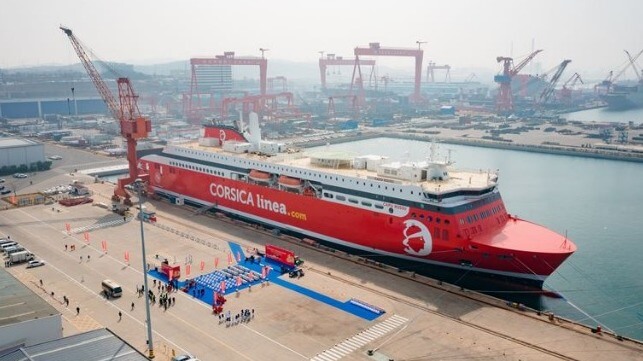
Stena RoRo has taken delivery of the 13th ship in the 15 ship series of E-Flexer RoPax ferries from the China Merchants Industry shipyard in Weihai, China. The ship, named Capu Rossu, was handed over to CORSICA LINEA following the delivery to Stena RoRo. The ship will start its commercial operation mid June and will trade between Marseille and Corsica.

GOTHENBURG, Sweden, March 28, 2026 /PRNewswire/ -- The E-Flexer-series is based on a design which is larger than the typical standard RoPax ferry and designed for flexibility. Each ship will be tailormade for the operators' technical and commercial needs. A highly optimized hull form, multifuel engines and the Battery Power Class notation as well as several other features make this ship one of the most economically friendly ever designed and built.

"Due to today's fast development of the hull form design and propulsion optimization in combination with the Battery Power systems we now start to install on our ships, it is clear that ordering of new ships will be the most important and strongest tool to reduce the CO2 emissions of the ferry industry", says Per Westling, CEO Stena RoRo.

Partnership with China Merchants Industry (CMI) Weihai Shipyard

The ship has been built by the China Merchants Industry Weihai shipyard in China. Stena RoRo has been cooperating with this shipyard since 2016 which has resulted in 19 orders so far. 15 of these have been E-Flexers, 2 NewMax RoRo ships and 2 C-Flexer RoRo ships.

"The cooperation between the CMI Weihai shipyard and Stena RoRo has been instrumental for the successful deliveries of ships and it has made it possible for us to deliver tailormade ships both to our own ferry operator Stena Line but also to several external ferry companies with the highest quality and in time," concludes Per Westling.


Basic specifications:

Length: 203 m

Draught: 6,5 m

Width: 27,8 m

Capacity: 1000 passengers and 2500 lane meters freight

The products and services herein described in this press release are not endorsed by The Maritime Executive.


Oceanwide Expeditions Plans Two Eco-Sail Expedition Cruise Ships

eco-sail cruise ship
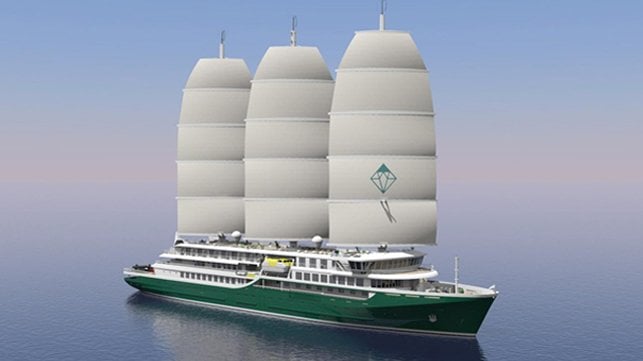
Eco-sail expedition cruise ship planned for up to 146 passengers (Oceanwide Expeditions)

Published Mar 27, 2026 10:13 AM by The Maritime Executive


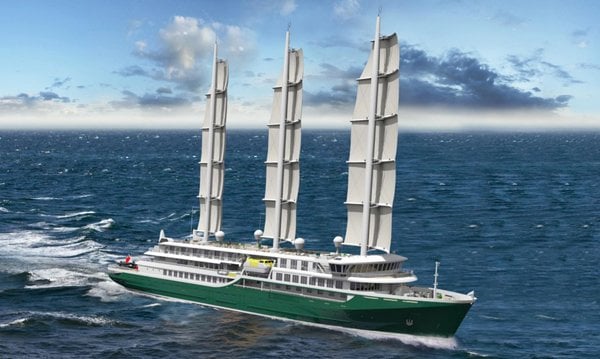
The Dutch company Oceanwide Expeditions, a veteran polar and expedition cruise operator, has signed a Letter of Intent for the construction and delivery of two eco-sail expedition cruise ships. The unique-looking vessels, which are shown with three giant masts in renderings, join a trend in the expedition segment of the cruise industry, which is at the forefront of adopting wind-assisted propulsion.

Few details were provided on the intended order, other than that the two ships would feature a hybrid sail propulsion system. The company reports that a variety of sustainability-focused features will be built into the design. It said details on the shipyard and the construction timeline would be released when the contract is finalized, and that marketing for the ships would commence in 2027.

The ships, which are expected to enter service in 2029 and 2030, are said to be part of Oceanwide Expedition’s goal of supporting a future for environmentally-conscious polar tourism. The company, which has been operating for over 30 years, currently owns and operates a fleet of four expedition vessels, s/v Rembrandt van Rijn, a three-mast schooner used for expedition cruising among the fjords of Greenland and Spitsbergen, and the ice-strengthened vessels m/v Hondius, m/v Ortelius, and m/v Plancius, deployed in the Arctic and Antarctic.


“Sailing has been part of our DNA from the start, and these eco-sail vessels will integrate modern sustainability features, hybrid propulsion, and a smaller footprint into the same authentic, immersive Oceanwide guest experience. These vessels are a key part of our long-term vision to remain small-scale, operationally flexible, and environmentally responsible,” said RĂ©mi Bouysset, CEO of Oceanwide Expeditions.

The company reports the design of the eco-sail ships will be based on its Hondius, which entered service in 2019. It is 107 meters (351 feet) in length with accommodations for 170 passengers. It was built by Brodosplit in Croatia and is Polar Class 6 (equivalent 1A-Super). The ship was to have been joined in 2021 by a sister named Janssonius. Construction began in 2020, and the ship was launched in March 2021, but has not been delivered due to the financial troubles at the yard.

The new ships will introduce “significant upgrades” both in operations and passenger experience reports, Oceanwide Expeditions. Each will have accommodations for 146 passengers.

Sail-powered cruise ships have traditionally been a niche in the industry, with companies such as Windstar that started in the 1980s. Starting later this year, Orient Express will enter the ultra-luxury cruise segment with the first of two cruise ships outfitted with sails. Its first ship, Orient Express Corinthian, recently set a speed mark for a large sail-powered ship.

The drive for sustainability, especially in expedition cruising, has led to an increased interest in batteries and wind-assisted propulsion. Another expedition cruise line, Atlas Ocean Voyages, recently announced its plans for a 26,000 gross ton sail-assisted expedition cruise ship able to accommodate 400 passengers. Hurtigruten, working with Vard, has also discussed its efforts to design a zero-emission ship for its coastal operations in Norway that would feature retractable sails, while Ponant released details on a concept using sails, carbon capture, and fuel cells.


US Supercarrier Ford on the Move After Four Days of Repairs

USS Ford at Souda Bay
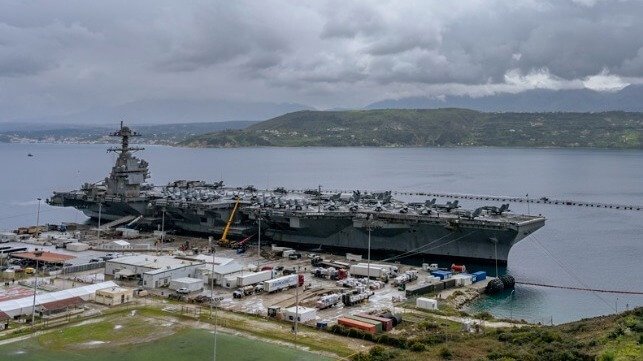
USS Ford at Souda Bay (USN)

Published Mar 28, 2026 2:41 PM by The Maritime Executive


US Naval Forces Europe confirmed that the carrier USS Gerald R. Ford is back on the move after its short stay at the naval base in Crete. It reported the carrier had arrived at the Port of Split in Croatia on March 29.

The carrier had arrived at the base at Souda Bay, Crete, on March 23 after a transit from the Red Sea, where it suffered a laundry room fire that reportedly spread in the ventilation system, damaging berthing areas. According to the Navy’s statement, personnel from the maintenance base, including structural engineers, naval architects, and other experts, conducted a repair assessment. Working with the ship's personnel and local industry partners, they undertook the rehabilitation of seven berthing compartments affected by the fire.

They also reported that military and federal civilian law enforcement continued investigations into the fire that originated in the ship's laundry facilities. The carrier was at Souda Bay from March 23 to March 26.

Capt. David Skarosi, commanding officer of Gerald R. Ford, said the crew was receiving “some well-deserved liberty" while in Split. They noted it was its second visit to Split during the deployment, having also called there from October 21 to 26 before the carrier was transferred to the Caribbean to support the efforts targeting Venezuela.

The Iranian propaganda efforts have been taunting Ford, saying the carrier never made it into the fight before it was forced to withdraw due to the fire. 

The Navy had been holding the carrier in the northern Red Sea after its transit of the Suez Canal. Today, it said the carrier is traveling with the Arleigh Burke-class guided missile destroyer USS Winston S. Churchill (DDG 81), and is deployed to the U.S. 6th Fleet area of operations.

There has been wide speculation over how long the current deployment will continue. The carrier departed Naval Station Norfolk (Virginia) on June 24, 2025. It has traveled to Norway and the Arctic, the Mediterranean, the Caribbean, returned to the Mediterranean, and gone into the Red Sea. There were additional unconfirmed reports this week that the George H.W. Bush Carrier Group was underway from Virginia after having completed a training program. 

U.S. Central Command today confirmed that USS Tripoli arrived in the U.S. Central Command area of responsibility on March 27. It said the amphibious assault ship serves as the flagship of the Amphibious Ready Group. It highlighted that the group is composed of about 3,500 sailors and marines in addition to transport and strike fighter aircraft, as well as amphibious assault and tactical assets.

Alaska Seeks Interested Buyer to Save 63-Year Old Historic Ferry

Matanuska ferry Alaska
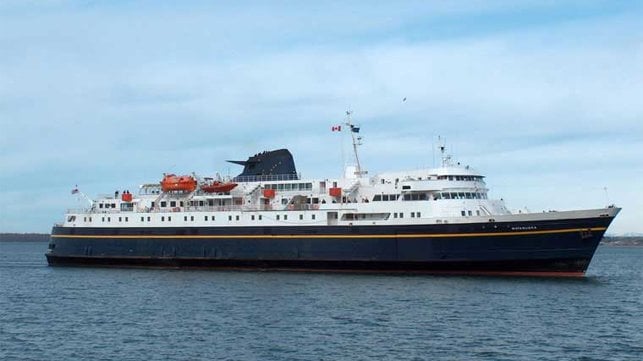
Matanuska, the last of the first newbuilds after Alaska became a state, after 63 years has been placed up for sale by Alaska (Alaska Marine Highway)

Published Mar 29, 2026 11:18 AM by The Maritime Executive


Faced with the challenges of a mounting budget shortfall and an aging fleet, the Alaska Marine Highway System, operated by the state’s Department of Transportation, has decided to part with the last of its historic ferries. It issued a Request for Information on March 20 for the Disposition of the m/v Matanuska, but with a catch: it says the priority is to “dispose  of the vessel in a manner that honors its historic significance while allowing it to continue serving Alaska in new innovative ways.”

The state is seeking letters of interest from qualified offerors to purchase, acquire, preserve, repurpose the ferry, which was built in Seattle in 1963. It says the focus is on preservation, adaptive reuse, or continued maritime service that respects the vessel’s legacy. It suggests uses for maritime training, tourism, community, or cultural use, education, museum, research, or heritage preservation, but says it will also accept letters proposing scrapping, dismantling, or scuttling.

Named for one of Alaska’s famous glaciers, the ferry was one of three, and the last owned by the state that launched the Alaska Marine Highway System. They were the first ferries built for the state after Alaska gained statehood in 1959. The marine highway provides vital connections for many regions of Alaska that lack long-distance road connections and carries passengers, vehicles, and cargo. The Matanuska spent most of her career running between the area north of Juneau and south to British Columbia.

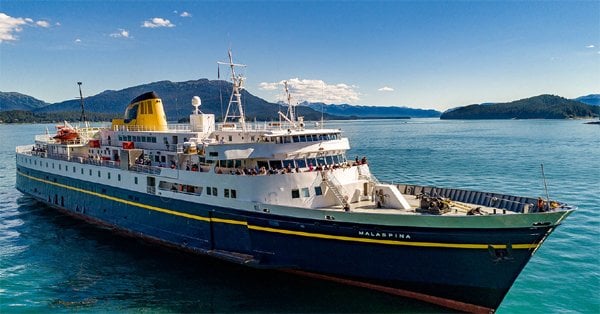
As the oldest operating vessel of the fleet, she was given a gold-painted funnel and the designation of the “Queen of the Fleet” in her later years. The ships are famous for their medium blue livery, which earned them the popular nickname “blue canoe” in Alaska.


Sister ship Malaspina at the end of her career with the Queen of the Fleet livery (Alaska Marine Highway)


The Matanuska was lengthened in the 1970s to her current size of 408 feet (124 meters) with a capacity for 450 passengers with 106 cabins as well as deck accommodations. And space for approximately 83 vehicles. She featured a lounge, heated solarium, cafeteria, movie area, showers and lockers for deck passengers, and a children’s play area. She is just over 3,000 gross tons with a service speed of 16.5 knots.

Despite the need for vessels on the service – the system has been making do with six ships for the past few years while awaiting replacements – old age caught up with Matanuska, along with years of deferred maintenance. A 2022 survey found extensive steel deterioration and asbestos in the crew quarters. Reports said she would require at least 125,000 pounds of steel replacement. Estimates to restore her for the state’s intercoastal service were at least $45 million or up to $132 million to bring her up to international code for service beyond Alaska.

The Matanuska was docked in Ketchikan, Alaska, and for the past few years has been used to provide accommodations for Alaska Marine Highway staff. Last year, the ferry staff made the recommendation to the state to retire the ship, saying she was simply too costly to restore to service. This year, facing a lack of grant money from the Trump administration, the Alaska Marine Highway System is facing a greater financial shortfall, and the decision was to lower expenses by disposing of the historic ship.

Proposals are due to the state by April 14. She follows her sister ships into retirement. The Taku was put up for sale in 2017 with an original price of $1.5 million, but finally sold to a cash buyer from Dubai for $171,000. She was towed to Alang, India, and scrapped. Her sister Malaspina was taken out of service in 2019 when it was determined she too needed steel repairs costing at least $16 million. She was sold in 2022 for $128,250. The buyer had said she would be used as worker housing and a potential maritime museum.

The hope is that the historic ship, which has been a critical part of Alaska’s heritage as a state, can find a suitable new owner and be repurposed for additional service to the community. In January, the state opened bidding for the construction of a new 330-foot ferry for the system that must be built in an American shipyard. Submissions are due by May 28, and they expect the new ferry will be in service by 2029.


Ethiopia signs $13.1 billion of energy, mining investment deals


Addis Ababa, Ethiopia. Stock image.

Ethiopia has signed $13.1 billion of investment deals spanning renewable energy, manufacturing, real estate, mining and green ammonia, according to the government.

Representatives of the investing companies — from China, Poland, India, Singapore and Kenya — converged in the capital, Addis Ababa, to ink accords at the Invest in Ethiopia conference.

“These are a great success, but they are only a starting point,” said Zeleke Temesgen, head of the Ethiopian Investment Commission. “The real success will be how quickly these investment commitments translate into operational promise on the ground.”

Deals signed:

  • Ming Yang Smart Energy Group Ltd., a Chinese renewable energy company, intends to invest $10 billion into green ammonia production and the manufacture of electrical equipment.
  • Global Future Investment Ltd. is exploring manufacturing opportunities in a special economic zone for a total $2 billion.
  • Liaoning Fangda Group Industrial Co. will invest $500 million in steel and pharmaceutical manufacturing.
  • Rashmi Group has earmarked $235 million for establishing a mining operation in the country.
  • Gobez Electric Manufacturing Plc plans to expand its solar-cell production capacity by injecting $150 million.
  • Sun King will invest $150 million by 2030 in solar equipment manufacturing.
  • Quantum Everest, a Polish company, will engage in real estate for a total $100 million.

(By Fasika Tadesse)


Indonesia delays windfall taxes on coal, nickel exports


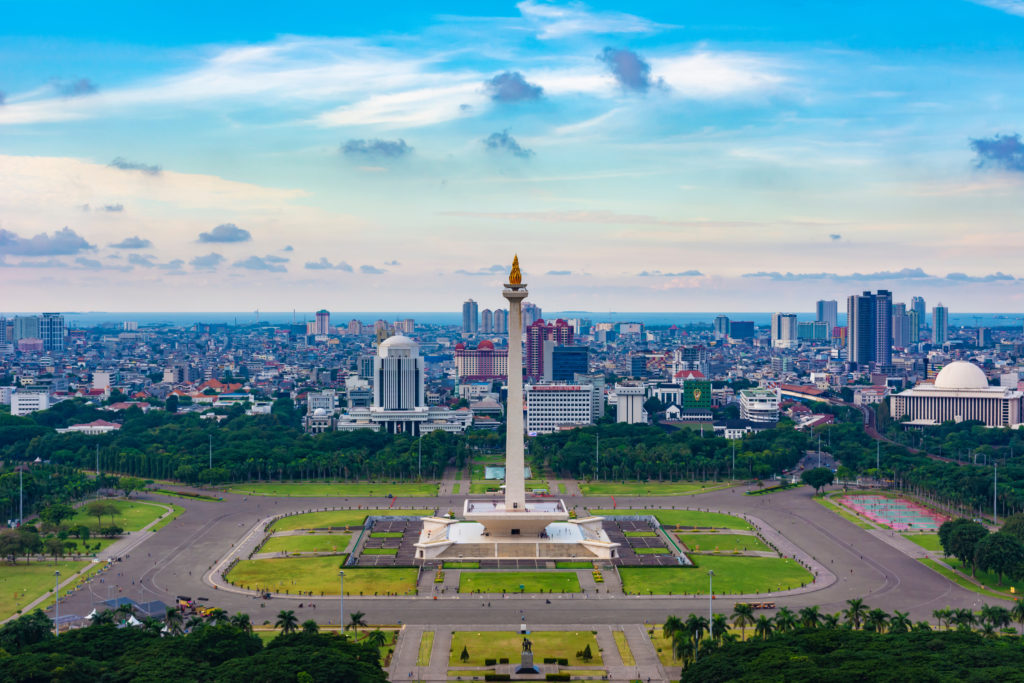
Jakarta, Indonesia. Stock image.

Indonesia is delaying plans to impose windfall taxes on coal and nickel exports from April 1, its energy and mining minister Bahlil Lahadalia said on Friday.

Bahlil said his ministry and the finance ministry were still discussing the technicalities of the taxes and that they will not be implemented on April 1, as previously suggested.

Imposing windfall taxes of Indonesia’s prized commodities, of which the Southeast Asian country is a top exporter, was an option suggested by the government to rein in its budget deficit amid an ongoing conflict in the Middle East, which has sent fuel costs rising.

Indonesia had sought to tax refined nickel products including nickel pig iron.

Separately, Bahlil said fuel and liquefied petroleum gas supplies in Indonesia remain secure, but he added that people should consume fuel wisely. The conflict in the Middle East has disrupted shipments globally.

Among the measures Indonesia has taken to maintain its financial reserves was a cut in the budgets for its ministries.

Tri Winarno, a senior official at the mining ministry, said separately on Friday that Indonesia had so far issued 580 million tons of coal mining quota and 150 million tons of nickel mining quota.

(B


Video: Philippines Calls “Close Encounter” With Chinese Navy an Escalation

Chinese Navy and Philippine Navy
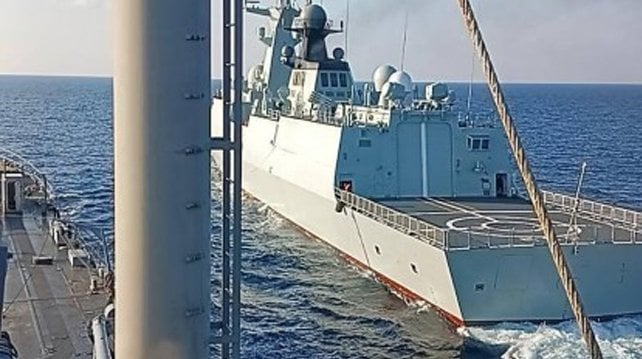
Philippines says the Chinese Navy frigate came within about 25 feet in an unsafe maneuver (WESCOM)

Published Mar 27, 2026 4:21 PM by The Maritime Executive


The Armed Forces of the Philippines released a new video reporting its second “close encounter” this month with a Chinese vessel in the ongoing disputes over the shoals in the South China Sea/West Philippine Sea. Noting that this was the first time in a while that the incident involved the Chinese Navy, the Philippines' military is calling it an “escalation”  of the tensions.

The report indicates the Chinese warship, 532 Missile Frigate, came within five to eight meters (16 to 26 feet) of the BRP Benguet. A spokesperson for the Western Command (WESCOM) called it an “extremely close distance for vessels at sea.” Rear Admiral Roy Vicent Trinidad asserted that it was intentional and not an accident while calling the actions unsafe.

The Philippine Navy vessel, they asserted, was on a routine patrol in the Spratly Islands. It was near the island that the Philippines calls Pag-asa Island (Thitu Island) when the encounter took place. Trinidad said it was what they termed a “nudging” since both vessels were traveling in the same direction. They asserted that the Chinese vessel closed in and passed alongside to steer the BRP Benguet off course.


They said the Philippine vessel was able to avoid a potential collision due to the skilled seamanship of the crew. No one was injured, and the vessels did not make contact.

Most of the encounters they pointed out are with civilian Chinese ships, frequently from the Coast Guard. They noted it is rarer to have a direct encounter with the Chinese Navy. 

It was the second incident this month that Philippine authorities highlighted. They said on March 6 that a Chinese vessel had also approached another patrolling Philippine vessel and aimed its fire control radar at the ship.

This latest incident came as the Philippines and France signed a new military pact. They called it a visiting forces agreement, saying it would be used for joint military training. The Philippines said it came during a discussion with its French counterparts on regional security issues.  They said the new agreement would “greatly bolster bilateral cooperation.”

France among nations eyeing Australia critical minerals investment, minister says


Australian Resources Minister Madeleine King. Credit: Madeleine King’s official X account

France is among the countries poised to invest in Australian critical minerals projects, Australia’s resources minister said on Thursday, as Canberra’s framework deal with the US prompts nations with advanced manufacturing sectors to secure access to supply.

Australia has been on a four-year mission to build an industry for minerals like rare earths that are key to future technologies such as electronics and defence, as countries look to diversify their supply chain away from dominant producer China.

As well as last October’s critical minerals agreement with the United States, which included an $8.5 billion pipeline of investments, Australia has inked agreements for sector cooperation with Japan, South Korea, India, France, Germany and Britain.

“Since the framework agreement with the US, that work has taken on new urgency from some other partners as they make sure they also have access to critical minerals,” Australian Resources Minister Madeleine King told Reuters in an interview during the Minerals Week summit in Canberra.

“France is more and more keen,” she said.

France has engaged at a policy and financing framework level, including through export credit agency Bpifrance Assurance Export, but unlike the US and Japan has not yet announced large-scale project funding for Australian critical minerals.

The French trade commission in Sydney did not immediately respond to a request for comment.

Australia is seeking billions of dollars more in investment for 49 mining projects and 29 midstream processing projects for a growing critical minerals sector that is forecast to produce A$18 billion ($12.52 billion) of export earnings in the financial year starting on July 1.

Australia this month joined the G7 Critical Minerals Production Alliance to help advance its growth objectives.

On Tuesday, Australia and the European Union signed a free trade agreement ​after eight years of negotiations, potentially easing EU access to Australian critical minerals but it stopped short of announcing a detailed list of investment projects as it did with the US.

“Many other countries just aren’t used to getting involved in mining and mining-style financing, but they’re going to have to, if they want to …have that secure supply,” King said.

Decades of investment

Australia has provided A$28 billion of financial support for the sector since the current government was elected in May 2022 and may need to be prepared to back the industry’s development for decades, King said.

“If you want to compare timelines, it took (China) 40 years,” she said. “We would like to do it quicker. But we do need to think of it as a long-term proposition.”

The Australian government supported its giant iron ore and liquefied natural gas markets to get on their feet and if anything critical minerals might be more difficult, she added.

Australia is developing an A$1.2 billion strategic reserve that will focus on antimony, gallium and rare earths to supply to its partners and which is expected to be operational in the second half of this year.

The reserve will “no doubt” have an element of a floor price, King said earlier this week, but its agreements will be structured to ensure Australia will reap rewards if prices rise, she said.

“When there is an upside, the government should be able to get some of that benefit, but also exit this part of the arrangement,” she added.

The US is also building a $12 billion minerals stockpile, called Project Vault.

“And we see our reserve as being able to be the catalyst to feed into Project Vault,” she said, adding details were still under discussion.

($1 = 1.4391 Australian dollars)

(By Melanie Burton; Editing by Jamie Freed)


EU trade commissioner discusses critical minerals, tariffs with US


European Union’s ⁠trade commissioner Maros Sefcovic (right) met with US Trade Representative Jamieson Greer on Saturday. Credit: Maros Sefcovic | X

The European Union’s ⁠trade commissioner said on Saturday he held a “very positive” meeting with US Trade Representative Jamieson Greer on the sidelines of the World Trade Organization ministerial meeting in Cameroon.

“We agreed with the United States to further advance work on critical minerals,” commissioner Maros Sefcovic said, adding that tariffs were also discussed.

EU lawmakers advanced legislation on Thursday to fulfil the ​bloc’s side of its trade agreement struck with the US in Turnberry, Scotland, last July, after months of uncertainty over President Donald ‌Trump’s tariff threats and new import levy.

Safeguards were added, reflecting concerns that Washington may not stick to the deal.

The US struck an agreement with the EU to impose 15% import tariff on most EU goods – half the threatened rate – and averted a bigger trade war between the two allies that account for almost a third of global trade.

Sefcovic said the vote and the positive meeting with Greer were important.

“It demonstrates on both sides, despite turbulences on the global stage, and that we are sticking to the agreement.”

The US is the ‌EU’s ⁠largest trading partner, with EU exports to the US reaching a record 555 billion euros ($641 billion) in 2025.

Sefcovic said the EU is also looking to other trading partners.

“Our agenda for the future will be working as much as possible with all the partners who want to have a free trade agreement with us … and of course to lower tariffs with the partners with whom we are already trading,” he said.

(By Olivia Le Poidevin; Editing by Joe Bavier and Dave Graham)


Congo, China deepen mining ties as US pushes rival minerals pact

Chinese President Xi Jinping welcoming DRC President FĂ©lix-Antoine Tshisekedi Tshilombo during a visit to Beijing in 2023. Credit: China’s Vice Minister of Foreign Affairs via X

Democratic Republic of Congo and China have signed a deal to deepen cooperation in the African nation’s mining sector, Congo’s government said, as global powers jockey for influence in the strategically important minerals powerhouse.

Congo is the world’s leading producer of cobalt and holds vast reserves of copper, lithium, coltan and other battery metals. Chinese companies led by top cobalt miner CMOC, Zijin and Huayou already dominate its mining sector. And Beijing is also Congo’s biggest bilateral creditor.

However, the United States and other countries seeking supplies of the minerals needed for electric vehicle manufacturing and the energy transition are also courting Kinshasa.

Data sharing, local processing

Congo’s exports to China are already due to benefit from duty-free access to China from May 1 under an initiative covering 53 African countries.

The new agreement sets out cooperation on geological data sharing, investment protection and the promotion of local processing of raw materials in Congo, according to the Congolese government statement published late on Thursday.

It also includes a monitoring mechanism to ensure projects comply with Congolese law and are implemented in a stable and transparent investment environment.

A flagship iron ore project in northeastern Congo, known as MIFOR, will receive priority support from China, the statement said.

Congo not picking sides

“The US will certainly take notice,” Joshua Walker of NYU’s Congo Research Group said of the new agreement. “It is clearly a riposte to Washington.”

The Trump administration signed a strategic partnership with Congo in December to boost Western investment, redirect its mineral supplies and reduce China’s dominance in critical minerals mining and processing.

Congo has since shared a list of priority assets with the US, though its government has said it would seek other partners if the deal with Washington fails to deliver concrete projects.

Walker noted that Congo’s deal with the US is broader and binding, trading security backing in eastern Congo, where Kinshasa has fought a years-long conflict with Rwandan-backed rebels, for mining access.

But as Beijing and Washington compete globally for resources, the Congolese government, which is seeking to capitalize on the country’s vast reserves of critical minerals, is not picking sides.

“The DRC is clearly attempting to hedge its bets,” Walker said.

(By Ange Adihe Kasongo; Editing by Maxwell Akalaare Adombila, Robbie Corey-Boulet and Joe Bavier)


US issues new Venezuela-related general licenses for critical minerals

Caracas, Venezuela. Stock image.

The US on Friday issued new, Venezuela-related general licenses for critical mineral investment and operations, according to the US Treasury Department.

The licenses authorize “the supply of certain items and services for minerals operations” and “negotiations of and entry into contingent contracts for certain investment in Venezuela’s minerals sector,” according to the Treasury Department website.

In a statement posted on X, the department said the licenses were part of efforts “to bring the Venezuelan economy back online and reorient investment to benefit Americans and Venezuelans.”

(By Ismail Shakil and Christian Martinez; Editing by Chris Reese)
AU

Citigroup picks London gold vault for precious metals push


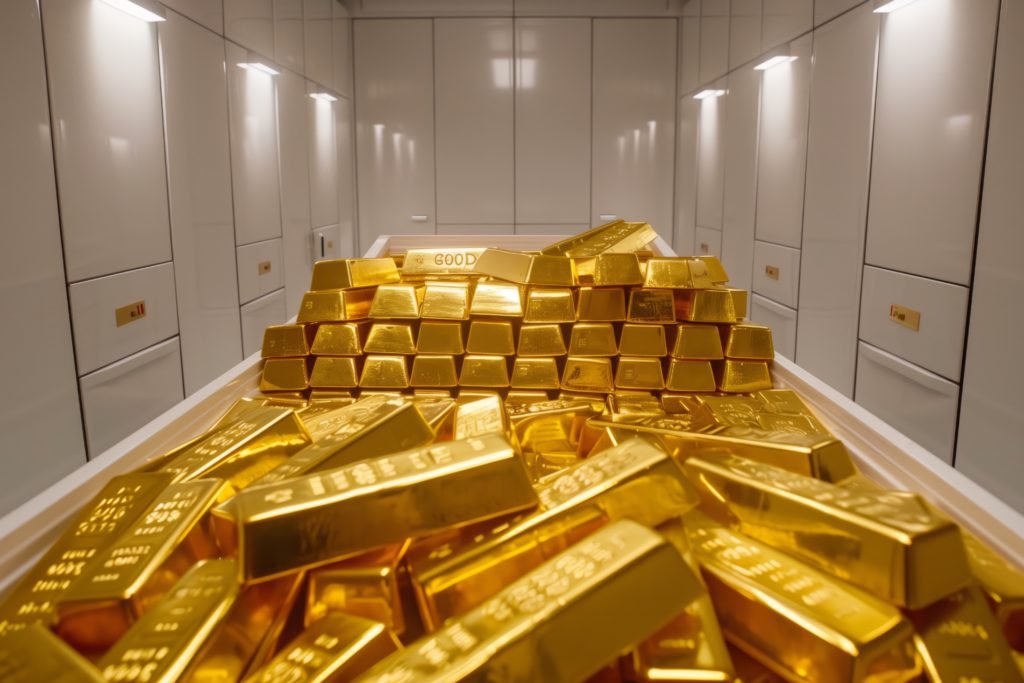
Stock image.

Citigroup Inc. plans to use a vault near London’s Heathrow Airport to store precious metals, as it seeks to join the small number of banks that provide a crucial role in the world’s biggest gold-trading hub.

The bank is partnering with secure logistics firm Malca-Amit, which operates the vault, according to people familiar with the matter, who asked not to be identified as the details are private. Citigroup is in the process of becoming a clearing member of the London market as investor interest in bullion increases, Bloomberg reported in October.

Those members clear tens of billions of transactions every day in London, where more than $1 trillion in gold is stored, offering vaulting capacity where precious metals can change hands to settle contracts. Their number has dwindled to just four banks in recent years: JPMorgan Chase & Co., ICBC Standard Bank Plc, HSBC Holdings Plc and UBS Group AG.

Bullion vaults are often located close to or within airports, where metal can be easily flown in or out. Malca-Amit’s site is near Heathrow Airport in west London, according to its website. A 2012 profile of the company’s high security facility described how at that time it had capacity for more than 300 tons of gold — an amount worth approximately $43 billion at current prices — and 1,000 tons of silver.


As the largest player in precious metals, JPMorgan’s London vault is one of the biggest stores of gold in the world. The vault, located in the City of London, holds almost 1,000 tons of gold on behalf of just one bullion-backed exchange traded fund, an amount worth roughly $136 billion.

HSBC also has its own London vault, while ICBC Standard Bank purchased Barclays Plc’s London facility in 2016. UBS contracts with an external custodian for its vaulting needs, just as Citigroup plans to. Revenues from vaulting — which are typically calculated as a percentage of the value of the gold stored — have jumped as prices have rallied about 45% over the past year.

Citigroup and JPMorgan declined to comment. Malca-Amit didn’t respond to a request for comment.

(By Jack Ryan and Yihui Xie)

Singapore looks to become hub for hosting central bank gold


Stock image.

Singapore is planning to expand its gold-storage capacity to become a custodian of bullion held by foreign central banks, part of a broader push by the city-state to compete with Hong Kong as a regional hub for the precious metal.

The Monetary Authority of Singapore said Friday it will “look to provide vaulting services for foreign central banks and sovereign entities to meet potential demand.” The nation’s also developing “gold-related capital market products to promote price discovery and build liquidity.”

In addition, Singapore plans to build a clearing system to support over-the-counter settlement for trading gold locally, according to a joint statement from MAS and the Singapore Bullion Market Association.

Singapore’s ambition to become a major gold-trading hub follows a historic rally for the precious metal underpinned by a search from investors for alternative stores of wealth. Though bullion has retreated since the war began in the Middle East, many central banks – including China’s – have been steadily adding gold over the past few years as a way to hedge against US dollar dominance.

“We are working closely with the industry to see how we can position Singapore as a gold-trading hub in Asia,” said MAS deputy chairman Chee Hong Tat, who is also Singapore’s minister for national development. “It plays to our strengths, and it adds a new vertical pillar to what we are already offering” in wealth and asset management, Chee told reporters at a briefing.

As part of its push, the government has established a working group that includes JPMorgan Chase & Co. and UBS Group AG as well as DBS Group Holdings Ltd., United Overseas Bank Ltd. and ICBC Standard Bank Plc. Bloomberg News first reported the initiative earlier in March.

Attracting central banks – the ultimate providers of liquidity, given the large volumes of gold they hold in reserves – will be among the keys to Singapore’s plans, along with support from established financial institutions that serve as market-makers. Together, they form the backbone of the world’s dominant gold-trading hub — London — where billions of dollars’ worth of the metal is traded every day.

Globally, central banks hold nearly 39,000 tons of bullion — or about 18% of all gold ever mined — according to the World Gold Council. Even a small share of that market would bolster Singapore’s influence in regional trade that is currently dominated by Hong Kong — the gateway for precious metals going in and out of China, the world’s largest consumer of bullion.

“The space is big enough for us to co-exist and for both cities to be able to grow our respective services,” Chee said. Central banks and investors “see gold as an asset that can help them in this more uncertain environment.”

Singapore’s proposal could potentially attract nations that have challenged the status and credibility of historic hubs such as London and New York. A number of countries including Germany have repatriated gold for security reasons, and there have been similar moves from Poland, the Netherlands and Serbia.

In Asia, the People’s Bank of China is backing the Shanghai Gold Exchange to court central banks in friendly countries to buy bullion and store it within the country’s borders, Bloomberg News reported in September. Cambodia was one of the first countries to take up Beijing’s offer.

Singapore’s gold reserves stood at 193.6 tons as of January, according to data from MAS.

(By Chanyaporn Chanjaroen, Yihui Xie and Joyce Koh)


Indonesia’s Agincourt says it can resume operations after government lifts sanctions


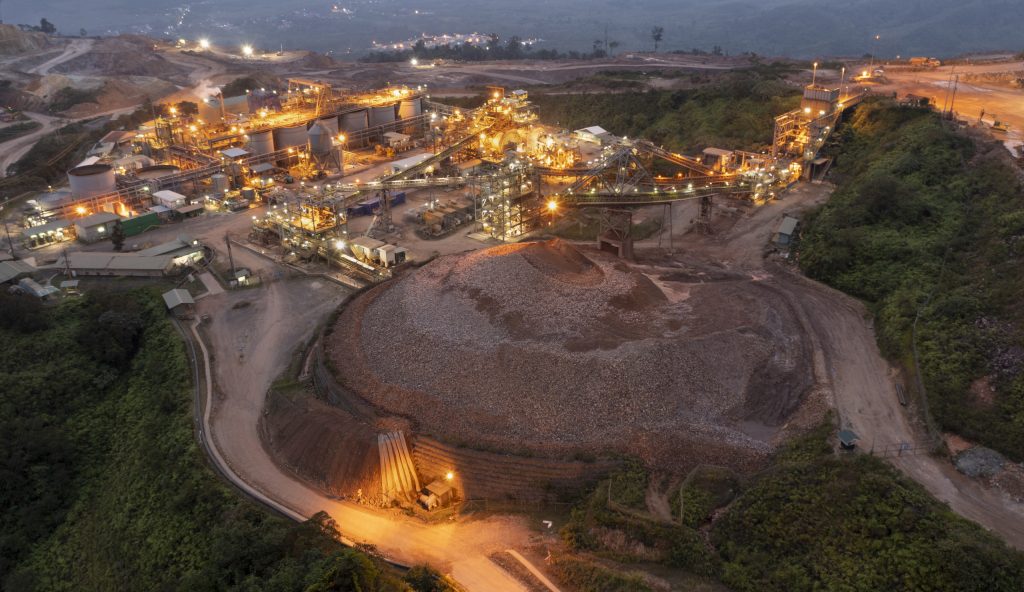
The Martabe gold mine, located in South Tapanuli, North Sumatra. Credit: PT Agincourt Resources

Indonesian gold miner Agincourt Resources said on Thursday that it has been given the go-ahead from the environmental ministry to resume operations at its Martabe gold mine, which was sanctioned after accusations of environmental breaches.

Agincourt was among the 28 firms whose permits were revoked by the government following claims they were responsible for environmental damage that worsened last year’s floods in Sumatra, which killed at least 1,200 people.

Agincourt is part of conglomerate Astra International. Astra’s majority shareholder is Jardine Matheson.

“The company welcomed the environmental ministry’s decision related to the approval to continue operations at the Martabe gold mine,” said Katarina Siburian, Agincourt’s spokesperson.

The company is making necessary preparations and will comply with all requirements, and is committed to environmental protection and safety standards, Katarina said, adding that operations have not yet resumed.

Mining operations at Martabe had been suspended since December last year.

Officials from Indonesia’s environment and energy ministries did not immediately respond to requests for comment.

Deputy energy minister Yuliot Tanjung was quoted on Wednesday by news website Bloomberg Technoz as saying that the permit had been restored, adding that the ministry was still evaluating the company’s mining quota.

Another company sanctioned by the government, PT North Sumatra Hydro Energy (NSHE), has also been given permission by the government to resume operations, energy ministry official Eniya Listiani told Reuters on Thursday.

The company is controlled by China’s state-run SDIC Power Holdings Co. Ltd.

Commercial operations at the hydropower plant operated by NSHE are expected to start in October, Eniya said.

The hydropower project, worth over $1.6 billion, has long been on the radar of environmental activists, with many calling for it to be stopped because of the ecological destruction it has wrought on the biodiverse island.

(By Bernadette Christina and Stanley Widianto; Editing by David Stanway)