Thursday, May 07, 2026

For a global anti-fascist and anti-imperialist front


Farooq Tariq

The International Anti-Imperialist Conference in Lahore, Pakistan, takes place at a very critical time, where Western capitalist centres have upped the imperialist ante in the face of receding global hegemony.

United States President Donald Trump’s second term — with its far-right agenda and foreign policy of recolonisation and war — has brought about a shift in the international situation.

Together with his partner in massacres, Israeli Prime Minister Benjamin Netanyahu, Trump has waged war on Iran, seeking to ensure complete domination of the oil and gas market. This comes after the genocide in Gaza, the invasion of Venezuela, the attempt to strangle Cuba and threats to annex Greenland.

The tyrant is striving to normalise genocidal language, blackmail and interventionism, as well as racism, misogyny and hatred of migrants, as he attempts to expel millions of workers from the US.

Declining US empire

Imperialism is an essential part of capitalism. But it has also been the most reliable partner of Euro-American powers in times of crisis.

Lagging behind China and other countries in securing hegemony over renewable energy sources, the US empire has fallen back to strengthening its control over traditional oil supplies.

The kidnapping of Venezuelan leaders and the war on Iran are two glaring examples of an empire refusing to innovate amid the climate change crisis and instead taking violent control over developing countries’ resources.

At the same time, US gangsterism cannot be reduced to simply securing control over fossil fuel value chains. Trump’s all-out war against Venezuela, Iran, Palestine, Lebanon and Cuba must be seen in the larger context of a war against the “axis of resistance”, even if these opponents are only anti-imperialist, and not anti-capitalist.

Bloody authoritarianism is the central instrument of imperialism in our time, because it needs to impose its policies of hunger, the proliferation of ecocidal technologies and practices, the excessive power of Big Tech, the dispossession of natural and energy resources, and increased military spending.

US imperialism will embark on a blind march toward ecological disaster if it is not defeated.

Anti-imperialism is not enough

Anti-imperialism directed toward the US is a direct threat to US hegemony over violence, even if it does not pose a threat to global capitalism. That is why we must support Iran and other developing countries resisting imperialist aggression, even if their anti-imperialism is devoid of anti-capitalism.

But this strategy is only good in the short run. In the long run, we must work toward building movements and parties that are anti-imperialist and anti-capitalist.

Anti-imperialism devoid of anti-capitalism is a slippery slope. It can take the form of a theological anti-US state, such as Iran, or a secular state capitalism, as with China.

While resisting US imperialism, we must resist these anti-imperialist caricatures too. This does not mean we stop supporting their fight for sovereignty, even if it comes with localised versions of capitalism. But we must be clear that this can only be a short-term strategy.

We cannot afford to reduce the socialist project to the point where a capitalism with a human or anti-imperialist face becomes acceptable or even desirable. We must not lower the bar that far. We must fight against imperialism and capitalism.

Pakistan

While the world admires the Pakistani state’s role as peacemaker between Iran and the US and Israel, here we have seen the state implementing its neoliberal agenda, bulldozing working-class settlements in Islamabad, right as talks are happening.

This is not an isolated incident but a microcosm of the state’s re-invigorated enthusiasm for dispossessing the urban and rural working masses of their social and ecological cushions, in the name of developmentalism. We want to remind the state that it cannot build its peacemaking diplomatic credentials abroad while being repressive at home.

Pakistan has faced 32 years of military dictatorship and political activists have paid the maximum sacrifices for fighting for genuine democracy and socialism. I personally spent 8 years in exile, was arrested dozens of times and my family faced intimidation. This happened to thousands of others after the military took over. 

One of our main tasks is to regain the civic space that the military took away.

Left unity

We must develop a positive project for progressive, socialist futures. A project that stands against capitalism in its various imperialist, fascist, liberal, theocratic, statist and hybrid forms, under electoral and dictatorial conditions.

Despite internal differences, the left must forge a united front against the right. The global pro-Palestine movement is a good example of progressives from diverse convictions joining hands to fight for a common cause. Similar instances of left forces converging around common causes and developing a ground-up socialism are rampant across the Third World.

Some may question the success of these synergies, but my life-long experience working with movements and parties reveals there are no quick fixes to the imperialist, genocidal machinery we are up against. It is only after we develop a powerful confluence of working masses, farmers and other marginalised classes that we will have a united front to reckon with.

Capitalist governments refuse to recognise that popular mobilisations against them are the result of deep social contradictions. They typically attribute them to the actions of internal or external “agents”. We cannot accept this conspiracy version of history.

Undoubtedly, imperialism and its agencies try to take advantage of struggles, such as that of the Iranian people. But that does not reduce those struggles to an imperialist operation. We must oppose such interventions, while continuing to support those struggles.

Consistent internationalism

Today more than ever, we must practice consistent internationalism: a solidarity without borders, which encompasses struggles by workers and the oppressed, as well as struggles for self-determination across the world, without exceptions.

This is a policy that opposes all forms of imperialism. It does not subordinate the struggle in any country to that of another country. It is a policy that corresponds to the slogan: “Workers of the world, unite!”

For solidarity without borders! For internationalism without exceptions!

This is an edited version of the opening remarks delivered by Farooq Tariq at the International Anti-Imperialist Conference, hosted by Haqooq-e-Khalq Party (HKP) and People's Academy on May 3, in Lahore, Pakistan. Tariq is President of HKP.

Iran and the Western left


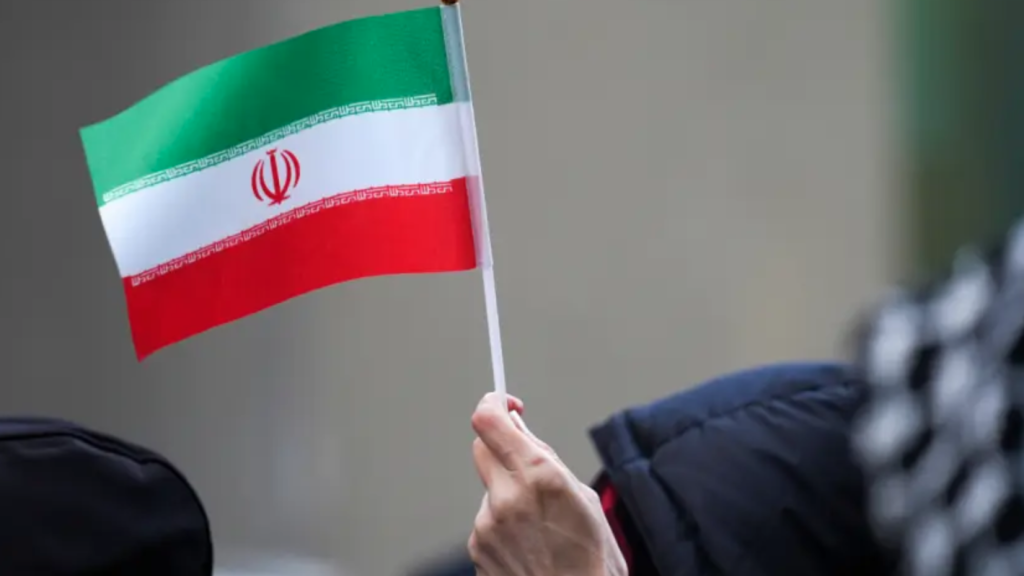
Islamic Republic of Iran flag

First published in Turkish at Evrensel. Translation by LINKS International Journal of Socialist Renewal.

As occupations and wars intensify, anti-imperialism has become a key priority for the global left. This has raised questions about how to organise and mobilise a mass anti-imperialist movement.

Within the Western left, particularly socialists in the United States, a certain position is gaining ground that, at first, seems logical but ultimately undermines the left’s cause. This position demands we offer unconditional support to regimes and movements targeted by imperialism, and regard any criticism of them as treason. The latest example is the support given to the Iranian regime, which has killed countless leftists, minorities and women over the years.

Before delving into the subject, one thing must be clear: when it comes to the Global South, any country facing imperialist aggression must be defended. Moreover, in the event of war or occupation, this defence must not be watered down. However, this does not mean turning a blind eye to the nature of the regimes under threat.

The position I was referring to equates anti-imperialism with support for the Iranian regime. It claims any criticism of the regime right now amounts to support for imperialism. Those who support this position employ quite sound arguments.

The most persuasive is that the Western left’s primary responsibility is to curb the belligerence of their own states and that, in any case, we lack the power to influence the Iranian regime. Imperialist aggression will only push the regime towards an even more hardline stance; therefore, defeating imperialism is the best way to support the Iranian people.

This position is not only put forward by groups that opponents label as “campist” — those who take opposition to Western imperialism as their starting point on every global issue. Even some non-campists have used this argument. 

While fundamentally correct, it nevertheless overlooks one crucial point. It is true that the Western left does not have the power to democratise the Iranian regime. But the left’s stance on this issue directly affects the number and type of people we can draw into anti-imperialist organisation and action.

It is common to hear complaints on the left, such as: “Look at how huge the protests were during the Iraq War; compare that to the meagre turnout for anti-war protests today.” It is truly disheartening that protests have not spread through the US, even as President Donald Trump threatens genocide. However, those who claim to be leading the movement should be asking themselves “where are we going wrong?”, rather than blaming the people.

It would be easy to draw up a long list of differences between the current situation and the Iraq invasion, and argue these differences are why anti-imperialist sentiments have declined. However, this war is a continuation of a series of wars, including the one in Iraq.

The left must first be able to explain this continuity. Yet, explaining the broader picture — the retreat of the leading imperialist power and the violence this will inevitably unleash across the globe — and reframing public debate along these lines is a long and arduous path.

It is also a path that requires us to get a hearing among the public. That is why remaining silent during the wave of violence unleashed by the Iranian regime in January, and allowing the monarchists in the diaspora to politically monopolise the response, was a major mistake by the Western left.

Rather than viewing those horrific massacres from the perspective of Iran’s poor, workers, women, minorities and leftists, the Western left approached the situation simply from the point of view of “will this benefit the US?”. This ultimately led into inaction. Taking advantage of this, liberals and conservatives were able to lend credibility to their empty rhetoric, saying things such as: “See, leftists are not bothered by the massacre of people.”

It is not easy to disrupt this tactic, which mainstream voices often use. Given the resources at their disposal, they will always seek to distort events, even if the left takes the right position. Nevertheless, it is essential that revolutionaries and socialists adopt a clear stance against all forms of oppression and injustice, remain consistent with their principles, and bring together all left and progressive forces in a broad united front.

I reiterate: our absolute priority today is defeating imperialism. Uniting all leftists and progressives is crucial for this. There is no point in exaggerating our differences and weakening any anti-imperialism and anti-war united fronts we have built. Nevertheless, it is also evident that we have so far not been very effective in extending this unity beyond established activist circles.

Partido Lakas ng Masa: On the firing of the US missile system on Philippine soil


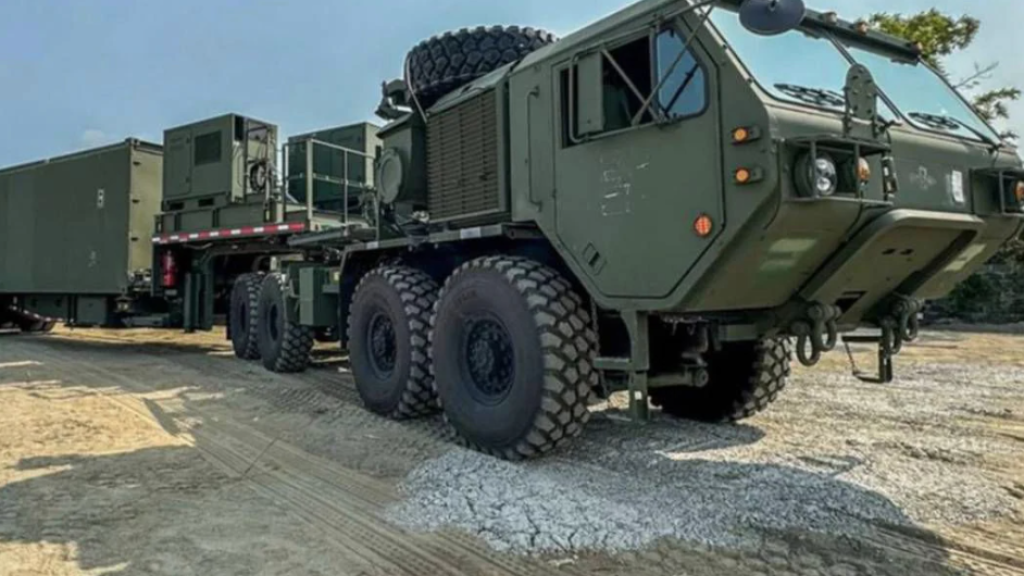
The MRC was used early Tuesday morning to launch a Tomahawk land attack missile from Tacloban Airport. Bianca Dava, ABS-CBN News

The reported first-ever firing of a Tomahawk missile and operational deployment of the US Typhon system (Mid-Range Capability or MRC) on Philippine soil under Balikatan 2026 mark a dangerous escalation in the country’s deepening entanglement in imperialist military conflicts.

Balikatan 2026 is the largest US-Philippine joint exercise to date, involving about 17,000 troops across air, land, sea, space and cyber domains. Combat forces from Australia, Canada, France, Japan and New Zealand are participating, with 17 more countries present as observers, further internationalising military operations on Philippine soil.

The Typhon system is not a defensive weapon. It is a long-range strike platform capable of launching Tomahawk cruise and SM-6 missiles, with ranges extending far beyond Philippine territory and into neighbouring countries.

Tomahawk missiles have been used in wars marked by widespread civilian casualties and destruction of critical infrastructure, in theaters such as the Middle East, including Iran and Gaza.

The live firing of such a system goes beyond “training”. It signals that Philippine territory is now integrated into US war planning. Under the Ferdinand Marcos Jr regime, the country is increasingly being used as a forward base for US military projection in the Indo-Pacific, particularly amid intensifying rivalry with China.

Reports indicate that the Typhon launch platform is mobile and can be repositioned across Philippine terrain. From Tacloban, where the firing reportedly took place, its range could cover key areas in Luzon and the South China Sea. Deployed further north, it could extend toward the Taiwan Strait, placing the Philippines squarely within potential conflict zones.

These developments undermine national sovereignty and heighten the risk of the Philippines being drawn into a US-China war. By hosting and enabling these systems, the country exposes itself as a potential launch site — and target — in a major power confrontation.

This militarisation diverts attention and resources from the real security needs of the people. The Filipino masses face urgent threats: soaring prices of basic goods and fuel, job insecurity and low wages, climate disasters, and the absence of adequate social protection.

Instead, the government prioritises military dependence on the US. This is a distorted notion of “security” — one that serves geopolitical interests rather than the welfare of the Filipino people.

Partido Lakas ng Masa calls on the Filipino people to:

• Ban the deployment and firing of foreign missile systems on Philippine soil;

• End the use of the Philippines as a staging ground for imperialist war; and

• Assert a truly independent foreign policy based on peace, neutrality and solidarity among peoples.

No to US war preparations on Philippine soil!

Defend national sovereignty!

Fight for a people-centred, peaceful and independent Philippines!

Obliteration Ecocide from Gaza to Lebanon and Beyond

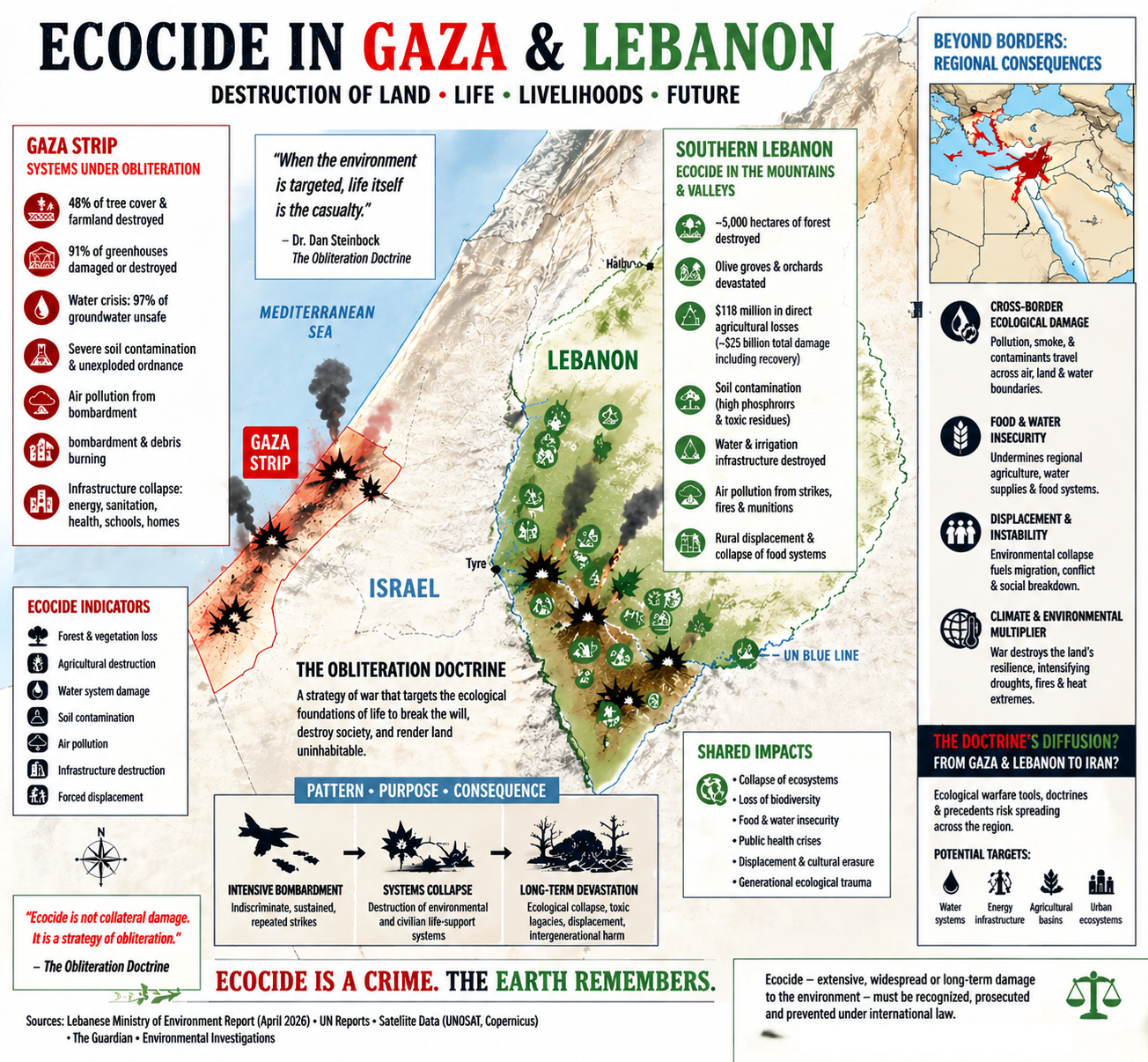
Lebanon accuses Israel of committing ecocide in country since 2023. It is an extension of Israel’s destruction of Gaza – and its obliteration doctrine.


by  | May 7, 2026 | 

Israeli military aggression has “reshaped both the physical and ecological landscape” of southern Lebanon, according to the Lebanese report (which does not consider the impacts of Israel’s latest barrage of attacks this spring).

In her foreword, Lebanon’s minister for the environment Tamara el Zein notes: “The scale and intentionality of the damage to forests, agricultural lands, marine ecosystems, water resources, and atmospheric quality constitute what must be recognized as an act of ecocide, with consequences that extend far beyond immediate destruction.” 

Obliteration ecocide in Lebanon

Released by the country’s National Council for Scientific Research and presented by the environment ministry, the report accuses Israel of “ecocide” during the 2023–2024 war and subsequent escalations. It frames environmental destruction not as incidental “collateral damage” but as systematic transformation of ecosystems.

Key findings are damning. They include:

  • 5,000 hectares of forest destroyed
  • Massive agricultural losses ($118m direct infrastructure damage; much larger indirect losses)
  • Soil contamination (including high phosphorus levels)
  • Air pollution from repeated strike cycles
  • Destruction of orchards and irrigation systems

Minister el Zein characterizes this as “intentional ecological destruction” affecting food systems, public health, and long-term viability of southern Lebanon’s rural economy.

International reporting on the same dossier highlights an estimated total damage burden of over $25 billion when recovery costs and economic losses are included. The figure is a combined total from the assessments by the Lebanese report and the World Bank Rapid Damage and Needs Assessment (RDNA) 2025.

This framing aligns with a growing legal discourse around “ecocide” as a potential international crime, particularly where environmental damage is widespread, long-term, and strategically embedded in military operations.

It is also aligned with UN reporting on the broader Israel–Lebanon escalation confirming extensive infrastructure destruction, civilian displacement, and strikes affecting residential areas.

As the ecocide of Gaza has gone effectively unpunished by the international community, the Netanyahu government is extending the environmental devastation into Lebanon and the proximate region. 

Obliteration doctrine in Gaza

In The Obliteration Doctrine (2025)related commentaries and excerpts, I define this doctrine as the lethal mix of scorched earth policy, collective punishment and civilian victimization, coupled with massive indiscriminate bombardment and systematic use of artificial intelligence (AI).

The concept is vital because it connects the dots between military strategies, aerial bombardment, lethal deployment of artificial intelligence (AI) and international law, particularly the Geneva Conventions and the Genocide Convention. As Professor William Schabas, a leading scholar of genocide, notes, “the Obliteration Doctrine” “adds a new term to the lexicon on genocide, notably in the application of international law and its judicial mechanisms.”

Modern warfare in Gaza is no longer just counterinsurgency but systems-level destruction of the environmental and infrastructural substrate of life – water, soil, agriculture, energy, and urban continuity.

This interpretation overlaps with empirical reporting on Gaza’s environmental collapse:

  • Satellite analysis shows 38–48% of tree cover and farmland destroyed
  • Severe contamination of soil and groundwater
  • Large-scale destruction of greenhouses and irrigation systems
  • Air pollution from sustained bombardment and debris burning

These patterns are described in independent investigations as producing conditions of near-uninhabitability in many parts of Gaza.

Warfare is no longer bounded by battlefield geography. It becomes the restructuring – or “obliteration” – of ecological systems that sustain civilian life.

Ecocide here is not merely destruction of nature, but destruction of life-support systems as purposeful strategy. It is another word for cultural genocide. 

Lebanon and the Gaza template

The Lebanese report and international commentary suggest strong structural parallels between Gaza and southern Lebanon operations:

  • Destruction of orchards, especially olive groves (long-lived economic ecosystems)
  • Targeting of water infrastructure and rural supply systems
  • Repeated airstrikes generating soil and atmospheric contamination
  • Displacement of civilian populations from ecological productive zones, which can be seen as a form of ethnic cleansing

International media reports that Israel is applying a “Gaza playbook” in Lebanon: expulsion orders, infrastructure targeting, and village-level destruction patterns.

Lebanon is now an adjacent theatre where similar operational logics are extended across a different ecological terrain:

  • Gaza: dense urban-agricultural mosaic under blockade conditions
  • Southern Lebanon: dispersed agro-ecological rural system with forested and orchard economies

In both cases, ecological assets are not collateral but structurally embedded in livelihood and resistance capacity – and that makes them strategic targets under the high-intensity obliteration doctrine. 

Consequences beyond Lebanon (and for Israel)

The environmental consequences of such conflict patterns are not geographically contained. Three spillover trajectories are particularly important.

First of all, regional ecological degradation. Soil contamination, wildfire damage, and agricultural collapse are not confined to strike zones. Windborne particulates, water contamination, and long-term soil chemistry changes affect broader cross-border ecosystems.

Second, economic fragility and food-system insecurity. Both Lebanon and Israel depend on regional agricultural stability and water systems. Repeated infrastructure destruction increases food import dependence, rural depopulation and long-term land degradation in border zones.

Third, internal Israeli environmental vulnerability. A less discussed but critical dimension is the simple reality that prolonged warfare conditions can feed back into Israel’s own ecological systems vis-à-vis air quality deterioration from sustained military operations, water system strain under security infrastructure expansion, fire ecology disruption in northern regions. long-term land-use militarization effects.

In this sense, “obliteration” generates mutual ecological degradation across interconnected landscapes. It is an ecological version of MAD – mutually assured destruction. 

Diffusion of doctrine

The key concern is not just localized destruction but doctrinal diffusion. Methods of high-intensity ecological disruption normalize across theaters. And let’s keep in mind that the first test of the obliteration doctrine occurred in Dahiya, the predominantly Shia enclave of Beirut.

US military legacy in Iraq and Syria already includes extensive infrastructure and ecosystem disruption under counterinsurgency and airpower doctrines. These feature water system destruction in Iraq, oil field fires and atmospheric contamination, and urban siege warfare effects in Raqqa and Mosul via coalition partners.

Such precedents create a shared operational vocabulary where environmental damage is treated as secondary to strategic objectives.

In a potential Israel–Iran escalation scenario, ecological infrastructure becomes strategically central through water scarcity systems in Iran’s arid regions, oil and petrochemical infrastructure vulnerability, and agricultural basins dependent on irrigation networks.

Under the obliteration logic, these become dual-use environments – civilian life-support systems that also acquire military significance.

Finally, there is the regional systemic risk. This implies a shift from territorial warfare to ecosystem-targeted coercion, where water, soil, energy, and agriculture become primary pressure points. Meanwhile, environmental degradation is exploited as a form of strategic leverage and recovery cycles extend beyond political timelines into generational horizons. 

From battlefield to biosphere as target

The Lebanese charges, Gaza environmental destruction data, and the doctrine of obliteration converge on a structural transformation in modern conflict.

The object of war is increasingly not just territory or armed forces, but the ecological infrastructure that makes civilian life possible. In this way, destruction of that infrastructure is a prelude to ethnic cleansing and displacement.

For military doctrines, this may be framed as incidental or operational necessity. But for Lebanon and environmental analysts, this constitutes potential ecocide under international law. In view of the obliteration doctrine, it represents a systemic shift in the practice of warfare itself – from the battlefield to biosphere as target.

What happens in Gaza won’t stay in Gaza. What happens in Lebanon won’t stay in Lebanon. The stage is being set for obliteration ecocides wherever they are seen as effective necessities.

Ecological systems are now central to both the conduct and consequences of war.

The original commentary was published by Informed Comment (US) on April 30, 2026


Dr. Dan Steinbock is an internationally recognized visionary of the multipolar world and the founder of Difference Group. He has served at the India, China and America Institute (US), Shanghai Institutes for International Studies (China) and the EU Center (Singapore). For more, see https://www.differencegroup.net 

Wednesday, May 06, 2026

Corking the Front Door: Japan’s New Role in the Global Siege of China


The verbal barbs between Japan and China have been a distraction; the real story is Japan’s deepening military integration with the Philippines. As the U.S. and its allies move to seal the Luzon Strait, Japan is shedding its pacifist skin to serve as the regional arsenal, providing the hardware and the boots on the ground necessary to turn the Front Door of the South China Sea into a strategic bottleneck. It is the tactical manifestation of a new cold war focused on maritime choke points and the kinetic kneecapping of China’s Belt and Road Initiative.


by  | May 4, 2026 | 

On April 21, 2026, Japan’s Cabinet officially scrapped decades-old restrictions on the export of lethal defense equipment. This decision by Prime Minister Sanae Takaichi marks the definitive end of the 1967-era “Three Principles on Transfer of Defense Equipment,” effectively dismantling the final legal barriers of postwar pacifism. This is more than a policy tweak; it is a structural re-alignment of the Japanese state to function as a regional “arsenal of democracy.”

A prime example of this friction is the Philippine Navy’s interest in Abukuma-class destroyer escorts – vessels specifically designed for anti-submarine warfare. While the Navy emphasized in February 2026 that Japan had yet to make a formal offer – limiting the interaction to a “joint visual inspection” – the Takaichi Cabinet’s recent legal pivot specifically removes the requirement to strip these vessels of their weapons systems. By clearing the legal path for the export of lethal hardware, Tokyo has effectively moved the Abukuma from a sidelined “visual inspection” to a viable, armed option for reinforcing the Front Door.

The Takaichi administration is framing these exports under the concept of “Fighting Resilience,” a strategic doctrine aimed at building a persistent industrial base among allies. By providing the Philippines with these 2,000-ton vessels, Japan is essentially outsourcing a portion of the Front Door defense to Manila. This ensures that the Philippine Navy can maintain a constant, lethal presence in the Luzon Strait without requiring a perpetual U.S. or Japanese hull on-site – effectively turning a local navy into a proxy gatekeeper for the Allied blockade.

For the first time in history, the Japan Self-Defense Forces (JSDF) are not merely observing the Balikatan military exercises; they are full participants. Under the newly implemented Reciprocal Access Agreement, approximately 1,400 Japanese troops have joined their U.S. and Philippine counterparts as part of a 17,000-strong force in a high-stakes rehearsal for maritime conflict. The centerpiece of this year’s drills is a coordinated “joint maritime strike” off the coast of Northern Luzon. Allied forces are practicing the sinking of the BRP Quezon (PS-70).

Sinking the BRP Quezon with Allied missiles – including Japanese Type 88 surface-to-ship systems – is a visceral demonstration of the hardware and tactics required to turn the northern Philippines into a lethal barrier. Though this exercise takes place within the West Philippine Sea, its strategic importance lies in its geography. Northern Luzon’s proximity to the Luzon Strait makes it a massive flashpoint; it is the Front Door of the disputed South China Sea and the primary gateway to Taiwan.

The logistical hinges of this gateway were greased in January 2026, when Manila and Tokyo finalized the Acquisition and Cross-Servicing Agreement (ACSA). This pact allows for the tax-free entry of military supplies and services, effectively turning the Philippine archipelago into a frictionless launchpad for Japanese power. Combined with the 2024 Reciprocal Access Agreement, the ACSA ensures that the Allied arsenal is no longer just visiting the Front Door – it is moving in.

This Front Door strategy is the kinetic counterpart to China’s greatest strategic anxiety: the “Malacca Dilemma.” If the Luzon Strait is the entrance, the Strait of Malacca is the Back Door in the southwest. The Belt and Road Initiative was conceived as a multi-billion dollar workaround to the fact that 80% of China’s oil trade must pass through this narrow artery. By corking the Front Door in the northeast while maintaining the potential for a “distant blockade” at the Back Door, the United States and its allies are signaling their ability to sever China’s energy veins at will. In 2026, the sinking of a ship off Northern Luzon isn’t just a drill; it’s a demonstration of how to create a permanent blockage in the world’s most vital maritime artery.

The pincer movement in the Pacific is mirrored on the other side of the globe, where the U.S. is playing a high-stakes game of chess in the Strait of Hormuz. By tightening the naval grip on this oil valve, the administration is directly targeting the lifeblood of China’s industrial engine. As I detailed in my previous work, “Board Games and Bottlenecks,” Iran serves as a critical junction on this chessboard. The strategic importance of this node was underscored earlier this month when a U.S.-Israeli strike targeted a section of the China–Iran rail corridor. While Iran managed to repair the link in under three days, the message was clear: no land bridge is beyond the reach of kinetic interference.

The strategy extends deep into the Western Hemisphere under what is being called the “Donroe Doctrine.” This policy is designed to systematically purge Chinese influence from Greenland to Latin America, turning the entire hemisphere into a series of geopolitical choke points. The recent kidnapping of Nicolás Maduro in Venezuela and the intensifying pressure on Cuba are tactical hits against BRI hubs. Even Brazil is now a target; as they approach their upcoming elections, the policy mirroring and interference tactics suggest a desperate effort to block China’s trade access to the Atlantic.

As Captain’s John Konrad noted, “Chokepoints Are The Focus Of A New Cold War.” Analysts like Brian Berletic have long warned that the goal is a total blockade of China, but these choke points are no longer strictly maritime. This is all-out hybrid warfare, utilizing everything from ethnic armed groups and proxy terrorists to economic sanctions and the arsenal of export controls we are now seeing. In this context, a choke point isn’t just a narrow strait; it is any node – financial, digital, or geographic – where the Allies can exert a stranglehold on China’s industrial lifeblood.

The rationale for this aggression is economic reality: the United States cannot compete with the integrated industrial capacity of China’s State-Owned Enterprises (SOEs). As Clementine G. Starling-Daniels noted at the Atlantic Council, the U.S. simply does not have a comparable offering that allows private firms to match the state-subsidized prices of Chinese SOEs. Because U.S. multinational corporations cannot win on a level playing field, the strategy has shifted from competition to kneecapping. If you cannot outbuild the Belt and Road, you must destroy the transit points that make it viable.

Tina Antonis is an independent researcher and blogger. A long-time reader of Antiwar.com, she has been writing about U.S. foreign policy on her WordPress since 2017 and publishes essays – ranging from geopolitical critique to personal and philosophical reflections – on Substack. You can find her on X (formerly Twitter) or contact her at ms_cat71@aol.com.