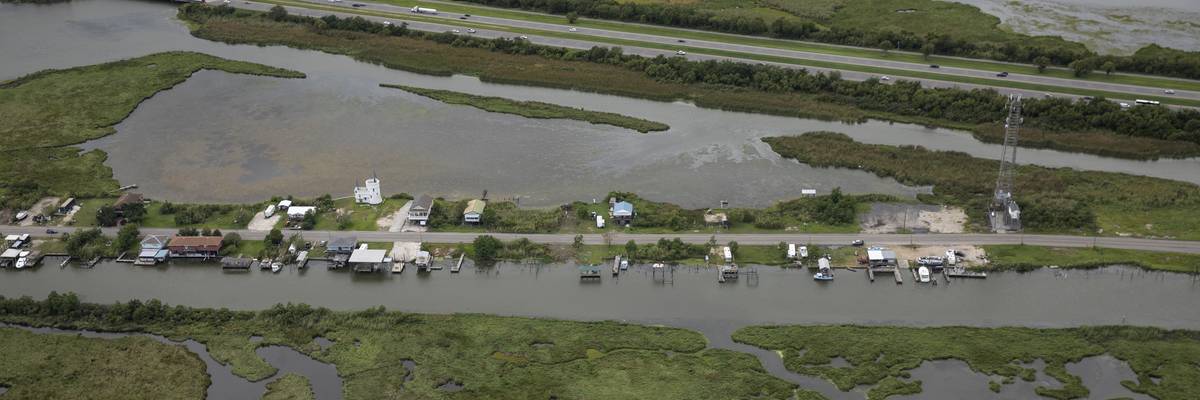
It’s the Climate Stupid
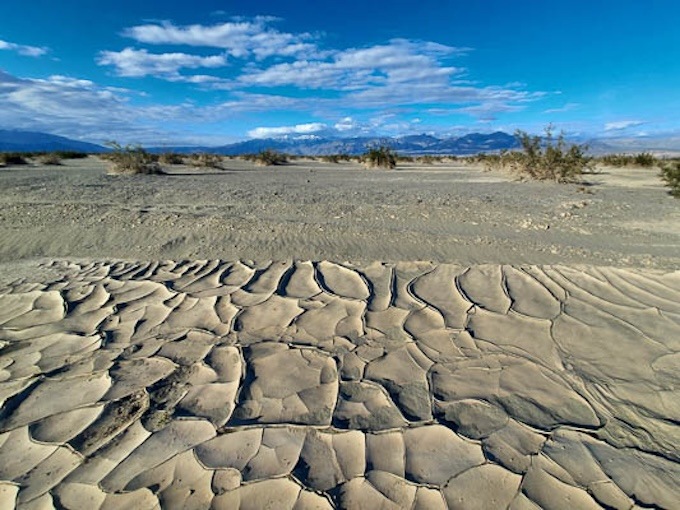
Severe drought has dominated the West, leading to larger wildfires. Photo by George Wuerthner.
If you want to understand why we are seeing larger wildfires, severe drought, and higher temperatures, I suggest the mantra should be “it’s the climate, stupid.”
Yet, it appears that most agencies, many scientists (who are paid by the Forest Service and timber industry), and far too many conservation groups, blame recent large blazes on “over dense” forests that are “unhealthy” and in need of thinning (read logging).

To these folks, tree mortality from natural processes like drought, insects, or wildfire is an indication of “unhealthy” forests. This paradigm drives all federal and state forest policy.
The driving force in all large fires is climate and weather, not fuel. I am always astounded that advocates of logging can seemingly ignore the fact that most of the West (and other parts of the country) are in severe drought. The historic conditions that created the forests we have today no longer exist. Our forest ecosystems are operating under a new climatic regime. And yet it does not seem to occur to people that this might have something to do with the large blazes we are experiencing.

Drought, high temperatures, low humidity, and wind are the key factors in all large blazes. The ongoing climate conditions that began in the 1980s have exacerbated all of these factors.
It doesn’t matter how much fuel you have; if you don’t have the right climate/weather conditions, you will not have a significant blaze. That is why wildfires are almost non-existent in wet, cool places like the Tongass National Forest in rainy Southeast Alaska. You could use a blowtorch to ignite the forest, and you would not get a large conflagration.
We have many climate/fire studies that demonstrate that, under severe drought conditions, wildfires are larger and more frequent—regardless of fuel type. By contrast, if you have decades of wet, cool conditions, the acreage burned and the size of wildfires decrease.
We have recent evidence of this trend from the last century. In the early 1900s, we experienced a significant drought. Remember the Dust Bowl? Indeed, in 1929, more than 50 million acres were charred across the West.

To put that into perspective, today, if 10 million acres burn, it is considered a “record” year.
Then, in the late 1930s, the climate shifted due to the Pacific Decadal Oscillation (PDO), which controls climate conditions along the West Coast. Throughout the 1940s through the early 1980s, the climate was considerably cooler and moister. The number of ignitions declined; even those that managed to burn did not impact large areas.

During this period, glaciers grew in the Sierra Nevada, the Cascades, and the Rockies. Some scientists were predicting a new Ice Age.
In addition to fewer large fires, the cool, moist conditions favored tree establishment and survival, leading to denser forest stands.
While most logging and prescribed burn advocates attribute denser forests to “fire suppression,” it ignores how many natural conditions influence fire suppression efforts. It is easy to suppress fires when it’s cool and moist, but the supposed success of fire suppression was more a consequence of natural conditions that hindered ignition and spread.
Nature did a fine job of suppressing fires and increasing forest density.
The other reason given for larger blazes is the presumed cessation of “Indian burning.” According to this idea, before the spread of Euro-American control over wildfires, native people kept forest fuels low, forests healthy, and everyone happy by regularly burning the woods. Here is a recent paper promoting the idea that Indian burning kept fuel loading low and prevented large fires.
There are many problems with this concept.
First, while tribal people did burn the landscape, the influence was primarily local. In other words, Indian burning was localized and did not have a landscape-scale effect. We have numerous studies documenting the negligible influence of tribal fire, including evolutionary evidence.
For instance, Vachula et al. (2019) did a study of what is now Yosemite National Park where, historically, large Indigenous communities resided. Their research found a direct correlation between climate and the amount of burning on the landscape.
“We analyzed charcoal preserved in lake sediments of Yosemite National Park and spanning the last 1400 years to reconstruct local and regional area burned. Warm and dry climates promoted burning at both local and regional scales…
For instance, sagebrush ecosystems are among the most widespread vegetative communities in the West, yet are not adapted to fire. If tribal burning were as widespread and influential as claimed, we would not have sagebrush-adapted species like sage grouse, sage thrashers, pygmy rabbits, and a host of other species specifically adapted to sagebrush landscapes.

A further problem with the idea that fire suppression and Indian burning reduced large blazes is that most plant communities in the West burned at long fire intervals, during which fuel naturally built up.
Finally, you have to ask yourself, how did forests survive and remain healthy for millions of years before there were any humans in North America? For example, ponderosa pine forests, a tree species that many suggest only remain healthy if they experience frequent fires set by humans, have existed as a separate species for 55–60 million years. Yet, tribal people only colonized North America in the last 15,000 years or so.
Fire suppression is not the issue. Climate change is what is driving large blazes. And solutions like increased logging or even prescribed fires are not going to significantly reverse the ongoing effects of severe drought and climate change.

The change in wildfire spread and size began in the late 1980s, as the cumulative influence of greenhouse gases began to create warmer, drier conditions, which in turn led to more wildfires.
The ultimate cause of larger blazes is warming climate. Until we, as a society, seriously address climate change and work to reduce greenhouse gas emissions, no amount of logging or prescribed burning will result in fewer large blazes.
In the meantime, the only viable way to protect homes and communities is to ramp up home hardening to reduce the vulnerability of structures to ignition.