The Perils of Hyperglobalization and a Post-Neoliberal World

Ultrabulk cargo ship on the Columbia River at Astoria. Photo: Jeffrey St. Clair.
Dani Rodrik has impeccable credentials as an economist. He is an expert in many areas, including trade and development, and is one of Harvard University’s leading lights. In recent years, he has also been one of mainstream economics’ leading critics, one who has had no trouble accepting the many charges that have been laid at its door and acknowledging that non-economists and ordinary people have been far in advance of economists in identifying the malfunctions of the now much-derided paradigm of globalization and the ideology of neoliberalism that underpinned it.
Readers of Shared Prosperity in a Fractured World will not find much that is new in his critique of neoliberal globalization, a phenomenon for which he prefers the term “hyperglobalization.” It is, however, a useful recapitulation of many of the flaws in the paradigm that he and others pointed out as early as the 1990s and early 2000s, when corporate-driven globalization seemed to be an unstoppable force.
Neoliberal globalization was a doctrine that held that the free flow of commodities and capital globally under the supervision of market-promoting multilateral institutions such as the International Monetary Fund, World Bank, and World Trade Organization would lead to the most efficient allocation of resources and the optimum welfare of societies. In short, to the best of all possible worlds.
Instead, income inequalities deepened, poverty increased except in a handful of places like China, capital left for low-wage areas, and communities were disrupted by deindustrialization.
Confident in equations that projected the greatest good for the greatest number, economists were invested in globalization and thus suffered a tremendous loss of credibility at the actual destabilizing outcomes that produced resentful movements of the far right that not only opposed globalization but threatened to rip apart the fabric of liberal democracy. The “Washington Consensus,” once celebrated by mainstream economists, passed into the proverbial dustbin of history long before the man who coined it, John Williamson, died in 2021.
One key problem was that economists fooled themselves into believing that their seemingly sophisticated mathematical modeling yielded the expected results of greater efficiency and greater collective welfare whereas they were actually building their conclusions into their equations. Rodrik quotes the noted development economist Carlos Diaz Alejandro: “By now any bright graduate student, by choosing his assumptions…carefully, can produce a consistent model yielding just about any policy recommendation he favored at the start.”
China’s Smart Economics
China looms large in Rodrik’s account of why mainstream economics has failed dismally in the area of development. It is the discussion of why China became the world’s second biggest economy in record time that I find the most useful in this book, one that distills the key lessons of the non-doctrinaire, “hybrid” Chinese path to development. China benefited the most from globalization by acquiring markets globally.
Yet, paradoxically, it violated all the major tenets that economists prescribed as the true path to development—what Rodrik calls the “first best” solution. This was carrying out simultaneous reforms in key areas of the economy: liberalizing internal and external trade, deregulation, driving state enterprises into private hands, eliminating capital controls, etc., in short “shock therapy,” as some called it. In contrast to the abstract calculations of economists based on questionable assumptions, China embarked on a process of pragmatic, experimental, state-led market reform.
Here, it is worth quoting Rodrik:
So what broad lessons can we draw from China’s experience? The defining feature of China’s growth strategy was its pragmatism and gradualism, captured in the Chinese saying, “crossing the river by feeling the stones.” It was a strategy that ignored stark boundaries between state and markets, evading stale ideological debates about the role of government…In the language of economics, it was gradualist, experimental, and second best. It first targeted poor households in agriculture, then urban areas, and then foreign trade. It road-tested new policies in specific regions—cities or zones—before extending to other parts of the country when successful. Through the 1990’s, 40 per cent or more of national economic regulations were explicitly labeled as “experimental.”
The Chinese way, says Rodrik, “produced heterodox arrangements that left Western economists scratching their heads.”
For example, economic liberalization took a dual-track form, with market regimes coexisting side-by-side with heavily regulated segments. Early price reforms in agriculture allowed farmers to sell their grains to on free markets but only once they had delivered their obligatory quota to the government at controlled, below-market prices. This ensured that the government still got access to grains, which it could ration to urban workers at low prices. Similarly, trade reform created special economic zones where foreign investors could import components freely for their export-oriented factories, while the rest of the economy remained heavily protected to safeguard employment in state enterprises.
So successful were the Chinese that the economist most identified with the “shock therapy” approach in the early 1990s, Jeffrey Sachs of Columbia University, made a sharp, 180-degree turn and became the Chinese way’s most fervent admirer, and reconfiguring himself as a bold critic of the mainstream development economics that once enchanted him.
The “Practice-Not-What-You-Preach” School
As Rodrik points out, the same pragmatic arrangements where the state steered the market in certain preferred directions characterized the approach of South Korea, Taiwan, Singapore, and Hong Kong, the so-called “tiger economies.” And, I would add, the so-called “tiger cubs”—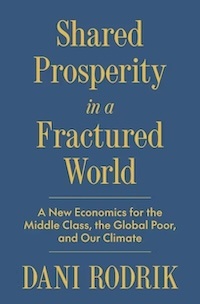 Malaysia, Thailand, and Indonesia—which rapidly industrialized in the late 1980s and 1990s. These were governments led by technocrats that belonged to what I called the “practice-not-what-you-preach school.” That is, they made sure to preach the gospel of free markets when World Bank and IMF economists were listening in order to preemptively shut off the latter’s mouthful of bad advice, while they actually had the state managing the market and steering it to preferred developmental ends.
The Philippines distinguished itself as the outlier in the East Asian constellation of successful economies, a condition Filipino economists and their World Bank patrons attributed to “corruption.” The problem was that the country’s successful neighbors were also plagued with corruption, as was China.
The reason corruption was the preferred explanation was that it deflected from the real cause of the country’s backwardness, and this was that the country’s economists and technocrats, most of them trained at the University of the Philippines School of Economics and U.S. graduate schools, practiced what they preached: the IMF- and World Bank-vetted free market economics that ended up destroying the country’s manufacturing sector, destabilizing agriculture, and making the country reliant on exporting thinly disguised unfree labor like female domestic servants to medieval monarchies in the Middle East.
Agenda for a Post-Globalized World
Along with his endorsement of China’s political economy of development, Rodrik offers some important proposals for global economic reform.
To address poverty, both the Global South and Global North should focus on creating decent jobs in services rather than manufacturing since advances in IT and AI will continue to eliminate jobs in industry.
Strategically, social policy should be directed at rebuilding the middle class in the Global North and creating and expanding it in the Global South, for a healthy middle class is, among other things, essential to a healthy democracy.
When it comes to climate policy, Rodrik is skeptical of globally coordinated approaches given the difficulty of arriving at anything beyond soft voluntary agreements to reduce emissions. So why not focus on local initiatives? And here again, China has paved the way. “Thanks in large part to uncoordinated, unilateral policies that depart from the guidebook, especially green industrial policies in China and other major nations,” he writes, “the world has seen considerable technological progress in renewables.”
In other words, let those economies that can afford them take on the role of developing climate-friendly policies, like investing in electric vehicles, that would benefit the whole planet even if their prime beneficiaries would be the local population. He calls this approach the “unilateral provision of global public goods.”
The Spanner in the Works
Rodrik calls his reform project “remaking globalization.” Although some of his proposals are useful, there is a big flaw in his vision, and it is its underestimation of the hugely disruptive U.S. role. He comes across as one of the last believers in the possibility of a peaceful coexistence between China and the United Staters.
His book was written largely during the Biden era and he supports some of Biden’s policies, including the Chips and Science Act and the Inflation Reduction Act, which contained incentives to promote a green transition. Biden, however, continued the first Trump administration’s hostile policies towards China, which have now gone into overdrive in the second Trump administration.
Should one really invest in creating a new global order with new rules that the United States does not want to be part of and is determined to wreck? It seems to me that working towards a deglobalized world where you work with those countries that you can work with while protecting yourself from the unpredictable, irrational, hostile, whimsical actions of a superpower in decline is the way to go. Imagining a “remade globalized world” is a waste of time.
