Friday, May 22, 2026

The Pentagon’s Gallium Problem Runs Through Jamaica – Analysis

By

The United States has no domestic gallium production. It has one remaining alumina refinery. That refinery runs entirely on bauxite from a single Caribbean island. This concentration of strategic dependency in a supply chain classified as critical to national defense is the product of three decades of industrial offshoring, and the $450 million strategic partnership that the Department of Defense announced on January 11, 2026 with Atlantic Alumina Company (ATALCO) represents the government’s attempt to reverse it. 

The deal is structured as $150 million in preferred equity from the Pentagon paired with over $300 million from Pinnacle Asset Management’s subsidiary Concord Resources. Its objectives are to sustain the Gramercy refinery in the American state of Louisiana and to construct America’s first large-scale gallium production circuit. Jamaica provides the feedstock. 

The analytical question is whether a supply chain this narrow can carry the weight of a national security strategy.

How the Supply Chain Collapsed

Gallium does not occur as a standalone mineral. It is a byproduct of the Bayer process used to refine alumina from bauxite. When a country shuts down its alumina refineries, it simultaneously eliminates its gallium production capacity. The United States operated multiple alumina refineries through the 1990s, with associated gallium recovery. 

As Chinese aluminum smelting capacity expanded (China now produces approximately 60 percent of global primary aluminum, at 42 million tonnes per year), American refineries became uncompetitive on cost. Energy prices in Jamaica and the U.S. Gulf ($0.25 to $0.36 per kilowatt-hour) could not match Chinese rates. 

Refineries closed sequentially as a result, leaving the Gramercy facility, a 3,300-acre site commissioned in 1957, as the last one standing. It produces approximately 40 percent of remaining U.S. alumina consumption.

The gallium dimension compounds this vulnerability. China produces 98 to 99 percent of the world’s primary low-purity gallium. Beijing imposed export controls effective August 1, 2023, and on December 3, 2024, formally banned all gallium exports to the United States. Prices reached $1,572 per kilogram by January 2026, a 300 percent increase from pre-restriction levels. 

Over 11,000 U.S. defense components depend on gallium arsenide and gallium nitride compounds, for which no effective substitutes currently exist. The ATALCO gallium circuit targets 50 metric tonnes per year, which the company states would satisfy the entire U.S. demand signal. That target depends entirely on the continued operation of a single refinery fed by a single bauxite source.

Jamaica’s Position in the Supply Architecture

Discovery Bauxite Partners, the joint venture that mines bauxite at Discovery Bay in St. Ann parish, is structured with Jamaica holding 51 percent through the government-owned Jamaica Bauxite Mining Limited and Concord Resources holding the remainder. The operation can export up to 5.2 million metric tonnes annually. 

Jamaica’s bauxite is prized for low silica content and alumina availability above 46 percent, qualities that reduce processing costs at Gramercy. This geological advantage is what keeps the supply chain economically viable despite the energy cost disadvantage.

The Gramercy site also holds an asset that extends its strategic relevance beyond alumina and gallium. Approximately 30 million metric tonnes of accumulated bauxite residue contain at least 15 of the Defense Logistics Agency’s 46 designated strategic materials, including 10 of 17 rare earth elements at concentrations roughly 25 times upper continental crust averages. 

A separate $850 million investment by ElementUSA, supported by a $29.9 million Department of Defense grant, will build a rare earth processing facility adjacent to the ATALCO refinery to extract these materials from the tailings. 

The convergence of gallium production and rare earth recovery at a single site, both fed by Jamaican bauxite, concentrates multiple critical mineral dependencies into one supply chain node.

The Equity Model as Industrial Policy

The ATALCO deal belongs to a broader pattern. The Trump administration has taken direct equity positions in multiple critical mineral firms since January 2025, with cumulative investments reaching $2.3 billion. The legal authority derives from the Defense Production Act Title III. 

The model departs from traditional grant-based or loan-based industrial policy by generating potential financial returns for the government alongside supply chain objectives. It also creates a different relationship between the state and the firm: equity ownership implies ongoing interest in the company’s commercial viability, which in turn shapes procurement incentives. 

Outlook

The value capture question remains the most analytically significant dimension of the Jamaica-Gramercy relationship. Jamaica provides the raw material. The high-value gallium extraction, rare earth recovery, and defense supply chain integration occur entirely in Louisiana. 

Jamaica’s 51 percent ownership of the bauxite joint venture provides equity participation in the mining phase, but none of the downstream processing revenue. 

This structure recapitulates a pattern familiar across extractive commodity relationships globally. Competing gallium projects are under development at Rio Tinto’s Quebec operations and Metlen Group’s facility in Greece (targeting 50 tonnes per year by 2027), which could eventually reduce Gramercy’s monopoly position. 

For the near term, the entire U.S. gallium independence strategy and a significant share of its rare earth recovery ambitions rest on a supply chain that begins in a single Jamaican parish and ends at a single Louisiana refinery. That level of concentration is itself a strategic vulnerability, even as it resolves the immediate gallium supply crisis.

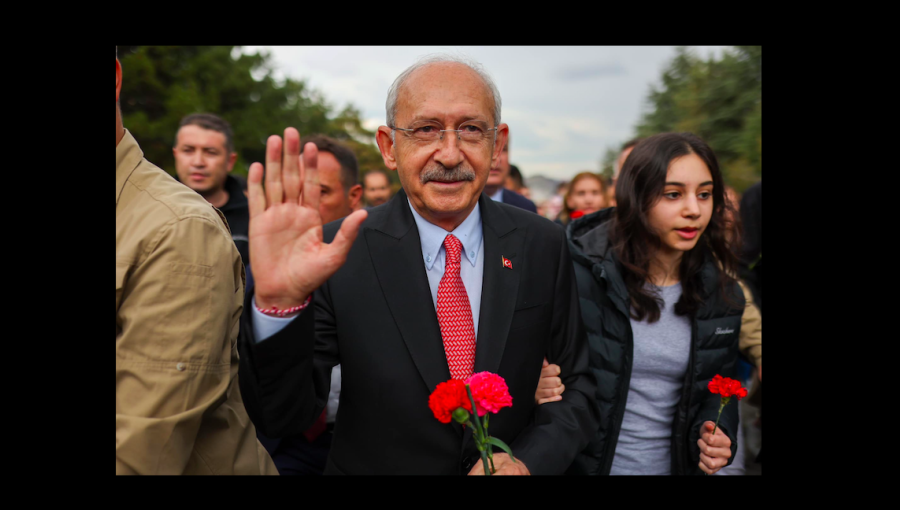
 

Turkey suffers severe stock market sell-off as Ankara court ousts opposition leader

Turkey suffers severe stock market sell-off as Ankara court ousts opposition leader
Now 77-years-old, Kilicdaroglu is back for more. / Kemal Kilicdaroglu, Facebook pageFacebook
By Akin Nazli in Belgrade May 21, 2026

Borsa Istanbul suffered a severe sell-off on May 21 after an Ankara appeals court removed main opposition Republican People’s Party (CHP) leader Ozgur Ozel from his post and ordered the immediate reinstatement of his predecessor, Kemal Kilicdaroglu.

The move throws Turkey’s political landscape into another period of deep instability.

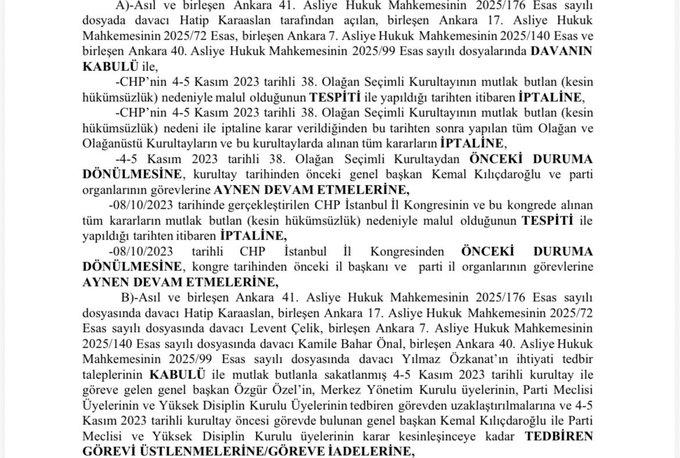
The 36th civil chamber at the Ankara regional (istinaf) court issued a rare ruling of “absolute nullity” (“mutlak butlan” in Turkish), legally erasing the CHP’s 38th ordinary congress held in November 2023.

Screenshot: The 36th civil chamber’s ruling (Credit: @CanBursali).

At the congress, Ozel, 51, unseated Kilicdaroglu, 77, following the defeat of the latter by President Recep Tayyip Erdogan in the 2023 presidential elections.

By declaring the leadership election legally void from its inception, the court ruled that Ozel’s current executive administration has been stripped of authority. The court also officially ordered that the CHP’s former management temporarily return to power to steer the party ahead of the next elections.

Borsa Istanbul down, lira remains in headlock

The decision ignited panic at Borsa Istanbul, disrupting a period of relative market stability. The benchmark BIST-100 index plunged more than 6% within minutes while the banking index tumbled by over 8%.

The rapid sell-off triggered automatic market-wide circuit breakers, halting all stock, options and futures trading. Since the ruling was announced just an hour before the market close, the spot transactions were not re-started. The fall in the derivatives market, which moves into an evening session that lasts until 23:00 Istanbul time, hit the daily limit of 10%.

The initial reaction seen in Turkey’s 5-year credit default swaps (CDS) was more limited. The headline figure moved by about 10 bp to break through the 250-level. Similar moves were observed in Turkey’s eurobonds.

The USD/Turkish lira (TRY) pair, which is subject to the strict control of the government, remained unchanged in the 45s. In the coming days, the Turkish central bank’s FX reserves will be under close scrutiny.

Battering the CHP

Since October 2024, the CHP has been battered by countless operations launched by prosecutors. Its presidential candidate, Istanbul mayor Ekrem Imamoglu, has been in jail since March 2025.

Some 23 CHP mayors were in jail as of May 21 in addition to many other party officials, municipality personnel and family members of the personnel.

The lawsuit that has resulted in the reinstatement of Kilicdaroglu was initially filed by CHP delegates loyal to the ex-leader, who argued that the 2023 congress as well as two subsequent extraordinary congresses were influenced by bribes paid to purchase votes of delegates that went against Kilicdaroglu.

In October, the Ankara 42nd (Asliye Hukuk) civil court of first instance dropped the case. The plaintiffs, who are also CHP members close to Kilicdaroglu, filed an objection against this ruling at the Ankara (istinaf) regional court.

Turkey plunged into fog again

According to the relevant legal procedure, the 42nd court will launch a re-trial process. The Ozel management has the right to appeal against the regional court’s Kilicdaroglu decision at the supreme court (yargitay).

Ahead of the ruling, pro-government media this week carried messaging signalling that an “absolute nullity” ruling was on the way. They pointed to Friday (May 22) as the day to expect the announcement.

As a result, Ozel and his central executive board were on May 21 already holding an extraordinary meeting. At the time this story was compiled, they were yet to announce their plans.

On May 20, 77-year-old Kilicdaroglu, who chaired the CHP between 2010 and November 2023, released a highly critical video aimed at the current party leadership, asserting that the CHP would never become a sanctuary for illegality or corruption.

Once again, national politics have become the main concern in Turkey. All eyes will now be on how the dust will settle as this new clash unfolds in the coming days.

Istanbul trustee knocked out too

The 36th chamber also ruled the CHP’s Istanbul congress held in preparation for the November 2023 party congress null and void. Consequently, it moved to reinstate the previous management. Since the previous Istanbul chair Canan Kaftancioglu has been banned from politics by a local court, the 36th chamber re-instated one of Kaftancioglu’s deputies.

The board of trustees appointed at CHP Istanbul will be replaced.

Trump suddenly says US will send 5,000 more troops to Poland

Trump suddenly says US will send 5,000 more troops to PolandFacebook
By bne IntelliNews May 22, 2026

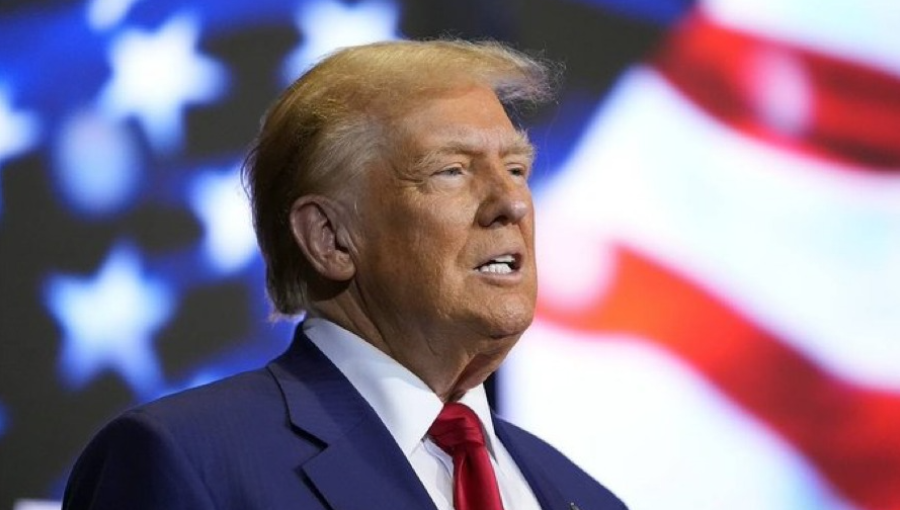
US President Donald Trump said on May 21 that the United States would send an additional 5,000 troops to Poland, in an apparent reversal of earlier moves to reduce the American military presence in Europe.

Trump linked the move, whose details remain unclear, to his apparently good rapport with Polish President Karol Nawrocki.

“Based on the successful election of the now President of Poland, who I was proud to endorse, and our relationship with him, I am pleased to announce that the United States will be sending an additional 5,000 troops to Poland,” Trump said in a statement issued late in the evening Polish time.

The announcement came several days after US media reported that the Pentagon had cancelled a planned rotational deployment of about 4,000 troops to Poland, a decision that sent shockwaves through Poland, which regards itself as the United States’ most loyal ally in Europe.

The cancelled deployment was to involve the 2nd Armoured Brigade Combat Team of the 1st Cavalry Division from Fort Hood, Texas.

According to the Trump administration, the move did not mean an immediate withdrawal of US troops already stationed in Poland, but rather the suspension of the next rotation.

Polish government officials said the decision was temporary and logistical, and posed no threat to Poland’s security.

Polish officials discussed the US troop presence with Trump administration officials in Washington this week. Deputy Minister of National Defence Cezary Tomczyk said after the talks that the United States would maintain a “high military presence” in Poland and that details of the US military presence in Europe would be consulted with Warsaw.

Nawrocki, who was elected in June 2025 with the support of the nationalist Law and Justice (PiS) party, is seen as close to the Trump administration, unlike the more pro-EU Prime Minister Donald Tusk, who has been critical of Trump.

The issue emerged after the announcement that several thousand US troops would be withdrawn from Germany.

Nawrocki said earlier this month that he would ask Trump to send the troops to Poland, while Estonia, Lithuania, Latvia and Romania also sought an increased US military presence after the Germany withdrawal announcement.

Tusk also said Poland would take “any opportunity” to increase the US military presence in the country, but warned against “poaching” troops from other allies in Europe.

The Pentagon has not said whether Trump’s decision concerns troops that had previously been due to come to Poland under the rotation, or units withdrawn from Germany. It is also unclear whether the move represents a permanent increase in allied forces or part of a troop rotation.


Taiwan to manufacture 100,000 drones monthly by 2030

Taiwan to manufacture 100,000 drones monthly by 2030
/ Ketan Yeluri - UnsplashFacebook
By IntelliNews May 22, 2026

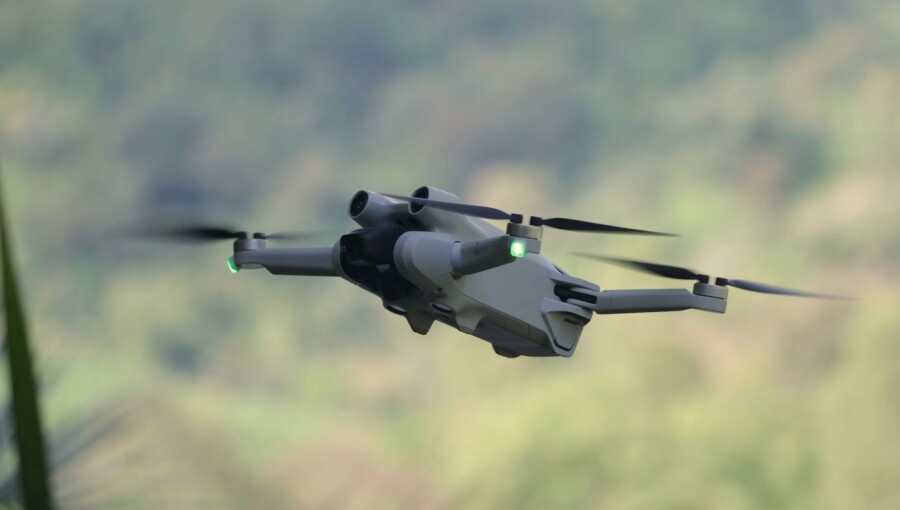
Taiwan projects its drone industry will expand massively to manufacture 100,000 units per month by 2030 and export half of them, the Ministry of Economic Affairs announced on May 21, Taipei Times reports.

The move highlights Taiwan's push to build a reliable, democratic hardware supply chain in Asia. This rapid capacity scaling aims to offer global buyers a secure alternative to Chinese tech amidst rising regional tensions.

Current assembly capabilities stand at 15,000 units monthly, but local factories can scale up quickly as market demand rises, Industrial Development Administration Director-General Chiou Chyou-huey told a press conference in Taipei on May 21.

Taiwanese drone output surged 2.5-fold last year to TWD12.9bn ($408.3mn) under a government investment programme for uncrewed vehicles, Chiou said.

The Executive Yuan approved a TWD44.2bn ($1.40bn) funding blueprint over six years to develop domestic uncrewed aerial hardware, targeting an output value above TWD40bn ($1.27bn) by 2030. If production value doubles to TWD26bn ($822.8mn) this year, the 2030 target could be revised upward, Chiou noted.

The domestic drone ecosystem currently relies on local purchase orders, with commercial-grade military hardware driving the bulk of manufacturing.

Outbound shipments account for just over 20% of total sales, led by the US, Poland and the Czech Republic.

International sales reached $147mn in the first four months of this year. Outbound shipments totalled $93mn last year, Chiou told a Cabinet press briefing on April 30.

Chinese consumer quadcopters hold a dominant price advantage due to massive manufacturing scale. However, the price gap narrows significantly for military-grade commercial systems where reliability, autonomous flight and anti-jamming features matter most, making Taiwan highly competitive, Chiou added.

According to Taipei Times, the XPONENTIAL 2026 uncrewed systems expo in Detroit drew significant interest from firms in the US, Japan, South Korea and Turkey for potential joint ventures, Chiou said.

The convention generated initial business prospects estimated at TWD1.3bn ($41.1mn) across optical modules, thermal imaging systems and flight software architectures.

Taiwan formalised memorandums of understanding with the Michigan Drone Association and the North Dakota Trade Office during the exhibition. These agreements focus on autonomous piloting, urban air mobility and shared testing facilities to help local enterprises access international validation and certification resources, Chiou concluded.


The geopolitical chokehold on Taiwan's polymer lifeline

The geopolitical chokehold on Taiwan's polymer lifeline
/ Ryo Harianto - UnsplashFacebook
By IntelliNews May 22, 2026

The conflict in the Persian Gulf has severed one of Taiwan's main industrial lifelines, forcing major plastic producers to slash output as raw material shipments from the Middle East cease. Maritime routes through the Strait of Hormuz are effectively blocked by hostilities between the US and Iran, leaving Taiwan's petrochemical sector, which relies on imports for 98% of its total energy and raw material requirements,scrambling for survival, Streamlinefeed.co reports.

For Taiwan, the sudden evaporation of naphtha and crude oil is not just a market fluctuation but a national security threat that will force an involuntary and painful "detoxification" from its plastic addiction. The "just-in-time" production model, which prioritises low reserves and high efficiency, has proven incapable of absorbing such a massive geopolitical shock.

Formosa production collapses  

The disruption in the Strait of Hormuz has impacted roughly 20% of global petroleum shipments. As a result, commercial freight carriers are abandoning the route en masse to avoid catastrophic insurance premiums and physical destruction. The US military has executed strikes against Iranian vessels and launched "Project Freedom" to escort neutral ships, but shipping remains paralysed, Streamlinefeed.co reports. But as Asia depends on the Middle East for 60% of its light crude oil, and the current blockade has stifled the flow of naphtha across the entire region, times are hard. Within a single month, Taiwan faced a plastic bag shortage, South Korea saw panic over garbage supplies, and Japan struggled to source sanitary equipment, Taipei Times reports.

Meanwhile, Formosa Petrochemical, one of Asia's largest oil refiners, saw its tankers from the Persian Gulf stop arriving in early March. The company imports two-thirds of its naphtha from the region. The shortage forced the firm to shut one of its two production lines, decreasing capacity by 42%, The New York Times reports. While the producer filled orders with stockpiled inventory in March, there was less to go around by April. Company spokesperson Lin Keh-yen said the disruption is more severe than the shocks caused by the COVID-19 pandemic or the invasion of Ukraine. Even if tankers resumed normal passage tomorrow, it would take at least a month for Taiwan's plastic supplies to return to normal.

The petrochemical industry is currently burning through emergency strategic stockpiles while frantically attempting to source alternative raw materials from the US and Northern Europe. However, the logistical reality of rerouting global shipping networks requires months of planning. Financial analysts have characterised the downstream impact as a "recession-level industry decline." Taiwan's highly lucrative export sector, which provides high-grade plastics for medical devices, automotive components, and consumer electronics globally,is now facing severe contract defaults. Production lines are slowing, forcing manufacturers to implement emergency rationing of specific polymer grades to their most critical clients.

Market chaos  

At the Xizhou public market in Taipei, the price of plastic bags and restaurant supplies doubled between March and April. Some retailers are now charging three times what they did before the war. Wholesalers like Yu Chih-ta, who has run a container shop for decades, have stopped receiving new shipments entirely. To stretch remaining supplies, they have raised prices and rationed how many bags customers can buy, according to The New York Times.

Pharmacies have run out of custom plastic prescription bags, switching to paper alternatives that contain plastic sleeves. These paper supplies are also now at risk of disappearing. For food vendors already operating on razor-thin margins, the price hikes are devastating. Some shop managers have started charging customers TWD1 ($0.03) for every plastic bag required. Taiwan’s plastic habit remains among the highest in the world; last year, government data cited by The New York Times showed the island used 229,008 metric tons of plastic bags, which works out to about 50bn bags.

In turn, the Taipei Times argues that the government must now elevate plastic reduction to a key element of national economic and security strategy. In the past, cutting back on plastic was primarily an environmental concern, but supply chain security is now the driving factor. Diversifying raw material sourcing to mitigate reliance on the Middle East is now an undeniable  necessity. This includes international cooperation to develop alternative petrochemical feedstocks and the establishment of strategic reserves to provide a buffer against future shocks.

The Taiwanese government is working to subsidise energy costs for the hardest-hit sectors, but the treasury cannot indefinitely absorb a global commodity shortage. The crisis has injected massive capital incentives into the Taiwanese recycling sector. Companies are racing to innovate chemical recycling technologies to harvest usable polymers from existing waste streams, Streamlinefeed.co reports. What was previously viewed as an expensive ecological novelty is now recognised as a critical matter of national industrial security. Shifting consumer behaviour is also vital. When supply is limited, the public is more amenable to alternatives. Encouraging the use of reusable containers and eco-friendly products could turn a transitory crisis into permanent structural change.

The paralysis of Taiwanese petrochemical output also creates a global ripple effect. In East Africa, economies like Kenya rely heavily on imported Asian polymers for construction and food packaging. A $100 per tonne increase in resin prices translates directly to higher costs for PVC pipes in Nairobi and basic food packaging in Mombasa, Streamlinefeed.co reports. This situation illustrates the perilous nature of hyper-globalisation; a geopolitical dispute in the Middle East directly determines the operational viability of a tech factory in Taipei and a plastic manufacturer in Nairobi.


Washington turns Venezuela playbook on Cuba, but finds a harder nut to crack

Washington turns Venezuela playbook on Cuba, but finds a harder nut to crack
Raúl Castro, brother of revolutionary leader Fidel and architect of Cuba's post-Soviet survival, now faces a US murder warrant at the age of 94.Facebook
By bnl editorial staff May 21, 2026

In a single day on May 20, Washington charged former Cuban president Raúl Castro with murder, sent a carrier strike group into the Caribbean and offered the island $100mn in aid with important strings attached, in a calculated display of pressure that marks the most dramatic escalation in US-Cuba relations since the Cold War.

Castro, 94, faces one count of conspiracy to kill US nationals, four counts of murder and two counts of aircraft destruction, all stemming from the February 24, 1996 downing of two Cessna planes operated by Cuban exile group Brothers to the Rescue by Cuban air force MiG jets over what international aviation authorities later determined was international waters. Three US citizens and one Cuban-American were killed.

At the centre of the indictment is an 11-minute audio recording, held by US intelligence for decades but never previously acted upon, in which a voice alleged to be Castro's instructs MiG pilots to down the aircraft. "Knock them down into the sea when they reappear," the voice says, according to USA Today.

Acting attorney general Todd Blanche, speaking at Miami's Freedom Tower on Cuba's Independence Day, declined to rule out military action to compel Castro's appearance before a US court. "This isn't a show indictment," he said. "There was a warrant issued for his arrest, so we expect that he will show up here by his own will or by another way." Asked whether the administration would consider military action to seize Castro, Blanche deferred to the White House; the White House referred reporters back to the Justice Department.

The announcement drew an immediate parallel with the January operation against Venezuelan president Nicolás Maduro, who was indicted on drug trafficking charges before being seized in a special forces raid on his Caracas residence and taken to New York to face prosecution. The White House made the connection explicit, writing on May 20, "The indictment and removal of Maduro sent a clear message to his socialist allies in Havana. This is our hemisphere and those that destabilise it and threaten the United States will face consequences."

Florida congresswoman María Elvira Salazar, speaking at a Washington press conference in front of a poster showing Maduro labelled "CAPTURED", the late Iranian supreme leader Ali Khamenei marked "ELIMINATED" and Raúl Castro stamped "PENDING", addressed the former president directly. "You have the option not to wind up where Maduro is. You can leave now," she said, as reported by the Miami Herald.

Cuba's government pushed back forcefully, if predictably. President Miguel Díaz-Canel called the indictment "a political action, lacking any legal basis," and accused Washington of fabricating a case to justify military aggression. Foreign Minister Bruno Rodríguez said the charges rested "on lies" and hid "duly documented historical truths," insisting the shootdown occurred in Cuban airspace and constituted a legitimate act of self-defence. 

Yet the indictment's practical prospects remain limited. Castro, who appeared publicly in Cuba earlier this month, faces the death penalty if convicted. The communist-run island has no extradition treaty with the United States, and the Cuban government will not surrender a former president and revolutionary figurehead to American justice. "The prospects that Raúl Castro will end up in a US court are infinitesimal," Orlando J. Pérez, a professor of political science at the University of North Texas at Dallas, wrote on X. "It's hard to see how this ends up as anything other than a huge symbolic show to satisfy the anxieties of the Cuban-American constituency ahead of the midterms." The indictment has nonetheless "created a fig leaf of legality for any military operations to seize or assassinate Raúl Castro," US analyst Peter Kornbluh told Reuters.

The military dimension of the standoff sharpened further on May 20 when US Southern Command announced the arrival of the USS Nimitz carrier strike group in the Caribbean. The vessel, carrying more than 60 combat aircraft including F/A-18E Super Hornets, conducted joint exercises with the Brazilian navy last week before heading north, as reported by The Hill.

The deployment follows a well-worn playbook: before the January 3 operation that captured Maduro, the Pentagon had positioned the USS Gerald R. Ford carrier strike group off the Venezuelan coast, using the carrier's presence as both a military instrument and a signal of intent. President Donald Trump, who repeatedly vowed to "take over" the island in recent months, told reporters the administration had Cuba "on our mind" but stopped short of confirming any military intentions. "I don't want to say that," he replied when asked whether he planned to follow the indictment with military action.

The charges land at a moment of acute crisis on the island. Cuba declared total fuel exhaustion last week, with energy minister Vicente de la O Levy confirming the island held no diesel, no fuel oil and no reserves, triggering the largest street protests in Havana since the US de facto oil blockade was imposed in January. The blockade, put in place after the US-led operation that removed Maduro and severed Cuba's dominant source of subsidised Venezuelan oil, has driven the island to the brink of collapse. Cuba has endured seven nationwide blackouts since 2024, and the United Nations declared the embargo "unlawful." Earlier this week, intelligence cited by Axios revealed Cuba had acquired more than 300 military drones from Russia and Iran and held internal discussions about potential strikes on US installations, including the naval base at Guantánamo Bay.

Renewing a previously floated offer, Secretary of State Marco Rubio offered $100mn in food and medicine aid in a Spanish-language video message released on Cuba's Independence Day, conditioning distribution on the Catholic Church and independent charitable organisations rather than the Cuban state.

Cuba's embassy in Washington was scathing in its response, accusing Rubio of duplicity in offering aid with one hand while maintaining what it called "cruel and ruthless aggression" against the island with the other.

Whether the latest indictment amounts to a prelude to some kind of military action or merely a pressure tactic designed to accelerate a negotiated transition remains, for now, deliberately ambiguous. Limited contacts between the two sides have continued: CIA director John Ratcliffe visited Havana on May 14 to discuss intelligence co-operation and security issues, though analysts said the indictment was likely to narrow those channels further. With a carrier strike group now in the Caribbean, Russian and Iranian drones reportedly capable of striking US installations and an elderly former president facing a murder warrant, the rivalry that has defined hemispheric politics since 1959 has entered uncharted territory.

The Maduro comparison, meanwhile, has its limits. In Venezuela, fragmented loyalties and acting president Delcy Rodríguez's willingness to throw open the country's oil and mining sectors to US investment provided the transition with a ready-made framework. Cuba's power structure is more hermetically sealed, its Marxist-Leninist ideology not a veneer as in Caracas but the founding grammar of the entire state. And unlike Venezuela, it has virtually no organised domestic opposition to fill the space a leadership change would create. Washington may have a playbook, but whether Cuba is a game it can win is a different question entirely.