Friday, June 26, 2026

CLIMATE REVAHCHISM

Eleven EU countries call for methane rules pause amid energy security fears
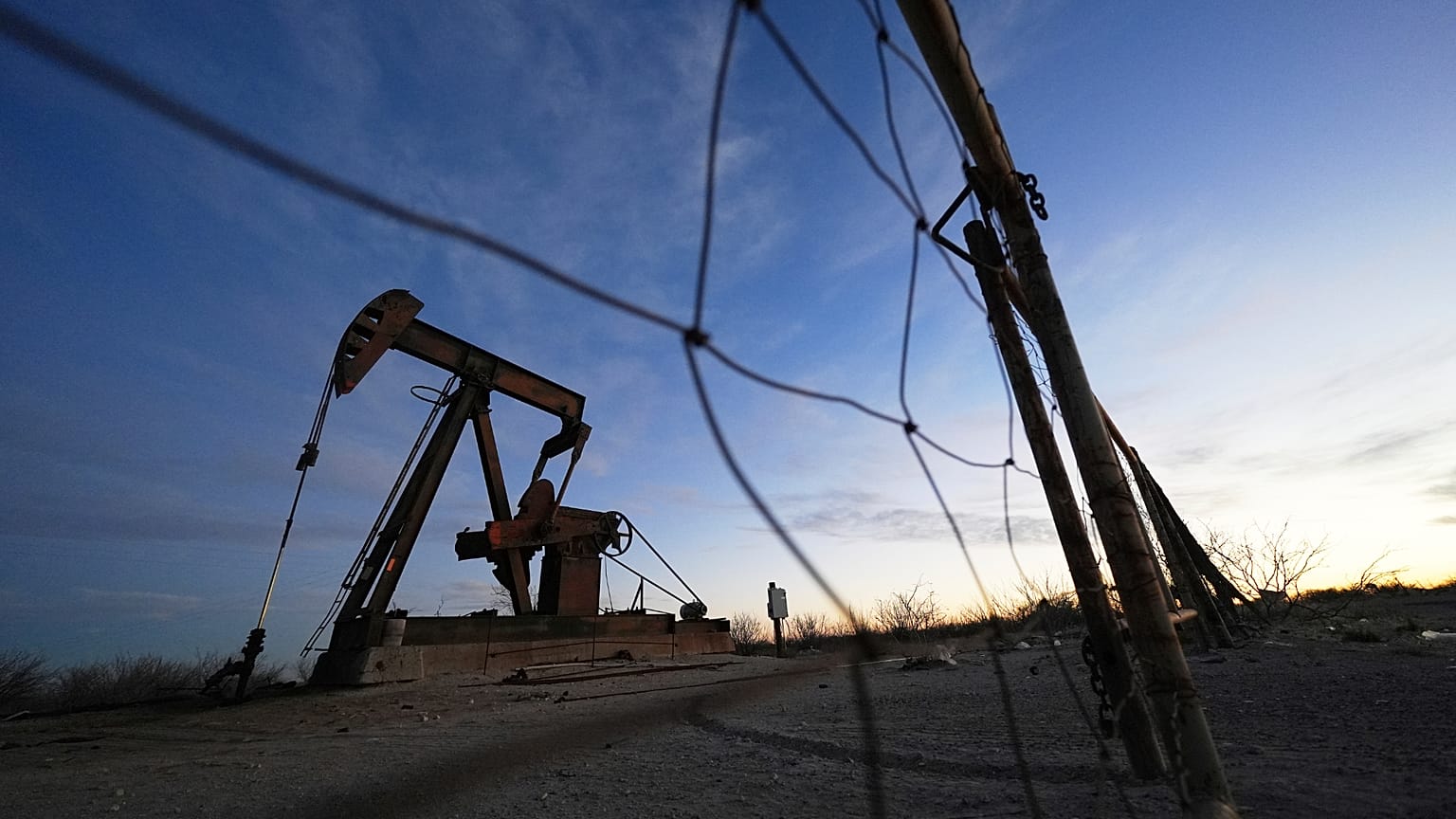
A pumpjack is visible before sunrise Feb. 26, 2025, in Kermit, Texas.
Copyright AP Photo / Julio Cortez

By Marta Pacheco
Published on

The eleven EU countries say that the methane rules could jeopardise natural gas supply, especially from foreign suppliers who would face extra costs. Environmentalists warn the EU not to cave in to pressure while the United Nations urged world nations to do more to mitigate methane emissions.

Eleven EU countries led by the Czech Republic and Slovakia are urging the European Commission to delay key provisions of the EU's methane rules by at least three years, arguing that immediate enforcement could threaten Europe's energy security at a time of geopolitical instability, according to a document seen by Euronews.

The eleven countries launched their plea as energy ministers prepare to gather in Luxembourg on 26 June while the European Commission weighs waiving penalties linked to the bloc's methane rules for three years for oil and gas companies that breach its methane emissions law.

But the 11 member states say the Commission's proposed recommendation not to impose penalties during a three-year "transition period" is insufficient, saying the proposal is "non-binding" and that "significant legal uncertainty" remains for importers negotiating long-term supply contracts.

"While fully supporting the objective of reducing methane emissions, we consider it necessary to introduce carefully targeted adjustments, including a postponement of EU methane rules obligations by at least three years," reads the document.

Generated mainly by fossil fuel production and livestock digestion, methane is a highly potent greenhouse gas, with a global warming potential more than 80 times that of carbon dioxide over a 20-year period. The International Energy Agency says the gas is responsible for about 30 percent of the rise in global temperature since the Industrial Revolution.

EU member states adopted methane rules in May 2024, introducing the bloc’s first framework for measuring, reporting and verifying methane emissions in the energy sector as part of efforts to curb one of the most potent greenhouse gases. Failure to honour such requests for data incurs penalties.

Geopolitics and supply security

Since Russia's invasion of Ukraine, Europe has sought both to accelerate climate action and diversify energy imports.

The methane rules were designed to reduce emissions across the energy value chain, but fears grow that demanding compliance from foreign suppliers too quickly could limit available supplies and increase costs.

The 11 governments say that while they remain committed to reducing methane emissions, current market conditions make strict implementation risky. They cite ongoing disruptions in global oil and gas markets, particularly linked to instability in the Middle East, which have already tightened supply and increased uncertainty ahead of future winter demand peaks.

"In this context, it is essential that EU methane rules don't unintentionally restrict access to diversified gas and crude oil sources," reads the document, which also warns that import requirements under the methane law could discourage some foreign suppliers from selling to the EU if they lack advanced methane-monitoring systems.

These fears have been fuelled by pressure from the US and more recently Qatar, a key LNG supplier to the EU whose production has been severely hit by the war in Iran, according to a public letter to EU leaders sent by a group of other major energy exporters, including Algeria and Nigeria.

"The EU faces a narrow window to make necessary changes to the methane rules as importers have already begun the process of purchasing oil and natural gas that will be stored for delivery in 2027, and as of now there is no viable path to compliance with the regulation," reads the public letter, referring to the year the rules are set to kick in.

The 11 EU capitals warn that under this scenario, the EU's supplier base could redirect LNG and oil cargoes to less regulated markets and increase energy prices for consumers and industry

"A coordinated, time-limited postponement of EU methane rules is essential to ensure effective and harmonised implementation while safeguarding the EU’s energy security during a period of heightened geopolitical uncertainty," reads the capitals' plea.

"This approach preserves the environmental integrity of the Regulation, offers legal and operational clarity, and maintains stable access to diversified natural gas and crude supplies until current supply risks subside."

Environmentalists and UN call for more action

Yet the foreign pressure does not cut in one direction. Democratic Party lawmakers in Washington have recently urged the EU to uphold its methane rules and refrain from exempting US energy operators if US domestic standards lack sufficient accuracy or enforcement.

Esther Bollendorff, fossil free program manager at the NGO Climate Action Network Europe, said the calls from the EU member states to halt the methane rules "worryingly" echo the fossil fuel industry and the Trump administration’s campaign to roll back the law, framing it as a "threat to security of supply".

Instead, Bollendorff encouraged the EU "not to give in to pressure" and to fully implement the methane law while phasing out its dependence on fossil fuels.

"In reality, the regulation does not ban gas imports. Instead, it provides phased compliance pathways for suppliers, and compliant global gas supply already exceeds the EU's import needs by more than three times," Bollendorff told Euronews, dismissing previous studies stating the opposite.

"Cutting methane can deliver immediate benefits that go beyond climate, from improved public health to stronger energy security. The EU has the tools it needs to act," she added, recalling the recent call by the UN secretary general António Guterres for world nations to take action against methane emissions at a key climate summit in London.

“We eliminated ozone-depleting chemicals. Methane pollution must be next,” Guterres said from London. “I call on producer and consumer governments alike to set a new global standard for the oil and gas sector: near-zero methane emissions across the value chain.”




‘Climate change is running rampant’: Europe’s heatwave ‘virtually impossible’ 50 years ago

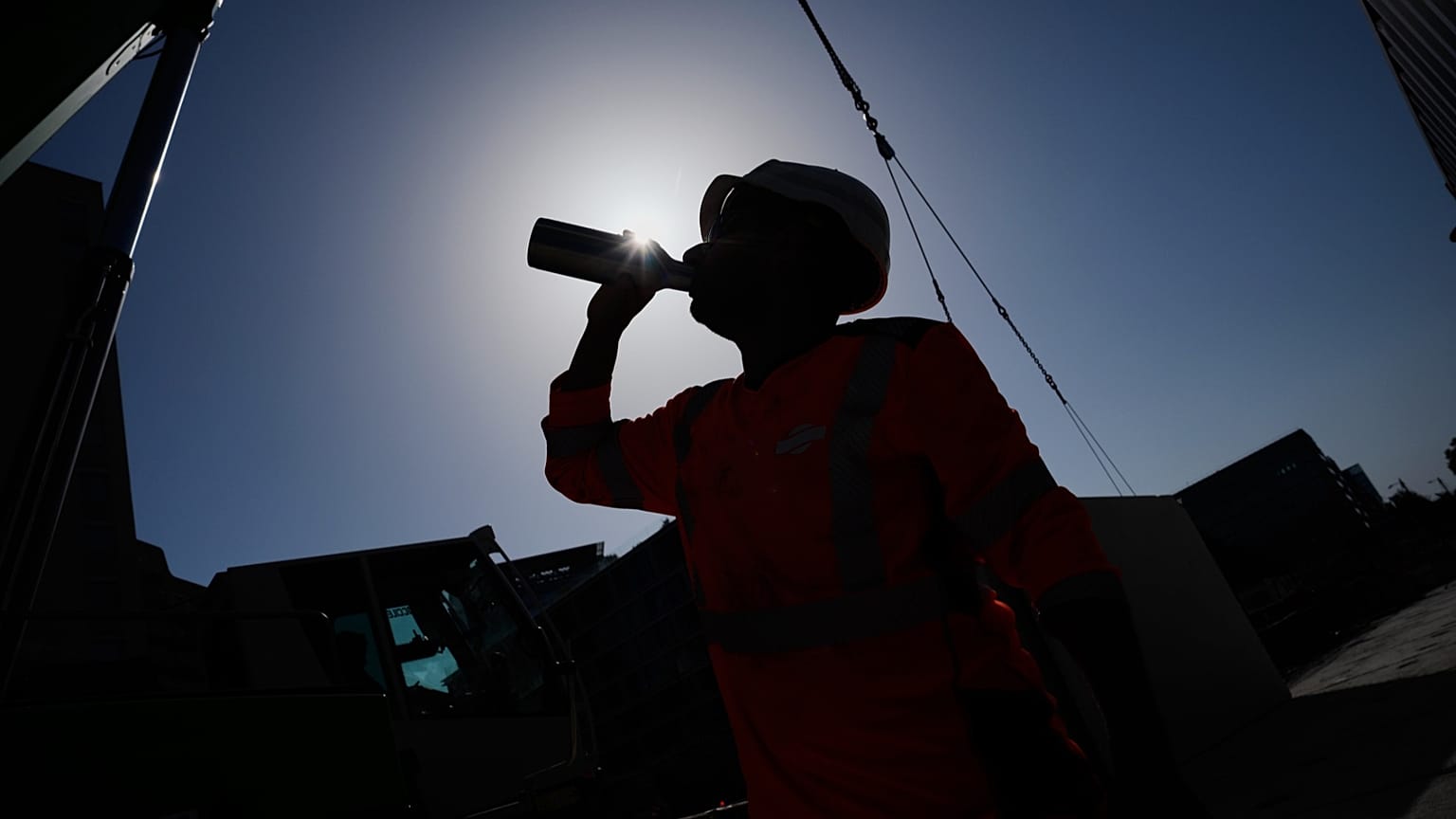
A worker drinks water on a construction site during high temperatures in Boulogne Billancourt, outside Paris, Wednesday, June 24, 2026.
Copyright Copyright 2026 The Associated Press. All rights reserved.


By Liam Gilliver
Published on

“Continued fossil-fuel emissions are directly responsible for the disruption people are experiencing this week,” climate scientists warn.

The extreme heat currently scorching Europe would have been almost impossible just a few decades ago – as scientists warn that climate change is “running rampant”.

Record-breaking temperatures have caused widespread havoc across the continent, with schools, hospitals, transport and outdoor workplaces all struggling to cope. Drowning deaths have surged in France, which recently experienced its hottest day since measurements began, as citizens scrambled to cool down.

Across the channel and the UK is bracing for highs of up to 38°C, already witnessing its hottest June day on record after temperatures climbed to 36.1°C.

While blistering temperatures are predicted to abate in Western Europe, weather forecasters warn that weekend highs of 41°C could hit parts of Hungary, Bulgaria and Czechia. These typically cooler nations are significantly less prepared for intense weather than the Mediterranean, for example.

Making ‘impossible’ heatwaves possible

The heat is being driven by a blocked high-pressure pattern that traps hot air over Europe and draws warm air up from the Sahara.

In a rapid attribution analysis, scientists from World Weather Attribution (WWA) used both observed and forecast temperature data to analyse the hottest three-day period across a large area of Europe that has been smothered by the heat dome.

They found that both the daytime highs and overnight temperatures seen during this heatwave would have been “virtually impossible to occur at this time of year” as recently as 1976 – just 50 years ago.

A similar heatwave occurring in that historic climate would be 3.5°C cooler, researchers say.

“The science of how climate change is worsening heatwaves is settled,” says Dr Theodore Keeping of Imperial College London. “Continued fossil-fuel emissions are directly responsible for the disruption people are experiencing this week in their homes, schools and workplaces.

“The speed of change is startling. Every few years we are seeing heat records shattered in Europe. This year it has been in consecutive months.”

Europe’s surging tropical nights

The analysis also found that sweltering overnight temperatures that have been keeping Europeans awake this week are about a hundred times more likely today than they were just 23 years ago during the infamous 2003 European heatwave.

Tropical nights, which are where the temperature never dips below 20°C during a 24-hour period, have been extremely common this week across Europe.

This can have a significant impact on human health, as the body relies on cooler temperatures during the night to regulate its core temperature and recover from daytime heat.

In fact, studies have shown that high nighttime temperatures are linked to increased mortality, particularly among older adults and those with pre-existing health conditions.

Out of the 854 cities analysed across 30 European countries, 45 per cent have broken – or are expected to break – their all-time Wet Bulb Globe Temperature (WBGT) record in late June, WWA found.

WBGT is a measure of heat stress and the body’s ability to cool itself through sweat evaporation. A separate study, which was recently published in the science journal Nature, found that in southern Spain, Italy, Greece and Türkiye some areas will see up to 40 additional days with strong heat stress compared with the 1970s.

Heat stress comes with a slew of symptoms such as elevated core body temperature, increased heart rate, rapid breathing, excessive sweating, nausea and dizziness.

In severe cases, heat-related illnesses such as heat exhaustion or heat stroke can be deadly.

Extreme heat is shattering records across Europe, and the science is very clear about why: climate change is running rampant.
 Simon Stiell 
UN Climate Change Executive Secretary

According to the UN, fossil fuels – coal, oil and gas – are by far the largest contributor to global climate change, accounting for around 68 per cent of global greenhouse gas emissions and nearly 90 per cent of all carbon dioxide emissions.

“But the solutions are equally clear: a faster shift to clean energy – which is now much cheaper than fossil fuels – as well as protecting forests and building climate resilience," says UN Climate Change Executive Secretary Simon Stiell.

"No nation can afford more business-as-usual. We must step up the pace, together.”

‘Not El Nino’: The real reason behind Europe’s extreme heat

Despite media coverage suggesting Europe’s heatwave is being caused by El Niño, a natural weather phenomenon that is known to drive up global temperatures, WWA says the event has had no role in the extreme June temperatures.

While El Niño’s impact can be severe, disruption is mainly felt in the tropics. Europe may be indirectly impacted, but this is likely to be later in the year, during autumn and early winter.

“Scientists like me are beginning to sound like a broken record,” says Professor Friederike Otto of Imperial College London.

“We put out similar quotes year after year reacting to heat extremes that climb ever higher. Yes this is climate change, yes it’s us, no it’s not El Niño, yes we have the solutions, no we’re not implementing them fast enough

“It’s really now a question of what kind of future we want for ourselves, and whether we’re willing to do what it takes to secure it.”


Current Europe heatwave 'impossible'


without human-induced climate change


A study comparing the heatwave that has swept across Europe this week with heatwaves in 1976 and 2003 has found that human-caused climate change is "unequivocally" responsible for the extreme heat over the last week – with France recording its hottest day since records began in 1947 on Wednesday.


Issued on: 26/06/2026 - RFI

A couple protect themselves from the sun in front of the Louvre, which closed to the public on Wednesday as Paris recorded a record 40C. AFP - DIMITAR DILKOFF

Millions of people across France, Spain, Italy and the United Kingdom have faced temperatures above 40C this week.

The intense heat has been linked to dozens of deaths and disrupted power supplies, with schools and tourist sites closed across parts of Europe.

A rapid study by the World Weather Attribution (WWA) group published on Friday found it would have been "virtually impossible" for such exceptional temperatures to occur in June 50 years ago.

The scientists compared the current heatwave with how the same weather pattern would have unfolded in 1976 and 2003 – years when heatwaves also occured.

They found an equivalent event in June 1976 would have been around 3.5C cooler during the day and significantly cooler at night, while one in 2003 – when tens of thousands of people died across Europe – would have been about 2C cooler.

The study warned that unusually warm nights pose a particular health risk because they prevent the body from recovering from daytime heat. In parts of France, overnight temperatures have remained above 20C for more than a week.

Why is Europe heating twice as fast as the rest of the planet?


'El Niño' not responsible

"The weather pattern itself is not particularly unusual, but the temperatures are – or at least they used to be, withyout human-induced climate change," said Friederike Otto, professor of climate science at Imperial College London and co-founder of the WWA. "Climate change is unequivocally to blame."

The El Niño weather pattern – a natural warming climate phase – has "no role in driving the heat", the authors said.

Scientists have long said carbon emissions from burning coal, oil and gas are making heatwaves more frequent and more intense. Europe is the world's fastest-warming continent and global average temperatures are now about 1.4C above pre-industrial levels.

"Scientists like me are beginning to sound like a broken record," Otto said.

"We put out similar quotes year after year, reacting to heat extremes that climb ever higher. Yes, this is climate change, yes, it's us, no, it's not El Niño. Yes, we have the solutions. No, we're not implementing them fast enough."

The study found that nearly half of the 850 European cities analysed have reached or were forecast to reach record heat-stress levels, combining temperature and humidity, increasing the risk of heat-related illness.

(with newswires)


Achieving net-zero carbon emissions can reduce the intensity, duration, and frequency of heat waves


FRANCE24
Issued on: 23/06/2026 - 20:33


Haxie Meyers-Belkin is pleased to welcome Dr. Chloe Brimacombe. She presents a clear and sobering analysis of the current European heatwave as both a meteorological event and a societal stress test. Her argument is that the exceptional temperatures affecting France are not merely unusual because of their intensity, but because they combine several compounding factors: their early arrival in the season, elevated humidity that amplifies health risks, and a broader trend toward longer and more frequent heatwaves across Europe. While she emphasizes the continued necessity of decarbonization and achieving net-zero emissions, her analysis focuses equally on adaptation. Schools, hospitals, care homes, and public infrastructure must be redesigned for a hotter climate.


Video by:  Haxie MEYERS-BELKIN


Zuckerberg wants Meta to launch its own prediction market, report says

FILE - Meta CEO Mark Zuckerberg attends UFC Freedom 250 at the White House, 14 June 2026, in Washington. (AP Photo/Alex Brandon)
Copyright Copyright 2026 The Associated Press. All rights reserved


By Una Hajdari
Published on

Prediction platforms Polymarket and Kalshi have made record profits this year, and now Mark Zuckerberg has reportedly directed tech giant Meta to build their own.

Meta CEO Mark Zuckerberg has given the green light to develop a prediction market app, according to the New York Times, as Meta moves to capitalise on one of the fastest-growing sectors in tech and finance.

The app is currently being referred to as Arena internally and would let users earn points for correctly predicting the outcomes of events such as sports results, political developments and stock market moves but without any real money changing hands, at least initially.

It would operate independently of Meta's existing social platforms, though those could funnel users towards it, according to the reporting.

What is a prediction market?

A prediction market is essentially a financial exchange where people buy and sell contracts or bets tied to the outcome of real-world events.

Each contract is a simple yes-or-no question, such as whether a certain candidate will win an election, a team will come out first in a championship or if a major political figure will pass by a certain date.

On Polymarket and Kalshi, the two most popular prediction market platforms, users buy contracts that pay out $1 if they are right and nothing if they are wrong.

As more people trade those contracts, the price reflects the market's probability of the event occurring. If a bet is worth 40 cents, there's a 40% chance of it happening, according to the people who have placed bets.

Fans of prediction markets argue the mechanism produces more accurate forecasts than polls or political analysts because participants have real money on the line.

Polymarket and Kalshi

The two dominant platforms in the space are Polymarket and Kalshi, which together generated around 85–90% of the roughly $44 billion (€40bn) in total trading volume recorded in 2025.

Polymarket, founded in 2020 by New York University dropout Shayne Coplan, operates globally on the blockchain. In October 2025, the New York Stock Exchange's parent company invested $2 billion (€1.8bn) in the platform, in a major sign that Wall Street was taking the sector seriously.

Kalshi, founded in 2018 by two MIT graduates, spent years winning regulatory approval before launching as the first prediction market sanctioned by the US Commodity Futures Trading Commission (CFTC).

The turning point came in October 2024, when a US court ruled Kalshi could legally offer election contracts 32 days before the presidential election. Monthly trading volume has since surged from less than $5 billion (€4.6bn) in September 2025 to around $24 billion (€21.8bn) in April 2026, overtaking the roughly $14 billion (€12.7bn) wagered monthly through legal or traditional US sportsbooks.

Donald Trump Jr. becoming an investor in Polymarket and a paid adviser to Kalshi, while federal regulators adopted a more permissive stance, also helped fuel the boom.

The risks

The boom has not come without controversy and legal cases have mounted, with a former special forces soldier getting arrested over allegations he used insider knowledge of a US operation to capture Venezuelan president Nicolás Maduro to place a winning trade on Polymarket worth around $400,000 (€365,000).

Some US states have begun suing the platforms, arguing they are running illegal gambling operations without proper licences. The Trump administration has responded by suing the states that have moved to ban prediction markets, creating a messy legal standoff between federal and state authority.

A New York Times review found that Polymarket published hundreds of false and misleading social media posts, while Politico uncovered a campaign to pay influencers to praise the platform's supposed accuracy.

Whether Meta's gamified, cashless version of the concept can avoid those pitfalls or will simply serve as a gateway to them remains unclear.


Brussels tightens rules on US cloud providers as it pushes for tech sovereignty


By Luca Bertuzzi
Published on

The European Commission has decided that Microsoft Azure and Amazon Web Services should face strict rules to improve cloud competition. The move risks angering Washington as Brussels pushes the European tech sovereignty agenda.

The European Commission said on Thursday that Microsoft and Amazon's cloud services should fall under a strict regulatory regime, at least on a preliminary basis, as Brussels tries to make the cloud market fair and contestable while promoting European providers.

The decision means Microsoft Azure and Amazon Web Services – the two largest cloud service providers, accounting for roughly 60 percent of the European market – should be subject to the obligations and prohibitions of the Digital Markets Act (DMA), the law designed to curb anti-competitive practices by dominant companies.

Notably absent from the Commission's scrutiny is the sector's third major player, Google Cloud, which is not yet considered to hold the level of market dominance needed to be captured under DMA rules.

"We remain concerned that ignoring the growing power of Google Cloud and Gemini will tilt the market in a harmful way," a Microsoft spokesperson told Euronews.

The EU rulebook is designed to stop tech giants from trapping clients in their services by making switching to a competitor either prohibitively expensive or technically impossible.

The move risks drawing Washington's ire, as the Trump administration has been vocal in defending American companies it believes are being treated unfairly in Europe precisely because they are successful. But Brussels insists the move is not about transatlantic competition per se.

"This is not about European players versus US players," Ricardo Cardoso, the Commission's spokesperson for competition policy, said at a press conference following the announcement.

The Commission and the US government have been setting up a digital dialogue, which Brussels sees as a venue to explain its regulatory choices and pre-empt public criticism from across the Atlantic. Critics counter that the format instead gives Washington a privileged platform to lobby against EU rules. Either way, the first meeting of the dialogue has yet to take place.

The decision comes just weeks after the Commission unveiled plans to reduce its dependency on foreign technology providers in favour of domestic alternatives – with cloud services among the sectors most affected.

The push to make the US-dominated cloud market more competitive thus lands just as Brussels advances rules that would reserve some of the bloc's most sensitive public contracts for European providers.

Whether these combined measures will reduce Europe's dependency on foreign technology – and how much they will escalate transatlantic tensions – remains an open question.