“The harm unfolding across the country is already far greater than many anticipated,” warned one expert.
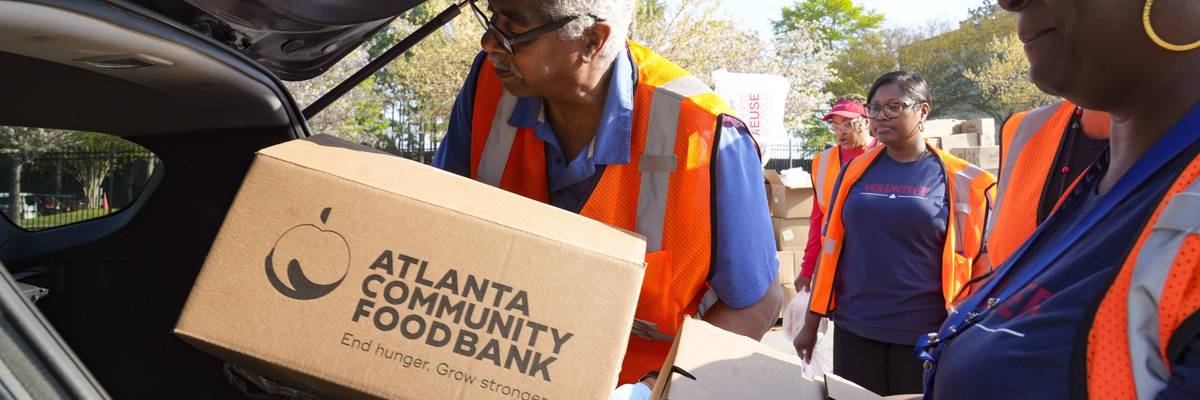
Volunteers help distribute food with the Atlanta Community Food Bank on March 27, 2026 in Atlanta, Georgia.
(Photo by Megan Varner/Getty Images)
Jake Johnson
Jun 24, 2026
COMMON DREAMS
Senate Republicans unveiled annual farm legislation this week that would do nothing to address the worsening nationwide hunger crisis spurred by President Donald Trump and the GOP’s unprecedented assault on federal food aid.
The draft bill introduced Tuesday by Sen. John Boozman (R-Ark.), the chairman of the Senate Agriculture Committee, omits a Democratic proposal to delay a provision of the 2025 Republican budget law that will require states to pay a share of Supplemental Nutrition Assistance Program (SNAP) benefits for the first time in the program’s history, while also increasing states’ share of administrative costs. State leaders have warned of massive budgetary impacts that could result in even deeper cuts to food aid—and potentially force states to withdraw from the SNAP program entirely.
Ty Jones Cox, vice president for food assistance at the Center on Budget and Policy Priorities (CBPP), said it was “unconscionable” for Republicans to do nothing in the face of large-scale loss of food aid—including among children—and a looming budgetary disaster for states across the country.
“The harm unfolding across the country is already far greater than many anticipated, with more than 4 million people losing SNAP through March,” Cox said in a statement Tuesday. “Even more people will lose the vital food assistance they need to afford groceries unless Congress immediately delays HR 1’s unprecedented shift of significant new SNAP costs to states.”
Without congressional action, the SNAP cost-shifting provision of the Republican budget law will take effect on October 1, 2027. Survey data released this month shows that nearly 30% of US state governments believe they could be forced to narrow SNAP eligibility to cope with the new costs, which are expected to average $218 million per state. Eleven percent of states “identified withdrawing from SNAP as a potential risk,” according to the poll conducted by the American Public Human Services Association.
Crystal FitzSimons, president of the Food Research & Action Center, said Tuesday that the Republican farm bill “ignores the needs of tens of millions of people, including families with children, older adults, people with disabilities, and veterans, who are finding it increasingly difficult to put food on the table.”
“By shifting program costs to states, expanding time limits, and putting a cap on future benefit adjustments, HR 1 has undermined SNAP, the stability of families, communities, and local economies, and weakened state budgets,” FitzSimons warned. “The SNAP benefit cost shift to states and increase in states’ administrative costs will force states to make impossible choices: reduce education funding, delay infrastructure investments, cut public health programs, constrain Medicaid spending, raise taxes, or reduce access to SNAP itself.”
Senate Republicans unveiled their farm legislation amid a growing hunger and affordability crisis that experts say is directly attributable to Trump-GOP policies, from blanket tariffs to the war on Iran to SNAP cuts that the new bill—like the House version—does nothing to reverse.
Survey data released Tuesday by the No Kid Hungry campaign found that 55% of low-income families with children have had to cut back on groceries recently to make ends meet. The poll also found that 90% of families surveyed reported that they “would have to cut back significantly on food” if they lost SNAP benefits.
“Rising prices are making it harder for families to afford basic necessities,” George Kelemen, senior vice president of the No Kid Hungry campaign, said in a statement. “That’s why SNAP’s grocery benefit, which helps feed about 40 million Americans including nearly 16 million children, is a vital support for helping them put food on the table.”
“This SNAP crisis is too dangerous to ignore,” Kelemen added. “Reasonable steps must be included in this farm bill to delay the cost-sharing until states have the time they need to implement all the complex changes handed to them.”
Over 800,000 Kids Thrown Off SNAP Since Passage of GOP’s Big Ugly Bill: Analysis
“Millions losing SNAP, including children, is an emergency that Congress needs to fix now, before more people are hurt.”
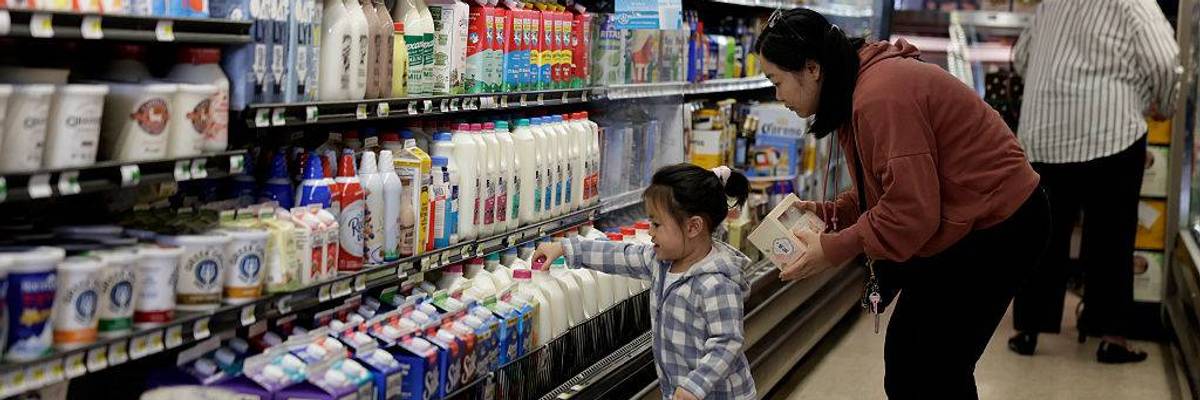
Customers shop at Handy Market on May 14, 2026 in Burbank, California.
(Photo by Justin Sullivan/Getty Images)
Brad Reed
Jun 23, 2026
COMMON DREAMS
An analysis updated Monday by the Center on Budget and Policy Priorities estimates that millions of people, including more than 800,000 children, have lost Supplemental Nutrition Assistance Program benefits since Republicans’ 2025 One Big Beautiful Bill Act took effect.
In total, CBPP estimates that “SNAP participation nationwide fell by more than 4 million people (10%) between the law’s July 2025 enactment and March 2026,” with declines “especially pronounced” in Arizona, which has seen enrollment fall by more than 50%.
CBPP finds that, in 13 states with available data, 808,000 children have stopped receiving SNAP assistance since July, which it notes “accounts for nearly half of the 1.7-million-person decline among people of all ages in those states.”
The number of people losing access to SNAP is projected to grow in the coming months given that the budget law’s biggest changes to the program won’t take effect until next year, writes CBPP.
“Starting in 2027, most states will have to pay between 5 and 15% of SNAP benefit costs, totaling hundreds of millions of dollars a year in many states,” explains CBPP. “And the amount a state will have to pay will be based on current error rates, factoring in errors that states are making today.”
These drastic funding changes “may incentivize states to take drastic measures to reduce their payment error rates quickly and cut program costs, even if it means delaying or improperly denying benefits to eligible people,” the center adds.
Katie Bergh, senior policy analyst at CBPP, commented that the latest data shows that the changes made in the GOP budget law appear “to be driving far greater harm than many anticipated,” as “states have raced to minimize their exposure to these massive new costs.”
“Many people who remain eligible for SNAP on paper—including kids—are losing the benefits they need,” Bergh emphasized. “Millions losing SNAP, including children, is an emergency that Congress needs to fix now, before more people are hurt.”
Tahra Hoops, director of economic analysis at Chamber of Progress, described the GOP’s SNAP cuts as “disastrous,” with “kids losing much needed food assistance thanks to policies that are cruel and ineffective.”
Hoops also provided historical context to the rapid drop in SNAP enrollment.
“The last time SNAP participation fell this sharply, this fast was after the 1996 welfare reform law,” Hoops explained. “That cut took 2.2 million people off food assistance over 8 months. We are already seeing almost twice the damage and the unemployment rate has remained flat.”
Policy analyst Michael Linden described the impact of the GOP’s budget law on the SNAP program as “the Memorial Reflecting Pool of keeping kids from going hungry,” a reference to President Donald Trump’s calamitous attempted renovation of the iconic pool located near the Lincoln Memorial in Washington, DC.
“Millions losing SNAP, including children, is an emergency that Congress needs to fix now, before more people are hurt.”
Customers shop at Handy Market on May 14, 2026 in Burbank, California.
(Photo by Justin Sullivan/Getty Images)
Brad Reed
Jun 23, 2026
COMMON DREAMS
An analysis updated Monday by the Center on Budget and Policy Priorities estimates that millions of people, including more than 800,000 children, have lost Supplemental Nutrition Assistance Program benefits since Republicans’ 2025 One Big Beautiful Bill Act took effect.
In total, CBPP estimates that “SNAP participation nationwide fell by more than 4 million people (10%) between the law’s July 2025 enactment and March 2026,” with declines “especially pronounced” in Arizona, which has seen enrollment fall by more than 50%.
CBPP finds that, in 13 states with available data, 808,000 children have stopped receiving SNAP assistance since July, which it notes “accounts for nearly half of the 1.7-million-person decline among people of all ages in those states.”
The number of people losing access to SNAP is projected to grow in the coming months given that the budget law’s biggest changes to the program won’t take effect until next year, writes CBPP.
“Starting in 2027, most states will have to pay between 5 and 15% of SNAP benefit costs, totaling hundreds of millions of dollars a year in many states,” explains CBPP. “And the amount a state will have to pay will be based on current error rates, factoring in errors that states are making today.”
These drastic funding changes “may incentivize states to take drastic measures to reduce their payment error rates quickly and cut program costs, even if it means delaying or improperly denying benefits to eligible people,” the center adds.
Katie Bergh, senior policy analyst at CBPP, commented that the latest data shows that the changes made in the GOP budget law appear “to be driving far greater harm than many anticipated,” as “states have raced to minimize their exposure to these massive new costs.”
“Many people who remain eligible for SNAP on paper—including kids—are losing the benefits they need,” Bergh emphasized. “Millions losing SNAP, including children, is an emergency that Congress needs to fix now, before more people are hurt.”
Tahra Hoops, director of economic analysis at Chamber of Progress, described the GOP’s SNAP cuts as “disastrous,” with “kids losing much needed food assistance thanks to policies that are cruel and ineffective.”
Hoops also provided historical context to the rapid drop in SNAP enrollment.
“The last time SNAP participation fell this sharply, this fast was after the 1996 welfare reform law,” Hoops explained. “That cut took 2.2 million people off food assistance over 8 months. We are already seeing almost twice the damage and the unemployment rate has remained flat.”
Policy analyst Michael Linden described the impact of the GOP’s budget law on the SNAP program as “the Memorial Reflecting Pool of keeping kids from going hungry,” a reference to President Donald Trump’s calamitous attempted renovation of the iconic pool located near the Lincoln Memorial in Washington, DC.
Trump's Big Beautiful Bill is leaving low-income Americans starving: 'I weigh 102 pounds'
Alexander Willis
June 27, 2026
Alexander Willis
June 27, 2026
RAW STORY
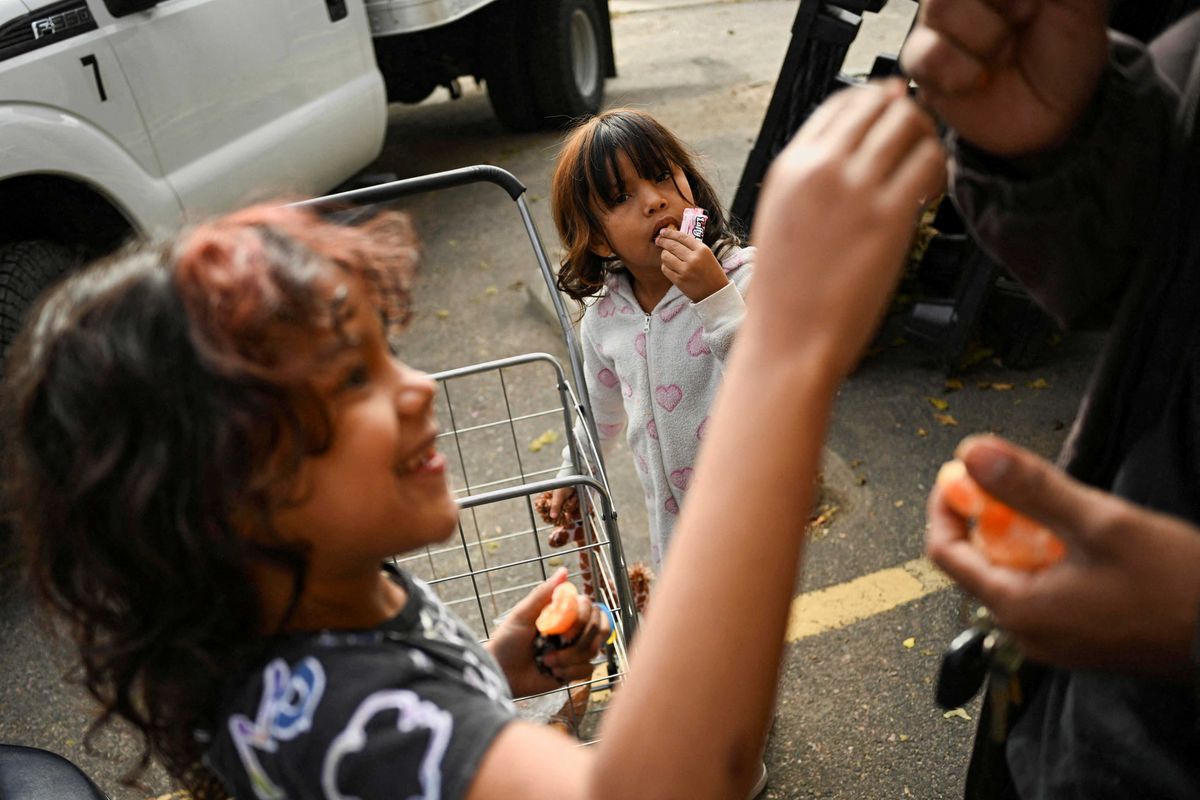
Frank Pacheco hands slices of clementine oranges to sisters Mikreyliz Diaz, 5, and Ysmaelin Urbina, 7, while loading food into their car outside the Denver Inner City Ministry food pantry, weeks into the continuing U.S. government shutdown, in Denver, Colorado, U.S. November 1, 2025. REUTERS/Mark Makela
Nearly one year after the passage of President Donald Trump’s One Big Beautiful Bill Act (OBBBA), close to 5 million fewer Americans received federal food assistance in March when compared with the previous year, leaving an untold number of people scrambling, The Hill reported Saturday.
Sheila Boyd, an 81-year-old New York resident, was among those who did not get booted off the Supplemental Nutrition Assistance Program (SNAP) but did have her benefits significantly reduced under the OBBBA’s stricter work requirements and fewer exceptions. She previously received $298 a month, she told Nexstar’s WPIX, but abruptly had her benefits slashed to $24 a month.
“I can’t buy nutritious food. Who lives on $24 a month?” Boyd told Nexstar’s WPIX. “I need more money to eat.”
Boyd said that she often skips meals and largely relies on donations to eat. She added that she had lost weight since her federal food assistance was gutted.
“I weigh 102 pounds. I’m trying to sell things… like jewelry. My whole lifestyle is different now,” Boyd said. “I spend most of my day trying to find a way to get money to sell things. You know you work hard all your life… it’s a slap in the face. I think it’s unforgivable.”
Tax cut extensions enjoyed primarily by the wealthy were the chief achievement of the OBBBA, funded largely by significant cuts to social safety net programs like SNAP and Medicaid. The cuts are projected to boot as many as 22.3 million Americans off of SNAP over a decade, and “at least” 10.5 million off of Medicaid by 2034.
Frank Pacheco hands slices of clementine oranges to sisters Mikreyliz Diaz, 5, and Ysmaelin Urbina, 7, while loading food into their car outside the Denver Inner City Ministry food pantry, weeks into the continuing U.S. government shutdown, in Denver, Colorado, U.S. November 1, 2025. REUTERS/Mark Makela
Nearly one year after the passage of President Donald Trump’s One Big Beautiful Bill Act (OBBBA), close to 5 million fewer Americans received federal food assistance in March when compared with the previous year, leaving an untold number of people scrambling, The Hill reported Saturday.
Sheila Boyd, an 81-year-old New York resident, was among those who did not get booted off the Supplemental Nutrition Assistance Program (SNAP) but did have her benefits significantly reduced under the OBBBA’s stricter work requirements and fewer exceptions. She previously received $298 a month, she told Nexstar’s WPIX, but abruptly had her benefits slashed to $24 a month.
“I can’t buy nutritious food. Who lives on $24 a month?” Boyd told Nexstar’s WPIX. “I need more money to eat.”
Boyd said that she often skips meals and largely relies on donations to eat. She added that she had lost weight since her federal food assistance was gutted.
“I weigh 102 pounds. I’m trying to sell things… like jewelry. My whole lifestyle is different now,” Boyd said. “I spend most of my day trying to find a way to get money to sell things. You know you work hard all your life… it’s a slap in the face. I think it’s unforgivable.”
Tax cut extensions enjoyed primarily by the wealthy were the chief achievement of the OBBBA, funded largely by significant cuts to social safety net programs like SNAP and Medicaid. The cuts are projected to boot as many as 22.3 million Americans off of SNAP over a decade, and “at least” 10.5 million off of Medicaid by 2034.

No comments:
Post a Comment