Tuesday, July 07, 2026


Market Outlook: Canada’s World Cup run could leave a lasting sports legacy


Published:


Canada’s run to the Round of 16 at the World Cup has intensified discussion about whether the tournament can deliver lasting economic and social benefits. As Canada hosts World Cup matches and interest in soccer reaches new highs, attention is shifting to the long-term legacy of investments in sport.

BNN Bloomberg spoke with Adam van Koeverden, secretary of state for sport of Canada, about how World Cup-related investments could strengthen local economies, increase participation in sport and create lasting benefits for communities and businesses.

Key Takeaways

  • Governments expect World Cup-related investments to generate economic activity through tourism, infrastructure and local business spending.
  • Officials say the tournament’s legacy will be measured through long-term participation in sport, economic data and community outcomes.
  • Investments in sports infrastructure are intended to support future sporting events, conventions and community use beyond the World Cup.
  • Increased youth participation in sport is expected to deliver broader economic and social benefits, including improvements in health and workforce development.
  • Canada aims to build on World Cup momentum by attracting more national and international sporting events.
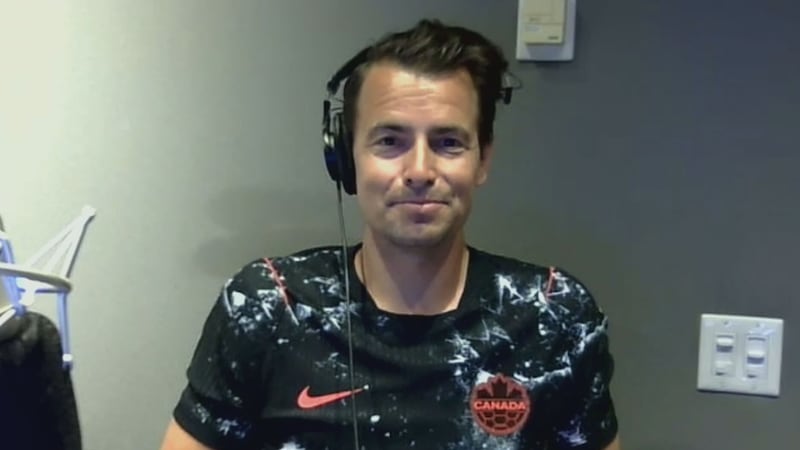
Adam van Koeverden, secretary of state for sport of Canada

Read the full transcript below:

ROGER: Oh, love it! And with that, Canada advances to the Round of 16 in the World Cup, facing Morocco tomorrow. It’s further than the team has ever gone in the tournament, marking a turning point in Canada’s soccer history, with millions being invested in Canada, hosting a handful of World Cup games. Soccer can become one of the country’s most profitable sports, or more profitable. Here to discuss this more is Adam van Koeverden, secretary of state for sport of Canada. Adam, thank you very much for joining us today.

ADAM: Thanks for having me on.

ROGER: Okay, we’re going to get into the money and the benefits of all this. What did you think of the game?

ADAM: It wasn’t, it was amazing. A lot of, I learned a lot about the rules, you know. I played soccer when I was a kid, and I thought I knew what offside meant. I guess if you’re also an NFL fan, and you know that, like, you know, it matters where your feet are, if you’re in or out. We learned a little bit about what offside means, and, and all the rules and the technicalities. I also learned that the Canadian Premier League is testing a new rule, like an offside daylight rule, so it’s actually looking at how modifying that rule will impact the game a little bit. So, another Canadian innovation in sport.

ROGER: All right, just as we start to understand offside, we’re going to change it again. Okay, let’s talk about the benefits. I know a lot of people are looking at the price tag, questioning it. Where are we going to see that money go?

ADAM: Well, every dollar that every level of government invested in making sure that we were prepared to host this amazing World Cup tournament has been invested directly back into the Canadian economy, whether that is through one of the 24,000 jobs that it’s created and maintained or, you know, built new infrastructure for young people, for high-performance athletes, for future trade shows and conventions. As we’ve seen at BC Place, BC Place is now more accessible. We’ve doubled the number of elevators. We’ve also added a convention space that’ll be great for things in addition to, but other than sport. But we’re also building 25 mini pitches, you know, there was a recent article that I read about how we’ve got everything that we need to continue to be a higher-participating nation, a better sport nation, to have sport contribute more to our GDP and economy, except for the infrastructure, so it’s a big part of our plan to build more, to invest more into sports, that we get more out of it. It’s also relevant, I know this is a business show, to talk about the knock-on effects of $1 invested into sport, in terms of the social value, the impact on our health and our mental health, and, and how vibrant our communities are. We’ve seen that over the last five or six weeks that $1 invested in sport goes a really, really long way into improving the lives of kids. I was in the stands yesterday with six young people who got to be flag-bearers, they’re part of the Milton Magic Soccer Club in my riding, and the look on those kids’ faces after they got off the pitch, and, like, you know, we’re in the vicinity of Cristiano Ronaldo, they had their soccer scarves on, and they could not wait to get back onto the field. So we want to inspire lifelong love and affinity for sport, physical activity and recreation, because that’ll also downstream save costs on things like health care, public safety, and some of the, you know, tougher things that are harder challenges to focus on as a government.

GRANT: Adam, it’s a pleasure chatting with you. I remember watching you at the Olympics a number of years ago, so really, really nice to see you. You know, there’s obviously a lot of great momentum. I was downtown last night in Toronto, and saw all the Portuguese fans going absolutely bonkers. There’s a lot of momentum being built, like you’re talking about. How do we in Canada keep that going beyond what’s the beyond the World Cup? Like you’re talking about all these great knock-on events. How do we keep that momentum going? What do you think is the best thing that we can do here?

ADAM: Well, that’s a great question. We’ve just invested $755 million into sport to emphasize the value that it plays in our society, but also to support our national sport organizations in hosting more of these types of events. Now, look, the 2026 FIFA men’s World Cup is not only the biggest event of the year, it’s also the biggest World Cup ever, so it may be the biggest sporting event ever in the history of planet Earth, so when I say we need to do more hosting, I mean large and medium-sized events, like later this year in Montreal, we’re hosting the World Cycling Championships, a massive event that’s also highlighting the 50th anniversary of the 1976 Montreal Olympics being hosted here on home soil in Canada. We need more of these types of hosting events, we need to diversify our portfolio of options. You know, I will reference the Northern Super League, for example, Canada’s first-ever domestic professional women’s soccer league, and various clubs. They’re working to expand, and what I would love to see is more kids and families out at all of those games. It’s a different vibe, you know. It’s similar to the PWHL, like it’s a really, like, warm, welcoming, fun family environment that’s frankly different than the sort of Bay Street crowd that maybe you might encounter at a Leafs game, and we all need to participate, right, carving out time in our week to do more recreation, be more physically active, volunteer when we can, if we have time and contribute where we can, because other nations are maximizing and leveraging the impacts that sport, physical activity and recreation have, not just on our economy, but also on the social fabric and the quality of life that we all enjoy, and it’s working out. So I’m grateful for the enthusiasm that the FIFA 2026 men’s World Cup has brought to both Toronto and Vancouver, who I will say, according to Sports Illustrated, ranked first and third out of 16 host cities across North America. That’s something we should be very proud of.

ROGER: They’ve had some great rigs. I just want to jump in, and some of those Bay Street guys love that ROI. How are you gauging with the money spent, the investment you’re putting in? How do you tell when you’re... how do we know if we’re getting good return on this money?

ADAM: By measuring things you know as well as anybody that, you know, you can’t change, you can’t impact what you don’t measure. So we’re going to rely on all the organizations like Sport Tourism Canada, Statistics Canada, the business bureaus, the business improvement areas, the chambers of commerce to tell us what the impact was. Anecdotally, I chatted with some shop owners in Vancouver the other day, who told me they did a month’s worth of business in two days. I’ve never seen Granville Street like that. I’ve never seen Strathcona the way that I have in the last couple of days. This has brought such a level of enthusiasm. So many people have travelled to Toronto, whether they’re travelling from Markham or travelling from Strasbourg. It has been a hot spot, you know. Canada has been in the spotlight, and Toronto and Vancouver have definitely been highlight cities for the entire tournament across North America, and we will continue to measure the impacts this has had, building on the anecdotal evidence that we’ve heard from businesses across the country that this has been positive, but we also know it’s going to have a long tail, because as kids say, I want to play soccer, you know. As I was walking into this studio, I walked by a big mural of Vince Carter, and I think about the Carter effect all the time in the late ’90s when Vince Carter came to Toronto and really ignited a love for basketball in Toronto and right across our, our entire country. I think Alphonso Davies, Richie Laryea, you know, Stephen Eustáquio, they’ve all done the same thing for Canadian kids, so I think the impact, both in terms of legacy, economically and socially, can have a long tail.

ROGER: We’ll give last question to Grant.

GRANT: Yeah, Adam, you know, I think this is just anecdotal, I don’t have any, any stats behind this, but I think that people are really starving for community. We see that back home, where I’m from, in Winnipeg, where companies like True North Sports that own the Jets have done a really good job of trying to bring community together again, to bring them to the rink. I’m just curious, like we’re seeing a lot of that community right now. How do you measure, how do you help actually the local, like sports federations or the local sports associations to continue to do that after this, and, and again, going back to the ROI, what does that mean for businesses in these places going forward?

ADAM: Fantastic question. Grant, great to hear that you’re from Winnipeg. On my way home from Vancouver, I stopped off in Winnipeg to visit the Winnipeg Aboriginal Sport and Recreation Association camps, an organization that we fund. I went to a skate park, you know, enjoyed, they have a swimming pool, they do all this great recreation stuff. It’s youth-led, and those are the types of activities that, like, literally change lives on the ground in community at the grassroots, right? So, we want to see more of that. The $755 million that we’ve just invested into sport goes directly to those types of initiatives led by national sport organizations and groups like the Canadian Parks and Recreation Association, Canadian Tire Jumpstart, and KidSport, and all the wonderful groups and organizations across our country that create these opportunities for youth. Those opportunities are jobs like young people employed for the summer, getting prepared to go to college or university in the fall, meeting people, learning new skills. That is success, like that is future GDP, if you want to put it in that context, but it’s also just health, mental health, like quality of life, feeling like you’re contributing, feeling like you’re part of a team, like learning how to coach and be coached. These are fundamental life skills for whether you’re looking for a job or, you know, you’re looking to start a new business. Sport also teaches us to take risks, and from an economic and business perspective we know that’s fundamental as well, so all of the community sport organizations across the country are going to feel a sense of urgency over the coming weeks, whether, you know, we’re talking about field hockey, soccer or cross-country skiing, people are going to be invigorated, and all of those NSOs and community sport organizations are going to have to go, okay. We’re going to welcome everybody in. We have to have a strategy to increase the our ability to bring people in, to welcome them, and to ensure that we can all benefit from sport going forward.

ROGER: Okay, we have to wrap it up there. But thank you very much for joining us this morning. We appreciate it.

ADAM: Thank you, guys. Anytime, go Canada, go.

ROGER: You got it. Adam van Koeverden is secretary of state for sport of Canada.

---

This BNN Bloomberg summary and transcript of the July 3, 2026 interview with Adam van Koeverden are published with the assistance of AI. Original research, interview questions and added context was created by BNN Bloomberg journalists. An editor also reviewed this material before it was published to ensure its accuracy and adherence with BNN Bloomberg editorial policies and standards.

Who are the partners behind a proposed new West Coast oil pipeline?


Published:

Alberta’s pitch to the major projects office for a new oil pipeline to the West Coast is being billed as a public-private partnership, though its current structure skews almost entirely toward the public end of the spectrum.

Ninety per cent of the proposal would be in the hands of provincial and federal Crown corporations — at least in the beginning. Energy infrastructure company Pembina Pipeline Corp. would be a minority partner.

Here is a rundown of what each entity does and what they bring to the table:

Trans Mountain Corp.

The new pipeline would have a familiar builder and route. It would largely follow the path of the existing Trans Mountain pipeline that runs from the Edmonton area to the B.C. Lower Mainland. Trans Mountain Corp., a federal Crown corporation, would be its developer, builder and operator.

The Trans Mountain pipeline has been delivering Alberta crude to southwestern B.C. since the 1950s. Its former owner, U.S. company Kinder Morgan, proposed an expansion in 2012 to almost triple its capacity to 890,000 barrels per day. As costs ballooned and the project got snarled in court delays, Kinder Morgan walked away. The federal government bought the pipeline for $4.5 billion in 2018 to see the expansion through to completion. The project ended up costing $34 billion, a stark increase from its 2017 estimate of $7.4 billion.

Trans Mountain is a subsidiary of the Canada Development Investment Corp., which answers to Parliament.

The Trans Mountain expansion started up in May 2024, and is now operating at full capacity. Since that time, the corporation has returned $2.2 billion to its owner, the Canadian government, in the form of interest and dividends. The price oilsands producers receive for their heavy crude has also risen as their product is now able to now reach Asian markets in meaningful volumes.

Plans are underway to further expand Trans Mountain to almost 1.2 million barrels per day through additional pump stations, chemical additives and some new pipe.

The proposal before the major projects office would “integrate really well with our legacy pipeline,” Trans Mountain chief executive Mark Maki said.

“Same corridor, you can use some of the same people, the same systems,” he said. “All of the stuff that we have already built becomes very, very useful to the new pipeline.”

Alberta Petroleum Marketing Commission

The commission is the “business arm” of Alberta’s energy department, said Richard Masson, a former head of the provincial Crown corporation. A stake in a new pipeline falls within its mandate to “try to do things that are in the interest of Albertans as the owner of the resource,” he said.

The APMC has a history of committing barrels to early-stage pipeline projects, like the Trans Mountain expansion and Enbridge’s Line 9 revamp in Ontario and Quebec several years ago. It also committed volumes to the defunct cross-Canada Energy East proposal put forward by TransCanada Corp., now TC Energy.

Up until now, APMC’s biggest and most complicated investment was a deal to supply bitumen to a refinery north of Edmonton.

“This is a big step. There’s no question about it,” Masson said of the West Coast pipeline plan. “APMC has never done anything like this before.”

Pembina Pipeline

Pembina’s core business is natural gas gathering, processing and transport in Western Canada. It is also constructing the Cedar liquefied natural gas plant and export terminal in northern B.C. alongside the Haisla Nation.

Pembina brings “capital discipline” and “operating expertise” to the pipeline partnership, Prime Minister Mark Carney said Thursday.

“And that enriches it.”

In 2021, Pembina formed a 50-50 partnership with a coalition of First Nations and Métis communities to buy Trans Mountain, though the federal government has signalled it has no plans to put the asset up for sale any time soon.

In the meantime, under a “non-binding heads of agreement,” Pembina is to hold a 10 per cent interest in the new West Coast project during construction with the opportunity to double its stake once the pipeline starts up. It said its role would be “complementing, rather than replacing” Trans Mountain as the project’s lead partner.

“The project represents a once-in-a-generation opportunity to advance nation-building energy infrastructure that strengthens Canada’s economy and expands access to global markets for Canadian energy,” said Scott Burrows, Pembina’s chief executive.

“Our participation will be evaluated through the same disciplined lens we apply to every capital decision. We have approached our involvement in a way that is measured, that preserves our financial flexibility and that incorporates meaningful protections — so that any participation remains consistent with our financial guardrails and creates durable value for our shareholders.”

There is one area where Pembina’s established core business would intersect with a new bitumen pipeline, Masson noted. In order for thick, tarry bitumen to flow through pipelines, it needs to be diluted with liquids that come as a byproduct of natural gas production.

Pembina has plants where the liquids — often referred to as condensate or diluent — are separated out of the gas that comes out of the ground. With all of the oilsands pipeline expansion on the books, the sector is short on those liquids, Masson said.

“If we’re going to do all this, we have to more than double the amount of diluent produced in Canada, which is huge.”

Indigenous partners

The Alberta government says Indigenous equity partnership and consultation will be an “essential part” of the project, with the provincial and federal governments both saying they will “facilitate opportunities” for communities to invest through their respective Indigenous loan agencies. But Masson doesn’t see Indigenous groups coming on board until the pipeline starts generating steady cash flow.

This report by The Canadian Press was first published July 3, 2026.

Companies in this story: (TSX:PPL)

Lauren Krugel, The Canadian Press

Ottawa won’t say if PM Carney will raise human rights with Saudi crown prince


Updated:


Prime Minister Mark Carney will meet next week with Saudi Crown Prince Mohammed bin Salman, the kingdom’s de facto ruler, but federal officials would not say whether the prime minister plans to raise human rights concerns during the visit.

At a background briefing ahead of the trip, officials would only point to Carney’s past comments on the issue.

“The Prime Minister has been clear that we must be able to address these areas of disagreement without destabilizing opportunities for co-operation,” one official said. “He’s been clear that engagement does not equal endorsement.”

Canada and Saudi Arabia have gradually normalized relations since 2023 after a five-year diplomatic rift triggered by the Trudeau government’s criticism of the kingdom’s human rights record.

In 2018, then-foreign affairs minister Chrystia Freeland called on Saudi Arabia through social media posts to immediately release jailed human rights activists, including Samar Badawi, who had campaigned against the kingdom’s former male guardianship system. Badawi was released from prison in 2021.

Saudi Arabia condemned Freeland’s comments as interference in its domestic affairs, expelled Canada’s ambassador from Riyadh and ordered thousands of Saudi students studying in Canada to transfer elsewhere.

Some analysts support Ottawa’s renewed engagement with Saudi Arabia, viewing the trip — the first by a Canadian prime minister in 26 years — as an opportunity to strengthen ties with a key partner in the Persian Gulf.

Dennis Horak, the Canadian diplomat who was thrown out of Saudi Arabia because of the dispute in 2018, calls the warming of relations long overdue.

“We’re going to have problems with countries, we’re going to have issues, we’re going to have challenges, no question about it,” Horak told CTV News. “But we can’t just ignore every country that has a human rights problem, because it would limit our relationships to a pretty small number of countries these days.”

Horak also said there are ways to raise human rights concerns, without doing it publicly or on social media, like former minister Freeland did. Horak suggests there is an opening for Canada in the various reforms the crown prince has introduced in Saudi Arabia.

“These reforms are really encouraging. What are your plans going forward? That sort of a dialog, I think, is something that that would be constructed, I think would be not badly received in Saudi Arabia either, and it allows (Carney) to touch on those issues, but there’s a real important fish to fry on the economic front for Canada.”

Analysts agree it’s an ‘important trip’

“It’s a very important trip in terms of the diversification of Canada’s relationships around the world,” said Arif Lalani, former Canadian ambassador to UAE.

“I think Canada’s diplomacy on human rights in Saudi Arabia in the past has been very badly executed. We have human rights problems with countries and allies around the world, and we’ve been able to do more than one thing at once. More than ever, Canada needs to be able to have complicated and complex relationships.”

Human rights organizations, however, are urging Carney to raise concerns about political prisoners and civil liberties directly with Saudi leaders during the visit.


Graham Richardson

Opens in new window

Ottawa Bureau Chief, CTV National News


CAPITAL FLIGHT

Many Canadian manufacturers eyeing U.S. move as trade tensions take a toll: KPMG


Published:


A new survey shows trade tensions have some Canadian manufacturers deciding to move production south of the border or delay capital investments.

KPMG Canada said on Tuesday that 42 per cent of Canadian manufacturing companies indicated they have or are considering moving production to the United States. Of those considering relocating, 77 per cent expect to make the transition within the next two years.

Anamika Gadia, partner and national leader of industrial markets at KPMG Canada, said domestic manufacturers have shown resilience over the last year, “but resilience certainly has its limits.”

“Our survey clearly shows that while companies have been making short-term decisions to adapt to tariffs and trade uncertainty, they’re now moving toward making longer-term investment decisions,” she said in an interview.

“In other words, they’re not waiting to see what might happen with the trade situation, including the CUSMA discussions and they’re moving to make longer-term investment decisions, including investment decisions that see them shifting their production to the U.S.”

Results for the survey were taken from business owners, executives and decision-makers at 275 Canadian manufacturing companies between May 11 and May 29, using Angus Reid’s business research panel.

Last week, United States Trade Representative Jamieson Greer said the U.S. is not renewing the Canada-U.S.-Mexico Agreement “in its current form” — but the trade agreement will remain in place as negotiations continue.

The decision triggers a rolling annual review for up to a decade, at which point it will expire if an extension isn’t agreed upon. CUSMA remains in place unless one of the partner countries gives six months’ notice that it is pulling out.

The trade agreement has shielded Canada from many of U.S. President Donald Trump’s tariffs, but the country is being affected by separate sectoral tariffs on industries like steel, aluminum, automobiles and cabinetry.

Gadia said the issues go beyond the trade situation though, with Canada needing to create a competitive environment for manufacturers to grow.

“This survey clearly shows that manufacturers need to feel more comfortable and see some action from the government in order to continue to produce and invest and grow in Canada,” she said.

“Some of the key factors that companies have cited are more certainty around interprovincial trade barriers, they need more tariff certainty, they want to see lower corporate taxes, they want better access to capital and cheaper energy.”

The survey also found 57 per cent of manufacturing firms have paused, reduced or cancelled capital investment projects. Thirty-six per cent said they have scaled back investments, 12 per cent have paused their plans and nine per cent have cancelled planned spending.

Gadia said delays in capital investments may be a signal that those investment dollars are going to be redeployed into the U.S.

The survey showed 80 per cent of manufacturers were planning to maintain their Canadian headquarters, but 11 per cent were planning to move their head office to the U.S. within the next five years.

A loss of that size could meaningfully impact Canada’s gross domestic product, KPMG Canada said.

According to figures from the federal government, the manufacturing sector represents about 10 per cent of Canada’s overall GDP.

This report by The Canadian Press was first published July 7, 2026.

Daniel Johnson, The Canadian Press