Saturday, July 11, 2026


Australian Dockers Push Back on Automation and AI on the Waterfront
ITV
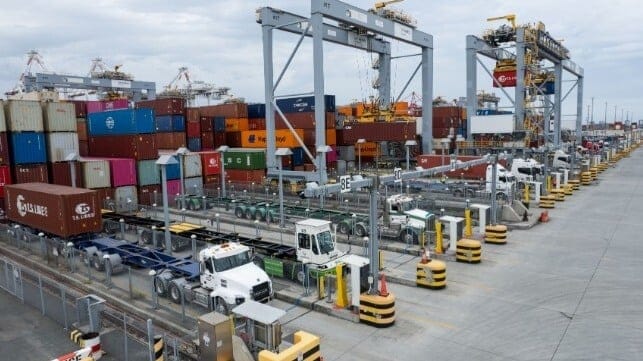
Internal transfer vehicle (ITV) fleet trucks at DP World's Brisbane terminal (Press handout image courtesy DP World)

Published Jul 7, 2026 10:45 PM by The Maritime Executive

Docker jobs throughout the developed world are a natural target for automation, and longshore unions put the fight against automated cranes, RTGs and yard vehicles at the very top of the priority list for collective bargaining. They have legitimate cause for concern: newly-built box terminals like Shanghai Yangshan or Maasvlakte II have more robots and fewer people. Now one union is reframing that longtime threat in a new way, coupling the old fear of industrial automation to the new fear of AI, which could pose a threat to white-collar jobs.

"Foreign-owned ports operator DP World is planning to replace skilled Australian workers with AI and automation — without public consent, without proper rules, and without government oversight. If they get away with it here, your job is next," the Maritime Union of Australia (MUA) argues in a new public ad campaign. 

The MUA, one of the world's most vocal dockers' unions, is fighting a long-running battle against plans to roll out automated trucks at DP World's four container facilities in the country. The union says that DP World is engaged in an "AI automation program that could threaten up to a thousand jobs," about 60 percent of the docker workforce.

In a report prepared with MUA, the pro-union tax justice group CICTAR lays out a case that more automation would be worse for Australia. CICTAR says that DP World's Australian revenues have gone up since 2019, driven by rising landside charges per container lift, but the wage share of that revenue has fallen: dockers used to earn about half of all dollars that came through the gate, but they now earn about one third. 

The report argues that the same thing would happen with more automation in the terminal. In CICTAR's account, there would be fewer workers, but service charges would remain the same, leaving a larger profit margin for the operator. Depreciation on the cost of the automated equipment could also lower the company's tax bill over a period of years, the report argues. 

The changes may not be limited to the yard. The MUA says that DP World Australia is also testing out a new AI software program to "revolutionize employee management," using an algorithm to make dockers' work scheduling decisions - a task normally performed by administrative staff. 

The union is calling for a 28-hour workweek with no loss of pay for members who would see their jobs put at risk by automation. It has also launched an advertising campaign calling on all Australians to push their government for controls on how AI is used in the workplace. By law, it cannot go on strike until the expiration of its current contract in 2028 - but a change in the law could give it freedom of action. 

"The Australian government must make urgent changes to the Fair Work Act to allow workers a genuine voice to effectively bargain how new technologies are introduced to Australian workplaces and introduce urgent safeguards on the use of AI. The government must also explicitly support workers seeking to share the productivity benefits from AI through bargaining," CICTAR concluded in its report for the MUA.


 

US to Pay Anchorage $180M to Settle Long-Running Port of Alaska Litigation

Anchorage Alaska
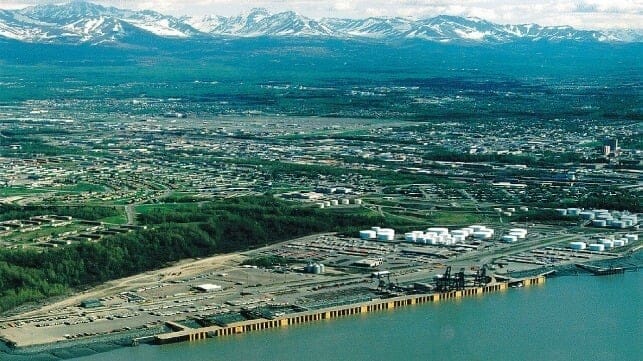
Federal government and Anchorage settled a long-running legal dispute over the modernization of the port (file photo)

Published Jul 8, 2026 5:17 PM by The Maritime Executive


The United States and Municipality of Anchorage, Alaska, reached a settlement agreement to conclude more than a decade of litigation related to the upgrades to the Don Young Port of Alaska expansion project. The municipality sued over failed efforts led by the Maritime Administration for the port’s modernization.

Under the terms of the settlement, the United States will pay Anchorage $180 million to conclude the litigation for the alleged fault in the incomplete port expansion project. While the amount is about half what the municipality had sought, officials said it roughly equals the value of the initial project. Anchorage's mayor called it a "massive victory."

In addition to the $180 million, the municipality had won an additional $11.3 million in a 2024 ruling, which will also be paid. The state and federal governments have also committed to providing a further $86.5 million.

Anchorage and the federal government first agreed in 2003 to begin improvements on the port, with further agreements in 2011. The project, however, was found to be faulty in 2010 when damage was discovered with the installed sheet piles, which led to failures at the port. A subcontractor also alleged they were not properly reimbursed.

Alaska’s primary inbound-cargo port, the operation in Anchorage, handles containers, liquid bulk, dry bulk, break bulk, and cruise ships. It handled 5.5 million tons of fuel and freight in 2025, about half of which was delivered to final destinations outside of Anchorage – statewide, including Southeast.

“Reaching this fair and reasonable resolution allows both parties to move beyond many years of litigation and instead focus on what matters most: modernizing and beautifying the Port of Alaska, while lowering costs for consumers,” said Acting Attorney General Todd Blanche.

The modernization project calls for replacing two cargo docks as well as the terminal used for offloading fuel and cement. It will replace the current corroding terminals with larger facilities that also adhere to seismic design standards for the area that is prone to earthquakes. 

After years of delay and the earlier failures, the project is now expected to be completed in 2035. Construction for the new terminal one began at the end of June and is scheduled to be completed in 2029. Construction on the second terminal will begin in 2029 with a target completion date of 2032. The estimated price tag for the project is now set at $2.75 billion. 


Ukraine Raises Tanker Tally to 35 Struck in 96 Hours

drone attacking tanker
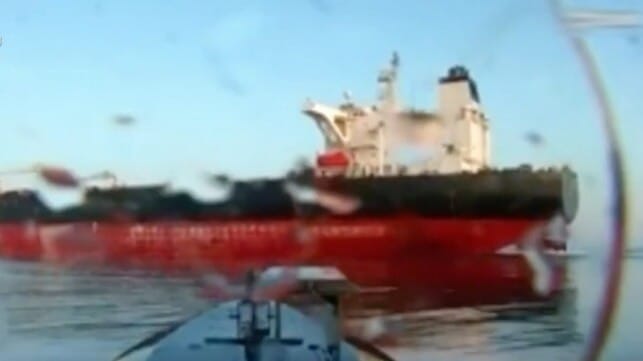
Ukrainian Sea Baby targeting a sanctioned tanker in the Black Sea (SSA)

Published Jul 9, 2026 1:01 PM by The Maritime Executive


Ukraine is continuing its fierce pace of drone attacks, reporting it has now struck a total of 35 vessels in the Sea of Azov over 96 hours. It is part of a broader campaign targeting occupied Crimea and southern portions of the country.

While most of the targets have been smaller vessels in the Sea of Azov, the reports are citing two large tankers also stuck in the Black Sea. Greece’s Yasa Tankers confirmed that their vessel Yasa Polaris (158,200 dwt) was struck on July 7 while operating under charter to Chevron. The vessel was near the Caspian Pipeline Consortium terminal in the Black Sea. The company told Reuters the tanker was empty and that the crew was uninjured. It said the damage was minor. 


(Sea Baby attacking the tanker Blue on July 8)


The Security Service of Ukraine also reported an attack on a tanker named Blue (165,293 dwt). The vessel’s AIS signal last showed it in the center of the Black Sea, although it was transmitting that it was bound for Constanta, Romania. The vessel is Turkish-managed and has been sanctioned by both the EU and the UK. It is reported to be registered in Cameroon, but last year it falsely claimed flags in both Timor-Leste and Benin. Ukraine is saying the vessel sustained “significant damage” from one of its Sea Baby marine drones.

The overnight strikes in the Sea of Azov reportedly hit an additional 12 tankers, a dry cargo ship, and a tugboat. Commanders posted a list of the vessel names showing some repeats. It also listed off five dry cargo ships among the tally. They reported one tugboat and previously said one ferry was also hit.


(Ukraine said 12 more tankers were hit in the Sea of Azov overnight, raising the tally to 35 vessels)


In total, Ukraine claimed attacks on 45 military targets overnight. It said that two oil terminals had also been struck, as well as an ammunition depot and communications towers. It said the terminals were being used to transship petroleum products for export and to supply Russian forces. Unconfirmed media reports are also saying that Russian air defense positions in Crimea had been struck and were on fire.

Earlier reports this week had already indicated that Crimea was experiencing fuel rationing and rolling blackouts. Ukrainian officials said they were working to disrupt the Russian energy sector. President Volodymyr Zelensky had said they were launching a 40-day offensive, widely targeting energy in an effort to bring the war to an end.

Russia reportedly concentrated its most recent attacks on the region around Mykolaiv. Reports said the transportation infrastructure was heavily damaged, as well as a warehouse and multiple civilian buildings.


IEA Cuts Russia's Oil Production Forecast Due to Ukrainian Attacks

Russia's oil production in 2026 and 2027 is set to be lower than previously expected, due to intensified Ukrainian drone attacks on Russia's energy infrastructure, the International Energy Agency said in its monthly oil market report on Friday.

Russia produced on average 9.2 million barrels per day (bpd) in 2025. The forecasts for this year and next, however, has been downgraded from previous projections as Ukraine continues to inflict damage on Russia's storage, refining, and transportation assets.

“Continued strikes on refineries, storage facilities and transport infrastructure underpin a weaker production outlook and we have accordingly cut our Russian supply outlook for this year and next, by 85,000 barrels per day and 150,000 bpd respectively, to average 8.8 million bpd over the forecast period,” the IEA said.

For 2026, the oil supply forecast was cut by 85,000 bpd to 8.9 million, and the 2027 forecast was revised down by nearly twice this year's downgrade, 150,000 bpd, to 8.8 million.

According to the IEA's estimates on OPEC+ supply, Russia's crude oil production increased to 8.86 million bpd in June from 8.74 million bpd in May. However, the crude production in June was 910,000 bpd below Russia's implied OPEC+ target of 9.76 million bpd, the IEA's figures showed.

But Russia has increased its crude oil exports in recent months as the Ukrainian campaign to cripple its refineries has led to a domestic fuel crisis and a surge in shipments because domestic storage capacity is very limited.

Ukraine has now expanded its offensive to cripple supply in Russia by targeting fuel supply routes and vessels, alongside a persistent campaign to hit Russian refineries and force them out of operation.

Even Russian President Vladimir Putin acknowledged two weeks ago there is a problem with fuel supply after regional authorities had tried to downplay the issue for weeks.

Two weeks ago, Putin said that following the temporary ban on exports of gasoline and jet fuel, “We are considering a full ban on exports of diesel fuels.”

The ban on diesel exports is now a fact, as of Wednesday, amid the incessant Ukrainian campaign to slash fuel supply in Russia.

By Michael Ker for Oilprice.com


Germany's Navy is On Track to Put Laser Weapon in Series Production

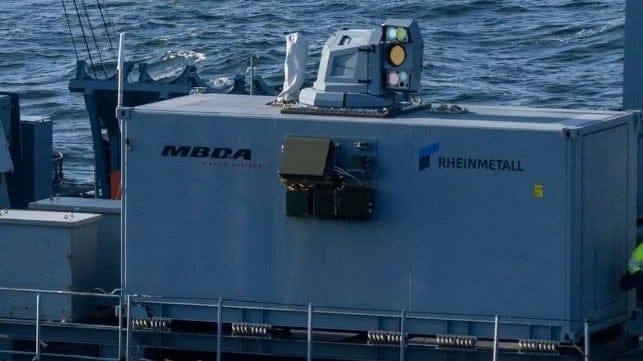
The MBDA-Rheinmetall laser weapon prototype aboard the frigate Sachsen (Rheinmetall)

Published Jul 9, 2026 3:19 PM by The Maritime Executive


The German military is investing hundreds of millions of dollars in the development of a real-world laser weapons system for shipboard deployment, a big bet on one of the most challenging frontier technologies in defense. 

The German defense procurement agency, BAAINBw, has contracted with MBDA and Rheinmetall for the further development of the High-Energy Laser Naval Demonstrator. The partnership (ARGE HEL) has been refining this system for years, and they believe that they can field a working system by 2029. They've already put a prototype out to sea, and (they report) with considerable success.

The MBDA-Rheinmetall engineering team has been working on a laser defensive-fire system for seven years. A recent demonstrator unit, which was installed aboard the frigate Sachsen and trialed for about one year of service, worked "precisely, quickly and with minimal collateral damage," according to Rheinmetall. 

The defense conglomerate says that its naval laser is capable of tracking a target measuring the size of a small coin, without slipping off the focus area and striking something behind it. That precision means that the laser can achieve target destruction with less power, since the energy is concentrated in a smaller area. It also new safety benefits for warships sailing in formation or operating in close proximity to infrastructure: conventional CIWS guns will hit anything behind the aerial target as well as the target itself, but the laser will not inflict collateral damage. 

"The laser weapon system will provide significantly greater protection for our soldiers deployed on naval vessels, especially against drones. Series production will largely take place in Germany, creating new training and employment opportunities," said Rheinmetall weapons chief Roman Koehne in a statement. As a containerized unit, the laser could also be used for point defense in seaports and other locations, according to its developers.

As Russia's drone warfare community is openly preparing for a "big war with NATO," and many Western defense strategists expect a conflict with Russia in EU border states by the end of the decade, Germany's need for a high-volume, low-cost anti-drone air defense system is acute. If the MBDA/Rheinmetall design is successfully fielded as a production unit, it would be among the first deployed systems of its kind in the world.


Bulker Casualties Decline While Liquefaction and Flooding Remain Key Risks

bulker grounded
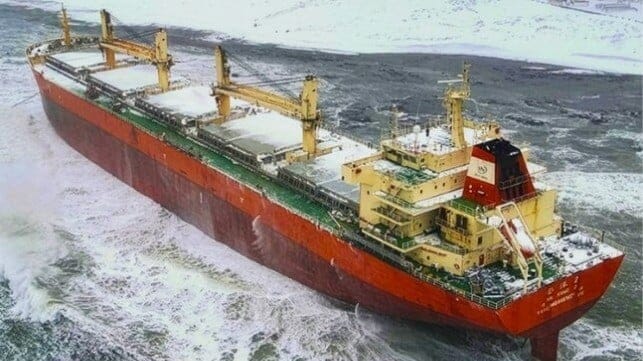
INTERCARGO highlights declines in incidents while warning of the dangers including liquefaction and flooding (INTERCARGO)

Published Jul 7, 2026 6:15 PM by The Maritime Executive


The industry trade group INTERCARGO released a new report on vessel casualties and lives lost in the bulker community, highlighting an overall decline over the past decade. It, however, emphasizes the continued need for enforcement and training, noting that liquefaction and flooding remained the biggest dangers and resulted in the most lives lost.

Over the decade from 2016 to 2026, it reports there were 17 bulker casualties among vessels 10,000 dwt or larger. It says that a total of 71 seafarers were lost along with 1.63 million dwt, while noting that the rolling ten-year average of annual losses has consistently fallen.

It also highlights the growth in the bulker community.  The number of vessels increased more than 30 percent between 10,400 in 2013 and 13,669 in 2026.

“The steady reduction in bulk carrier losses over the past decades reflects the industry’s continuous efforts to improve safety,” commented John Xylas, Chairman of INTERCARGO. “Behind these numbers are real lives, and every incident reinforces the importance of learning and acting together.”

The report points to sustained improvements across the industry. It says this has included enhanced ship design, improved crew training, operational experience, and strengthened regulatory compliance.

Cargo liquefaction it reports remains the leading cause of loss of life, accounting for 37 fatalities (over 50 percent of the total). Further, it reports that vessels in the 50,000–59,999 dwt range account for 52 percent of the lives lost but just four of the just four of the 17 vessels lost. It says this concentration reflects the danger of nickel ore and similar high-risk cargoes carried by this class of ship.

Flooding incidents, though fewer in number, were another risk to lives. It highlights that nearly half of all lives lost were due to flooding. Also, while not in the reporting period, it highlights another instance. In early 2026, the MV Devon Bay was lost while carrying nickel ore, with two seafarers lost and four declared missing.

Groundings remain the primary cause of vessel losses, responsible for 41 percent of the casualties. Here, it notes that the losses are concentrated in vessels aged 15–19 years, underlining the importance of navigational discipline and passage planning as ships age.

Between 2024 and 2025, it also notes five bulk carrier casualties in the Red Sea and Gulf of Aden were linked to missile, drone, and uncrewed vessel attacks. It condemns the actions that resulted in fatalities and injuries.

INTERCARGO and its members continue to work closely with stakeholders to strengthen key elements. It calls for continued vigilance on cargo declaration, testing procedures, and enforcement by flag and port states. It also recommends training for ship and shore personnel. INTERCARGO notes that the practical implementation of the IMSBC Code, including more prescriptive requirements on moisture testing, sampling procedures, and shipper declarations of cargo properties, is critical. 

The group also calls for transparency and timeliness of casualty investigations. It says this will ensure lessons are learned and shared more effectively.

With global dry bulk trade continuing to grow, INTERCARGO emphasizes that maintaining and improving safety standards requires ongoing collaboration between all stakeholders, including shipowners, charterers, shippers, ports, and regulators.


One Dead, 16 Rescued After Freighter Hits Vietnamese Fishing Boat

Viet Thuan 11-07
Via Vietnamese social media

Published Jul 7, 2026 11:53 PM by The Maritime Executive


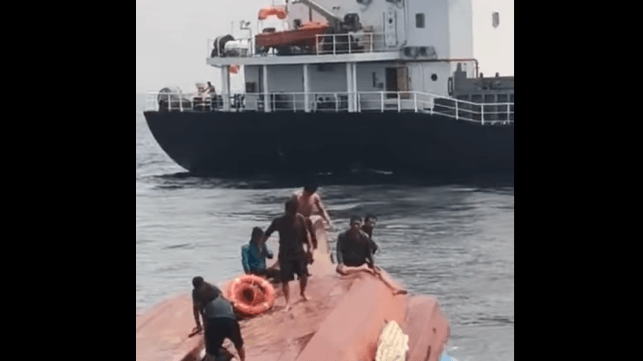
One Vietnamese fisherman was killed and 16 others were rescued after a collision between a coastal cargo ship and a small purse seiner off the southern coast of Vietnam. 

On Monday morning, the cargo ship Viet Thuan 11-07 got under way from the port of Nui Thanh, headed for a port district in Ho Chi Minh City. At a position about seven nautical miles east of Tien Phu, a coastal village to the east of Ho Chi Minh, the ship collided with BTh 98379 TS, a 50-foot coastal fishing boat. The seiner had gotten under way from its home port that morning and was nearing the end of a 10-hour trip to the fishing grounds.

The force of the impact capsized the fishing vessel, and the 17 members of the crew were all thrown over the side. The crew took refuge atop the capsized vessel, and they pulled one shipmate who was in distress up onto the hull; the man - who had an underlying health condition - could not be revived, survivor Nguyen Van Khanh told local outlet Bao Lam Dong.

"The cargo ship collided with the fishing boat, causing it to tilt to one side. Many of us were asleep at the time; those who were awake managed to jump into the water, while those who were asleep were thrown into the sea," survivor Nguyen Huu Tri told Bao Lam Dong. 

The survivors were rescued by a nearby good Samaritan fishing vessel, and all but the skipper - who remained on scene to watch over the capsized wreck - returned to shore at Phu Hai. 

The cargo ship was detained and diverted to a nearby anchorage at Phan Thiet for an investigation. 

Viet Thuan 11-07 is a brand new 11,000 dwt general cargo ship flagged in Vietnam. The operator owns or manages a substantial bulker fleet with a total capacity of more than one million deadweight tonnes, including coastal, riverine and deep-sea vessels.  


Chinese Rescuers Use Pontoon Bridges and Cargo Drones for Flood Response

Courtesy Chinese Ministry of Foreign Affairs

Published Jul 9, 2026 9:51 PM by The Maritime Executive


As part of the ongoing response to heavy flooding in Guangxi, the emergency response agency China Anneng Construction Group brought an enviable military capability: foldable, road-portable, self-propelled pontoon barges. The barges can be dumped into the water, unfolded, joined together into longer sections, and used as makeshift ferries for high-water rescue operations. 

Chinese state media conglomerate Xinhua refers to the barge as the "Noah's Ark" and says that it can carry up to 500 passengers at a time. On Wednesday, China Anneng - which traces its roots to a military construction engineering batallion - used the barges to evacuate 6,000 college students who were stranded by high water in Guigang, Guangxi. Chinese embassies around the world have shared well-produced footage of the rescue on social media, highlighting the utility of the bridging equipment. 

Chinese first responders have also used heavy-lift drones to retrieve survivors and deliver supplies, augmenting the capability of SAR helicopter aircrews. Conventional helicopters are active in the operation as well. 

Earlier this week, heavy rainfall from Tropical Storm Maysak has caused the Yu River to jump its banks. About 8,000 personnel have been deployed for the response effort, and about 130,000 residents have been rescued. So far, 39 people have died - most of them in Nanning, where a breached dam caused sudden and destructive flooding. 

In addition to the normal hazards of a severe flood, a venomous-snake farm east of Nanning was hit by high waters, releasing hundreds of cobras, water snakes, kraits, pit vipers and king ratsnakes. Snakebite victims have been reported in nearby villages, including one fatality, and local health authorities have been working to increase availability of antivenom. 


China Follows SpaceX's Lead With Reusable-Booster Landing Barge

Long March
Courtesy Chinese Ministry of Foreign Affairs

Published Jul 9, 2026 11:05 PM by The Maritime Executive


China Academy of Launch Vehicle Technology (CALT) has passed a key milestone towards cheap, plentiful orbital launch services: it can now do at-sea retrieval for used booster rockets. 

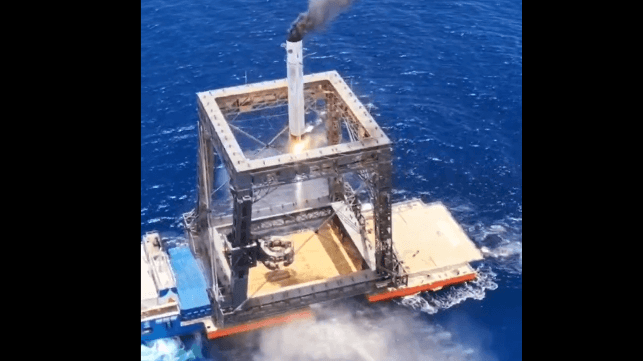
On July 10, a Long March 10B rocket took off from a launch site at Wenchang, the first time that this kerosene/liquid oxygen-fueled rocket design has been flown. It placed its payload into orbit, and its first-stage booster returned for a successful landing - on a barge.

Like American rocket companies SpaceX and Blue Origin before it, the Beijing-based state aerospace giant China Academy of Launch Vehicle Technology (CALT) has developed a vessel platform to provide a landing pad at sea for its reusable rockets. The underlying concept is the same, but CALT's solution is different. SpaceX uses a robotic "grabber" to hold the landed rocket securely after touchdown. Blue Origin uses a comparable approach with multiple robotic support stands. CALT's barge design has a tall, fixed stand in the middle of the deck, which is fitted with a set of four robotically-controlled crosswires at the top. The crosswires engage the structure of the rocket as it descends, catching it and holding it in place. 

A sea-based landing system is key to the economics of modern launch services. Until recently, booster rockets were discarded with every launch, so the full capital cost of the rocket was rolled into the price for each payload. SpaceX changed that with its Falcon 9 reusable rocket series, but it was not easy: it had several early failures before its first successful at-sea landing in 2016. Some of its individual first stage boosters have flown as many as three dozen times, and SpaceX is conducting up to 150 launches every year.

CALT's take on the reusable booster is the first to achieve a successful landing on the first try, and the first developed outside of the United States. However, it has been a long march to get to success. Chinese researchers have been working on reusable, liquid-fueled boosters since the 2010s, but Long March 10B is the first to demonstrate a working capability to land. 

Reusable booster technology is expected to supercharge China's commercial space sector, and after news broke of the successful landing, investors quickly bid up stocks for satellite firms like China Spacesat and China Satellite Communications. Both hit China's regulatory limit for share price increases, restricted to 10% per day.


Russian Navy Conducts Joint Exercise with Chinese North Sea Fleet

Chinese Military
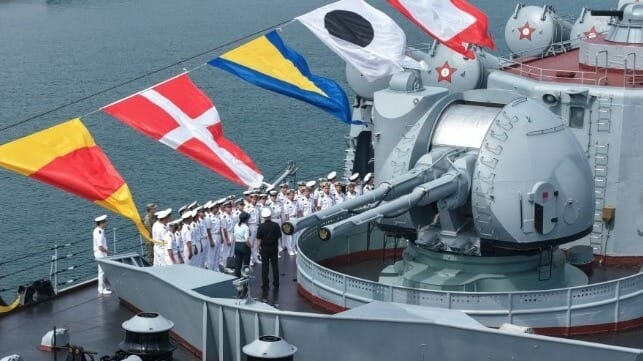
PLAN sailors inspecting the twin 130 mm/L70 gun aboard the missile cruiser RFS Varyag (Chinese Military)

Published Jul 10, 2026 10:51 AM by The Maritime Executive


Russian Pacific Fleet ships led by the missile cruiser RFS Varyag have commenced the at-sea phase of Exercise Joint Sea 2026 with the PLA Navy (PLAN) off Qingdao, headquarters of the PLAN’s North Sea Fleet. 

The exercise started with the customary football matches and exchange visits between crews of the participating ships, and pre-exercise planning conferences, before moving on July 9 to the sea phase, in which the PLAN announced that joint reconnaissance, air defense, anti-missile defense, and coordinated submarine search and rescue operations would be exercised.

The Russian visitors were led by the flagship of Russia’s Pacific Fleet, the GT11,000 Slava Class missile cruiser RFS Varyag (D11). The RFS Varyag was launched in 1983, and although heavily armed and with a 500-strong crew, it is somewhat outdated. In addition to a twin 130 mm/L70 gun forward, the ship is equipped with 16 SS-N-12 Sandbox anti-ship missile tubes and a magazine of 64 SA-N-6 Grumble long-range surface-to-air missiles, plus a Ka-27 anti-submarine warfare helicopter. The Varyag was accompanied by the Steregushchiy Class corvette RFS Rezky (F343), Kilo-II Class submarine RFS Ufa (B588), and the Delfin Class specialist submarine rescue ship Igor Belousov, which has been a regular visitor to Qingdao, last year and in the past. As well as being equipped for rescue operations, the Russians and Chinese may have a joint interest in the ability of the civilian-manned Igor Belousov to support deep diving operations, such as are necessary to support GUGI-linked covert intelligence operations related to pipelines, cables, and passive sensor networks.


Russian and Chinese participants in Exercise Joint Sea 2026, alongside in Qingdao July 6 (Chinese state media)

The Chinese North Sea Fleet flotilla participating in the exercise was led by the Type 052DL destroyer PLANS Kaifeng (D124), supported by the Type 055 destroyers PLANS Anshan (D103), the Type 054A frigate PLANS Wuhu (F539), a Yuan Class diesel-electric submarine, the Type 903A replenishment ship supply ship PLANS Kekexilihu (K903) and the PLAN’s own submarine rescue vessel PLANS Yanchenghu (A847).

For the Russian Navy, this is an important exercise, a now rare opportunity to exercise with a first-ranked naval force, and without fear that proceedings might be interrupted by the Ukrainian long-range sanctions program.

If the pattern of previous exercises in the Joint Sea annual series is followed, the combined Chinese-Russian flotilla will embark on an extended-range patrol, likely to be in the North Sea Fleet’s designated operational area in the Pacific east of Japan. The deployment is likely to overlap with that of the US Pacific Fleet, which will be mounting RIMPAC 2026 from Hawaii at about the same time