Saturday, May 16, 2026


StanChart Warns Physical Oil Premium Collapse May Be Temporary

  • Physical oil premiums have fallen sharply after spiking during the Hormuz crisis, as buyers delayed purchases, drew down inventories, reduced refinery runs, and relied on alternative non-Middle Eastern supplies.

  • Analysts at Standard Chartered expect physical crude prices to rebound once reserve releases end and refinery demand rises again, unless a geopolitical deal eases supply disruptions.

  • U.S. crude exports reached an all-time record high of 6.4 million barrels per day (bpd) for the week ending April 24, 2026, eclipsing the previous high of 5.3 million bpd set in late 2023.

Over the past couple of months, physical oil cargo premiums have surged as markets reacted to the threat of physical supply disruption, forcing buyers to pay significantly higher prices for guaranteed, prompt delivery of crude oil. As the conflict escalated and Iran blocked the Strait of Hormuz, buyers scrambled to secure immediate, non-Middle Eastern "prompt barrels", driving up the spot price premiums for available cargoes. North Sea Forties crude spiked to nearly $150 a barrel by mid-April, exceeding the 2008 peak. Many commodity experts predicted that oil futures would eventually trade up to the physical; however, we have lately been seeing just the opposite, with the physical trading down to the futures. Whereas physical prices still indicate market tightness, they have recently returned to a more normal range. Dated Brent (the primary physical benchmark for crude oil in the North Sea) settled just $0.43/bbl higher than front-month Brent on 11 May, good for a w/w fall of $11.31/bbl. Saudi Aramco’s official selling price (OSP) remains historically high; however, June saw m/m reductions to both Europe (~2/bbl) and Asia (~4/bbl) after May’s OSP recorded the largest ever m/m price increase. And now commodity experts at Standard Chartered have predicted that this downward adjustment will reverse before long.

According to StanChart, physical oil cargo premiums have collapsed--with some grades dropping 90%--due to a combination of intentional buyer restraint, increased reliance on inventory and increased supplies from non-disrupted regions. 

The sharp fall in the price of physical oil can be chalked up to buyers remaining hopeful the Iran conflict would be resolved rapidly, at least in terms of the Strait of Hormuz blockades, and were dissuaded from purchasing cargoes at extremely elevated prices. High volatility and regular price swings in excess of $10/bbl in a day (front-month Brent traded in a $35/bbl intraday range on 9 March ) have increased the risk of a VaR shock i.e., an acute increase in Value at Risk.

Deferring purchases in the near term has also allowed buyers to benefit from strategic reserve and inventory drawdowns, reduced refinery run rates (and adjustments to maintenance schedules), and alternative supply sources, which have cushioned oil price spikes.

StanChart says physical prices are likely to rise once more when purchases can no longer be deferred, refinery runs pick up and strategic reserve releases are complete, unless a deal to end the conflict can be agreed. This will likely eventually pull futures prices up towards elevated physical benchmarks.

U.S. producers continue to be among the primary beneficiaries of the ongoing energy crisis. According to the latest data from the U.S. Energy Information Administration (EIA), U.S. crude exports reached an all-time record high of 6.4 million barrels per day (bpd) for the week ending April 24, 2026, eclipsing the previous high of 5.3 million bpd set in late 2023. Combined U.S. crude oil and refined petroleum product exports hit a record peak of 12.9 million bpd in the same week. International refiners, particularly across Asia and Europe, are aggressively buying American light sweet shale oil to replace stranded Persian Gulf barrels.

Asian buyers, particularly in Japan, South Korea, and Taiwan, have sharply increased purchases. To meet this massive international demand, the U.S. has drawn heavily from commercial storage and the Strategic Petroleum Reserve (SPR), pulling down domestic inventories by over 2 million bpd. The Trump administration has initiated the sale of ~53 million barrels of crude oil from the SPR  to nine energy companies, and is working toward a total release of 172 million barrels.  This move is part of a coordinated international effort with the IEA to release roughly 400 million barrels worldwide following supply disruptions in the Middle East.

The European Union Aviation Safety Agency (EASA) recently authorized the broader use of US-grade Jet A fuel in Europe, over the standard Jet A-1 specification with “no regulatory obstacles”. By allowing the use of US-grade jet fuel, the supply pool has been effectively enlarged, removing some of the reliance on imports from the Middle East. However, Jet A has a higher freezing point than Jet A-1, meaning it’s mostly useful for lower altitude, short-to-medium haul flights. The development has allowed Jet fuel differentials to come off recent highs while front-month contracts are now in contango. The U.S. has maintained healthy jet fuel inventories, remaining above seasonal norms and in excess of the five-year range at 43.57 million barrels on 1 May. Meanwhile, inventories in Europe, as evidenced from measures in the larger Amsterdam-Rotterdam-Antwerp (ARA) region, have tightened quickly, falling from ~1.1 million metric tonnes (Mt) held from September to end-December 2025, to just 0.56Mt in the latest weekly data.

By Alex Kimani for Oilprice.com

Permian Gas Glut Means Producers Are Paying Buyers to Haul It Away

  • While Europe and Asia face gas shortages, rationing, and soaring prices due to the Iran conflict, the U.S. Permian Basin is flooded with natural gas, with prices turning deeply negative because pipeline capacity cannot keep up with production.

  • Cheap U.S. gas is hurting producers like Diamondback Energy and EQT Corporation, but benefiting the broader U.S. economy.

  • Analysts expect U.S. gas prices to remain relatively low for years as production keeps rising.

The war in Iran has choked natural gas supplies across Europe and Asia, leading to fuel rationing and blackouts, but in the heart of US shale country, the market is swimming in supply.

Gas in the Permian Basin of West Texas and New Mexico is so plentiful that producers are having to pay buyers to get rid of it. Bloomberg reports that there is so much inventory that it exceeds available pipeline capacity. “Prices aren’t merely cheap, they’re negative,” states the April 29 article, noting that Permian gas hit an all-time low of -$9.60 per million British thermal units on April 24.

In the Permian, gas prices have dipped below zero intermittently since 2019 as pipeline construction failed to keep pace with soaring production. But this year, negative pricing has been more pronounced than ever.

US natural gas futures have slipped 10% since the Middle East conflict began, a situation that contrasts sharply with Europe, where prices are up about 40%, and Asia, where they’ve jumped more than 50%.

The gas glut is creating winners and losers.

For Permian producers like Diamondback Energy (NASDAQ;FANG), low prices have been a drag on profits. In an earnings call, executives said they are “consciously moving away from Waha,” the Permian pricing hub, and increasing their exposure to higher-priced markets near population centers, export facilities and planned data centers.

Related: Sinopec Opens Major Ultra-Deep Shale Gas Play in China

EQT Corp (NYSE:EQT) has curtailed output due to persistently low spot prices.

The silver lining in this low-priced cloud? The US economy. Not only are lower natgas prices insulating the United States from war-driven energy shocks, but they are also creating an economic tailwind.

Cheap supplies of gas — a key manufacturing input and a major player in meeting power demand from artificial intelligence — stand to give the US an edge over countries facing fuel shortages.

Petrochemical producers like Dow are among the companies benefiting from low-cost industrial gas, Bloomberg reports.

While Americans are facing inflation across most goods and services, electricity prices would be higher if it wasn’t for the natural gas glut. In March’s CPI inflation numbers, utility gas prices fell 0.9%.

Anna Wong, chief economist at Bloomberg Economics, believes The divergence between gas prices in America and the rest of the world “could mean the US economy will prove more resilient than expected this year. Natural gas is more important to the manufacturing sector — particularly chemicals, fertilizers, electricity — than crude oil is.”

Of course, the gas glut won’t last forever.

Forward prices for Waha gas are shown flipping to positive in October, around the time that the Blackcomb Pipeline enters service, with five new Permian conduits set to bring about 11 billion cubic feet a day of capacity by the end of 2028. While that amounts to roughly 10% of US gas production, Bloomberg concludes that abundant shale production and limited export capacity mean US gas prices are poised to remain low relative to the rest of the world for years to come. Gas will average well below $4 through 2027, American government forecasts show, while production is poised to hit fresh records.

According to Barchart, on Tuesday the Energy Information Administration (EIA) raised its forecast for 2026 US dry natgas production to 110.61 bcf/day from an April estimate of 109.60 bcf/day.

US nat-gas production is currently near a record high, with active US nat-gas rigs posting a 2.5-year high in late February.

On April 17, nat-gas prices tumbled to a 1.5-year nearest-futures low amid robust US gas storage. EIA nat-gas inventories as of April 24 were +7.7% above their 5-year seasonal average, signaling abundant US nat-gas supplies.

The EIA forecasts Lower 48 natural gas production will increase 3% this year compared with 2025, largely because of rising production in the latter part of the year. The increase is driven mainly by the Permian region, which the EIA expects to produce 29.2 bcf/d in 2026, or 6% more than in 2025.

It expects L48 production to steadily increase throughout its forecast period, averaging 118.9 bcf/d in 2026 and 124.0 bcf/d in 2027.

By Andrew Topf for Oilprice.com

Global Oil Stockpiles Plunge as Iran War Chokes Supply

  • The IEA said global oil inventories fell by 250 million barrels over March and April as supply losses mounted.

  • Restricted tanker traffic through the Strait of Hormuz has shut in more than 14 million barrels a day of oil.

  • OPEC trimmed its 2026 oil demand growth forecast while traders remained broadly bullish on crude.

The West’s international energy watchdog has warned that oil stockpiles were being drained at a record rate last month as the US’s war in Iran continues to choke supply in an “unprecedented” supply shock.

The International Energy Agency revealed that around 4m barrels of oil a day were tapped from back-up supplies in April, within a detailed report on the global market.

It said: “More than ten weeks after the war in the Middle East began, mounting supply losses from the Strait of Hormuz are depleting global oil inventories at a record pace … Observed global inventories, including oil on water, were drawn down by 250m barrels over March and April, or 4m barrels per day.”

The war has, in effect, closed the Strait of Hormuz through which tankers usually carry around a fifth of the world’s seaborne crude. The fragile ceasefire has not significantly boosted traffic.

The IEA labelled it “an unprecedented supply shock”, in words that chimed with fears of a looming fuel supply crunch, including of jet fuel into the peak summer holiday travel season.

The report included some stark numbers on the impact of the war: “With Hormuz tanker traffic still restricted, cumulative supply losses from Gulf producers already exceed 1bn barrels with more than 14 mb/d of oil now shut in.

“Global oil supply declined by a further 1.8m b/d in April to 95.1m b/d, taking total losses since February to 12.8m b/d.”

‘Unprecedented supply shock’

The agency said that “the petrochemical and aviation sectors are currently most affected” and pointed to price spikes ahead, as well as a “plunge” in “refinery crude throughputs” by 4.5m b/d” in the second quarter.

Then came an update from OPEC, the representative body of some of the world’s most influential oil-exporting nations.

It cut its 2026 forecast for global oil demand growth to 1.2m b/d in its latest Monthly Oil Market report, trimmed from 1.4m b/d in the previous edition.

It described the revised rise as “healthy”, but it reflected overall cuts to demand forecasts for the second, third and fourth quarters of the year.

OPEC said oil market traders trimmed their bets on a higher oil price, as “net long positions declined over April, mainly in ICE Brent”, the main international crude benchmark. It cited “profit-taking from previously accumulated long positions” amid “mixed geopolitical signals and potential de-escalation” in the Gulf.

Nonetheless, OPEC said, “Hedge funds and other money managers maintained a broadly bullish stance on the crude oil market” in the month.

During April, Brent Crude peaked at around $140 a barrel, depending on the exactitudes of the contracts concerned. Crude for physical delivery in the month crossed above $141, at the height of the tensions, while the shortest-term futures contracts hit $138 a barrel.

On Wednesday, Brent was at $107.43, down on the day by about 0.3 percent.

Crude over $100 and beyond has stoked a wave of concern about an inflation shock, caused by higher energy prices rippling through the global economy.

The IEA said: “A weaker economic environment and demand-saving measures will increasingly impact fuel use”.

Russian oil exports rise

But the Paris-based outfit also pointed to increased supply away from the world’s crude-producing heartlands.

It said: “Producers outside of the Middle East also pushed output higher and lifted exports to record levels in response to the crisis.

“Indeed, 2026 supply growth expectations from the Americas have been revised up by more than 600 kb/d since the start of the year, to 1.5m b/d on average.”

And there was insight into the knock-on effects for a nation also at war, in Ukraine rather than the Middle East:

“Russia’s crude oil exports have also risen, as repeated attacks on its refineries have cut domestic use and led to higher shipments, while the United States temporarily waived sanctions on Russian oil on water,” the agency said.

Overall, the IEA expects global oil demand to fall by 2.4m b/d year-on-year in the second quarter.

“For now, the steepest losses are seen in the petrochemical sector, where feedstock availability is becoming increasingly constrained. Aviation activity is also running well below normal levels”.

By City AM


The Fuel Shortage That Could Reshape Global Trade

  • Declining diesel and jet fuel supplies are making long-distance global trade increasingly unsustainable.

  • That decline points to a future world divided into two major economic spheres centered on the Americas and East Asia.

  • Energy scarcity, rather than politics alone, is driving geopolitical conflict and economic restructuring.

The war with Iran is not going well. It is difficult to supply US troops with adequate food and other necessities. With summer arriving soon, the region will soon be an even more inhospitable place for ground troops to fight. An underlying problem is that the world economy was reaching resource limits even before the Iran War began, adding to the difficulties.

The most pressing resource limit is distillate fuel oil–an industry term for what we think of as diesel and jet fuel. This fuel is heavily used in transportation. It is also used extensively in agriculture and industry. Somehow, the system needs to cut back on these fuels for international trade so that more fuel is available for agriculture and industry.

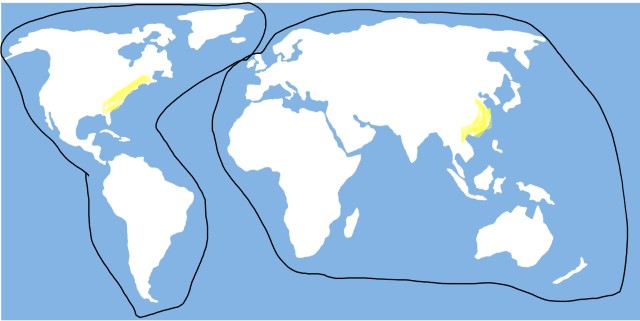
President Trump of the US and President Xi of China will be meeting in Beijing on May 14-15. This meeting would seem to be the perfect time to start reorganizing the world with shorter trade routes, so that the world economy uses less fuel for transportation. China and the US are the two great powers in the world. Keeping trade mostly within the two areas shown in Figure 1 would be a way of using fuel oil more sparingly.

World trade
Figure 1. Map of the world showing how Gail Tverberg expects Presidents Xi and Trump might split most world trade. The vast majority of trade would take place within the two areas shown. Within these groupings, the centers of trade might be the yellow areas shown.

An advantage of such a plan, besides saving on fuel, is that it could stop the Iran War without clearly declaring one side the winner or loser. In this post, I will attempt to explain the situation further.

[1] Based on the ideas of Dr. Mohammed Marandi, I believe that China might be able to mediate a settlement between the US and Iran.

Dr. Marandi was born in the United States of Iranian parents. He currently lives in Iran, where he is a professor at the University of Tehran. In the video, One Country Quietly Won this War, he points out that, often, when two countries battle each other, neither one emerges as the clear winner. Both of them are damaged by the war. The actual winner may be a country that does not seem to be directly involved in the war.

In the video referenced above, Dr. Marandi discusses three historical situations in which a nation not directly involved in a conflict gained stature by being the “adult in the room,” when two other nations battled each other. In this case, Dr. Marandi believes that China could very well be the country that can exert enough pressure on both sides to get them to accept a proposed solution. He says that China has acted behind the scenes to bring about the ceasefire, and that Trump has acknowledged China’s role.

Dr. Marandi suggests the idea that the upcoming meeting of the two presidents might be an opportune moment to make major steps toward a mutually agreed settlement. I believe that the underlying problem is that there isn’t enough energy (particularly oil) to support a world population of over eight billion. Dividing up markets in the way I have suggested would at least somewhat alleviate the shortage. Of course, there may be other terms of a settlement, as well. In addition, not all the terms may be determined precisely at this time.

[2] The world doesn’t have enough diesel and jet fuel to maintain the current level of trade across the Atlantic and Pacific Oceans.

Diesel
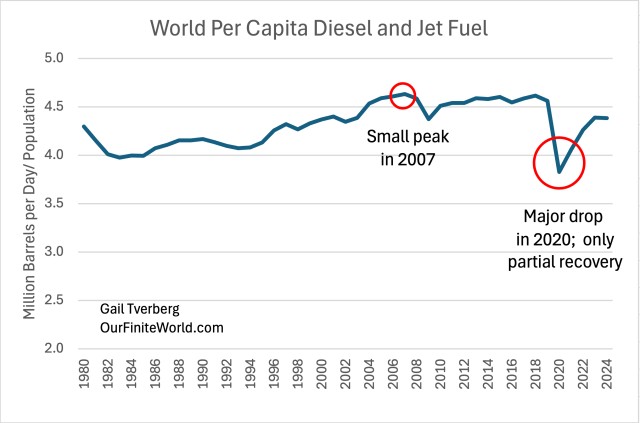
Figure 2. Combined diesel and jet fuel supply, divided by world population, based on data of the 
2025 Statistical Review of World Energy, published by the Energy Institute.

Figure 2 shows that per capita diesel and jet fuel started to drop at the time of the Great Financial Crisis in 2007-2009. Their supply took a larger step down in 2020, and it hasn’t completely recovered. In 2026, the Iran War has taken out more crude oil supply, for an unknown period of time.

Diesel and jet fuel are both very important as transportation fuels. Diesel is also important in agriculture because it provides the power needed for heavy machinery to till fields, even under the most adverse conditions. Diesel provides the power needed for large commercial trucks, many trains, and ships. Earth moving equipment is also typically operated by diesel fuel.

If the amount of trade across the Atlantic and Pacific could be greatly reduced, it would help alleviate the shortage of distillates. Of course, the tourist trade would also need to be greatly reduced. With recent spikes in aviation fuel prices, many flights are being cut. Some airlines, including Spirit Airlines in the US, are going bankrupt. The problem is starting to solve itself, but more changes will be needed.

[3] Looking at population and oil supplies, the Americas seems likely to come out somewhat ahead.

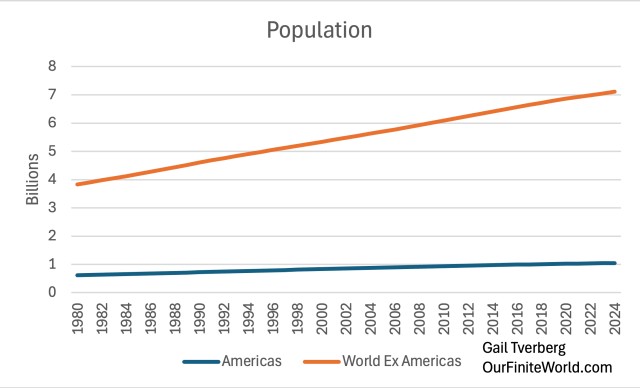
[3a] Comparing the populations of the two areas, the World ex Americas is much larger, and its population is growing faster.

population
Figure 3. World population between the Americas and the world excluding the Americas, based on data of the 
2025 Statistical Review of World Energy, published by the Energy Institute.

President Xi (leading one hemisphere) would get the very large and still rapidly growing part of the world population. President Trump would get a smaller and less rapidly growing share of the world population. Between 2021 and 2024, world population grew an average of 0.6% per year in the Americas, and an average of 0.9% per year in the World ex Americas.

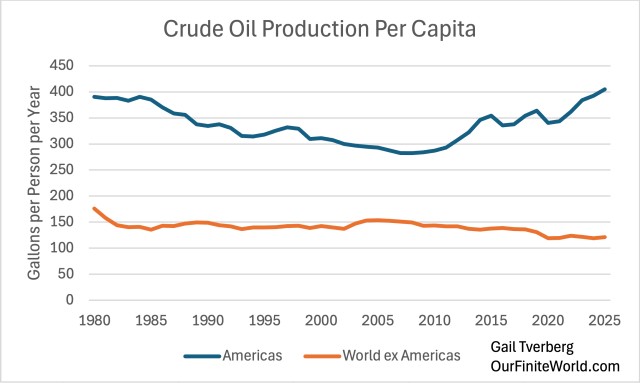
[3b] The Americas seem to have an advantage with respect to crude oil production.

Crude oil
Figure 4. Crude oil production per capita, based on data of the US Energy Information Administration.

It makes sense to look at energy amounts on a per-capita basis because the quantity needed depends on the number of people requiring the benefits of transportation, agriculture, and industry. On this basis, crude oil production of the Americas has clearly been outshining that of the World ex Americas. It is higher on a per-capita basis. In addition, the amount available has been increasing in recent years.

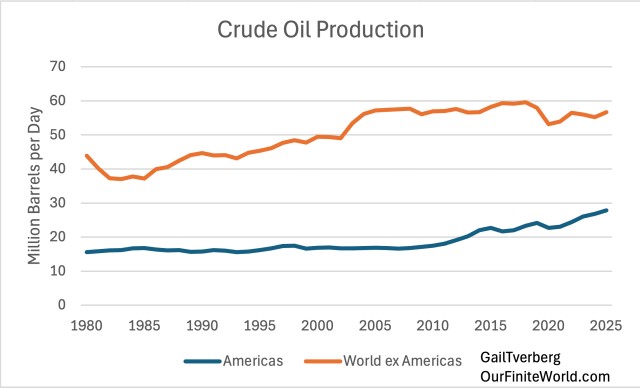
Figure 5, below, shows total crude oil production (not per capita).

Crude oil
Figure 5. Crude oil production of the Americas compared to that of the World ex Americas, based on data of the US Energy Information Administration.

Figure 5 suggests that since 2005, crude oil production for the World ex Americas has hardly increased. In fact, total extraction has decreased since 2019. A person viewing this data might conclude that crude oil production in this area may already be past its peak.

On the other hand, Figure 5 shows that oil production of the Americas has increased by about 65% since 2005. Many people believe that US shale production will soon decline. At the same time, however, increases seem likely in several other countries in the Americas, including Canada, Brazil, Argentina, and Guyana. Thus, while crude oil production for the Americas may decline in the near future, its decline is likely to be gradual.

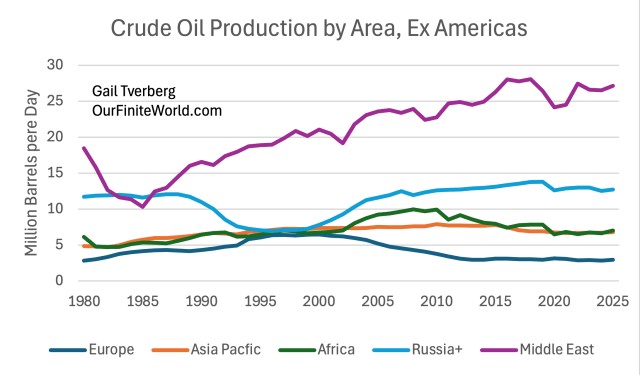
[3c] Crude oil production by geographical area outside of the Americas shows declining production in all areas.

Prediction
Figure 6. Crude oil production by geographical area for the World ex Americas, based on data from the US Energy Information Administration. Russia+ refers to Russia plus nearby countries that used to be part of the Soviet Union.

Figure 6 shows that Europe’s crude oil production started its permanent decline in 2001. Asia-Pacific’s production hit a maximum in 2010, and it has been declining since. Africa’s peak oil production took place in 2008, and it has been mostly declining since.

Russia+, which I use to refer to Russia plus nearby countries that used to be part of the Soviet Union, has an unusual production pattern. Its crude oil production started to decline in 1989, two years before the collapse of the Soviet Union in 1991. (This collapse in crude oil production likely contributed to the collapse of the Soviet Union.) Crude oil production for Russia+ rose from 1998 to 2019.

Russia+’s production took a big step down in 2020, and it has not been able to recover since. A person might think that Russia+’s oil production was post peak, even before the 2022 conflict with Ukraine broke out. If an oil exporter doesn’t have enough oil to export, it tends to create financial problems within an economy. Participating in a war can appear to mitigate the country’s problems.

Many people assume that the Middle East has endless inexpensive-to-produce crude oil. I don’t think that this is the case. Crude oil production of the Middle East (Figure 6 above) hit two similar peaks in 2016 and 2018, and it has been lower in years since then. I think that Middle Eastern oil production is likely past peak partly because of depletion issues and partly because most countries in the area require high taxes on oil exports to provide subsidies for their ever-growing populations. This leads OPEC to try to maintain high prices. Lower crude oil production since 2018 is consistent with the hypothesis that oil production for the Middle East is mostly post-peak.

One additional difficulty of the World ex Americas is that it is so heavily populated that it cannot access tight oil that might be available without displacing a large number of residents. Another difficulty is that very old wells, such as those in Saudi Arabia and Iran, are ones that it might not be possible to restart if they are shut in for an extended time.

[4] In terms of mining and manufacturing, the Americas seems to come out behind the World ex Americas.

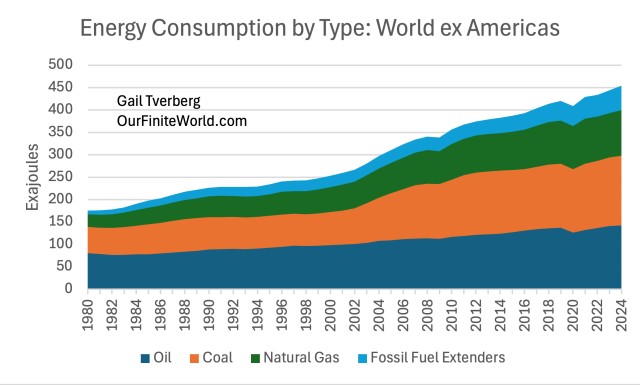
The World ex Americas has rapidly ramped up mining and manufacturing. Coal has been the preferred industrial fuel, with natural gas consumption also increasing.

Consumption
Figure 7. Energy consumption by type for World ex Americas, based on data of the 
2025 Statistical Review of World Energy, based on data of the Energy Institute. Fossil fuel extenders include hydroelectric power, nuclear power, wind power, solar power, biofuels including ethanol, and any other types of add-ons to fossil fuels.

Figure 7 shows that the energy consumption of the World ex Americas started increasing more rapidly after China joined the World Trade Organization in 2001. The consumption of coal and natural gas has especially increased.

Consumption
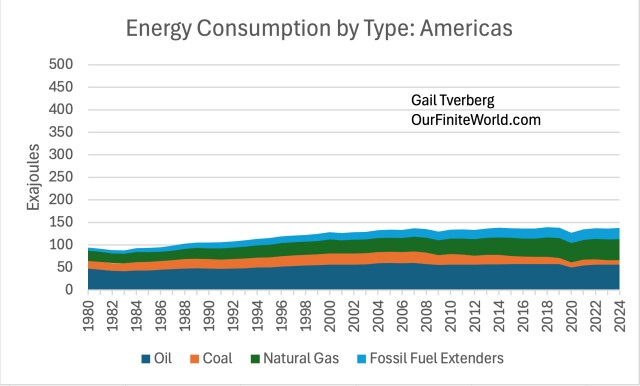
Figure 8. Energy consumption by type for the Americas, based on data of the 
2025 Statistical Review of World Energy, based on data of the Energy Institute.

The economies of the Americas have tended to shift towards service economies. Emphasis has been placed on fuel efficiency. Homes are now better insulated, light bulbs are more efficient, and engines of vehicles are more efficient. As a result, energy consumption within the Americas has tended to stay flat (Figure 8).

I have used the same scale on Figure 8 as on Figure 7 to emphasize how low energy consumption for the Americas is now, relative to the rest of the world. After US oil prices first rose to a high level in 1973, the US started transferring manufacturing to lower-wage countries. Southeast Asian countries began to be favored after 2001. Moving manufacturing abroad helped hold down US energy consumption and helped make the cost of goods to the consumer cheaper.

The problem today is that moving so much manufacturing elsewhere has made it difficult for the Americas to go back to producing its own goods, including clothing, furniture, and transformers for electrical systems. Supply lines for a particular item, such as a refrigerator, often run through many countries around the world.

[5] The full transition to the configuration shown on Figure 1 could take well over 100 years.

Changes, such as new supply lines and the new placement of major population areas, cannot happen very quickly. But I expect that some of the same underlying principles that guided these decisions in the past will continue to guide them in the future.

For example, infrastructure (roads, bridges, pipelines, and (today) long distance electricity transmission lines) seems to be the most difficult part of an economy to maintain because of the huge amount of energy required. Before the days of fossil fuels, I understand that slave labor was often used to build and maintain infrastructure. Similarly, slave labor was sometimes used to staff the mines needed to support the building of such infrastructure. As we lose fossil fuels, we will need to think about reducing our reliance on infrastructure.

One low-infrastructure approach used in the past was to build cities near bodies of water, so that fewer roads would be needed. Boats could be used to transport goods without building roads or bridges. If fish were available, they could be caught and used for food. In Figure 1, I am imagining that we will head back in this direction, with cities especially along navigable bodies of water and the ocean.

Unless we discover ways to replace fossil fuel energy, I would expect that the system will tend to go down in the reverse order of when it was put up. In general, electricity was last to be added, after coal, oil, and gas from coal. Electrification was first built in cities; then electricity transmission lines were added to provide electricity to rural areas. Above-ground lines tend to be damaged in storms, leading to a need for frequent repairs. Because of this issue, I would expect rural electricity to disappear quite quickly, unless it is generated at the location where it is used.

Natural gas shipped as Liquefied Natural Gas (LNG) was added very late. Its cost tends to be much higher than that of pipeline gas. I expect it to disappear quite quickly.

A full transition to the two trading zones shown on Figure 1 would require a huge number of changes in supply lines. A 2025 chart by Visual Capitalist shows how much control China has over critical minerals. It states, “China controls key materials such as graphite, rare earths, and gallium–essential for green technologies and defense industries.” While the US has started working on its own production of minerals, it will also need to develop the processing capability for these minerals. Putting all of this in place will likely take many decades. This is a significant factor in the 100-year estimate.

[6] If energy supplies are limited, I would expect population centers closest to fuel sources to be especially favored.

Writers today talk about possibly running short of diesel and jet fuel in a few weeks or months. Clearly, if a population center is at a location where there are both oil wells and refineries for the oil from those wells, the area has a better chance of having fuel than an island in the middle of the Pacific with nothing to sell other than tourism. Thus, Houston, Texas, will likely have fuel, even when models suggest there will be shortfalls in many places.

Often writers concerned about resource shortages talk about the core and the periphery. The core needs to be near whatever source of energy is available that can be used to help grow crops and transport goods. At this point, oil is the fuel that is closest to filling this need. Electricity is a nice-to-have, and it can provide services like refrigeration for food. But it is not good for paving roads or building bridges. So, it can only add to the mix, not substitute completely for oil. Slave labor is the closest substitute for oil that the world has discovered. We would rather not go back to using such an approach.

[7] I am concerned that a major downward economic step will be necessary in the upcoming months and years, but I am hopeful that the meeting between President Trump and President Xi on May 14-15 can help smooth the way.

We are at a point at which it is clear that the current organization of the global economy is not working. I hope that the meeting between Trump and Xi will help put an end to fighting in the Middle East. I also hope it will help pave the way for a new path forward.

I expect that the path ahead will be a difficult one, both for the people in the Americas and the people in the World ex Americas. While the US has considerable energy supplies, it lacks manufacturing capability for many everyday goods. The US is also lacking in many critical minerals, especially those used in making high-tech products. With its high wages, it will need extremely high prices, unless processes can be made very efficient.

The World ex Americas may have an even more difficult step down. Its oil supply was already more stretched before the Iran War. Its overpopulation problem seems to be worse than that of the Americas. The World ex Americas is more directly affected by the damage done in the Middle East and the resulting loss of oil supply. And there seem to be many groups looking for war, even if the US leaves.

Let’s all keep our fingers crossed that the upcoming meeting will have a beneficial effect, both in the short term and in working toward a longer-term solution.

By Gail Tverberg via Our Finite World