Sunday, June 21, 2026

Trump's motive for insulting allies nailed by conservative reporter

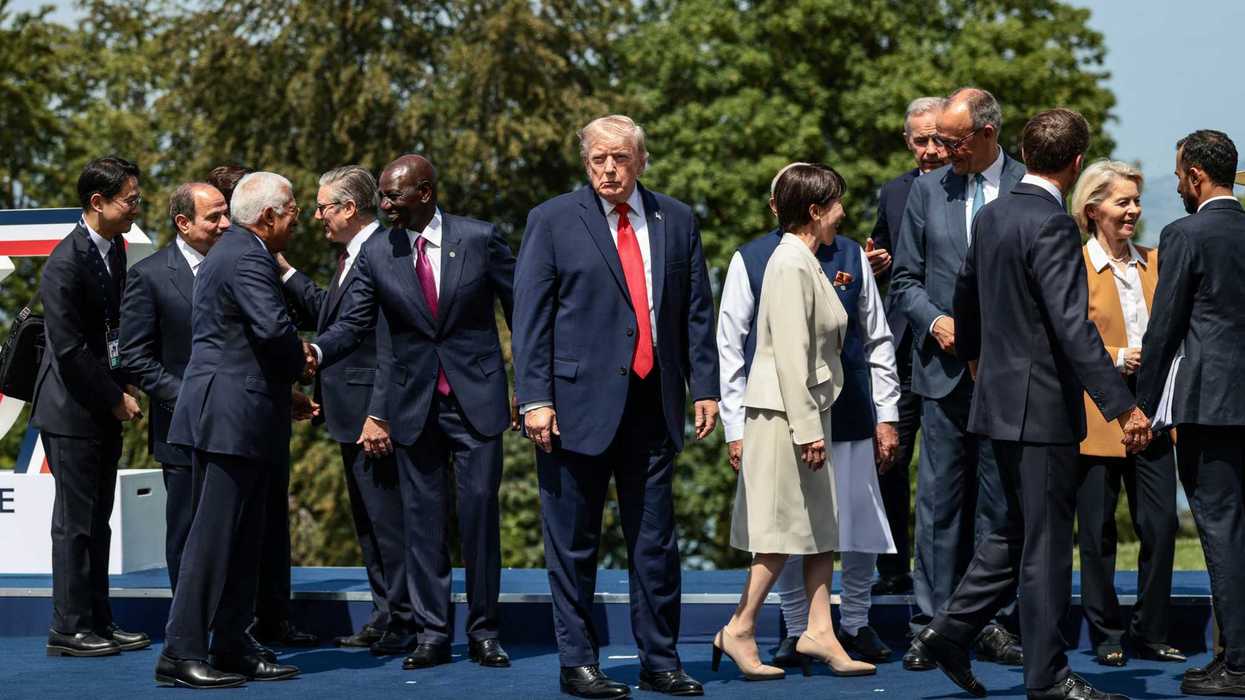
U.S. President Donald Trump stands among other leaders as they gather for a family photo during the G7 summit in Evian-les-Bains, France, June 16, 2026. REUTERS/Evelyn Hockstein

June 19, 2026 
ALTERNET


On Friday, there came a sudden fracturing of the relationship between President Donald Trump and Italian Prime Minister Giorgia Meloni over the latter’s claims that the former lied about her, and as one conservative reporter observed, this latest controversy highlights something interesting about who Trump favors and who he offends.

“It really is fascinating,” posted Billy Binion of the conservative outlet Reason, “that Trump seems to delight in offending important allies while calling Xi Jinping ‘brilliant’ and ‘handsome’ and waxing poetic about how he ‘fell in love’ with Kim Jong Un.”

He posted this along with a retweet of a video from Meloni in which she denies, in Italian, Trump’s claim that she had “begged” him for a photo at the G7 summit. “Neither I nor Italy ever beg,” she declared.

Italy and the EU organization are both key U.S. allies, but Trump’s actions have increasingly strained those relationships. Trump’s tariffs against the EU, threats to invade Greenland, and disagreements over the Iran war dealt major blows to the trans-Atlantic alliance. And though Meloni — a far-right politician with ties to neo-fascist groups — came into office as a staunch MAGA ally, rising energy costs in Italy due to the closure of the Hormuz Strait have driven a rise in political pressure for her to break with Trump.

At the same time, as Binion notes, Trump has actively sought to court the favor of some of the world’s most notorious dictators and strongmen. Following his recent visit to China, many argued that Trump’s “elaborate” praise of Chinese President Xi Jinping not only made the American president look deferential, but also made the U.S. look “weak.” Trump has praised North Korean dictator Kim Jong Un directly to the face of the president of South Korea — the latter of whom is a vital U.S. military ally. And Trump has repeatedly celebrated Russian President Vladimir Putin, expressing thanks to the notorious authoritarian at the G7 summit for remaining “totally neutral” in the Iran war, even though the U.S. intelligence community has reported that Russia helped Iran target American forces.

All of this is part of a troubling trend that Trump himself is all too willing to admit. As he said in April, he is easily “seduced” by anyone who is nice to him, “even if they’re bad people.”

Now, Trump’s disputed claim that Meloni wanted a photo with him isn’t the only photograph that has people talking about G7 and his growing political isolation. Early this week, the internet erupted with taunts over a photo that portrayed Trump standing alone and scowling on a stage while other smiling world leaders shook hands and spoke.

“Nobody wants to talk to Trump,” noted one person. Said another, “That picture encapsulates the current state of America pretty well.”
Inside Trump's alleged plan to raise the retirement age and gut Social Security


June 16, 2026 

A group of Democratic US senators warned Monday that congressional Republicans and President Donald Trump could be gearing up for a push for raise the retirement age as part of a broader—and deeply unpopular—effort to slash Social Security benefits after the 2026 midterm elections.

Sens. Elizabeth Warren (D-Mass.), Tammy Duckworth (D-Ill.), and Richard Blumenthal (D-Conn.) wrote in a letter to Trump that they have “renewed concerns” that his administration is “considering raising the retirement age, cutting the earned benefits of millions of Americans,” despite the president’s repeated vows to shield the program.“Republicans have a history of attempting to increase the retirement age, privatize Social Security, or otherwise cut Social Security benefits, and some congressional Republicans have called to raise the retirement age or means-test benefits,” the lawmakers wrote, emphasizing that GOP lawmakers “are not alone.”

“In an interview this past fall, [Social Security Administration] Commissioner Frank Bisignano said—and later attempted to retract after public outcry—that your administration was considering this idea,” the Democratic senators wrote of raising the retirement age, which would cut Social Security benefits across the board.


The nonpartisan Congressional Budget Office analysis of a 2024 Republican proposal to raise Social Security’s full retirement age found that doing so would cut benefits by an average of 13% for people born after 1971.

The Democratic senators sent their letter to Trump days after Social Security’s trustees said in their annual report that the program will be unable to pay out full benefits by the end of 2032—a quarter earlier than projected last year—unless Congress takes action. The finding was seen as evidence of the damage inflicted by Trump’s policies, including his tariffs and tax cuts for the rich.

Ahead of the trustees report’s release, House Speaker Mike Johnson declared that Social Security needs to be “adjusted and fixed” and said Republicans would release their plan “next year,” without specifying what the proposal would entail.

In their letter to Trump on Monday, the trio of Democratic senators demanded to know if the president is aware of “Republican plans to cut Medicare, Medicaid, or Social Security benefits” and whether he would veto GOP legislation that slashes those programs.

“Raising the retirement age—or otherwise cutting benefits—only worsens the looming retirement income crisis,” the lawmakers wrote. “Doing so hurts older Americans, cutting monthly benefits and forcing millions into poverty.”


DOGED
'Peak incompetence': Trump wants $1B for screwworm after cutting $15M  prevention program


Official White House Photo by Shealah Craighead

June 17, 2026  
ALTERNET


When Elon Musk’s “Department of Government Efficiency” took its chainsaw to the federal bureaucracy last year, it created bottlenecks that may have hampered the fight against the screwworm infestation currently menacing the southwest while making it much more expensive.

The annual US Department of Agriculture (USDA) spending to combat the flesh-eating insects only amounted to about $15 million per year. But along with about $382 million aimed at combating animal-borne illnesses around the globe, it was terminated in March 2025 as part of DOGE’s effort to root out what it described as government “waste.”

But now, with the pests bearing down on Texas and New Mexico, and at least 12 infections already identified in the US as of Tuesday, the Trump administration is spending at least $1 billion to fight the outbreak.


Last week, during a Senate hearing, Secretary of Agriculture Brooke Rollins attempted to shift blame for the screwworm outbreak onto the Biden administration, while portraying herself and President Donald Trump as proactive in response to reports last spring that the insects were rapidly climbing through Central America.

Rollins said she asked Trump for “$1 billion to build a significant facility” in Texas that would breed hundreds of millions of sterilized male screwworm flies, a method that had been used to keep them contained in South America for decades. “Without hesitation, a couple questions, he said, ‘go.’”

That facility is expected to release around 300 million sterile flies per week. But it is not expected to be fully operational until the end of 2027.

In addition to the $15 million cut to monitoring the spread of the bugs from Panama, the Houston Chronicle reported that DOGE paused plans for a facility in Mexico that the Biden administration had authorized in 2024 as part of a $165 million emergency package to fight screwworm.

Amid mass layoffs at the USDA, it reported that funding for the facility—which was supposed to produce between 60-100 million sterile flies per week—was not announced until May 2025.

While the USDA’s Animal and Plant Health Inspection Service (APHIS) still says fly production at the facility is expected to begin “as early as summer 2026,” it is still listed as “under construction.”

Kevin Shea, who served as administrator of APHIS under the Obama administration and retired from the agency in January 2025, told the Chronicle that efforts to contain the screwworm were put on hold at the start of Trump’s second term.

“This administration came in so skeptical of the career people, they didn’t really want to listen,” he said. “The hold up in the money going to Mexico for the sterile fly facility was most likely caught up in the whole DOGE thing. It probably looked like some sort of foreign aid.”

Journalist Christopher Collins wrote in the Texas Observer on Tuesday that, additionally, “deep staffing cuts” to APHIS, which lost nearly 1,900 employees during Trump’s first year back in office, eliminated “the first line of defense against incoming parasites,” who are responsible for “inspecting the cattle awaiting import from Mexico to ensure no screwworms are hitching a ride.”

As the spread of screwworm across cattle country threatens to further drive up beef prices that have already increased by over 20% since Trump returned to office, critics of the administration are seizing on it to highlight the failure of the president’s so-called “efficiency” initiative, which—despite the grandeur of Musk’s cost-cutting claims—ended up costing taxpayers an estimated $165 billion, according to an April 2026 report from the nonpartisan Partnership for Public Service.

Rep. Pramila Jayapal (D-Wash.) called the screwworm saga a prime example of DOGE’s “peak incompetence.”

“Trump and Musk’s DOGE ‘saved’ $15 million by cutting a program dedicated to preventing the spread of screwworm,” she said. “Now, there’s an outbreak infecting our beef and the administration is spending $1 billion.”

Reacting to the news that the government was spending at least $1 billion to confront the screwworm crisis, Drop Site News co-founder Ryan Grim wrote on social media, “Not joking but Elon Musk should have to pay for this right?”

“You broke it,” he said, tagging the man who recently became the world’s first trillionaire. “Why do we all have to pay for it?”
THE GRIFT

‘Last ride’: US says goodbye to Air Force One as Qatari jet awaits

AFP
June 18, 2026

Air Force One carrying US President Donald Trump lands at the Geneva Airport with Marine One helicopter in the foreground ahead of the G7 summit – Copyright AFP YAMIL LAGE

Is it goodbye Air Force One, hello Qatar Force One?

White House officials bade farewell on Thursday to one of the two jets that have been used to transport US presidents for more than 30 years.

The goodbye messages fueled speculation that a Boeing 747 controversially gifted to President Donald Trump by the Gulf emirate of Qatar is now due to enter service.

“‘Well done, good and faithful servant. ‘The Last Ride,’” Trump’s communications director Steven Cheung said in a post on X with a picture of the iconic white and blue jet after returning from the G7 summit in France.

US Chief of Protocol Monica Crowley also posted a photograph of the same plane on the tarmac at Joint Base Andrews near Washington.

“I was honored to be aboard Air Force One last night on its final flight,” Crowley said on X.

“For nearly 40 years, it carried every President since George H.W. Bush. It wasn’t the most modern plane, but it was cozy. And every flight with President Trump was incredibly special.

“Farewell and thank you.”

The aging aircraft is one of two heavily modified 747s — VC-25As in military parlance — that entered service in 1990 and are designated Air Force One when the president is aboard.

The White House did not immediately respond when asked by AFP to comment.

But Trump is considering taking the new Qatari jet on its inaugural flight when he travels to Mount Rushmore next month as part of celebrations for America’s 250th anniversary, NBC News reported.

The US Air Force said in May that the Qatari jet had completed flight testing and would soon be ready for action, adding that it was “on schedule to roll out in a new red, white and blue livery this summer.”

On Thursday the US Air Force confirmed to AFP that the Qatari plane, known as the VC-25B Bridge aircraft, “will soon join the active executive airlift fleet alongside the VC-25A and C-32.”

The C-32, dubbed “Baby Air Force One,” is a version of the smaller 757 used for shorter runways.

Qatar’s gift of the jet, valued in the hundreds of millions of dollars, has raised major ethical and constitutional issues about what kind of gifts a president should receive from abroad.

It has also raised security concerns about using an aircraft donated by a foreign power for use as the ultra-sensitive presidential plane.

The jets that serve as Air Force One are widely reported to have sophisticated countermeasures that can jam enemy radars and infrared tracking systems, plus dispensers for chaff — metal shavings that distract radar-guided missiles — and flares that blind heat-seeking missiles.

But billionaire Trump has been obsessed with replacing Air Force One since his first presidential term, even keeping a model of the jet in its new color scheme on his coffee table in the Oval Office.

Trump said last year that it would be “stupid” not to accept the gift, which the Pentagon formally acquired last year, and complained about the state of the current veteran planes.

He has said the Qatari plane will eventually be donated to his future presidential library as an exhibit.

The US government has also contracted planemaker Boeing to deliver two new 747-8 aircraft to serve as the presidential jet but the program has suffered delays and cost overruns.
Most American workers are checked out — and their bosses have no idea


(Screenshot/NBC)
June 17, 2026

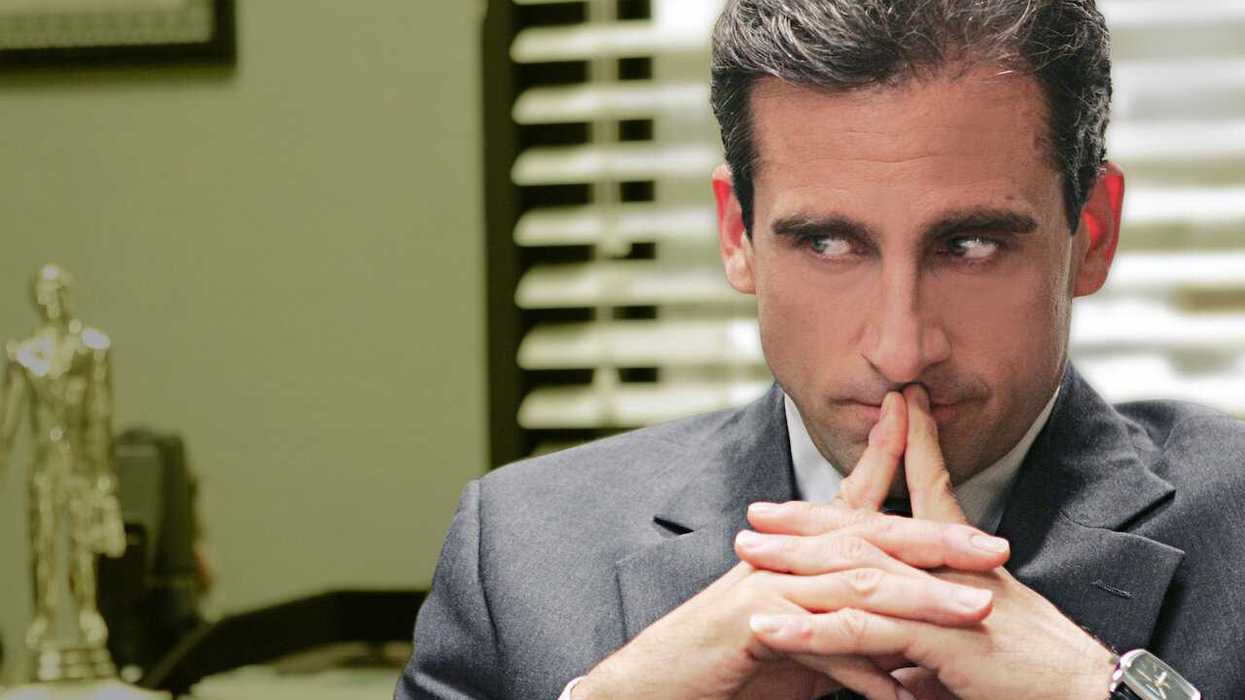
Michael Scott, the hapless regional manager at the center of the American version of “The Office” played by Steve Carell, believed he was the world’s best boss. He even had the mug to prove it.

Meanwhile, for most of the show’s 2005-2013 run, his employees endured pointless meetings, cringed through his speeches and quietly counted the hours until they could leave. The joke worked because so many viewers recognized something universal: the gap between how bosses sees themselves and how workers actually experience them.

That gap is no longer just a sitcom premise. It may be the central reason American workplaces are in trouble.

In the U.S., only about 30% of part-time and full-time employees say they are engaged at work, according to an annual Gallup survey. That’s the lowest level in more than a decade.

Determining whether am employee is engaged boils down to a single question: Does the work matter to the person doing it? Engaged employees are invested in the outcome of their work. Disengaged ones have stopped caring.

I’m a cultural historian who has written extensively about workplace culture, including the book “The Authentic Leader: The Power of Deep Leadership in Work and Life.”

And I believe that when more than two-thirds of the workforce is checked out, it’s evidence of a widespread leadership failure.

What gets said behind closed doors

One reason why most workers aren’t engaged on the job has to do with their psychological safety, meaning whether they feel they can speak up, ask questions or admit mistakes without being punished. I have been tracking the gap between psychological safety as a stated value for employers and the lived reality of their employees for years.

Amy Edmondson, a leadership and management scholar, has pioneered research in this area. Teams with that have high levels of psychological safety outperform those that don’t, she’s found.

When employees feel psychologically unsafe, they go quiet, contributing to the widespread lack of engagement that Gallup has identified. Most workplace research relies on employee surveys, which capture what workers are willing to say in the moment. But those surveys don’t always capture what workers truly feel.

The 2026 Psychological Safety Study that the Center for Organizational Effectiveness, a consulting firm, released in March 2026 took a different approach. The study draws on anonymized clinical conversations with workers at over 100,000 companies, organizations and government agencies that employ 88 million people around the world. The data was drawn from what employees told licensed counselors in confidence.

Both studies estimate the scale of related problems.

Workers are running on empty

The Center for Organizational Effectiveness study identified the top three concerns impeding psychological safety in workplaces around the world.

Globally, the top concern is work-life balance, specifically when job demands consistently exceed the time and energy workers have to meet them.

The second is job-performance anxiety. That’s the stress of trying to meet a supervisor’s vague or constantly changing expectations.

The third is contending with unclear objectives. Many workers simply don’t know what they are aiming for, what their priorities should be or in which direction their employer actually wants to head.

That third finding connects directly to Gallup’s results. Only 46% of American workers feel that they clearly know what their employers expect from them, down from 56% in 2020.

A work-life imbalance

The Center for Organizational Effectiveness noted a different shift in the United States: For American workers, being stretched thin has become the new normal.

Work-life balance has displaced workplace trauma – harassment, violence or sustained high-stress environments – as the leading concern for American employees.

Chronic exhaustion is now a hallmark of employment, whether you work in an office or from home.

Employee fears of seeing their jobs eliminated due to the rise of artificial intelligence or a weak economy are adding to a perception of imbalance.

Same problem with different causes

The Center for Organizational Effectiveness’ report highlights distinct trends in different places.

For example, in France, the top workplace concern is a lack of room for professional development. With workdays kept short by strict labor laws, access to learning opportunities and, as a result, career mobility tend to be limited.

But unlike in the United States, work-life balance does not appear in France’s top three concerns.

American workers feel they cannot breathe. French workers feel overlooked and stagnant.

A lack of clarity about how well they’re doing their jobs ranked as a top concern for workers in 11 countries, including the Philippines, Vietnam, Brazil and Mexico.

The workers who registered that concern are frustrated by their managers’ unclear goals and shifting priorities. This data suggests that corporate leaders are not defining what good performance means, which translates into their employees becoming risk-averse, which limits innovation and entrepreneurship.

“The Office” captured this dynamic perfectly. Michael Scott’s staff never knew what he actually wanted, because he didn’t know either.

Priorities shifted along with his moods. Success was whatever pleased him that afternoon.

The humor came from watching competent people freeze, hedge and stop trying because the target kept moving. Played for laughs on television, the same pattern in a real workplace produces exactly what the data shows: workers who play it safe because they cannot see the standard they will be judged against.

What employers are misreading

Employers are not ignoring these problems. They are misreading them.

Executives’ and managers’ intentions are usually good, as are Michael Scott’s. But their behavior – which workers read far more closely than any mission statement – tells a different story. I call this a leadership chasm: the gap between what executives believe and what employees feel.

Sensing that gap, workers default to skepticism. They measure what leaders say against what they actually do. They become skilled at spotting the distance between the two.

Many employees feel it when their employers adopt the language of psychological safety as performance without authentically creating a supportive culture. If an employee sees a colleague get rebuked after raising a concern, then they understand the real lesson, regardless of the manager or executive’s “open-door” claims.

“Psychological safety doesn’t exist in isolation,” says Donald Thompson, managing director of the Center for Organizational Effectiveness and author of “The Employee Engagement Handbook.” “It’s built on the daily realities of how people experience work.”

For employees to believe in their bosses, they have to watch it happen. For example, it helps if they can see a co-worker raise a tough question and their leader responds with openness, rather than defensiveness.

For most American workers, that moment hasn’t arrived. They’re too worn down or discouraged to give their best.

Bob Batchelor, Assistant Professor of Communication, Media, & Culture, Coastal Carolina University

This article is republished from The Conversation under a Creative Commons license. Read the original article.

1933


The prosperity gospel 'heretic' serving as Trump’s evangelical whisperer


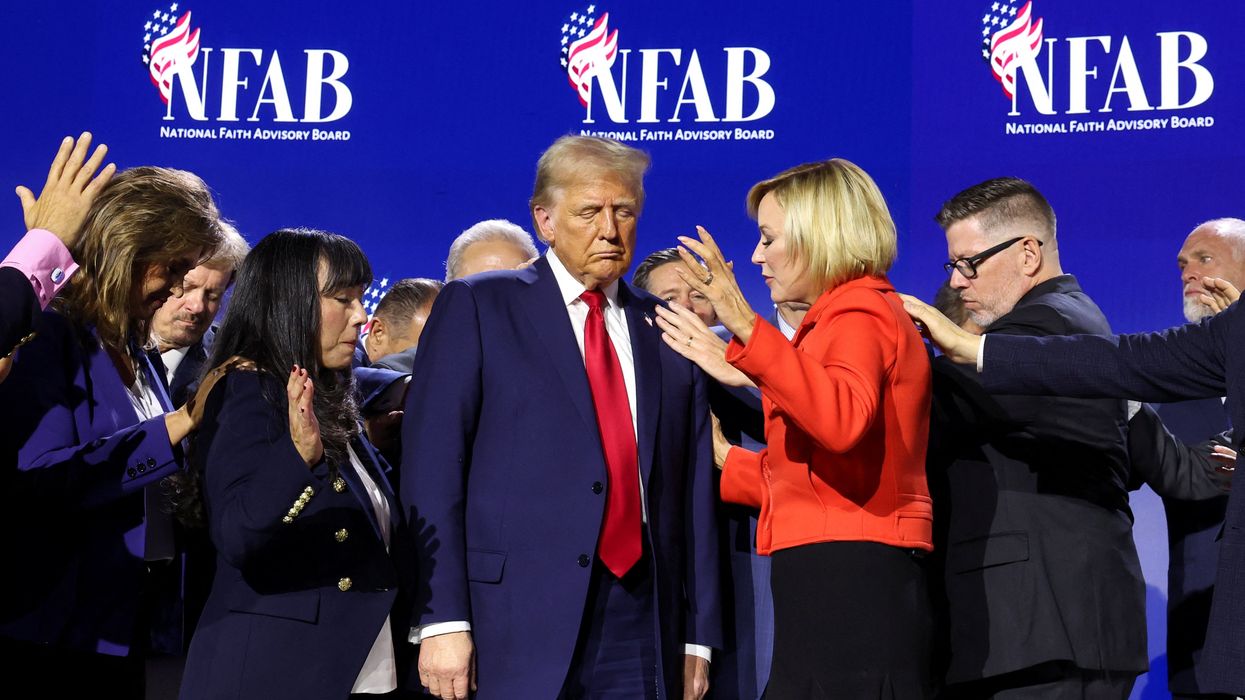
People stretch their hands towards Donald Trump as they pray, on the day Trump participates in in a moderated Q&A; with Pastor Paula White, at the National Faith Advisory Summit, in Powder Springs, Georgia, U.S., October 28, 2024. REUTERS/Brendan McDermid

June 16, 2026 
ALTERNET

Without evangelicals, there almost certainly wouldn’t be a President Donald Trump. In 2016, they turned out in greater numbers than most other voting blocs, and roughly 80 percent cast for Trump, a number that held steady through 2020 then 2024. Now, angered by war with Iran and the brutal immigration crackdown, Trump’s support has plummeted among evangelicals, hitting 63 percent in November before plunging to the 52 percent approval he holds today. In this political atmosphere, he’s going to need the aid of minister Paula White-Cain — who the Spectator calls Trump’s “guide” to evangelical America — more than ever.

Currently the senior advisor at the White House Faith Office, she began working with Trump in the early 2000s after he saw her preach on TV in Palm Beach. He thought, she told the Spectator, that she had the “It” factor. According to White-Cain, “It’s interesting because that’s what he called it. I turned around and said, ‘Oh, sir, we call that the anointing,’ which simply means God’s presence… and that was our hello.”

White-Cain, writes the Spectator, “is a televangelist, preacher, fundraiser and founder of Paula White Ministries, a global media and evangelical organization. Like the President, she is an outsider in the upper rooms of the Republican Party. Trump appointed her to the White House Faith Office in both of his terms, though she was far from the obvious choice, and for all these years, he has relied on her to help him navigate the complex world of American evangelical elites.”


Her selection was viewed as controversial because of the schism she represented in the “theological turf war” being fought within the administration. As Obama Faith Office staffer Michael Wear explained, “What’s interesting about Paula White is how much easier things would have been for Trump if he had not picked Paula White. Many conservative evangelicals and others will outright call her a heretic.”

According to the Spectator, “White-Cain sees the world the way many Americans do: God, angels and demons all impact outcomes.” She lacks the institutional or denominational background typical of her role, having “brought in more Pentecostals and members of non-denominational charismatic congregations… She has also been accused of preaching a heresy called the ‘prosperity gospel’: the idea that in exchange for faith you might receive material blessings as well as salvation. She often asks people to give money to Israel, which triggers intense backlash from both right and left. There are many conservative Christian leaders who would be hesitant to share a stage with her.”


“And that would include me,” Doug Wilson, pastor to Defense Secretary Pete Hegseth, told the Spectator. As the outlet explained, “Wilson occupies the other side of the administration’s theological turf war… Wilson does not believe women should be able to hold pastoral positions. He is also among a group of evangelical Christians who view Trump as a political vessel fighting on their side of the culture war, rather than one of their own. This puts a fine point on the irony that Trump’s chosen leader for the Faith Office is a woman.”

As the Spectator notes, many found it strange that “White-Cain did not attend ‘Rededicate 250,’ a large-scale event on the National Mall on May 17 with the sole purpose of recommitting America to Christianity, in person: she appeared via video on a large screen. This has caused some in the evangelical world to wonder if deals are being struck behind the scenes to keep White-Cain away from certain events.”

While Trump often speaks about religion, he avoids discussing his personal beliefs. White-Cain claims this is her doing, saying, “I actually told him, prior to 45, ‘Sir, this is really brutal out here… They’re going to come after you with some theological questions.’ I recommended… that he holds that close to his chest.”


She said she came to this conclusion after a notorious incident at Christian Liberty University. As the Spectator explained, when asked about the Bible, Trump “said ‘Two Corinthians’ instead of ‘Second Corinthians’ in reference to the Pauline Epistle: a minor error but a sure tell that he was an outsider in that world. Trump was teased for it and White-Cain had a hunch he had been led astray. ‘That’s when I realized that even people… in ministry…’ she trails off, alluding to the fact that he might be easily sabotaged if he wasn’t careful. ‘You know, maybe it was innocent, maybe it wasn’t,’ she adds. She told Trump she believed it would be smart to focus on policy. By following her advice, he has been able to court favor with evangelicals who have little in common with him.”


Conservatives have a thing for addiction: study

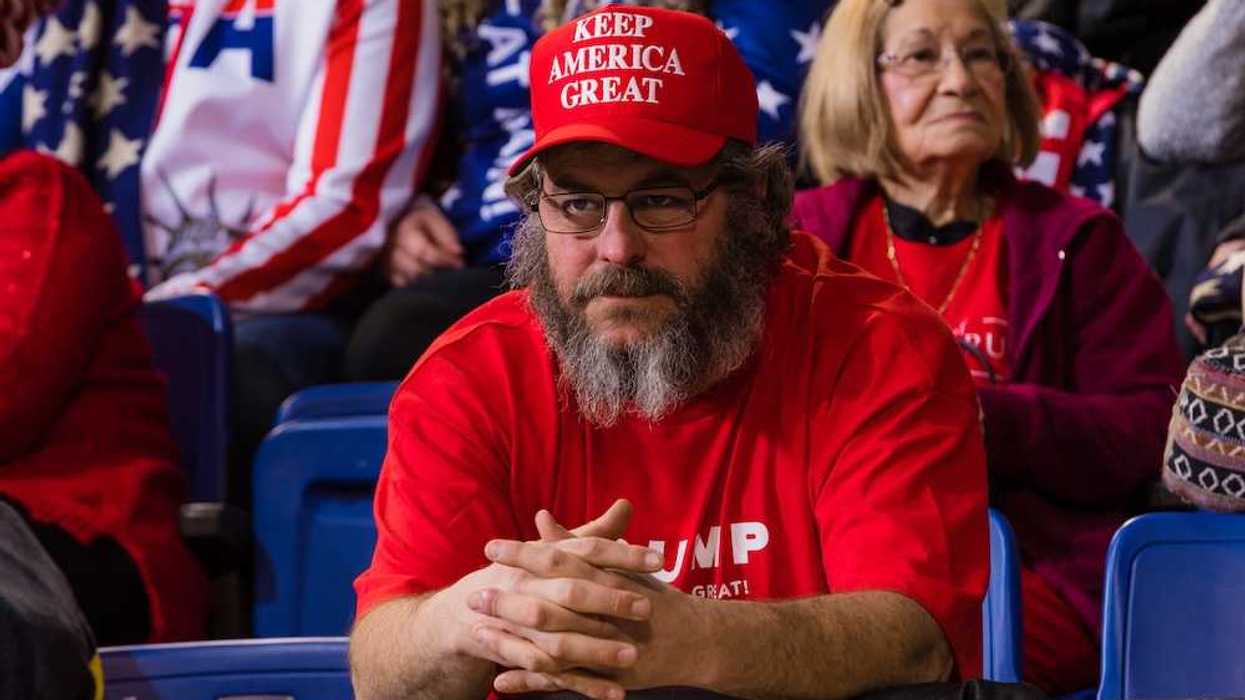
A supporter of President Donald Trump at a rally in Des Moines, Iowa on January 30, 2020 (Image: Shutterstock)

June 20, 2026 
 ALTERNET

Studies suggest there could be a reason your conservative friend has a bad habit.

“New research published in the Journal of Marketing provides evidence that a person’s political ideology shapes their responses to addictive products,” reports PsyPost. “The findings suggest that political conservatism is associated with more favorable attitudes and behaviors toward items like alcohol, tobacco, and gambling, due to a heightened perception of personal control.

Past studies have confirmed that political ideology affects consumer actions, like charitable giving and recycling. But researchers knew much less about how these same political beliefs affect choices that “carry significant health and financial risks,” like addictive products, which are manufactured specifically to “create physiological and psychological dependencies.”


The difference appears to come down to an individual’s perception of their own self-control — regardless of whether or not they really have any.

“Addictive products, such as gambling, alcohol, tobacco, gaming, fast food, and illicit drugs, create serious public health and social harms,” the authors report. “Yet people differ in how dangerous they think these products are and how favorably they respond to them. We wanted to understand whether political ideology helps explain these differences, as most prior research has focused on how ideology shapes positive consumer behaviors, rather than potentially harmful ones.”


Apparently, an overblown sense of self confidence can lead you into addictions that you’ve convinced yourself you have a handle on.

“The researchers proposed that this heightened feeling of control might lead conservatives to underestimate the inherent dangers of addictive products. If individuals believe they are always in charge of their actions, they might perceive addictive substances as less threatening. This reduced perception of danger could then result in more favorable attitudes and increased consumption,” reports PsyPost.

“Our main finding is that political ideology can shape how people respond to addictive products,” the authors said. “Across ten studies, we found that conservatives, compared with liberals, tended to have more favorable attitudes, intentions, and behaviors toward addictive products. This happened because conservatives reported a stronger sense of personal control over their actions, which made these products seem less dangerous.”

The results came as a bit of a surprise because it ran counter to expectations based on previous psychological profiling.


“Prior research often suggests that conservatives are more sensitive to risk and threat, so one might expect them to view addictive products more negatively,” the authors explained. “Instead, we found the opposite. In this context, conservatives’ stronger sense of agency seemed to reduce their perception of addictive product danger.”

But it wasn’t a fluke, they said.

“We also tested the effect across different countries, including the United Kingdom, the United States, Canada, Australia, and New Zealand,” they said. “The fact that we observed similar results across these settings suggests that the relationship is not unique to a single country or political system. We also found the pattern across several addictive products, including alcohol, tobacco, gambling, fast food, gaming, and drugs.”


Jasmina Ilicic and Stacey Brennan authored the study, “Political Ideology Shapes Consumer Responses to Addictive Products.


Surging in Michigan Democrat Senate Primary, El-Sayed Best Positioned to Beat Republican: Polls

“He’s the strongest and safest candidate to not only hold the seat but use it to pass transformative legislation to get money out of politics, put money in pockets, and pass Medicare for All,” said Abdul El-Sayed’s campaign.


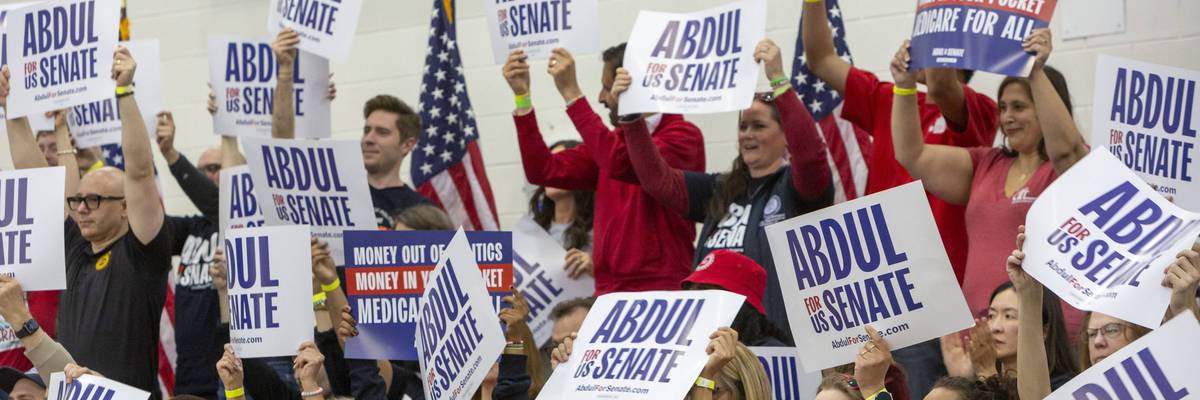
A crowd holds signs supporting Abdul El-Sayed for US Senate at a rally in Detroit on May 3, 2026.
(Photo by Jim West/UCG/Universal Images Group via Getty Images)

Julia Conley
Jun 18, 2026
COMMON DREAMS

Opponents of progressive former Detroit public health official Abdul El-Sayed have insisted he would be a risky candidate to face Republican contender Mike Rogers, with state Sen. Mallory McMorrow, who is running against El-Sayed in the Democratic primary, suggesting his support for Medicare for All is too radical, and a centrist think tank attacking him for campaigning with an outspoken critic of Israel.

But polls released Wednesday revealed that not only is El-Sayed continuing to surge ahead of McMorrow and US Rep. Haley Stevens, but he also appears to have a better chance of beating Rogers in a statewide race.

A new poll taken by Mitchell Research and Communications between June 11-13 found El-Sayed received the support of 42% of respondents, nine points ahead of Stevens. McMorrow, who has positioned herself as a “moderate” middle ground between her two opponents, had 6% support.

The survey found that El-Sayed continued to build his support among voters under the age of 45, with the candidate 83 points ahead of his opponents in the race that has been called a “millennial showdown” by local media. All three candidates are between the ages of 39 and 42.


Last month, another survey by Mitchell Research and Communications found El-Sayed with the support of 80% of voters ages 18-44.

A separate poll released by Zenith Research on behalf of Common Defense—a grassroots organization of military veterans and their families—found El-Sayed three points ahead of Rogers, a former congressman.

Forty-five percent of respondents backed El-Sayed in a hypothetical matchup with the Republican, who had polled at 42%.

In a hypothetical McMorrow-Rogers matchup, the Democrat had 44% support compared the Republican’s 42%, while Stevens was just one point ahead of Rogers.

“The difference between El-Sayed and Stevens’ vote shares—45% and 43%, respectively—appears to be due to Stevens’ relative unpopularity among voters who self-identify as ‘very progressive or liberal,’” said Adam Carlson, founding partner of Zenith Polls. “Thirty-one percent of progressive/liberal voters hold a ‘strongly unfavorable’ view of Stevens.”

Several respondents, said Carlson, cited Stevens’ ties to the American Israel Public Affairs Committee “as the driving cause, which coincides with AIPAC taking a more active role in the campaign in recent weeks.”

Polls have shown that since Israel began its US-backed assault on Gaza in October 2023, public support for Israel and AIPAC, the powerful pro-Israel lobby group, has plummeted, particularly among Democratic voters.

The pollster found that 51% of respondents would support a candidate who backs Medicare for All—a top focus of El-Sayed’s policy platform—while 33% said they would prefer a candidate who supports maintaining the for-profit healthcare system as it is. Stevens and McMorrow have said they support a “public option” to compete with for-profit insurers. McMorrow falsely claimed in a recent interview that Medicare for All does not have significant public support.

“Abdul is the ONLY one who can turn out a broad coalition to beat Rogers in November,” said El-Sayed’s campaign in response to the poll. “He’s the strongest and safest candidate to not only hold the seat but use it to pass transformative legislation to get money out of politics, put money in pockets, and pass Medicare for All.”

At MeidasTouch on Wednesday, correspondent Scott MacFarlane asked El-Sayed why his critics continue to claim he would not be electable in the general election.

“I think my party doesn’t really know what electability is any more,” said El-Sayed. “They think electability is about being the most middle-of-the-road Democrat.”


“What they don’t realize,” said El-Sayed, “is that the Democratic Party’s brand has been destroyed by Democrats who take money from corporations to water down a message, and then wonder why our base doesn’t show up for us.”


Khanna Becomes First in Congress to Sign ‘Peace Pledge’ Promising to Reject AIPAC Funds

The co-founder of AIPAC Tracker said the pledge is meant to give lawmakers who once backed Israel “a bridge to get on the right side of history.”


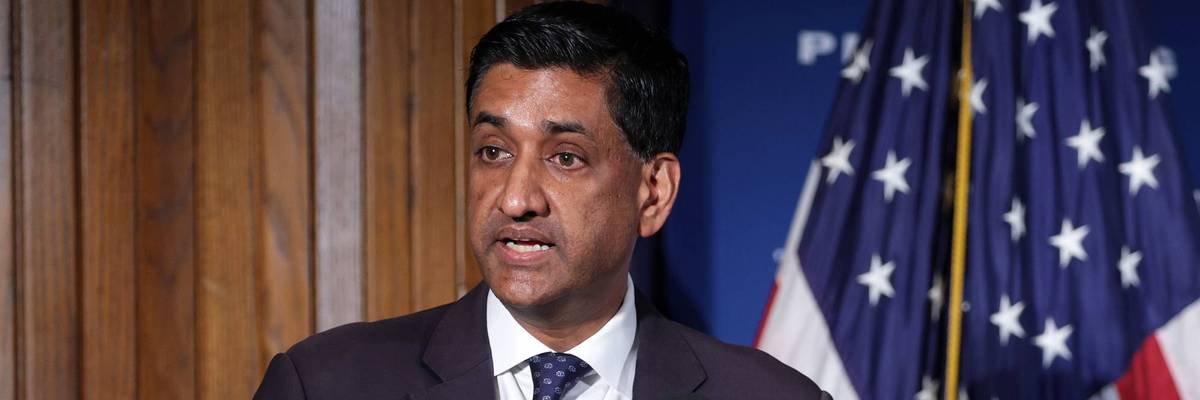
US Rep. Ro Khanna (D-Calif.) delivers remarks during a National Press Club Headliners Newsmaker event on April 14, 2026 in Washington, DC.
(Photo by Alex Wong/Getty Images)

Stephen Prager
Jun 17, 2026
COMMON DREAMS

Rep. Ro Khanna has become the first member of the US Congress to sign a “peace pledge” promising to swear off funds from the Israel lobby and block US support for countries that violate human rights.

The pledge was created by the political action committee Citizens Against AIPAC Corruption, which runs the widely shared “AIPAC Tracker” social media campaign that names and shames politicians who receive support from the American Israel Public Affairs Committee and other pro-Israel groups that have spent tens of millions in recent election cycles to influence members of Congress.

Lawmakers who sign the pledge agree not to take money from AIPAC or pro-Israel lobbying groups and promise to make campaign finance reform a key priority.

Acknowledging the consensus among human rights organizations that Israel is committing a genocide in Gaza, signatories also commit to taking actions in Congress to oppose US military and diplomatic support for Israel or any other nation whose military commits gross human rights violations.

They also agree to oppose efforts by the US government to sanction members of the International Criminal Court who seek the arrest of accused war criminals, including Israeli Prime Minister Benjamin Netanyahu.

Signatories also agree to support First Amendment protections for speech critical of Israel as well as efforts to use financial pressure against the country, like the Boycott, Divestment, and Sanctions (BDS) movement, which members of Congress have sought to criminalize.


In a video in which he signed the pledge on Wednesday, Khanna (D-Calif.) described its commitments as “pretty common sense.”

“It means that we shouldn’t be sending our tax [money] for foreign wars overseas, we should be spending it here at home,” he said. “And it says we shouldn’t be taking money from AIPAC or all of its affiliate PACs or bundled money from those organizations, and that we have to recognize the genocide that took place in Gaza.”

He said, “I’m going to be signing this pledge, and I hope others will follow.”


The push for lawmakers to sign the pledge comes as support for Israel has plummeted to historic lows, especially among Democratic voters in the wake of the Gaza genocide, its accelerating ethnic cleansing campaigns in the illegally occupied West Bank and southern Lebanon, and its role in pressuring the Trump administration to launch and continue a devastating war against Iran.

Voters increasingly view AIPAC as having undue influence over American lawmakers, and many Democrats—including longtime supporters of Israel—have seen the writing on the wall and become vocal critics of the lobby.

Khanna is one of them, having previously accepted money from the liberal Zionist group J Street and voted to fund Israel’s Iron Dome in 2021 and in favor of a resolution conflating anti-Zionism with antisemitism in the wake of October 7, 2023.

Cory Archibald, the co-founder of Track AIPAC, said the goal of the pledge is to give these politicians an opportunity to transform themselves on the issue while also forcing them to put their votes where their mouths are.

“While we have created a very successful pressure campaign to highlight and expose the extent of the influence of AIPAC and their allies on our lawmakers,” she said Wednesday on the Breaking Points podcast, “we also have a responsibility as an organization to give people a bridge to get on the right side of history and to reflect that their policy positions have changed and to chart a new course.”
Thanks to Trump’s Iran War Disaster, Fossil Fuel Industry to Enjoy $700 Billion Windfall in 2026

“We witness not only a massive fossil fuel crisis but a vast upward transfer of wealth built on instability of fossil fuel markets and pain,” said an expert at 350.org


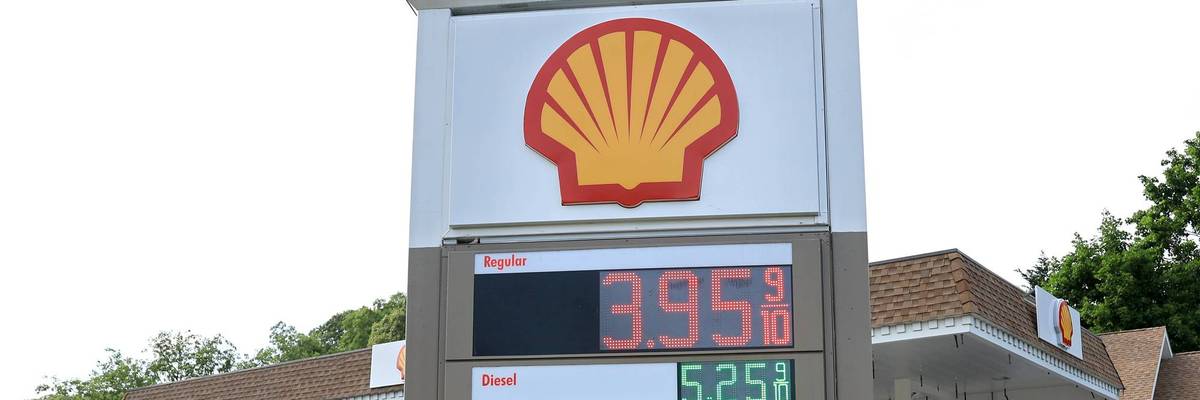
Gasoline prices hover near $4 for Regular at a Shell Station on Middle Country Rd. in Lake Grove, New York, on June 10, 2026.
(Photo by Thomas A. Ferrara/Newsday RM via Getty Images)


Stephen Prager
Jun 18, 2026
COMMON DREAM


US President Donald Trump’s war with Iran may finally be reaching a close. But consumers and businesses around the world will continue to pay the price in the months ahead as still-elevated energy costs funnel hundreds of billions of dollars to fossil fuel giants.

That’s according to a report from the environmental group 350.org released Thursday, following Trump’s signing of a memorandum of understanding with Iran this week to begin the process of formally ending a war that has sent global oil prices skyrocketing and saddled ordinary people with record fuel prices.

The group estimated that just 110 days of war resulted in the transfer of an additional $374 billion from consumers and businesses into the coffers of oil and gas companies beyond what would have been expected had the war never been launched.

And while Trump claims his agreement to end the war this week will avert an “economic catastrophe,” there will likely still be tremendous pain even if the Strait of Hormuz reopens promptly.

Using oil and gas pricing scenarios from the International Monetary Fund’s April 2026 World Economic Outlook and data on global consumption, 350.org predicted that by the end of the year, consumers and businesses will spend an additional $199.8 billion on oil and $128.1 billion on gas above a non-war scenario, making for a grand total of more than $700 billion as a result of the war.

This, the group said, is a conservative estimate, as it does not even take into account knock-on effects. The war will ultimately end up costing much more when factoring in inflation across the rest of the economy, resulting from higher fuel costs or fertilizer shortages caused by the strait’s closure, which has affected food prices.

It also does not take into account the resulting effects on economic output or employment as rising costs and lower consumer spending force companies to tighten their belts.

“The oil and gas industry is draining billions from people and businesses on the back of a war that has killed thousands and pushed millions toward poverty and hunger,” said Andreas Sieber, head of political Strategy at 350.org.

“Even if the Strait of Hormuz reopens tomorrow, we should expect prices to remain above pre-crisis levels,” he said. “We witness not only a massive fossil fuel crisis but a vast upward transfer of wealth built on instability of fossil fuel markets and pain.”

While the war has brought it into starker relief, previous reports from 350.org have shown that even if the US had never attacked Iran, the continued global dependence on fossil fuels was resulting in trillions of dollars of avoidable costs each year, including $9.3 trillion to mitigate climate-related damages and air pollution-related deaths each year, costs that disproportionately fall on the world’s poorest.

In order to alleviate economic strain from the war, Sieber said, “governments should tax these excess profits now and use the revenues to protect people, cut bills, and rapidly deploy renewables that make households and small businesses less vulnerable to the next fossil fuel shock.”

Estimates of inflation also do not account for how the war has heightened global instability and poverty, which will require additional resources for humanitarian relief efforts. In late April, the United Nations Development Program estimated that even if the conflict had ended then, more than 32 million people worldwide would be pushed into economic precarity.

This is not to mention the resources that will need to be expended to address the harms caused by the war itself.

In exchange for negotiations on Iran’s nuclear program, a portion of the memorandum of understanding requires the US to work with “regional partners,” presumably other Persian Gulf allies, to scrounge up at least $300 billion to help Iran pay for reconstruction and economic development after the country was devastated by American and Israeli attacks on civilian infrastructure and millions were displaced.

As a report from the International Rescue Committee detailed last week, the Iran war has also had cascading effects on other conflicts and catastrophes.

“Six months ago, the IRC warned that a New World Disorder was emerging,” said David Miliband, the humanitarian group’s president and CEO. “Since then, disorder has not only grown but accelerated. A war with Iran. A million people have been forced to flee their homes in Lebanon. A brewing global food security catastrophe that risks plunging millions more people into acute hunger. An expanding Ebola outbreak. Defanged diplomacy and collapsing aid budgets.”

“The Iran war couldn’t have happened at a worse time,” Miliband said in a New Yorker article published Thursday. “It set off a chain of events that’s very damaging.”


110 Days of Trump’s Iran War Cost US Consumers $53 Billion Extra in Raised Gas Prices

“Even if the Strait of Hormuz reopens tomorrow, we should expect prices to remain above pre-crisis levels,” said an expert at 350.org


A man pumps gas at the Chevron gas station on Sawtelle Blvd and Culver Blvd. on June 15, 2026, in Los Angeles.
(Photo by Kayla Bartkowski/Los Angeles Times via Getty Images)


Stephen Prager
Jun 18, 2026
COMMON DREAMS

President Donald Trump said on Wednesday that if his war in Iran continued much longer, the US could have faced “economic catastrophe” with gas prices expected to soar as emergency oil reserves were exhausted.

But new reports suggest that although the war appears to be coming to an end and the Strait of Hormuz is reopening, extraordinary irreversible damage has been done, and the economic consequences will be felt well into the future.

The Institute on Taxation and Economic Policy (ITEP) estimates that as a result of the war, Americans have paid nearly $54 billion extra for gas and fuel, amounting to more than $400 per household, than if the war had never started.

In the wake of the memorandum of understanding signed between the US and Iran, Trump has tried to claim credit as average gas prices have fallen below $4 for the first time since the early days of the war in March. However, gas still costs 25% more than it did last year.

This state of affairs can be expected to continue into the future. As The Associated Press reported Thursday morning:


Even as gas prices start to decline, it is anticipated to take weeks or months for oil to start flowing through the Strait of Hormuz again...

And Gulf oil producers that throttled back production will need time to get the oil moving again. Analysts also say ship captains may take their time to decide if passage is safe and that the threat of attack from Iran has truly receded.

In addition, refineries typically pay for crude oil a month or more in advance, so even after oil prices drop, they won’t immediately be processing cheaper products.

Fighting over the Strait of Hormuz disrupted not only supplies of crude and refined fuel but also the supply chains for fertilizer, food, and even footwear. Businesses expect higher costs to linger, which means their customers might need to prepare for that too.

Patrick De Haan, a petroleum analyst at GasBuddy, told CBS News it will be “a very long, multi-month to multi-year process for things to fully normalize,” and that it could take “until potentially mid-to-late 2027” for gas prices to return to pre-war levels.

Even as Americans, and indeed consumers around the world, continue to see their pocketbooks drained in the coming months, there is one big winner here: the fossil fuel industry.

An analysis released on Thursday by the environmental group 350.org shows that over the course of the war, households and businesses have paid the oil and gas industry an additional $374 billion in profits due to higher prices driven by the war.

Based on pricing scenarios from the International Monetary Fund, the group projected that even with the Strait of Hormuz open, the amount siphoned off could balloon to over $700 billion by the end of the year.

“Even if the Strait of Hormuz reopens tomorrow, we should expect prices to remain above pre-crisis levels,” said Andreas Sieber, 350.org’s head of political strategy. “We witness not only a massive fossil fuel crisis but a vast upward transfer of wealth built on instability of fossil fuel markets and pain.”