Sunday, June 21, 2026


New study led by South African scientists reveals how sea-ice microbes survive the Southern Ocean’s harsh winter, with implications for climate change


This study further reinforces the importance of the Southern Ocean marginal ice zone as a critical hotspot for global sulfur cycling where biogeochemical processes for climate regulation are enhanced.


Stellenbosch University

Sampline pancake sea-ice in the Southern Ocean 

image: 

The samples for the study were collected during the Southern Ocean Seasonal Experiment (SCALE) austral winter expedition on board the SA Agulhas II polar research vessel from 11 to 22 July 2022.

view more 

Credit: Dr Mayi Buthelezi


A study led by South African scientists reveal that during winter the sea-ice around Antarctica harbors a reservoir of microbes of which most have one thing in common – the ability to produce and breakdown a compound known to protect organisms in extreme environments.

The compound, known as DMSP (dimethylsulfoniopropionate), is one of Earth’s most abundant organic sulfur compounds in the marine environment. Apart from its ability to protect organisms against environmental stressors, its degradation yields dimethylsulfide (DMS) and methanethiol (MeSH) which are important climate-cooling gases.

In polar regions, however, the role of DMSP remains understudied. In the case of the Southern Ocean, sea ice has until recently been considered an inhospitable environment whose microbial communities contribute little to the ecology of the polar region.

In a new study published in Nature Communications today (18 June 2026), scientists reveal up to 38-fold higher DMSP concentrations in Southern Ocean sea-ice versus the surrounding seawaters during the Southern Ocean austral winter. This finding matters because at its maximum in September, the ice extends to cover about 20 million km2 encircling the Antarctic continent in a 400 to 1 900-km wide ring of ice.

The study was led by scientists from Stellenbosch University in South Africa, in collaboration with scientists from the United Kingdom and Italy.

Southern Ocean sea-ice a reservoir of DMSP

Dr Mayi Buthelezi, a marine microbiologist from Stellenbosch University and first author on the paper, says their findings reveal that Antarctic sea ice is a concentrated reservoir of DMSP.

“Together with these high concentrations of DMSP, we also found an abundance of algal marker genes which are encoding for DMSP production, as well as diverse and previously unidentified bacterial producers. These processes are central to sustaining the ecological and physiological adaptions of microorganism in these extreme environments,” he explains.

Their findings reveal the widespread metabolic pathways for DMSP cycling in Southern Ocean sea ice microbes. It further underscores the role of this seemingly uninhabitable environment as a dynamic reservoir and transformation hub influencing climate-cooling cycles in the polar region.

Prof. Thulani Makhalanyane, holder of the South African research chair in African Microbiome Innovation at SU and senior author, says their findings contribute to our understanding of the role of the Southern Ocean in terms of global nutrient cycles and climate control.

“The specific contributions of microbial communities to Earth systems remain underappreciated. Until now we have just basically tried to describe what types of microorganisms are in the Southern Ocean, and how they differ from those that are found in other marine ecosystems that are not limited in trace elements such as iron and manganese.

“With this study we show how microbial communities are contributing to the recycling of important sulfur-related compounds with important contributions in climate cooling. Now we need to find ways to add these microbial communities as components to Earth system models to aid in predictions,” he explains.

Dr Stéphane Pesant, co-author and senior marine data curator at the European Bioinformatics Institute (EMBL-EBI) in the United Kingdom, says the results of this study contributed key knowledge to the research and innovation project AtlantECO (Atlantic ECOsystems assessment, forecasting and sustainability), a collaboration between scientists in South Africa, Brazil and Europe.

“With the recent expansion of data infrastructures, bioinformatics skills and artificial intelligence, we are starting to exploit a treasure trove of historical data, and to identify important gaps in the geographic coverage of those observations. This study contributes to fill those gaps,” she adds.

Sampling the Southern Ocean in winter

The samples for the study were collected during the Southern Ocean Seasonal Experiment (SCALE) austral winter expedition on board the SA Agulhas II polar research vessel from 11 to 22 July 2022. During austral winter, the Southern Ocean sea ice expands far to its northern boundary. Coupled with some of the strongest winds on the planet, it is very difficult to access this region at this time to collect samples. That is why this type of data is of disproportionally high value (compared to an overrepresentation of data collected during summer).

Dr Buthelezi, who participated in this expedition, says his first objective was to determine the structure, composition and abundance of microorganisms during this time of year. But it soon became clear that he would also need to understand the ecological significance of finding such high concentrations of DMSP in this environment.

“Although DMSP production is exclusive to some microbial groups, the process is not metabolically expensive,” he explains. “Under stressful conditions, when organisms cannot afford to spend excessive energy for growth, they express metabolic pathways for either intercellular synthesis or extracellular import of DMSP as a buffering mechanism to survive. At the same time, DMSP is a vital source of carbon and sulfur for microorganisms, which further explain the multifaceted roles of DMSP within microbes trapped in sea ice.”

Elevated DMSP production in sea ice compared to seawater is clearly supported by metagenomic data showing enrichment of genes capable for DMSP synthesis. The results further show enhanced microbial demand for DMSP as an antistress in freezing and hypersaline environments of the sea ice. In sea water, the high abundance of genes for DMSP degradation compared to those for production shows that in this relatively less stressful environment microbes also disproportionately utilise DMSP as a sulfur and carbon source.

Altogether, the presence of DMSP cycling pathways in seawater and sea ice are sufficient markers for the production of the volatile climate-cooling gases dimethylsulfide and methanethiol. This study further reinforces the importance of the Southern Ocean marginal ice zone as a critical hotspot for global sulfur cycling where biogeochemical processes for climate regulation are enhanced.

Did you know

  • The sea-ice ecosyste is an extreme, low temperature environment with internal temperatures perpetually subzero, ranging from minus 1 degrees Celcius to minus 20 degrees Celcius in winter.
  • At its maximum extent in wintertime, the ice extends to cover about 20 million km2 encircling the Antarctic continent in a 400-1,900-km wide ring of ice.
  • Microbial communities are central to primary and secondary production of the global ocean, including the Southern Ocean. In this environment they are essential for nearly half of the atmospheric carbon uptake and nutrient recycling which is important for Earth’s climate system.


Climate change is now causing more local extinction in temperate regions than the tropics, surprising study shows


A global study of more than 5,100 species of plants and animals challenges long-held assumptions about which species are most threatened by climate change.


University of Arizona

Tropical Asian Tree Frog 

image: 

While many tropical species such as this Asian Tree Frog are threatened by climate change, species in temperate regions are affected by local extinction to an even greater degree, according to the new study.  

view more 

Credit: John Wiens


Imagine returning to a favorite hiking trail 15 years after your first visit and discovering that many of the plants and animals that once lived there are gone. While these species may still exist elsewhere, these disappearances – known as local extinctions – are among the clearest signs that climate change is already transforming ecosystems and threatening species across the globe.

University of Arizona researchers compared local extinctions from recent climate change among more than 5,100 plant and animal species from around the world, including hundreds of species of moths and beetles, hundreds of fishes and birds, many mammals, frogs, salamanders, and lizards, and almost 3,000 species of plants.

In the study published in Nature Climate Change, the researchers found that 49% of temperate species experienced local extinction at the hottest parts of their ranges, compared with only 33% of tropical species.

The research drew on repeated biodiversity surveys from nearly 40,000 sites worldwide, allowing them to compare historical records with resurveys conducted years or decades later, making it the largest analysis of climate-driven local extinctions conducted to date.

"For decades, scientists generally believed that temperate species were less vulnerable to climate change," said Gopal Murali, the lead author of the paper and former postdoctoral scholar at the University of Arizona. "We were surprised by our results, which showed that was not the case."

These results were consistent across many different groups of organisms, including insects, vertebrates, plants, and marine and freshwater species.

"I actually published a study of 976 species in 2016 using the same type of data that showed the exact opposite pattern, with more local extinction among tropical species," said John Wiens, senior author of the paper and a professor in the University of Arizona Department of Ecology and Evolutionary Biology in the College of Science. "That's part of why we were so surprised."

To understand the unexpected pattern, the researchers analyzed multiple climate-related factors, including long-term warming trends, rainfall changes, drought conditions and heat waves across global sites. They also excluded sites that may have been affected by non-climatic stressors, such as deforestation.

The researchers found one main explanation for the pattern: temperate regions are warming faster than tropical regions.

"The world has changed since 2016," Wiens said. "There's been more heating in the temperate zone, especially at higher latitudes, and it's possible that the pattern has simply flipped in recent decades, and that helps explain the reversal in findings. For animals, we did not find that tropical extinctions were less common than we thought before. Instead, we found that temperate extinctions had outpaced tropical extinctions."

The researchers found that the maximum increase in temperature over a 25-year period was approximately 3.3 degrees Fahrenheit in tropical regions. In temperate regions, the maximum increase was about 6 degrees Fahrenheit – nearly twice as much.

The team also examined how species responded to warming in each region. For decades, scientists believed that tropical species would be especially vulnerable to climate change due to their physiology. Because tropical species evolved under relatively stable temperatures year-round, they were thought to have less tolerance for temperature changes than temperate species, which experience greater seasonal temperature variation.

"While faster warming in temperate regions appears to be the primary driver of local extinctions, we also found that temperate species are at least as sensitive to rising temperatures as tropical species," Murali said.

The observed local extinctions do not necessarily mean that the entire species went extinct, but they do show that the populations cannot survive the changing environmental conditions. Similar losses across a species' range can lead to extinction of the whole species.

"People often think that a species will simply move into cooler areas as the climate warms, but we found that more than 70% of the species were not doing so," said Wiens. "Essentially, the life and death of the majority of species may be determined by these local extinctions and whether local populations can survive in place or not."

For some species, moving to cooler habitat may not even be possible. Animals may be unable to cross highways, cities, or other developed landscapes, while fish and other aquatic species are often confined to specific lakes and rivers. On mountains, species can continue moving uphill as temperatures rise, but many may simply run out of mountain.

On some mountains, such as Mount Lemmon near Tucson, people can see the dead trunks of tree species that used to thrive at lower elevations that now only occur at higher elevations, said Wiens.

The study also revealed important differences in the patterns of extinction within tropical and temperate species. In tropical regions, climate-related local extinctions were concentrated at the warmest parts of each species' range. In temperate regions, however, populations often disappeared in many locations throughout the species' ranges.

"In the past, we have been laser-focused on the warmest areas," said Wiens. "But it turns out that nowhere is really safe for populations of many temperate species."

Across all species included in the study, researchers found that 45% had gone locally extinct at the warmest part of the region where they were previously found. For many groups, that number exceeded 50%, including insects, terrestrial vertebrates, and marine species.

The findings could have important implications for conservation planning. For years, tropical species were widely considered to face the greatest risks from climate change. While the new study does not suggest that tropical species are safe, it does indicate that temperate species may be in greater danger than previously recognized.

The researchers emphasized that the study is not based on projections of future impacts. Instead, it documents real biological changes that have already occurred.

"People often think climate change is something that will affect species in the future," said Murali. "But for both tropical and temperate species, we're already seeing the effects. The patterns we documented show that biodiversity is already changing in ways we are still working to understand."


European fire salamander 

A European fire salamander (Salamandra salamandra), one of the temperate species included in the study that has experienced climate-related local extinctions. 

Credit

John Wiens

Dead tree in Southern Arizona 

This dead alligator juniper (Juniperus deppeana) from near Bisbee, Arizona is one of the temperate species included in the study that has experienced climate-related local extinctions. 

Credit

John Wiens


Op-Ed


Is Affordability a Climate Issue? Philadelphia Hunger Strikers Said Yes.


A recent hunger strike in Philadelphia demonstrated the expanding scope of environmental justice organizing.

By Andrew Lee
June 15, 2026

Cherelle Parker is seen during her first press conference after winning the Democratic nomination for mayor in Philadelphia on May 22, 2023, in Philadelphia, Pennsylvania.Gilbert Carrasquillo / GC Images

On May 21, activists with the Philadelphia chapter of the youth-led environmental justice group Sunrise Movement began a protracted hunger strike, vowing to starve themselves until Mayor Cherelle Parker committed to spending an extraordinary $1.19 billion municipal budget surplus on community programs. They were demanding investments in renewable energy alongside demands not traditionally associated with the environmental justice movement, including affordable housing, food justice, and increased funding for rec centers and public libraries.

When the activists began planning the campaign, called Make Philly Affordable, last December, they knew they needed broadly popular demands to win the support of working-class Philadelphians. To develop the campaign’s seven demands, Sunrise Movement activists assembled a de facto coalition comprising a broad swathe of local progressive groups including economic justice, racial justice, education, and transit equity organizations. As the hunger strike entered its second week, Brit Christopher from the Good Energy Collaborative at Swarthmore College and Seth Anderson-Oberman of Reclaim Philadelphia, which emerged from Bernie Sanders’s 2016 presidential campaign, joined as participants.

“The climate crisis compels us to act now and our cities need to be prepared. Our city is going to need to make sure that they are adequately preparing for the most devastating impacts of the planetary crisis,” Sunrise Philly hunger striker Giavanna Troilo told Truthout.

Sunrise Movement Philly’s members aren’t the only green activists pushing the boundaries of the environmental justice movement amid worsening climate catastrophe, accelerating authoritarianism, and international war.

In New York, Sunrise Movement activists confronted Sen. Chuck Schumer over his links to the American Israel Public Affairs Committee. “AIPAC has corrupted our democracy and bought off our politicians,” the Sunrise Movement wrote in a post, “and working people are paying the price.” In Los Angeles, Sunrise Movement members participated in a mass direct action to protest Home Depot’s collaboration with Immigration and Customs Enforcement (ICE) as part of the Boycott Home Depot Coalition. Last year, the group formally expanded its mandate to include combatting authoritarianism. At the same time, Sunrise was labeled a “pro-terror group” by the far right Capital Research Center.


Sunrise Movement activists assembled a de facto coalition comprising a broad swathe of local progressive groups including economic justice, racial justice, education, and transit equity organizations.

Noted climate activist Greta Thunberg made international news when she sailed on the June 2025 Gaza Freedom Flotilla. The following year’s flotilla received operation support from Greenpeace’s vessel the Arctic Sunrise. Thunberg explained that “there is no way of distinguishing” between her climate activism and her pro-Palestine activism.

“No matter what the cause of the suffering is, whether that is CO2, whether that is bombs, whether that is state repression or other forms of violence,” Thunberg told Democracy Now!, “we have to stand up against that source of suffering.”

White Skin, Green Masks


Contemporary environmental activists are framing social justice as central to their work in a way that some storied environmentalists of the past would have found incomprehensible. U.S. environmental politics, both reformist and radical, have a fraught history when it comes to racial justice in particular.

John Muir, founder of the Sierra Club, celebrated Indigenous people being “dead or civilized into useless innocence.” Almost eight decades later, a Sierra Club official would found the anti-immigrant hate group Federation for American Immigration Reform. Edward Abbey, author of the iconic eco-saboteur novel The Monkey Wrench Gang, fretted over non-white birth rates while confessing that he “certainly [did] not wish to live in a society dominated by blacks, or Mexicans, or Orientals.” Dave Foreman, co-founder of the radical environmentalist group Earth First!, militated against legal immigration and went so far as to argue for letting the victims of the Ethiopian famine of the mid-1980s starve.

A 2019 study found that leading environmental NGOs remain disproportionately white, including 96 percent of senior staff at environmental foundations. Meanwhile, the U.S. climate justice movement, especially at the grassroots, has steadily incorporated social, economic, and racial justice as integral elements of its work.

In 1991, the First National People of Color Environmental Leadership Summit adopted 17 Principles of Environmental Justice, including “the fundamental right to political, economic, cultural and environmental self-determination of all peoples.” The 1996 Jemez Principles for Democratic Organizing, ratified at a meeting of 40 activists hosted by the Southwest Network for Environmental and Economic Justice, called for social movements to practice a pervasive inclusivity that “requires more than tokenism.”

By the time of the alter-globalization movement in the late 1990s, radical environmentalists were working alongside labor activists, Indigenous organizers, and anarchist militants, a coalition whose heterogeneity is echoed in the broad Make Philly Affordable demands of today’s hunger strikers. Thousands of environmental activists joined members of the Standing Rock Sioux Tribe in an attempt to halt construction of the Dakota Access Pipeline in 2016, with the water protectors’ struggle and the broader #NoDAPL campaign drawing a clear connection between tribal sovereignty and environmental justice.

Against Apocalypse


The co-mingling of environmental and social justice demands has only grown stronger with the rise of U.S. authoritarianism, the unprovoked U.S.-Israeli war against Iran, and the genocide of Palestinians in Gaza.

“The U.S. military is the greatest carbon polluter that we have globally,” Philadelphia hunger striker Giavanna Troilo told Truthout. “The U.S. military is the climate crisis. The U.S. military is committing genocide as well as ecocide, and they are one and the same.” An analysis by the Climate & Community Institute found that the first two weeks of the U.S. war on Iran created over 5 million tons of carbon dioxide, more than was generated by the entire country of Iceland in 2024. Meanwhile, the dramatic increase in ICE deportation flights has released hundreds of thousands of metric tons of greenhouse gases as well.

The Trump administration has gutted the Environmental Protection Agency (EPA), with one former EPA policy adviser opining that it ought to now stand for the “Environmental Pollution Agency.” In April 2025, Trump issued an executive order to revitalize the “beautiful, clean” domestic coal industry through sweeping deregulatory efforts across the federal government. This January, the United States’s (second) withdrawal from the Paris Climate Agreement went into effect. Scientists expect the climate to warm by more than 2.6°C by the end of the century, with catastrophic implications including agriculture failure, ecosystem collapse, severe flooding, and lethal heat. The authoritarian right has fully committed to an end-times fascism of “monstrous, supremacist survivalism,” while Democrats in opposition have largely abandoned even referencing climate change.

“There is no serious way to think about stopping the climate crisis under a fascist government. The path to climate lies through getting rid of the authoritarian government we’re in,” said Aru Shiney-Ajay, executive director of the Sunrise Movement.

U.S. activists aren’t alone in drawing the connections between authoritarianism and climate collapse. In 2025, a European network called The Surge launched combined demonstrations with environmental, anti-fascist, and anti-war organizations in 33 cities. “We have the climate crisis, the rise of fascism and the far right throughout the world, and the rise of wars and the ongoing genocide of the Palestinian people,” said network spokesperson Leonor Canadas. “Right now, the movements opposing these things are losing, and if we are to change the pathway on which we’re headed, we must come together.”

“There’s fascism and the apocalypse, and on the other side there’s utopia and organizing,” said Philadelphia hunger striker Erica Brown. “The result of these fascists, the result of these authors of the apocalypse, is our world being destroyed. So anybody who is an organizer needs to know that those are the stakes.”

Brown described feeling as committed and resolved as ever when she spoke to Truthout on the 17th day of her hunger strike, three days after being rushed to the hospital and released. Brown fasted until June 11, the longest of any of the hunger strikers, before calling off the nonviolent direct action once the City Council voted to pass the next fiscal year’s budget without the social programs insisted upon by activists. She believes that the Make Philly Affordable campaign is nonetheless just beginning, having already succeeded in heightening tensions between City Council and the Mayor’s office, demonstrating the nondemocratic nature of traditional municipal politics, and cohering a new, diverse coalition of social justice organizations with shared goals.

“This is a fight,” Brown said, “that’s for the rest of our lives.”


This article is licensed under Creative Commons (CC BY-NC-ND 4.0), and you are free to share and republish under the terms of the license.


Andrew Lee is the author of Defying Displacement: Urban Recomposition and Social War from AK Press. His work has been published in outlets including Teen Vogue, Yes! Magazine, and The New Inquiry.
Bonn Conference Confirms Climate Action Impossible Unless Corporate Capture of UN Process Ends

“A climate process that remains vulnerable to obstruction and corporate influence cannot deliver the action this crisis demands,” said one group.


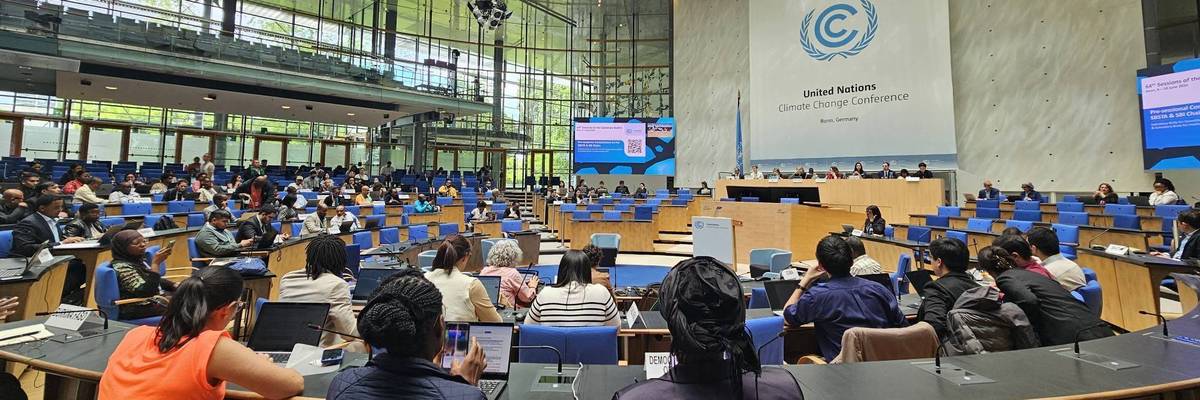
Delegates take part in the United Nations Framework Convention on Climate Change (UNFCCC) Mid-Year Subsidiary Bodies meetings, or SB64, in Bonn, Germany on June 8, 2026.
(Photo by LDC Group on Climate Change/Facebook)


Brett Wilkins
Jun 18, 2026
COMMON DREAMS

As international climate talks backed by the United Nations wrapped up Thursday in Bonn, Germany, campaigners stressed that policymakers must do more to curb the influence of polluting industries if such negotiations are going to have any hope of helping the world bring the fossil fuel era to an end.

The Bonn climate talks—officially the United Nations Framework Convention on Climate Change (UNFCCC) Mid-Year Subsidiary Bodies meetings, or SB64—serve as a technical and diplomatic staging ground for the next UN Climate Change Conference, or COP31, which is scheduled to take place in Antalya, Türkiye this November.

With current national climate pledges remaining far from what’s needed to limit planetary warming to 1.5°C—the increasingly moribund target at the heart of the Paris Climate Agreement—experts and campaigners are taking aim at the UNFCCC’s reliance on consensus-based decision-making, which allows a handful of fossil fuel-producing nations and the oil, gas, and coal industries to block ambitious climate action and weaken international agreements.

“At the climate talks in Bonn, States failed to make meaningful progress and pushed back on already established agreements, exposing a critical truth: Climate justice should not be vetoed, and reform of the UNFCCC is needed to enable climate action at the speed and scale the crisis demands,” Lien Vandamme, senior campaigner at the Center for International Environmental Law (CIEL), said in a statement Thursday.

Vandamme added that “effective multilateralism is the only way out of the climate crisis, and this process does not live up to that expectation.”

Rallying under a “Friends of Science” banner, dozens of nations are calling out coordinated attacks by fossil fuel producers and the oil, gas, and coal industries on science that threatens their economic prospects.

“We see coordinated efforts to cast doubt on the best available science driven by a narrow set of interests, not by the needs of our people,” lead Panamanian negotiator Ana Aguilar said during a Wednesday press conference.

“We have seen this playbook before,” she added. “Manufacture doubt, delay the response, and let the vulnerable people pay this bill.”

Lead Fijian negotiator Sivendra Michael put it more bluntly, telling reporters, “Anyone that is blocking references to science—they are not our friends.”


There has been some progress. As CIEL noted:
It is encouraging that, after more than three decades, the UNFCCC has begun to acknowledge concerns around the corporate capture of the process. The open dialogue on transparency and integrity that happened in Bonn represents an important—but long overdue—step towards addressing the influence of polluting industries in the climate negotiations. This dialogue must be the start toward a meaningful, comprehensive policy to address corporate capture of climate negotiations. A climate process that remains vulnerable to obstruction and corporate influence cannot deliver the action this crisis demands.

Erika Lennon, CIEL’s senior attorney, pointed to April’s First Conference on Transitioning Away from Fossil Fuels in Santa Marta, Colombia, as a hopeful sign. The Santa Marta conference, which was free of major polluters like the United States, China, Russia, and India, took aim at what climate defenders called the “shamefully weak” draft text—called the Multirão Decision—produced at last November’s COP30 in Brazil. The final document removed all mentions of fossil fuels amid pressure from oil and gas-producing nations like the United States, Russia, and Saudi Arabia, and the presence of a record number of industry lobbyists.

“The Santa Marta Conference demonstrated that a fossil fuel phaseout is not out of reach,” Lennon said Thursday. “But Bonn showed that the institutions meant to deliver that accountability remain constrained by outdated rules and undue influence from polluting interests.”

“We need effective multilateralism and an effective climate regime, not one that is incapable of delivering accountability or tackling the root cause of the climate crisis, fossil fuels, at the speed and scale the crisis demands,” she added. “As attention turns to COP31, governments must confront the structural barriers that continue to delay meaningful action, from consensus rules that allow a small number of states to block progress, to the absence of robust safeguards against conflicts of interest, or violations of the rights of meaningful participation of representatives from climate-vulnerable communities.”


Nations allege ‘attacks’ on science at key climate talks

AFP
June 17, 2026
Delegates representing the EU, Switzerland and dozens of developing nations accused some countries of undermining the scientific consensus on global warming at climate negotiations underway in the German city of Bonn – Copyright AFP/File ANDRE PAIN

Crucial negotiations ahead of the COP31 summit have been frustrated by a “small group of fossil fuels interests” attacking the science of climate change behind closed doors, envoys said Wednesday.

Delegates representing the EU, Switzerland and dozens of developing nations accused some countries of undermining the scientific consensus on global warming at climate negotiations due to conclude on Thursday in Bonn, Germany.

“There are powerful interests desperate to protect their wealth and influence,” said Fiji’s head of delegation Sivendra Michael, flanked by supporters in T-shirts emblazoned with the slogan “Science is Not Negotiable”.

“We are seeing certain countries holding the process hostage as vulnerable people suffer heat stress, and king tides and storms, drought and famine,” he said.

Bonn is where texts are drafted and differences narrowed ahead of the decisions taken by political leaders at the UN-sponsored COP31 climate talks which are due to start November 9 in Antalya, Turkey.

The preparatory talks had seen “coordinated attacks across the negotiation rooms by the small number of fossil fuel interests”, said Manjeet Dhakal, an adviser to the 44-nation Least Developed Countries bloc.

These countries had tried to remove references to the IPCC — the UN’s expert scientific panel on climate change — and the need to limit warming to 1.5C in draft texts under negotiation, Michael said.

– Pressure for delay –

No country was singled out by name.

But oil-rich Saudi Arabia had opposed language expressing concern about the El Nino weather pattern and requesting the IPCC provide regular updates on climate science, reported the independent Earth Negotiations Bulletin.

India suggested deleting any reference to “irreversible changes”, added the bulletin, which tracks UN treaty negotiations and is permitted to observe talks not generally open to journalists or the public.

Saudi Arabia and other oil-rich states have been accused of frustrating climate action by exploiting the consensus-based process by which the UN-sponsored Conference of the Parties summits are governed.

India, Saudi Arabia and China have pushed for the publication of the IPCC’s next major climate assessment to be delayed by a year until 2029, a move opposed by the EU among others.

“The EU calls on all parties to uphold science, support the IPCC and promote information integrity here in Bonn and beyond,” said Demetris Psyllides, a representative for the 27-nation European Union.

Scientists say keeping global warming as close as possible to 1.5C relative to pre-industrial levels is essential to avoid the worst impacts of climate change.

That limit was agreed by nearly 200 nations in the Paris Agreement of 2015 but could be breached by 2030.

On Tuesday, the chair and chief negotiator of the Alliance of Small Island States said she was “extremely troubled by the attempts to delink and undermine the best available science” at Bonn.

Samoan diplomat Anne Rasmussen urged all countries to “stop playing games. Do not abandon your commitment to the 1.5C goal”.

INDIA

Green Energy, Old Inequalities?


Anusreeta Dutta |


The land question in India’s renewable transition, and how rural communities are paying the biggest price.


Image Courtesy: Wikimedia Commons

India’s shift to renewable energy is often narrated as a success story. Wind turbines tower over agricultural landscapes and solar parks spread across deserts and legislators celebrate ambitious targets for the production of sustainable electricity. The growth story of India has been renewable energy, with promises of 500 GW of non-fossil fuel capacity and net-zero emissions by 2070.

But there’s a problem that’s seldom discussed underneath the rhetoric of green development and sustainability: who is footing the bill for the move to renewable energy? The answer increasingly points to India’s development trajectory following a well-established pattern.

Urban consumers, businesses and investors usually benefit from renewable energy, but it is rural communities, farmers, pastoralists and Indigenous peoples – whose access to land and means of subsistence is being undermined in the name of green development – who often pay the price. The switch to clean energy could be key. But it isn’t always fair.

The Recent Land Boom

Renewable energy is frequently claimed to be environmentally benign relative to large hydroelectric projects or coal mining. While solar and wind energy projects avoid many of the pollutants tied to fossil fuels, they take a heavy toll on land. Utility-scale solar parks require large amounts of land. Wind farms require large land corridors, transmission infrastructure, roadways and sub-stations. Transmission networks, green hydrogen projects and battery manufacturing sites put even more pressure on land resources. States are competing for renewable energy investments. A new land rush is underway.

Rajasthan, Gujarat, Maharashtra, Karnataka, Andhra Pradesh and Tamil Nadu all have vast renewable energy projects transforming their rural landscapes. Land that has traditionally been used by communities for communal resource management, forest-based livelihoods, seasonal farming or grazing is increasingly being tapped for energy infrastructure. This means local rights and climate goals are increasingly at odds.

The Invisible Nature of the Commons

Understanding land in policy contexts is one of the biggest hurdles. Governments often turn to official ownership data to see if property is available for renewable energy projects. “Wasteland” areas are often considered suitable for solar production because they seem underused in administrative records.

However, many "wastelands" are far from being empty. Commons support small farmers, forest-dependent communities, pastoral groups and landless households across rural India. These settings offer grazing areas, fuelwood, feed, access to water and seasonal revenue opportunities. Such uses often fall out of planning processes because they are poorly documented in official property records.

As renewable projects expand, communities can be stripped of resources that have supported livelihoods for generations, even if they are not considered displaced populations in official numbers. The problem is not just compensation. It is a recognition one.

Green Energy, Agrarian Distress

The lines between agriculture and renewable energy are increasingly blurred. In a number of states, private developers are leasing agricultural land for solar energy projects. Some of the farmers have a steady income through lease arrangements and it reduces the risk of unstable agricultural markets and climate uncertainty.

But they are not equal for everyone. Agricultural productivity is falling and the biggest beneficiaries of renewable leasing agreements are often big landowners but landless labourers, tenant farmers and farm workers may lose their jobs. This raises a more general question in the political economy: can the expansion of renewable energy have the unintended consequence of exacerbating existing rural disparities?

The conversion of agricultural land to energy infrastructure may generate novel forms of exclusion in areas already ailing from agrarian distress. Landowners are paid rent, but farm workers may have no such alternatives. And, so the transition to renewable energy is at risk of repeating the patterns that have attended previous waves of infrastructure expansion.

Advice From Coal-Producing Regions

Environmental movements have attacked coal mining for decades for its social and environmental damage. Mining operations led to the displacement of communities, the destruction of ecosystems and the concentration of benefits far from the areas affected.

Renewable energy was supposed to be a different model. Some recent conflicts, however, indicate that renewable energy projects can also generate local grievances when issues such as compensation, participation and land rights are not resolved.

Solar parks are not coal mines. These have significant difference in effects on the ecosystem. Rather, it points to an important reality: even if the energy source changes, questions of distribution, ownership and control persist. A shift that ignores local communities could repeat many of the governance mistakes associated with the development of traditional energy.

The Issue of Energy Justice

Increasingly, governments are recognising the importance of energy justice. The concept highlights three interrelated aspects: fair distribution of advantages and disadvantages, meaningful participation in decision-making and the identification of vulnerable populations.

This approach to India’s renewable energy transformation raises disturbing issues.

-      Who decides where renewable projects are sited?

-      Who is included in the planning?

-      Who benefits financially from green infrastructure?

-      Who pays the price when there is less access to resources and land?

Far too often, discussions around renewable energy are more about megawatts installed than justice served. In this narrow perspective, the energy transition is understood as a technological problem. Indeed, it is a social and political process.

Controversy Over Transmission Infrastructure

The land issue is not about the details of power projects. The transition to renewable energy in India will need a significant transmission infrastructure to transport electricity from resource-rich areas to urban and industrial demand centres. Transmission corridors transect communal land, woodland and farmland. Compared with solar parks they are less visible, but they create specific environmental and social challenges.

The increasing contestation around transmission projects shows how energy transitions are also about resource allocation and spatial governance as well as energy production. With greater renewable capacity there are likely to be more, rather than less, conflicts over land use.

Can Transition be Made More Just?

The question is not whether India should go for renewable energy. The change is needed because of problems with air pollution, climate change and energy security. The real question is how the change is managed. There are a number of legislative changes that could help address new inequities. Planning procedures first need to recognise the economic and social advantages of commons and move beyond rigid land classifications. Official statistics label land as “unused” but it could be essential to the local way of life.

Second, impacted communities should have a meaningful opportunity to participate in project planning and decision-making, not be asked to weigh in after important decisions have already been finalised.

Third, the benefit-sharing arrangements should include landowners as well as workers, tenant farmers, pastoralists and other groups affected by land-use changes. Finally, the renewable energy policy should be linked to broader rural development goals and not be viewed as a mere infrastructure project.

Clean Power Isn’t Enough for Fair Transition

India has some of the largest ambitions in the world for renewable energy. This has made the country a successful leader in the global energy transition and proved that clean energy can be implemented on a large scale. But installed capacity, investment levels or carbon reductions cannot be used as a gauge of the success of the transition in themselves.

Another issue to be considered when considering a shift is the extent to which inequality is decreased or increased. Climate disaster is an urgent business. But speed is not a reason to ignore fairness issues. If the growth of renewable energy follows the patterns of marginalisation, dispossession and unequal development, the transition might look green on the surface but be profoundly unequal in reality.

India is building its energy system for the future – today. The question is whether the benefits and disadvantages of such a future will be evenly spread. The answer will determine if India’s renewable revolution is a model of sustainable development or just another chapter in the country’s long story of uneven growth.

The writer is a columnist and climate researcher with experience in political research analysis, ESG research and energy policy. The views are personal.