EU's climate goals at risk without China's critical raw materials, EU auditors warn
 Copyright AP/ CHINATOPIX
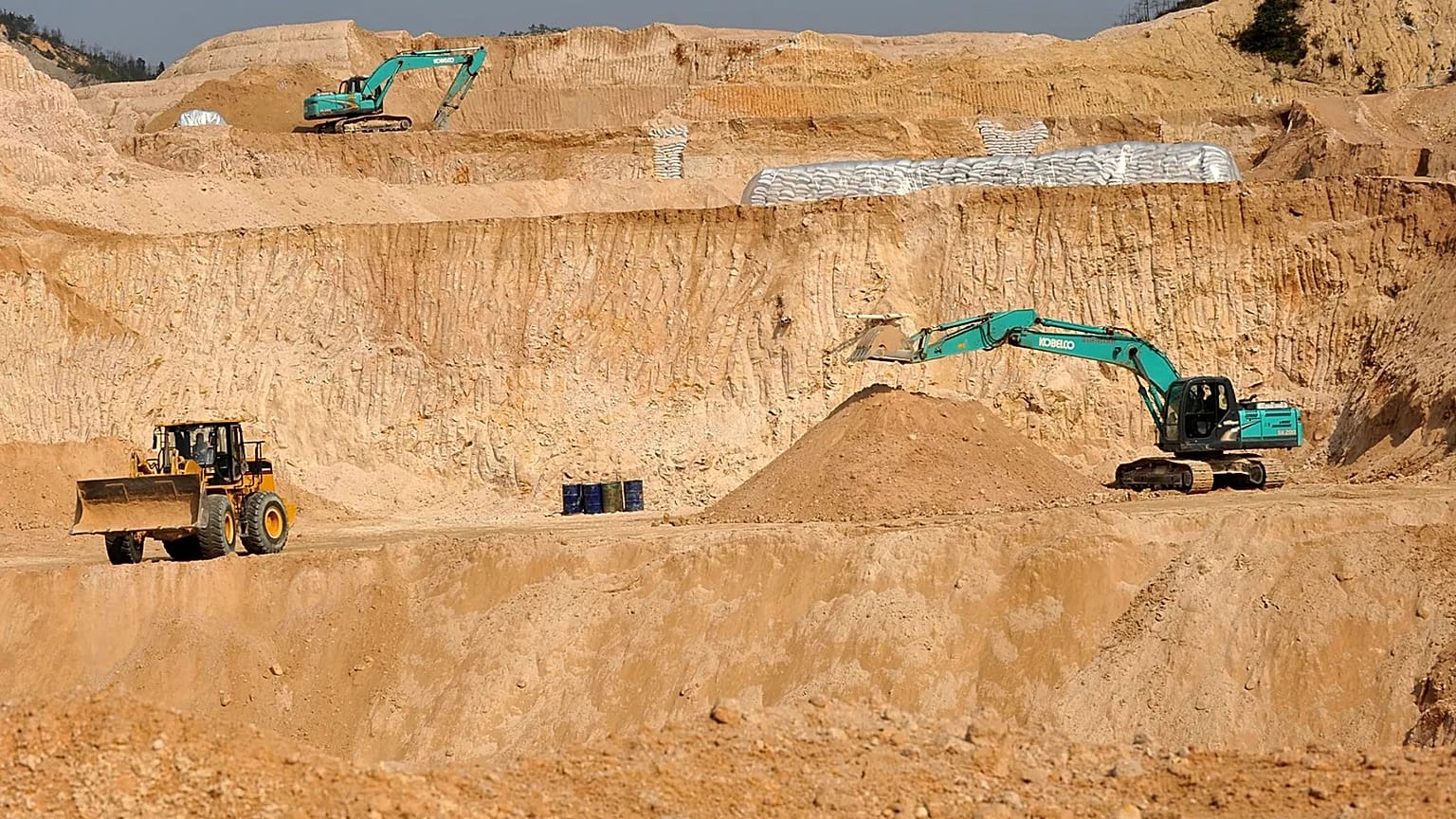
Despite the EU's ongoing efforts to diversify supply chains, Chinese materials are crucial for the bloc's climate transition. China accounts for 60% of global production of critical raw materials and 90% of refining capacity.
The European Union is struggling to diversify its supply of critical raw materials by the end of the decade, risking a successful energy transition and continued high dependence on China, according to a European Court of Auditors (ECA) report published on Monday.
Despite 14 major new trade deals and ongoing efforts led by the European Commission to diversify the supply of key minerals deemed crucial for the development of clean technologies, like batteries for electric vehicles, wind turbines, or solar panels, EU auditors concluded that the EU27 is "unlikely to succeed in time".
China accounts for 97% of the EU27’s imports of magnesium, which is used in hydrogen-generating electrolysers. The bloc also imports significant volumes of arsenic (39%), baryte (44%), gallium (71%), germanium (45%), magnesium (97%), graphite (40%), and tungsten (31%), according to the ECA report.
“Without critical raw materials, there will be no energy transition, no competitiveness, and no strategic autonomy," said ECA's Keit Pentus-Rosimannus. "Unfortunately, we are now dangerously dependent on a handful of countries outside the EU for the supply of these materials. It is therefore vital for the EU to up its game and reduce its vulnerability in this area.”
While Chile and Turkey are also critical to the bloc's supply of lithium and boron respectively, China remains the undisputed leader in mining output, with a strong presence in the extraction and refining of critical raw materials, making it an essential trade partner for Brussels.
The recently signed Mercosur trade deal with critical raw materials-rich Argentina, Brazil, Paraguay and Uruguay, pending approval by the European Parliament, should help to diversify supply to the bloc. European lawmakers will also discuss on Thursday whether to unfreeze the US-EU trade deal, which also includes a minerals agreement.
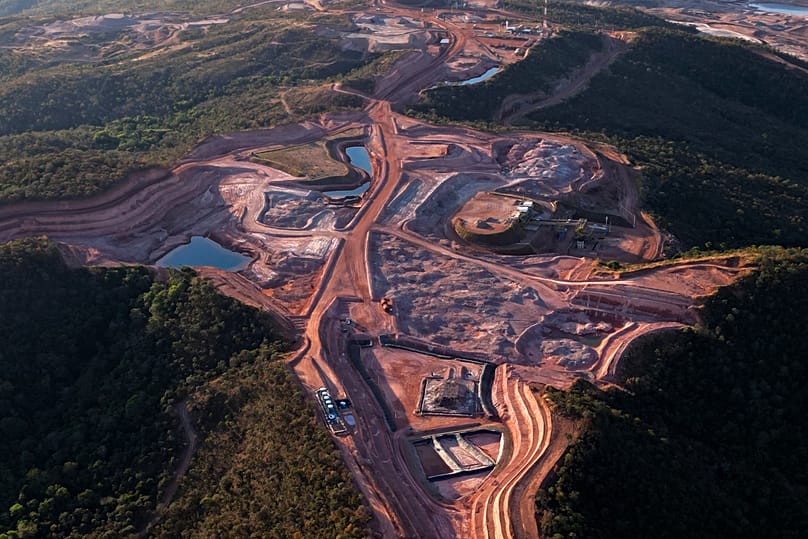 A mine operated by Serra Verde Mining in Minacu, Goias state, Brazil, July 28, 2025, produces rare earth elements, including neodymium, praseodymium and terbium. AP Photo / Eraldo Peres
At a technical briefing in December, EU Executive Vice President Stéphane Séjourné acknowledged the bloc's dependence on raw materials "in many sectors" and said the "dialogue with China remains essential" as he unveiled new measures last December to monitor the bloc's supply of critical raw materials.
Séjourné also warned that Brussels faces the challenge of maintaining a crucial trade relationship while standing firm as the US becomes an increasingly unreliable partner and pursues a decoupling strategy, including stockpiling its own critical raw materials.
"They are trying to store up raw materials from the US and elsewhere," he said of the second Trump administration. "For us, it's important to have the right organisation and financial tools so we can be effective when it comes to derisking."
The Commission is set to launch a European raw materials centre which will serve as the bloc's primary means of managing supply, avoiding fragmentation in the market and storing and deliver raw materials, he said.
"We need clarity about our sources of supplies, stocks, and challenges, especially at a time of tensions with China. We need to assess the level of tension in the market."
The European Union is struggling to diversify its supply of critical raw materials by the end of the decade, risking a successful energy transition and continued high dependence on China, according to a European Court of Auditors (ECA) report published on Monday.
Despite 14 major new trade deals and ongoing efforts led by the European Commission to diversify the supply of key minerals deemed crucial for the development of clean technologies, like batteries for electric vehicles, wind turbines, or solar panels, EU auditors concluded that the EU27 is "unlikely to succeed in time".
China accounts for 97% of the EU27’s imports of magnesium, which is used in hydrogen-generating electrolysers. The bloc also imports significant volumes of arsenic (39%), baryte (44%), gallium (71%), germanium (45%), magnesium (97%), graphite (40%), and tungsten (31%), according to the ECA report.
“Without critical raw materials, there will be no energy transition, no competitiveness, and no strategic autonomy," said ECA's Keit Pentus-Rosimannus. "Unfortunately, we are now dangerously dependent on a handful of countries outside the EU for the supply of these materials. It is therefore vital for the EU to up its game and reduce its vulnerability in this area.”
While Chile and Turkey are also critical to the bloc's supply of lithium and boron respectively, China remains the undisputed leader in mining output, with a strong presence in the extraction and refining of critical raw materials, making it an essential trade partner for Brussels.
The recently signed Mercosur trade deal with critical raw materials-rich Argentina, Brazil, Paraguay and Uruguay, pending approval by the European Parliament, should help to diversify supply to the bloc. European lawmakers will also discuss on Thursday whether to unfreeze the US-EU trade deal, which also includes a minerals agreement.
At a technical briefing in December, EU Executive Vice President Stéphane Séjourné acknowledged the bloc's dependence on raw materials "in many sectors" and said the "dialogue with China remains essential" as he unveiled new measures last December to monitor the bloc's supply of critical raw materials.
Séjourné also warned that Brussels faces the challenge of maintaining a crucial trade relationship while standing firm as the US becomes an increasingly unreliable partner and pursues a decoupling strategy, including stockpiling its own critical raw materials.
"They are trying to store up raw materials from the US and elsewhere," he said of the second Trump administration. "For us, it's important to have the right organisation and financial tools so we can be effective when it comes to derisking."
The Commission is set to launch a European raw materials centre which will serve as the bloc's primary means of managing supply, avoiding fragmentation in the market and storing and deliver raw materials, he said.
"We need clarity about our sources of supplies, stocks, and challenges, especially at a time of tensions with China. We need to assess the level of tension in the market."
China in the lead
China accounts for 60% of global production of critical raw materials and 90% of refining capacity, and according to the European Parliament's research department, the EU collectively depends on Beijing for roughly 90% of its raw materials and 98% of its rare-earth magnets.
A December 2025 policy brief from the Jacques Delors Institute warned that "Beijing has been increasingly using these dependencies as geopolitical leverage". In recent years, most recently in 2025, Beijing has repeatedly halted or restricted exports of rare earths to the EU.
After diplomatic talks between Beijing and Brussels saw exports resume, the European Chamber of Commerce in China reported that based on information from 22 European companies between August and early September 2025, Chinese authorities had only approved 19 out of 141 licence applications, with 121 “urgent” applications still pending.
"Despite repeated warnings, most (European) companies have so far failed to diversify away from China and have resisted sharing the granular supply chain data needed for aggregation," the Jacques Delors Institute wrote.
Martin Vladimirov, director of the Geoeconomics Program at the Centre for the Study of Democracy, said Chinese companies have pursued stakes in Arctic minerals, including rare earths in Greenland and iron ore and nickel across the High North, further expanding their control over these key minerals.
"These resources sit at the heart of global clean-energy supply chains, so access to them reinforces China’s dominance over low-carbon manufacturing,” said Vladimirov.
Most strategic materials are available in many other regions worldwide, ECA said, noting that the major challenge is the lack of a developed industry with affordable output, as China's long-time investment in critical raw materials gives it a privileged position in the market.
China accounts for 60% of global production of critical raw materials and 90% of refining capacity, and according to the European Parliament's research department, the EU collectively depends on Beijing for roughly 90% of its raw materials and 98% of its rare-earth magnets.
A December 2025 policy brief from the Jacques Delors Institute warned that "Beijing has been increasingly using these dependencies as geopolitical leverage". In recent years, most recently in 2025, Beijing has repeatedly halted or restricted exports of rare earths to the EU.
After diplomatic talks between Beijing and Brussels saw exports resume, the European Chamber of Commerce in China reported that based on information from 22 European companies between August and early September 2025, Chinese authorities had only approved 19 out of 141 licence applications, with 121 “urgent” applications still pending.
"Despite repeated warnings, most (European) companies have so far failed to diversify away from China and have resisted sharing the granular supply chain data needed for aggregation," the Jacques Delors Institute wrote.
Martin Vladimirov, director of the Geoeconomics Program at the Centre for the Study of Democracy, said Chinese companies have pursued stakes in Arctic minerals, including rare earths in Greenland and iron ore and nickel across the High North, further expanding their control over these key minerals.
"These resources sit at the heart of global clean-energy supply chains, so access to them reinforces China’s dominance over low-carbon manufacturing,” said Vladimirov.
Most strategic materials are available in many other regions worldwide, ECA said, noting that the major challenge is the lack of a developed industry with affordable output, as China's long-time investment in critical raw materials gives it a privileged position in the market.
EU's legal architecture versus Chinese dominance
The EU executive adopted the Critical Raw Materials Act (CRMA) in 2024 seeking to reduce reliance on foreign players, including China, and to ensure diversification of supply in a bid for the bloc to deliver the European Green Deal, the EU’s plan to become carbon neutral by 2050.
Under the CRMA, 34 critical and 17 strategic raw materials were designated as “crucial” for the green and digital transitions and for the defence and space industries.
The law sets three non-binding 2030 targets for the EU’s annual consumption of raw materials: 10% for local extraction, 40% to be processed in the EU, and 25% to emanate from recycled materials.
The CRMA also states that no more than 65% of each strategic raw material can be sourced from a single non-EU country, a challenge given the bloc's significant dependence on China, which the ECA says controls the processing stage for several strategic materials key to the energy transition – among them magnesium, gallium, and all rare earth elements.
"There is still a long way to go to meet the targets, and the EU will struggle to secure the supply of the strategic raw materials it needs by the end of the decade," the EU auditors said.
The EU executive adopted the Critical Raw Materials Act (CRMA) in 2024 seeking to reduce reliance on foreign players, including China, and to ensure diversification of supply in a bid for the bloc to deliver the European Green Deal, the EU’s plan to become carbon neutral by 2050.
Under the CRMA, 34 critical and 17 strategic raw materials were designated as “crucial” for the green and digital transitions and for the defence and space industries.
The law sets three non-binding 2030 targets for the EU’s annual consumption of raw materials: 10% for local extraction, 40% to be processed in the EU, and 25% to emanate from recycled materials.
The CRMA also states that no more than 65% of each strategic raw material can be sourced from a single non-EU country, a challenge given the bloc's significant dependence on China, which the ECA says controls the processing stage for several strategic materials key to the energy transition – among them magnesium, gallium, and all rare earth elements.
"There is still a long way to go to meet the targets, and the EU will struggle to secure the supply of the strategic raw materials it needs by the end of the decade," the EU auditors said.
Binding recycling targets?
The Luxembourg-based ECA highlighted the untapped potential of recycling to reverse the current negative outlook, noting that most EU recycling targets neither incentivise recycling individual materials nor encourage the uptake of recycled materials.
"In the relevant legislation, (the EU should) consider introducing binding recycling targets for individual critical raw materials, and realistic collection and recovery targets for waste containing critical raw materials," the ECA suggests.
The auditors also suggest the EU should encourage the commercial viability of critical raw materials recycling operations by easing imports into the EU and the movement of waste containing critical raw materials within the bloc.
"Today, 10 of the critical materials that we need for the energy transition are not recycled at all, and most EU targets that are in place do not incentivise the recycling of specific, individual materials," said Pentus-Rosimannus.
High processing costs, limited material availability, and technical and regulatory issues also make the EU’s recycling sector less competitive, she noted, drawing a contrast with China's vertical integration, scale advantages and low labour costs.
"In the era of rising geopolitical tensions, the EU needs to up its game. It has to make strategic partnerships deliver, unleash the potential of reuse and recycling and ensure that strategic projects provide supply for the EU industry, not our competitors," Pentus-Rosimannus said.
The Luxembourg-based ECA highlighted the untapped potential of recycling to reverse the current negative outlook, noting that most EU recycling targets neither incentivise recycling individual materials nor encourage the uptake of recycled materials.
"In the relevant legislation, (the EU should) consider introducing binding recycling targets for individual critical raw materials, and realistic collection and recovery targets for waste containing critical raw materials," the ECA suggests.
The auditors also suggest the EU should encourage the commercial viability of critical raw materials recycling operations by easing imports into the EU and the movement of waste containing critical raw materials within the bloc.
"Today, 10 of the critical materials that we need for the energy transition are not recycled at all, and most EU targets that are in place do not incentivise the recycling of specific, individual materials," said Pentus-Rosimannus.
High processing costs, limited material availability, and technical and regulatory issues also make the EU’s recycling sector less competitive, she noted, drawing a contrast with China's vertical integration, scale advantages and low labour costs.
"In the era of rising geopolitical tensions, the EU needs to up its game. It has to make strategic partnerships deliver, unleash the potential of reuse and recycling and ensure that strategic projects provide supply for the EU industry, not our competitors," Pentus-Rosimannus said.

No comments:
Post a Comment