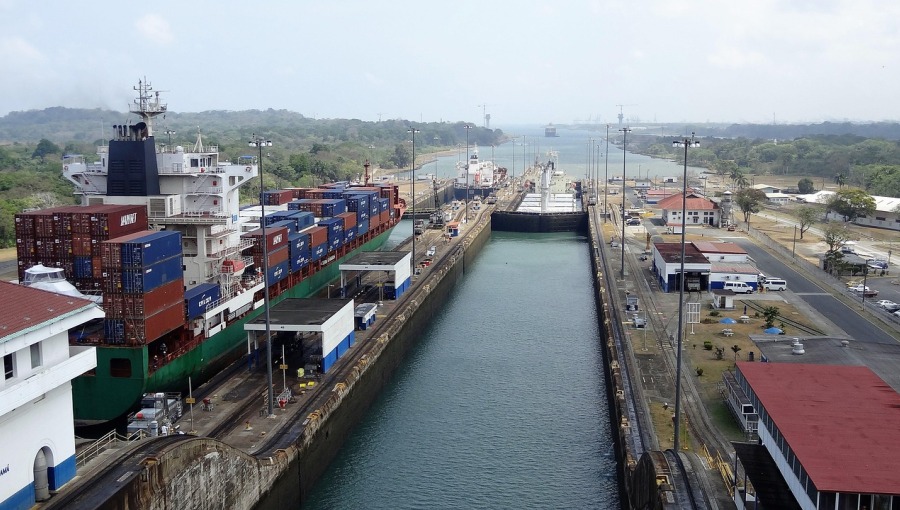
Panama’s Supreme Court decision to void the concession allowing Panama Ports Company (PPC), a subsidiary of Hong Kong-based CK Hutchison, to operate the ports of Balboa and Cristóbal marks one of the most consequential legal interventions in global maritime infrastructure in decades.
While framed domestically as a constitutional correction, the ruling issued on January 29 simultaneously alters competitive dynamics in global port management, disrupts a multibillion-dollar asset transaction, and sends a calibrated geopolitical signal to both Washington and Beijing.
At the legal core of the ruling is a finding that the 1997 concession and its subsequent extensions violated multiple constitutional principles, including equality before the law, free competition and the primacy of the public interest, according to the court’s decision reviewed by La Estrella de Panamá.
Clauses granting PPC rights of first refusal over future port expansions, tax exemptions, and effective veto power over competing concessions were found to have created a de facto monopoly, despite the absence of a formally declared one.
The court further criticised the automatic 25-year renewal approved in 2021, arguing that it mechanically perpetuated an imbalanced contract in a radically different economic and institutional context.
The scale of what is at stake is not marginal. Official figures from Panama’s Maritime Authority show that Balboa and Cristóbal together handled 3.88mn TEUs in 2025, representing 39.2% of total container traffic and nearly 40% of national transhipment activity, according to data cited by La Prensa de Panamá.
Any disruption to these terminals therefore carries immediate implications for Panama’s role as a regional logistics hub and for shipping lines reliant on high-frequency interoceanic transfers.
Importantly, the ruling does not affect the Panama Canal itself. The waterway's operations remain governed by international treaties that prohibit foreign government control and mandate non-discriminatory access for all flags.
However, the physical proximity of the ports to the canal entrances has long amplified their strategic sensitivity, blurring the line between commercial infrastructure and perceived geopolitical leverage.
From an investment perspective, the decision directly complicates CK Hutchison’s proposed sale of more than 40 ports worldwide to a consortium led by BlackRock and Mediterranean Shipping Company, a transaction valued at approximately $23bn.
The Panamanian terminals were widely regarded as the most politically sensitive assets in the deal. Their removal reduces the transaction’s headline value but may also lower Beijing’s leverage over the remaining portfolio, where Chinese state-owned shipping giant COSCO had sought inclusion with veto rights.
China’s stern reaction underscores how the issue has transcended commercial boundaries. Beijing has warned it will take “all necessary measures” to protect the legitimate interests of Chinese-linked firms. State media have framed the blocked BlackRock deal as strategically detrimental to China’s Belt and Road ambitions.
Although CK Hutchison operates as a commercially oriented conglomerate and is not state-owned, its Hong Kong base and global logistics footprint have increasingly placed it within China’s broader strategic perimeter, particularly amid tighter political control over Hong Kong, as analysed by The Wall Street Journal.
Washington's response has been markedly different. The US State Department, alongside several US-aligned regional governments, publicly endorsed the ruling as evidence of Panama’s judicial independence and commitment to the rule of law, according to a joint statement released by the US Department of State.
Senior US officials have framed the decision as reinforcing transparency and accountability in critical infrastructure, consistent with broader efforts to curb China’s influence in the Western Hemisphere, as reported by The New York Times.
President José Raúl Mulino, meanwhile, has confirmed that PPC will continue operating the ports until the ruling becomes final, after which a transition period will follow.
APM Terminals, a subsidiary of A.P. Moller-Maersk, has been identified as a potential temporary operator while a new international tender is prepared, as reported by The Wall Street Journal.
Mulino has also pledged job security for port workers and appointed a dedicated technical coordinator to manage the transition, signalling an effort to avoid the economic dislocation seen in previous high-profile contract terminations.
The broader policy implications extend beyond Panama. For multinational infrastructure investors, the ruling reinforces the growing importance of constitutional resilience and political risk assessment in emerging markets.
Even long-standing concessions, once assumed to be insulated by time and sunk investment, are increasingly vulnerable to judicial review when perceived to conflict with national interest or competitive neutrality.
For China, the case illustrates the limits of indirect commercial presence in strategically sensitive regions under heightened US scrutiny. For Washington, it demonstrates how legal and institutional mechanisms, rather than direct intervention, can reshape the competitive landscape of global trade infrastructure, as argued by analysts cited in The New York Times.
Ultimately, the Panamanian court’s decision is less about ports alone than about the reassertion of sovereign regulatory authority in a fragmented global order. Its ripple effects across shipping markets, capital flows and diplomatic alignments suggest that similar infrastructure arrangements elsewhere may soon face comparable reassessment.

No comments:
Post a Comment