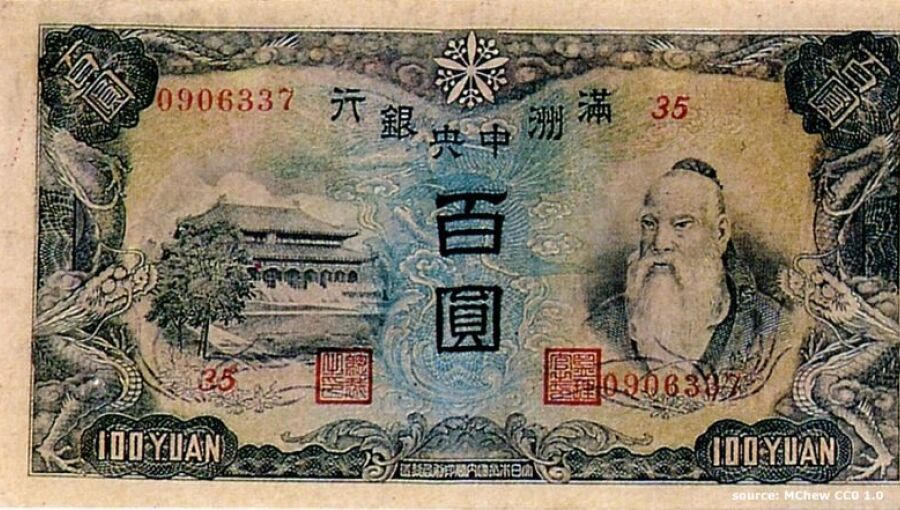
President Xi Jinping issued his strongest call yet for China’s renminbi to become a global reserve currency and compete head-on with the dollar.
He declared that China must develop a “powerful currency” capable of becoming a global reserve asset as Beijing intensifies efforts to reshape the international monetary order and spread the use of the yuan as the money to settle international trade deals.
In a commentary published on February 3 in Qiushi, the Communist Party’s leading ideological journal and cited by the Financial Times, Xi said China must build a currency “widely used in international trade, investment and foreign exchange markets, and attain reserve currency status.”
The remarks, originally delivered to senior regional officials in 2024 but released publicly for the first time this week, reflect the BRICS countries to de-dollarise the international financial system and remove some of the US’ leverage over the rest of the world.
To support this vision, Xi outlined the institutional foundations required to back a global currency: a “powerful central bank”, globally competitive financial institutions, and international financial centres that can “attract global capital and exert influence over global pricing.”
And a lot of progress towards this goal has already been made. While the dollar continues to account for about 60% of international trade deals, large regional markets have developed which have already been de-dollarized. For example, the vast majority of the Sino-Russia trade is already settled exclusively in national currencies.
At the same time the West’s decision to weaponize the dollar with the SWIFT sanctions on Russia and the freezing of $300bn of Central Bank of Russia (CBR) reserves and unsettled central bankers around the world, who are now actively reducing the share of dollars in their reserves basket.
Xi’s remarks come in the midst of turmoil on the international monetary markets after the dollar weakened significantly in recent weeks, a development US President Donald Trump described as “great” for American exports. Xi’s emphasis on the renminbi as a response to “recent ruptures in the global order.”
Since Russia’s full-scale invasion of Ukraine in 2022, the renminbi has become the currency of choice in international trade, along with the euro. The yuan is now the second-largest trade finance currency in the world after the greenback. However, its role in official reserves remains limited. Russia has embraced the yuan which now makes up the bulk of its cash reserves as part of the yuanization of its economy. But other countries have been more reticent in building up their reserves of yuan. As of the third quarter of 2025, the renminbi accounted for 1.93% of global reserves, compared to 57% for the US dollar and 20% for the euro, according to the International Monetary Fund, the FT reports.
While Chinese policymakers have allowed the yuan to strengthen modestly past CNY7 per dollar, it continues to depreciate against the euro. Foreign trading partners have also urged Beijing to permit greater appreciation, arguing the currency remains undervalued, fuelling a record $1.2 trillion trade surplus last year.
The IMF has called on China to address underlying economic imbalances, with Managing Director Kristalina Georgieva citing persistent deflation and a “significant real exchange rate depreciation.”
However, Chinese officials maintain they are not manipulating the currency. “China has no intention of using a weaker renminbi to gain a trade advantage,” said Zou Lan, vice-governor of the People’s Bank of China, last month, the FT reports.
While analysts caution that the renminbi’s ascent will be gradual, the political momentum is unmistakable.

No comments:
Post a Comment