Thirty years ago this week, on an island in the South Pacific, France conducted its final nuclear test – ending a programme that exposed thousands of people to radiation over decades. The islands of French Polynesia are still living with the fallout.
Issued on: 31/01/2026 - RFI
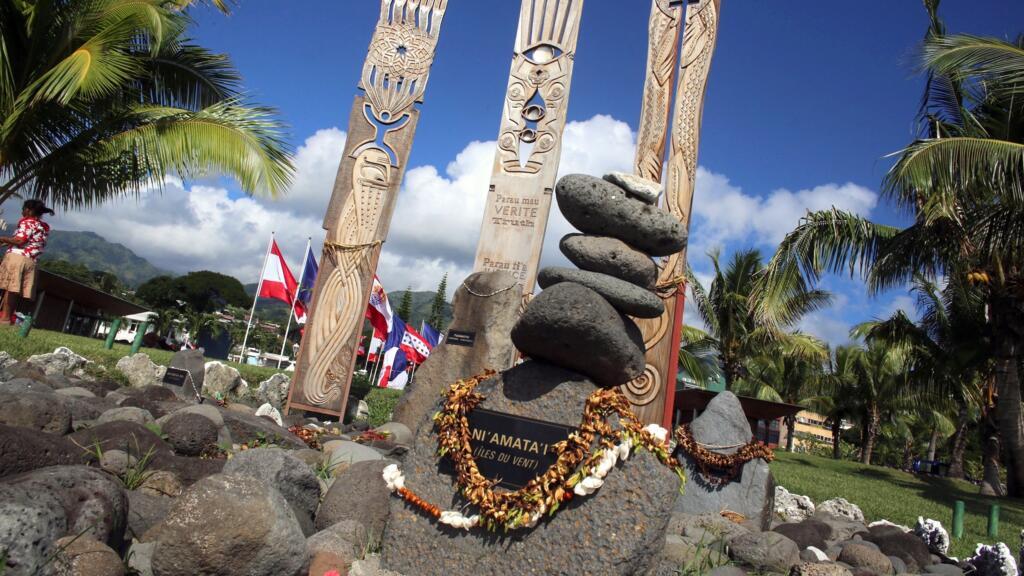
A memorial in Papeete, the capital of Tahiti, commemorates the victims of French nuclear tests in the South Pacific islands of French Polynesia. © GREGORY BOISSY / AFP
By: Jessica Phelan
“It started with my grandmother. She had thyroid cancer during the Nineties. Then her first child, my auntie, had thyroid cancer too.”
Hinamoeura Morgant-Cross was a child in Tahiti when France last exploded a nuclear bomb. She has few memories of the years when her home was a testing ground, but they have changed the course of her life.
“My mum had thyroid problems... And also, my sister had thyroid problems. She has to take medication for the rest of her life. My auntie also got breast cancer a few years ago.
“And I have had chronic myeloid leukaemia since I was 24 years old.”
France tested nuclear weapons in Polynesia for 30 years. The explosions started in 1966, after France had already tested several bombs in the Algerian Sahara.
After Algeria claimed independence, France moved the tests to its colony in the South Pacific. They continued until 27 January 1996 – more than three years after the United States’ final test, four since the United Kingdom’s and five since the Soviet Union’s.
France chose two uninhabited atolls as its test sites, Moruroa and Fangataufa, which between them took the impact of 193 explosions – the biggest around 200 times more powerful than the bomb the US dropped on Hiroshima.
At least 41 took place in the open air, before tests were moved underground in 1975. Mushroom clouds drifted over the ocean, carrying radiation to populated islands – including Tahiti, more than 1,200 kilometres away.
By: Jessica Phelan
“It started with my grandmother. She had thyroid cancer during the Nineties. Then her first child, my auntie, had thyroid cancer too.”
Hinamoeura Morgant-Cross was a child in Tahiti when France last exploded a nuclear bomb. She has few memories of the years when her home was a testing ground, but they have changed the course of her life.
“My mum had thyroid problems... And also, my sister had thyroid problems. She has to take medication for the rest of her life. My auntie also got breast cancer a few years ago.
“And I have had chronic myeloid leukaemia since I was 24 years old.”
France tested nuclear weapons in Polynesia for 30 years. The explosions started in 1966, after France had already tested several bombs in the Algerian Sahara.
After Algeria claimed independence, France moved the tests to its colony in the South Pacific. They continued until 27 January 1996 – more than three years after the United States’ final test, four since the United Kingdom’s and five since the Soviet Union’s.
France chose two uninhabited atolls as its test sites, Moruroa and Fangataufa, which between them took the impact of 193 explosions – the biggest around 200 times more powerful than the bomb the US dropped on Hiroshima.
At least 41 took place in the open air, before tests were moved underground in 1975. Mushroom clouds drifted over the ocean, carrying radiation to populated islands – including Tahiti, more than 1,200 kilometres away.
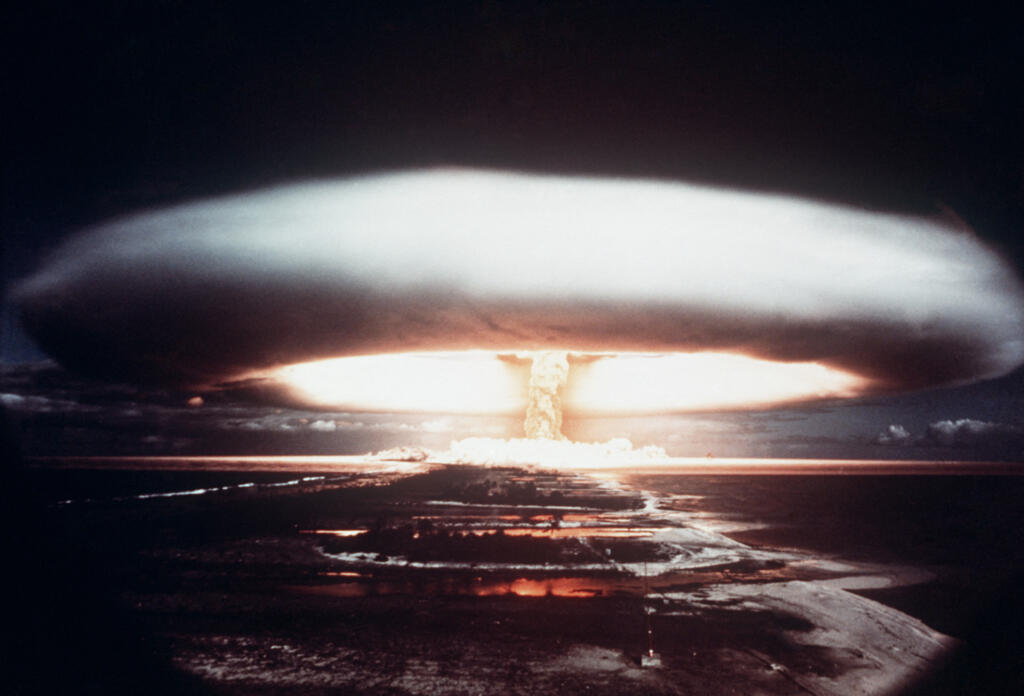
An atmospheric nuclear test on Moruroa in 1971. © AFP
Only in the years since the programme ended has the true impact come to light. While the French military measured radiation levels after each explosion, the data was kept secret until victims’ associations won a legal battle to have it partially declassified in 2013.
“Around 20 boxes” of documents out of thousands were released in that first batch, according to Patrice Bouveret of the Observatoire des Armements, a Lyon-based campaign group that helped make them public. But the information was enough for journalists and researchers to map a far broader pattern of exposure than France had ever publicly acknowledged.
One 1974 test alone exposed an estimated 110,000 people to more than the annual “safe” dose of radiation, according to a 2021 investigation led by public-interest newsroom Disclose.
The revelations pushed French President Emmanuel Macron to order the opening of all archives – with the exception of details that might suggest how to build a nuclear device. Tens of thousands of documents have since been released and continue to lay bare the gap between what French authorities knew about the risks, and what they told those most affected.
Only in the years since the programme ended has the true impact come to light. While the French military measured radiation levels after each explosion, the data was kept secret until victims’ associations won a legal battle to have it partially declassified in 2013.
“Around 20 boxes” of documents out of thousands were released in that first batch, according to Patrice Bouveret of the Observatoire des Armements, a Lyon-based campaign group that helped make them public. But the information was enough for journalists and researchers to map a far broader pattern of exposure than France had ever publicly acknowledged.
One 1974 test alone exposed an estimated 110,000 people to more than the annual “safe” dose of radiation, according to a 2021 investigation led by public-interest newsroom Disclose.
The revelations pushed French President Emmanuel Macron to order the opening of all archives – with the exception of details that might suggest how to build a nuclear device. Tens of thousands of documents have since been released and continue to lay bare the gap between what French authorities knew about the risks, and what they told those most affected.
'Cocktails of cancer'
“Every family in French Polynesia has a lot of cancer. It’s just not one. Some have, as we say, cocktails of cancer,” says Morgant-Cross, today a member of the French Polynesian parliament and an anti-nuclear campaigner.
“But it’s hard for them to think that it can be related to the nuclear tests because of the decades of French propaganda saying that French nuclear tests are clean.”
Visiting Tahiti in September 1966, president Charles de Gaulle declared that all precautions had been taken to ensure the tests would “not cause any inconvenience whatsoever to the dear people of Polynesia”.
Nearly three decades later, president Jacques Chirac – who ordered France’s final nuclear tests in 1995-96, reversing a moratorium that had halted the programme since 1992 – was still insisting that they had “strictly no ecological consequences”.
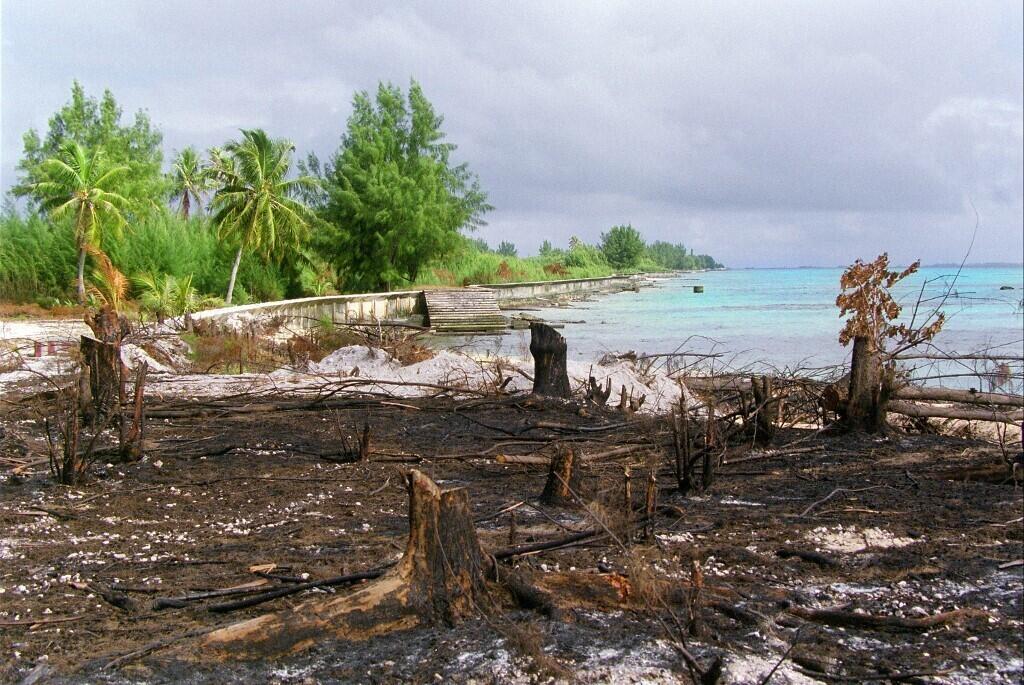
A beach on Moruroa atoll, pictured on 6 June 2000.
© AFP - ERIC FEFERBERG
For years, Polynesians were told their lifestyle and eating habits were to blame for health problems, according to Morgant-Cross. She only made the connection between her family’s history of cancer and the nuclear tests, she says, when she met survivors in other countries.
Seeing the list of diseases that research has linked to radiation exposure, she realised the thyroid cancer that afflicted her relatives, as well as her own rare form of leukaemia, were among them.
“These aren’t illnesses that show up immediately after an explosion,” says Bouveret. “It’s not like a week later you get sick. They develop a long time afterwards.”
In 2023, France’s National Institute of Health and Medical Research, Inserm, used declassified military data to estimate how much radiation thyroid cancer patients had been exposed to and calculate what role it played. Researchers said nuclear tests “are most likely responsible for a small increase in the incidence of thyroid cancers in French Polynesia” – though they warned the estimated doses were probably inaccurate.
The difficulty of proving harm to health has been a barrier to compensation. France introduced a law in 2010 allowing victims to claim reparations from the state, but the criteria to qualify – which include demonstrating exposure to a certain level of radiation – have proved hard to meet.
Only 1,026 people had successfully claimed by the end of 2024, Bouveret says – 607 in mainland France, 417 from Polynesia and two from Algeria. “It’s ridiculous when you consider the number of people who have been impacted by these diseases.”
A bill to reform the law is before the French parliament. It would also bind the state to cover the costs of treating illnesses caused by radiation – estimated at some €855 million, and currently borne by French Polynesian social security.
For years, Polynesians were told their lifestyle and eating habits were to blame for health problems, according to Morgant-Cross. She only made the connection between her family’s history of cancer and the nuclear tests, she says, when she met survivors in other countries.
Seeing the list of diseases that research has linked to radiation exposure, she realised the thyroid cancer that afflicted her relatives, as well as her own rare form of leukaemia, were among them.
“These aren’t illnesses that show up immediately after an explosion,” says Bouveret. “It’s not like a week later you get sick. They develop a long time afterwards.”
In 2023, France’s National Institute of Health and Medical Research, Inserm, used declassified military data to estimate how much radiation thyroid cancer patients had been exposed to and calculate what role it played. Researchers said nuclear tests “are most likely responsible for a small increase in the incidence of thyroid cancers in French Polynesia” – though they warned the estimated doses were probably inaccurate.
The difficulty of proving harm to health has been a barrier to compensation. France introduced a law in 2010 allowing victims to claim reparations from the state, but the criteria to qualify – which include demonstrating exposure to a certain level of radiation – have proved hard to meet.
Only 1,026 people had successfully claimed by the end of 2024, Bouveret says – 607 in mainland France, 417 from Polynesia and two from Algeria. “It’s ridiculous when you consider the number of people who have been impacted by these diseases.”
A bill to reform the law is before the French parliament. It would also bind the state to cover the costs of treating illnesses caused by radiation – estimated at some €855 million, and currently borne by French Polynesian social security.
A society upended
The broader consequences of France’s nuclear tests are even harder to quantify.
The programme kicked off massive construction, drawing islanders to help build military bases and research stations. Many stayed to work at the new sites, concentrating the population and shifting labour away from traditional fishing and farming.
Corals were flattened to make way for ships, which may have contributed to a dramatic rise in ciguatera – a type of food poisoning caused by eating fish sickened by toxins from plankton found on damaged reefs.
“They really poisoned our main food,” says Morgant-Cross. “We eat fish from breakfast to dinner.” Today the archipelago is largely dependent on food shipped in from elsewhere, and like other parts of overseas France, suffers from high cost of living.
As de Gaulle promised, the nuclear programme brought economic opportunities – but they depended on jobs and money provided by the French state, binding Polynesia ever more tightly to France.
Bouveret believes that helped stymie the archipelago’s aspirations to independence. Now, given the costs of caring for nuclear victims and containing the lingering radiation on Moruroa and Fangataufa, he says separating from France looks “extremely difficult”.
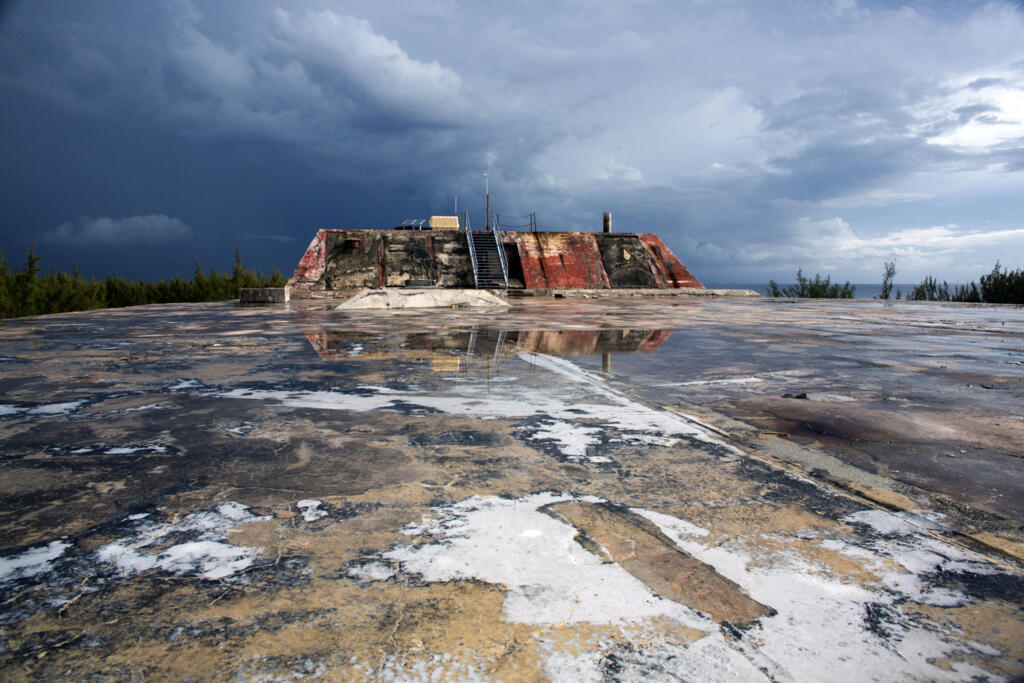
A French station on Moruroa atoll, where France conducted more than 100 nuclear weapon tests, on 13 February 2014. © AFP - GREGORY BOISSY
For Morgant-Cross, the first step is to “decolonise minds” and help Polynesians fathom the damage done. While she was at school in the 1990s, she recalls, children were still taught “we should be grateful” for the nuclear tests.
Things have changed since then, but confronting the past remains difficult – and not only for the generation who remember when speaking out could cost people their jobs or lead to arrest.
“As a mother of two boys, I really hope that they don’t have the burden of this issue like myself,” she says.
“I felt some trauma, but without understanding where it came from. And I understood with my grandmother, when I saw the fear in her eyes... I saw how guilty she felt because of the leukaemia that I have. She felt that if she had protested more, maybe I would not be sick today.
“It’s really traumatic for our people.”
Listen to a version of this story on the Spotlight on France podcast, episode 139.
For Morgant-Cross, the first step is to “decolonise minds” and help Polynesians fathom the damage done. While she was at school in the 1990s, she recalls, children were still taught “we should be grateful” for the nuclear tests.
Things have changed since then, but confronting the past remains difficult – and not only for the generation who remember when speaking out could cost people their jobs or lead to arrest.
“As a mother of two boys, I really hope that they don’t have the burden of this issue like myself,” she says.
“I felt some trauma, but without understanding where it came from. And I understood with my grandmother, when I saw the fear in her eyes... I saw how guilty she felt because of the leukaemia that I have. She felt that if she had protested more, maybe I would not be sick today.
“It’s really traumatic for our people.”
Listen to a version of this story on the Spotlight on France podcast, episode 139.

No comments:
Post a Comment