Right-wing Laura Fernandez wins Costa Rica presidency in first round
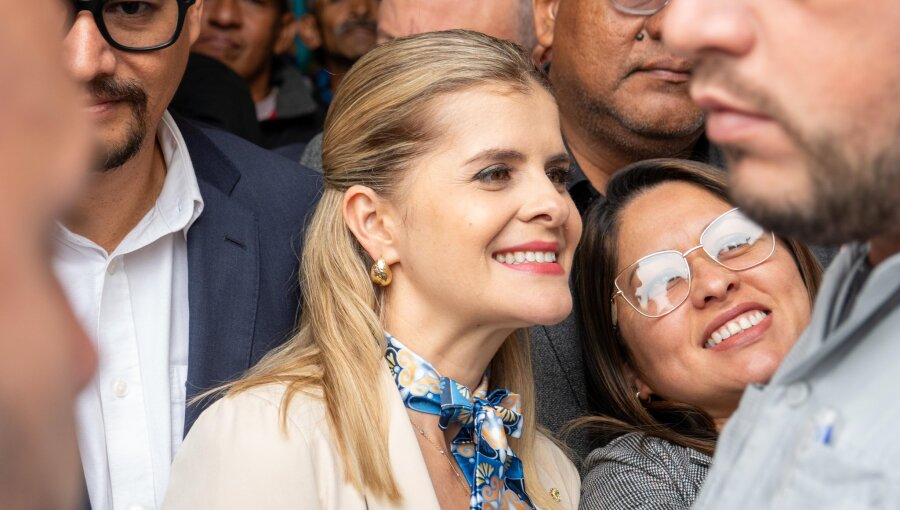
Political scientist Laura Fernandez swept to victory in Costa Rica's presidential election on February 1, capturing nearly half the vote with pledges to adopt hardline tactics against surging drug cartel violence that has shattered the Central American country's reputation as a bastion of peace and democracy.
According to AFP, the 39-year-old right-wing candidate from the Sovereign People's Party won 48.94% of ballots with 81.24% of polling stations tallied, clearing the 40% threshold required to avoid a second round, the Supreme Electoral Tribunal reported. Her closest competitor, centre-right economist Alvaro Ramos of the National Liberation Party, conceded after securing 33.02%, whilst third-place finisher Claudia Dobles of the leftist Citizen Agenda Coalition achieved 4.81%.
Fernandez's triumph paves the way for the continuation of President Rodrigo Chaves' political movement, having previously served in his cabinet as planning minister and minister of the presidency. She becomes only the second woman to lead Costa Rica, following Laura Chinchilla's 2010-2014 term with the National Liberation Party.
Celebrating with supporters in downtown San Jose, Fernandez declared the result opened "a new stage" in the nation's history, which she has termed "the third republic". She pledged to lead a government of national dialogue whilst implementing what she called democratic transformations.
"Costa Rica has voted, and it has voted for the continuity of change," Fernandez told supporters, vowing to rescue and perfect democratic institutions and deliver greater prosperity for citizens.
Security dominated the campaign in the small nation of 5.2mn traditionally regarded as a haven of pristine beaches and political stability. Costa Rica's evolution from transit corridor to strategic hub for international narcotics trafficking has unleashed territorial conflicts between Mexican and Colombian criminal organisations, driving homicides up 50% over six years to 17 per 100,000 residents.
Fernandez has openly praised Salvadoran President Nayib Bukele's controversial approach of mass detentions without formal charges, proposing similar emergency measures for crime-affected zones. Her platform includes finishing a high-security detention facility inspired by El Salvador's Terrorism Confinement Centre mega-prison, lifting constitutional guarantees to enable the removal of identified criminals, and lengthening prison terms.
"My hand will not tremble when it comes to making the decisions we have to make to restore peace to the homes of Costa Rica," Fernandez stated during a January debate, floating a suspension of constitutional guarantees through special procedures.
Bukele congratulated Fernandez shortly after initial results emerged, making him amongst the earliest foreign leaders to acknowledge her victory alongside Chaves.
Fernandez’s win comes on the heels of a conservative wave sweeping Latin America, where right-wing candidates have capitalised on public frustration with corruption and lawlessness to recently capture power in Chile, Bolivia and Honduras.
Drug violence has penetrated densely populated informal settlements in cities including San Jose, where rival gang shootouts have become increasingly common. Fernandez's campaign rallies frequently featured chants of "Long live Chaves" from both the candidate and supporters, with some party members openly discussing objectives including consecutive re-election through constitutional reform.
However, critics warn Fernandez may pursue constitutional, authoritarian-leaning amendments enabling Chaves to seek office again before the mandatory eight-year waiting period expires.
Fernandez, who is married with one daughter, has repeatedly affirmed her commitment to preserving democratic traditions. "This is a democratic celebration and we have to thank God for our country and for the democratic stability that I will always protect," she told reporters.
In a February 1 evening conversation, Chaves expressed confidence that her administration would prevent both dictatorship and communism. Fernandez has left open the possibility of offering the incumbent leader a ministerial position, describing him as "a brilliant man".
"We will be a constructive opposition, but that doesn't mean allowing them to do improper things," Ramos said after acknowledging defeat. "In a democracy, it's okay to disagree, it's okay to criticise."
Costa Ricans simultaneously elected the 57-seat Legislative Assembly, with partial returns showing Fernandez's party capturing roughly 39% of votes. One of the party's objectives is securing 40 seats to facilitate approval of judicial reforms and prevent legislative blocking of initiatives.
Fernandez's economic agenda includes expanding public-private infrastructure partnerships, attracting foreign investment, and reducing bureaucratic obstacles whilst continuing Chaves-era projects such as Government City, a luxury Caribbean marina, strategic road construction, and port and airport expansions.
Last month, Fernandez attended the presentation of a documentary titled “The Unexpected”, which praised Chaves' role in building the political movement. Throughout her campaign, she has followed Chaves' approach of lashing out at the “ineffective” judiciary and legislature, blaming them for increased homicides and drug-related violence.
Costa Rican president-elect looks to Bukele for help against crime
San José (AFP) – Costa Rican President-elect Laura Fernandez on Monday welcomed guidance from El Salvador's gang-busting Nayib Bukele in her own country's fight against a surge in drug-related violence.
Issued on: 02/02/2026 - RFI

Costa Rica continued a rightward lurch in Latin America through a landslide election victory for Fernandez on Sunday, and is a country better known for its idyllic beaches than its emerging role as a logistics hub for the global narco trade.
Long considered one of the safest countries in Latin America, Costa Rica, which has no military, ended 2025 with a rate of 17 homicides per 100,000 inhabitants -- nearly triple the global average.
Fernandez has taken a page from Salvadoran President Bukele's iron-fisted anti-gang approach. On the campaign trail, she pledged to crack down on organized crime and build a mega-prison modeled on Bukele's CECOT "Terrorism Confinement Center."
The facility will cost $35 million and house 5,000 of the most dangerous inmates.
Bukele, who many in Latin America consider a hero for his crackdown on gangs, is credited with restoring security to a nation traumatized for decades by horrific crime.
He declared a state of emergency that allows for warrantless arrests and rounded up over 90,000 people since March 2022, many of them innocent or minors, according to rights groups that have also denounced instances of torture.
On Monday, Fernandez told reporters that she spoke to Bukele, who was the first to congratulate her on her election win. He underlined "his commitment to continue helping," particularly on the prison project, she said.
"We need to cut organized crime's connection... with the outside world" which is why "this prison must become a reality," Fernandez added.
© 2026 AFP

No comments:
Post a Comment