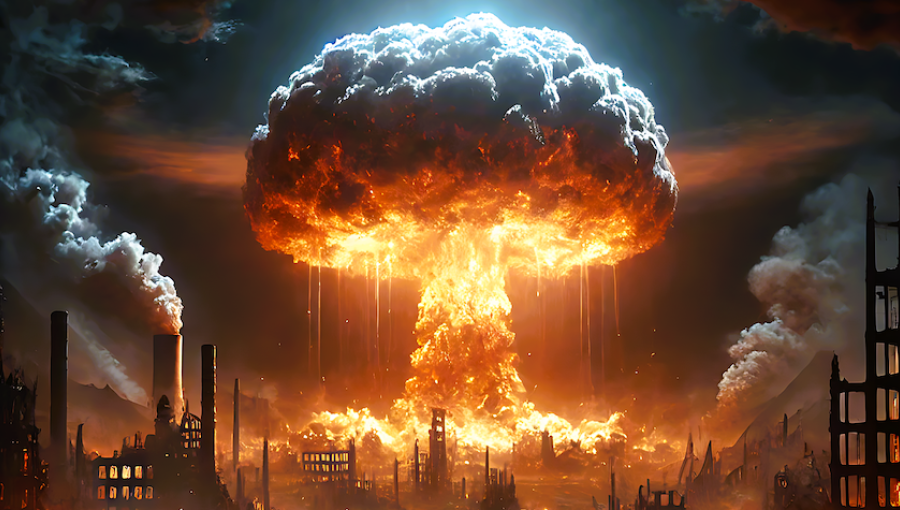
A senior adviser to US President Donald Trump has warned that escalating conflict between Israel and Iran could lead to the “truly catastrophic” scenario of nuclear weapons use, drawing renewed attention to how nuclear threats have increasingly surfaced in geopolitical crises since Russia’s invasion of Ukraine.
David Sacks, Trump’s adviser on artificial intelligence and cryptocurrency policy, raised the possibility during an appearance on the All-In podcast, where he cautioned that further escalation in the Middle East could spiral beyond conventional warfare.
“This is a good time to declare victory and get out, and that is clearly what the markets would like to see,” Sacks said, warning that continued escalation could bring unpredictable consequences.
“There is a faction of people,” he added, largely within the Republican Party, “who want the war to escalate. I just want to lay out, I think, some of the risks of what an escalatory approach could entail.”
Among those risks, Sacks said, was the possibility of Israel considering its most extreme military option if it faced severe damage during a prolonged conflict.
“Israel could get seriously destroyed,” he said. “And then you have to worry about Israel escalating the war by contemplating using a nuclear weapon.”
He warned that such a step would be “truly catastrophic”, adding that there are “a lot of really frightening scenarios about where escalation could lead”.
Nuclear pressure campaign
The comments highlight how nuclear weapons have increasingly featured in the rhetoric surrounding major conflicts in recent years, most prominently during Russia’s war against Ukraine.
When Russian President Vladimir Putin launched the full-scale invasion of Ukraine in February 2022, his televised address contained thinly veiled nuclear threats aimed at Western governments that might intervene.
“Russia will respond immediately,” Putin said at the time, warning that “the consequences will be such as you have never seen in your entire history.” Days later he ordered Russia’s nuclear forces into a “special mode of combat duty”.
A November 2025 commentary published by the Atlantic Council, titled ‘Vladimir Putin’s endless nuclear threats are a sign of Russian weakness’ argues the Kremlin uses nuclear signalling as a strategic tool. “Russian nuclear sabre-rattling has remained a prominent feature of the war,” said the report, authored by Stephen Blank, a senior fellow at the Foreign Policy Research Institute. Blank noted that the threats have “made plenty of headlines but have only partially succeeded in deterring Western countries” from helping Ukraine.
A report published by the UK parliament in December 2024 concluded that Moscow used nuclear threats as part of a broader pressure campaign against Western support for Kyiv.
“President Putin has increasingly used the threat of the Russian nuclear arsenal to pressurise the West over its military and diplomatic support for Ukraine,” the report said.
As part of that campaign, Russia has placed nuclear forces on heightened alert, tested new capabilities and suspended participation in arms-control agreements with the United States.
In March 2023, Moscow announced it would deploy tactical nuclear weapons to neighbouring Belarus — the first time since the collapse of the Soviet Union that Russian nuclear weapons had been stationed outside its territory. The decision did not directly violate the Nuclear Non-Proliferation Treaty but some experts argued that, like Nato’s nuclear-sharing arrangements, it contravened the spirit of the accord.
Putin also approved an update to Russia’s nuclear doctrine in November 2024 that lowered the threshold for nuclear weapons use. Under the revised doctrine, nuclear weapons could be deployed in response to conventional attacks that create a “critical threat” to the sovereignty or territorial integrity of Russia or its ally Belarus.
Signalling strength … or weakness
Western governments have condemned the Kremlin’s rhetoric. The US and Nato have repeatedly called Russia’s nuclear messaging “irresponsible”, while China has called for restraint and warned that the use or threat of nuclear weapons should be opposed.
However, Blank argued that Moscow’s “increasingly frequent use of nuclear blackmail may actually be a sign of weakness rather than strength.”
“Like a geopolitical gangster, Putin has come to rely on Mafia-style intimidation tactics as he seeks to reassert Russia’s great power status,” the report said.
The timing of Russia’s nuclear signalling often coincided with setbacks or pressure elsewhere, including sanctions targeting the country’s energy sector.
A September 2022 Chatham House commentary looks at comments made by Putin in the months after the full scale invasion of Ukraine, apparently aimed at deterring the West from interference.
However, the commentary says, “Mixed messaging with the potential for misinterpretation could lead to decisions being made under false assumptions”. It notes a “well-documented history of close calls with nuclear weapons”.
The debate reflects the enduring logic of nuclear deterrence developed during the Cold War, based on the principle of Mutually Assured Destruction (MAD).
“The idea behind MAD is that the horror and destruction from nuclear weapons is enough to deter aggressive action and war,” the commentary says. “But the application of deterrence theory to post-cold war realities is far more complicated in the era of cyberattacks and AI, which could interfere with the command and control of nuclear weapons.”
Under the Nuclear Non-Proliferation Treaty, five countries are recognised as nuclear-armed states: China, France, Russia, the UK and the US. Outside the treaty framework, India, Pakistan and North Korea openly possess nuclear weapons. Israel has never formally declared a nuclear arsenal but is widely believed by experts to possess one.
The US and Russia have historically maintained arms-control mechanisms to limit their strategic weapons, including the New START Treaty, which allowed both countries to exchange information on long-range nuclear missiles. The treaty expired in February 2026. At the time, United Nations Secretary-General Antonio Guterres called the expiration a “grave moment” for international peace and security and urged Russia and the US to negotiate a new nuclear arms control framework.
The erosion of such agreements, combined with increasingly heated rhetoric around global conflicts, has heightened concerns that nuclear threats could again move from political messaging into operational planning.
Trump and Putin: Their Failures in Regime Change
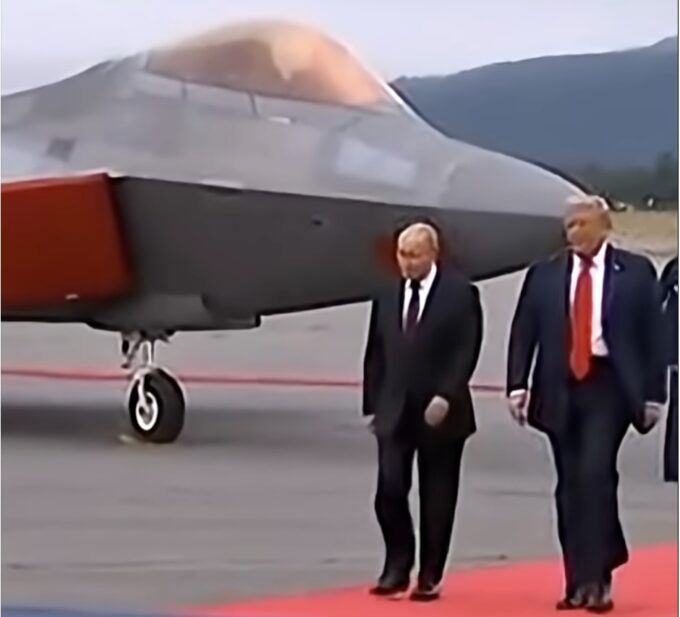
Trump rolled out the red carpet for Putin in Alaska, 2025. (Screengrab from video posted to YouTube.)
Donald Trump and Vladimir Putin will go down in history for their respective failures in regime change. Both Trump and Putin overestimated their military strengths and underestimated the military strengths of their adversaries. They miscalculated the strategic challenges and economic costs of widespread use of their military arsenals.
Both Trump and Putin failed to anticipate the long-term chaos that would accompany their wars. Their regimes used scare tactics in the initial stages of the war: Putin claimed he was denazifying a Ukrainian society that was devoid of nazism; Trump is warning that Iranian suicide teams are a threat to domestic stability at home in an effort to keep skeptical publics on edge.
Intelligence failures were abundant in these cases to go to war, which is the realm of uncertainty, according to Carl von Clausewitz. Putin underestimated the ability of the Ukrainians to defend themselves as well as the willingness of the Western community, particularly the North Atlantic Treaty Organization, to rally in Ukraine’s defense. Putin is now facing two additional NATO members (Finland and Sweden) on his vulnerable western front as well as an Ukraine that is working closely with NATO states. Trump failed to consult his Western allies for his unnecessary and illegal war, and in the process, weakened the Western alliance.
Neither Trump nor Putin expected long-term confrontations. Putin was so confident of immediate success that he instructed Russian commanders to pack dress uniforms for the parade in Kyiv that would soon ensue. Trump and his Pentagon made no plans for protecting or removing American civilians from the Middle East and the Persian Gulf, and appeared shocked by Iran’s sudden closure of the Strait of Hormuz and the economic chaos that accompanied the greatest oil supply shock in history.
The rising price of oil and the declining worth of U.S. stock markets could have more impact on the decision to end the war than any of the events on the battlefield. There is no better indicator of Trump’s lack of strategic thinking than his blithe encouragement to oil tanker captains to “show some guts” and sail through the Strait of Hormuz. Iranian targeting of Persian Gulf energy infrastructure apparently caught the United States military off guard.
At the same time, the adaptability and flexibility of the Ukrainian military has been shocking to a Russia military that had little battlefield experience and has encountered a huge number of casualties and fatalities. Russian territorial gains have slowed remarkably during the past four months, and Ukraine has been regaining territory in the past month.
Both Trump and Putin have clearly stepped in the unknown of war, where no plan survives first contact with the enemy. Both quickly found euphemisms for describing the war to avoid signaling the possible long-term consequences of the use of military force. Putin settled on the term “special military operations” at the outset of the war, and threatened fines for those who used the term “war.” Trump, avoiding the term “war,” settled on special operations or the more vague concept of “excursions” to avoid suggesting protracted conflict.
Meanwhile, Americans and Russians, who have nothing to gain from these wars, will bear the economic costs of the conflict. Defense spending will increase in both countries; gas prices in the United States will rise steadily; and the price of key commodities will intensify. The loss of blood and treasure is sure to intensify.

No comments:
Post a Comment