It’s possible that I shall make an ass of myself. But in that case one can always get out of it with a little dialectic. I have, of course, so worded my proposition as to be right either way (K.Marx, Letter to F.Engels on the Indian Mutiny)
Tuesday, June 23, 2026
AU
Alamos Gold shares plunge on output cut after seismic event
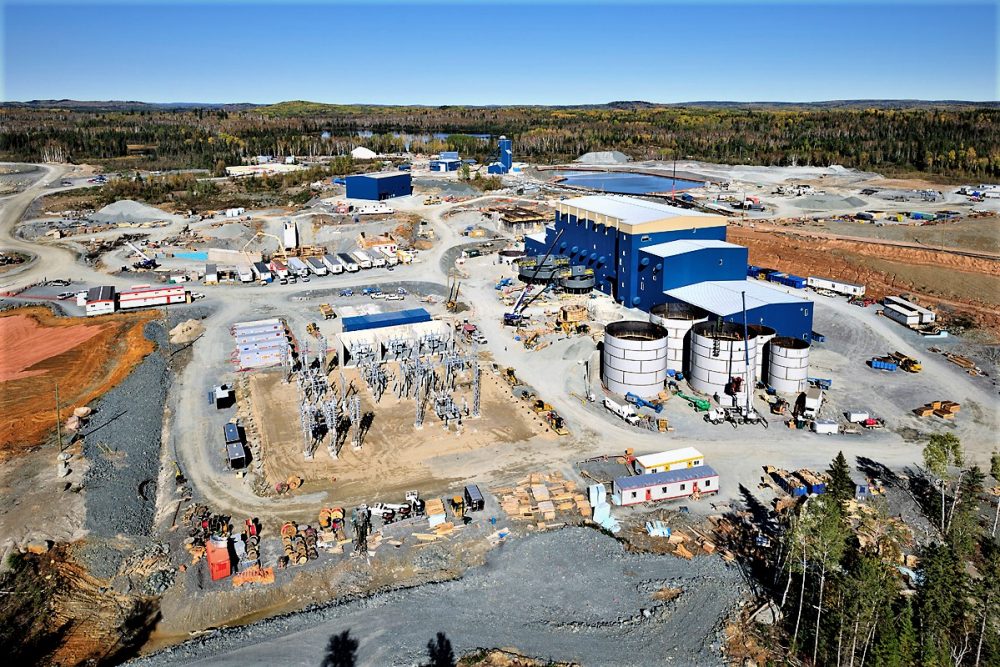
Aerial view of Alamos Gold’s Young-Davidson mine site in Matachewan, Ontario. Credit: Dumas
Alamos Gold Inc. shares fell the most since 2020 after the Canadian company cut second-quarter production guidance following seismic events that damaged a key mine.
Shares of Alamos sank as much as 20% on Friday in Toronto, a day after the company trimmed its quarterly gold production forecast to between 130,000 ounces and 135,000 ounces — a 12% decrease from previous guidance based on the midpoint of the range.
Output for the year is also expected to fall below previously issued guidance, while costs are seen rising, the Toronto-based company said in a Thursday statement. Alamos will provide revised annual output and cost figures in late July.
Two seismic events this month damaged underground infrastructure at its Young-Davidson operations in Ontario, preventing access to high-grade ore that was due to be mined in the second quarter, the company said. Alamos plans to implement additional ground support to Young-Davidson — its second-largest producing mine — throughout the second half of this year, it added.
Alamos is among Canada’s larger gold producers, with annual output hitting nearly 550,000 ounces last year. The company has outlined plans to increase production to one million ounces by 2030.
(By Sybilla Gross)
St Barbara’s 100,000 oz Nova Scotia gold hub gets green light
Existing historic 15-Mile project site. (Image courtesy of St. Barbara.)
Australia’s St Barbara (ASX: SBM) has advanced plans for its Nova Scotia gold development after Canada’s impact assessment regulator accepted the initial project description for the proposed 15-Mile Processing Hub, launching the formal permitting process.
The Impact Assessment Agency of Canada has completed its conformity review of the Initial Project Description and will now release the filing for a 20-day public comment period and consultation with First Nation communities before deciding whether a full federal impact assessment is required.
The submission aligns with a recent cooperation agreement between Ottawa and Nova Scotia aimed at delivering a “one project, one review” process.
“This submission marks a major milestone in advancing the 15-Mile Processing Hub Project to approval,” CEO Andrew Strelein said. “It reflects nearly three years of work to redesign and strengthen the project to incorporate and address feedback received from regulators, local communities and Mi’kmaq communities, resulting in a project that is both more acceptable and more beneficial for the communities.”
The project would redevelop three historic mining sites in Nova Scotia and establish a central processing hub capable of treating three million tonnes of ore annually. A prefeasibility study released earlier this year outlined an operation producing more than 100,000 oz. of gold a year over an initial mine life exceeding 11 years based on proven and probable reserves.
Redesign
The hub would process ore from the 15-Mile, Old Austen and Old Mitchell mines, replacing earlier concepts that contemplated multiple processing facilities. St Barbara said the redesign incorporates feedback from First Nation communities, regulators, environmental experts and local stakeholders while drawing on a decade of environmental studies and three years of engineering work.
According to the company, the revised design reduces land disturbance at the 15-Mile site by about 23%, cuts disturbance at Old Austen by roughly 43% and lowers impacts at Old Mitchell by approximately 55%.
The redesign also eliminates several previously proposed roads and processing facilities, reduces wetland and watershed impacts, and includes remediation of historic mining areas affected by elevated mercury and arsenic levels.
The project is expected to generate an estimated C$5 billion in economic activity across construction, operations and closure. St Barbara estimates the development would create about 1,386 construction jobs and roughly 740 long-term operating positions in rural Nova Scotia.
The filing marks the first step in a broader permitting process that will include Nova Scotia’s Environmental Assessment Registration Document and a range of provincial and federal approvals.
St Barbara plans to submit the environmental assessment documentation in the third quarter of fiscal 2027 while advancing a feasibility study in parallel.
Ghana weighing local control of Gold Fields’ biggest mine
Ghana is considering transferring control of Gold Fields Ltd.’s Tarkwa mine to local firms when its leases expire in April, part of a push to increase control of its gold industry and benefit more from high bullion prices. The company’s shares plunged.
The Ghanaian miners will need to submit bids for evaluation if the government goes ahead with the plan, people with knowledge of the matter said, asking not to be identified as the discussions are preliminary. The authorities are also weighing the option of extending the leases for Gold Fields, they said.
Ghana, Africa’s biggest gold producer, has moved to increase its share of mining revenue, raising royalties on bullion to as much as 12% from 5% and restricting bids for a former Gold Fields mine to local companies. The loss of its biggest asset will be a blow for the South Africa-based Gold Fields as it accounted for a fifth of the company’s total output last year.
“A transfer of the license effectively represents full economic loss and would be the most severe outcome,” Josh Wolfson, an analyst at RBC Capital Markets said in a note to clients. “We view this as a low probability outcome, but acknowledge Tarkwa’s mine license renewal remains an ongoing uncertainty.”
Gold Fields’ shares sank 13.1% on Friday in Johannesburg, the biggest drop in more than four years.
A spokesperson for the Ministry of Lands and Natural Resources declined to comment.
Gold Fields has “submitted an early application for the renewal of the Tarkwa mining leases. These constructive engagements are continuing,” the company said when asked for comment on the government’s proposed move.
President John Mahama’s administration is facing pressure to act against South African firms following a wave of xenophobic protests in Africa’s biggest economy. More than 2,700 people from Ghana, Nigeria, Mozambique and Malawi have been assisted to return home from South Africa amid fears that anti-immigrant demonstrations could escalate.
The administration will look for commitments around environmental rehabilitation, local employment and infrastructure development in host communities when analyzing the bids, the people said. Transferring the ownership of the Tarkwa mine will help create more job opportunities for Ghanaian engineers, suppliers, and entrepreneurs, they said.
The mine produced 475,000 ounces of the metal last year. The company is working on a 20-year operations and investment plan for Tarkwa, chief executive officer Michael Fraser said on ChannelOne TV last month.
Earlier this year, Gold Fields transferred its other Ghanaian operation — the mature Damang mine — to the state when its lease expired. The government held a tender to select a new owner for the asset, which was won by Engineers and Planners Co. Ltd., a firm that belongs to Mahama’s brother and held mining contracts at both Tarkwa and Damang.
Gold Fields, which operates mines across Africa, Australia and South America, produced about 2.5 million ounces of gold last year.
Hong Kong pulls in large gold bars ahead of clearing launch
At least four of the 11 banks participating in Hong Kong’s new gold clearing system are importing large bullion bars in preparation for the mechanism’s planned launch in July.
Traders are receiving orders from some of the clearing banks to move 400-ounce gold bars into the city, according to people familiar with the matter. The bars meet the London Good Delivery industry standard, said the people, who asked not to be named because they are not authorized to speak to media.
The 400-ounce bars are typically traded by banks and sovereign entities in London, the world’s largest bullion trading hub, but are less common in the Asian market, which is dominated by much smaller kilobars. The banks need to build up inventories to allow for physical delivery when clearing begins next month, some of the people said.
By launching its gold clearing system, Hong Kong could secure first-mover advantage in a push to become Asia’s preeminent hub for bullion trading. Last week, Singapore announced its own plans to launch a clearing mechanism by the end of the year.
Both cities are aiming to capitalize on strong demand in Asia, where many investors remain bullish about the long-term prospects for the precious metal as an alternative store of wealth. A protracted rally carried bullion to a record high earlier this year, before prices retreated as the war in the Middle East fanned concerns around inflation and higher interest rates.
In an emailed response to questions, a spokesperson for the government agency behind the system, known as the Financial Services and the Treasury Bureau, said the clearing company had been “working closely with the market to formulate the framework and rules of the clearing system” and that preparatory work had entered its final stage.
Eleven banks are on the board of the Hong Kong Precious Metals Central Clearing Co. Some of these lenders will become clearing banks from the launch, whereas others will take longer to build up their bullion capacity, some of the people said. While Hong Kong plans to start by using the London Good Delivery standard, its future plans are still to be decided, the people said.
In Singapore, the clearing system will be aligned with the London Good Delivery framework for large bars, as well as delivery and settlement standards for kilobars adopted by major exchanges in Chicago and Shanghai.

 Existing historic 15-Mile project site. (Image courtesy of St. Barbara.)
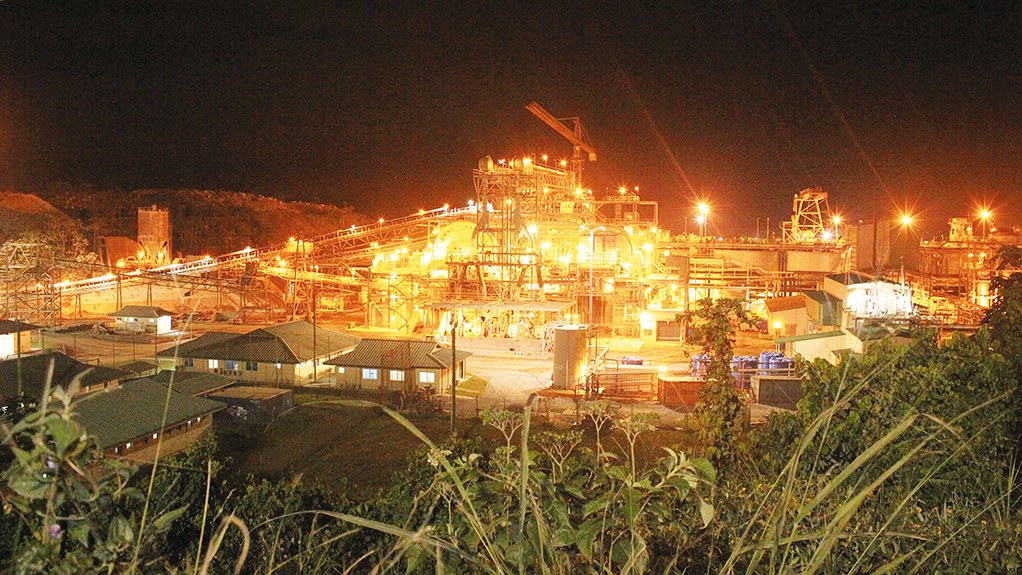 Tarkwa mine. Credit: Gold Fields
 Stock image.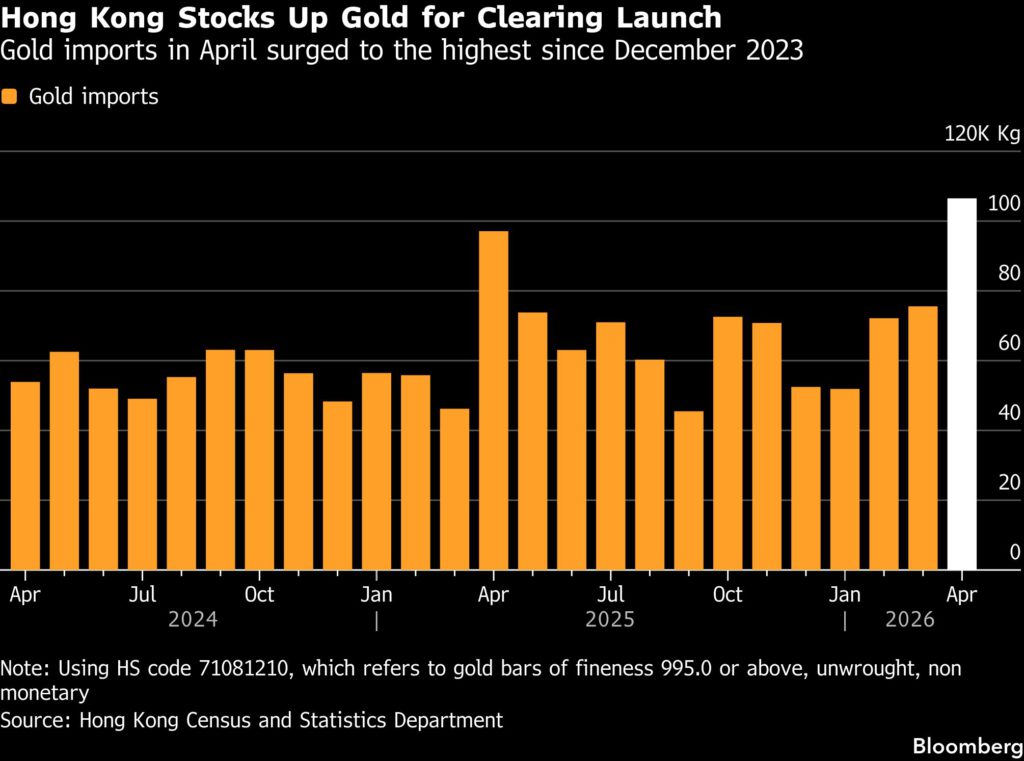

No comments:
Post a Comment