The Tolstoy Guide to History that Trump and Netanyahu Didn’t Read

Image by Светлана Химочка.
How do you bomb a country “without mercy”—and end up strengthening it?
When US Defense Secretary Pete Hegseth declared that Washington would show “no quarter, no mercy for our enemies,” the message was unmistakable: this was not a limited war, but an overwhelming campaign meant to break Iran—militarily, politically, and socially.
The logic behind such a position is not new. A country under years of sanctions, strained by economic hardship, and periodically shaken by protests would, under sustained attack, fracture from within. Pressure would compound, divisions would deepen, and the political system would eventually collapse.
That was the expectation. But the result has been the opposite. Across Iran, millions have taken to the streets—not only rejecting the war, but expressing support for their country’s military, political institutions, and leadership. Instead of collapse, there has been consolidation. Instead of fragmentation, cohesion.
This is not simply a miscalculation. It is the failure of an entire way of thinking about history.
For decades, much of US and Israeli strategic thinking has relied—implicitly or explicitly—on the assumption that political systems can be weakened and reshaped from the outside. Economic pressure, psychological operations, military escalation, and the targeting of leadership are all seen as levers that, if applied with sufficient intensity, will produce predictable outcomes.
In Iran’s case, this approach was reinforced by visible internal tensions: economic grievances, social unrest, and waves of protest that seemed to signal a society under strain.
Yet these indicators were read in isolation. They were treated as signs of imminent collapse, rather than as expressions of a complex and dynamic society. What was missing from this analysis was not data, but depth.
More than a century ago, Leo Tolstoy offered a framework that helps explain precisely this kind of failure. In War and Peace, particularly in its second epilogue, Tolstoy dismantles elite-centered explanations of history—what would later be called the ‘Great Man’ theory. He rejects the idea that leaders, generals, and political elites determine events, challenging instead the very foundations of how history is understood.
Tolstoy argues that history is not shaped from the top down. It is not the product of individual will imposed on passive societies. Instead, it emerges from the interaction of countless individual actions—each shaped by circumstance, culture, memory, and necessity. As he put it, “in historical events great men… are but labels… having the least possible connection with the event itself.”
What appears, in hindsight, as the decisive role of leaders is often an illusion. Tolstoy insists that those we consider powerful are, in fact, constrained by forces far greater than themselves. “Kings are the slaves of history,” he writes, describing history itself as “the unconscious, general… life of mankind,” which uses individuals as instruments rather than obeying them.
In this view, power is not located in the individual, but in the collective. Leaders do not create history; they are carried by it.
This perspective leads to what can be described as a “beehive” model of history. Society functions like a hive, where no single actor directs the whole, yet a coherent pattern emerges from the interaction of countless parts. Tolstoy himself approached this idea through a different language, arguing that to understand history, one must shift attention away from rulers and toward the countless small actions that, taken together, determine outcomes.
Modern strategic thinking struggles precisely at this point. It is highly effective at measuring what can be quantified: economic decline, protest frequency, military capability, political rhetoric. But it struggles to account for what cannot be easily measured—the accumulated weight of collective experience, the cultural and historical frameworks through which societies interpret events, and the ways in which populations respond not mechanically, but adaptively, to external pressure.
Iran’s national unity, in this context, is not an anomaly. It is a reflection of these deeper forces.
Iranian society has been shaped by a long history of upheaval and resistance: revolution, war, foreign intervention, and sustained economic pressure. These experiences do not produce a simple or uniform political outlook. They generate a layered and often contradictory social reality—one in which dissent and cohesion coexist. But under conditions of external threat, these layers can align in unexpected ways.
What may appear as fragmentation in times of relative stability can become unity when the threat is perceived as existential. This is not the result of central coordination or propaganda alone, as is often suggested. It is the outcome of countless individual decisions—people reassessing priorities, recalibrating their positions, and responding to a shared sense of danger.
Tolstoy observed a similar dynamic in Russia during the 1812 invasion by Napoleon. The defeat of the French army was not simply the result of strategic brilliance or centralized command. It emerged from the cumulative effect of local actions: peasants refusing cooperation, communities adapting to invasion, individuals making decisions that, taken together, shaped the course of the war. These actions were not coordinated in any formal sense, yet they produced a coherent outcome.
This is what Tolstoy meant when he challenged historians to look beyond rulers and to focus instead on the countless human actions that actually produce historical change.
A comparable logic can be seen in the Palestinian concept of sumud, or steadfastness. Over decades of occupation and dispossession, Palestinian resilience has not been sustained primarily by centralized structures or formal strategies, but by the people themselves—their social fabric, cultural continuity, and collective memory. As many thinkers, from Antonio Gramsci to Ghassan Kanafani and Howard Zinn, have argued in different contexts, history is not simply imposed from above; it is constructed from below.
This does not mean that leadership, institutions, or strategy are irrelevant. It means that they are not sufficient to explain historical outcomes on their own.
The expectation that Iran would fracture under military pressure failed because it relied on the wrong unit of analysis. It treated society as a system that could be manipulated through external force, rather than as a living, adaptive organism shaped by its own internal dynamics. It interpreted internal dissent as weakness, rather than as part of a broader and more complex social process.
Most importantly, it assumed that history can be engineered.
But history is not a linear sequence of inputs and outputs. It is not a program that can be executed according to plan. It is an emergent process, shaped by the interaction of forces that cannot be fully predicted or controlled.
In such a system, overwhelming force does not guarantee the intended outcome. In some cases, it produces the opposite effect—strengthening the very structures it was meant to weaken.
If Tolstoy were to observe the current moment, he would likely reject the dominant narratives that center on leaders, strategies, and geopolitical calculations. He would not begin with presidents or generals. He would begin with the people—the millions whose actions, taken together, are shaping the course of events in ways that no model can fully anticipate.
The national unity visible in Iran today is not simply a political phenomenon. It is a historical one. It reflects the deeper ‘hive-life’ of a society responding to external pressure—not as a passive object, but as an active force.
This is the lesson that remains consistently overlooked. This maxim is consistent with Gramsci’s revision of the famous Cicero’s saying, “Historia magistra vitae” (History is the teacher of life). For Gramsci, an important caveat needed to be added: History is the teacher of life, but it has no disciples.
History is not made in war rooms or think tanks. It is made in the accumulated choices of ordinary people, acting within the constraints and possibilities of their own lived realities. Power, in this sense, does not reside solely in states or leaders. It resides in the collective—distributed, dynamic, and often invisible until moments of crisis bring it into view.
What we are witnessing is not an exception to the rules of history.
It is the rule itself.
No Time for Losers: Why the War Meant to Save Israel May Destroy It
When Donald Trump and Benjamin Netanyahu launched their military aggression against Iran on February 28, they appeared convinced that the war would be swift. Netanyahu reportedly assured Washington that the campaign would deliver a decisive strategic victory – one capable of reordering the Middle East and restoring Israel’s battered deterrence.
Whether Netanyahu himself believed that promise is another matter.
For decades, influential circles within Israel’s strategic establishment have not necessarily sought stability, but rather “creative destruction.” The logic is simple: dismantle hostile regional powers and allow fragmented political landscapes to replace them.
This idea did not emerge overnight. It was articulated most clearly in a 1996 policy paper titled A Clean Break: A New Strategy for Securing the Realm, prepared for then-Israeli Prime Minister Benjamin Netanyahu by a group of US neoconservative strategists, including Richard Perle.
The document argued that Israel should abandon land-for-peace diplomacy and instead pursue a strategy that would weaken or remove hostile regimes in the region, particularly Iraq and Syria. The goal was not merely military victory but a geopolitical restructuring of the Middle East in Israel’s favor.
In many ways, the subsequent decades seemed to validate that theory – at least from Tel Aviv’s perspective.
The Middle East Reordered
The 2003 US invasion of Iraq was widely considered a catastrophe for Washington. Hundreds of thousands died, trillions of dollars were spent, and the United States became entangled in one of the most destabilizing occupations in modern history.
Yet the war removed Saddam Hussein’s government, dismantled the Baath Party, and destroyed what had once been the strongest Arab army in the region.
For Israel, the strategic consequences were significant.
Iraq, historically one of the few Arab states capable of confronting Israel militarily, ceased to exist as a coherent regional power. Years of instability followed, leaving Baghdad with a fragile political system struggling to maintain national cohesion.
Syria, another central concern in Israeli strategic thinking, would later descend into its own devastating war beginning in 2011. Libya collapsed earlier after NATO’s intervention in 2011 as well. Across the region, once-formidable Arab nationalist states fractured into weakened or internally divided systems.
From Israel’s vantage point, the theory of regional fragmentation appeared to be paying dividends.
Without strong Arab states capable of projecting military power, several Gulf governments began reconsidering their long-standing refusal to normalize relations with Israel.
The result was the Abraham Accords, signed in September 2020 under the Trump administration, which formalized normalization between Israel and the United Arab Emirates and Bahrain, later followed by Morocco and Sudan.
For a moment, it seemed that the geopolitical transformation envisioned decades earlier had been realized.
Gaza Changed the Equation
But history rarely moves in straight lines.
Israel’s genocide in Gaza did not produce the strategic victory Israeli leaders had anticipated. Instead, the war exposed deep vulnerabilities in Israel’s military and political standing.
More importantly, Palestinian resistance demonstrated that overwhelming military force could not translate into decisive political control.
The consequences reverberated far beyond Gaza.
The war galvanized resistance movements across the region, deepened divisions within Arab and Muslim societies between governments aligned with Washington and those opposed to Israeli policies, and ignited an unprecedented wave of global solidarity with Palestinians.
Israel’s international image suffered dramatically.
For decades, Western political discourse framed Israel as a democratic outpost surrounded by hostile forces. That narrative has steadily eroded. Increasingly, Israel is described – even by major international organizations – as a state engaged in systematic oppression and, in Gaza’s case, genocidal violence.
The strategic cost of that reputational collapse cannot be overstated. Military power relies not only on weapons but also on legitimacy. And legitimacy, once lost, is difficult to recover.
Netanyahu’s Final Gamble
Against this backdrop, the war on Iran emerged as Netanyahu’s most consequential gamble.
If successful, it could restore Israel’s regional dominance and reassert its deterrence. Defeating Iran – or even severely weakening it – would reshape the balance of power across the Middle East.
But failure carries equally profound consequences.
Netanyahu, now facing an arrest warrant issued by the International Criminal Court in 2024 over war crimes in Gaza, has tied his political survival to the promise of strategic victory.
In multiple interviews over the past year, he has framed the confrontation with Iran in almost biblical terms. In one televised address in 2025, Netanyahu declared that Israel was engaged in a “historic mission” to secure the future of the Jewish state for generations.
Such rhetoric reveals not confidence but desperation.
Israel cannot wage such a war alone. It never could.
Thus, Netanyahu worked tirelessly to draw the United States directly into the conflict – a familiar pattern in modern Middle Eastern wars.
The Paradox of Trump’s War
For Americans, the question remains: why did Donald Trump – who repeatedly campaigned against “endless wars” – allow the US to enter yet another Middle Eastern conflict?
During his 2016 presidential campaign, Trump famously declared: “We should have never been in Iraq. We have destabilized the Middle East.”
Yet nearly a decade later, his administration has plunged Washington into a confrontation whose potential consequences dwarf those of the earlier wars.
The precise motivations matter less to those living under the bombs.
Across the region, the scenes are painfully familiar: devastated cities, mass graves, grieving families, and societies once again forced to endure the violence of foreign intervention.
But this war is unfolding in a fundamentally different geopolitical environment.
The US no longer commands the unchallenged dominance it once enjoyed.
China has emerged as a major economic and strategic actor. Russia continues to project influence. Regional powers have gained confidence in resisting Washington’s dictates.
The Middle East itself has changed.
A War Already Going Wrong
Early signs suggest that the war is not unfolding according to the expectations of Washington or Tel Aviv.
Reports from US and Israeli media indicate that missile-defense systems in Israel and several Gulf states are facing a serious strain under sustained attacks. Meanwhile, Iran and its regional allies have demonstrated missile capabilities far more extensive than many analysts had anticipated.
What was supposed to be a rapid campaign increasingly resembles a prolonged conflict.
Energy markets provide another indication of shifting dynamics. Rather than securing greater control over global energy flows, the war has disrupted supplies and strengthened Iran’s leverage over key maritime routes.
Strategic assumptions built on decades of uncontested American military power are colliding with a far more complex reality.
Even the political rhetoric emanating from Washington has become noticeably defensive and increasingly angry – often a sign that events are not unfolding as planned.
Within the Trump administration itself, the intellectual poverty of the moment is difficult to miss. Defense Secretary Pete Hegseth, whose public persona is built on television bravado rather than strategic literacy, has often framed the conflict in language that sounds less like military doctrine and more like locker-room theatrics.
In speeches and interviews, he has repeatedly reduced complex geopolitical realities into crude narratives of strength, masculinity, and domination. Such rhetoric may excite partisan audiences, but it reveals a deeper problem: the people directing the most dangerous war in decades appear to understand very little about the forces they have unleashed.
Hegseth’s style is symptomatic of a broader intellectual collapse within Washington’s war-making circles – where historical knowledge is replaced by slogans, and strategic planning by theatrical displays of toughness. In such an environment, wars are not analyzed; they are performed.
The End of an Era?
Netanyahu sought to dominate the Middle East. Washington sought to reaffirm its position as the world’s unrivaled superpower.
Neither objective appears within reach.
Instead, the war may accelerate the very transformations it was meant to prevent: a declining US strategic role, a weakened Israeli deterrent posture, and a Middle East increasingly shaped by regional actors rather than external powers.
Trump, despite the lofty and belligerent language, is in reality a weak president. Rage is rarely the language of strength; it is often the mask of insecurity. His administration has overestimated America’s military omnipotence, undermined allies and antagonized adversaries alike, and entered a war whose historical, political, and strategic dimensions it scarcely understands.
How can a leadership so consumed by narcissism and spectacle fully grasp the magnitude of the catastrophe it has helped unleash?
One would expect wisdom in moments of global crisis. What we have instead is a chorus of slogans, threats, and self-congratulation emanating from Washington – an administration seemingly incapable of distinguishing between what power can achieve and what it cannot.
They do not understand how profoundly the world has changed. They do not understand how the Middle East now perceives American military adventurism. And they certainly do not understand that Israel itself has become, politically and morally, a declining brand.
Of course, Trump and his equally arrogant administration will continue searching for any fragment of ‘victory’ to sell to their constituency as the greatest triumph in history. There will always be zealots ready to believe such myths.
But most Americans – and the overwhelming majority of people around the world – no longer do.
Partly because this war on Iran is immoral.
And partly because history has very little patience for losers.
Trump and Hegseth Cannot Define the Truth of the US-Israeli War on Iran
March 20, 2026
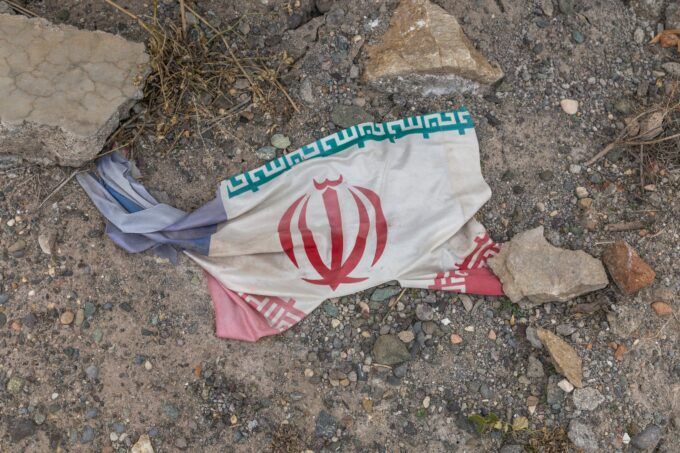
Image by Javad Esmaeili.
US Defense Secretary Pete Hegseth appears to have little patience for questions that do not conform to his preferred style of declaring unsubstantiated victories, whether against South Americans or in the Middle East.
In a charged press conference on March 13, Hegseth did more than attack journalists for questioning his unverified claims about the course of the war in the Middle East. He singled out CNN, introducing a troubling dimension to the conversation. “The sooner David Ellison takes over that network, the better,” he said.
Ellison, a close ally of President Donald Trump and a strong supporter of Israel, is widely considered the frontrunner to acquire Warner Bros. Discovery, the parent company that owns CNN. If there was any lingering doubt that such acquisitions are driven by political and ideological considerations, Hegseth’s remarks dispelled it.
Such statements reflect a broader shift in how the media is viewed by segments of the US ruling class, particularly under the Trump administration. During both of his presidential terms, Trump has invested much of his public discourse not in unifying the nation but in deploying deeply hostile language against journalists who question his policies, rhetoric, or political conduct.
“The fake news media is not my enemy, it is the enemy of the American people,” Trump wrote on Truth Social on February 18, repeating a phrase that has become central to his political lexicon.
Yet American media entered this confrontation with little public trust to begin with, though for reasons that have little to do with Trump’s own political agenda. A 2025 Gallup poll found that only 28 percent of Americans trust the mass media to report the news fully, accurately, and fairly, one of the lowest levels recorded in recent decades.
Historically, this mistrust has coexisted with Americans’ skepticism toward their government—any government, regardless of political orientation. But what is unfolding today appears qualitatively different. The long-standing alignment between political power, corporate interests, and media narratives now seems to be fracturing under the weight of widespread public distrust.
In Israel, however, the situation takes a different form. Mainstream media often mirrors the militant posture of the government itself, translating political belligerence into broad public support for war—whether in Gaza, Lebanon, Iran, or wherever Prime Minister Benjamin Netanyahu chooses to expand the battlefield.
Public opinion data illustrates this dynamic clearly. A survey released on March 4 by the Israel Democracy Institute found that 82 percent of the Israeli public supported the ongoing military campaign against Iran, including 93 percent of Israeli Jews.
Such figures reflect a media and political environment in which dissenting voices remain marginal and frequently isolated.
“With this kind of media, there’s no point in fighting for a free press, because the media itself is not on the side of freedom,” Israeli journalist Gideon Levy wrote in Haaretz on March 12.
While there is little that can realistically be done to shift the dominant Israeli narrative from within Israel itself, journalists elsewhere carry an immense responsibility. They must adhere to the most basic standards of journalistic integrity now more than ever.
This responsibility does not apply only to journalists in the United States or across the Western world. It applies equally to journalists throughout the Middle East. After all, it is our region that is being drawn into wars not of its own making, and it is our societies that have the most to gain from a just and lasting peace.
Over the past two years—particularly during Israel’s genocide on Gaza—we have seen just how difficult it has become to convey reality from the ground. Journalists have confronted censorship, propaganda campaigns, algorithmic suppression, intimidation, and outright violence.
Yet the consequences of this information crisis are far from abstract. When truth disappears, civilians suffer in silence. Political decisions are justified through distorted narratives. Wars themselves become easier to prolong when the public is denied the facts necessary to challenge them.
For years, many of us warned that if the promoters of war and chaos were not restrained, the entire region could descend into a cycle of deliberate destabilization. If this trajectory continues, our shared aspirations will suffer for generations. Our collective prosperity—already fragile—could be permanently undermined.
This struggle is not merely about journalistic integrity, nor even about truth-telling as an ethical imperative. It is about the fate of entire societies whose futures are deeply interconnected. In our region, we either rise together or fall together.
Governments across the Arab and Muslim world warned against the military adventurism now engulfing the Middle East long before the current escalation. Their warnings went largely unheeded, and the consequences are now unfolding.
At this moment, journalists, intellectuals, and people of conscience must speak the truth in all its manifestations, using every available platform and opportunity.
We reject war. But for wars to end, truth must be spoken openly and without hesitation. Journalists must be allowed to work without fear or intimidation. Media ownership must not become a mechanism of control and censorship.
Politicians and generals risk reputational damage, the loss of office, or perhaps the disappearance of a generous holiday bonus if their wars fail. For the people of the Middle East—and for all victims of war—the stakes are far greater. We risk losing our families, our economies, our homes, and the very possibility of a stable future.
For that reason, gratitude is owed to the courageous individuals who continue to speak truth to power; to those who insist on unity during moments deliberately engineered to produce division; and to those who understand that honest journalism is not merely a profession.
It is a moral obligation.

Joe Kent’s resignation is not an anomaly but an alarm: elite dissent is surfacing early because this war is built on deception.
Joe Kent’s resignation is shocking, but not for the obvious reason.
It is not shocking simply because it comes from within the Trump administration. Any administration of that size, stretching across thousands of officials, operatives and career personnel, will contain people who, despite the surrounding culture, still draw moral lines of their own.
Even an administration defined by blunt militarism, racialized rhetoric and an unapologetic embrace of force is not morally monolithic. There is always room, however narrow, for someone to say: enough.
What makes Kent’s resignation important is something else entirely: the language, the timing, and the political location from which it emerged.
When other officials resigned over Gaza, they established a standard of ethical clarity that still matters. Former UN human rights official Craig Mokhiber resigned on October 28, 2023, warning that “we are seeing a genocide unfolding before our eyes” and describing Gaza as “a textbook case of genocide.”
Former State Department official Stacy Gilbert, who resigned in May 2024 over a government report on Israeli obstruction of aid, put it just as bluntly: “There is so clearly a right and wrong, and what is in that report is wrong.”
These were not carefully lawyered exits. They were moral positions.
Kent belongs in a different political universe than Mokhiber or Gilbert. That is precisely why his resignation carries such force.
He was not some liberal holdout inside a hawkish administration. He was the director of the National Counterterrorism Center, confirmed in July 2025, a former Green Beret, a former CIA paramilitary officer, and by every normal measure a deeply embedded figure within the national security state.
He was also a Trump-aligned Republican whose confirmation battle was shaped by ties to far-right figures and conspiracy politics, according to AP. In other words, this was not an outsider recoiling from empire. This was a man from within that machinery saying he could no longer justify this war.
And he did not mince words.
“I cannot in good conscience support the ongoing war in Iran,” Kent wrote. “Iran posed no imminent threat to our nation, and it is clear that we started this war due to pressure from Israel and its powerful American lobby.”
That sentence alone is politically explosive. It does not merely criticize tactics. It indicts the rationale of the war itself.
Then Kent went further.
“Early in this administration, high-ranking Israeli officials and influential members of the American media deployed a misinformation campaign that wholly undermined your America First platform and sowed pro-war sentiments to encourage a war with Iran,” he wrote.
And then the bluntest line of all:
“This was a lie and is the same tactic the Israelis used to draw us into the disastrous Iraq war.”
This is not bureaucratic dissent. This is a direct accusation of manipulation, deception, and foreign-policy capture.
That is what makes this resignation different.
Officials often leave in silence. They retreat into euphemism. They invoke family reasons, timing, institutional fatigue, or the tired fiction of “policy differences.” Kent did none of that. He drew a line between right and wrong in the language of his own political tradition, and then crossed it. The significance of that act cannot be measured only by whether one agrees with his worldview. It must be measured by what it reveals: that the moral and strategic contradictions of this war are now so visible that even loyalists are beginning to break.
Kent also anchored his decision in personal history.
“As a veteran who deployed to combat 11 times and as a Gold Star husband who lost my beloved wife Shannon in a war manufactured by Israel, I cannot support sending the next generation off to fight and die in a war that serves no benefit to the American people nor justifies the cost of American lives.”
His wife, Navy Senior Chief Petty Officer Shannon Kent, was killed in Syria in 2019 as part of Operation Inherent Resolve. That does not sanctify Joe Kent’s politics, but it does explain the moral register of his letter. He was not speaking abstractly about sacrifice. He was speaking from inside its wreckage.
This matters for another reason.
We do not know what Kent knows and chose not to say. Someone in his position had access to intelligence, internal deliberations, threat assessments and strategic discussions that the public will never see in full. When such a figure concludes that there was “no imminent threat,” that judgment is not casual. It does not prove everything, but it gives weight to the suspicion that the public case for war was not merely weak, but manufactured.
There is also a wider lesson here, and it may be the most important one.
Unlike earlier US wars, this one is generating meaningful dissent with unusual speed. Iraq took time. Afghanistan took time. Even when elite opposition emerged, it often arrived only after the strategic disaster had fully matured. This time, less than three weeks into the US-Israeli war on Iran, anti-war protests are already visible, internal unease is already surfacing, and a senior counterterrorism chief has already resigned in public protest. That does not mean the war is near its end. It means the political architecture sustaining it is less stable than Washington wants to admit.
Kent’s resignation should also sharpen a debate that Washington has spent decades trying to blur: the role of Israel in shaping US foreign policy. Kent did not hide behind coded language. He called this war what he believes it is: a war launched “due to pressure from Israel and its powerful American lobby.” Whether more officials will say the same remains to be seen. But one of them already has, and from a post that matters.
None of this requires romanticizing Joe Kent. One may object, strongly and rightly, to his past politics, to the role he played inside the national security establishment, and to the wider machinery of empire that made his career possible. But that is not the point. The point is that, within his own framework, he reached a conclusion and acted on it. He did the rare thing: he left power and named the corruption plainly.
This story is not ending. It is starting. Because once one insider says the war was built on lies, others are forced into a choice. They can continue to perform loyalty to a collapsing narrative, or they can speak. And the longer this war drags on, the more difficult silence will become.


No comments:
Post a Comment