Showing posts sorted by relevance for query Michel Foucault. Sort by date Show all posts

Saturday, July 11, 2020

Michel Foucault: Biopolitics and Biopower


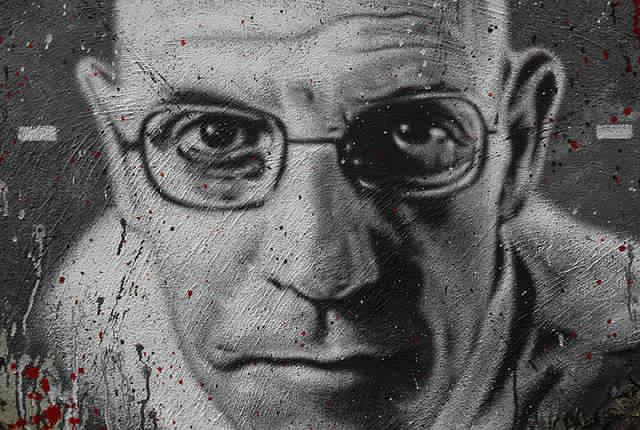
Despite their prominence in subsequent academic writing,1 the concepts of “biopower” and “biopolitics” are perhaps the most elusive, and arguably the most compelling (given the attention they have subsequently received), concepts of Michel Foucault’s oeuvre. Within his published work, these concepts featured only in the last chapter of the slim first volume of History of Sexuality (The Will to Knowledge: History of Sexuality Volume I 1976).2 And, while biopolitics and biopower can be seen to figure within broader conceptualisations and genealogies of power and governmentality3 of his lecture series at the Collège de France (largely, 1975-76 ‘Society Must be Defended’4; 1977-78 Security, Territory Population5; and 1978-79 The Birth of Biopolitics6) these references remain ‘speculative’7 and incomplete, in part due to the genre of the lecture series which stand as unedited posthumous publications.8 Indeed, whether Foucault provides us with a coherent theory or concept of biopolitics is debatable.
This notwithstanding, biopolitics and biopower continue to hold significant purchase in and for discussions on modern forms of governance and modes of subjectification. However, rather than taking these concepts as standalone and independent theoretical contributions, it is – as I demonstrate here – more productive to understand biopolitics and biopower as they function together with some of the other ideas related to power and governmentality which Foucault develops over the same period (that is, the 1970s).

Biopolitics and Biopower

Let us begin with a brief definition of biopolitics and biopower, before situating these concepts within the broader context of Foucault’s oeuvre. In short, biopolitics can be understood as a political rationality which takes the administration of life and populations as its subject: ‘to ensure, sustain, and multiply life, to put this life in order’.9 Biopower thus names the way in which biopolitics is put to work in society, and involves what Foucault describes as ‘a very profound transformation of [the] mechanisms of power’ of the Western classic age.10 In The Will to Knowledge, Foucault writes of
[A] power that exerts a positive influence on life, that endeavours to administer, optimize, and multiply it, subjecting it to precise controls and comprehensive regulations.11
Foucault is speaking here of a power he later designates as “biopower”, a power which –significantly – has a ‘positive influence on life’ (my italics). This new biopower constitutes a ‘profound transformation of [the] mechanisms of power’ insofar as it differs from what Foucault associates with ‘juridico-discursive’ conceptualisations of power as repressive and negative:12 a power whose ‘effects take the form of limit and lack’.13 Indeed, Foucault conducts a lengthy critique of this repressive functioning of power in both The Will to Knowledge14 and Society Must be Defended,15 demonstrating that such power functions to hide other productive or ‘positive’ capacities of power that are also at play particularly, for example, within the capitalist governmentality of the 19th century.
The new biopower operates instead through dispersed networks – what in Security, Territory, Population Foucault names the dispositif.16 This dispositif of power works from beneath, from the ‘level of life’ itself,17 and, as Foucault earlier described it in Society Must Be Defended, ‘[i]t was a type of power that presupposed a closely meshed grid of material coercions rather than the physical existence of a sovereign’.18
Importantly, biopower did not replace repressive and deductive functions of power, but worked together with such technologies of power. Foucault writes:
“Deduction” has tended to be no longer the major form of power but merely one element among others, working to incite, reinforce, control, monitor, optimize, and organize the forces under it: a power bent on generating forces, making them grow, and ordering them, rather than one dedicated to impeding them, making them submit, or destroying them.19
However, significantly too, the structural functioning of biopower, as it operates through the dispositif where lines of power triangulate outwards, enables new kinds of resistance; resistance which can take place at the multiple points of contact which these lines of power traverse.20

Genealogy of Biopower

In the last chapter of The Will to Knowledge entitled ‘Right of Death and Power over Life’, Foucault provides a brief genealogy of biopolitics. His opening sentence recalls the Schmittian view on the decisionism which determines sovereignty,21 speaking of how ‘[f]or a long time, one of the characteristic privileges of sovereign power was the right to decide life and death’.22 This sovereign power was of a juridical form. It was a power over life which could only be attested ‘through the death he was capable of requiring’.23 Thus, as Foucault notes, sovereign juridical power was in fact only a power to ‘take life or let live’,24 whereas biopower constituted ‘a power to foster life or disallow it to the point of death’.25
In the 17th century the sovereign-juridical form of power began to transform. Foucault traces the evolution of two forms of power which ‘were not antithetical’ to each other, constituting ‘two poles of development linked together by a whole intermediary cluster of relations’.26 The first pole was disciplinary power, an analysis of which Foucault had developed in his previous publication Discipline and Punish (1975),27 and which took the body as its focus of subjectification. The second pole, Foucault describes as follows:
The second, formed somewhat later, focused on the species body, the body imbued with the mechanics of life and serving as the basis of the biological processes: propagation, births and mortality, the level of health, life expectancy and longevity, with all the conditions that can cause these to vary. Their supervision was effected through an entire series of interventions and regulatory controls: a biopolitics of the population. (Italics in original).28
During this period there was, as Foucault recounts, ‘an explosion of numerous and diverse techniques for achieving the subjugation of bodies and the control of populations, marking the beginning of an era of “biopower”’.29 Foucault’s genealogy continues as he observes that these two poles of power were ‘still […] clearly separate in the 18th century’,30 before starting to join together ‘in the form of concrete arrangements that would go to make up the great technology of power of the nineteenth century’.31 One of these arrangements he names as the discourse on sexuality.
At this point, Foucault states that ‘[t]his bio-power was without question an indispensable element in the development of capitalism’ which made possible ‘the controlled insertion of bodies into the machinery of production and the adjustment of the phenomena of population to economic processes’.32 This is a theme Foucault picks up from the Society Must be Defended lecture course of two years earlier, wherein he describes how ‘more general powers or economic benefits can slip into the play of these technologies of power, which are at once relatively autonomous and infinitesimal’.33 He goes on to analyse how the bourgeoisie grasped the disciplinary mechanisms of power – developed for example by the prison system – as a technology for the production of docile bodies for capitalist labour, explicitly linking the biopolitical rationality with the development of capitalism.

State Racism

Biopolitics marks a significant historical transformation from a politics of sovereignty to a politics of society. Hence genealogically, Foucault takes us from a ‘sovereign who must be defended’34 to – as the name of his earlier lecture series affirms – a society (a species, a population) who must be defended. In The Will to Knowledge Foucault describes how:
Wars are no longer waged in the name of a sovereign who must be defended; they are waged on behalf of the existence of everyone; entire populations are mobilized for the purpose of wholesale slaughter in the name of life necessity: massacres have become vital.35
In Society Must be Defended Foucault articulates this further:
[A] battle that has to be waged not between races, but by a race that is portrayed as the one true race, the race that holds power and is entitled to define the norm, and against those who deviate from that norm, against those who pose a threat to the biological heritage.36
It is in this shift from the defence of the sovereign to the defence of society as the overriding political rationality of the state that Foucault’s notion of state racism is born. He describes it as ‘a racism that society will direct against itself, against its own elements and its own products […] the internal racism of permanent purification, and it will become one of the basic dimensions of social normalization’.37 State racism is thus for Foucault the essential characteristic of the modern biopolitical state: it is both the function of the modern state and that which constitutes it.

Beyond Biopolitics

Foucault’s work on biopolitics and biopower has not been without criticism, not only insofar as his work in this area appears fleeting and incomplete. Achille Mbembe, for example, notes Foucault’s lack of a theoretical contribution on how biopower is put to work in systems of violence and domination, thus developing his notion of necropolitics which names sovereign decisionism on death: ‘the power and the capacity to dictate who may live and who must die’.38
Another seeming limitation with biopower and biopolitics has been its apparent disregard for subjectivity. In Foucault’s focus on a politics of a population and species, the biopolitical subject is not explicitly conceived within his oeuvre. This seems limiting for understanding the place of biopolitics and biopower within Foucault’s oeuvre particularly given his assertion in 1982 that ‘the goal of my work during the last twenty years […] has been to create a history of the different modes by which, in our culture, human beings are made subjects’.39 However, it is in this context that biopower and biopolitics must be seen as working together with other technologies of power – repressive and disciplinary power – which operate more directly on the body and on subjectivity. Moreover, Mbembe’s creates critical space for a consideration of the biopolitical – or necropolitical – subject in his analysis, noted above.

Rachel Adams is a Chief Researcher at the Human Sciences Research Council, South Africa  


The Birth of Biopolitics”: Michel Foucault's Lecture at the Collège de France on Neo-liberal Governmentality

Article (PDF Available) in Economy and Society 30(2) · May 2001
DOI: 10.1080/03085140120042271

https://www.researchgate.net/publication/228853767_The_Birth_of_Biopolitics_Michel_Foucault's_Lecture_at_the_College_de_France_on_Neo-liberal_Governmentality

This paper focuses on Foucault's analysis of two forms of neo-liberalism in his lecture of 1979 at the Collège de France: German post-War liberalism and the liberalism of the Chicago School. Since the course is available only on audio-tapes at the Foucault archive in Paris, the larger part of the text presents a comprehensive reconstruction of the main line of argumentation, citing previously unpublished source material. The nal section offers a short discussion of the methodological and theoretical principles underlying the concept of governmentality and the critical political angle it provides for an analysis of contemporary neo-liberalism.


Biopolitics: An Overview


“To say that power took possession of life in the nineteenth century, or to say that power at least takes life under its care in the nineteenth century, is to say that it has, thanks to the play of technologies of discipline on the one hand and technologies of regulation on the other, succeeded in covering the whole surface that lies between the organic and the biological, between body and population. We are, then, in a power that has taken control of both the body and life or that has, if you like, taken control of life in general – with the body as one pole and the population as the other.” ~ M. Foucault (1976:252-3)

“What we are dealing with in this new technology of power is not exactly society (or at least not the social body, as defined by the jurists), nor is it the individual body. It is a new body, a multiple body, a body with so many heads that, while they might not be infinite in number, cannot necessarily be counted. Biopolitics deals with the population, with the population as a political problem, as a problem that is at once scientific and political, as a biological problem and as power’s problem.” ~M. Foucault (1976:245)


Biopolitics is a complicated concept that has been used and developed in social theory since Michel Foucault, to examine the strategies and mechanisms through which human life processes are managed under regimes of authority over knowledge, power, and the processes of subjectivation. As Thomas Lemke points out, a great deal of the inconsistency with which the concept of biopolitics has been deployed in more recent decades results depending upon whether one takes as their starting point the notion that life is the determining basis of politics, or alternatively, that the object of politics is life. Meanwhile, as Nikolas Rose and Paul Rabinow point out, the original interests in and conceptions of biopower drawn out by Foucault, quite usefully, do not grapple with these opposing positions- something that has remained underappreciated by many theorists who have worked to develop alternative conceptions of biopower to match more contemporary phenomena. As Lemke states most clearly, Foucault avoids this conflict by taking as his starting point the assumption that “life denotes neither the basis nor the object of politics. Instead, it presents a border to politics- a border that should be simultaneously respected and overcome, one that seems to be both natural and given but also artificial and transformable” (2011:4-5). In what follows within this post, I attempt to pull out the foundational underpinnings upon which Foucault began to develop a theory of biopolitics. Paying attention to the historicizing treatment Foucault gives to a notion of power in relation to the rise of biopolitics, I ultimately reflect upon present-day phenomena which have been taken by scholars as signalling the movement and transformation of biopolitics into new forms and trajectory

In “The Birth of Biopolitics”, Foucault begins to theorize liberalism as a practice and as a critique of government, the rise of which he argues is inseparable from the rise of biopolitical technologies of governance, which have extended political control and power over all major processes of life itself, through a transferral of sovereign power into “biopower”- that is, technologies and techniques which govern human social and biological processes. Pointing to the fact that liberal thought takes society, and not the state, as its starting point; it follows, consequently, the critique of state governing institutions that is internal to liberalism must always, in practice, be negotiating its legitimacy of governance in a relationship between changing internalities and externalities foregrounded in the state, between self-governing “liberal” individuals and the population. This results in liberalism’s necessary ability to take many forms and strategies for self-rationalization. For example- the neoliberalism of the U.S., in which the logic of a free market economy has been extended over non-economic domains of human social and biological existence, so that we now conceive of a number of life processes, such as family and reproduction, in economic terms.

The 17th-century historical rupture in the flow of power over life and death that occurred with liberalism should be seen as more of an integration of sovereign power (the “right of the sword”) into what Foucault calls “biopower”, as opposed to seeing the process as a moment of disjuncture in which biopower came to replace the classical notion of sovereign power. As he writes in “Society Must Be Defended” (1976:241),

“I think that one of the greatest transformations political right underwent in the nineteenth century was precisely that, I wouldn’t say exactly sovereignty’s old right- to take life or let live- was replaced, but it came to be complemented by a new right which does not erase the old right but which does penetrate it, permeate it. This is the right, or rather precisely the opposite right. It is the power to ‘make’ live and ‘let’ die. The right of sovereignty was the right to take life or let live. And then this new right is established: the right to make live and to let die.”

The effects of the process through which these mutations in the exercise of power occurred can be characterized as having formed two opposite poles of a continuum. The first of these occurred through the development of techniques that operated in and on the individual body as apparatuses of discipline: and “that discipline tries to rule a multiplicity of men to the extent that their multiplicity can and must be dissolved into individual bodies that can be kept under surveillance, trained, used, and…punished” (Foucault 1976:242). This pole is referred to as “anatamo-politics”, and it is chiefly concerned with the atomization of a collectivity for the purpose of governance and productivity to a certain end. The second pole is of explicitly biopolitics, concerning the whole of a population, with the ultimate effect being characterizable as “massifying, that is directed not at man-as-body but as man-as-species” (1976:243). Said otherwise, biopolitics takes population as its problematic, making it both scientific and political, “as a biological problem and as power’s problem”.

What does all this mean in less-theoretical terms? To begin, it means that the contemporary historical era in which we exist and have come to know in very particular ways, is governed over by means of particular mechanisms that simultaneously operate on our bodies and subjective selves, and on our collective relations taken as a whole- as a global human race. “Biopower” can be understood as a social field of power and struggle, in which the vital aspects of human life are intervened upon for the purpose of rationalizing regimes of authority over knowledge, the generation of truth discourses about life, and the modes through which individuals construct and interpellate subjectivities between a sense of self and the collective.

With respect to populations and governance in the present day, scholars such as Lemke, Rose and Rabinow emphasize the viability of Foucauldian biopolitics in understanding the operability of truth discourses, or regimes of truth, when approaching the study of mutating biopolitical spaces in the contemporary. These spaces, such as genomics and reproductive choice, represent profound biopolitical efforts to exercise the power “to make live” and “let die”. As such, questions concerning choice and every day modes of practice surface as the most critical issues when theorizing the border that, according to Foucault, is posed by life, to politics, as it continues to transform within both new and old biopolitical spaces like race, reproduction, medicine, health, science, technology, and so on.

Sources:

1. M. Foucault. 1997. “The Birth of Biopolitics,” 73-79 in Ethics, Subjectivity, and Truth: P. Rabinow and J.D. Faubion eds. New Press.

2. M. Foucault. 2003. Lecture 11, 17 March 1976, 239-264 in Society Must Be Defended: Lectures at the College de France. Picador Press.

3. T. Lemke. 2011. Biopolitics: An Advanced Introduction. New York University Press.

4. P. Rabinow & N. Rose. 2006. “Biopower Today,” Biosciences 1(2):195-217


The Anthropology of Biopolitics
A blog about Knowledge, Power, and the Individual in Society Today

The Government of Life: Foucault, Biopolitics, and Neoliberalism

Reviewed by Nicolae Morar, University of Oregon
Numerous social theorists and political philosophers, including Thomas Lemke in his recent advanced introduction to biopolitics (2011), describe the formation of a new domain of politics surrounding the question of biological life. While this new domain of inquiry is still contested, its proponents announce nonetheless that it has attained a significant level of internal consistency. The goal of Vanessa Lemm and Miguel Vatter's collection is to challenge this premise and thereby to resist delivering a definite answer to the question "what is the government of life?" Rather, it offers a fresh variety of essays with perspectives and conclusions that not only question a (more or less) unified conception of biopolitics but also, by endorsing a plurality of approaches, help us to better understand the connection between biopolitics and governmentality. The approach adds a considerable amount of subtle thinking to this field, and this project naturally inscribes itself within the process of examining how political power takes biological life as its privileged object of management and control.
The book opens with a particularly useful introduction, where the editors set the stage by providing a synthetic overview of the topic and how each chapter highlights different aspects of the biopolitical debate. Given the recently completed publication of the Foucault's last two courses at the Collège de France, the 1971-1972 Théories et Institutions Pénales and the 1972-1973 La Société Punitive, the editors are right to point out the profound ways in which the publication of Foucault's lectures has altered the common understanding of his corpus as, supposedly, ordered under three main headings: "discourse," "power," and "subjectivity or ethics." More importantly, Foucault's courses shed new light on some of the crucial claims that often remained underdeveloped in his books but, thankfully, received more attention in the lectures. The issue of biopower and biopolitics is the perfect case in point.
One of the first places where Foucault employs the concept of biopower is in the first volume of the History of Sexuality (1976). In part V, "Right of Death and Power over Life," Foucault notes that beginning in the seventeenth century, a series of political technologies came to be organized around two central poles -- one around the body as machine and another around the population as the "species body" (HS1, 139). Thus, procedures of power were either meant to discipline the human body, to optimize its capabilities, to extract its force while rendering it more docile; or to regulate a series of biological processes, such as birth rates, mortality, or life expectancy, that would strongly influence and provide control over a population. So, for Foucault, biopower consists in "an anatomo-politics of the human body" and "a biopolitics of the population."
In spite of the prominent place Foucault gives to the question of biopolitics in the first volume of The History of Sexuality, the concept receives scarce attention in his subsequent books. Without the publication of his courses at the Collège de France, especially the three years of lectures from 1976 to 1979 (Society must be defendedSecurity, Territory, and Population, and The Birth of Biopolitics), we would have been left with a significantly underdeveloped concept. On the other hand, the multitude of nuances and directions of inquiry that Foucault explores during these years significantly complicates the picture of biopolitics to the point of a possible dissolution. In the lectures, Foucault reads the concept of biopolitics through a multiplicity of other concepts (including normalization, security, control, governmentality). Due to developments of medicine, capitalism, sovereignty, and neoliberal governmentality, and also more broadly to biohistory (Mendieta 2014), each of these concepts tracks specific political transformations. Given this multiplicity, the editors have chosen as their guiding thread the underdeveloped need "to understand why liberalism and neoliberalism is a government of life." (2)
Part 1, "The Nomos of Neoliberalism," includes essays from three well-known Foucault scholars and biopolitical thinkers: Frédéric Gros, Melinda Cooper, and Thomas Lemke. The central theme of Gros's essay is to address the question of biopolitics through the lens of what he calls the four ages of security (17). The four ages of security stand as historical problematizations and can be observed in different discursive formations, the political and ethical effects of which are not negligible.
The spiritual age is the first age of security. Etymologically speaking, security is a derivate from the Latin securitas and could be understood as living trouble freeThus, from the Skeptics and Epicureans to Seneca's Letters to Lucius , security entails a series of highly codified exercises that are meant to help the wise man attain "a perfect mastery of oneself and of one's emotions" (19). The second age is an imperial period that functioned under the Christian logic of "pax et securitas." The third age corresponds to the development of political accounts of the state of nature and the promotion of the social contract as a political solution to the "war of all against all" (Hobbes). Gros rightly points out that for thinkers like Hobbes, Locke, or Rousseau, security is not simply public order. Security is meant to achieve more than the possibility of a political space. As such, it is not supposed to just codify the simple existence of political subjects, but also to consistently organize their interactions through ascriptions of rights. Biopolitics is the fourth, and last, age of security. Security as biopolitics takes on a new political object: human security, understood both at the levels of the individual and the population. Security is no longer merely a question of defending the state's territorial integrity or the citizens' rights. Biopolitics produces a series of political transformations meant to control mechanisms of circulation (e.g., human migration), to protect political subjects from the risk of death, to incorporate traceability in order to be able to recognize unauthorized movements, and to alter the nature of the threat. In this age of security, political figures like the worker and the citizen tend to fade away in order to make room for new, non-locatable and less predictable categories: the suspect and the victim. Thus, for Gros, our present time is biopolitical to the extent that our security is a direct function of forms of decentralized flow control (human movements, communications, etc.).
Melinda Cooper develops a provocative connection between Foucault's 1979 preoccupations with the Iranian revolutions and his lectures on neoliberalism from the same year. Cooper's argument does not rely alone on the temporal coincidence of Foucault's preoccupations in 1979. Instead, she argues that by being sensitive to the "rapid conceptual move from neoliberalism" (33) as an economic, social and political movement to the Iranian revolution, one can find a common thread between those radically different political regimes: a certain economy of pleasure. In the neoliberal case, this economy of pleasure is governed by the law of the market; in the Iranian case, by the household law.
Thomas Lemke's contribution leads us back to the question of security. Rather than delimiting various ages of security, Lemke focuses on specific technologies of security -- these form the machinations of the regulations that help control and manage a population. Lemke further connects security with freedom and fear, which for Foucault represent central aspects of a liberal form of governmentality. The originality of this contribution does not consist in setting up a relationship between security and neoliberalism, but in showing us how a critical understanding of our present conditions can become a source of political resistance and transformation.
In Part 2, the editors have gathered a series of genealogies of biopolitics. This series opens with Maria Muhle's essay, the goal of which is to motivate the claim that a genealogy of biopolitics cannot be fully accomplished without tracing the central conception of 'life' that influenced Foucault. Here, one could easily think of Bichat or Pasteur, but Muhle rightly shows that Georges Canguilhem's On the Normal and the Pathological had the most significant effect on Foucault's understanding of the notion of life. Foucault's interest is not so much in the dynamic aspect of life as it is in showing how "life becomes thinkable as dynamic" (80). The benefit of grasping the epistemic conditions for a dynamic conception of life makes possible the recognition of operations of biopower and the possibility for developing modes of resistance.
Francesco Paolo Adorno explores the relationship between biology, medicine, and economics. The management of a population, and consequently the stability of the state, is intimately related to the economic evaluation of standards of living. This process of political calculation extends beyond the supply of material and labor conditions to regulatory health mechanisms that promote the physical and moral development of a population. Given this configuration of biopower, Adorno raises the question of whether forms of resistance are still possible. For example, can death become a form of resistance to biopower? If thanatopolitics is implicitly anti-economical, maybe such a reconceptualization could help one "construct a form of resistance to the hegemony of political economy" (110).
Part 2 closes with Judith Revel's contribution concerning three biopolitical deconstructions: identity, nature, and life. Revel's search for an affirmative biopolitics passes through the realization that sometimes "certain Foucaultian readings of biopolitics produce the exact inverse of what Foucault attempted to do" (113). This is frequently the case whenever readers simply assume, for example, that Foucault's critique of identity is merely a correlate of his notion of biopolitics. For Revel, the Foucaultian critique of modern identity already present in History of Madness is a critique of the power of the same and a realization that difference (or the non-identical) is conceived through an act of violence. For Revel, to think of biopolitics as an affirmation implies the possibility for transformation and invention of new spaces of subjectivation.
The question of liberalism returns in Part 3, but this time with a special emphasis on legality and governmentality. For Roberto Nigro, one cannot entirely make sense of why Foucault in 1978 claims that liberalism is the "general framework for biopolitics" (BB, 22) unless one traces this intellectual itinerary back to the History of Sexuality vol. 1 (129). Foucault's strong critique of Marxism and Freudianism, or maybe more accurately of Freudo-Marxists like W. Reich (SMD 16), is a critique of a form of political power conceived only through the lens of repression (what Foucault calls "the repressive hypothesis" (HS1, 15-50)). Nigro shows that Foucault's analysis of neoliberalism is not an endorsement of liberalism (130), but rather a way "to expand his analyses of mechanisms of power to the whole society" and a way to emphasize the peculiar notion of freedom functioning at the heart of neoliberal governmental practices.
Paul Patton, brings Foucault and John Rawls into a creative dialogue. While Foucault's work focused on delimiting and exposing various strategies and mechanism of power, Rawls' political philosophy sought to define the principles of justice that should inform any just society. Patton's goal is to show that "the distance between them is less extreme than might be supposed" and that ultimately the differences that emerge are instructive as to how these political thinkers conceive the role of government and public reason in politics (141).
Miguel Vatter offers a particularly interesting analysis of Foucault's understanding of the "biopolitical core of neoliberalism" (164). Vatter stresses two central points emerging from the Birth of Biopolitics. First, a neoliberal political innovation consists in setting up "the economic rule of the law" (163). Hayek's writings serve as solid evidence for this claim. Second, Foucault argues that neoliberalism is the general framework of biopolitics. And, we certainly know  since (at least) Discipline and Punish that power individuates. Vatter successfully shows how ultimately the "neoliberal economic rule of law introduces a new form of individuation that requires that everyone become an 'entrepreneur' of their own biological lives." (164)
The last section is titled "Philosophy as Ethics and Embodiment." The essays here explore ethical tools that Foucault develops during his final courses at the Collège de France.
Simona Forti pays attention to the ways in which Foucault describes and employs the concept of parrhesia. She points out that Foucault's interpretation is in direct correspondence with Jan Patocka's Plato and Europe. However, when he distances himself from Patocka's reading of "care of the self" as "care of the soul," Foucault ends up overlooking the important connection between Patocka's concept of "dissidence" and his own concept of "counter-conduct." Forti's goal is to show how those two concepts are interrelated: when they are brought into dialogue, "Patocka no longer appears as the thinker of a new Platonic-Christian humanism," nor does Foucault appear as "the bearer of a nihilistic relativistic aestheticism of life" (188).
Vanessa Lemm closes this section with a central question: "how can truth be incorporated or embodied?" (208) Lemm shows that Foucault finds in the writings of the Cynics the idea that "truth is revealed or manifest in the material body of life" (209). When this life is understood from a community perspective, biology and politics are not mutually exclusive (according to the immunitarian paradigm of politics as argued by Roberto Esposito), but rather complete one another in a more inclusive cosmopolitan way. Thus, according to Lemm, Foucault discovers in the Cynics an ideal of a philosophical life that could inspire potential forms of political resistance against a neoliberal governmentality.
Having surveyed each of the essays, I would like to briefly raise a single minor concern about the collection. Although Foucault in the late 1970's certainly migrated away from sexuality and toward governmentality as the framing locus for his inquiries into biopolitics, this volume nonetheless would have benefited from an analysis of sexuality in the age of neoliberalism. For Foucault in 1976, sexuality is the anchoring point of biopolitics precisely because it functions "at the juncture of the body and the population" (HS1, 147). In later years, the question of sexuality is not explicitly taken up in the analysis of the neoliberal context. A contribution that would have explored, through the lens of sexuality, this new mode of biopolitical individuation emerging within neoliberalism would have been a particularly productive addition. Indeed, the intensification of sexuality in the most recent dynamics of neoliberalism (i.e., hyper-sexualized celebrity culture) only confirms this. This being noted, the true success of this volume is its continuous exploration of the problematic relation between government and biopolitics by emphasizing "the irreducible plurality of approaches to biopolitics" (3). We are facing an explosion of research on biopolitical questions today, and this volume certainly represents a welcome addition to this growing literature.
ACKNOWLEDGEMENTS
Special thanks to Colin Koopman, Chris Penfield, and Ted Toadvine for their insightful comments on an earlier draft of this review. In the interest of full disclosure, the writer of this review has also a forthcoming co-edited collection on biopower and biopolitics and would like to acknowledge a limited overlap of contributors with the volume under review.
REFERENCES
Foucault, Michel. 1977 (1975). Discipline and Punish, (NY: Pantheon Books).
Foucault, Michel. 1978 (1976). The History of Sexuality Volume 1: An Introduction, (NY: Random House) (HS1).
Foucault, Michel. 2003. Society must be DefendedLectures at College de France 1975-1976, (NY: Picador) (SMD).
Foucault, Michel. 2009. Security, Territory, and PopulationLectures at College de France 1977-1978, (NY: Picador).
Foucault, Michel. 2010. The Birth of Biopolitics, Lectures at College de France 1978-1979, (NY: Picador) (BB).
Foucault, Michel. 2014. La Société Punitive, Cours au Collège de France 1972-1973, (Paris: Seuil).
Foucault, Michel. 2015. Théories et Institutions Pénales, Cours au Collège de France 1971-1972, (Paris: Seuil).
Lemke, Thomas. 2011. Bio-Politics An Advanced Introduction, (NY: New York University Press).
Mendieta, Eduardo. 2014. "Biopolitics", in The Cambridge Foucault Lexicon, (eds.)
L. Lawlor & J. Nale, (Cambridge: Cambridge University Press).

Wednesday, May 10, 2006

Mirror Mirror On The Wall


They looked in the mirror and found themselves wanting. Senate committee pushes for new mental health commission

And how will they pay for this?
Committee: Drinkers should fund mental health program Since we all know that drink is the rue of the working class and work is the rue of the drinking class.

And since this is Liberal Senators who are pushing this maybe they got nostalgic for a little bit of Trudeaumania.

Margaret Trudeau's 'dark place' of despair

Margaret Trudeau shares struggle with depression

We were all depressed during the Trudeau era.

Since madness and mental illness are social constructs it is no wonder that Margaret internalized the darkness and lonliness of living with Canada's Philosopher King. It was a dark time, even though it was the seventies, as much as it was a time of self indulgence.

Mental Health is a serious matter, of course, but it is a 'medical' specialization that arose from alienation. It is an attempt by the medical establishment to grapple with the conditions of impersonal subjectivity created by capitalism. For which they are agents of social conditioning, to make us believe we are not subjects alienated by capitalism but are merely subjects of our own making.

Which is why I reccomend reading R.D. Laing and David Cooper along with Wilhelm Reich, and Michael Foucault.

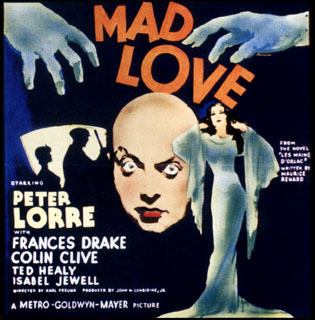
IN his highly influential book, Madness and Civilization, Michel Foucault indicted the modern West for its treatment of the "insane." According to Foucault, Western societies, bowing before the Enlightenment idol of Reason, built a theoretical and institutional quarantine against madness. The Cartesian rational mind must not suffer from exposure to irrationality; the madman must not roam freely through town and country as he did during the Middle Ages, a mocking reminder of human mortality and God's infinite wisdom. Instead, Foucault claimed, the insane were thrown into cells with other dissidents from the rising bourgeois moral order--the poor, the criminal, and the licentious. The supposed liberation of the mad during the late eighteenth and early nineteenth century by "alienists" Phillippe Pinel in France and William Tuke in England, he argued, only furthered their exclusion. These reformers herded the mad into asylums, where an arid "science" of psychiatry silenced their Dionysian voices. Enlightenment, Foucault held, was bought at the cost of excluding the mad: Such was the heavy price of Reason's "progress." Public Interest: Madness and Enlightenment. - Review - book reviews


I was fortunate to hear Dr. Laing speak in Calgary before the very Mental Health community that he was opposed to. His speach was quite challenging to their conceptions of dealing with conditions of schizophrenia. In that he opined that the best method is the therapist working directly with the patient by entering their madness and walking them out, ala the shaman or the LSD tripper. Failing that he defended Bedlam, the imprisonment of those who could phsically harm themselves, with the attendants being the threapists who are trainined in martial arts to struggle physically with the patient and subdue them, since this was the physical reality they needed to come back in to. Further he shocked members of the audience by insisting on allowing glass in the patients cell/room for them to be able to cut themselves to physically return to their bodies from their out of body states. Laing thesis is that madness is a reality that must be breached by the therapist, not a condition that must be controled by drugs.
Is the pharmaceutical industry distorting psychiatry practice


R. D. Laing and The Politics of Diagnosis


The Politics of Experience RD Laing (1967)

Introduction to 1967 Dialectics of Liberation conference

Psychiatry Anti-Psychiatry Re-Visited

Anti-psychiatry - Wikipedia, the free encyclopedia

Madness and Colonization: Psychiatry in the British and French empires, 1800-1962

Power and discipline in psychiatry's knowledge base

The Genealogy Of Power: On Michel Foucault


Find blog posts, photos, events and more off-site about:
, , , , , ,
, , , , , , ,

Thursday, May 28, 2020

The Brooklyn Rail

Viral Biopolitics
COVID-19 and the Living Dead

By Rachel Nelson
Field Notes


“As soon as power gave itself the function of administering life, its reason for being and the logic of its exercise—and not the awakening of humanitarian feelings—made it more difficult to apply the death penalty. How could power exercise its highest prerogatives by putting people to death, when its main role was to ensure, sustain, and multiply life, to put this life in order? For such a power, execution was at the same time a limit, a scandal, and a contradiction. Hence capital punishment could not be maintained except by invoking less the enormity of the crime itself than the monstrosity of the criminal, his incorrigibility, and the safeguard of society. One had the right to kill those who represented a kind of biological danger to others.”— Michel Foucault, The History of Sexuality, Volume 1: An Introduction (1976)


“It seems likely that we will come to see in the next year a painful scenario in which some human creatures assert their rights to live at the expense of others, re-inscribing the spurious distinction between grievable and ungrievable lives, that is, those who should be protected against death at all costs and those whose lives are considered not worth safeguarding against illness and death. –”— Judith Butler, “Capitalism has its Limits.”


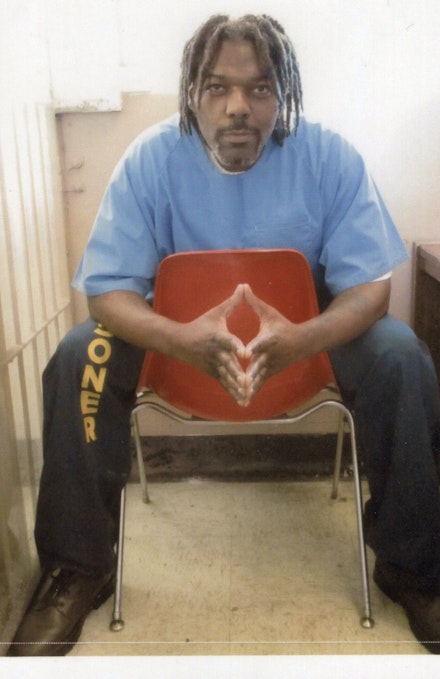
A letter from Tim Young, written in late March from San Quentin State Prison’s death row details his fears of the spread of COVID-19.1 According to Tim, one of the people in an adjacent cell was recently given a long swab through the meal tray slot on his cell door and told to insert it up his nostril. He was also instructed to do a throat swab. The next day, the man was taken to the Hole for quarantine—for the flu, according to the staff.2

Tim Young. Photo: San Quentin Prison.


Tim writes that dozens of people in his unit have been similarly tested and quarantined, all diagnosed with the flu. In the letter, Tim’s frustration and fear is palpable. He writes about staff handling his food trays without gloves and sneezing and coughing as they walk along the walkway, stopping at each cell to unlock the slot in the door and push the food through the narrow spaces. The flu diagnoses and the cavalier attitudes of the staff towards hygiene have left Tim oscillating between concerns about the inadequacy of medical care in San Quentin and possible cover-ups. While, Tim explains, he is filing a legal request/complaint to be provided masks and gloves, and to require staff to wear them, the pervasive sense in his letter is that anything he does will be futile. This is most apparent when at the end of the letter he writes, "I feel like they are actually trying to spread the virus to us . . . it would be a solution on death row, after all."3


The coronavirus pandemic places in stark relief the complicated relationship, in the United States and globally, between the state and public health. The current conditions of what Michel Foucault named bio-power—the exercise of power through "the administration of bodies and the calculated management of life"—is called into question in the US as hospitals run out of ventilators and protective gear for their workers and as mass unemployment sweeps the nation, leaving people unsure of how they are going to keep feeding themselves and their families, or whether they will have housing in which to shelter-in-place.4 If power is, as Foucault defines it, the ability to "foster life or disallow it to the point of death," what happens within the relationships of power and biological life when death runs rampant?5


Clearly, taking heed of the changing nature of power at such a time is of utmost importance. Some are already reckoning with emergent biopolitical forms. Giorgio Agamben, for instance, fears that the medical emergency will allow state power to implement measures that can become permanent tools of governmental tyranny once the crisis is over.6 Today’s harsh emergency powers supposedly justified by the pandemic could become tomorrow’s "apparatuses of oppression."7


Tim’s letter, however, with his apprehension that, in the US, COVID-19 could be construed on death row as a governmental solution, implies that there is something else happening within this biopolitical shakeup. The conditions he refers to—the extreme of shoddy management of life (and death) captured in his description of swabs passed through slots, the coughing staff distributing food trays through locked gates, and the sick quarantined in the Hole—force the question of what can be learned about what we can call emergent viral biopolitics through the conditions endured by those who have been condemned to die.


Tim’s letter is a stark reminder that, even without a pandemic, death row has an uneasy relationship to bio-power. With state power wielded through the ability to “make live or let die,” those whom the legal apparatus of the state have condemned to die, but whose lives are instead maintained by the state, exist in an odd limbo.8 These are the living dead. They live only to be made to die, and they do so for years. The average time that people spend on death row in most of the US, kept alive by the state, is 15 years. In California, where Tim has been on death row for over 16 years, Governor Gavin Newsom has imposed a moratorium on the death penalty. The 737 people currently on death row in that state, including Tim, are now the living dead indefinitely, with the state charged with maintaining their lives—letting them live, in a reversal of Foucault’s terms—until it can make them die.9


Given this contradiction, a mass die-off from COVID-19 would seem to be a solution, to use Tim’s word, to a glitch in the biopolitical mechanisms of state governance. But this is too easy a conclusion. The death penalty has, after all, a strategic significance within the genealogy of bio-power, as Foucault outlines it in History of Sexuality, Volume I. Instead of a malfunction or an anomaly, it has always been a solution, within the changing forms of governance Foucault describes, if to a shifting problem.


To rehearse this history briefly, in the pre-modern exercise of power, the death penalty was the central means through which sovereign rulers exercised their authority. “Power in this instance was essentially a right of seizure: of things, time, bodies, and ultimately life itself; it culminated in the privilege to seize hold of life in order to suppress it."10 Governing power was administered through death and the threat of death, made manifest through the "elaborate ceremonials of monarchical sovereignty from the court to the scaffold; from the coronation to the fields of war."11


In modernity—roughly, since the 18th century—as power begins to operate through the management of life, capital punishment took on a different role. Foucault points out a seeming paradox: "How could power exercise its highest prerogatives by putting people to death, when its main role was to ensure, sustain and multiply life, to put this life in order?"12 The incongruity is resolved as execution becomes a social sorting mechanism. As Foucault explains, the death penalty comes to invoke “less the enormity of the crime itself than the monstrosity of the criminal, his incorrigibility, and the safeguard of society. One had the right to kill those who represented a kind of biological danger to others."13


This is the real paradox; the death penalty provides the answer for how power can hold authority without an ever-present threat of death. People now adhere to the workings of power thanks to more nuanced methods of coercion. This is the key to the most essential aspect of bio-power. When power becomes management—the ordering of life—it is exercised through the production of classifications that come to feel natural to people. Those condemned to death are the subjects of the ultimate classification within this system; they are those who are so monstrous they must die, even if their death is deferred.14 They serve as the end limit to all other classifications.


If this is how death row has served power in the U.S., and I believe it an apt description, the question returns: Within emergent viral biopolitics, how is death row being repositioned—made, as Tim fears, another solution—within the changing relations of power and biological life? What roles will the living dead, those made monsters and left to molder in modernity’s cages, play as the end limits of the social order necessarily adjust to a pandemic? Tim details the odd perversities of this shifting ordering. Although the governor of California issued a statewide shelter-in-place order on March 19, until March 27, when Tim and hundreds of others on death row received notice that a guard had tested positive for COVID-19, they were still given the option to go to the yard each day. When he describes the process of how people are taken to the yard, Tim moves into writing in third person as he explains why he has been choosing to stay in his cell for 24 hours a day and forgo going outside:


The protocol for yard release is as follows. The officer unlocks the tray slot, and instructs the prisoner to strip completely naked. They have the prisoner open his mouth, stick out his tongue, run his fingers through his hair, and after that, lift up his genitals. They instruct the prisoner to turn around, show the bottom of each foot, and then squat and cough. After the strip search, the prisoner is instructed to hand over any clothing or items that they are wearing or taking to the yard. The officers do a manual search of the prisoner’s property. After the inspection they return the prisoner's property back through the tray slot and instruct the prisoner to get dressed. Once the prisoner is dressed he is handcuffed through the tray slot. At that point the cell door is opened up. The prisoner is physically escorted downstairs to where he is scanned with a handheld metal detector, and his belongings are trolled through an x-ray machine.15


Tim notes that neither the guards nor the people being searched wear gloves or masks as they repeat this ritual of debasement. In a time of social distancing, the intimacy is shocking—all that touching. With both the staff and the people on death row ungloved and unmasked as clothing is taken off, passed back and forth, and put back on, the people who talk about COVID-19 as the great equalizer come to mind.16 No one, in what Tim describes, seems safe from the pandemic, regardless of who is clothed and who is made to squat and cough.


When Tim details the procedure that would allow him to leave his 10 by 4 1/2 foot cell, however, he makes it clear that there is nothing equal about the spread of the coronavirus in San Quentin. As he explains, visitation has been cancelled for weeks, and it is only through contact with the staff that the virus could wreak its havoc on the lockdown unit. This means the elaborate performance of safety, with the strip search enacted through a slot in the cell door, the handcuffs, and even the final extra step of the metal detectors, is a charade of security. The ritual of control actually fosters the spread of the virus from staff member to prisoner, staff member to prisoner, all the way down the long metal walkway of his 54-person tier and through the 540-person unit. Who is safe from whom?


In the time of COVID-19, what Tim recounts is not the procedures of security made ridiculous, or obsolete. It is, rather, the viral remaking of the death penalty. The intricate measures ensure that death row and its inhabitants are not immune from the pandemic. With each strip search—that extreme enactment of biological intimacy—they are instead centered within it, made probable carriers of the virus. If the death penalty delineates those at the end limits of the system supposedly serving the care and maintenance of life, the seemingly inept technologies of power that Tim describes ensures that those end limits are still operational within viral biopolitics. As the maximal variance within the social order, Tim and the other 736 people on California’s death row continue to make more palatable the vast inequities of that ordering, including normalizing who lives and who dies within the pandemic.


The emergent viral biopolitics encapsulated in Tim's letters is not entirely new. In 2003 Achille Mbembe challenged Foucault's idea that the maintenance of life is central to modern biopolitics by pointing to power’s propensity for killing and maiming.17 This could be seen in European colonial projects and slavery in the United States, and in "the contemporary ways in which the political, under the guise of war, of resistance, or of the fight against terror, makes the murder of the enemy its primary and absolute objective."18 Mbembe argued that the maintenance of life is certainly not always the object of power. Instead, "the ultimate expression of sovereignty resides, to a large degree, in the power and the capacity to dictate who may live and who must die."19


While this seemed a vital revision of Foucault’s ideas at the beginning of the 21st century, the pandemic now brings into question the first part of Mbembe's definition of power. The ability to "dictate who may live" is becoming more and more fraught. As death is rampant, with bodies piling up in morgues and hospitals, social and political structures all around us are being revealed to be incapable not only of the maintenance and care of life but even of the ability to allow persons to live—the “letting live” at the crux of biopower in all its forms. The US healthcare system is crumbling, with insufficient beds, respirators, and testing capacity. Millions and millions of people file for unemployment each week. And the estimated 550,000 people who are unhomed remain unable to shelter-in-place. The government is not "dictating" life in these conditions. COVID-19 reveals that all that is left in the US of technologies of power that once could either “make live or let die" or prescribe "who may live and who must die" is social ordering—the ability to make sense out of the lives and deaths in a pandemic. In emergent viral biopolitics, whether by design or inability, political power no longer maintains life, something the coronavirus has not caused but instead reveals. The maintenance of life falls now entirely within the realm of economics, decided by capital’s investment decisions; the socio-political serves primarily to demarcate those who can die without social remorse. And, with more and more statistics revealing the racialized and class paradigms of who is dying in the US, the system is hard at work.


In late March, Judith Butler warned that the coronavirus was sure to be another opportunity for "re-inscribing the spurious distinction between grievable and ungrievable lives, that is, those who should be protected against death at all costs and those whose lives are considered not worth safeguarding against illness and death."20 Those who are already the living dead—who can already be made dead within the social imaginary—are an obvious place to start the sorting. Of course it takes weeks for guards in San Quentin to be supplied with masks and gloves.


By the beginning of April, after Tim had spent 27 days without the yard or visitation and an uninterrupted 648 hours in his tiny cell, his hesitation to talk on the phone came up in a letter.21 Tim prefers writing letters; making a call in San Quentin is always frustrating. He has to first sign up for a time slot. Once his day and time come up, a guard wheels an ancient phone booth to his cell and passes the receiver through the slot in the door. The call is processed by GTL, a private corporation and "Corrections Innovations Leader," and the system makes it difficult and costly to accept his collect call.22 When calls do get through, Tim has 15 minutes to have a conversation that is closely monitored. An automated message breaks through the call every few minutes to explain the monitoring process, and the person doing the monitoring will sometimes end the call randomly. The bars of the prison never recede very far during these brief and fragmented conversations.23


With the severe social distancing that Tim is now subjected to, however, phone calls are a necessity. Mail service is more disrupted in San Quentin by the day, letters are taking longer and longer to get through, and the isolation is extreme. But now the phone has become perilous. As Tim explains, next to contact with staff, the phone is sure to be the biggest conduit of the virus.


"The phone is not being cleaned and sterilized between uses," Tim writes. "I would guess it never has been really cleaned, in all the years it's been pushed around the unit. And, we aren't being given gloves to handle it with. Instead, they have a towel attached to it now. We are supposed to use the towel to wipe the receiver before we use it." Tim continues, "I have no intentions of touching that shared towel."24


He has instead come up with his own method to clean the phone and a plan to avoid touching it with his bare hands. He also has a makeshift mask to wear when he uses the phone. Meanwhile, the towel hangs off the phone as a warning—or a message in code. What it is saying is that it does not matter if Tim touches the towel. And, although this is no reassurance to Tim, no one needs to die on death row from COVID-19. Tim and the rest of the living dead are already playing their role within emergent viral biopolitics. Those squatting and coughing to go into the yard, those who swipe the towel across the mouthpiece of the phone, and, even those who refuse to do this, have been remade once again as biological dangers, monsters who fall outside of structures of empathy and care. They are made to perform their monstrosity and normalize the shifting parameters of viral biopolitics.25 In fact, maybe it is better for those who exercise power that no one on death row does die because of the coronavirus. The living dead, remember, are monstrous because they do not die.


Tim does not mention his innocence claim often in the letters he writes. Only once did he note briefly that there is a witness who identified another shooter in the crime for which he has been sentenced to die. Another time, he wrote about the appellate court system, describing the difficulties of procuring a full reversal once one has been convicted of a crime. Instead, his letters usually are about strategies for organizing against the death penalty.


Tim well knows that the position he inhabits—a monster who will not die—is necessary to power in a time in which socio-political systems are no longer in place to maintain lives. So Tim, in what he calls his tiny "coffin-like cell," is made to both embody and hide the workings of emergent US biopolitics.26 This is a horrific position even outside the daily tortures of solitary confinement. To be the one who acts as the end limit of society’s ability to care is to be the proxy through which huge swathes of the population are made to join Tim as the living dead: the two million Palestinian people who have been imprisoned in Gaza under full military blockade with US backing for 12 years; the over 50,000 children detained by US immigration agencies; the US-imposed sanctions on Iran that are crippling the country’s ability to respond to COVID-19; the 15 million children (21 percent) living in poverty in the US; to name just some examples. Tim has been forced to figure within all of this suffering.27 His small cell gets crowded indeed.


When Tim organizes against the death penalty instead of around his own claims, this is not selflessness. It is instead an acknowledgment that against the potency of this power, even those deemed innocent within this system are still subject to its sorting. This means that what is required now is not organizing on any one person's behalf. Instead, as Tim demonstrates, we must act on behalf of all those whose lives will not be maintained by power, even as their deaths will certainly be made instrumental. We must fight back against both the impending waves of death and also resist the reanimation of the living dead.

Since August 2019, I have been corresponding with Tim Young, who has been on death row in San Quentin since 2006, as part of an art project by jackie sumell called Solitary Garden. Tim is a prolific writer and is very much my thought and writing partner on this essay, which could not have been conceived without him. Many of Tim’s letters and essays can be read at https://ias.ucsc.edu/timothyjamesyoung. Tim Young, “Letter to Rachel Nelson,” March 23, 2020. See also Tim’s recent essay: “Tim Young, Coronavirus: The Invisible Enemy Behind Enemy Lines,” SF Bay View National Black Newspaper, April 2020. https://sfbayview.com/2020/04/coronavirus-the-invisible-enemy-behind-enemy-lines/
What Tim calls the "Hole" is officially named the Adjustment Center (AC). It is the highest security unit at San Quentin and typically used to house people who have been found or alleged to have broken the rules of the institution. Tim Young, “Letter to Rachel Nelson,” April 2, 2020.
Tim Young, “Letter to Rachel Nelson,” March 23, 2020.
Michel Foucault, History of Sexuality: Volume 1, An Introduction, translated by Robert Hurley (New York: Random House, 1978), 140.
Ibid. 138.
In an article written at the very first stages of the COVID-19 epidemic in Italy, Agamben characterized the measures implemented in response to the COVID-19 pandemic as an exercise in the biopolitics of the “state of exception.” In an argument that was both polemical and dangerous as more and more people succumbed to the virus, Agamben wrote that the “invention of an epidemic offered the ideal pretext” for further limitations to basic freedoms. Recognizing that despite the problematic framework of the argument, that question about the biopolitical regime emerging in response to the coronavirus did warrant attention, the European Journal of Psychoanalysis put together a special section on “Coronavirus and philosophers” with a translation of Agamben’s polemic and the responses to it (February-March, 2020): http://www.journal-psychoanalysis.eu/coronavirus-and-philosophers/.
See also Panagiotis Sotiris’s reading, and rebuttal, of Agamben’s writings on COVID-19, which includes some examples of biopolitics within this current state of exception. Panagiotis Sotiris, “Against Agamben: Is a Democratic Biopolitics Possible?,” Viewpoint Magazine, March 20, 2020 https://www.viewpointmag.com/2020/03/20/against-agamben-democratic-biopolitics/.
Michel Foucault, “Society Must Be Defended”: Lectures at the College de France, 1975-76 (New York: Picador, 2003).
As I will discuss below, this is related to what Achille Mbembe calls necropolitics, the form of biopolitics born of colonization and slavery that takes its authority from “the capacity to dictate who may live and who must die.” There is a difference, however, that will be discussed subsequently. Achille Mbembe “Necropolitics.” Transl. Libby Meintjes. Public Culture15, no. 1 (Winter 2003): 11-40.
Foucault, History of Sexuality, 136
Michael Meranze, “Michel Foucault, the Death Penalty and the Crisis of Historical,” Historical Reflections / Réflexions Historiques 29, no. 2 (Summer 2003): Interpreting the Death Penalty: Spectacles and Debates, (Brooklyn: Berghahn 2003), 191-209.
Foucault. History of Sexuality. 138
Ibid.
It is imperative to note that in the lectures he gives towards the end of his life, Foucault names racism as another technology aimed at permitting the “sovereign right of death.” And, this is an interlocking point. In the US, not only are people of color disproportionately incarcerated, studies spanning more than 30 years covering virtually every state that uses capital punishment have found that race is a significant factor in death penalty cases.
Tim Young, “Letter to Rachel Nelson,” March 25, 2020.
Politicians and people insulated by wealth, including NY governor Andrew M. Coumo, have been seemingly impressed that celebrities, wealthy people, and politicians of different races and ethnicities—including elite White people—also contract the virus, leading some to call it the great equalizer. Of course, access to medical care and the ability to socially distance is clearly unequal, with employed poor people and people of color largely working as "essential workers" in food service, transportation, etc, with vastly different rates of contraction and mortality: Bethany L. Jones and Jonathan S. Jones, “Gov. Cuomo is Wrong, COVID-19 is Anything but an Equalizer,” Washington Post, April 5, 2020 https://www.washingtonpost.com/outlook/2020/04/05/gov-cuomo-is-wrong-covid-19-is-anything-an-equalizer/ and Akilah Johnson and Talia Buford, “Early Data Shows African Americans Have Contracted and Died of Coronavirus at an Alarming Rate,”ProPublica, April 3, 2020 https://www.propublica.org/article/early-data-shows-african-americans-have-contracted-and-died-of-coronavirus-at-an-alarming-rate.
Achille Mbembe. “Necropolitics.” Transl. Libby Meintjes. Public Culture 15, no. 1 (Winter 2003): 11-40. See also Jasbir Puar, The Right to Maim: Debility, Capacity, Disability. (Durham, NC: Duke University Press, 2017).
Mbembe 11
Ibid.
Butler also wrote, "Social and economic inequality will make sure that the virus discriminates. The virus alone does not discriminate, but we humans surely do, formed and animated as we are by the interlocking powers of nationalism, racism, xenophobia, and capitalism." Judith Butler, “Capitalism has its Limits," Verso Blog, March 30, 2020, https://www.versobooks.com/blogs/4603-capitalism-has-its-limits,
Tim Young, “Letter to Rachel Nelson,” April 2, 2020.
https://www.gtl.net/
Tim related this process both through a letter postmarked April 2 and a phone call on April 4. Tim Young, “Letter to Rachel Nelson,” April 2, 2020.
Ibid.
The racialized history of this kind of politics of performance is key here with much that could be said about the relationship to the performances forced from people enslaved. See Saidiya V. Hartman, Scenes of Subjection: Terror, Slavery, and Self-Making in Nineteenth Century America (Oxford: Oxford University Press, 1997).
Tim Young, “Letter to Rachel Nelson,” August 8, 2019.
National Center for Children in Poverty, “Child Poverty,” http://www.nccp.org/topics/childpoverty.html.
Contributor
Rachel Nelson
is interim director of UC Santa Cruz Institute of the Arts and Sciences. Nelson has curated and organized numerous exhibitions and programs and has published exhibition catalogues, journal articles, book chapters, and reviews, including in the forthcoming Under the Skin (Oxford University Press).