Saturday, August 10, 2024

NAKBA 2.0

Netanyahu says occupied West Bank ‘part of our homeland’

Israel’s prime minister Benjamin Netanyahu made the remarks in an interview with TIME Magazine, adding he opposes a sovereign Palestinian state.

The New Arab Staff
10 August, 2024
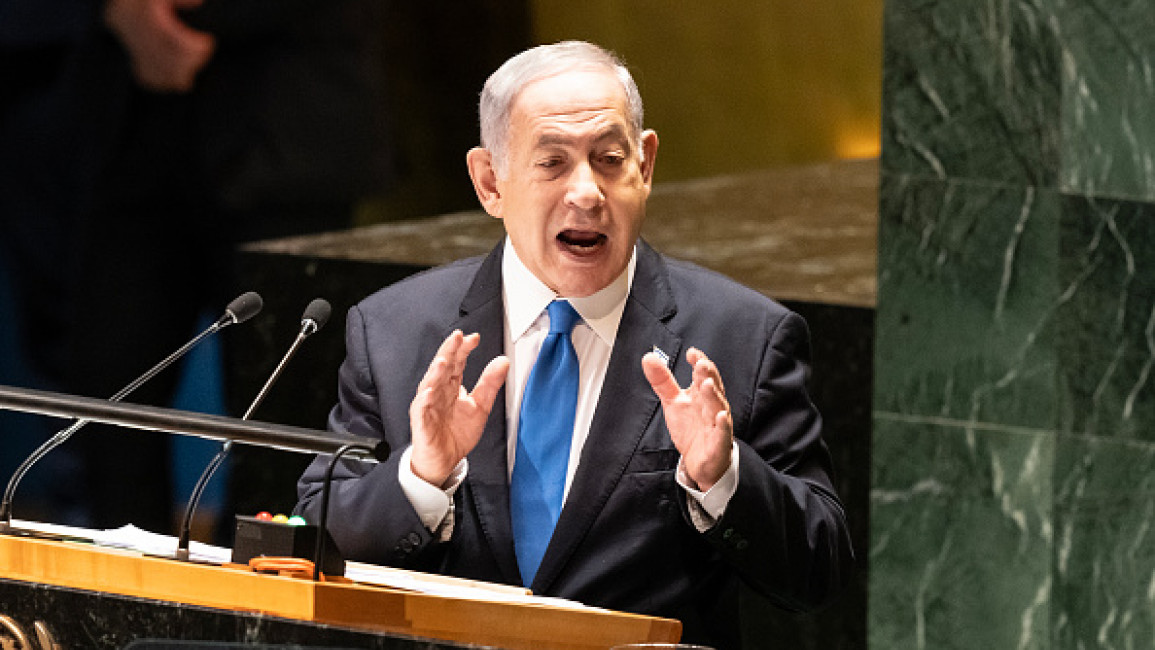
The Israeli Prime Minister said the occupied West Bank was 'part of our homeland' [Getty]


Israeli Prime Minister Benjamin Netanyahu said the occupied West Bank is "part of our homeland" and "we intend to stay there" in an interview with TIME Magazine published this week.

The comments come less than a month after the International Court of Justice (ICJ) ruled that Israel’s occupation of Palestinian territory is unlawful and must end.

He also expressed that he opposed the formation of a sovereign Palestinian state, suggesting instead he would support limited self-rule for Palestinians while Israel maintains security control over occupied territory.

"We don’t rule their land. We don’t run Ramallah. We don’t run Jenin. But we go in and take action when we have to prevent terrorism," he said.

Israel currently controls the West Bank’s security, airspace, economy, tax collection, ports of entry and planning policy, however the Palestinian Authority (PA) has some administrative powers.

Several human rights organisations have said that Israel is imposing apartheid in occupied Palestinian territory, also highlighting regular Israeli raids and assaults on towns in the occupied West Bank.

Netanyahu continued to defend Israel’s ongoing war on Gaza in the interview, saying it will continue until they destroy Hamas’ military capabilities.

The US Department of State said on Wednesday that Israel and Hamas were working on "bridgeable" final issues regarding ceasefire efforts which would see the release of Israeli captives in Gaza and a number of Palestinian prisoners held in Israeli jails.

The Israeli PM went onto downplay the number of Palestinian casualties in the interview and stated that Israel was not restricting aid into the besieged enclave.

"We’ve gone out of our way to enable humanitarian assistance since the beginning of the war, we enabled some 40,000 aid trucks to come in," he said.

After Israel launched its war on Gaza, all water, fuel, electricity and aid were cut off for the Strip. Since then, Israeli bombardment has destroyed the enclave’s infrastructure and public services including sewage works, bakeries, schools, hospitals and places of worship.

Prior to the war, around 500 trucks of aid entered Gaza daily, while now only around 130 enter daily. Far-right Israeli groups also often obstruct the entry of emergency aid trucks.

Several rights groups and humanitarian organisations have said Israel is waging a "war of starvation" by deliberately starving Palestinians in Gaza.

According to the UN Relief and Works Agency, at least 205 relied workers have been killed in Gaza since 7 October.

Over 39,699 Palestinians have been killed in Gaza since the start of the war, and an additional 91,722 others have been wounded in the same time frame.


Palestinians injured in Nablus
Sat, 10 Aug 2024

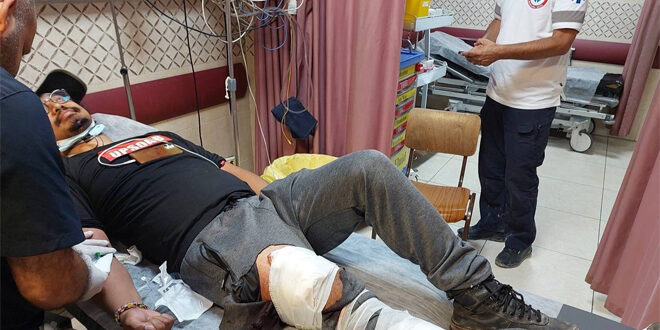
Al-QUDS August 10. 2024 (Saba) -A number of Palestinians were injured when the Zionist enemy forces stormed two towns near the city of Nablus in the occupied West Bank, and others were arrested.

The Palestinian News Agency "Wafa" said that the enemy forces stormed the town of Sebastia, north of the city, and assaulted the Palestinians with bullets and tear gas bombs, which led to a number of them suffering from suffocation, and they arrested two young men.

A foreign activist was also injured when the enemy forces suppressed an anti-settlement demonstration in the town of Beita, south of the city.


Turk condemns Smotrich's statements: Starving civilians war crime
Sat, 10 Aug 2024

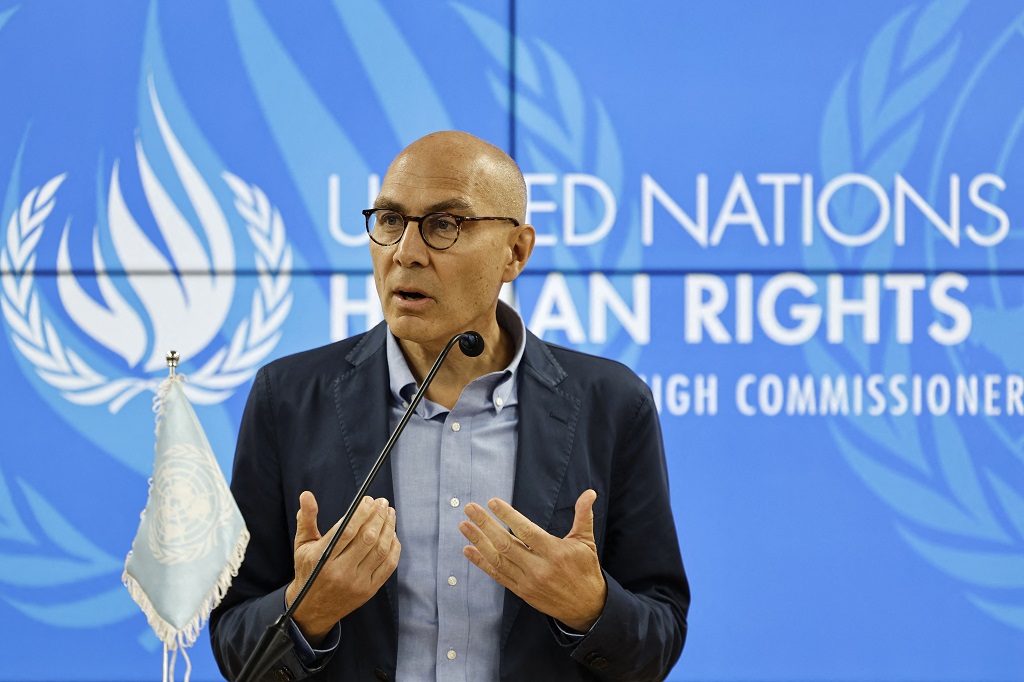
GENEVA August 10. 2024 (Saba) -The United Nations High Commissioner for Human Rights, Volker Turk, condemned the statements of the so-called Finance Minister in the Zionist enemy government, Bezalel Smotrich, in which he claimed that there is a "moral justification for starving civilians" in the Gaza Strip.

According to the Palestinian News Agency, Turk expressed his "shock and horror" at these statements in a press conference, saying, "Starving civilians, as a method of war, is a war crime, and collective punishment of the Palestinian population is also a war crime."

M.M

 Afghan Refugee Breaker Disqualified For Wearing 'Free Afghan Women' Cape At Olympics


Afghan refugee breaker Manizha Talash wore a cape that said "Free Afghan Women" during her pre-qualifier battle in Paris on August 9.


More News
August 10, 2024
By AP

Refugee breaker Manizha Talash, or "b-girl Talash," was disqualified from the first-ever Olympic breaking competition on August 9 after she wore a cape that said "Free Afghan Women" during her pre-qualifier battle against India Sardjoe, known as “b-girl India." The 21-year-old, originally from Afghanistan and representing the Olympic Refugee Team, lost in the pre-qualifier battle against Sardjoe and would not have advanced even if she hadn't been disqualified. Political statements and slogans are banned on the field of play and on podiums at the Olympics.
Putin 'In The Dock': Freed Activist Pivovarov Says Russian Opposition, Ukrainians Share Goal

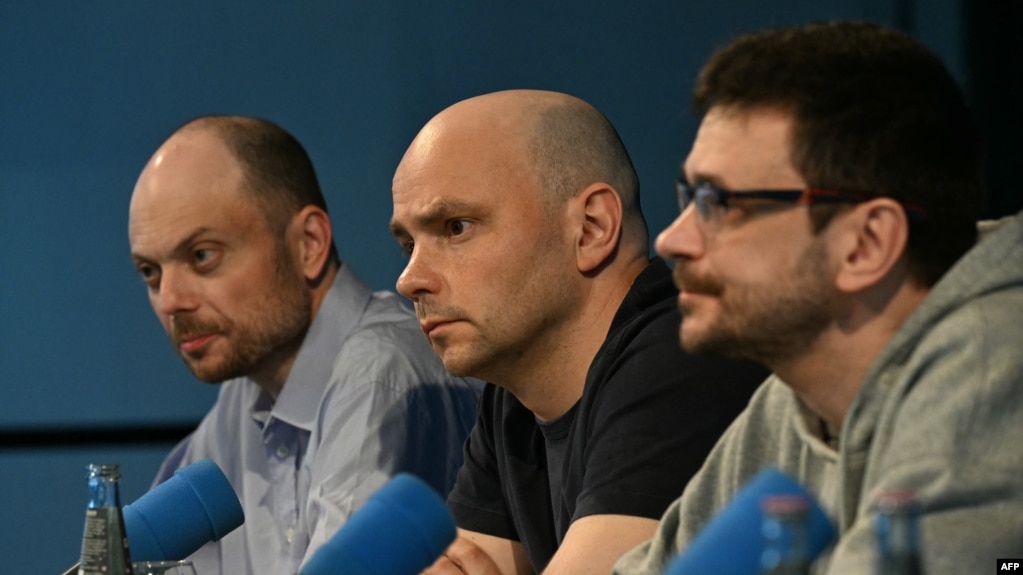
Journalist and activist Vladimir Kara-Murza, activist Andrei Pivovarov, and opposition figure Ilya Yashin address a press conference on August 2 in Bonn, Germany, the day after they were released as part of an East-West prisoner swap.


August 10, 2024
By Aleksei Aleksandrov


During his entire imprisonment in Russia, Andrei Pivovarov yearned for one thing: freedom.

"To be released. You always count the days, hours, months. The only [desire] is to break free. Any person, politically oriented or not, sitting in prison, wants to be free," Pivovarov told Current Time.

Pivovarov, 42, was part of the biggest prisoner exchange between the West and Russia since the Cold War.

In the exchange on August 1, Russia got back eight prisoners held in the West, including a member of its FSB security service convicted of murder in Germany, and 16 people were released from Russian and Belarusian jails. They included Pivovarov, dissidents Vladimir Kara-Murza and Ilya Yashin, and U.S. citizens Evan Gershkovich, Paul Whelan, and RFE/RL journalist Alsu Kurmasheva.

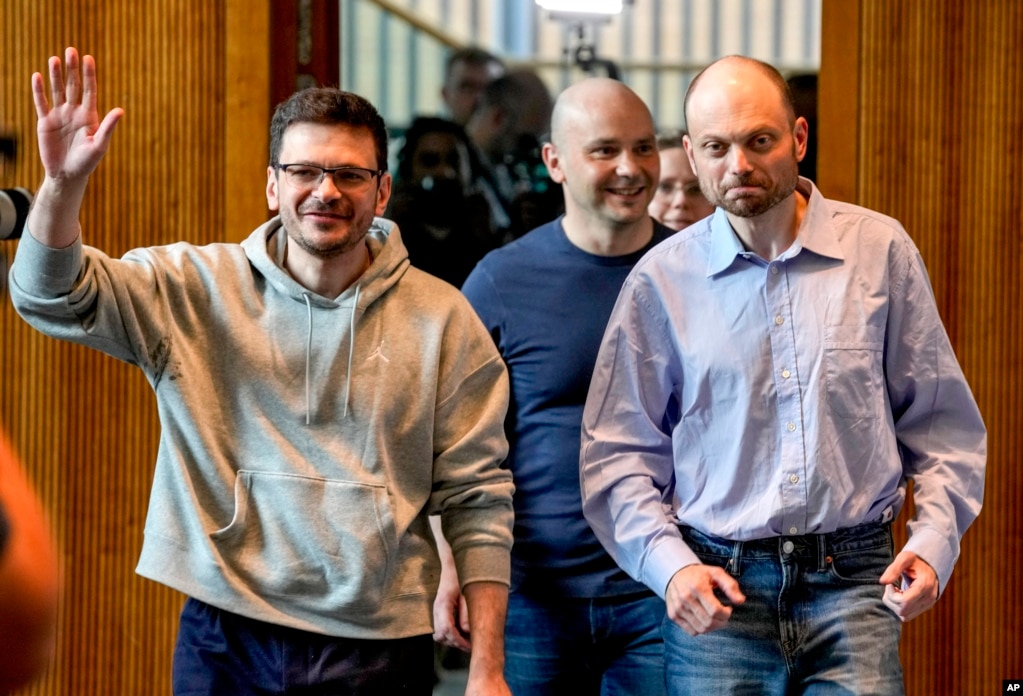
Yashin, Pivovarov, and Kara-Murza enter a news conference in Bonn on August 2.

Pivovarov, the former executive director of the now-defunct pro-democracy Open Russia movement, was detained in May 2021 after being taken off a Warsaw-bound plane just before takeoff from St. Petersburg and sentenced to four years in prison in July 2022 on a charge of heading an "undesirable organization."

The "undesirable organization" law, adopted in 2015, was part of a series of regulations pushed by the Kremlin that squeezed many nonprofit and nongovernmental organizations that received funding from foreign sources, mainly from Europe and the United States.

After his trial in Krasnodar, the St. Petersburg native was convicted and sentenced in July 2022, when Russia's full-scale war and Russian President Vladimir Putin's intensified crackdown on dissent were in full swing.

From January 2023, Pivovarov was held in isolation at Penal Colony No. 7 in Russia's Karelia region.

SEE ALSO:
'Just Walking Down The Street Is Happiness': Freed Russian Rights Activist Orlov Speaks Of Life Outside Prison


Since his release and transfer to Germany, Pivovarov has given numerous interviews but is hoping to find time now to rest and spend time with his family.

"I would like to exhale. Plus, during all this time I was deprived of the opportunity to communicate with my son, so I would really like to meet him, spend time with him," Pivovarov told Current Time, adding he has no plans to abandon his "political work."

Pivovarov admitted that voicing opposition to Putin's regime is easier from abroad but with possible drawbacks.

"When you are in Russia, any unification, any coordination is automatically a criminal offense. At the same time, having a platform abroad, where we are now, on the one hand, to be honest, diminishes the weight of our words, because it is easy to say something while sitting outside in the sun and knowing that no policeman is coming for you," Pivovarov explained. "On the other hand, this allows us to say more than what people in Russia can afford."

SEE ALSO:
Navalny's Widow Says He Should Have Been Released In Recent Prisoner Swap


Breathing life into Russia's opposition, largely silenced by Putin's repression and infighting, will be a formidable task, admitted Pivovarov, saying the goal should be "not to unite but to establish a dialogue, contact."

"Of course, there will still be disputes," he said.

Pivovarov was also asked about comments he made at a Bonn press conference on August 2, when he appeared to suggest that Western sanctions against Russia were unfairly impacting ordinary Russians, triggering some criticism, especially among Ukrainians.

"There was no phrase about the unfairness of sanctions. I don't remember all the words verbatim, but there was no phrase about the unfairness of sanctions. Sanctions are effective, and they work. I'm talking about, for example, a housewife -- a stupid example -- but it seems typical to me. And she has, let's say, a small child, and she cooks at home. So that she has the opportunity to buy at least some more or less normal products, so that her small everyday world becomes a little simpler," Pivovarov offered.

Pivovarov said Russian opponents of Putin shared common goals with Ukrainians.

"Our goals are the same. We want to work together to ensure that the war ends, that the regime in Russia changes, and that, ultimately, Putin ends up in the dock. This is our main goal," he said. "We just look at this from the perspective of Russian society, and in this regard we can be more useful."
East Germans oppose the U.S. medium-range missile deployment

By Boyko Nikolov On Aug 10, 2024


The German press highlights that Germany’s population is largely opposed to the country’s increasing militarization, evidenced by the rising defense budget and plans to deploy American Tomahawk missiles starting in 2026—missiles capable of reaching major Russian cities like Moscow and Saint Petersburg.

Photo credit: US Navy

According to the Berliner Zeitung, the potential deployment of these missiles is particularly unpopular in East Germany, where surveys indicate that nearly three-quarters of respondents oppose having Tomahawk missiles on German soil.

In fact, only 23 percent of people in East Germany support this deployment. Comparatively, in the western part of the country, support for the potential deployment of American missiles stands at 45 percent, while 49 percent are against the idea.

Photo credit: Lockheed Martin

According to German experts, the deployment of US intermediate-range missiles might lead to severe repercussions, heightening the chance of Moscow resorting to nuclear escalation. They warn that Russia could initiate pre-emptive strikes on Germany if these stationed weapons were to threaten its nuclear capabilities.

Amid Russia’s conflict in Ukraine and its breaches of arms-control agreements, Washington and Berlin have decided to send American long-range missiles to Germany. Now, other European NATO allies are also looking to get similar weapons.

The statements made were predictable, but the comparison wasn’t quite accurate. Russian President Vladimir Putin quickly compared the 2024 agreement between Berlin and Washington—which plans to deploy US surface-to-surface missiles with ranges over 500 kilometers to Germany—to NATO’s 1979 decision to place nuclear-armed ballistic and cruise missiles on the continent.
Photo credit: US Navy

On July 28, Putin warned that deploying US forces near Russian military sites would increase the risk of attack. He said it would reduce the time Moscow has to detect and respond. Putin stressed that Russia would take similar action if the US went ahead with the deployment.

This planned deployment follows Russia’s development of a long-range ground-launched cruise missile, breaking arms control agreements, and the invasion of Ukraine in 2022. Russia’s aggressive stance has worried members of German Chancellor Olaf Scholz’s Social Democratic Party [SPD].

Some have criticized the deployment agreement, calling it destabilizing and insufficiently examined, saying it conflicts with the SPD’s promise of disarmament. However, other SPD policymakers, like Scholz and Defense Minister Boris Pistorius, disagree. They point to Russia’s ongoing aggression against Ukraine and stress the urgent need for Germany and NATO to fill capability gaps.


As long as Moscow ties arms-control talks to its war in Ukraine, it’s unlikely these discussions will succeed. Instead, strengthening NATO’s long-range conventional capabilities might deter more Russian aggression, promoting regional stability.

Moscow insists that the 9M729 missile, available in both conventional and nuclear types, does not break the INF Treaty. The 500 km-range Novator 9M728 [RS-SSC-7 Southpaw] missile has been used in Ukraine, likely giving Moscow a chance to test the 9M729 in actual combat situations at much greater distances.

It seems likely that Russia is developing or has already made ground-launched systems that exceed a 500 km range. This was hinted at by President Putin on July 28. The 9M729 could eventually be presented by Putin as a response to future US deployments.


Photo credit: Sputnik News

Russia might soon roll out more advanced missile systems. One likely candidate is a ground-launched version of the 3M22 Zircon, a missile that flies at over five times the speed of sound and can attack both ships and land targets. Some sources say Russia has used the Zircon against Ukraine and has been modifying it for ground launch since 2019. British intelligence suggests that during one attack, the absence of a suitable naval platform in the Black Sea means the ground-launched version may be operational, possibly using the K-300P Bastion-P coastal defense system.

Experts also think Russia has adapted missiles with ranges over 500 km. One example is the longer-range version of the 9K720 Iskander-M missile, which might now reach around 600 km. Additionally, there is speculation that Russia may have restarted work on the RS-26 Rubezh missile, which was supposedly paused around 2017.

The agreement between Berlin and Washington on missile deployment, along with the launch of the ELSA program, marks a change in NATO’s approach to long-range ground-launched systems. Moscow’s claim that this is a provocation is misleading. This reassessment is due to Russia’s ongoing war in Ukraine and its worsening relationships with NATO.

***

Follow us everywhere and at any time. BulgarianMilitary.com has responsive design and you can open the page from any computer, mobile devices or web browsers. For more up-to-date news, follow our Google News, YouTube, Reddit, LinkedIn, Twitter and Facebook pages. Our standards: Manifesto & ethical principles.

 REST IN POWER

Feminist publishing pioneer Betty Prashker dies aged 99

10 August 2024, 10:54

Betty Prashker sat before a bookcase, in 2001
Obit Betty Prashker. Picture: PA

Prashker published Kate Millett’s Sexual Politics and Susan Faludi’s Backlash.

Pioneering literary editor Betty Prashker has died at the age of 99, her family has announced.

Prashker was one of the first women with the power to acquire books, and published such classics as Kate Millett’s Sexual Politics and Susan Faludi’s Backlash, and helped oversee the careers of Jean Auel, Dominick Dunne and Erik Larson, among others.

She died on July 30 at a family home in Alford, Massachusetts, according to her daughter, Lucy Prashker, who cited no specific cause of death.

At various times, Prashker held executive positions at Crown and Doubleday, both now divisions of Penguin Random House.

The publishing giant’s executive vice president and former Crown publisher Tina Constable said: “Without Betty, there would have been no Crown Publishing as we know it.

“I am just one of many colleagues who benefited greatly from her experience, and from her unwaveringly championing advancement and higher pay for women in publishing.”

The one person who was interested was Betty Prashker, editor-in-chief at Crown Publishers and, not coincidentally, a feminist pioneer

Susan Faludi

Born Betty Arnoff in New York City and a graduate of Vassar College, Prashker was a long-time bookworm, storyteller and tennis player whose life and career mirrored those of many women after the Second World War.

She started out as a reader-receptionist at Doubleday in 1945, married labour lawyer Herbert Prashker in 1950 (they divorced in 1974) and raised their three children over the next decade.

With the help of the emerging feminist movement of the 1960s, she returned to work and became an associate publisher. She had initially been turned down by Doubleday, in the early 1960s, but a few years later was unexpectedly asked to lunch by editor-in-chief Ken McCormick.

“Doubleday doesn’t have enough women in top jobs,” Prashker remembered McCormick telling her, as quoted in Al Silverman’s The Time Of Their Lives, a publishing history.

“And if we want to continue to do business with the government, we have got to do something in the way of affirmative action and have more women in our group.”

Back in the 1940s, Prashker had failed to convince Doubleday to take on a promising young writer she had met at a Greenwich Village party, James Baldwin. Now, her judgment was welcomed. In the late 1960s, she learned of a Columbia University graduate student writing a PhD dissertation on how women were depicted in Western literature.

Prashker signed up that student, Millett, and published what became Sexual Politics, a cornerstone of second-wave feminism that Prashker would call an “educational experience for a dilettante like me”.

Over the following decades she would publish hundreds of books, including such hits as Larson’s The Devil In The White City, Auel’s The Clan Of The Cave Bear series and Dunne’s The Two Mrs Grenvilles.

The important thing to do was to desegregate the place

Betty Prashker on then all-male Century Club

In the early 1990s, when she was editor-in-chief at Crown, she acquired a book on the anti-feminist wave of the previous decade that several other publishers had rejected, Faludi’s Backlash: The Undeclared War Against Women.

“My determined and devoted agent tried everything, including pitching the book as ‘a female In Search Of Excellence’ (a long-running bestseller then) — with both of us praying no one would ask what that meant,” Faludi wrote on medium.com in 2014.

“In the end, the one person who was interested was Betty Prashker, editor-in-chief at Crown Publishers and, not coincidentally, a feminist pioneer.”

Not long after releasing Backlash, Prashker signed up an author whose first book had sold poorly and who was seeking a new publisher: Erik Larson had been working on an exploration of guns in the US, Lethal Passage, which Crown published in 1994.

Larson said: “I first met with Betty in her office and after a while she started to get up and said: ‘I have another meeting now,’ and I thought: ‘That’s it for me.’

“But it turned out the meeting was for me. She leads me into a conference room and there all these people primed to work on the book – marketing, editorial, publicity, the whole deal. It was a terrific experience.”

Prashker remained as an executive at Crown until the late 1990s, when she stepped back and became an editor at large, continuing to work with Larson, among others.

In 1998, her name entered film history when director Whit Stillman, who had previously worked at Doubleday, called one of the characters Justine Prashker in The Last Days Of Disco.

She had earlier become part of legal history. In the 1970s, she noticed that many of her peers would take authors to the all-male Century Club, an elite gathering space in midtown Manhattan founded in the 19th century by James Fenimore Cooper and William Cullen Bryant, among others.

Despite being sponsored by William F Buckley among others, she was initially turned away, because, she was told, the club “exists at the pleasure and for the pleasure of the gentlemen who constitute its membership”, and that her request was “moot”.

But the Century Club was later found in violation of local anti-discriminatory law and reversed its position, in the mid-1980s. Prashker did not bother to reapply.

“It was the Groucho Marx idea,” she would explain for an oral history project at Random House, referring to Groucho’s famous quip that he wouldn’t want to join a club that had him as a member.

“The important thing to do was to desegregate the place.”

By Press Association

JUNTA AND CORRUPT MONARCH

Thailand Outlaws Popular Progressive Party

Caracal
August 9, 2024
Asia
Photo Credit: Fox59


Thailand, the constitutional monarchy, once again failed its people. From the day the Move Forward Party, which aims to scrap outdated laws like lese majeste from the Thai constitution, came to light, the authorities have been working to bring it down. Even though the people voted for them and gave them the most seats in last year’s general election, they were denied administration. The party faced many cases, and finally, Thailand’s constitutional court ordered the dissolution of the country’s most popular and promising youth-led party, banning its leaders from politics for ten years over their election promise to reform the country’s strict and often cruel lese-majesty law. It seems the country doesn’t look for any chance to “move forward ”, despite people craving progress.

On Wednesday, the constitutional court unanimously decided to dissolve the party and ban its executive committee, including its charismatic leader Pita Limjaroenrat, from politics for ten years. This decision followed a ruling by the same court in January, which declared the party’s pledge to reform the lese-majesty law unlawful and demanded an end to such efforts. Speaking at the party’s headquarters after the verdict, Pita stated that their movement would continue and that a new party and leadership would be established. The successor party, which Move Forward MPs will join, is expected to be announced on Friday.

Thailand’s courts have often dissolved political parties and banned politicians, and the country has faced two coups since 2006 as part of a continuing power struggle between popular parties and the conservative establishment. Move Forward’s predecessor, Future Forward, was dissolved by a court ruling in 2020 for allegedly violating election funding rules, a decision its supporters argued was politically motivated to remove them from the political landscape. The ruling sparked mass youth-led protests demanding democratic reforms and breaking a longstanding taboo by calling for changes to the royal family. Since then, at least 272 people have been charged with lese-majesty. In May, political activist Netiporn Sanae-sangkhom, 28, who was charged under the law, died in pre-trial detention after a 65-day hunger strike protesting the imprisonment of political dissidents.

Although the dissolution might anger millions of young and urban voters who supported Move Forward and its progressive agenda, the ruling’s impact may be minimal, with only its 11 party executives facing 10-year political bans. Consequently, mass protests similar to those in 2020 may not occur. Hours after the ruling, Move Forward’s leaders announced that the remaining 143 lawmakers would establish a new party on Friday, similar to the response in 2020 when Future Forward, their predecessor, was dissolved.

In Thailand, individuals have faced prosecution for making political speeches, wearing clothing considered to impersonate the royals, or selling satirical cartoons, all under Article 112 of Thailand’s criminal code, known as lese-majeste. In recent years, criticism of this law has grown, largely due to the mass protests that erupted in 2020. During these protests, young people demanded democratic reforms and challenged a deeply ingrained taboo by calling for changes to the monarchy’s role in public life. their key demand was the abolition of the lese-majeste law.

It looks like Thailand’s youth politicians will not compromise with the authorities, and they have the support of the people, as evidenced by last year’s voter turnout. It is clear that a new party with new leadership but the same ideology will emerge in the next election. Sirikanya Tansakun, who is seen as a potential future leader, stated that while the party’s ideology would be preserved, its strategy would be dynamic and adaptable. Even if the constitutional authorities prevent them from participating in the administration and impose bans, the youth, including many from Gen Z who are globally connected through the internet, are not backing down. This cycle will continue until the people dismantle the authority. The constitutional monarchy is an absolute disgrace in the 21st century.
CRIMINAL CAPITALI$M
Cypriot firm accused of profiting from EU potash sanctions against Belarus

An investigation by Belarusian journalists has identified a Cypriot company as being at the center of a contract markup scheme.


In March 2022, the European Commission banned the import and transit of Belarusian potash. | Viktor Drachev/AFP via Getty Images
August 9, 2024 1:19 pm CET
By Alessandro Ford


Belarusian journalists have found that a Cypriot company linked with a former top aide to Belarusian leader Alexander Lukashenko is profiting through inflated contracts related to new export routes of the fertilizer ingredient potash, which were set up as a result of EU sanctions.

In March 2022, the European Commission banned the import and transit of Belarusian potash in the bloc following Lukashenko's support for the Russian invasion of Ukraine. The EU ban forced Belarus’ state-owned potash maker Belaruskali to shift its roughly €2 billion-per-year exports from the Lithuanian port of KlaipÄ—da to the Russian port of St. Petersburg.

An investigation published Thursday by the Belarusian Investigative Center (BIC) said the new arrangements to shift the potash out of Russia involved heavily marked-up contracts between Belaruskali and a Cyprus-based holding company.

In 2023, Belaruskali hired a Cypriot subcontractor called Dimicandum Invest Holding to transfer cargo from rail wagons to ships at the Russian port, even though the terminal operators could do the job far cheaper, according to BIC — a network of Belarusian investigative journalists in exile.

Documents acquired by BIC show that in 2023 Belaruskali agreed to pay the Cypriot firm $68 million for 3.4 million tons of potash — $20 per ton moved. The Cypriot firm then paid the port to do the job. Figures provided to BIC show the port's market rate for these services is $11 per ton.

"Our investigation has shown that this scheme may have been organised to divert funds from the domestic monopoly producer of potash fertiliser to the benefit of Aleksandr Lukashenko’s proxies," the BIC writes.

The journalists found that the man listed as signing on behalf of Dimicandum Invest Holding — financial director “A.G. Svirydau” — was Andrei Svirydau, deputy head of the Belarusian Department of Presidential Affairs from 2019 to 2021. Svirydau admitted to being the company's financial director to BIC reporters over the phone, but denied signing any contracts with Belaruskali.

The EU has previously come under fire for sanctioning Belarusian potash. U.N. Secretary-General António Guterres traveled to Brussels last year to plead for a transit exemption for Russian and Belarusian fertilizers, arguing the bans were indirectly increasing food prices and hunger across Africa.

Most EU countries, led by Portugal, were willing to grant the special dispensation, particularly after complaints from agricultural powerhouses like Brazil that they were struggling to get enough fertilizer. Yet fierce opposition from the Baltic states ultimately killed the idea, which was soon buried amid another round of sanctions against Minsk.

The investigation highlights “that a significant part of the [higher potash logistics] costs might be due to schemes with signs of corruption rather than the consequences of sanctions,” the BIC writes. After reaching an all-time high in 2022, global potash prices have also dropped by 75 percent as of this May.

According to three experts interviewed by the BIC, even if the potash shipments did not enter the bloc, Cyprus-based Dimicandum Invest Holding has still violated EU sanctions.

Gunnar Ekeløve-Slydal, deputy secretary-general of the Norwegian Helsinki Committee, told BIC that “EU sanctions prohibit companies registered in the EU from providing services or products to Belaruskali, and transshipping the potash in St Petersburg would be a direct violation.”

Cypriot law enforcement told the BIC their findings had been referred to the competent agency.

The European Commission told POLITICO: “The Commission will look into this case and liaise with the Cypriot authorities if and as needed.”

Belaruskali did not reply to a POLITICO request for comment. POLITICO attempted to contact Andrei Svirydau, Dimicandum Invest Holding and its director, but was unable to reach them.
France faces worst wheat harvest ‘in the last 40 years’

Farming unions are calling on the government to help wheat producers get through the year.


France, the EU's top producer and exporter of soft wheat, is expected to see its wheat production this year drop almost 25 percent compared to 2023. | 
Francois Monier/AFP via Getty Images

August 9, 2024 
By Clea Caulcutt


PARIS — French wheat producers are set to have "one of the worst harvests in the last 40 years" after a wet winter and summer, France's agriculture ministry said on Friday.

France, the European Union's top producer and exporter of soft wheat, is expected to see its wheat production this year drop to 26.3 million tons, down almost 25 percent compared to 2023, according to figures from the ministry's statistics agency, Agreste.

The plunge in production is partly due to "weather conditions," according to Agreste, with France having experienced a very wet planting season last year and not enough sun in the spring and early summer.

Soft wheat is used to make cakes and bread, notably the famed French baguette, which has raised concerns that the country's iconic loaf will become more expensive. The price of a baguette, widely seen as an inflation benchmark for households in France, has increased in recent years as energy costs spiked in the wake of Russia's invasion of Ukraine.

While boulangeries usually source local wheat to produce baguettes, it's not likely that prices will increase at this stage, according to Thierry Pouch, chief economist of the French Chamber of Agriculture. "The price of wheat and flour is only a small part of the total price of a baguette. For the moment, we don't see large-scale movement in prices for consumers," Pouch said in an interview with the French daily Le Figaro.

The smaller harvests, however, are bad news for France's wheat producers after a winter marked by social unrest among farmers. Farming unions, including the powerful FNSEA, have asked the outgoing government headed by Prime Minister Gabriel Attal to give farmers financial assistance to get through this difficult year, French newswire Agence France-Presse reported.

According to Pouch, the average wheat producer could lose €30,000 to €50,000 due to the bad harvest.

The French government earlier this year offered farmers a slew of concessions after unions staged a series of blockages and protests against red tape and the end of certain agricultural aid programs, ahead of June's European election.
Teresa Ribera faces nuclear hurdle to running EU green policy

Nuclear-friendly lawmakers and countries like France don’t want the EU’s potential next green chief to thwart an atomic revival.


Teresa Ribera is a hardened nuclear skeptic. 
| Javier Soriano/AFP via Getty Images

August 9, 2024 
By Victor Jack

BRUSSELS — On paper, the European Union’s leading candidate to guide green policy for the next five years has it all: decades of experience, endless high-profile contacts and a shining reputation.

There’s just one problem: Teresa Ribera is a hardened nuclear skeptic.

The former U.N. climate negotiator, who until recently served as Spain’s deputy prime minister, shepherded the closure of her country’s atomic reactors, railed against the cost of nuclear power and called the EU’s decision to label it a sustainable investment a “big mistake.”

That’s prompting worries among pro-atomic European Parliament members and EU countries that Spain’s top climate official could scupper plans to expand the buildout of nuclear power across the bloc just as the industry is riding a fresh wave of political momentum. France, where a hegemonic nuclear industry provides roughly 70 percent of the country's electricity, is likeliest to cause a stir.

Those anxieties will likely play out on the public stage this fall, when Ribera is expected to face Parliament at her EU commissioner confirmation hearing. She’ll inevitably get pointed questions about whether she’d constrain a nuclear resurgence. And her answers could make or break her candidacy, as nuclear support unites politicians from numerous political families.

“In every political group, there are those that won’t vote for someone who’d be a vocal opponent of the nuclear cause,” said pro-nuclear French MEP Christophe Grudler, a member of the centrist Renew Europe group who could eventually be one of the lawmakers deciding Ribera’s fate.

“A Commissioner … is here to implement the Commission’s program — there’s no place for personal feelings,” he added. “She'll have to just get on board … and I can assure you we’ll make sure she gets on board.”

A French government minister even conceded to POLITICO that his country — the EU's most high-profile and vocal nuclear advocate — “is trying to ensure that energy does not go to someone anti-nuclear.”
Nuclear fallout

The race to become the EU’s next energy chief comes amid a new wave of excitement around nuclear, and at a critical moment for an industry that argues it’s long been forgotten in Brussels.

That moment came in 2022, when Russia’s brutal invasion of Ukraine sent the EU searching for new energy sources. Many have since settled on nuclear power as a useful option
.
Teresa Ribera would also become the driving force behind a suggested “Nuclear Act.” | [Perre-Philippe Marcou/Getty Images

“There’s definitely momentum for nuclear in Europe,” said Coralie Laurencin, a senior director at S&P Global, with policymakers increasingly arguing that previously “discounted” technologies will be needed to zero out carbon emissions.

Nuclear power provides around a fifth of the EU’s electricity, even though reactors are only operational in 13 of the bloc’s 27 countries. Taking advantage of the newfound interest in atomic energy, a French-backed coalition of pro-nuclear countries last year said it wants to boost EU nuclear capacity by 50 percent by 2050.

While that goal isn’t realistic, Laurencin said, more EU cash could “impact” countries’ nuclear decisions, particularly in central and eastern Europe where government budgets are tight.

That’s where Ribera comes in. Whoever takes over as the EU’s next energy commissioner will have the power to shape Brussels’ nuclear agenda. That ranges from lobbying the EU to open its piggy bank for atomic energy, to drafting strategies that give potent political signals to investors.

Ribera would also become the driving force behind a suggested “Nuclear Act,” aimed at boosting nuclear reactors if the Commission does go ahead with the idea.

“We’re a bit concerned,” said one EU diplomat from a nuclear-supporting country, who like others for this story was granted anonymity to speak freely.

“We cannot have decarbonization without nuclear,” said a second EU diplomat, arguing that Ribera could be “challenging” for the nuclear sector.

For atomic industry figures, the next five years are an opportunity for the EU to put their sector on equal footing with renewable energy like wind and solar in Brussels' green legislation, according to Yves Desbazeille, secretary general of the nucleareurope lobby group.

Decarbonizing the EU's power system will be an “absolutely massive” challenge, Desbazeille said, meaning that more support from Brussels “will be essential for Europe to meet its general targets.”

Ursula von der Leyen recently said she wants the Green Deal to proceed with “technology neutrality.” | Frederick Florin/Getty Images

If the French nuclear industry could pick, one lobbyist said, it would likely prefer someone like Jozef Síkela, the Czech Republic's choice for EU commissioner who is currently the country's industry (and energy) minister.

Spain’s ecological ministry declined to comment.

The fight would likely come to a head this fall, when Ribera would face an MEP grilling to secure her job.

Depending on Ribera’s specific portfolio, she could end up before the Parliament’s powerful industry and energy committee or its environment committee — or both.

If committee leaders disagree over whether Ribera is well-suited for the job, it could go to a committee vote. Occasionally, lawmakers do reject commissioner candidates, disqualifying them from the role.

There’s no guarantee, of course, that Ribera will be given a broad green policy portfolio for the next five years.

While Ribera has repeatedly expressed interest in the role, the final call rests with European Commission chief Ursula von der Leyen. The EU chief has yet to say how she will divide up the myriad green policy issues — everything from cutting carbon emissions to keeping Europe’s manufacturers competitive.

So Ribera could get a climate-specific role, for instance, while someone else is handed energy policy.

Even if Ribera does get an overarching green job, she’ll have to balance her personal views against Brussels’ company line, which has been increasingly nuclear-friendly. It's a balance former Green Deal chief Frans Timmermans was able to strike, even if he was seen by some pro-atomic countries as overly skeptical of nuclear power.

Von der Leyen, for her part, recently said she wants the Green Deal to proceed with “technology neutrality” — a euphemism for giving similar focus to nuclear and renewables in lawmaking.

Nuclear proponents aren’t banking on those caveats.

“I'm not seeing this potential nomination as positive for us, to be honest,” when it comes to Ribera, said Desbazeille, the nuclear lobbyist.

Nicolas Camut contributed reporting from Paris.


Migrant workers sent $650bn overseas last year – what it means

People living abroad are sending more money to their families at home, but what types of money transfer services are available and how do they work?

Cash is received at a remittance centre in Makati City, Metro Manila, Philippines, after being sent by a Filipino working abroad [File: Eloisa Lopez/Reuters]

By Priyanka Shankar
Published On 10 Aug 2024

Mina Hamid*, who hails from Kabul, Afghanistan, and moved to the Netherlands at the age of 11, says she will never forget the first time she sent money to help her family members back home.

“I was in my late teenage years, and Afghanistan was reeling under the impact of natural disasters and conflicts, making it hard for my extended family members to afford basic necessities. So I began sending between 20 and 30 euros [$21 to $32] occasionally – money I earned from my student job – seeking to support them,” Hamid told Al Jazeera.

Keep readinglist of 3 itemslist 1 of 3
Tunisia: The migration traplist 2 of 3
International students risk immigration status to engage in Gaza protestslist 3 of 3
At least 11 people dead after two shipwrecks in the Mediterranean Seaend of list

The 36-year-old, who now lives and works for the European Union in Belgium, continues transferring money every three months to her extended family members in Afghanistan.

“The man of the house works as a security guard and his wife is a teacher, but working conditions are hard and wages are low. Together, they earn around 200 to 300 euros [$217 to $325] a month. So the money I send covers their apartment’s rent, which is about 150 euros [$163] in Kabul and gives them the chance to spend their wages on food, clothes and other items their two children might need,” Hamid said.

Like Hamid, millions of migrants around the world engage in the practice of sending money or in-kind transfers known as remittances to their family members or communities in their countries of origin.

Remittances have grown substantially over the past two decades, rising from about $128bn in 2000 to $831bn in 2022, according to the World Bank.

In June, the World Bank reported that remittances to low and middle income countries alone reached an estimated $656bn last year and surpassed foreign direct investment, which are investments made by companies in a foreign country, and development aid made by other countries.

These remittances to low and middle income countries are expected to grow at a rate of 2.3 percent in 2024, the World Bank added.
Advertisement

Where is money being sent from and to where?

Many of the remittances to low and middle income countries originate from the United States, Western European countries and countries that are a part of the Gulf Cooperation Council like Saudi Arabia, Qatar and the United Arab Emirates.

In 2023, the US remained the largest source of remittances, according to the World Bank. The bank noted that strong labour markets in the US have made it a primary destination for migrants, leading to more remittances from the country. The Gulf is also a major hub for migrants, but in 2023, the World Bank noted that weaker oil prices impacted outward remittances.

Remittance outflows to East Asia and the Pacific, excluding China, grew last year to $85bn. China alone received $50bn while remittances to South Asia grew by 5.2 percent to $186bn. India was the biggest recipient of remittances at $125bn. Strong labour markets in the US are one of the main reasons for the rise in outflows.

Remittances to the Middle East and North Africa fell to $55bn, and sub-Saharan African and Latin American nations also saw declines, receiving $54bn and $156bn respectively. Remittances to Europe and Central Asia also fell by 10.3 percent to $71bn. Weaker oil prices in the Gulf and conflicts in these regions influenced remittances, according to the World Bank.


Why has there been a rise in remittances?


Killian Clifford, who focuses on migrant financial and economic empowerment at the International Organization for Migration (IOM), said that while there has been a general rise in remittances over the past 20 years, a spike over the past five years in particular is the result of the COVID-19 pandemic and the development of fintech (financial technology) platforms, which are enabling faster and cheaper transfers of money.

“What we saw during the COVID pandemic was because borders were closed, informal routes of sending money did not work since people could not travel or pay in person. So there was a rise in formal remittance numbers – transfers that go through formal bank or money transfer organisations – which can easily be accounted for,” Clifford told Al Jazeera.

Fintech and other digital payment platforms have successfully tapped into the remittance market, bringing down the average cost of remittances by 30 percent over the past 10 years, which has also boosted the number of money transfers being made, he added.

Clifford said governments and financial regulatory bodies around the world have been creating an environment to enable remittance flows, such as allowing people who may have been excluded from the financial system to have payment accounts in banks, making it easier to send money.

What do remittances mean to migrants?


Manasse Massuama, whose family moved to Belgium in 1990 from the Democratic Republic of the Congo (DRC), sees remittances as “a bridge that binds diaspora communities with the people living in their homelands”.

“It’s a way of working together, a way of helping and a way of changing situations for friends and family,” said Massuama, who works as a financial consultant and has been sending money to his parents, who have moved back to the DRC, for the past eight years.

Thanks to the support, he told Al Jazeera, his family has been able to buy land and become financially stable in the DRC, which has been racked for decades by conflict and poverty.

Seventy-four-year-old Maria del Socorro Tejeda, who immigrated to the US from Mexico in 2002 with her three children, feels happy that she has been able to support her family members back home.

“I came to this country when I was 52 years old, and I had been sending money every month since my mom was alive back in 2003. When she died, I started sending money to my brothers and my sister,” Tejeda told Al Jazeera.

She added that even though she has recently retired, she continues sending a little money every month, which helps her family pay medical bills and other necessities.

A man outside a money exchange in Ciudad Juarez, Mexico [File: Jose Luis Gonzalez/Reuters]

Bram Frouws, head of the Geneva-based Mixed Migration Centre, pointed out that for migrants, while sending remittances can be satisfactory, it does not come easy.

“Some of them have to work extremely hard, sometimes even multiple jobs in order to have enough savings, while often living in expensive countries and earning low wages, to be able to send remittances to their families,” he told Al Jazeera.
How are remittances sent?

Migrants send remittances by cash, cheques, money orders, credit and debit cards, or money transfer platforms accessed through their phones or the internet. Common platforms used to send money are traditional banks, financial services like Western Union or MoneyGram, or fintech applications such as PayPal, and Remitly.

The Sustainable Development Goals drawn up by the United Nations call on countries to reduce remittance transaction costs to less than 3 percent of the amount being transferred. According to the World Bank, as of the fourth quarter of 2023, remittance costs remained high, costing 6.4 percent on average to send $200.

Meanwhile, due to technological advancements, money transfers carried out digitally had a lower cost of 5 percent, compared with 7 percent for nondigital methods, the World Bank said.

“The platform I [use to] send money to my relatives in Mexico is Western Union, … and I pay a small fee every time I send money. It is a very fast service, and my family gets the money within 24 hours. They can also pick up cash at a Bancoppel bank, which has a partnership with Western Union,” Tejeda told Al Jazeera.

A Western Union branch in New York [File: Eric Thayer/Reuters]

Hamid initially sent money to Afghanistan using informal money transfer networks known as “hawala”. The hawala system is an ancient money transfer system based on trust. Large sums of money are exchanged by hand, and no record of the transfer is made.

In recent years, she has also been using money transfer services like Western Union or Moneygram since the process is easy and lets her send money to her relatives through her smartphone.


But Massuama called for more efficient banking systems to make money transfers easier and more accessible.

“Online platforms like Remitly or World Remit that let you send money with just a tap on your smartphone are more efficient options. But not everyone has a smartphone, so we need a banking system which is more efficient.”

How do remittances work in conflict zones or in cases of natural disasters?

After the Taliban regained control of Afghanistan in 2021, the country was cut off from global international financial institutions due to international sanctions. Western Union and Moneygram also temporarily halted services. According to the IOM, during 2021, informal channels like the hawala system were used to send remittances.

During conflicts or in the case of natural disasters, it is often difficult to send and receive remittances, but people usually find a way, even if it is by informal means, in which case it won’t be registered in official remittance statistics, according to Frouws.

The IOM said that even before the Taliban’s takeover, the hawala system dominated in Afghanistan with an estimated 90 percent of financial transactions made through the system and more than 900 providers operating across the country.

While the legality of the hawala system in Afghanistan remains unclear, people still trust the system to send money.

Meanwhile, in war-torn Ukraine, mobile money transfer applications like PayPal have proved to be very useful, according to Dorin Banar, a software tester who works in Belgium and sends money to his mother and some volunteers on the front lines.

“In PayPal, we have an option called Xoom that can be used to send money not only to other PayPal accounts but also bank accounts. This makes it easy for my mother because she can access the money from her bank account since she is not too well versed with such mobile applications,” Banar told Al Jazeera. He added that PayPal has waived transaction fees to support Ukrainians since Russia’s war in the country began in 2022.

In general, the IOM’s Clifford said, countries dependent on remittances as a large part of their gross domestic products — like Lebanon (54 percent), Tonga (44 percent) and Tajikistan (34 percent) — are at risk of crisis during conflicts or natural disasters.

“Some Pacific island countries like Tonga [or] Central Asian countries have very high remittance dependency rates, which means it makes up a large portion of their gross domestic product. So if there is a shock like a natural disaster and remittance flows in turn dry up, it can make it very difficult for these countries to cope,” he said.
Can you use cryptocurrency in remittances?

Cryptocurrencies have gained a foothold in the world of remittances, especially in Latin American countries like Venezuela and El Salvador, which have faced economic crises.

Some payment technology companies like Circle have also developed a “stablecoin” pegged to the value of the US dollar to make cross border payments faster and safer. The stablecoin issuer holds a reserve of dollars to prevent price volatility, which has been associated with cryptocurrencies.

According to Dante Disparte, chief strategy officer and head of global policy at Circle, such innovations can reduce the cost of cross-border payments for customers.

“USD coins ensure transaction costs are well within the UN’s 3 percent target. The UN itself used USD coins to deliver relief to Ukrainian refugees within the 3 percent target,” he noted.

“We’re going places banks cannot go, and we’re serving, in many cases, communities that are just beyond the reach even of the aid and humanitarian sector,” he said.
How are remittances changing countries?

Saeed Hussain, an anthropologist on migration based in the Pakistani city of Karachi, told Al Jazeera that conditions like long ailing economies and poor security conditions force families to send individuals abroad who can earn in currencies more valuable than their home currencies.

“Despite forcing families to be broken apart for a better financial future, remittances remain a far better solution than high-interest loans from the World Bank and IMF [International Monetary Fund] and handouts from the global aid economy, which continue to cripple Pakistan’s economic future,” he added.

Clifford added that if invested well, remittances can also help tackle the root causes of undocumented migration.

“Remittances are greater than both foreign direct investment and overseas development systems in developing countries, so they help achieve development goals like eradicating poverty for example, … reducing the need for people to migrate for better economic opportunities elsewhere.”

Customers receive money from families working abroad at a money remittance centre in Makati City, Metro Manila, Philippines [File: Eloisa Lopez/Reuters]

* Name changed to protect personal safety.

Source: Al Jazeera