Sunday, November 16, 2025

UK

Unison boss: We’ll back Labour – but fight them when we must
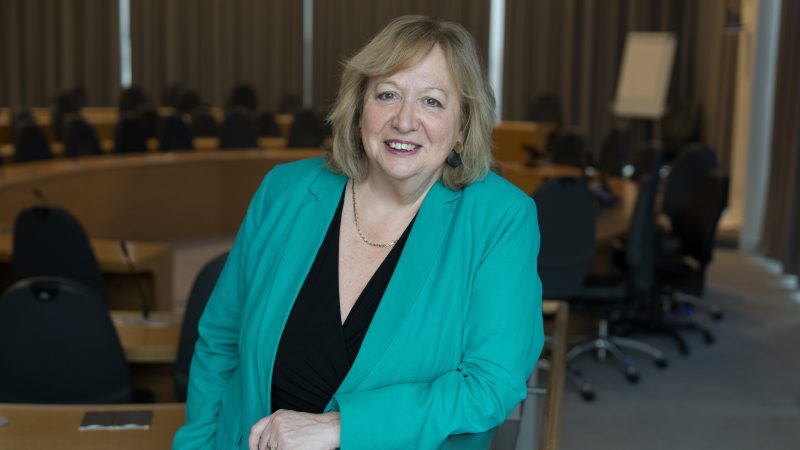

Members of Britain’s biggest trade union are voting to determine their future in Unison’s latest general secretary election.

In the midst of her bid for re-election after four years in post, I met with Christina McAnea at the union’s offices in Euston to reflect on her upbringing on a council estate in Glasgow, her political awakening from Jimmy Reid, and her work to make her union a powerful campaigning (and winning) force within the trade union movement.

Looking out over the bustling street below from Christina’s office, we began our interview on her bid for re-election. She encouraged members to look at her record over the last four years, highlighting a boost in membership by over 70,000, the creation of the Unison College to train members and putting more funding into the union’s branches and regions.

“We’ve got a strategy not just to grow the union, but to be a successful campaigning, winning union.”
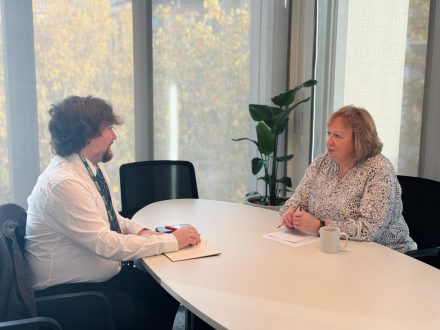
For McAnea, her time in office so far has been focused on giving a voice to those who don’t shout the loudest.

“We’re encouraging under-represented groups, and even for a union with one million women members, that also means women’s voices because too often they are still under-represented in out union, black members, disabled members, LGBT+ members, etcetra.

“One of the groups I am most concerned about is low-paid members. Somebody described them recently to me as the silent majority in most of our union. They face so many barriers to becoming active in our union; because of the jobs they do, they can’t get time off, they don’t get paid release from their employers – and I feel that responsibility really strongly to make sure that we’re making space for them in the union, that we’re making it easy for them in the union to come through and become leaders, to take decisions that affect them and that are relevant to them.”

How McAnea’s childhood shaped her politics

McAnea has personal experience of the plight that low-income households face, from her time growing up in a council estate in Drumchapel in north-west Glasgow.

“My mother was a lone parent when I was 11 and we never had any money. We lived a hand-to-mouth existence – you got paid, you spend money to feed you, hopefully it pays your rent and then you get paid again. There was never any spare money left over, so any kind of issue, like having to buy school shoes, was a massive thing for us.

“Seeing the poverty that we lived in, being able to see the unfairness even in the council estate where I grew up, we were one of the poorer families in that council estate, so even there you could see the difference between us and other people.”

Unlike other families, McAnea’s parents were both keen on pushing her, her two brothers and sister to get an education at a time when many children faced pressure to leave school to support their family.

“My parents weren’t like that, which was great – they really saw the value of education.”

As McAnea became more politically engaged around the age of 15 and 16, she recalled seeing the trade union activist Jimmy Reid speak, with his thoughts around opportunity and isolation resonating with her.

“I went along to hear him speak, and he was just amazing. He spoke about what I subsequently found out is the communist ideology about isolation.

“Working people don’t get opportunities, so they then become isolated – it was exactly what I saw in my parents and what I saw in my own life.

“Everyone has the potential to be anything they want in this world, but if you don’t get the opportunity to unlock that, then you end up stuck and you don’t end up exploiting your full potential, the full extent of what you can be.

“That really resonated with me when I heard him talking about that. That’s followed me right through my working life in the union movement, because too often people make assumptions about low-paid workers. They think low pay means not very bright, but in my experience nothing could be further from the truth. You meet the members of my union who work in low-paid jobs and you couldn’t meet a brighter, more intelligent and more articulate people.”

When McAnea joined a political party, her first port of call was the Communist Party, being a member for around a decade before joining Labour.

“I decided that actually if you want to make effective change, you have to be in power – and the only way that could happen for working people was through Labour.”

‘Affiliation doesn’t stop us from fighting against Labour’

At a time when Unite, one of the other titans of the British trade union movement, is reviewing its affiliation with Labour, McAnea argues Unison can use its connection to maximise what they can get for their members, highlighting work around fair pay agreements for care workers and measures included in the Employment Rights Act, such as scrapping zero hours contract and sick pay from day one.

Affiliation does not mean subservience – and McAnea was clear that Unison is always prepared to take on any government when needed.

“I’ll challenge any government across the UK. For me, the challenge will always be to take on any government, whether it’s at the national or local level, when they’re not acting in the best interests of Unison members.”

A recent example McAnea shared was over wholly-owned subsidiary companies within the NHS, known as ‘subcos’. Through subcos, services once provided in-house are instead provided by a separate company owned by the NHS trust, but crucially staff who work for them are excluded from NHS pay, conditions and pensions.

McAnea said she immediately went on the offensive to oppose the scheme.

“I spoke to [Health Secretary] Wes Streeting, I spoke to Jim Mackey, the chief executive of NHS England, and said we would fight them everywhere we did this.

“Every time a trust declared they were going to look at setting up a subco, we’d do a huge campaign about it. We’ve done things like this before, we can do it again.

“I spoke at the TUC and was all set to speak at the Labour Party conference, when a few days before, they announced that they were pausing this policy – and they said it’s because they’d listened to the unions, in particular Unison.

“I think having that link [with Labour] can be important, but it doesn’t stop us from campaigning and fighting against them when they have a policy we don’t support. I don’t feel constrained by the fact we’re affiliated to the Labour Party. Other unions are affiliated to Labour – they still manage to pick fights with them, and so do we.”
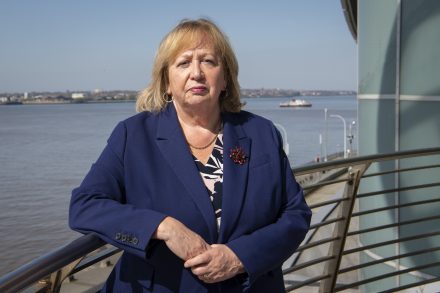
Photo: Steve Forrest/Workers’ Photos

‘Everyone can see it’s not working’

Christina did not disguise her frustration with the Labour government, telling me the party has not yet delivered on the high expectations it set for itself as they were swept into office last July.

She said: “People in this country are still better off with Labour in Westminster, but it has to be a Labour government that will deliver for ordinary people in this country – and they haven’t done a particularly great job so far.”

McAnea expressed disappointment at a range of decisions made by the government so far, including the winter fuel allowance, “attacks” on welfare benefits, the failure to compensate Waspi women, delays in passing legislation banning conversion therapy and the continuation of the controversial two-child benefit cap – although both Keir Starmer and Rachel Reeves have signalled the policy may be axed in the Budget.

Her frustration also extends to how the government has sold its achievements. Although Christina said the government had delivered “the best piece of workers’ rights legislation in over 70 years”, she added: “You’d think it wasn’t happening – it’s kept quiet”.

“I wish they would be more positive about it and actually try and sell it to people, instead of always being embarrassed of it.

“I feel they need a reset. It’s not been working. You don’t need me to say that – everyone can see it’s not been working. The polls are terrible.

“I would like them to try and turn the corner by actually coming out with policies that they can see will make people’s lives better.”

She called for a rethink of the Treasury’s fiscal policy and called on the wealthiest to be made to face the brunt of any tax hikes to pay for public spending or tackle the government’s debt bill.

“It’s always been the lowest paid or people on benefits that are expected to pay the price for the fact that the government’s not got much money. I think there is a real opportunity for the government to shift the dial and move the burden of taxation away from working people and back to having a better redistribution of who pays taxes.

“Let’s go after those who own property and stocks and shares that are worth over £2m or £5m. Are they seriously saying if you’ve got millions in property and stocks and shares you would notice a one or two percent increase in tax? I find that hard to believe.”

‘Reform is not the answer’

Like all trade union leaders, Christina is troubled by the rise of Reform and made it clear that Nigel Farage and his fellow MPs are no friends of the working class.

She said Unison will be making the case that Nigel Farage is not the answer to the desire for change felt among voters.

“Our members are like the British public, so Reform is on the rise – and it’s on the rise in Unison as well.

“We understand why they’re looking at parties like Reform, because they feel they’ve been let down and left behind by the mainstream parties.

“But we have to get the message out to Unison members and their families and communities that Reform’s not the answer.

“Reform votes against every single piece of employment rights legislation that goes to Parliament. They vote against any measures to combat climate change – some people might think that’s not important, but actually the people that pay the price of climate change in this country are the lowest paid, because they’re the ones having to deal with getting flooded when they can’t afford home insurance and increases in their energy bills at home. And Reform’s on the record as saying they would like a US insurance-style method for the NHS – a huge disaster for our country.”

McAnea’s political idols

While her role as general secretary can be taxing on her time, McAnea does find time to occasionally go to the theatre and also read with an “eclectic taste”.

“I read Shuggie Bain, it’s brutal. I like murder stories, so I’m not averse to reading Richard Osman. I like history, so I also quite like non-fiction.”

As the general secretary of Britain’s largest trade union, who are McAnea’s political idols?

“Probably Nye Bevan – just because of the impact he had in people’s lives. He had to fight within his own party to get the NHS established, it wasn’t easy. It wasn’t that everyone in Labour thought it was a great idea, and he had to fight really hard.

“More generally speaking, I’ve always been inspired by Martin Luther King. I’ve got a book of his speeches and he’s far more left-wing than people thought he was.

“I remember when I was discovering feminism, I loved Gloria Steinem’s book Outrageous Acts and Everyday Rebellions – one of the ones that set me off on that route to discovering my feminist politics. She’s a great writer and she writes about things that people understand.”

Leaving Christina’s office, it was clear that her sense of purpose is rooted as much in memory as in ambition. The lessons she learnt in Drumchapel – of struggle, solidarity and opportunity – still shape her politics as the head of the largest trade union in the country. As she seeks a fresh mandate from Unison’s members, Christina seems driven less by power than by conviction: that no one should be denied the chance to fulfil their potential because of where they came from or what they earn.


Who is Dave Calfe – the new general secretary of ASLEF?


10 November, 2025 
Left foot Forward

Dave Calfe is taking over from Mick Whelan


Dave Calfe was last week elected as the new general secretary of the train drivers’ union ASLEF.

Calfe replaces Mick Whelan who has been general secretary of the union since 2011. Following his election, Calfe said: “I would like to thank all the members of Aslef who have put their trust in me to be the next general secretary.

“I look forward to representing our union in the years ahead – working for, and in the best interests of, all our members across every sector – and building upon the great work that our current GS, Mick, has done.

“I would also like to thank our assistant general secretary Simon for his comradeship during the campaign, and I look forward to continuing to work together.”

Calfe was previously a train driver in the same west London deputy as Whelan. He has been president of the union’s executive committee (EC) for seven years.

Following Calfe’s election, Whelan said: “Dave has been Aslef’s EC president for the last seven years, during which time it’s been my pleasure to work with him.

“I know what a formidable representative he is for our grade and I know that this great union will continue to advocate tirelessly for train drivers under his leadership. Together we will go from strength to strength.”

Calfe won the election for general secretary with 4,556 votes to Simon Weller’s 2,951. Weller is the deputy general secretary of ASLEF. Turnout in the election was 33.4 per cent.

Chris Jarvis is head of strategy and development at Left foot Forward


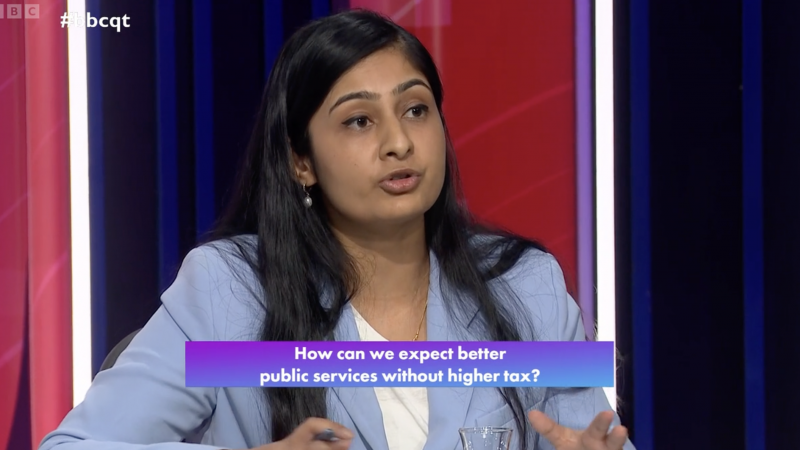
Zarah Sultana perfectly spells out why the UK’s economic system is ‘fundamentally broken’ on Question Time


14 November, 2025 
Left Foot Forward News

'The super rich in this country are laughing all the way to the bank'


Zarah Sultana MP, co-founder of Your Party, has perfectly summed up why the UK’s economic system is not working for the vast majority of the population.

On yesterday night’s episode of BBC Question Time, Sultana said people are fed up with “establishment politicians” and a status quo where “their lives are harder, their wages are stagnated, their bills are increasing, and at the same time the super rich in this country are laughing all the way to the bank.”

Sultana pointed out that the top 50 richest families in the UK hold more wealth than 70% of the population, and that since 2010 billionaires have tripled their wealth.”

On the cost of energy prices, she said: “Everyone can see it, their energy bills are increasing and energy companies are recording record profits.”

“So it’s an economic system that is fundamentally broken.”

Sultana said that from Labour, the Conservatives and Reform, “you’ll get the same neoliberal politics, the same economic system”.

She said that trickle down economics has failed, noting the record levels of inequality, child poverty and the simultaneous surge in billionaire wealth.

In a heated exchange about funding public services, Sultana tore apart Reform MP Danny Kruger after he claimed the party is challenging the “incumbent system” in local government.

Kruger then took a swipe at the left’s “excessive politics”, to which Sultana responded: “Excessive politics? Not having austerity Danny, which killed over 300,000 people and has cut the average life by half a year.”

Kruger said: “We need public spending to be under control.”

“What does that mean?,” Sultana responded.

Kruger argued against “pumping more and more into the welfare system”, saying it fuels “long-term generational poverty”. “We need an economy that actually works,” he said.

Sultana pushed back, asking: “How will austerity grow the economy Danny? That’s not Keynesian economics is it.”

She instead back equalising capital gains tax with income tax to generate £17 billion a year and a wealth tax on assets of £10 million to raise £24 billion a year.

To applause from the audience, Sultana said: “The magic money tree exists, it’s in the City of London and it’s with the billionaires, but what you find is the lack of political will, because these parties are bankrolled by the billionaires, so they’re definitely not going to tax them.”

Olivia Barber is a reporter at Left Foot Forward


Richard Burgon MP: Labour Must Tax Wealth and Deliver Emergency Action on the Cost of Living


14 November, 2025 


Labour must also take urgent action to deal with the social emergency facing millions right here and now.


Britain remains in the grip of a cost-of-living emergency. Though it no longer dominates the headlines as it did a couple of years ago, millions of people are still being forced to make impossible choices between heating their homes and putting food on the table.

Poll after poll shows this is the single biggest issue in British politics — however much Nigel Farage tries to shift the focus by scapegoating asylum seekers, Muslims, or whoever else falls foul of the never-ending attempt to divide and rule.

Yet while so many have been pushed to the brink, the wealth of those at the very top continues to skyrocket. British billionaires’ wealth has more than doubled in recent years and is growing by £35 million every single day.

The glaring inequality that scars our society is no accident — it is the direct result of nearly fifty years of neoliberal capitalism, unleashed by Thatcher’s war on workers and wave of privatisations, that have never been properly reversed.

A Labour government should act boldly, guided by socialist principles, to tackle this head-on. Bringing energy and water back into public ownership, a mass programme of council house building and introducing rent caps are the kind of structural changes that would take life’s essentials out of the hands of the market and end the rip-off facing ordinary people.

But while we fight for such measures, Labour must also take urgent action to deal with the social emergency facing millions right here and now.

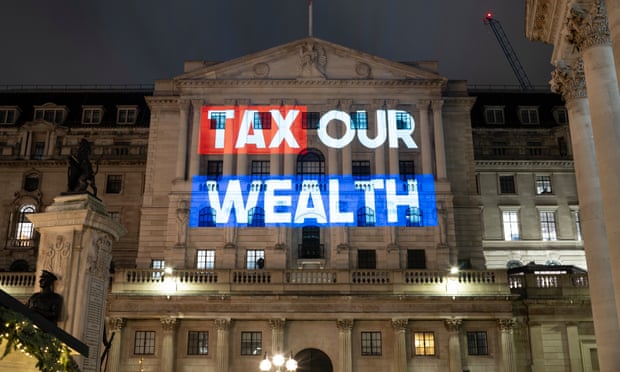
That’s why I’m calling on the Government to use the Autumn Budget to introduce a package of wealth taxes to create a Social Emergency Fund — providing immediate support for people hit by soaring food, energy, and housing costs.

Over 10,000 people have already signed my open letter calling on the Prime Minister and Chancellor to act — which I will deliver on the eve of the Budget.

This package of measures would target the very richest and could raise tens of billions every year. It includes:A 2% Annual Wealth Tax on assets above £10 million — raising £24 billion per year
Equalising Capital Gains Tax with Income Tax — closing a loophole that means wages are often taxed at higher rates than income from wealth, raising £12 billion per year
Clamping down on tax avoidance, corporate loopholes, and strengthening enforcement — generating billions more each year

Billions more could be raised with a windfall tax on the profits of the Big Four banks. Set at the same rate as the one on the super-profits of the oil and gas giants, this could bring in a further £14 billion a year. With banks making record profits from the higher interest rates that are hammering households, clawing back a share of those windfalls is only fair.

Together, these modest measures on wealth and super-profits could raise well over £50 billion per year.

That’s more than enough to deliver a Social Emergency Fund to guarantee some immediate relief to struggling households. Below are five examples of the kind of policies that the government could deliver in that:

1. Introduce Cost-of-Living Grants: These were delivered in the aftermath of the Covid crisis and as energy prices surged. Reintroducing similar grants of up to £900 for low-income households, alongside support for disabled people and pensioners, would cost around £11bn and provide a real boost to incomes this winter.

2. Scrapping the Two-Child Benefit Cap: Experts say no other measure would do more to tackle child poverty than this, lifting hundreds of thousands of children out of hardship overnight. Scrapping the cap fully would cost £2 billion this year rising to £3 billion by 2030.

3. Universal Free School Meals: In the sixth-richest country on Earth, ensuring every child has a nutritious hot meal each day should be the most basic of expectations. Universal free school meals would not only cut child hunger but also save families—already hit by soaring food prices—hundreds of pounds a year. Experts estimate the cost at around £2.5–3 billion.

4. Expand the Household Support Fund: This fund allows local authorities to provide vital, tailored grants to people in hardship — from help with energy and water bills to food, school uniforms and other essentials. But it is woefully underfunded. Tripling it to £3 billion per year, for example, would give councils resources to offer more people support during this cost-of-living crisis.

5. Re-Link Local Housing Allowance to Market Rents: This Allowance is intended to ensure people can afford to rent properties in their local area. But the freezing of the allowance, at a time of soaring rents, has left too many families with a shortfall — forcing them to cut back on other essentials just to keep a roof over their heads. Restoring the link with local market rates would cost around £2.5-3.5bn depending on the level it is set at.

The cost of these emergency measures is around £23bn – far below the amount raised by the tax rises above highlighting how the government could easily be doing much more to tackle the cost-of-living crisis.

And there’s no shortage of other policies coming from the experts — from a wider benefits uplift to calls for a protected minimum floor for Universal Credit levels as a first step towards an Essentials Guarantee.

The key point is that, just like with austerity, the decision on whether to act is a political choice.

Britain has the wealth to deal with this crisis — but it is being hoarded at the top. So we should not stand by while destitution is normalised and 7 million people in Britain are unable to afford essentials like food, energy, and toiletries.

Tackling this crisis is exactly the kind of change people wanted to see when they backed Labour at the General Election.

In recent days, Westminster has been dominated by the usual political soap opera — the kind of spectacle that puts most people off politics.

The Budget should instead be a chance to respond to the urgent realities of people’s lives and address the cost-of-living crisis by taxing those who have done so well out of our rigged economy.


Group of UK millionaires urges government to introduce wealth tax to ‘lift kids of out poverty’


13 November, 2025 
Left Foot Forward


“The gap between the super-rich and everyone else grows by the day."


A group of millionaires have urged Chancellor Rachel Reeves to increase taxes on the rich, and use the funds raised to “lift kids out of poverty” and invest in rebuilding public services.

Campaign group Patriotic Millionaires, has issued the call ahead of the budget later this month, saying that measures such as reforming capital gains tax and introducing a new wealth tax could raise up to £36 billion annually.

Reeves has previously ruled out a wealth tax, however now a wealthy group of individuals have themselves called for the measure.

The Independent quotes group member Phil White as saying: “It’s time for the wealthiest – people like us – to pay a fairer share, so we can help lift these kids out of poverty and begin rebuilding our public services and communities right across the UK.”

He added: “We all want to live in a society where everyone has a decent shot at life – but at the moment that just isn’t the case.

“The gap between the super-rich and everyone else grows by the day.

“In Scotland, around one in five children live in poverty, while the country’s five richest families own a combined £19.3 billion – more wealth than a quarter of the population put together.”

Patriotic Millionaires is beginning a tour of major cities across the UK with its ‘Tax The Super-Rich’ bus as it bids to take its message across the country.

Basit Mahmood is editor of Left Foot Forward

Campaign launched calling on Sir Jim Ratcliffe to pay more tax


Yesterday
Left Foot Forward

“If you can own our most famous football club – you can pay tax. Obviously."


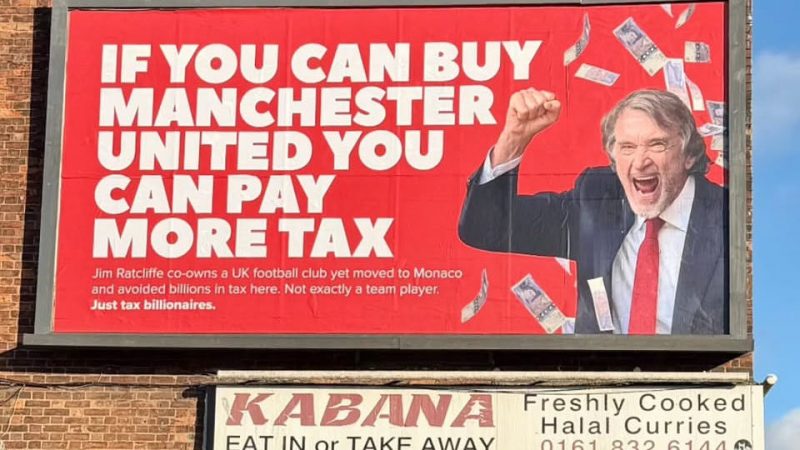
A new billboard poster on a building in Manchester reads: “If you can buy Manchester United you can pay more tax.”

The advert was produced by the campaign group Everyone Hates Elon. It features Manchester United co-owner Sir Jim Ratcliffe and has been installed on the side of a city-centre building ahead of the government’s Autumn Budget. It forms part of a wider series targeting billionaires and calling for higher taxes on extreme wealth.

Everyone Hates Elon formed this year in protest of Musk’s statements about British politics and promotion of disinformation. The group creates parody adverts and viral social media campaigns to criticise Musk and other billionaires.

Their latest campaign focuses on Sir Jim Ratcliffe, the British billionaire who acquired a 27.7 percent stake in Manchester United in February 2024. Ratcliffe is the chairman and CEO of the Ineos chemicals group, which he founded in 1998.

According to the Sunday Times Rich List 2023 , Ratcliffe’s net worth was estimated at £29.688 billion, making him the second wealthiest figure in the UK at the time.

In September 2020, Radcliffe officially changed his tax residence from Hampshire to Monaco, a move estimated to save him £4 billion in tax.

Earlier this year, eco-activist, entrepreneur and Labour donor Dale Vince, described Ratcliffe as a “billionaire tax exile,” criticising predicted redundancies and cost-cutting measures at Manchester United under his ownership.

“Costs are cut, lives affected while the football decline continues. This is what happens when a billionaire tax exile takes over a football club.

“Football is about community and being a part of something, Jim Ratcliffe doesn’t get that.”

In an Instagram post to their 167,000 followers, Everyone Hates Elon addressed the Prime Minister directly:

“Hey @KeirStarmer you’re talking about “tough choices” in this month’s budget, how about just getting tough on the billionaires.

“JimRatcliffe owns almost a third of the UK’s most famous football team. He has a home here. He works here. Yet he “moved” to Monaco to avoid paying £4 billion in tax.

“If you can own our most famous football club – you can pay tax. Obviously. The 50 richest families in the UK have more wealth than half of the country combined, yet they’re playing the game with a completely different set of rule. It’s a p*ss take.”


‘A luxury levy is the politically savvy way to ensure the rich pay more tax’


:

The Chancellor faces a familiar dilemma at the November 2025 budget. Taxes must rise, and intense debate continues over whether she should break the manifesto pledge to avoid increasing income tax, VAT, and NICs. However, across calls for higher top rates of income tax, a mansion tax and an annual wealth tax, there is a broad consensus that the wealthiest must shoulder the greatest burden.

One option, inspired by similar policies in Australia and Canada, is a luxury levy on high-end goods – a consumption tax which would be economically rational, raise significant revenue and ensure the burden of taxation falls squarely on those who can afford it.

Economist Robert Frank identifies certain goods as ‘positional‘ – they derive their value largely from exclusivity. For example, a designer hoodie which everyone could afford would quickly stop feeling like a designer product – we value these items precisely because others cannot have them.

READ MORE: ‘Raising taxes on the wealthy isn’t just about the money’

This creates an unusual dynamic. Producing more positional goods doesn’t directly make society better off in the ways that many of us care about. Because of how we value them, positional goods cannot make an owner of the good better off without making someone else worse off. Luxury industries –which largely produce positional goods – may draw investment, effort and talent away from sectors the government has explicitly prioritised in its Industrial Strategy; those which are more crucial to economic growth, national security, and societal wellbeing.

We already operate a small tax on luxury cars through the expensive car supplement to Vehicle Excise Duty – a flat rate of £3,100 must be paid over a six-year period for cars worth more than £40,000. Expanding this to a broader luxury levy – covering high-end clothes, jewellery, accessories, and premium spirits – would reduce the need for broad tax increases that affect all industries, protecting the sectors we consider more socially valuable.

Australia’s long standing luxury car tax, with significantly higher rates than Britain’s version and a smaller market, raised approximately £600 million in 2023-24. Canada’s luxury tax was introduced in 2022, but will no longer be applied to yachts, as this part of the tax failed to raise significant revenue – a lesson on the importance of considering behavioural responses when designing new taxes. South Korea and Taiwan apply broader luxury taxes across high-end jewellery and furniture.

Frontier Economics and Walpole’s 2024 report on Britain’s luxury sector found that the luxury automotive sector generated £33 billion in sales in 2022, with “fashion and accessories” at £10 billion, and “beauty, wellness and grooming” and “jewellery, watches and precious metals” at £3 billion each. Even accounting for behavioural responses – a luxury levy will reduce overall sales – this provides a large base to raise revenue from.

Britain’s approach should learn from international experience. The £40,000 threshold for paying the expensive car supplement should be raised to support electric and self-driving vehicle adoption, but the flat rate of £3,100 should be replaced with a higher rate of 10% over the six-year period. The broader luxury levy should avoid yachts but include high-end clothes, jewellery, accessories, and premium spirits, offering a broader base than Australia and Canada. This may work best as a small top-up on VAT – close to 5%. Like the expensive car supplement, this should only apply above price thresholds, which are tied to inflation and carefully set to balance the aims of targeting the wealthiest and maintaining a broad base from which to raise tax revenue.

A luxury levy would be politically smart – it would primarily fall on the wealthiest, including wealthy tourists visiting London, while sparing working-class voters in Labour-Reform battleground seats across the Red Wall. By demonstrating Labour’s commitment to taxing the wealthiest, it would also strengthen our left flank as the Greens rise in the polls.

There are no perfect options. But when the Chancellor weighs her options before the budget, she should look closely at the luxury levy – a tax which raises significant revenue, targets the wealthiest, focuses on consumption which doesn’t enhance societal wellbeing and has significant political benefits against rivals on both our right and our left.

BBC crisis or coup? Either way, it’s a right-wing hit job

Yesterday
Left Foot Forward 


The true scandal isn’t just the right’s distortion of BBC bias, it’s the rot within the system that allowed this farce to happen.


The vultures barely waited for the body to go cold. By Monday morning, the smug right-wing press were crowing over the resignations of director general Tim Davie and News CEO Deborah Turness amid accusations of bias.

“Beeb boss quits over Trump lies,” shrieked the Sun.

“BBC bosses quit in disgrace,” cheered the Daily Mail.

The next day, they had the added bonus of plastering their front pages with Donald Trump’s threat: “Grovel – or I’ll sue you for $1 billion.”

The hysteria began in the BBC-averse Telegraph, no less, which was handed a loaded gun in the form of an internal “dossier” written by Michael Prescott, a former political editor of the Sunday Times turned PR executive. Until June this year, Prescott sat as an independent adviser to the BBC’s Editorial Guidelines and Standards Board.

The 19-page document, sent to the BBC board, alleged “serious apparent bias,” including “rogue LGBT+ reporters” censoring debate on trans issues, BBC Arabic giving “extensive space” to Hamas, and, its smoking gun, that Panorama had doctored a Trump speech to make it appear that Trump had encouraged violence on January 6.

Prescott’s anti-BBC report contains doctored quote

As the right took the moral high ground over Panorama’s allegedly misleading edit of Trump’s Capitol Hill speech, a new twist in the fast-moving story revealed that Prescott’s own report contains misleading quotes.

In the document, Prescott writes:

“Fifteen minutes into the speech, what Trump actually said: ‘We are gonna walk down to the Capitol and I’ll be with you. I know that everyone here will soon be marching over to the Capitol building to peacefully and patriotically make your voices heard.’ It was completely misleading to edit the clip in the way Panorama aired it.”

However, as James Ball reports in the New World, this is not what Donald Trump actually said. Prescott has heavily edited the remarks, altering their meaning.

Ball also explains how just as Prescott notes that television has rules requiring broadcasters to make clear when a quote has been edited or abridged, the same standards apply in print. When shortening a quotation, an ellipsis should be used. Prescott has not done so.

“In a fair world, Prescott’s apparent error would be seen as at least as serious as the original supposed mistake made by Panorama,” writes Ball.

And just as revealing as what the dossier included is what it left out. There’s no mention of the corporation’s coverage of politics, business, education, health, the royal family, domestic affairs, climate change, crime, or even Ukraine.

“Did Prescott ever think to ask whether the same objections that he raised over the treatment of Trump might be applied to the BBC’s treatment of Putin?” asks journalist David Aaronovitch in an op-ed in the Observer that questions the impartiality of the document at the heart of the controversy. .

“So Prescott zeroes in on the culture war plus Gaza agenda. Because these seem to be the things that bother him, not because these are all the things a conscientious adviser might be bothered by,” he adds.

Prescott’s dossier is looking less and less like a whistleblower’s warning and more and more like a political grenade.

Prescott bailed out of journalism 24 years ago for a lucrative career in corporate PR and serves as managing director at Hanover Communications, a PR company with links to the Conservative party. Official EU and UK lobbying disclosures seen by Byline Times show Hanover represents a number of US tech and entertainment giants, including Oracle, Apple, Meta and Paramount. Oracle’s co-founder Larry Ellison, a Trump ally and Republican megadonor, who recently briefly overtook Elon Musk as the world’s richest man, helped build the pro-Trump Heritage Foundation’s ‘Project 2025’ personnel database for a future Trump administration. Ellison’s son David now chairs Paramount Skydance, following a merger with the entertainment powerhouse that owns CBS.

And it gets worse.

Prescott’s post on the BBC’s editorial board was reportedly secured under the influence of Sir Robbie Gibb, BBC board member and co-founder of GB News.

Gibb’s fingerprints are everywhere. A self-described “Thatcherite Conservative” and former Downing Street communications chief under Theresa May, now sits in judgment over BBC impartiality. Trump, according to his lawyer, is “very fond” of GB News’s “fair and accurate reporting.” Its co-owner hedge fund multimillionaire Paul Marshall, who also owns the Spectator and UnHerd, has previously called for the BBC to be sold, describing it as squatting “like a giant toad in the middle of the UK media landscape.”

The right’s punching bag

For years, the BBC has been the right’s favourite punching bag, too ‘woke,’ too ‘globalist,’ too unwilling to parrot the culture war lines coming out of Westminster and Mar-a-Lago alike.

Davie’s resignation was the scalp they’d been waiting for.

Never mind the details, the facts, that Senate, Congressional and legal investigations into Trump’s conduct on January 6 concluded he bore responsibility for the insurrection that followed.

Just slap ‘disgrace’ across your front page and tell your readers you ‘told them so.’

Yes, Panorama made an error. The failure to re-edit a mis-spliced Trump clip was serious, but hardly a scandal of world-historical proportions. As Sky’s former political editor Adam Boulton observed, summarising long speeches through edits is standard practice, and the overall impression that Trump encouraged the riots, was correct.

Yet when the Murdoch-owned Times publishes a fake interview with a former New York mayor during an election campaign, no one called for heads to roll. The Murdoch empire has spent decades attacking the BBC, while paying billions to settle phone-hacking and corruption cases.

This crusade isn’t about media standards, it’s about power.


And never mind that the Telegraph, the very paper that has fanned the outrage, is mired in its own chaos. Its long-running sale saga, tangled in political interference and editorial controversy, remains as turbulent and uncertain as ever.

And the Daily Mail, that immigrant-baiting, NHS-undermining tabloid, never apologised for its fabricated “Beergate” story that falsely accused Keir Starmer of breaking lockdown rules with a pre-pandemic photo.

Where were the cries of “fake news”? Where were the demands to “grovel or be sued”? Interestingly the most recent survey that I’ve seen, finds that while 60% of people trust the BBC for their news, that falls to 24% for the Mail.


Which brings us on to Boris Johnson. The former prime minister who was actually found guilty of breaking lockdown laws, urged readers in his Mail column to boycott the licence fee unless Tim Davie offered a “convincing explanation” for its supposed bias. The corporation, he thundered, had been “caught red-handed in multiple acts of left-wing bias.”

This is the man who tried to install Paul Dacre, the former Daily Mail editor, as chair of Ofcom, the UK’s supposedly independent media regulator. Dacre, a long-time scourge of the BBC, bombed his interview so spectacularly that even a government eager to please the press couldn’t save him. Despite efforts to give him a second chance, he eventually withdrew.

Analyses that ‘sinks without a trace’

And while the right scream “leftist bias,” evidence points the other way. A Cardiff University study found Reform featured in 49 BBC News at Ten bulletins between January and July this year, whereas the Lib Dems, who have 72 MPs, featured in just 35 bulletins.

The Centre for Media Monitoring found BBC coverage of Israel’s war on Gaza gave Israeli deaths 33 times more attention per fatality than Palestinian ones. As Politico’s editor Alan Rusbridger notes: “Such analyses tend to sink without trace. Is this, in itself, a form of bias?”

Rusbridger raises another crucial point – who exactly sits on the BBC board, the body that received Prescott’s “dossier.” Of its 13 members, which according to Prescott dismissed his concerns, five, including chair Samir Shah, are appointed by the government. The rest are heavy on business and private equity backgrounds but light on journalism.

The committee overseeing editorial standards is equally conflicted. Three insiders, Shah, Davie, Turness, sit alongside Gibb and former BBC COO Caroline Thomson. Prescott, notably, served as an adviser to this same group. It’s an uncomfortable tangle of those enforcing standards and those accused of breaching them, a “motley bunch,” as Rusbridger describes it.

Gibb’s record speaks for itself. In 2020, he helped lead a consortium to buy the Jewish Chronicle, a paper accused of, on occasion. publishing fabricated stories about Israel’s war in Gaza. Several senior columnists resigned from the newspaper this year, including Jonathan Freedland, who said the paper “too often reads like a partisan, ideological instrument, its judgments political rather than journalistic.”

Yet Gibb remains a supposed arbiter of impartiality within the BBC, appointed by Boris Johnson and confirmed by Rishi Sunak.

Who guards the guardians?


So who guards the guardians? As Rusbridger put it: “If I were a BBC journalist, under such intensive scrutiny and fire, I’m not sure I would be terribly comforted by these governance arrangements…. I’d wonder why such close editorial scrutiny should have been entrusted to three key people who themselves rejected journalism in order to enjoy lucrative careers in corporate and political communications. Who, bluntly, would you trust more to be impartial on the Middle East—Robbie Gibb, Michael Prescott or Lyse Doucet? Why should the PR professionals who turned their own backs on journalism sit in judgment on the latter?”

Meanwhile, Donald Trump grins like the cat who got the cream. In a statement praising the Telegraph for “exposing” BBC corruption, his team declared the corporation “100% fake news.”


The true scandal isn’t just the right’s distortion of BBC bias, it’s the rot within the system that allowed this farce to happen. Prescott’s dossier, leaked from within and weaponised by the press, shows how corporate lobbyists and political operatives have captured the very machinery of media accountability.

Outside Broadcasting House stands a statue of George Orwell, inscribed with his words: “If liberty means anything at all, it means the right to tell people what they do not want to hear.”


The irony is gut-wrenching. Those who claim to defend truth are the ones strangling it. If they succeed, we may as well take the statue down.

The question remains: will ‘Auntie’, unlike the American broadcast media, be bold enough not to cower to Trump and his demands? As Alan Rusbridger observes, there’s only one way for the BBC to salvage some dignity from the smoking rubble of the past week – with a four-word message: “See you in court.”


Gabrielle Pickard-Whitehead is author of Right-Wing Watch


Sir Ed Davey blasts Nigel Farage for teaming up with Trump to attack the BBC


11 November, 2025 
Left Foot Forward 

"I think people need to see through Nigel Farage, and see through Donald Trump and realise what they’re trying to do to our great country."

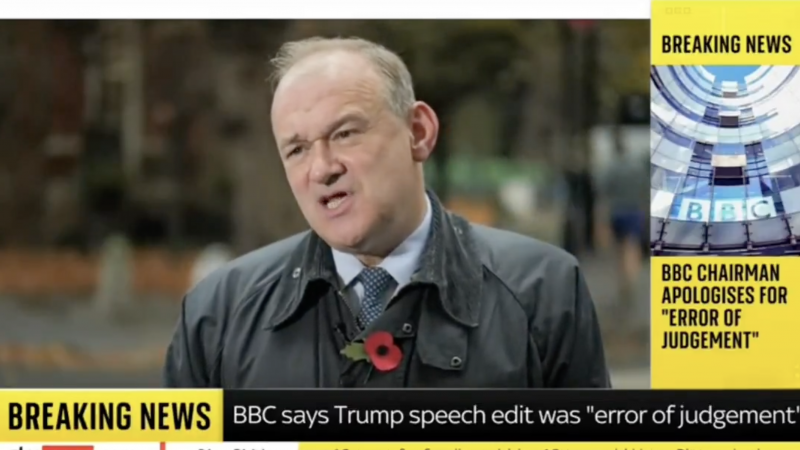
Lib Dem leader Ed Davey has slammed Nigel Farage for joining in with Donald Trump’s attacks on the BBC.

Trump has threatened the BBC with a $1 billion lawsuit after it resurfaced that a BBC Panorama documentary had spliced together two clips from a Trump speech to make it look like he had encouraged the January 2021 Capitol riot.

On Sunday night, the BBC’s director general Tim Davie and BBC News’ CEO Deborah Turness resigned.

Farage claimed during a Reform press conference yesterday that the BBC had stitched Donald Trump up “on the eve of a national election” by airing the Panorama episode.

In Trump’s speech on January 6 2021, he said: “We fight like hell. And if you don’t fight like hell, you’re not going to have a country anymore.”

This line in Trump’s speech has been repeatedly pointed to as evidence of him having incited the riots.

The Reform leader mentioned having spoken to Trump on Friday, who he said was angry at the BBC.

Farage then went on to attack the BBC: “I mean people talk about election interference, what the BBC did was election interference.”

He also said that if Reform wins power at the next election, he will “defund the BBC from its current model, be in no doubt about that”.

“The licence fee, as currently is, cannot survive, it is wholly unsustainable,” Farage, who has a GB News show, added.

On Sky News, Davey said condemned the Reform leader’s comments.

Davey said: “Nigel Farage is basically teaming up with Trump to criticise the BBC, it’s shocking, it’s unpatriotic, it’s wrong. It shows he wants Trump’s America, with his attacks on free media, coming to the UK.”

Asked if he understood why Farage had said the BBC committed “election interference”, Davey said that comment was “too extreme”. He said: “The interference we have seen in elections has come from Nigel Farage’s friend Vladimir Putin.”

He said that Russia has interfered with UK elections in the most “appalling ways”, yet Farage calls Putin “the world leader he most admires”.

“I think people need to see through Nigel Farage, and see through Donald Trump and realise what they’re trying to do to our great country.”

The Lib Dem leader has written to prime minister Keir Starmer, Tory leader Kemi Badenoch and Farage calling on them to condemn Trump’s attack on the BBC.

He has also called for BBC board member Robbie Gibb, who was appointed by Boris Johnson and is a longstanding Tory supporter, to be removed from the board.

Reports have suggested that Gibb “led the charge” in claims over systemic bias at the BBC.

Tories criticised for saying BBC should ‘grovel’ to Donald Trump

11 November, 2025 
Left Foot Forward


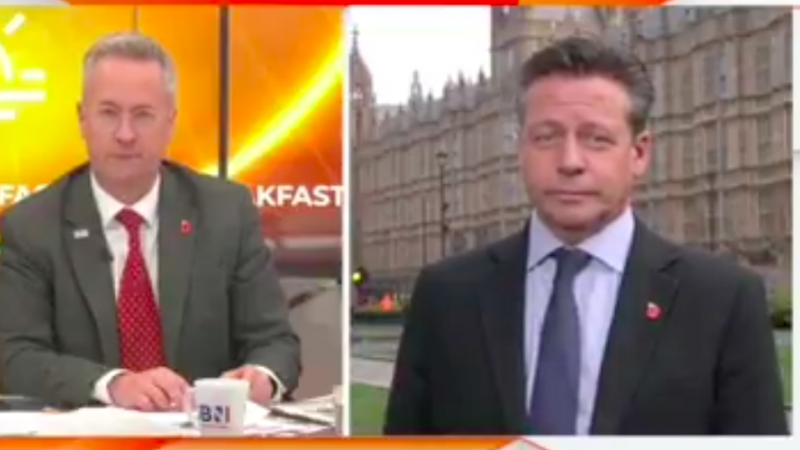
Speaking on Times Radio on Tuesday, shadow culture secretary Nigel Huddleston said the BBC must pull out all the stops to avoid leaving licence fee payers facing a huge legal bill.


Senior Tories have been criticised for saying that the BBC should apologise to President Trump after he threatened to sue the corporation after it edited one of his speeches.

The Republican has threatened to sue the BBC for $1 billion, following claims Panorama “doctored” footage of a speech he made to his supporters before the Capitol riots on January 6, 2020.

The BBC has apologies with two of its top figures, including the director-general, resigning amid concerns about impartiality – notably the editing of a Panorama documentary from October 2024.

The corporation has until Friday at 10pm to respond to the president’s legal threat, however given that the documentary was not aired in America, legal experts believe Trump’s chances of success are limited. However, that hasn’t stopped senior Tories from demanding the BBC grovel and apologise to Trump.

Speaking on Times Radio on Tuesday, shadow culture secretary Nigel Huddleston said the BBC must pull out all the stops to avoid leaving licence fee payers facing a huge legal bill.

He said: “If you look at the complaint he’s got, the TV programme, the Panorama programme, he probably has legitimate claims to say, look, this was wrong and definitely requires and demands an apology. So I would advise the BBC to grovel here.

“They need to make sure that they communicate very clearly that they got this wrong and that they apologise. And then I think probably we need to all appeal to Donald Trump to make it clear that it’s licence payers, it’s taxpayers, that would suffer then because of the bad and poor decisions made by a bunch of left-wing journalists and anti-Trump journalists and make it clear that they should be the ones held to account.”

Asked later how the BBC should respond, Nigel Huddleston told GB News: “Well, with a big apology and grovel because they were wrong, and Donald Trump has a perfectly legitimate concern here. It wasn’t could be perceived to be misleading, it transparently was.”

Social media users were quick to criticise Huddleston’s comments, with one user writing: “Just watched this pathetic specimen on Sky News. If the likes of Nigel Huddleston was in office, Trump may as well be installed as UK President. What a grovelling little shit.”

Another added: “Thank God this moron is only the Shadow culture secretary otherwise his actions would humiliate us on the world stage. Do not give an inch to the corrupt, lying scumbag Trump – the BBC should apologise for the edit but that’s it, there is no case to answer beyond that.”


Basit Mahmood is editor of Left Foot Forward


How right-wing attacks have led to resignations at the BBC


10 November, 2025 
Left Foot Forward News

"This is the most abysmal, pathetic thing. The BBC head resigning because the corporation is not supine *enough* to the far-right."


The UK right-wing media and American right are taking delight in the resignations of the BBC’s director general, Tim Davie, and BBC News CEO Deborah Turness.

The Telegraph has published a series of attack lines against the BBC over the last week.

First, they reported that an internal BBC memo written by ex-Murdoch journalist Michael Prescott which raised concerns that Panorama footage put two parts of a Donald Trump speech together so he appeared to encourage the Capitol Hill riot in January 2021.

Prescott also accused BBC Arabic reporters of “anti-Israel bias”.

On Friday, The Telegraph published comments from former prime minister Boris Johnson saying: “Davie must explain or quit”.

In his Daily Mail column, Johnson’s piece led with the headline: “Until BBC boss Tim Davie either comes clean on how Panorama doctored Trump’s speech – or resigns – I won’t be paying my licence fee.”

In a lengthy statement attacking the BBC, Trump thanked The Telegraph for “exposing” corruption at the broadcaster, while his press secretary Karoline Leavitt called the BBC “100% fake news”.

Trump has now threatened to sue the BBC for $1 billion.

As Sky’s former political editor Adam Boulton, pointed out, the overall impression that Trump encouraged the riots was true. Other journalists have highlighted it is common practice to “splice together” sections of a long speech to summarise it.

While right-wing critics accuse the BBC of “left-wing bias,” evidence suggests the broadcaster has given more attention to Reform UK’s MPs than to the Greens or Liberal Democrats.

A recent Cardiff University study found Reform featured in 49 BBC News at Ten bulletins between January and July this year, whereas the Lib Dems, who have 72 MPs, featured in just 35 bulletins.

The BBC has also been criticised for its reporting on Israel’s war on Gaza, with a recent Centre for Media Monitoring (CfMM) study showing that Israeli deaths are given 33 times more coverage per fatality than Palestinian deaths.

David Yelland, former editor of the Sun wrote on X: “What has happened today at the BBC is nothing short of a coup, a national disgrace, the corporation’s board has effectively been undermined and elements close to it have worked with hostile newspaper editors, a former PM and enemies of public service broadcasting. The only honourable players here are Tim Davie and Deborah Turness.”

Journalist and environmental activist George Monbiot said: “Once every 20 years or so, the director-general of the BBC is forced to resign for being insufficiently rightwing. Alastair Milne in 1987. Greg Dyke in 2004. Tim Davie in 2025. The great irony is that the BBC was in all cases profoundly biased towards established power. But just not biased enough…”.

Journalist Ian Dunt said: “This is the most abysmal, pathetic thing. The BBC head resigning because the corporation is not supine *enough* to the far-right.”

Political editor of Byline Times, Adam Bienkov, wrote on Bluesky: “The BBC’s senior leadership resigning en masse over one dodgy edit in one programme, simply because the right wing press demands it, tells you everything you need to know about where the power really lies in that relationship.”

Olivia Barber is a reporter at Left Foot Forward


Op-Ed: Trump vs BBC – So what? So this.


By Paul Wallis
EDITOR AT LARGE
DIGITAL JOURNAL
November 15, 2025


Image: - © AFP/File Justin TALLIS

In a not entirely surprising twist Trump is now saying he’ll sue the BBC for up to $5 billion. Trump says he was defamed by a somewhat iffy BBC edit of “Trump A Second Chance?” on the long-running BBC show Panorama.

The BBC has apologized but doesn’t agree with the defamation argument. Trump says the BBC is “fake news,” a term he basically coined for any and all negative press. Not much has changed.

Note: It’s unclear whether any actual formal proceedings are currently in place.

Whether or not UK law will entertain Trump’s idea of defamation is another matter. The highly litigious US is a very different legal environment to the UK. At least it’s supposed to be. The issue is what constitutes defamation and what isn’t, edits aside.

Let’s leave out the legal arguments. There is another issue here that isn’t getting much attention. The right to sue, rightly or wrongly, is not in question.

The question of such high punitive damages, however, is very much an issue that may haunt global media for decades to come.

Important: Note that a court may award damages as it sees fit, not necessarily the amount claimed by the plaintiff. Claims for damages are usually subject to intense dispute.

Can such litigation be simply thrown out by the court?

Yes, it can.

Will such a high-profile case be simply thrown out?

Very probably not.

The case would have to be heard in full, even “on principle.”

There’s an important possible legal precedent that could well affect global media.

The high-stakes damages are very much part of the bigger picture.

If this case is successful and becomes an instant legal precedent, what follows?

Where do you draw the line, let alone make the distinction, between simple reportage and someone’s personal interpretation of the same reportage?

Expect fireworks if this case proceeds.

__________________________________________________________

Disclaimer
The opinions expressed in this Op-Ed are those of the author. They do not purport to reflect the opinions or views of the Digital Journal or its members.


 UK

Serious times for serious people

NOVEMBER 15, 2025

By Brian Creese

These are hard times in which to be a Labour activist. Waking up on Wednesday to media glee at the outbreak of yet more infighting at the top of the Labour Party was frustrating and depressing, hardly the news we needed. 

This latest example of egotistical, inward-looking factionalism beats everything; this Labour-on-Labour negative briefing is an insult to every Labour member in every CLP in the country. Don’t these deeply immature people understand yet that the next election is not to see which Labour faction wins, but whether the country lurches down the road into fascism? We are heading for an existential fight between Labour and Farage – quite possibly in league with the likes of Jenrick for good measure – and what matters is that Labour wins that fight.

The people responsible for these briefings should be made to apologise to every Labour member, because it is us with our door-knocking and leafletting, by attending Conference and sharing social media, union activities and, of course, our financial contributions, that keep them in work. The politics we are currently in is not a joke or a schoolground jape, but deadly serious. Every Labour member, every MP and every Minister needs to be working every minute of every day to ensure we defeat the extreme right, and those officials who want to indulge in factional games are treating members with contempt. 

Most of us feel we are heading for the most important election in memory, with the liberal gains of the past 50 years at stake. We need our Party officials to work together and deliver serious solutions for these difficult times. If they can’t do that, then, as Wes Streeting said, show them the door.  

Brian Creese is a Labour activist and former Chair of Guildford CLP.

Image: Paris Tuileries Garden Facepalm statue. Source: https://www.flickr.com/photos/proimos/4199675334. Author: Alex E. Proimos, licensed under the Creative Commons Attribution 2.0 Generic license.

Enforcing Britishness: from the ‘numbers game’ to far-right vigilantism

NOVEMBER 14, 2025

A new report highlights the changing tactics of the far right – and the toxic mainstream political discourse on immigration that enables them.

The Institute of Race Relations has published a new briefing paperEnforcing Britishness: from the ‘numbers game’ to far-right vigilantism. Authored by Liz Fekete, it aims to provide an overview of recent trends on the far right.

The last six months have seen far right manipulation of protests outside asylum accommodation, the Unite the Kingdom rally in London on 13th September, a rapid escalation in racial violence across the UK and threats against NGOs working on migration and refugee issues. In response to these multiple threats, the IRR briefing holds these key findings: 

  • US hard-right influence on UK political parties and the far right is increasing.  The organisation, branding and merchandising of the Unite the Kingdom rally suggests an attempt to create a UK version of ‘Make America Great Again’.
  • The US trend, associated with the rise of Trump, of anti-woke ‘citizen journalism’, has come to the UK and has led to attacks on the work of migrant and refugee charities, philanthropic trusts and foundations, lawyers and judges. 
  • The far right is diversifying its tactics, seeking to dominate the debate on patriotism and pride, as part of an attempt to intimidate through gaining control of spaces and neighbourhoods. The far right has become an industry, with its influencers seeking to monetise their efforts on social media.
  • Parliament is engaged in a race to the bottom on immigration: Reform, Conservative, and Labour politicians are playing the ‘numbers game’, attempting to mimic the approach of Enoch Powell. Recent research has shown that Labour’s ‘messaging on deportations’ increases the importance of this issue in the minds of the electorate while simultaneously strengthening Reform.

The result is a rise in racist vigilantes, migrant hunters and beach patrols, seeking to enforce ‘Britishness’. Community safety is being jeopardised. But there are growing signs that more and more people now recognise that the far right is a threat to the inclusivity and safety of our communities and are pushing back against their offensive.

Liz Fekete, who wrote the report, said: “Today, the violent enforcers of Britishness are active across the country, enforcing the internal racist frontier, the frontier between ‘us’ and ‘them’.  It’s vital that we fight back against this intimidation, which also shrinks the space in which NGOs operate. While people will be rightly concerned with safety, we also need to recognise that real security comes from ending corrosive culture wars, expanding  local democracy, and developing an everyday anti-racism, in recognition that solidarity is strength and neighbourhood belongs to all of us.”

The report can be downloaded here.