Saturday, March 07, 2026

How the Book of Esther echoes through 17th-century Netherlands to this day
RALEIGH, N.C. (RNS) — Since its inclusion in the Hebrew Bible, the Book of Esther has been embraced in different ways and in different times by Jews and Christians around the world.
Visitors view “The Book of Esther in the Age of Rembrandt" exhibit at the North Carolina Museum of Art in Raleigh, N.C. (Photo courtesy of the North Carolina Museum of Art)

RALEIGH, N.C. (RNS) — As the United States and Israel began pummeling Iran with airstrikes Saturday (Feb. 28), Israeli Prime Minister Benjamin Netanyahu offered a biblical analogy to explain his motives for going to war.

“Twenty-five-hundred years ago, in ancient Persia, a tyrant rose against us with the very same goal, to utterly destroy our people,” Netanyahu said in a statement, referring to the story from the biblical Book of Esther, which takes place in Susa, or Shushan, then the capital of the ancient Persian empire, now Iran.

Then, as now, he said, “this evil regime will fall.”

It was a timely statement. Jews read the Book of Esther during the holiday of Purim, which begins Monday evening (March 2), recounting the heroine’s resilience and determination to save her people from the king’s evil adviser, Haman. Through the years, Jewish girls have dressed up as Esther during the boisterous holiday.

But Netanyahu was not the first to tie present-day battles to the Book of Esther. Since its inclusion in the Hebrew Bible, the story — only 10 chapters long — has been embraced in different ways and in different times by Jews and Christians around the world. An exhibit, “Esther in the Age of Rembrandt” — now on view at the North Carolina Museum of Art in Raleigh until Sunday — shows how the 17th-century Dutch looked to the Book of Esther for resonances with their own struggle for independence from Spanish rule.

The exhibit, featuring paintings, prints and drawings by Dutch artist Rembrandt van Rijn and other artists from the time, was first shown at New York City’s Jewish Museum last year and will open on a slightly smaller scale at the Isabella Stewart Gardner Museum in Boston in August.

Jan Lievens, The Feast of Esther, circa 1625. (North Carolina Museum of Art)

Esther, in particular, became a popular subject in art, politics and literature of the time. Her actions in saving the Jewish people from annihilation echoed the Dutch nation’s triumphant efforts shaking off the yoke of Catholic Spain.

“The Dutch see a lot of equivalences between themselves and the Israelites of the Old Testament, but it’s Esther’s story that has kind of the deepest association,” said Michele Frederick, curator of European art at the North Carolina Museum of Art. “They elaborate on this in their political pamphlets where they equate it with the military actions with Esther and Mordecai’s victory over Haman.”


RELATED: Purim is raucous and chaotic. But the lesson for us may be in Esther’s strategic protest.


The biblical Book of Esther tells the story of the Persian King Ahasuerus, who replaces his disobedient wife, Vashti, with a new queen, Esther, whom he chooses as part of a beauty pageant. Esther hides her Jewish identity, but when the king’s adviser, Haman, convinces the king to issue a decree to eradicate the Jewish people, Esther reveals her identity to the king, and he comes to regret issuing the decree. Outraged that his adviser tried to kill his wife’s people, the king orders Haman to be hanged, and the Jews slaughter their enemies.

There’s no evidence that the story of Esther as told in the Bible actually took place between the 6th and early 4th century BCE, said Carol Meyers, professor of religion emerita at Duke University in Durham, North Carolina. It is usually understood as satire.

“It’s fiction, but its context is probably historical, although no one has successfully made a case for which Persian emperor might be represented by Ahasuerus,” she said.

The Book of Esther is only one of two books in the Hebrew Bible named after women. (The other is Ruth.) Other prominent Hebrew Bible heroines, such as Miriam, Moses’ sister, and Deborah, an Israelite judge, don’t get as much space devoted to them.

Rembrandt van Rijn, A Jewish Heroine [possibly Esther] from the Hebrew Bible, 1632–33. (National Gallery of Canada, Ottawa, Purchased 1953, 6089)


Rembrandt’s portrait of Esther, from 1632 or 1633, is the centerpiece of the exhibit. Loaned from the National Gallery of Canada, it depicts a translucently fair-skinned Queen Esther in her chamber, with her chambermaid in the shadows combing her wavy red hair.

What’s distinctive about Rembrandt’s Esther is how Dutch she looks.

“This is a Dutch model, sitting in (Rembrandt’s) studio that he then translates as an Esther of his contemporary moment,” Frederick said. “She’s not idealized in any way; her features aren’t smoothed out. This is someone the viewer might have seen on the street.”

The exhibit came together more than four years ago, when a curator from the Jewish Museum in New York asked to loan a piece from the North Carolina museum’s collection, Jan Lieven’s 1625 painting, “The Feast of Esther.” The painting by the contemporary of Rembrandt’s — the two may have once shared a studio — portrays the dramatic moment when Esther accuses Haman of treachery against her people.

The North Carolina museum, which has a significant gallery of Jewish ceremonial art, decided to join forces with the Jewish Museum on the Esther exhibit, which also includes a wide collection of decorative Esther scrolls, called megillahs, pottery and illustrated books of Purim plays and parodies, called purimshpiels.

Visitors view “The Book of Esther in the Age of Rembrandt” exhibit at the North Carolina Museum of Art in Raleigh, N.C. (Photo courtesy of the North Carolina Museum of Art)

At the end of the exhibit is a contemporary 1992 ink print by Fred Wilson that combines a Dutch engraving of Esther with an iconic photograph of Harriet Tubman, the U.S. abolitionist. Both women risked their lives to save their people, with Tubman helping enslaved people escape to freedom through the Underground Railroad.

“We wanted to keep the show mostly historically based in the age of Rembrandt, but we did want this window into the story through the contemporary lens,” Frederick said.

The exhibit, which closes March 8, was meant to end a few days after the celebration of Purim. Now fascination with the Book of Esther amid the renewed intrigue with Iran may give it a whole new contemporary spin.

 Opinion

Purim is raucous and chaotic. But the lesson for us may be in Esther's strategic protest.
(RNS) — Esther’s greatness lies not only in her willingness to speak truth to power, but in choosing the strategic moment to do so.
Activists confront a federal agent conducting immigration enforcement operations in a neighborhood on Monday, Feb. 2, 2026, in Minneapolis. (AP Photo/Ryan Murphy)

(RNS) — Purim, the Jewish holiday that falls this year on Monday (March 2), is often regarded as a joyful, even raucous holiday — costumes, laughter, drinking and noise meant to drown out the name of Haman, the evil counselor to the Persian emperor, King Achashverosh. But beneath the celebration lies a complex ethical question: When does personal risk become a moral obligation?

The Purim story, told in the Bible’s Book of Esther, focuses on the plot by Haman to kill all the Jews in Persia after he takes offense when Mordechai, another Jewish figure at court, refuses to bow to Haman. When Mordechai hears of Haman’s plot, he goes to his cousin Esther, a young Jewish woman who has been forced to become Achashverosh’s queen, and asks her to expose the plot to the king.


Esther’s initial response is fear and hesitation. Approaching the king without being summoned is a capital offense, and revealing that she had concealed her Jewish identity before their marriage endangered her further. 

Silence would be safer for her, but it would mean abandoning her community. To help Esther muster her courage, Mordechai asks, “Who knows whether you have come to the kingdom for such a time as this?” Though she was right to be afraid, Mordechai tells her there was a greater purpose to her being queen — perhaps a divine plan led her to this moment, so she can intervene on behalf of the Jewish people.

When Esther summons the nerve to tell the king to save the Jews in Persia, she shows that moral courage doesn’t require you to cast aside your fears. Rather, it challenges us to rise to the occasion, despite our fears, in moments of potential danger and uncertainty.

“Esther Denouncing Haman” (1888) by Ernest Normand. (Image courtesy of Wikimedia/Creative Commons

This year, Purim arrives amidst a crackdown in immigration enforcement, ICE activity and deportations that have left communities feeling helpless and fearful. Many feel an understandable urgency to act — even by attempting to physically intervene when ICE seeks to detain someone.

While that impulse comes from compassion and moral courage, such confrontations can be construed by law enforcement as obstruction of justice and may escalate already volatile situations or embolden ICE officers to respond more aggressively. Actions with righteous intent have led to more tragic outcomes, such as the horrific killings of protesters Renee Good and Alex Pretti. 

In an American society with leaders truly dedicated to upholding the rule of law and ensuring that those who break it are held accountable, nobody would have to fear being shot or killed for protesting — or even “obstructing justice.” We should expect our law enforcement personnel to act with the professionalism and restraint they are (supposedly) trained for.

In the harsh reality of this administration, however, our situation is more like Esther’s — in protecting others, we must exercise vigilance to protect ourselves. Jewish tradition affirms that preserving life — “pikuach nefesh” — is itself a sacred value. Even as we embrace our inner moral courage, endangering yourself to protect another should be avoided if another option is available.

Not all of us are cut out to face danger head-on as Esther did, but we can learn moral courage from her example. Esther fasts; she consults with others; she builds support. Her courage is deliberate and strategic. 

The question, then, is not whether to act, but how to act wisely and effectively. Purim points us toward forms of courage that are less dramatic but more enduring: being vocal about our values, showing up consistently to advocate for humane and compassionate immigration reform, lobbying elected officials, supporting legal and community organizations and insisting on policies that protect dignity and due process and hold officers accountable when they violate the law or use excessive force.


These actions may lack the immediacy of confrontation, but they are far more likely to produce lasting change. 

Esther’s greatness lies not only in her willingness to speak truth to power, but in choosing the strategic moment and method for doing so. This Purim, as we celebrate survival against all odds, we are invited into that same discernment: to take risks that are brave but not impulsive or goading, grounded in the hope that thoughtful, collective action can still bend history toward justice.

(Olivia Brodsky is the cantor and co-clergy of East End Temple in Manhattan. The views expressed in this commentary do not necessarily reflect those of Religion News Service.)


Opinion

America's moral power is the first casualty in Iran

(RNS) — America's power in the world comes not from its military might alone, but from its moral authority.


People watch as smoke rises on the skyline after an explosion in Tehran, Iran, Saturday, Feb. 28, 2026. (AP Photo)

Daoud Kuttab
February 28, 2026
RNS

(RNS) — The most famous quote about war has it that the first casualty of war is the truth, but for Muslims and other people of faith in the Middle East, the most important casualty of Operation Epic Fury may be the last wisp of America’s moral standing. What led Washington to this unprovoked war with negotiations underway?

The only answer that anyone here in the Middle East can come up with is that Israel, which actually launched the main attack, pulled the U.S. administration into war. Israel and its supporters in Congress, bolstered by the powerful pro-Israel AIPAC lobbying group, were also behind President Donald Trump’s tearing up the 2015 nuclear deal between Iran and the P5+1 — the five permanent U.N. Security Council members, plus Germany — known as the Joint Comprehensive Plan of Action.
RELATED: Hegseth proclaims ‘Christ is king,’ turning Christian hope into a political slogan

That agreement aimed to limit Iran’s nuclear program in exchange for sanctions relief, but Trump wanted a deal of his own, not one negotiated under President Barack Obama, and Israel wanted one that restricted not only Iran’s nuclear capability but ballistic missiles that could threaten its people.

Certainly, it is not the American public that Trump is appeasing. A poll taken in early February by the University of Maryland showed that 21% of Americans overall and only 40% of Republicans favored attacking Iran. Because he didn’t bother getting approval from Congress, that body’s inclination is not known, but in going to war Trump has ignored the advice of his own party leaders as well as, reportedly, his top military adviser.

The attack took place while the United States was holding indirect talks with Iran, which, the latest indicators seemed to say, were moving in the right direction. Oman’s foreign minister, who communicated proposals to both sides and who was therefore privy to the discussions, had gone on U.S. television Friday to appeal to the American people to help prevent the war now at full steam.

We may not know for years what drove Trump to bypass his own campaign promise to be a no-war president, and the few immediate conjectures are not very satisfying. Israel’s current prime minister, whom Trump admires, is fighting for his political life as well as against accusations of criminal behavior. A war is Benjamin Netanyahu’s only hope to convince Israelis in the next election that he must stay at the helm of the country.


People protest near the White House against U.S. and Israeli strikes on Iran, Saturday, Feb. 28, 2026, in Washington. (AP Photo/Allison Robbert)

But Trump is not one to risk his own political skin for another leader’s future. The Epstein files are a possible motivator: However redacted the files, their revelations keep getting closer to Trump, and a war is a handy distraction. He may be listening to the Christian Zionists who make up a chunk of his political base. Perhaps he dreams that if he turns Iran into a democratic anchor in the mostly autocratic Middle East, he will finally get a Nobel Peace Prize of his own.

But Trump should heed the lessons of George W. Bush’s Iraq War, whose ripple effects are still being felt. Bush followed the illusion put forth by Netanyahu that getting rid of a Middle Eastern dictator — two decades ago it was Saddam Hussein — would bring about peace. Instead, we have an Iraq that is closer to an Iranian client.

Ideological regimes like Iran’s are even less liable to surrender. Attacks from air aren’t likely to change facts on the ground, and conquering a huge and powerful country like Iran with boots on the ground will be no “cakewalk,” in the term used by Donald Rumsfeld before Iraq became a quagmire.

Meanwhile, the remote killing of its top leaders, even a total collapse of the regime, risks the possibility that a much more radical leadership will emerge. The assassination over the years of leaders of the Islamic Hamas movement has, by and large, brought more radical leaders.

Some might argue that after the initial hits and after both sides recuperate, there is a strong possibility that an agreement will be reached. But Saturday’s attacks will inflict immeasurable damage on the United States in the Muslim world. While most governments around the Persian Gulf denounced Iran’s attack against U.S. bases on their soil, the peoples of the region, the Muslims of Iran as well as their fellow Shiites in Iraq and Lebanon, Houthis in Yemen and young Arabs and Muslims everywhere are even now feeling more sympathy with the Iranian people than their own leaders.

The United States is finding out in concrete terms what has long been known abroad: Its power in the world comes not from its military might alone, but from its moral authority. The saying “Fool me once, shame on you, fool me twice, shame on me” applies here. America has been fooled into an unnecessary war that will further put Americans and American policy in danger. What caused this foolish decision is anyone’s guess, but eventually history will look back on this as an act of folly.

(Daoud Kuttab is the publisher of Milhilard.org, a news site focused on Christians in Palestine, Israel and Jordan. The views expressed in this commentary do not necessarily reflect those of Religion News Service.)
Right-wing zealots force 'home-schooler' admissions test onto colleges


Photo by Tim Gouw on Unsplash

March 06, 2026   
ALTERNET


Indystar reports Indiana’s Gov. Mike Braun has signed a new bill forcing state colleges and universities to include a “classics-based” examination embraced by religious colleges in Republican states.

For decades, the ACT and the SAT have been the gatekeepers and the standard-bearer of college admissions to measure a student's aptitude in core subjects like math, science and reading. But proponents said the test “would better assess students who received a classical education, typically offered to homeschooled students or at private or charter classical schools,” according to the IndyStar.

The newly required Classical Learning Test aims to promote the "Western intellectual tradition" that right-wing supporters claim has been abandoned by existing standardized tests.

The change stems from a legislative bill that also “requires schools to teach a 2000s-era anti-poverty theory involving waiting until marriage to have kids as part of schools' good citizenship instruction,” reports IndyStar. “It passed mostly along party lines amid criticism that the CLT could disadvantage students who are less accustomed to Western ideas.”

"It has baked-in prejudices that would make students who come from less diverse backgrounds appear to have done better than students from more diverse backgrounds," said Joel Hand, a lobbyist for the American Federation of Teachers for Indiana, during Senate committee testimony in January.

Classic Learning Test creator Jeremy Tate applauded the bill's passage in Indiana in an X post Feb. 24.

“While Tate has said the test is not partisan, his company's expansive Board of Academic Advisors include administrators from religious colleges and right-wing figures like Kevin Roberts of the Heritage Foundation and PragerU CEO Marissa Streit,” reports IndyStar. “It's also been promoted by Sen. Jim Banks, who called it the "standard for academic excellence."

PragerU is not a university, but a conservative nonprofit known for producing wildly inaccurate educational videos. One PragerU video from its history series depicts abolitionist and former slave Frederick Douglass arguing that the founders’ decision not to abolish U.S. slavery was worth it because it helped convince the Southern colonies to join the Union.

“Our system is wonderful, and the Constitution is a glorious liberty document. We just need to convince enough Americans to be true to it,” the video depicts Douglass saying.

Teachers' unions and academics also doubt the value of the Classic Learning Test considering its concepts and biased arguments.
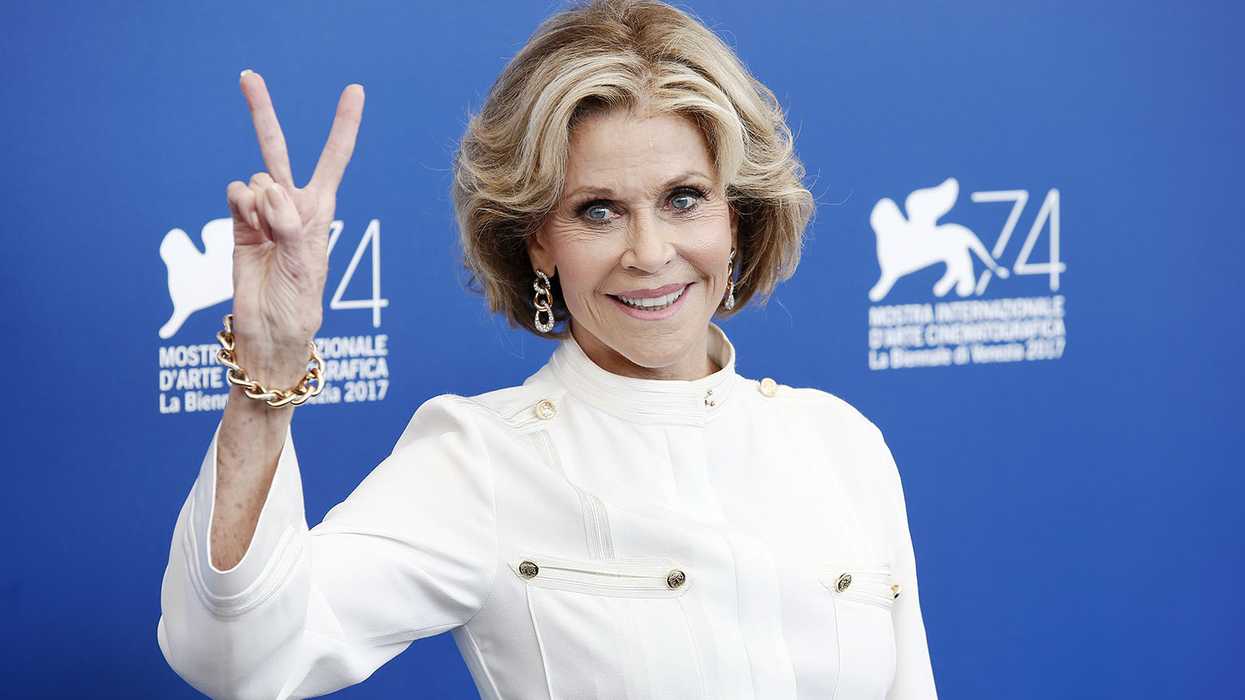
'To slop': Jane Fonda skewers Donald Trump


Image via Shutterstock.

February 28, 2026 
ALTERNET

Larry and David Ellison, the billionaire father-and-son buying up media empires and making them support President Donald Trump, are being skewered by a Hollywood legend, longtime acting superstar Jane Fonda.

In a satirical video from Fonda’s Committee for the First Amendment, Emmy-nominated actor Ed Begley Jr. asks an unseen casting director how his work has been. He replied with a depressed tone.

“It’s been slow,” Begley said. “You know, there’s only the Rush Hour movies. It’s one flavor.”

The video references how the Ellisons, who purchased Paramount earlier this year, have now been able to acquire Warner Brothers Discovery after Netflix dropped its competing bid following a White House meeting. In the same video, Fonda jokes “I can’t get any movies that I want made. I’m hoping Rush Hour... will please the right people and maybe I’ll get a job.” The video also includes appearances from Hollywood stars like Yvette Nicole Brown, Kirsten Vangsness, Bobby Berk, Jodie Sweetin and Anthony Roy Davis.

Fonda’s video references how Trump reportedly used his influence to “fast-track” production on a new sequel in the “Rush Hour” action comedy franchise. Trump also reportedly has had discussions with Paramount about firing specific CNN reporters who he dislikes, including Erin Burnett and Brianna Keilar.

“President Donald Trump is not the sort of old-fashioned Republican who believes businesses should operate unfettered from government interference,” reported The Week at the time. “Instead, he is now telling Netflix to fire a prominent board member who once worked for the Obama administration.”

In this vein The Bulwark, a conservative publication, speculated that Trump’s desire to create a monopoly of pro-Trump media outlets will not reach fruition simply by taking over CNN.

“Trump’s head is stuck in the 80s so he may not have noticed that cable is dying,” conservative commentators Tim Miller and Amanda Carpenter wrote in their Friday podcast episode. “All he can think about is getting his greedy little hands on CNN so he can make them say nice things about him. But independent outlets—like The Bulwark— are changing the media space and are beyond the reach of a corrupted FCC. Nevertheless, our screens are going to be filled with vast quantities of pro-MAGA propaganda.”

One business journalist speculated that the Ellisons purchased Warner Brothers Discovery precisely so they could control CNN.

“The question nobody is asking is the one that keeps me up at night: what has already been arranged for the one asset the president demanded change hands, in the one company where someone quietly built the legal infrastructure to make it happen, five months ago, before anyone was looking?” business journalist Audrey Henson wrote on Substack prior to Netflix’s withdrawal being announced.
Trump fails to 'bring back religion' as church attendance in America death spirals


Adam Lynch
March 03, 2026
ALTERNET

Religion News Service writer Yonat Shimron recalls President Donald Trump actively courting Christian evangelicals during his 2024 campaign and as president in 2025.

“We’re bringing back religion in our country, and we’re bringing it back quickly and strongly,” Shimron cites Trump saying at a National Day of Prayer event last year.

Since then, “many federal departments have held prayer services or Bible studies. Trump created a task force to eradicate anti-Christian bias, and his Supreme Court appointees continue to deliver for Christian conservatives and their allies,” said Shimron.

Despite all this, a new Gallup Poll, reveals no significant change in the importance of religion to Americans. Plus, church attendance continues to plummet. The percentage of Americans who classify religion as “very important” in their lives is still flat since its 2021 report, at 47 percent.

Religious service attendance, however, reveals churches are still very much in trouble, with 57 percent of U.S. residents saying they rarely or never attend religious services. Shiron said that number was only 42 percent in 1992.

“There’s nothing here that would represent any sort of major reversal or significant change in the trajectory of religion in America,” said Ryan Burge, a political scientist who is professor of the practice at the John C. Danforth Center on Religion and Politics at Washington University in St. Louis.

Most polled groups continue to experience declines in the percentage who considers religion “very important” in their lives. Among the biggest declines, according to surveys, was the percentage of Black Americans who fell from 85 percent to 63 percent since 2005. Democrats fell from 60 percent to 37 percent over the past two decades.

“Republicans experienced virtually no decline with 66 percent claiming religion was still very important to them — but Burge reported an important caveat to that info: Republicans’ self-reported church attendance dropped.

“They like the idea of religion — that hasn’t changed — but they don’t actually go as much. So it’s sort of like a symbolic religion,” Burge told Religion News Service.

Women’s growing indifference appears to be matching that of men. And with American youth rejecting religious service by 61 percent, Gallup predicted generational replacement leading to a “long-term trajectory of decline.”


Gallup Poll: Fewer than half of Americans say religion is 'very important' in their lives

(RNS) — President Trump said he was ‘bringing back religion,’ but the latest Gallup Poll shows no evidence of that.


(Photo by Samuel Martins/Unsplash/Creative Commons)

Yonat Shimron
March 3, 2026

(RNS) — President Donald Trump has repeatedly encouraged more religion in the public square.

“We’re bringing back religion in our country, and we’re bringing it back quickly and strongly,” Trump said at a National Day of Prayer event last year.

Many federal departments have held prayer services or Bible studies. Trump created a task force to eradicate anti-Christian bias, and his Supreme Court appointees continue to deliver for Christian conservatives and their allies.

But according to a new Gallup Poll, there’s been no significant change in the importance of religion to Americans and church attendance continues to decline.

RELATED: Defense Secretary Hegseth tests Constitution in Pentagon worship services

The percentage of Americans who say religion is “very important” in their lives has leveled off at 47% in 2025. (It’s been up or down 1 percentage point since 2021.)

Religious service attendance reveals a picture of steady decline. A majority of U.S. residents — 57% — say they rarely or never attend religious services. (By comparison, in 1992, only 42% said they rarely or never attend services.)


“Importance of Religion Among U.S. Adults, 1952-2025” (Graphic courtesy of Gallup)

“I think this is another piece of evidence about how there is no religious revival happening in America,” said Ryan Burge, a political scientist who is professor of the practice at the John C. Danforth Center on Religion and Politics at Washington University in St. Louis. “There’s nothing here that would represent any sort of major reversal or significant change in the trajectory of religion in America.”

Most polled groups have experienced declines in the percentage who say religion is “very important” in their lives. Among the biggest declines was the percentage of Black Americans who say religion is “very important” in their lives. Between 2001 and 2005, 85% of U.S. Blacks said religion was very important, compared with 63% in 2021-2025, a whopping 22 percentage point drop over two decades.

Among the groups that experienced virtually no decline were Republicans — 66% said religion was very important to them 20 years ago and 64% of Republicans said the same last year. (Democrats fell from 60% to 37% over the past two decades.)

But Burge said that although Republicans continue to say religion is very important in their lives, their self-reported church attendance has dropped.

“They like the idea of religion — that hasn’t changed — but they don’t actually go as much,” Burge said. “So it’s sort of like a symbolic religion.”

The number of men who said religion was “very important” in their lives fell from 51% over the past 20 years to 43%, an 8 percentage point drop. Even more significant, the number of women who say religion is “very important” fell from 66% to 51% over the past two decades, a 15 percentage point drop.

That suggests the gender gap is closing. Women are still more religious than men, but the importance of religion is falling fast among females, suggesting the gender gap may eventually disappear, if trends continue.


“Importance of Religion Among U.S. Demographic Subgroups” (Graphic courtesy of Gallup)

The question about the importance of religion was based on telephone interviews conducted between May and December 2025, with a random sample of 2,019 adults, aged 18 and older, living in all 50 states. That question had a margin of error of plus or minus 3 percentage points.

The finding on religious service attendance was also based on telephone interviews, this one of a far larger sample of 13,454 U.S. adults. It showed weekly attendance at religious services dropped to 31%, down from 44% in 1992.

Young adults are particularly less likely to participate in religious services, with 61% seldom or never going.

That presages a particularly gloomy prospect for religious institutions. Gallup suggested generational replacement may lead to a long-term trajectory of decline.

According to the report: “Younger adults are both less likely to identify with a religion and less likely to attend services, reshaping the nation’s religious landscape as they constitute a growing share of the population.”
'Psychopath doomsday cultist': Trump's spiritual adviser attacked over Iran


(REUTERS)

March 03, 2026
ALTERNET


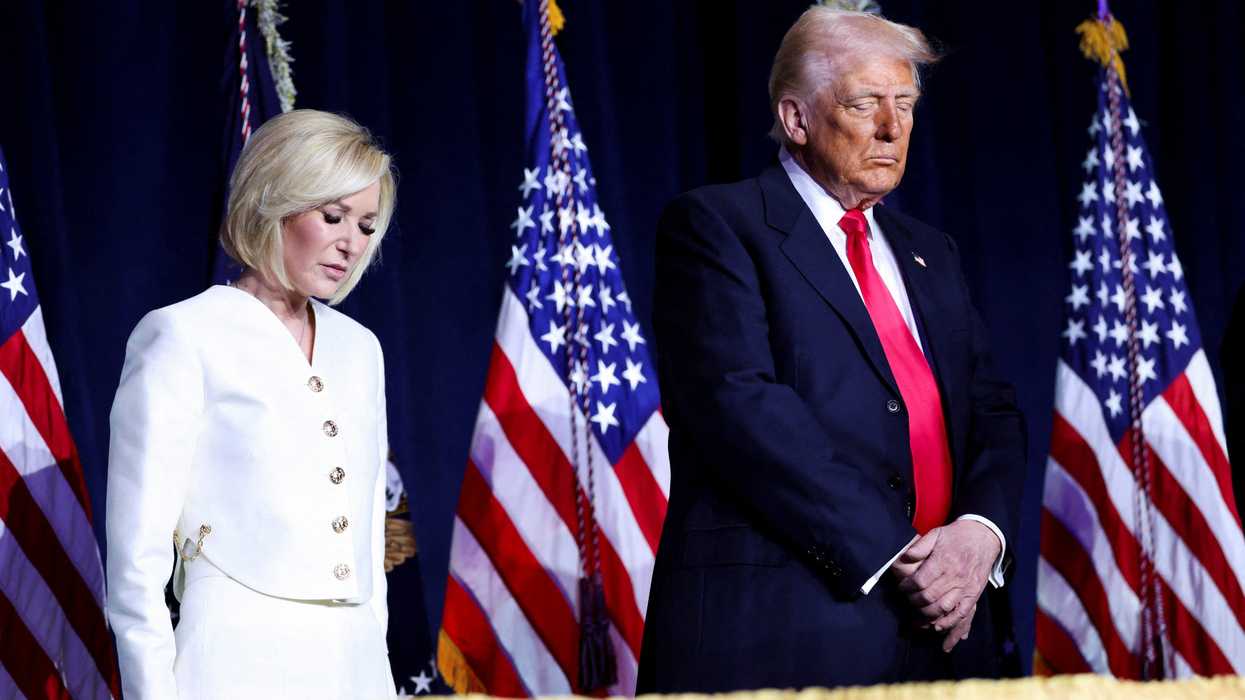
President Donald Trump’s personal spiritual adviser, Pastor Paula White-Cain, was called a “psychopath doomsday cultist” by a conservative commentator.

“Not only is this psychopath doomsday cultist Trump's spiritual advisor, but Trump also created a special office for her in February called the White House Faith Office, where she is a senior advisor,” journalist Pedro L. Gonzalez from the conservative Chronicles Magazine posted on X. “White once said, ‘To say no to President Trump is to say no to God.’”

Gonzalez shared a video of White-Cain at a recent spiritual event in which she urged her supporters to “strike and strike and strike and strike and strike and strike and strike and strike and strike and strike until you have victory. For every enemy that is aligned against you, let there be that we would strike the ground for you will give us victory.” White-Cain went on to speak in tongues, claimed to “hear a sound of abundance of rain” and calling for “victory” in the “quarters of heaven.” She also warns of angels “coming from Africa” and “from South America.”

Last month Trump appointed White-Cain as head of a new “Faith Office” where she is assigned to “protect Christians in our schools, in our military, in our government, in our workplaces, in our hospitals, and in our public squares. And we will bring our country back together as one nation under God, with liberty and justice for all.”

In response to this appointment, journalist Daniel N. Gullotta wrote in the conservative publication The Bulwark that “White-Cain has long held that Trump was divinely chosen to lead the nation and that he is engaged in an ongoing battle against demonic forces,” even claiming people who voted against Trump would “stand accountable before God one day” and that “demonic confederacies” tried to steal the 2020 presidential election. She has also argued for the Christian basis of Trump’s anti-immigrant policies, even though Pope Leo XIV has denounced xenophobia as un-Christian.

"Jesus would have been 'sinful' and not 'our Messiah' if he had broken immigration laws when fleeing persecution to Egypt as a baby with his family, as told in the Gospel of Matthew,” White-Cain said when defending Trump. White-Cain is also militantly pro-Israel and has influenced Trump’s policies toward that country.

“As Senior Advisor to President Trump of Faith and Opportunity Initiative, Pastor Paula worked closely with faith leaders and the Trump administration in helping move the U.S. Embassy to Jerusalem,” White-Cain claims on her website, adding that she helped bring together the “three Abrahamic religions to promote interfaith and intercultural dialogue with the signing of the Abrahamic Accords in 2020 by representatives from Bahrain, Emirates, Israel, and the United States, recognition of Israel’s biblical sovereignty in the Golan Heights, signing an executive order that recognizes “anti-Zionism” as “antisemitism,” and so much more!

The website adds, “In July 2024, in Washington D.C., Pastor Paula was honored to meet privately with Prime Minister Benjamin Netanyahu of Israel, Pastor John Hagee, and other Christian leaders as the Prime Minister thanked and expressed his appreciation to the U.S. evangelical community for their unwavering support of Israel, for their prayers for the release of the hostages, their prayers for the IDF soldiers, and the security of the State of Israel at this ‘crossroads of history.’”