Militarised accumulation and the irrational rationality of the Iran war
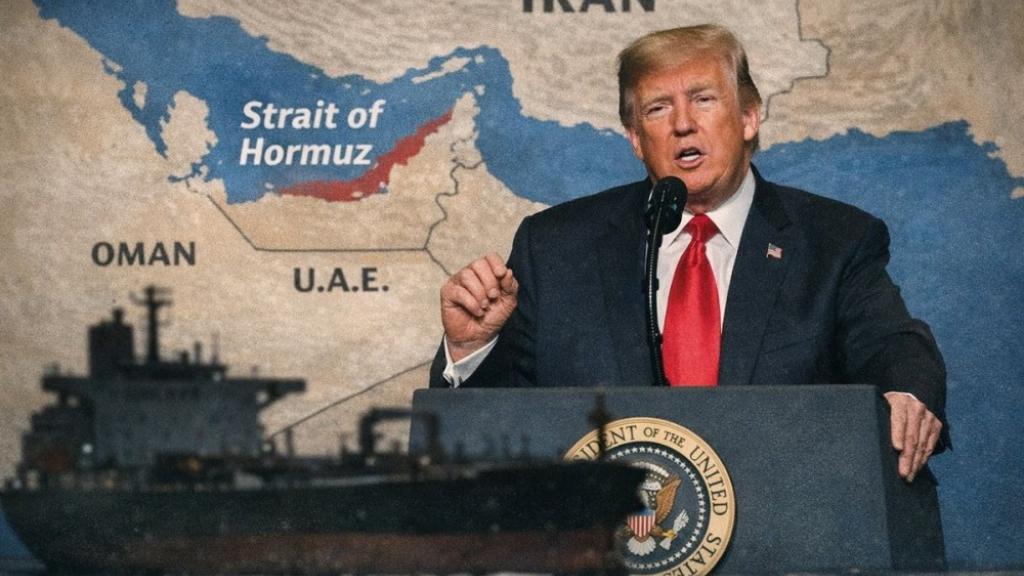
Mainstream explanations for the Iran war usually oscillate between two inadequate answers. One personalises the conflict: Donald Trump is impulsive; Benjamin Netanyahu is politically cornered; Iranian leaders are ideological and reckless. War appears as the result of unstable personalities and diplomatic miscalculation. The other treats it as ordinary geopolitics: the United States seeks to preserve hegemony; Iran seeks regional influence; Israel seeks security. This is more serious, but still leaves unanswered the deeper question: why has confrontation escalated precisely now, amid mounting global economic fragility?
The war has already entered its third month, yet its objectives remain unclear. Washington alternates between threats and hints at negotiation. Tehran promises resistance while signaling openness to indirect talks. Markets swing between panic and cautious optimism. Nobody seems able to say how long the conflict will last or how it will be regulated.
Meanwhile, the costs are spreading beyond the region. Shipping through the Gulf has become more dangerous and expensive. Energy markets remain volatile. Damaged infrastructure may take years to repair. Rising fuel and transport costs are feeding new inflationary pressures, especially in developed economies already marked by stagnant growth, debt burdens and falling living standards.
At first glance, the war appears to be in nobody’s interest. Business prefers stability, open trade routes and predictable energy prices. Consumers face higher costs. Governments fear prolonged instability in one of the world’s key energy corridors.
But capitalism has never functioned according to the interests of humanity as a whole, nor even according to the collective interests of capital in general. It operates through competition between states, blocs, corporations and different fractions of capital. What appears irrational from the standpoint of global stability may remain rational for specific actors.
The real question, therefore, is not whether the war is irrational. The question is whether such wars are becoming a structural feature of late capitalism: a system increasingly unable to reproduce profitability and hegemony without also producing conflict.
Declining profitability and the logic of crisis
To understand why wars increasingly accompany periods of economic stagnation, it is necessary to move beyond immediate political events and return to the structural dynamics of capitalism itself. Classical Marxist theorists from Karl Marx to Henryk Grossmann and Ernest Mandel argued that capitalism carries within it persistent tendencies toward crisis rooted in the very process of accumulation.
As capitalism matures, capital accumulates faster than profitable investment opportunities. Competition compels firms to increase productivity through mechanisation, technological upgrading and labor-saving innovation. Yet this process also produces a contradiction identified by Marx: the growing replacement of labour by machinery tends, over time, to reduce profitability, since surplus value ultimately derives from labour itself. The result is chronic overaccumulation: too much capital chasing too few sufficiently profitable productive investments.
Paul Baran and Paul Sweezy added an important dimension to this argument. In Monopoly Capital, they argued that advanced capitalism generates a persistent surplus absorption problem: large corporations can produce more than society can profitably consume or invest. As effective demand weakens, military expenditure becomes a key outlet for surplus capital. Unlike social spending, it does not directly empower labour; unlike civilian investment, it does not necessarily add to productive capacity and worsen overproduction. It absorbs surplus while reinforcing corporate profits, state power and imperial reach.
This is not a crude argument that wars are simply “started for profit.” Rather, wars emerge from systemic contradictions in accumulation, geopolitical rivalry and the search for renewed profitability under conditions of stagnation. Military expenditure, sanctions, energy shocks and armed conflict become mechanisms through which states reorganise markets, subsidise industries, secure strategic resources and restructure global hierarchies.
In the period after World War II, these contradictions were partially contained through expanding consumer markets, state intervention and the global expansion of capitalism. But by the late 20th and especially early 21st century, many advanced economies increasingly confronted slowing productivity growth, industrial decline, debt dependence and financial saturation. Following the 2008 global financial crisis, these tendencies became even more pronounced. Financialisation helped postpone the crisis by expanding speculative activity and credit creation, but it also deepened systemic instability and disconnected accumulation from productive investment.
For high-income economies, World Bank data show average annual GDP growth falling from about 2.5% in 2000–08 to about 1.6% in 2009–20, before recovering only unevenly in 2021–24. By 2024, high-income growth had already slowed again to 2.0%. The IMF’s April 2026 outlook projects advanced-economy growth at only 1.8% in 2026.
Under these conditions, military expenditure and geopolitical conflict acquire renewed economic significance. War destroys capital, reorganises markets, accelerates technological restructuring, expands state subsidies to strategic sectors, and enables surplus transfer through monopoly, sanctions and geopolitical control. The post-2008 world has not only seen weak growth and financial saturation, but also trade wars, sanctions regimes, industrial policy, arms production and militarised Keynesianism.
The Iran war must be understood against this broader background. It is not merely the product of irrational leaders or diplomatic failure. It is part of a global system struggling to reproduce profitability and hegemony under increasingly unstable conditions.
The irrational rationality of the Iran war
The contradiction becomes clearer when we look at the economic effects of the war. At the level of the global economy, the conflict appears deeply irrational. It disrupts trade, raises energy prices, increases transport costs, damages infrastructure and feeds new inflationary pressures into economies that had barely recovered from the shocks of the pandemic, the Ukraine war and the post-2008 stagnation.
The Strait of Hormuz is central to this problem. In 2025, about 20 million barrels a day of crude oil and petroleum products passed through the Strait, representing about 25% of global seaborne oil trade. It is also crucial for gas: Qatar and the United Arab Emirates ship most of their LNG exports through Hormuz, accounting for roughly 19% of global LNG trade. Alternative routes exist, but their capacity is limited and cannot fully replace Hormuz flows.
This means that even a partial disruption immediately becomes a global economic shock. The immediate effects have already been severe. Maritime insurance premiums for Gulf shipping have reportedly risen by more than 1000% in some cases. Reuters reported that about 1000 vessels, including roughly 500 oil and gas tankers, remained in the Gulf region, with an aggregate hull value exceeding $25 billion. At least 200 ships were reported anchored off major Gulf producers, effectively waiting for the political and military situation to become navigable again.
Aviation and logistics have also been affected. Airspace closures across the Gulf have removed large portions of air cargo capacity on Asia-Pacific, Middle East, South Asia and Europe corridors, while container shipping has faced direct threats, including strikes on vessels in or near Hormuz. The result is a wider disruption of global transport networks, not just oil shipping.
The effects therefore run through multiple channels: higher oil prices, more expensive insurance, rerouted shipping, delayed cargo, aviation disruption, pressure on fertiliser and food prices, and renewed inflation. This is why the war appears, at first sight, to be in nobody’s interest. Not only do businesses suffer, but consumers face higher prices, whereas governments confront the political danger of another cost-of-living shock.
The inflationary risk is politically explosive because households in Europe and the US have not recovered from the previous cost-of-living shock. In the euro area, annual inflation rose to 3.0% in April 2026, with energy prices up 10.9% year on year. Food inflation had eased from its 2023 peak, but the ECB notes that euro area food inflation reached 15.5% in March 2023 and remained above its pre-pandemic average through 2025. In the US, consumer prices rose 3.3% year on year in March 2026, while food prices rose 3.1% over 2025. Housing and medical care costs rose even faster than food in 2024–25, by 4.1% and 2.9% a year, respectively.
These figures matter because the new shock does not arrive on a blank slate. Real wages have only partially recovered from the post-pandemic inflation surge. The OECD reported in 2025 that real wages remained below their early-2021 level in about half of OECD countries, despite recent nominal wage growth. Thus, any renewed rise in energy, food, transport or housing costs would hit societies already marked by weakened purchasing power and political fatigue after years of inflation.
And yet the war continues.
The real question, therefore, is not simply why the war damages the global economy. That much is clear. The more important question is: if the war damages capitalism so broadly, why does it continue?
Different capitals experience the war differently
Capitalism is not a single rational subject calmly maximising the welfare of global business. It is a system divided among competing states, corporations, sectors and fractions of capital. What damages the system as a whole may still benefit particular actors within it. What appears irrational from the standpoint of global stability may be rational from the standpoint of energy companies, arms producers, security contractors, financial speculators or states seeking to reorganise regional power.
This distinction is already present in Marx’s analysis of capital. Capital does not exist only as an abstract totality; it exists concretely as many individual capitals, interacting and competing with one another. Competition is the mechanism through which the general laws of capital impose themselves, but it also means that crises never affect all capitals in the same way. Losses for some become opportunities for others.
For many sectors, the Iran war is plainly destructive. Shipping companies face soaring insurance costs and disrupted routes. Airlines pay more for fuel and lose access to major air corridors. Manufacturing industries, dependent on stable energy prices, confront rising production and transport costs. Import-dependent economies face pressure on trade balances and inflation, while workers and consumers absorb the consequences through declining real wages and rising living costs.
Other sectors, however, benefit from the same instability. Oil majors profit from rising prices and market turbulence. Reuters reported that the trading desks of BP, Shell and TotalEnergies generated at least $2.5 billion in the first quarter of 2026 amid the war-related volatility in energy markets, while Shell alone reported nearly $7 billion in quarterly profit during the conflict.
Arms producers have also benefited from the broader militarisation accompanying geopolitical fragmentation. According to SIPRI, global military expenditure reached $2.887 trillion in 2025, while European military spending surged by 14%. This boosted shares in companies such as Rheinmetall, Leonardo, Saab and BAE Systems. Rheinmetall shares rose from roughly €500 at the end of 2024 to nearly €1,900 by late 2025, while US defence companies such as Lockheed Martin, RTX and Northrop Grumman benefitted from expectations of rising Pentagon spending and sustained demand for missile systems, aircraft and munitions.
Large financial institutions have likewise profited from instability. JPMorgan’s trading division reported record revenues of $11.6 billion in the first quarter of 2026, while the six largest US banks collectively earned $47.7 billion in profits during the same period. Volatility generated by the war stimulated trading activity as investors fled riskier assets, repositioned portfolios and speculated on sharp market swings. Financialised capitalism increasingly does not merely endure instability; it increasingly monetises it.
Yet even here the picture remains contradictory. Defence and financial stocks initially surged amid expectations of permanent rearmament and heightened volatility, but by spring 2026 many had become unstable or declined significantly from their peaks. Rheinmetall shares, for example, fell from about €1,900 to approximately €1,400 as investors worried about overvaluation, production bottlenecks, political uncertainty and slowing procurement cycles.
This point is important because it avoids a simplistic “war profiteering” explanation. Wars are not merely conspiracies organised by oil companies, banks or arms manufacturers. Rather, geopolitical conflict redistributes losses and gains across different capitals under conditions of stagnation and overaccumulation. Shipping, aviation, manufacturing, labour and consumers bear much of the burden, while energy firms, defense contractors, large financial institutions and commodity traders may benefit from rising prices, speculation and state procurement.
This is the irrational rationality of war under late capitalism. At the level of society, war is destructive. At the level of particular capitals, it can remain profitable, at least temporarily.
War as an accumulation strategy
This does not mean that wars are mechanically “caused” by oil companies, banks or arms manufacturers. The stronger argument is that under conditions of stagnation and overaccumulation, war becomes one of the mechanisms through which states attempt to manage capitalism’s contradictions.
Military expenditure plays a central role in this. When private investment weakens, defence spending provides a state-driven source of demand capable of sustaining industrial production, technological development and employment. Unlike civilian welfare spending, military expenditure also reinforces state power and geopolitical influence. Baran and Sweezy identified this dynamic already in the 1960s, arguing that military spending functioned as a crucial outlet for surplus in monopoly capitalism. Mandel later incorporated militarisation into a broader theory of late capitalism, in which state intervention increasingly compensates for the declining capacity of normal market expansion to sustain accumulation.
Sanctions regimes and geopolitical fragmentation perform related functions. They reorganise trade routes, redirect investment flows and encourage the construction of new industrial and logistical networks. The freezing of assets, restrictions on technology transfer and fragmentation of energy markets all create pressures for state-supported industrial restructuring. In this sense, sanctions are not merely instruments of foreign policy; they increasingly function as tools of economic reorganisation.
This tendency has become particularly visible since 2008. Weak growth, deindustrialisation and financial dependence pushed many Western states toward more interventionist economic policies. Industrial policy, now re-legitimised by the World Bank after decades of scepticism, returned not as a rupture with neoliberalism, but increasingly through militarised forms: defence procurement, energy-security strategies, semiconductor subsidies, reshoring programs, strategic infrastructure spending and large-scale rearmament initiatives, most visibly the EU’s ReArm Europe Plan/Readiness 2030, designed to mobilise over €800 billion in defence investment.
The pattern is not new. During the Cold War, military Keynesianism helped sustain demand while anchoring US global dominance. After 2001, the “War on Terror” expanded the security state and generated vast markets for surveillance, logistics, private military contracting and reconstruction. The war in Ukraine accelerated European rearmament and energy restructuring, but it also stabilised Russian capitalism in its own distorted form: through military demand, state procurement, import substitution, intensified state-capital integration and the reorientation of trade toward China and other non-Western partners. The combined wealth of the 15 richest Russians rose from $225 billion in 2021 to $250 billion in 2025. The Iran war now extends this logic into the Gulf, where energy security, shipping control, industrial strategy and geopolitical rivalry converge.
War therefore functions not only as a geopolitical event, but increasingly as a mechanism of economic management. Under conditions of stagnation, states rely more heavily on militarisation, sanctions and strategic industrial policy to stabilise accumulation and preserve geopolitical position.
Trump is not the explanation — and neither is Netanyahu
The temptation to explain the Iran war through the personalities of Trump or Netanyahu is understandable. Trump’s political style is theatrical, impulsive and deliberately chaotic. Netanyahu’s political position is equally bound up with war, crisis management and the permanent mobilisation of security threats. Both leaders matter, but neither explains the conflict by himself.
The personalisation of politics obscures the structural continuity beneath it. It encourages the illusion that wars emerge primarily from individual madness rather than contradictions embedded in the global order. As Marx famously observed, people make their own history, but not under circumstances of their own choosing; they act within conditions inherited from the past.
Political leaders therefore shape the form, timing and rhetoric of conflict, but they do not create the underlying contradictions from nothing. The confrontation with Iran predates Trump and Netanyahu’s current political crisis. It is rooted in the long decline of US hegemony in the Middle East, Israel’s regional security doctrine, the rise of rival centres of power and the broader instability of global capitalism.
The deeper issue is the US’ changing position within the world-system. US hegemony remains enormous, but it is increasingly contested economically, technologically and geopolitically. China’s rise has challenged Western industrial supremacy in sectors ranging from manufacturing to green technologies and telecommunications. At the same time, many advanced Western economies have experienced decades of slowing productivity growth and growing dependence on finance, debt and asset inflation. Under such conditions, military superiority increasingly compensates for weakening economic dominance.
At the same time, neoliberal globalisation has entered a broader crisis of legitimacy. William Robinson argues that global capitalism is marked not only by overaccumulation, but also a political crisis of state legitimacy, capitalist hegemony and international conflict, with the global economy increasingly dependent on systems of warfare, social control and repression as means of accumulation. The promises of stable prosperity, rising living standards and expanding middle classes have weakened across much of the developed world. Political polarisation, declining trust in institutions and the growth of nationalist and authoritarian movements reflect not merely cultural conflict, but deeper material tensions within stagnating capitalist societies.
In this sense, Trumpism should not be understood simply as an aberration, but as one political expression of a broader systemic crisis. Boris Kagarlitsky argues in his analysis of Trump’s first hundred days that contemporary US politics increasingly reflects the liberal order’s fragmentation and the emergence of a more chaotic struggle between competing national capitals, political factions and geopolitical blocs. The result is not a coherent imperial strategy, but what Kagarlitsky describes as a “war of all against all” within an increasingly unstable global system.
The Iran war must therefore be understood not as the product of one leader’s irrationality, but as part of a broader historical transition in which geopolitical confrontation increasingly substitutes for the declining capacity of neoliberal capitalism to generate stable growth, legitimacy and hegemony.
War destroys and stabilises
This contradiction lies at the centre of late capitalism. War destroys infrastructure, disrupts trade, intensifies inflation and weakens the long-term conditions for productive accumulation. Yet it simultaneously boosts profits in strategic sectors, redirects public spending toward military procurement and industrial policy, disciplines labour through insecurity and nationalism, and postpones deeper crises through state-led demand and geopolitical restructuring.
This is why militarisation persists despite its destructive consequences. Mandel argued late capitalism increasingly depends on permanent militarisation and state intervention, while simultaneously undermining the material basis for stable long-term reproduction. The result is a deeply contradictory order in which war appears irrational from the standpoint of humanity and long-term development, yet functional from the standpoint of particular capitals and the short-term management of systemic crisis.
Late capitalism’s tragedy is therefore not simply that it produces war. Capitalism has always produced war. The deeper problem is that war increasingly becomes woven into the system’s normal functioning. What appears as permanent crisis is no longer an interruption of the system. It is increasingly the way the system survives.

No comments:
Post a Comment