Thursday, March 12, 2026


US coal miner in talks with Japanese firms on rare earths supply


US coal producer Ramaco Resources Inc. says it’s discussing potential supply deals with Japanese companies for rare earths it plans to mine in Wyoming.

The company has held meetings with firms to explore how they might get involved in Ramaco’s Brook Mine in the western state, chief executive officer Randall Atkins said in an interview on Friday in Tokyo. The talks have ranged from offtake agreements to direct investments and technical cooperation, he said.

Trading house Sumitomo Corp. and energy and materials firm Iwatani Corp. are among the companies that Ramaco has met, Atkins said. Sumitomo declined to comment, while Iwatani didn’t respond to a request for comment.

Rare earths are among the critical minerals used across high-tech manufacturing, including the powerful magnets used in electric vehicles, mobile phones and missile systems. Japan is one of the countries working to cut its reliance on China, whose dominance of the global supply chain gave Beijing crucial leverage in last year’s trade war with Washington.

China has since banned exports to Japan of dual-use products with possible military applications – a category that includes rare earths.

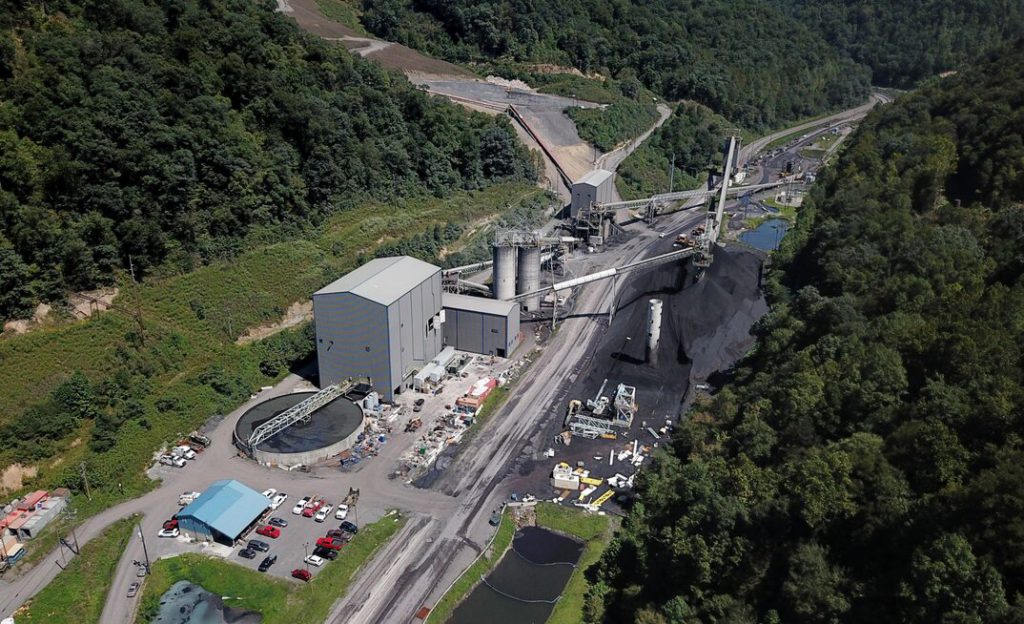
Ramaco is developing the Brook Mine, an old coal deposit that also contains rare earths like neodymium and terbium, as well as other critical minerals such as gallium that are of interest to Japan, Atkins said. The firm is currently conducting a pre-feasibility study for the mine that it aims to complete in late 2026, he said.


A collaboration with Japanese companies could align with the Trump administration’s trade deal with Tokyo, which calls for Japan to invest $550 billion in US projects, Atkins said.

(By Yusuke Maekawa and Shoko Oda)

Fears of renewed conflict drives rising numbers of Tigrayans to flee Ethiopia

Residents have begun fleeing the regional capital of Ethiopia's Tigray region amid fears of a return to open conflict, as tensions that have been building for weeks show no sign of easing. The prospect of renewed fighting has revived memories of the devastating war that gripped the area between 2020 and 2022.


Issued on: 11/03/2026 - RFI

Children gather at a market stall to collect goods in Chercher, Southern Tigray, Ethiopia, on 4 March, 2026, as more and more Tigrayans flee their region
AFP - ABEL GEREZGIHER

Federal and Tigrayan forces are once again amassing along their shared border in northern Ethiopia, mirroring movements seen in January. The two sides signed a peace agreement in 2022 to end the civil war, but neither has properly implemented it.

Relations between the regional and federal authorities have since grown highly volatile, while Ethiopia's ties with Eritrea, which shares a border with Tigray, have deteriorated sharply.


Since October 2025, the Ethiopian government has criticised what it calls "a clear collusion between the Eritrean government and the TPLF [Tigrayan People's Liberation Front]".

Hundreds of people are now fleeing Tigray every day by bus and plane, as the crisis deepens in the region, which was home to around 6 million people before the war. Precise figures remain difficult to establish.

"Right now, the situation in Tigray is very tense, we hear a lot of things, but all we want is peace," a Tigrayan named Biruk told RFI's special correspondent in Makelle, the regional capital.

The charred remains of a tank from clashes between the Ethiopian National Defense Force (ENDF) and the Tigray People's Liberation Front (TPLF) lie on a road near Gereb Agew, Southern Tigray, Ethiopia, on 3 March, 2026. 
AFP - ABEL GEREZGIHER

International divisions

The federal and Tigrayan administrations have traded blame over the rising tensions. Amanuel Assefa, second in command of the TPLF, the region's long-dominant party, told French news agency AFP last week that federal troops were advancing from all directions.

"Tigray is being encircled by federal troops," he said. "The highly likely scenario seems that there will be a conflict."

Ethiopian Prime Minister Abiy Ahmed has repeatedly insisted he does not want war. In a speech delivered last week in Tigrinya, the language of Tigray, he said the TPLF was "not ready to make even a small compromise."

The party has also been internally divided since 2023.

Kinfe Hadush, chairman of the opposition Sawet party, told RFI that Tigrayans have felt increasingly vulnerable since Abiy came to power.

"Today, not only does the TPLF no longer represent the interests of all of Tigray, but it also has no specific agenda," he said. "The TPLF just wants to mobilise the population for war. But the people are resisting; they do not want to participate in this war."

Many observers told RFI that the TPLF is facing mounting internal problems and declining popularity. TPLF Vice President Amanuel Assefa acknowledged the difficulties.

"I cannot say that the party has the same support as it used to," he said. "But if the TPLF were not accepted by the people, it would have been overthrown and another party would have taken power. That has not happened."

He asserted that it is the federal government that is conspiring to dismantle the party by any means necessary.

On the run

"There's nobody left here," Abel (not his real name) told AFP in Mekelle, as he tried to join other displaced people, only to find buses full.

Most nights dozens of young men with backpacks and suitcases are seen at the bus station, looking for a means to reach the federal capital, Addis Ababa.

Some 700 kilometres separate Mekelle from Addis, one of the few areas of Ethiopia still at peace.

Abel is 23, and had fought for the Tigrayan Defence Forces during the civil war of 2020-22, opposing the rebels to the federal government. The conflict killed at least 600,000 people.

He worries a renewed conflict is imminent. "It's not safe here anymore," he said. "I saw people die. I don't want to relive that, I don't want the war to catch up with me again."

Across Tigray, people are facing shortages of basic products, from petrol to food.

As federal authorities have cut subsidies to the region for months, even civil servants are no longer being paid, and banks are running out of cash.

(This article was adapted from the original report in French, with additional reporting by AFP.)
UW Astronomers Collect Rare Evidence Of Two Planets Colliding


Lead author Andy Tzanidakis’ rendering of the planetary collision he suspects occurred around star Gaia20ehk in 2021. 
CREDIT: Andy Tzanidakis


March 12, 2026 
By Eurasia Review


Anastasios (Andy) Tzanidakis was combing through old telescope data from 2020 when he found an otherwise boring star acting very strangely. The star, named Gaia20ehk, was about 11,000 light-years from Earth near the constellation Pupis. It was a stable “main sequence” star, much like our sun, which meant that it should emit steady, predictable light. Yet this star began to flicker wildly.

“The star’s light output was nice and flat, but starting in 2016 it had these three dips in brightness. And then, right around 2021, it went completely bonkers,” said Tzanidakis, a doctoral candidate in astronomy at the University of Washington. “I can’t emphasize enough that stars like our sun don’t do that. So when we saw this one, we were like ‘Hello, what’s going on here?’”

The cause of the flickering had nothing to do with the star itself: Huge quantities of rocks and dust — seemingly from out of nowhere — were passing in front of the distant star as the material orbited the system, patchily dimming the light that reached Earth. The likely source of all that debris was even more remarkable: a catastrophic collision between two planets.

“It’s incredible that various telescopes caught this impact in real time,” Tzanidakis said. “There are only a few other planetary collisions of any kind on record, and none that bear so many similarities to the impact that created the Earth and moon. If we can observe more moments like this elsewhere in the galaxy, it will teach us lots about the formation of our world.”

The analysis of the star was published in The Astrophysical Journal Letters.

Planets form when gravity forces together matter — dust, gas, ice or rocky debris, for example — orbiting a new star. Early solar systems are chaotic — planets routinely collide and explode or go flying off into outer space. Through this process, and over perhaps 100 million years, solar systems like ours winnow their planets down and settle into an equilibrium.

As common as these collisions probably are, observing one in a distant solar system requires patience and luck. The orbits of the planets must take them directly between us and their star, so that the resulting debris obscures some of the star’s light. The telltale flicker then takes years to play out.

“Andy’s unique work leverages decades of data to find things that are happening slowly — astronomy stories that play out over the course of a decade,” said senior author James Davenport, a UW assistant research professor of astronomy. “Not many researchers are looking for phenomena in this way, which means that all kinds of discoveries are potentially up for grabs.”

Tzanidakis, the study’s lead author, studies extreme variability in stars over time. His previous work at the UW identified a system with a binary star and a large dust cloud that caused a seven-year eclipse.

The behavior of Gaia20ehk, however, posed a new mystery. The star’s particular fluctuation — short dips in brightness and then chaos — had never before been observed. The team was stumped, until Davenport suggested that they use data from a different telescope to look for infrared light rather than visible light.

“The infrared light curve was the complete opposite of the visible light,” Tzanidakis said. “As the visible light began to flicker and dim, the infrared light spiked. Which could mean that the material blocking the star is hot — so hot that it’s glowing in the infrared.”

A cataclysmic collision between planets would certainly produce enough heat to explain the infrared energy. What’s more, the right kind of collision could also explain those initial dips in light.

“That could be caused by the two planets spiraling closer and closer to each other,” Tzanidakis said. “At first, they had a series of grazing impacts, which wouldn’t produce a lot of infrared energy. Then, they had their big catastrophic collision, and the infrared really ramped up.”

There are also clues that the collision resembles the one that created the Earth and moon about four and half billion years ago. The dust cloud is orbiting Gaia20ehk at roughly one astronomical unit, the same distance from the sun to the Earth. At that distance, the material could eventually cool down enough to solidify into something similar to our Earth-moon system. Scientists like Tzanidakis and Davenport can’t know for sure until the dust settles — literally — in the system. That could take a few years, or a few million.


In the meantime, their discovery is a call to action to find more collisions. The powerful Simonyi Survey Telescope at the NSF–DOE Vera C. Rubin Observatory will be well suited to the task when it begins its Legacy Survey of Space and Time later this year; some back-of-the-napkin math by Davenport suggests that Rubin could find 100 new impacts over the next 10 years. That could ultimately help narrow the search for habitable worlds outside our solar system.

“How rare is the event that created the Earth and moon? That question is fundamental to astrobiology,” Davenport said. “It seems like the moon is one of the magical ingredients that makes the Earth a good place for life. It can help shield Earth from some asteroids, it produces ocean tides and weather that allow chemistry and biology to mix globally, and it may even play a role in driving tectonic plate activity. Right now, we don’t know how common these dynamics are. But if we catch more of these collisions, we’ll start to figure it out.”


Shale Producers Stay on the Sidelines as Oil Crisis Deepens

  • After initially saying markets had “plenty of oil,” Fatih Birol proposed a record emergency oil stock release as tanker traffic through the Strait of Hormuz effectively froze following the war.

  • Despite higher prices, U.S. shale producers are not rushing to increase drilling,
  •  prioritizing capital discipline and assuming the disruption may be temporary.
  • Even with $100 oil, shale could add only around 600,000 bpd this year.

Less than a week ago, the head of the International Energy Agency said there was “plenty of oil” in the market, and there was no need for an emergency release. This week, Fatih Birol proposed an emergency release of hundreds of millions of barrels, the largest ever. Meanwhile, the U.S. oil and gas industry seems to be in a wait-and-see mode—and it’s hard to blame them.

The launch of strikes by the United States and Israel on Iran prompted retaliation that resulted in something few expected would ever happen: the effective freeze of tanker traffic in the Strait of Hormuz, meaning a fifth of global oil exports had suddenly become unavailable. Some tankers do pass the Strait – if they are Chinese-flagged or Iranian-flagged, but most Persian Gulf oil is staying in the Persian Gulf for now.

Besides an emergency release from the OECD stockpiles, a response to the spike in oil and gas prices could have come from producers outside the Middle East, most obviously the United States. Most of the country’s oil comes from the shale patch, which could be ramped up and down fast, so why are they not doing it?


For starters, U.S. shale oil drillers have matured significantly since the early 2000s, when they basically drilled for drilling’s sake—and for the sake of repaying their debt—just to see how much more the shale rock would yield. Those times are over. Now, shale producers are much more careful with their production plans. As Wood Mackenzie noted in a report this week, “E&Ps have so far been suggesting that they are not yet committing to increased activity, in case the higher prices prove to be temporary.”

Argus’s Stephen Cunningham also pointed out the shale industry’s corporate policy evolution over the past decade, with capital discipline taking priority over fast response to changes in market balance. Reversing that, Cunningham argued, would “require a sea change in boardroom strategy.” What’s more, the recent consolidation in the U.S. oil industry has resulted in Big Oil dominance—and Big Oil does not knee-jerk to sudden changes in oil prices resulting from severe supply disruption. Especially when its stocks are suggesting investors and traders all expect the disruption to be dealt with fast.

“The market is anticipating a swift end to the closure of the Strait of Hormuz and a subsequent collapse in oil prices back to normalized levels,” the head of energy research at Melius Research told Reuters this week. “The rally in oil prices is primarily contained to near-term spot prices rather than longer-dated crude oil futures.” This explains why Big Oil shares have risen quite modestly compared to benchmark oil prices and why the industry does not really have much incentive to respond to the supply shock with more production. Instead, it could simply reap the benefits of higher prices while they last.

In gas, however, things are a little bit different—and more concerning for consumers. The United States is the biggest producer of natural gas and the biggest exporter of the commodity in liquefied form. Yet U.S. LNG producers are already at capacity and physically cannot boost production to respond to the gap in supply that opened when QatarEnergy shut down its production facilities.

Wood Mackenzie notes that there will be new LNG capacity coming on stream later this year on the Gulf Coast, but added that this new capacity “will be only about 20% of what has been lost from the shutdown of QatarEnergy’s Ras Laffan.” And this, in turn, means that we could reasonably expect a prolonged gas squeeze in Europe and Asia, with the latter switching to coal and the former possibly forced to reconsider its ban on Russian gas.

The irony in the current situation is that while U.S. producers are entirely justified in adopting the wait-and-see approach, the longer the supply disruption continues, the longer it would take to bring Middle Eastern production back online—and the longer prices would remain elevated, potentially motivating a response from the shale patch. But that response would immediately pressure prices, eliminating most of the gains shale producers could expect.

Not only this, but U.S. shale drillers cannot close the oil supply gap alone, just like LNG producers cannot cover all lost Qatari supply. This should be a worrying thought because it is related to actual, physical oil supply. Indeed, Wood Mac estimated that even if oil trades at $100 per barrel over the next six months, U.S. shale drillers could only add about 600,000 bpd by the end of the year—and it is unlikely for oil to trade at $100 over a period of six months.

In such a situation, the industry is doing the smartest thing for its own good. And it just got proven right as oil prices slumped to below $90 for both Brent crude and WTI after the news broke that the IEA and G7 will be discussing the largest ever emergency release of oil.

By Irina Slav for Oilprice.com


Keystone XL Revival Gains Momentum as New Pipeline Plan Emerges

  • South Bow has launched an open season for the proposed Prairie Connector pipeline, a 450,000 bpd line that could revive elements of the canceled Keystone XL project.

  • The pipeline could increase Canada’s crude exports by about 12% by linking Alberta production to U.S. delivery hubs including Cushing and the Gulf Coast.

  • The project still faces major uncertainties, including regulatory approval, environmental challenges, and securing commercial backing.

An oil pipeline crossing the Canada-US border may be back on government agendas, as the proponent, South Bow Corp (TSX:SOBO), looks to revive the long-dead project.

TC Energy (TSX:TRP) spun the oil pipeline component of its business out to South Bow in 2024 to concentrate on natural gas and power.

The rationale for Keystone was a way to bring together booming US oil production, and to a lesser extent, production from the oil sands in Northern Alberta, to Gulf Coast refineries that were facing declining imports from Mexico and Venezuela. The project was first proposed in 2008 and was supposed to begin carrying 830,000 barrels a day in 2012.

But the Obama administration struck it down on environmental grounds. President Trump then revived it during his first term, before Joe Biden killed it again by revoking the pipeline’s permit on his first day as president in 2021.

A network of pipelines called the Keystone Pipeline already exists and moves oil within the United States. The pipeline expansion would allow more oil sands crude to flow to the US Gulf Coast, cutting through Montana, South Dakota, and Nebraska before heading south.

Earlier this month, CBC News reported that a proposal by South Bow to revive parts of the canceled pipeline could increase Canada’s crude exports by 12%. However, it would need a green light from President Trump, and additional links to US refining hubs are required.

Canadian Prime Minister Carney reportedly brought up the pipeline’s revival in a conversation with Trump in October.

Just over a year ago, Trump pledged easy regulatory approvals for the project, saying in a Truth Social post, “We want the Keystone XL Pipeline built.”

The new pipeline, renamed Prairie Connector, would take a different route through the US than the previous Keystone XL project. CBC says South Bow is considering reviving some of the line that was already built in Alberta and has the necessary permits.

The 450,000?barrel?per?day line is planned to extend from Hardisty, AB, to several US delivery hubs, including Cushing, Oklahoma, and the Gulf Coast. The original alignment followed the existing Foothills natural?gas system owned by TC Energy, which carries Alberta natural gas to the US border.

South Bow is reportedly “getting its ducks in a row” by approaching farmers and ranchers in southwest Saskatchewan to re-survey land that lies along the original Keystone XL pipeline route.

The Calgary-based firm said March 5 it has launched an open season for its proposed Prairie Connector pipeline, running until March 30, after which it will assess commercial support.

During an earnings call last Friday, South Bow’s CEO Bevin Wirzba declined to give a cost estimate or timeline for the potential pipeline, but said that working within a pre-invested corridor ups the chances of quickly advancing construction, the Globe and Mail reported.

Saskatchewan, the Western Canadian province next to Alberta, announced in February 2025 that it would consider all permits crossing its territory as “pre-approved”.

The part of the project within the United States is being spearheaded by Bridger Pipeline, which recently filed a proposal with Montana for a 1,038-kilometer pipeline with capacity for 550,000 barrels per day. The line would begin near the Canadian border in Phillips County, Montana, and terminate in Guernsey, Wyoming.

Additional spurs would then be bolted onto the pipeline to reach refining hubs such as Cushing, OK, and the Gulf Coast.

However, it remains unclear who would be willing to take on the risk.

According to the Globe and Mail, quoting the founder of Plainview Energy Analytics, Matthew Lewis, the biggest challenge would be getting permits, and building a new pipeline would likely face environmental challenges that could tie up the project in court.

Bridger is proposing in its application that the Montana-to-Guernsey leg be built along existing pipeline infrastructure, making it easier to obtain the required permits. A presidential permit would be required for the segment that crosses the US-Canada border.

The Canadian government hasn’t ruled out the possibility of a renewed Keystone XL. A spokesperson for former Natural Resources Minister Jonathan Wilkinson said last year the government is “open to having a productive conversation” about advancing the project.

A December 2025 Ipsos poll found that 75% of Canadians are in favor of constructing new pipelines.

By Andrew Topf for Oilprice.com
Aluminum price surge propels Chinese tycoon to $48 billion fortune


When Zhang Bo took over his father’s industrial empire in 2019, it was already a sprawling industrial giant and one of the world’s biggest producers of aluminum.

Since then, the stock of his China Hongqiao Group has risen 585%, quietly turning Zhang into Asia’s richest metals tycoon with a fortune of about $48 billion.

Zhang, the world’s largest private producer of the metal, has a grip on low-cost output at a critical moment for global demand. He’s a supplier to China’s biggest tech firms like Huawei Technologies Co., Xiaomi Corp., and BYD Co. Aluminum has spiked more than 25% in the past year, fueled by demand from new energy vehicles to solar panels and wind turbines, while geopolitical shocks like the war in Iran have added to volatility. The metal rose to the highest in almost four years on Monday.

The widening Middle East conflict has disrupted local smelters, which account for 9% of global primary aluminum supply. An effective halt on shipments via the Strait of Hormuz, off Iran’s coast, has also choked shipments of the metal. That positions Chinese aluminum producers like Zhang’s to plug emerging supply gaps if global output slows.

“Their influence and personal wealth expanded because the industrial platform they built reached a scale where the market could no longer ignore it,” Harry Yu, senior partner at family office advisory Fung, Yu & Co said of the Zhang clan. “Families like this tend to stay low-profile because their power sits in production systems and supply chains, not in branding.”

Chinese aluminum smelters in the past years have grappled with access to bauxite, the ore used to produce aluminum, as political instability in Guinea and export restrictions in Indonesia disrupted shipments. Jakarta’s drive to keep more processing at home further tightened global supply. Zhang and his father, however, had moved ahead of peers to lock in upstream resources.

Hongqiao began developing bauxite mines in Guinea, the largest mining country for the raw material, around 2014. That’s given better access to bauxite than rivals, Bloomberg Intelligence analyst Michelle Leung said. Securing upstream resources in the early days has contributed to earnings growth, she said.

The company is now one of the lowest-cost producers globally through power plants in China, bauxite mines in Guinea and alumina plants in Indonesia.

Since he controls a significant share of primary aluminum output – which totaled nearly 73 million tons globally in 2024 – Zhang Bo’s decisions affect global supply and price expectations. Hongqiao’s share placements and refinancing are also closely watched by investors, affecting sentiment for aluminum equities across the region.

In the last year alone, his family’s wealth has gained 110%, according to the Bloomberg Billionaires Index, placing the clan among the wealthiest in Asia as of 2025. Zhang declined to comment.

Zhang Xuexin, the patriarch of rival firm Xinfa Group, is worth more than $35 billion.

Since taking over the helm from his father, Zhang Bo has helmed a major pivot by relocating a chunk of aluminum capacity to China’s mountainous Yunnan province to tap cheap green hydropower and align himself with China’s broader energy transition. He later expanded into high-end aluminum products used in electric vehicles as demand from traditional sectors such as property, construction waned.

Still the company is highly exposed to aluminum price volatility, while weaker-than-expected economic growth in major economies amid escalated trade and geopolitical tensions poses major downside risk to demand for the most widely used industrial metal.

Early days

The family’s history in aluminum goes back to 1994, when his father, Zhang Shiping, founded Weiqiao Textile Co. By the early 2000s, the elder Zhang began using excess energy from his textile plants to fuel a venture in aluminum.

The Chinese aluminum industry expanded rapidly in the late 1990s as the country moved toward a more market-oriented economy. While state-owned giants remained dominant, as they did in strategically important sectors such as oil and steel, aluminum’s economics hinged less on political control and more on access to cheap electricity. Hongqiao capitalized on that dynamic by building its own captive power plants, allowing it to scale rapidly and maintain some of the industry’s lowest production costs.

By 2017, the company had overtaken global titans like Russia’s Rusal and China’s state-owned Chalco to become the world’s largest producer. Chalco has since grown bigger in terms of aluminum production, closely followed by its privately-owned rival.


Mongolia presses Rio Tinto for bigger Oyu Tolgoi cut


Oyu Tolgoi is Rio’s most important growth project. (Image courtesy of Turquoise Hill.)

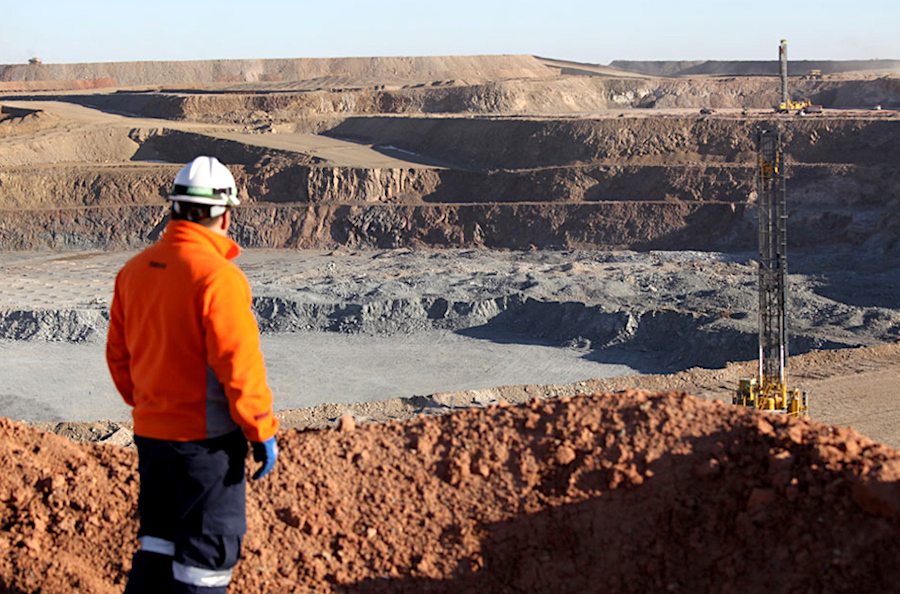
Mongolia is demanding earlier profit payments and a larger share of revenue from the massive Oyu Tolgoi copper mine it co-owns with Rio Tinto (ASX: RIO), reopening negotiations over the $18-billion project’s commercial terms.

The government, which holds a 34% stake through state-owned Erdenes Mongol LLC., considers the current agreement unfair and wants dividend payments accelerated while raising Mongolia’s share of returns to about 60%, Financial Times reported.

“These discussions reflect our continued commitment to working together to achieve Oyu Tolgoi’s full potential for the benefit of all partners,” Rio Tinto said in an emailed statement Tuesday.

The dispute underscores Mongolia’s push to secure greater economic benefits from the mine, a cornerstone of Rio’s long-term growth strategy as demand for copper surges with the global energy transition.

Under the existing deal, Mongolia is not expected to receive dividends until it repays a multi-billion-dollar loan from Rio that financed its share of development costs, which climbed far above early estimates and could delay payouts until next decade.

Rio Tinto, the world’s second-largest miner by market value, has invested billions of dollars to expand Oyu Tolgoi’s underground operations. Copper production at the mine rose 61% last year as development advanced.

Renewed tensions

Relations between the partners have fluctuated in recent years. In 2022, Rio waived $2.4 billion in debt owed by Mongolia in what it called a reset of the partnership, clearing the way for underground mining to proceed.

Tensions have since resurfaced. Mongolia is suing Rio Tinto over alleged tax underpayments of about $450 million tied largely to depreciation accounting for the 2021 and 2022 tax years, a dispute now moving through the courts.

Political pressure is also rising as Mongolia heads toward elections next year while copper and gold prices hover near record highs.

Rio Tinto expects Oyu Tolgoi, which began as an open-pit operation in 2011, to become the world’s fourth-largest copper mine by 2030.


US has two months of rare earth supplies left, SCMP reports

Stock image.

The United States has roughly two months of rare earth supplies available for military use, a constraint that could influence how long Washington can sustain strikes on Iran, the South China Morning Post reported on Tuesday.

Rare earth elements — used in missile guidance systems, fighter jets and radar technologies — are essential components in modern defence systems, leaving the US vulnerable to supply disruptions from top producer China.

Washington’s dependence on Chinese supply has become a strategic concern as tensions escalate in the Middle East. Analysts told SCMP that Beijing could gain indirect leverage over the duration and cost of US military operations if exports or supply chains were restricted.

The report comes ahead of US President Donald Trump’s scheduled trip to China later this month — his first since 2017.

Analysts cited by the Chinese-owned paper suggest Beijing may have less urgency than Washington to reach an agreement on rare earth trade, given the current state of affairs in the Middle East.

Marina Zhang, an associate professor at the University of Technology Sydney’s Australia-China Relations Institute, told SCMP that China’s control of rare earth supply chains gives it “significant indirect leverage over the duration and cost of potential conflicts.”

China’s plans

The vulnerability comes as Western governments race to diversify rare earth supply chains. The Trump administration recently launched a $12 billion initiative aimed at stockpiling minerals like rare earths, and later marshaled allies to create a trade bloc.

Despite such efforts, new projects outside China — which controls over half of the world’s mine supply and nearly all of the mineral processing — are expected to come online too slowly to prevent shortages, potentially shifting pricing power toward a small number of producers.

Global reliance on Chinese supply was highlighted last year when Beijing imposed export controls on its rare earths, which left Western manufacturers scrambling for supplies to meet production deadlines.

Recently, Beijing signalled its intention to further consolidate its leadership in the sector. Under its 15th Five-Year Plan, the Chinese government plans to strengthen development of its rare earth industry between 2026 and 2030 and improve export control systems governing the minerals.

Those policies could deepen Beijing’s influence over global supply chains for materials critical to defence technologies, electronics and clean energy systems, analysts said.

According to the USGS, China is the largest supplier of many US critical minerals.


Glamox Wins Contract to Light Korea’s Largest Offshore Wind Farm

Glamox

Published Mar 11, 2026 9:20 PM by The Maritime Executive


[By: Glamox]

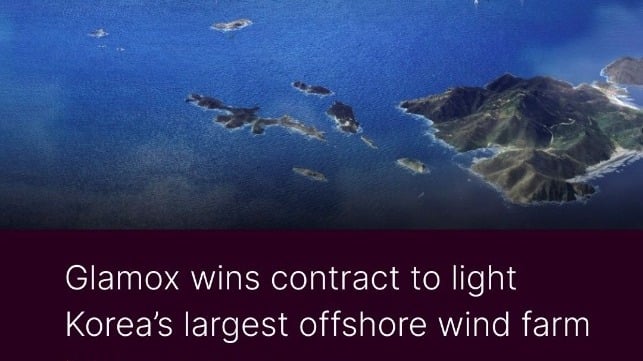
Glamox has secured a contract from SHE CO., LTD, on behalf of Hyundai Engineering & Steel Industries (HESI), to supply marine lighting for the Shinan Ui offshore wind farm, which will be South Korea’s largest offshore wind farm. Glamox will deliver around 1,000 specialised marine lights for the jacket transition pieces of 26 fixed wind farm turbines. These turbines will produce 390 Megawatts of renewable electricity, which is currently greater than the combined total of all of South Korea’s offshore wind farms.

Glamox’s offshore wind farm dedicated lighting will illuminate both the interior and exterior of each turbine’s transition piece. The transition piece is the cylindrical steel structure that connects the wind turbine to its foundation. It includes platforms, boat-landing systems, and ladders. The luminaires must function flawlessly, as the area must be well-lit to ensure that inspection and maintenance teams can operate safely.

“This is a significant achievement as our lighting was chosen by a Korean-led consortium and prevailed over local competitors," said Tommy Stranden, Chief Sales & Commercial Officer for Glamox’s Marine, Offshore & Wind division.

“The performance, proven reliability, and long life of our marine lights were essential factors considering the harsh conditions and big offshore temperature fluctuations in the coastal waters of South Korea. Our lights are proven and have a 100,000-hour life and are designed to cope with humidity and temperature ranges from -40 to 50 degrees Celsius,” added Stranden.

Glamox will supply a variant of its MIR G2 water-resistant linear LED luminaire that is specifically designed for offshore wind applications. Its unpainted stainless-steel housing is designed to bond to the structure, creating a perfect Faraday cage to protect internal components from lightning strikes. The linear MIR G2 luminaires will be installed on the platform and inside the transition piece. The platforms will also feature RLX C floodlights. The lighting will be delivered in Spring 2026.

The Shinan Ui Offshore Wind Project involves a consortium, spearheaded by Hanwha Ocean (part of the Hanwha Group) and SK eternix. The wind farm will be located about 4km south of Ui-do Island and is expected to enter production in early 2029. It supports South Korea’s goal to boost its share of renewables in the country’s power mix by 2030.

This is not Glamox's first wind farm project in Korea. In March 2024, the company announced a contract to supply lighting for 10 transition pieces for the Jeonnam Phase 1 wind farm off the west coast of Shinan in the Yellow Sea.

The products and services herein described in this press release are not endorsed by The Maritime Executive.


Indian Detains Tanker and Charges Captain After Fishing Boat Collision

survivors of collision of fishing boat and tanker
Battered survivors coming ashore after being rescued (Indian Coast Guard)

Published Mar 11, 2026 7:09 PM by The Maritime Executive


Indian authorities launched an enforcement action against the captain of a tanker and his vessel after it hit and sank a fishing boat on the southwest coast of India. The authorities are citing negligent operations of the tanker in the incident, which left two fishermen missing.

The chemical tanker Solis (21,181 dwt) had arrived from Oman and was departing from the port of Neendakara, located on the southwest coast in the state of Kerala, on Saturday, March 7. The tanker was approximately 70 nautical miles from Vizhinjam when it collided with a fishing trawler. The boat had 11 crewmembers aboard. Nine of them were rescued and brought to shore by the Indian Coast Guard, while two other fishermen were reported missing. The Coast Guard was undertaking a search and rescue mission.

The Solis is a Vietnamese-owned and managed product tanker. It is registered in Panama. It is unclear where it was heading, but reports placed it in an established international shipping lane. The collision happened in daylight around 2:30 p.m. local time.

The trawler sank following the collision, causing a financial loss for the owner and crew. In addition, reports said that one of the fishermen suffered a fractured back, and another also suffered serious injuries. The pictures released by the Coast Guard showed various injuries on each of the survivors.

A case was registered in an Indian court on Sunday against the captain of the tanker. It alleges a “defective and negligent” manner of operation, endangering human life.

The Director General of Shipping on Monday reported that the tanker has also been taken into custody. It was escorted at midday on Monday into an anchorage off Vizhimjam. A team of officials, including the Chief Surveyor from the Department of Shipping, boarded the tanker and began a preliminary investigation. 

A second team from the Mercantile Marine Department was expected to board the vessel on Tuesday for a further inspection. They reported that they would be taking statements from the 20-member crew, including the captain.

Indian authorities have reported several incidents of commercial ships hitting or running down fishing boats. In 2025, the fishing union complained that IMO regulations require vessels to operate just 27 nautical miles from the shore, and they assert that many ships sail closer. They also alleged that many of the larger ships do not stop after a collision. The group has demanded that the distance be doubled to move the shipping lane to 50 nautical miles, but it says  Indian authorities have ignored this demand.