Thursday, March 12, 2026

WHO IS TRUMP'S WAR FOR...
Russia pockets €6bn in fossil fuel revenues in first two weeks of war

Russia pockets €6bn in fossil fuel revenues  in first two weeks of war
Russia has earned an estimated €6bn from fossil fuel exports since the Iran conflict began, highlighting how rising energy prices could blunt the impact of Western sanctions, campaigners warn. / bne IntelliNews
By Ben Aris in Berlin March 12, 2026

Russia has pocketed over $6bn of excess revenues in just the first two weeks of war in Iran, the Centre for Research on Energy and Clean Air (CREA) said in a report released on March 12.

Russia’s fossil fuel revenues have surged in the wake of the launch of Operation Epic Fury that set off the 2026 oil shock. Markets were suffering from whiplash after oil prices rose to $120 per barrel on March 9 as the global energy crisis gathered momentum, only to fall back to $85 again by the end of the day after Trump said the war was “pretty much over”.

The crisis is escalating as Gulf producers are rapidly running out of storage space and have already begun to cut production that will exacerbate the crisis which is expected to last at least a month, and probably longer.

The German non-profit Urgewald climate NGO, working with CREA, estimates that Russia has earned roughly €6bn from fossil fuel exports since Israeli and US strikes on Iran began on February 28 at a time when the Russian budget was under severe pressure due to the increasing effectiveness of new oil sanctions imposed by the Trump administration at the end of last year.

However, it already clear that Russia will be one of the biggest winners from the outbreak of war in the Middle East. Russia is positioning itself to take advantage of turmoil in global energy markets, Russian President Vladimir Putin told a cabinet meeting on March 10, and will boost oil exports to “friendly countries”. Russia exports some 5mn barrels of oil a day, a quarter of the 20 mbpd that has been taken off the market by the closure of the Straits of Hormuz on March 2.

According to CREA, Russia’s export revenues averaged about €510mn a day in the week following the strikes, around 14% higher than the daily average recorded in February.

Alexander Kirk, sanctions campaigner at Urgewald, said the surge highlights the structural dynamics of energy markets during geopolitical crises. “Russia is already profiting from this geopolitical crisis,” he said. “In the week after the strikes on Iran began, Russia’s fossil fuel export revenues rose to €510mn per day, 14% higher than February’s average.”

Kirk argued that such gains illustrate how volatility tends to favour large hydrocarbon exporters. “That is the reality of fossil fuel geopolitics,” he said in a press release sent by email to bne IntelliNews. “When markets panic, authoritarian exporters cash in. In less than two weeks, Russia has earned an estimated €6bn from fossil fuel exports, money that ultimately feeds the Kremlin’s war machine.”

The surge in revenues comes as Washington debates whether to ease restrictions on Russian oil sales further amid market turbulence triggered by the Iran crisis. US Treasury Secretary Scott Bessent last week issued a 30-day waiver allowing India to purchase Russian oil already at sea, describing it as a limited measure designed to stabilise supply. However, the 20mn barrels of oil currently stored on Russian tankers is only enough to supply India with four days worth of oil and the Trump administration is mulling further easing sanctions to meet soaring global demand.

For campaigners, the discussion about broader sanctions relief risks sending the wrong signal. “Easing sanctions now would not stabilise markets,” Kirk said. “What it would do is allow Russia to sell the same oil for a far better price.”

The International Energy Agency proposed the largest ever release of oil reserves on March 10 to further calm markets that has already seen the price of oil fall from a peak of $120 at the start of this week to $87 as of the time of writing.

But Russia has been a big winner in another way: the discounts on Russia Urals blend over the benchmark Brent blend of up to $20 have disappeared and as of March 11 Urals was trading over $100 at a $13 premium to Brent for the first time since the invasion of Ukraine four year ago, adding to the Kremlin’s earnings. Last week, Putin told Indian Prime Minister Narendra Modi, “Now its business, not friendship,” and Russia would no longer offer India the deep discounts that New Delhi has enjoyed since Russia rerouted its exports of Asia in 2022 following the EU’s sanctions on Russian oil imports.

According to Kirk, lifting sanctions constraints will narrow the discount and significantly increase Moscow’s revenues without requiring any increase in production.

“A rollback closes that gap overnight and hands the Kremlin a revenue boost worth billions, at the very moment that pressure is starting to bite,” he said.

Kirk framed the debate in stark terms for policymakers. “This is a political choice,” he said. “Governments can hold the line on sanctions, or they can signal that if energy prices rise high enough, the West will always find a reason to blink.”

In parallel to the oil shocks, a gas crisis is rapidly unfolding in Europe as the Gulf, led by Qatar, also supplies about a fifth of global LNG supplies. 

International Energy Agency executive director Fatih Birol warned Reuters on March 6 that returning to Russian gas would be “economically and politically wrong”, even amid current LNG market turbulence. The same logic applies to Russian oil sanctions.

"The current crisis in the Middle East has led to questions in some quarters about whether to go back to Russia ​or not," Birol told reporters following a meeting between European Commission President ​Ursula von der Leyen and EU commissioners on global energy ⁠markets. "One of Europe's historical mistakes was the over-reliance of its energy sources on one single country, Russia.”

EC officials and analysts acknowledge there is no quick fix, while EU governments are split on how to respond. Europe remains hooked on Russian gas and despite a threat to ban Russian gas imports from January 1, 2027, the EU actually increased Russian LNG imports last year due to the extremely cold winter.

Again to capitalise on the chaos in the energy markets, Putin is proposing to turn the tables on Europe and ban Russian exports of gas to the EU immediately and sell the surplus to Asia instead which will only inflame gas prices that have already doubled since Operation Epic Fury began in just the first week of war.

Russia Emerges As The Biggest Winner In Middle East War

Oil markets continue to experience heightened volatility as the Middle East conflict escalates, with oil prices trending north on Wednesday, shortly after U.S. President Donald Trump signaled that the war in the Middle East is nearly complete.

 In remarks made a couple of days ago, Trump described the conflict as a "short-term excursion" that is ahead of schedule and is nearing its final phase. At 3.55 p.m. ET on Wednesday, Brent crude for April delivery was up over 5% to trade at $92.21 per barrel, while the corresponding WTI crude contract was up 5.13% to change hands at $87.73 per barrel.

In the meantime, the 32-member countries of the International Energy Agency (IEA) have unanimously agreed to a record release of 400 million barrels from emergency reserves in a bid to tame soaring oil prices.

The oil market challenges we are facing are unprecedented in scale, therefore I am very glad that IEA Member countries have responded with an emergency collective action of unprecedented size,” said IEA Executive Director Fatih Birol. “Oil markets are global so the response to major disruptions needs to be global too. Energy security is the founding mandate of the IEA, and I am pleased that IEA Members are showing strong solidarity in taking decisive action together.”


But here’s the kicker: Russia is the biggest beneficiary of the Middle East war, based on Standard Chartered analysis.

Russia is eagerly capitalizing on both higher market prices and desperate customers looking for alternate sources.

The U.S. Treasury has granted special permission for Indian refiners to purchase sanctioned Russian crude, as long as it was loaded onto a tanker before 5th March. StanChart notes that these loaded, but previously uncommitted, cargoes have been rapidly bought in the spot market, saying that this short-term waiver could potentially double the volume of Russia’s oil exports to India from 1 mb/d to 2 mb/d in the near term.

Russian crude surged 10.7% to trade at $100.67 per barrel at 1.45 pm ET, with Urals crude trading at a premium to the Brent international benchmark for the first time in history, primarily due to the severe supply shock in the Middle East and shifting trade dynamics in Asia. Facing a massive shortage of Middle Eastern "medium sour" crude (a grade similar to Urals), Indian refiners have turned aggressively to Russian supplies.

This surge in demand was facilitated by the 30-day waiver from the U.S. allowing Indian refiners to receive Russian crude already on tankers to stabilize local energy security. Brent is a light, sweet crude, whereas Urals is a medium sour grade. Because Middle Eastern production of sour crude is currently offline or unreachable, refiners that require this specific feedstock are paying a premium of $4 to $5 per barrel above Brent on a delivered basis to secure Russian barrels.

The Strait of Hormuz blockade largely remains unchanged, with transit limited to mostly Iranian and Chinese vessels whose modus operandi is operating without their transponders activated, making it difficult to estimate total volumes transiting the Strait. However, commodity analysts at Standard Chartered have predicted we could see a reduction in these dark fleet transits in the event of U.S. Navy escorts, or patrols to ensure safe passage, effectively removing Iranian sea-borne supply from the market. Such a pivot would, however, still result in a net drop in supply.

And it comes as Tehran warns the West that oil prices will soar to $200 a barrel as a result of the U.S.-Israeli campaign against Iran.

StanChart estimates that Middle East producers have been the biggest losers in the ongoing conflict, with the Strait of Hormuz impasse forcing Saudi Arabia to cut output by 2.0-2.5 mb/d; Iraq by 2.9 mb/d, UAE by 0.5-0.8 mb/d, Qatar by 0.5 mb/d and Kuwait by 0.5 mb/d. At the same time, a 45% reduction in Iranian gas flaring compared to pre-conflict levels suggests an additional 1 mb/d of Iranian crude may also be offline.

StanChart has reported that these producers are using alternate export routes where possible, with Saudi Arabia utilizing the temporary additional capacity in the East-West pipeline to transport the maximum 7 mb/d to the Red Sea. The commodity experts have predicted that this is likely to reach full capacity within a few days.

By Alex Kimani for Oilprice.com


OP-ED

Iran called Trump's bluff — and somehow Putin won


Michelangelo Signorile
March 11, 2026 
RAW STORY


Donald Trump after delivering remarks in Miami. REUTERS/Kevin Lamarque

Donald Trump suddenly popped on TV screens late Monday, giving his most extensive remarks on the war in Iran and taking questions from the press.

Trump had previously given no public speech to the American people upon the initiation of this war — unlike every American president taking the country to war in the past. His communication to the American public was mostly in the form of videos or speaking by phone to select reporters, offering wildly shifting rationales for the war and its goals.

On Monday, however, he finally came before the White House press corps and repeated what he’d said earlier in the day to CBS, that the war — which he now dubbed a mere “excursion” — is “very complete.” But he also said it would go on, even though it would end “soon,” and said that Pete Hegseth, who earlier said the war is “just the beginning,” is correct, even though Trump himself said that it’s “complete.”


ALSO READ: Trump made a catastrophic miscalculation — and the worst ones are still ahead


What?

He’s trying to have it all ways in a war that had no planning or an endgame.


The crazy presser perhaps is explained by two things that happened in the hours before it: Trump spoke at length to Russian President Vladimir Putin, and Trump saw oil prices surge to $120 a barrel on Sunday, tanking markets around the world and in the U.S. on Monday morning.


Let’s take the latter first. We learned from the tariff upheaval that Trump cannot stomach the markets crashing and particularly the bond market starting to teeter. It’s the only thing that stops him. Corporate America and his billionaire friends and GOP donors wind up shrieking. And average Americans — in this case looking at the price of gasoline — become very attuned to the economy and high prices.

Trump’s earlier statement in the day to CBS, while the markets were open, that the war is “very complete” was meant to calm the markets.


“I think the war is very complete, pretty much,” Trump told CBS. “They have no navy, no communications, they’ve got no Air Force ... Wrapping up is all in my mind.”

And the intended effect worked. The markets began to rebound as the price of oil came down. It actually had been coming down a bit from earlier when Trump promised insurance and military escorts for companies. None of that may actually happen. It’s risky for American military vessels to escort ships in the Strait of Hormuz, which has essentially been brought to a standstill, stranding 20 percent of the world’s oil supply. But the market operates on hope and fear.

Trump knows that. The real economy operates on facts — real data as well as on experiences on the ground by Americans in their jobs and in their consumer spending — but the market operates on hope and fear until that real economy catches up. The market can be temporarily lifted, and Trump lent it a helping hand.


But later, in the presser, after the markets had closed, Trump gave much more mixed signals — the New York Times called it a “zigzag” — saying the war may go on for a while. He even responded to a question about Hegseth, saying it’s “just the beginning” by saying that “both” could be true.

Clearly, Trump still wanted to convey that he had massive leverage over Iran, and that the bombing will continue — which it has. That’s because, in essence, this was all a capitulation to the Iranian regime, which knew the US wouldn’t have the stomach to go on for long.

Trump had only on Friday called for an “unconditional surrender” from Iran and said he’d need a say in who would be its leader, promoting his most extensive thoughts on regime change yet. And Trump absolutely rejected the idea that the son of the former Supreme Leader could be the new Supreme Leader.


But Iran indeed installed as Supreme Leader the son of 86-year-old Ali Khamenei, who was killed in a U.S. strike along with a few dozen other leaders, some of whom were viewed as more moderate by U.S. intelligence and as leaders with whom the U.S. could work. As national security analyst Joe Cirincione, a member of the Council on Foreign Relations, told me on my SiriusXM program yesterday, that strike was a strategic blunder — spurred on by Israel — as the U.S. now had no top leaders with whom it could negotiate.

The son, Mojtaba Khamenei, is much more hardline than his father and is only 56 years old. So Trump killed the old man who could likely have been replaced when he died by one among several moderates — all of whom Trump also killed — and now the hardline, young son will be there for a long time.

Iran’s regime defied Trump’s demand — there would be no surrender — and they chose their more extreme leader. And then the markets tanked as oil was cut off. And Trump caved.


So Trump’s bluster at the presser yesterday was his way of trying to make Iran’s brutal government feel afraid of him. But why should they feel afraid? He’d, after all, just melted away. Trump also completely sidestepped a question from a reporter about how the Iranian people — the vast majority of whom support democracy — could feel betrayed by him? Trump had promised them he’d save them, only to now cave and hand them over to a new ayatollah.

Trump’s move to declare victory wasn’t, however, just a response to the market and the billionaire overlords. He’d had a long conversation with Putin earlier in the day as well, a call that Putin initiated, according to reports in the media. We learned in recent days that Putin was continuing to supply Iran with intelligence, which is outrageous since Iran was targeting American soldiers using intelligence from Russia. And yet, both Trump and Hegseth dismissed that, as usual tiptoeing around Putin. And now Trump had a long conversation with Putin.

The conservation, which Trump said was a “good” one, is pretty much shrouded in mystery. But we can put together how it went. Putin had earlier said that the attack would trigger an oil crisis and said oil transport would stop in the Strait of Hormuz. He was, of course, right.


Putin also said that Russia — whose economy is collapsing under sanctions but which is the second-largest oil exporter in the world and has the biggest reserve of natural gas — was happy to once again sell Europe its oil and gas. Europe had stopped importing Russian energy after the Ukraine invasion began.

Putin wanted a long-term deal again. And Trump, we’ve learned, is now considering pulling back on oil sanctions against Russia. He’d already announced a few days ago that he was allowing India to buy oil from Russia, dropping the threatened tariffs if India bought Russian oil, because of the shortage of oil coming from the Gulf.

“We’re also waiving certain oil-related sanctions to reduce prices,” Trump said at the presser yesterday. “So we have sanctions on some countries. We’re going to take those sanctions off until this straightens out.”

So Trump capitulated not only to Iran but to Russia.


Putin now had more leverage on Trump, able to help Trump out in the oil crisis he created. Putin is getting Trump to actually help sell Russian oil, and lift Putin’s devastated economy. The invasion of Ukraine be damned.

Trump may be trying to claim the U.S. has won, but the only winners so far are Putin and, to the extent that they survive even if their military capability is damaged for now, the Iranian regime.

The Iranian people are still living under a horrific, murderous theocracy. Thousands have been killed in Iran and the region, including hundreds of Iranian children killed in a school that analysts have determined was caused by an American Tomahawk missile. Seven American service members lost their lives. And the American people are paying higher gas prices, as the oil shock will last a while.


The Gulf nations suffered casualties because the U.S. didn’t plan for this war, mindbogglingly thinking the war would be over in days and that Iran wouldn’t attack U.S. assets in the Gulf states, while thousands of Americans and people from other countries were stranded in the war zone.

And U.S. credibility took another dive, as Trump weakens this country’s standing in the world by the day.Michelangelo Signorile writes The Signorile Report, a free and reader-supported Substack. If you’ve valued reading The Signorile Report, consider becoming a paid subscriber and supporting independent, ad-free opinion journalism.

 Hybrid Warfare 2026: Russian Propaganda Destroying Europe From Within – Analysis


March 12, 2026 
By San Hugo Roxi Ginting


In early 2026, there were numerous reports noting a significant increase in hybrid incidents linked to Russia in Europe since 2025, with more than 150 suspected cases across the European Union and NATO member states, particularly in relation to the Munich Security Report 2026. In Germany alone, there were 321 suspected incidents, including escalating drone intrusions into airspace and disinformation campaigns targeting critical infrastructure. The data, based on analysis from the International Centre for Counter-Terrorism (ICCT) and GLOBSEC, shows a fourfold increase in sabotage and vandalism operations compared to the previous year, often involving criminal networks recruited by Russian intelligence. Incidents such as the violation of Estonian airspace by Russian fighter jets and drone attacks over Polish airports in late 2025 also illustrate how Moscow exploits ambiguities to test Western resilience without triggering a direct military response.

The contextualisation of Russian hybrid warfare also reveals a strategy known as ‘new generation warfare’ (NGW), which integrates kinetic elements such as sabotage and drone intrusion with cyber-attacks and cognitive operations. This doctrine, which evolved from the thinking of Valery Gerasimov, emphasises the use of non-military means to achieve strategic objectives and avoid open conflict while undermining the internal cohesion of the opponent. In this regard, propaganda is a key instrument in the cognitive domain, utilising social media, proxy outlets, and AI to spread narratives that divide European societies. It is not merely a supporting tool, but a weapon designed to weaken democracy from within by exploiting vulnerabilities such as political polarisation and post-war economic uncertainty in Ukraine.

Although the European Union has taken defensive measures, such as imposing Foreign Information Manipulation and Interference (FIMI) sanctions in January 2026 against six Russian individuals involved in disinformation campaigns, this approach still appears to be merely a reactive measure that is insufficient to counter existential threats. By 2026, Russian propaganda had become the primary instrument for the disintegration of European democracy from within, exploiting trends of escalating sabotage and electoral influence to amplify instability. As a result, Europe was forced to shift from a defensive ‘shield’ strategy to an offensive ‘sword’ strategy to achieve more effective deterrence, including proactive countermeasures targeting the source of the Russian threat.

Hybrid Warfare and the Role of Russian Propaganda

Hybrid warfare is academically defined as a combination of conventional and non-conventional methods, which evolved from the Gerasimov Doctrine, a Russian approach that emphasises non-linear warfare in which psychological and societal aspects dominate over traditional military force. The cognitive domain is key, with NATO identifying propaganda as a primary tool for influencing public perception, beliefs and decision-making. According to estimates from think tanks such as the Centre for European Policy Analysis (CEPA), Russia also allocates a significant budget, estimated at $2 billion per year, to these cognitive operations.

The evolution from 2022 to 2026 also shows a transition from operations such as Doppelganger, in which Russia clones Western media to spread disinformation, to the integration of AI and Large Language Models (LLMs) to mass-produce fake content. Reports by EUvsDisinfo and France’s Viginum also document networks such as Portal Kombat and Pravda, which generate millions of fake articles to amplify anti-EU and pro-Kremlin narratives. There is also empirical data to support this statement, with 151 Russia-related hybrid incidents since 2022, including sabotage exploited for the narrative that ‘NATO failed to protect citizens,’ according to ICCT/GLOBSEC 2026 analysis. This surge includes a mix of cyber and kinetic attacks, such as attacks on the European energy grid.


Propaganda in this case is no longer a supporting tool, but rather a force multiplier that amplifies the effects of sabotage and polarisation. It exploits Ukraine’s exhaustion and transatlantic uncertainty, particularly under the Trump administration, where the US isolationist narrative is also being used to weaken European support for Kyiv. Analysis from the Institute for the Study of War shows how Russia shapes an alternative reality to erode public trust in Western institutions, thereby creating an environment where conventional conflict becomes unnecessary. This approach is highly systematic, exploiting Europe’s internal vulnerabilities to achieve geopolitical goals without the cost of open warfare.

Russian Propaganda Mechanisms in Europe 2026


Russian propaganda instruments and channels have adapted following the blocking of state media such as RT and Sputnik in the EU. For now, proxy outlets and operations such as Matryoshka involving deepfakes and AI manipulation are dominant, as seen in Moldova and Romania in 2024–2025. LLM grooming also enables the corruption of AI output to spread disinformation, as documented in the Policy Genome 2026 study. These networks often involve criminal actors, recruited through prisons or organised groups, to maintain plausible deniability.

Key targets also include pivotal elections, such as Hungary’s April 2026 elections and German state elections, where propaganda exploits migration and energy issues to amplify pro-Russian populism. Integration with sabotage, such as drones over airports or infrastructure burnings, reinforces narratives of government incompetence. Recent evidence can also be seen in the January 2026 EU sanctions against six individuals, including a Russian TV presenter, involved in multi-platform campaigns. A report by the European Council on Foreign Relations (ECFR) also highlights how these operations continue despite sanctions, focusing on the 2024 European elections, which saw an increase in Russian influence through proxies such as Voice of Europe.

Russia’s strategy appears to be successful because it exploits Europe’s internal vulnerabilities, such as polarisation and distrust of institutions. Propaganda creates a ‘war of reality’ in which facts lose out to fabricated narratives, weakening support for Ukraine and EU cohesion. Analysis from Dutch intelligence also warns that Russia’s risk tolerance has increased since 2024, with a mix of sabotage and disinformation designed to provoke without full escalation. This is certainly not paranoia, but a data-driven reality where, without intervention, propaganda will continue to undermine the foundations of European democracy.

Strategic Impact and Projections for 2026

The impact includes increased socio-political polarisation, reduced support for sanctions against Ukraine, and the rise of pro-Kremlin radical parties on both the left and right. The Belfer Centre report projects the potential for limited incursions in the Baltics within three years if hybrid escalation continues. The risk of EU disintegration is increasing, with Russian narratives exploiting war fatigue to erode transatlantic solidarity.

The 2026 projection also describes the situation as a ‘year of living dangerously,’ in which, according to CEPA, the escalation of subversion during the elections and the risk of hybrid warfare appear high, as also reported by the EU Institute for Security Studies (EUISS) and the Latvian State Security Service (SAB). Trends also show a fourfold increase in sabotage since 2024, with a focus on critical infrastructure such as undersea cables and energy grids.

Europe also appears too defensive, relying solely on DSA, fact-checking and individual sanctions, while Russia remains offensive and coordinated. If Europe does not shift to a more proactive strategy, Russian propaganda will continue to undermine the foundations of European democracy and will continue to sow the seeds for further conflict.


Conclusions and Recommendations


Russian propaganda as the main weapon of hybrid warfare has damaged Europe from within in 2026, through systematic cognitive warfare integrated with sabotage and disinformation.

Europe must adopt a ‘from shield to sword’ approach, as recommended by the ECFR, including broader sanctions against proxies and oligarchs, strict regulation of AI/deepfakes, proactive counter-narrative campaigns, increased digital literacy, and hybrid deterrence through cyber and financial retaliation. With EU-NATO coordination and political commitment, Europe can reverse this threat and strengthen democratic resilience, ensuring that 2026 becomes a turning point towards more robust collective security.

ReferencesCouncil of the European Union. (2026). Russian hybrid threats: Council sanctions six individuals over information manipulation activities. https://www.consilium.europa.eu/en/press/press-releases/2026/01/29/russian-hybrid-threats-council-sanctions-six-individuals-over-information-manipulation-activities/

Deppe, C., & Schaal, G. S. (2024). Cognitive warfare: A conceptual analysis of the NATO ACT cognitive warfare exploratory concept. Frontiers in Big Data, 7, Article 1452129. https://doi.org/10.3389/fdata.2024.1452129

European Council on Foreign Relations. (2026). From shield to sword: Europe’s offensive strategy for the hybrid age (Policy brief). https://ecfr.eu/publication/from-shield-to-sword-europes-offensive-strategy-for-the-hybrid-age

EUvsDisinfo. (2024). The Kremlin’s upside-down world in 2024. https://euvsdisinfo.eu/the-kremlins-upside-down-world-in-2024/

McMillan, T. (2025). How Russia’s cognitive warfare strategy seeks to reshape reality and undermine the West. The Debrief. https://thedebrief.org/how-russias-cognitive-warfare-strategy-seeks-to-reshape-reality-and-undermine-the-west/

Munich Security Conference. (2026). Munich Security Report 2026: Under destruction. https://securityconference.org/publikationen/munich-security-report/2026/europe/

NATO Allied Command Transformation. (2024). Cognitive warfare. https://www.act.nato.int/activities/cognitive-warfare/

The Soufan Center. (2025). Europe builds deterrence as the Kremlin escalates hybrid warfare (INTELBRIEF). https://thesoufancenter.org/intelbrief-2025-december-9/


San Hugo Roxi Ginting

San Hugo Roxi Ginting is an undergraduate student in International Relations at Sriwijaya University, Indonesia. His research focuses on foreign policy strategies, global cooperation, and geopolitics, exploring how states formulate diplomatic strategies, build international partnerships, and navigate the complexities of global power dynamics in the contemporary world.


French mayoral candidates targeted in foreign disinformation campaign

A foreign disinformation campaign has targeted two candidates running in France’s local elections this weekend, a government agency and a security source said on Tuesday – the third foreign attack targeting public figures in recent days.


Issued on: 11/03/2026 - RFI

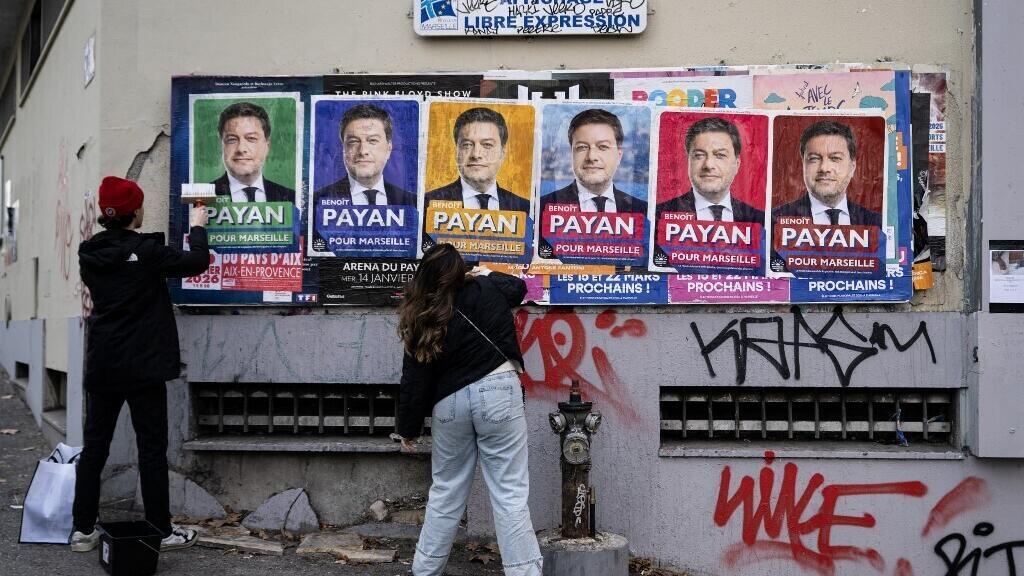
Electoral posters of Marseille's left-leaning incumbent Mayor and candidate for re-election in France's upcoming municipal elections Benoît Payan, 20 January 2026
. AFP - MIGUEL MEDINA

The campaign targeted lawmakers from the hard-left party France Unbowed (LFI) who are running to become mayors of the southern cities of Marseille and Toulouse. The first round of voting takes place on Sunday.

France’s VIGINUM agency, which tracks foreign disinformation campaigns, said it had detected inauthentic looking websites and social media accounts with “foreign technical markers”.

The activity targeted “a French political party and... some of its candidates in the municipal elections in Marseille and Toulouse”, the agency said.

France accuses Russia of election interference using fake website

Targets identified


A security source told the French news agency AFP the MPs were Sébastien Delogu and François Piquemal.

“Investigations to clarify the exact origin are still underway,” the source added.

Marseille prosecutors said they had opened a defamation investigation, after Delogu filed a complaint.

An online blog claiming to be written by a former associate described “how Sébastien Delogu hurt me and destroyed my life”.

Posters with a QR code linking to the blog – which was no longer accessible on Tuesday – were pasted around Marseille, according to photos taken by Delogu’s team and sent to AFP.

French daily Le Monde reported the blog was connected to “a network of fake accounts” on the social media platform X that usually promotes messages from the pro-Israeli lobby European Leadership Network (ELNET), which is registered in France. The report said the network had also targeted Piquemal.

Political reaction


Both LFI lawmakers are outspoken critics of Israeli military operations in the Gaza Strip.

Delogu said on Tuesday he had faced “indecent and defamatory accusations” since the start of his campaign because of his positions on the Palestinian territories and domestic French issues.

“I am being targeted by the far-right Israeli government because I have denounced the ongoing genocide in Palestine, for having defended international law, and because I speak out against all forms of corruption that are damaging our city and our republic,” he said.

“Two far-right governments are targeting me – the United States and Israel.”
France unbowed (LFI) MP Sebastien Delogu waves a Palestinian national flag during a debate at the National Assembly in Paris on 28 May, 2024. © AFP - Miguel Medina

"They're targeting a young man from the working-class neighbourhoods of Marseille who wants radical change for his city and who is denouncing the ongoing genocide."

Delogu received a two-week suspension from France’s lower house of parliament in May 2024, after waving a Palestinian flag during a heated debate on the creation of a Palestinian state.

Piquemal called on the judiciary to “shed light on all the ins and outs of these malicious acts”.

“This is not the first time we've faced threats and online harassment from Israeli far-right groups,” he said.

Earlier this month, VIGINUM accused a Russian group linked to military intelligence of foreign interference after it targeted Pierre-Yves Bournazel, a centre-right candidate in the Paris mayoral race, using a fraudulent website.

(with AFP)

Hacker group Handala claims cyber attack on US medical firm Stryker Corporation

Hacker group Handala claims cyber attack on US medical firm Stryker Corporation
Hacker group claims multiple hacks in recent hours including US medical firms and the Hebrew Language Institute. / bne IntelliNews
By bnm Tehran bureau March 11, 2026

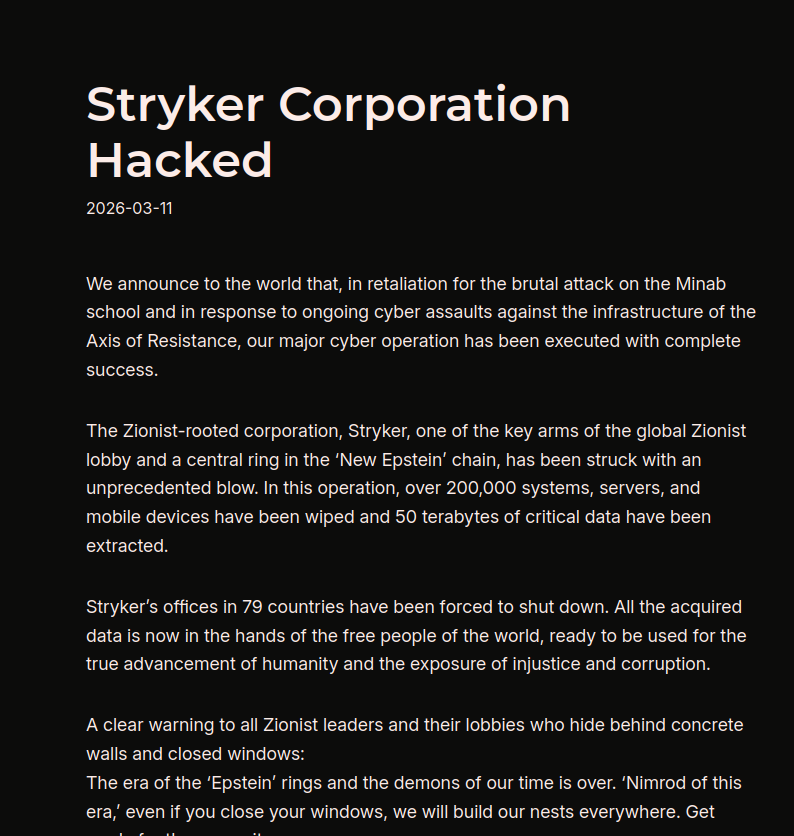
Iranian hacker group Handala claimed on March 11 it had carried out a major cyber operation against Stryker Corporation, the US-listed medical technology company, saying the attack was carried out in retaliation for a strike on a school in Minab and ongoing cyber assaults against what it called the "Resistance Axis" infrastructure.

The group said the operation was "fully successful," claiming it had affected more than 200,000 systems, servers and mobile devices and extracted 50 terabytes of data, according to WANA News on March 11.

Handala claimed Stryker had been forced to close offices in 79 countries as a result of the attack. The group described the company as "deeply rooted in Zionism" and alleged links to what it termed the "New Epstein network," claims that could not be independently verified.

The group said the extracted data was intended to "expose injustice and corruption" and had been passed to what it described as the "free people of the world."

Handala described the operation as "only the beginning of a new chapter in the cyber war," and warned that the period of what it called hit-and-run attacks against Resistance Axis infrastructure was over.

Stryker Corporation had not issued a public statement in response to the claims at the time of publication. The extent of any verified disruption to the company's operations has not been independently confirmed.

According to the Irish Examiner, multiple sources have said that systems in the Cork headquarters have been “shut down” and that Stryker devices held by employees have been wiped out.

The company's login pages coming up on these devices have been defaced with the Handala logo.

According to the Handala social media channels, this post was listed on the website. 


KIDNAPPING BY ANY OTHER NAME
Russia's deportation of Ukrainian children a 'crime against humanity', says UN inquiry


Russia's deportation and forcible transfer of "thousands" of Ukrainian children during the war in Ukraine amounts to a crime against humanity, a United Nations team of investigators said Tuesday. Moscow has failed to establish a system facilitating returns, focusing instead on long-term placement of the children with families or institutions in Russia while relatives were not informed of their fate.


Issued on: 10/03/2026 
By: FRANCE 24


A UN investigation found Moscow's deportation and forcible transfer of children from Ukraine to Russia amounted to a crime against humanity. 
© Yuriy Dyachyshyn, AFP


Moscow's deportation and forcible transfer of thousands of children from Ukraine to Russia amounts to a crime against humanity, a United Nations team of investigators said Tuesday.

The UN's Independent International Commission of Inquiry on Ukraine said it had evidence leading it to conclude that "Russian authorities have committed the crimes against humanity of deportation and forcible transfer, as well as of enforced disappearance of children".

The probe was established by the UN Human Rights Council shortly after Moscow launched its full-scale invasion of Ukraine in February 2022.

The inquiry said Russia had deported or transferred "thousands" of children from occupied areas of Ukraine, of which it had so far confirmed 1,205 cases.

© France 24
04:06


"Four years on, 80 percent of the children deported or transferred in the cases investigated by the commission have not returned," it said.

Moscow has failed to establish a system facilitating returns, and has instead focused on long-term placement of the children with families or institutions in Russia, while relatives were not informed of their fate.

The commission confirmed its previous finding that Russian authorities had unlawfully deported and transferred children – as a war crime – "and that they have unjustifiably delayed their repatriation, which is also a war crime".

These measures "were not guided by the best interests of the child", and violated international law, the probe found.


Putin cited

It said the involvement of Russian President Vladimir Putin, "including through his direct authority over entities that have steered and executed this policy, has been visible from the outset".

In 2023, the International Criminal Court issued a war crimes arrest warrant against Putin, accusing him of "unlawfully deporting" Ukrainian children.

The issue is highly sensitive in Ukraine and remains central to negotiations for a potential peace agreement between Kyiv and Moscow.

According to Kyiv, nearly 20,000 Ukrainian children have been forcibly removed.

Russia insists it has moved some Ukrainian children from their homes or orphanages to protect them from hostilities.

As for Russian trials in the context of its invasion of Ukraine, the commission found that Russian authorities have "systematically fabricated evidence" and "systematically violated a range of fair trial guarantees", while judges "have not acted with independence and impartiality".

'Extreme violence'

The commission also probed the situation of nationals from 17 countries who were recruited – either voluntarily or through deception – to fight with Russian troops in Ukraine.

They included men from Azerbaijan, Belarus, Brazil, Cuba, Egypt, Ghana, India, Iraq, Kazakhstan, Kenya, Nepal, Somalia, Sri Lanka, Tajikistan, Turkey and Yemen.

"After training, usually lasting between one week and 30 days, they were forced to serve on frontlines in Ukraine, often assigned extremely dangerous duties," it said in its report.

Commanders arbitrarily imposed "extreme violence" as punishment for refusing orders that meant almost certain death, with soldiers describing being treated like "cannon fodder", sent on "meat assaults" without training or necessary equipment, and "forced to advance at all costs".

"The evidence collected demonstrates abusive behaviour, cruelty, humiliation, inhuman treatment, and a total disregard for human life and dignity, perpetrated with a sense of impunity," the report said.

Regarding Ukraine, the report voiced concern about the overly broad definition and sometimes distorted interpretation of the crime of "collaboration".

The commission also said reports regarding violent treatment of conscientious objectors during Ukrainian mobilisation were "a source of concern".

Ukrainian Foreign Minister Andrii Sybiha welcomed the report, stressing the need to "put and end to Russia's sense of impunity".

"The international community must increase pressure on Russia to compel the aggressor to stop the ill-treatment of POWs and civilian detainees, ensure their release, and secure the return of deported and forcibly transferred Ukrainian children," he said on X.

The report will be presented at the Human Rights Council in Geneva on Thursday.

Moscow does not recognise the commission and does not answer its requests for access, information and meetings.

(FRANCE 24 with AFP)

Kyiv says it hit 'key' Russian military factory in Bryansk strike, Russia says six dead

Ukrainian President Volodymyr Zelensky said on Tuesday that a "key" military factory in Russia's western city of Bryansk had been targetted and hit in a missile strike. Russia earlier accused Kyiv of a "terrorist" attack in Bryansk that it said killed six civilians and wounded at least 37 people, without specifying what the target was.


Issued on: 10/03/2026 
By: FRANCE 24

Ukrainian President Volodymyr Zelensky called the strike – using cruise missiles – 'a completely justified response' to Russia's attacks. 
© Tetiana Dzhafarova, AFP

Ukraine hit a "key" military factory in a missile strike Tuesday on Russia's western city of Bryansk, Ukrainian President Volodymyr Zelensky said after Moscow gave a toll of six dead in the attack.

Russia has been raining near-daily drone and missile barrages on Ukraine during its full-scale invasion launched in 2022, prompting Ukraine to strike Moscow's infrastructure, including energy facilities, in retribution.

"Our soldiers struck one of the key Russian military factories in Bryansk. This factory produced electronics and components for Russian missiles. The very ones that are striking our cities," Zelensky said in a daily address.

In a video posted on social media by the General Staff of the Armed Forces of Ukraine purportedly showing the attack, a building is rocked by multiple explosions, with plumes of black smoke rising from the site.

Zelensky called the strike "a completely justified response to the aggressor".

Russia earlier accused Kyiv of a "terrorist" attack in Bryansk that it said killed six civilians and wounded at least 37 people. It did not say what the target was.

The wounded "were taken to the Bryansk Regional Hospital, where they are receiving the necessary medical care", regional governor Aleksandr Bogomaz said on Telegram.

Ukraine has not commented on the allegation of civilian casualties.

Bryansk, a city of around 400,000 residents, is about 100 kilometres (60 miles) from the Ukraine border.

Ukraine used British Storm Shadow cruise missiles in the attack, the Ukrainian military said.

"Units of the Ukrainian Armed Forces successfully struck the Bryansk microelectronics plant Kremniy El with Storm Shadow air-launched missiles," the General Staff said in a social media post.

"The plant specialises in discrete semiconductor technology and integrated microchips, which are the 'brains' and 'nerve system' of modern weapons, including Iskander missiles," the statement said.


The army said it had inflicted "significant damage to production facilities" at the factory.

In December, Ukraine said it used the Storm Shadows to attack a Russian oil refinery in the Rostov region, a facility it said was directly involved in supplying Moscow's armed forces.
Talks next week?

Ukraine said earlier on Tuesday that Russian strikes killed four people and wounded at least 20 in the embattled Ukrainian town of Sloviansk in the Donetsk region as the Kremlin's forces grind towards the hub.

Moscow claims the Donbas region – a largely industrial area spanning Ukraine's eastern Lugansk and Donetsk regions – is part of Russia despite not having full control over it.

The fate of Donbas, the epicentre of the fighting, remains a key sticking point in the deadlocked talks between Moscow and Kyiv brokered by the United States.

Russia has threatened to take the region by force if Kyiv does not cede at the negotiating table but Ukraine has rejected the demand, arguing that giving up land would only embolden the Kremlin.

Despite the apparent impasse, the United States has proposed another round of Russia-Ukraine talks next week, Zelensky said Tuesday.
© France 24
02:01


Zelensky said, in an audio message sent to reporters including AFP, that talks – initially planned for last week in the United Arab Emirates – had been postponed until next week by the United States.

"This was proposed by the American side, but we'll see what happens in the Middle East, to be honest," Zelensky told journalists, adding that the meeting "could be in Switzerland or Turkey".

US special envoy Steve Witkoff said in an interview with CNBC on Tuesday that "there was supposed to be a trilateral this week".

"I think the trilateral will be shifted till sometime next week, and... we're going to remain positive on that," Witkoff added.

(FRANCE 24 with AFP)
 
Poland’s Military Boom Is Running On Borrowed Money, And Borrowed Time – Analysis

File photo of troops from Poland. Photo Credit: gov.pl

March 12, 2026 
Balkan Insight
By Ada Petriczko

Poland is financing the “strongest land army in Europe” on debt, shrinking personnel and a repayment schedule that collides with the very years NATO expects the threat from Russia to peak. Can the model hold when the bills come due?


There is a conversation Europe is postponing.

Across the continent, defence spending is rising at a speed not seen in decades. Governments are accelerating procurement, expanding forces and constructing new financial instruments to fund deterrence. The urgency needs no explanation. But what has moved more slowly is the conversation about how all this will ultimately be paid for.

In few countries is that tension more visible than in Poland.

Roughly one-quarter of the country’s entire 2026 budget is allocated to defence – an extraordinary share for a European democracy not formally at war. Warsaw is racing to build what officials describe as the strongest land army in Europe. Tanks, missile systems, air defence, drones: the procurement pipeline is extensive and already largely contracted.

From the outside, the story appears straightforward: a frontline state invests accordingly. But the financial architecture behind it is more complicated. Rearmament is being funded through mechanisms that assume time – time for economic growth to continue, for interest rates to stabilise, for security pressures not to escalate faster than fiscal systems can adjust.

Nearly 37 per cent of defence spending is financed through borrowing accumulated by the Armed Forces Support Fund, an off-budget vehicle created to accelerate modernisation. According to Poland’s Supreme Audit Office, servicing that debt through 2035 will be costly, with a significant share of repayments falling between 2027 and 2031 – the very window in which Russia is expected to begin rebuilding its conventional military strength.

The overlap does not imply inevitability. But it sharpens the structural question: what happens when defence urgency and fiscal constraint begin to move in opposite directions?
Deterrence on credit

“Everyone in Europe is buying time,” Marek Swierczynski, a defence analyst at the Polish think tank Polityka Insight, tells BIRN. “And, to be blunt, the time we have has also been bought with Ukrainians’ blood – and with the fact that Russia isn’t as strong as once feared.”

Poland’s military expansion is being largely financed by debt. As a result, the country’s structural deficit has widened rapidly, raising concerns about the risk of entering a debt spiral – refinancing existing obligations with new, potentially costlier borrowing. The deficit is among the fastest-growing in the EU, which prompted Brussels to place Poland under the excessive deficit procedure in 2024.

Whether limits drafted in the 1990s – during Poland’s transition to a market economy – still reflect current security realities is being increasingly debated.

“They were shaped by a particular financial ideology,” Swierczynski says. “They may no longer fit today’s reality.”

For now, the government insists constitutional change is not on the table.


SAFE bet?


Deputy Defence Minister Cezary Tomczyk does not dispute the scale of the effort – or its cost. “I would naturally prefer us to spend as much as possible on defence – even more, if circumstances allowed,” he tells BIRN. “But while the armed forces are a system in which spending can always expand, the challenge is to identify an optimum. Today, Poland is operating above that level.”

The decision, he argues, was deliberate. “It was a political choice supported across parliament when the Homeland Defence Act was adopted,” he says, referring to 2022 legislation. “We are paying the price of that decision – and we accept that cost, because we see no viable alternative.”

From there, the financing architecture follows. Modernisation rests on three principal sources: the regular state budget, the Armed Forces Support Fund and, pending finalisation, the EU-backed funding under the Security Action for Europe (SAFE) initiative – a 150-billion-euro EU financial instrument aimed at boosting defence industrial production through joint, long-term, low-interest loans for member states.

The Support Fund, Tomczyk acknowledges, was not originally designed with a detailed repayment structure. Discussions with the Finance Ministry continue over how best to service the debt without constraining procurement. Folding the fund into the regular budget would push public debt beyond existing thresholds. In that sense, the fund remains largely a fiscal workaround, an instrument of creative accounting at the level of public finances, “albeit in a just cause”, in Swierczynski’s view.

SAFE, potentially worth close to 200 billion zloty for defence-related investment, changes the near-term picture. It allows refinancing at lower cost and supports new capabilities barely on the planning horizon five years ago – counter-drone systems among them.

But SAFE, long presented as a technical financing instrument, has become increasingly political in Poland. President Karol Nawrocki has signalled he may veto legislation enabling Warsaw to access the mechanism, arguing that it raises sovereignty concerns and requires “serious debate”. Politicians from the right-wing opposition parties have gone further, portraying SAFE as a vehicle for Brussels to exert control over Polish defence policy – rhetoric that carries a distinct ‘Polexit’ undertone, say critics.

“For now, the president is hesitating,” Swierczynski says. “What stands out instead is the ferocity of the backlash from PiS and Confederation, which blends anti-government, anti-EU and anti-German rhetoric with a distinctly pro-American line.”

Regardless of the politics, SAFE remains debt. But Tomczyk insists on reframing the hierarchy of priorities. “In a wartime scenario all the things we’re discussing now – funds, financing structures – would become irrelevant. We would spend everything we could on defence, and we would be doing so from a much more difficult starting point.”

The fiscal debate exists precisely because Poland is not at war. The spending trajectory reflects the possibility that it might one day be.

Collision of timelines


Debt carries its own logic. A significant share of borrowing must be serviced in the very years when security risks may intensify. The risk is not immediate insolvency but compression: refinancing obligations at a higher cost just as deterrence pressure peaks.

“That’s the dilemma the next government may face,” Swierczynski says. “In a crisis, legal constraints would be the easiest to loosen. Parliament could amend the constitution quickly, supported by rally-around-the-flag sentiment.”

Deficits could rise sharply, but if the confrontation was contained – or successful – Poland “would deal with the bill later”, he adds.

Poland is not alone in facing this tension.

Germany continues to debate how to reconcile its debt brake with the ambitions of its Zeitenwende (“Turning Point” or “Era Change”). France expands defence amid persistent deficits. The Baltic states allocate high shares of GDP to security despite narrow fiscal buffers. Italy confronts NATO expectations while carrying heavy public debt.

What distinguishes Poland is not recklessness but concentration: very high defence spending relative to GDP; rapid expansion; heavy reliance on off-budget borrowing; constitutional thresholds formally intact; broad political consensus; and a procurement program already contracted at scale.

In that sense, Poland offers one of the clearest illustrations of how European democracies are stretching fiscal and political systems to finance deterrence.
The question nobody wants to ask

Money is only part of the equation. Even as Poland races to buy weapons, the targets for expanding its armed forces are being revised downward.

“Only about a quarter of the population declares a willingness to serve with a weapon,” Swierczynski notes. “That’s why the idea of selective conscription has resurfaced inside the General Staff.”

At the same time, Polish public support for increased defence spending – currently at 92 per cent according to GLOBSEC – remains among the highest in the EU. But this could be because Poland has so far avoided the difficult conversations around militarisation. It has managed to expand defence spending without visible trade-offs. The healthcare budget continues to rise. Infrastructure development moves forward. Growth still underwrites revenue. There has been no austerity moment.

“The question of social resilience barely applies here, because society hasn’t felt the cost yet,” Swierczynski argues. “As long as the price remains abstract, that probably won’t change.”

But the debate is pending. Not on whether Poland should rearm – few serious voices suggest otherwise – but whether the country is prepared for the possibility that growth slows, interest costs rise, or security demands expand further.

Asked if Poland may one day have to choose between hospitals and tanks, Tomczyk resists the binary. “I would not want citizens to see this as a stark alternative,” he says. “If the economy continues to expand, growth itself will increase budget revenues and strengthen our fiscal capacity.”

At the same time, Tomczyk argues that citizens have, in a sense, already made their choice. “When 94 per cent of Poles say they trust their soldiers, that effectively means they support strengthening and equipping them,” he says.

Perhaps. But budgets are finite. Economic expansion is not guaranteed. Interest costs compound regardless of strategic necessity.

The model works – for now. But it depends on growth, political consensus, and a security environment that does not deteriorate faster than repayment schedules mature.

Poland has chosen not to wait.

Whether the time it has bought proves sufficient will depend less on bond yields than on the trajectory of the war next door – and on how long Europe can sustain deterrence at this scale within fiscal rules written for calmer times.


Balkan Insight

The Balkan Insight (formerly the Balkin Investigative Reporting Network, BIRN) is a close group of editors and trainers that enables journalists in the region to produce in-depth analytical and investigative journalism on complex political, economic and social themes. BIRN emerged from the Balkan programme of the Institute for War & Peace Reporting, IWPR, in 2005. The original IWPR Balkans team was mandated to localise that programme and make it sustainable, in light of changing realities in the region and the maturity of the IWPR intervention. Since then, its work in publishing, media training and public debate activities has become synonymous with quality, reliability and impartiality. A fully-independent and local network, it is now developing as an efficient and self-sustainable regional institution to enhance the capacity for journalism that pushes for public debate on European-oriented political and economic reform.

Morocco becomes Africa’s top arms importer, amid tensions with Algeria

Morocco has become the largest importer of major weapons in Africa, with purchases rising over the past five years as the country continues to modernise its military, a report has found. The increase comes amid continuing tensions with neighbouring Algeria.


Issued on: 11/03/2026 - RFI


A Moroccan air force F-16 fighter jet. Between 2021 and 2025, the United States was the kingdom’s main supplier of military equipment. AP - Mosa'ab Elshamy

The findings come from the Stockholm International Peace Research Institute (Sipri) in Sweden, which tracks global arms transfers.

Its latest report, published this week, shows Morocco’s imports of major weapons rose by 12 percent between 2021 and 2025 compared with the 2016-2020 period.

Major weapons include equipment such as armoured vehicles, fighter jets, warships and missile systems.

Morocco now ranks 28th in the world among arms importing countries, as Rabat continues to modernise its armed forces in a region marked by “persistent tensions” with neighbouring Algeria, the report said.


Algeria’s own arms imports fell by 78 percent over the same period.

But Sipri urged caution with the figures, noting that Algeria tends to be discreet about its military purchases.


Three main suppliers

The report also lists Morocco’s main arms suppliers.

The United States accounted for around 60 percent of deliveries to the country between 2021 and 2025, followed by Israel with around 24 percent and France with about 10 percent.


The figures point to a recent strengthening of military cooperation between Rabat and Israel, particularly in surveillance systems.

Elsewhere in Africa, the trend was very different. Arms imports by other countries on the continent fell by 41 percent between 2021 and 2025.

During that period, the US supplied 19 percent of weapons deliveries to Africa, followed by China, Russia and France.


Landmark trial begins for Turkish opposition leader Imamoglu


Istanbul's jailed mayor Ekrem Imamoglu went on trial on Monday in a widespread corruption case which critics say is a politically motivated bid to eliminate his chances of challenging President Recep Tayyip Erdogan.


Issued on: 09/03/2026 
By: FRANCE 24
Video by: Andrew HILLIAR

Supporters of jailed Istanbul Mayor Ekrem Imamoglu demonstrate outside the Marmara-Silivri Prison and Courthouse Complex where Imamoglu appears at his first hearing in a sweeping corruption case in Istanbul on March 9, 2026. © Berk Ozkan, AFP
01:48


Istanbul Mayor Ekrem Imamoglu went on trial on Monday with more than 400 other defendants accused of widespread corruption in a case critics see as a politically motivated move against Turkey’s opposition.

Imamoglu, who has been behind bars for nearly a year, is the main challenger to President Recep Tayyip Erdogan ’s 23-year rule. He was elected as the main opposition party’s candidate for an election due in 2028 just days after he was detained.

The hearing began in a tense atmosphere, with Imamoglu asking to speak and the panel of judges refusing the request, Halk TV news channel and other media reported. The judges accused Imamoglu of disrupting the proceedings, and then left the courtroom. The trial was adjourned until the afternoon.

Most of the 402 defendants worked for the Istanbul Metropolitan Municipality, headed by Imamoglu since 2019. Many are elected officials from the Republican People’s Party, or CHP, while journalists are also among the accused.


Imamoglu’s arrest on March 19 last year sparked weeks of street protests, the largest seen in Turkey for more than a decade.


He faces 142 charges, including establishing the “Imamoglu criminal organisation for profit” from 2015, when he was mayor of Istanbul’s Beylikduzu district. The 3,900-page indictment alleges the goal was not just to enrich the accused through a system of bid-rigging and pay-offs but also to finance Imamoglu’s rise in the CHP, ultimately resulting in his presidential candidacy.

If convicted he could face a total prison sentence exceeding 2,000 years.

In a newspaper article published Friday, Imamoglu described Monday’s trial as “one of the toughest tests of democracy” in Turkey’s history and an “attempt to overturn the will of the people.”

The case is just one of the many indictments in which the 54-year-old mayor could be jailed and banned from politics. Others include claims of terrorism, espionage, falsifying his university diploma and insulting officials.

In what government critics says is a broad judicial campaign against the opposition, elected CHP members, including mayors of other major cities, face separate terrorism and corruption allegations. The party’s leadership itself is also under legal pressure over alleged irregularities surrounding its 2023 congress.

The scale and anticipated length of the Istanbul Metropolitan Municipality trial, which could run for years, has seen authorities commission the building of a new courtroom at the prison complex in Silivri, west of Istanbul, where Imamoglu and many defendants are held. Until it is completed, participants will squeeze into an existing chamber at the prison.

To highlight what they see as the political nature of prosecutions against CHP members, Imamoglu’s supporters and human rights groups point to a series of factors, including the role of Istanbul’s chief prosecutor. Akin Gurlek, the deputy justice minister, was appointed to that office in late 2024, where he initiated a series of investigations targeting CHP figures. Last month, he returned to government as justice minister.

Critics also say the prosecution’s reliance on “secret witnesses,” whose identity is hidden from defence lawyers, and defendants testifying against their co-accused, contravene the right to a fair trial.

The government maintains that Turkey’s judiciary is independent and impartial.

Despite a ban on demonstrations around the Silivri prison complex, hundreds of people gathered to demand Imamoglu's release. The CHP set up a replica of the cell where the mayor is being held – furnished with a desk, a chair, and a small television – for supporters to visit.

Benjamin Ward, Europe and Central Asia deputy director at Human Rights Watch, described the cases against the CHP over the past year as “weaponizing the criminal justice system.”

“Looking at these cases as a whole, it’s hard to avoid the conclusion that prosecutors are trying to remove Imamoglu from politics and discredit his party in ways that undermine democracy,” he said.

(FRANCE 24 with AP)


Myriad Uranium doubles size of Wyoming project


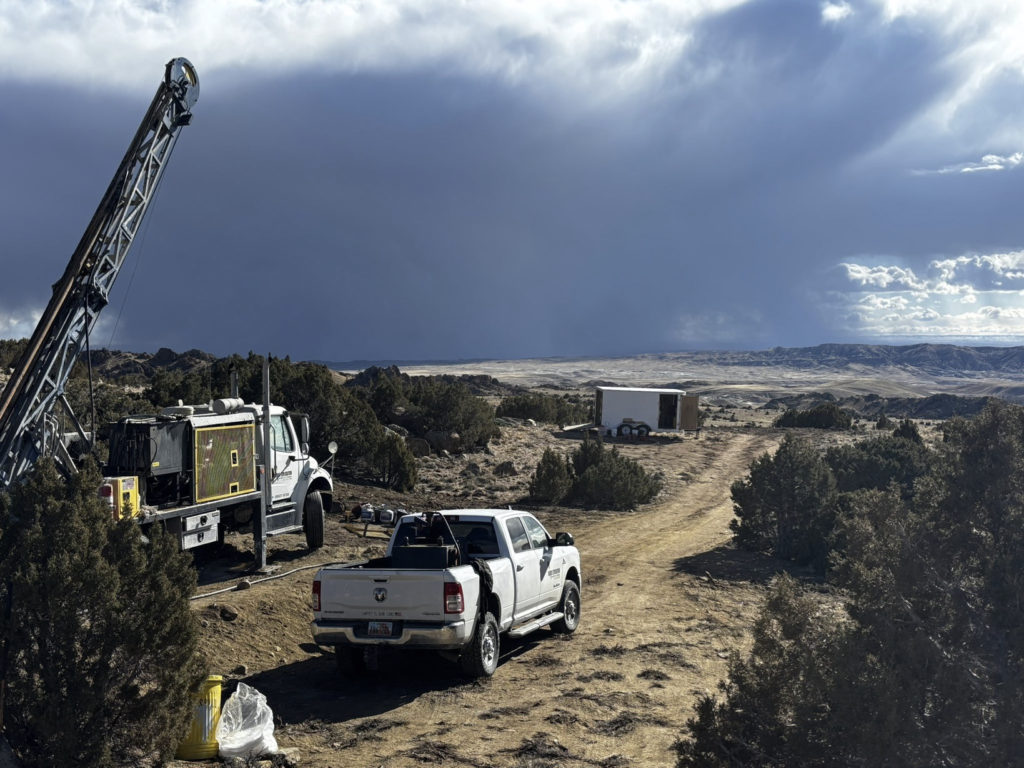
Looking south from the Canning deposit at Copper Mountain, Wyoming. Credit: Myriad Uranium

Myriad Uranium (CSE: M) says it has effectively doubled the size of its flagship project in Wyoming after geophysical survey results indicated potential in other parts of the property that it has yet staked.

The project, known as Copper Mountain, has now been expanded from 9,439 acres to 18,351 acres to cover all key areas and targets across the district, Myriad said in a press release on Tuesday.

The company staked these additional claims after recent geophysical surveys at Copper Mountain led to the identification of uranium anomalies in previously untested grounds, mostly towards the eastern parts of the property.

To determine which areas to acquire, Myriad said it integrated the new geophysical data with its existing geological dataset, including insights derived from studies completed by Bendix Field Engineering for the US Department of Energy in 1982.

The Bendix study estimated uranium endowments at Copper Mountain of approximately 655 million lb. in uranium oxide equivalent (eU₃O₈) to a depth of 600 feet within a broader “assessment area,” and 245 million lb. eU₃O₈ at the same depth within a more focused “control area.”

Before the expanded staking, most of Myriad’s claims clustered to the west, which is where this historic uranium resource lies. Following the update, the company now controls approximately 62% of the assessment area and 80% of the control area.

Former Union Pacific project

Historically, the Copper Mountain district was explored by Union Pacific, which aimed to develop a conventional hub and spoke, six-pit mine plan centered on the Canning deposit. However, those plans were dropped in the early 1980s after uranium prices plummeted following Three Mile Island incident.

“Based on results of our own initial drill program, we already have strong confidence in the core deposits and historic resources delineated by Union Pacific in the 1970s,” said Thomas Lamb, CEO of Myriad, in the press release.

“Confidence is increasing that we now have one of the largest uranium projects in the United States,” he added.

Myriad holds a 75% interest in the Copper Mountain project, earned through an option agreement with Rush Rare Metals.