Sunday, March 22, 2026

Opinion

Is the Britain on the path to barbarism?


20 March, 2026
Left Foot Forward

Dehumanisation of the people always unleashes personal and social tragedies


History is littered with examples of powerful societies decaying from within, with tragic outcomes. How does that happen?

That question occupied Hannah Arendt, one of the Twentieth century’s leading thinkers, an escapee from Nazi Germany. How could Germany, an advanced society excelling in science, engineering, education and aesthetics give rise to the evil of Nazism? She concluded that “the death of human empathy is one of the earliest and most telling signs of a culture on the verge of descending into barbarism”.

Empathy is the glue that holds societies together. It enables us to be compassionate, caring, share feelings and see people’s predicament from a different viewpoint. It builds civilisations, trust and an environment of dignity and advancement. But it is slowly stripped away by populist dehumanising discourses orchestrated by charismatic figures hungering for power. With the aid of media and think-tanks they reconstruct people’s common-sense by creating folk-devils and moral panics. Minorities, the old, poor, sick, disabled and the unfortunate are scapegoated for social and economic problems and portrayed as undeserving. Dehumanisation of people occurs gradually and once people are dehumanised, their lives don’t matter to the system. Inhumane policies are portrayed as ‘toughness’ and financial discipline on the road to authoritarianism and decay.
They came for the minorities

The above isn’t something that happened in the past. It is happening now in the UK. Islamophobia, antisemitism and misogyny is on the rise. Minorities, rather than capitalism or inept government policies, are blamed for the housing and employment crisis. Racist discourses have been normalised.

Mass deprivation of citizenship, long abandoned after the Nazis stripped Jewish people of citizenship, is being touted as UK state policy. The presence of migrants is portrayed as an “invasion” by Reform UK. Its candidate in a recent by-election said: “It takes more than a piece of paper to make somebody ‘British’.” The implication is that people with black, Asian and other non-white backgrounds are not British. Reform would forcibly deport more than 600,000 people in its first year in office and this could include individuals holding indefinite leave to remain. A Conservative MP, touted as a future leader wants legally settled families to be deported, in order to ensure the UK is mostly “culturally coherent”. Up to nine million people are vulnerable to having their British citizenship stripped. The prospect of detention centres [concentration camps] looms. People of colour are twelve times as likely to be at risk as their white peers. Any person with dual nationality could be stripped of UK citizenship. The hard-right Restore Party appeals to Christian nationalism to marginalise others, paradoxically celebrating the life of a brown male refugee from Palestine.

The Nationality and Borders Act 2022 passed by the Conservative government empowers the Home Secretary to strip a person of citizenship without notifying them. Labour government’s Deprivation of Citizenship Orders (Effect during Appeal) Act 2025 means that even in cases where a court has found the Home Secretary to have acted unlawfully in stripping a British national of their citizenship, they do not get their citizenship back until all appeals by the government have been exhausted – a process that often takes many years. Further legislation to make it harder for migrants to get citizenship rights is on the way.
And… pensioners

The politics of indifference do not respect race, age or economic condition. People falling on hard times due to unemployment, sickness or disability are portrayed as scroungers. The elderly are targeted too. The UK state pension age is 66 and rising to 67 between 2026 and 2028, compared to 62 in France and rising to 64 in 2030. The UK state pension, as a percentage of average earnings, is one of the lowest in the advanced capitalist societies. The full post-2016 state pension, received by about 35% of pensioners, is less than 50% of the minimum wage. Around two million pensioners live in poverty. Some 110,000 pensioners a year die in poverty.

However, think-tanks funded by the super-rich describe the triple-lock on the state pension as a “clear financial burden on the state”, paving the way for “national bankruptcy”. They demand a three-year freeze on state pensions. Consequences for human life receive no attention.
And… children

There is no empathy for children. In 2017, the Conservative government introduced the two-child benefit cap, depriving poorest families of income and blighting the future of many children. Children in poverty have difficulties in realising their full education and employment potential, leading to lower earnings and contribution to the public purse. They are more likely to have healthcare problems and make greater demand for public and welfare services throughout their life and die younger compared to their peers. The Child Poverty Action Group estimates that keeping children in poverty costs the economy some £40bn a year.

Around 14.2m people, including 7.9m working-age adults and 4.5m children live in poverty. In opposition, Labour party described the two-child benefit cap as “obscene and inhumane” but upon taking office in July 2024 decided to continue with it as this somehow showed fiscal toughness. Prime Minister Keir Starmer withdrew the party whip from seven MPs for opposing the policy. Eventually, in March 2026 the Universal Credit (Removal of Two Child Limit) Bill abolished the cap. It will lift 450,000 children, and their families, out of poverty, and stimulate the local economy too. Abolition of the cap will increase government spending by £2.3bn in 2026-27, rising to about £2.9bn by 2029-30. In the overall scheme of things, this is not a huge sum. In 2025-26, the government is projected to spend around £1,370bn.

However, not all families with more than two children will receive additional financial support as there is an overall benefit limit of around £22,020 a year for families and £14,753 for single adult households (amounts are larger in London) without children though there are exceptions. In the interest of ‘toughness’ some 119,000 households had their benefit capped. Some 300,000 children won’t benefit from abolition of the benefit cap.

The Conservative party opposed the abolition and has promised to reimpose the two-child benefit cap. It claims that the abolition discourages work. The party does not oppose spending on corporate welfare. It wants to increase defence spending by confining children to poverty. Of course, defence spending can be increased by taxing the rich but that is not party policy. Reform UK has promised to reimpose the cap to buttress its pro-business credentials. It would use the £2.3bn/£2.9bn to cut beer duty and taxes on pubs and reduce the price of a pint of beer.
And… low-paid workers too

Minorities, unemployed, children and pensioners are increasingly portrayed as undeserving and a threat. That classification is applied to low-paid workers too. Without providing any evidence, the Conservative Party this year opposed the rise in minimum wage with the claim that the rise would somehow damage business profits and create unemployment. The legislation increases the hourly pay rate from £12.21 to £12.71. for workers over the age of 21 and from £10.00 to £10.85 per hour workers aged 18 to 21. A worker over the age of 21 will have gross earnings of around £25,000 a year for working 37.5 hours a week. This is well below the employee annual median wage of £31,056.

Tory opposition to the increase in minimum wage made no mention of the social condition of the masses. Average real wage has hardly moved since 2008. Some 25.3m Britons live below Minimum Income Standard i.e. lack incomes required to meet material needs and to enable participation in society. This comprises 48.6% of children and 35.0% of working-age adults. Low wages deprive people of good food, housing, education and life chances. The UK has a high rate of infant mortality compared with peer countries. Due to poor food and living conditions, British five-year-olds are up to 7cm shorter than children of the same age in Europe. One in four young people in England have mental health condition. Victorian illnesses like rickets and scurvy have returned. Altogether, some 7 million children are growing up in households lacking the income needed for a dignified standard of living. Some 3 million people are malnourished or at risk of malnutrition.

In sharp contrast to treatment of low-paid workers, nothing was said about soaring executive pay. A typical FTSE100 CEO collects average UK wage in two days, and the CEO-to-worker pay ratio is 141 times. Recently, the CEO of Shell got a pay rise of 60% to £13.8m. BP CEO’s pay has doubled to £11.7m. Her daily pay exceeds the annual median wage of a UK employee. At Melrose Industries, the CEO-to-worker ratio is over 1,110 times.

The above is a tiny glimpse of the systematic erosion of empathy. Minorities, pensioners, children and workers are confined to negative spaces and portrayed as burdens on society, often by wealthy people. Human rights are sneered at. People are being turned against each other by charismatic individuals. The UK may not be on the verge of descending into barbarism, but dehumanisation of the people always unleashes personal and social tragedies.


Prem Sikka is an Emeritus Professor of Accounting at the University of Essex and the University of Sheffield, a Labour member of the House of Lords, and Contributing Editor at Left Foot Forward.



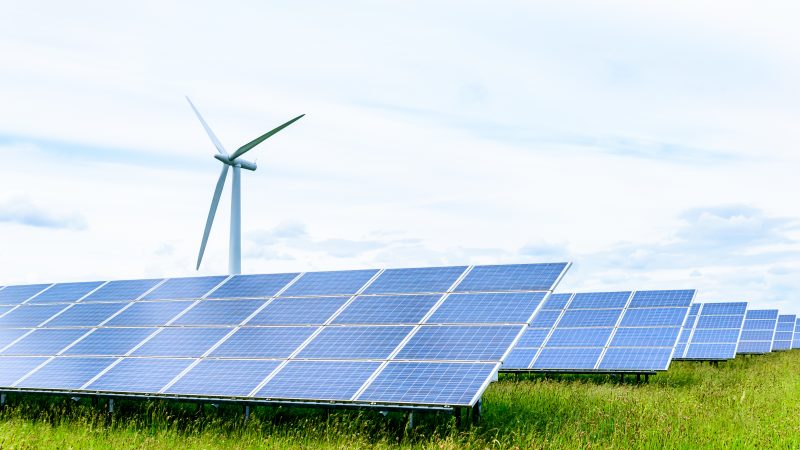
New research reveals what the UK public really thinks about net-zero

20 March, 2026 
 Left Foot Forward

This report sheds light on public attitudes to climate policy


New research has found that opposition to net-zero policies to address the climate emergency has been overstated. This has been published as part of a report from the Institute of Public Policy Research (IPPR) and Persuasion UK.

According to the report, over 60 per cent of the public support the UK’s target to get to net-zero carbon emissions by 2050. Their analysis comes from three years’ worth of data from polling firm YouGov.

The research indicates that the claims of a voter backlash against climate policies are overstated and that there is limited evidence that climate policy is driving voters to defect from Labour to reform. According to the analysis, just 4 per cent of Labour-to-Reform switchers cite climate or net-zero as a reason for changing their vote.

However, the analysis identified there is a significant gap between public opinion and politicians’ perceptions of it. According to the research, MPs are underestimating support for net-zero, with Tory MPs understating public backing by 18 percentage points.

The researchers attributed this misperception to a rapidly polarising political environment, in which rhetoric on climate has become decidedly more negative since 2022 despite little change in voter attitudes.

The report also highlighted the role of the media in amplifying a sense of backlash. IPPR and Persuasion UK analysis reveals that in 2025, online news coverage was more than two and a half times (160 per cent) as negative towards net-zero than public sentiment.

Becca Massey-Chase, principal research fellow and head of citizen engagement at IPPR, said: “Claims of a voter backlash against net zero have taken hold in Westminster, but the evidence shows they are largely a political myth. The British public continues to support climate action, and politicians risk fighting the wrong battle if they assume otherwise. The real danger is not public opinion – it is elite division and media narratives creating a false sense of risk.”

As a result of all the findings, the researchers have argued progressive politicians risk making a serious electoral miscalculation if they dilute climate ambition in response to populist right attacks.

The IPPR has therefore set out four priorities on net-zero policy it has for progressives that it says will resonate with voters. These are:Making a confident case for climate action: net zero remains electorally safe territory, and retreating from it risks losing support, particularly among younger and progressive voters.
Putting climate impacts back on the agenda: highlighting real-world effects such as flooding and extreme heat increases public engagement and resolve.
Future-proofing progress: encourage cross-party voices to reduce polarisation.
Building trust through fair policies: measures that reduce bills, support clean technologies and involve communities directly can embed long-term support.

Sam Alvis, associate director of environment and energy security at IPPR, said: “Some politicians are deliberately trying to undermine public support for climate action. But the public still cares about protecting themselves and their children from the impacts of climate change. In the face of these constant attacks, policymakers must focus on making clean energy choices simple, affordable, and part of everyday life.”


Chris Jarvis is head of strategy and development at Left Foot Forward


‘The public support net zero; Labour should too’


© Jevanto Productions/Shutterstock.com

The idea of a widespread public backlash against net zero is a right-wing confection – a story told and sold by populist politicians and right-wing media. Across the UK, people of all backgrounds, incomes and politics care about climate change and want action to reduce emissions and tackle the impacts of extreme weather.  

New research by IPPR and Persuasion UK finds that, in 2025, online news coverage of net zero was more than two and a half times as negative as public sentiment. Only around a quarter of the public have oppositional views towards net zero, yet negative online news made up around 71% of coverage.  

Is it any wonder then that there is a huge perception gap between MPs and the public on this issue? MPs across the board significantly underestimate public support for climate policies. At least 57% of Labour MPs assume public support for net zero is lower than it is, and Labour MPs’ confidence in the electoral advantage of net zero policies has almost halved in the last few years. To be really clear, there has not been a steep drop in public support over this time. Climate policy is highly polarised at the level of elite politics – with the Conservatives and Reform UK against net zero – but this does not reflect where the public are at. Parties that are against net zero are at odds with the majority of voters.  

Despite the negative media coverage and messages from Reform calling “net stupid zero” a “net killer”, most anti-net zero arguments aren’t landing. Only 15% of voters name net zero as one of the main culprits in rising energy bills – even Labour voters who are now considering voting Reform (about 3% of the electorate) don’t think it’s the main reason. People are generally much more likely to blame profiteering, privatisation and dependence on foreign gas. Similarly, the idea that net zero is driving industrial decline has very low resonance with Labour voters. Nor do voters – including Welsh voters – blame net zero for steelworks closures, such as in Port Talbot.  

This isn’t to say that the public’s support for net zero is unshakeable. The biggest threat it faces is low confidence and lack of trust in government, meaning people feel it simply can’t be done. This particularly matters for policies where people are being asked to make changes to their lives, such as through consumer choices. The upside is that Labour has a strong track record on delivering on climate policies since the general election – they need to shout about this and take credit for it.  

The other significant threat to net zero support is from political partisanship. As people move to Reform, they are more likely to become anti-net zero, not because Reform has won the arguments on this issue, but because their political allegiance sways their views. Only 4% of Labour-to-Reform switchers cite climate or net zero as a reason for changing their vote. But once someone is pro-Reform, and crucially, once they are anti-Labour, they are more likely to also be anti-net zero.  

What does this mean for the government? Firstly, it should be clear that climate policy is electorally safe territory on which to be proactive. Reneging on net zero would be one of the most vote-losing positions Labour could adopt with its 2024 voters. Voters aren’t moving to Reform because of Labour’s climate policy, but softness on this issue could lose Labour votes to the left.  

Secondly, the government needs to get climate up the agenda. The public support climate action, but it has fallen down their list of priorities. The more people care about an issue, the less likely they are to be swayed by partisan narratives. Government needs to focus on climate impacts, like flooding and extreme heat, and tie them back to net zero, while communicating more on the UK’s strong record in cutting emissions and increasing energy security.  

Finally, climate policy can and should tackle cost-of-living pressures. The public doesn’t blame climate policy for high costs, and most people, across all incomes, don’t feel that net zero has a negative impact on their daily life. But the cost of living is the public’s number one concern. Climate policy can address this by supporting the uptake of clean consumer technologies that lower costs – such as helping homeowners switch to solar – and by better managing the upfront energy costs as the UK rebuilds its energy infrastructure.  

Delivering under the pressure of right-wing attacks demands fresh confidence and commitment from government. There’s a risk that Labour capitulates to the right on climate. This would be a vote losing move. Instead, by highlighting the benefits of clean energy, protecting and supporting households, and tackling the impacts of extreme weather, Labour can confidently make climate policy a dividing line with the right, without fear of a voter backlash.

Britain is sliding towards billionaire politics: Is Labour too timid to stop it?


Left Foot Forward


Britain has long seen itself as more resistant to the corrosive effects of big money in politics, but recent trends suggest otherwise.


Across the Atlantic, the scale of billionaire influence in politics is staggering. Analysis by the New York Times found that during the 2024 federal elections, around 300 billionaires and their immediate families donated more than $3 billion, accounting for 19 percent of all political contributions.

On average, each billionaire family contributed about $10 million, roughly the same as the combined donations of 100,000 typical political donors. Even this understates the true scale of influence, as it excludes money channelled through opaque ‘dark money’ groups that are not required to disclose their funders.

Britain should not assume it is immune to similar mega-donor influence. The conditions that allow extreme wealth to dominate politics, such as rising campaign costs, sophisticated digital campaigning, and weak transparency rules, are present here too. Public trust is already fragile, and recent controversies surrounding elite networks and political access have reinforced a growing suspicion that influence often travels through wealth and proximity to power.

Nor has the change in government yet dispelled that anxiety. When Keir Starmer led Labour to a landslide victory in the 2024 general election, he promised a “government of service.” That pledge raised expectations that politics would become more transparent and accountable. If those expectations aren’t met, Britain risks drifting toward the same troubling trajectory now visible in the United States.

The American warning

The American example shows how concentrated wealth can reshape modern campaigning. Billionaire donors can finance highly targeted digital advertising, saturate television markets, build sophisticated voter databases and deploy canvassing technology designed to guide campaigners to precisely the right doors. In tightly contested races, these tools can be game-changing.

And mega-rich donors are not only influencing federal policy. They are investing heavily in state legislatures, courts, school boards and city councils, arenas where key decisions about abortion rights, tenant protections, charter schools and tax policy are often made.

In Illinois, home to 12.7 million people, the top-spending candidate almost always wins statewide races, where 87 percent of the money given to gubernatorial campaigns has come from billionaires, the NYT analysis found.

Just this week, it was reported that several groups with ties to the America Israel Public Affairs Committee (AIPAC), spent at least $20 million in four primaries backing candidates who their deem pro-Israel and defeat those who they believe will hurt their cause in Washington.

There has to be at the least the suspicion that such funding is linked to a reluctance by many US politicians to condemn, or even criticise, actions by the Israeli government.

In Wisconsin, a recent Supreme Court race, which would determine the ideological balance of the court, attracted millions from wealthy donors nationwide, and became the most expensive judicial race in US history.

Yet this level of financial concentration is relatively recent. Before a landmark 2010 Supreme Court ruling dismantled many campaign-finance restrictions, billionaire spending accounted for just 0.3 percent of political contributions. Since the court classified campaign spending as a form of protected free speech, far fewer limits apply to political funding.

Britain is not immune

Britain has long seen itself as more resistant to the corrosive effects of big money in politics, but recent trends suggest otherwise.


Research by Transparency International UK found that 66 percent of private political donations in 2023 came from just 19 mega-donors. The organisation estimates that £1 in every £10 donated to British politics comes from an unknown or questionable source.

Campaign spending is also rising sharply. The 2024 general election saw parties spend a record £92 million. In the year leading up to Keir Starmer’s victory, companies donated £42 million to parties and politicians, almost double the previous record before Boris Johnson’s 2019 win and triple the level seen before the 2017 election.

Much of this funding does not come from Britain’s major listed companies. According to the campaign group Democracy for Sale it increasingly flows from firms controlled by ultra-wealthy individuals, opaque companies with minimal disclosure requirements, and UK-registered businesses owned by foreign nationals who cannot legally donate in their own name.

Just five companies provided more than £27 million to Labour and the Conservatives in the year before the election.

The Conservatives received £15 million from the Phoenix Partnership, owned by businessman Frank Hester, a company that has secured £591 million in public contracts since 2016. Other donations included £1.25 million from Access Industries UK, ultimately owned by billionaire Len Blavatnik, alongside contributions from companies linked to Lords Michael Spencer and Joseph Bamford.

Labour also saw a sharp rise in corporate funding. In the year before the election, it received £13.3 million from companies, more than it received from trade unions for the first time in its history. Major donations included £4.7 million from green-energy entrepreneur Dale Vince and £4 million from the hedge fund Quadrature Capital, whose parent company is based in the Cayman Islands.

The rise of political funding networks

Financial influence increasingly flows through political networks as well as parties.

The right-wing Labour think-tank Labour Together has become a powerful force inside the party. Previously led by strategist Morgan McSweeney, who resigned as Starmer’s chief of staff amid the fallout from Peter Mandelson’s ill-fated appointment as Britain’s US ambassador, the group helped develop the campaign machinery that propelled Starmer to the leadership after Jeremy Corbyn.

Ahead of the 2024 general election, Labour Together reportedly donated £1.45 million to Labour and £280,000 to 23 MPs and several senior cabinet ministers with close ties to the organisation. The think-tank had previously been fined by the Electoral Commission for failing to properly declare around £740,000 in donations that helped finance Starmer’s leadership campaign.

Reform’s crypto mine


Then there’s the insurgent Reform UK, which has relied heavily on funding from its own leadership circle. Since 2020, deputy leader Richard Tice’s company Tisun Investments has donated more than £1.4 million to the party.

Reform has also come under scrutiny for failing to share the addresses of any of its digital cryptocurrency wallets with the Electoral Commission, limiting the election watchdog’s ability to monitor where the party is getting its money from.

Earlier this month, Labour Party chair Anna Turley wrote to the Electoral Commission after its quarterly report revealed Reform had secured a second multimillion-pound donation from a Thai- based billionaire, boosting the party’s war chest ahead of the crucial May elections. The £3 million donation from crypto investor Christopher Harborne, who also helped bankroll Brexit, follows the record £9 million he gave to Farage’s party last year.

A test for Labour

Last summer the Labour government began to deliver on its manifesto promise to make elections fairer in order to restore trust in politics. Dropping the voting age to 16 attracted most attention but campaigners and election watchdogs are urging the government to curb the growing influence of donors. They argue that without stronger safeguards in the Elections Bill, British politics will remain vulnerable to foreign-linked funding, opaque donations and privileged access for the super-rich.

The question is whether Labour act decisively, or prove too feeble, complacent or even reluctant, given its own growing reliance on wealthy donors.

The Elections Bill aims to modernise election rules, reviewing voter ID requirements, extending voting rights, improving voter registration and tightening donation rules. Yet most notably, it stops short of introducing a cap on political donations.

The Electoral Commission has warned that loopholes remain. They have called on the government to grant it tough new powers to regulate cryptocurrency donations to political parties, warning that the existing legal framework must be “strengthened to prevent impermissible foreign funds entering the UK system.”

Similarly, anti-corruption campaigners argue that unlimited contributions allow wealthy individuals to exert disproportionate influence over political parties.

Duncan Hames of Transparency International UK warns that without meaningful reform, public trust will continue to erode.

“Legislation to close the dark money loopholes in British politics is long overdue, and this bill takes some welcome steps. But it does not go far enough — either to achieve its stated ambitions or to contend with the biggest threats to our democracy.

“Public trust in our politics is already perilously low and these new rules will still allow the super-rich to buy political influence through large donations. Until that changes, trust will only continue to fall.”

Other democracies take a stricter approach. France caps individual donations to political parties at €7,500 per year. Canada, Belgium, Portugal and South Korea impose similar limits, and some even ban corporate donations altogether.

The lesson from the United States is clear: once extreme wealth becomes the dominant currency of politics, reversing its influence becomes difficult.

Britain still has time to avoid that path but doing so will require more than modest reforms. Capping donations, tightening transparency rules and closing the loopholes that allow opaque funding networks are essential if the country is to avoid being shaped by the highest bidder and putting political power in the hands of the richest.


Gabrielle Pickard-Whitehead is author of Right-Wing Watch
and Contributing Editor at Left Foot Forward.

Trussell urges for long-term UK government action, as food bank use almost 50% higher since 2019
Today
Left Foot Forward


The charity warns that too many people are being “overlooked and left behind,” with growing numbers struggling to afford basic essentials.


Trussell, the UK’s largest food bank network, has called for stronger and more sustained government intervention after revealing it distributed more than 2.6 million emergency food parcels across the UK in 2025. Of these, over 900,000 went to children.

While the latest figures show a 12 percent decrease compared with 2024, attributed largely to easing inflation and fewer job losses, the longer-term trend remains deeply concerning. Food parcel distribution is still 45 percent higher than at the start of the pandemic and the cost-of-living crisis.

The charity warns that too many people are being “overlooked and left behind,” with growing numbers struggling to afford basic essentials, and is urging the government to implement lasting reforms.

Central to its recommendations is a call to unfreeze Local Housing Allowance and permanently link housing support to real rental costs. The charity is also advocating for the introduction of an ‘Essential Guarantee,’ which would ensure that the basic rate of Universal Credit always covers the cost of life’s essentials and cannot fall below that threshold.

In addition, the organisation proposes establishing an independent body to advise on minimum Universal Credit levels, drawing on expert analysis and the lived experiences of people on low incomes.

Helen Barnard, the Trust’s director of policy and research, said the figures show that too many people are still “being pushed to the brink.” She spoke of the need for “meaningful and lasting action” to ensure everyone can meet their basic needs without relying on emergency food aid.

The government says it is determined to do more and that food bank use is “a blight on the country.”

A spokesperson said: “To help to support families with the cost of living, we have increased the National Living Wage, will take £150 off average energy bills, and are launching our £1bn multi-year Crisis and Resilience Fund to help prevent households falling into crisis in the first place.

“In addition to this, thanks to our decision to scrap the two-child limit and measures in our wider Child Poverty Strategy, we will lift 550,000 children out of poverty in the final year of this parliament – the largest reduction in child poverty since records began.”
UK Right-Wing Watch

Woke bashing of the week 
– From Greta to Packham: How ‘eco zealots’ became the right-wing press’s favourite targets

Today
Left Foot Forward


If the anti-woke clan has a set of favourite villains, the so-called ‘eco zealots’ must rank near the top.


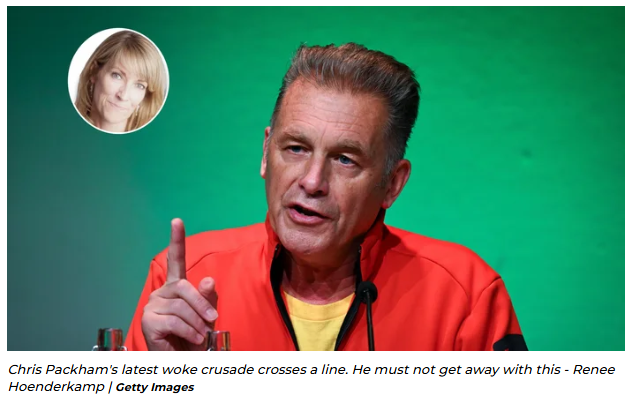
If the anti-woke clan has a set of favourite villains, the so-called ‘eco zealots’ must rank near the top. When they are not delighting in the arrest of Greta Thunberg, detained in December after attending a protest linked to jailed members of Palestine Action, their attention often turns to other environmental campaigners. One frequent target is the veteran naturalist and broadcaster Chris Packham.

In a column for GB News, celebrity doctor and TV presenter Renee Hoenderkamp described Packham as a “vile man.” She reminded readers of a remark he once made suggesting that those who reject environmental action might as well stand in a bucket of oil and set fire to themselves, presenting the comment as literal incitement rather than what it almost certainly was, hyperbolic rhetoric.

Hoenderkamp’s central grievance, however, is Packham’s supposed hostility to farmers. According to her column, “Chris doesn’t care about” rural communities. From trail hunting to pig farming, she argued, his criticism is relentless, and his frequent media appearances make him appear to speak for the public.

Yet this portrayal sidesteps an awkward reality: public opinion is already far more critical of modern farming practices than the column suggests.

During the YouTube documentary Greenwashed, Packham floated the idea of putting shocking images of industrial farming on meat packaging, similar to the warning labels placed on cigarette packets. Critics dismissed the suggestion as extremist but the reaction overlooks a key point: many consumers already have serious concerns about how animals are treated.

Research supports this. A 2025 report by Bryant Research found that between 75% and 96% of the UK public oppose common animal farming practices. According to the report, every practice presented to respondents, from intensive confinement to other standard industry procedures, was judged unacceptable by a large majority.

In other words, Packham’s criticism isn’t not as far removed from public sentiment as his critics imply.

The debate becomes even more complex when investigations into farming conditions are considered. The People for the Ethical Treatment of Animals (PETA) has released footage from British farms, including facilities audited under the ‘Red Tractor’ label, that appears to show animals living in cramped, unsanitary environments and suffering injuries or untreated illnesses.

Campaigners argue that such scenes undermine the reassuring image often presented to consumers. Animals marketed as part of ‘ethical’ British farming are, critics claim, frequently kept in conditions far removed from what’s considered ideal.

Hoenderkamp’s column ultimately broadens into a wider critique of veganism, warning that plant-based diets can lead to deficiencies in nutrients such as vitamin B12, iron and calcium.

While nutritional concerns are legitimate, they are hardly unique to vegan diets. Dietitians regularly point out that well-planned vegan diets can meet nutritional needs, just as poorly planned omnivorous diets can also lead to deficiencies.

The portrayal of environmentalists as reckless “eco zealots” makes for an easy headline, yet it obscures the fact that figures like Chris Packham may use provocative language, but many of the issues they raise, animal welfare, transparency in farming, and the environmental impact of food production, reflect concerns shared by a significant chunk of the public.

Dismissing those concerns with caricatures may generate outrage and clicks on GB News. It does little, however, to address the underlying questions about how food is produced, how animals are treated, and what kind of agricultural system the public actually wants.


Iran: Imperialists escalate war

Friday 20 March 2026, by Babak Kia


The imperialist war unleashed on 28 February 2026 by Donald Trump and Benjamin Netanyahu against the Islamic Republic of Iran is becoming more destructive every day.

Carnage for the people

The United States and Israel are striking not only at the regime’s military and security apparatus, but also at civilian infrastructure such as seawater desalination plants and residential areas. Bombings of oil sites, refineries and oil reserves, including Tehran, are also environmental disasters. The civilian population is the first victim: there have already been more than 1,700 deaths.

In the affected cities, residents are facing shortages and soaring prices, in a context where the recent uprising bloodily crushed by the regime began over hyperinflation. Security forces impose martial order in urban areas, increasing checkpoints.

Political strengthening of regime

On the political level, the war has strengthened the position of the leadership of the Revolutionary Guards, who, despite heavy losses, has just imposed Mojtaba Khamenei as Supreme Guide to replace his father. Elected by the Assembly of Experts, Mojtaba Khamenei has long been an influential figure in the regime. Remaining in the shadow of his father Ali Khamenei, he maintains close links with the leadership of the Revolutionary Guards and is well acquainted with the internal mechanisms of power. He has played an important role in the repression of the numerous uprisings since 2009.

At the religious level, his legitimacy remains weak. Before his appointment, he was only a hojatoleslam, a relatively modest rank in the hierarchy of the Shia clergy, although he will probably be elevated to the rank of ayatollah. He has never made a public political speech and draws his influence mainly from his networks within the state apparatus as well as from his economic power. He is also known for corruption and embezzlement charges amounting to tens of billions of dollars. His appointment is above all intended to show the continuity of the regime. It remains to be seen how long he can survive and maintain this position, which will depend in part on the evolution of the war and the decisions of Washington and Tel Aviv.

Response capabilities despite losses

Militarily, the regime has suffered heavy losses, and its air defence system is largely neutralized. The Islamic Republic has never invested in the protection of civilian populations: neither shelters nor an effective warning system exists. On the other hand, significant resources have been devoted to the construction of bunkers for dignitaries of the regime and for nuclear and ballistic installations.

Despite its military weaknesses, Iran retains the capacity to retaliate and cause harm. The Revolutionary Guards have scattered missile and drone launch pads throughout the country. US bases in the region as well as Israeli cities are regularly targeted.

The Iranian regime’s strategy is to increase the economic cost of the war in order to generate pressure from Western public opinion against this intervention. Tensions around the Strait of Hormuz and attacks on Gulf oil monarchies have caused a significant rise in the price of gas and oil. The effects are already being felt in Europe and the United States with the increase in fuel prices.

The alignment of the Western powers

This situation is strongly destabilizing the region and worrying the Gulf states, which are already opposed to the Israeli-American intervention. China and Russia, despite being allies of Tehran and permanent members of the UN Security Council, remain diplomatically reserved and have not even asked for an emergency meeting of the United Nations.

European states, with the notable exception of Spain, have once again sided with Trump and Netanyahu. Macron’s decision to open French bases to US aviation, including Istres, and to “secure” navigation in the Strait of Hormuz, through which 20% of the world’s oil passes, is fraught with danger because such an action would be seen as an entry into war by Iran.

Solidarity with the peoples of the Middle East

Trump is still seeking to negotiate with some factions of the Iranian regime, but strong security pressure inside the country is preventing any dissenting expression within the government for the time being. As for Netanyahu, who is also waging a criminal war against Lebanon, his strategy is to weaken the region’s strong states and fragment them, if necessary, so that the state of Israel is the sole regional power.

In the face of this disastrous situation for the peoples of the Middle East, the forces of the social and political left must build a movement against the war and for an end to the criminal Israeli intervention in Lebanon. The struggle against imperialism is inseparable from the struggle of the peoples against dictatorships and against reactionary states.

Support for the peoples of the Middle East in the face of imperialist war and against the colonial and genocidal state of Israel is accompanied by our solidarity with the struggles against dictatorship, for the right to self-determination, social justice, equality and freedom throughout the region.

Dangerous instrumentalisation of some Kurdish forces

Six Kurdish bourgeois nationalist organizations backed by Washington and Tel Aviv have decided to join forces. This policy, if it led to an armed confrontation against the Islamic Republic of Iran, would result in brutal repression against the civilian population in Iranian Kurdistan and in violent retaliation by the Tehran regime against Iraqi Kurdistan.

In this context, the Communist Party of Kurdistan (Iran) and its Kurdish branch, the Komala, have warned against these dangerous policies that would turn the Kurds into auxiliaries of imperialism, foot soldiers of Trump and Netanyahu. This policy of collaboration with US imperialism would lead to new tragedies and betrayals of the Kurdish national movement and the legitimate aspirations of the Kurdish people.

Collateral Damage Comes Home: Lebanon, Palestine, Iran to Michigan

Saturday 21 March 2026, by David Finkel


The already unbearable horrors engulfing the peoples of the Middle East exploded into U.S. domestic news on March 12 with the attack in suburban Detroit at Temple Israel, the country’s largest Reform Jewish congregation.

By the grace and luck of the quick security-team response inside the building, and that the explosives reportedly in the attacker’s truck didn’t detonate, a potential mass casualty catastrophe was averted. The building filled with smoke, but evidently there was no explosion.

The temple was successfully evacuated, including some 140 in its early childhood center. A lockdown of all Jewish institutions in the vicinity was lifted a few hours later.

The suspect Ayman Ghazali, a 41-year-old restaurant worker in Dearborn Heights and U.S. naturalized citizen, was killed in the truck he drove into the temple and through a hallway. It’s been confirmed that four of his close family members, including a brother, niece and nephews, had been killed by an Israeli bombing strike in Lebanon.

There have been no reports that Ghazali had militant or terrorist connections. A trained operative or someone receiving expert assistance might have had “success” in a suicide-bombing attempt. In the unimaginable worst scenario, carnage at the synagogue could have approached the numbers of children at the Iranian school incinerated by the U.S. missile strike at the beginning of Donald Trump’s “little excursion.”

Pending any further information, then, we should assume that Ayman Ghazali was a human being driven to suicidal madness by Israel’s murder of his family in Lebanon. On our daily news feeds, it registers only marginally that over a thousand civilians in Iran have already been killed by U.S. and Israeli strikes; that Israeli military and settler killings of Palestinians in Gaza and the West Bank continue without letup; and that the Israeli assault on Lebanon has displaced seven hundred thousand people from the south, and killed at least hundreds in the bombing of Beirut.

The Israeli defense minister has openly announced what’s been evident from the beginning, that Israel’s intentions include occupying or even annexing a part of southern Lebanon. The stated military goal of annihilating Hezbollah “once and for all” cannot be achieved without effectively destroying Lebanon itself — even though much of its population despises Hezbollah for what it’s contributed to ruining the country.

The political culture in the United States is largely immunized from understanding what this mass destruction means and where it’s leading. The atmosphere is further poisoned with the incoherent ramblings of Donald Trump, the cynical proclamations of Marco “Israel made us strike first” Rubio, and the maniacal ravings of Pete Hegseth announcing “our victory” while the world economy threatens to burn down.

In the wake of the Temple Israel attack and the shooting the same day at Old Dominion University (by a formerly convicted “Islamic State” sympathizer), we should be fearful of further violence against synagogues and mosques, Jewish and Muslim institutions, and redoubled government terror on immigrant communities.

Combine this with the racist and increasingly open antisemitic Tucker Carlson-Candace Owens far right spreading the toxic mythology that “the United States has gone to war for Israel” or even “for the Jews” — as if Washington were the junior member in the partnership of U.S. imperialism with the Israeli state.

As Donald Trump’s catastrophic war escalates, even beyond its absurd initial calculations of “quick victory,” it’s up to the people of this country to rise against it. The alternative, not only globally but also as collateral damage comes back home, is a degenerative spiral that is nowhere near the bottom yet.

Against the Current !3 March