Sunday, April 12, 2026

ALT FUELS


Vale signs charter deal with China’s Shandong Shipping to build ethanol-powered ships
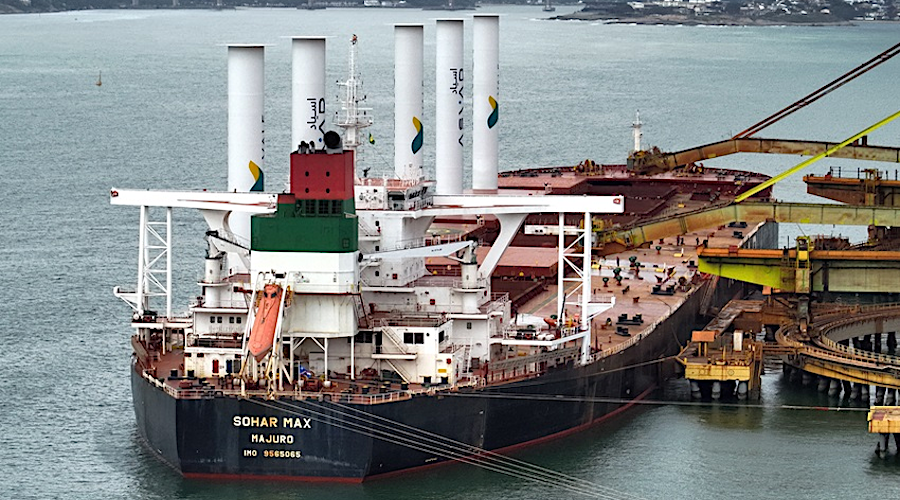
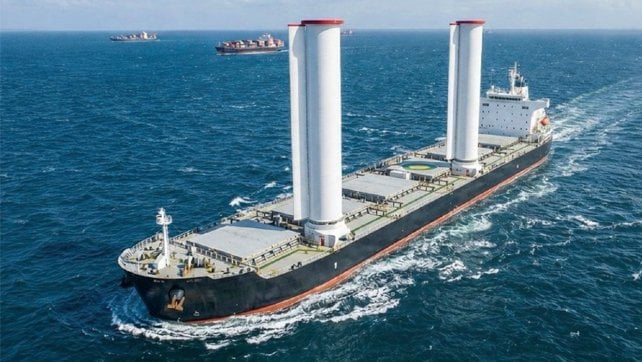
Valemax Sohar Max, one of the world’s largest ships in with a wind propulsion system. (Image courtesy of Vale.)

Brazilian miner Vale has signed a 25-year charter deal with China’s Shandong Shipping Corporation, which will build the world’s first two transoceanic ethanol-powered vessels under the agreement, a Vale executive told Reuters on Wednesday.

The two Guaibamax-class vessels, each with a capacity to transport up to 325,000 metric tons of iron ore, are scheduled to be delivered from 2029 onwards.

They will be equipped with rotor sails to harness wind energy and more efficient engines, among other energy-efficiency improvements, Rodrigo Bermelho, Vale’s navigation director, said.

“We see decarbonization as an irreversible trend,” he said. “It is at the core of Vale’s strategy, not only in maritime transport but across all the products we have been developing for the steel industry.”

Vale is one of the world’s largest iron ore producers.

The agreement comes amid the US-Israel war on Iran, as disruptions on international oil markets have reinforced the appeal of alternative fuels and greater diversification in maritime transport.

“Situations like the one we are witnessing show the importance of having a flexible system that can adapt to different market conditions to ensure business continuity,” Bermelho said.

He noted Vale’s shipping operations have not suffered any material impact from the war.

Bermelho declined to disclose the value of the charter contract for confidentiality reasons, but said the deal includes an option for additional vessels.

Vale operates a fleet of around 50 Guaibamax vessels and has already announced the chartering of another 10 dual-fuel ships, capable of running on methanol and heavy fuel oil, from Shandong, with deliveries scheduled between 2027 and 2029.

The miner is studying the possibility of converting these vessels to also use ethanol.

(By Marta Nogueira and Fernando Cardoso; Editing by Chizu Nomiyama and Rod Nickel)

Mining Giant Vale Orders World's First Ethanol-Powered Giant Bulkers
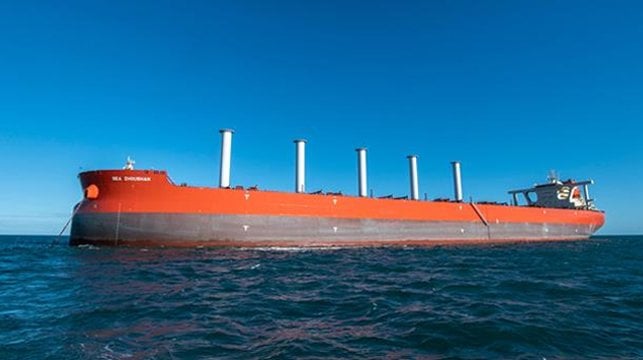
massive Guaibamax ore carrier
Vale plans to build at least two Guaibamax bulkers running on ethanol (Vale)

Published Apr 9, 2026 7:29 PM by The Maritime Executive


Vale reports it has entered into an agreement with China’s Shandong Shipping Corporation to build the first large ocean-going vessels that will use ethanol as their primary fuel. It is an adaptation of its current design for the massive Guaibamax vessels (325,000 dwt) and follows news from earlier this year that reported Vale and Everllence were working on ethanol as a marine fuel for its engines.

According to Vale, the agreement with Shandong includes 25-year contracts for the construction of two vessels, with an option for additional ships. The adoption of these second-generation Guaibamax vessels, which are 340 meters (1,115 feet) long and have a capacity of 325,000 tonnes, is part of the Brazilian mining company’s multi-fuel strategy. In addition to ethanol, these vessels will be capable of using methanol and heavy fuel oil, and their design also allows for conversion to use liquefied natural gas (LNG) or ammonia. 

Shipping companies and the engine manufacturers have reported they are exploring ethanol as an alternative fuel. While there are concerns over supply, it is easier to handle than ammonia, which is toxic and highly corrosive. Maersk reported last December that it was exploring ethanol aboard its pioneering methanol-fueled feeder ship Laura Maersk. Everllence reported in September 2025 that it had success testing ethanol on its large two-stroke engines in the factory. 

“The use of ethanol as fuel in the ships that transport our ore, combined with the adoption of rotor sails to harness wind energy, places Vale in a unique position for the energy transition in global shipping over the coming decades, whilst driving similar initiatives in the sector,” said Rodrigo Bermelho, Vale’s Director of Shipping.

Considering the full fuel cycle from well to wake, Vale highlights that ethanol can reduce carbon emissions by around 90 percent (in the case of second-generation ethanol) compared with heavy fuel oil. In addition to maritime transport, Vale’s adoption of ethanol in its logistics operations includes trials on trucks at its operations and on locomotives on the Vitória a Minas Railway (EFVM). 

The new ethanol-powered ships will be similar to 10 other dual-fuel vessels (methanol and heavy fuel oil) that Shandong will deliver to Vale starting in 2027. The second generation of the Guaibamax will be equipped with five rotor sails to provide wind-assisted propulsion, as well as more efficient engines, hydrodynamic devices, a shaft generator, frequency inverters, and silicone paint, among the energy efficiency improvements. Vale says this set of technologies applied will reduce GHG emissions by around 15 percent compared to the current generation of Guaibamax. These technologies and alternative fuels are being tested as part of Vale’s Ecoshipping program. 

The mining giant had reported in October 2024 that it was proceeding with the installation of rotors on one of its 400,000 dwt vessels. It was part of an agreement with the Japanese owners of the NSU Tubarao and Anemoi Marine. The company also added Norsepower rotors to one of its Capesize bulkers.

Vale’s chartered fleet includes first-generation Valemax vessels since 2011, second-generation Valemax vessels since 2018, and, since 2019, the first generation of Guaibamax. According to the company, these vessels are among the most efficient in the world and can reduce CO2 equivalent emissions by up to 41 percent compared to a standard capesize vessel.   


Exmar’s Pioneering Ammonia Dual-Fuel Gas Carriers Named at Hyundai Shipyard
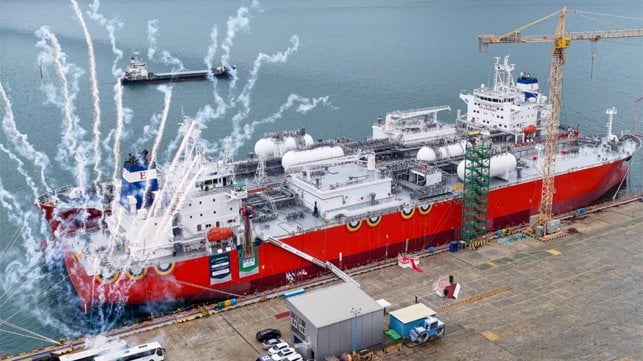
ammonia dual-fuel gas carriers
Pioneering ammonia dual-fuel gas carriers were named ahead of their delivery starting next month (Exmar)

Published Apr 9, 2026 6:47 PM by The Maritime Executive


Two innovative vessels, which are being billed as the world’s first mid-size gas carriers with ammonia dual-fuel engines, were named as they are nearing completion. The vessels, which were ordered in 2023 and 2024 by Exmar, a specialist in gas shipping, are being built at the Ulsan, South Korea, shipyard of HD Hyundai Heavy Industries and are viewed as the cutting edge for a new era in shipping.

The ships, which are each 46,000 cubic meter gas carriers, were named Antwerpen and Arlon in honor of two Belgian cities. Each measures 190 meters (623 feet) in length and is specifically designed for the transport of liquefied gas cargoes, including ammonia and LPG. Exmar highlights that the vessels were deliberately lengthened 10 meters (approximately 33 feet) in the design stage, along with a slight increase in beam to achieve a meaningfully higher cargo intake compared to the standard design. Hyundai developed the proprietary technology and the three tanks, which provide 45,000 cbm storage below deck, and two 500 cbm deck tanks.

HD Hyundai highlights that ammonia (NH3) can be stored in pressurized tanks at around 8 bar or in refrigerated tanks at -33°C without the need for cryogenic technology. In liquid form, it has about 1.7 times higher storage density than liquefied hydrogen (-253°C) at the same volume, making it suitable for large-scale, long-distance transport and storage of hydrogen.

One of the key features of the design is the ability to use cargo as fuel. Exmar says this creates significant operational flexibility and environmental advantages. It reports that the ammonia dual-fuel technology enables CO2 emission reductions of up to 90 percent during navigation.
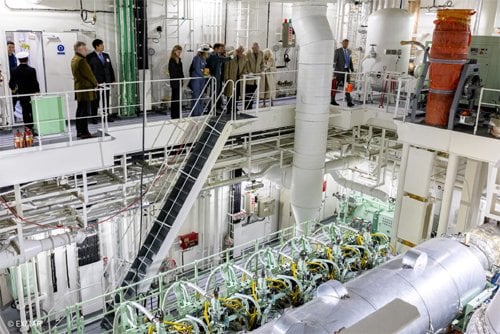
 

The mid-sized gas carriers are the first to be outfitted with the ammonia dual-fuel engines (Exmar)


The ships also feature shaft generators and a selective catalytic reduction (SCR) system to reduce nitrogen oxide emissions.

The safety concerns about ammonia were addressed by equipping the vessels with advanced detection and mitigation systems. They have an ammonia gas detector for real-time leak monitoring and an ammonia purge recovery unit. These ships are the first of four being built for Exmar. They are currently completing outfitting and are scheduled for delivery in May and late June.

For HD Hyundai, the vessels represent a significant achievement in its strategy to pursue high-value vessels and new technologies. It highlights the ammonia gas carriers as the next step following its 2016 delivery of the world’s first methanol-powered petrochemical product carrier and the 2023 delivery of the first methanol-powered containership. Designs for the ammonia gas carriers were developed through a partnership involving HD Hyundai, HHI-EMD, Wartsila Gas Solutions, WinGD, Lloyd's Register, and Exmar

While the expectations remain high for ammonia as an alternative maritime fuel, DNV highlights that there are only three ships in the world currently operating with ammonia, two tugs and one offshore supply vessel. However, it calculates that there are currently 46 vessels on order, with as many as 18 scheduled for delivery in 2026 and reaching 46 vessels by 2030.

HD Hyundai highlights the forecast by the International Energy Agency that projects ammonia will account for eight percent of marine fuel demand by 2030. It is projected to rise to 46 percent by 2050. Ammonia is also seen as a likely carrier, as it can be used to transport hydrogen when combined with a cracking process at the destination.


EcoNavis to Validate and Demonstrate Improved Design for Wind Rotors
enhancement to wind rotor design
EcoNavis adds an appendage to the rotor to increase its performance and address changes in wind direction (EcoNavis Solutions)

Published Apr 7, 2026 5:57 PM by The Maritime Executive


Scotland-based EcoNavis Solutions believes it has a technological innovation that can enhance the performance of wind rotors. With wind-assisted propulsion gaining increased interest, the company is using a Scottish Enterprise research grant to move its concept from the drawing board to validation and demonstration.

The basic concept of the wind rotor promoted by Anton Flettner in the 1920s remains largely unchanged after more than a century. The spinning rotor captures the energy of the wind to provide additional thrust for ships and has become one of several competing technologies in the sector.

EcoNavis, however, points out that there are limitations to the original technology that impact its reliability. Issues such as a change in wind direction can reduce the effectiveness and also mean that ships require more route planning to maximize the effectiveness of the technology. 

The company has patented a tail-appendage device, which it says can increase thrust, reduce power demand, and widen the range of wind angles in which the rotor sail can operate efficiently. The tail enables the company to essentially broaden the rotor’s effective “wind window” and reshape the wind flow in the rotor’s wake.

It delivers higher thrust with lower torque demand. EcoNavis reports initial simulations indicate an increase in thrust of up to 10 percent with a 5 percent reduction in torque.

“Flettner rotors already offer one of the highest lift-to-drag ratios among wind-assisted devices, with a relatively modest footprint, but the main drawback has been the narrow band of wind angles – typically beam and stern-quarter winds,” said EcoNavis CEO and founder Dr. Batuhan Aktas. “By recovering energy that would otherwise be lost and optimizing the flow behind the rotor, we can provide a Flettner rotor design with a greater operational range.”

The fixed aerodynamic appendage downstream helps to stabilize the airflow behind the rotor. The company says it will permit the rotor to continue to generate thrust as wind conditions change.

By recovering energy that would otherwise be lost and optimizing the flow behind the rotor, EcoNavis believes its EcoRotor Sail can offer greater operational range. It says shipowners can have greater flexibility in route planning and more consistent performance over a typical trading year without fundamental changes to vessel operations.

The next phase will move into physical testing. Development of the EcoRotor Sail is being backed by a £100,000 ($133,000) research grant from Scottish Enterprise to take the £265,000 ($352,000) project through to validation and demonstration stages.


 

Top Gulf aluminum maker declares force majeure on some contracts

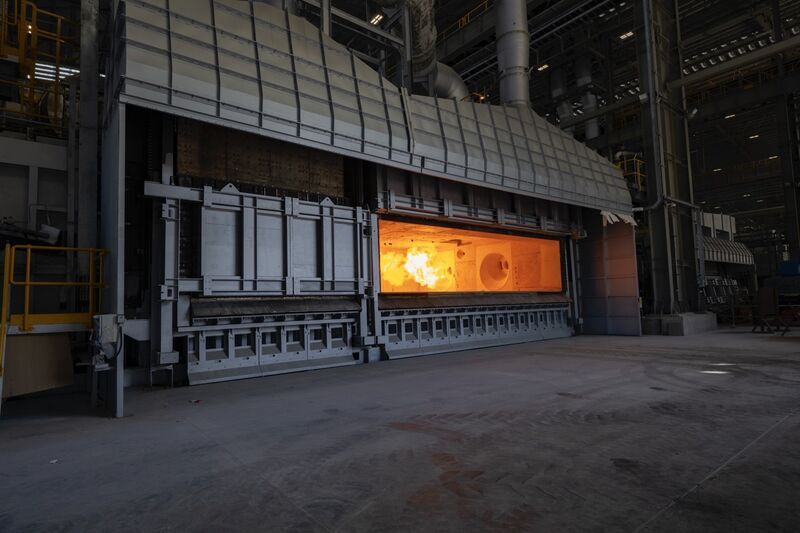
EGA’s new Al Taweelah recycling plant. Credit: Emirates Global Aluminium | LinkedIn

Emirates Global Aluminium, the Middle East’s top producer of the metal, invoked force majeure clauses to suspend at least some deliveries after one of its smelters was put out of action by an Iranian attack.

The move comes as EGA halted operations at its Al Taweelah smelter after the site was struck by Iranian missiles and drones at the beginning of April amid the US-Israel war on Tehran. The force majeure on some contracts was outlined in documents seen by Bloomberg News.

The plant is among the world’s largest and produced 1.6 million tons of aluminum in 2025. EGA did not immediately respond to a request for comment outside of normal business hours in the UAE.

The Middle East as a whole produces about 9% of global supply of aluminum, with EGA and others playing a key role supplying manufacturers across Europe, Asia and the US. Even before the industry was directly targeted, Iran’s effective closure of the Strait of Hormuz, a vital shipping route, had already left the region’s major producers short of critical inputs. The sector is anticipating a cascading wave of production cuts unless the strait reopens quickly.

LME futures of the lightweight metal have surged since the Iran war broke out at the end of February. Prices climbed 1.6% to settle at $3,498.50 a ton on the London Metal Exchange on Friday, translating into a third weekly gain of 0.8%.

(By Yvonne Yue Li)


After Ceasefire, Iranian Attacks Cut Saudi Oil Production

Fires at Abqaiq
Fires and smoke near the vast Abqaiq refinery complex, April 8 (Sentinel-2)

Published Apr 9, 2026 8:35 PM by The Maritime Executive


Official Saudi sources have confirmed that recent Iranian attacks caused extensive damage to oil and gas facilities, killing at least one person and leading to a substantial cut in production capacity. Argus Media reports that all of the strikes occurred within the past 48 hours.  

The official Saudi Press Agency detailed out the effects of the drone strikes in an extensive list released Thursday. The most serious issue is yesterday's attack on a pumping station for the East-West Pipeline, which has become a lifeline for moving Saudi crude from the bottled-up Gulf to a secure loading terminal on the Red Sea. It is the largest pipeline carrying GCC crude oil to market, and the strike reduced its throughput by about 700,000 barrels per day, according to SPA. 

Saudi upstream operations have also suffered. An  oil production facility at the Manifa offshore field was hit, cutting output by 300,000 barrels per day, and the Khurais facility as well, cutting another 300,000 bpd (a total production cut of 600,000 bpd). 

In addition, other Iranian strikes hit the giant refinery and petchem complexes operated by Saudi Aramco and foreign partners. The list includes refining sites in Jubail, Ras Tanura, Yanbu and Riyadh - all affecting exports of refined products (though officials did not provide an exact amount). 

In nearby Qatar, one of the world's leading producers of LNG, contractors are beginning intensive work to prepare for the restart of the working liquefaction trains at Ras Laffan. These facilities process the output from Qatar's gigantic North Dome complex and ship it to the world, accounting for about 20 percent of the total global supply of gas traded over the water. Iran's ballistic missiles hit two out of the 14 trains at Ras Laffan, taking them out of commission for up to five years, according to operator QatarEnergy. 

WoodMac assesses that the north half of Ras Laffan could be brought back online within a month. The south side of the site was damaged in an Iranian strike and could take until August to return its surviving four trains to operation, the consultancy said in a research note. It is unclear if QatarEnergy will want to begin restarting production before a permanent truce is agreed between the U.S., Iran and Israel, Wood Mac noted. 

For the region's shut-in oilfields, now totaling some 11 million barrels per day of lost production, the restart timeline could be even longer. Wood Mac predicts a 6-9 month timeline for bringing wells and upstream infrastructure back online, accounting for unforeseen repairs and setbacks during the reactivation process. 

"All this comes with a health warning," said Fraser McKay, Head of Upstream Analysis at Wood Mackenzie. "Operators hastened by regulators and governments to restore production too rapidly, will risk doing more long-term damage to foundational assets."


Opening Hormuz to Be Key Issue of Negotiations as Transits Remain Low

tanker at sea
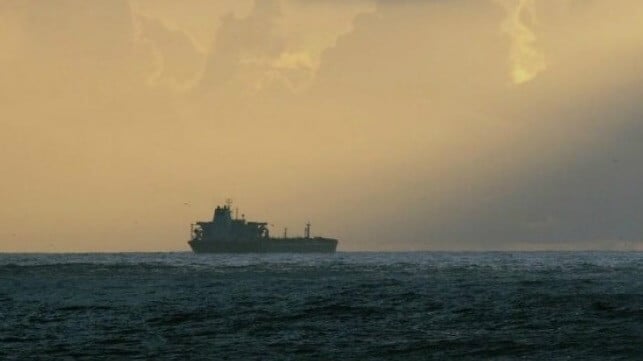
A Rusian-flagged tanker linked to Iran made the transit, but traffic in the Strait of Hormuz remains very limted

Published Apr 10, 2026 12:48 PM by The Maritime Executive


Three days into the announced ceasefire, the military portion appears to largely be holding, but Donald Trump’s demand that the Strait of Hormuz be open for “complete, immediate, and safe” operations remains elusive. The expectation is that it will be front and center as the U.S. and Iranians start talks in Pakistan this weekend.

Donald Trump again lashed out on social media Thursday evening, calling Iran’s efforts “dishonorable” and saying it was doing “a very poor job” of allowing oil to go through the Strait of Hormuz. He said it was not the agreement, and responding to reports of fees being charged to tankers, Trump wrote, “If they are, they better stop now.” This was after he earlier said maybe the U.S. and Iran might jointly control the Strait and split the fees.

Despite the demands on social media, the reality remains that only a handful of ships have transited for a third day. First reports said it was six ships on Thursday, but Kpler later revised it, saying the total was nine, up from five on April 8. Early expectations and indications of a slight uptick after the announcement of the ceasefire largely did not pan out. 

All the sources agreed it was fewer than 10 ships in the last 24 hours based on AIS transmissions, with NBC reporting it was 19 ships in total since the start of the ceasefire. However, some vessels are still believed to be going dark for the transit, meaning the actual number might be higher, but nowhere near the 100 to 120 vessels a day before the hostilities began.


(Animation from MarineTraffic showing th continued lack of traffic through the Strait of Hormuz)


One notable transit late on Thursday tracked by Bloomberg was the Russian-flagged VLCC Arhimeda. Built in 2000, the 309,497-dwt tanker took on this latest identity and the Russian flag at the start of 2026. It was previously sanctioned by the United States in July 2025 for its involvement with the Iranian oil trade and linked to a sanctioned manager. Bloomberg reports the tanker appears to be heading to Iran’s Kharg to load a cargo.

While U.S. negotiators are expected to demand Iran immediately open the Strait, a top economic advisor to the White House said in interviews on Thursday, there were backup plans. Kevin Hassett, director of the White House’s National Economic Council, admitted that traffic on the route remained “tightly throttled.”

Hassett said they hoped for clarity from the negotiations, but said it could take two months for the oil flow to return to normal levels through the Strait. He also said the Trump administration had a backup plan, while Reuters reported that UK Prime Minister Keir Starmer discussed plans to reopen the Strait with Donald Trump and in meetings with Bahrain and the United Arab Emirates.


QatarEnergy’s U.S. LNG Plant Achieves First Production at Critical Time

US LNG export terminal at Sabine Pass
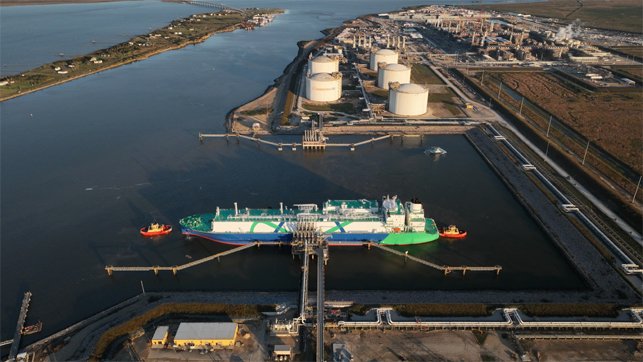
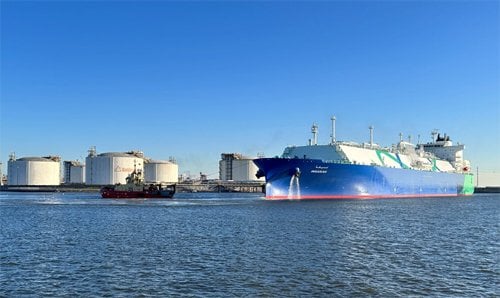
Golden Pass achieved its first production and is preparing for the start of exports (Golden Pass LNG)

Published Apr 1, 2026 8:04 PM by The Maritime Executive


Just as the world is looking for alternative sources of LNG, Golden Pass LNG in Texas reported it has achieved first production. The project, which has been in planning and development for 15 years, is set to start export shipments in the second quarter, coming online to help fill some of the shortfall from Qatar and the Middle East.

The United States is already setting records for LNG shipments and has been rivaling Qatar for the title of the largest producer/exporter. The U.S. Energy Information Administration reported the U.S. was the largest export country in 2025 with over 100 million tons of LNG, further establishing its position after strong exports in 2024. LSGE reports that the U.S. set another new all-time high in March, exporting 11.7 million metric tons, versus the previous record of 11.5 million tons just four months ago. 

Global supply fell by as much as 20 percent in March as hostilities with Iran grew. QatarEnergy reported that it had suspended its operations at Ras Laffan after it was struck by the Iranians, and it warned that its operations could be reduced by as much as 12 million metric tons per year for up to five years while it completes repairs. Qatar had expected to pull ahead in the global race as it commissioned its new North Field.

Golden Pass had been in the application and permitting phase from 2012 to 2017. It is a joint venture with Qatar owning 70 percent and ExxonMobil holding the other 30 percent. The two companies made their final investment decision in February 2019, reporting they would invest approximately $10 billion for the development of Golden Pass LNG.


Cool down cargo arrived in December 2025 (Golden Pass)


“Golden Pass LNG is part of a wider QatarEnergy strategy for international investments that we have been planning over the past decade,” said Saad Sherida Al-Kaabi, the Minister of State for Energy Affairs, and the President and CEO of QatarEnergy. “It also represents a significant part of the plans announced by QatarEnergy in 2018 to invest 20 billion dollars in the U.S. energy sector.”

The project had received its cool down cargo in early December aboard one of QatarEnergy’s new LNG carriers. The company is taking delivery on a massive new fleet with its shipping partners after what was billed as the largest shipping building project. The ships are being built in both South Korea and China.

“First LNG is of particular importance for one of the largest single investment decisions in U.S. LNG history,” commented the minister. “The operational phase and market entry of Golden Pass LNG will come at an important time when global energy security ranks very high on energy agendas worldwide.”

The project is located 10 miles south of Port Arthur, Texas, and close to the Louisiana border. The project highlights that it has a unique advantage in its location with a large, deep-water port. EIA notes it has been just 10 years since the U.S. launched Sabine Pass as an LNG export hub.

The first of three trains at the new site is now in production at the Sabine Pass Terminal. The company said it is now focusing on the delivery of its first cargo, achieving sustained liquefaction operations, and moving to meet its commercial and strategic objectives.

When the project is completed, the three trains will have a total capacity of 18.1 million tons per year. It also includes five 155,000 m³ LNG storage tanks and two marine berths. It will be able to accommodate the largest LNG carriers in the world and become one of North America’s largest LNG export terminals.


CK Hutchison Files Arbitral Claim Against Maersk Over Panama Terminals

Balboa
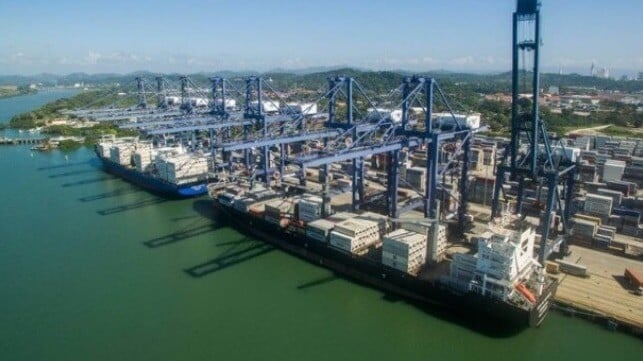
Courtesy CK Hutchison

Published Apr 7, 2026 11:01 PM by The Maritime Executive


CK Hutchison, the Hong Kong-based ports giant, has filed an arbitral claim against AP Moller-Maersk. The case expands on an earlier arbitral claim that Hutchison filed against the Panamanian government, alleging that it has illegally seized two of Hutchison's container terminal leases.

Until this year, CK Hutchison was the operator of container terminals in Balboa and Cristobal, Panama, among dozens of its other global holdings. Following pressure from the Trump administration to reduce Chinese "influence" at the Panama Canal, the Panamanian government launched an investigation into the circumstances of CK Hutchison's contracts, which had been in place uninterrupted since 1997 and had been renewed in 2021. After the government audit, Panama claimed that Hutchison had underpaid for its concession by about $1.2 billion. In February, Panama's supreme court concluded that the laws establishing the terminal concessions were not valid, paving the way for the government to seize the two terminals. 

After the takeover, Panama offered temporary contracts for the ports' operations to MSC and to APM Terminals, Maersk's container-terminal division. The facilities are running smoothly under new management, according to Panama - but not to Hutchison's satisfaction. The company and its Panamanian subsidiary are seeking $2 billion in damages in an arbitral proceeding against the government of Panama, alleging "radical breaches" of contract.   

Panama has been at pains to emphasize that it is not expropriating CK Hutchison's two terminals, but is rather issuing temporary licenses for Maersk and MSC to manage them. Hutchison considers the ruling "unlawful" and a risk to "health and safety" at the two terminal complexes; it has heavy backing from the Chinese government, which claims that the Panamanian supreme court ruling is "unreasonable and absurd."

Maersk now faces a separate arbitration proceeding of its own. Hutchison has filed a claim against the number-two ocean carrier for "aligning" with the Panamanian government, aiding the takeover and the installation of new terminal operators. The company has yet to comment on the claim.  


China Commissions Wind Farm At Its Deepest Offshore Position

Chinese offshore wind farm
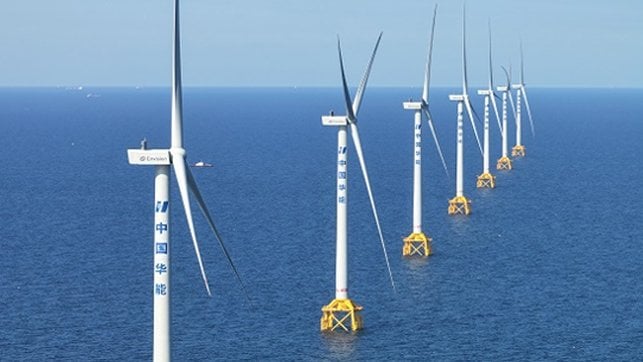
China Huaneng's Shandong wind farm is positioned at depths up to 184 feet and more than 40 miles offshore (CHG)

Published Apr 10, 2026 3:49 PM by The Maritime Executive


Chinese officials highlighted the commissioning of its newest offshore wind farm, which is also setting a record for the country’s deepest fixed-bottom wind turbines and is located far out to sea. They highlighted the complex geology and challenges of extreme sea conditions in developing and operating the 504 MW wind farm, the Huaneng Shandong Peninsula North L Site.

The wind farm was developed by the state-owned China Huaneng Group and will be managed and operated by the Yantai Power Plant. The wind farm is located in northern China approximately 70 kilometers (43 miles) off the northeast coast of the Shandong Peninsula in the Yellow Sea. The position meant that the developers had to overcome the challenges of a 95.6-kilometer (59-mile) submarine cable to bring the power to the grid.

The location required the wind turbine foundations to be at depths ranging between  52 and 56 meters (170 and 185 feet). It is the deepest position developed by China and rivals the deepest wind farm in the world. The deepest title is held by Scotland’s Seagreen, which is at a position of 58.7 meters (192.5 feet). Developed through a joint venture between SSE Renewables, TotalEnergies, and PTTEP, the 1 GW Scottish wind farm was commissioned in 2023.

China Huaneng Group highlights the use of a four-pile jacket foundation structure with a maximum height of 83.9 meters (275 feet) to ensure the safety and stability of the turbines in the deep-sea and complex geological environment. 

The project developed high-precision positioning technology using a navigation satellite system for the positioning of the foundations. They also report that they were able to reduce the pile driving time for a single wind turbine from 48 hours to 29 hours.

The completed wind farm has a total of 42 12 MW turbines.  It was officially connected to the power grid and began delivering full power on April 7. The company expects the wind farm to save about 500,000 metric tons of standard coal per year.


Norway to Deploy World’s Largest Fleet of ‘Flying’ Electric Ferries

Candela Technology
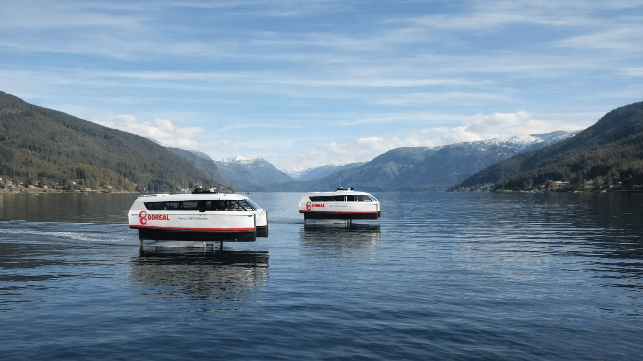
Candela P-12, already in production, will soon hit the Norwegian fjords, providing zero-emission, silent transport for tourists and commuters alike.

Published Apr 11, 2026 6:14 PM by The Maritime Executive


[By: Candela Technology]

Soon, tourists and commuters along Norway’s stunning coastline will travel aboard “flying” electric ferries.

Norwegian operator Boreal AS—a leader in sustainable transport—has ordered 20 Candela P-12 electric hydrofoil vessels from Sweden’s Candela Technology, marking the world’s largest electric fleet to date.

The uniquely fast and silent hydrofoiling vessels will speed up commuting along Norway’s fjord-lined coast, where water travel is an essential part of daily transport.

Norway is already the world’s most electrified car market, with around 99% of new car sales fully electric. Electrifying high-speed passenger vessels—“hurtigbÃ¥tar,” the backbone of rural transport—has, however, remained challenging, as conventional e-ferries lack the range and speed to replace the diesel-powered fast ferries connecting communities across the country’s deep fjords and more than 100,000 kilometers of coastline.

The Candela P-12, however, solves this: it combines a cruising speed of 25 knots with a range of around 40 nautical miles, enabling electric operation on routes previously only served by diesel vessels. Furthermore, the large fleet of 20 vessels will provide more frequent departures, and speed up travel times.

“Candela P-12 is the only electric passenger vessel that combines longer range with high speed without requiring extensive charging infrastructure. Our investment will enable new high-speed routes both in cities and in rural areas,” says Nikolai Knudsmoen Utheim, CEO at Boreal. “Norway has already led the electrification of maritime transport. With this fleet, Boreal wants to take the next step—accelerating zero-emission high-speed travel along the Norwegian coast and helping bring electric vessels to new markets beyond Norway.”

The P-12’s unique performance comes from computer-controlled hydrofoils—wings mounted beneath the hull—that lift the vessel above the water at speeds above 18 knots. By flying above the waves, drag is drastically reduced, and energy consumption drops by around 80 percent compared with conventional vessels of similar size. Already in successful use in Stockholm's public transport, the P-12 has been hailed as a “game-changer” for transport, combining lower operational costs with low environmental impact.

Furthermore, the efficient P-12 can fully recharge in an hour using standard DC car fast chargers, avoiding the expensive megawatt-scale charging systems required by conventional electric ferries. The capability was recently demonstrated during a voyage between Sweden and Norway, when the P-12 completed the longest electric sea journey to date, recharging along the route using a mobile battery system transported by a Ford F-150 Lightning pickup.

The first two P-12 vessels will be delivered in 2027 and are planned to enter service on one of several potential routes currently being explored in Norway and abroad. The remaining vessels will follow in yearly batches between 2028 and 2030.

Passengers will also see a major upgrade in comfort. The vessel's digital Flight controller reads wave conditions using sensors and adjusts the hydrofoils in real time, ensuring a smooth ride even in rough seas while keeping cabin noise extremely low.

Recent tests of the P-12 in Stockholm confirmed cabin noise levels of just 64 dB—lower than modern trains, aircraft, or ferries—making it the quietest high-speed vessel in operation.

“Tourists and commuters in Norway will enjoy better service and more frequent departures—free from seasickness, silent, and without the negative impacts of wake and emissions in the unique Norwegian fjords,” says Alexander Sifvert, Candela’s European Director.

“We’re thrilled to partner with Boreal, whose ambition and leadership are helping drive the electrification of maritime transport. This initiative shows how forward-thinking operators can accelerate the shift to zero-emission travel at sea, while reducing costs.”

The products and services herein described in this press release are not endorsed by The Maritime Executive.


Meyer Werft Presents “Vision” for a Battery-Electric Cruise Ship

battery electric cruise ship concept
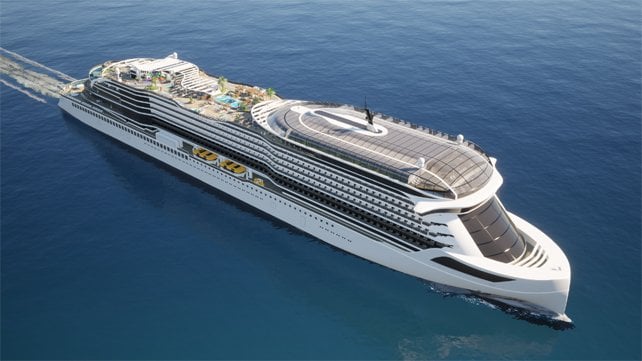
Meyer Werft's concept design for an 82,000 GT battery-electric cruise ship (Meyer werft)

Published Apr 10, 2026 4:19 PM by The Maritime Executive


The German shipbuilder Meyer Werft, well known for its innovation in cruise ship design and construction, is presenting a new concept for the world’s first 100 percent battery-electric cruise ship with a size of more than 80,000 gross tons, which it aptly named Project “Vision.” It reports that the concept study demonstrates how sustainable innovations can redefine the future of the cruise industry while emphasizing the technology concepts that already exist to make a large, battery-electric cruise ship a reality.

“We asked ourselves how we can use innovation to reduce CO2 and contribute to decarbonization — not in 50 years, but much sooner,” explains Tim Krug from the Meyer Werft Concept Development Group. With this design, he emphasizes, they can “enable a reduction in greenhouse gas emissions of up to 95 percent.”

Meyer Werft transitioned into cruise ship construction in the 1980s, starting with 40,000 to 45,000 gross ton ships. Over the decades, it expanded its capabilities and introduced innovative solutions, including the AIDAnova (183,900 gross tons), introduced in 2018 as the first LNG-fueled cruise ship.

The concept for Project “Vision” is based on a ship around 82,000 gross tons. It would be 275 meters (just over 900 feet) long and have accommodations for 1,856 passengers.

“With battery-electric cruise ships, we offer a competitive product that relies on existing technologies,” says Johannes Bade, who is overseeing the development program for “Vision” at Meyer Werft. “We are opening up entirely new opportunities for our customers to operate sustainably and profitably in the long term.”


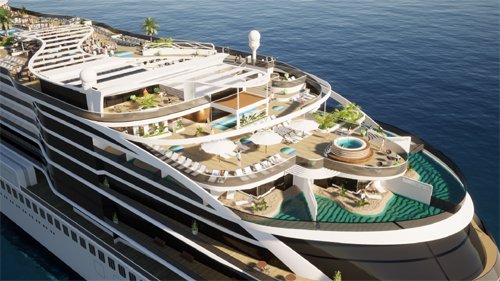
Battery-electric would eliminate main engines and the need for exhaust stacks, providing a new style of outdoor decks (Meyer Werft)


A few cruise ship companies have incorporated batteries into their vessels. Hurtigruten Explorations put batteries on its vessels, and Havila demonstrated batteries during a first-ever sailing in the Geirangerfjord in 2022. However, these systems have limited durations and are challenged to meet the large power needs of the hotel operation.

Meyer Werft explains that the battery system for its concept ship would come from Norway’s Corvus Energy. It says the technology is available today, and if ordered this year, it could deliver the first ship in 2031.

With the battery system, a large portion of typical European cruise routes can be covered, for example, the route from Barcelona to Civitavecchia. By 2030, Meyer Werft highlights that around one hundred ports across Europe will offer the required shore power charging infrastructure. 

Project “Vision” also takes advantage of the benefits of batteries to introduce a new architectural approach to cruise ship design. It is possible to eliminate the current vertical shaft running through the ship for exhaust treatment and the funnel. Meyer Werft imagines a new sun deck design with unobstructed views and without the exhaust from the engines. The elimination of main engines would also improve onboard comfort, with even fewer engine noises and vibrations.


Retail Imports Continue Decline Despite Little Impact from the Middle East

container imports
Retailers expect container imports to continue declines through the first half of 2026 (Port of Long Beach file photo)

Published Apr 8, 2026 5:34 PM by The Maritime Executive


Retailers' import volume into the United States continues to be weighed down by concerns over tariffs and trade policy, says the National Retail Federation. It continues to expect month-over-month and year-over-year declines through most of the first half of 2026, while saying that other than fuel costs, retailers are not being significantly affected by the conflict in Iran.

The retail trade group issued its monthly outlook for container import volumes, projecting monthly declines in six of the first eight months of 2026. It sees potential increases in May and June when it believes import volumes decreased a year ago as the industry worked to assess the impact of Donald Trump’s “Liberation Day” launch of global import tariffs.

“Just because retailers don’t import a lot of merchandise from the Middle East doesn’t mean the U.S. supply chain isn’t affected by the turmoil there,” said Jonathan Gold, NRF Vice President for Supply Chain and Customs Policy. “The supply chain is global, and disruptions anywhere along it can have ripple effects, whether it’s rerouting of vessels, equipment out of position, higher fuel costs for shippers, or rising gas prices that leave less money in consumers’ pockets.”

The report highlights that import volumes were down 7.5 percent in February versus January and more than 4 percent over 2025. They project when the final numbers are in for March that volumes will only be up slightly over February, with timing for the Lunar New Year holiday impacting the results of the first quarter. 

They also note that while the U.S. Supreme Court blocked Trump’s tariff program, the administration quickly reintroduced a 10 percent global tariff. The NRF also points to the administration recently adjusting tariffs on steel, aluminum, and copper, as well as pharmaceutical products and ingredients.

The NRF believes TEU volumes, however, will go back above 2 million TEU per month starting in April, but will still be down 5.6 percent versus last year. They foresee gains of 7.3 percent for May and 6.9 percent for June over 2025. The forecast, however, shows that the year-over-year declines will resume in July (down 8 percent) and August (down 6 percent).

While fuel supplies are not restricted in the United States, they note that ports in Asia depend on fuel from the Persian Gulf and could see shortages if the conflict continues. The dramatic increases in fuel prices, however, also factor into both shipping costs, with container carriers starting some surcharges, as well as in trucking and other elements of the supply chain.

The NRF is now projecting a 1.8 percent decline in total container import volumes in the U.S. for the first six months of 2026. They are projecting 12.3 million TEUs, while noting the full year in 2025 was 25.4 million TEU. 


Search for Missing Maintenance Worker After Fire on Submarine at Hyundai

Hyundai shipyard South Korea
Fire aboard a submarine undergoing maintenance left one worker missing at the shipyard in Ulsan (HHI file photo)

Published Apr 9, 2026 3:38 PM by The Maritime Executive


A rescue effort was underway at the HD Hyundai Heavy Industries shipyard in Ulsan, South Korea, after one worker was reported missing during a fire on a submarine undergoing maintenance.  Late reports said the body of a woman in her 60s who was working as a cleaner for a subcontractor had been located, but it is in an inaccessible area of the submarine.

The fire started midday on Thursday, April 9, on the Hong Beom-do, a Type 214 submarine, which was in the yard undergoing maintenance. There were 47 workers aboard, and they were ordered to evacuate the submarine. More than 50 firefighters and 31 pieces of equipment responded, and the fire was brought under control after about one hour and extinguished about 30 minutes later.

A report by ChosunBiz says the fire was thought to have started in the submarine’s battery room. It says that electrical switches had melted, and they were attempting to vent the smoke from the submarine. The report said there was a fear of short circuits or additional fires, and smoke had briefly interrupted the search for the missing worker.

According to the reports, the body of the worker has been located below the first floor living quarters, but it is in a narrow space. Teams are saying they can barely get a single person into the space. Officials are saying it is expected to take considerable time to reach the area because it is such a confined area.

The Hong Beom-do is a 65-meter (213-foot) submarine with a displacement of 1,800 tons. It was built by Hyundai and commissioned in 2018. The vessel was undergoing maintenance as part of a plan that will eventually enhance the combat system of the vessel.

Authorities said the cause of the fire is under investigation.


USN Gives Up on Long-Delayed Overhaul of Sub USS Boise

USS Boise submarine
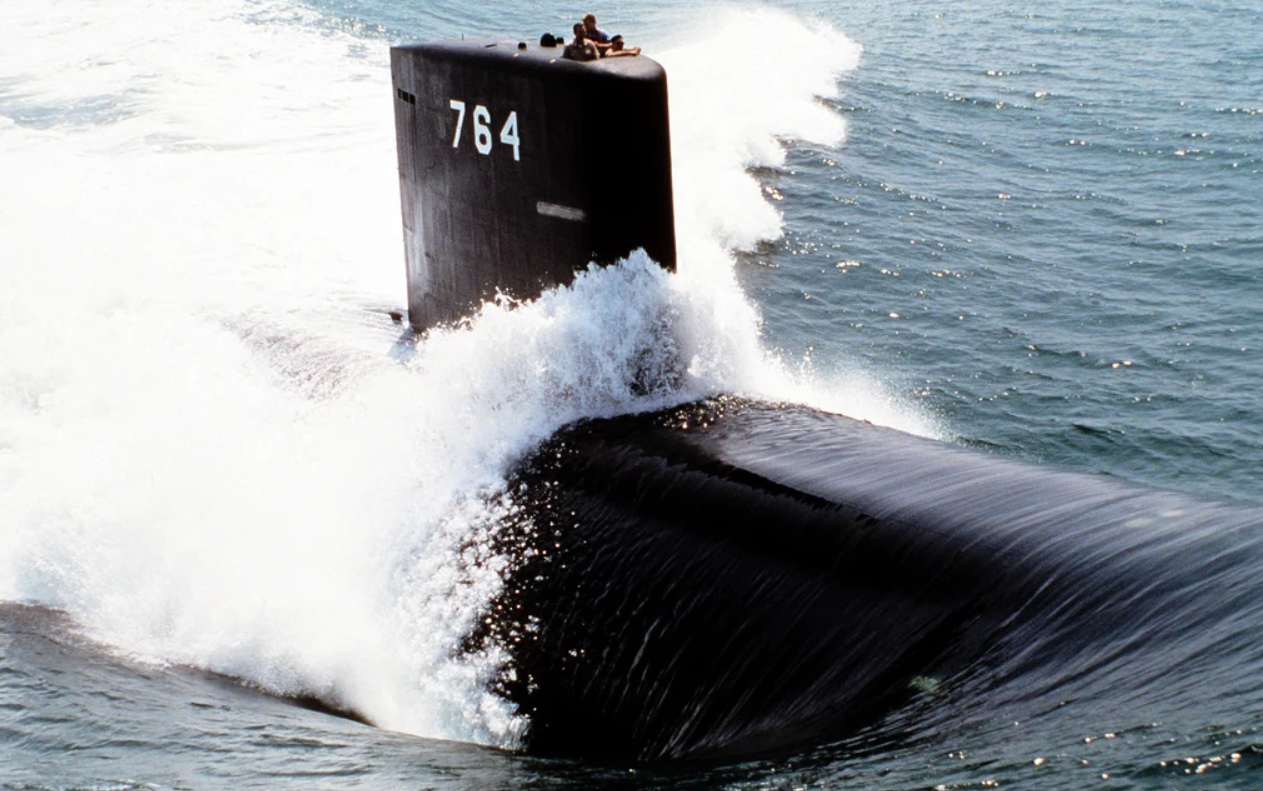
USS Boise in 2014 near the end of her active career (USN photo)

Published Apr 11, 2026 12:54 PM by The Maritime Executive


The U.S. Navy confirmed on Friday, April 10, that it is giving up on the long-delayed overhaul of the nuclear attack submarine USS Boise. The failed project had become a symbol of the Navy’s problems with maintenance and life-extension overhauls.

The overhaul project of the submarine had started a decade ago and remains unfinished, with most reports attributing it to the problems with the Navy’s public shipyards, supply problems, lack of experienced/trained shipyard personnel, and poor management.

In the official statement attributed to Chief of Naval Operations Daryl Caudle, the U.S. Navy said, “After a rigorous, data-driven analysis, we’ve made the tough but necessary decision to inactive USS Boise. This strategic move allows us to reallocate America’s highly-skilled workforce to our highest priorities: delivering the new Virginia and Columbia-class submarines and improving the readiness of our current fleet.”

The statement went on to say the Navy is changing the way it does business. It said its goal is to ensure all authorized funding directly contributes to readiness.


Underway on sea trials in 2011, she was reported to have a top speed exceeding 20 knots (USN)


The contract for the construction of USS Boise was awarded to Newport News Shipbuilding in 1987. The submarine was launched in 1991 and commissioned in November 1992. At 6,000 tons displacement, she is part of the Los Angeles class attack submarines. 

At 110 meters (362 feet) in length, she was fast and carried a complement of approximately 135 officers and sailors. USS Boise's most noteworthy deployment might have been her participation in Operation Iraqi Freedom, including launching some of the first salvos in March 2003.

The schedule called for her to undergo her overhaul starting in 2015 and 2016. However, it was delayed due to manpower and funding issues. In 2017, she lost her drive certification.

She was shuttled back and forth in the Norfolk, Virginia area, sent and then recalled from HII’s Newport News yard. Reports highlighted the Navy’s decision to prioritize the ballistic missile submarines and the nuclear carriers, placing the attack submarines third on the priority list.

Plagued by delays in the overhaul program, the Navy reached out to the private sector and contracted with HII’s Newport News and General Dynamics’ Electric Boat for the overhaul of five of the attack submarines. General Dynamics completed the first of its projects and has the second underway. Newport News completed two, and finally USS Boise was placed into dry dock in 2021 for limited maintenance, followed by the formal overhaul contract in 2024. Reports indicate the budget had ballooned to between $1.6 and $1.9 billion for USS Boise and was likely to continue to rise. The current timeline did not schedule her return to the fleet until 2029.

Secretary of the Navy John Phelan, speaking on Fox, said the Navy had already spent $800 million on USS Boise, and it was only 22 percent complete. He justified the decision, saying the overhaul represented 65 percent of the cost of a new Virginia class submarine, yet it would only add 20 percent to the life of USS Boise.

“At some point, you just cut your losses and move on,” said Phelan.


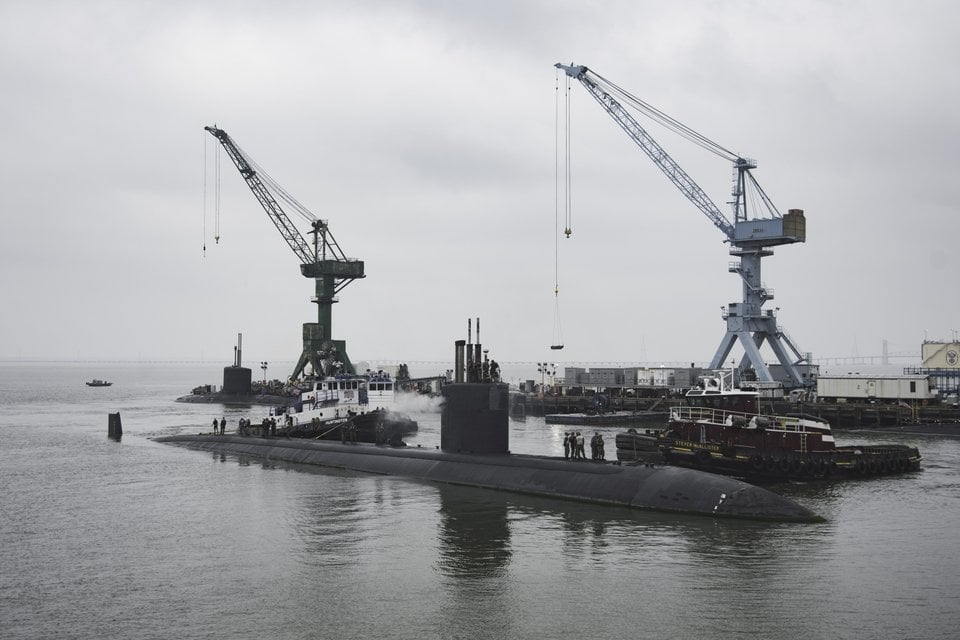
Looking forlorn in 2018 when she was first moved to HII's Newport News Shipyard (HII)


USS Boise was the 53rd Los Angeles class submarine commissioned and one of the youngest in a class that saw a total of 62 boats built from 1972 to 1996. As of 2025, the Navy lists 19 continuing in active service, with 26 officially decommissioned and others in active reserve awaiting decommissioning, or used for training.


In the official Navy vernacular, the vessel will be moved to “inactive” (i.e. laid up) while resources will be redirected to support other priorities. Reports point out that USS Boise spent a third of her life in port and listed as undergoing an overhaul.