It’s possible that I shall make an ass of myself. But in that case one can always get out of it with a little dialectic. I have, of course, so worded my proposition as to be right either way (K.Marx, Letter to F.Engels on the Indian Mutiny)
Saturday, May 16, 2026
USAID FOR FASCIST REGIME
Lukashenko praises US as Belarus receives two-thirds of humanitarian aid from Washington
Franklin Graham and Alexander Lukashenko (Photo: Press Service of the President of the Republic of Belarus) / bne IntelliNewsFacebook
Belarusian President Alexander Lukashenko has praised the United States as a leading source of humanitarian assistance for his country despite the sanctions regime, Russian outlet RBC reported on May 15.
Speaking at a meeting with Franklin Graham, president and chief executive of the Billy Graham Evangelistic Association, Lukashenko said the United States had supplied two-thirds of the humanitarian aid received by Belarus in the past year.
Belarus has been under successive rounds of Western sanctions since the 2020 disputed presidential election and the violent crackdown on the protest movement that followed, with measures expanded after Minsk allowed Russian forces to use Belarusian territory to launch the invasion of Ukraine in February 2022.
"You are doing well, thank you for this help and support. In general, two-thirds of all humanitarian aid we receive in Belarus is provided by the United States of America. Surprisingly enough. They say 'sanctions, sanctions', but the Americans are doing well. Your share is in this US humanitarian aid," Lukashenko said, in remarks carried by the Pul Pervogo Telegram channel, which is close to the Belarusian presidential press service.
The Belarusian leader asked Graham to convey to US President Donald Trump that "in Belarus he has reliable friends and supporters".
The comments come amid a marked thaw in relations between Minsk and Washington that has gathered pace through 2026. On March 19, Lukashenko hosted an American delegation led by US special envoy for Belarus John Cole at the Palace of Independence in Minsk.
On the same day, Belarus announced the pardon of 250 individuals convicted on extremism-related charges, while Cole confirmed the lifting of US sanctions on Belinvestbank, the Development Bank of the Republic of Belarus and the Belarusian Finance Ministry. Two Belarusian potash producers, the Belarusian Potash Company and Belaruskali, were also removed from US sanctions lists.
Trump subsequently thanked Lukashenko for the prisoner pardons.
On April 19, the Belarusian leader said he was ready for a "big deal" with the United States, provided any agreement reflected the interests of both sides. Lukashenko said dialogue with Washington was not directed against Russia or China, and called on the United States to reach an understanding with Moscow.
Belaruskali and the Belarusian Potash Company are among the country's largest hard currency earners, with Belarus historically one of the world's top three potash exporters alongside Canada and Russia.
Trump eats humble pie in Beijing
US President Trump was forced to eat humble pie in Beijing as he looks for help with ending the Iran war and boost the economy by opening access to the Chinese market. Chinese president Xi was the one holding all the cards this time. / bne IntelliNewsFacebook
US President Donald Trump’s trip to Beijing ends today and he has been forced to eat humble pie after coming out of the gate last year with an extremely aggressive policy on China.
If you remember in the heady days of Trump's first term in office we still lived under the pax Americana. Trump launched a trade war with Beijing back then but since he took over just over a year ago, he became a lot more aggressive. Liberation Day tariffs were primarily aimed at Beijing and ended in a nasty showdown that saw Beijing throttle America's supply to critical minerals and rare earth metals. Trump was forced into a humiliating climb down and an agreement to suspend hostilities for a year – a deal that is about to expire.
However, the war in Iran has changed everything. The emperor's clothes have been stripped away, and the myth of US military supremacy has been debunked. Trump cannot win his war in Iran and was in Beijing partly to ask for Xi Jinping's help -- that will almost certainly not be forthcoming, as why should the Chinese help the Americans out of their self-inflicted imbroglio? For his part Xi has been remarkably consistent in his message. He has called for competitive cooperation and an end to the instabilities caused by America's incessant warmongering. The US tone has changed dramatically. Under the Biden administration both former Secretary of State Anthony Blinken and US Treasury Secretary Janet Yellen were in Beijing rudely lecturing Xi on the needs to end state subsidies to companies and to open the Chinese market to American goods. The former German Foreign Minister Annalena Baerbock went even further by lecturing China on its human rights record at the lectern in Beijing with no regards to diplomacy whatsoever. She ended up being rebuked by the foreign minister in public for her total lack of diplomacy.
That's what makes the tone of Trump's trip to Beijing so remarkable. It's a complete about face. He talked about “my great friends” and the “great nation of China” as he sought commercial deals and help with the Gulf war. For me all this highlights the end of the pax Americana and looking at previous transitions between empires we are now in at least a decade-long period of confusion and instability while we transition to a new regime. A Pax Sinica? “All under heaven” as the Chinese would say? Not necessarily.
Xi is clearly acutely aware of what is going on. He put his finger on it in his opening remarks, telling Trump to his face that he should not fall into the “Thucydides Trap" – a concept in international relations that says when a rising power threatens to displace an established dominant power, the likelihood of conflict between the two increases significantly.
That should be pretty shocking. What Xi just did was openly threaten the US with war if it tries to interfere with China’s reunification with Taiwan. There is no other interpretation of this.
The reporting has all focused on Trump in Beijing (including what sounds like a very yummy Chinese version of humble pie including lobster soup and Beijing roast duck), but putting this story in a wider context, Russian Foreign Minister Sergei Lavrov was also in New Delhi to meet with Prime Minister Narendra Modi on the same day. They talked about trade. It’s pretty obvious this was timed to highlight the strength of the BRICS alliance and the weakness of the US position.
And equally poignant, the Kremlin just announced that Russian President Vladimir Putin will be in Beijing too, his first foreign visit this year, maybe next week, to meet with Xi and reaffirm their Friendship pact signed in 2001. The Kremlin and Beijing are ostentatiously rubbing the White House nose in the weakness of its position and the strength of the growing Global South alliance opposing it.
There were other subtle slights. Trump’s visit was reportedly downgraded to a working visit, although its being reported as a more important state visit and there is some confusion over what the official status was. Xi also didn’t come to meet Trump at the airport when he arrived, which is not a slight, but nevertheless, was an honour Xi chose not to confer.
What is interesting diplomatically about the Putin visit is that Russian and Chinese sources are still referring to it as an official visit rather than a full “state visit”, which is still higher than just a working visit. But as Xi and Putin have met 40 times already – by far the most of either’s meetings – protocol nuances have become a little blurry. The last time Putin was in Beijing, Xi didn’t meet him at the airport either, but that meeting was classed as a state visit – the most important category.
The Taiwan war threat should be taken very seriously. While this week was all about diplomacy and trade, in the background is the growing militarisation of the CRINK alliance (China, Russia, Iran and North Korea) and their cooperation to make sure that Iran doesn’t lose its war with America – basically the same set up as Nato’s support of Ukraine against Russia, another war by proxy. The main take out, and what is new, is if the US goes to war with China it will lose.
Happily, despite his tough talk, it appears increasingly clear that Xi is sincere about his talk of “competitive cooperation” and also that he has little intention of forcing the reunification with Taiwan militarily; he wants a peaceful solution by referendum and is prepared to take his time to get there. Nevertheless, like Putin’s insistence of no-Nato for Ukraine, and the decision to invade when he was rebuffed, Xi also just made it clear that he will use the increasingly powerful PLA to force the issue if he has too.
Underwhelming summit outcome in China brings Trump back to reality
After raising high expectations ahead of his trip to Beijing, the U.S president leaves with little to show for it, disappointing investors. On key flashpoints such as Iran and Taiwan, China didn't give any ground.
Before his trip to China, Donald Trump faced outsized expectations – largely nurtured by himself
But the reality of a complex and challenging relationship caught up with him.
And that includes the fact that China has the upper hand right now.
From a US perspective, the immediate outcome of his summit with Chinese President Xi Jinping was meagre: no grand breakthrough, but a mere stabilization of relations and a broad effort to prevent the superpower rivalry from spiralling further out of control.
“You don't get the sense that much has been accomplished,” said Helmut Brandstätter, a liberal Member of the European Parliament from Austria who is well connected with Chinese diplomats.
“Trump hasn't achieved anything economically for himself, nor has he done anything for the rest of the world,” he added.
In the run-up to the summit, Trump gave the impression that, with his large entourage of top American CEOs, he would bring home major contracts for the American economy. But that wasn't the case.
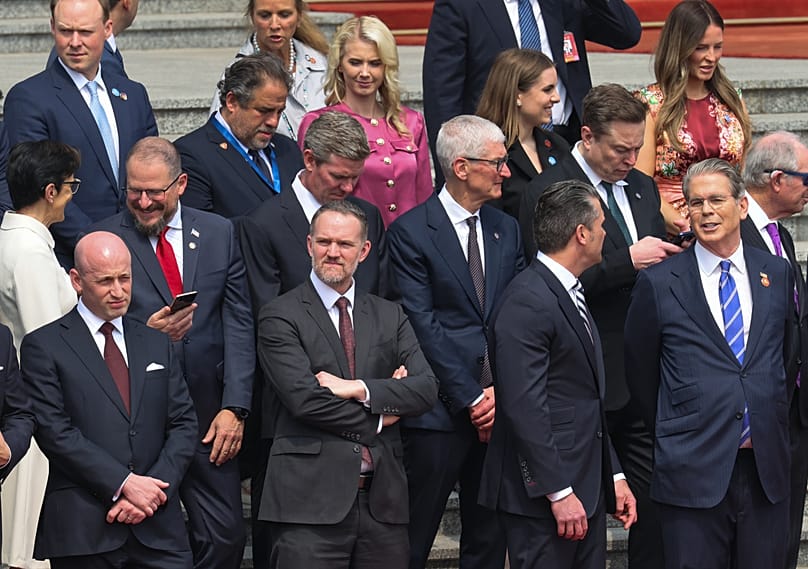
Members of the US delegation, including top CEOs, stand at the Great Hall of the People in Beijing, May 14, 2026. (Maxim Shemetov/Pool Photo via AP) AP Photo
Although Xi agreed to purchase 200 Boeing jets, that number was much lower than the 500 that Trump had floated before.
Consequently, investors in the US were disappointed, with Boeing shares falling 4% on Wall Street.
The US president’s comment was vintage Trump: Xi “is going to order 200 jets...200 big ones.”
A large Boeing order was one of many business deals expected to come out of the closely watched talks. Yet by the time Trump left China on Friday, it was the only major deal that was announced.
The country's last big order with Boeing was during Trump's November 2017 trip to Beijing, when China agreed to buy 300 Boeing planes.
Relations between the two countries soured after that, and Boeing orders from China dried up.
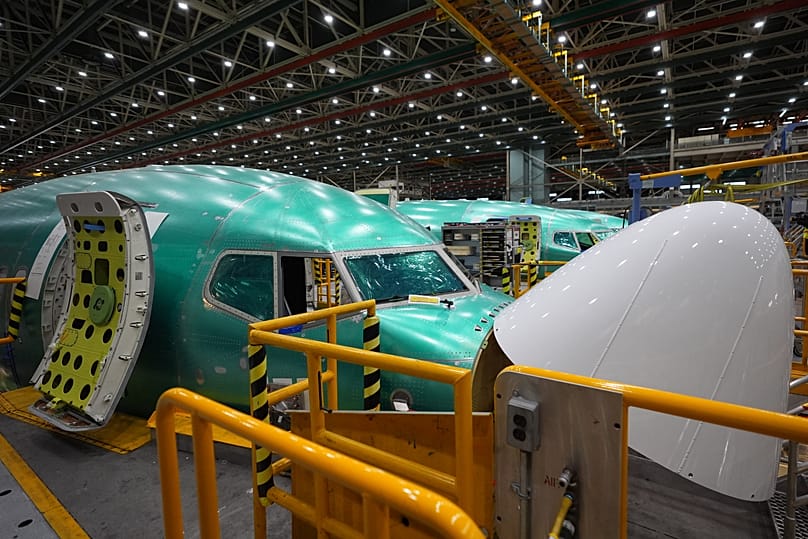
Boeing 737 MAX airplanes fuselages are seen on the final assembly line at Boeing's factoryApril 15, 2026, in Renton, Washington. (AP Photo/Lindsey Wasson) AP Photo
According to US officials, both sides had agreed to sell farm goods, but only scant details were available, and no signs of a breakthrough on selling Nvidia chips to China, despite CEO Jensen Huang's dramatic last-minute addition to the trip.
On a positive note, both sides agreed to work to preserve and extend the fragile “trade truce” reached after the tariff war of last year.
They discussed mechanisms to manage future tariff disputes and export controls rather than allowing tensions to escalate immediately.
For European leaders nervously watching the summit, the underwhelming outcome should be a reason for relief, as nothing was said that would sideline the EU economically, according to Ling Chen, an associate professor at the Johns Hopkins University School of Advanced International Studies (SAIS).
“The EU is not economically marginalized because it is an important economic partner to both the U.S. and China, especially as the two great powers compete strategically,” she added. “The EU is also an essential market for China's green energy products.”
While Trump and Xi may have stabilized their economic and trade relations, geopolitical security differences were barely papered over, at least in public.
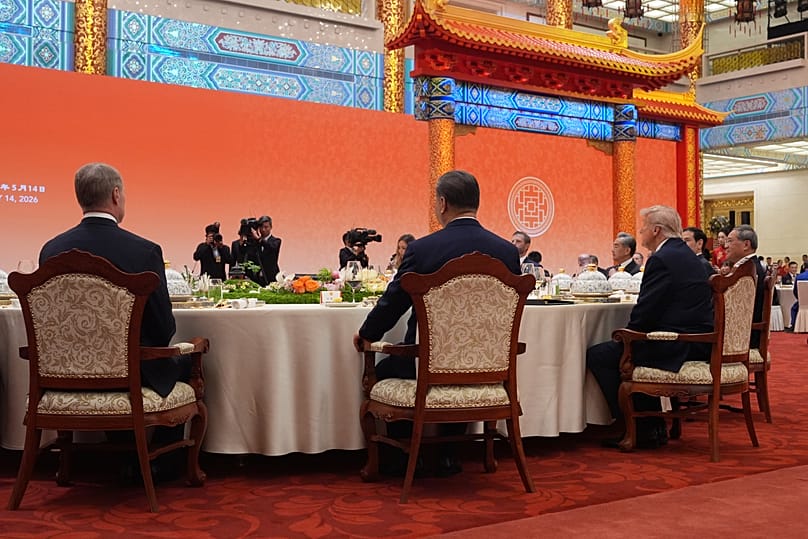
President Donald Trump, right, seats beside and Chinese President Xi Jinping, center, during a state dinner at the Great Hall of the People. (AP Photo/Mark Schiefelbein) AP Photo
At a banquet filed with pageantry, both leaders praised the other lavishly.
Xi described the get-together as a “milestone visit”, while Trump spoke of a “great couple of days” during which “fantastic trade deals” were made.
Yet, the commonality seemed to end there.
Just before the final Trump-Xi meeting on Friday, China’s foreign minister issued a blunt statement outlining its frustration with the US and Israel’s war with Iran.
"This conflict, which should never have happened, has no reason to continue," the ministry said, adding that China was supporting efforts to reach a peace deal in a war that had severely affected energy supplies and the global economy.
On Thursday, Trump said in an interview with Fox News that Xi offered “to be of help” to re-open the Strait of Hormuz and pledged not to send military equipment to Iran, yet the Chinese side did not comment.
Before the summit, Trump was hoping for Chinese pressure on its Iranian ally to find a solution to end the conflict, but that did not materialize – maybe not yet.
“It is quite possible that the Chinese will exercise subtle influence on the Iranians in the weeks to come, but little of it will likely be visible,” said Ian Lesser, distinguished fellow at The German Marshall Fund.
The other big geopolitical issue, central to Chinese politics, is Taiwan – a topic that the American readout of the talks didn’t mention at all.
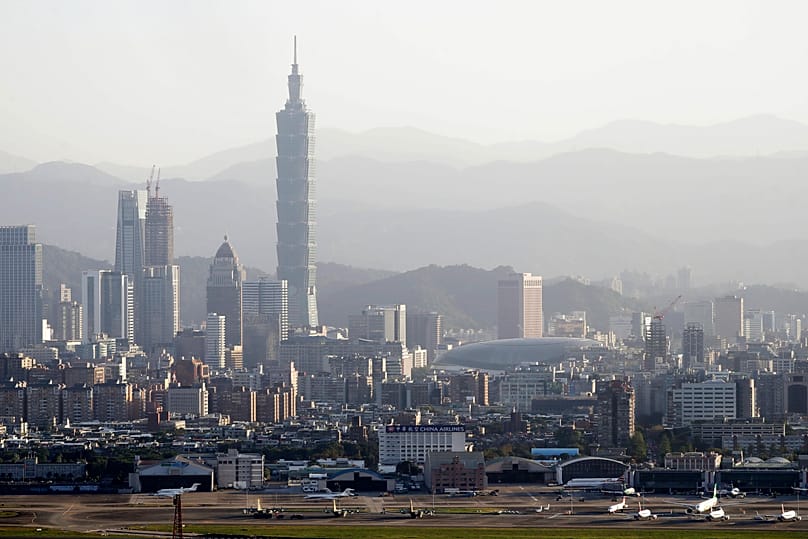
A view of the Taipei skyline with the iconic Taipei 101 skyscraper, the tallest building in Taiwan (AP Photo/Chiang Ying-ying) AP Photo
Yet, the Chinese issued a statement saying that Xi “stressed to President Trump that the Taiwan question is the most important issue in China-US relations” and could lead to clashes and even conflict if not handled properly.
A stark, if not unprecedented warning.
Taiwan, just 80 kilometres off China's coast, has long been a flashpoint in Sino-American ties, with Beijing refusing to rule out use of military force to gain control of the island and the US bound by law to provide it the means of self-defence.
US Secretary of State Marco Rubio who was part of the delegation later tried to downplay the significance of the Chinese warning on Taiwan.
"US policy on the issue of Taiwan is unchanged as of today," he told NBC News. The Chinese "always raise it...we always make clear our position and we move on," he added.
A remark Rubio was thanked for on Friday by Taiwan Foreign Minister Lin Chia-lung.
Others compared Beijing’s posturing on Taiwan to some sort of shadow-boxing.
“When it comes to Taiwan, the big question is: will Xi take the plunge, or won't he?”, Brandstätter said.
“As long as the Chinese continue to buy chips manufactured in Taiwan, they won’t attack,” he added. “Moreover, the Taiwanese are very well-equipped militarily and would be anything but easy prey for Beijing.”
What is the 'Thucydides Trap' that Xi invoked in his meeting with Trump?
Xi Jinping opened his Beijing summit with Trump by asking whether the two powers could avoid the "Thucydides Trap" — then warned that mishandling Taiwan could lead to war.
When the leaders of the world's two largest economies met in Beijing on Thursday, the opening subject was not Taiwan, trade or the war in the Middle East. It was a conflict that ended more than two millennia ago.
"The world has come to a new crossroads," Chinese President Xi Jinping told Donald Trump as the two began their summit at the Great Hall of the People in the Chinese capital.
"Can China and the United States overcome the so-called 'Thucydides Trap' and create a new paradigm of major-country relations?" Xi asked, resulting in a surge in searches for the term and questions over whether he was making a threat against Trump and the US.
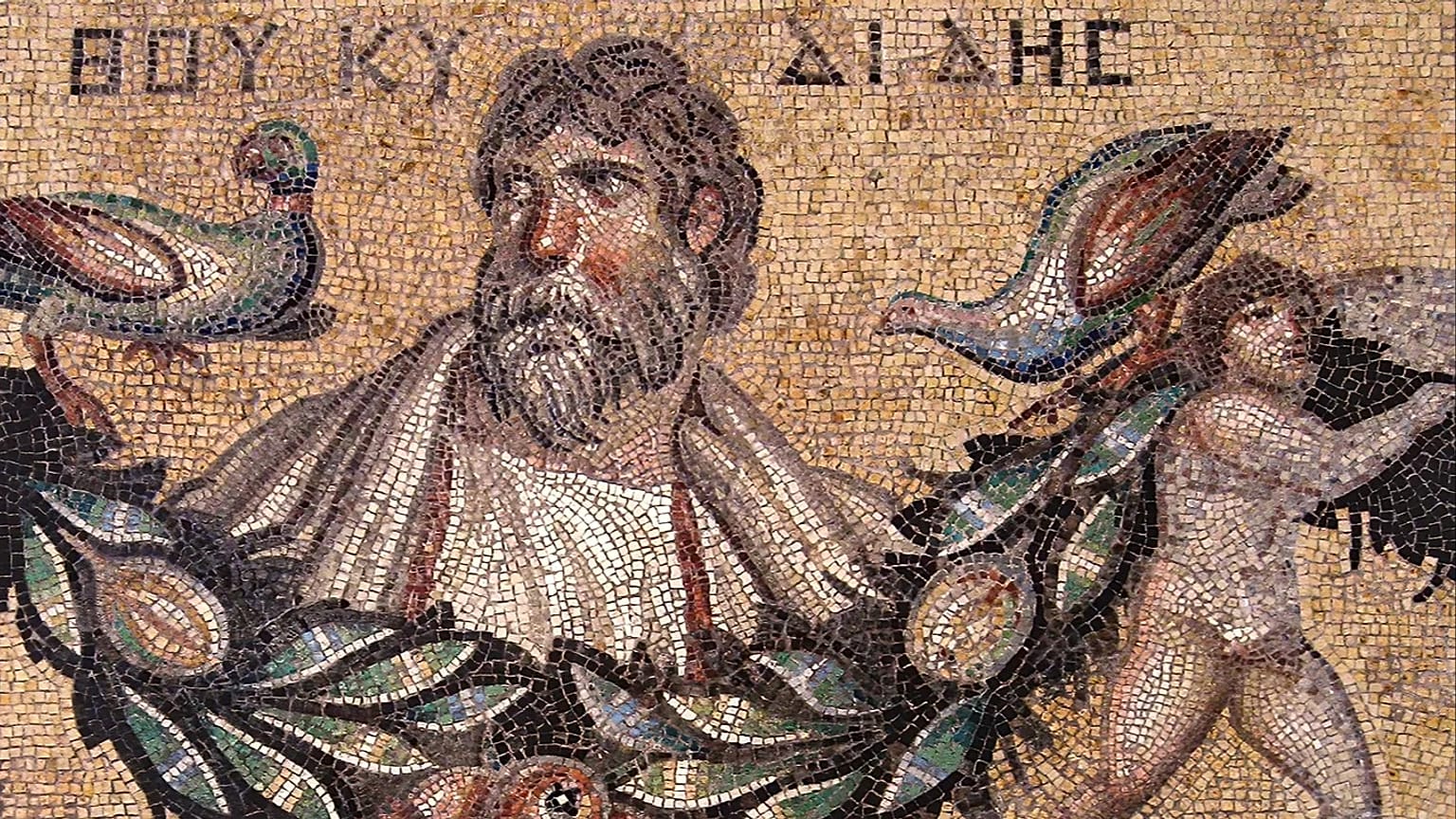
What is the Thucydides Trap?
The concept was coined by Harvard political scientist Graham Allison in the early 2010s, drawing on the ancient Greek historian Thucydides's account of the Peloponnesian War — the nearly three-decade conflict between Athens and Sparta that began in 431 BC.
"It was the rise of Athens and the fear that this instilled in Sparta that made war inevitable," Thucydides wrote.
Allison applied the pattern to modern history, identifying 16 cases over the past 500 years in which a rising power was seen as threatening an established one, of which 12 ended in war.
In this framing, China is cast as the rising Athens to America's Sparta. Xi has invoked the concept since at least 2013 to specifically argue that war is not inevitable — provided both sides exercise restraint.
In a 2015 speech in Seattle, he said there was "no such thing" as an inevitability of conflict, but warned that "should major countries time and again make the mistakes of strategic miscalculation, they might create such traps for themselves."
Xi is not the only one drawn to the concept. During Trump's first term, national security adviser HR McMaster and defence secretary James Mattis were both known students of Thucydides.
Trump's former chief strategist and alt-right pundit Steve Bannon invoked the trap in a 2018 interview to make the case for standing up to Beijing in an apparent opposite of Xi's reading.
Allison's framework has attracted serious academic criticism, ranging from misidentifying historical cases to producing a model that leaves no room for diplomacy or political agency to prevent conflict.
One example that was excluded, according to experts, is the peaceful transfer of global leadership from Britain to the US in the 20th century, which suggests war between a rising and ruling power is far from inevitable.
Taiwan warning
Xi's historical reference came directly before a warning on Taiwan, telling Trump that the two countries "could collide or even come into conflict" if the Taiwan issue is mishandled.
Chinese Foreign Ministry spokesperson Mao Ning later summarised Xi's position as "'Taiwan independence' and cross-strait peace are as irreconcilable as fire and water."
Trump did not address Taiwan during the joint appearance. A White House readout, which did not mention Taiwan, said the two leaders had "a good meeting" centred on economic cooperation.
Xi adopted a warmer register later in the day, saying China's national rejuvenation and the goal of making America great again "can move forward together completely and can increase prosperity for the entire world."
Trump responded on Truth Social, reading Xi's Thucydides reference as a comment on American decline — but placing it in the Biden years.
"When President Xi very elegantly referred to the United States as perhaps being a declining nation, he was referring to the tremendous damage we suffered during the four years of Sleepy Joe Biden," Trump wrote early on Friday.
“Two years ago, we were, in fact, a nation in decline,” the US president said. “Now, the United States is the hottest nation anywhere in the world, and hopefully our relationship with China will be stronger and better than ever before.”
Trump's independence warning prompts response from Taiwan
Copyright Copyright 2026 The Associated Press. All rights reserved.
Taiwan's foreign ministry said in a statement following Trump's comments that "Beijing has no right to claim jurisdiction over Taiwan."
US President Donald Trump's warning to Taiwan against formally declaring independence from China has prompted a response from the island's foreign ministry, which reasserted that it's a "sovereign democratic country."
During a state visit to Beijing this week, Trump said that while his policy towards Taiwan had not changed, he was against the idea of it declaring independence from China and seemingly questioned why the US would send military support in the event of an invasion.
"I'm not looking to have somebody go independent and, you know, we're supposed to travel 9,500 miles to fight a war. I'm not looking for that," he told Fox News.
"I want them to cool down. I want China to cool down," he added.
On Saturday, Taiwan's foreign ministry responded to Trump's comments, thanking him for his support in peace efforts in the region but reasserting that it was a "sovereign democratic country."
"Beijing has no right to claim jurisdiction over Taiwan," its statement continued, adding that Taiwan's government would "continue to deepen cooperation with the United States, maintain peace through strength, and ensure that the security and stability of the Taiwan Strait are not threatened or undermined."
A spokesperson for Chinese President Xi Jinping said earlier this week that Taiwan was the "most important issue in China-U.S. relations" and key to the two nation's future dealings with each other.
China views Taiwan, which has its own democratically elected government, as a breakaway province that must be brought under the control of the mainland, and Xi has not ruled out the use of force.
Trump Says Tariffs Never Came Up During China Trip
(The Center Square) – President Donald Trump said Friday that tariffs never came up during his two-day trip to China, even as his administration works to replace a tariff regime the U.S. Supreme Court struck down with a new one that could hit importers as early as July.
“We didn’t discuss tariffs,” Trump told reporters aboard Air Force One as the plane refueled in Anchorage, Alaska. Asked why, he responded: “Wasn’t brought up.”
Trump described the Beijing visit as “a very historic couple of days,” saying China agreed to purchase more than 200 Boeing aircraft – with a promise of up to 750 planes if the initial order goes well – along with about 400 to 450 General Electric engines.
He also said Chinese purchases of U.S. soybeans and agricultural products are forthcoming, telling reporters, “the farmers are going to be very happy.”
Although Trump didn’t talk about import taxes with China, his administration is working at home to rebuild the president’s tariff policy.
U.S. Trade Representative Jamieson Greer, who accompanied Trump on the trip, is leading that effort. Treasury Secretary Scott Bessent said in April that a new round of tariffs under Section 301 of the Trade Act of 1974, a separate legal authority, could take effect as early as July. The U.S. Trade Representative’s Office has opened investigations into 16 major U.S. trading partners, with hearings concluding last week.
Although Trump said tariffs didn’t come up while he was in China, the fight over import taxes has continued at home.
The U.S. Supreme Court struck down Trump’s earlier tariffs in February, ruling he exceeded his authority by using a 1977 emergency powers law to impose worldwide import taxes. Trump responded within hours by invoking a separate provision of the Trade Act of 1974 to impose a 10% global import duty.
That new tariff, known as the Section 122 tariff, is itself now being challenged in court. The U.S. Court of International Trade ruled 2-1 on May 7 that Trump again exceeded his authority. A federal appeals court has temporarily frozen that ruling while it considers the administration’s appeal.
The Yale Budget Lab projected the 150-day Section 122 tariff would generate about $30 billion in revenue for the federal government.
Greer warned in a May 11 court declaration that removing the tariffs during the appeal could derail ongoing trade negotiations. “If certain key trading partners walk away from the table now, these negotiations may never resume, even if higher courts conclude that the temporary import surcharge was lawful,” he wrote.
The U.S. Chamber of Commerce has urged the administration to prioritize tariff relief, warning that businesses, especially small businesses, face “growing costs and disruptions.”
Rep. Max Miller, R-Ohio, made a similar point directly to Greer at an April 22 House Ways and Means Committee hearing.
“This tariff policy, it isn’t working for them and it is not a net positive – it is a net negative,” Miller told Greer, asking him to open a waiver office for businesses that can’t pass tariff costs on to consumers.
Greer declined, saying Trump “personally has been very direct that he doesn’t want to do this.”
Multiple economic studies have concluded that U.S. businesses and consumers bear nearly the entire cost of tariffs. Analyses from the Federal Reserve Bank of New York, the Kiel Institute for the World Economy, and Duke University all reached that conclusion.
A The Center Square Voters’ Voice Poll conducted in March found that 42% of voters think U.S. consumers bear most tariff costs, while just 12% said foreign countries primarily pay them.
FANTASTICAL THINKING😈
Trump hails 'fantastic trade deals' made during talks with China's Xi
President Donald Trump announced he had made "fantastic trade deals" with China's President Xi Jinping, as the pair met on Friday for the final talks of a superpower summit that the US leader said had also secured a Chinese offer to help open the Strait of Hormuz.
Trump had arrived in Beijing seeking to seal deals in sectors including agriculture, aviation and artificial intelligence, as well as to contain differences between the two sides on a number of strategic areas – not least the Middle East war.
Trump's overtures to Xi, whom he described as a "great leader" and "friend", have so far been met mutedly by the Chinese leader.
But the US president said "a lot of good" had come out of the visit.
"We've made some fantastic trade deals, great for both countries," he said after a walk with Xi among the rosebushes in the gardens of Zhongnanhai, a central leadership compound next to Beijing's Forbidden City.
"We've settled a lot of different problems that other people wouldn't have been able to solve," he added, without providing details.
Xi said it was a "milestone visit", and that the two sides had to date established "a new bilateral relationship, which is a relationship of constructive strategic stability".
He promised to send Trump seeds for the White House Rose Garden.
'Help on Hormuz'
In an interview with Fox News after the first day of the summit wrapped, Trump said Xi had agreed to several US requests.
On the topic of the war in Iran, the US president said Xi had effectively assured his counterpart that China was not preparing to militarily aid Tehran, which has essentially closed the Strait of Hormuz.
"He said he's not going to give military equipment... He said that strongly," Trump told Fox.
"He'd like to see the Hormuz Strait open, and said: 'If I can be of any help whatsoever, I would like to help,'" Trump added.
Asked whether the two leaders had discussed Iran, the Chinese foreign ministry on Friday released a statement calling for "a comprehensive and lasting ceasefire".
"Shipping lanes should be reopened as soon as possible in response to the calls of the international community," it added.
The warm handshakes on Thursday were overshadowed by a blunt warning from Xi on a much longer standing geopolitical flashpoint, Taiwan.
Shortly after talks started, Chinese state media reported Xi had told Trump that missteps on the sensitive issue of Taiwan could push their two countries into "conflict".
The Fox News interview did not touch upon Taiwan, and Trump did not comment to reporters when asked about the matter on Thursday.
US Treasury Secretary Scott Bessent told CNBC the president would say more "in the coming days".
Secretary of State Marco Rubio told NBC on Thursday though that "US policy on the issue of Taiwan is unchanged... as of the meeting".
Beijing had raised the topic, he said, but "we always make clear our position, and we move on to the other topics".
Taipei responded on Friday, thanking Washington "for repeatedly expressing its support".
Boeing, oil, soybeans
Trump did not spell out on Friday the trade agreements that he said had been sealed with China.
However, in the Fox interview, Trump said one big business deal struck involved Xi agreeing to purchase "200 big" jets from Boeing.
Shares of the US aviation giant fell after Trump's comments, in a sign the market had expected a more robust purchase from China.
The US president also said Beijing had also voiced interest in buying US oil and soybeans.
China, which is the key foreign customer of Iranian oil, bought small amounts of US oil before Trump imposed tariffs last year.
It has sharply slowed down purchases of US soybeans, turning instead to Brazil.
And Treasury Secretary Scott Bessent told CNBC that Trump and Xi were talking about setting up "guardrails" for the use of artificial intelligence.
Bessent said the world's "two AI superpowers are going to start talking", though US export controls on the advanced technology to China remain a sore point in relations.
_2.jpg)