Wednesday, June 17, 2026


Op-Ed: U.S.-Iran Ceasefire Deal is a Costly Return to Prewar Conditions

The deal does not address the nuclear issue, and further negotiations on Iran's uranium enrichment will be as fraught as ever
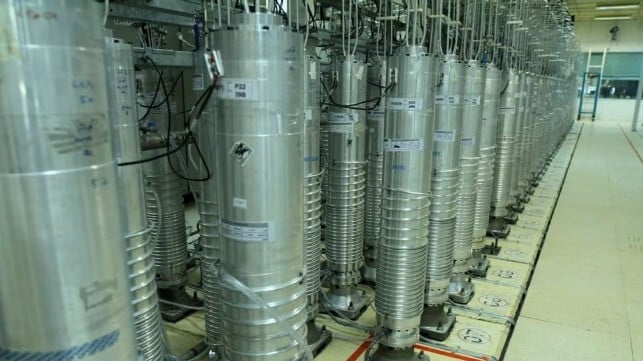
Centrifuges used in uranium enrichment at an Iranian nuclear facility (file image courtesy AEOI)

Published Jun 16, 2026 11:44 AM by The Conversation

[By Farah N. Jan]

Shehbaz Sharif, the prime minister of Pakistan, which served as the key negotiator between the U.S. and Iran, announced on June 14, 2026, that the two sides had agreed on a deal to end the war. It will be officially signed on June 19 in Switzerland.

President Donald Trump announced it on Truth Social as a triumph, claiming that the Strait of Hormuz is open for everyone, the U.S. blockade has been lifted, and the oil is flowing again. What Trump did not mention was Iran’s nuclear program and what happens to its enriched uranium stockpile, one of the main reasons cited for starting the war. The nuclear issue – along with core issues such as ballistic missiles and Iran’s proxies – has been deferred for 60 days.

This raises two important questions: What was the war actually for? And what did the U.S. achieve? As an international and nuclear security expert, I believe the answer is nothing – and in the process the U.S. lost credibility as a negotiating partner.

Why the nuclear question is the hardest

The “rationalist theory of war,” as developed by political scientist James Fearon in 1995, identifies three problems that drive states to war when they would prefer to reach a deal: incomplete information about each other’s resolve; the inability to credibly promise a deal or commitment; and what international relations scholars call the indivisibility problem – when the thing in dispute cannot be split or shared, because it leaves no middle ground to settle on.

The war clarified the first reason. Each side saw what the other would actually do – how much force the U.S. was willing to use and what Iran could absorb while still staying in the fight. What the war could not solve was the nuclear commitment problem. And this goes far back between the U.S. and Iran.

Iran adhered to the 2015 Joint Comprehensive Plan of Action [JCPOA], the landmark nuclear deal that restricted Tehran’s nuclear program. The International Atomic Energy Agency verified that Tehran kept uranium enrichment to 3.67% and its stockpile under 300 kilograms – a concentration used to fuel a power reactor but far too low for a weapons program.

But the U.S. walked away in 2018, and Trump later called it “the worst deal ever” over its sunset clauses and on its silence on Iran’s ballistic missiles. Iran returned to negotiations in 2025, and the U.S. and Israel bombed Iran while those talks were still taking place. Similarly, in February 2026 the negotiations were ongoing and a deal was within reach when Israel and the U.S. struck Iran – killing Supreme Leader Ali Khamenei and lead negotiator Ali Larijani.

The U.S. has demonstrated a record of reneging on its deals and breaking the negotiating process. Which is why Iran now insists on guarantees and demands sanctions relief before signing a deal, and not just good faith.

A state that previously kept its commitments and was still bombed has little reason to accept promises of relief in the future. For this reason, I believe the 60-day deferral is a window for Tehran to watch whether the U.S. and Israel will hold the ceasefire on all fronts, including Lebanon.

The third problem of indivisibility – when the thing or issue in dispute can’t be split or shared – is why the nuclear question is the hardest. Most disputes can be split. Sanctions, for example, can be lifted by degrees. Even a nuclear program can be split, which the world saw in the Joint Comprehensive Plan of Action deal, with centrifuges counted, enrichment capped and a stockpile metered.

What cannot be split is the U.S. demand for zero uranium enrichment and Tehran calling uranium enrichment a sovereign right.

A deal, a war and a ceasefire

The 2015 nuclear deal also limited Iran’s centrifuges – the machines that do the enriching – and placed Iran’s nuclear program under the most intrusive inspections, all in exchange for sanctions relief. The nuclear question was not part of the 2015 deal – it was the actual deal.

During the June 2025 negotiations with Iran, and again in February 2026, the U.S. position was about the nuclear program, but in the opposite direction from the Joint Comprehensive Plan of Action. It was not about limits but the total elimination of Iran’s nuclear program.

In both rounds of talks in 2025 and 2026, Washington’s envoy, Steve Witkoff, demanded zero enrichment and the dismantling of Natanz, Fordow and Isfahan – Iran’s three most important nuclear sites. Iran called enrichment a sovereign right and refused.

Both rounds of negotiations ended in bombings.

The current deal to be signed on June 19 does not put a cap on Iran’s enrichment, nor does it discuss the elimination of its nuclear program. It ends the fighting, reopens the Strait of Hormuz and consigns enrichment, the stockpile, missiles and Iran’s regional proxies to 60-day negotiations.

In a recent New York Times interview, Trump said he was in no rush to remove the near-bomb-grade fuel still buried under the bombed sites. He claimed Iran would suspend enrichment for 15 or 20 years and enrich only for nonmilitary purposes.

In the Joint Comprehensive Plan of Action deal under President Barack Obama, the nuclear question was addressed where 97% of Iran’s stockpile was shipped out of the country and the cap was a verified fact.

Because it doesn’t address any of these issues, the Trump deal is a ceasefire agreement, not a nuclear agreement.

A costly return to the status quo

Going back to the bargaining theory, we know the war settled the information problem – it revealed what each side would endure.

The commitment problem remains. Neither side can yet make a promise the other believes, least of all an Iran whose negotiators were killed.

And I believe the indivisibility problem is now worse. The question of zero enrichment versus a sovereign right cannot be split. The current 60-day deferral is not a resolution. It is the same unsolved problem with a clock attached.

The one thing that could change is American restraint. If Washington holds Israel from striking Iran and Lebanon, it can slowly rebuild its credibility that was destroyed by the two wars. And that is a real challenge for the Trump administration.

Even as the deal was being finalized, Israel struck Beirut, the kind of action that can derail any talks.

In my view, the 60-day window should be read not as the path to a settlement but as the interval or pause before the next one fails. I argued in April that this conflict would not end in a clean settlement but in a series of contested pauses. The deal to be signed on June 19 is the first of them.

Iran emerges with its enrichment knowledge intact, its stockpile buried and fresh reason to believe that only a nuclear weapon would have deterred the U.S.-Israel attack.

But Iran also knows that it stood its ground and was able to strike U.S. bases and allies in the region. It has discovered leverage it did not previously know it held. The Strait of Hormuz has proved a better deterrent than the nuclear bomb.

The strait is open, the oil is flowing, and the question the war was fought over sits exactly where it began. Thousands of lives were lost to arrive back to square one. Nobody has won, though both sides will say they did.


Farah N. Jan is a political scientist and Senior Lecturer teaching in the International Relations Program at the University of Pennsylvania.

This article appears courtesy of The Conversation and may be found in its original form here

The opinions expressed herein are the author's and not necessarily those of The Maritime Executive.


Op-Ed: Iran's Floating Storage is Sinking Fast
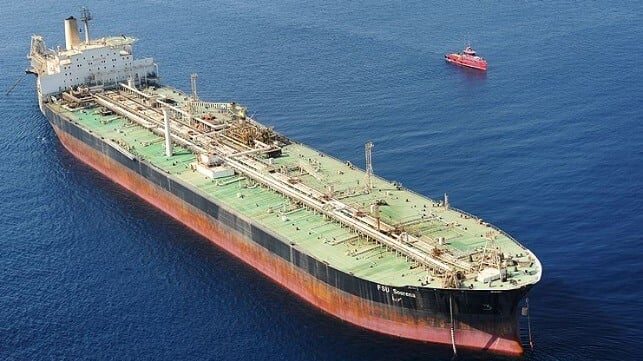
NIOC
NIOC file image

Published Jun 14, 2026 4:16 PM by The Maritime Executive


It is clear now that even if an agreement is signed between the United States and Iran imminently, it will only establish an agenda to be negotiated over the next few months. Israel is not party to the potential agreement and has the capacity to act independently should negotiations proceed in a way that jeopardizes Israeli national security. There are also a series of contentious issues that could cause any extended ceasefire to break down should the negotiations reach an impasse. During the negotiations, both the United States and Iran, for different reasons, will want to maintain progress — but Iran faces far greater economic, fiscal and, ultimately, political peril if the negotiations were to collapse, because it is in imminent danger of losing the oil revenues that have so far kept its government machine running.

After the US Navy imposed its blockade on Iranian ships and ports on April 13, Iran was able to continue selling oil — not only from the stockpile it had built up for just such a contingency, but also from laden ships that were still on their way to import terminals in China. These ships have mostly discharged, and Chinese importers are now drawing heavily on the Iranian reserves held afloat in Asia.
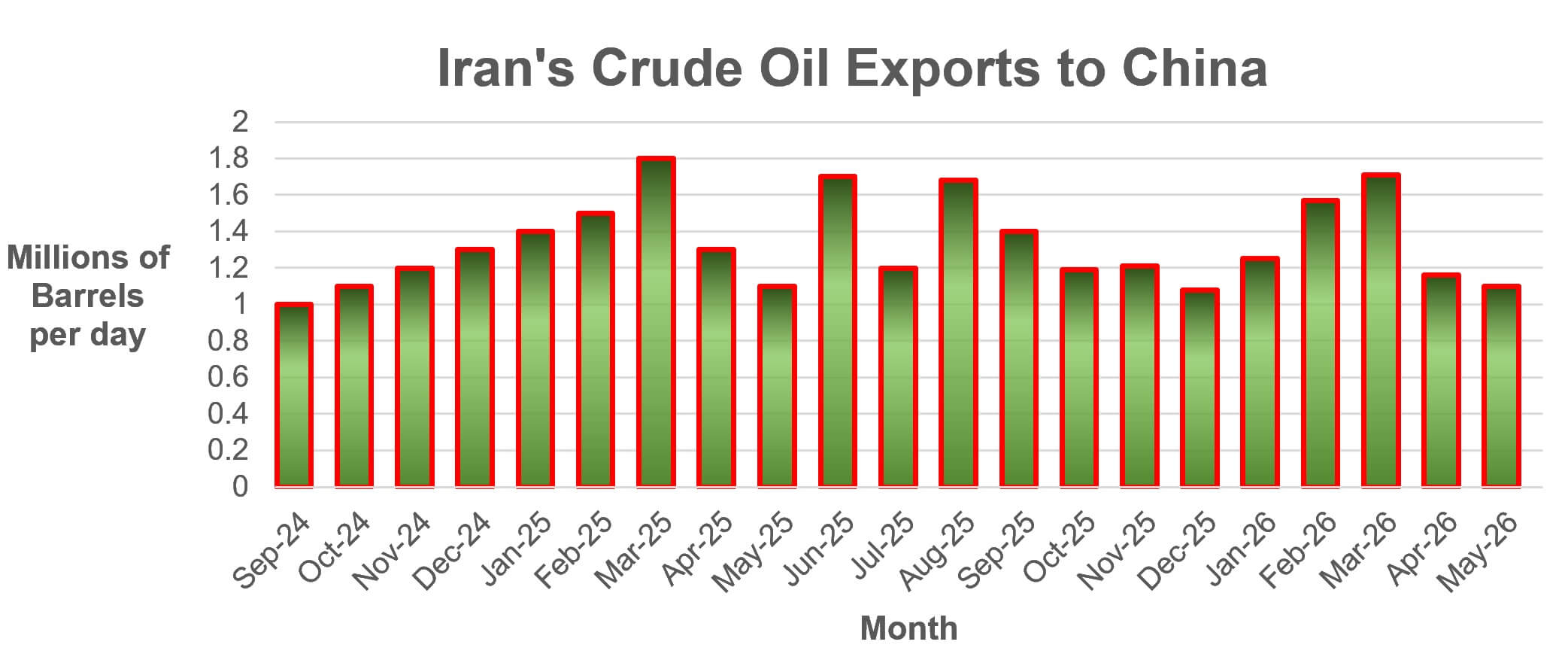
China has for many years bought about 90% of Iranian oil exports. Chinese purchases over the last month have fallen considerably, and what China has bought has come almost entirely from the stock built up before the war and held afloat off China and Malaysia. (CJRC/Kpler data)

According to Kpler statistics, Iranian oil stocks held afloat appear to have declined from 192 million barrels in mid-April to about 140 million barrels at the end of May, of which about half is trapped inside the US naval blockade. The roughly 50-million-barrel drawdown over the last month appears to have come almost wholly from the stock held afloat off Malaysia and China.

If this trend continues through June, and another 50 million barrels are taken from the stock off Malaysia and China, then that reserve will be nearing empty. The Iranians are in trouble whatever transpires, as even if oil afloat within the US blockade is released, it will still take time to ship it to Asia. Any delay in reopening the Strait and lifting the blockade will merely prolong the damage to Iranian revenues and make matters even worse.

Whether the blockade is lifted or not, Iran is therefore likely to start suffering significant financial pressures by the end of June, unless it can persuade its friends to extend it credit. A shortage of revenue affects the ability of the Iranian government to soften the impact of the war on Iranian consumers by offering increased subsidies and handouts, which are important factors in maintaining social stability. In resolving the situation, the Iranians can no longer depend on the guile of their dark fleet operators and sanctions evaders; the US Operation Economic Fury is making it a much more perilous undertaking to evade US sanctions, and in the offing are further seizures of Iranian oil held afloat in sanctioned tankers or blockade runners.

Reinforcing this picture, there have been no substantial loadings at Kharg Island for several weeks now. At the Kooh Mubarak Single Point Mooring, no tanker has been seen loading since June 1, reflecting only sporadic use of the facility and probable restrictions on the flow of crude reaching the terminal from the collection point at Goreh in Bushehr Province.

Others will be affected, but not to the degree that Iran will. Oil consumers, suffering from the loss of 14 million barrels per day of oil that used to come through the Strait of Hormuz, appear to have adjusted to the shortfall, which has been compensated for by US reserve drawdowns and by the rise in price, which has curbed demand. China does not appear to have used much of its strategic reserve and has enough to keep going without major economic upset for several more months; in any case, China generates about 85% of its energy needs from its own internal resources, including nuclear, coal and wind power. Supply of LNG, where demand is more inelastic, presents more of a problem if the Strait stays closed for longer, but traders in London think current prices have not yet risen high enough to bring about significant demand destruction — in other words, the market can still absorb more difficulties ahead.

Within Iran itself, these difficulties are not being aired publicly. Instead, Paydari and IRGC hardliners have been ramping up their bombast and defiance in a coordinated propaganda campaign, to disguise the danger and to bolster the Iranian negotiating position. This should not be interpreted as confidence, but rather as an awareness of what peril lies ahead unless a settlement can be achieved quickly with the United States, whose negotiating position is much stronger than is generally assumed.

Column: Is the Iran war just an energy shock – or a turning point?
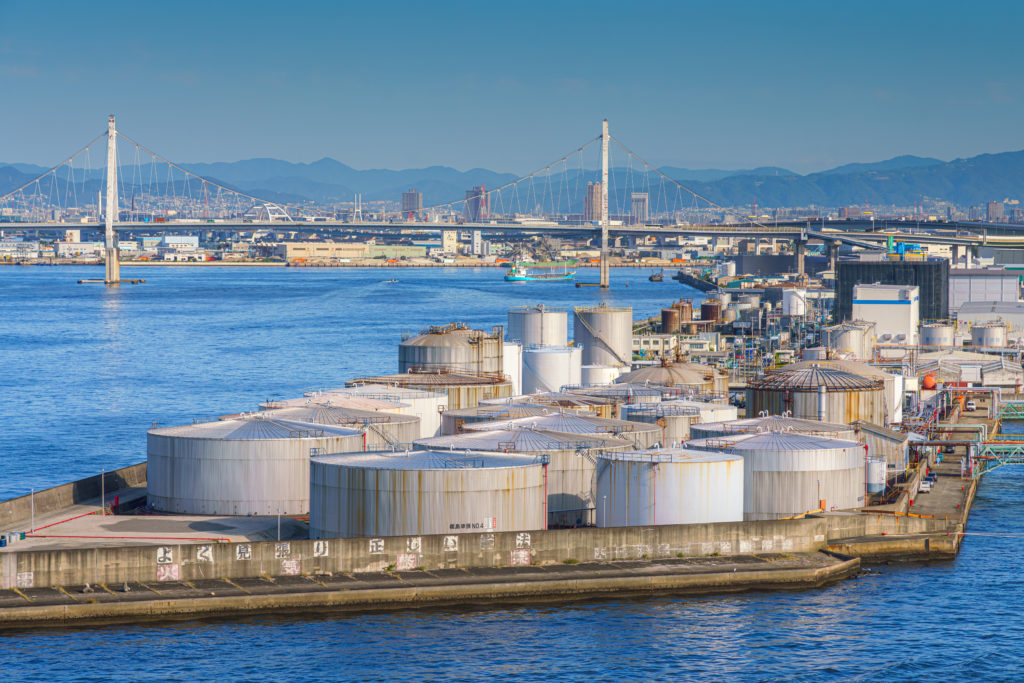

Oil storage tanks in Osaka, Japan. Stock image.

(The views expressed here are those of the author, Clyde Russell, a columnist for Reuters.)

The Iran war’s disruption to global crude oil and LNG markets is already being measured in lost barrels and higher prices. Now, with a US-Iran peace deal expected to reopen the Strait of Hormuz, the reckoning begins: was this a watershed moment, or merely another blip?

Consider two precedents.

The Volkswagen “Dieselgate” scandal over rigged emissions tests in 2015 seemed innocuous at first, but signalled the demise of diesel passenger cars and the rise of electric vehicles (EVs).

By contrast, Russia’s 2022 invasion of Ukraine caused a dramatic surge in energy prices, yet the market’s ability to reroute flows and absorb the shock meant the impact proved short-lived.

Certainly, the market has so far worked its magic in dealing with the effective closure of the Strait of Hormuz since the US-Israeli attacks on Iran began on February 28.

At least 1 billion barrels of crude oil and refined products have been lost from Middle East producers such as Iraq, Kuwait, the United Arab Emirates and Iran itself.

As much as 20% of global liquefied natural gas supply is also trapped in the narrow waterway between Iran and Oman.

A line chart with the title 'Oil-tanker transits through the Strait of Hormuz'

A combination of strategic and commercial inventory releases and a dramatic reduction in imports by China, the world’s biggest crude importer, has helped keep benchmark Brent crude futures under $100 a barrel for much of the current crisis.

It could also be argued that optimism about a deal to reopen the Strait has played its part, with traders seemingly willing to believe President Donald Trump’s numerous social media posts that an agreement was imminent.

That long-awaited deal began to materialize on Sunday when the US and Iran announced they had agreed on a framework that could allow vessels to resume transit. By Monday, Trump said oil tankers were starting to move out of the Strait.

While full details of the agreement have yet to be publicly revealed, the prospect of tankers soon entering and exiting the waterway without hindrance raises the question of what happens next.

The first effect would be a short-term sugar hit of relief for energy markets as tankers trapped in the Gulf exit and deliver cargoes.

This would be followed by efforts to restore flows and supply chains to pre-war levels, and by the longer process of rebuilding depleted inventories.

This could mean crude oil and LNG prices stay higher for longer as the lost barrels are replaced, but much will depend on how rapidly Middle East producers are able to ramp up output and exports, and whether the OPEC+ group is actually able to pump the higher volumes it has agreed to produce.


Behaviour changes?

But the bigger question is what the long-term impact will be.

Much will depend on the view taken by both consumers and governments, especially in energy-hungry Asia, the fastest-growing region.

Consumers who have the ability to change are likely to consider switching to electric or hybrid vehicles to insulate themselves from future diesel and gasoline price shocks.

An early snapshot of how this may look is provided by Australia, the world’s biggest importer of diesel and a country reliant on overseas refineries for over 80% of its fuel requirements.

Australian EV sales hit a record high in May, with a market share of 20%, and when combined with hybrid vehicles, the share climbed to 46%.

This is approaching levels in China, the leading EV manufacturer, where EVs and hybrids accounted for more than 50% of sales in 2025, and rose to 60% in May this year.

Charts showing the increase in new EV sales and EVs as a percentage of all cars on the road in China

Government policies are also likely to shift in favour of boosting renewables and electrification over fossil fuels.

Dieselgate saw the motor fuel fall out of favour, especially in Europe, where its share of passenger car sales dropped from around 52% in 2015 to under 10% by 2025.

The graphic shows diesel car sales in Europe versus fully-electric cars and plug-in hybrids from 2020 to 2025

Asian countries such as Vietnam are already putting in place policies to encourage EVs and electric scooters, and that momentum is likely to grow across the region.

LNG is also at risk in Asia as countries weigh the security risks of an imported fossil fuel against buying solar panels, wind turbines and battery storage from China, or developing domestic industries with Chinese backing.

One fossil fuel that may emerge as a long-term winner from the current crisis is coal.

Countries with vast domestic reserves, such as China, India and Indonesia, will be tempted to keep using the fuel given its cost advantage and supply security, even if it makes reducing carbon emissions more challenging.

Importing countries may also deem coal a safer bet, given that the major exporters – Indonesia, Australia and South Africa – have traditionally been reliable suppliers and that shipments aren’t at risk from chokepoints like the Strait of Hormuz.

However, a long-term shift away from crude oil and LNG isn’t assured, as producers and exporters of these fuels are unlikely to take their demise lying down.

Getting people to forget the last crisis may be as simple as ensuring prices drop rapidly and stay low for an extended period. The early market reaction – with Brent tumbling 4% to $83 on the deal announcement – suggests that process may already be underway.

If diesel and gasoline vehicles are cheap to refuel and LNG can compete with coal and renewables, it’s possible that governments and consumers will forgive and forget the disruption and costs of the Iran war, much as they did after previous conflict-induced price spikes.


Search for Safety

War in the Middle East has offshore companies looking elsewhere.
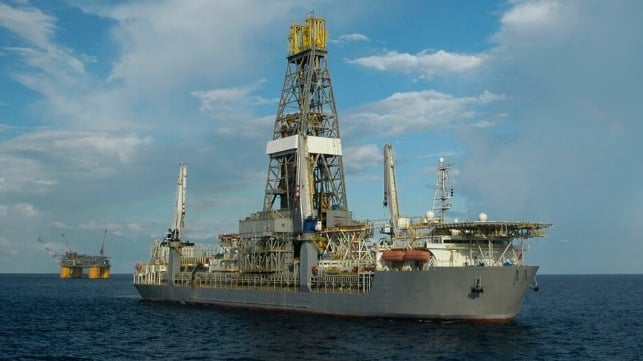
Drillship
iStock / Landbysea

Published Jun 14, 2026 8:16 PM by Paul Benecki

(Article originally published in Mar/Apr 2026 edition.)

The world needs secure and reliable energy, now more than ever, and offshore E&P is one of the best ways to find it in the near term.

Energy companies have multiple options to shift future investments out of the shallow-water Arabian Gulf and into deepwater frontier regions where security risks are more manageable. Offshore oil and gas reserves are abundant along the continental margins of South America, West Africa and the Gulf of America – areas with the stability and political will to underpin development.

Now, with energy-consuming nations looking for long-term options to diversify oil and gas imports, offshore is well-placed to deliver – and profit.

KNOCKOUT PUNCH?

The ongoing conflict in the Gulf has had a substantial impact on oil production but may have longer-lasting effects on liquified natural gas.

Seaborne gas exports have to be loaded out at LNG liquefaction terminals, and the largest LNG complex in the world – Ras Laffan, the plant for Qatar's vast North Field offshore gas reservoir – was damaged by an Iranian missile strike. In one night, the attack on Ras Laffan reduced worldwide LNG export capacity by 13 million tons per annum, roughly three percent of the global total.

Repairs will take up to five years.

Luckily, the rest of the offshore industry is well-positioned to step up and add more capacity over the same period. Major gas projects make up a large and promising share of the future offshore E&P portfolio overseas, even in areas better known for oil, like the eastern continental margin of South America.

ExxonMobil's Longtail FPSO is a case in point. Located in the prolific Stabroek Block lease area off Guyana, it will be able to process 1.2 billion cubic feet of gas per day, more than any FPSO ever built. Next door, in the thriving Brazilian offshore market, Equinor is investing $9 billion to develop the massive Raia gas find in the Campos Basin. It's the Norwegian oil major's largest overseas project ever and upon completion will supply about 15 percent of Brazil's domestic natural gas needs.

FLNGs TO THE RESCUE

Shipyard-constructed FLNGs (floating liquefied natural gas facility) will go further towards filling demand for transportable, tradeable natural gas. FLNGs are massive offshore vessels designed to extract, liquefy, store and offload natural gas directly over a gas field at sea.

Rystad Energy forecasts that FLNG capacity will quadruple in ten years from 14 mtpa in 2024 to 55 mtpa in 2035. That extra boost alone will zero out the loss of two trains at Ras Laffan.

FLNGs are smaller than onshore plants and have their own technical challenges, but they've matured as a practical solution to onshore challenges. A fully offshore liquefaction-plant footprint requires no export pipeline, no mobilization for onshore construction and less physical exposure to the local security environment on land – ideal for remote projects in the developing world.

FLNGs' security advantage has proven itself in the Rovuma Basin frontier gas region, some 40 nautical miles off Mozambique. Eni was first to market in the region by a wide margin with one FLNG in production and another nearing completion.

By contrast, TotalEnergies chose to build a mega-sized LNG plant on shore in order to export its planned production from the Rovuma Basin. The plant site is exposed to the security situation in northern Mozambique, and development has been set back by five years due to an Islamist insurgency. First LNG at the TotalEnergies plant will not arrive until 2029, ten years after its launch.

Due in part to the same security-related delays, Exxon is still short of a final investment decision for a neighboring Mozambican project after years of planning.

CLOSER TO HOME

Offshore gas has a major role to play in Europe's energy security, and future supplies could come from close to home, thanks to frontier developments in the Mediterranean.

Exxon and Chevron are making big moves to explore for gas off the coast of Greece and on an expedited timeline. New offshore gas supplies can't come too soon, according to Greek Energy Minister Stavros Papastavrou. "Europe thought that dependence meant stability and that Russian gas was cheap. But one can't call something cheap if it's not safe. And Europeans learned this the hard way," Papastavrou told a panel at this year's CERAWeek conference in Houston.

As the operator of Israel's Leviathan gas field and a partner in two others nearby, Chevron is already a leader in the Mediterranean. It's also the chosen E&P partner (with Qatari backing) for offshore gas exploration off Syria – a first for the country's energy industry and a sign of the American oil major's willingness to go first in politically-challenging environments.

The area could hold trillions of cubic meters of undiscovered gas deposits, just like the rest of the Levant Basin where exploration has turned up multiple supergiant fields. Syria is in dire need of revenue for rebuilding the local economy and is motivated to bring its first offshore gas project online by the end of the decade.

"Before the summer, God willing, we will start mobilization and drilling," Syrian Petroleum Company chief Youssef Kabalawi told AP in February.

FUTURE OPPORTUNITIES

Frontier offshore regions like these could become even more attractive to oil majors in the wake of the Gulf conflict.

Brent oil futures rose by nearly 60 percent in March and settled comfortably above $100 by the end of the month. If sustained, "higher-for-longer" prices would help make the business case for offshore projects in calmer parts of the world.

But for now, the offshore drilling industry is taking it slow, says ABS' Senior Vice President of Global Offshore, Miguel Hernandez: "Clients are controlling expenses and generating revenue with existing assets right now. We see forward progress, but companies are moving cautiously. Regionally, South America and West Africa remain the big focus areas. These are important regional hubs and the future of deepwater production."

For shipowners in the business of supporting offshore drilling and production – operators of subsea, offshore supply and offshore construction vessels – the current market sentiment is favorable, says Jake Scott, founder and managing partner at shipping investment firm Easterly Clear Ocean. Large numbers of offshore vessels are bottled up in the Arabian Gulf, with positive commercial effects for owners outside the region.

"The subsea guys and a lot of these offshore folks move equipment around as they need it to meet multiyear commitments," Scott explains. "All of a sudden that equipment is no longer available. When are you going to get it? So you're seeing greater optimism in the space. You're seeing more contracting outside the Gulf as a result."

ROBOTS AT WORK

Offshore projects depend heavily on economics and cost control, and improved technology is one of the fastest ways to get there.

From planning drill paths to maintaining platforms, the offshore energy industry is at the cutting edge of adopting industrial AI and automation. E&P firms recognize the value of digital automation for speed, standardization and labor-saving, including in the "red zone" of the drill floor.

Transocean's two "eighth generation" drillships are at the forefront of the trend.

The drill rigs aboard Deepwater Atlas and Titan are highly automated, and humans rarely need to enter the working area. "We now have robots working offshore on an ultra-deepwater drillship running a riser in 10,000 feet of water without a single person being involved on the rig floor apart from the driller," said Keelan Adamson, Chief Operating Officer at Transocean, in an interview during the first ship's debut.

It's not just about safer, more cost-effective offshore drilling. Automation is also driving efficiencies on production platforms by improving predictive maintenance and speeding up troubleshooting.

VROC, an industrial AI company with experience offshore, says that an AI maintenance management system's value is in providing decision support to engineers. By analyzing data from a panoply of equipment sensors all at once – vibration, pressure, temperature, electrical loads and more – the software can provide a platform's engineering team with a set of probable options for the root cause of a problem along with a detailed explanation of which sensor values are abnormal.

This speeds up the process of identifying the right fix, cutting downtime and potentially saving tens of thousands of dollars per day in lost production. BP is an early adopter of AI-driven maintenance prediction and troubleshooting in the U.S. Gulf and claims strong early results.

CLASS APPROVAL

The top class societies are fully on board with AI offshore and are lending their expertise.

"As the world embraces more digitalization, remote operations and AI," says ABS' Hernandez, "ABS is evolving our tools and services as well. This supports our clients by giving them better predictability and knowledge of their assets, which can add days of up time and greater value."

Getting the implementation right is the key, says DNV, which recently carried out a comprehensive AI safety review for Norway's offshore regulator.

Training an AI model to succeed in offshore asset management requires a high-quality maintenance dataset, carefully managed to ensure completeness and relevance. With buy-in and support from engineers, the model should be kept up to date in order to counteract drift between its original training and the state of current operations, DNV advises.

The opinions expressed herein are the author's and not necessarily those of The Maritime Executive.

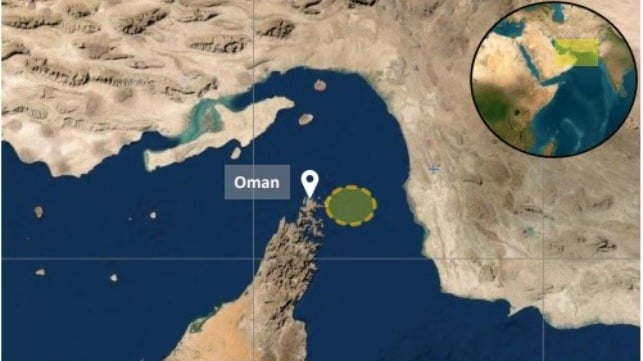

Trump Deal Resumes Iran Oil Sales Immediately

Iran won’t have to wait for inspectors, certifications, or a long diplomatic victory lap to start earning oil revenue again.

Under the agreement expected to formally end the war between the United States and Iran, Tehran will be allowed to immediately resume oil and fuel sales, according to people familiar with the deal who spoke to the Wall Street Journal. The sanctions relief takes effect as soon as the agreement is signed and extends beyond crude exports to include the banking, shipping, and insurance services needed to move those barrels to market.

That detail may prove to be one of the most consequential parts of the entire agreement.

Oil sanctions are only effective if buyers can't pay, tankers can't ship, and insurers won't touch the cargo. By waiving restrictions across the entire supply chain, Washington is effectively giving Iran access to international energy markets from day one rather than months down the road.

Iran holds some of the world's largest oil and gas reserves and was producing well over 3 million barrels per day before the conflict. Much of that production has remained constrained by sanctions, infrastructure limitations, and wartime disruptions. The prospect of Iranian barrels returning to global markets in meaningful volumes could reshape supply expectations just as consumers and governments remain focused on energy security after months of turmoil in the Middle East.

The move also marks a striking shift in U.S. policy. Washington spent years tightening restrictions on Iran's energy sector. Now, the Trump administration appears prepared to use oil revenues as a financial incentive to secure a lasting end to the conflict.

The oil could potentially start flowing the moment the ink dries without the expected waiting period.

By Julianne Geiger for Oilprice.com


Iranian Tankers Begin to Move Out Past U.S. Blockade Line

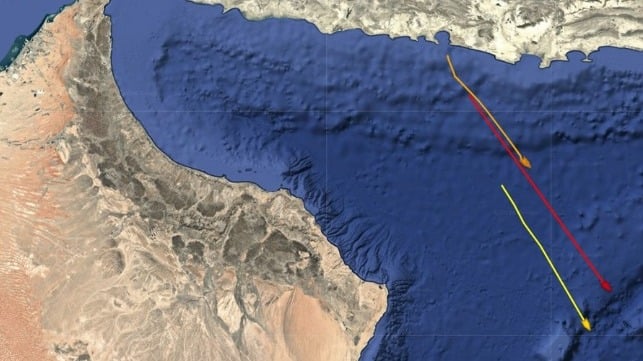
Sonia I, Diona and Hero2 (orange, yellow and red, respectively) exit the Gulf of Oman past the American blockade line (Pole Star Global)

Published Jun 16, 2026 11:17 PM by The Maritime Executive


For weeks, TankerTrackers.com has been flagging a steady drip of empty "shadow fleet" tankers working their way around the U.S. Navy blockade line and into Iranian waters, despite the clear and potentially deadly risk of a kinetic strike. The numbers have been small, but give a signal of Iran's high motivation to get more floating storage capacity into the Arabian Gulf. Now, the consultancy is seeing early movement in the other direction: full Iranian tankers are exiting the blockade for the first time in months. 

U.S. Central Command advises that the waterway is still under blockade until June 19, but a handful of Iranian tankers are turning on their AIS transponders and making the outbound run. On Tuesday, TankerTrackers.com spotted two Iranian-owned VLCCs, the NITC tankers Diona (IMO 9569695) and Hero2 (IMO 9362073), exiting out past the U.S. Navy blockade line at the east end of the Gulf of Oman. Another NITC tanker, the Suezmax Sonia I (IMO 9357365), followed shortly after, confirmed by data from Pole Star Global

"These are Iran's first crude oil exports in two months," the consultancy observed. The results were broadly confirmed by Kpler, which identified four Iran-linked tankers exiting the Gulf of Oman. 

The transits are perhaps the most definitive sign yet of loosening navigational restrictions in the strait. Other signs are more questionable: NBC News reports that Iranian forces have continued to launch small-scale drone attacks at ships in the Strait of Hormuz in the days since the MOU was signed. Central Command's  Joint Maritime Information Center (JMIC) continues to advise shipping of a "substantial" risk to navigation in the area.

Tanker owners are diverting substantial tonnage in ballast towards the Mideast in order to be ready to seize the moment when the Strait of Hormuz reopens. Goldman Sachs estimates that more than 800 million barrels of tanker capacity is within five days' sailing distance of the strait, ready to load stored oil and deliver it to market. 

"VLCCs signaling the UAE as their next destination are tracked sailing from as far as the South China Sea and across the Indian Ocean," assessed tracking consultancy Windward in a market note. "At least 23 VLCCs are currently heading for the UAE ports of Khor Fakkan or Fujairah based on their AIS messages, joining at least 30 already at anchorage there."

War risk cover appears to be a hurdle, as it often is in conflict zones. The Trump administration is said to be encouraging insurers to begin providing commercially viable cover for the strait as quickly as possible, and has considered a possible "VIP pass" system with a pay-for element that would give shipowners access to U.S. Navy escorts, according to Politico - a security benefit that has not hitherto been available. 

"Most shipowners appear to be cautiously awaiting more details before planning new transits of the Strait of Hormuz," BIMCO chief analyst Niels Rasmussen told CNBC. "They will seek reassurance that transits are not only permitted but also safe before sending their ships through the strait."


Hong Kong-Flagged Tanker Hit and Damaged in Strait of Hormuz

UKMTO tanker attack
Courtesy UKMTO

Published Jun 14, 2026 4:57 PM by The Maritime Executive

Iranian forces appear to have hit another tanker on the Omani side of the Strait of Hormuz, according to maritime security sources. 

Vanguard Tech reports that on Friday, a Hong Kong-flagged tanker was struck by a projectile at a position about six nautical miles off the coast of Oman, while outbound on the east side of the strait. The vessel was using the U.S.-managed southern corridor. 

The impact hit the port bow at about 0230 hours local time, damaging a ballast tank and causing a cargo leak. However, the crew were still safe and no injuries were reported. The ship carried on and reached Fujairah's anchorage, where it awaited a damage inspection. An investigation into the cause is under way. 

UKMTO confirmed the attack, but withheld the vessel's name.

The U.S. military has been conducting its own strikes to enforce its own blockade on Iranian ports. Central Command hit three tankers in three days last week, including the strike on the Settebello, which killed three Indian nationals. 

U.S. forces continue to operate a covert version of the "Project Freedom" overwatch program for foreign-flagged shipping in the strait, with modest success. Iran declared the complete closure of the waterway last week and is believed to be attempting to enforce the shutdown. Under the circumstances, IMO Secretary General Arsenio Dominguez has called for a moratorium on transit attempts. "[Seafarers] must not be exposed to conditions where the risks are known, significant, and clearly beyond mitigation," he warned. 


Oil Tankers Reverse Course on Hopes of Hormuz Reopening

Two tankers that were heading to Africa have changed course and are now moving to the Middle East, Bloomberg reported today, citing ship-tracking data.

One of the tankers, a Suezmax, which was originally sailing for Gabon, is now signaling its destination as Fujairah, the UAE port just outside the Strait of Hormuz, Bloomberg said. The other vessel, a very large crude carrier, was originally en route to South Africa but is now also signaling Fujairah as its destination.

News about a peace deal between the United States and Iran in the making sent oil prices tumbling earlier this week but uncertainty about actual progress and the timeline for normalization of tanker flows via the Strait of Hormuz capped gains. Even so, reports about tanker and LNG vessel movements suggest a strong degree of optimism in the industry.

Meanwhile, oil tanker owners and operators are cautiously optimistic, but they will wait until they see a “material” agreement and safety guarantees before returning to the world’s critical oil and gas chokepoint, Jotaro Tamura, chief executive officer at Mitsui OSK Lines, the world’s largest tanker operator, told the Financial Times earlier this week.

“Given the experiences in the last couple of months, I think it’s reasonable to assume that it may take at least a couple of weeks or if not a month,” Tamura told FT in an interview published on Tuesday.

“What will have to come in place is not just a simple agreement between the relevant countries, but it has to be material and translated into the real situations in the Strait of Hormuz, so that shipping lines can make themselves comfortable to go through,” the executive added.

On the other hand, the chief executive of Frontline earlier this month told CNBC he expected a quick rebound in tanker traffic once Hormuz reopens. “I’m actually very optimistic the minute the tide turns, and the U.S. and Iran have found some sort of agreement, at least not to attack shipping, that those transits are going to resume pretty quickly,” Lars Barstad said.

By Irina Slav for Oilprice.com


World's Largest Tanker Operator Cautions Against Hormuz Rush

The U.S.-Iran deal has raised hopes that the oil supply disruption in the Middle East could be nearing its end, but the biggest international tanker operators aren’t rushing to return to the Strait of Hormuz.

Oil tanker owners and operators are cautiously optimistic, but they will wait until they see a “material” agreement and safety guarantees before returning to the world’s critical oil and gas chokepoint, Jotaro Tamura, chief executive officer at Mitsui OSK Lines, the world’s largest tanker operator, told the Financial Times.

Since the U.S.-Iran agreement was announced this weekend, shipping companies have made it clear that they will wait until the deal is formalized on Friday before attempting to cross the Strait of Hormuz. Even for shipowners who are willing to make the crossing, organizing insurance and other practical issues could further delay the recovery.

“Given the experiences in the last couple of months, I think it’s reasonable to assume that it may take at least a couple of weeks or if not a month,” Mitsui OSK Lines’ Tamura told FT in an interview published on Tuesday.

“What will have to come in place is not just a simple agreement between the relevant countries, but it has to be material and translated into the real situations in the Strait of Hormuz, so that shipping lines can make themselves comfortable to go through,” the executive added.

Tamura spoke to FT before the deal was announced, but Mitsui OSK Lines on Monday said the company’s view of weeks until traffic resumes remains.

President Trump on Monday posted that “Ships are starting to move, many loaded up with Oil, out of the Strait of Hormuz. They are going along the Southern “Highway,” which is totally safe, secure, and pristine.”

The U.S.-Iran deal and the potentially imminent reopening of the Strait of Hormuz do not mean that oil and gas trade will quickly return to its previous levels, tanker owners and energy analysts say.  

By Tsvetana Paraskova for Oilprice.com


First LNG Tanker Clears Hormuz After U.S.-Iran Deal Announcement

An LNG carrier successfully passed through the Strait of Hormuz early on Monday, the first tanker carrying energy products to clear the chokepoint since the U.S. and Iran announced a deal to reopen the Strait later this week.  

The U.S. and Iran late on Sunday announced a deal to reopen the Strait of Hormuz more than 100 days after its closure. This re-opening could happen as soon as an agreement is signed on Friday. News of the deal sent oil prices tumbling early on Monday, with Brent Crude prices down to $82 per barrel, and WTI Crude falling below the $80 a barrel handle. 

While tanker owners and operators remain cautious about rushing to send vessels to the area or having the ones inside the Persian Gulf move quickly toward Hormuz, one LNG tanker passed through the Strait today, carrying LNG to India.

The LNG tanker Disha cleared Hormuz and is currently in the Gulf of Oman, ship-tracking data on MarineTraffic showed. The tanker had loaded LNG from Qatar’s Ras Laffan in early March, just when the Gulf state halted LNG production and exports amid the closed Strait of Hormuz and Iranian missile hits on its LNG infrastructure at Ras Laffan.

The tanker is now en route to India, a source close to the matter told Reuters on Monday. 

India has had several LNG tankers from Qatar move through the Strait of Hormuz in the past months, after securing and negotiating corridors with Iran.

Now the tentative U.S.-Iran deal and the reopening of the Strait of Hormuz could ease the traffic congestion and allow more tankers to head to the Middle East to pick up supplies. If the deal holds.

Tanker owners and operators await clearance to proceed and are not rushing to test the passage until they have assurances it is safe to do so.

“While we are aware of signs of progress towards a ceasefire, our policy remains unchanged; we will only resume navigation once safety has been fully confirmed,” a spokesperson for Japan’s Mitsui O.S.K. Lines told Reuters on Monday. 

By Charles Kennedy for Oilprice.com

 World Nuclear News


University launches nuclear fission and fusion control room simulator


A cutting-edge nuclear fission and nuclear fusion control room simulator that will offer an immersive learning experience for students has been unveiled at Lancaster University in north-west England.
 
(Image: Lancaster University)

The university said the simulator was the first of its kind in the UK and would support the country's clean energy goals and help enhance future nuclear safety.

Funded through a GBP2 million (USD2.7 million) grant from the Office for Students, the Lancaster University Nuclear Operations Simulator includes a wraparound screen across three sides of the new facility, which, along with software similar to that found across a range of nuclear reactors, provides an immersive experience for students. It includes what is described as a highly reconfigurable design and software for different reactor types including pressurised water reactors, small modular reactors, and tokamak fusion reactors, with software codes developed by GSE Solutions, Westinghouse, Norway's Institute for Energy Technology, and Tokamak Energy.

Tokamak Energy said it has installed its SOPHIA software programme into the simulator, which was originally developed to predict, simulate and validate experiments in the company's record-breaking ST40 fusion machine. It said the software allows scientists and engineers to get maximum gains from every experiment without needing to test multiple scenarios in the physical machine – which reaches plasma temperatures six times hotter than the centre of the sun – removing human error and fast-tracking results.

"This is a fantastic initiative by Lancaster University that we are extremely proud to support," said Ross Morgan, Tokamak Energy's Fusion Managing Director. "Young people are more aware than ever that the world needs a new supply of clean, secure energy. We hope our tokamak simulator SOPHIA will inspire students to pursue a career in fusion energy and help make the world a better place for future generations."

The simulator also includes leading-edge audio-visual equipment that can be used to flexibly configure different scenarios and record student interactions in the simulation environment to support student feedback. It has also been designed so that furniture can be reconfigured to represent different control room layouts.

The facility will be ready for teaching students at the university from the next academic year.

Lancaster University currently hosts the only single honours Nuclear Engineering undergraduate programme in the UK and has one of the country's strongest nuclear science and technology research communities with expertise across the fission and fusion fuel cycles, nuclear medicine, nuclear security and safeguards.

Rebecca Lingwood, Deputy Vice-Chancellor at Lancaster University, said: "This fabulous new facility will augment Lancaster's long-established strength across disciplines such as nuclear engineering and cyber security, providing our students with a truly excellent learning experience. Lancaster University plays a vital role as an economic anchor institution in north-west England and this facility will further enable us in helping to deliver a new generation of young people equipped with the skills needed to support a low-carbon energy sector vital for national energy security, as well as a critical sector for the region's economy."

Paul Smith, Chair in Networking and Principal Investigator of the initiative, said: "This high-fidelity simulator will enable us to create simulations of scenarios where nuclear facilities are cyber attacked, providing valuable in-depth learning experiences for our cyber security students, some of which may become future cyber security professionals protecting our critical national infrastructure."

Samuel Murphy, Director of Studies for Nuclear Engineering at Lancaster University, added: "This exciting and deeply immersive new facility will greatly enhance the experience and learning opportunities for students on our Nuclear Engineering programmes, helping to maintain Lancaster's position as a leading provider of nuclear education in the UK."

Georgia nuclear power plant cleared for 80-year operating life


The two boiling water reactor units at Georgia Power's Edwin I Hatch plant have been cleared by the regulator to operate until the mid-2050s.

(Image: Southern Nuclear)

Hatch unit 1 began commercial operation in December 1975, with Hatch 2 following in September 1979. The units were originally licensed to operate for 40 years, with the NRC approving a previous 20-year licence extension in 2002. The plant is operated by Southern Company subsidiary Southern Nuclear on behalf of its co-owners Georgia Power, Oglethorpe Power Corporation, the Municipal Electric Authority of Georgia and Dalton Utilities. 

Over the last 20 years, the Hatch units have undergone major improvements, including the replacement of cooling towers at unit 2; replacement of key components such as large transformers, plant service water pumps, feedwater heaters; and the identification and elimination of single point vulnerabilities across the site. Recent investments have included the construction of an energy education center and a second onsite simulator to train reactor operators: according to Georgia Power, the plant supports hundreds of highly skilled, long-term jobs and contributes millions of dollars of property taxes each year, as well as maintaining strong community partnerships. The plant's property is also a protected ecosystem.

Georgia's population has more than doubled since Hatch unit 1 - the first nuclear power plant in the state - entered service, and now stands at more than 11 million people. Today, nuclear power from Hatch and the four-unit Vogtle plant, built by the same co-owners, provide nearly 30% of Georgia Power's overall energy production. Georgia Power's latest integrated resource plan approved in July 2025, envisages capacity uprates at four of those units, including at Hatch.

"At Georgia Power, our commitment to our customers is to ensure that the reliable, affordable energy they expect is there when they need it. Our nuclear facilities provide reliable energy around the clock at a stable, predictable cost, and are central to how we deliver on this commitment," said Kim Greene, chairman, president and CEO of Georgia Power. 

The US Nuclear Regulatory Commission (NRC) completed its review of the licence renewal application in less than 12 months - it accepted for docketing plant operator Southern Nuclear's application on 20 June last year. This is the second nuclear power plant licence renewal the regulator has completed within the 12-month target for licence renewal reviews under Executive Order 14300: the first was Duke Energy's Robinson nuclear power plant in South Carolina, which received its subsequent licence renewal in April. 

The regulator said it completed its safety and environmental reviews using a streamlined process for licence renewals, applying lessons learned from earlier reviews to work more efficiently without compromising safety standards.


"The NRC continues to demonstrate we can reach timely decisions while maintaining our strict safety oversight," Director of the NRC's Office of Nuclear Reactor Regulation Anna Bradford said. "The staff's ability to focus on key factors necessary for long-term plant performance and to implement continuous learning enabled us to efficiently secure another 1.8 gigawatts of power on the grid for 20 more years."

Hatch unit 1 is now licensed to operate until August 2054, and unit 2 to June 2058.


Fourth application for Swedish state support for new nuclear


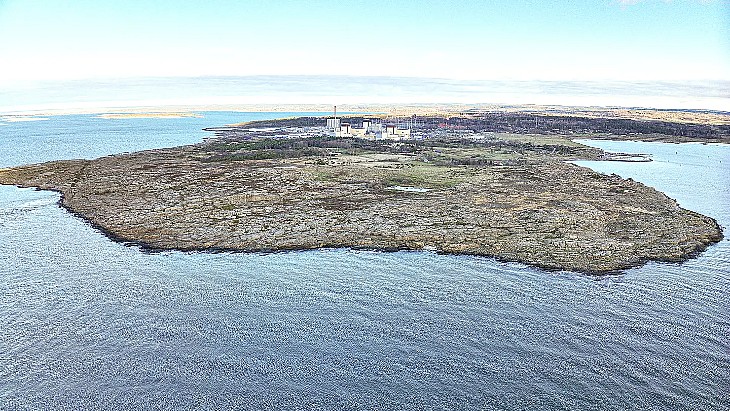
Nordic Baseload Power has submitted an application to the Swedish government for state support for the construction of two large-scale reactors at the Barsebäck site, where two reactors are being decommissioned.
 
The former Barsebäck plant (Image: Uniper)

The Ministry of Finance said the application states that the project involves two large-scale reactors that are estimated to generate 2,500 MW of power.

The ministry said that receiving an application means work can begin on making a decision on providing state support. This includes negotiations between the government and the company on the terms and scope of the support as well as ongoing dialogue with the European Commission to ensure that any support is compatible with the European Union's state aid rules.

"Sweden needs more stable electricity production," said Minister of Financial Markets Niklas Wykman. "It is therefore positive that interest in investing in new nuclear power continues to be high."

The two ABB-designed boiling water reactors (BWRs) at Barsebäck, about 30 kilometres from Malmö in southern Sweden, shut down in November 1999 and May 2005, respectively. The two 600 MWe reactors - which began operating in 1975 and 1977 - were shut down early because of political pressure from neighbouring Denmark.

In January this year, the Municipality of Kävlinge and Nordic Nuclear Energy (NNE) - part of the same group as Nordic Baseload Power - signed a joint letter of intent regarding cooperation to potentially establish a boiling water reactor in the area where the Barsebäck nuclear power plant is currently being dismantled.

"Kävlinge Municipality is in a unique position in that there is an existing local development plan that allows for additional nuclear power production at Barsebäck," Annsofie Thuresson, Chair of the Municipal Executive Board, said at the time of signing the letter of intent. "Through this cooperation, we now want to examine whether there are conditions for establishing new, modern nuclear power in the area of the former Barsebäck plant."

NNE CEO Göran Engberg said: "We are looking at several sites, but consider Barsebäck to be one of the most interesting, not least because energy demand is so high in electricity price area 4."

NNE's primary development and commercial focus is BWR-N, an evolutionary Nordic boiling water reactor designed for large-scale, fossil-free baseload power and adapted to Nordic regulatory requirements and industrial needs. The design builds on the proven Nordic reactor tradition represented by Forsmark 3 and Oskarshamn 3. The company says its objective is to develop BWR-N as a series-built reactor platform. The company’s initial target is four reactors, with two in Sweden and two in Finland, reflecting the economics of series deployment over one-off construction.

In parallel, NNE is developing micro-modular reactor solutions for local and industrial applications where smaller, flexible and dispatchable energy production is required.

Background

In October 2022, Sweden's incoming centre-right coalition government adopted a positive stance towards nuclear energy. In November 2023, it unveiled a roadmap which envisages the construction of new nuclear generating capacity equivalent to at least two large-scale reactors by 2035, with the equivalent capacity of up to 10 new large-scale reactors (which may include small modular reactors) coming online by 2045. A new act on state aid entered into force on 1 August 2025, since when interested companies have been able to apply for the aid.

The Swedish government received the first such application in December to support proposals for either five GE Vernova Hitachi BWRX-300 reactors or three Rolls-Royce SMRs to provide about 1,500 MW capacity at Ringhals on the Värö Peninsula. The application came from Videberg Kraft AB, a project company owned by Vattenfall AB and backed by a series of industrial firms via the Industrikraft i Sverige AB consortium.

In early June this year, Blykalla submitted an application for government financing for its planned power plant in Norrsundet, Gävle, in east central Sweden, comprising six SEALER reactors, which will have a total generating capacity of up to 330 MWe.

Earlier this week, Studsvik submitted an application for state support for up to 1,400 MW of new nuclear power, featuring small modular reactors, in the southern part of the country, with options at Valdemarsvik and Nyköping forming the basis of the application.

Reactor pressure vessel installed at Indian nuclear plant


The 320-tonne vessel which will house the core of unit 5 at the Kudankulam Nuclear Power Plant in India was lifted by crane into place in a precision operation as the VVER-1000 construction project enters its next phase.

(Image: NPCIL)

The pressure vessel, which was manufactured at the Atommash plant of Rosatom's Machine Building Division in Volgodonsk, in Russia, was delivered to the construction site in 2025. The installation was carried out using the "open top" method, using a heavy-duty crane to lift it into the building before the reactor dome is closed, the Russian company said. This method was previously used by the Russian-Indian team during the construction of Kudankulam units 3 and 4.

With the reactor vessel installed, the main equipment of the nuclear steam supply system - steam generators, main circulation pumps, main circulation pipeline units, pressure compensator, and emergency core cooling system tanks - can now be installed. 

“А recipe for the success of the Kudankulam NPP project is the long-standing and efficient cooperation between India and Russia. Indian specialists are constructing and commissioning four power units based on the Russian design, with two more power units generating electricity for over 10 years," Mikhail Novikov, Atomstroyexport Director of Projects in India said.


The vessel was lifted into place in a precision operation (Image: Rosatom)

The Kudankulam nuclear power plant project is being implemented under an intergovernmental agreement between India and Russia dating back to 1988. The first two Russian-supplied VVER-1000 pressurised water reactors, which are owned and operated by the Nuclear Power Corporation of India Ltd (NPCIL), were connected to the Indian grid in 2013 and 2016, respectively. According to Rosatom, by April 2026 they had generated more than 127 billion kWh of electricity.

Four further VVERs are under construction: work started on the second phase of the Kudankulam project, units 3 and 4, in 2017, and on units 5 and 6 in 2021. Once all six units are in operation, Kudankulam's output will cover a significant share of the electricity demands in Tamil Nadu, a state of 72 million, as well as being distributed in other states on India's southern grid, according to Rosatom.

"The milestone reflects the strong collaboration and coordinated efforts between NPCIL and Atomstroyexport ... Kudankulam stands as a cornerstone of India’s clean energy ambitions. With Units 1 & 2 already generating power at rated capacity and having produced nearly 130 billion units of electricity, the project has already helped avoid approximately 112 million tonnes of CO₂ emissions -a significant contribution to environmental sustainability," NPCIL said.

A fourth phase comprising two VVER-1200 reactors - Kudankulam 7 and 8 - has been proposed.

Swedish new nuclear project selects Rolls-Royce SMRs


Videberg Kraft has selected Rolls-Royce SMR as supplier for its project on the Värö Peninsula near Ringhals, where it plans to site three of the UK-based firm's small modular reactors.
 
(Image: Vattenfall)

Nuclear project company Videberg Kraft - owned by Vattenfall and Industrikraft, with the Swedish state due to become majority owner - selected Rolls-Royce SMR after a three-year process, which involved assessing 75 different options. The final choice was between Rolls-Royce SMR and GE Vernova Hitachi's BWRX-300.

The Videberg Project will be Sweden's first nuclear power plant in more than four decades and will ultimately add about 1.5 GW capacity to the grid. The project is targeting a first operating unit in the mid-2030s.

Sweden has become the third European country to select Rolls-Royce SMR technology, joining the Czech Republic and the UK.

Desirée Comstedt, acting CEO of Videberg Kraft, said: "Rolls-Royce SMR offers a robust network of subcontractors, the majority of which are located in our geographical vicinity. By choosing to move forward with Rolls-Royce SMR, Videberg Kraft and its owner companies also become part of a European programme, where we can benefit from shared experience."

Chris Cholerton, Rolls-Royce SMR CEO, said: "We are delighted to have been selected by Videberg Kraft as its partner to bring new nuclear power to Sweden. This is a strong endorsement of our transformational approach to delivery of a standardised fleet of SMRs … [and] further demonstrates growing market confidence in our technology."

Anna Borg, Board member of Videberg Kraft and CEO of Vattenfall, said: "Overall, the board’s assessment is that Rolls-Royce SMR is the supplier that can give Videberg Kraft the best pre-requisites for delivering a successful project. The reactor, a pressurised water reactor (PWR), is the same type used at Ringhals today and is a well-proven technology. Moreover, Rolls-Royce SMR has a commercially attractive contractual set-up."

Tom Erixon, Board member of Videberg Kraft and Industrikraft, and CEO of Alfa Laval, said: "Rolls-Royce SMR offers an efficient and industrialised concept that reduces the risk of delays. Videberg Kraft, together with Rolls-Royce SMR, is now paving the way for a new nuclear power on the Värö peninsula - something that would not have been possible without a historically unique collaboration between Swedish industry and the energy sector."

Background

The Rolls-Royce SMR is a 470 MWe design based on a small pressurised water reactor. It will provide consistent baseload generation for at least 60 years. Ninety percent of the SMR - measuring about 16 metres by 4 metres - will be built in factory conditions, limiting activity on-site primarily to assembly of pre-fabricated, pre-tested, modules which significantly reduces project risk and has the potential to shorten build schedules.

In October 2024, Rolls-Royce SMR was selected by ČEZ to deploy up to 3 GW of electricity in the Czech Republic, and ČEZ took a 20% stake in Rolls-Royce SMR. The plan is for the first SMR to be deployed in the area of the Temelín site (which already has two gigawatt-scale VVER-100 units), with futher projects being developed for coal-fired power plant sites, including Tušimice.

In June 2025 Rolls-Royce SMR was selected as the UK government's preferred technology for the country's first SMR project. A final investment decision is expected to be taken in 2029. In November the UK government announced that Wylfa on the island of Anglesey, North Wales, would be the site to host the three Rolls-Royce SMR units. It said the site - where a Magnox plant is being decommissioned - could potentially host up to eight SMRs.

In October 2022, Sweden's incoming centre-right coalition government adopted a positive stance towards nuclear energy. In November 2023, it unveiled a roadmap which envisages the construction of new nuclear generating capacity equivalent to at least two large-scale reactors by 2035, with the equivalent capacity of up to 10 new large-scale reactors (which may include small modular reactors) coming online by 2045. A new act on state aid entered into force on 1 August 2025, since when interested companies have been able to apply for the aid.

The Swedish government received the first such application in December, from Videberg Kraft for its scheme. Earlier this month Blykalla submitted an application for government financing for its planned power plant in Norrsundet, Gävle, in east central Sweden, comprising six SEALER reactors, which will have a total generating capacity of up to 330 MWe. And last week Studsvik submitted an application to the Swedish government for state support for up to 1,400 MW of new nuclear power, featuring small modular reactors, in the southern part of the country.

Rolls-Royce joins UK-Japan HTGR development agreement

The Japan Atomic Energy Agency, the UK's National Nuclear Laboratory and Rolls-Royce have signed trilateral memorandums of cooperation on advancing High-Temperature Gas-Cooled Reactors and the coated particle fuel to power them.
 
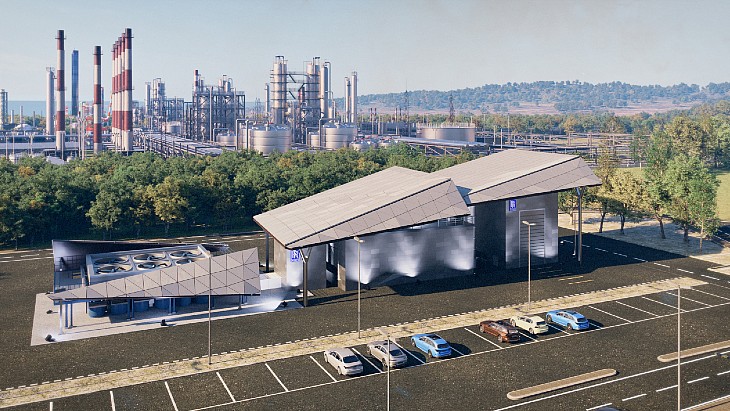
How a Rolls-Royce HTGR plant might look (Image: Rolls-Royce)

The agreements were signed during a visit to the UK by Japanese Prime Minister Sanae Takaichi. They cover what are termed High-Temperature Gas-Cooled Advanced Modular Reactor technology and expand on previous agreements between the UK's National Nuclear Laboratory (UKNNL) and Rolls-Royce, and between UKNNL and Japan's Atomic Energy Agency.

The high temperature reactors are seen as a potential way to "deliver energy resilience and enable decarbonisation across civil, defence and industrial applications" and "represent a compact and rapidly deployable nuclear energy solution for off-grid customers who require flexible heat and power that is safe, secure and reliable".

Rolls-Royce, which is part owner of Rolls-Royce SMR, whose small modular reactor has been selected for the first UK government-backed small modular reactor project in the UK, said it was "looking to broaden its nuclear portfolio and explore opportunities in the advanced modular reactor market. Differentiated in reactor technology, size and power output from the Rolls-Royce SMR, the Rolls-Royce AMR still benefits from the same innovative modular design and build certainty".

Rolls-Royce says its advanced modular reactor (AMR) "is a compact nuclear power solution designed to meet increasing demand for clean, scalable and reliable power across civil, defence and industrial sectors … perfectly placed to offer the benefits of a nuclear power solution to the sub-50 MWe scale markets".

The company says its reactor would have "a power output of up to 25 MWe/ 75 MWth per unit and can be combined in multi-unit micro-grids to meet higher power site demands".

Masanori Koguchi, Japan Atomic Energy Agency President, said of the agreements: "I hope that through our expertise in High Temperature Gas Reactor technologies, this collaboration will lead to their early deployment, a significant step towards net-zero."

Chris Cholerton, Group President, Rolls-Royce, said: "Strengthening existing relationships between our nations and combining our broad nuclear capability, will enable us to jointly address technical challenges and accelerate the development of advanced modular reactors and their advanced coated particle fuel, to deliver industrial growth, skilled jobs and energy security for our nations."

Julianne Antrobus, CEO of the UK’s National Nuclear Laboratory, said: "Advanced nuclear technologies have the potential to deliver clean, safe and reliable energy, stimulating economic growth while supporting the decarbonisation of industries that millions of people work in. The UK government’s Advanced Nuclear Framework exists to give industry a clear route to access the world-class expertise that UKNNL offers. Being contracted by Rolls-Royce to support this vital work is a strong signal that the framework is delivering and that UKNNL is playing its part in bringing the sector together."

Antrobus said it was a chance to turn "decades of research and international collaboration into real-world deployment".

The UK uses the term Advanced Modular Reactor (AMR) for the next generation of nuclear reactors. In December 2021 the government announced that the technology focus for the programme would be High Temperature Gas Reactors (HTGRs).

The HTGR is seen as a good fit for the UK, which founded its nuclear power sector with two generations of domestically designed gas-cooled reactors: the 26 Magnox reactors deployed in the 1960s and 1970s and the 14 Advanced Gas-cooled Reactors (AGRs) deployed in the 1970s and 1980s. The Dragon Reactor, operated from 1965 to 1975, was one of the world's first reactors to use what is now widely regarded as next-generation nuclear technology. UKNNL’s Preston laboratory has the UK’s only facility for manufacturing CPF kernels and has new coating equipment, which means it can produce coated particle fuel at scale.

Japan, through the Japan Atomic Energy Agency's High Temperature Engineering Test Reactor, has gained world-leading expertise in this field for decades.

In December 2022, the UK government announced funding of GBP60 million (USD77 million) for research into HTGRs, aimed at helping to get a demonstration project up and running by the end of the decade.

In September 2023, UKNNL and the Japan Atomic Energy Agency signed a memorandum of cooperation in the field of HTGRs, as well as a memorandum for collaboration on the next stage of the UK HTGR Demonstration Reactor programme. At the time it was said that JAEA was collaborating with UKNNL to demonstrate Japanese HTGR technology outside of Japan and to promote its social implementation with the aim of returning the decarbonisation technology to Japan.

UKNNL said that the three-way agreements "draw on the best of both nations' capabilities and position the UK and Japan to lead as global interest in advanced nuclear technology deployment grows".

Dome lifted into place on Ningde 5


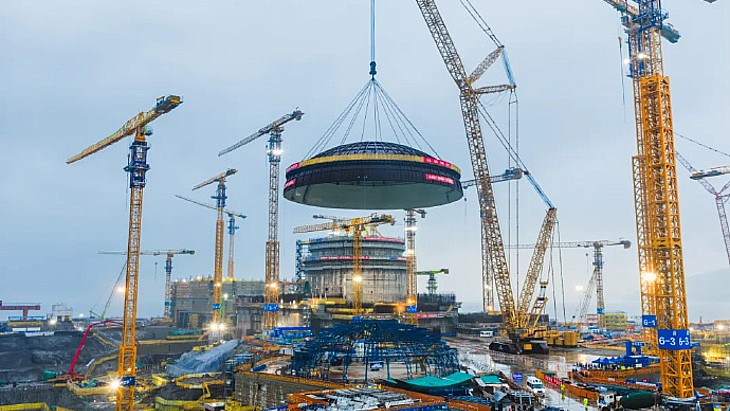
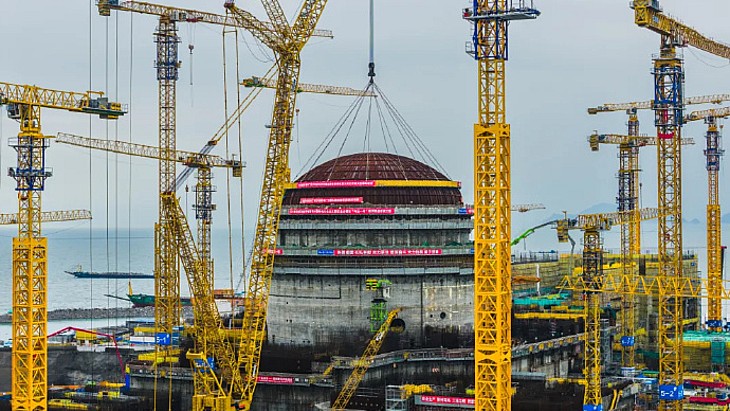
The 270-tonne containment building outer dome has been lifted into place at China General Nuclear Power Group's Ningde Nuclear Power Plant unit 5 in Fujian province.
 
(Image: CGN)

The lifting and installation process for the 45-metre-diameter dome took a total of two hours and forty-five minutes and was completed at 08:02 local time.

It means that the HPR1000 (Hualong One) nuclear power unit transitions from the civil construction phase to the equipment installation phase, China General Nuclear Power Group (CGN) said.

"The nuclear island dome is the core safety barrier of the reactor building, bearing the crucial mission of ensuring the structural integrity, airtightness, and radioactive containment of the reactor building. The dome of Ningde Nuclear Power Unit 5 is a hemispherical hyperboloid shell structure, precisely assembled from main steel plates, angle steel keels, studs, and various internal supporting components," CGN said.

A large crawler crane was used for the manoeuvre, lifting the dome as high as a 20-storey building, before it was fitted precisely into place.


(Image: CGN)

The construction of Ningde units 5 and 6 was approved by China's State Council on 31 July 2023. First concrete for the nuclear island of Ningde 5 was poured on 28 July 2024. It is scheduled to enter operation in 2029.

The Ningde plant currently comprises four 1,018 MWe CPR-1000 reactors, which began commercial operation between April 2013 and July 2016.